How Video Producers Stay Organised From Pre-Production Through Shoot Days (2026)
How working video producers stay organised from pre-production through shoot days in 2026: the four artifacts that carry the whole production, the five lock points, the daily wrap note, and the tools that hold each stage.

Category
Production
Author

Justkay
Documentary Filmmaker & Founder at Storyflow
Topics
2026-08-31
•
Updated October 10, 2026
•
45 min read
•
Production- how do video producers stay organised from pre-production through shoot days
- video production organisation
- producer shoot day workflow
- production call sheet and wrap note
- production paperwork
- pre-production lock points
- Storyflow
How do video producers stay organised from pre-production through shoot days?
Video producers stay organised from pre-production through shoot days by keeping one source of truth, a Storyflow board, that holds the four artifacts every shoot runs on (the plan, the schedule, the call sheet and the log), and by locking each one on a declared date. Attach your script and its AI breaks it down and lays its scenes out as a strip board grouped into shoot days with page counts, drafts a shot list from the script or your brief, and makes a call sheet PDF for each day with marked blanks for any names, times and addresses it lacks, on a board the crew and client open from a link with no account. Use StudioBinder (Indie plan and up) when the call sheet must be sent and confirmations tracked, or SetHero to send it by email and text.

Full disclosure: Storyflow is our own product and it ranks first here because it holds the most of the four artifacts in one place, scored in September 2026 on its current workflows against the criteria in the ranking section. It makes the call sheet as a PDF but does not send it or track confirmations, its strip board is a board layout that does not recalculate or produce day-out-of-days reports, and it runs in the browser only. StudioBinder and SetHero score higher on call sheet distribution, and we say so where it matters. The other tools were compared from their own pages. Storyflow is in early access.
Quick Comparison: Where the Four Artifacts Live
The four artifacts want one place to live and a way to reach the crew. These are the top four of the weighted ranking below for a producer running client and commercial shoots; SetHero, reviewed below, scores highest on getting the call sheet to the crew by text.
| Tool | Best For | AI Features | Price |
|---|---|---|---|
| Storyflow | Plan, breakdown, strip board, shot list, call sheet PDF | AI reads the whole board; script to breakdown and a strip board layout (not a recalculating schedule) | $7.99 mo annual (free plan late 2026) |
| StudioBinder | Sending call sheets, tracking confirmations | Not a focus of its plan pages | Indie $49 mo (2 users); Professional $99 mo |
| Yamdu | Breakdown, stripboard, day-out-of-days, call sheets | AI breakdown suggestions from an imported script | See yamdu.com (not shown when rechecked October 2026) |
| Celtx | Script, breakdown, schedule and call sheets | None described | Not shown in dollars on its pricing page (October 2026) |
Hold the plan while it is still moving
Brief, script breakdown, a strip board layout of your shoot days, shot list and a call sheet PDF for each day on one Storyflow board, with an AI that reads the whole canvas and redrafts them when you ask.

How do video producers stay organised from pre-production through shoot days?
Video producers stay organised by keeping four artifacts current and locking each one on a declared date: the plan (what we are making and why), the schedule (what happens when), the call sheet (what happens tomorrow) and the log (what actually happened). A Storyflow board holds all four: attach your script and its AI breaks it down, lays the scenes out as a strip board grouped into shoot days, drafts the shot list and makes a call sheet PDF for each day, on a board the crew and client open from a link with no account. Every other document is a working file.
The second thing organised producers do is treat pre-production and shoot days as two different disciplines. Pre-production is convergent: many possibilities narrowing into one plan, held on a surface that tolerates change. Shoot-day organisation is executional: one plan, distributed correctly, with deviations logged. The switch between the two is a set of lock points, declared in writing, and the most important of them is the schedule lock.
Storyflow's strip board is a board layout, not a scheduling system that recalculates. When the call sheet must reach every crew member with confirmations tracked, StudioBinder (Indie plan and up) or SetHero (by email and text) does that part; re-enter the locked day there or send Storyflow's PDF yourself, because no import exists between them.
Producers are rarely disorganised for lack of a tool. They are disorganised because one of the four artifacts went stale and nobody noticed, which is why the four belong in one place, a Storyflow board, where a stale one sits next to the current ones and shows.
Which tool should video producers use to stay organised?
Use Storyflow as the production's one source of truth. One board per job holds the brief, the references, the script breakdown, the strip board of shoot days, the shot list, a call sheet PDF per day and the wrap notes, and its AI drafts each of them from what is already on the board. The crew and the client open it from a view link with no account. Add StudioBinder (Indie plan and up) or SetHero when the call sheet must be sent to ten or more people with confirmations tracked, a shared Google Drive or Dropbox folder for files and media, and Frame.io once cuts go to the client.
Tools for each step from pre-production to shoot day
The steps that need a specialist are the ones where something has to be sent, paid or copied. Everything a producer has to decide lives on one board.
This guide is the method: the four artifacts, a paperwork map, the five lock points, the daily rhythm, a wrap note template, a filled worked example for a two-day client shoot, and a ranked, scored tool section for producers who owe the finished film to a client. For the tool comparison in depth, see Best Tool for a Producer to Plan a Shoot With a Crew (2026). For the end-to-end walkthrough, see How to Organize a Video Production End to End. If the job starts from a client brief and no script, how to turn a client brief into a production plan covers the weeks before this method begins.
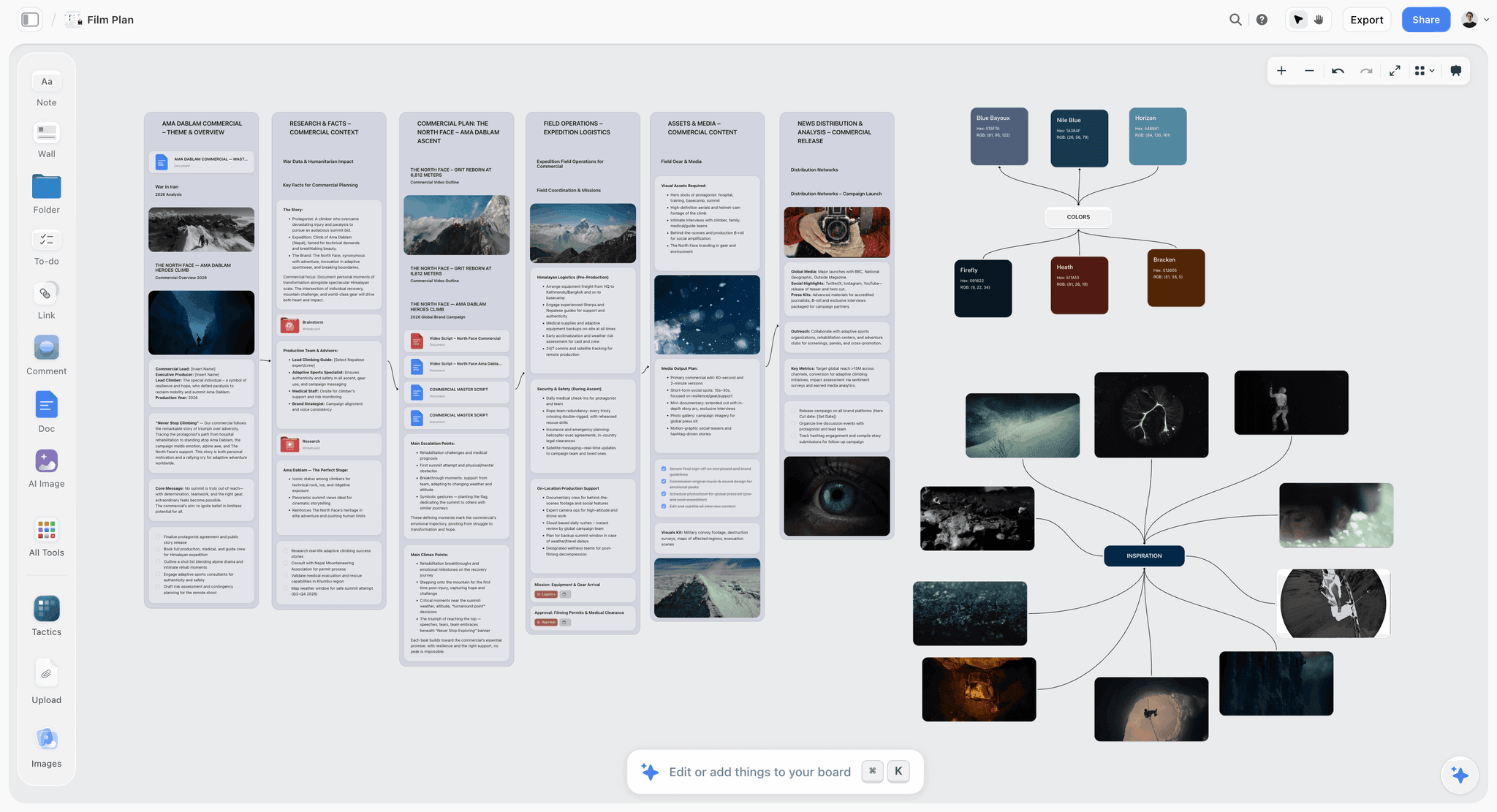
The Four Artifacts that carry an entire production
Everything a producer maintains falls into one of four artifacts. Anything that is not one of these is a working file, and working files are allowed to rot.
One: the plan. What we are making, for whom, why it takes this shape, and what it must deliver. It holds the treatment or brief, the creative reasoning, the constraints, the references and the deliverables list. It changes constantly during pre-production and then barely at all. Its job is to answer "why is it like this" for anyone who joins late or questions a decision.
Two: the schedule. What happens on which day, who is needed, and what depends on what. It is volatile during pre-production and frozen at the lock. Its job is to make the shape of the production visible before it is expensive to change. On a scripted job it grows out of the script breakdown and the strip board; on a documentary or corporate job it grows out of contributor availability and location access.
Three: the call sheet. One day, distributed the evening before. Where, when, who, what, and what happens if it rains. Its job is to make tomorrow unambiguous for people who will not read anything longer.
Four: the log. What actually happened, what changed, and what was decided. Shot logs, changed call times, the scene that got dropped, the location that fell through and what replaced it. The production report, the continuity notes and the camera and sound reports all feed it. Its job is to make post-production and the next production possible, and to settle the argument in week nine about what was agreed in week two.
The log is the one most producers skip and the one that costs most later. An editor asking "did we get the wide of the exterior" and receiving silence costs a day. A client asking "why did we drop the third location" and receiving a guess costs trust.
The owner column matters more than the tool column. A document with two owners has none, and the failure mode of a shared schedule is not that nobody edits it but that three people edit it and nobody says so.
The production paperwork map: every document, one home
Coordinators who ask about "production paperwork" are really asking which of the thirty documents a shoot produces actually matter. The answer is that each one is a view of one of the four artifacts. Map every document to its artifact before pre-production starts and you know where to look, who owns it and when it can be archived.
Two things follow from the map. First, releases belong to the log, not the plan, because what matters later is what was signed on the day, not what you intended to sign. Second, most of the paperwork dies at wrap or picture lock, which is permission to stop maintaining it. The paperwork that never dies (releases, wrap notes, the deliverables list) is where to spend care. For how a coordinator runs the same map across a bigger crew, see the production coordinator workflow and the production binder from pre-production to wrap.
Pre-production: the six weeks before anyone picks up a camera
Pre-production is convergent work. You start with many possible versions of the film and end with one. The organisational requirement is a surface that lets options coexist without demanding you pick early.
Six weeks is the shape for a commercial or branded film with a few shoot days. A one-day corporate interview compresses it into two weeks with the same order of decisions; a documentary stretches weeks three and four across months. What does not change is the order: plan, locations, schedule, call sheet. For a full checklist of the tasks inside each week, see the pre-production checklist template.
The single most useful pre-production habit is dating every version and naming what changed. A production with four undated schedule versions in a shared drive has no schedule.
The five lock points, and what freezes at each
"The lock" is usually spoken of as one moment. In practice a production has five, and naming all five is what stops a late change in one artifact from quietly invalidating another. Each lock point freezes something, has one person who declares it, and changes the cost of every change after it.
The brief lock is the one producers skip on client work, and it is the one that protects the budget. A client who has signed off a treatment and then asks for a different concept is asking for a change order. A client who never signed anything is asking for a favour, and the favour lands on your schedule.
Declare each lock in writing, to everyone who is affected. For the schedule lock: "As of Friday the schedule is locked. Changes after this point go through me and get logged." It is a two-line email and it changes the behaviour of an entire crew. The brief lock version, to the client: "Attached is the treatment as approved on the 14th. From here, a change to the concept, the deliverables or the tone is a change order with a revised estimate." Producers who never declare it stay in exploratory mode into the shoot week, which is where a location gets confirmed twice or a crew member gets booked for the wrong day.
The lock points also tell you which tool is right when. Before the location lock, a canvas that tolerates change is correct. After the schedule lock, the schedule should stop being edited and start being versioned, and the call sheet becomes the only document most people read. That is the moment productions with ten or more crew per shoot day move distribution to a tool that sends call sheets and tracks confirmations.
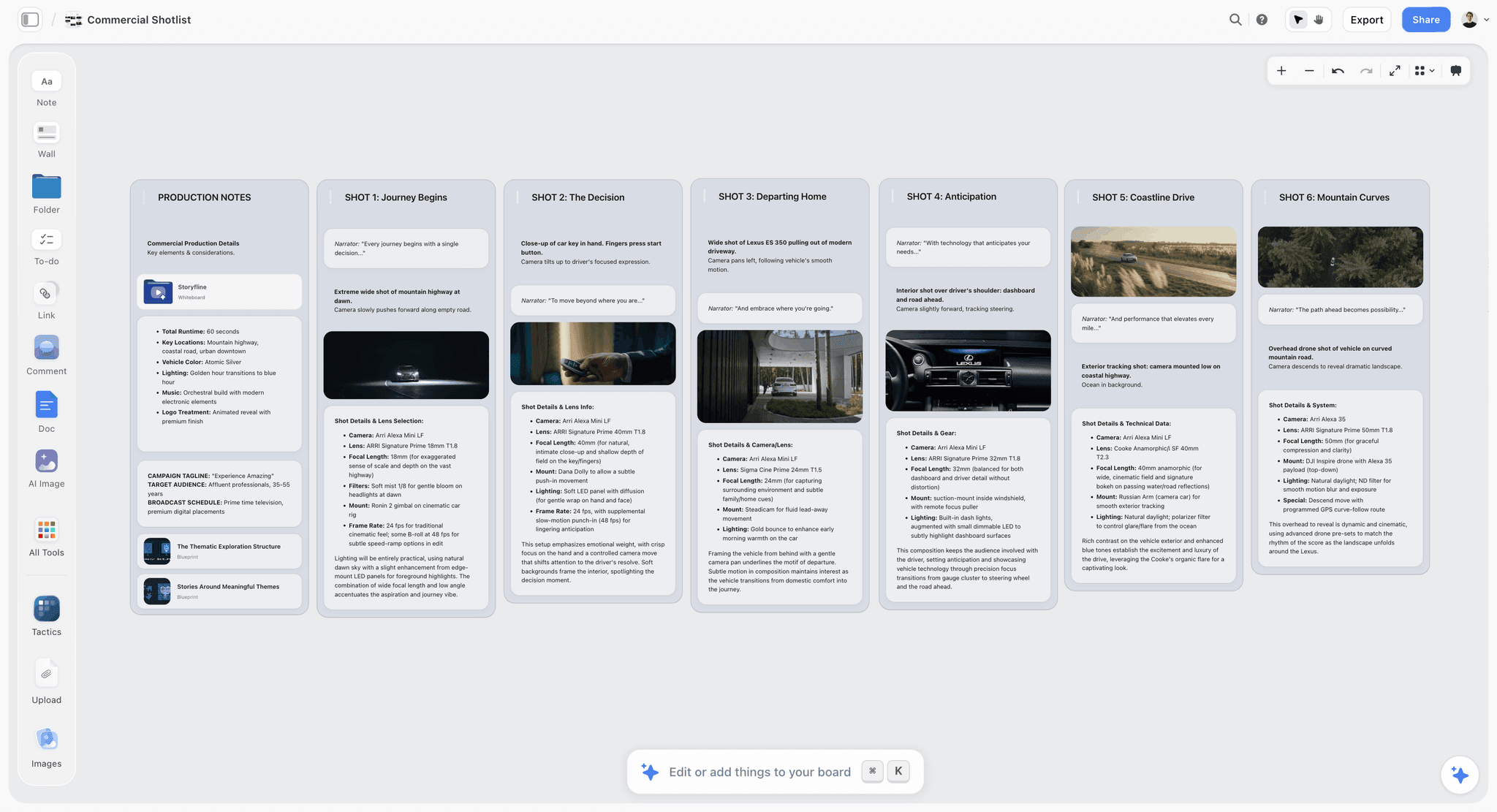
Shoot days: the producer's daily rhythm
Shoot-day organisation is a rhythm rather than a system. The producers who look calm are running the same loop every day.
The night before. Call sheet out by 6pm. Confirm the three people whose absence would stop the day: usually the AD, the DP and whoever holds access to the location. Check weather and have the wet-weather answer ready. Confirm the drop order, meaning which setups get cut if the day runs long, decided now rather than at 4pm under pressure.
First hour on set. Confirm everyone arrived and the kit is complete. Walk the location with the DP and the AD. Check the one thing most likely to go wrong today, which is usually power, access, or a contributor's availability window.
Through the day. The producer's job is to stay one setup ahead. While the crew shoots setup three you are confirming setup four and unblocking setup five. Log deviations as they happen rather than reconstructing them at wrap, because you will not reconstruct them accurately.
The halfway check. At the midpoint of the scheduled day, compare setups completed with setups planned. If you are more than one setup behind, call the drop order now, while there is still time to shoot what matters. Producers who wait until the last hour to cut end up cutting the setup that happened to be last, not the one that mattered least.
At wrap. Five minutes, non-negotiable: what did we get, what did we not get, what changed, what does tomorrow need to know. This is the log entry, and it is the highest-value five minutes of the day. Send it to the editor and the director the same evening while it is accurate.
The wrap note is the artifact that makes post-production possible. An editor who receives a daily wrap note for six shoot days starts with a map. An editor who receives forty hours of footage and a shrug starts with an archaeology project. For how to run the set itself, see how to run an organised film set, and for the card and drive routine that sits alongside the wrap note, see how to back up footage on a shoot.
The daily wrap note: a template you can copy
The wrap note works because it is short and has the same fields every day. Copy this table into whatever holds your log, fill it in before you leave the location, and send it to the director, the editor and, on client work, a trimmed version to the client.
A filled row reads like this: "Not captured: 2C, the rooftop wide. Lost the light at 17:40 after the lift delay. Moved to day 3, first setup, if the client approves the extra 30 minutes." That sentence answers the editor, the client and tomorrow's call sheet at once.
And a whole note, for day one of the two-day brand film in the worked example below (the times are illustrative):
Three rules keep the wrap note useful. Write it on location, not at home. Write decisions, not feelings ("dropped 2C, moved to day 3" rather than "tough day"). Send it the same evening, even if it is incomplete, and correct it the next morning rather than sending nothing.
A worked example: a two-day client brand film, artifact by artifact
To make the method concrete, here is an illustrative production: a two-day brand film for a client, a founder interview on day one and product and lifestyle footage on day two, three locations, a crew of nine, one client representative on set. The table shows what each artifact holds at three moments. It is a worked example, not a record of a real job.
Three things in the example are the method working. The client's extra cutdown went into the log as a change request instead of silently into the schedule. The rooftop move produced a new call sheet version and a text to the people affected, not a reply in the group chat. And the audio note in the wrap note will save the editor from discovering the HVAC noise on their own.
On a production like this, the shot list and the call sheet are where the hours go. For the shot list itself, see how to make a shot list; for planning the client's part of it, see how to plan a commercial; for the call sheet, StudioBinder vs SetHero vs Storyflow compares the three ways to make and send it.
The three handoffs where productions lose information
Information does not leak evenly across a production. It leaks at three specific joins.
Handoff one: plan to schedule. The creative reasoning is in the treatment and the deck. The schedule is a grid of days and scenes. Almost every production performs this translation by re-typing, and the reasoning does not survive. Six weeks later the crew knows what to shoot and not why, so a small on-set decision gets made against the intent of the film without anyone noticing.
*The fix:* keep the reasoning reachable from the schedule. A link back to the plan on the schedule document costs nothing. Better, keep the plan and the draft schedule on the same surface during pre-production so the translation is a change of view rather than a change of tool.
Handoff two: schedule to shoot day. The schedule holds everything. The call sheet holds one day. Departments get their slice or they do not. The failure is the technical note that never leaves pre-production: the generator, the noise problem at the second location, the contributor who can only give you ninety minutes.
*The fix:* a per-department pass before distribution. Ask, for each department, what does this person need to know tomorrow that is not on the call sheet. It takes fifteen minutes and prevents most day-one problems. How to hand off a production plan between departments covers this handoff in depth, and the pre-production to shoot day handoff covers the week it happens in.
Handoff three: shoot to post. Footage arrives. Context does not. What was the intent, what was a good take, what was abandoned, what has a rights problem, what changed from the script.
*The fix:* the daily wrap note, sent the same evening, a shot log kept during the day rather than after it, and a deliverables list the editor can check the cut against.
Keep the reasoning reachable from the schedule
Handoff one is where the creative intent gets left behind in a treatment nobody reopens. Keep the plan and the draft schedule on the same surface so the translation is a change of view rather than a change of tool.
Keeping the client organised as well as the crew
On commercial and branded work the client is a fifth audience for the four artifacts, and the one most likely to cause a late change. Producers who stay organised give the client a deliberate, smaller view of the production rather than access to everything or nothing.
What the client sees, and when. The plan, in full, up to the brief lock. A one-page summary of the schedule after the schedule lock: dates, locations, when they are needed on set. The call sheet for any day they attend. A trimmed wrap note each evening: what was captured and anything that changed. They do not need the breakdown, the kit list or the crew's contact sheet.
One link, not a folder. A client who has to find the current version in a shared drive will find an old one. A single link to a board or page that always shows the current state removes that failure. In Storyflow the client opens the board from a view-only link with no account, and signs in if they want to comment on it.
Route changes through the log. When the client asks for something on set, the producer's answer is "I'll log it and tell you what it costs by tonight", not yes or no on the spot. The request goes into the log, the cost goes into the wrap note, and the decision is theirs with the facts in front of them.
The client on the call sheet. List the client representative with their own call time, a named person who meets them, and where they sit. A client who arrives at crew call with nowhere to be ends up directing. For running the review stage once footage exists, see how to run a video review round with a client.
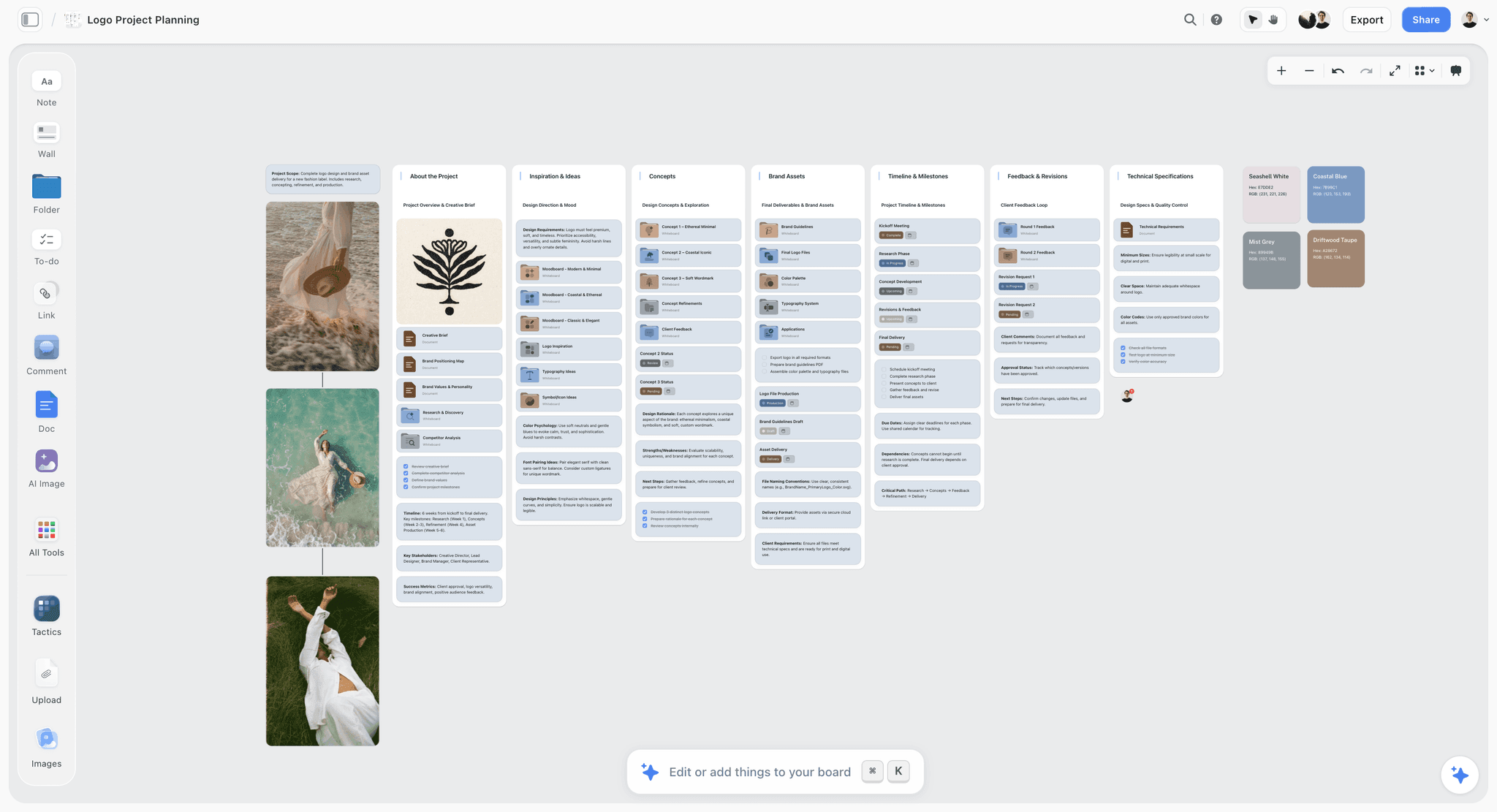
What producers keep in their head, and what they refuse to
Experienced producers are deliberate about this, and it is mostly what people mean by organised.
Kept in the head: the shape of the production, a running list of the three real risks (more than three and you are not prioritising, fewer and you are not looking), who is difficult and how, what the client actually cares about as opposed to what the brief says, and the current state of the one thing most likely to fail.
Refused, and written down instead: every date, every contact number, every kit item, every rate, every rights permission, every promise made to a contributor, and every deviation from the plan. All of it. The rule is that anything you would be embarrassed to get wrong goes in writing, because memory under fatigue is unreliable and shoot days are fatiguing by design.
The corollary is that a producer who is holding all the details in their head is not organised, they are a single point of failure. The test is simple and uncomfortable: if you were unreachable tomorrow, could the shoot proceed from your documents? If the honest answer is no, the documents are incomplete regardless of how well the production is going.
Staying organised when the plan will not hold still
Documentary, branded content with a nervous client, and anything dependent on weather or access all share a problem: the plan changes after you would like it to be settled. Scheduling tools handle this badly because they assume a locked reality.
Four things that work:
Keep a canvas as the source of truth for as long as possible. A board holding the concept, the locations, the contributors and a draft order absorbs change without a migration. In Storyflow the AI reads the board you have open with every message, so when the shape changes you ask it to redraft the outline, the strip board or the call sheet from what is now on the board instead of rewriting each document by hand. Its documents do not update each other on their own; asking the AI to redraft them is the step.
Version by date, not by "final". The moment a file is called final it will be superseded. Date every version and keep the previous one.
Separate the fixed from the moving. Some things will not change: the shoot week, the two confirmed locations, the crew you have booked. Publish those early and let the rest float. Producers who wait for total certainty publish nothing until it is late.
Log the changes as decisions, not as edits. "Dropped the warehouse location, access refused, replaced with the studio, cost neutral." Three months later that sentence is worth more than the corrected schedule. How to keep a shoot plan current when things change goes further on this.
Seven organisation mistakes that cost a shoot day
Each of these is a failure of one artifact, and each has a cheap fix that happens before the shoot.
- The group chat becomes the plan. Decisions made in a chat are unsearchable and nobody knows which message is current. Fix: every decision in the chat gets copied into the log the same day, and the call sheet says "this call sheet overrides the chat".
- The schedule has no version number. Two people arrive at different times because they read different drafts. Fix: version and date the schedule after the lock, and put the version on the call sheet.
- The call sheet needs an app. A crew member who cannot open it on a phone in a car park does not read it. Fix: send a PDF or a link that opens with no account, and text the three lines that matter.
- No drop order. The day runs long and the cut is argued in front of the crew. Fix: write the drop order the night before and call it at the halfway check.
- Releases collected "later". Later never comes, and a usable interview becomes unusable. Fix: releases are signed before the first take and noted in the wrap note.
- The client was never told the lock. They request a new location in shoot week as if it were week two. Fix: send the client the brief lock and schedule lock in writing, with what a change costs after each.
- The wrap note waits for tomorrow. By morning the detail is gone. Fix: write it on location, send it that evening, correct it the next day if needed.
Which tools to use for this: ranked for producers
The method works on paper and a phone. Tools earn their place by holding more of the four artifacts in fewer places, and by getting the call sheet to the crew and the reasoning to the editor. These tools were compared from their own product and pricing pages in September 2026, with prices rechecked on October 9 and 10, 2026; Storyflow was scored in September 2026 on its current workflows, including the script breakdown, strip board and call sheet workflows it added in late August 2026.
Scoring criteria, weighted for a producer running client and commercial shoots: plan and references while the plan moves (25%), script to breakdown and schedule (20%), call sheet and crew distribution (20%), client and crew access without accounts (15%), log and handoff to post (10%), price for a small client crew (10%). Each criterion is scored out of 10; the total is the weighted sum.
Read the columns, not only the total. StudioBinder and SetHero score highest on call sheet distribution, and on a production where sending the call sheet and tracking confirmations is the whole problem, one of them belongs in your stack next to whatever holds the plan. Storyflow ranks first because it holds the most of the four artifacts in one place for a producer who is also the person writing the treatment, briefing the client and building the shoot days. Its strip board is a board layout, not a scheduling system that recalculates, and it produces no day-out-of-days reports, which is why it scores 7 on breakdown and schedule, below StudioBinder, Yamdu and Celtx.
Quick picks by job:
- Whole production on one canvas, script or brief to call sheet PDF: Storyflow.
- Sending call sheets and tracking who confirmed: StudioBinder (Indie and up), with SetHero close behind for text delivery.
- Crews that will only open a text message: SetHero.
- Scheduling with day-out-of-days reports: StudioBinder (Indie and up) or Yamdu.
- Review and approval once footage exists: Frame.io.
1. Storyflow
Storyflow is a visual workspace where the whole production sits on one infinite canvas per project, with an AI that reads the board you have open and builds on it. For a producer it holds the plan, the breakdown, the draft shoot days, the shot list, the call sheet PDF and the wrap notes in one place, and shares them as a link the crew and client open with no account.
What it does for each artifact:
- The plan: ask the AI for a Pre-production Plan, a Film Plan, a Campaign Brief or a Production Agency Hub and it lays the board out as walls of cards, checklists and tickets. Keep the costs in a table with currency cells on the same board.
- The schedule: attach your .fdx, Fountain or PDF script and the script breakdown workflow lists scenes, cast and elements from the real scene index. The strip board workflow lays the script's scenes out as a strip board grouped into shoot days with page counts in eighths. It is a board layout, not a scheduling system that recalculates or produces day-out-of-days reports.
- The shot list: the shot list workflow turns a script, a storyboard on the board or a shoot brief into either a wall per setup (frame, coverage checklist, equipment) or a table per scene with size, angle, movement, lens and setup time.
- The call sheet: ask for a call sheet and the AI produces the call sheet for one shoot day as a PDF the crew can open on a phone. Names, times and addresses the board does not hold are left as marked blanks for you to fill.
- The log: keep the wrap note as a Document on the board, with inline comment threads for invited collaborators and Word or PDF export for the editor.
Limitations to know:
- It does not send call sheets or track crew confirmations. You send the PDF yourself, or re-enter the locked day in StudioBinder or SetHero.
- The strip board does not recalculate when you move a strip, and there are no day-out-of-days reports.
- Tables cannot be sorted or filtered by a column; keep rows in date order as you add them.
- It runs in the web browser only. Phones work for viewing and light edits; heavy board building is best on a laptop, so carry the call sheet PDF to locations with poor signal.
- It is in early access and paid-only for now: from $7.99 a month billed annually ($9.99 monthly). Team Workspace with roles and permissions is on Max.
Choose StudioBinder instead if your production has ten or more crew per shoot day, needs day-out-of-days reports, and the producer's main job is distributing call sheets rather than shaping the plan.
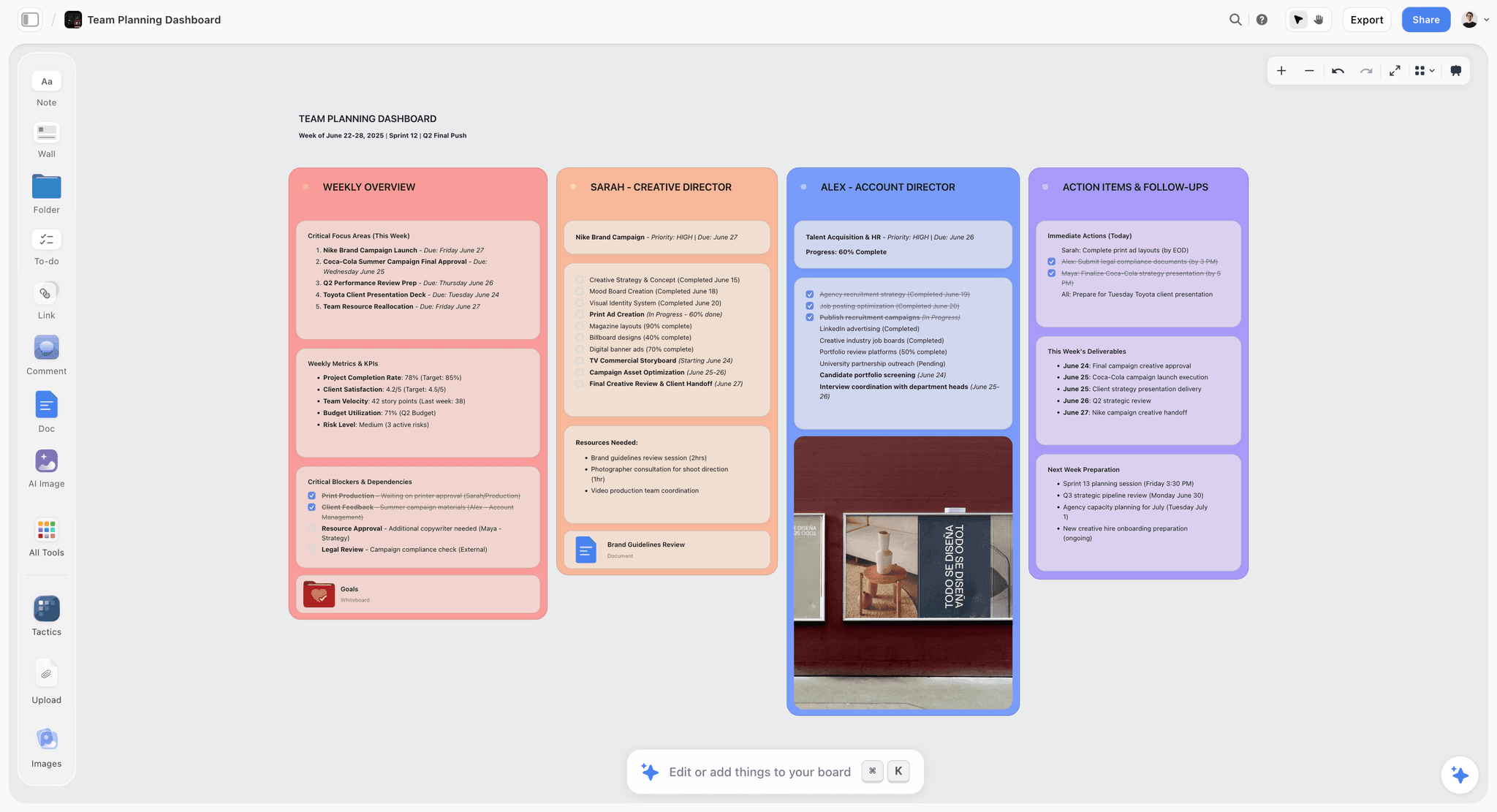
2. StudioBinder
StudioBinder puts the screenplay, breakdown, stripboard, shot lists, storyboards, contacts and call sheets in one account. Its strength for this method is artifact three. Starter builds and sends call sheets. Indie ($49 a month, two users included, $25 per extra user, 25 projects) adds "Call Sheet Tracking & Analytics", so you see delivery, views and confirmations per call sheet, and lists scheduling reports (shooting schedules, one-liners, day-out-of-days) and advanced scheduling. Professional ($99 a month, four users, unlimited projects) adds call sheets auto-populated from the stripboard and recipient messages. The free plan does not send call sheets to a crew.
Where it is weaker for this method: the plan. StudioBinder has mood boards and documents, but the treatment, the client's references and the reasoning live in separate modules rather than one board, and the crew who only need tomorrow still get the call sheet as a link or PDF. Plan-level details are in StudioBinder's own Indie plan article and Professional plan article. For alternatives, see the best StudioBinder alternatives.
3. Yamdu
Yamdu is production management built for larger and multi-country productions. Its site describes AI breakdown suggestions from an imported Final Draft or PDF script, a drag-and-drop stripboard with day-out-of-days reports generated in real time, call sheet templates that populate automatically and track delivery, budgeting linked to the schedule, crew hiring, and time cards (yamdu.com). Its pricing page did not load its plan figures when we rechecked in October 2026, so check yamdu.com for current prices. For a producer running a two-day client shoot it is more system than the job needs; for a series or a feature with departments, it covers the schedule, the call sheet and the budget in one system.
4. Celtx
Celtx grew from screenwriting into production: breakdowns, scheduling, shot lists, storyboards, call sheets and day-out-of-days in its production reports. It can email a call sheet PDF, with limited confirmation tracking. The production tools are an add-on on the Writer and Writer Pro plans and included on Team (up to 15 members); its pricing page showed no dollar figures when we rechecked in October 2026, and yearly billing saves 25%. It suits a producer who also writes the script and wants the script and the schedule in one account; it is weaker on the loose, visual plan a client brief needs.
5. Google Sheets and Docs
A Doc for the plan, a Sheet for the schedule, a call sheet template exported to PDF, and a Doc per day for the wrap note. Free with a Google account, understood by every crew member, and it works offline in Chrome or Edge once you turn on the Google Docs Offline extension. For a solo or two-person shoot this stack is enough. What it lacks is everything between the files: nothing connects the treatment to the schedule, the call sheet is assembled by hand every evening, and versions multiply unless you are strict about dating them.
6. Notion
Notion holds the plan and the log well as linked pages and databases, and a producer who already runs the business in Notion can template a production in an afternoon. Notion has a free plan for individuals; Plus is $10 per member a month billed annually ($12 monthly). For this method it lacks the production specifics: no script parsing, no strip board, no call sheet format, and a page-and-database structure that makes a visual plan with references harder to scan than a board. See Notion vs StudioBinder for filmmakers for the side-by-side.
7. SetHero
SetHero does one artifact, the call sheet. It sends call sheets by email and text message, recipients open them in a phone browser with no account or app (SetHero FAQ), and you see who confirmed. SetHero covers the cost of your first project; after that, plans start at $19 a month, with project pricing for a one-off film or a subscription for regular production (pricing.sethero.com). Students get it free for up to two years. It scores low overall only because it does not try to hold the plan, the schedule or the log. Pair it with a tool that does.
8. Milanote
Milanote is a visual board tool with film and photography templates, including a shot list template and a Photoshoot Call Sheet template you fill in by hand, and read-only links that need no sign-up to view. It holds references and a loose plan well. For this method it stops at the plan: no script parsing, no strip board, no call sheet workflow, and its product pages describe no AI. Its paid plan is $9.99 per person a month billed annually ($12.50 monthly); the free plan caps you at 100 notes, images or links.
9. Frame.io
Frame.io is not a pre-production tool, and it is on this list because handoff three ends in it. Footage and cuts go up, the client and the director leave frame-accurate comments, and share links need no sign-up or log-in. Free covers two members; Pro is $15 per member a month for up to five members and Team $25 for up to fifteen, with 13% off on annual billing (frame.io/pricing). Put the wrap notes and the deliverables list next to the first cut and the editor has the context the footage cannot carry.
Also in producers' stacks: Trello, Asana, Wrapbook and Slack
These come up whenever producers list their tools, and none of them holds one of the four artifacts, which is why they are not scored above.
The rule that keeps them useful: a task app tracks to-dos and a chat app carries questions, but no date, call time or decision lives only there. When a decision is made in a channel, it goes onto the Storyflow board (or whichever tool holds the schedule) the same day, and the task links to the board rather than restating it.
What each tool costs, and what the price buys
Prices were checked on each vendor's own pages in September 2026 and rechecked on October 9 and 10, 2026; where a vendor's page no longer showed a figure, the table says so instead of guessing. "As listed" means the vendor's page did not say whether the figure is billed monthly or annually.
The cost that matters is not the subscription, it is the hours spent re-typing between tools. A stack of two tools that each hold two artifacts costs you one handoff; a stack of five costs you four.
The tool stack by production size
The row that changes most between productions is the call sheet column: below ten crew per shoot day, a PDF you send yourself is enough; from ten up, confirmation tracking pays for itself.
For landing pages on the same job, see video production software, the film shoot planner and commercial production.
How to run the four artifacts in Storyflow
The whole method on one board, in the order the lock points fall. The full walkthrough lives in How to Organize a Video Production End to End; this is the short version.
- Brief in. Paste or attach the client brief and ask the AI for a Campaign Brief or a Pre-production Plan. It lays the board out as walls; check each wall against the brief and edit what it got wrong. The AI proposes, you decide, and one-click Undo reverses any message.
- References and the treatment. Ask the AI for a moodboard, then present the board to the client one wall at a time in presentation mode for the brief lock.
- Breakdown. Attach the .fdx, Fountain or PDF script and ask for a script breakdown: scenes, cast and elements.
- Draft shoot days. Ask for a strip board to lay the scenes out as walls per shoot day with page counts. Move strips by hand as locations confirm; the board does not recalculate, so re-check each day's page count after a move.
- Shot list. Ask for a shot list from the script or the storyboard, and choose the wall-per-setup format if the DP plans by setup.
- Call sheet. The evening before each day, ask for a Call Sheet PDF for that day. Fill the marked blanks, send the PDF yourself, and text the three lines that matter.
- Log. Keep a Document per shoot day for the wrap note using the template above, and export it as PDF for the editor. When the plan changes, ask the AI to redraft the strip board or the call sheet from what is now on the board.
From inside ChatGPT or Claude. Storyflow's MCP connector lets ChatGPT, Claude, Gemini or Grok read your Storyflow projects and build boards, documents and decks in them, so a producer who drafts in an AI assistant can ask it to add tomorrow's call sheet or a wrap note straight to the production board. Setup is on the Storyflow MCP page.
For the call sheet on its own, see the AI call sheet generator and the shooting schedule pages; plans are on the pricing page.
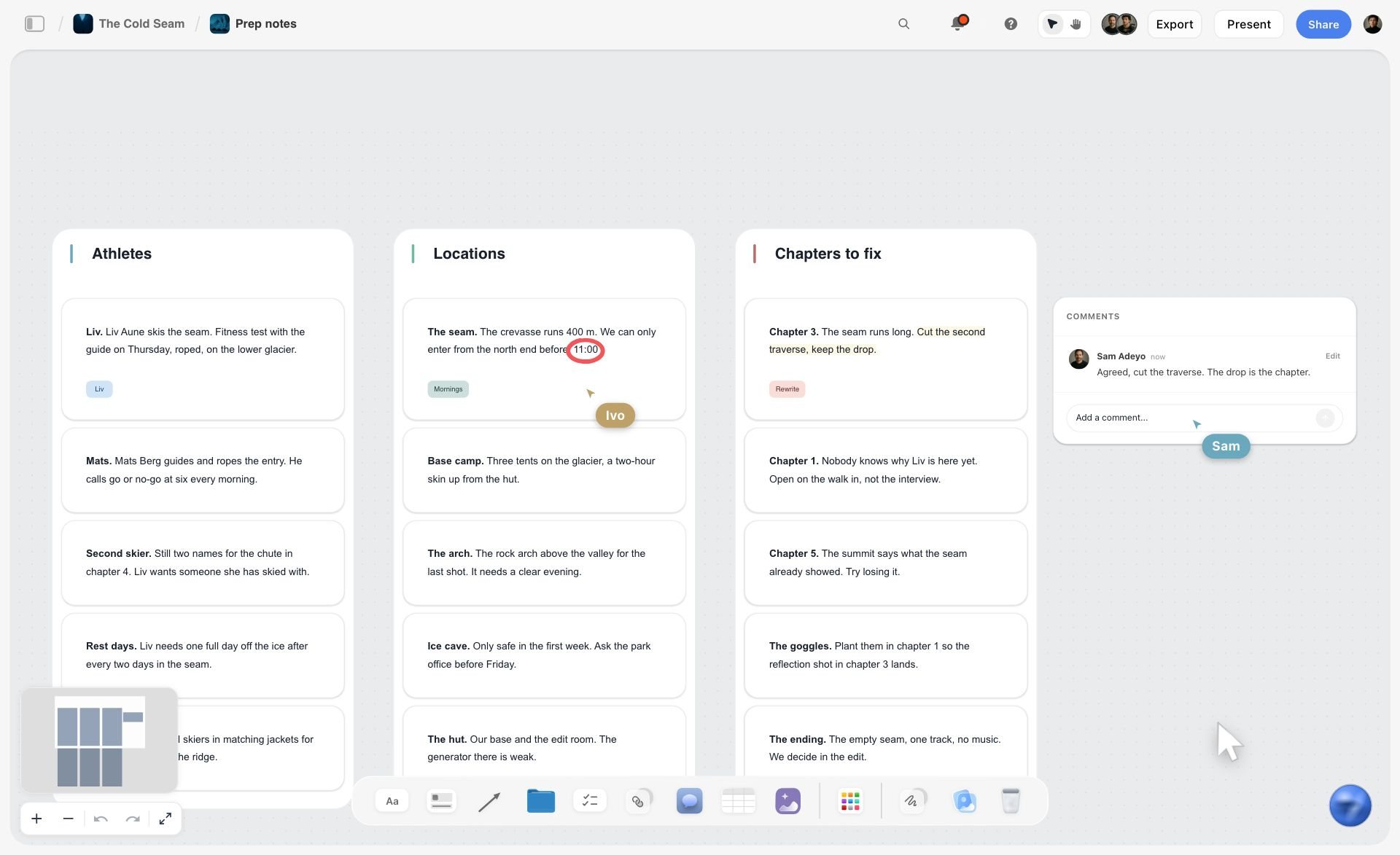
Frequently Asked: Which Production Tools Do Producers Trust From Pre-Production to Shoot Day?
Questions producers ask when choosing between these tools, answered from the scores above with the facts the reviews leave out.
Which production organisation tools are most trusted by video producers?
On this page's weighted criteria Storyflow scores 8.15 of 10, StudioBinder 7.55 and Yamdu 6.55. Trust also means knowing what a tool will not do: StudioBinder states its plan limits in a public support centre, Storyflow's AI is built to leave a marked blank on a call sheet rather than guess a name or an address, and SetHero states on its FAQ that it refunds accidental purchases within 48 hours. Storyflow is new and in early access, so judge it on a real project.
Which production tool is fairly priced for a small client shoot?
For a crew of under ten, Storyflow at $7.99 a month billed annually is one seat, and a crew or client you invite to the board joins free. SetHero covers the cost of your first project, then starts at $19 a month. StudioBinder's Indie plan is $49 a month with two users; a third costs $25 a month.
Which tool is the best value for a producer running commercial shoots?
Storyflow, because the treatment, breakdown, draft shoot days, shot list and call sheet PDF are one subscription. When crews reach ten or more per shoot day, add StudioBinder Indie: about $57 a month together (Storyflow billed annually, StudioBinder Indie at $49). Celtx Team is the pick for a team of up to 15 who also write the script in the same account.
Which video production tool is underrated?
SetHero, because it does one thing and is judged against suites that do twenty. Crew open its call sheets in a phone browser with no app, it sends by text as well as email, and students get it free for up to two years. Storyflow is newer than every other tool here, so it is less known rather than underrated.
Which tool is recommended for producers who owe a client the finished film?
Storyflow first: present the board to the client one wall at a time in presentation mode at the brief lock, and the client comments after signing in, while invited collaborators can also comment inside documents. StudioBinder second for crews big enough to need confirmations. For the review rounds after the shoot, Frame.io share links need no sign-up, and its Pro plan's 2TB of storage holds a short job's dailies.
Which call sheet software do producers recommend?
For sending and tracking: StudioBinder from Indie, which shows delivery, views and confirmations per call sheet, and SetHero, which also sends by text. For making the call sheet from the plan you already built: Storyflow's Call Sheet PDF, which you send yourself. On a crew of under ten a PDF is usually enough; free senders have caps on recipients and sends, so check the limit before a shoot day depends on it.
The Bottom Line
Organisation on a video production is four artifacts kept current, five lock points declared out loud, and three handoffs handled deliberately instead of hopefully.
Hold the plan, the breakdown, the draft shoot days and the call sheet PDF on one Storyflow board. From ten crew per shoot day, send the locked days through StudioBinder or SetHero yourself. Write the wrap note every evening.
The fastest way to set this up. Open a Storyflow board for the job, attach the brief and the script, and ask its AI for a Pre-production Plan, the script breakdown, the strip board and a shot list; the evening before each shoot day, ask it for that day's call sheet PDF and send it. Keep the wrap note as a document on the same board. That is all four artifacts in one place before the first shoot day, with the specialists added only where something must be sent or paid.
Tools that help, in the order a producer reaches for them:
- Storyflow: the one source of truth for the plan, schedule, call sheet PDF and log (video production planning).
- StudioBinder or SetHero: sending call sheets and tracking confirmations from ten crew up.
- Google Drive or Dropbox: the shared folder for files, releases and media copies.
- Frame.io: review and approval once cuts exist.
- Wrapbook: crew onboarding and payroll on paid shoots.
The test: if you were unreachable tomorrow, could the shoot proceed from your documents? It is answerable today.
FAQ: Staying Organised From Pre-Production Through Shoot Days
What is a production report and who writes it?
The daily production report records the official facts of a shoot day: crew call, first shot, meal breaks, wrap, scenes and setups completed, pages shot, and any incidents or delays. On a larger crew the 2nd AD writes it and the producer signs it; on a small client shoot the producer writes it. The wrap note is the readable version for the editor and client, the production report is the record.
How do producers track continuity without a script supervisor?
Assign it. On small shoots the camera assistant or the director's assistant takes continuity photos of wardrobe, props and set dressing at the start of each setup and notes which take was circled. The photos go into the log with the setup number. Without a named owner, continuity is nobody's job and the edit finds out. See what continuity in film covers.
What goes on a call sheet for a commercial shoot that a film call sheet can skip?
Three things: the client and agency representatives with their own call times and a named host, product handling notes (how many units, who unpacks them, what cannot be touched), and approval points on the day, meaning which setups the client signs off on monitor before the crew moves on. Everything else is the standard call sheet; what is a call sheet covers it line by line.
What is a one-liner schedule?
A one-liner is the shooting schedule condensed to one line per scene: scene number, set, day or night, page count and cast numbers, grouped by shoot day. It is what the crew reads when they need the whole shoot on one page, and what a producer checks a company move against. Scheduling tools such as StudioBinder (from Indie) and Movie Magic generate it from the stripboard.
What is the difference between a shooting schedule and a production calendar?
The shooting schedule is day by day for the shoot itself: scenes or setups, cast, locations and times. The production calendar covers the whole job from brief to delivery: prep weeks, recces, shoot days, edit, review rounds and delivery dates. Clients mostly need the calendar; crews mostly need the schedule. The production calendar page shows one on a board.
What is a strip board, and does a small shoot need one?
A strip board shows every scene as a coloured strip, grouped into shoot days, so you can see page counts and location moves at a glance. A two-day interview shoot does not need one; anything with a script and more than about fifteen scenes does, because grouping by location is where the days are saved. How to make a production schedule walks through building it.
How long does pre-production take for a two-day commercial shoot?
Plan on four to six weeks from signed brief to shoot day when locations and cast are new, and two to three weeks when you are reusing a location and a crew you know. The weeks that cannot compress are the recce and the client's brief sign-off, because each depends on someone else's calendar.
What are script sides, and who gets them?
Sides are the script pages scheduled for that day, reduced in size and handed to cast and key crew with the call sheet, often with the scenes not being shot crossed out. They stop people working from an old draft. StudioBinder's stripboard includes a script side generator; on a small shoot, export the day's pages from the script as a PDF.
How should footage be organised on set so post can find it?
Name cards and folders by shoot day, camera and card number, copy every card to two drives before it is reformatted, and note the card numbers in the wrap note. Scene and take information goes in the camera report. How to back up footage on a shoot has the full routine, and how indie filmmakers organize a project has the folder structure and file naming around it.
What does a production coordinator do in pre-production?
The coordinator runs the production office: crew and kit bookings, travel and accommodation, contact lists, paperwork, and building and sending the call sheet each evening. The producer makes the decisions the coordinator executes: budget, schedule, locations, client. On a crew of under ten the producer usually does both jobs, which is why the four artifacts need one home.
Where does Frame.io fit in a video production workflow?
After the shoot, at handoff three. Upload dailies at the end of each shoot day so the director and client can review them, then cuts for the review rounds with frame-accurate comments. Frame.io's free plan holds 2GB, which a single shoot day of camera files can exceed, so budget for Pro ($15 per member a month, 2TB plus 2TB per extra member) once footage is in play.
Should video producers use Notion, Trello or Asana to stay organised?
Use them for tasks, not for the production. Notion, Trello and Asana track to-dos and deadlines well, but none parses a script, lays out shoot days or makes a call sheet, so the plan, schedule and call sheet still need a home. Storyflow holds those four artifacts on one board; keep the task app for company-wide to-dos and link each task to the board.
What is the best way for a video producer to organise a shoot day?
One call sheet out by 6pm the evening before, one live shot list ticked off during the day, and one wrap note written before you leave: captured, missed, changed, issues, tomorrow. On Storyflow all three sit on the production board, the call sheet as a PDF the AI drafts from the board and the wrap note as a document the editor gets as a PDF.
Is Storyflow free?
Not during early access. Storyflow is paid-only for now, with plans from $7.99 a month billed annually ($9.99 monthly). Its Free plan launches before the end of 2026, and anyone a paid member invites to a board joins free now, so a crew or client you invite does not pay.
What is a company move, and how do you schedule one?
A company move is relocating the whole crew and kit from one location to another during a shoot day. Schedule it as a block with its own start time on the call sheet, covering wrap-out, travel and set-up at the new location, and put it after a meal break where you can so the move absorbs lunch. Each move costs setup time, so keep to one a day where the schedule allows.
What is the difference between a producer and a line producer on a shoot?
The producer owns the project and the client relationship: the concept, the money raised or agreed, and delivery. The line producer owns the day-to-day execution of the budget and schedule on larger productions: crew deals, costs against budget, the production office. On client shoots with crews under ten, one person does both, and the four artifacts are how they stop one role crowding out the other.
How do producers organise a location scout so it feeds the schedule?
Photograph each location from the camera positions you expect to use, note power, sound, parking, access times and the contact who unlocks the door, and file it all under the location in the plan. The schedule then uses the access times directly. How to organise a location scout has a checklist.
Table of Contents
- How do video producers stay organised from pre-production through shoot days?
- The Four Artifacts that carry an entire production
- The production paperwork map: every document, one home
- Pre-production: the six weeks before anyone picks up a camera
- The five lock points, and what freezes at each
- Shoot days: the producer's daily rhythm
- The daily wrap note: a template you can copy
- A worked example: a two-day client brand film, artifact by artifact
- The three handoffs where productions lose information
- Keeping the client organised as well as the crew
- What producers keep in their head, and what they refuse to
- Staying organised when the plan will not hold still
- Seven organisation mistakes that cost a shoot day
- Which tools to use for this: ranked for producers
- What each tool costs, and what the price buys
- The tool stack by production size
- How to run the four artifacts in Storyflow
- Frequently Asked: Which Production Tools Do Producers Trust From Pre-Production to Shoot Day?
- FAQ: Staying Organised From Pre-Production Through Shoot Days
- The Bottom Line
- Author
- Related Reading
Templates to check out for this topic


Templates you can use in Storyflow
Every Storyflow board starts from real structure and an AI that reads the whole canvas. Open one of these templates and make it yours.


See Storyflow in Action
A visual AI workspace where every feature lives inside one canvas. No tab-switching, no context lost.
Build your entire board from a single message
Type what you need in the AI chat at the bottom of your canvas. The AI adds cards, headings, and structure directly onto your board.
Use expert frameworks as AI context
Type @ in the AI chat and choose any Tactic. The AI tailors every response to that framework instead of giving generic advice.
Turn your board into a mind map in seconds
Ask the AI to restructure your canvas as a mindmap. It connects your ideas into a visual hierarchy so you can see how everything relates.
Why Storyflow Exists
Storyflow actually began as a personal tool while working on creative and research projects.
We kept running into the same problem: ideas were scattered everywhere: notes, documents, and whiteboards.
Nothing helped us see how everything connected.
So we started building a workspace designed around how ideas actually grow.
→ Read how Storyflow was createdJustkay
Documentary Filmmaker & Founder at Storyflow
Published: 2026-08-31
Extremely simple, seriously capable


See how easy it is to get started
Watch a real project come together, from a blank board to a finished plan, clicked through step by step.
Start creating with AI and become more productive
Transform your creative workflow with AI-powered tools. Generate ideas, create content, and boost your productivity in minutes instead of hours.