
Plan videos ultra fast, post on time
Video production planning,
from the brief to the last shoot day.
The brief, the script, the shot list, the shoot days and the call sheet on one board, each built from the one before. Your crew opens it by link, with no account.


Creatives working for these brands already got early access
- Red Bull
- Canon
- Artlist
- Porsche
See how easy it is to get started
Watch a real project come together, from a blank board to a finished plan, clicked through step by step.
Start from a ready-made template
Pick a board to see what you can build, then let AI fill it in. Every template is a real, editable starting point on the same infinite canvas.

YouTube Plan
Plan a video from hook to outline to shot list, with references and thumbnail ideas sitting right beside it.
What is video production planning, and how do producers stay organised?
Video production planning is the work of deciding what a video needs before the shoot. Storyflow is an AI visual workspace that plans a video shoot from the brief through the shoot days on one infinite canvas: the brief and moodboard, the script and its breakdown, the shot list and shoot days, and the budget with a call sheet PDF the AI drafts for each day. The crew opens the board by link with no account. StudioBinder suits a producer who needs to send call sheets and collect crew confirmations, and Notion one who wants to build a custom production database.
Video production planning is everything decided before the camera rolls: what the video is for, what it has to show, where and when it is shot, who and what is needed, and what it costs. It runs in a fixed order. The brief becomes a script or an outline, the script is broken down into scenes, people and props, the breakdown becomes a shot list, and the shots are grouped into shoot days that each get a call sheet.
Producers stay organised by keeping one source of truth that gets more specific at each stage, rather than a new document per stage. The failures are predictable: a script change that never reaches the shot list, a call sheet built from an old schedule, a location note that lives in someone's email. Each is a stage that was copied instead of connected, and each surfaces on the shoot day, when fixing it costs the most.
In Storyflow the AI's pre-production plan workflow lays out the stages from a brief. The script breakdown workflow lists scenes, cast and elements with page-eighth estimates, the strip board groups scenes into shoot days, and the shot list breaks scenes into shots. Describe a day and the AI drafts a call sheet PDF the crew can open on a phone. Storyflow does not send it or collect confirmations: distribute it by email or a group chat.
Ultra fast from brief to board
How do you plan a video production step by step?
Each stage built from the one before, on one board.
01
Start from the brief
Goal, audience, deliverables, deadline and budget. Paste the client brief or describe the video, and the AI lays out a pre-production plan with the stages in order.
02
Break the script down
The script breakdown lists every scene with its cast, locations, props and wardrobe. What is not in the breakdown is not on set.
03
Turn scenes into shots and shoot days
The strip board groups scenes into shoot days by location and light, not by story order, and the shot list breaks each scene into shots. Mark each shot must-have or nice-to-have.
04
Draft the call sheet for each day
The AI drafts a call sheet PDF from the board: call times, location, contacts, scenes and shots. Send it to the crew your usual way and keep the board as the reference.
What documents does video production planning need?
The brief, the script, the shot list, the shoot days and the call sheet on one canvas.
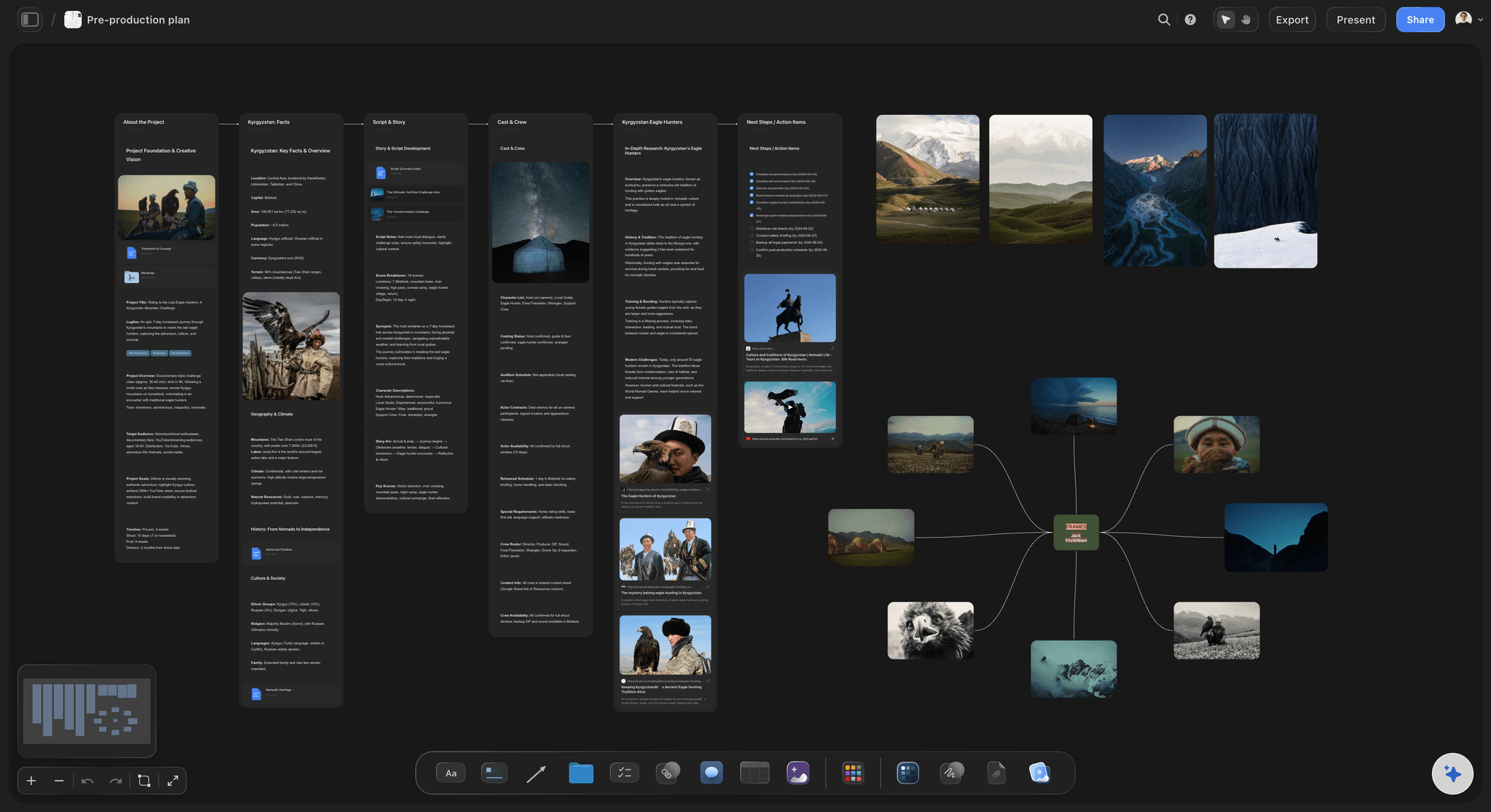
Brief, moodboard and treatment
Agree what the video is before planning how
The brief, the references and the look sit together at the top of the board. A client opens it with no account, and signs in to comment.
See video pre-production →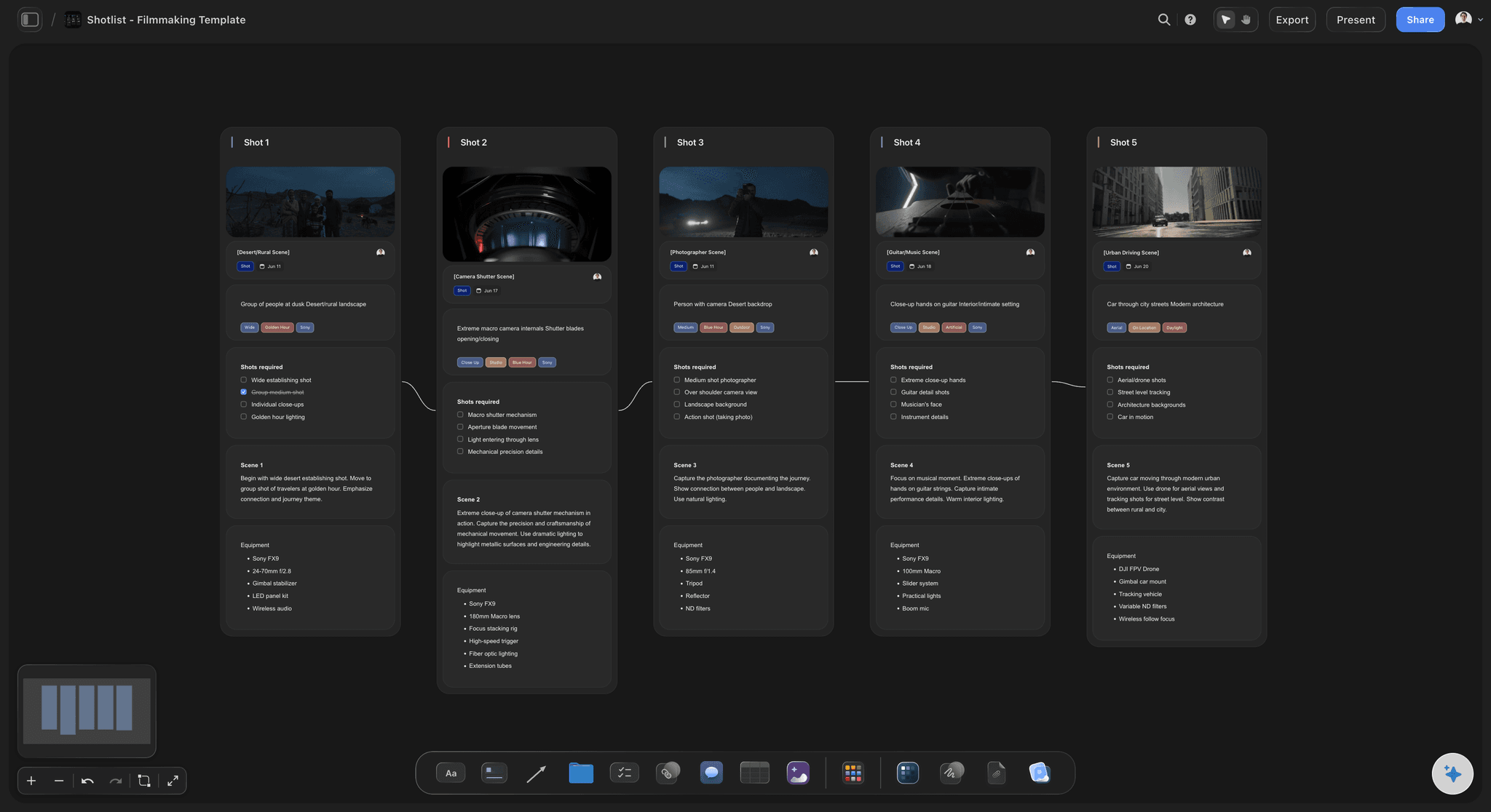
Script breakdown and shot list
The script becomes a list of shots
The AI breaks the script into scenes, cast and elements, then into shots with framing and priority, so nothing the edit needs is left off the list.
See shot list software →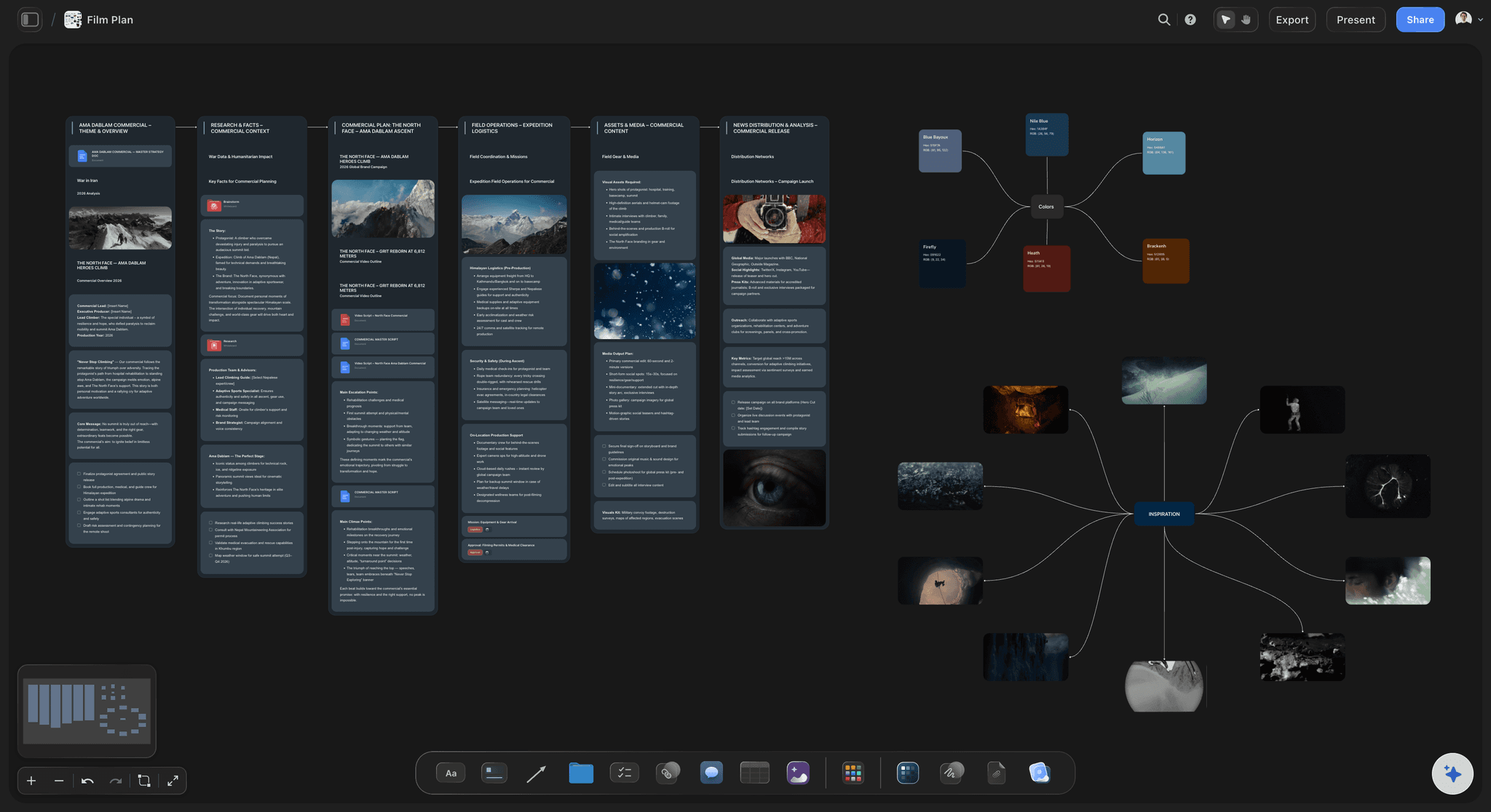
Shoot days on a strip board
Days grouped by location and cast
The strip board puts one strip per scene and groups the scenes into shoot days by location and light. Moving a strip between days is a drag, so a schedule change can be tried on the board before anyone is told.
See the shooting schedule →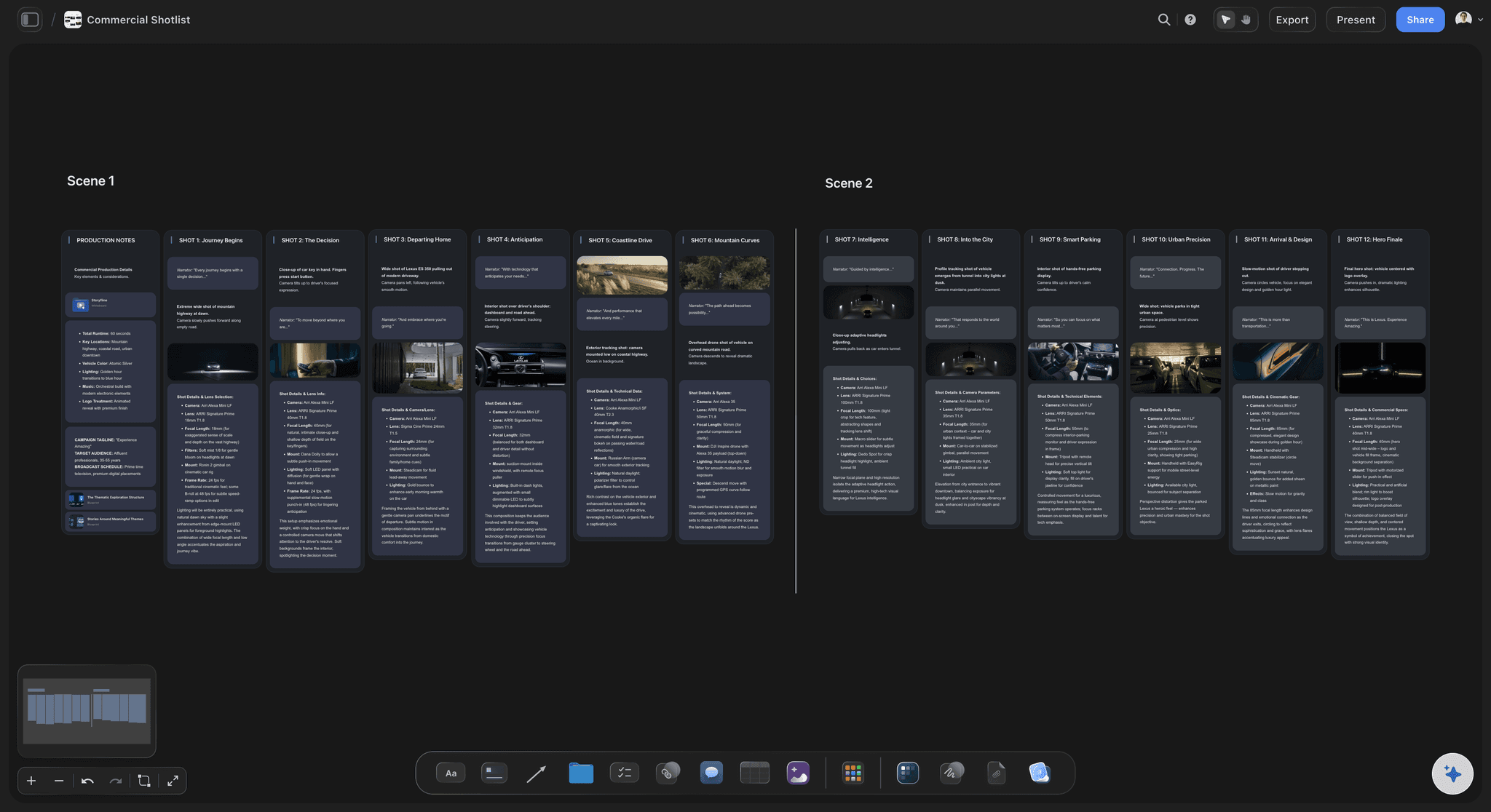
A call sheet PDF per day
The shoot day's operating manual
The AI drafts a call sheet PDF the crew can open on a phone, from the day's scenes, shots, location and contacts on the board.
See the AI call sheet generator →Unlimited boards. No object cap.
One board per production, from the brief to wrap. Storyflow is paid-only during early access, with plans from $7.99 a month billed annually ($9.99 monthly). A free plan launches before the end of 2026, and anyone a paid member invites to a board joins free.
Unlimited production boards and file uploads on every paid plan
AI workflows for a pre-production plan, script breakdown, strip board, shot list and budget
Call sheet, treatment and one-pager PDFs drafted from the board
View-only links for crew and clients, plus free invites to edit
Built for people with taste
What goes wrong on a shoot day, and how do you plan it out?
They start as a gap between two documents in pre-production. Each has a mechanical fix.
Copied, not connected
The four gaps that surface on set
A script change that never reaches the shot list: The new scene is in the script and missing from the day. Keeping the shot list beside the script makes the gap visible the moment the script changes.
A call sheet from an old schedule: The crew arrives at the right time for yesterday's plan. Draft each call sheet from the current board, and date every version.
A location note in someone's inbox: Parking, power, access and the neighbour who complains about noise. The recce notes belong on the location's card, with photos.
Nothing marked as droppable: Every schedule slips. Marking each shot must-have, should-have or nice-to-have gives the director something to cut when it does.
Brief, breakdown, shots, days, call sheet
The planning order, and what each stage needs
Brief and look: Goal, deliverables, deadline, budget, decision maker, and a moodboard of ten to twenty references grouped by what they show: light, framing, colour.
Breakdown and budget: Every scene's cast, locations, props and wardrobe, then a budget built from that list rather than guessed from the brief.
Shots and days: Shots in shooting order, grouped by location and setup. A realistic day for a small crew is fifteen to twenty-five setups, fewer with talent.
Call sheet and contacts: Call times, address, parking, nearest hospital, weather, scenes and contacts. One per day, sent the day before.
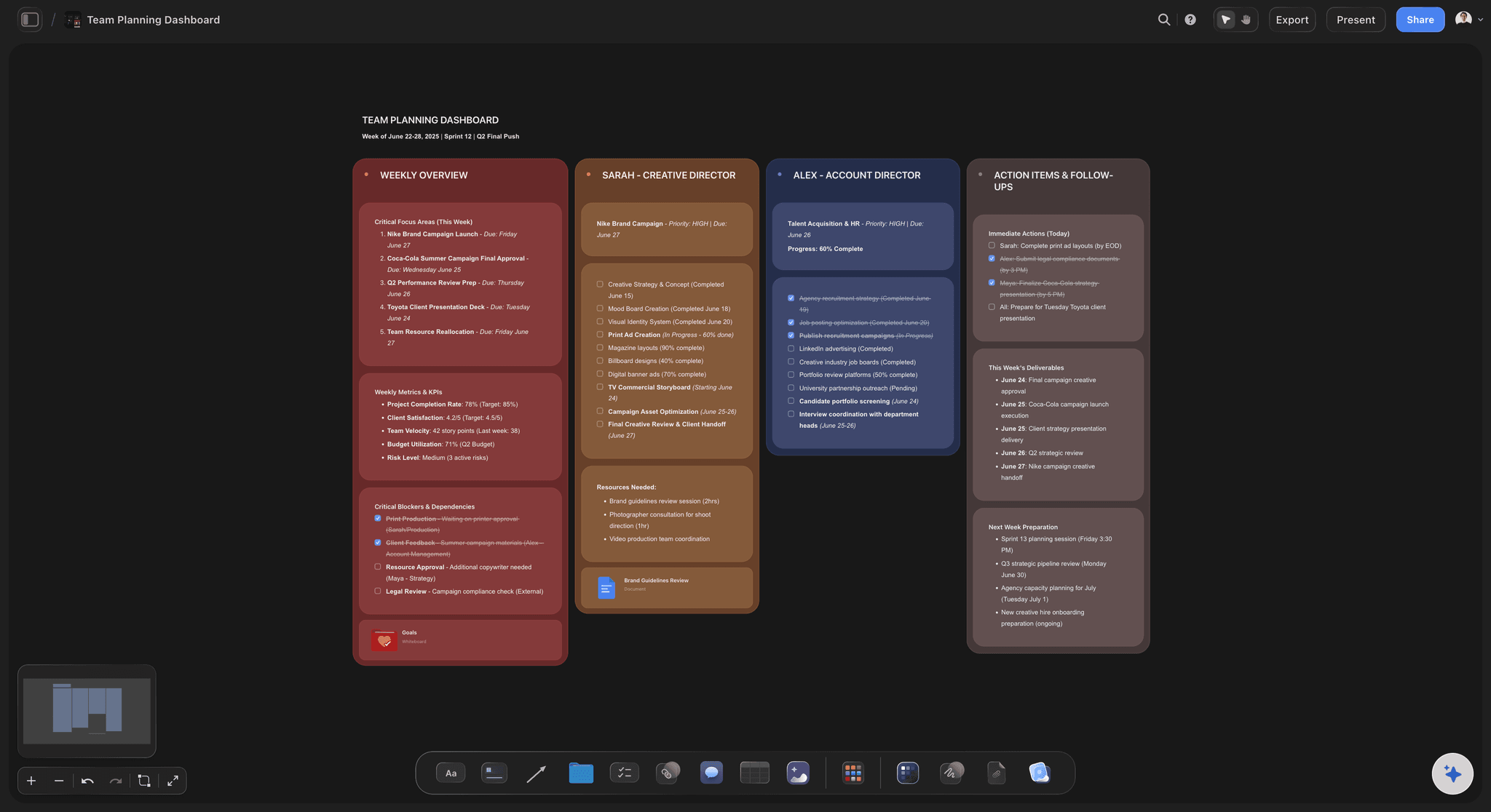
AI that reads the production board
A second pair of eyes before the shoot
Draft each stage from the last: Ask for the shot list from the script, or the shoot days from the shot list. The AI reads the board you have open, so it works from your production.
Find what is missing: Ask which scenes have no location, which shots are not on any day, or what the call sheet for day two still needs.
Bring in the client's documents: Attach up to five documents and three other boards, such as the client brief, the script and a past production, as context.
It proposes, you decide: AI edits land on the board with one-click Undo. The schedule, the budget and the creative calls stay with the producer.
Honest limits
Where you will still want another tool
Call sheet distribution: Storyflow drafts the call sheet PDF; it does not send it or collect confirmations. StudioBinder and Set Hero do.
Review and approval of cuts: There is no frame-accurate review or approval status. Use Frame.io for cut review and keep the plan here.
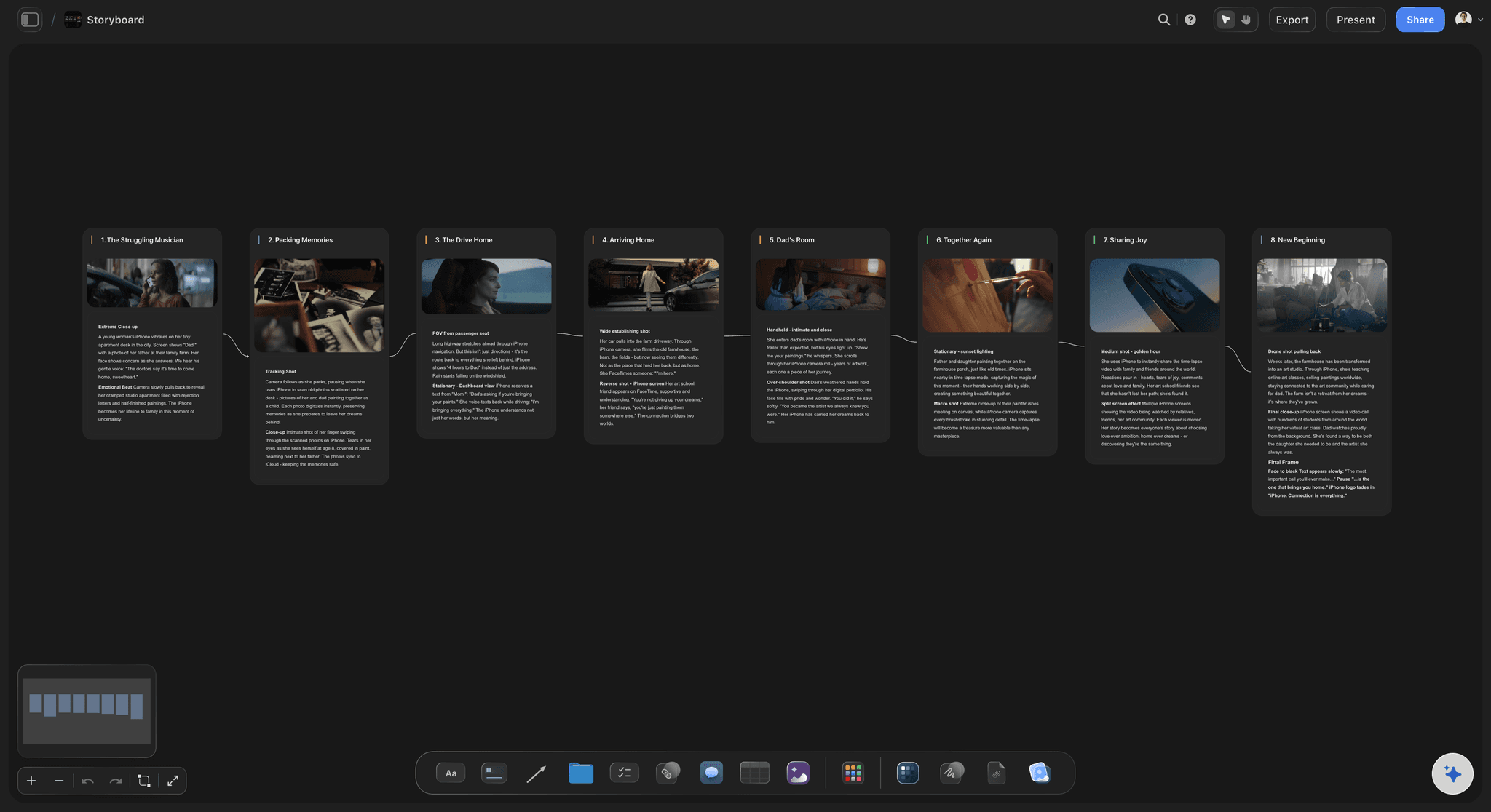
Storyboard drawing: The pen tool is for rough sketches, not finished illustration. Lay out reference images or grabbed frames, or generate frames with the AI on Pro and Max.
Worked example
A two-minute brand video, from brief to call sheet
Monday: the brief: An in-house producer pastes the client brief: a two-minute founder story for a coffee roaster, one shoot day, a fixed budget. The AI drafts a moodboard row and a script outline beside it.
Tuesday: breakdown and shot list: With the script approved, the AI breaks it down into locations, cast and props, then drafts 16 setups in a shot list from the same board.
Wednesday: the day and the budget: The producer orders the setups for one day, roastery first while the machines run, interview last. Budget lines sit in a table on the board.
Thursday: the call sheet: The AI drafts the call sheet PDF from the board, with the nearest hospital listed. The client and crew open the whole plan from one view-only link.
Explore templates for your project
Every template opens as a real, editable board on the infinite canvas. Pick the closest fit and make it your own.
YouTube Plan
Plan a video from hook to outline to shot list, with references and thumbnail ideas sitting right beside it.
One app instead of five
How does Storyflow compare with StudioBinder, Notion and Trello for production planning?
Each is good at something: StudioBinder at production paperwork and call sheet distribution, Notion at custom databases, Trello at simple cards. Here is where they differ for planning a video production.
Storyflow
Recommended
Brief, moodboard and script on one visual canvas
Script breakdown, shot list and stripboard
Tasks and deliverables on a kanban
Crew opens the plan by link with no account
Sends call sheets and collects confirmations
StudioBinder
Brief, moodboard and script on one visual canvas
Script breakdown, shot list and stripboard
Tasks and deliverables on a kanban
Crew opens the plan by link with no account
Sends call sheets and collects confirmations
Notion
Brief, moodboard and script on one visual canvas
Script breakdown, shot list and stripboard
Tasks and deliverables on a kanban
Crew opens the plan by link with no account
Sends call sheets and collects confirmations
Trello
Brief, moodboard and script on one visual canvas
Script breakdown, shot list and stripboard
Tasks and deliverables on a kanban
Crew opens the plan by link with no account
Sends call sheets and collects confirmations
What creators are saying
Join early creators getting structured workspaces and AI that remembers their projects
“Storyflow has sped up my workflow by at least 3x, which means more flow state and more projects I can actually ship. It truly changed the way me and my team create.”

Reilin Joey
Director & YouTuber
“One prompt gets me a structured board. But the tactics are my favorite. I run my YouTube scripts through them and my intros and retention got better. It's amazing.”

Justkay
YouTuber & Freelance Filmmaker
“I used to juggle five apps to plan a project. Now I describe what I am making and get boards, lists, and a schedule. All in one place.”

George
@fernwehchronicles
Video production planning, answered.
What producers ask about planning a shoot, from the brief to the call sheet.
Storyflow keeps the whole production on one board that gets more specific at each stage: brief, script, script breakdown, shot list, shoot days, budget and a call sheet PDF the AI drafts per day, which the crew opens by link. Producers who must send call sheets and collect confirmations add StudioBinder or Set Hero. Whatever the tool, one source of truth with a named owner per document is the habit that matters.
Storyflow is a video production planning template on one board: it holds the brief, the moodboard, the script, the script breakdown, the shot list, the shoot days and the budget, from pre-production through the shoot. The AI drafts a call sheet PDF for every shoot day, and the crew opens the plan by link with no account. StudioBinder still sends call sheets and collects confirmations, which Storyflow does not.
The brief (goal, deliverables, deadline, budget, decision maker), a moodboard, the script, a breakdown of cast, locations, props and wardrobe per scene, a shot list with priorities, shoot days grouped by location, a budget, a contact list and a call sheet per day. Storyflow's pre-production plan workflow lays these out on one board you duplicate for the next production.
Work in order. Agree the brief and who signs off. Write the script or outline. Break it into scenes and list what each needs. Turn scenes into shots, mark each must-have or nice-to-have, and group the scenes into days by location. Then budget from that list, recce the locations and write a call sheet per day. In Storyflow the AI drafts each stage from the one before.
A shot list says what to capture: each shot with its framing, movement and priority. A shooting schedule says when: scenes grouped into days and ordered by location, light and setup rather than story order. In Storyflow the shot list workflow produces the first and the strip board workflow the second, one strip per scene, both from the same script.
As a planning figure, fifteen to twenty-five setups for a small crew on a simple day, and fewer with talent, dialogue, moves or a location change. Budget thirty to sixty minutes for each company move. Build the day with must-have shots first, so the nice-to-haves are what gets cut when it runs long.
Yes, as a draft. Describe the shoot day and Storyflow's AI drafts a call sheet PDF from the board, with call times, location, contacts, scenes and shots, which the crew can open on a phone. It does not send the call sheet or collect confirmations; distribute it by email or a group chat, or use StudioBinder if you need confirmations.
Not during early access. Storyflow is paid-only during early access, with plans from $7.99 a month billed annually ($9.99 monthly). A free plan launches before the end of 2026, and anyone a paid member invites to a board joins free, so your crew and client add nothing to the bill.
StudioBinder is built for production paperwork and distribution: call sheets sent to the crew with confirmations, and structured breakdowns and schedules. Storyflow is a canvas where the brief, moodboard, script, shot list and shoot days sit side by side, and the AI drafts each stage from the last. Some producers plan in Storyflow and distribute call sheets from StudioBinder once the schedule locks.
Yes. Share a view-only link and they open it in a browser with no account, seeing the latest version when they open or reload. To leave notes they sign in to comment. Invite the producer, director or editor to edit and they work on the board in real time; anyone a paid member invites joins free.
Make every change visible instead of silently editing. Record the change, what it affects and the new version on the board, update the connected documents in the same sitting, and date the call sheet. In Storyflow the script, shot list and shoot days sit side by side, and you can ask the AI which shots a script change affects.
Yes, with limits. The AI's storyboard workflow lays scenes out frame by frame, and you fill frames with reference images or stills grabbed from an uploaded clip. Generating frames with AI needs Pro or Max. There are no drawing tools, so if you sketch, photograph the sketches and drop them in.
Brand films, commercials, corporate interviews, documentaries, event coverage, music videos and YouTube productions with a crew. Anything with a brief, a script or outline, and at least one shoot day. For a solo upload with no crew, the YouTube video planner is the simpler starting point.
More from Storyflow
Pre-production tools
Video production workflow
YouTube video planner
Video pre-production
Pre-production checklist
Pre-production to shoot day
Shot list software
Shooting schedule
AI call sheet generator
Commercial production planning
Corporate video production
Video production checklist
How video producers stay organised
The pre-production to shoot day handoff
Script breakdown software
Film scheduling software
Client brief to production plan
How to make a shot list
One board from the brief to the last shoot day.
Describe the video, let the AI lay out the plan, and walk onto set with a call sheet built from the current plan. No download.