The Production Coordinator Workflow (2026): The Week, the Day, and the Paper Trail
A coordinator's workflow is three loops at three speeds: a weekly loop keeping schedule, crew and locations true, a daily loop turning tomorrow into a call sheet and today into a report, and a continuous paper trail nobody thinks about until it blocks a delivery.

Category
Video Production
Author

Justkay
Documentary Filmmaker & Founder at Storyflow
Topics
2026-09-02
•
16 min read
•
Video Production- production coordinator workflow
- production coordinator checklist
- call sheet distribution
- production paperwork tracking
- film production organization
What does a production coordinator do day to day, and what is the workflow?
[A production coordinator's workflow](/production-coordinator-workflow) is three loops running at different speeds: a weekly loop that keeps the schedule, crew and locations true; a daily loop that turns tomorrow into a call sheet and today into a report; and a continuous paper trail of releases, permits, insurance and deal memos that nobody thinks about until it is missing. The job is not "keeping the production organised" in the abstract. It is being the single place where the answer lives, so that when the DP asks whether the 4pm location has power, there is one person who knows and one document that says so. StudioBinder is the strongest single tool for the coordinator's paperwork because call sheets, contacts, breakdowns and schedules stay linked, Yamdu is the better answer across many shoot days, Frame.io owns the media side, and Storyflow holds the planning half where the schedule's reasoning and the production's open questions stay visible rather than living in one person's inbox. Below is the workflow loop by loop, the twelve documents a coordinator owns, and the honest ranking of the tools.
Full disclosure: Storyflow is our product and is listed first in the reviews and the table: our pick first, then the rest by job. The at-a-glance list places it fourth, behind StudioBinder, Yamdu and Airtable. The article states that Storyflow only drafts call sheets (as a PDF it does not send or track) and strip boards (with no scheduling engine), and produces no contact sheets, all core coordinator outputs, and recommends StudioBinder or Yamdu for them.
How the production management tools compare on trust, innovation, ratings and pricing
Which production management tools are the most trusted by coordinators?
StudioBinder for call sheets and contacts, because delivery with open tracking is what turns an evening distribution from a hope into a check. Yamdu across long productions, where it covers more of a coordinator's twelve documents natively than anything else. Celtx on scripted work. Airtable is trusted for the paper trail specifically, because it can say what is missing rather than only what is filed.
Which production management tools have fair pricing?
Celtx from around $15 and Yamdu from around $20 are the fairest for what they cover. StudioBinder is the most expensive here and the most capable, with a free tier tight enough that most productions move off it. Airtable's per-seat cost adds up when short-term crew need access. Storyflow is flat per account rather than per seat and is paid-only during early access from $7.99 per month billed annually.
Which production management tools are the most innovative?
Frame.io for camera-to-cloud, which genuinely changes the risk profile of a wrap by making the second verified copy exist before anyone drives home. Yamdu for how much of a production it models in one place. Storyflow for board-wide AI context, where the assistant reads the whole canvas before answering rather than working from a prompt.
Which production management tools are underrated?
Airtable, badly, for the paper trail. A folder tells you what you have and never what you are missing, and roughly half of everything sent for signature is never returned. A table with a status, an owner, a chase date and a not-signed filter catches the gap that only becomes visible at delivery. Google Sheets is underrated too: half the coordinators working today run on it and it works.
When choosing a production management tool, which would you recommend?
StudioBinder for most productions, because call sheet delivery and linked schedules remove the two most common failures. Yamdu once the production runs across many shoot days. Add Airtable or a spreadsheet with a not-signed filter for the paper trail regardless, because no production suite tracks missing documents well. Do not buy a suite for a two-day shoot.
Quick Comparison
Four tools across a coordinator's twelve documents, and which part each covers.
| Tool | Best For | AI Features | Price |
|---|---|---|---|
| StudioBinder | Call sheets, contacts, schedule | Light AI | Free / $42 mo |
| Yamdu | All-phase production management | Light AI | From $20 mo |
| Airtable | The paper-trail checklist | Airtable AI | Free / $20 mo |
| Storyflow | Open questions and the risk list | AI reads the whole board | $7.99 mo annual (free plan late 2026) |
Article Metadata
By Justkay, Documentary Filmmaker and Founder of Storyflow Published September 2, 2026 · 16 min read · Video Production
Table of Contents
- What a Production Coordinator Actually Owns
- The Three Loops
- The Weekly Loop
- The Daily Loop
- The Paper Trail
- The Twelve Documents
- 8 Tools for a Coordinator
- How We Evaluated These Tools
- Tool Reviews
- What Breaks a Coordinator's Week
- FAQ: Production Coordinator Workflow
- The Bottom Line
- Author
- Related Reading
Key Takeaways
- Three loops at three speeds: weekly truth-keeping, daily call sheet and report, continuous paper trail.
- The coordinator's real product is a single answer to any production question, held in one place.
- Distribute the call sheet the evening before, not the morning of. That gap is where crew questions surface cheaply.
- The paper trail is invisible until it blocks a delivery. Track it as a checklist with names, not as a folder.
- Every open question needs a name and a deadline, or it becomes a 7am problem.
What a Production Coordinator Actually Owns
The job description says logistics. What the job is, day to day, is being the authoritative answer.
On any production of more than three people there are roughly forty facts in motion at once: who is called when, which lens is rented until Thursday, whether the location's lift works, which interviewee moved, what the insurance covers, whether the drone operator's permit came through. Every one of those facts is known by somebody. The coordinator's job is that all of them are known by the same somebody, and written where anyone can check without asking.
That framing decides the workflow. The measure of a good coordinator week is not how much was done; it is how many questions on the day had to be escalated because nobody knew the answer. Zero is achievable and it is what the loops below are for.
The Three Loops
The weekly loop keeps the production's shape true. Schedule, crew, locations, gear, budget. It runs once a week at a fixed time, and its output is a corrected schedule and a list of open questions with names against them.
The daily loop converts tomorrow into a call sheet and today into a production report. It runs every day of the shoot, in the afternoon, and its output is two documents.
The paper trail is continuous and asynchronous. Releases, permits, insurance certificates, deal memos, location agreements. It has no rhythm, which is exactly why it needs a checklist rather than a folder: things with no rhythm are the things that get forgotten.
Running them at different speeds is the point. Coordinators who try to do everything daily burn out in a fortnight; coordinators who do everything weekly find out on Tuesday that Wednesday's location cancelled on Sunday.
The Weekly Loop
One fixed slot, ninety minutes, same day each week.
Schedule
- Walk the next two weeks day by day and confirm each is still possible
- Check every shoot day against daylight, tides, opening hours, or whatever the day actually depends on
- Confirm turnaround between days meets whatever agreement or law applies
- Identify any day where losing two hours would break it, and write down what gets cut
Crew
- Confirm every position for the next two weeks, individually and in writing
- Chase deal memos not yet signed
- Confirm any crew travelling, and their travel
- Identify the position with no backup, and find one
Locations
- Confirm each location in writing, with the exact room and access details
- Chase permits and check their dates against the current schedule, not the original one
- Confirm parking, load-in, power and toilet access for each
- Confirm the backup for the location most likely to fall through
Gear
- Confirm rentals against the current shot list, not last week's
- Confirm collection and return times and who is doing them
- Check that anything with a delivery lead time has been ordered
Money and paper
- Update actuals against budget
- Chase every outstanding invoice and every outstanding release
- Confirm insurance covers what is actually being shot next week
Output
- A corrected schedule, distributed
- A list of open questions, each with a name and a date
- One sentence on what changed shape this week
That last item is the one that keeps a production honest. Not a status report; one sentence about what is now different.
The Daily Loop
Runs in the afternoon of every shoot day. Two documents come out of it.
Tomorrow: the call sheet.
- Confirm tomorrow's schedule against what actually happened today
- Confirm every call time individually with the person, not with the group
- Weather, sunrise and sunset for the actual location
- Address, parking, load-in, and what to do on arrival
- Nearest hospital, and it should be checked rather than guessed
- Contact numbers for everyone on the day
- Any change from the original schedule flagged at the top rather than buried
- Distribute in the evening, not the morning
Today: the production report.
- What was shot against what was scheduled
- Actual start, wrap, and meal times
- Anything not achieved, and whether it needs a pickup day
- Media: how much was shot, where it went, whether both copies are verified
- Anything broken, lost or injured
- Anything that will affect tomorrow
The rule worth stating: the call sheet goes out the evening before, always. Not because of tradition, but because the gap between distribution and the call time is when crew read it and find the problems: the address is wrong, the call is impossible given last night's wrap, they were never told about the early start. Sent at 6am, all of those become 7am problems with an entire crew standing around.
The Paper Trail
The part of the job that is invisible until it blocks a delivery. Track it as a checklist with names and dates, never as a folder, because a folder tells you what you have and never what you are missing.
- Appearance releases for every person visible and identifiable
- Minor releases with a guardian signature where relevant
- Location agreements, signed, with dates matching the current schedule
- Permits for filming, drones, roads, or anything the jurisdiction requires
- Insurance certificates, including any a location or rental house demands as a condition
- Deal memos for every crew member
- Rights and clearances for music, archive, artwork, logos, or anything visible you did not make
- Rental agreements and their return conditions
- Safety documentation where required
- Vendor invoices and receipts, collected as they happen rather than at the end
- Consent for data, where interviews touch anything sensitive
- Chain of title paperwork, if the production has one
The check that catches problems: for each row, a name and a date, and a status that is either "signed and filed" or "not". "Sent" is not a status. Half of everything on this list is sent and never returned, and the difference only becomes visible at delivery.
The Twelve Documents
Everything above produces twelve documents. A coordinator who can produce all twelve on demand is doing the job.
- The current schedule, with a version and a date
- The crew list with contacts and positions
- The cast and contributor list with contacts and availability
- The location list with addresses, access notes and contacts
- Today's call sheet
- Today's production report
- The gear list with rental dates and responsible names
- The budget with actuals
- The paper-trail checklist with statuses
- The open-questions list with names and dates
- The contact sheet: one page, everyone, one number each
- The risk list: what would end a shoot day, and the mitigation
Document 11 sounds trivial and is the one people ask for at 7am. Document 12 is the one that is never written and is the highest-value ninety minutes in pre-production.
8 Tools for a Coordinator
| Tool | Best for | Call sheets | Paper trail | Starting price |
|---|---|---|---|---|
Storyflow | The planning half and the open questions | AI-drafted PDF, not sent or tracked | Fair | $7.99 mo annual (free plan late 2026) |
StudioBinder | The coordinator's core paperwork | Excellent | Good | Free / $42 mo |
Yamdu | Many shoot days across a long production | Excellent | Excellent | From ~$20 mo |
Celtx | Scripted work, script to schedule | Good | Fair | Free / from ~$15 mo |
Frame.io | The media side of the daily report | None | Weak | Free / from ~$15 mo |
Airtable | A custom paper-trail tracker | None | Excellent | Free / $20 mo |
Notion | A custom production wiki | None | Good | Free / $10 mo |
Google Sheets | The honest default | None | Good | Free |
Prices are publicly listed plans as of early 2026 and change often.
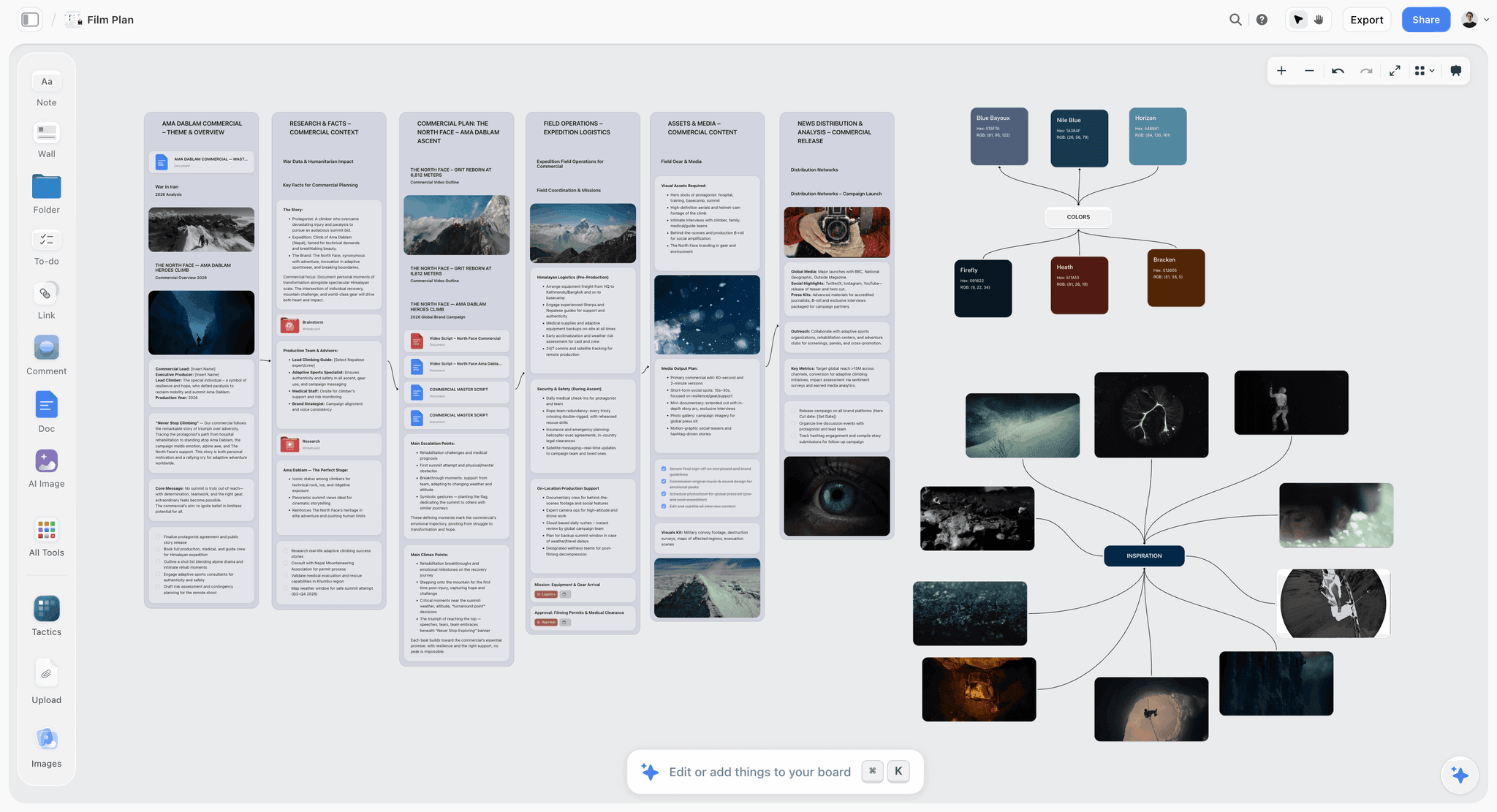
A production board holding the schedule reasoning and the open questions with names against them
An open question with no name is a hope
Every production carries forty facts in motion and most of them live in one person's inbox. Put the open questions, the risk list and the reasoning behind the schedule somewhere the whole crew can check without asking.

How We Evaluated These Tools
Five criteria:
- Call sheet quality and delivery. Not just generating one, but sending it with confirmation of who opened it, which is what makes the evening distribution useful.
- Linkage. When the schedule changes, how much else updates. A tool where a schedule change requires editing four documents will produce four versions of the truth by week three.
- Paper-trail tracking. Whether the tool can say what is missing, not just store what exists.
- Cost for an indie production, including short-term crew who need access for two days.
- The daily loop. Whether the afternoon routine takes twenty minutes or ninety.
Testing covered a five-day documentary shoot, a two-day branded production, and a fifteen-day narrative schedule.
Tool Reviews
1. Storyflow

Storyflow is our product and we list it first, our pick first and then the rest by job, with a limitation stated plainly: it drafts call sheets and strip boards but does not send call sheets, track confirmations or run a scheduling engine, and those are the coordinator's core outputs. For those, this article recommends StudioBinder or Yamdu.
What it holds well is the half that has no home in a paperwork tool: the open-questions list, the risk list, the reasoning behind a schedule, and the planning conversation that produced the shape of the shoot. Those live in an inbox on most productions, which is exactly why the answer to "why is the Thursday location the backup" is usually unavailable. On a board, with the AI reading the whole canvas before it answers, they stay retrievable.
Storyflow is paid-only during early access; its Free plan launches before the end of 2026, and anyone a paid member invites to a board joins free now.
Key features: AI reading the whole current board plus up to one Tactic and three documents you mention, brief-to-board generation, story blueprints, flat per-account pricing.
Pricing: Plus $7.99 per month billed annually ($9.99 monthly); Pro $14; Max $39.
Pros: open questions and reasoning stay visible instead of living in an inbox; flat pricing so two-day crew cost nothing; invited collaborators join free.
Cons: call sheets are AI-drafted PDFs with no sending or tracking; no scheduling engine, and the strip board is a draft; no contact-sheet generation. It is a companion to a production tool, not a replacement.
2. StudioBinder
The core coordinator tool and the correct first recommendation. Call sheets are production-grade, they send properly, and you can see who has opened them, which converts the evening distribution from a hope into a check. Contacts, breakdowns, shot lists and stripboard schedules stay linked, so a schedule change propagates rather than spawning a second version.
Its paper-trail handling is decent rather than excellent: you can attach documents, but tracking what is missing still tends to end up in a side spreadsheet.
Key features: call sheets with open tracking, contact management, breakdowns, stripboard scheduling, shot lists, production reports.
Pricing: Free tier; paid plans from $29 per month, commonly used tier around $42.
Pros: the best call sheet in the category by some distance; linkage is real; strong mobile view.
Cons: expensive for short productions; the free tier is tight; missing-document tracking is weak.
3. Yamdu
Across a fifteen-day schedule, Yamdu is the better tool and it is close to being the first recommendation. It covers more of the twelve documents natively than anything else here, including proper paper-trail tracking, and it is built for a production that runs for months rather than days. What it asks in return is discipline; a crew that will not maintain it gets less from it than from StudioBinder.
Key features: all-phase production management, scheduling, call sheets, cast and crew, documents, budgeting, post tracking.
Pricing: from around $20 per month.
Pros: the most complete coverage of a coordinator's twelve documents; genuine paper-trail tracking.
Cons: real setup cost; more apparatus than a two-day shoot justifies.
4. Celtx
Strong where the production starts from a script, because breakdown and schedule derive from the script itself and stay linked to it. Call sheets are good. For documentary and unscripted work, where the coordinator's job is mostly access and contributors rather than scenes, it is a worse fit than StudioBinder.
Pricing: Free tier; paid from around $15 per month.
Pros: script-to-schedule linkage saves real time on scripted work; good value.
Cons: weak fit for unscripted; interface shows its age.
5. Frame.io
Covers the media half of the daily production report better than anything else. Camera-to-cloud means the "media offloaded and verified" line can be true before wrap rather than after the drive home, which changes the risk profile of a shoot day.
Pricing: Free tier; paid from around $15 per user per month.
Pros: camera-to-cloud genuinely changes the wrap risk; timecoded review is the right shape for notes.
Cons: nothing for scheduling or paperwork; per-user pricing; needs upload bandwidth on location.
6. Airtable
The best paper-trail tracker here, and it is not close. A table with a row per document, a status, an owner, a chase date and a filter for "not signed" does the thing that folders cannot: tell you what is missing. If the production has a lot of releases or clearances, this is worth the setup.
Pricing: Free; Team $20 per seat per month billed annually.
Pros: the best missing-document tracking; grouped views and reminders.
Cons: per-seat cost; no production features at all; setup time.
7. Notion
A good production wiki and a poor operational tool. Contacts, locations and open questions sit well in databases. It is slow on bad signal, awkward on a phone in daylight, and produces no call sheet.
Pricing: Free for personal use; Plus $10 per user per month billed annually.
Pros: flexible; good for the wiki half; free tier usable.
Cons: poor on location; no production documents; per-seat cost.
8. Google Sheets
Half the coordinators working today run on this, and it works. A workbook with tabs for schedule, crew, locations, gear and paperwork is a real system. What it lacks is delivery: no call sheet send, no open tracking, no reminders, and a genuine risk of four people editing four copies.
Pricing: free.
Pros: free, universal, offline-capable, everyone can use it.
Cons: no delivery or tracking; version sprawl; nothing production-aware.
What Breaks a Coordinator's Week
The schedule changes and only one document knows. The call sheet says 8am, the permit says 9, the rental is booked from 10. Every uncoordinated schedule change spawns a second version of the truth, and the wrong one always gets read.
Confirming crew as a group. A message to a group chat is not a confirmation. Individual confirmations are slower and they are the only kind that catches the person who is double-booked.
Sending the call sheet in the morning. Removes the entire window in which crew find the problems.
Treating "sent" as a status on the paper trail. Half of everything sent is never returned, and that gap is invisible until a delivery is blocked.
No named owner on an open question. An open question with no name is not a question, it is a hope. It becomes a 7am problem.
No risk list. Every production has one or two single points of failure, and naming them costs ninety minutes in pre-production and occasionally saves a whole shoot day.
The coordinator being the only copy. If every answer is in one person's head and inbox, the production stops when they are ill. Every one of the twelve documents existing somewhere shared is what makes the role survivable.
The Bottom Line
Run three loops at three speeds and let each produce its documents. Confirm individually rather than to a group. Send the call sheet the evening before so problems surface at 6pm instead of 7am. Track the paper trail by what is missing rather than by what is filed. Name an owner and a date on every open question. And write the risk list, because ninety minutes spent naming the two things that could end a shoot day is the cheapest insurance a production buys.
FAQ: Production Coordinator Workflow
What does a production coordinator actually do day to day?
Runs three loops at three speeds. A weekly loop that re-confirms schedule, crew, locations, gear and budget, and produces a corrected schedule plus a list of open questions with names against them. A daily loop that turns tomorrow into a call sheet and today into a production report. And a continuous paper trail of releases, permits, insurance and deal memos. The measurable output is that nobody on the day has to escalate a question because no one knew the answer.
When should the call sheet go out?
The evening before, without exception. The gap between distribution and call time is when crew actually read it and surface the problems: a wrong address, an impossible turnaround from last night's wrap, an early call nobody mentioned. Sent at 6am, every one of those becomes a 7am problem with the whole crew standing around, and a coordinator's entire job is converting 7am problems into 6pm ones.
What documents does a production coordinator own?
Twelve: the current schedule, the crew list, the cast and contributor list, the location list, today's call sheet, today's production report, the gear list, the budget with actuals, the paper-trail checklist, the open-questions list, the one-page contact sheet, and the risk list. The last two are the ones most often missing, and they are the two most likely to be asked for under pressure.
What is the best tool for a production coordinator?
StudioBinder for most productions, because call sheets send with open tracking and the schedule stays linked to breakdowns, shot lists and contacts. Yamdu once the production runs across many shoot days, since it covers more of the twelve documents natively including the paper trail. Airtable alongside either, if the production carries a lot of releases or clearances. Frame.io for the media half of the daily report.
Does Storyflow replace StudioBinder for a coordinator?
No. Storyflow drafts call sheet PDFs and strip boards but does not send or track call sheets, run a scheduling engine or generate contact sheets, which are core coordinator outputs, and this article recommends StudioBinder or Yamdu for them. Storyflow holds the planning half: the open-questions list, the risk list and the reasoning behind schedule decisions, on a board where they stay retrievable rather than living in one person's inbox.
Is Storyflow free?
Not during early access. It is paid-only today from $7.99 per month billed annually on Plus, and its Free plan launches before the end of 2026. Anyone a paid member invites to a board signs up free and can invite others, so short-term crew who need access for two days cost nothing extra.
How do you track releases and permits without losing any?
As a checklist with a row per document, an owner, a chase date and a status that is either signed and filed or not. A folder tells you what you have and never what you are missing, and "sent" is not a status: roughly half of everything sent is never returned, and the gap is invisible until a delivery is blocked. Airtable or a spreadsheet with a "not signed" filter does this better than any production tool's attachment feature.
How often should the schedule be re-confirmed?
Weekly for the next two weeks, in a fixed slot, position by position and location by location rather than as a glance. Things break quietly: a location confirms in April and its opening hours change in May, a crew member takes another job, a permit's dates were written against the original schedule and no longer match. None of those announce themselves, and all of them are catchable once a week.
What is a production report and who reads it?
A daily record of what was shot against what was scheduled, actual start, wrap and meal times, anything not achieved, where the media went and whether both copies are verified, and anything that affects tomorrow. It is read by the producer, and later by anyone reconstructing what happened for insurance, payroll or a pickup day. It takes fifteen minutes and it is the only contemporaneous record of the day.
How does a coordinator handle a schedule change mid-shoot?
Change it in one place first, then propagate deliberately: the schedule, the call sheet, the permit dates, the rental dates, the crew calls, the location contact. The failure mode is not forgetting to change it; it is changing four of six and leaving two documents disagreeing. Tools where the schedule is linked to the downstream documents remove most of this risk, which is the main argument for StudioBinder or Yamdu over spreadsheets.
What is a risk list and why write one?
One page naming the things that would end a shoot day, each with a mitigation: the single location with no backup, the one crew position nobody can cover, the piece of gear with a two-week lead time, the contributor whose availability is a single window. It takes ninety minutes in pre-production, it is almost never written, and it converts the two or three genuine single points of failure from surprises into decisions.
Can one person coordinate and also do another job on set?
For a one-day shoot with three people, yes. Beyond that it degrades quickly, because the daily loop needs an afternoon and the weekly loop needs a fixed ninety minutes, and both get eaten by whatever is urgent. The visible symptom is call sheets going out in the morning, which is the first thing to slip and the one with the widest consequences.
Table of Contents
- Article Metadata
- Breadcrumb
- Table of Contents
- Key Takeaways
- What a Production Coordinator Actually Owns
- The Three Loops
- The Weekly Loop
- The Daily Loop
- The Paper Trail
- The Twelve Documents
- 8 Tools for a Coordinator
- How We Evaluated These Tools
- Tool Reviews
- 1. Storyflow
- 2. StudioBinder
- 3. Yamdu
- 4. Celtx
- 5. Frame.io
- 6. Airtable
- 7. Notion
- 8. Google Sheets
- What Breaks a Coordinator's Week
- The Bottom Line
- Author
- FAQ: Production Coordinator Workflow
- Related Reading
Templates to check out for this topic


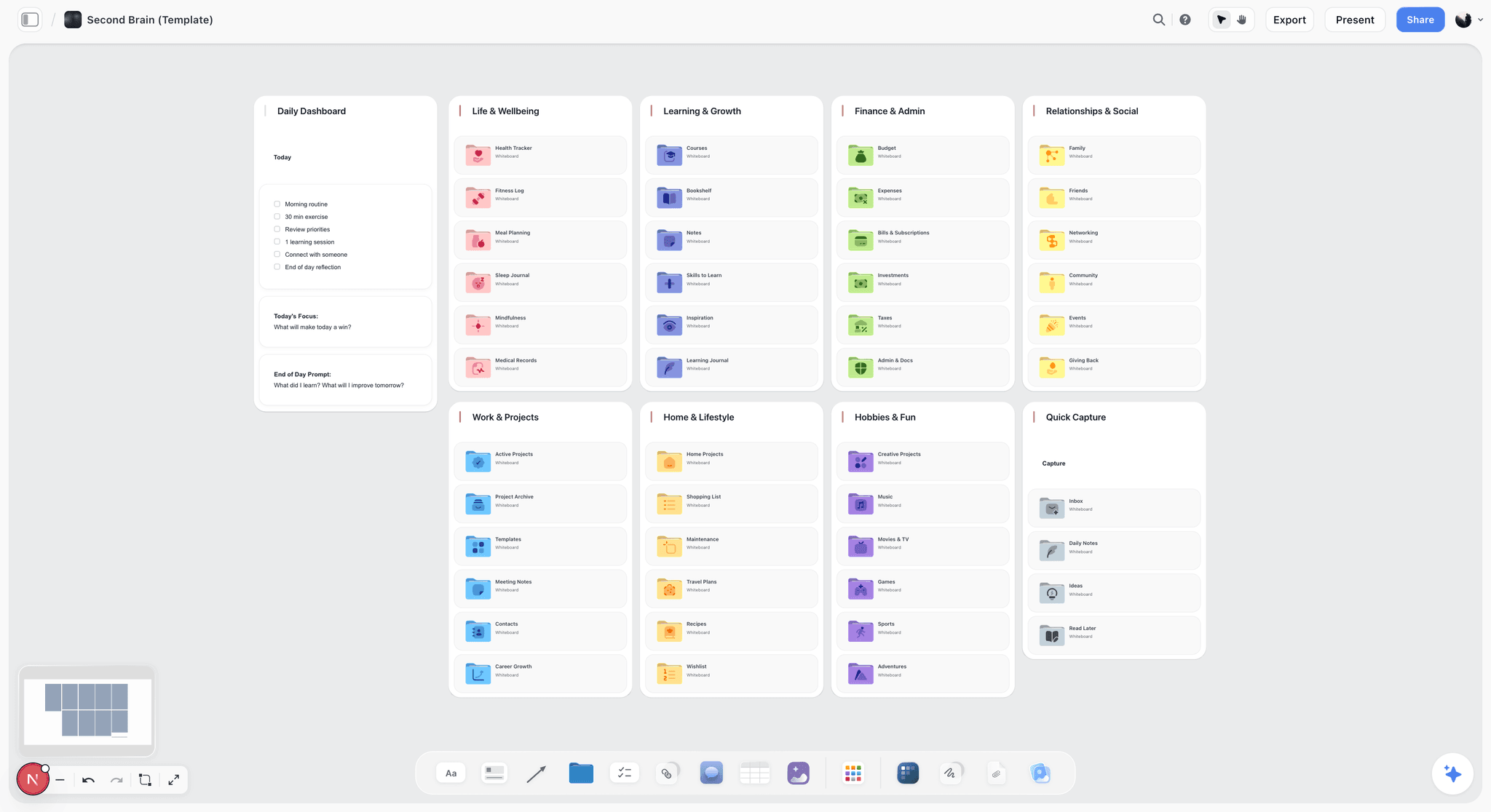
Templates you can use in Storyflow
Every Storyflow board starts from real structure and an AI that reads the whole canvas. Open one of these templates and make it yours.


See Storyflow in Action
A visual AI workspace where every feature lives inside one canvas. No tab-switching, no context lost.
Build your entire board from a single message
Type what you need in the AI chat at the bottom of your canvas. The AI adds cards, headings, and structure directly onto your board.
Use expert frameworks as AI context
Type @ in the AI chat and choose any Tactic. The AI tailors every response to that framework instead of giving generic advice.
Turn your board into a mind map in seconds
Ask the AI to restructure your canvas as a mindmap. It connects your ideas into a visual hierarchy so you can see how everything relates.
Why Storyflow Exists
Storyflow actually began as a personal tool while working on creative and research projects.
We kept running into the same problem: ideas were scattered everywhere: notes, documents, and whiteboards.
Nothing helped us see how everything connected.
So we started building a workspace designed around how ideas actually grow.
→ Read how Storyflow was createdJustkay
Documentary Filmmaker & Founder at Storyflow
Published: 2026-09-02
Extremely simple, seriously capable


See how easy it is to get started
Watch a real project come together, from a blank board to a finished plan, clicked through step by step.
Start creating with AI and become more productive
Transform your creative workflow with AI-powered tools. Generate ideas, create content, and boost your productivity in minutes instead of hours.