The 12 Best StudioBinder Alternatives in 2026 (Tested by a Filmmaker)
The best StudioBinder alternatives in 2026, tested by a filmmaker. 12 tools compared by the reason people switch, from Yamdu and Movie Magic to Gorilla and the AI canvas for the creative half.

Category
Filmmaking
Author

Justkay
Documentary Filmmaker & Founder at Storyflow
Topics
2026-07-10
•
16 min read
•
Filmmaking- best StudioBinder alternatives 2026
- StudioBinder alternative
- StudioBinder vs Yamdu
- free StudioBinder alternative
- StudioBinder replacement
- production management alternatives
What are the best StudioBinder alternatives in 2026?
The best StudioBinder alternatives in 2026 are Yamdu (best full production platform), Movie Magic (best industry-standard scheduling and budgeting), Celtx (best all-in-one suite), and Storyflow (best for the AI creative-planning half). StudioBinder is an excellent modern production-management tool, and most people who look for alternatives want one of three things it does not do well enough for them: deeper budgeting, a different price, or real AI for the creative side. This guide maps the best alternative for each reason: the dedicated production tools replace StudioBinder's logistics, and Storyflow replaces the creative-planning half. I have run documentary productions through StudioBinder, Celtx, and a spreadsheet stack, and I built Storyflow to fix the creative-planning half those tools handle lightly. So the rankings below are the honest reasons a working filmmaker leaves StudioBinder, and the tool that fixes each one.

Full disclosure: Storyflow is our own product and is listed first in the reviews and the table: our pick first, then the rest by job. The ranked list places it fourth, behind Yamdu, the deepest full production platform with the budgeting StudioBinder lacks natively, Movie Magic, the industry standard for scheduling and budgeting, and Celtx, because it replaces only the creative-planning half: the shot list, references, and story on one canvas the AI reads. Its AI drafts a call sheet PDF, a strip board and a budget table, but it does not send call sheets, run a scheduling engine or do production budgeting, so it is not a production-logistics replacement. For those you still use Yamdu, Movie Magic, or StudioBinder itself, paired with Storyflow for the creative side. We link to every tool so you can judge the fit.
Quick Comparison
These four map to the real reasons people leave StudioBinder: a deeper full platform, industry-standard scheduling and budgeting, a cheaper all-in-one suite, and the AI canvas for the creative-planning half.
| Tool | Best For | AI Features | Price |
|---|---|---|---|
| Yamdu | Full production management | Partial AI breakdown | ~$25 mo |
| Movie Magic | Scheduling and budgeting | No AI | ~$209 one-time |
| Celtx | Cheaper all-in-one suite | Partial AI | ~$15 mo |
| Storyflow | AI creative planning | Canvas AI reads the plan | $7.99 mo annual (free plan late 2026) |
All 12 StudioBinder Alternatives, Ranked
- Yamdu: best full production platform (9.1/10)
- Movie Magic: best industry-standard scheduling and budgeting (9.0/10)
- Celtx: best all-in-one browser suite (8.6/10)
- Storyflow: best for the AI creative-planning half (8.5/10)
- Gorilla: best value scheduling and budgeting (8.2/10)
- Assemble: best modern production tracking (8.0/10)
- Croogloo: best studio-grade distribution (7.8/10)
- Dramatify: best for series and live production (7.6/10)
- Setkeeper: best coordination and document hub (7.4/10)
- Boords: best for storyboarding specifically (7.2/10)
- Filmustage: best AI script breakdown (7.1/10)
- Google Sheets: best free DIY option (6.7/10)
Best StudioBinder Alternative by Job
The overall ranking is not the answer to every question. Match the tool to the job you actually have:
- Best StudioBinder alternative overall: Yamdu. The closest full production platform for an organised crew.
- Best industry-standard scheduling and budgeting: Movie Magic.
- Best all-in-one browser suite: Celtx.
- Best alternative if what you actually want is the creative planning half: Storyflow. Treatment, moodboard, and shot list on one AI-readable canvas; its AI drafts breakdown tables, a strip board and a call sheet PDF, but nothing is tagged, sent or tracked.
Comparison Table: 12 StudioBinder Alternatives Compared
| Tool | Replaces (StudioBinder role) | Starting Price | Free Option | Budgeting |
|---|---|---|---|---|
Storyflow | Creative planning | $7.99/mo (annual) | Coming late 2026 (invited collaborators join free now) | Budget table only |
Yamdu | Full production management | ~$25/mo | Trial | Yes |
Movie Magic | Scheduling and budgeting | ~$209 (one-time) | Trial | Yes |
Celtx | All-in-one suite | ~$15/mo | Yes | Light |
Gorilla | Scheduling and budgeting | Tiered | Trial | Yes |
Assemble | Production tracking | Tiered | Trial | Partial |
Croogloo | Distribution and coordination | Custom | No | No |
Dramatify | Series and live production | Per-production | Trial | Partial |
Setkeeper | Coordination hub | Custom | No | No |
Boords | Storyboarding | ~$15/mo | Trial | No |
Filmustage | AI breakdown | Tiered | Trial | No |
Google Sheets | DIY tracking | Free | Yes | Manual |
Pricing changes often and several tools quote per-production. Confirm current pricing on each site.
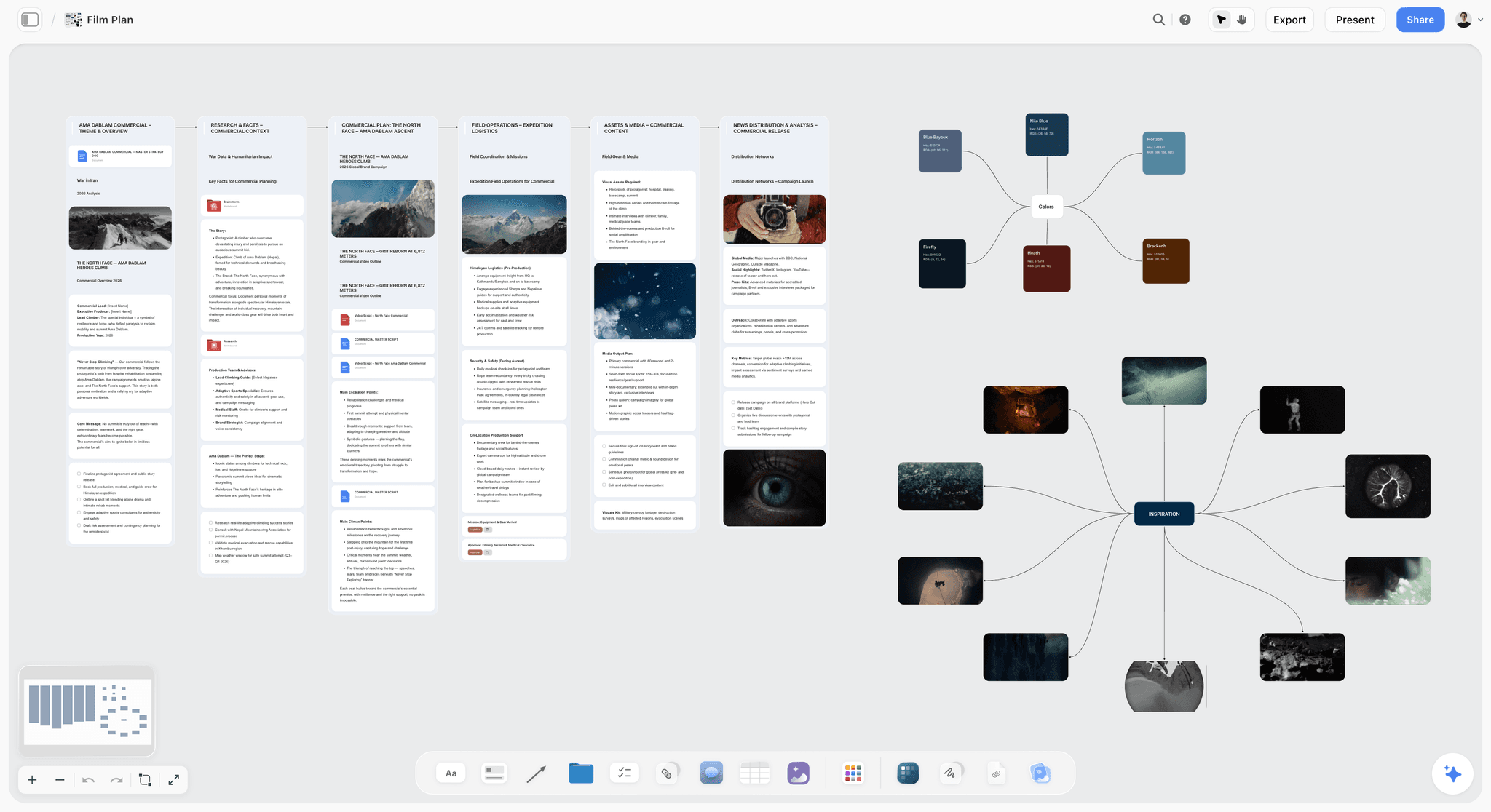
Storyflow canvas holding the shot list, references, and creative plan that StudioBinder handles lightly, read by AI
Add the AI creative planning StudioBinder handles lightly
Storyflow keeps the shot list, references, and story on one canvas the AI reads, adding the creative AI StudioBinder lacks. Pair it with your logistics tool for sending call sheets and running the schedule.

The All-in-One Tax: Why Anyone Leaves a Suite
StudioBinder is an all-in-one production-management suite, and every all-in-one suite runs on the same bargain. It does ten jobs so you do not have to buy ten tools, and in exchange no single one of those ten jobs is the best version of that job on the market. Scheduling is good enough. Call sheets are good enough. That bargain is worth paying right up until one job stops being good enough for what you are actually making.
An all-in-one suite is never the best at any one job. You leave StudioBinder the day one job stops being a feature and becomes the work.
That sentence explains almost every alternative below, because they split into two camps against the same tax. The first camp is the specialists: tools that are the best in the world at exactly one job, like Movie Magic for scheduling, Boords for storyboards, Filmustage for AI breakdown, and Storyflow for AI creative planning. You add a specialist when a single job outgrew "adequate." The second camp is the cheaper suites: Celtx, Gorilla, and Yamdu make the same all-in-one bargain for less money or a different billing model, and you switch to one when the bundle is fine but its price or depth is not.
So the whole decision comes down to one question: are you switching because one job became the work, or because the bundle should cost less or go deeper? The trade-off is breadth for depth, or breadth for a better price. You rarely get all three.
Why People Look for StudioBinder Alternatives
The four reasons filmmakers actually leave are specific: they need deeper budgeting than StudioBinder's native (none) to match Movie Magic or Gorilla; they want a different price, whether a one-time purchase or a cheaper suite; they want real AI for the creative side that StudioBinder handles lightly; or they only need part of it, like storyboards (Boords) or AI breakdown (Filmustage).
For the AI creative-planning half, Storyflow is strongest, because the shot list, references, and plan live on one board the AI reads. It is not a full production-management replacement: it drafts a call sheet PDF and a strip board, but for sent call sheets, confirmations and a scheduling engine you still want Yamdu or StudioBinder. For the scheduling side, see the best film scheduling software in 2026.
How We Evaluated These StudioBinder Alternatives
Every tool here was assessed on how well it replaces the StudioBinder role people want an alternative for, not on feature count. Five criteria, weighted in this order:
- Depth in its area. Is it genuinely deeper than StudioBinder where it counts, or a second copy of the same "good enough"?
- Budgeting. Does it add the native budgeting StudioBinder lacks, and is it production-grade?
- AI. Does it offer real creative AI that reads your project, not just a breakdown assistant?
- Value. Is the pricing model better: cheaper, one-time, or a more generous free tier?
- Migration. How much of a StudioBinder production moves over, and how much do you rebuild by hand?
Every tool was tested by rebuilding a real documentary production across it: the schedule, the breakdown, the shot list, the references, and the creative plan. Tools were judged on how well they serve the specific reason someone leaves StudioBinder.
Quick Picks by Reason to Switch
If you need deeper production management: Yamdu or Movie Magic.
If you need budgeting: Movie Magic or Gorilla.
If you want a cheaper suite: Celtx or Gorilla.
If you want AI for the creative side: Storyflow.
If you only need one feature: Boords for storyboards, Filmustage for AI breakdown.
Detailed Reviews: The 12 Best StudioBinder Alternatives
1. Storyflow
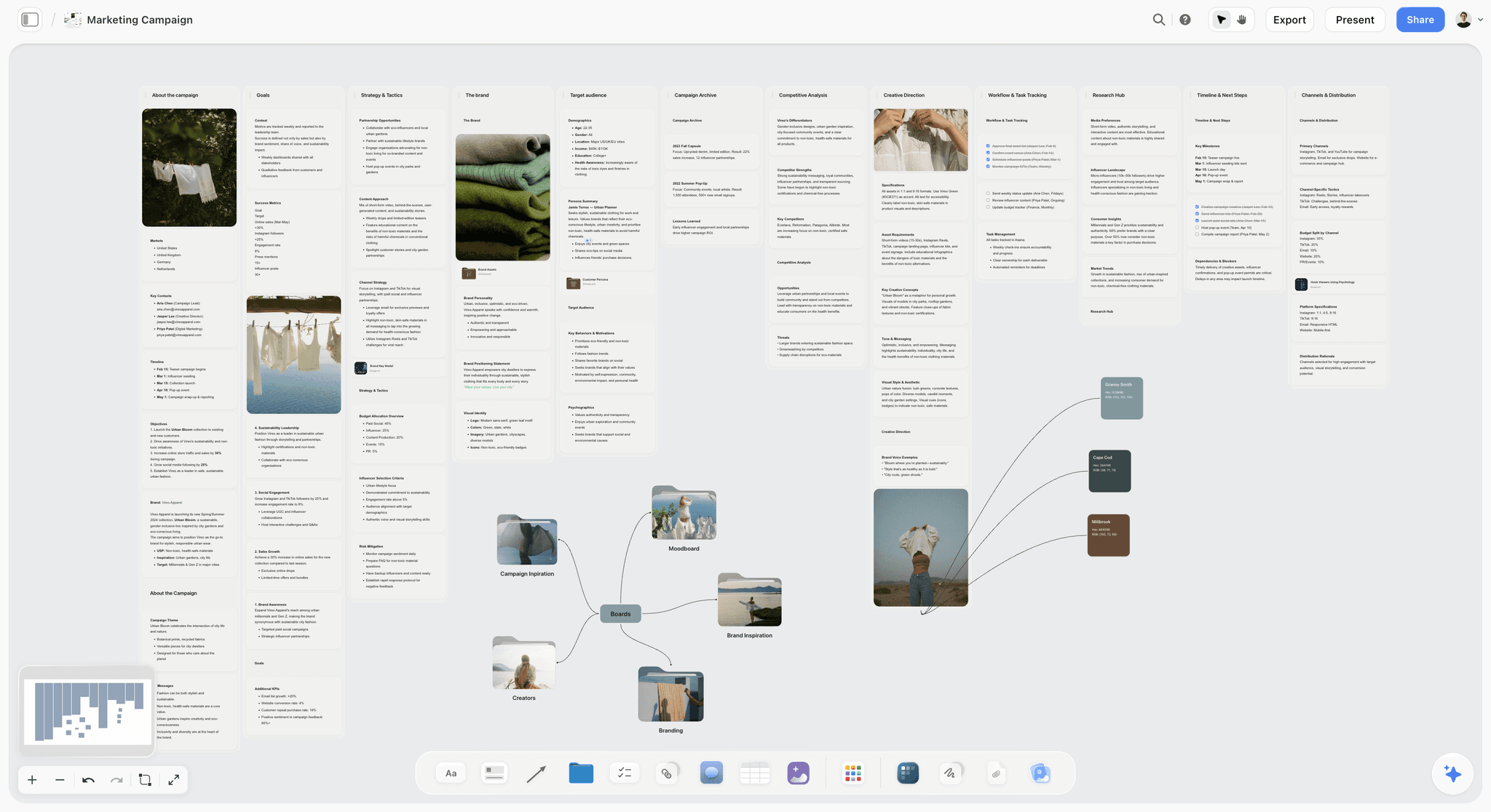
Storyflow replaces the creative-planning half of StudioBinder with an AI canvas: the shot list, references, story, and plan on one board the AI reads. To be clear, it is a visual development and planning canvas, not a call-sheet, stripboard, or breakdown suite (its AI drafts those as board content and PDFs, but nothing is tagged, sent or recalculated), and for production logistics you use Yamdu or StudioBinder itself.
Best for: Filmmakers who want AI for the creative-planning half StudioBinder handles lightly.
Verdict: Not a production-logistics replacement. Use Yamdu or Movie Magic for that. Use Storyflow for the AI creative planning StudioBinder lacks.
Storyflow is a specialist in the job the all-in-one tax leaves thinnest: development and creative planning. StudioBinder is built to schedule a plan that already exists; Storyflow is built for the messy stretch before that, when the story, references, shot ideas, and structure are still moving. Its AI reads your full active canvas by default and can pull in up to one Tactic and three Documents you @-mention, so when you ask it to tighten an act or cluster your reference images, it answers with your actual project in view. It ships with 200+ Story Blueprints, plus AI image generation on the Pro and Max tiers. The honest limit is that it stops where logistics begins.
Pricing
Paid-only during early access, with a Free plan launching before the end of 2026 and invited collaborators joining free now. Plus: $7.99/mo (annual), $9.99 monthly. Pro: $14/mo (annual), $19 monthly. Max: $39/mo (annual), $49 monthly. Flat per account, not per user.
Pros
- The creative AI StudioBinder lacks, reading your whole plan.
- Shot list and references live with the story, not in a separate silo.
- The upcoming free plan will be generous, with unlimited boards, and invited collaborators join free now.
Cons
- A planning and development canvas, not an all-in-one logistics suite: its AI drafts a call sheet PDF, a strip board and a budget table, but it does not send call sheets, run a scheduling engine or do fringes and top sheets, so you pair it with a production-management tool.
- Cloud-only, with no offline or local-first mode.
- Newer platform than the incumbents, with a smaller filmmaking template library.
For the AI picture, see the best AI tools for filmmakers in 2026.
2. Yamdu
Yamdu replaces StudioBinder with a deeper full production platform: scheduling, breakdown, budgeting, cast and crew, and communication in one system.
Best for: Productions that want more depth than StudioBinder across the whole production.
Verdict: The best full-platform StudioBinder alternative. Deeper, with budgeting StudioBinder lacks.
Yamdu fights the all-in-one tax by widening the suite rather than narrowing it: it is the closest thing to a StudioBinder that grew a budgeting department. In testing, its breakdown and scheduling held up on a mid-size shoot, and the built-in budgeting removed the spreadsheet StudioBinder users keep open in a second tab. The cost of that breadth is weight, since it is more system than a solo documentary needs.
Pricing
From around $25/mo.
Pros
- Deeper than StudioBinder across the board.
- Budgeting included, not bolted on.
- Runs the whole production in one system.
Cons
- More than a small shoot needs.
- Pricing scales with team size.
- Real learning curve to set up.
3. Movie Magic
Movie Magic replaces StudioBinder's scheduling with the industry standard, plus dedicated budgeting.
Best for: Feature productions that need the industry standard and real budgeting.
Verdict: The professional-standard StudioBinder alternative for scheduling and budgeting.
Movie Magic is the purest specialist here. Scheduling and budgeting became the work on professional features decades ago, and Movie Magic is what the industry standardized on, which is why line producers and 1st ADs expect it. You reach for it because a studio, a completion bond, or a payroll house wants a Movie Magic stripboard and budget, and nothing else clears that bar. The trade-off is real: the interface feels its age, scheduling and budgeting are two separate purchases, and the learning curve is steep. For a micro-budget documentary it is overkill; for a union feature it is the standard.
Pricing
Around $209 one-time for Scheduling.
Pros
- The recognized industry standard.
- Real, studio-accepted budgeting.
- One-time purchase option.
Cons
- Steep learning curve.
- Dated interface.
- Scheduling and budgeting are two products.
4. Celtx
Celtx replaces StudioBinder with a cheaper all-in-one suite that adds scriptwriting.
Best for: Students and small teams who want a cheaper suite with writing.
Verdict: The best-value all-in-one StudioBinder alternative.
Celtx is the cheaper-suite move, and it adds the one thing StudioBinder does not touch: scriptwriting. For a student or small team, running the script, breakdown, schedule, and call sheets in one browser tab for a fraction of StudioBinder's price is a genuinely good deal, and it is where a lot of first-time producers learn the pipeline. The catch is what you would expect from a suite competing on price: each module is a step lighter than the specialist that owns that job. The scheduling is not Movie Magic and the writing is not Final Draft.
Pricing
From around $15/mo. Limited free tier.
Pros
- Cheaper than StudioBinder and adds writing.
- Runs entirely in the browser.
- Strong fit for students.
Cons
- Each module is lighter than a specialist.
- Free tier has tightened over time.
- Interface can feel dated.
5. Gorilla
Gorilla replaces StudioBinder's scheduling with deeper indie scheduling and budgeting.
Best for: Indie producers who need budgeting at a fair price.
Verdict: The best-value scheduling-and-budgeting StudioBinder alternative.
Gorilla, from Jungle Software, sits between the cheaper-suite and specialist camps: a full scheduling-and-budgeting tool priced for people without a studio behind them. Its pitch against StudioBinder is simple: it includes the native budgeting StudioBinder lacks, at an indie-friendly cost, without pushing you toward Movie Magic's professional price and learning curve. On an independent feature or a documentary with a real budget to track, that combination is the sweet spot, and it has been around long enough to be dependable. The trade-off is polish, since the interface is less modern and the community smaller.
Pricing
Tiered.
Pros
- Budgeting included at an indie price.
- Built for independent production.
- Long-established and dependable.
Cons
- Less modern interface.
- Smaller user community.
- Full call sheets rely on the wider suite.
6. Assemble
Assemble replaces StudioBinder with a modern production-tracking platform.
Best for: Teams who want a modern tracking-first alternative.
Verdict: A modern StudioBinder alternative focused on tracking.
Assemble comes at the problem from the project-management side rather than the stripboard side, which makes it a different shape of alternative. Its strength is a clean, modern interface for tracking a production's moving parts across a distributed team, closer to how a software team runs a sprint than how a 1st AD runs a board. For companies coordinating remote crews who care more about status and tasks than a traditional stripboard, that framing lands. The caution is maturity, since it is newer than StudioBinder and scheduling depth varies by plan.
Pricing
Tiered.
Pros
- Clean, modern interface.
- Tracking-first workflow.
- Good for distributed teams.
Cons
- Newer and less battle-tested.
- Scheduling depth varies by plan.
- Pricing varies.
7. Croogloo
Croogloo replaces StudioBinder at studio scale with secure distribution and coordination.
Best for: Larger productions needing secure distribution.
Verdict: The studio-scale StudioBinder alternative.
Croogloo plays a game StudioBinder does not really compete in: secure, studio-grade distribution of documents across a large cast and crew. Its reason to exist is getting the right sides, schedules, and revisions to the right hundred people without leaks, with tracking on who received and opened what. On a big episodic or feature with a real security and compliance burden, that focus is exactly right, and it layers AI-assisted features and cast-and-crew management on top. For a small shoot it is plainly overkill, pricing is custom and quote-based, and there is an enterprise learning curve.
Pricing
Custom, per-production.
Pros
- Built for larger productions.
- Strong secure distribution.
- Scales to complex teams.
Cons
- Overkill for small shoots.
- Custom, quote-based pricing.
- Enterprise learning curve.
8. Dramatify
Dramatify replaces StudioBinder for series and live production.
Best for: Series and live productions.
Verdict: The best StudioBinder alternative for episodic and live work.
Dramatify specializes in the shape of production StudioBinder handles least naturally: ongoing series and live multi-camera work. Episodic and live schedules do not behave like a single feature's stripboard, and Dramatify is built around that reality, with strong mobile access so the crew can check schedules and call sheets from the floor. For a returning show or a live broadcast, that episodic-first design removes friction StudioBinder users feel when they force a series into a single-shoot model. The flip side is that it is more system than a one-off shoot needs.
Pricing
Per-production and subscription.
Pros
- Built for series and live production.
- Mobile-friendly for on-set use.
- Good crew coordination.
Cons
- More than a single shoot needs.
- Pricing varies per production.
- Learning curve to set up.
9. Setkeeper
Setkeeper replaces StudioBinder with a coordination and document hub.
Best for: Productions wanting a document and coordination hub.
Verdict: A coordination-focused StudioBinder alternative.
Setkeeper narrows in on keeping a lot of people looking at the same, current documents. It is a professional coordination layer: a central home for contacts, documents, and distribution, with read tracking so you know a memo actually landed. For larger teams where the pain is version chaos rather than the mechanics of a stripboard, that focus is genuinely useful. What it is not is a scheduling engine, so if you are switching to build the schedule itself, this is the wrong specialist.
Pricing
Custom.
Pros
- Excellent document hub.
- Strong professional organization.
- Good for larger teams.
Cons
- Not a scheduling tool.
- Custom pricing.
- More than small shoots need.
10. Boords
Boords replaces the storyboarding part of StudioBinder with a dedicated, better tool.
Best for: Filmmakers who used StudioBinder mainly for storyboards.
Verdict: The best StudioBinder alternative for storyboarding specifically.
Boords is the specialist for the exact case where storyboarding became the work. Plenty of people open StudioBinder mostly to build boards, and once that is where your week goes, a dedicated tool beats the suite's version of the feature. Boords is faster to lay out frames, adds shot details cleanly, and turns a board into a one-click animatic for timing, which the light storyboard modules inside suites do not match. For directors, agencies, and music-video work where the board is the deliverable, it is a clear upgrade. The limit is scope, since Boords does storyboards and nothing else.
Pricing
From around $15/mo. Trial available.
Pros
- Better storyboards than any suite module.
- Animatics for timing.
- Clean, focused collaboration.
Cons
- Storyboarding only.
- A separate subscription.
- Not production management.
11. Filmustage
Filmustage replaces StudioBinder's breakdown with AI-powered script breakdown.
Best for: Producers who want AI breakdown.
Verdict: The best AI-breakdown StudioBinder alternative.
Filmustage is the specialist for the most tedious task in the suite: script breakdown. It uses AI to read a screenplay and tag elements automatically, turning a long manual pass into a fast first draft the producer then reviews and corrects. For a solo producer facing a full feature script, that head start is the whole value, and it feeds into draft scheduling and reports. Be precise about what the AI does: it accelerates a mechanical task and still needs a human to check its work. It is not creative AI that helps you develop the story.
Pricing
Tiered.
Pros
- AI breakdown saves real time.
- Fast, usable first pass.
- Good for solo producers.
Cons
- Breakdown-focused only.
- AI output still needs review.
- Not full production management.
12. Google Sheets
Google Sheets replaces StudioBinder with a free DIY tracking option.
Best for: Micro-budget productions on a spreadsheet.
Verdict: The free DIY StudioBinder alternative for tiny shoots.
Google Sheets is the honest floor of this list. On a micro-budget shoot with a handful of collaborators, a well-built sheet tracks the schedule, shot list, and contacts for free, and everyone already knows how to use it. It lands last because everything StudioBinder automates, you do by hand: no stripboard logic, no automated call sheets, no breakdown, just the grid and your own discipline. As the shoot grows, the spreadsheet that felt freeing on day one becomes the thing you fight.
Pricing
Free with a Google account.
Pros
- Free and universal.
- Endlessly flexible.
- Everyone already knows it.
Cons
- Manual everything.
- No automation or call sheets.
- Breaks down as the shoot scales.
Which StudioBinder Alternative Should You Choose?
13. You Need Deeper Production Management
Top picks: Yamdu + Movie Magic
Yamdu for a full platform, Movie Magic for industry-standard scheduling and budgeting. Both go deeper than StudioBinder. See the best pre-production tools in 2026.
14. You Need Budgeting
Top picks: Movie Magic + Gorilla
Movie Magic for the standard, Gorilla for indies. Both add the budgeting StudioBinder lacks.
15. You Want AI for the Creative Side
Top picks: Storyflow + Filmustage
Storyflow for the creative-planning canvas, Filmustage for AI breakdown. The AI half StudioBinder handles lightly.
16. You Want a Cheaper Suite
Top picks: Celtx + Storyflow
Celtx for a cheaper all-in-one, Storyflow for the creative side (paid-only during early access, Plus from $7.99/month annual, with a Free plan arriving before the end of 2026). See the best Celtx alternatives in 2026.
17. You Only Need One Feature
Top picks: Boords or Filmustage + Storyflow
Boords for storyboards or Filmustage for breakdown, Storyflow for the plan behind them (Plus from $7.99/month annual during early access).
Honorable Mentions
- StudioBinder free tier: if price is the only issue, its free tier may suffice.
- Hot Budget: budgeting to pair with a scheduler.
- Scenechronize: legacy studio distribution.
- Cast & Crew / EP: production services.
- Notion: flexible workspace for coordination.
Where StudioBinder Alternatives Still Need You
Honest accounting. Alternatives replace tools, not the production.
- The reason you are switching. Pick the alternative for what you actually need.
- The migration. Moving a production between tools takes effort.
- The logistics judgment. Software runs the numbers; you run the shoot.
- The creative decisions. No tool makes the film.
Name which camp you are in, replace the specific role that outgrew the suite, and the producing stays human.
The Bottom Line
The best StudioBinder alternatives in 2026 depend on why you are switching. Yamdu and Movie Magic go deeper on logistics and add budgeting; Celtx and Gorilla are cheaper; and Storyflow is the strongest for the AI creative-planning half StudioBinder handles lightly.
The move that changes the most is to name your camp. An all-in-one suite is never the best at any one job, so the day one job becomes the work, buy the tool that is. Decide whether you are switching for deeper logistics or AI for the creative side, and get the best tool for it. Start a Storyflow board for the creative half, and pair it with the logistics tool that fits your production.
FAQ: StudioBinder Alternatives in 2026
What is the best StudioBinder alternative in 2026?
It depends on why you are switching. For deeper full production management, Yamdu is best; for industry-standard scheduling and budgeting, Movie Magic; for a cheaper suite, Celtx or Gorilla. For the AI creative-planning half StudioBinder handles lightly, Storyflow is strongest, because its AI reads the whole creative plan, though it is not a call-sheet or stripboard replacement.
Is StudioBinder free, and is there a free alternative?
StudioBinder has a free tier with limits, and free alternatives exist. Celtx has a limited free tier, Google Sheets is free for DIY tracking, and Storyflow's Free plan, which launches before the end of 2026, will cover the creative-planning half at no cost. There is no fully free equivalent of StudioBinder's complete production management, so a free stack usually means Storyflow's free plan plus a spreadsheet or Celtx's free tier for basic logistics.
Is there a cheaper alternative to StudioBinder?
Yes. StudioBinder starts around $29/mo on its Indie tier, so the cheaper routes are Celtx (a browser suite from around $15/mo that adds scriptwriting), Gorilla (indie-priced scheduling and budgeting), and Storyflow for the creative half from $7.99/mo (annual), paid-only during early access with a free plan launching before the end of 2026. Movie Magic changes the model with a roughly $209 one-time purchase instead of a subscription.
Does StudioBinder have AI, and do the alternatives?
StudioBinder offers assisted breakdown but not deep creative AI. Among alternatives, Storyflow has the strongest AI for the creative side, reading your whole project canvas to help with planning and structure, and Filmustage offers AI script breakdown. If AI is what you want that StudioBinder lacks, Storyflow for creative planning and Filmustage for breakdown are the clearest upgrades, used alongside a logistics tool.
Is Yamdu better than StudioBinder?
For full production management, Yamdu is deeper: it includes native budgeting, which StudioBinder lacks, and runs the whole production in one system. StudioBinder has a cleaner, more modern interface, is easier to learn, and is strong for scheduling and call sheets. Want more depth and budgeting in one platform? Yamdu. Want ease and a modern feel? StudioBinder holds up well.
How does Storyflow compare to StudioBinder?
They solve different halves. StudioBinder is a production-logistics tool: breakdown, scheduling, call sheets, and shot lists. Storyflow is a creative-planning and development canvas: story, references, shot ideas, and structure, with an AI that reads the whole board. Neither replaces the other, which is why many filmmakers use both, one for each half.
How do I move my production off StudioBinder?
Export your data where possible, then rebuild in the new tool, which is a good moment to clean up the production. For logistics, Yamdu or Movie Magic can take over scheduling and budgeting. For the creative side, move the shot list, references, and plan onto a canvas like Storyflow. Migration takes effort because production tools structure data differently, but the better fit usually pays back over a full production.
Should I replace StudioBinder with one tool or several?
It depends on why you are leaving. If you want deeper all-in-one logistics, Yamdu can replace it as a single tool. If you are leaving for the creative AI it lacks, you keep a logistics tool and add Storyflow for the creative half. Because StudioBinder spans logistics and light creative planning, many filmmakers end up with a logistics tool plus a creative canvas.
How much does StudioBinder cost?
StudioBinder starts around $29/mo on its Indie tier, with Professional and Studio tiers above and a free tier with limits. Its alternatives use different models: Movie Magic is roughly $209 one-time for Scheduling, Yamdu starts around $25/mo, Celtx from around $15/mo, and Storyflow from $7.99/mo (annual), paid-only during early access with a free plan launching before the end of 2026.
Is StudioBinder worth it?
Yes, for productions that want scheduling, breakdowns, call sheets, and shot lists in one modern platform, StudioBinder is worth it and is one of the best all-in-one production tools in 2026. It is less worth it if you mainly need deep budgeting, which it lacks natively, or AI for the creative side, which it handles lightly. The honest test is what you actually use it for.
What is the best StudioBinder alternative for indie filmmakers?
For indie filmmakers, Gorilla is the best-value alternative because it pairs scheduling and budgeting at an indie-friendly price, covering the budgeting StudioBinder lacks. Celtx is a cheaper all-in-one that adds scriptwriting, good for small teams. For the creative-planning and pitch side, Storyflow is strong at $7.99/month (annual), paid-only during early access, and many indie productions pair it with a lean logistics tool.
Is Celtx a good alternative to StudioBinder?
Celtx is a good alternative for small teams and students who want a cheaper all-in-one that also includes scriptwriting, which StudioBinder does not. The trade-off is depth: Celtx's scheduling, breakdown, and call sheets are lighter than StudioBinder's, and its free tier has tightened over time. If you want deeper, more modern production management, StudioBinder or Yamdu is stronger.
Table of Contents
- All 12 StudioBinder Alternatives, Ranked
- Comparison Table: 12 StudioBinder Alternatives Compared
- The All-in-One Tax: Why Anyone Leaves a Suite
- Why People Look for StudioBinder Alternatives
- How We Evaluated These StudioBinder Alternatives
- Quick Picks by Reason to Switch
- Detailed Reviews: The 12 Best StudioBinder Alternatives
- Which StudioBinder Alternative Should You Choose?
- Honorable Mentions
- Where StudioBinder Alternatives Still Need You
- The Bottom Line
- Author
- FAQ: StudioBinder Alternatives in 2026
- Related Reading
Templates to check out for this topic


Templates you can use in Storyflow
Every Storyflow board starts from real structure and an AI that reads the whole canvas. Open one of these templates and make it yours.


See Storyflow in Action
A visual AI workspace where every feature lives inside one canvas. No tab-switching, no context lost.
Build your entire board from a single message
Type what you need in the AI chat at the bottom of your canvas. The AI adds cards, headings, and structure directly onto your board.
Use expert frameworks as AI context
Type @ in the AI chat and choose any Tactic. The AI tailors every response to that framework instead of giving generic advice.
Turn your board into a mind map in seconds
Ask the AI to restructure your canvas as a mindmap. It connects your ideas into a visual hierarchy so you can see how everything relates.
Why Storyflow Exists
Storyflow actually began as a personal tool while working on creative and research projects.
We kept running into the same problem: ideas were scattered everywhere: notes, documents, and whiteboards.
Nothing helped us see how everything connected.
So we started building a workspace designed around how ideas actually grow.
→ Read how Storyflow was createdJustkay
Documentary Filmmaker & Founder at Storyflow
Published: 2026-07-10
Extremely simple, seriously capable


See how easy it is to get started
Watch a real project come together, from a blank board to a finished plan, clicked through step by step.
Start creating with AI and become more productive
Transform your creative workflow with AI-powered tools. Generate ideas, create content, and boost your productivity in minutes instead of hours.