
Extremely reliable pre-production
The production coordinator workflow,
from the first deal memo to the last return.
What a coordinator tracks in prep, on shoot days and at wrap: crew and vendor paperwork, call sheets, schedules and the daily report, laid out as one workflow you can run on a single board.


Creatives working for these brands already got early access
- Red Bull
- Canon
- Artlist
- Porsche
See how easy it is to get started
Watch a real project come together, from a blank board to a finished plan, clicked through step by step.
Start from a ready-made template
Pick a board to see what you can build, then let AI fill it in. Every template is a real, editable starting point on the same infinite canvas.

Pre-Production
Pull the brief, script, shot list, and moodboard into one pre-production hub so the whole shoot is planned in one place.
What is a production coordinator workflow?
A production coordinator workflow is the repeatable routine that moves a film or video shoot's paperwork from prep to wrap: hiring and contracting crew and vendors, building and sending the schedule and call sheets, logging each shoot day, and closing everything out at wrap. Storyflow is an AI visual workspace that holds that whole routine on one board, with the crew list, the deal status, the call sheets and the documents side by side.
The coordinator runs the production office. The producer and line producer decide what the production can afford; the 1st AD decides what gets shot when; the coordinator turns both decisions into paper and makes sure the right people have the right version. On a small shoot the same person may be producer and coordinator at once, but the job does not shrink. Somebody still has to send the deal memos, collect the insurance certificates, book the vans and know which call sheet is current.
The workflow has three phases, and each one has a different rhythm. Prep runs in weeks: building the crew list, sending and chasing contracts, booking vendors and equipment, collecting certificates and permits, and keeping the contact sheet true. The shoot runs in days: tomorrow's call sheet goes out tonight, today's production report gets filed tonight, and every change to the schedule is pushed to the people it affects. Wrap runs in a checklist: returns, final invoices, timecards, the paperwork package for the producer and the accountant, and the archive.
What makes the job hard is not any single document. Most coordinators can write a call sheet in their sleep. It is that twenty documents depend on each other. A crew member who has not returned a deal memo should not be on Thursday's call sheet. A location that has not sent its permit should not be on the schedule. A vendor whose certificate of insurance expires mid-shoot needs a new one before the pickup date. A good coordinator workflow makes those dependencies visible, so a gap shows up as a gap on Monday and not as a phone call on set on Thursday.
That is why a status column matters more than any template. For every person and every vendor, the coordinator needs to see five things at a glance: what they are booked for, whether the paperwork is out, whether it is back, whether they are on the call sheet, and whether they have been paid or returned their kit at wrap. A table with those columns, kept on the same board as the schedule and the call sheets, answers most of the questions a producer will ask in a day.
A worked example. A 12-day commercial shoot for a fictional outdoor clothing brand, with 6 days of prep, 4 shoot days and 2 days of wrap. The crew is 22 people, the cast is 6, and there are 9 vendors: camera rental, lighting and grip, two vans, catering, a location in a national park, a second location at a warehouse, a picture vehicle and insurance. In prep the coordinator sends 22 crew deal memos on day 1 and has 19 back by day 3; the 3 missing ones are flagged in the status column and chased by name. Seven of the nine vendors send certificates of insurance by day 4; the van company's certificate names the wrong production and goes back. The park permit arrives on day 5 with a condition the 1st AD has to see: no vehicles past the gate before 7:00, so the general crew call for day 1 moves from 6:00 to 6:30. Four call sheets go out, one each evening before a shoot day, version-numbered. Four daily production reports go to the producer by 22:00 each night; day 3's notes a 40 minute overrun for a camera fault and 2 hours of overtime for the grip team. Wrap takes two days: all rental kit back and checked by day 11, 31 invoices logged against the budget, timecards for 22 crew sent to payroll, and the paperwork package filed by day 12.
On a Storyflow board that production is six walls: Prep, Crew and Vendors, Schedule, Call Sheets, Daily Reports and Wrap. The crew and vendor table holds the status columns. The deal memos, certificates and permits are uploaded as files into folders on the Crew and Vendors wall, so the document sits next to the row that tracks it. The call sheets are pages built from the schedule, one per day. The wrap checklist is ticked off on the last wall.
Ultra fast from brief to board
What are the steps in a production coordinator's workflow?
Eight steps from the first crew booking to the final paperwork package. Steps one to four are prep, five and six repeat every shoot day, seven and eight are wrap.
01
Set up the production office
Start one board per production with walls for prep, crew and vendors, schedule, call sheets, daily reports and wrap. Ask Storyflow's AI for a pre-production plan and it lays out the cast and crew, equipment, production planning and action items from what you tell it.
02
Build the crew and vendor table
One row per person or vendor: role or service, dates booked, rate, deal memo or contract sent, returned, certificate of insurance, and notes. Drop the signed documents into a folder beside the table as they come back.
03
Chase the paperwork by status
Anything sent and not returned within two working days gets chased by name. Anything with a certificate or permit expiring during the shoot gets a date in the notes column. The empty cells are your to-do list.
04
Turn the schedule into shoot days
Take the 1st AD's schedule, or ask the AI for a strip board from the script's scenes: one wall per shoot day, one strip per scene, each day totalled in pages. This is the schedule the call sheets are built from.
05
Send tomorrow's call sheet tonight
Ask the AI for a call sheet and it builds pages for one day: the day's calls, the schedule, cast and crew with times and numbers, locations, safety and the nearest hospital. Names and numbers you have not given it stay blank, so you fill the gaps rather than check for invented ones.
06
File today's production report
After wrap each day, log what was shot, call and wrap times, meal breaks, overtime, delays and incidents. Keep the reports on their own wall in day order, so the producer reads them in sequence.
07
Close out at wrap
Work through the wrap checklist: every rental returned and checked, every invoice logged against the budget, timecards to payroll, loss and damage noted, and thank-you notes to locations.
08
Hand over the paperwork package
Share the board with the producer by view-only link. They open it with no account and sign in if they want to comment. The signed documents, the reports and the final status table are all in one place for the accountant and the next production.
What does a production coordinator track from prep to wrap?
Four groups of paperwork. Each one has an owner, a status and a deadline, and each one depends on at least one of the others.
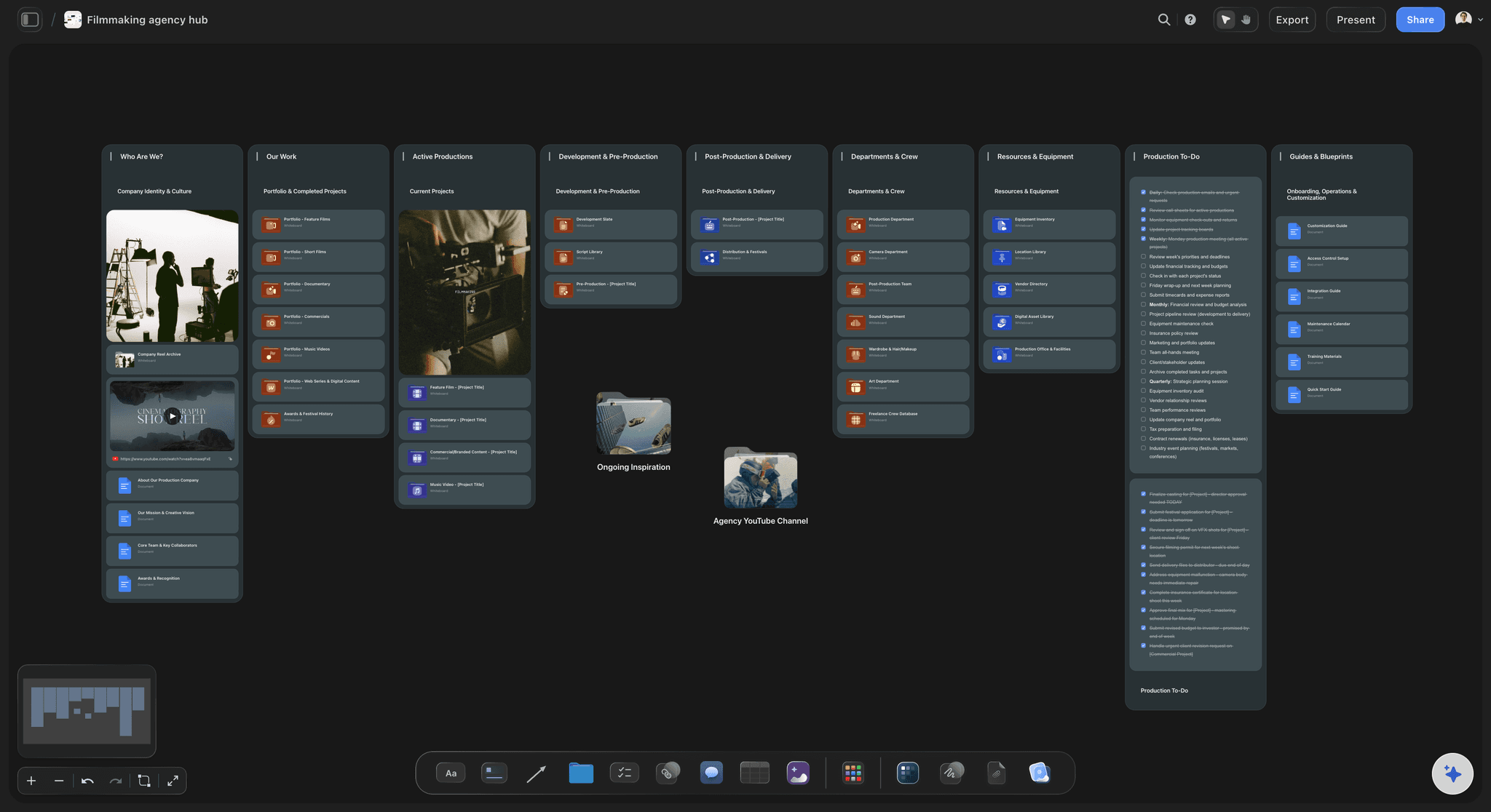
Crew and vendor contracts
Who is booked, on what terms, and what is back
Deal memos, crew start paperwork, vendor quotes and purchase orders, certificates of insurance, and NDAs. A status table with one row per person or company shows what is out and what is missing.
See the film crew planner →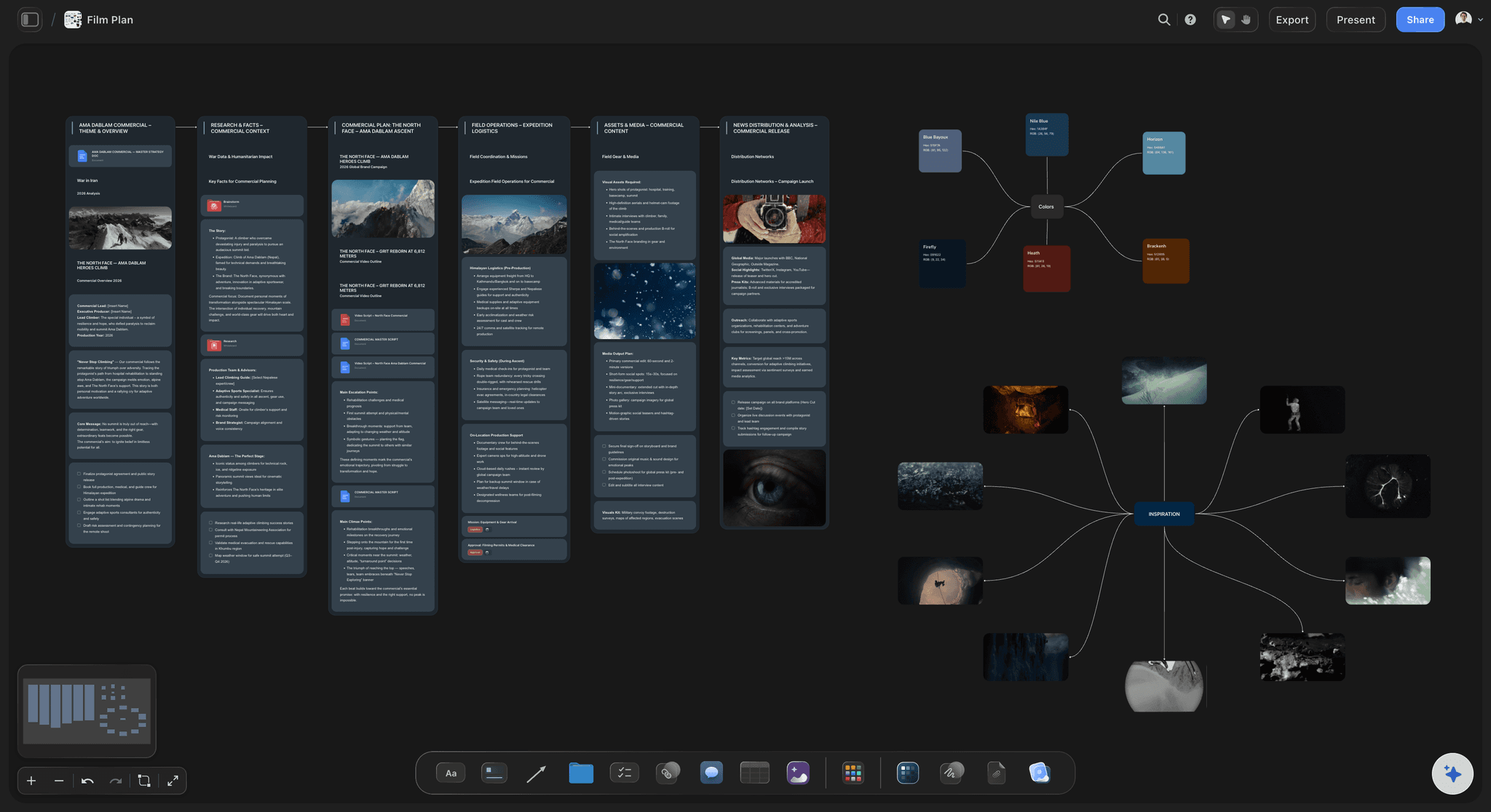
Schedules
The shooting schedule and everything that hangs off it
The shoot days, the scenes on each, the travel and turnaround, and the prep and wrap days either side. When the schedule moves, the call sheets, bookings and catering numbers move with it.
See the shooting schedule page →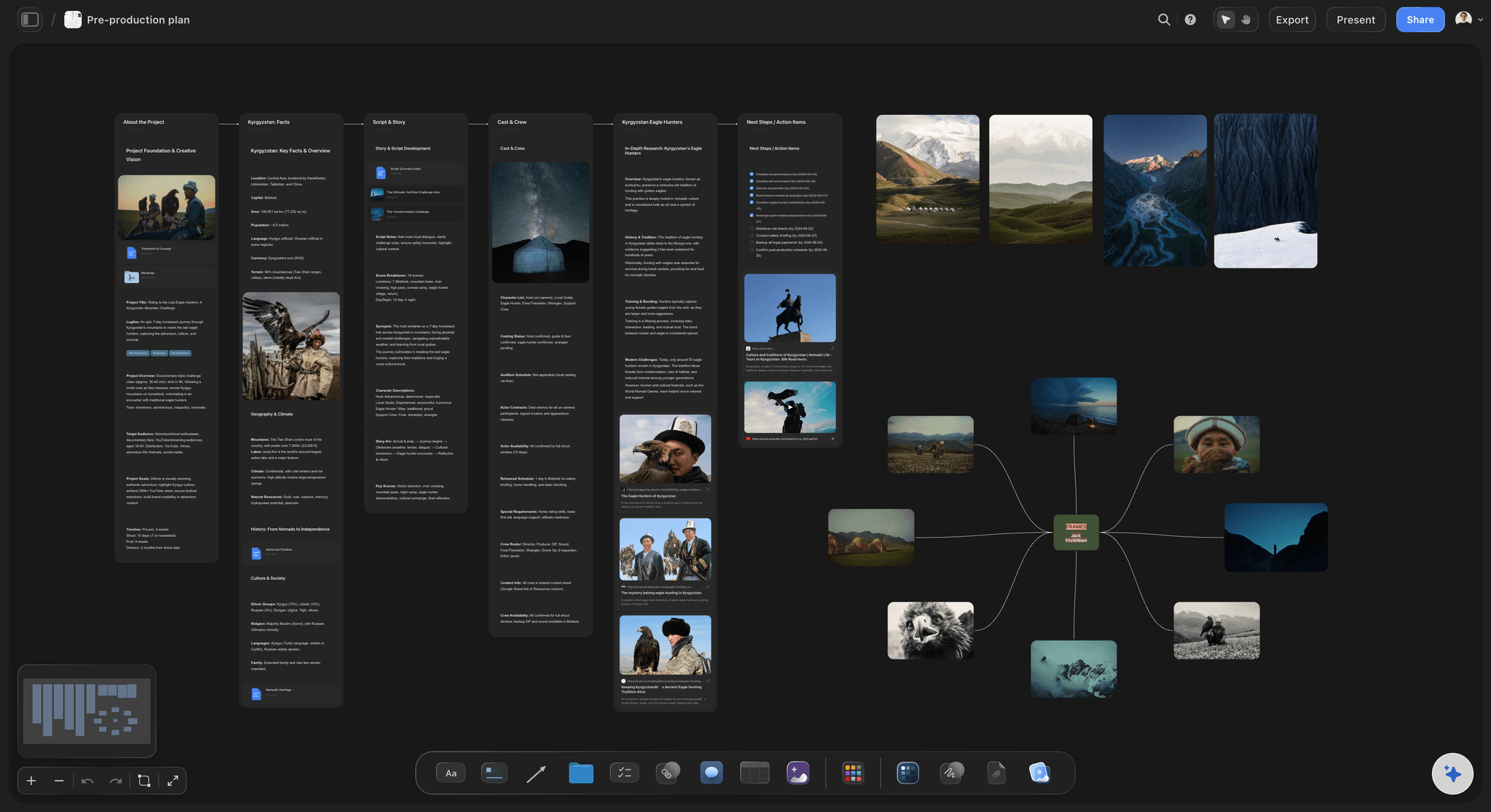
Call sheets
One sheet per day, sent the evening before
General call, first shot, estimated wrap, the day's schedule, cast and crew with times and numbers, locations and parking, weather, and the nearest hospital. Version-number every one.
See the call sheet template →
Daily and wrap paperwork
Production reports, returns and the final package
The daily production report, timecards, petty cash, loss and damage, rental returns, final invoices and the archive. This is the paper trail the producer and the accountant rely on after the shoot.
See production paperwork →The whole production office on one board.
The crew table, the schedule, the call sheets, the reports and the signed documents in one place, shared with the producer by link. Storyflow is paid-only during early access, with plans from $7.99 a month billed annually ($9.99 monthly). A free plan launches before the end of 2026, and anyone a paid member invites to a board joins free.
AI pre-production plan with cast and crew, equipment and action items
Strip board: one wall per shoot day, scenes totalled in pages
Call sheet pages built from the board, with unknowns left blank
Tables with status columns for crew, vendors and invoices
Signed deal memos, certificates and permits stored beside their rows
View-only links the producer opens with no account
Built for people with taste
What does a production coordinator do in prep, on shoot days and at wrap?
The same person, three different jobs. Prep is chasing, the shoot is publishing, wrap is closing.
Prep
Book it, contract it, prove it
Crew deal memos: Send them as soon as a booking is confirmed, with the rate, days, kit fee and overtime terms. A crew member without a returned memo is a booking, not a hire.
Vendor paperwork: Quote, purchase order, certificate of insurance naming the production, and the pickup and return times. Check the certificate's dates cover the whole hire.
Locations and permits: Location agreements, filming permits and any conditions attached to them. A condition such as a gate time changes the call sheet, so send it to the 1st AD the day it arrives.
The contact sheet: One list, one version: name, role, department, phone, email, dietary needs. Every call sheet is built from it, so an error here is an error on every page.
Shoot days
Publish tomorrow, record today
The call sheet: Built from the latest schedule after the 1st AD signs off the next day, and sent the evening before. Put the version number and time sent on it.
Changes: When a scene moves, check who is affected: cast, the department heads, catering numbers, transport. Send a revised call sheet, not a text message.
The production report: Calls, first shot, meal breaks, wrap, scenes and pages shot, overtime, delays and incidents. File it the same night while people still remember.
Runs and returns: Pickups, drop-offs and kit swaps logged against the vendor rows, so nothing is lost between the warehouse and the set.
Wrap
Close every row you opened
Returns: Every rental back, checked and signed for. Any loss or damage noted with a photo and the vendor's reference.
Invoices and timecards: Every invoice logged against the budget line it belongs to, and every timecard sent to payroll. A Sum footer on the invoice table shows the running total.
The paperwork package: Signed deal memos, releases, permits, certificates, call sheets and production reports, filed in the order the accountant and the insurer will ask for them.
Notes for next time: Which vendor was late, which location was easy, which form nobody filled in. The next production starts from this board, not from memory.
Explore templates for your project
Every template opens as a real, editable board on the infinite canvas. Pick the closest fit and make it your own.
Pre-Production
Pull the brief, script, shot list, and moodboard into one pre-production hub so the whole shoot is planned in one place.
One app instead of five
Which tool should a production coordinator use?
Storyflow first if you want the plan, the paperwork status and the documents on one board with AI that drafts them. Dedicated call sheet software such as StudioBinder is strong on call sheet distribution and linked breakdowns. A spreadsheet is still what many offices run on.
Storyflow
Recommended
Crew and vendor status table beside the signed documents
AI drafts the pre-production plan, strip board and call sheets
Schedule and call sheets linked
Producer views by link with no account
Call sheet delivery with read receipts
Payroll and timecard processing
Call sheet software (StudioBinder, SetHero)
Crew and vendor status table beside the signed documents
AI drafts the pre-production plan, strip board and call sheets
Schedule and call sheets linked
Producer views by link with no account
Call sheet delivery with read receipts
Payroll and timecard processing
A spreadsheet and shared drive
Crew and vendor status table beside the signed documents
AI drafts the pre-production plan, strip board and call sheets
Schedule and call sheets linked
Producer views by link with no account
Call sheet delivery with read receipts
Payroll and timecard processing
What creators are saying
Join early creators getting structured workspaces and AI that remembers their projects
“Storyflow has sped up my workflow by at least 3x, which means more flow state and more projects I can actually ship. It truly changed the way me and my team create.”

Reilin Joey
Director & YouTuber
“One prompt gets me a structured board. But the tactics are my favorite. I run my YouTube scripts through them and my intros and retention got better. It's amazing.”

Justkay
YouTuber & Freelance Filmmaker
“I used to juggle five apps to plan a project. Now I describe what I am making and get boards, lists, and a schedule. All in one place.”

George
@fernwehchronicles
Production coordinator workflow questions
What coordinators, producers and PAs ask when they set up a production office.
It is the routine that moves a shoot's paperwork from prep to wrap: contracting crew and vendors, collecting certificates and permits, turning the schedule into call sheets, filing a production report every shoot day, and closing out returns, invoices and timecards at wrap. Storyflow holds the whole routine on one board, with the status table, the schedule, the call sheets and the signed documents side by side.
Storyflow is the strongest choice when you want the plan, the paperwork status and the documents together, with AI that drafts the pre-production plan, the strip board and the call sheet pages and leaves unknown names and numbers blank. StudioBinder and SetHero are strong dedicated call sheet tools with distribution and read receipts. Payroll and timecards belong in a payroll service either way.
In prep: books crew and vendors, sends and chases deal memos, collects certificates of insurance and permits, and keeps the contact sheet current. On shoot days: sends tomorrow's call sheet, pushes schedule changes to the people affected, and files the daily production report. At wrap: returns, invoices, timecards and the paperwork package.
Crew deal memos and start paperwork, vendor quotes and purchase orders, certificates of insurance, location agreements, filming permits, releases, the contact sheet, call sheets, daily production reports, petty cash, timecards, loss and damage reports, rental returns and the final paperwork package. On a Storyflow board each document type has a folder beside the row that tracks it.
Confirm the booking, send the deal memo or contract with rate, days and terms, log it as sent, log it as returned when signed, and file the signed copy. Vendors add a quote, a purchase order and a certificate of insurance naming the production. A status table with sent and returned columns turns the chase list into the empty cells, so nothing depends on memory.
The 1st AD decides what goes on it: the schedule, the calls and the order of the day. The coordinator usually builds, formats and sends it, using the contact sheet and the location details. On small shoots one person does both. Storyflow's AI builds the call sheet pages from the board and leaves a blank for any name, number or address it was not given.
The evening before the shoot day, once the 1st AD and producer have signed off the next day's schedule. Number every version and note the time it was sent. If anything changes after that, send a revised call sheet rather than a message, so there is only ever one current version.
The official record of one shoot day: call and wrap times, first shot, meal breaks, scenes and pages shot, cast and crew hours, overtime, delays, incidents and equipment problems. The coordinator or 2nd AD files it the same night and sends it to the producer. Keep them in day order on their own wall so the producer reads the shoot as it happened.
The line producer owns the budget and the deals: what the production can spend and on what terms. The coordinator owns the paperwork and the office: getting the deals signed, the bookings confirmed, the call sheets out and the reports filed. The line producer decides; the coordinator makes sure the decision is on paper and reaches the right people.
Yes, for the drafting. Storyflow's AI builds a pre-production plan with cast and crew, equipment and action items, a strip board from a script's scenes, a budget table with a live total, and call sheet pages for one day. It does not invent people, phone numbers or addresses; they come from you or stay blank. Checking and sending stay with the coordinator.
One table with one row per person or vendor and a column for every document you need back, plus a folder of signed copies beside it. Chase anything that has been out more than two working days. Note expiry dates for certificates and permits. In Storyflow the table, the folders and the schedule share a board, so a missing document is visible next to the day it affects.
Every rental returned and checked, loss and damage recorded, every invoice logged against the budget, timecards sent to payroll, petty cash reconciled, locations thanked and left as found, and the paperwork package filed: deal memos, releases, permits, certificates, call sheets and production reports.
Yes. Share the Storyflow board with a view-only link and the producer opens it with no account. To leave a comment they sign in. Collaborators you invite to edit the board work on it with you in real time.
Storyflow is paid-only during early access, with plans from $7.99 a month billed annually ($9.99 monthly). A free plan launches before the end of 2026. Anyone a paid member invites to a board joins free.
One board for the production office.
Contracts, schedules, call sheets, reports and wrap in one place, with the gaps showing before they reach the set.