
Extremely reliable pre-production
A shooting schedule template
the AI fills from your script.
Attach the screenplay and the AI builds the scene index, then groups the scenes into shoot days by location and light, each day totalled in pages. The breakdown, the shot list and each day's call sheet sit on the same board.


Creatives working for these brands already got early access
- Red Bull
- Canon
- Artlist
- Porsche
See how easy it is to get started
Watch a real project come together, from a blank board to a finished plan, clicked through step by step.
Start from a ready-made template
Pick a board to see what you can build, then let AI fill it in. Every template is a real, editable starting point on the same infinite canvas.

Pre-Production
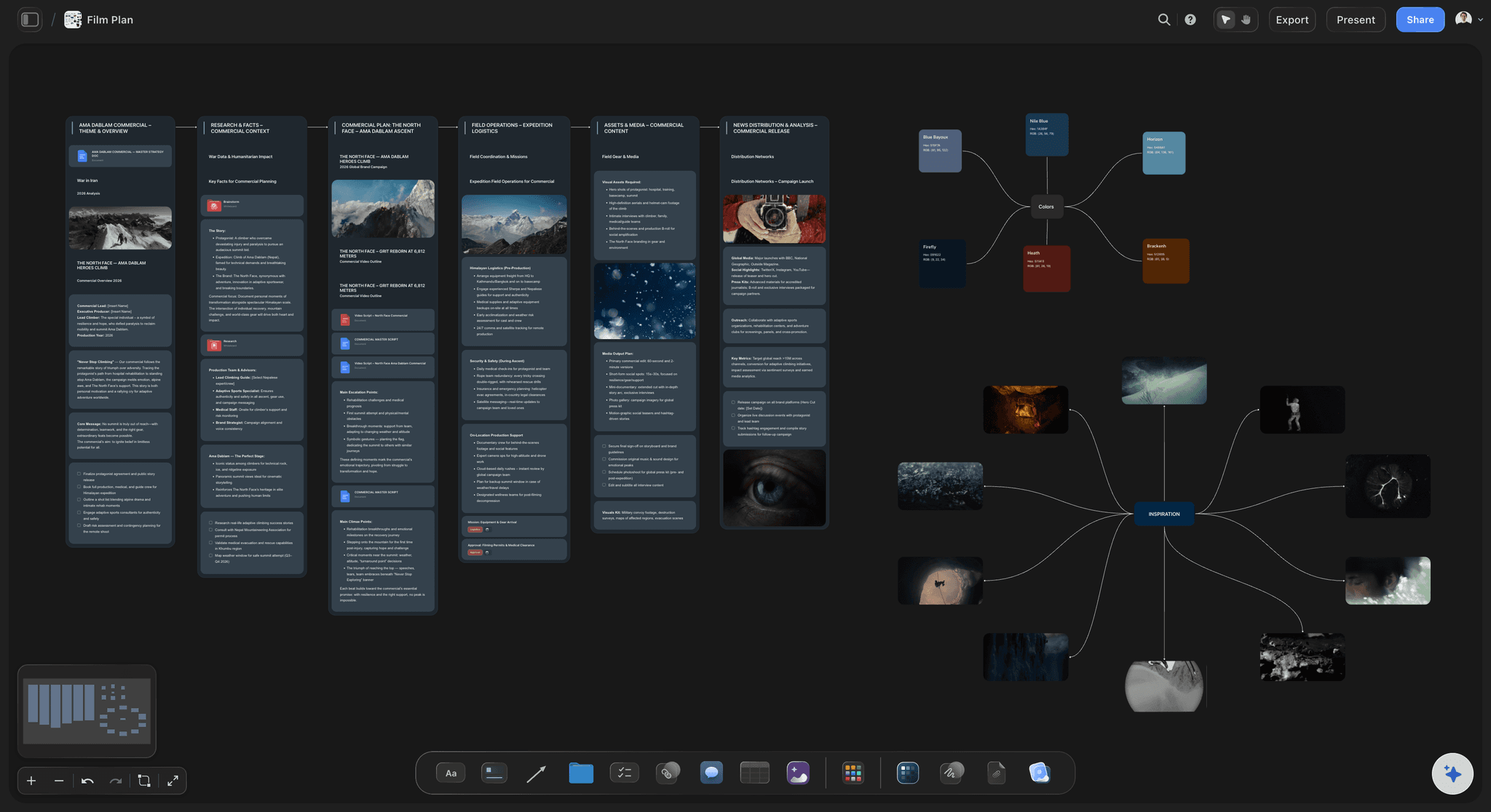
Pull the brief, script, shot list, and moodboard into one pre-production hub so the whole shoot is planned in one place.
What goes in a shooting schedule template?
A shooting schedule template holds one strip per scene with its number, slugline, interior or exterior, day or night, cast and page count, grouped into shoot days with a page total for each. Storyflow is an AI visual workspace that builds the shooting schedule from your script on one infinite canvas: a scene index, the scenes grouped into shoot days, the breakdown and shot list beside them, and a call sheet PDF for each day. The crew opens the board by view-only link with no account. Use StudioBinder or Celtx if the schedule should live inside a production suite that also sends call sheets, Movie Magic Scheduling for a union feature or a TV series, and Yamdu when time cards and pre-payroll belong in the same system.
A shooting schedule, or shooting plan, is the script reordered for production. Scenes are shot in the order that wastes least time rather than the order they play: everything at one location before the unit moves, an actor's scenes clustered so they are not paid to wait, day exteriors in daylight. The standard format lists each shoot day with its number and date, then a row per scene: scene number, INT or EXT, day or night, set and location, a one-line description, cast by number and length in pages and eighths, with the day's total under a day break.
The order comes from a handful of constraints that pull against each other. Locations come first, because a company move can cost an hour or more of shooting. Cast availability comes next, since an actor who works day two and day nine is paid to hold in between. Light fixes some scenes to dawn, dusk or night, and turnaround, the rest owed between wrap and the next call, usually ten to twelve hours, stops a late night from being followed by an early morning. Four to six pages a day is a common indie target; heavier days are where schedules break.
In Storyflow you attach the script as a PDF, Final Draft or Fountain file, or paste a scene list. The AI builds the scene index, asks how many shoot days you have and whether to group by location or keep script order, then lays out a wall per shoot day with a coloured strip per scene and each day's page total, and names any day that came out heavy. Dragging a strip moves a scene. The day totals are written when the schedule is built and do not recalculate as you drag, and there is no day out of days report; ask the AI which days an actor works instead.
Ultra fast from brief to board
From script to shooting schedule in four steps.
The template fills from the script. The judgement stays with you.
01
Attach the script
Upload the screenplay as a PDF, Final Draft or Fountain file, or paste a scene list. The AI reports the pages and scenes it read and builds the scene index.
02
Choose the days and the grouping
Say how many shoot days you have, or let the AI balance them by page count, and whether to group by location or keep script order.
03
Drag strips until the days work
Move scenes between days for cast availability, light and turnaround. Company moves, meal breaks and cover sets go on the day as their own cards.
04
Draft call sheets and share
The AI drafts a call sheet PDF for any shoot day from the schedule and crew on the board. The crew opens the schedule by view-only link with no account.
The shooting schedule, what feeds it and what it feeds.
Breakdown in, shoot days in the middle, call sheets out, on one board.
One strip per scene, one wall per day
The schedule, laid out
Every scene becomes a strip showing its number and slugline as the script prints them, coloured by the industry code for interior or exterior and day or night, under a wall for its shoot day with that day's page total.
See the stripboard →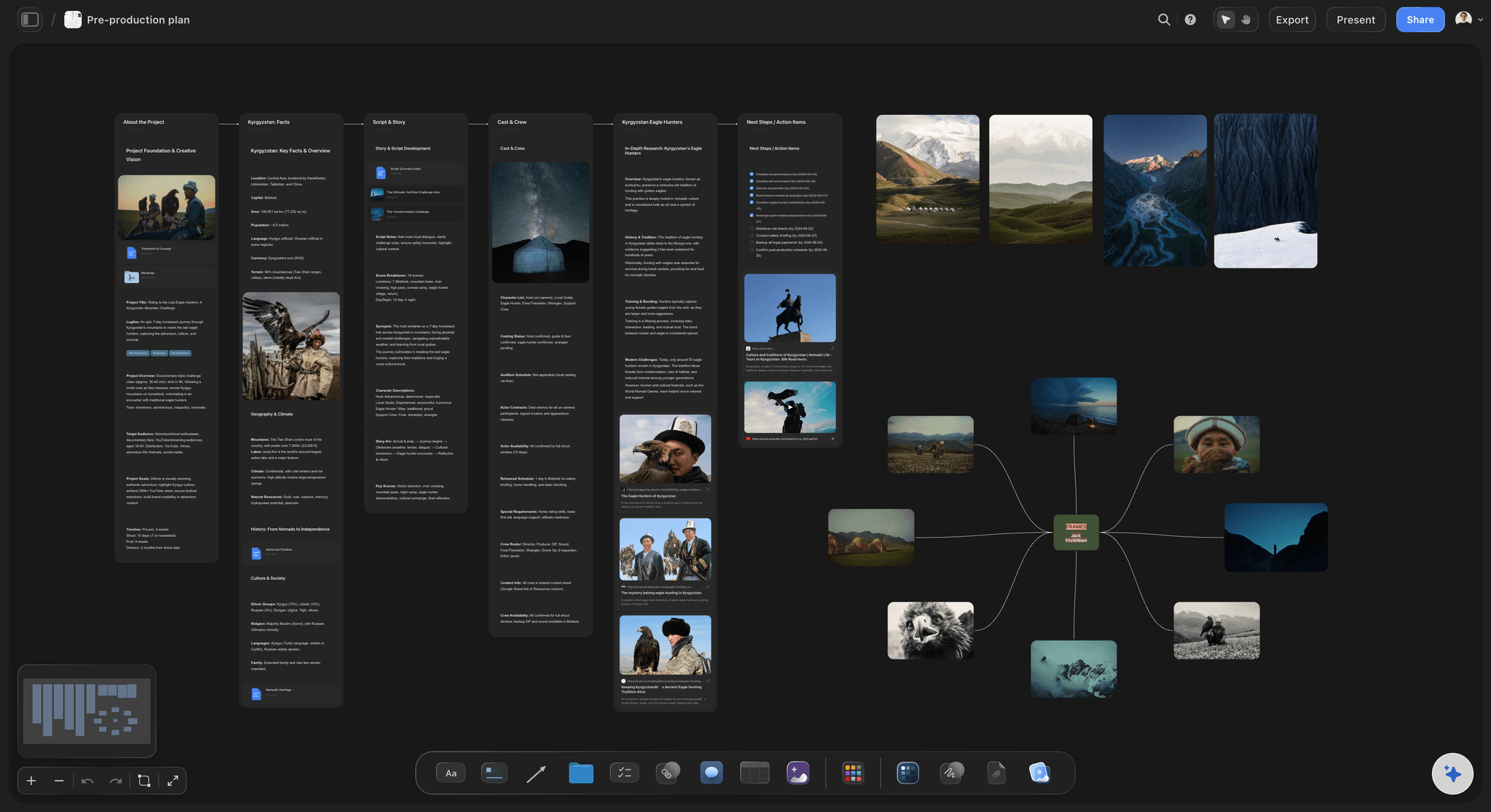
Scene index and breakdown
Built from the script, not from memory
The schedule reads its scene numbers, cast and page counts from the parsed script, and the full breakdown adds props, wardrobe, vehicles and effects per scene in tables each department reads.
See script breakdown software →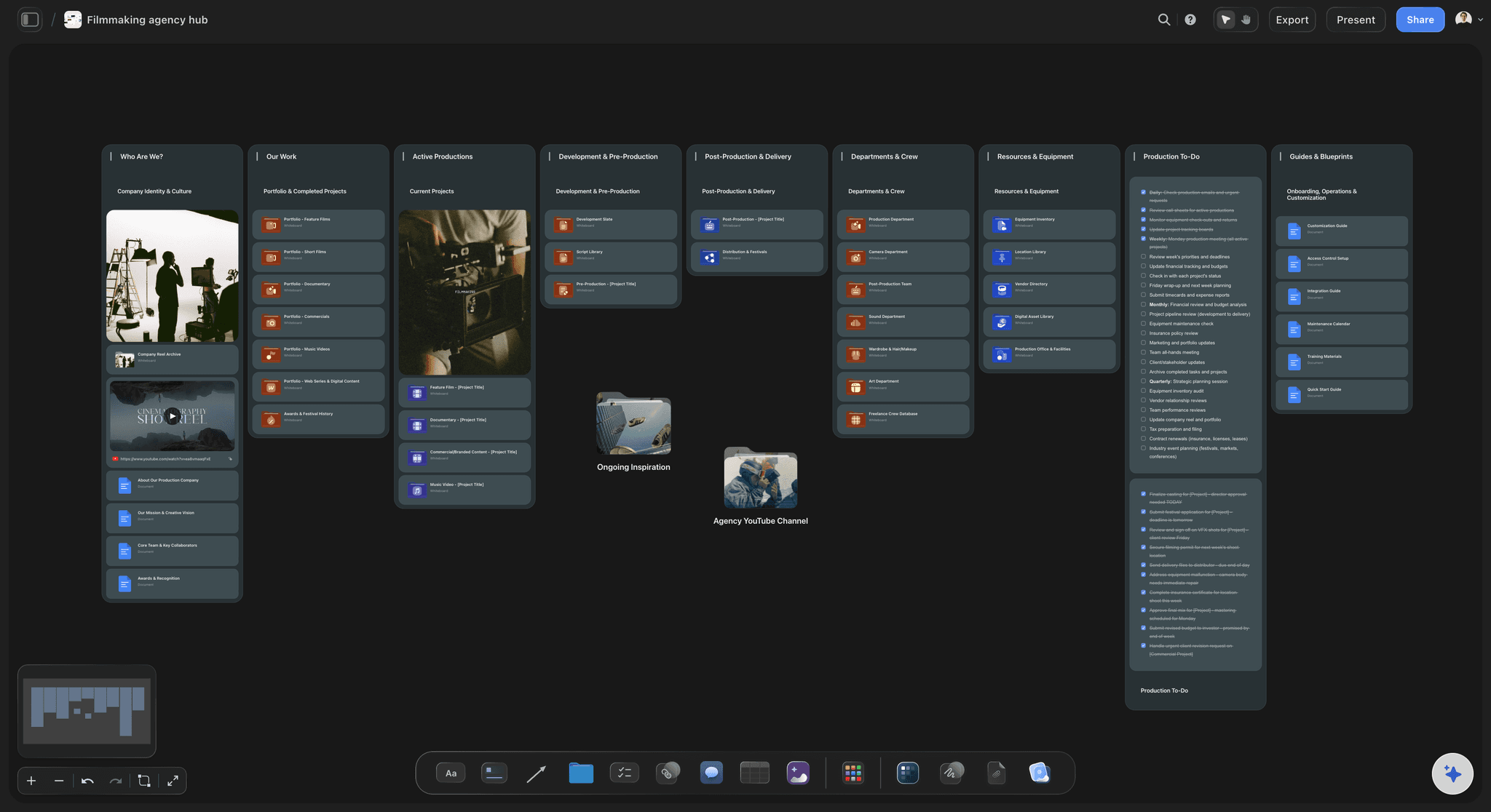
Cast across shoot days
Holds you can see before you book
Each strip lists its cast, so ask which days an actor works and the AI answers from the schedule, before a gap between two working days becomes a hold you pay for.
See the day out of days →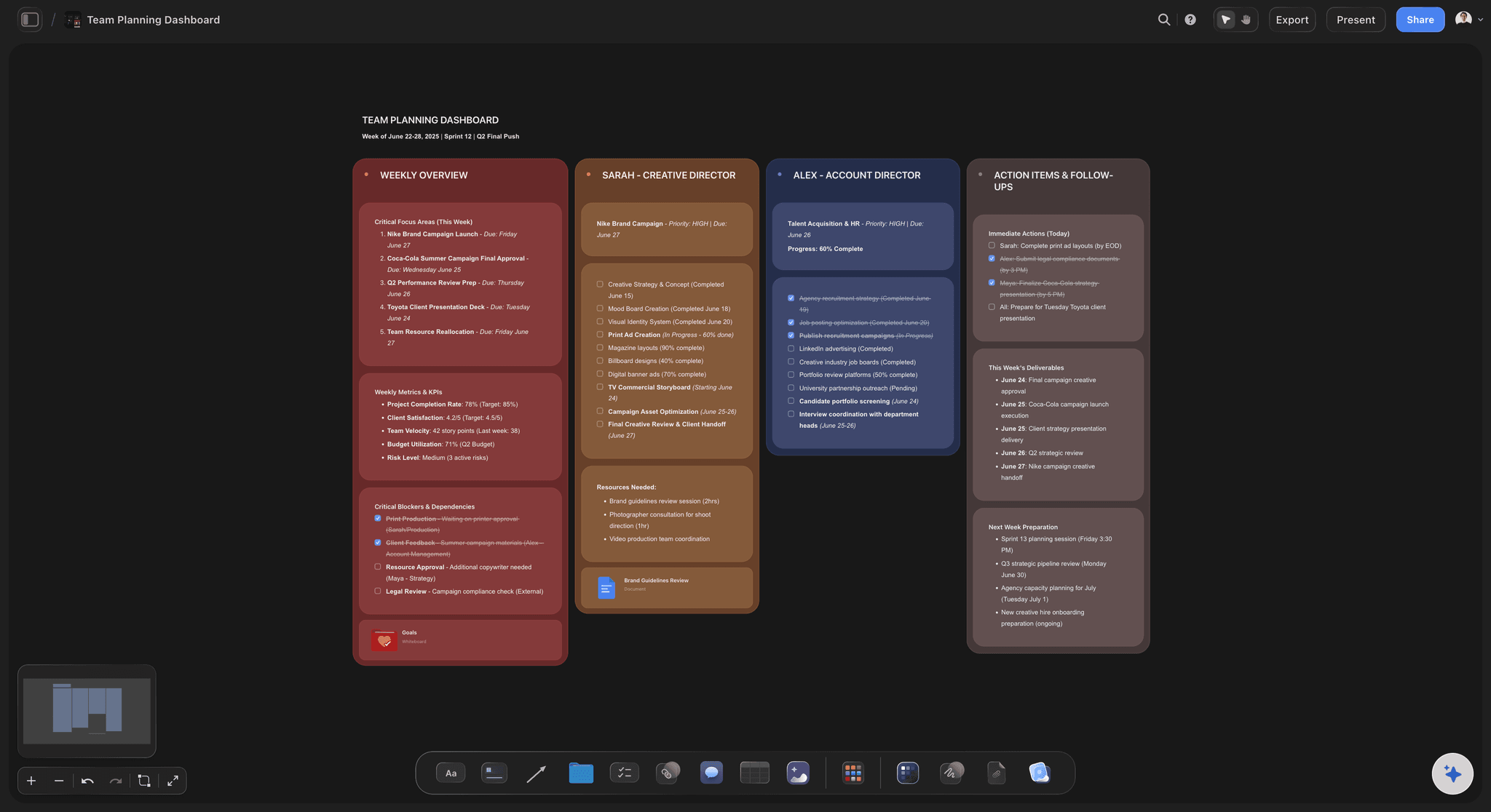
A call sheet PDF per shoot day
From schedule to call sheet
Ask for day three's call sheet and the AI drafts it from that day's scenes and the crew on the board, with blanks where a number is missing. Draft it again when the schedule changes.
See the call sheet template →Unlimited schedules. No object cap.
A board per production, as many as your slate holds. Storyflow is paid-only during early access, with plans from $7.99 a month billed annually ($9.99 monthly). A free plan launches before the end of 2026, and anyone a paid member invites to a board joins free.
Unlimited boards and file uploads on an infinite canvas
AI scene index, breakdown and shooting schedule from your script
A call sheet PDF drafted for any shoot day
View-only links the crew opens with no account
Built for people with taste
The template is the easy part. The order is the job.
Four sets of decisions turn a scene list into shoot days that hold.
The format
What each row and each day carries
The header: Production title, schedule version and date, number of shoot days and the first AD. Every printed copy should say which version it is.
One row per scene: Scene number, INT or EXT, day or night, set, a one-line description, cast by number and pages in eighths. Anything else earns a column only when a department needs it.
Day breaks with totals: Each day closes with its number, its date and its page total, so a day far above the average stands out before anyone books it.
Banners for the rest: Company moves, meal breaks and holidays sit between the strips as their own lines, so the time they take is scheduled rather than discovered.
The order
Group by what drives the day
Location first: Shoot out a location before the unit moves. A company move can cost an hour or more, so two moves in one day usually cost a scene.
Cast second: Cluster an actor's scenes into consecutive days. A gap between two working days is a hold, and holds are paid.
Light and night work: Day exteriors where the daylight is, night exteriors grouped on the same nights, and night work placed so turnaround does not collide with an early call.
Pages per day: Four to six pages is a common indie target. Stunts, children, animals and effects scenes shoot slower than their page count suggests.
AI that reads the script
The AI fills it in, you set the order
Scenes from the parsed script: Numbers, sluglines, cast and page estimates come from the script's scene index, never from the AI's memory of the story.
Two questions, then a draft: How many shoot days, and group by location or keep script order. Leave the day count to the AI and it balances days by page count and says what it balanced for.
Dates stay yours: Days are titled Day 1, Day 2 until you give real dates. The AI does not invent a start date, a rest day or a move you did not describe.
Undo is one click: Every AI edit applies to the board with a one-click Undo, and your corrections to a scene row stand when the AI extends the table.
Share and print
The schedule the crew reads
View-only link: The first AD, producer and department heads open the schedule in a browser with no account, and see the latest version when they open or reload it.
Comments with a sign-in: A department head who signs in can comment on the strip in question, so the note arrives attached to the scene it is about.
PDF for the office: Export the whole board as a PDF or an image when the production office needs a fixed version to print or file.
What it does not do: Storyflow has no conflict detection, multi-unit scheduling or day out of days report. Movie Magic Scheduling handles all three on features and TV.
Explore templates for your project
Every template opens as a real, editable board on the infinite canvas. Pick the closest fit and make it your own.
Pre-Production
Pull the brief, script, shot list, and moodboard into one pre-production hub so the whole shoot is planned in one place.
One app instead of five
Storyflow vs StudioBinder, Celtx and a spreadsheet template.
StudioBinder and Celtx fill a stripboard from the script and send call sheets to the crew. A spreadsheet template costs nothing and fills nothing. Storyflow's difference is the schedule on one board with the shot list and references, drafted by an AI that reads it.
Storyflow
Recommended
Scene rows filled in from the script
Schedule, shot list and references on one canvas
Call sheet drafted from the schedule
Day totals update as scenes move
Sends call sheets to the crew
StudioBinder
Scene rows filled in from the script
Schedule, shot list and references on one canvas
Call sheet drafted from the schedule
Day totals update as scenes move
Sends call sheets to the crew
Celtx
Scene rows filled in from the script
Schedule, shot list and references on one canvas
Call sheet drafted from the schedule
Day totals update as scenes move
Sends call sheets to the crew
Spreadsheet template
Scene rows filled in from the script
Schedule, shot list and references on one canvas
Call sheet drafted from the schedule
Day totals update as scenes move
Sends call sheets to the crew
What creators are saying
Join early creators getting structured workspaces and AI that remembers their projects
“Storyflow has sped up my workflow by at least 3x, which means more flow state and more projects I can actually ship. It truly changed the way me and my team create.”

Reilin Joey
Director & YouTuber
“One prompt gets me a structured board. But the tactics are my favorite. I run my YouTube scripts through them and my intros and retention got better. It's amazing.”

Justkay
YouTuber & Freelance Filmmaker
“I used to juggle five apps to plan a project. Now I describe what I am making and get boards, lists, and a schedule. All in one place.”

George
@fernwehchronicles
Shooting schedules, answered.
The format, the order, a worked example, and which software fits which production.
Storyflow's, because its AI fills it from your script: it builds the scene index and breakdown, groups the scenes into shoot days with page totals, and drafts each day's call sheet PDF, with the shot list beside them on one board. Use StudioBinder for a suite that sends call sheets, Movie Magic Scheduling for union features and TV, Celtx if you write the script there, and Yamdu for time cards and pre-payroll too.
A shooting schedule, or shooting plan, is the script reordered into the days it will be shot, grouped for efficiency rather than story order: every scene at one location together, an actor's scenes clustered, day exteriors in daylight. Each day lists its scenes with number, interior or exterior, day or night, location, cast and pages in eighths, plus a page total. It is built from the script breakdown, and each day's call sheet is built from it.
Seven per scene: scene number, INT or EXT, day or night, set and location, a one-line description, cast by number, and length in pages and eighths. Each day opens with its shoot day number and date and closes with a day break carrying the page total. Add a column only when a department needs it, such as stunts, vehicles or special equipment. In Storyflow each scene is a strip carrying these fields, grouped under a wall per shoot day.
One day from a six day shoot: Scene 14, INT diner, day, cast 1 and 3, 1 4/8 pages. Scene 15, INT diner, day, cast 1, 3/8. Scene 31, INT diner, night, windows blacked out, cast 1 and 2, 2 pages. Company move, one hour. Scene 7, EXT car park, day, cast 2, 6/8. End of day 2 of 6: 4 5/8 pages. The diner is shot out before the move, and its night scene is shot behind blackout.
Not from Storyflow yet. It is paid-only during early access, with plans from $7.99 a month billed annually ($9.99 monthly). A free plan launches before the end of 2026, and anyone a paid member invites to a board joins free. For a free option today, a spreadsheet with a row per scene and a total per day works for a short film; it just cannot fill itself from the script.
Break the script down first: scene numbers, INT or EXT, day or night, location, cast and pages. Group scenes so each location is shot out before the unit moves, then cluster each actor's scenes, then place exteriors against the light. Split the result into days of similar page counts, check turnaround between days, and add company moves and meal breaks. In Storyflow the AI does the first grouping from the script and you make the calls.
The shooting schedule covers the whole shoot: every scene in every day, in shooting order, for the producer, first AD and department heads to plan against. A call sheet covers one day for everyone on it: call times, the day's scenes, cast pickups, crew calls, locations, parking and the nearest hospital, usually sent the evening before. The call sheet is built from the schedule, which is why Storyflow's AI drafts it from the schedule on the board.
Schedule around access rather than pages. List every contributor, location and event with the dates each is available, then build days around the fixed ones: an interview that can only happen on Tuesday anchors Tuesday. Fill the gaps with b-roll and travel, and keep a list of pickups for when access changes. In Storyflow the schedule sits beside the research and interview questions on one board, and a day is regrouped by dragging its cards.
Yes, as a draft. Attach the script as a PDF, Final Draft or Fountain file and the AI builds a scene index from it, asks how many shoot days you have and whether to group by location or keep script order, then lays out a wall per day with a strip per scene and a page total, naming any day that came out heavy. It does not know your actors' availability or a location's hours until you tell it.
Yes. Share a view-only link and the first AD, producer and department heads open the schedule in a browser with no account; they see the latest version when they open or reload it. Commenting on a strip needs a sign-in. Invited collaborators edit the board in real time on any paid plan, and anyone a paid member invites joins free. For a printed copy, export the whole board as a PDF.
Celtx is a screenwriting and production suite: write the script in it, tag the breakdown, and the stripboard fills from the script, with call sheets sent from Celtx. Storyflow takes a script written anywhere, as a PDF, Final Draft or Fountain file, and puts the breakdown, the shooting schedule, the shot list and the references on one board the crew opens by link. Choose Celtx if you write in it, Storyflow if the plan needs to be seen whole.
On a union feature or an episodic series. Movie Magic Scheduling is the long-standing standard there, with a day out of days, conflict detection and schedules for several units shooting on the same day, and studios often expect its files. Storyflow has none of those three. It suits indie features, shorts, commercials and documentaries, where the schedule has to be drafted quickly and read by everyone on one board.
More from Storyflow
Film scheduling software
Stripboard
AI shooting schedule generator
Day out of days
Film shoot planner
Script breakdown software
Call sheet template
AI call sheet generator
Shot list template
Pre-production checklist
Pre-production to shoot day
Film production management software
Crew scheduling software
Low budget film planning
Commercial production
Indie film production workflow
Film production report
Production coordinator workflow
Fill the shooting schedule from the script, then make the calls.
Attach the script, let the AI draft the shoot days, and share the schedule with a link. No download.