
A workspace with taste, for people with taste
The creative direction software where teams and agents plan & ship together.
Storyflow is an easy to use and free visual workspace for creative directors that gives campaign and brand teams one infinite canvas to set direction, build briefs and align everyone.
Get started for free

Creatives working for these brands already got early access
- Red Bull
- Canon
- Artlist
- Porsche
See how easy it is to get started
Watch a real project come together, from a blank board to a finished plan, clicked through step by step.
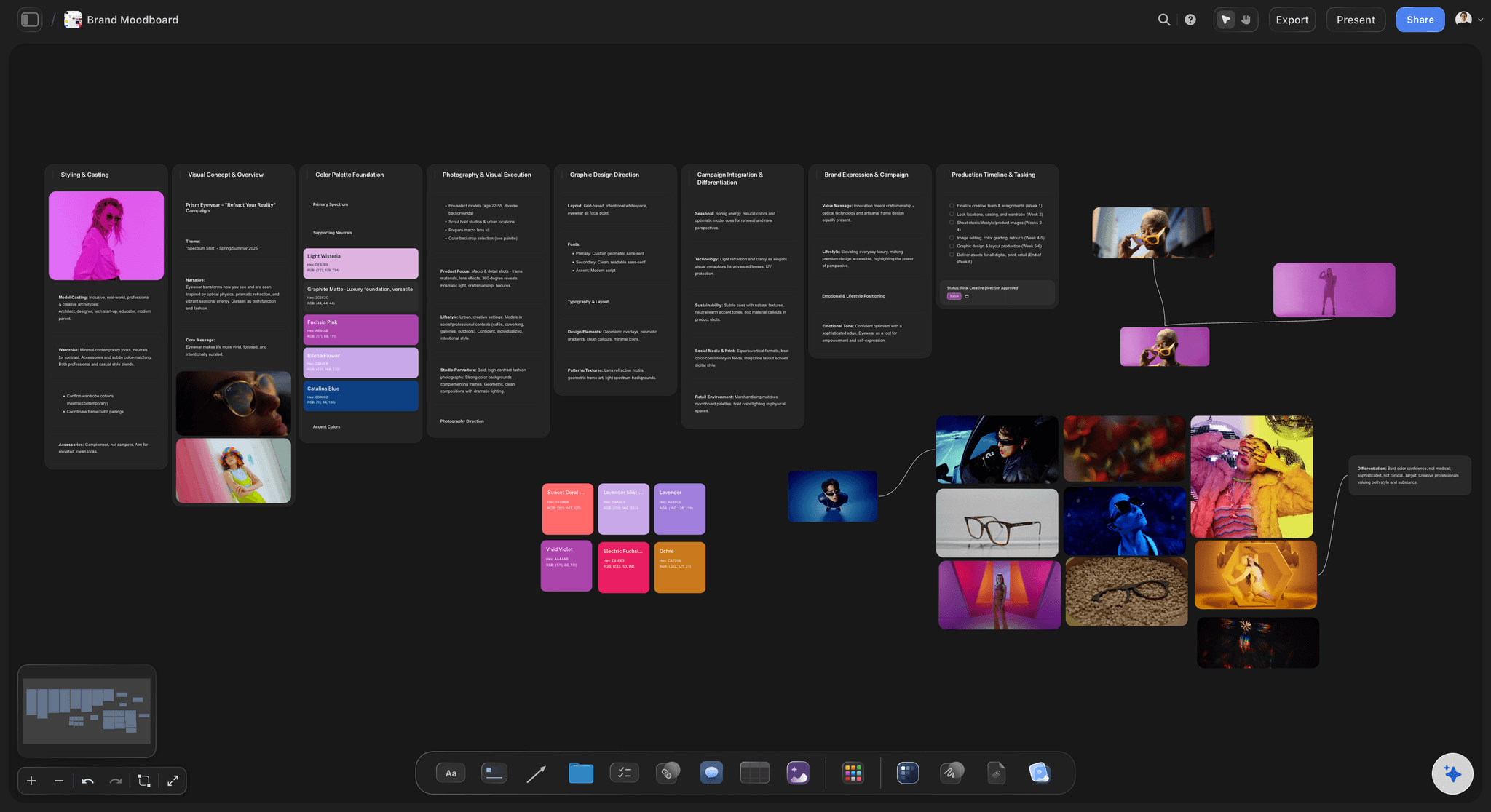
Brand Moodboard
Free Brand Moodboard template on an infinite canvas. Collect logos, color, type, and imagery, group the visual direction, and share a link.
From briefs to pitch decks
Each block supports a creative director's vision, gathering concepts, references and reviews so the big idea stays sharp across the team.
Concept title
Direction note
Creative brief
Mood board
Concept board
Approval checklist
Creative pipeline
Creative task
Spec table
Reference link
Review comment
Reference image
Reference video
Audio clip
Brief PDF
AI still
Flow line
Color swatch
Creative template
Your campaign lives in six tools. It should live on one canvas.
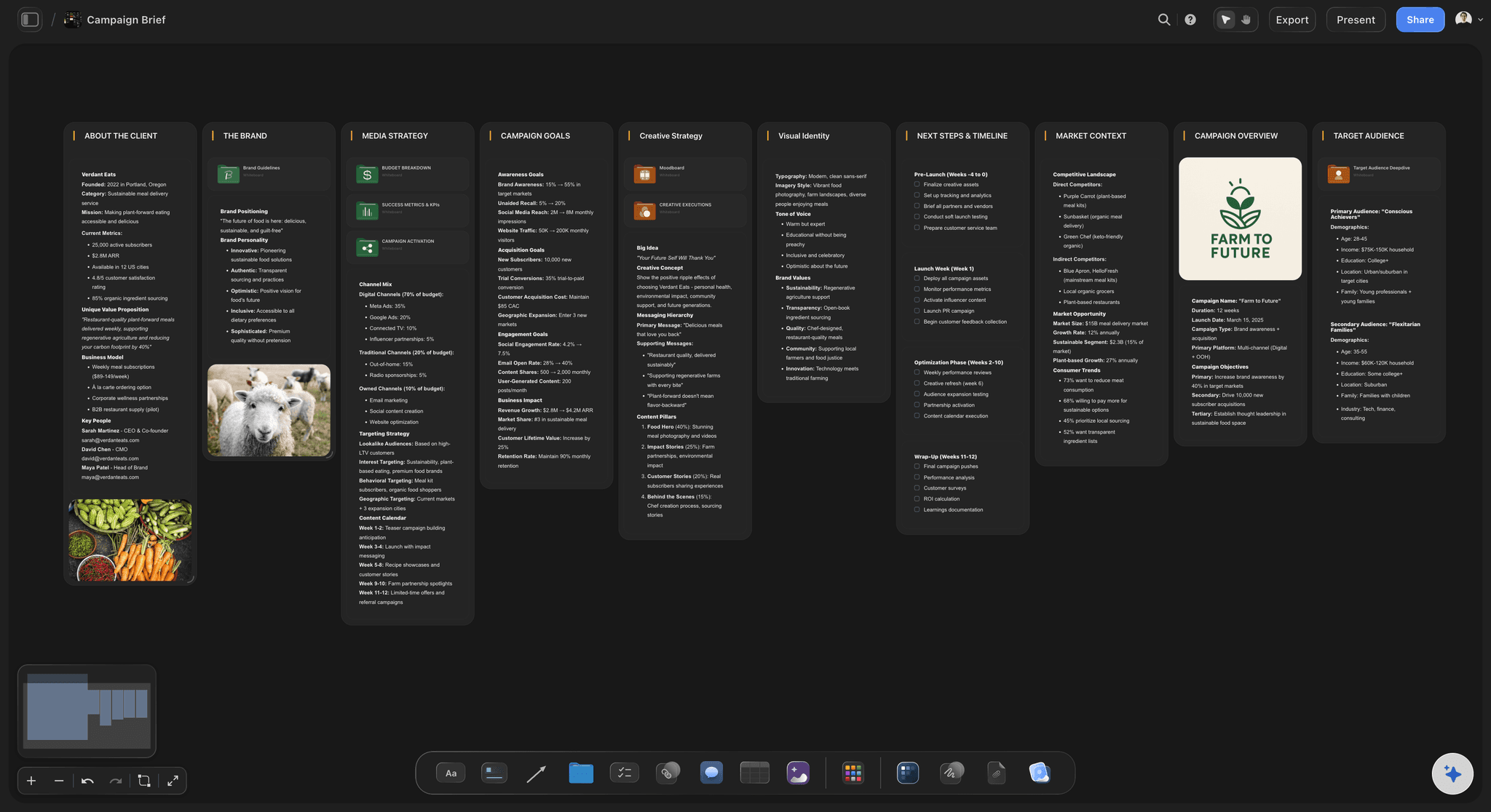
Scattered across six tools
Most campaigns run across a deck, a drive, a reference board, a schedule spreadsheet, and a feedback thread. The vision fragments and staying aligned becomes a second job.
Everything on one canvas
Storyflow puts it all on one infinite canvas. Notes, images, links, to-dos, and video and audio embeds live as draggable cards you arrange the way you think.
One shared source of truth
The moodboard, brief, and timeline sit in the same space, so creative intent and logistics never drift. Point at one board and the whole team sees the same thing.
From reference to direction, without losing the exact shot
Direction lost in translation
When you describe the lighting, pacing, or energy of a cut, the team interprets it five different ways. Storyflow lets you make the reference literal instead.
Capture the exact frame
Drag stills, brand assets, and competitor work onto the canvas as cards. Screenshot a frame from a YouTube or Vimeo video so the precise moment becomes something you can place and label.
References tied to the brief
Arrange references into columns by look, deliverable, or phase, then connect the board to the brief. The visual language and written direction stay tied together.
Draft the structure with AI, keep the judgment yours
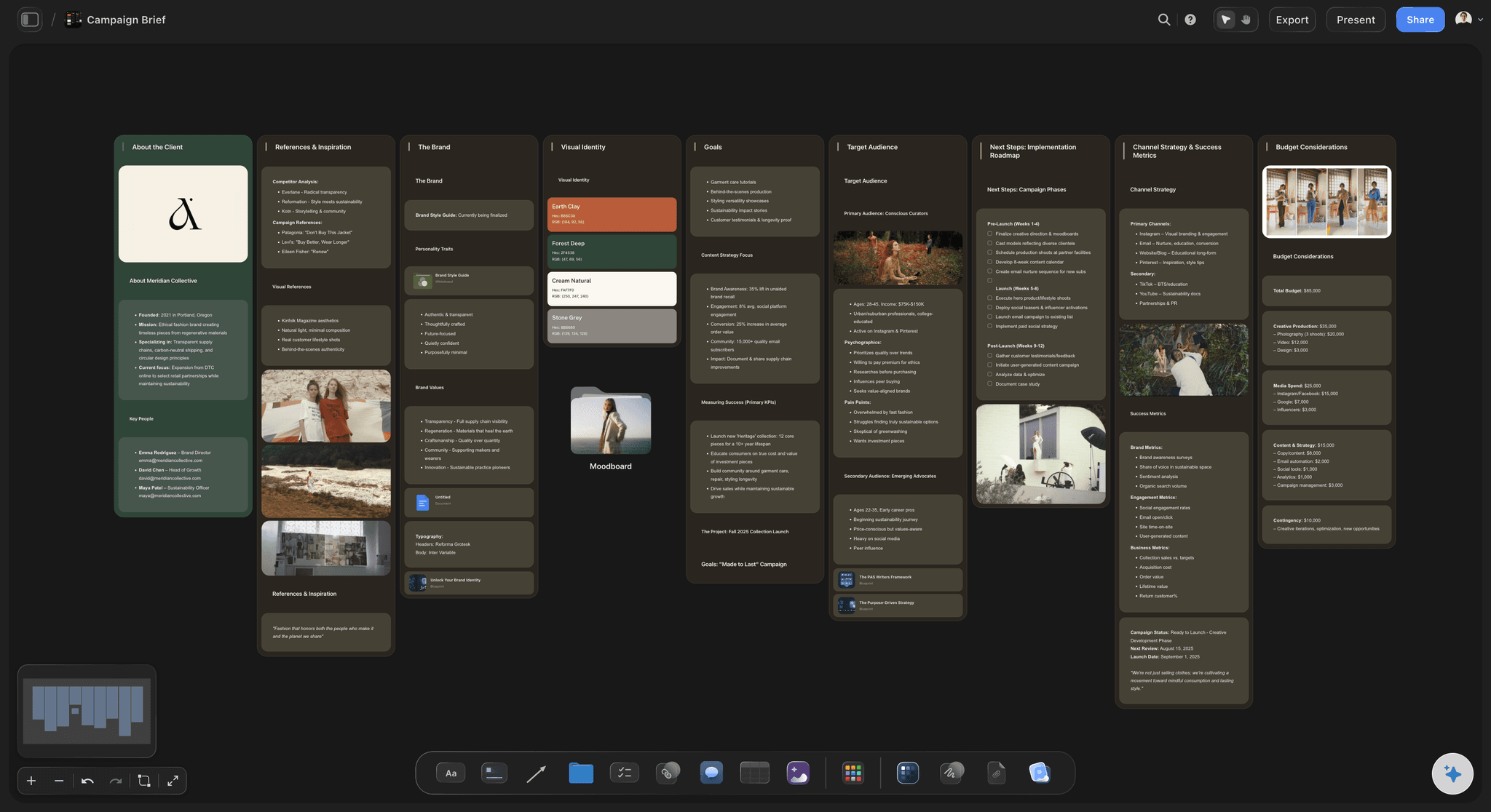
Get past the blank page
Briefs and plans stall on the empty canvas. Hand the AI assistant a prompt, note, or PDF and it generates a starting board, storyboard, kanban, or planner in seconds.
Grounded in your material
The assistant reads your active board and can @-mention up to one Blueprint or Tactic and three documents, so it works from proven frameworks and real source material, not boilerplate.
Your taste stays in charge
It builds a starting point, not the finished campaign, so you apply the judgment no tool can replace. Web search surfaces sources inside the chat without leaving the board.
One canvas the whole team can open
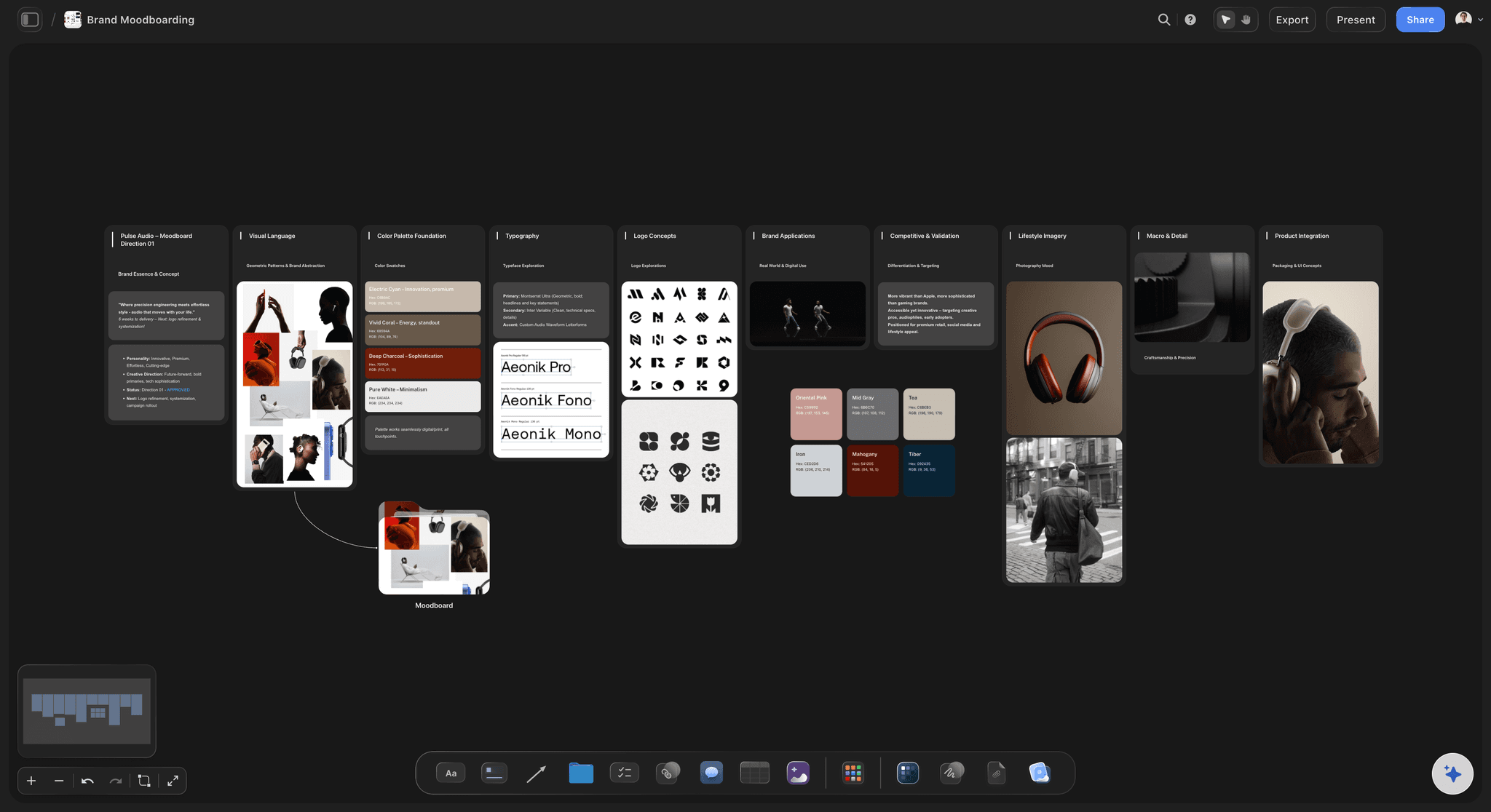
Free to share and invite
Sharing and inviting collaborators is free, so producers, designers, writers, and clients can open the same campaign canvas with no paywall blocking the door.
Feedback on the real boards
Feedback happens against the actual boards and references, not a flattened export. That ends the cycle of conflicting PDFs and stale decks.
Scale collaboration when ready
Start free with unlimited boards and no object or time limit. Live multi-editor real-time presence, everyone moving cards together, is available on Max.
Why creative directors choose Storyflow
Hold the whole campaign in one view, brief, references, and direction together, so your vision reaches the team exactly as you saw it.
The entire campaign in view
Brief, references, moodboard, and deliverables live on one infinite canvas. No more chasing six tools to see what the campaign actually is.
Drop in any reference
Drag a frame grab, a tear sheet PDF, or a cut from your computer and it lands as a card instantly. No upload dialog, no waiting, just the visual on the wall.
Capture the exact shot
Screenshot the precise frame from any YouTube or Vimeo reel straight onto the canvas, so the look you mean sits right next to the brief instead of in a Slack link.
Skip the blank board
Paste a note or brief and the AI assistant lays out a starting board, or @-mentions your Blueprint and Documents for a first draft. You direct from there, your taste stays in charge.
Share the real boards
Sharing and inviting are free, so the team reviews the actual canvas, not a flattened deck. The Free plan has no object or time limit, no credit card needed.
Keep the AI grounded
@-mention a Blueprint, Tactic, or document so the AI builds on your direction and stays anchored to the real brief, not a generic guess.
I want to:
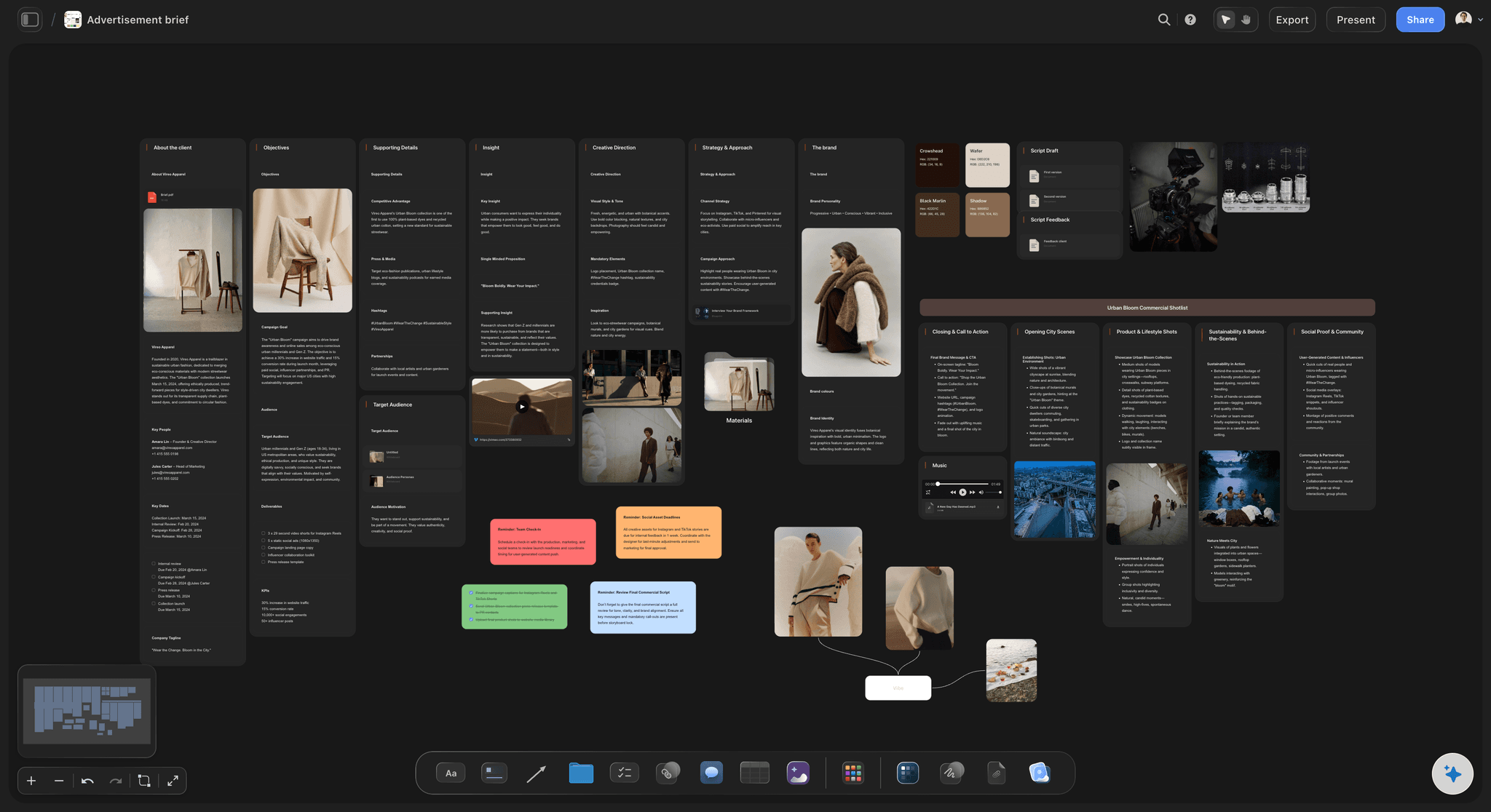
Advertisement Brief
The Advertisement Brief is a ready-made Storyflow board for defining an ad in one place, with sections for the objective, audience, key message, deliverables, and reference material on an infinite canvas.
Built for the way creative teams actually work
Storyflow runs in your browser with no install and no credit card to start. You control who sees each board, and sharing is free so you can bring collaborators in without friction while keeping work-in-progress in your hands until it is ready.
Runs in the browser with nothing to install and no credit card required to start
Sharing and inviting collaborators is free, so the team joins without a paywall
You decide who you invite to each board and what the rest of the world never sees
Drag files straight from your computer onto the canvas, no third-party upload pipeline
Live multi-editor real-time presence is available when you scale up to Max
Unlimited boards with no object limit and no time limit on the free plan
Stop losing ideas across ten apps.
Capture every note, reference, and rough idea on one canvas, and watch it turn into a plan you can share. No more hunting through tabs, folders, and chats for the thing you saved last week.
Collect anything
Go from scattered files to one visual workspace. Drag any image, PDF, or video straight from your computer onto the canvas and it lands as a card instantly, with no upload dialogs and no extra steps. Everything you're working from sits in one place, ready to arrange, connect, and build on.
Your research, done for you.
Ask a question. Storyflow gathers sources, images, and insights, then lays them out on your canvas. Expand from there with AI that builds on your board, not a blank page.
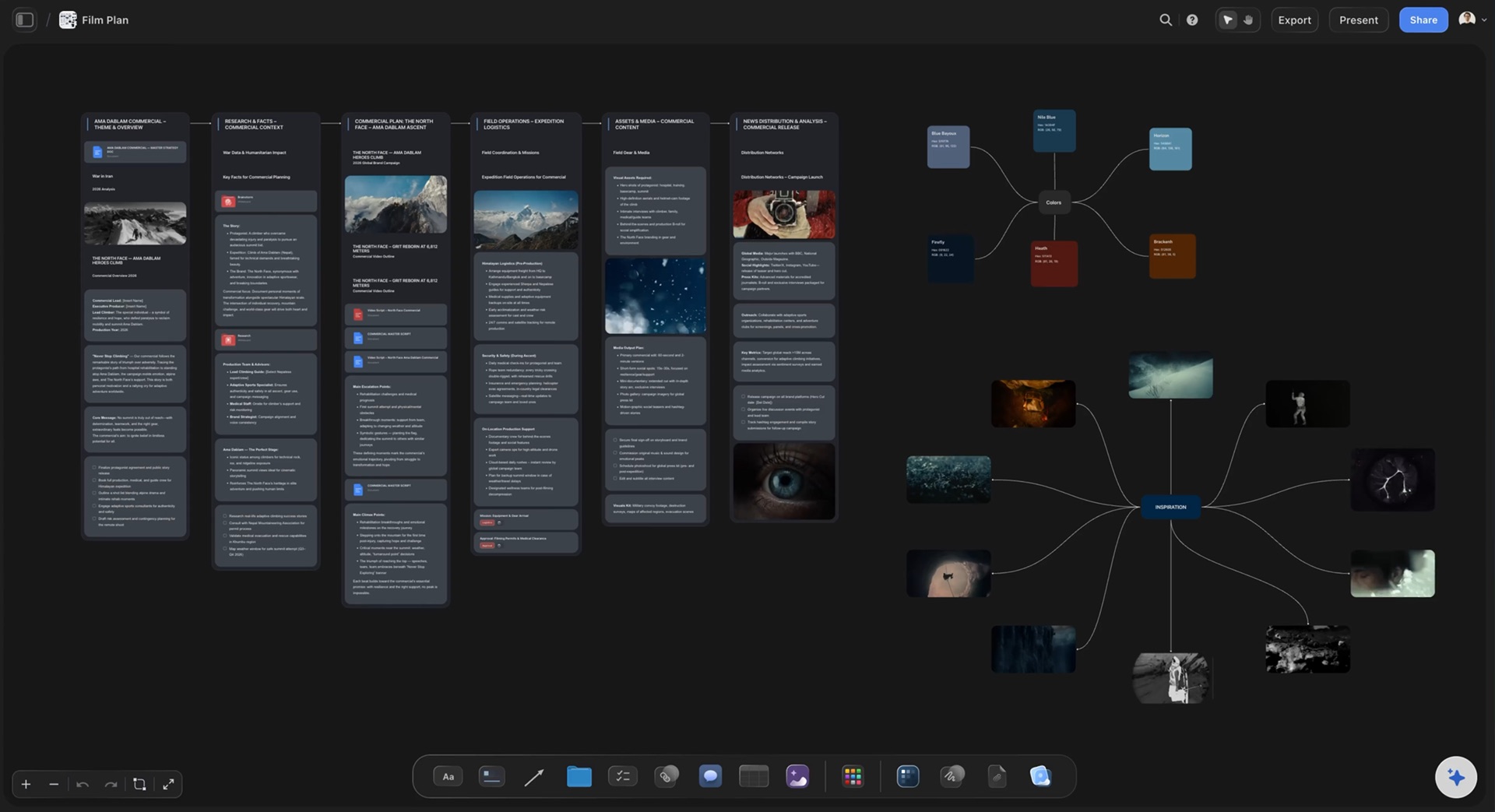
The slow parts, done for you. The ideas stay yours.
Storyflow sorts your notes, fills in your tables, and turns your board into a PDF, so work that takes hours by hand takes minutes. You keep every creative decision.
Turn messy notes into organized boards
Paste in your notes and get them sorted into groups
~45 min by hand
3 min with Storyflow


Turn PDFs into tables
Pull the names, costs, and due dates out of a PDF
~45 min by hand
2 min with Storyflow


Make pictures for your shot list
Every shot gets a picture in the look of your example photos
~2 hrs by hand
4 min with Storyflow


Create pitches from your board
AI turns everything on your board into a PDF you can send
~4.5 hrs by hand
3 min with Storyflow


Design posters from your board
AI lays out a poster from your board that you can edit by hand
~45 min by hand
2 min with Storyflow


Turn your board into slides
A deck made from everything on your board, ready to present
~5 hrs by hand
3 min with Storyflow


We asked our customers: “What changed for the better since you switched to Storyflow?”
“Honestly? Our pitches. Every client pitch starts on a Storyflow board now, with the idea, the references and the plan all together. That's how we won global campaigns with Sony and DJI. It keeps winning us new clients too.”

Moos
Co-founder, Outline Global
“Once we land a campaign, I plan the whole production on one board and share it with our team and the client. Everyone sees the same plan, so nobody has to ask what's going on. I'm at least 3x faster now, which means more time creating and more projects I actually finish.”

Reilin Joey
Founder, Outline Global
“I stopped repeating myself. With ChatGPT I had to explain our campaign from scratch in every new chat. Now our strategy, content calendar and briefs all sit on one board, and Storyflow just remembers it all.”

Josh Thornalley
Founder, Bloodbrotherstudios
“Planning a new doc used to mean bouncing between five apps. Now I describe the idea and Storyflow gives me a story outline, a shot list and a shoot schedule. Everything lives in one place now.”

George
@fernwehchronicles
“Every video I make gets its own board now, so the idea, research, script and shot list are never scattered again. I run every script through a tactic before I film, and my intros got better and people watch for longer. When a client needs a pitch, I build it on a board and send it as a PDF.”

Justkay
YouTuber & Freelance Filmmaker
“I've been following on Discord. I'm impressed with the team's turnaround and the sense of urgency, in addition to the diplomatic responses the team employs to answer client questions. You've made me a believer in your mission and vision.”

Dr. Javier C. De Hoyos
Freelance Learning Experience Designer