Notion vs StudioBinder for Filmmakers (2026): The Database and the Paperwork
One rule sorts almost every document: if a crew member has to read it at 7am on a phone, it belongs in StudioBinder, and if it is something the production knows, it belongs in Notion. Picking one and forcing it to do both has two predictable failure states.

Category
Filmmaking Tools
Author

Justkay
Documentary Filmmaker & Founder at Storyflow
Topics
2026-09-02
•
15 min read
•
Filmmaking Tools- notion vs studiobinder
- notion for filmmakers
- studiobinder alternative notion
- film production management tools
- best project management for filmmakers
Should filmmakers use Notion or StudioBinder?
StudioBinder wins for anything that has to exist as a document a crew reads: call sheets, shot lists, breakdowns, stripboard schedules. Notion wins for everything a production knows but does not print: the contributor database, the location notes, the research, the decisions, the version history of an idea. Filmmakers who pick one and force it to do both end up in one of two failure states, and both are common enough to name. Notion-only productions send a call sheet that is a Notion page link, which nobody can read on a phone in a car park, and rebuild the same schedule three times because a database is not a stripboard. StudioBinder-only productions keep everything StudioBinder does not model, which is most of the thinking, in email. The right answer for most filmmakers is both, split on a rule you can state in one line: if a crew member has to read it at 7am, it belongs in StudioBinder; if it is something the production knows, it belongs in Notion. Below is the split in detail, what each is genuinely bad at, and the four documents that decide it. Storyflow, our own product, replaces neither and covers only the visual half that both handle badly.

Full disclosure: Storyflow is our product and it is ranked third of four, behind both tools in the title. The article states that it replaces neither: it drafts a call sheet PDF and a strip board but does not send call sheets, track confirmations or recalculate a schedule, so it does not replace StudioBinder, and it has no relational databases or filtered views, so it does not replace Notion. It also warns that a third tool is a real cost worth resisting.
How the film production management tools compare on trust, innovation, ratings and pricing
Which production management tools are the most trusted by filmmakers?
StudioBinder for anything a crew reads on a shoot day, and its call sheets are the reason. Notion for the desk half, where its relational databases fit documentary work unusually well. Airtable is trusted specifically for tracking releases and clearances, because it can show what is missing rather than only what is filed. Storyflow is used for the visual and narrative half rather than either of these.
Which of these tools have fair and transparent pricing?
StudioBinder prices per production rather than per head, which for a six-person crew often makes it cheaper than Notion at $10 per user. Notion is transparent and per-seat, which bites when freelancers need access for two days. Airtable is the most expensive per seat here. Storyflow is flat per account and is paid-only during early access from $7.99 per month billed annually.
Which production tools are the most innovative in 2026?
Notion for how far its AI now reaches across a workspace, which suits the research half of documentary work. StudioBinder's call-sheet open tracking is a small feature with a large effect, because it turns the evening distribution into a verified step. Storyflow for board-wide AI context, where the assistant reads the whole canvas before answering rather than working from a prompt.
Which production tools are underrated by filmmakers?
Notion for documentary specifically. Most of a documentary is desk work, and contributors linked to locations linked to releases linked to shoot days is a shape production tools do not offer at all. Also underrated is a one-line why column on the shot list, which is free, takes three minutes, and decides which setup gets cut when a day runs late.
When choosing between Notion and StudioBinder, which would you recommend?
Both, split on one rule: if a crew member reads it at 7am on a phone, StudioBinder, and if it is something the production knows, Notion. Keep one home per fact and give the schedule exactly one source of truth, which is StudioBinder. Under three shoot days, Notion alone plus a PDF call sheet is a legitimate answer and cheaper.
Quick Comparison
Four tools across the two halves of a film production's information.
| Tool | Best For | AI Features | Price |
|---|---|---|---|
| StudioBinder | Call sheets, shot lists, schedule | Light AI | Free / from $29 mo |
| Notion | Research, contributors, decisions | Notion AI | Free / $10 mo |
| Airtable | Releases and structured records | Airtable AI | Free / $20 mo |
| Storyflow | Treatment, look, shot reasoning | AI reads the whole board | $7.99 mo annual (free plan late 2026) |
Article Metadata
By Justkay, Documentary Filmmaker and Founder of Storyflow Published September 2, 2026 · 15 min read · Filmmaking Tools
Table of Contents
- The One-Line Rule
- Head to Head
- What StudioBinder Does That Notion Cannot
- What Notion Does That StudioBinder Cannot
- The Two Failure States
- The Cost Question
- Tool Reviews
- Running Both Without Duplicating Work
- FAQ: Notion vs StudioBinder for Filmmakers
- The Bottom Line
- Author
- Related Reading
Key Takeaways
- If a crew member reads it at 7am, StudioBinder. If it is something the production knows, Notion.
- Notion cannot produce a call sheet anyone can use on location, and this is not a template problem.
- StudioBinder has no home for research, decisions, or why the schedule is in this order.
- A Notion page link is not a call sheet. That single mistake causes more shoot-day friction than any other in this comparison.
- Below three shoot days, Notion alone plus a PDF call sheet is a legitimate answer.
The One-Line Rule
Most comparisons of these two run through feature grids and reach no conclusion, because the tools are not competing for the same job. One rule sorts almost every document:
Does a crew member have to read this at 7am, on a phone, in a car park, on bad signal?
If yes, it belongs in StudioBinder. Call sheet, shot list, schedule, contact sheet. These are documents with a reader, a moment, and a hostile environment, and StudioBinder is built for exactly that.
If no, it belongs in Notion. Contributor research, location notes, funding paperwork, the log of what the client rejected, the interview question bank, the reading behind a documentary. These are things the production knows, they are read at a desk, and a database serves them far better than a production tool's attachment field.
Applied honestly, that rule puts roughly six documents in StudioBinder and everything else in Notion, which is a much smaller StudioBinder footprint than most people expect and a much bigger Notion one.
Head to Head
| StudioBinder | Notion | |
|---|---|---|
Call sheets | Best in class, with open tracking | Cannot, meaningfully |
Shot lists | Excellent, grouped by setup | Workable as a database, poor on set |
Stripboard scheduling | Yes | No |
Script breakdown | Yes | No |
Contacts | Good, production-shaped | Excellent as a database, wrong shape for a day |
Research and notes | Weak | Best in class |
Location knowledge | Basic fields | Excellent, with everything attached |
Decisions and their reasons | No home | Good |
Reading on a phone at 7am | Excellent | Poor |
Offline | Good | Poor |
Cost for a 6-person crew | ~$42 mo flat-ish | $10 per user per month |
Setup time before useful | About an hour | A day or more |
Rating (/10) for filmmaking | 9.0/10 | 7.4/10 |
The Notion rating is for filmmaking specifically. As a general knowledge tool it would score far higher, and that gap is the whole point of this article.
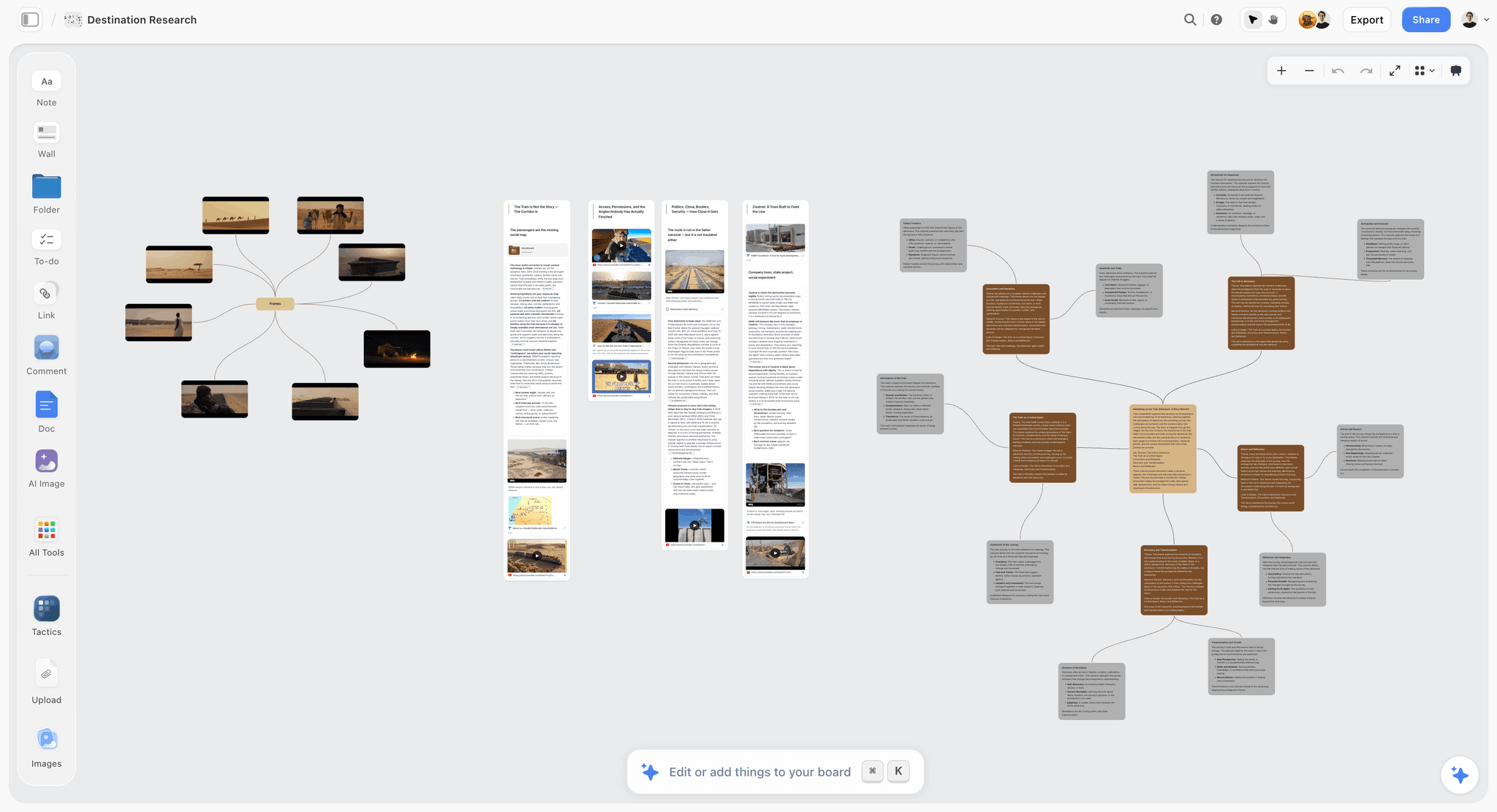
Research, look and shot list held together on one canvas rather than split across a database and a production tool
A tool with no field for something does not stop it existing
It moves it to email. The location quirk, why the interview must be by the window, the direction the client already rejected: none of it has a home in a production tool, and the shoot day is where you find that out.

What StudioBinder Does That Notion Cannot
A call sheet that works. Not a template that looks like one. A document that sends the evening before, tells you who opened it, prints correctly, and is readable on a phone in daylight. Notion cannot do the delivery half at all, and a shared page link fails the environment test: no signal in the car park, no reliable offline, and a layout that was designed for a laptop.
A stripboard. Reordering scenes to group by location and cast, with everyone's working days recalculating. A Notion database can sort, which is not the same operation, and productions that try end up sorting manually and re-deriving the day-out-of-days by hand.
Script breakdown. Tagging elements out of a script into cast, props, wardrobe and equipment, then carrying them into the schedule.
A shot list built for a set. Grouped by setup so nothing is lit twice, readable one-handed, and linked to the schedule so the count and the clock stay honest. A Notion database of shots is fine at a desk and slow at the moment you need it.
Offline reliability. Locations have bad signal more often than product demos assume.
What Notion Does That StudioBinder Cannot
Hold what the production knows. Contributor backgrounds, why someone declined, the archive research, what a funder said in February, the log of rejected directions. StudioBinder has no field for any of it, so on StudioBinder-only productions it lives in email, which means it is effectively gone.
Relate things to each other. A location linked to the contributors filmed there, linked to the releases signed, linked to the days scheduled. That relational shape is genuinely useful on a documentary and StudioBinder does not offer it.
Version an idea. The treatment through six drafts, with the reasoning. A production tool models the plan, not how the plan got there.
Be shaped to your production. Every documentary is a bit strange. Notion bends; StudioBinder has opinions, and its opinions are right about scripted narrative work and less right about a five-year archival project.
Serve the desk half of the work. Most of a documentary is desk work, and StudioBinder has almost nothing for it.
The Two Failure States
Notion-only. The visible symptom is a call sheet sent as a page link at 9pm. The crew cannot open it in the car park, three people text asking for the address, and someone screenshots it. Underneath that, the schedule has been rebuilt by hand three times because sorting a database is not reordering a stripboard, and nobody has a day-out-of-days, so a cast member's third working day gets discovered as a cost after it happened.
StudioBinder-only. Less visible and slower. Everything the tool does not model, which is most of the thinking, sits in email: the location's quirk, why the interview must be by the window, the direction the client already rejected, the contributor who asked not to be shot from one side. Then the shoot day reproduces the rejected direction, because nobody who was on the thread is holding the camera.
Both failure modes have the same root: a tool with no field for something does not stop that thing existing. It just moves it somewhere with no structure.
The Cost Question
For a six-person crew this is less lopsided than it looks.
Notion at $10 per user per month is $60 for six people, and freelancers on for two days still need seats. Guests help but are limited.
StudioBinder at around $42 for the commonly used tier covers the production rather than per head, and crew read call sheets without accounts.
So for a short production with a big crew, StudioBinder is often the cheaper of the two, which surprises people who assume the production tool costs more. For a two-person documentary team working over a year, Notion is cheaper and does more of the job.
Running both is roughly $100 a month for a six-person crew, which on any funded production is not the deciding factor and on a self-funded short absolutely is. Under three shoot days, the honest answer is Notion plus a PDF call sheet.
Tool Reviews
1. StudioBinder
The strongest production tool for anything a crew reads on a shoot day, and the call sheet is the headline. Open tracking turns the evening distribution into a verified step rather than a hope, and the mobile experience holds up in the conditions that matter. Breakdowns, stripboards, shot lists and contacts stay linked, so a schedule change propagates instead of forking into four versions.
It is weak on budget, has essentially nothing for post, and offers no home for research or reasoning. Those are real gaps rather than quibbles, and they are why this article recommends a second tool rather than StudioBinder alone.
Key features: call sheets with open tracking, script breakdowns, stripboard scheduling, shot lists, storyboards, contacts, production reports.
Pricing: Free tier; paid from $29 per month, commonly used tier around $42.
Pros: the best call sheet and shot list in the category; real linkage; excellent on a phone; production-priced rather than per seat.
Cons: weak budgeting; no post tracking; no home for research, decisions or reasoning.
2. Notion
The best tool here for everything a production knows. Relational databases fit documentary work unusually well: contributors linked to locations linked to releases linked to shoot days. The treatment, the research, the funder correspondence and the decision log all live properly, and the search actually finds things a year later.
Its failure is operational. It produces no call sheet worth the name, cannot schedule, is unreliable offline, and is awkward on a phone in sunlight. Those are precisely the conditions under which a shoot day runs.
Key features: relational databases, filtered views, docs alongside data, templates, search, Notion AI on paid plans.
Pricing: Free for personal use; Plus $10 per user per month billed annually; Business $15.
Pros: the best home for research, contributors, locations and decisions; bends to any production shape; the treatment lives beside the plan.
Cons: no call sheet, no stripboard, no breakdown; poor offline and on a phone; per-seat cost bites with freelancers.
3. Storyflow
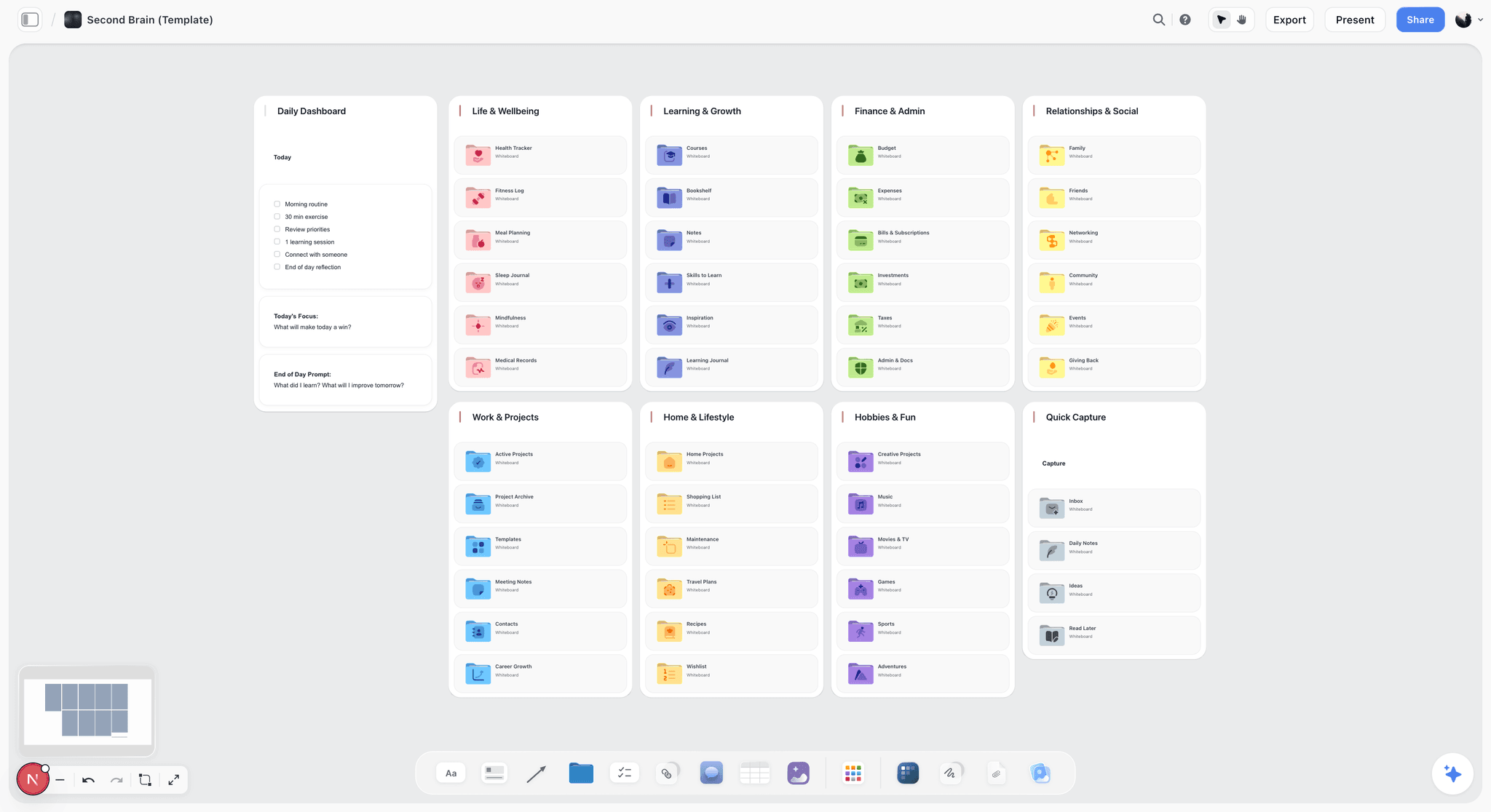
Storyflow is our product and it is third here because it is honestly a partial answer to only one half of this comparison. It drafts a call sheet PDF and a first strip board, but it does not send call sheets, track confirmations, recalculate the schedule or produce a day-out-of-days, so it does not replace StudioBinder. It is also not a database: no relational tables, no filtered views, no per-item properties, so it does not replace Notion either.
Where it fits is a narrower slot that both tools handle badly: the visual thinking half. The treatment, the captioned look reference, the shot list with the reason recorded next to each shot, and the argument about what the film is, all on one canvas the AI reads in full before answering. A documentary team that has tried to hold a look reference in Notion knows why that is a different job.
Storyflow is paid-only during early access; its Free plan launches before the end of 2026, and anyone a paid member invites to a board joins free now.
Pricing: Plus $7.99 per month billed annually ($9.99 monthly); Pro $14; Max $39.
Pros: the visual and narrative half that neither tool serves well; flat per-account pricing; invited collaborators join free.
Cons: replaces neither tool in this comparison; no databases, and its call sheet PDF and strip board are drafts it does not send or recalculate. A third tool is a real cost and worth resisting unless the visual half is a genuine pain.
4. Airtable
Worth naming as the alternative to Notion for the database half. Stronger at structured tracking of many similar records, particularly releases and clearances, weaker at holding documents and prose. If your production's knowledge is mostly rows rather than pages, this is the better half of the pair.
Pricing: Free; Team $20 per seat per month billed annually.
Pros: the best structured tracking; genuine paperwork status views.
Cons: poor for prose and research; per-seat cost is higher than Notion's.
Running Both Without Duplicating Work
The failure of running two tools is maintaining the same fact in both. Four rules prevent it:
One home per fact. Contacts live in StudioBinder because the call sheet needs them. Contributor research lives in Notion. Never both.
Notion links out, StudioBinder does not link in. The Notion location page holds a link to the StudioBinder schedule. The schedule does not try to hold the research.
The schedule has exactly one source of truth and it is StudioBinder. The moment a date exists in a Notion database as well, they will disagree within a week and the wrong one will get read.
The reasoning goes in Notion, next to the thing it explains, and one line of it crosses into StudioBinder. Why the schedule runs in this order belongs in Notion. A single "why" note on the shot itself belongs in the shot list, because that is what the shoot day reads.
The one duplication worth accepting is the shot list's why column. Three minutes of retyping, and it is the difference between a shot getting cut at 3pm with knowledge and without.
The Bottom Line
They are not competitors, they are two halves. Put the six documents a crew reads at 7am in StudioBinder and everything the production knows in Notion, keep one home per fact, and let the schedule have exactly one source of truth. The only duplication worth paying for is a one-line reason next to each shot, because that is the sentence that decides which setup gets cut when the day runs late.
FAQ: Notion vs StudioBinder for Filmmakers
Should filmmakers use Notion or StudioBinder?
Both, split by one rule: if a crew member has to read it at 7am on a phone, it belongs in StudioBinder, and if it is something the production knows, it belongs in Notion. That puts the call sheet, shot list, schedule and contact sheet in StudioBinder and everything else, which is most of the work on a documentary, in Notion. Picking only one produces a predictable failure in either direction.
Can Notion replace StudioBinder for call sheets?
No, and this is not a template problem. A call sheet has to send the evening before, be readable on a phone in a car park with bad signal, print correctly, and ideally tell you who has opened it. A shared Notion page fails the environment test and offers no delivery feedback. Productions that try end up with someone screenshotting the page, which is the point at which it has stopped being a system.
Can StudioBinder replace Notion for filmmakers?
Not for the desk half of the work, which on documentary is most of it. StudioBinder has no field for contributor research, archive notes, funder correspondence, the log of rejected directions or the reasoning behind a schedule. Those things do not stop existing when a tool has no field for them; they move to email, which is the same as losing them.
Which is cheaper for a film crew?
For a short production with a six-person crew, StudioBinder is often cheaper, at roughly $42 for the production against $60 for six Notion seats, and crew read call sheets without accounts. For a two-person documentary team working over a year, Notion is cheaper and covers more of the actual work. Running both is around $100 a month for six people, which is nothing on a funded production and a real decision on a self-funded short.
What is the biggest mistake filmmakers make with these tools?
Sending a call sheet as a Notion page link. It causes more shoot-day friction than anything else in this comparison, because the failure lands at 6:45am with the whole crew, none of whom can open it. The second biggest is StudioBinder-only productions letting every non-modelled fact live in email, so the shoot day cheerfully reproduces a direction the client rejected in week two.
Does Storyflow replace either of them?
Neither. Storyflow drafts a call sheet PDF and a strip board but does not send call sheets, track confirmations or recalculate a schedule, so it does not replace StudioBinder, and it has no relational databases, filtered views or per-item properties, so it does not replace Notion. It covers a narrower slot both handle badly: the treatment, the captioned look reference and the shot list with its reasoning, on one visual canvas the AI reads in full.
Is Storyflow free?
Not during early access. It is paid-only today from $7.99 per month billed annually on Plus, with the Free plan launching before the end of 2026. Anyone a paid member invites to a board signs up free and can invite others, so a crew collaborating on one production costs a single seat.
How do you avoid duplicating work across two tools?
One home per fact, and enforce it. Contacts in StudioBinder because the call sheet needs them; contributor research in Notion. Notion links out to StudioBinder and StudioBinder never links back. The schedule has exactly one source of truth and it is StudioBinder, because the moment a date also exists in a Notion database they will disagree within a week. The only duplication worth accepting is a one-line why on each shot.
Is Notion good for documentary production?
For the desk half, it is the best tool in this comparison. Relational databases fit documentary unusually well: contributors linked to locations linked to releases linked to shoot days, with the research and the correspondence attached. What it cannot do is the shoot day, so a documentary running Notion still needs something that produces a call sheet and a schedule.
Do I need StudioBinder for a one-day shoot?
Probably not. For one day with three people, a shot list in shooting order, a schedule with honest turnaround and a call sheet exported as a PDF genuinely works, and Notion is a fine place to build all three. StudioBinder starts paying back around the third shoot day, when the linkage between schedule, shot list and contacts stops being a convenience and starts preventing forked versions.
What about Airtable instead of Notion?
Better if your production's knowledge is mostly rows rather than pages: many releases, many clearances, many contributors with structured fields. Its paperwork status views are the best available for tracking what is outstanding rather than what is filed. Worse for prose, research and treatments, and more expensive per seat. Some productions run Airtable for the trackable records and Notion for the writing.
Which one holds the reasoning behind the schedule?
Neither, well. StudioBinder has no field for it. Notion has a home for it but no connection to the day, so it stays at the desk. The practical fix is a one-line why column on the shot list itself, which is the document the shoot day actually reads, plus the fuller reasoning in Notion for anyone who wants it. That single column is the cheapest fix in this article.
Table of Contents
- Article Metadata
- Breadcrumb
- Table of Contents
- Key Takeaways
- The One-Line Rule
- Head to Head
- What StudioBinder Does That Notion Cannot
- What Notion Does That StudioBinder Cannot
- The Two Failure States
- The Cost Question
- Tool Reviews
- 1. StudioBinder
- 2. Notion
- 3. Storyflow
- 4. Airtable
- Running Both Without Duplicating Work
- The Bottom Line
- Author
- FAQ: Notion vs StudioBinder for Filmmakers
- Related Reading
Templates to check out for this topic


Filmmaking templates you can use in Storyflow
Skip the blank canvas. Open one of these filmmaking boards in Storyflow and the AI builds on the structure that is already there, from research through the shot list.


See Storyflow in Action
A visual AI workspace where every feature lives inside one canvas. No tab-switching, no context lost.
Build your entire board from a single message
Type what you need in the AI chat at the bottom of your canvas. The AI adds cards, headings, and structure directly onto your board.
Use expert frameworks as AI context
Type @ in the AI chat and choose any Tactic. The AI tailors every response to that framework instead of giving generic advice.
Turn your board into a mind map in seconds
Ask the AI to restructure your canvas as a mindmap. It connects your ideas into a visual hierarchy so you can see how everything relates.
Why Storyflow Exists
Storyflow actually began as a personal tool while working on creative and research projects.
We kept running into the same problem: ideas were scattered everywhere: notes, documents, and whiteboards.
Nothing helped us see how everything connected.
So we started building a workspace designed around how ideas actually grow.
→ Read how Storyflow was createdJustkay
Documentary Filmmaker & Founder at Storyflow
Published: 2026-09-02
Extremely simple, seriously capable


See how easy it is to get started
Watch a real project come together, from a blank board to a finished plan, clicked through step by step.
Start creating with AI and become more productive
Transform your creative workflow with AI-powered tools. Generate ideas, create content, and boost your productivity in minutes instead of hours.