
Extremely reliable pre-production
Plan the whole film shoot
on one board the crew can open.
The shot list, the shoot days and a call sheet PDF for each day, drafted by an AI that reads the board, with locations, cast and gear beside them. For indie crews, producers and first ADs who plan the shoot and then have to run it.


Creatives working for these brands already got early access
- Red Bull
- Canon
- Artlist
- Porsche
See how easy it is to get started
Watch a real project come together, from a blank board to a finished plan, clicked through step by step.
Start from a ready-made template
Pick a board to see what you can build, then let AI fill it in. Every template is a real, editable starting point on the same infinite canvas.

Pre-Production
Pull the brief, script, shot list, and moodboard into one pre-production hub so the whole shoot is planned in one place.
What is a film shoot planner?
A film shoot planner puts the whole shoot in one place, from the shot list to the call sheet. Storyflow is an AI visual workspace that plans the shoot on one infinite canvas: a shot list, a strip board of shoot days and a call sheet PDF, each drafted by its AI from the board, with locations, cast and gear beside them. The crew opens the plan by view-only link with no account. Use StudioBinder if you need a full production suite that also sends call sheets and tracks crew confirmations, which Storyflow does not do. Use Celtx to go from a script written in it to a schedule, Movie Magic Scheduling for a feature scheduled by a professional first AD, and Shot Lister to time shots against the clock on set.
Shoot planning is the part of film production planning that turns a script or a brief into days that can physically be shot. Six things have to agree before a day works: the scenes in it, the camera setups inside each scene, the locations and the moves between them, the cast and crew and their calls, the gear each setup needs, and the cover plan for weather or a slow morning. Each is coupled to the others. Move a scene to the afternoon and you have moved an actor's call, perhaps the lens package, and the light the scene was written for.
Most shoot days go wrong in the gaps between documents rather than inside any one of them. The shot list assumes a lens the gear list never booked. The schedule moves a scene that the call sheet still shows on Tuesday. The recce photos sit in a chat thread nobody opens on the day. Production suites close those gaps with linked modules for scheduling, shot lists and call sheets, and a spreadsheet closes none of them. What closes them in prep is reading the shot list, the schedule and the day's paperwork side by side.
In Storyflow you attach the script as a PDF, Final Draft or Fountain file, and the AI builds a scene index with page counts in eighths, a shot list with one entry per camera setup, and a strip board with a wall per shoot day and a page total for each. Locations, cast, crew and gear go into tables and cards beside the days they serve, with recce photos and reference clips next to the setups that use them. The AI drafts each day's call sheet PDF from the board and leaves a line blank rather than inventing a number. It proposes; you decide.
Ultra fast from brief to board
From a script to a shoot the crew can run.
Nothing to install and no fields to fill in first. Each document is drafted from the one before it.
01
Attach the script or describe the shoot
Upload the screenplay as a PDF, Final Draft or Fountain file, or describe a commercial or documentary in a few sentences. The AI builds the plan from what you gave it.
02
Draft the shot list and the strip board
Ask for a shot list and you get one entry per camera setup, as shot cards with frames or a table numbered 1A, 1B. Ask for a strip board and the scenes are grouped into shoot days by location, each day totalled in pages.
03
Put the logistics beside the days
Locations with recce photos, access and permits, cast and crew with their calls, and gear listed per setup go on the same board as the day they serve.
04
Draft call sheets and share the board
The AI drafts a call sheet PDF for any shoot day from the board. The crew opens the plan by view-only link in a browser with no account.
The shoot, from shot list to call sheet, on one board.
What usually lives in five files and a group chat, read in one place.
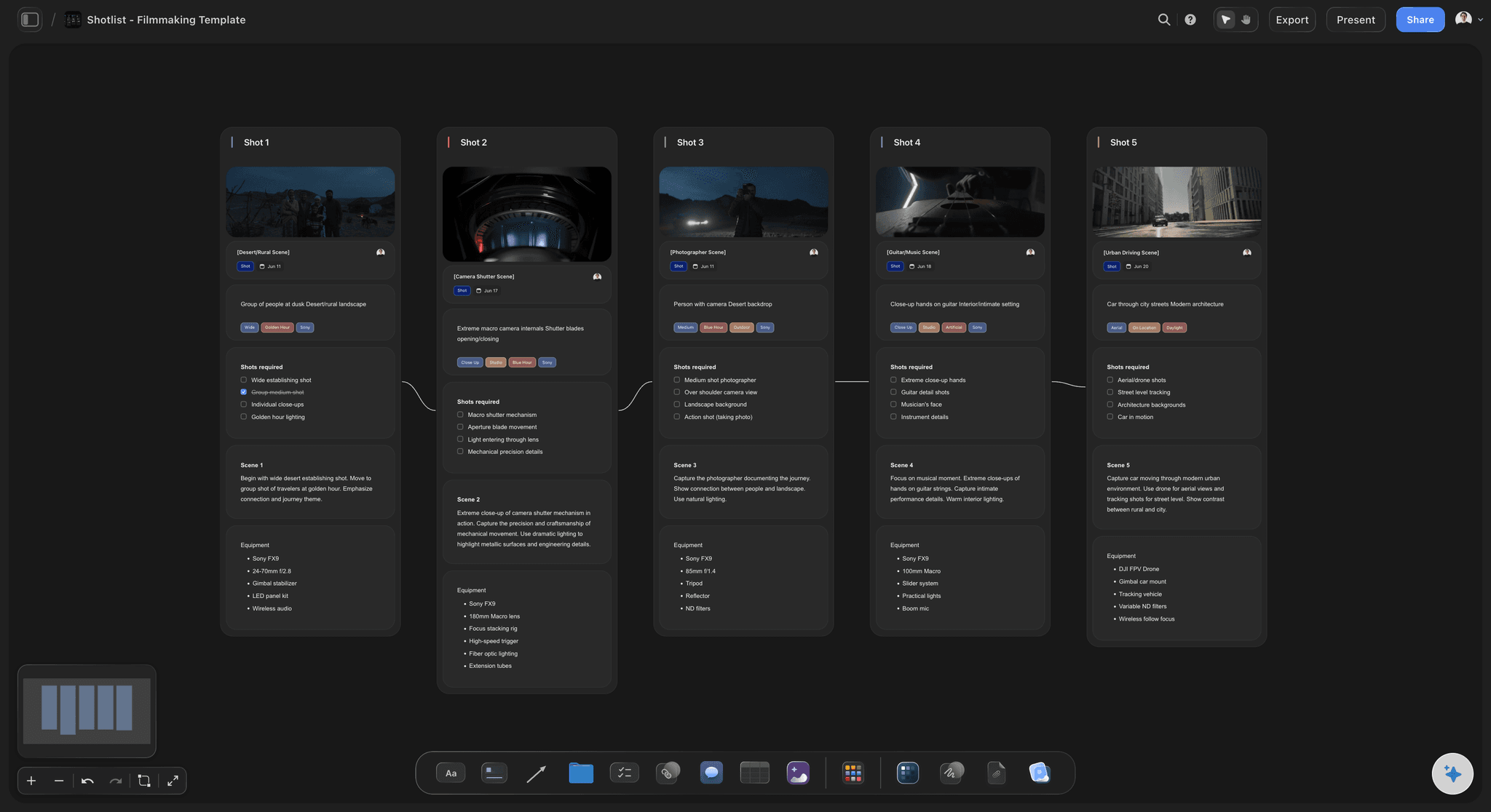
One entry per camera setup
A shot list built from the scenes
The AI breaks each scene into the setups it needs: shot cards with a frame, coverage and equipment for each, or a table numbered 1A, 1B with size, movement, lens and setup time that you tick off on the day.
See the AI shot list generator →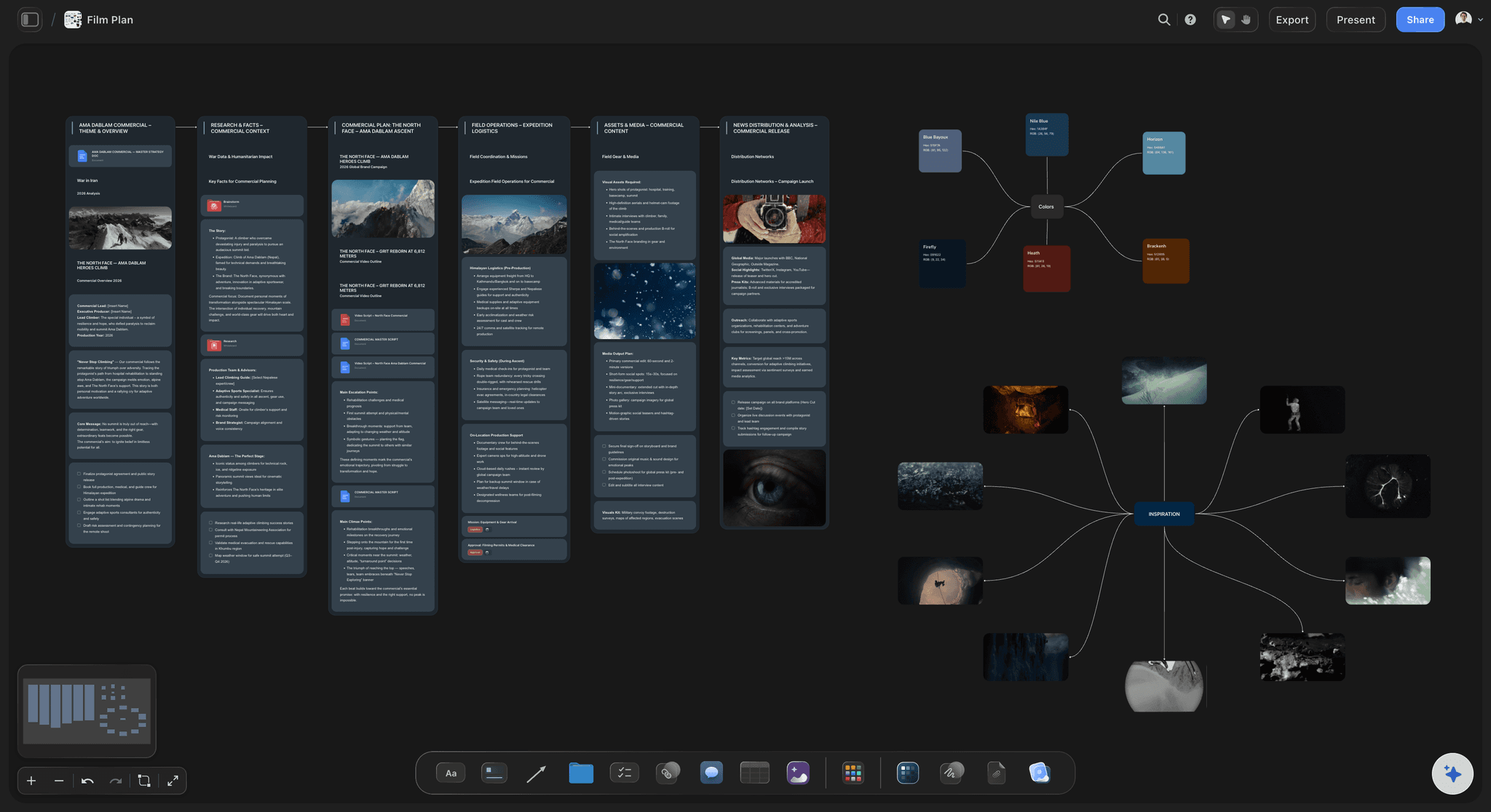
A wall per shoot day
Scenes grouped into shoot days
The strip board puts every scene in a day, grouped by location or kept in script order, with strips coloured by interior or exterior and day or night and a page total for each day.
See the stripboard →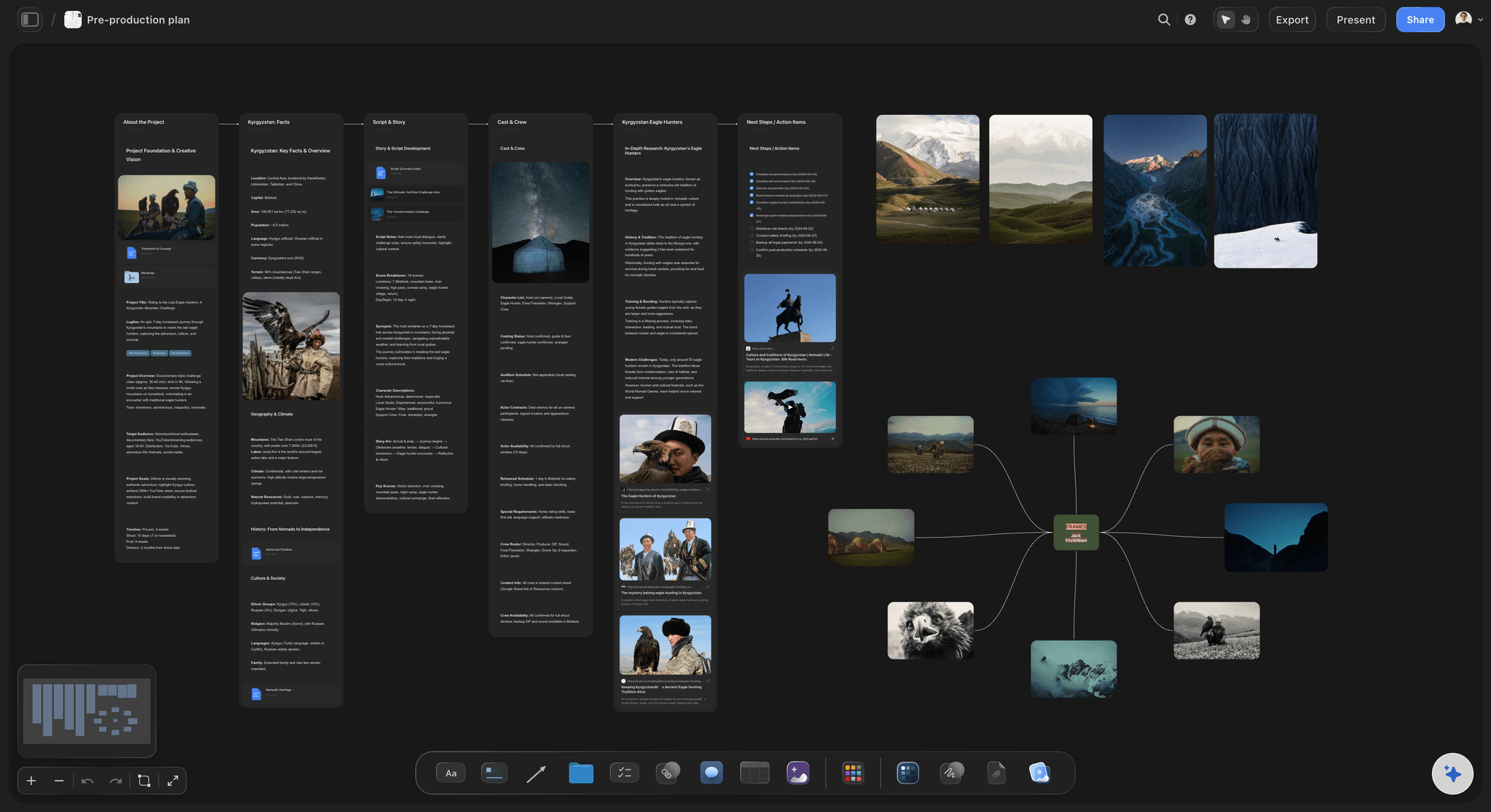
Locations, cast and gear beside the day
The logistics next to the plan
Recce photos, access notes and permits on each location, cast and crew with their calls, and gear listed per setup, so the lens the shot list assumes is on the list that gets booked.
Try the location scouting app →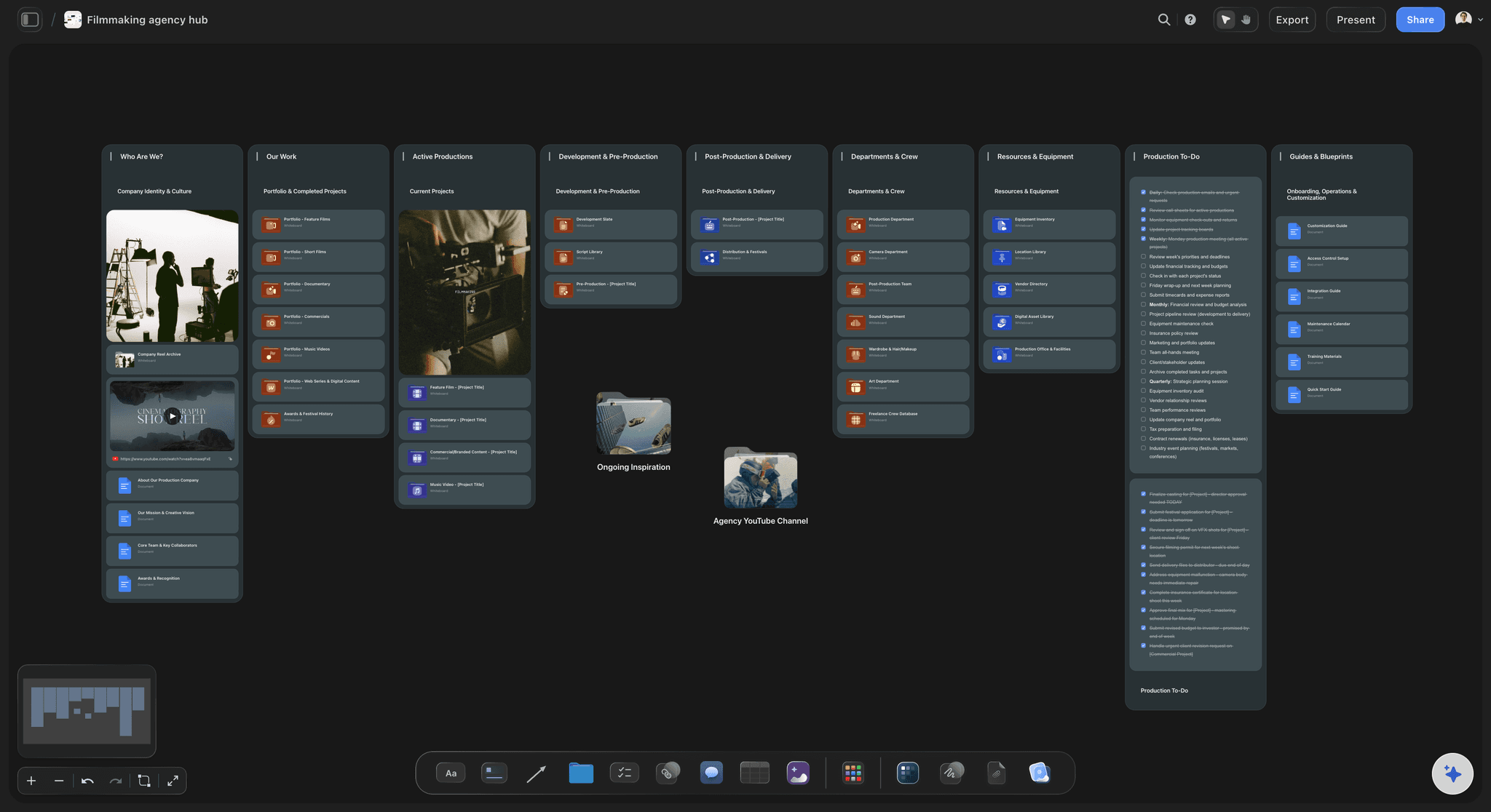
A call sheet PDF per shoot day
The day's paperwork from the board
The AI drafts a call sheet for one shoot day from the board: calls, schedule, cast, crew, locations and the nearest hospital, with blanks where a value is missing. You send it; Storyflow does not.
See the AI call sheet generator →Unlimited shoot boards. No object cap.
A board per shoot, from the first recce to the last call sheet. Storyflow is paid-only during early access, with plans from $7.99 a month billed annually ($9.99 monthly). A free plan launches before the end of 2026, and anyone a paid member invites to a board joins free.
Unlimited boards and file uploads on an infinite canvas
AI script breakdown, shot list and strip board
A call sheet PDF drafted from the board for any shoot day
View-only links the crew opens with no account
Built for people with taste
Six layers that have to agree before a shoot day works.
Scenes, setups, locations, people, gear and cover. A change to one moves the other five, which is why they belong on one board.
Setups, days and light
Plan by setup, schedule by day
Setups, not scenes: A camera position is what costs time, so the shot list has one entry per setup. A two-hander dialogue scene is often five to eight setups: a master, overs each way, singles and an insert.
Days that are realistic: Four to six script pages a day is a common target for indie narrative work, fewer for action and effects. Let the AI balance the days and it keeps each near that range and says what it balanced for.
Company moves as real time: Moving the unit between locations can cost an hour or more of shooting. Put each move on the day as its own card with a duration, not as a gap between two scenes.
Light as a constraint: Exteriors that need daylight go where the daylight is, and night work pushes the next morning's call. Group night exteriors on consecutive nights so the switch to nights and back happens once.
Locations, people and gear
The logistics beside the day they serve
Locations and references: Address, parking, power, access and permit status on each location, with recce photos beside the scenes shot there. In a desktop browser, grab a frame from a YouTube or Vimeo reference and put it beside the setup that has to match it.
Cast and crew: Names, roles and calls in tables with person and date cells. Ask which days an actor works and the AI answers from the strips on the board.
Gear per setup: The camera, grip, lighting and sound each setup needs, rather than one list for the production. That is how the specialist lens needed for two shots gets booked.
Dated items: Permits, insurance, kit arrival and a location lock as tickets with a due date and an assignee, so a pending item shows before it blocks a day.
AI that reads the board
It drafts, you decide
Built from the script, not from memory: Scene numbers, sluglines, cast and page counts come from the parsed script. A scene the AI has not read gets empty cells rather than plausible guesses.
Blanks instead of invented numbers: The call sheet leaves a phone number, an address or the nearest hospital blank when it is not on the board, because a wrong number on a call sheet can cost a shoot day.
Questions across the plan: Which scenes use the warehouse, which days need the drone, what is still unconfirmed for Thursday. The AI answers from what is on the board.
Your edits stand: Correct a row or drag a strip and the board keeps your change. Every AI edit applies to the board with a one-click Undo.
Share with the crew
Hand the plan to the people shooting it
View-only links: The crew opens the board in a browser with no account and sees the latest version when they open or reload it. Commenting needs a sign-in.
Plan together: Invite the producer, first AD and DP to edit the board in real time on any paid plan. Anyone a paid member invites joins free.
Export and present: Export the whole board as an image or PDF for the production office, or step through its frames in presentation mode at the production meeting.
What it does not do: Storyflow does not send call sheets by email or text, collect crew confirmations or run time cards. Send the PDF yourself, or use StudioBinder or Yamdu for distribution.
Explore templates for your project
Every template opens as a real, editable board on the infinite canvas. Pick the closest fit and make it your own.
Pre-Production
Pull the brief, script, shot list, and moodboard into one pre-production hub so the whole shoot is planned in one place.
One app instead of five
Storyflow vs StudioBinder, Celtx and Shot Lister.
StudioBinder is the full production suite and sends call sheets to the crew, Celtx takes a script written in it through to a schedule, and Shot Lister times the day shot by shot on set. Storyflow's difference is the whole shoot on one board, drafted by an AI that reads it.
Storyflow
Recommended
Shot list and stripboard from the script
Call sheet built from the schedule
References, locations and schedule on one canvas
Runs in the browser, nothing to install
Sends call sheets to the crew
Live mode showing minutes ahead or behind
StudioBinder
Shot list and stripboard from the script
Call sheet built from the schedule
References, locations and schedule on one canvas
Runs in the browser, nothing to install
Sends call sheets to the crew
Live mode showing minutes ahead or behind
Celtx
Shot list and stripboard from the script
Call sheet built from the schedule
References, locations and schedule on one canvas
Runs in the browser, nothing to install
Sends call sheets to the crew
Live mode showing minutes ahead or behind
Shot Lister
Shot list and stripboard from the script
Call sheet built from the schedule
References, locations and schedule on one canvas
Runs in the browser, nothing to install
Sends call sheets to the crew
Live mode showing minutes ahead or behind
What creators are saying
Join early creators getting structured workspaces and AI that remembers their projects
“Storyflow has sped up my workflow by at least 3x, which means more flow state and more projects I can actually ship. It truly changed the way me and my team create.”

Reilin Joey
Director & YouTuber
“One prompt gets me a structured board. But the tactics are my favorite. I run my YouTube scripts through them and my intros and retention got better. It's amazing.”

Justkay
YouTuber & Freelance Filmmaker
“I used to juggle five apps to plan a project. Now I describe what I am making and get boards, lists, and a schedule. All in one place.”

George
@fernwehchronicles
Film shoot planning, answered.
How to plan a shoot day, what the AI drafts, and where another tool is the better choice.
Storyflow is the app for planning a film shoot on one board: the AI drafts the shot list, the strip board of shoot days and a call sheet PDF from the board, with locations, cast and gear beside them, shared by link. Use StudioBinder for a full production suite that sends call sheets and tracks confirmations, which Storyflow does not; Celtx for script to schedule; Movie Magic Scheduling for feature scheduling; Shot Lister for on-set shot tracking.
Break the script into scenes, then each scene into camera setups, because a setup is what costs time. Group scenes into shoot days by location and light, aiming at four to six pages a day for indie narrative work. Put company moves on the day with real durations. Attach people, gear and references to the setups that need them, mark a cover set for weather, and write down which shots you would drop first if the day runs long.
Six layers: the scenes in each day, the setups inside each scene, the locations and the moves between them, cast and crew with their calls, the gear per setup, and the cover plan for weather or a slow morning. From those come the paperwork: the shot list, the shooting schedule and a call sheet for each day. In Storyflow all six sit on one board, so a change to one is visible beside the other five.
Yes. The AI drafts a call sheet PDF for one shoot day from the board: crew call, first shot, estimated wrap, the schedule, cast and crew with their calls, locations and the nearest hospital, laid out to be read on a phone. Where a phone number or address is not on the board, the line stays blank rather than invented. Storyflow does not send it or collect confirmations; you share the PDF, or distribute through StudioBinder or Celtx.
No. Storyflow is paid-only during early access, with plans from $7.99 a month billed annually ($9.99 monthly). A free plan launches before the end of 2026, and anyone a paid member invites to a board joins free, so a first AD or DP you invite adds nothing to the bill. Crew who only read the plan open a view-only link with no account.
It drafts; you decide. Attach the script and the AI builds the scene index, a shot list with one entry per setup and a strip board grouped into shoot days. It reads the board, so later requests fit the plan you have. It cannot know how long a setup takes with your crew and gear, so treat the draft as a first pass for someone who has been on set. Every AI edit has a one-click Undo.
Yes, and that is the main reason to plan on one board. The shot list and the schedule are the same plan seen from two sides: one says how many setups a scene needs, the other says which day carries them. Side by side, the day with nine setups and a company move is obvious in prep. Kept in separate files, that day is discovered at two in the afternoon.
Share a view-only link and the crew opens the board in a browser with no account, which matters when the crew is a dozen freelancers booked for three days. They see the latest version whenever they open or reload the link. Anyone who wants to leave a comment signs in first. The producer, first AD and DP you invite edit the board in real time, and the whole board exports as an image or PDF.
Put both on the board as cards rather than intentions. Mark a cover set, an interior you can move to if the exterior is rained off, and confirm in prep that it is available and dressed. Then write a cut order: the specific shots you would drop, in sequence, if you lose an hour. Deciding in prep turns the call on the day into a lookup rather than an argument.
StudioBinder is a production suite: screenwriting, breakdown, stripboard, shot lists, storyboards and call sheets as linked modules, with call sheets sent by email and text and confirmations tracked. Storyflow puts the shoot on one canvas, the shot list, strip board, references, locations and gear beside each other, with an AI that drafts each document from the board. Choose StudioBinder when distribution matters most, Storyflow when the crew needs to see the whole plan.
Yes, a lighter one. On a one day job the plan fits on one screen: setups in shooting order, the look reference beside each, the gear list and the agency's frames. Build the shot list with setup times, since a single day is scheduled by setups and light more than by pages. A view-only link sent during prep surfaces disagreements about the look before the day, when they cost least.
Yes, in the phone's browser. The call sheet PDF is laid out to be read on a phone, and the view-only link opens the board with no account. There is nothing to install and no offline mode, so download the call sheet before you reach a location with no signal. If timing each shot against the clock on set is the job, Shot Lister is built for that.
More from Storyflow
Film production management software
Film scheduling software
Shooting schedule template
Stripboard
Call sheet template
AI call sheet generator
Pre-production checklist
Pre-production to shoot day
Indie film production workflow
AI shot list generator
Script breakdown software
Photoshoot planning, moodboard to shot list
Location scouting app
StudioBinder alternative
Commercial production
Video production software
Lay the whole shoot out and find the problem in prep.
Attach the script, let the AI draft the shot list and strip board, and share the plan with a link. No download.