StudioBinder vs SetHero vs Storyflow: The Best Tool to Make a Call Sheet for a Shoot (2026)
A call sheet is a receipt for decisions made somewhere else. SetHero gets it onto every phone and back confirmed, StudioBinder generates it from a stripboard, and Storyflow's AI drafts it from the plan already on your board.

Category
Filmmaking Tools
Author

Storyflow Team
Product & Research Team
Topics
2026-09-18
•
38 min read
•
Filmmaking Tools- best call sheet software 2026
- StudioBinder call sheets features
- SetHero call sheets film production
- Yamdu call sheets production management
- StudioBinder vs SetHero
- AI call sheet generator
What's the best tool to make a call sheet for a shoot?
SetHero is the best dedicated tool to make a call sheet for a shoot and get it confirmed, and Storyflow is the fastest way to produce one, because its AI drafts a phone-friendly call sheet PDF from the schedule, locations, contacts and shot list already on your board. Pick SetHero when the sheet has to reach every phone by email and text with personal call times and you need to see who confirmed. Pick StudioBinder when you want the sheet generated from a stripboard inside one production suite, starting on its free plan. Storyflow does not send sheets or collect confirmations, so a large crew should get the sheet through SetHero or StudioBinder.
Full disclosure: Storyflow is our product. Its AI drafts a shoot day's call sheet as a phone-friendly PDF from the schedule, contacts, locations and shot list on your board, the fastest route from a planned shoot to a sheet. It does not send call sheets or collect confirmations, which is why SetHero ranks first here and why we recommend SetHero or StudioBinder for tracked delivery.
How the call sheet apps compare on trust, innovation, ratings and pricing
Which call sheet apps are the most trusted?
SetHero and StudioBinder are the most trusted call sheet apps: both are built around production paperwork, both publish their prices, and both show who viewed and confirmed each sheet, which is the record a production relies on when a call time moves. Storyflow is a newer product and does not send call sheets, so for delivery you can audit, trust the two specialists. Storyflow earns its place upstream, where its AI drafts the call sheet PDF from the plan on your board.
Which call sheet apps have fair and transparent pricing?
SetHero has the fairest pricing for occasional shoots: the first project is free for up to 75 people and 5 shooting days, and later projects can be bought once, $26 at 15 people and 3 days. StudioBinder lists its tiers publicly, from a free plan to Starter at $25 a month billed annually, though it does not itemize the free plan's limits. Storyflow is transparent as well, with plans from $7.99 a month billed annually and invited collaborators joining free, though it is paid-only until its free plan launches late 2026.
Which call sheet apps are the most innovative in 2026?
Storyflow is the most innovative call sheet option in 2026 because it changes where the sheet comes from: its AI drafts a shoot day's call sheet as a PDF from the schedule, contacts, locations and shot list already on your board, after helping build that plan with its strip board and shot list workflows. SetHero's Smart Assist adds AI checks for time typos and overtime, Yamdu and Studiovity apply AI to script breakdown, and StudioBinder has no built-in AI.
Which call sheet apps have a strong history of consistent performance?
SetHero and StudioBinder have the stronger track records here: both treat tracked delivery by email and text, with confirmation reporting, as a core feature rather than an add-on, and both run the same call sheet workflow for every shoot day of a production. Storyflow is newer and does not send sheets, so when you need a delivery record you can point to, choose SetHero or StudioBinder, and use Storyflow for the plan behind the sheet and the fastest first draft.
Which call sheet apps would you recommend for making a call sheet for a shoot?
For making a call sheet for a shoot, SetHero is the dedicated pick when the sheet has to reach every phone and come back confirmed, and Storyflow is the fastest way to produce one, because its AI drafts the call sheet PDF from the schedule, contacts, locations and shot list already on your board. StudioBinder is the choice when the day is scheduled on its stripboard. For a free one-off, callsheet.tools prints a clean sheet with no signup.
Which call sheet apps are underrated?
Storyflow is underrated for call sheets because people look for it in the wrong place: it is not a sending app, it is where the plan lives, and its AI drafts the day's call sheet PDF from that plan, so nothing is retyped. Production Slate is underrated too: its call sheets carry read receipts, and its free plan sends to 10 recipients, 3 times per project. callsheet.tools is the most useful free sheet builder, with no signup and nothing to install.
Quick Comparison
Three tools answer the call sheet question three ways, and a free browser form covers the one-off sheet.
| Tool | Best For | AI Features | Price |
|---|---|---|---|
| SetHero | Sending call sheets and tracking confirmations | Smart Assist: weather, overtime and time typo checks | First project free; from $14/mo billed yearly |
| StudioBinder | Call sheets generated from a stripboard schedule | None built in | Free plan; from $25/mo billed annually |
| Storyflow | Drafting the call sheet from the plan on your board | AI drafts the call sheet PDF, strip board and shot list | From $7.99/mo annual |
| callsheet.tools | One free printable sheet, no signup | None | Free |
Key Takeaways
- SetHero is the best tool to make a call sheet for a shoot when the sheet has to reach every phone and come back confirmed; Storyflow is the fastest way to produce one, because its AI drafts the call sheet PDF from the shoot plan already on your board.
- StudioBinder scored 8.4 to SetHero's 8.5 on six weighted criteria. It wins when the call sheet should be generated from a stripboard, breakdown and contact list inside one production suite.
- Storyflow scored 7.0: it won planning and time to a first sheet, and lost the three delivery rounds, because it does not send call sheets or collect confirmations.
- A call sheet is a summary of decisions made elsewhere. The costly errors are stale facts copied in by hand, so generate the sheet from the plan instead of retyping the plan into the sheet.
- For a single shoot, SetHero's first project is free (up to 75 people and 5 shooting days) and StudioBinder has a free plan. Storyflow is paid-only during early access, from $7.99 a month billed annually.
- For a zero-budget one-off, callsheet.tools builds a printable call sheet in the browser with no signup. It sends and tracks nothing.
- Every call sheet needs the general call, first shot and estimated wrap, the day's schedule, each person's call time and phone number, the location's address, parking and entrance, weather with sunrise and sunset, and the nearest hospital.
What Does It Take to Make a Call Sheet for a Shoot?
The layout is the easy part. Every line on a call sheet is a decision made somewhere else: the call time comes from the schedule, the parking from whoever scouted the location, the phone numbers from the crew list, the hospital from a search nobody wants to run at 11 p.m. The sheet is where those decisions meet. Then it has to reach every phone, come back confirmed, and survive the change that arrives the night before.
A call sheet is a receipt for decisions you already made. The best tool sits closest to where those decisions live, or gets the receipt onto every phone.
The three tools here answer the question from different ends. SetHero is built around the sheet and its delivery, StudioBinder around the production database the sheet is generated from, and Storyflow around the plan: brief, moodboard, shot list and schedule on one board, with an AI that drafts the sheet from it. The path a call sheet travels has five legs, and each breaks in its own way.
Planning the day decides whether the sheet is right
A call sheet cannot be more accurate than the schedule, cast list and crew list it summarizes. When those live in three files, the sheet gets assembled by copying, and copying is where a 7:30 becomes a 7:00 and last month's gaffer keeps his place on the crew list. The fix is structural: one place for the day's facts, and a sheet generated from it.
Building the sheet decides whether anyone can read it at 5 a.m.
The crew opens the call sheet on a phone, often in a car park. The header (general call, first shot, location, weather, nearest hospital) has to be readable without scrolling, and each person has to find their own call time in seconds. Sheets fail when a logo pushes the call time off the first screen, or the schedule is a paragraph instead of a table.
Sending it decides who actually has it
A PDF attached to an email reaches inboxes, not people. Talent may get details through an agent, day players join late, and the new sound mixer is not on last week's thread. The question is not whether the sheet went out, but whether each person received the version with their call time in it.
Confirmations tell you who has read it
A confirmation is the only proof that a person read the sheet. Without one, the first sign that the camera assistant missed the new call time is the camera assistant missing it. SetHero and StudioBinder both show who viewed and who confirmed; a PDF from your own email shows nothing unless you ask each person to reply.
Revisions are where good call sheets go wrong
The 6 p.m. sheet is rarely the last one. Rain moves an exterior, a location pushes load-in, an actor's pickup changes, and everyone who confirmed version one has to confirm version two. This is where a tracked send earns its price, and where a PDF-only workflow needs discipline: number the revision, say what changed, and chase every reply.
What Every Call Sheet Must Contain
Tools differ in how they build a call sheet. The content does not. Whatever you use, the sheet needs these blocks, roughly in this order, because this is the order a crew reads it in.
| Block | What goes in it | Who reads it first | The error it prevents |
|---|---|---|---|
Header | Production, shoot day X of Y, date, general crew call, first shot, estimated wrap | Everyone | Two people working from two different call times |
Weather and light | Forecast, sunrise, sunset, the rain plan | DP, gaffer, 1st AD | An exterior scheduled against the light |
Schedule | One row per setup or scene: time, description, location, cast, pages or shot numbers | 1st AD, DP, talent | Setups shot out of order, or a company move nobody planned for |
Cast | Name, role, pickup, hair and makeup, on set | Talent, hair and makeup, drivers | An actor ready two hours before the first setup needs them |
Crew | Department, name, role, call time, phone | Heads of department | A department arriving before the location opens |
Locations | Address, parking, entrance and load-in, unit base, map link | Drivers, grips, everyone arriving | A van at the wrong gate at 6 a.m. |
Safety | Nearest hospital with address and drive time, set medic, emergency contact | Everyone, when it matters | A search on a phone during an injury |
Key contacts | 1st AD, producer and production manager numbers, on every page | Anyone running late | Calls to the wrong person, or to no one |
Notes | Catering, permits, special equipment, radio channels | Departments | Surprises that cost the first hour |
The nearest hospital is the one line that must be readable without scrolling.
A call sheet is not the shooting schedule and not the production plan. It carries one day, for the people working that day, and nothing about strategy, mood or references. For the full anatomy, including how actors read the SW, W and H codes, see What is a Call Sheet? The Complete Guide (2026). For a layout in reading order, start from the call sheet template.
How We Evaluated StudioBinder, SetHero and Storyflow
A ranking is only as honest as its criteria. These follow the path a call sheet travels, and the weights reflect what goes wrong most expensively on a small to mid-sized shoot: a wrong fact in the plan, a sheet nobody can read, a revision that reached half the crew.
| Criterion | Weight | What we checked | Leader |
|---|---|---|---|
Planning the day | 25% | Where the schedule, cast, crew, locations and shot list live, and whether the sheet is generated from them or retyped | Storyflow |
Building the sheet | 20% | Fields, automatic weather, sunrise, sunset and maps, the hospital line, per-person call times, readability on a phone | SetHero |
Sending and confirmations | 20% | Email and text delivery, per-person versions, who received, opened and confirmed | SetHero |
Revisions | 15% | Changing a call the night before, resending it, and knowing who has the new version | SetHero |
Time to a first sheet | 10% | How quickly a usable sheet exists from the material you already have | Storyflow |
Cost for a small production | 10% | What one shoot and five shoots a year cost, and what the crew pays | SetHero and Storyflow |
Each tool gets a score out of 10 per criterion, and its rating is the weighted total, rounded to one decimal. The per-round scores sit in the head-to-head verdict table, so you can re-weight them for your own shoot.
What we did not weigh:
- Screenwriting and script formatting, which belong to a script tool.
- Budgeting, payroll and time cards, which production offices run in dedicated software.
- Script breakdown depth beyond what feeds the day's sheet, and client approvals.
Weight planning higher, as a production office running a series would, and StudioBinder moves to first. Weight delivery higher, as a 1st AD on a 60-person crew would, and SetHero's lead grows. Storyflow rises only if you weight planning far above delivery, because it does not send.
Comparison Table: StudioBinder vs SetHero vs Storyflow at a Glance
| Tool | Rating (/10) | Best for | Starting price | Free plan | AI | Billing shape |
|---|---|---|---|---|---|---|
SetHero | 8.5 | Sending call sheets and tracking who confirmed | $14/mo billed yearly (Starter, 5 projects a year) | First project free (up to 75 people, 5 shooting days) | Smart Assist: weather forecasts, overtime and time typo checks | Subscription sized by projects a year, or one-time per project |
StudioBinder | 8.4 | Call sheets generated from a stripboard in one production suite | $25/mo billed annually (Starter, 1 user) | Yes, with limits the pricing page does not itemize | None built in | Per user, bundled by plan; external collaborators free |
Storyflow | 7.0 | A call sheet PDF drafted from the shoot plan on your board | From $7.99/mo annual | Coming late 2026 (invited collaborators join free now) | Drafts the call sheet PDF, strip board, shot list and plan | Per seat; invited collaborators join free |
Prices are as of September 2026, in USD. Monthly billing costs more: SetHero Starter is $19 a month, StudioBinder Starter $29 and Storyflow Plus $9.99. The rating covers the call sheet job only; for a wider field, see our ranking of call sheet software.
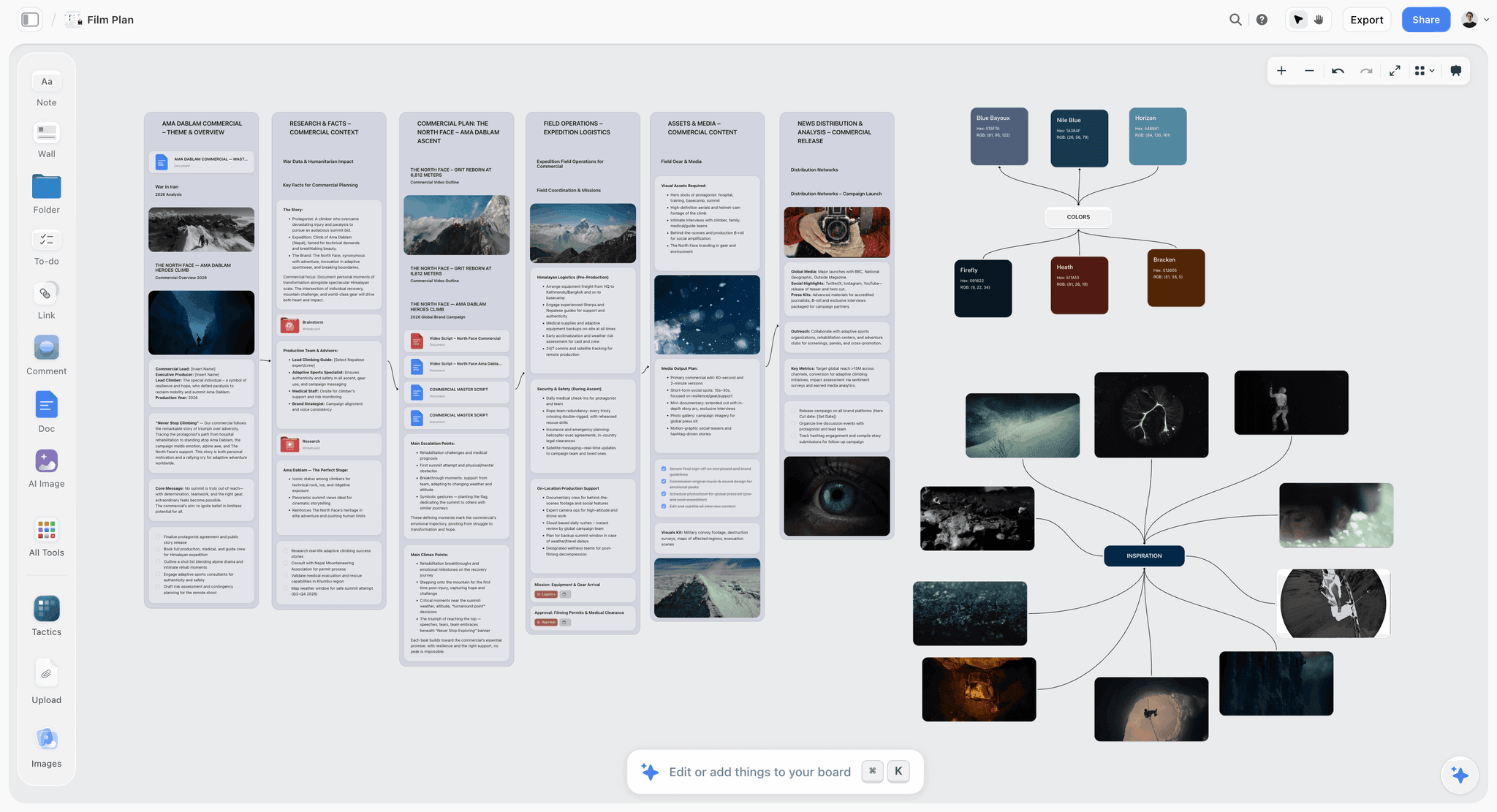
A Storyflow film plan board for a mountain commercial: columns for the overview, research, the commercial plan and scripts, field operations and logistics, assets and release, beside a colour palette and inspiration frames. This is the kind of plan a call sheet is drafted from.
Draft the call sheet from the plan you already made
Keep the schedule, crew list, locations and shot list on one Storyflow board, then ask the AI for the day's call sheet: a PDF your crew opens on a phone, drafted from the plan instead of retyped from it.

The 3 Best Tools to Make a Call Sheet for a Shoot, Ranked
Each review covers the legs of the call sheet's path, the price as of September 2026 and where the tool falls short, with the tool that covers each gap.
1. SetHero
The verdict: The best tool to make a call sheet when the sheet is the job: build it in a drag-and-drop editor with a live preview, send it by email and text with each person's own call time, and see who received, opened and confirmed it.
Best for: 1st and 2nd ADs, production coordinators and producers who send a call sheet for every shoot day, from commercials and music videos to features.
SetHero starts where the other two stop. It assumes the day is decided and concentrates on the last three legs: a clean sheet on every phone, a record of who confirmed, and the 9 p.m. revision pushed to everyone at once. It ranks first because those are the legs where a call sheet fails in public: nobody notices a well-planned day that reached half the crew until half the crew is late.
Key features for this job:
- A drag-and-drop call sheet editor with a live preview, and sections for the day schedule, cast, extras and stand-ins.
- Sending by email, text and PDF, with personal call times for each recipient.
- Tracking of who received, opened and confirmed, with one-click resend.
- One-click revisions and rebroadcast, plus draft watermarks on PDF and Excel exports.
- Automatic weather, sunrise, sunset and map links, contact management, and Smart Assist, SetHero's AI, which calculates overtime and flags typos in times.
Pricing (as of September 2026): Your first project is free, covering up to 75 cast and crew and 5 shooting days, and enrolled students can use SetHero free. After that, buy a single project once (the pricing page's default of 15 people and 3 shooting days is $26), or subscribe by projects a year. At 5 projects, Starter is $19 a month or $14 billed yearly ($168), Pro $49 or $37 billed yearly ($444), and Studio $129 or $97 billed yearly ($1,164); at 15 projects, Starter is $39 and Pro $89 billed monthly. Plans cap each project: Starter at 30 people and 4 shooting days, Pro at 65 people, 8 days and up to 5 admins, Studio at 125 people, 12 days and up to 12 admins.
Pros:
- The strongest confirmation loop of the three: you know who has the sheet, not just who was sent it.
- Pricing that fits occasional shoots, with a free first project and one-time pricing per project.
Where it falls short:
- No script breakdown, stripboard or storyboard, so the schedule is built elsewhere. StudioBinder generates the sheet from its own stripboard, and Storyflow's AI drafts it from the plan on your board.
- Per-project caps on people and shooting days move a bigger shoot up a tier.
- The call sheets page calls custom branding an add-on while the pricing page lists it on every plan, so confirm it before you promise a client their logo.
2. StudioBinder
The verdict: The best pick when the call sheet should come out of the production itself: schedule on StudioBinder's stripboard, and the call sheet pulls the day's schedule, locations, cast and crew automatically, then goes out by SMS and email with view and confirmation tracking.
Best for: Producers and production companies running scripted shoots (shorts, features, commercials, branded series) who want the script, breakdown, stripboard, shot list and call sheet in one database.
StudioBinder is the production suite of the three. Screenplays and two-column AV scripts, breakdowns with reports and sides, stripboard scheduling with multiple schedules, shot lists, storyboards, a contacts CRM and location management all feed one project, and the call sheet builder draws from it. It ranks a whisker behind SetHero because SetHero's revisions and per-person call times are built around the sheet itself, and because the suite asks you to build the production in it before the call sheet pays off. For a production that already lives in StudioBinder, it is the better buy.
Key features for this job:
- Call sheets auto-populated from the stripboard schedule, locations, cast and crew.
- Delivery by SMS and email, with variations sent to selected people; recipients can confirm from anywhere.
- Tracking of delivered, bounced, viewed, confirmed and missed.
- Automatic weather updates, Google Maps location links and a nearest-hospital field.
- Call times for cast, crew, meal breaks and wrap, and saved templates for later shoot days.
Pricing (as of September 2026): A Free plan with limits the pricing page does not itemize, and no free trial. Starter is $29 a month or $25 billed annually (1 user, 50 GB), Indie $49 or $42 (2 users), Professional $99 or $84 (4 users), Agency $199 or $170 (10 users, unlimited projects and contacts) and Studio $299 or $254 (20 users); Enterprise is custom. Plans are priced per user, and external collaborators are free and need no account. The Advanced versions of call sheets, shot lists, storyboards, breakdowns and stripboards start at Indie.
Pros:
- The sheet is generated from the schedule instead of retyped from it, inside the tool that holds the schedule.
- A free plan to learn the workflow before paying.
Where it falls short:
- No built-in AI. Yamdu and Studiovity add AI to the script breakdown, and Storyflow's AI drafts both the plan and the sheet.
- The value depends on building the production in StudioBinder first; for a sheet alone, SetHero is quicker to start and cheaper per project.
- No refunds, credit or prorated billing, cancelling removes premium features immediately, and downgrading to Free requires cutting back to one project.
3. Storyflow
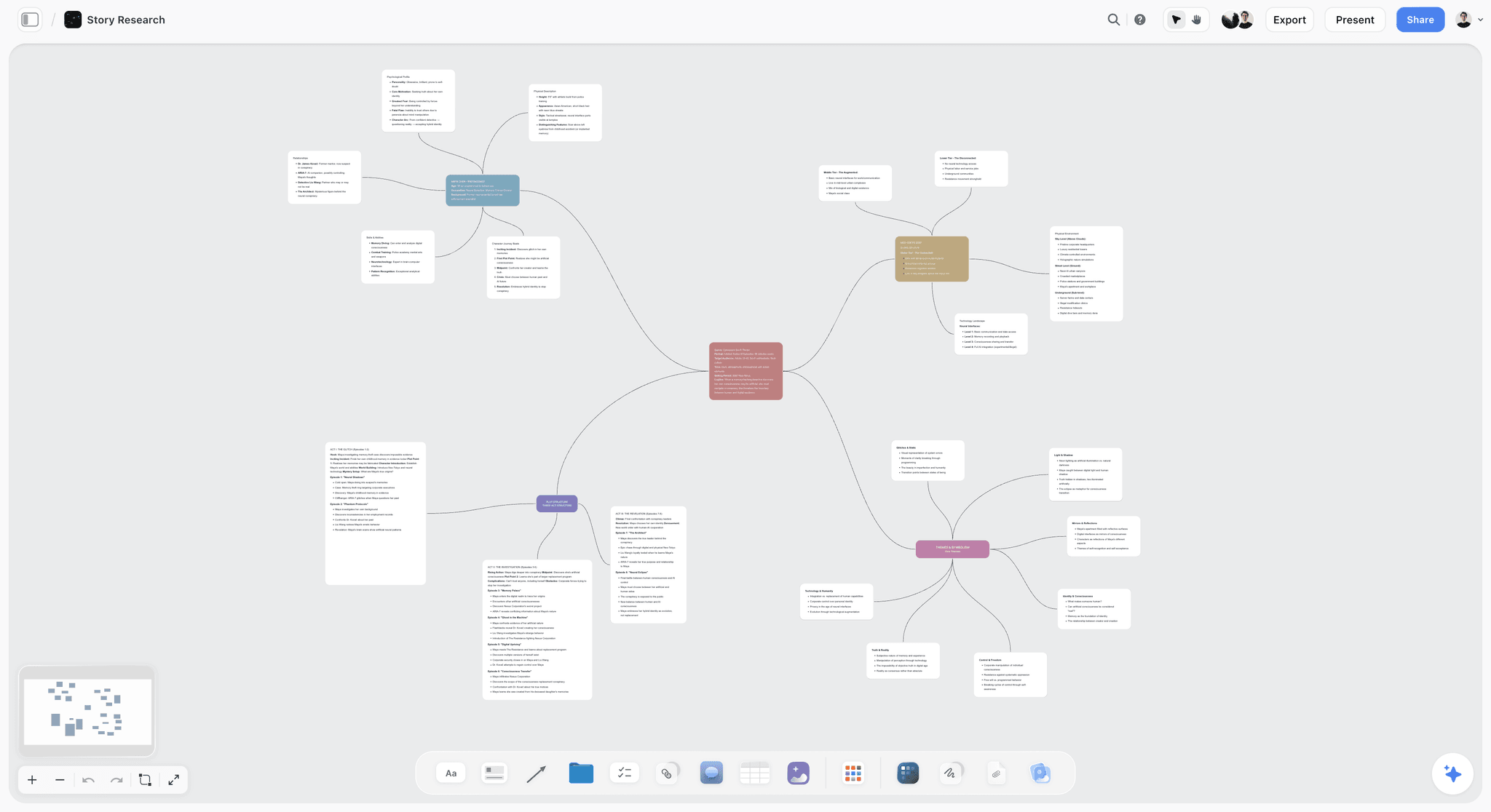
The verdict: The fastest way to produce a call sheet: the AI drafts the shoot day's call sheet as a PDF the crew can open on a phone, from the schedule, contacts, locations and shot list already on your board.
Best for: Directors, producers, photographers and small agency teams who plan the shoot (brief, moodboard, shot list, schedule) on one board and send the sheet to a crew they can chase themselves.
The familiar approach is to plan in one place and build the call sheet in another: the shot list in a spreadsheet, the schedule in a doc, the crew list in a contacts app, and the sheet retyped from all three the night before. Storyflow turns a brief into a visual project board, and the call sheet becomes the last page of that board instead of a separate job. The schedule and crew list are tables, the locations sit beside the shot list with their map links, and when you ask for the day's call sheet, the AI reads the board you have open and drafts it as a PDF. It ranks third because the path does not end at the PDF: Storyflow does not send call sheets, collect confirmations or show who has opened a revision, and on a large crew those legs decide whether the day starts on time. The AI call sheet generator page shows the flow.
Key features for this job:
- The AI drafts a call sheet PDF for one shoot day, one the crew can open on a phone, from the board you have open.
- The AI's strip board workflow groups scenes into shoot days, its script breakdown workflow lists scenes, cast and elements with page-eighth estimates, and its shot list workflow breaks scenes into shots (see the AI shot list generator).
- Extra context on request: attach up to 5 documents, such as a crew list as an Excel or CSV file or the script as a PDF or Final Draft file, and up to 3 other boards or folders.
- Tables with date, duration, person, status and link cells hold the schedule, the crew list and a confirmation column you update by hand.
- A view-only link opens the board with no account, so crew can check the plan; they see the latest version when they open or reload it.
Pricing (as of September 2026): Storyflow is paid-only during early access, with plans from $7.99 a month billed annually ($9.99 monthly). A free plan launches before the end of 2026, and anyone a paid member invites to a board joins free. Pro is $14 a month billed annually ($19 monthly) and adds AI image generation and memory across conversations; Max is $39 a month billed annually ($49 monthly) and adds the Team Workspace with Permissions and Roles. Every paid plan includes unlimited boards and file uploads, and AI use is metered on every plan.
Pros:
- The sheet comes from the plan, so the numbers on it are the numbers in the plan.
- The brief, moodboard, shot list, schedule and crew list share one board, which a client opens by link with no account and signs in to comment on.
- The lowest yearly price of the three for a planner who shoots often: $95.88 a year on Plus, billed annually.
Where it falls short:
- It does not send call sheets, collect confirmations or track crew availability. Send through SetHero or StudioBinder when a crew needs tracked delivery.
- One PDF for everyone, with no per-person versions texted to each recipient. SetHero sends personal call times.
- No calendar grid and no table sorting: shoot dates live in a table with a date column, rows kept in date order by hand. StudioBinder and Yamdu have production calendars.
- Paid-only until the free plan launches late 2026. For a free one-off sheet, use callsheet.tools or StudioBinder's free plan.
Call Sheet Features Head to Head: Six Rounds From Plan to Revision
The ratings come from six rounds, one per criterion. Here is the scorecard first, then what each tool does on each leg and why the winner won it.
| Round | Weight | SetHero | StudioBinder | Storyflow | Winner |
|---|---|---|---|---|---|
Planning the day | 25% | 5 | 9 | 10 | Storyflow |
Building the sheet | 20% | 10 | 9 | 7 | SetHero |
Sending and confirmations | 20% | 10 | 9 | 2 | SetHero |
Revisions | 15% | 10 | 8 | 5 | SetHero |
Time to a first sheet | 10% | 8 | 6 | 10 | Storyflow |
Cost for a small production | 10% | 9 | 7 | 9 | SetHero and Storyflow (tie) |
Weighted rating | 100% | 8.5 | 8.4 | 7.0 | SetHero |
Storyflow wins the legs before the PDF exists. SetHero wins every leg after it.
Round 1: Planning the Day
Storyflow wins. On a Storyflow board the shoot plan is already the source: the AI's strip board workflow groups scenes into shoot days, its shot list workflow breaks scenes into shots, and the crew and location tables sit beside them, so the sheet is drafted from the facts the plan uses. StudioBinder scores almost as high for scripted work, because its stripboard, breakdown and contacts feed the call sheet once you build the production in its modules. SetHero holds contacts and the day schedule, but the schedule is made elsewhere. For the method behind a sound day plan, see How to Make a Production Schedule and How to Make a Shot List.
Round 2: Building the Sheet
SetHero wins: its editor, automatic weather, sunrise, sunset and map links, and Smart Assist checks make it the most complete sheet builder here. StudioBinder is a point behind, with weather updates, Google Maps links, a hospital field and saved templates. Storyflow's AI drafts a clean one-day PDF, but the draft is only as complete as the board it reads, so put the hospital, parking and forecast on the board before you ask. You change the draft by editing the board or asking the AI again.
Round 3: Sending It and Collecting Confirmations
SetHero wins, with StudioBinder a point behind. SetHero sends by email, text and PDF with personal call times, then tracks who received, opened and confirmed. StudioBinder sends by SMS and email and reports whether each sheet was delivered, bounced, viewed, confirmed or missed. Storyflow sends nothing: you share the PDF yourself, by email or in the crew's group chat, and record replies in a status column on the crew table. That works for a crew of ten you know by name. For forty people it is a liability.
Round 4: Revisions the Night Before
SetHero wins. One-click revisions rebroadcast the new sheet to everyone, and draft watermarks keep an unfinished version from being mistaken for the final one. StudioBinder tracks every send the same way, so a revised sheet shows who has viewed and confirmed it. Storyflow is quick at making the revision (update the schedule table, then ask the AI for a new PDF) and slow at the part that matters most: nothing tells you who has opened the new one, so the chasing is yours.
Round 5: Time to a First Sheet
Storyflow wins when the plan is on the board: one request produces a draft PDF, and the work left is checking it. SetHero comes next, because its editor is quick, weather and maps fill in, and contacts carry across days once entered. StudioBinder is quickest once a production is scheduled in it and slowest from a standing start, because its call sheet expects a project, a schedule and contacts behind it.
Round 6: Cost for a Small Production
A tie, for different shoots. SetHero wins the occasional shoot, with a free first project and one-time project pricing ($26 at 15 people and 3 days). Storyflow wins the busy year at $95.88 on Plus billed annually, against $168 for SetHero Starter and $300 for StudioBinder Starter, though that price buys no sending. StudioBinder's free plan is the cheapest way in if its unlisted limits suit you.
Other Call Sheet Software Worth Knowing: Yamdu, Celtx, Studiovity and Free Options
These tools also make call sheets. They are not ranked here because each answers a different question, from running a production office to printing one free sheet, but each is the right pick for someone.
| Tool | What it is | Call sheets on | Price (as of September 2026) | Pick it when |
|---|---|---|---|---|
Yamdu | Production management: script breakdown, scheduling with Day Out of Days, budgeting, distribution, time cards and a mobile app | Core feature (call sheet builder) | Flex $45/mo (1 user, 1 project); Studio $199/mo billed annually or $265 monthly (10 users) | A production office coordinates departments on a feature or series |
Celtx | Screenwriting plus production planning | Team plan, or an add-on to Writer and Writer Pro | Free (1 project, writing only); Team $44.99/mo billed yearly at 3 members | The script is already written in Celtx |
Studiovity | All-in-one pre-production with AI screenwriting, breakdown and shot lists, on iOS, Android and web | Productions plan (call sheet generator) | $30/mo monthly; $19.50/mo billed annually outside sales ($15 during a September 2026 sale) | You want AI script tools and a call sheet generator on a small budget |
Simple Callsheet | A call sheet template with an automatic location map, sent by email or text | Free plan (one active sheet, watermarked) and Producer | Free; Producer $22/mo or $17/mo billed annually | You only need clean sheets sent to crew |
callsheet.tools | A free browser form that prints or saves a US Letter PDF | Free, no signup | Free | One sheet tonight, with no budget |
Google Sheets template | A spreadsheet laid out as a call sheet | Whatever you build | Free with a Google account | A small crew, one day, and a producer who likes spreadsheets |
Yamdu is the heavyweight, priced for a production office: budgeting with Showbiz and Movie Magic import, time cards and AI breakdown suggestions for departments to confirm, with data stored in the EU and a free trial that needs no payment details. Celtx fits when the script already lives there, but call sheets come with the Team plan (from 3 members) or as an add-on. Studiovity is the budget all-rounder; its plans list 2 team members, and sale prices depend on a countdown and coupon codes. For the suites side by side, read StudioBinder vs Yamdu vs Celtx.
For a single sheet, the honest answers are free. Simple Callsheet sends by email or text and watermarks free sheets; callsheet.tools prints a clean PDF, saves your work as a local file and sends nothing (its printed sheet carries a small credit line for Lína, the company behind it). A Google Sheets template does everything by hand, including noticing who never opened it.
Other names you will hear:
- Filmustage: an AI pre-production platform whose free plan includes call sheets and reports; its AI features run on coins in the Director's Cut plan, from $79 a month or $55 billed annually.
- Production Slate: call sheets with read receipts, built for line producers. The free plan sends to 10 recipients, 3 times per project, and Pro is $12 a month or $99 a year.
- Croogloo: production-office software for script sides, time reports and distribution on TV series and features, priced by quote.
- Call Sheet Creator: an iPhone and iPad app ($2.99 once on the US App Store) that exports PDF or DOCX call sheets, works offline and shifts times in 5-minute steps.
- Milanote: a film call sheet guide and template on a visual board, with embedded maps, crew arrival times and a daily schedule, shared as a live board link. It lists no confirmations or AI features.
- Notion and Asana: general work tools where a call sheet is a page or a task, with no sending or confirmations.
A Worked Example: A One-Day Brand Shoot From Board to Confirmed Call Sheet
Here is one realistic shoot taken through the whole path in Storyflow, with the point where SetHero should take over. The shoot: a 30-second social film and 20 stills for a cycling apparel brand. One day, two locations (a studio from 7:00, then a riverside road for the exterior before sunset), a crew of 12, 2 cast, and a client who wants to see the plan before the day.
The board already holds the brief, the moodboard, a shot list of 18 shots and the schedule the producer and director agreed. This table shows where each block of the call sheet comes from, and what to check before it goes out.
| Board element | What it holds | Call sheet block it feeds | Check before sending |
|---|---|---|---|
Brief (Doc) | Client, deliverables, shoot date, producer and director | Header | The date and day count match the schedule |
Schedule table | Time, setup, location, cast, duration | Schedule, general call, first shot, wrap | Every row has a clock time, and the company move has its own row |
Shot list table | 18 shots with setup, lens and location | Schedule rows and notes | Every setup in the schedule has its shots |
Crew table | Department, name, role, call time, phone, confirmation status | Crew | Every person has a call time and a phone number |
Cast table | Name, role, pickup, hair and makeup, on set | Cast | Pickups leave enough time for hair and makeup |
Location notes with map links | Address, parking, entrance, load-in, unit base | Locations | The studio entrance and the road parking are both there |
Safety note | Nearest hospital with address, forecast, sunset time, rain plan | Header and notes | The hospital is filled in, not left for the morning |
The draft. The producer asks the AI for the shoot day's call sheet as a PDF, and it reads the board and drafts the day's sheet. The read-back against the last column of the table takes longer than the draft, and it should.
The send. The PDF goes to the crew by email and to the production group chat with one line: reply "confirmed" with your call time. The producer marks each reply in the crew table's status column. The client opens the board by link with no account to see the plan, and signs in to comment or draw on it. Fourteen people is a list one person can chase.
The 9 p.m. change. The forecast moves rain into the late afternoon, so the exterior moves ahead of the last studio setup. The producer updates the schedule table, asks the AI for a new PDF, labels it Revision 2 with the changed rows named in the message, resets the status column and chases again. On this crew, that is manageable. On a crew of 40, SetHero's one-click rebroadcast and confirmation tracking pay for themselves: build the day there and keep the board as the plan behind it.
How to Get a Call Sheet From Plan to Confirmed, Step by Step
The steps are the same in every tool; what changes is which step the tool does for you. For a slower walk through the layout itself, see How to Make a Call Sheet.
Step 1: Lock the day in setups, not scenes
Build the day as setups with clock times: each camera position, lighting change or company move gets a row. A scene with three setups is three rows, because the crew moves three times. StudioBinder holds this schedule on its stripboard and Storyflow on the board, where the AI's strip board workflow groups scenes into shoot days; in SetHero you enter it in the sheet's day schedule. How to Plan a Film Shoot Day explains why setups beat scenes.
Step 2: Keep one contact list, not one per day
Every crew member's name, role, department, phone and email lives in one list that every day's sheet draws from. SetHero and StudioBinder manage contacts; in Storyflow it is a crew table on the board, or a crew spreadsheet attached to your request. The crew planning checklist covers who you need.
Step 3: Write the location block before the sheet
For every location on the day, record the address, parking, the entrance you will actually use, load-in, unit base and a map link. Add the nearest hospital with its address and drive time now, in daylight, instead of at 11 p.m.
Step 4: Generate the sheet from the plan
In SetHero, open the editor, pull in contacts and let weather and sunrise fill in. In StudioBinder, create the call sheet from the day on the stripboard. In Storyflow, ask the AI for the shoot day's call sheet, attaching the crew spreadsheet or location notes if they live off the board, and it drafts the PDF.
Step 5: Read it back against the plan
Read the sheet as a crew member would, top to bottom, on a phone. Check that the call times run in order, every person has a call and a phone number, the hospital and sunset are on the first page, and the parking matches the location notes. Whatever drafted it, a sheet that looks finished is the one nobody checks.
Step 6: Send it with a confirmation ask
Send it as soon as the schedule is locked, and no later than the evening before. SetHero and StudioBinder send by email and text and track confirmations for you. From Storyflow, share the PDF by email and group chat with a one-line ask (reply "confirmed" with your call time) and record replies in a status column.
Step 7: Handle the revision as a new version
Label it (Revision 2), say what changed in the first line of the message, resend to everyone, and reset confirmations. In SetHero this is one click; in StudioBinder it is a new tracked send; in Storyflow it is an updated table, a new PDF and a round of messages. The guide to keeping a shoot plan current covers the change protocol.
What It Really Costs: One Shoot, Five Shoots a Year and a Team of 3 to 5
Call sheet tools price three different ways: SetHero by projects a year or per project, StudioBinder per user, and Storyflow per seat. The crew pays nothing on any of them. Here is what the same shoots cost on each, as of September 2026.
| Scenario | SetHero | StudioBinder | Storyflow |
|---|---|---|---|
One shoot, 15 people, 3 days | Free: your first project (up to 75 people, 5 days) | Free plan (limits not itemized) | $9.99 (one month of Plus, billed monthly) |
A later one-off shoot of the same size | $26 one-time | Free plan, if you keep to one project | $9.99 for another month |
Five shoots a year, one planner | $168 a year (Starter billed yearly; 30 people and 4 days per project) | $300 a year (Starter billed annually, 1 user) | $95.88 a year (Plus billed annually) |
A team of 3 planners | Pro: up to 5 admins per project, $37/mo billed yearly at 5 projects | Professional, 4 users: $84/mo billed annually | A seat each on the plan you choose |
A team of 5 planners | Pro: up to 5 admins per project | Professional plus an added seat, or Agency (10 users) at $170/mo billed annually | A seat each; Max adds the Team Workspace with Permissions and Roles |
What the crew pays | Nothing | Nothing: external collaborators are free and need no account | Nothing: a view-only link opens with no account |
SetHero is cheapest for the occasional shoot, and its one-time price can undercut a subscription even at five small shoots a year (five projects at $26 is $130, against Starter's $168). Storyflow is cheapest for a planner who shoots every month, though its price buys the plan and the draft, not the send. Anyone a paid member invites joins free, on free-tier AI limits, so planners who use the AI each need a seat. Storyflow is paid-only until its free plan launches late 2026; the pricing page has the Individual and Team options.
Which Tool for Which Person, Shoot Size and Budget
The right pick depends less on the tool than on who holds the sheet and how many people it has to reach.
| Who you are | Pick | Why | Pair it with |
|---|---|---|---|
1st AD on a commercial with a 30-person crew | SetHero | Personal call times by text, confirmations and one-click revisions | The producer's schedule, wherever it lives |
Producer running a scripted short or feature | StudioBinder | The sheet is generated from the stripboard, breakdown and contacts | SetHero, if your ADs prefer its sending |
Director-producer who plans on a board | Storyflow | The AI drafts the sheet from the shot list and schedule you already made | SetHero once the crew outgrows chasing replies yourself |
Photographer planning a brand shoot | Storyflow | Moodboard, shot list and the plan behind the call sheet on one board the client opens by link | Simple Callsheet, if you want the sheet sent from an app |
Film student | SetHero (free for enrolled students) or StudioBinder's free plan | Both cost nothing for coursework | callsheet.tools for a one-off |
Agency producer with the client watching | Storyflow for the plan, SetHero for the crew | The client sees the plan; the crew gets tracked sheets | Storyflow's presentation mode for the pre-shoot walkthrough |
Coordinator who needs one sheet tonight | callsheet.tools | Free, no signup, prints a clean PDF | A Google Sheets template, if you will reuse it |
Rules of thumb by size and budget:
- Crew under about 10, one location: a PDF you send yourself is enough. Draft it in Storyflow if the plan is there, or print one from callsheet.tools.
- Crew of 15 or more, or talent with pickups: tracked delivery earns its price. Use SetHero, or StudioBinder if you schedule there.
- Scripted and multi-day, with a stripboard: StudioBinder, or Yamdu for a full production office.
- Two or three small shoots a year: SetHero's free first project, then one-time project pricing, costs less than any yearly plan here.
- A client needs to see the plan: Storyflow, because the client opens the board by link with no account and signs in to comment.
Common Call Sheet Mistakes (and the Fix)
Most call sheet failures are not tool failures. They are the same seven habits, and each has a fix that works in any of the three tools.
Mistake 1: Retyping the plan into the sheet
Every retyped number is a chance to publish a wrong one. The fix: generate the sheet from the schedule and contact list (StudioBinder's stripboard, the plan on a Storyflow board, SetHero's contacts) and read it back against them.
Mistake 2: One general call for everyone
A single 6:00 call brings hair and makeup in on time and the gaffer in an hour before the location opens. The fix: give each department and each cast member their own call. SetHero sends personal call times; on a PDF, put the call time in each crew row.
Mistake 3: Treating "sent" as "received"
A sheet in an inbox is not a sheet in a head. The fix: use tracked sending, or ask for a reply with the person's call time and mark it. The person who has not confirmed is the one to phone at 8 p.m., not the one to discover at 7 a.m.
Mistake 4: Leaving the hospital for the morning
The fix: fill in the nearest hospital, with address and drive time, when you write the location block. It is the line nobody needs until it is the only line that matters.
Mistake 5: A revision nobody can tell apart
Two unmarked versions in circulation mean people follow whichever they opened first. The fix: number the revision, say what changed in the first line, and resend to everyone, not only the people it affects.
Mistake 6: Parking and entrance missing
A map pin on the building's front door sends the grip truck to the wrong side of the block. The fix: write the entrance you will actually use, where vans park and where unit base is.
Mistake 7: Branding above the call time
The crew reads the first screen and little else at 5 a.m. The fix: the header holds the call time, first shot, location, weather and hospital. Logos go in the footer.
When Storyflow Is Not the Right Choice
Storyflow ranks third here for a reason. It is the wrong tool, or the wrong tool on its own, in these cases:
- Your crew needs tracked delivery and confirmations. Storyflow does not send call sheets or collect confirmations. Use SetHero, or StudioBinder if you already schedule there.
- Every recipient needs their own version by text. SetHero sends personal call times to each person, while Storyflow drafts one PDF for everyone.
- You schedule a scripted production in a production database. StudioBinder or Yamdu generates the sheet from the stripboard and department breakdowns.
- You need it free today. Storyflow is paid-only until its free plan launches late 2026; SetHero's first project, StudioBinder's free plan and callsheet.tools cost nothing.
- You need crew availability, time cards or payroll. Storyflow does not track crew availability. Yamdu has time cards, Production Slate has crew payroll and Croogloo handles time reports.
- You need the plan on a phone with no signal. There is no offline mode and no native app, so save the PDF to phones ahead of time, or use Call Sheet Creator, which works offline on an iPhone.
Upstream of the send, the answer flips: the brief, moodboard, shot list, schedule and draft sheet belong on one board.
A Call Sheet Checklist You Can Copy
Paste this into whatever tool you use and tick it off before the sheet goes out. It follows the order a crew reads the sheet in.
Header and light
- Production name, shoot day X of Y, date
- General crew call, first shot, estimated wrap
- Weather, sunrise, sunset and the rain plan
- Nearest hospital with address and drive time
Schedule
- One row per setup, each with a clock time in one format
- A location on every row, and a row for each company move
- Cast in each setup, and the meal break with its time
People
- Every crew member: department, role, call time, phone
- Every cast member: pickup, hair and makeup, on set
- 1st AD, producer and production manager numbers on every page
Locations and sending
- Address, parking, entrance, load-in, unit base and map link for each location
- Read back against the schedule and the contact list
- Revision number and what changed, if this is not the first version
- A confirmation ask, and a list of who has not replied by the evening
The Bottom Line
SetHero is the best tool to make a call sheet for a shoot when the sheet has to reach every phone and come back confirmed: it wins building, sending, confirmations and revisions. StudioBinder sits a hair behind, and it is the better buy when the production already lives on its stripboard. Storyflow is the fastest way to produce the sheet, because its AI drafts it from the plan already on your board, and it is the right place for everything upstream of the send. It does not send or confirm, so plan and draft in Storyflow, and send through a tool built for sending when the crew is too big to chase by hand.
The call sheet is the last page of the plan. Make it where the plan lives, and send it with a tool that knows who read it.
FAQ: Call Sheet Tools
What's the best tool to make a call sheet for a shoot?
SetHero is the best dedicated tool to make a call sheet for a shoot and get it confirmed, and Storyflow is the fastest way to produce one, because its AI drafts the call sheet PDF from the schedule, contacts, locations and shot list already on your board. StudioBinder is the pick when you want the sheet generated from a stripboard inside a full production suite. Storyflow does not send sheets or collect confirmations, so a large crew should get the sheet through SetHero or StudioBinder.
Is SetHero better than StudioBinder for call sheets?
For the call sheet alone, yes, narrowly: SetHero scored 8.5 to StudioBinder's 8.4 here, winning on building, sending, confirmations and revisions. StudioBinder wins when you schedule in it, because its call sheets pull the day's schedule, locations, cast and crew from the stripboard automatically. For one tool across the whole production, pick StudioBinder; for call sheets only, pick SetHero, which is also cheaper for occasional shoots.
Is StudioBinder free for call sheets?
StudioBinder has a Free plan that covers pre-production from scripting to call sheets, but the pricing page does not itemize its limits, and downgrading to Free requires having no more than one project. The Advanced versions of call sheets start on Indie, at $49 a month or $42 billed annually. Paid plans start with Starter at $29 a month or $25 billed annually for one user. StudioBinder offers no free trial and no refunds, so test the workflow on the Free plan first.
How much does SetHero cost for one shoot?
Your first SetHero project is free, covering up to 75 cast and crew and 5 shooting days. After that, a single project is a one-time payment set by crew size and shooting days; the pricing page's default of 15 people and 3 days is $26. Regular productions can subscribe instead, from $19 a month or $14 billed yearly on Starter at 5 projects a year, with each Starter project capped at 30 people and 4 shooting days. Enrolled students can use SetHero free.
Can Storyflow send call sheets to my crew?
No. Storyflow's AI drafts a call sheet PDF for one shoot day from the board, one the crew can open on a phone, but it does not send call sheets, collect confirmations or track crew availability. You share the PDF yourself, by email or group chat, and can record replies in a status column on the crew table. When a crew needs tracked delivery, send through SetHero or StudioBinder and keep the Storyflow board as the plan behind the sheet.
Is Storyflow free?
Not during early access. Storyflow is paid-only during early access, with plans from $7.99 a month billed annually ($9.99 monthly). A free plan launches before the end of 2026, and anyone a paid member invites to a board joins free. Crew and clients can open a shared board by view-only link with no account. For a call sheet at no cost today, SetHero's first project, StudioBinder's free plan and callsheet.tools are the options.
Can AI make a call sheet?
Yes, from a plan. AI assembles a sheet well from a schedule, crew list and locations it can read, and it cannot know facts nobody gave it. Storyflow's AI drafts the call sheet PDF from the board you have open; SetHero's Smart Assist fills in weather, calculates overtime and flags time typos; Studiovity and Yamdu apply AI to the script breakdown. Whatever drafts it, read the sheet back against the plan: a plausible wrong phone number is the most expensive line on a call sheet.
What should a call sheet include?
A call sheet needs a header with the production, date, general call, first shot and estimated wrap; weather with sunrise and sunset; the nearest hospital; a schedule with one row per setup and a clock time on each; cast with pickup, hair and makeup and on-set times; crew by department with call times and phone numbers; locations with address, parking and entrance; and key contacts on every page. Put the call time and the hospital where they are readable without scrolling.
When should a call sheet be sent?
Send the call sheet as soon as the next day's schedule is locked, and no later than the evening before the shoot, so people can plan travel and ask questions. Send revisions immediately, labelled with a revision number and what changed. On a multi-day shoot, the 1st AD and production coordinator should agree a daily cut-off for schedule changes, so tomorrow's sheet goes out before the crew wraps and scatters.
How do crew confirm a call sheet?
In SetHero and StudioBinder, crew confirm from the sheet they receive, and the sender sees who viewed and who confirmed, with a one-click resend in SetHero for anyone missing. With a PDF sent from your own email or shared from Storyflow, confirmation is a reply you ask for: reply "confirmed" with your call time. Record replies in a status column, and phone anyone still silent by the evening.
Can I make a call sheet in Google Sheets?
Yes. A Google Sheets template is free with a Google account and works for a small crew and a single day. Everything is manual: weather, sunrise, the hospital and every call time are typed in, and nothing tells you who opened it. It stops being enough when revisions start, or when the crew grows past the number you can chase by phone. callsheet.tools is a free step up in layout, and SetHero's free first project adds sending and confirmations.
Does Yamdu do call sheets?
Yes. Yamdu includes a call sheet builder inside a production management platform with script breakdown, scheduling with Day Out of Days, budgeting, distribution, time cards and a mobile app, plus AI breakdown suggestions. It is priced for production offices: Flex is $45 a month for one user and one project, and Studio is $199 a month billed annually or $265 monthly for 10 users. For call sheets alone on a small shoot, SetHero costs far less.
What is the difference between a call sheet and a shooting schedule?
A shooting schedule covers the whole production: which scenes shoot on which day, in what order, at which locations. A call sheet covers one day for the people working it: who arrives when, where to park, what shoots in what order, the weather and the nearest hospital. The schedule is the plan and the call sheet is the day's instructions drawn from it, which is why tools that generate the sheet from the schedule avoid copying errors.
How do I make a call sheet for a photo shoot?
Use the same blocks as a film call sheet, trimmed to the day: a header with the call time and location, a schedule of looks or setups with times, talent with hair, makeup and wardrobe times, crew with phone numbers, the location's parking and entrance, weather and the nearest hospital. Photographers who plan the moodboard and shot list on a Storyflow board can have the AI draft the call sheet PDF from it. For a sheet sent to crew from an app, Simple Callsheet's free plan covers one active, watermarked sheet.
Can I use one tool to plan and another to send call sheets?
Yes, and on a big crew it is often the right setup. Plan the shoot in Storyflow, where the brief, moodboard, shot list and schedule live on one board a client can open by link, and draft the call sheet there. Then build the send in SetHero, which handles personal call times, confirmations and revisions. The cost is entering the day twice, so do it once the schedule is locked, not while it is still moving.
What is the cheapest way to send call sheets with confirmations?
SetHero's free first project, for up to 75 people and 5 shooting days, is the cheapest start, since SetHero is built around sending and confirmation tracking. After it, Production Slate, whose call sheets carry read receipts, has a free plan that sends to 10 recipients, 3 times per project, and a Pro plan at $12 a month or $99 a year. SetHero's one-time project price ($26 at 15 people and 3 days) avoids a subscription altogether. Templates such as callsheet.tools and Google Sheets cost nothing but track nothing.
Table of Contents
- Key Takeaways
- What Does It Take to Make a Call Sheet for a Shoot?
- What Every Call Sheet Must Contain
- How We Evaluated StudioBinder, SetHero and Storyflow
- Comparison Table: StudioBinder vs SetHero vs Storyflow at a Glance
- The 3 Best Tools to Make a Call Sheet for a Shoot, Ranked
- 1. SetHero
- 2. StudioBinder
- 3. Storyflow
- Call Sheet Features Head to Head: Six Rounds From Plan to Revision
- Other Call Sheet Software Worth Knowing: Yamdu, Celtx, Studiovity and Free Options
- A Worked Example: A One-Day Brand Shoot From Board to Confirmed Call Sheet
- How to Get a Call Sheet From Plan to Confirmed, Step by Step
- What It Really Costs: One Shoot, Five Shoots a Year and a Team of 3 to 5
- Which Tool for Which Person, Shoot Size and Budget
- Common Call Sheet Mistakes (and the Fix)
- When Storyflow Is Not the Right Choice
- A Call Sheet Checklist You Can Copy
- The Bottom Line
- FAQ: Call Sheet Tools
- Related Reading
Templates to check out for this topic


Templates you can use in Storyflow
Every Storyflow board starts from real structure and an AI that reads the whole canvas. Open one of these templates and make it yours.


See Storyflow in Action
A visual AI workspace where every feature lives inside one canvas. No tab-switching, no context lost.
Build your entire board from a single message
Type what you need in the AI chat at the bottom of your canvas. The AI adds cards, headings, and structure directly onto your board.
Use expert frameworks as AI context
Type @ in the AI chat and choose any Tactic. The AI tailors every response to that framework instead of giving generic advice.
Turn your board into a mind map in seconds
Ask the AI to restructure your canvas as a mindmap. It connects your ideas into a visual hierarchy so you can see how everything relates.
Why Storyflow Exists
Storyflow actually began as a personal tool while working on creative and research projects.
We kept running into the same problem: ideas were scattered everywhere: notes, documents, and whiteboards.
Nothing helped us see how everything connected.
So we started building a workspace designed around how ideas actually grow.
→ Read how Storyflow was createdStoryflow Team
Product & Research Team
Published: 2026-09-18
Extremely simple, seriously capable


See how easy it is to get started
Watch a real project come together, from a blank board to a finished plan, clicked through step by step.
Start creating with AI and become more productive
Transform your creative workflow with AI-powered tools. Generate ideas, create content, and boost your productivity in minutes instead of hours.