
Ultra-fast planning, extremely simple
Plan the client project
before it becomes tickets.
Agency project tools are built for tracking work that is already defined. The expensive part of client work happens earlier: turning a vague brief into a scope both sides recognise. Storyflow is the canvas for that step, and it hands off to whatever you already use to run delivery.


Creatives working for these brands already got early access
- Red Bull
- Canon
- Artlist
- Porsche
See how easy it is to get started
Watch a real project come together, from a blank board to a finished plan, clicked through step by step.
Start from a ready-made template
Pick a board to see what you can build, then let AI fill it in. Every template is a real, editable starting point on the same infinite canvas.

Mind Map
Branch one central idea out into themes and sub-points, then drag the connections around until the structure makes sense.
What is agency client project planning?
Client project planning is everything between a signed brief and a populated project plan: reading what the client actually asked for, deciding what will be made, agreeing what is out of scope, sequencing it against a date, and getting the client to recognise that plan as theirs. Storyflow is an AI visual workspace that turns a client brief into an agreed scope on one infinite canvas: the scope, the deliverables, the references, a schedule, and a view-only link for the client. Planning is the stage where an agency wins or loses its margin, because scope agreed loosely in week one is scope argued about in week six.
Most agency software is built for the stage after this one. Asana, Monday, ClickUp, Teamwork and Productive are genuinely good at tasks, assignees, time, utilisation and profitability. They are at their best once the work is defined, and a brief is not a task list. So the planning happens in a document, a call and somebody's head, then gets typed into the tracker as though it had been decided rigorously.
A canvas suits this stage because it holds unresolved things. The brief, the references, three possible scopes, the client's own deck, the constraint nobody wants to say out loud, and a schedule that is still moving can all sit in one view. You can show the client two shapes of the project rather than one, and let them choose, which is a much better conversation than presenting a single plan and defending it.
Storyflow is deliberately not a delivery tool. It has tickets with assignees and Kanban columns, but no approval routing, time tracking or utilisation reporting, and an agency should keep delivery where it already runs. What Storyflow adds is the step before it, and a client-facing artefact that does not require the client to have a licence.
Ultra fast from brief to board
From a client brief to an agreed plan.
The output is a board the client has actually looked at, not a plan they were sent.
01
Drop the brief on the canvas
Paste the client's brief, the email thread, the RFP or the call notes, along with any material they sent with it.
02
Turn it into scope
The AI lays out objectives, deliverables, constraints and open questions, so what is missing from the brief is visible rather than assumed.
03
Shape the project
Sequence the deliverables, add the phases and the dates, and put the references beside the work they inform.
04
Get it agreed, then hand off
Send the client a view-only link so they can agree the shape of it, then set up the agreed work in your tracker.
The brief stops being a document nobody reopens.
It stays on the board, next to the plan it produced, where it can still settle an argument.
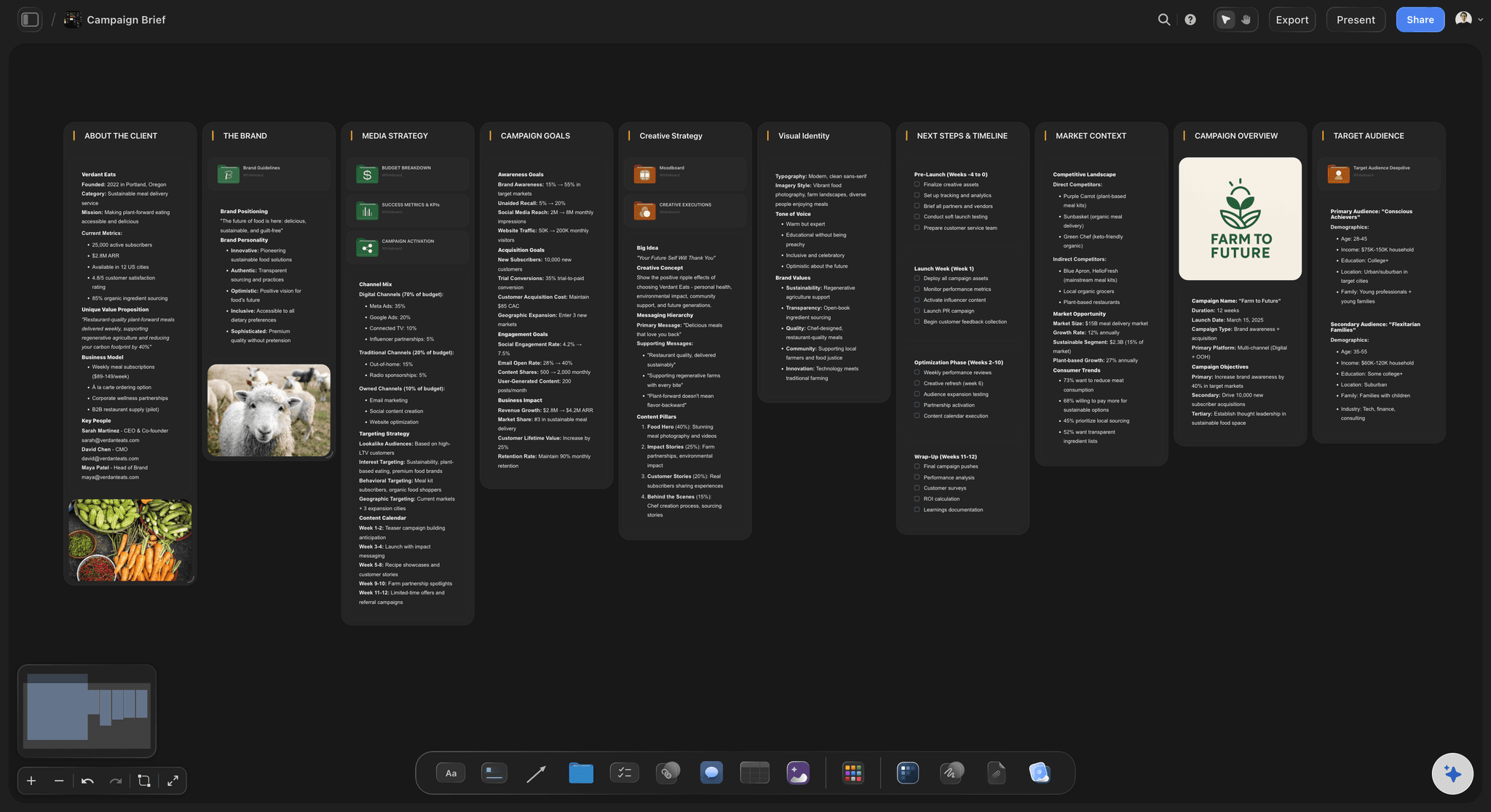
Scope, visible and arguable
Make what is not included just as visible
Out of scope written down beside in scope is the cheapest protection an agency has. On a board it is a panel the client looked at, rather than a clause in a document they skimmed.
Try the AI creative brief generator →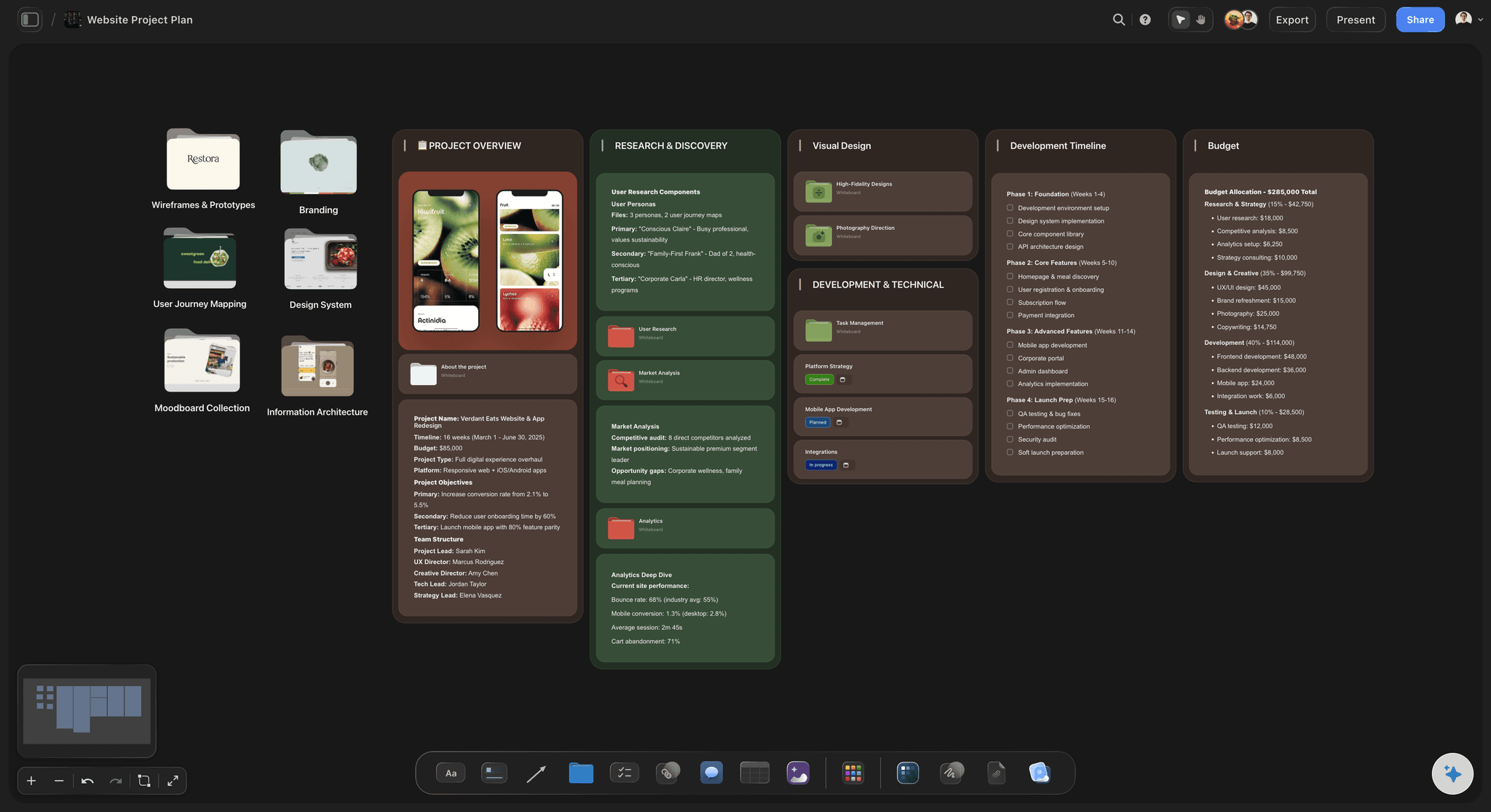
Deliverables you can move
A plan shaped like the project
Creative work is rarely a flat sequence. Group deliverables by workstream, phase or channel and reorder them as the conversation changes, without maintaining a schema.
See the AI project plan generator →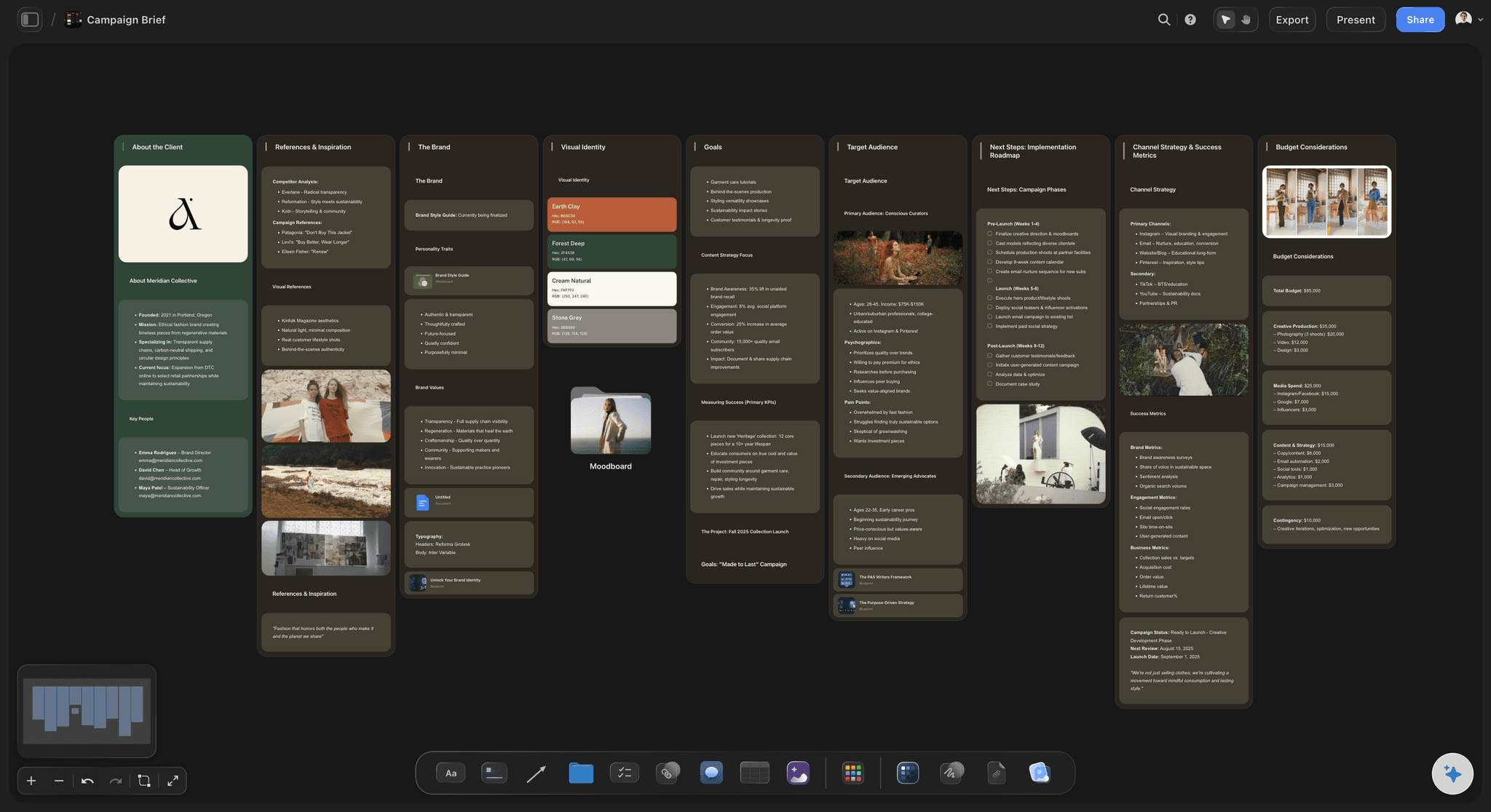
Two options, side by side
Let the client choose the shape
Show a lean version and a full version on one canvas. A client choosing between two scopes is a very different conversation from a client negotiating down a single one.
Explore the client presentation tool →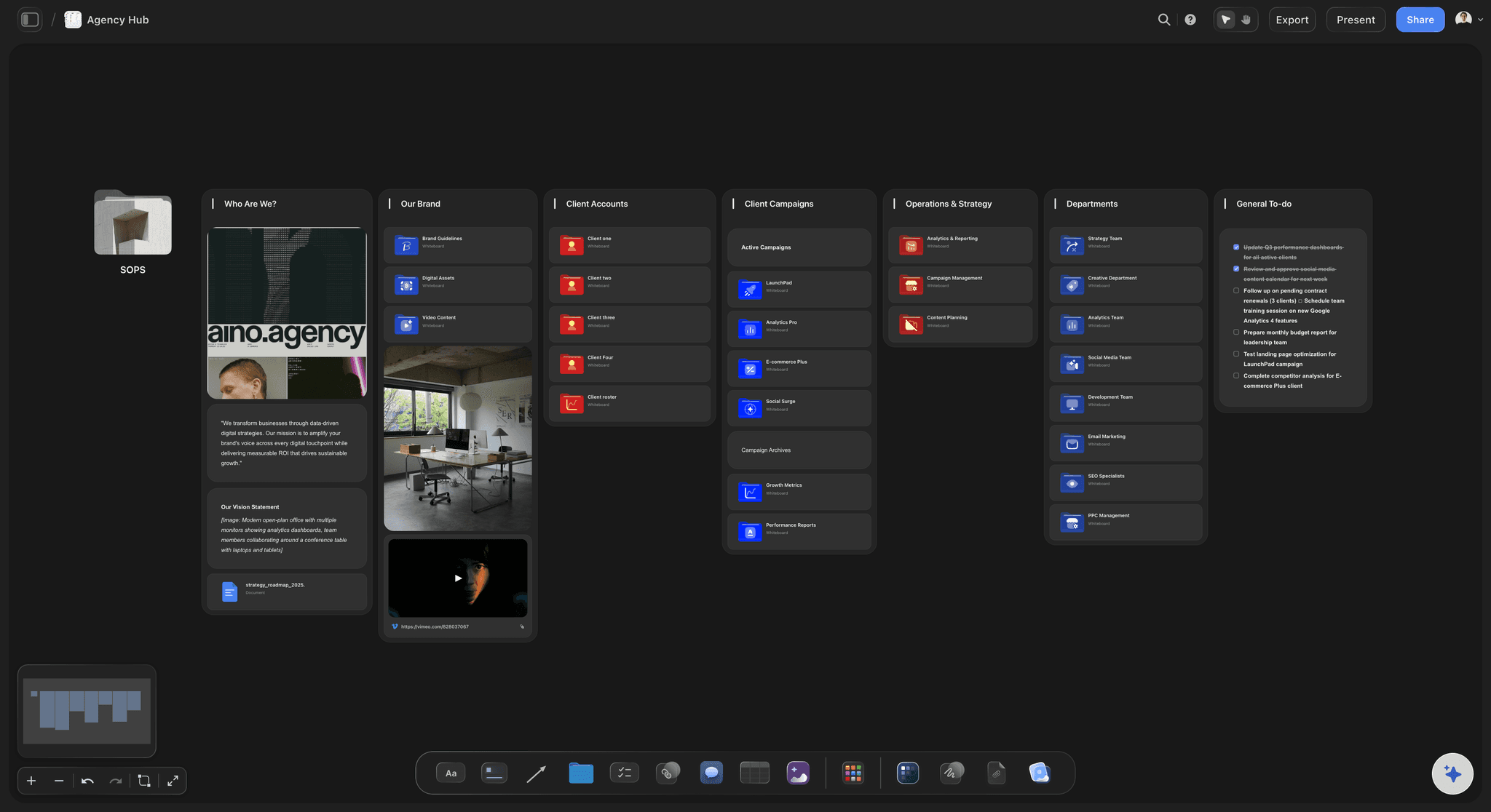
One link, no licence
The client sees the plan without an account
Share view-only and the client reads the plan in a browser. No seat, no invitation to your project tool, and no reason for them to see your internal delivery board.
See the client review board →Plans from $7.99/month annual. Free plan coming late 2026.
Anyone a paid member invites to a board joins free, which matters when a project pulls in three freelancers for six weeks. Storyflow is paid-only during early access, with plans from $7.99 a month billed annually ($9.99 monthly), and a free plan launches before the end of 2026.
Freelancers a paid member invites join free
Every client project gets its own board
Clients view the plan without an account
AI reads the whole board before it answers
Built for people with taste
The tracker is not the problem. The step before it is.
Agencies rarely lose money because the task list was badly maintained. They lose it because the scope was agreed on a call and written down afterwards.
Scope drift starts early
Catch the ambiguity in week one
Open questions are a panel: The AI pulls out what the brief does not say. A visible list of unanswered questions is easier to raise with a client than a feeling that something is missing.
The brief stays readable: Weeks later you can ask whether the current plan still matches what was agreed, and the answer comes from the brief itself rather than from memory.
Assumptions written down: Every plan rests on assumptions. Putting them on the board turns a later dispute into a reference rather than a disagreement.
Built for how agencies actually staff
Freelancers without paid seats
Invited freelancers join free: Anyone a paid member invites to a board joins free, so a freelance designer on one project does not add a licence, the usual reason people end up working outside agency tools.
One board per client project: No project limit on paid plans, so a small agency running fifteen live jobs does not have to ration boards.
Clients never see your internals: A view-only link shows the plan, not your delivery board, your capacity or your other clients.
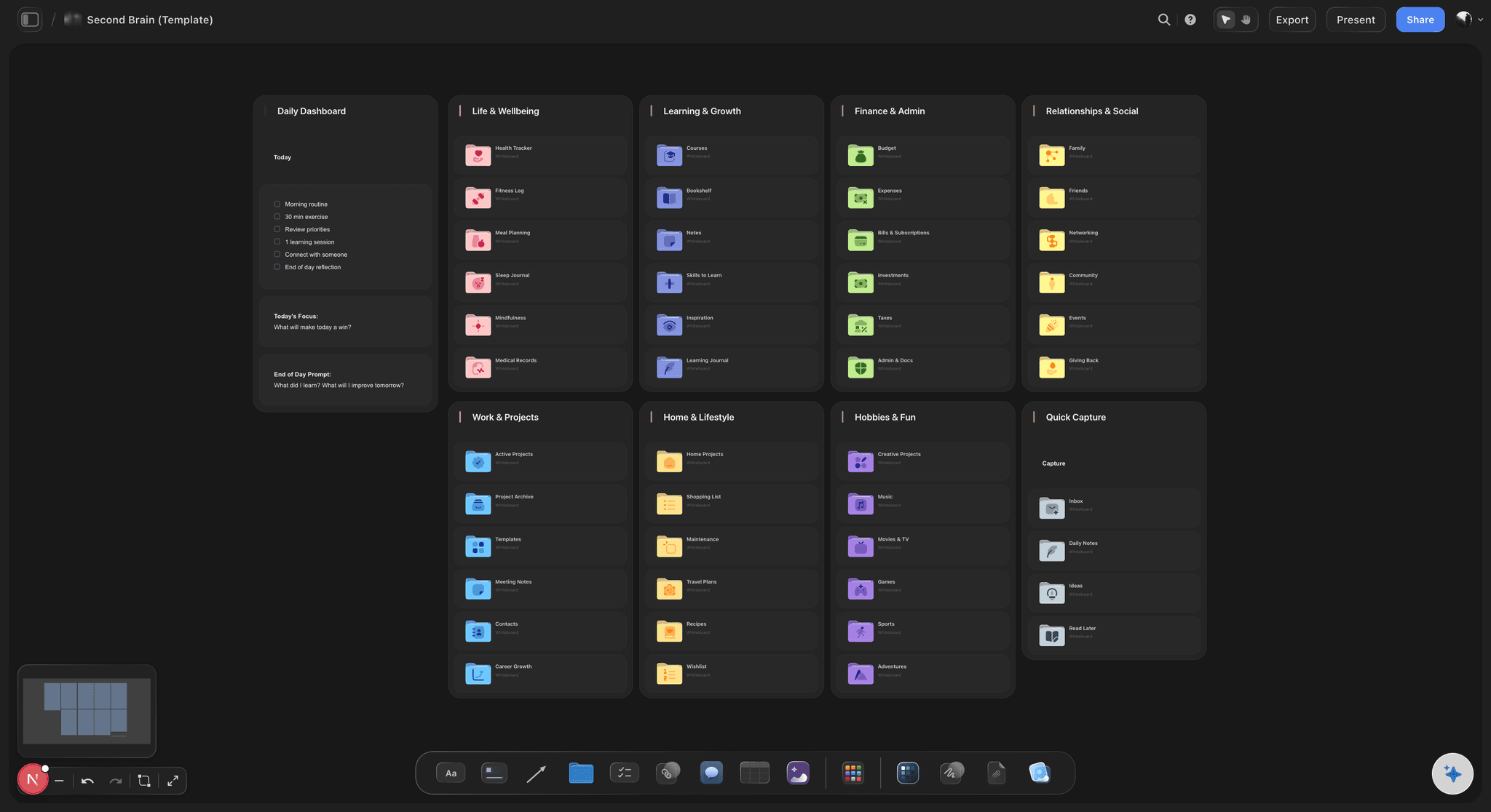
The AI reads the project
Ask the plan questions later
Canvas-aware AI: Storyflow's AI reads the whole active board, so the brief and the plan are both in front of it when you ask whether they still agree.
Bring in the surrounding material: Attach up to five documents and three boards to pull the research, the proposal and the positioning into one answer.
Re-scope without rebuilding: Ask the AI to cut a deliverable or move a date and it edits that part of the board rather than regenerating the plan.
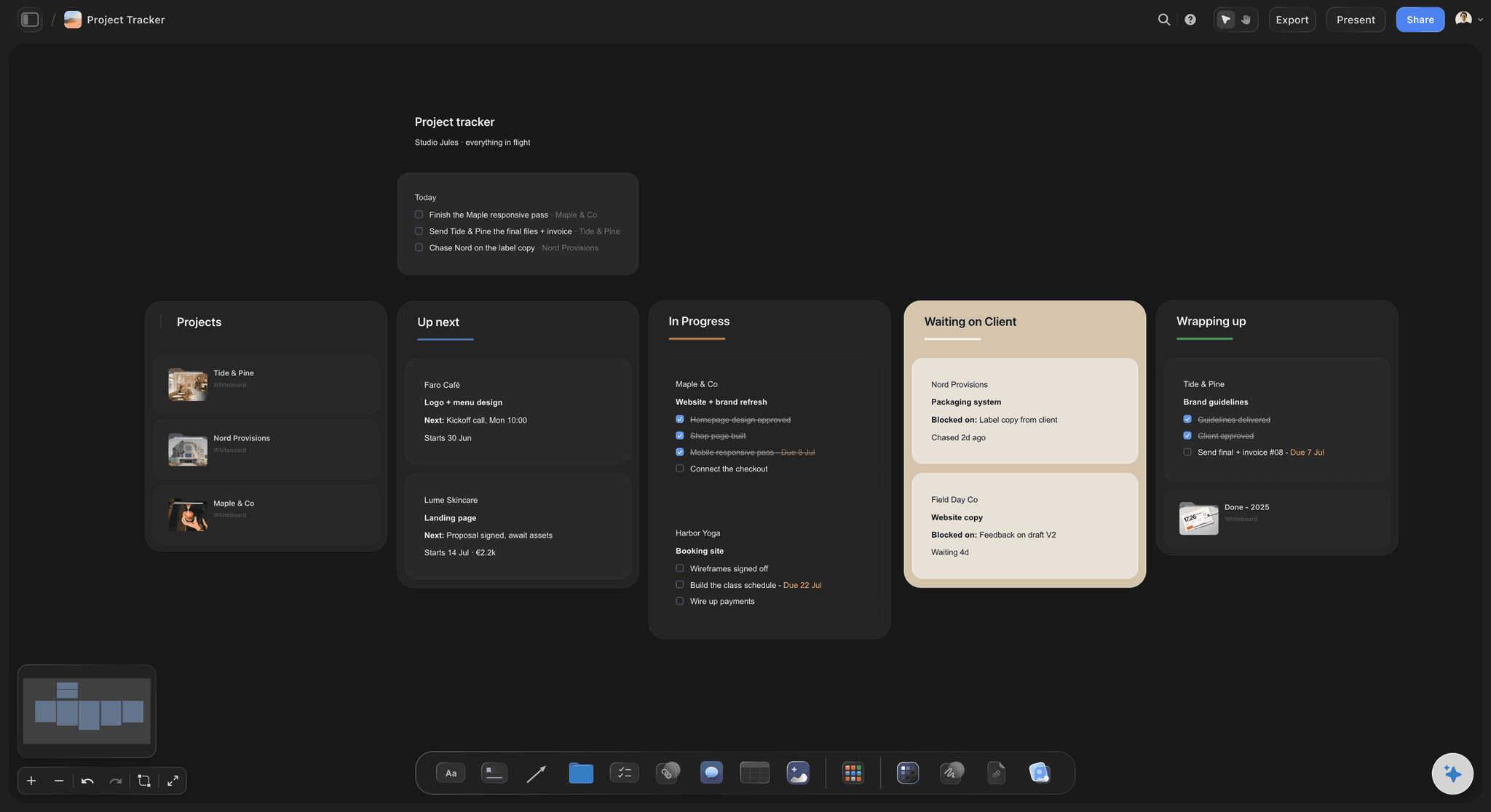
Honest about scope
Keep the tool you run delivery on
No approval routing or time tracking: Tickets carry assignees and due dates, but there is no approval routing, time tracking or workload view. If the agency lives in Asana, Monday, ClickUp, Teamwork or Productive, that does not change.
No utilisation or profitability reporting: Resourcing and margin reporting are exactly what tools like Productive are good at, and Storyflow does not attempt them.
Export when the plan travels: Send any board out as a high-quality image or PDF for a proposal, a status pack or a statement of work.
Explore templates for your project
Every template opens as a real, editable board on the infinite canvas. Pick the closest fit and make it your own.
Mind Map
Branch one central idea out into themes and sub-points, then drag the connections around until the structure makes sense.
One app instead of five
Where this sits next to your project tool.
These are not really competitors. They own different stages, and the honest comparison is about which stage each one is good at.
Storyflow
Recommended
Brief, references and scope on one canvas
Client views the plan without an account
Time tracking and workload views
Free plan available today
Asana
Brief, references and scope on one canvas
Client views the plan without an account
Time tracking and workload views
Free plan available today
Monday
Brief, references and scope on one canvas
Client views the plan without an account
Time tracking and workload views
Free plan available today
Productive
Brief, references and scope on one canvas
Client views the plan without an account
Time tracking and workload views
Free plan available today
What creators are saying
Join early creators getting structured workspaces and AI that remembers their projects
“Storyflow has sped up my workflow by at least 3x, which means more flow state and more projects I can actually ship. It truly changed the way me and my team create.”

Reilin Joey
Director & YouTuber
“One prompt gets me a structured board. But the tactics are my favorite. I run my YouTube scripts through them and my intros and retention got better. It's amazing.”

Justkay
YouTuber & Freelance Filmmaker
“I used to juggle five apps to plan a project. Now I describe what I am making and get boards, lists, and a schedule. All in one place.”

George
@fernwehchronicles
Planning client projects, answered.
What agencies ask before adding a planning canvas to the stack.
Most agencies need two tools: a planning canvas such as Storyflow to turn a loose client brief into an agreed scope, and a tracker such as Asana, Monday, ClickUp, Teamwork or Productive to run delivery. A canvas suits the first step because the brief, the references, the open questions and two possible scopes sit in one view the client can read. For delivery, Productive covers utilisation and profitability. You carry the agreed scope into whichever tracker you run.
No, and an agency should be suspicious of anything claiming it does. Storyflow has tickets with assignees and Kanban columns, but no approval routing, time tracking or utilisation reporting. It owns the stage between the brief and the populated project plan. Agencies typically keep delivery where it is and use Storyflow for scoping, kickoff and client-facing planning.
Through a view-only link that needs no account. That matters twice: the client is more likely to actually look at it, and they see only the plan rather than your internal delivery board, your capacity or your other clients.
Yes, and it is one of the better reasons to plan on a canvas. Put a lean version and a full version side by side and the conversation becomes a choice rather than a negotiation down from a single number. Clients also tend to explain the choice better internally when they made it themselves.
Anyone a paid member invites to a board joins free, so bringing three freelancers onto a project for six weeks does not add three plans. Storyflow is paid-only during early access, with plans from $7.99 a month billed annually ($9.99 monthly), and a free plan launches before the end of 2026. Buying for the whole agency team is priced per seat.
No. Each client project gets its own board and there is no project limit on paid plans, so a small agency can run a dozen live jobs at once.
It lays out a first pass from the brief and surfaces what the brief does not say, which is the genuinely useful part. It does not decide what the work is worth or what should be excluded. The scope decisions stay with the people who carry the risk.
The original brief and the agreed plan are both still on the canvas, so you can show what changed rather than assert it. Storyflow's AI reads the whole active board, so a question about whether the current plan matches what was signed off is answered from the material rather than from memory.
Yes. The same board is often the pitch artefact, since it shows how you think about the problem rather than only what you would charge. Boards export as high-quality images or PDF when a proposal needs to be a document.
Not yet. Storyflow is paid-only during early access, with plans from $7.99 a month billed annually ($9.99 monthly). A free plan launches before the end of 2026, and anyone a paid member invites to a board joins free.
More from Storyflow
Creative client onboarding
Marketing workspace
Creative strategy
Storyflow for agencies
Client presentation tool
Client review board
Brief to project board
AI creative brief generator
AI creative project management
RFP response plan
Creative retainer plan
Project brief template
Client report template
Freelancer onboarding
Client status updates from ChatGPT
Project dashboard
Agree the plan while it is still cheap to change.
Turn a client brief into a scope both sides recognise, on a board the client can open without an account.