
Sharper briefs, sent ultra fast
Deliverables list
where every line means one file.
How to turn a brief into a list of every asset a video or creative project must deliver: format, aspect ratio, length, version, due date and owner, with a worked 48-file example and the mistakes that cause week-six arguments.


Creatives working for these brands already got early access
- Red Bull
- Canon
- Artlist
- Porsche
See how easy it is to get started
Watch a real project come together, from a blank board to a finished plan, clicked through step by step.
Start from a ready-made template
Pick a board to see what you can build, then let AI fill it in. Every template is a real, editable starting point on the same infinite canvas.

Creative Brief
Capture the objective, audience, and message for a creative so everyone works from the same brief.
What is a deliverables list?
A deliverables list is a table of every file a project must hand over, one row per asset, with its format, aspect ratio, length, version, due date and owner. Storyflow is an AI visual workspace that builds one from the brief: its AI reads the brief or an attached document, drafts the table on a board beside the script and references, and lists what the brief leaves unsaid. The client signs it off by link before production starts.
The list exists to remove one sentence from every project: 'I thought that was included.' A brief says 'social cuts'. A deliverables list says 'one 15 second 9:16 cut with burned-in captions for Instagram Reels, version A with the price hook, due 21 November, owner Sam'. The first is a hope; the second is a file someone can make, check and tick off.
Build it from the brief, not from memory. Go through the brief line by line and turn each mention of an output into a row: every channel named, every language, every length, every format a media plan will need. Then add the files nobody writes in a brief but everyone expects: captions, textless versions, thumbnails, stills, music and effects stems, project files. Those hidden items are where most overruns come from.
Give every row the same columns. A good default is: asset name, channel, format and codec, aspect ratio, resolution, length, version or variant, language, captions, due date, owner, approver and status. Not every project needs all of them, but every row in a list should fill in the same ones, so a missing value stands out as a blank cell instead of an assumption.
Count, then price. Once every row exists, the list becomes the basis for the estimate, the schedule and the contract schedule. Ten edited cuts take longer than three, and a client who sees '48 files' on the list before the shoot rarely argues about the edit days afterwards. The deliverables list is what turns scope from a feeling into a number.
A worked example, for a fictional cookware brand, Ferro Kitchen, launching a cast-iron pan. The brief asks for 'a hero film and social cutdowns for launch on 1 December, in English, German and French'. The deliverables list makes that 48 rows, one per file. Hero film: 60 seconds, 16:9, 3840 by 2160, ProRes 422 HQ master that the YouTube and website uploads are encoded from, due 14 November. One 30 second 16:9 cut for paid YouTube. One 30 second 9:16 cut for Reels and TikTok. Two 15 second 9:16 cuts, version A opening on the price and version B on the sear. Three 6 second 16:9 bumpers. One 15 second 1:1 and one 15 second 4:5 cut for feed placements. That is 10 edited videos. Then an English SRT caption file for each of the 10. German and French subtitled versions of the hero and the 30 second 16:9 cut, 4 files. Two YouTube thumbnails at 1280 by 720. Twenty graded stills from the shoot. One textless hero master and one set of music and effects stems for future versions. Owners: the editor for the cuts, the colourist for stills, an agency for subtitles. Approver for every row: the client's brand manager. Final delivery: 24 November, a week before launch.
Notice what the example settles that the brief did not. The brief said three languages; the list says which two cuts get subtitles and that the rest go out in English with captions. The brief said 'social cutdowns'; the list says nine cuts besides the hero, in four shapes, with two hook variants. The brief said nothing about textless masters; the list adds one, because the client will want new languages next year. Every one of those decisions would otherwise have been made in week six, under pressure, at the editor's expense.
Ultra fast from brief to board
How do you make a deliverables list from a brief?
Seven steps from the brief to a signed-off list. Steps two and four find the files nobody mentioned, which is the point of the exercise.
01
Put the brief on the board
Paste the brief into a Storyflow board or attach the PDF or Word file to the AI chat, along with the media plan and any channel specs the client sent. Every row on the list should trace back to something here.
02
Turn every output mention into a row
Read the brief line by line. Each channel, length, language and format becomes its own row. Ask Storyflow's AI to draft the table from the brief; it lays the rows out and lists the outputs the brief mentions without detail.
03
Fill the same columns for every row
Asset, channel, format, aspect ratio, resolution, length, version, language, captions, due date, owner and approver. A blank cell is a question for the client, not a value to guess.
04
Add the hidden files
Captions and subtitle files, textless masters, thumbnails, stills, stems, project files and archive copies. Clients expect them and briefs rarely list them.
05
Set due dates backwards from delivery
Start at the final delivery date and work back: last approvals, subtitles, colour, picture lock, first cut. Give each row the date it is due, not just the project end date.
06
Name one owner and one approver per row
The person who makes the file and the one person who can say it is finished. Two approvers on a row means two rounds of notes.
07
Get it signed off before production
Share the board by view-only link. The client opens it with no account and signs in to comment on the rows they want changed. Once agreed, the list becomes the contract schedule and the delivery checklist.
What should a deliverables list include?
Four groups of columns. The first two say what the file is; the second two say when it is due and who is responsible for it.
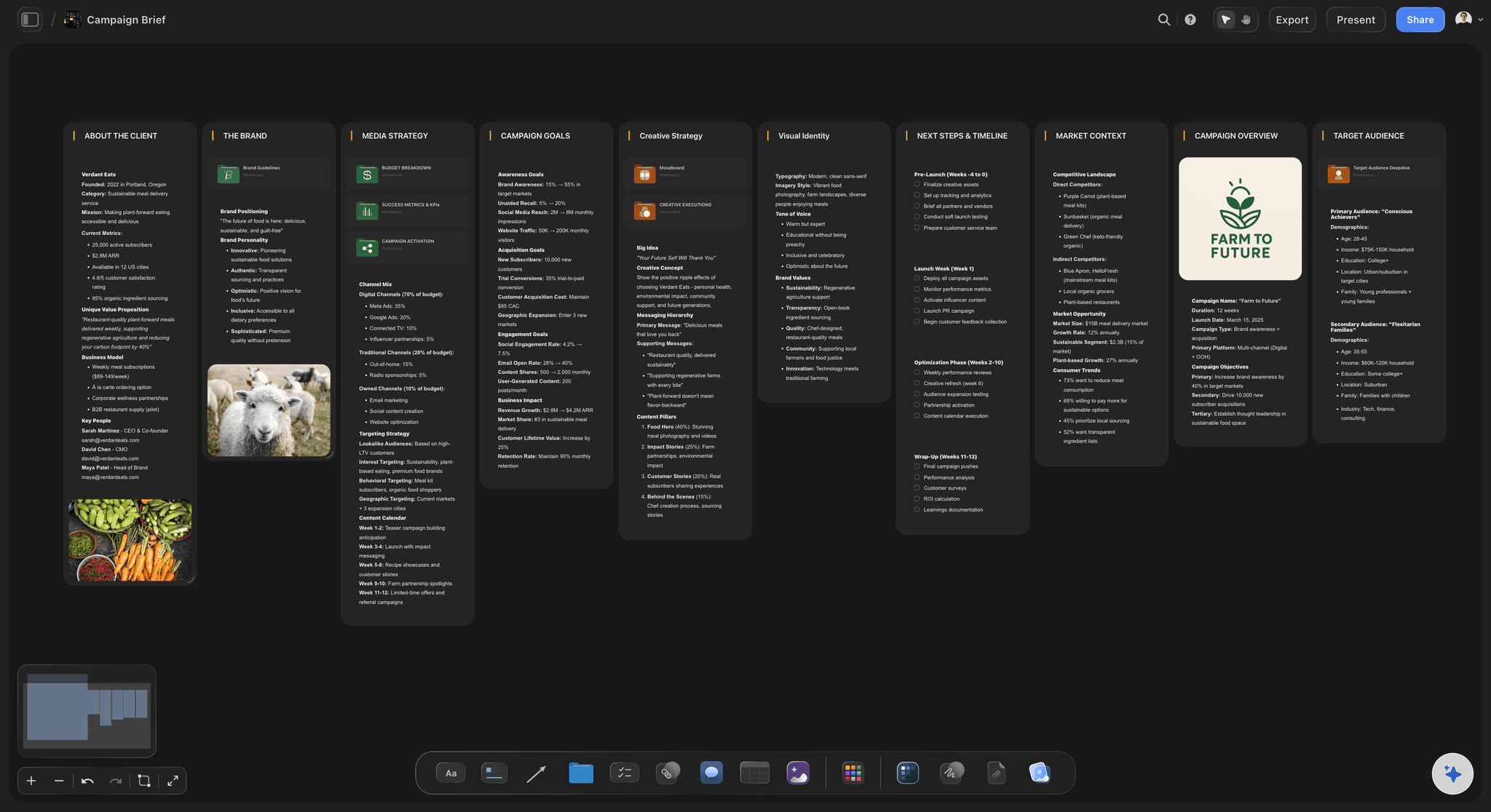
What it is
Asset, channel and purpose
A plain name for each file and where it will run. 'Hero film, YouTube and website' tells the editor what it is for, which decides choices the specs do not.
See the video production brief →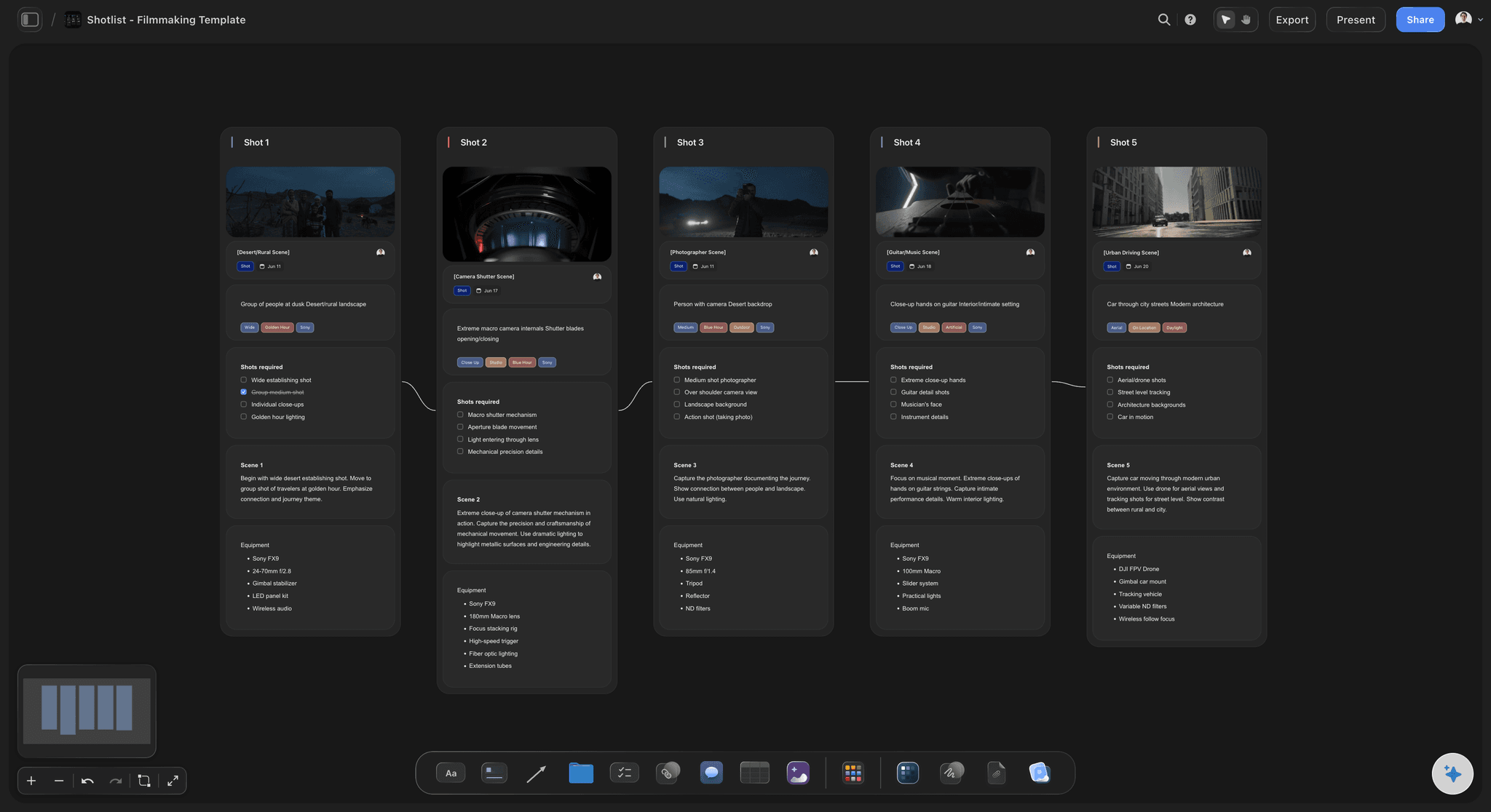
The specification
Format, aspect ratio, length and version
Codec and container, 16:9 or 9:16 or 1:1 or 4:5, resolution, duration to the second, and which variant it is. Two hooks for the same cut are two rows.
See the video production checklist →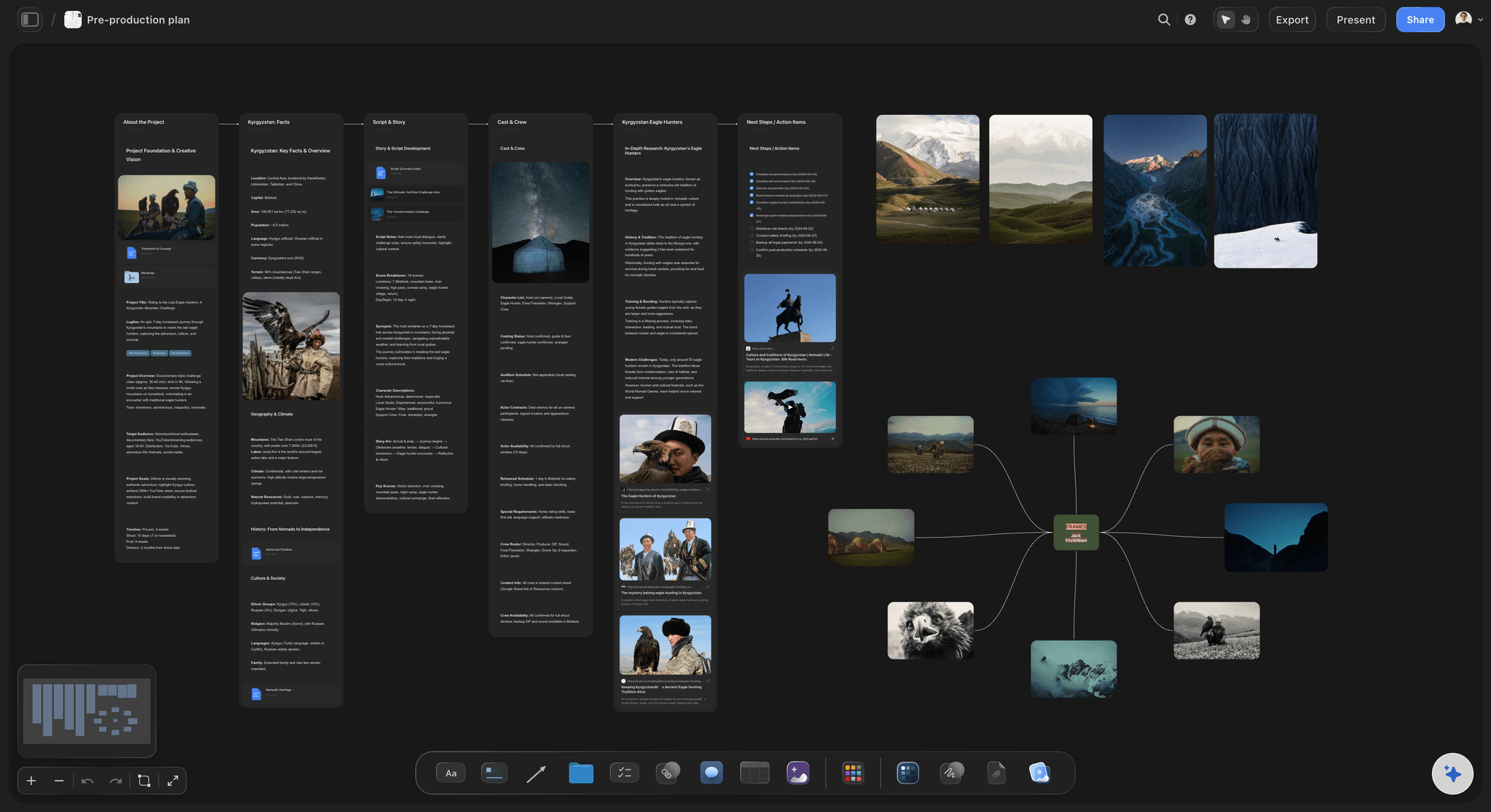
Language and access
Captions, subtitles and textless versions
Which cuts get captions, which get translated subtitles, in which languages, and whether a textless master is delivered for future versions.
Client brief to production plan →
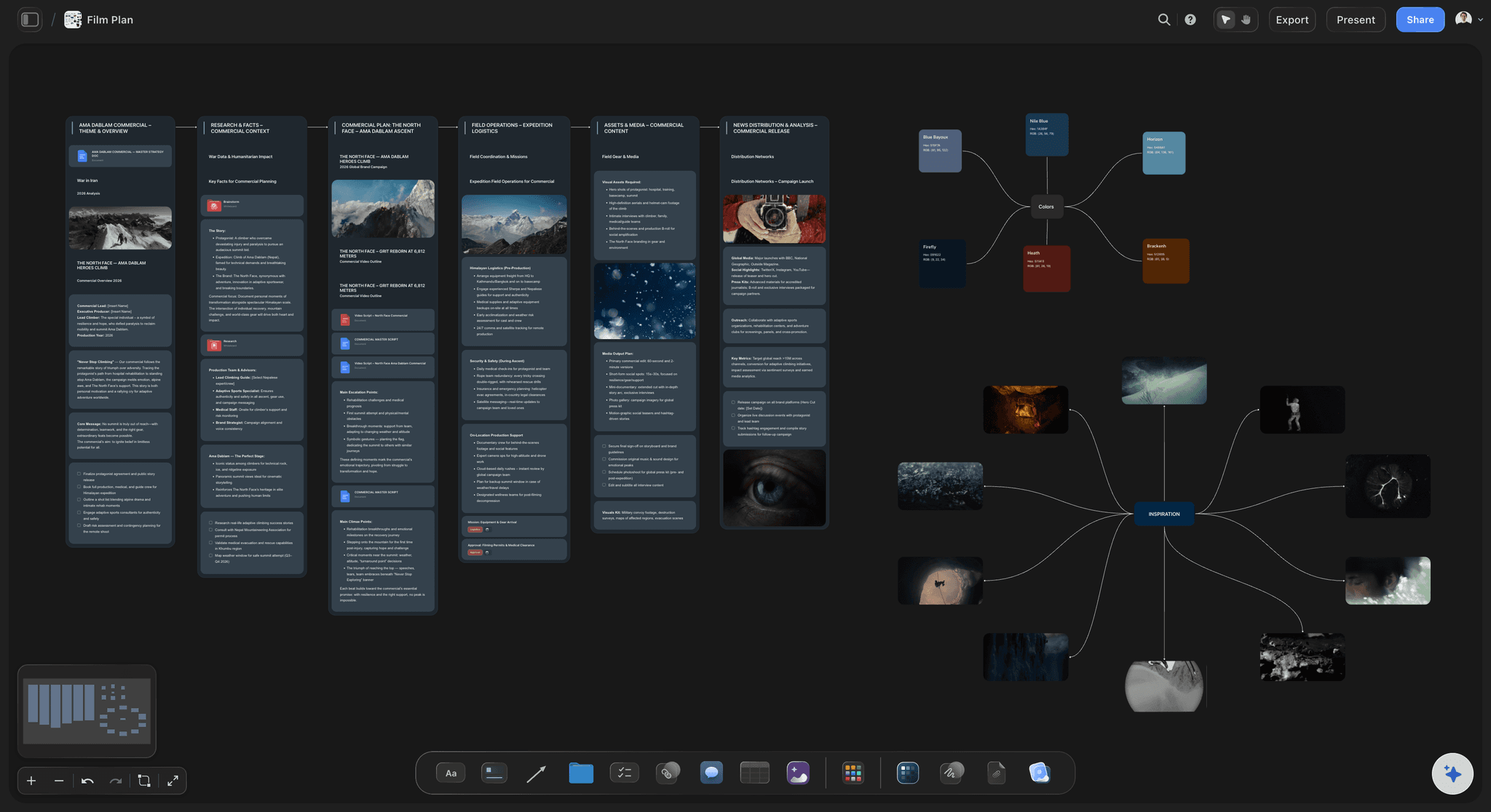
Dates and people
Due date, owner, approver and status
When each file is due, who makes it, the one person who approves it, and where it is now. The status column is what turns the list into the delivery checklist.
See the campaign timeline template →The brief, the list and the work on one board.
Keep the deliverables table beside the brief it came from and the script it serves, so a change in one is seen in the others. Storyflow is paid-only during early access, with plans from $7.99 a month billed annually ($9.99 monthly). A free plan launches before the end of 2026, and anyone a paid member invites to a board joins free.
AI that drafts the deliverables table from the brief or an attached document
Tables with date, status and owner columns, and a Sum footer for counts and costs
The brief, script, references and list on one board
View-only links the client opens with no account; signing in lets them comment
Kanban and ticket tools for tracking each file through the edit
Built for people with taste
What are the most common deliverables list mistakes?
Three mistakes cause most of the extra edit days on a video or creative project. All three are visible the moment the list is a table with the same columns on every row.
Vague rows
A row that could mean three files
'Social cuts' is not a row: Split it into one row per length, shape and variant. A 15 second 9:16 and a 15 second 1:1 are two edits, not one.
Lengths to the second: 'Around 30 seconds' becomes 34 in the edit and fails the media spec. Write 30 seconds, or 29 if the platform cuts at 30.
Versions named, not numbered: 'Version A, price hook' and 'version B, sear hook' are clear in week six. 'v2' is not.
One file per row: If a row needs 'and' to describe it, it is two rows. The count is only useful when each row is one file.
Missing files
The files nobody wrote in the brief
Captions and subtitles: Most social video is watched without sound. Say which cuts get burned-in captions, which get SRT files, and which languages.
Textless masters: A version with no on-screen text lets the client add languages later without reopening the edit. Agree whether it is included.
Thumbnails and stills: Clients ask for them after delivery. Put them on the list with a count and a size, or write that they are excluded.
Stems and project files: Music and effects stems and the edit project are often assumed by one side and refused by the other. Decide before the shoot.

Missing people
Rows with no owner, approver or date
One due date per row: A single project end date hides the fact that subtitles need a locked cut a week earlier. Date each row.
One approver per row: Name the person who can say a file is finished. A row with a committee approves slowly and changes often.
An owner who agreed: Write the name of the person making the file, and check they know. An unassigned row is the one still missing on delivery day.
A status column: Not started, in edit, with client, approved, delivered. It turns the list into the checklist you use at handover.
Explore templates for your project
Every template opens as a real, editable board on the infinite canvas. Pick the closest fit and make it your own.
Creative Brief
Capture the objective, audience, and message for a creative so everyone works from the same brief.
One app instead of five
What is the best tool for a deliverables list?
Storyflow first, because the list is only useful next to the brief and the work it describes. A spreadsheet is still the right file when a client's system needs one.
Storyflow
Recommended
AI drafts the list from the brief
List sits beside the brief, script and references
Date, status and owner columns
Client opens it by link with no account
Track each file on a Kanban board
Formulas across sheets
Works offline
A spreadsheet
AI drafts the list from the brief
List sits beside the brief, script and references
Date, status and owner columns
Client opens it by link with no account
Track each file on a Kanban board
Formulas across sheets
Works offline
A document
AI drafts the list from the brief
List sits beside the brief, script and references
Date, status and owner columns
Client opens it by link with no account
Track each file on a Kanban board
Formulas across sheets
Works offline
What creators are saying
Join early creators getting structured workspaces and AI that remembers their projects
“Storyflow has sped up my workflow by at least 3x, which means more flow state and more projects I can actually ship. It truly changed the way me and my team create.”

Reilin Joey
Director & YouTuber
“One prompt gets me a structured board. But the tactics are my favorite. I run my YouTube scripts through them and my intros and retention got better. It's amazing.”

Justkay
YouTuber & Freelance Filmmaker
“I used to juggle five apps to plan a project. Now I describe what I am making and get boards, lists, and a schedule. All in one place.”

George
@fernwehchronicles
Deliverables list questions
What producers, editors and project managers ask when a brief says 'hero film and cutdowns' and nothing else.
It is a table of every file a project must hand over, one row per asset, with its format, aspect ratio, length, version, language, due date, owner and approver. It turns the outputs a brief mentions into files someone can make and tick off. In Storyflow it sits on the same board as the brief and the script.
Storyflow suits it well because the list is only useful beside the brief and the work it describes: its AI drafts the table from the brief or an attached document, the rows sit next to the script and references, and the client opens the board by link with no account. A spreadsheet such as Google Sheets or Excel is still the better file when a client's system needs formulas across sheets.
Read the brief line by line and turn every mention of a channel, length, language or format into its own row. Give every row the same columns, add the files briefs rarely mention (captions, textless masters, thumbnails, stills, stems), date each row backwards from delivery, name one owner and one approver per row, and get the list signed off before production.
Asset name, channel, format and codec, aspect ratio, resolution, length, version or variant, language, captions, due date, owner, approver and status. Small projects can drop resolution and codec if one spec covers everything, but every row should fill in the same columns so a blank stands out.
The worked example on this page: a cookware launch where 'a hero film and social cutdowns in three languages' becomes 48 rows, one per file. Ten edited videos (a 60 second hero, 30 and 15 second cuts in 16:9, 9:16, 1:1 and 4:5, and three 6 second bumpers), ten SRT caption files, four subtitled versions, two thumbnails, twenty stills, a textless master and a set of stems.
A master file of each cut, web encodes for each platform, versions in each aspect ratio the media plan needs (16:9, 9:16, 1:1, 4:5), cutdowns at shorter lengths, caption and subtitle files, thumbnails and stills. Textless masters, music and effects stems and project files are common too, but they are only included when the list says so.
A shot list is what the crew films on the day. A deliverables list is what the client receives at the end. One shoot can feed many deliverables, so the deliverables list should be written first: it tells the director which framings and lengths the shot list must cover, such as a vertical-safe frame for every 9:16 cut.
A timeline shows the phases of the project over time. A deliverables list shows the files, each with its own due date. The list feeds the timeline: once every row has a date, the timeline is those dates in order. On a Storyflow board the table and the timeline can sit side by side.
Yes, as a schedule attached to the contract or the statement of work. That makes the count binding: if ten cuts were agreed, the eleventh is a change order rather than a favour. Agree the list before the shoot, when both sides still have room to adjust it.
The client contact who owns the budget, usually a brand or marketing manager. Name them on the list. Share the Storyflow board by view-only link: they open it with no account and sign in to comment on the rows they want changed.
It can draft one. Storyflow's AI reads the brief, a media plan or an attached PDF or Word document, lays out the table on the board and lists the outputs the brief mentions without enough detail to make. The producer still decides the hidden files, the dates and the owners, because those depend on the budget and the team.
Add a status column (not started, in edit, with client, approved, delivered) and update it as files move. In Storyflow you can also turn the rows into tickets on a Kanban board so each file moves across columns, while the table stays the single list of what was agreed.
It varies by brief, but a single launch film often turns into dozens of files once every aspect ratio, cutdown, language and caption file is a row. The example on this page goes from one sentence in a brief to 48 files. That gap is why the list is built before the estimate, not after.
Use the columns on this page as the template: asset, channel, format, aspect ratio, resolution, length, version, language, captions, due date, owner, approver and status. On a Storyflow board they become a table you can copy for the next project, and the AI can fill it from a new brief.
One row per file. One owner per row.
Build the deliverables list from the brief on one board, find the files nobody mentioned, and get it signed off before the shoot.