
Extremely simple, seriously capable
Paste the brief.
Get the board.
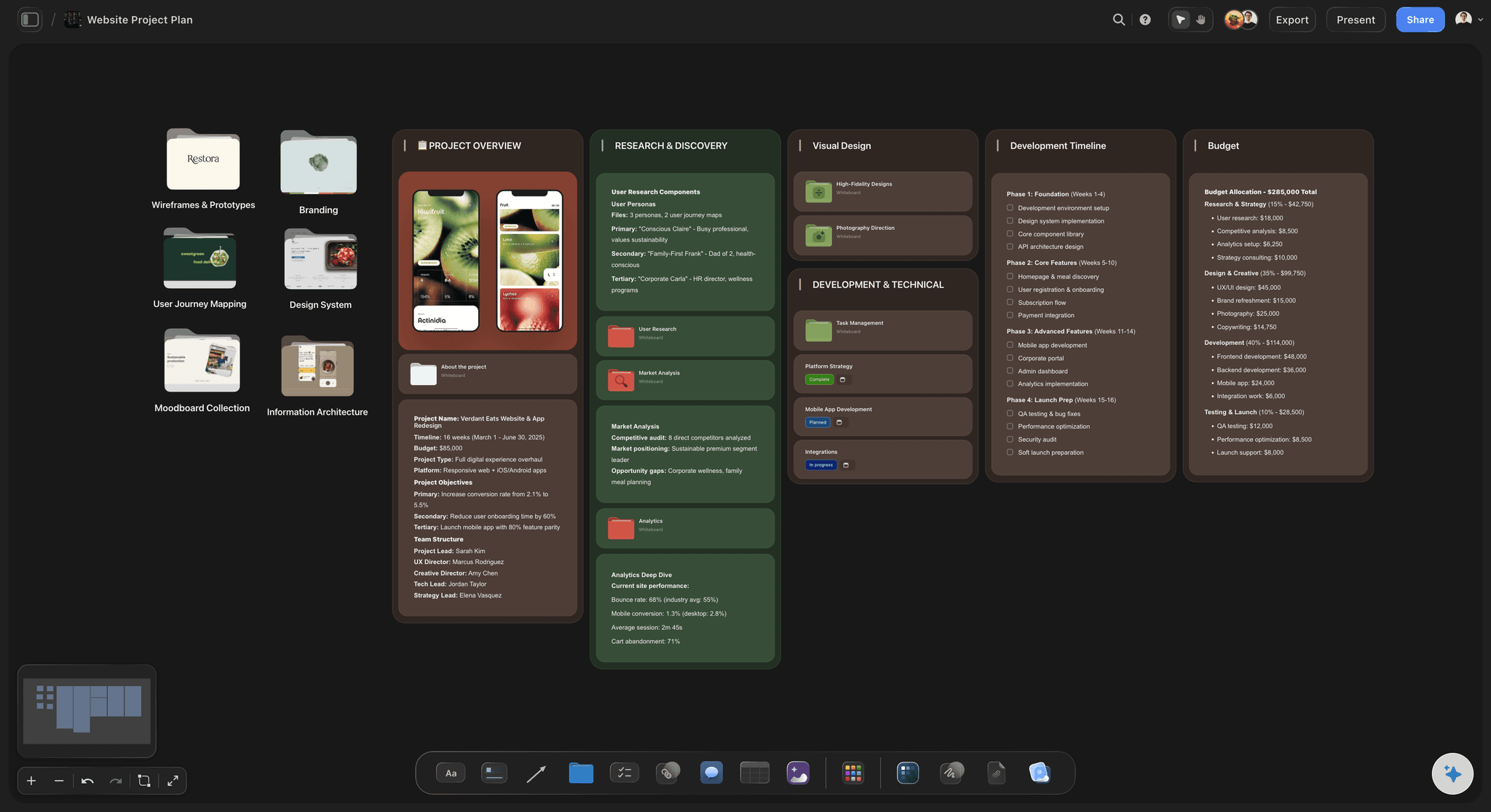
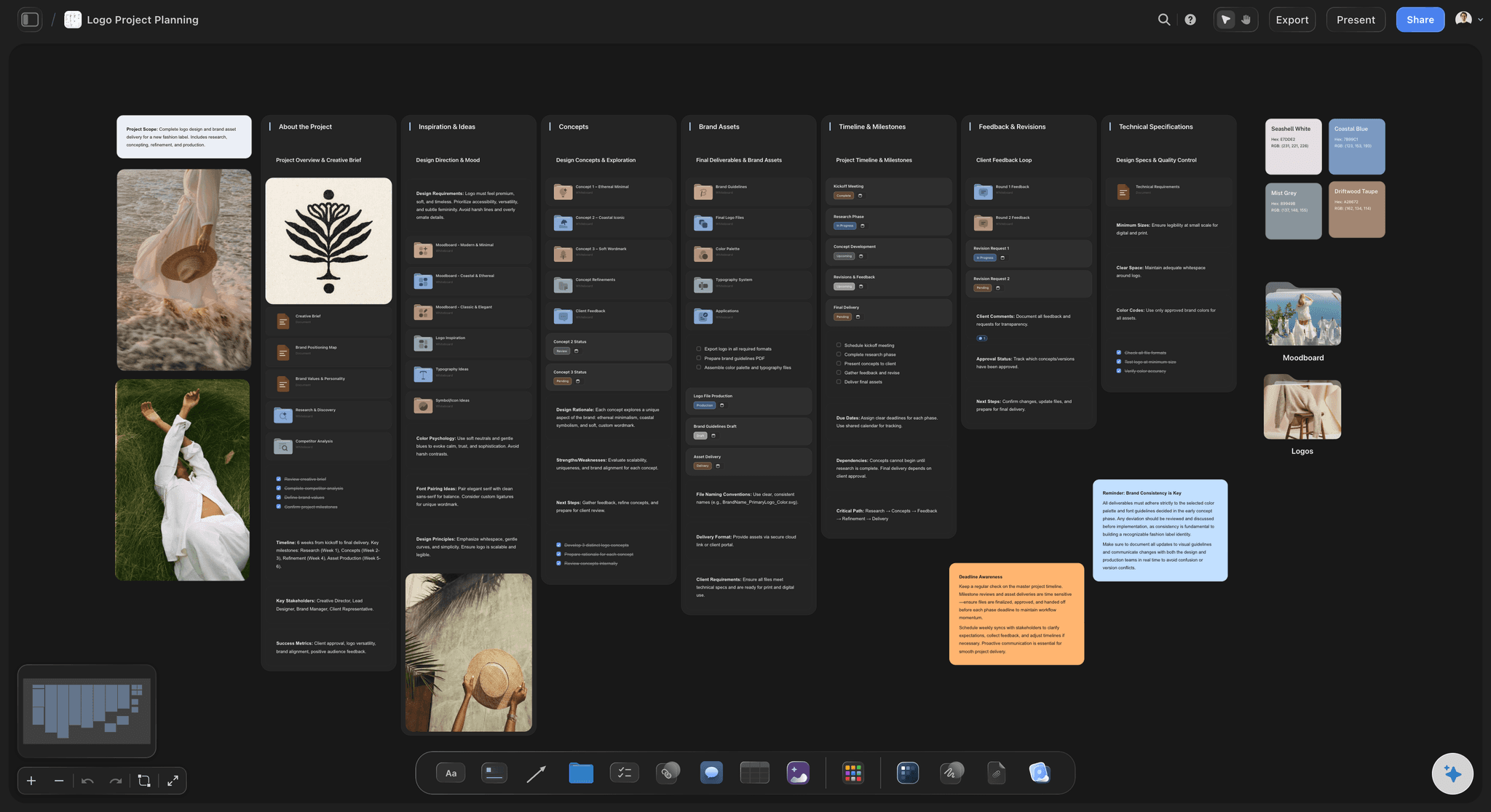
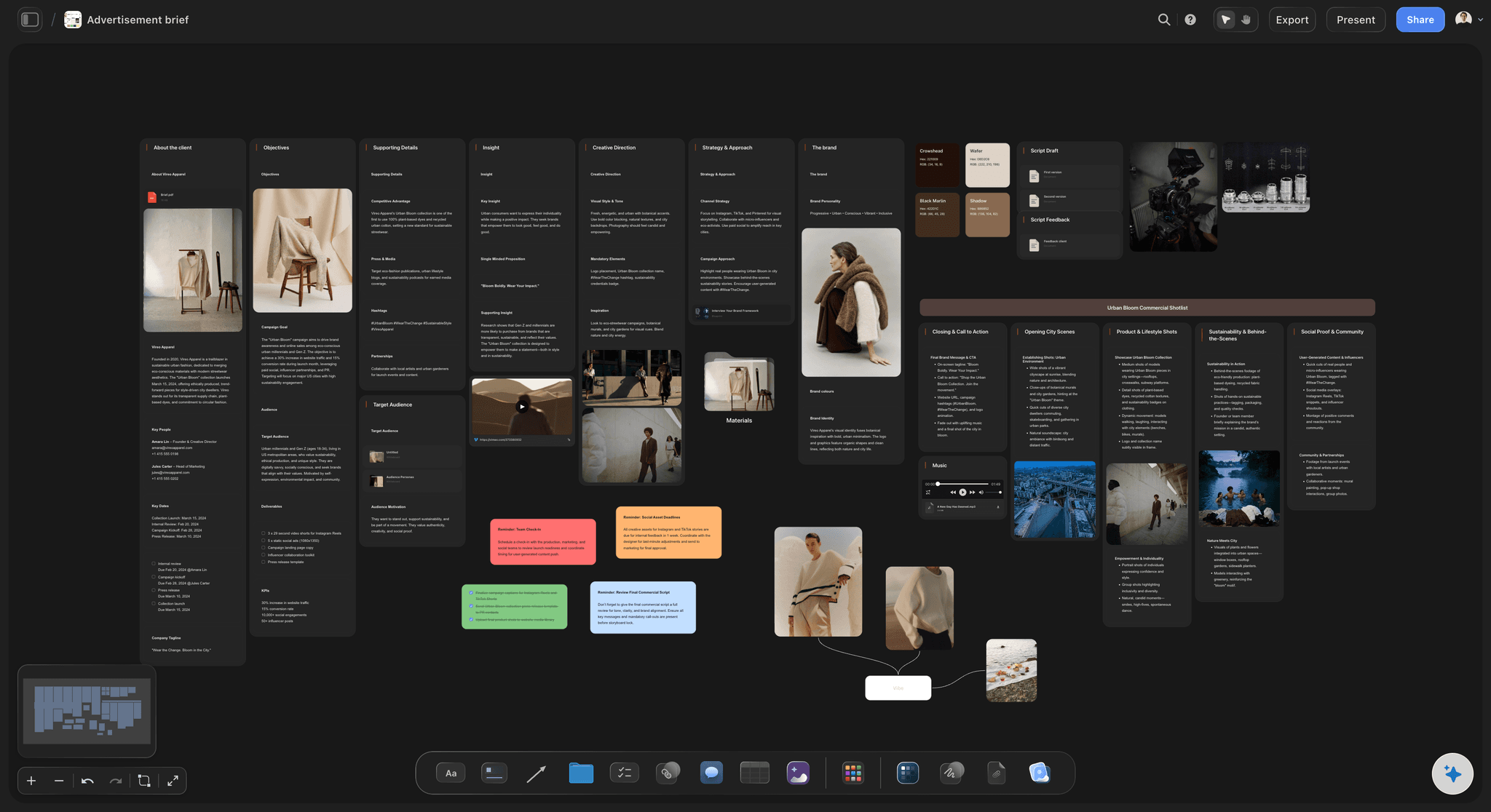
Drop a text brief onto the canvas and Storyflow's AI lays out the project: objectives, deliverables, references and a schedule, arranged so the whole thing is visible at once. The brief stays on the board, so weeks later you can still ask whether the plan matches it.


Creatives working for these brands already got early access
- Red Bull
- Canon
- Artlist
- Porsche
See how easy it is to get started
Watch a real project come together, from a blank board to a finished plan, clicked through step by step.
Start from a ready-made template
Pick a board to see what you can build, then let AI fill it in. Every template is a real, editable starting point on the same infinite canvas.

Mind Map
Branch one central idea out into themes and sub-points, then drag the connections around until the structure makes sense.
What does brief to project board mean?
Brief to project board is the step between a written brief and work actually starting. Someone writes a paragraph or a page describing what needs making, for whom and by when, and somebody else has to turn that prose into a structure people can act on: deliverables, an order, owners, a date. That translation is usually done by hand, in a meeting, and most of the brief's detail is lost in it.
Storyflow does the translation on an infinite canvas. Paste the brief, or drag the document onto the board, and the AI lays out planning boards around it: the objectives restated as something checkable, the deliverables as cards you can move, the references collected, and a schedule you can drag as dates change. You get a board rather than a list, because the shape of a creative project is rarely a list.
The part that matters most is what happens after. The brief is still on the canvas, and Storyflow's AI reads the whole active board plus up to five documents and three boards every time you ask it something. So in week three, when a direction has drifted, you can ask whether the current plan still matches the brief and get an answer based on both. Tools that generate a board and discard the brief can only answer from their own earlier summary.
Storyflow is paid-only during early access, with plans from $7.99 a month billed annually ($9.99 monthly). A free plan launches before the end of 2026, and anyone a paid member invites to a board joins free.
Ultra fast from brief to board
From a paragraph to a working board in four steps.
No template picking and no blank canvas. The brief is the input.
01
Open a canvas
Storyflow runs in the browser. Nothing to install, so the brief can become a board in the same sitting it arrived.
02
Paste or drop the brief
Paste the text, or drag the document, the email thread and any reference images straight onto the board together.
03
AI lays out the project
Objectives, deliverables, references and a schedule arrive as boards arranged on one canvas, built from what the brief actually says.
04
Check it against the brief later
The brief stays on the canvas, so you can ask the AI weeks later whether the plan has drifted from what was agreed.
The brief stops being a document nobody reopens.
It becomes the thing the plan is measured against, because it is still on the board and the AI can still read it.
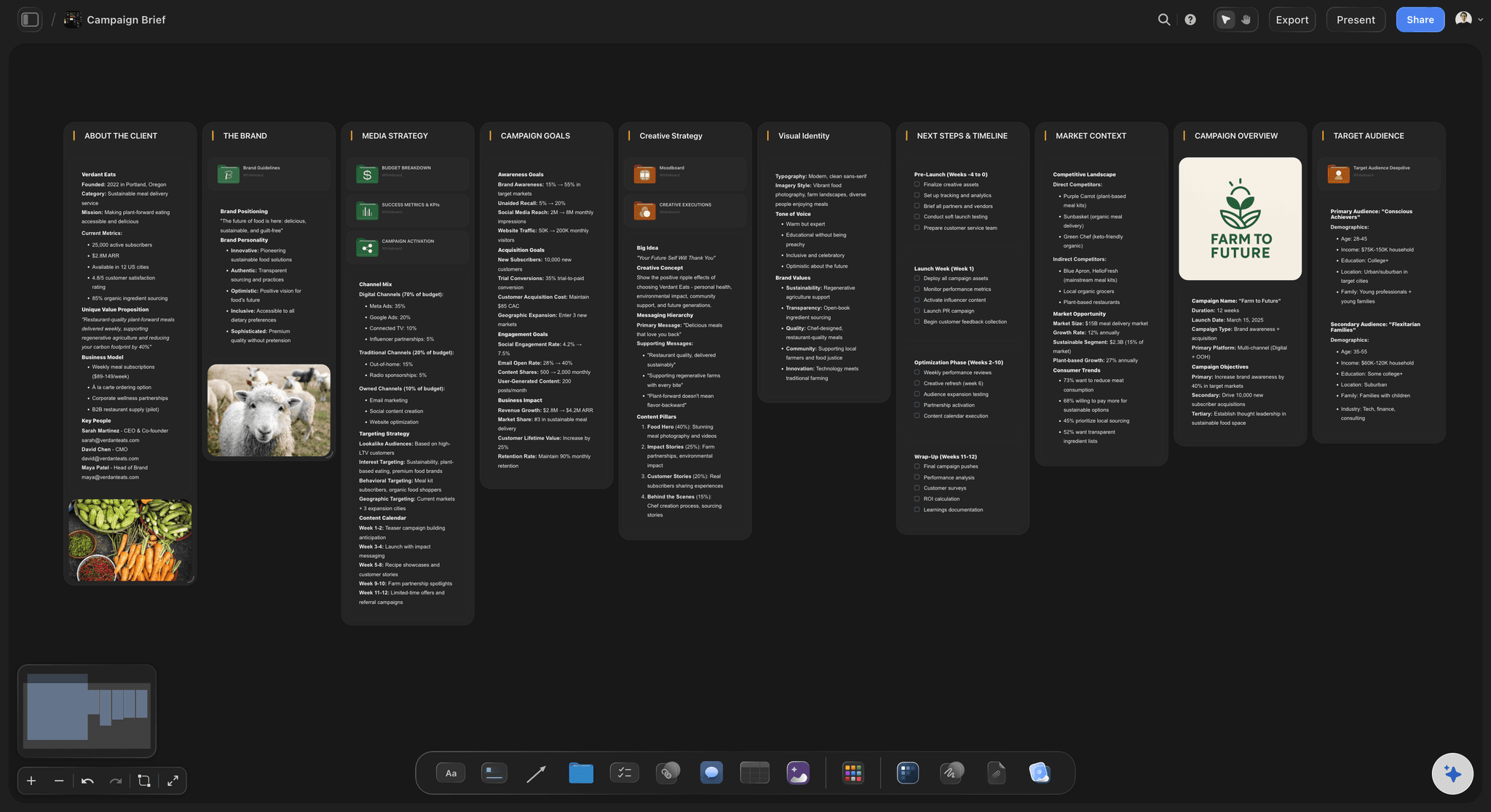
Objectives restated as something checkable
Turn prose into a structure you can act on
The AI pulls the objective, the audience and the constraints out of the brief and lays them out as boards, so the vague sentence everyone glossed over becomes visible early.
Try the AI creative brief generator →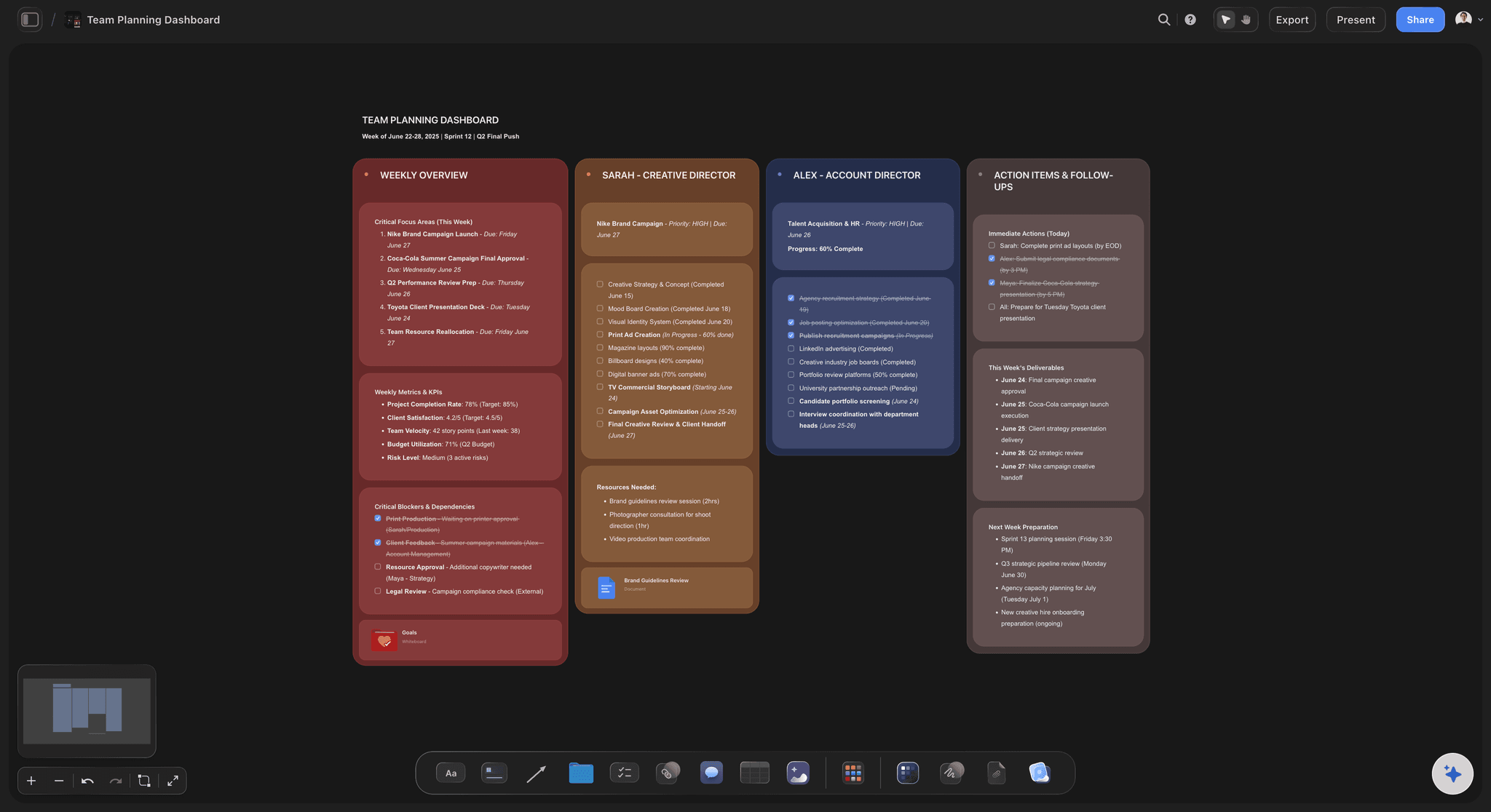
Deliverables you can move
A board, not a list
Deliverables arrive as cards on a canvas you can rearrange, group and re-order, because a creative project is rarely a flat sequence of tasks.
See the AI project plan generator →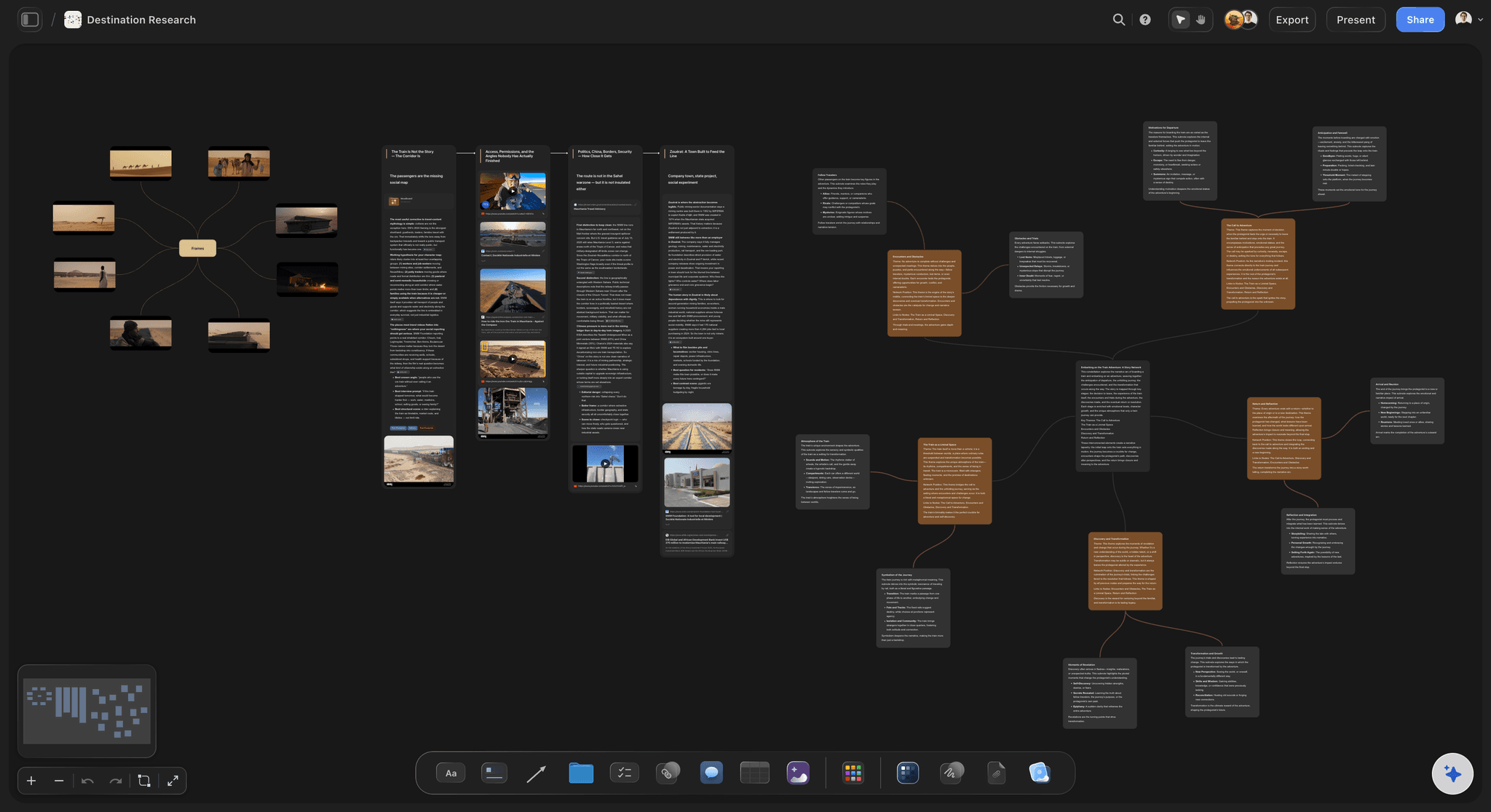
References beside the plan they belong to
Keep the material the brief pointed at
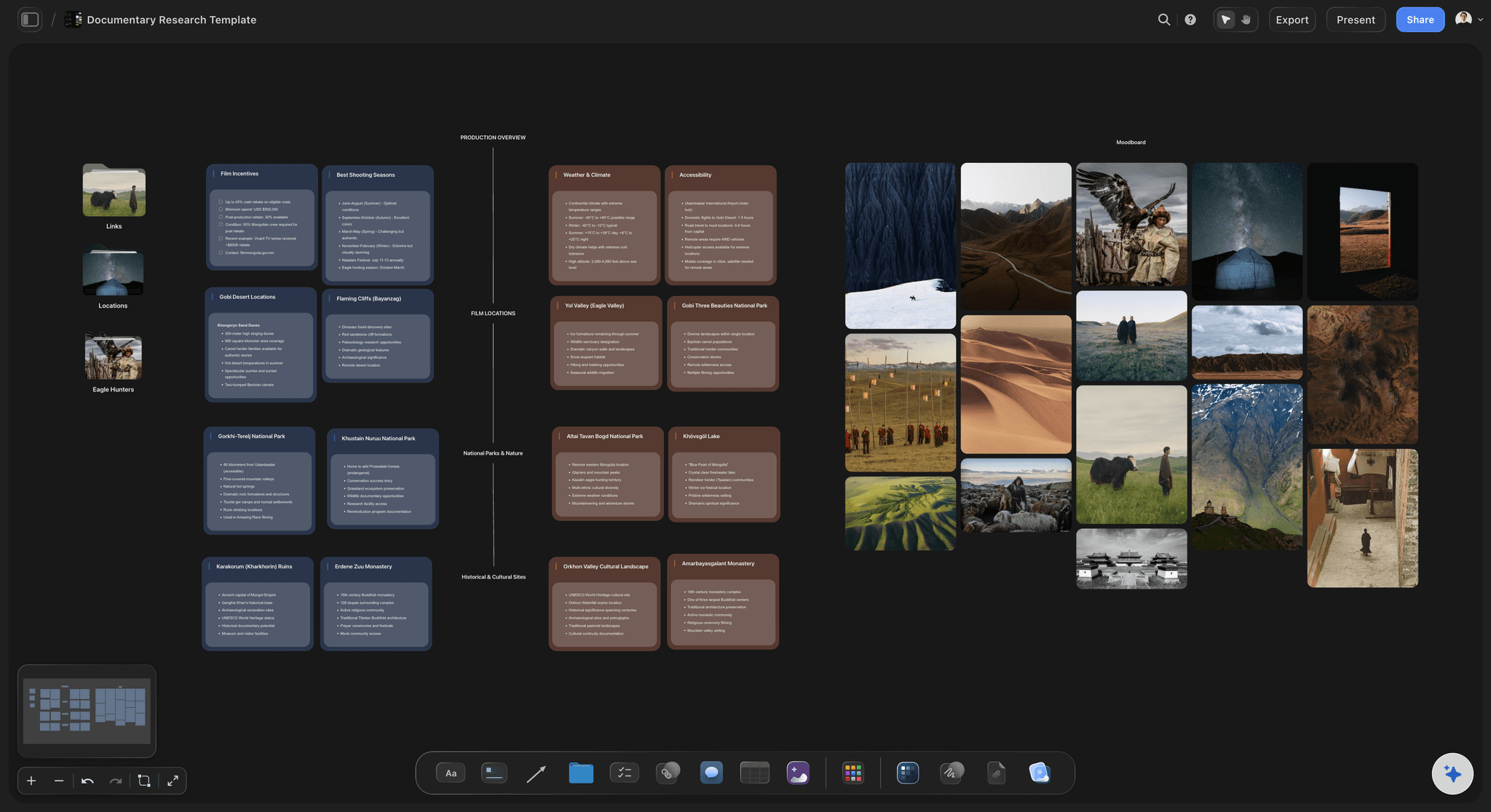
Drag the reference images, links and research the brief mentioned onto the same canvas, so the plan and the evidence for it stay together.
Explore the AI mood board maker →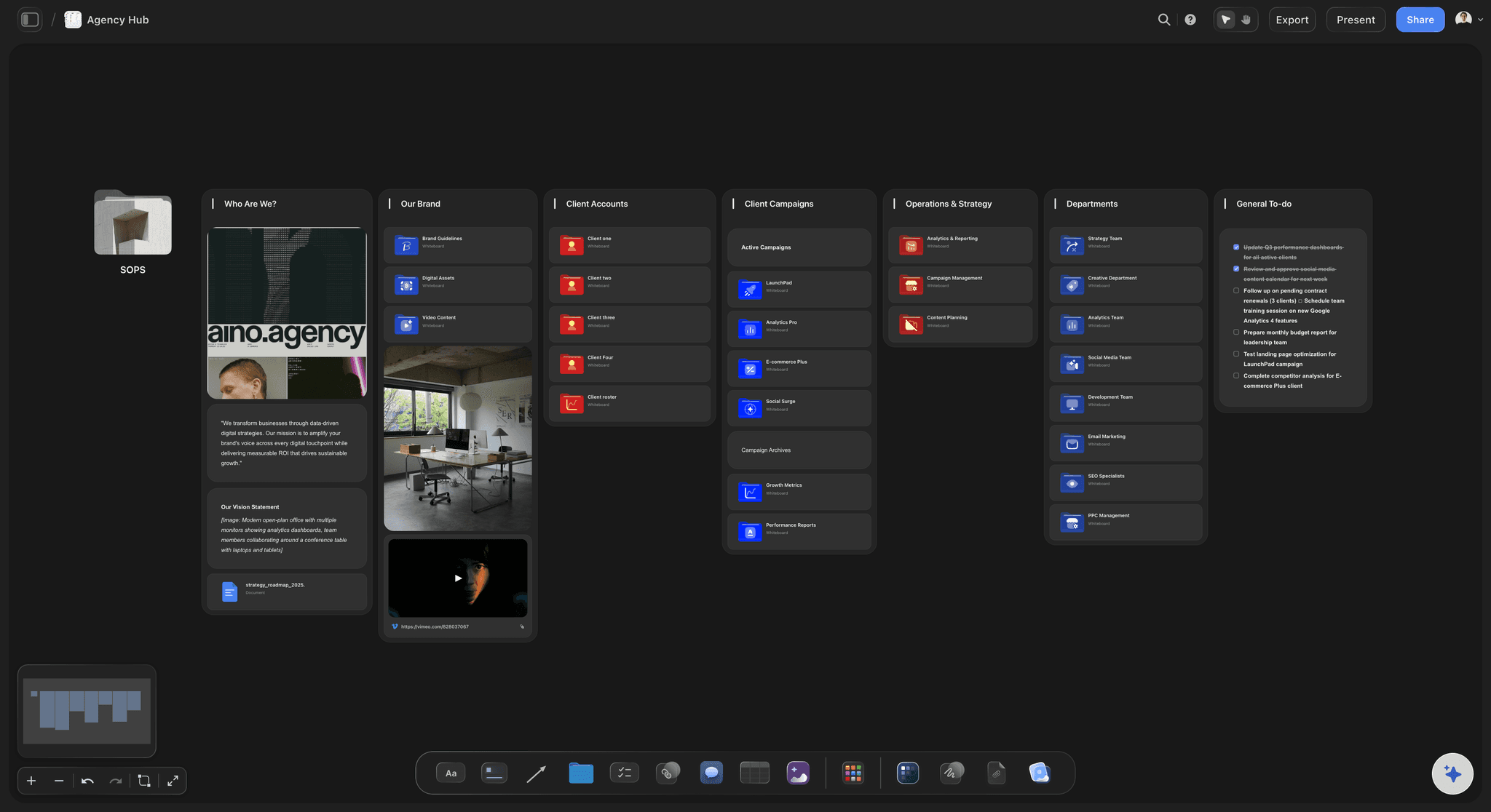
One link instead of a kickoff deck
Send the board back to whoever wrote the brief
Share a view-only link so the client or stakeholder sees how their brief was interpreted, before the work starts rather than after.
See the AI creative workspace →Plans from $7.99/month annual. Free plan coming late 2026.
Paste a brief and watch the board build itself. Storyflow is paid-only during early access, with a free plan coming before the end of 2026 and invited collaborators joining free today.
Every brief gets its own board, with no project limit
AI reads the whole board before it answers
Anyone a paid member invites to a board joins free
Built for people with taste
More than a brief parser.
Extracting tasks from a brief is the easy half. Keeping the brief readable afterwards is the half that decides whether the plan survives.
One paste, a project you can argue with
From prose to structure
Objectives and constraints: The AI separates what the brief asks for from what it rules out, and puts both on the board where they can be disagreed with.
Deliverables and order: What has to be made, grouped and sequenced, as cards rather than a numbered list nobody rereads.
A schedule you can drag: Milestones laid out beside the work they cover, so moving a date moves something visible.
The brief stays readable
Ask, in week three, whether the plan still matches
Canvas-aware AI: The AI reads the whole active board, so the brief and the plan are both in front of it when you ask a question about either.
Mention the source documents: Attach up to five documents and three boards to bring the research and positioning into the same answer.
Re-prompt without starting over: Change a deliverable or tighten the timeline and the AI updates the board while leaving the rest intact.
Briefs arrive messy
Works from what you actually got
Half a brief is normal: Paste an email thread, a Slack paragraph or three bullet points. The board makes the gaps visible instead of hiding them.
Several sources at once: Drop the brief, the research PDF and the reference images together and the AI treats them as one context.
Nothing is discarded: The original material stays on the canvas, so nothing depends on the AI having summarised it correctly the first time.
Fits around the tracker you already run
Own the step before the tickets
Keep your pipeline: Storyflow runs no approvals or time tracking, so delivery stays wherever it already lives.
Export when it travels: Send any board out as a high-quality image or PDF when the plan needs to leave the canvas.
Stakeholders read a link: No account needed to view, so the person who wrote the brief can check the interpretation immediately.
Explore templates for your project
Every template opens as a real, editable board on the infinite canvas. Pick the closest fit and make it your own.
Mind Map
Branch one central idea out into themes and sub-points, then drag the connections around until the structure makes sense.
One app instead of five
Why not just paste the brief into a chatbot?
A chat window will happily turn a brief into a list. The difference shows up three weeks later, when somebody asks whether the plan still matches what was agreed.
Storyflow
Recommended
Brief stays readable to the AI afterwards
Output is a board you can rearrange
References and research on the same canvas
Runs the task pipeline and approvals
ChatGPT
Brief stays readable to the AI afterwards
Output is a board you can rearrange
References and research on the same canvas
Runs the task pipeline and approvals
Notion
Brief stays readable to the AI afterwards
Output is a board you can rearrange
References and research on the same canvas
Runs the task pipeline and approvals
ClickUp
Brief stays readable to the AI afterwards
Output is a board you can rearrange
References and research on the same canvas
Runs the task pipeline and approvals
What creators are saying
Join early creators getting structured workspaces and AI that remembers their projects
“Storyflow has sped up my workflow by at least 3x, which means more flow state and more projects I can actually ship. It truly changed the way me and my team create.”

Reilin Joey
Director & YouTuber
“One prompt gets me a structured board. But the tactics are my favorite. I run my YouTube scripts through them and my intros and retention got better. It's amazing.”

Justkay
YouTuber & Freelance Filmmaker
“I used to juggle five apps to plan a project. Now I describe what I am making and get boards, lists, and a schedule. All in one place.”

George
@fernwehchronicles
Brief to project board, answered.
What people ask before turning a brief into a board in Storyflow.
Yes. Storyflow takes a pasted or dropped text brief and lays out a visual project board on an infinite canvas: objectives, deliverables, references and a schedule. The brief stays on the board afterwards, and Storyflow's AI reads the whole active canvas plus up to five documents and three boards, so the plan can be checked against the brief later rather than only at the moment it was generated.
Paste the brief into Storyflow and the AI lays out a production plan around it: scope, deliverables, a schedule worked back from the delivery date, a budget table with a live total, and what depends on what. Then check each part: agree scope in writing, count every deliverable and format, date the review rounds, price each line and note what the client owes and when. A spreadsheet covers a small job; ClickUp or Notion then track the tasks.
Open a canvas, paste the brief or drag the document onto the board, and describe what you want built. Storyflow lays out the objectives, deliverables and a schedule around the brief. Because the source stays on the canvas you can re-prompt against it, so changing a deliverable does not mean regenerating the whole plan.
Track the dependencies that move your dates when they slip: what the client owes (assets, copy, product samples, access), approvals at each gate, bookings with lead times such as crew, talent, studio and kit, and legal items like releases, music licences and permits. Put each next to the task it blocks, with who owes it and by when. In Storyflow they sit in a table with person and date columns, rows kept in date order.
That is the common case and it is where a board helps most. A half-page brief becomes a board with visible gaps: an objective with no success measure, a deliverable with no owner. Seeing the holes laid out is a faster route to the clarifying conversation than reading the paragraph again. No tool invents the missing decision for you.
Yes. Paste whatever you actually received. Most real briefs arrive as an email thread or a few bullet points rather than a formal document, and the board is built from what is there.
Yes, and this is the main difference from tools that extract tasks and discard the source. The brief stays on the canvas as readable material, so any later question about intent is answered from the brief itself rather than from an AI summary of it.
Not during early access. Plans start at $7.99 per month billed annually or $9.99 monthly, and a free plan launches before the end of 2026. Anyone a paid member invites to a board joins free today and can invite others.
Yes. Share a view-only link and the person who wrote the brief can see how it was interpreted without signing up, which is usually the shortest route to catching a misreading before work starts.
No. Storyflow has no approvals or time tracking. It covers the step between receiving a brief and having something worth putting into a tracker, and the tracker keeps doing the rest.
Campaign briefs, design briefs, video and film treatments, product launch briefs, content briefs and client scopes. Anything where prose describes work that has to be made, and somebody has to decide what that means in practice.
Yes. Drag images, links, PDFs and video onto the canvas alongside the brief and the AI treats them as one context, so the visual direction and the written direction are read together rather than separately.
Stop retyping briefs into plans.
Paste the brief once and get a board you can share the same day, on a canvas that still remembers what the brief said.