
Extremely clear strategy, zero busywork
Agree the creative strategy
before you present the concept.
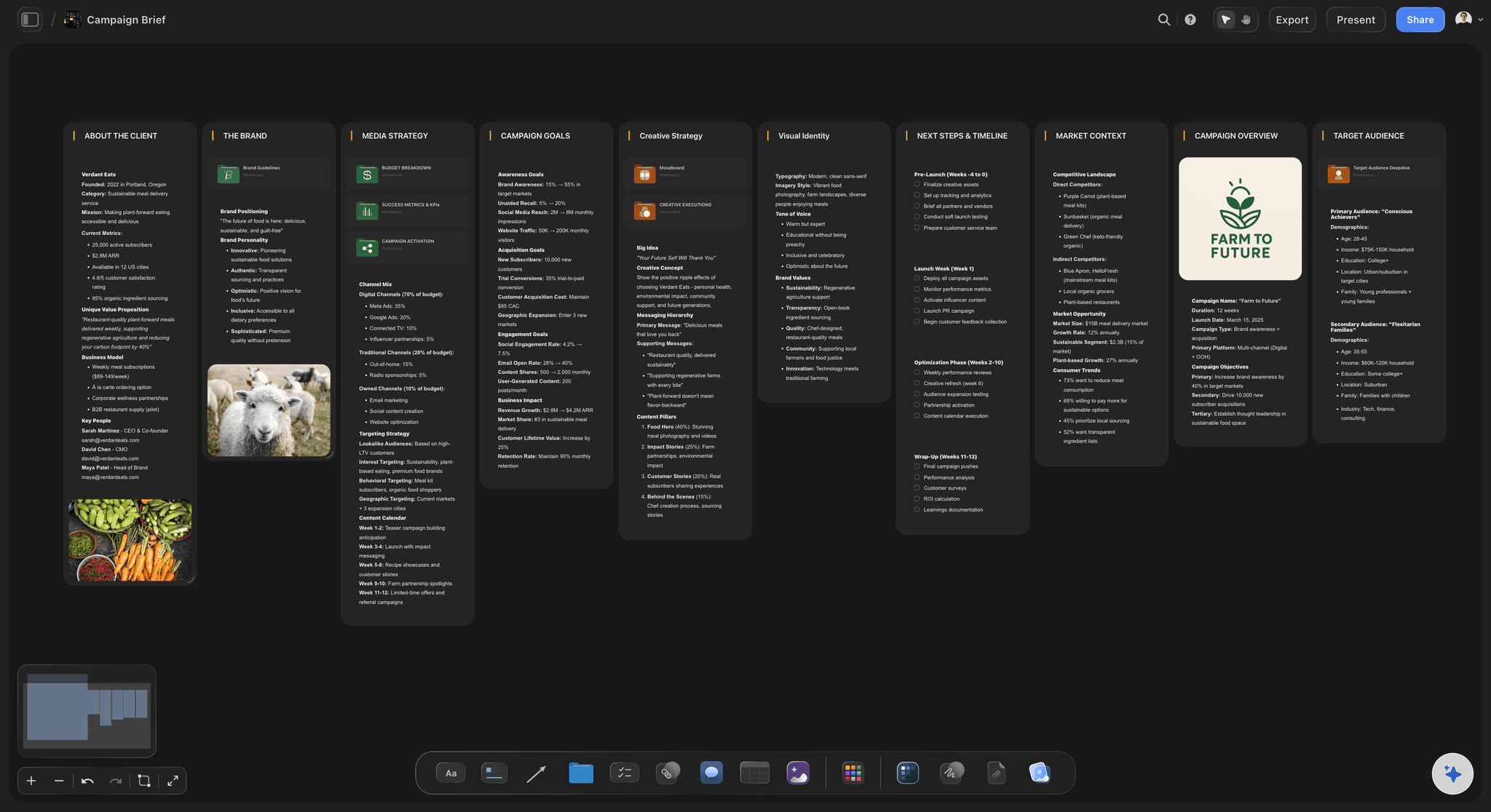
Insight, audience truth, proposition, message, tone, channels and mandatories on one board beside the brief. The concept, the visual direction and the presentation are built from it on the same canvas.


Creatives working for these brands already got early access
- Red Bull
- Canon
- Artlist
- Porsche
See how easy it is to get started
Watch a real project come together, from a blank board to a finished plan, clicked through step by step.
Start from a ready-made template
Pick a board to see what you can build, then let AI fill it in. Every template is a real, editable starting point on the same infinite canvas.

Marketing Plan
Lay out your goals, channels, and initiatives for the quarter on one board.
What is creative strategy?
Creative strategy is the reasoning that connects a business objective to the creative work, written down in seven parts: the insight, the audience truth, the single-minded proposition, the message, the tone, the channels and the mandatories. Storyflow is an AI visual workspace that builds the creative strategy on one infinite canvas: the seven parts, the brief they answer and the references the concept will be judged against. Its AI lays out a first draft of the seven parts from the brief, the team rewrites it, and the client reads it from a link with no account. The agreed strategy is what the concept is judged against, so it comes before the idea, not after it.
Each part has a standard. The insight is a true, non-obvious observation about the audience that gives the work a reason to exist, and it comes with evidence. The audience truth is what they believe or do today, in their words. The proposition is one sentence with one idea; if it contains an and, it is two strategies. The message is what the audience should take away, and the tone is how it should sound, shown with references, including one that is wrong. The channels say where the idea will be seen and which one leads. The mandatories are the legal lines, brand rules and must-haves, kept short enough to be believed.
Creative strategy goes wrong in three familiar ways. It is written after the concept, as a rationale fitted to an idea the team already likes, and clients can tell. It is approved in a deck and never reopened, so by the time the moodboard and the executions exist nobody can point to the insight they were meant to express. Or it never makes a choice: an audience of everyone, a proposition with three benefits, every channel at once. A strategy that rules nothing out gives the concept nothing to be judged against, and the concept meeting turns into the strategy argument that should have happened first.
Agencies and creative directors get it agreed as its own step: the strategy, or at least the insight and the proposition, is presented and signed off before any concept is shown, and then it travels with the work. In Storyflow the strategy stays on the board while the concept, the moodboard and the visual direction are built beside it, so the team making them can see what they are meant to express. The client opens the view-only link with no account and signs in to comment on the specific part they question. When a deck is needed, the AI can turn it into a Presentation PDF, one idea per page.
Ultra fast from brief to board
From the brief to a strategy the concept can be judged against.
The strategy is short. The work is in making each part specific enough to disagree with.
01
Put the brief on the board
Paste or attach the client brief. The objective, the budget, the dates and the mandatories are the limits the strategy works inside.
02
Draft the seven parts
Ask the AI to lay out the insight, audience truth, proposition, message, tone, channels and mandatories from the brief, each as a card you can rewrite.
03
Pin the evidence
Research, reviews, audience quotes and competitor work go beside the insight they support. An insight that cannot survive its evidence sitting next to it is not one yet.
04
Get it agreed, then build the concept
Share the link for sign-off on the insight and the proposition, then build the concept and the visual direction beside the strategy they express.
The bridge between the brief and the idea.
A strategy the concept is judged against, presented first and kept in view while the work is made.
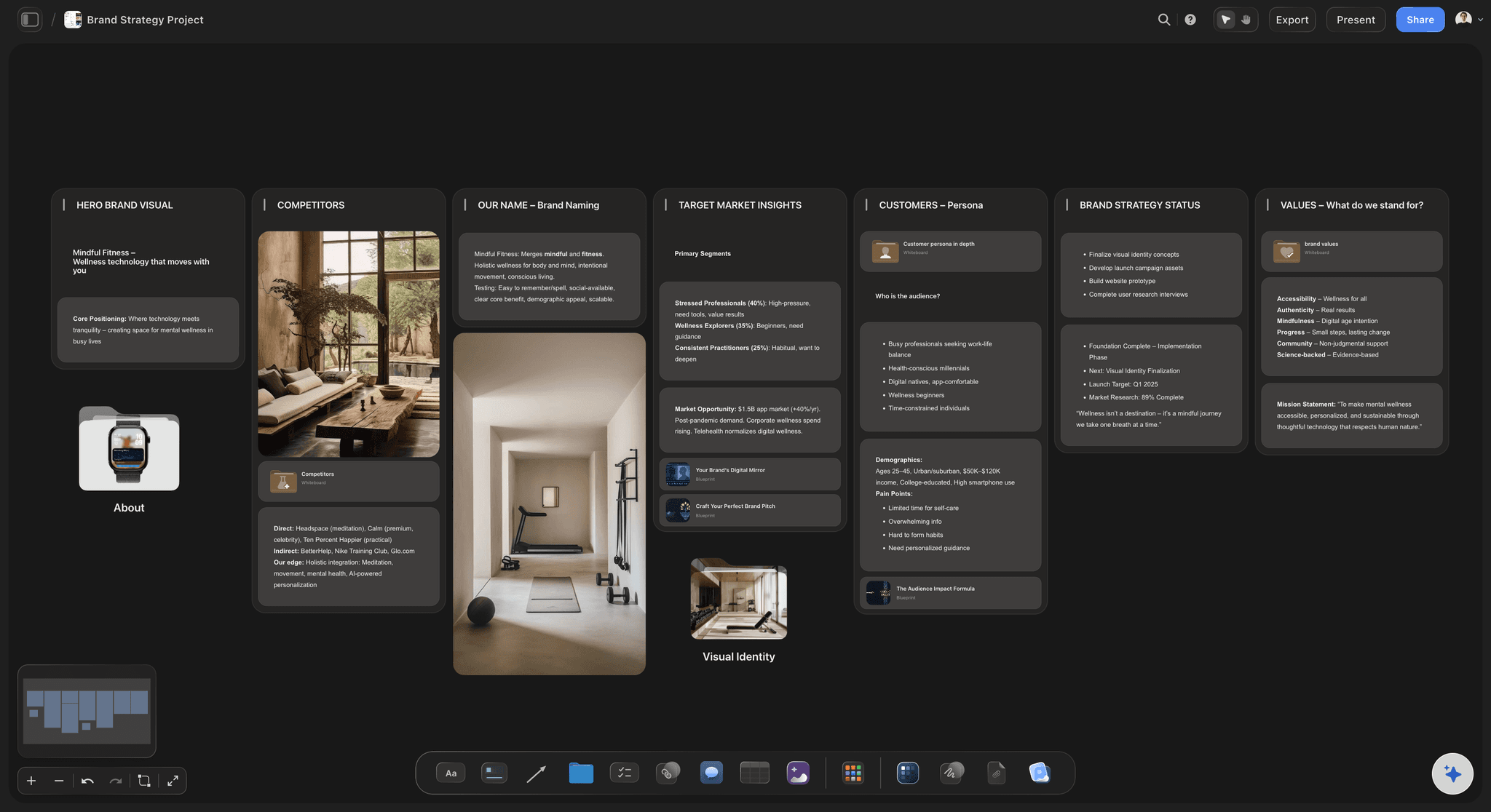
The standard the concept is judged against
Concepts built from the proposition
With the strategy on the same board, a concept is reviewed against the proposition it was meant to express, which turns 'do we like it' into 'does it say what we agreed'.
See the creative concept board →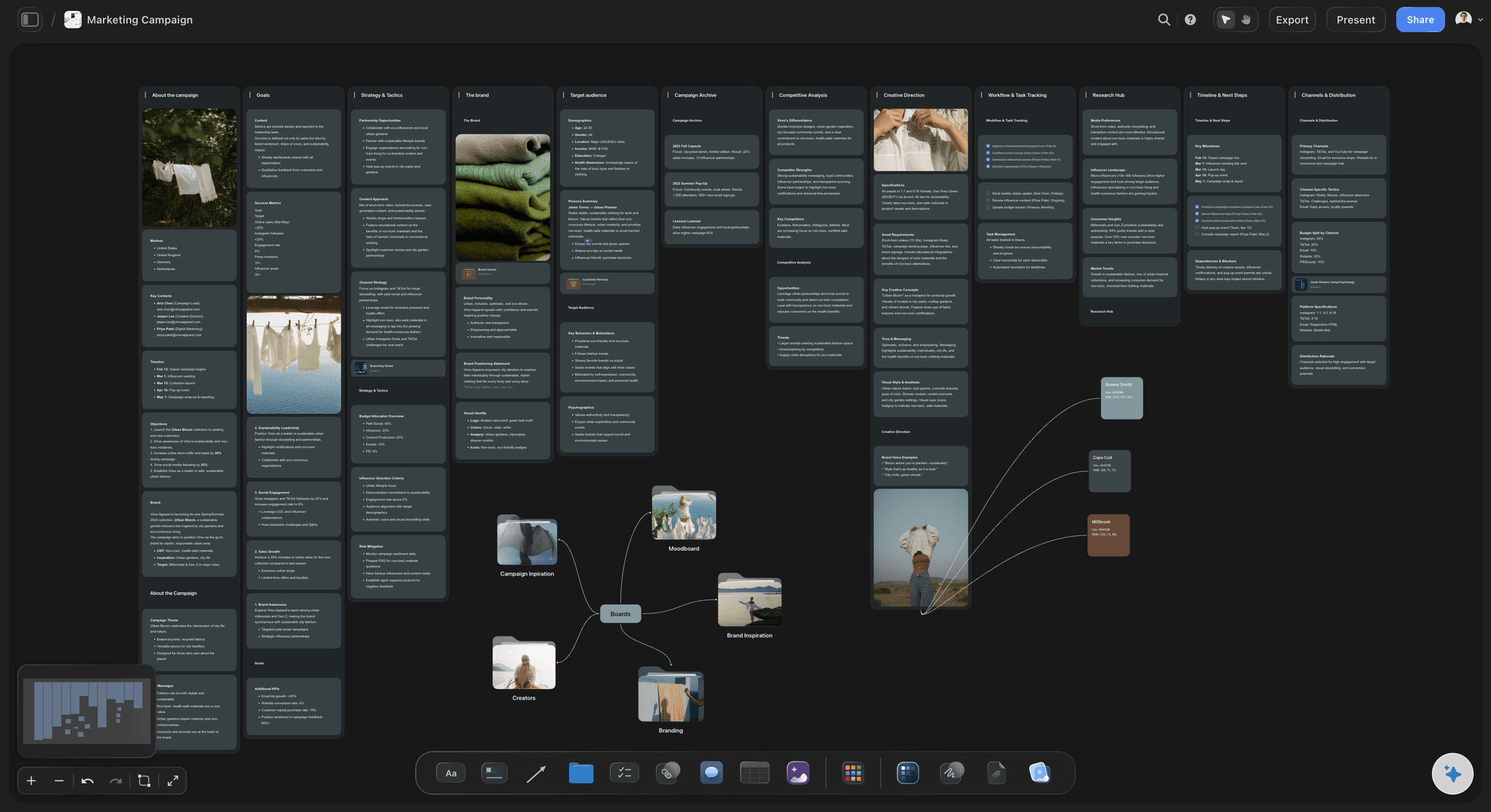
Presented before the concept
Strategy first, then the idea
Walk the client from the brief to the insight to the proposition before any concept is shown, so the idea arrives with its reasons already agreed.
See the campaign concept presentation →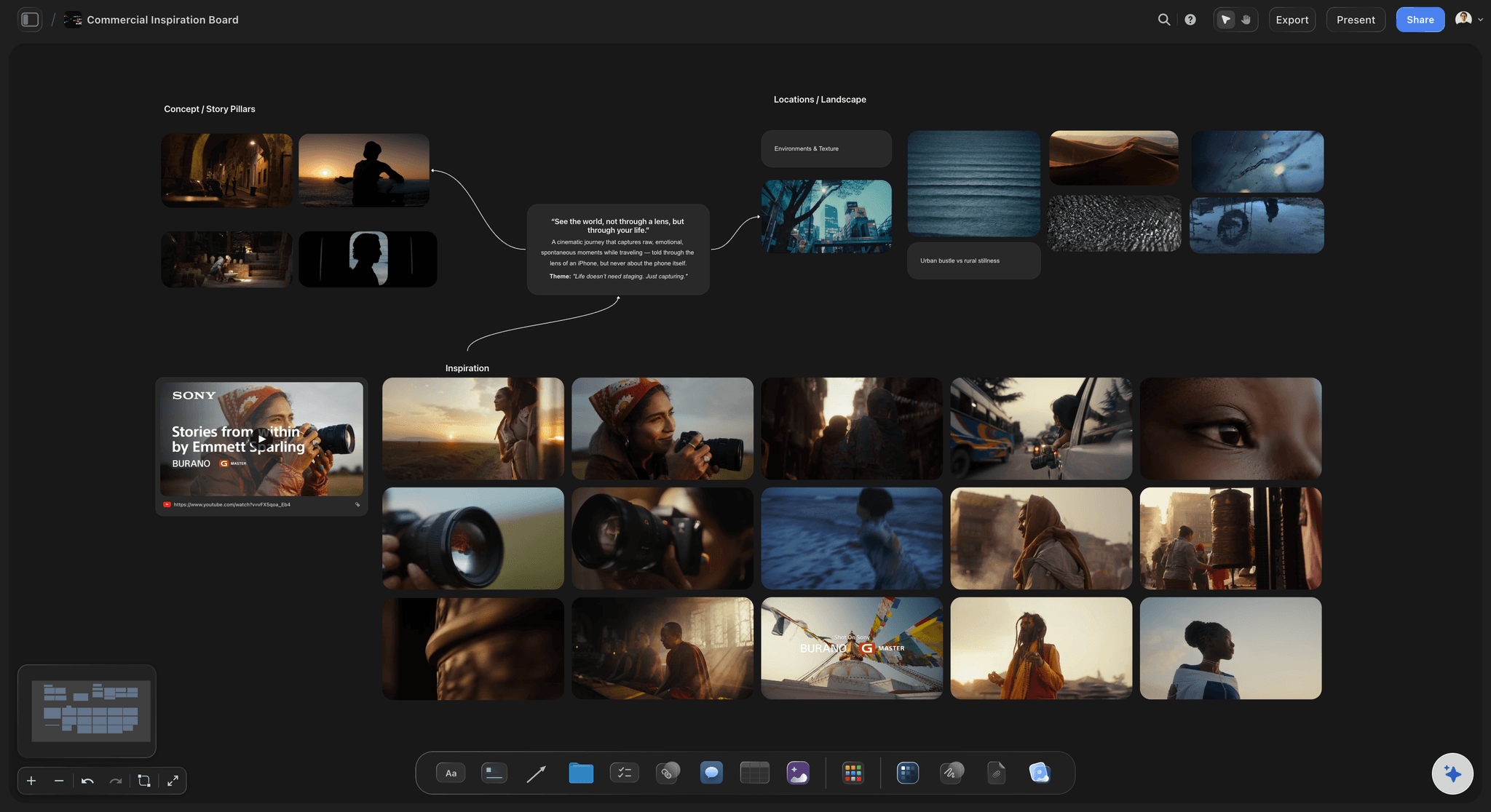
Visual direction beside the strategy
The look traced back to the words
The moodboard and the visual direction sit next to the proposition and the tone, so a creative director's notes point back to something agreed instead of taste.
See the brand moodboard →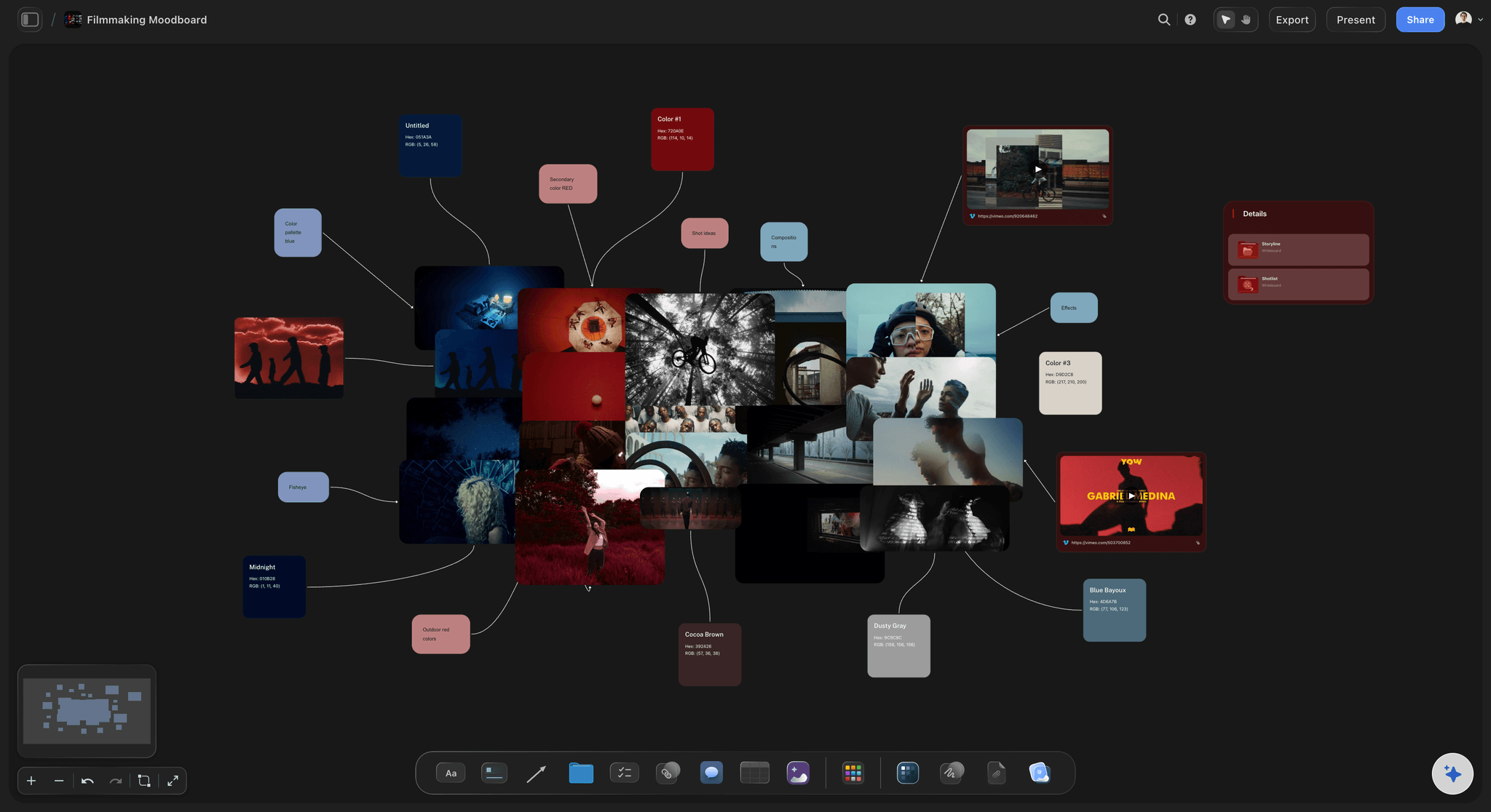
From strategy to treatment
The idea written up for production
For a film or a commercial, the agreed strategy feeds the director's treatment: the idea, the look, the references and the structure, built from the same board.
See the director's treatment template →Unlimited boards. No object cap.
The strategy, the evidence and the work, kept together. Storyflow is paid-only during early access, with plans from $7.99 a month billed annually ($9.99 monthly). A free plan launches before the end of 2026, and anyone a paid member invites to a board joins free.
Unlimited boards, images, files and links
The AI agent drafts the strategy from the brief and reads the whole board
Research, PDFs and YouTube or Vimeo references beside the insight
View-only links the client opens with no account
Built for people with taste
Seven parts, and how an agency gets them agreed.
A creative strategy is a set of choices. Each part is doing its job when it rules something out.
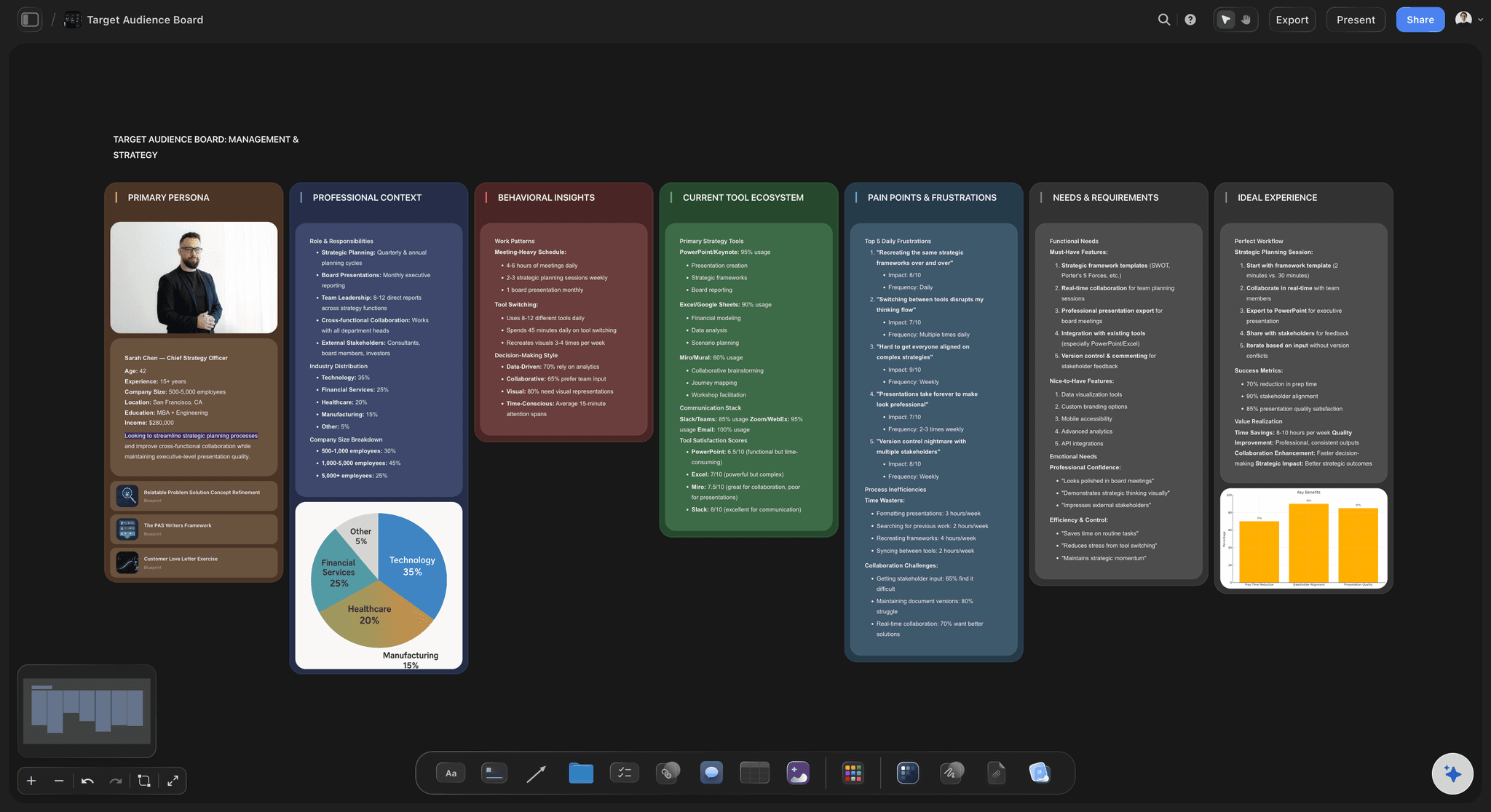
The seven parts
What the template holds
Insight and audience truth: The non-obvious thing about the audience that gives the work a reason to exist, beside what they believe today in their own words.
The single-minded proposition: One sentence, one idea. A proposition with an and in it is two strategies, and the work will do neither well.
Message and tone: What the audience should take away and how it should sound, shown with three references that feel right and one that does not.
Channels and mandatories: Where the idea will be seen and which channel leads, plus the legal lines, brand rules and must-haves.
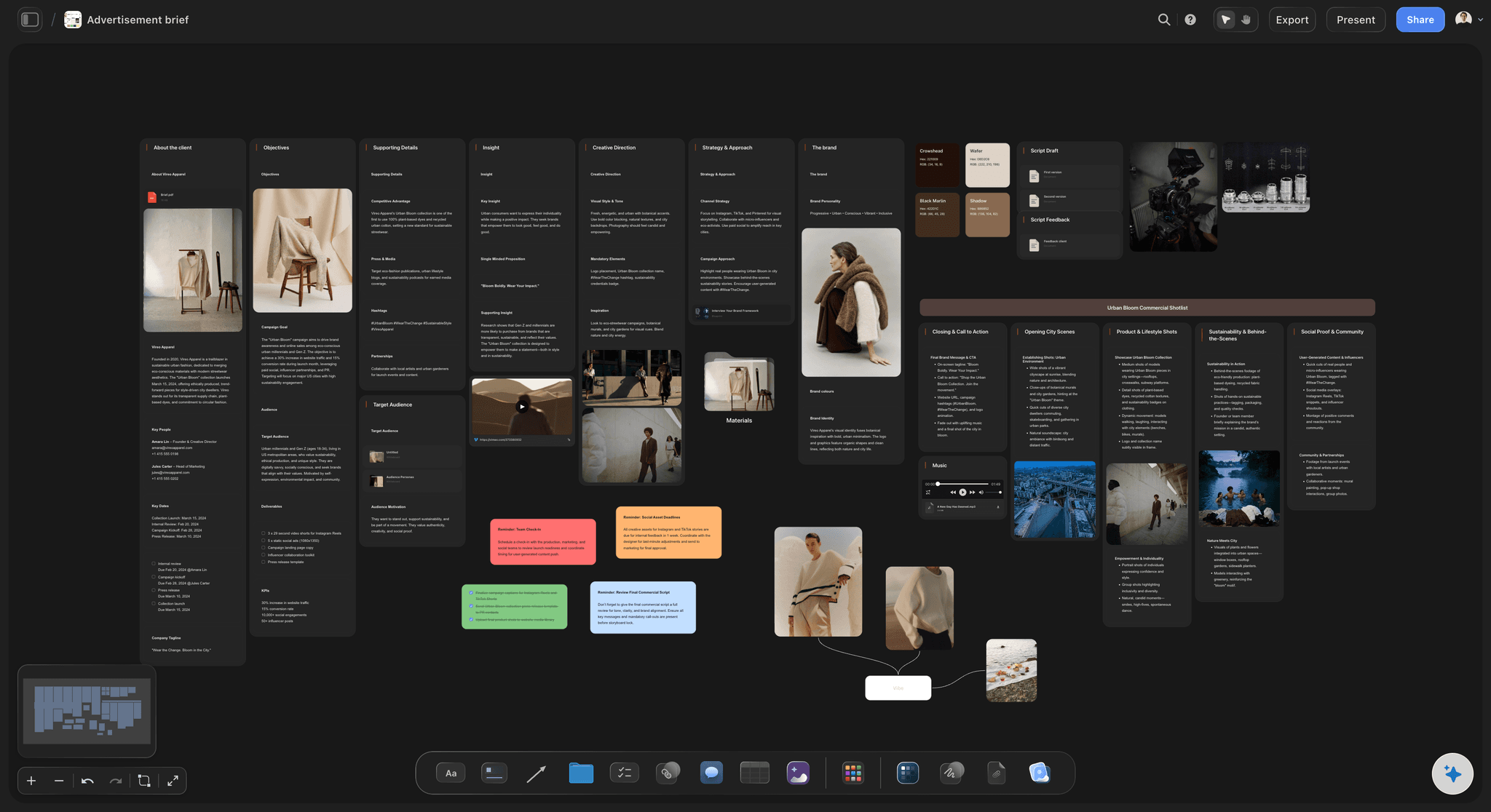
Brief, strategy, concept
Where the strategy sits in the process
The brief sets the limits: Objective, budget, dates and mandatories. The strategy works inside them rather than restating them.
The strategy makes the choice: Which audience, which belief, which single promise. It is the step most often skipped on the way to the idea.
The concept expresses it: The big idea is judged against the proposition, not against the taste of whoever is in the room.
Written before the idea: A rationale fitted to a concept the team already likes is easy to spot, and clients spot it.
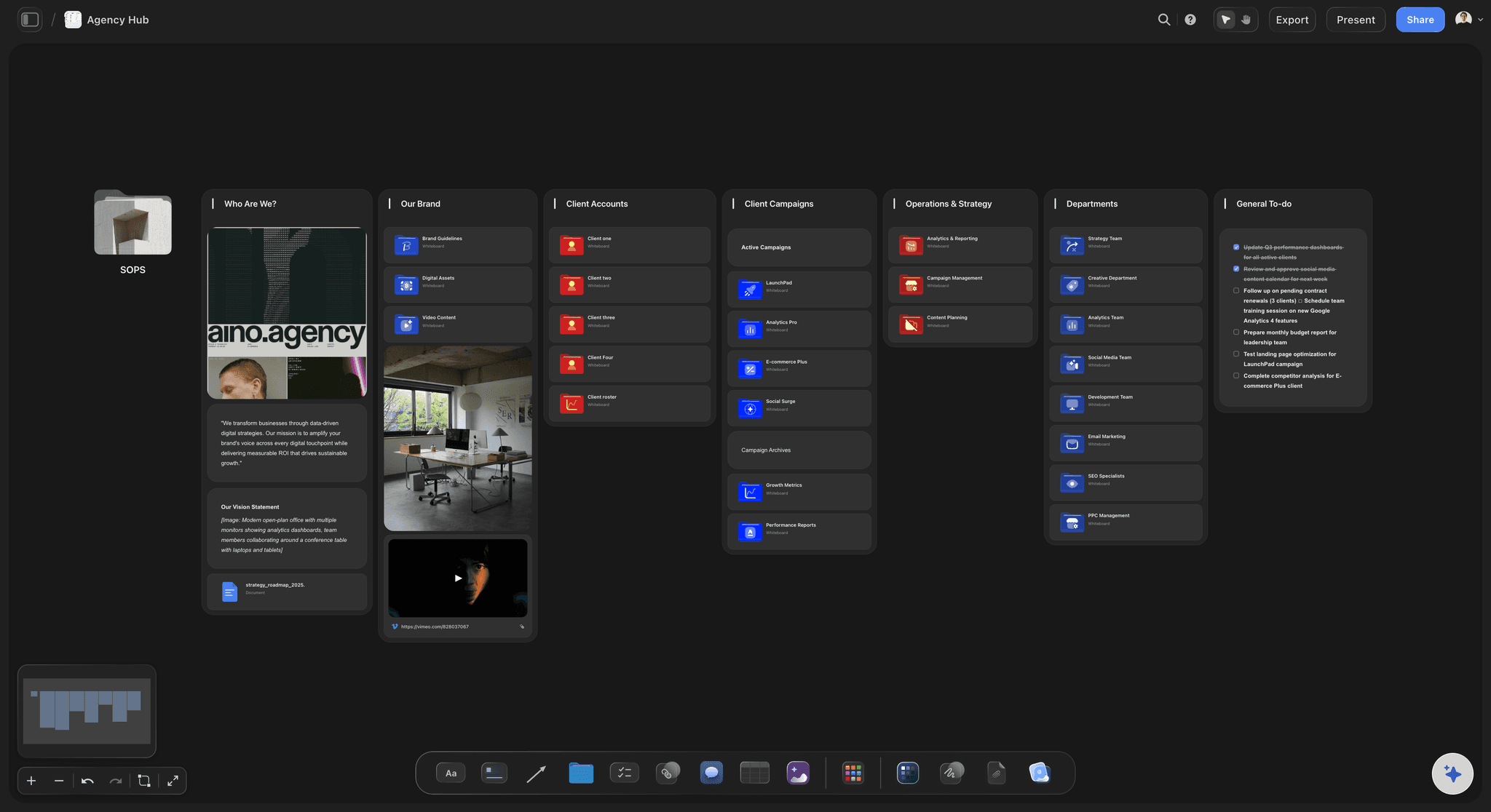
Agreed and shared
How the strategy gets signed off
Present it first: Agree the insight and the proposition before concepts are shown. A concept meeting that becomes a strategy argument cannot be won.
One link for the client: The client opens the view-only board with no account and signs in to comment on the part they question.
The team works from it: Invited collaborators join free and edit the same board, so the moodboard, the copy and the design are made with the proposition in view.
A deck when one is needed: Ask the AI for a Presentation PDF, or export the board as a high-quality image or PDF.
The AI
A second opinion, not the strategist
A draft from the brief: The AI lays out the seven parts from the brief, so the team starts by disagreeing with something specific.
Research on the audience and the category: Ask it to find what competitors already claim and what the audience says about the category.
The insight challenged: Ask what a sceptical client would push back on, or for three propositions from the same audience truth.
The concept reviewed: With the concept on the board, Review my board gives notes on what misses the goal the brief states. You decide what changes.
Explore templates for your project
Every template opens as a real, editable board on the infinite canvas. Pick the closest fit and make it your own.
Marketing Plan
Lay out your goals, channels, and initiatives for the quarter on one board.
One app instead of five
Storyflow vs Google Slides, Miro and Notion.
Google Slides is a common home for strategy decks, Miro for strategy workshops and Notion for strategy documents. Here is how they differ for building a creative strategy and getting it agreed.
Storyflow
Recommended
Strategy, evidence and the concept on one canvas
Client opens it from a link, no account
Comments on a specific part of the strategy
Brief, strategy and production plan in one workspace
Grab frames from YouTube and Vimeo
Live workshop tools: timers and voting
Google Slides
Strategy, evidence and the concept on one canvas
Client opens it from a link, no account
Comments on a specific part of the strategy
Brief, strategy and production plan in one workspace
Grab frames from YouTube and Vimeo
Live workshop tools: timers and voting
Miro
Strategy, evidence and the concept on one canvas
Client opens it from a link, no account
Comments on a specific part of the strategy
Brief, strategy and production plan in one workspace
Grab frames from YouTube and Vimeo
Live workshop tools: timers and voting
Notion
Strategy, evidence and the concept on one canvas
Client opens it from a link, no account
Comments on a specific part of the strategy
Brief, strategy and production plan in one workspace
Grab frames from YouTube and Vimeo
Live workshop tools: timers and voting
What creators are saying
Join early creators getting structured workspaces and AI that remembers their projects
“Storyflow has sped up my workflow by at least 3x, which means more flow state and more projects I can actually ship. It truly changed the way me and my team create.”

Reilin Joey
Director & YouTuber
“One prompt gets me a structured board. But the tactics are my favorite. I run my YouTube scripts through them and my intros and retention got better. It's amazing.”

Justkay
YouTuber & Freelance Filmmaker
“I used to juggle five apps to plan a project. Now I describe what I am making and get boards, lists, and a schedule. All in one place.”

George
@fernwehchronicles
Creative strategy, answered.
What goes in it, how it differs from brand strategy, and how agencies present it.
A creative strategy is the reasoning that connects a business objective to the creative work made to achieve it. It answers a short chain of questions: who has to change what they think or do, what is true about them that nobody has acted on, what single thing the work will say, and how and where it will be said. The output is an argument for why one kind of work will move one group of people.
Storyflow is built for exactly this job: the seven parts of the strategy on one board beside the brief, the evidence for the insight and the references the concept has to express, with an AI that drafts the parts from the brief and gives notes on a route that misses. The client reads it from a view-only link with no account. The audience research behind the insight still comes from your survey or social listening tool.
The proposition and tone set what the look has to express, so the visual direction is judged against them rather than taste. Storyflow keeps the moodboard, colour swatches, type and references on the same board as the strategy, so the team sees why each choice was made. Good direction also shows what the look is not, with references that are close but wrong. Brand guidelines come later, once the direction is approved and needs rules.
A creative strategy framework is the fixed set of questions a team answers every time, so strategies can be compared and reviewed. A common version has seven parts: the insight, audience truth, single-minded proposition, message, tone, channels and mandatories. Some agencies add the objective and reasons to believe. The names matter less than two rules: every part must rule something out, and the framework is agreed before the concept is presented, not written afterwards to justify it.
A creative strategy statement is the strategy written as one short paragraph anyone on the team can repeat. It names the audience and what they believe today, the single thing the work will say, why they should believe it, and the tone. A useful shape: for this audience, who currently believes this, the work will show this, because of this proof, in this tone. If it needs a second paragraph, the strategy has not made its choice yet.
Take an illustrative meal-kit brand. Audience: working parents who feel guilty that weeknight dinners are rushed. Insight: they want back the time to talk at the table, not more recipes. Proposition: dinner that gives you the conversation back. Message: the kit removes the planning, not the cooking together. Tone: warm and unhurried. Channels: short evening video leading to the product page. Mandatories: price per serving and allergen lines. Every choice rules something out.
Brand strategy defines who the brand is over years: its positioning, audience, values, personality and tone of voice. Creative strategy works inside that for one campaign or launch: what to say to whom this time, and why it will land. Brand strategy sets the boundaries and creative strategy makes a specific move within them. In Storyflow a campaign's strategy board can sit in a folder inside the brand's board, so it is checked against the brand.
A good creative insight passes three tests. It is true: you can point to research, reviews or observed behaviour. It is non-obvious: saying it makes the client pause, because it names something about their audience they had not acted on. And it is unclaimed: no competitor is already building work on it. Most lines written as insights fail the second test. Pinning the evidence beside the insight on a Storyflow board makes that failure visible fast.
Yes, at least the insight and the proposition. When the strategy is agreed first, the concept meeting judges whether the idea expresses something already accepted. When it is not, the meeting argues strategy and concept at once, and the concept usually loses. A short strategy review, or an explicit yes in the opening minutes of the presentation, is enough. Record the sign-off on the board so the strategy is not reopened later.
It can write a first draft, and it should not write the final one. Storyflow's AI lays out the seven parts from the brief, suggests candidate insights and propositions, researches what competitors claim and, once the concept is on the board, gives notes on where it misses the goal. It cannot know which uncomfortable truth your client will accept or which promise the brand can keep. Use it for the scaffolding and the challenge, and keep the decisions.
Not yet. Storyflow is paid-only during early access, with plans from $7.99 a month billed annually ($9.99 monthly). A free plan launches before the end of 2026, and anyone a paid member invites to a board joins free. A client reading the strategy from a view-only link needs no account. Plus includes unlimited boards, images, files and links and the AI agent that drafts the strategy from the brief; Pro adds AI image generation for concept visuals.
More from Storyflow
Campaign concept presentation
Brand moodboard
Director's treatment template
Client review board
Creative brief template
Campaign brief template
Brand strategy template
Creative concept board
For creative directors
For agencies
What is a creative strategy
How agencies present campaign concepts
Campaign concept presentation slide order
For marketing teams
Pitch deck maker
Design feedback tool
Get the strategy agreed before the concept.
Put the brief on a board, draft the seven parts with AI, and share one link. No download.