
Ultra-fast planning, extremely simple
A creative retainer plan
that says what a month actually is.
Write down what the monthly fee includes, how many days of the studio that buys, what happens when a month runs light, and what the client has had so far. One board, open to both sides.


Creatives working for these brands already got early access
- Red Bull
- Canon
- Artlist
- Porsche
See how easy it is to get started
Watch a real project come together, from a blank board to a finished plan, clicked through step by step.
Start from a ready-made template
Pick a board to see what you can build, then let AI fill it in. Every template is a real, editable starting point on the same infinite canvas.

Mind Map
Branch one central idea out into themes and sub-points, then drag the connections around until the structure makes sense.
What is a creative retainer, and what should the plan say?
A creative retainer is a fixed monthly fee that buys a client a set amount of a studio's time and a named list of work, and the plan is the document that says what that list is. Storyflow is an AI visual workspace that holds that plan on one infinite canvas: the monthly deliverables, the days of capacity behind them, the requests coming in and the record of what has been delivered. The agency and the client open the same board from one link.
Write the fee as days before you write it as deliverables. A retainer that only lists outputs gets treated as a menu with no prices. Take the fee, divide it by your blended day rate, and put the answer at the top of the board. A $12,000 month at $800 a day is fifteen studio days. Then spend those days on paper: nine on making the work, three on planning, calls and revisions, and three held back for the thing that always arrives on the twenty-fourth. Nobody argues with the deliverables list once the days are visible behind it.
Then be specific about what one of each thing is. Two campaign concepts means two routes, each shown as pictures, with two rounds of changes. Eight social cutdowns means eight edits from footage that already exists, not eight shoots. Write the number of revision rounds next to every line, because revisions are where a retainer quietly turns into twice the work for the same money. Say what is out of scope in the same list rather than in a paragraph underneath it.
Last, settle what happens to unused time before month one, not during month five. There are three honest answers and a studio should pick one and say it out loud: no rollover, because you held the capacity whether the client used it or not; rollover capped at twenty percent of the month and expiring after sixty days; or a quarterly pot, where the three months are counted together and the balance resets. Write the choice on the board where both sides can see it.
Ultra fast from brief to board
Set it up once, run it every month.
The first board takes a morning. Every month after that is an edit.
01
Turn the fee into days
Fee divided by blended day rate goes at the top of the board as one number. Under it, a table splitting those days between making, planning and the part you hold back. This is the number every later conversation refers to.
02
Write the monthly list, with revisions counted
One row per deliverable: what it is, how many, how many rounds of changes, and the days it takes. Give the day column a Sum footer so the list cannot quietly grow past the capacity you just wrote down.
03
Give requests one way in
A group on the board where new asks land. Each one gets a day estimate and a decision: this month, next month, or outside the retainer with a number attached. A request with no estimate is how a retainer loses a week.
04
Keep the record where the client can see it
Each month closes as a row: what was delivered, what was not, what carried over. By renewal you have twelve rows instead of a memory, and the conversation about next year starts from something real.
Capacity, scope, requests, record.
Storyflow plans and shows the retainer. Hours and invoices stay in the tools you bill from.
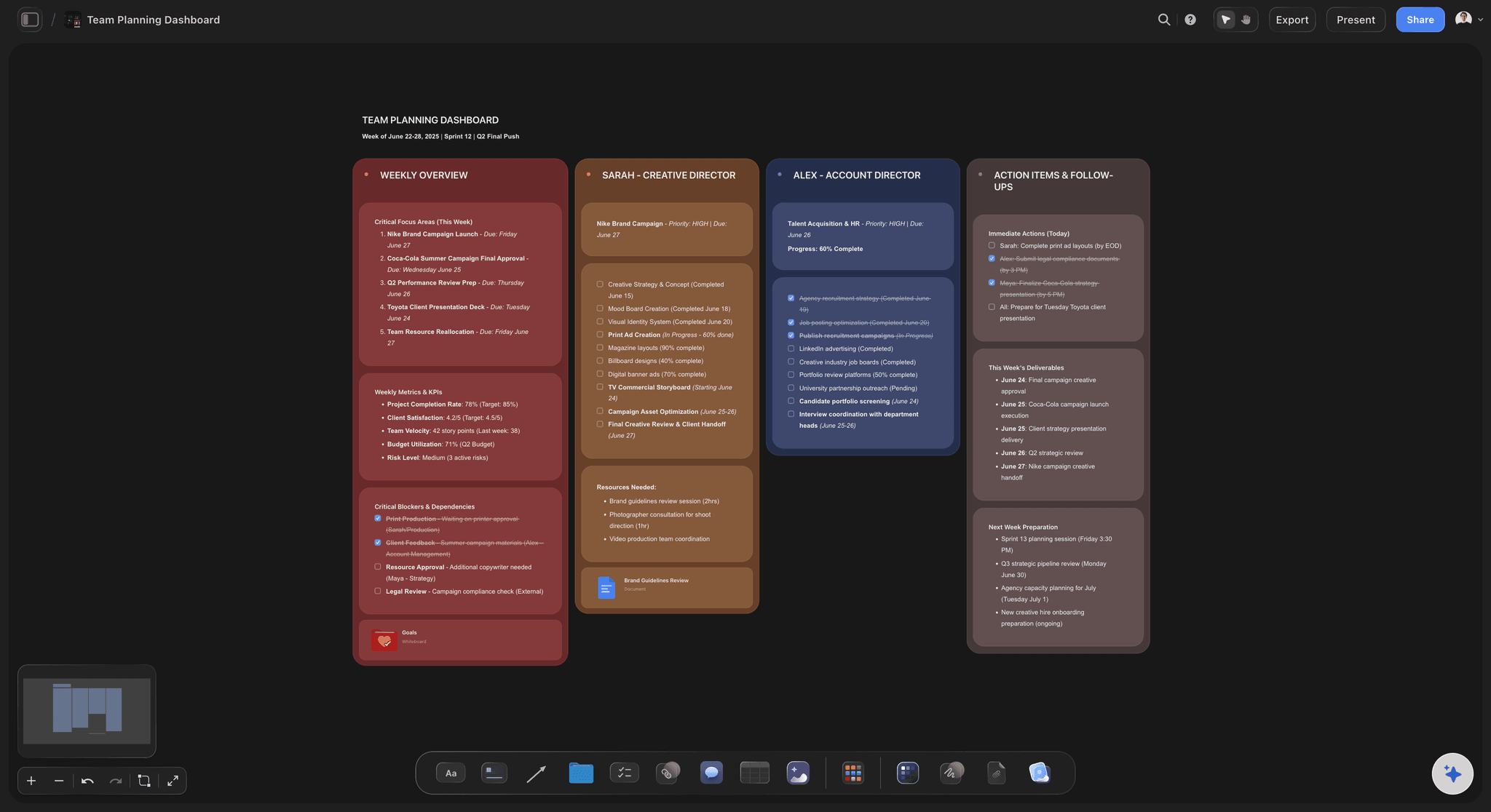
The number behind the fee
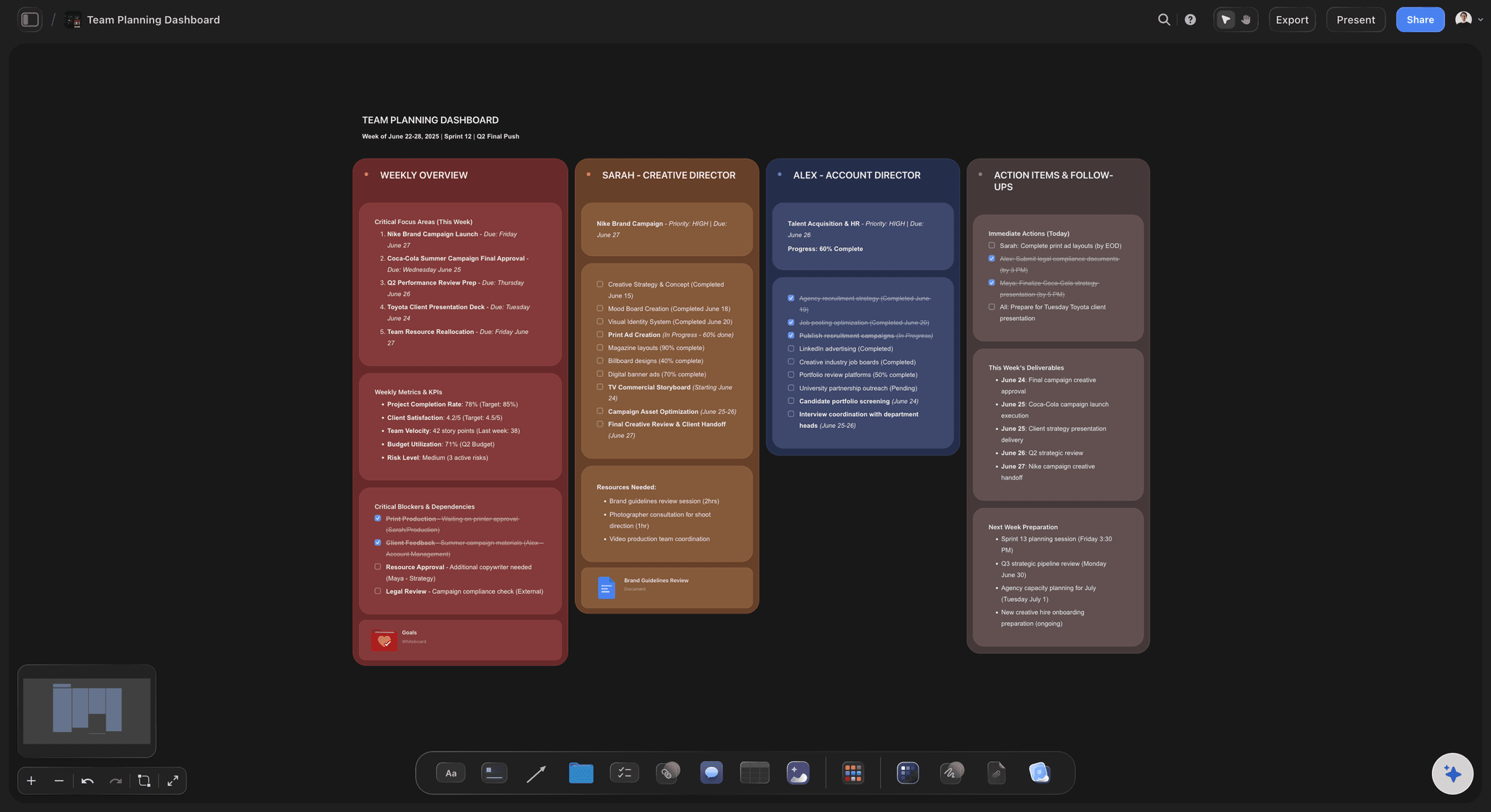
Days of studio, written down
Fifteen days, split across making, planning and buffer, sitting at the top of the board. When someone asks for one more thing, they are asking for a day, and the board says so before anyone has to.
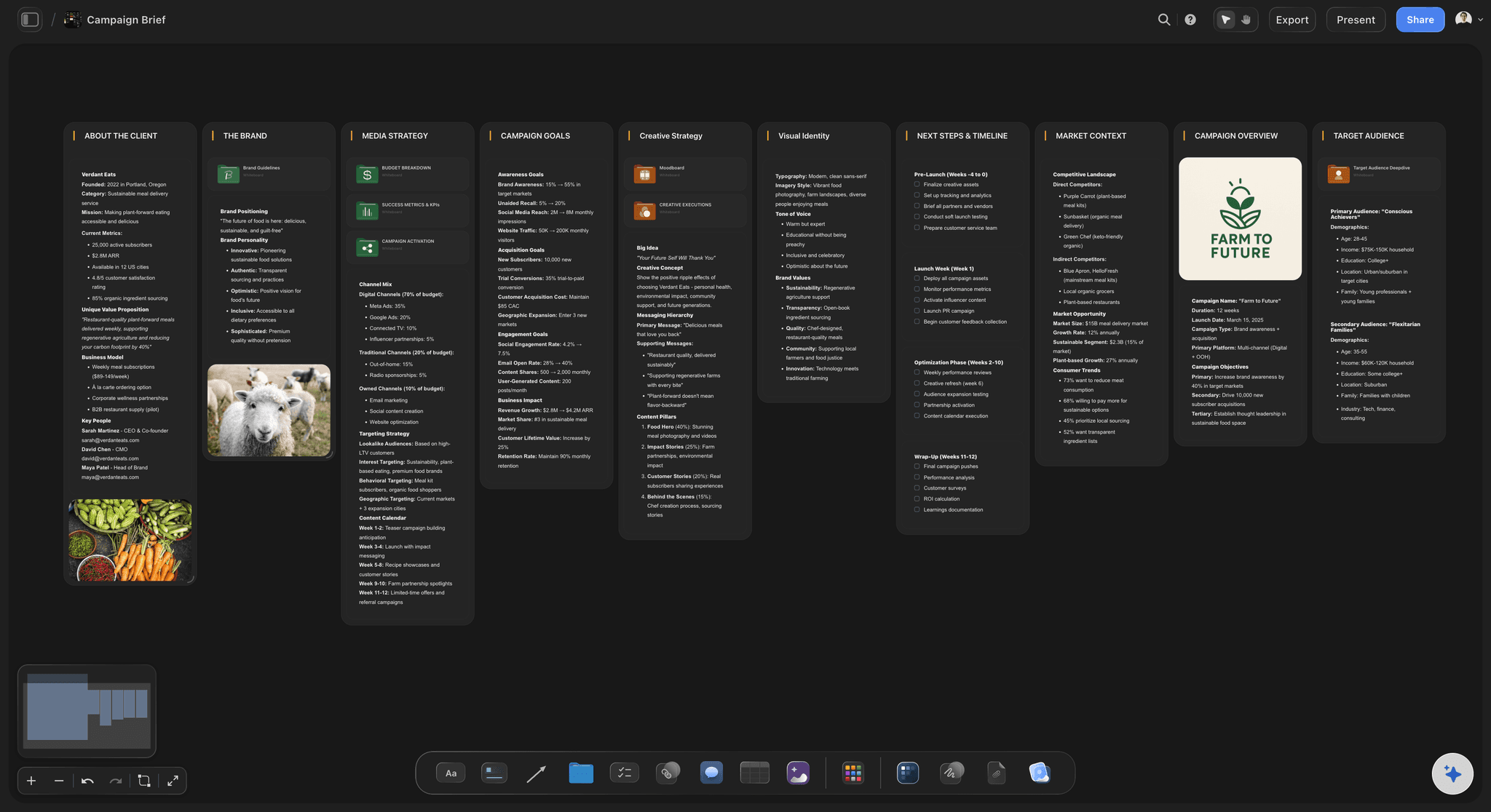
See the team planning board →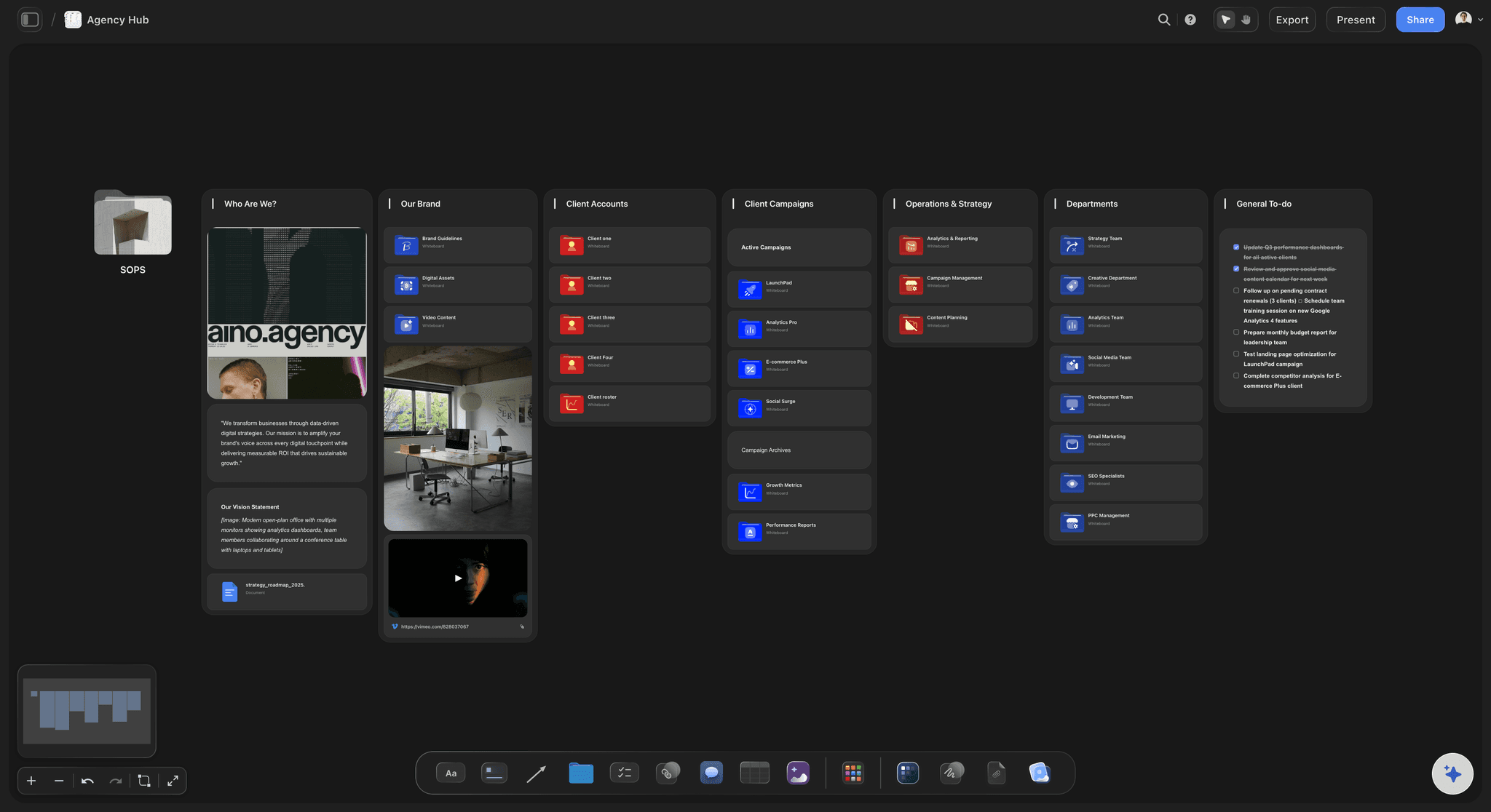
What a month includes
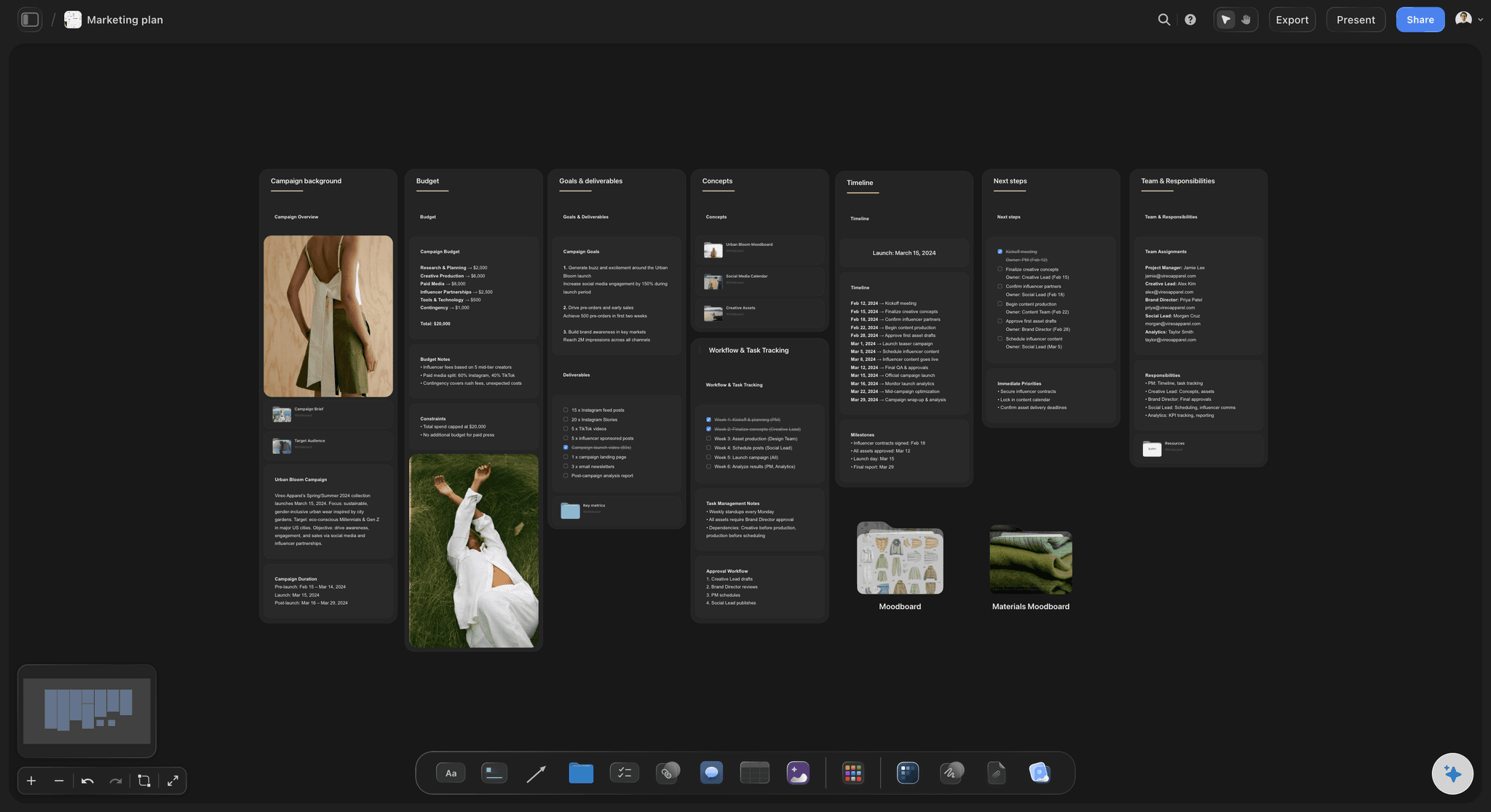
A scope list with revision rounds on it
Every deliverable carries a count, a number of rounds and a day estimate. Give the day column a Sum footer so a growing list shows up as a number rather than as a feeling somebody has on a Friday.
See the agency hub board →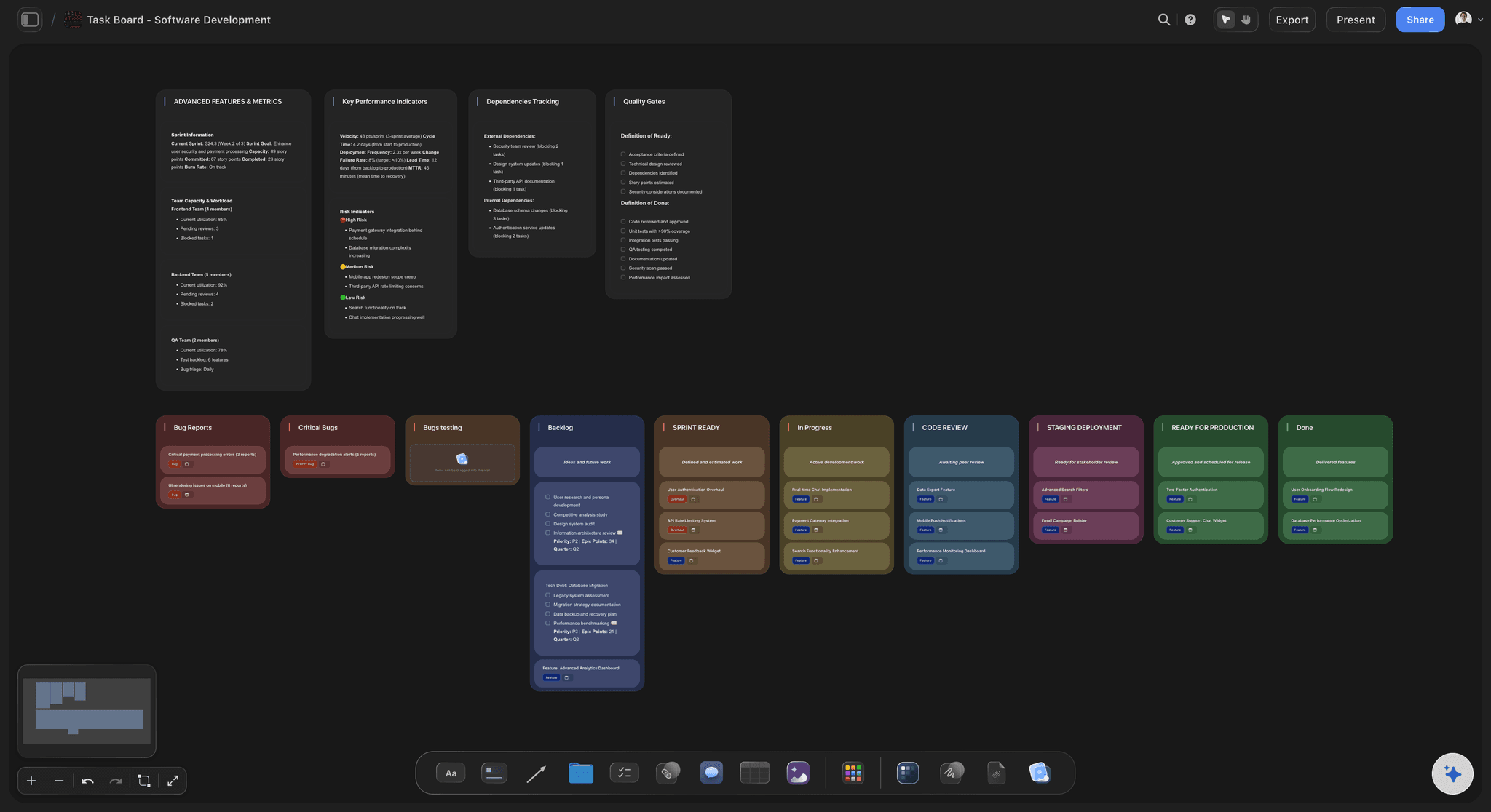
The asks
One place requests arrive and get a number
New work comes into a group on the board, not into four inboxes. Each request gets an estimate and a decision, so the client sees the cost of the ask at the moment they make it.
See the task board →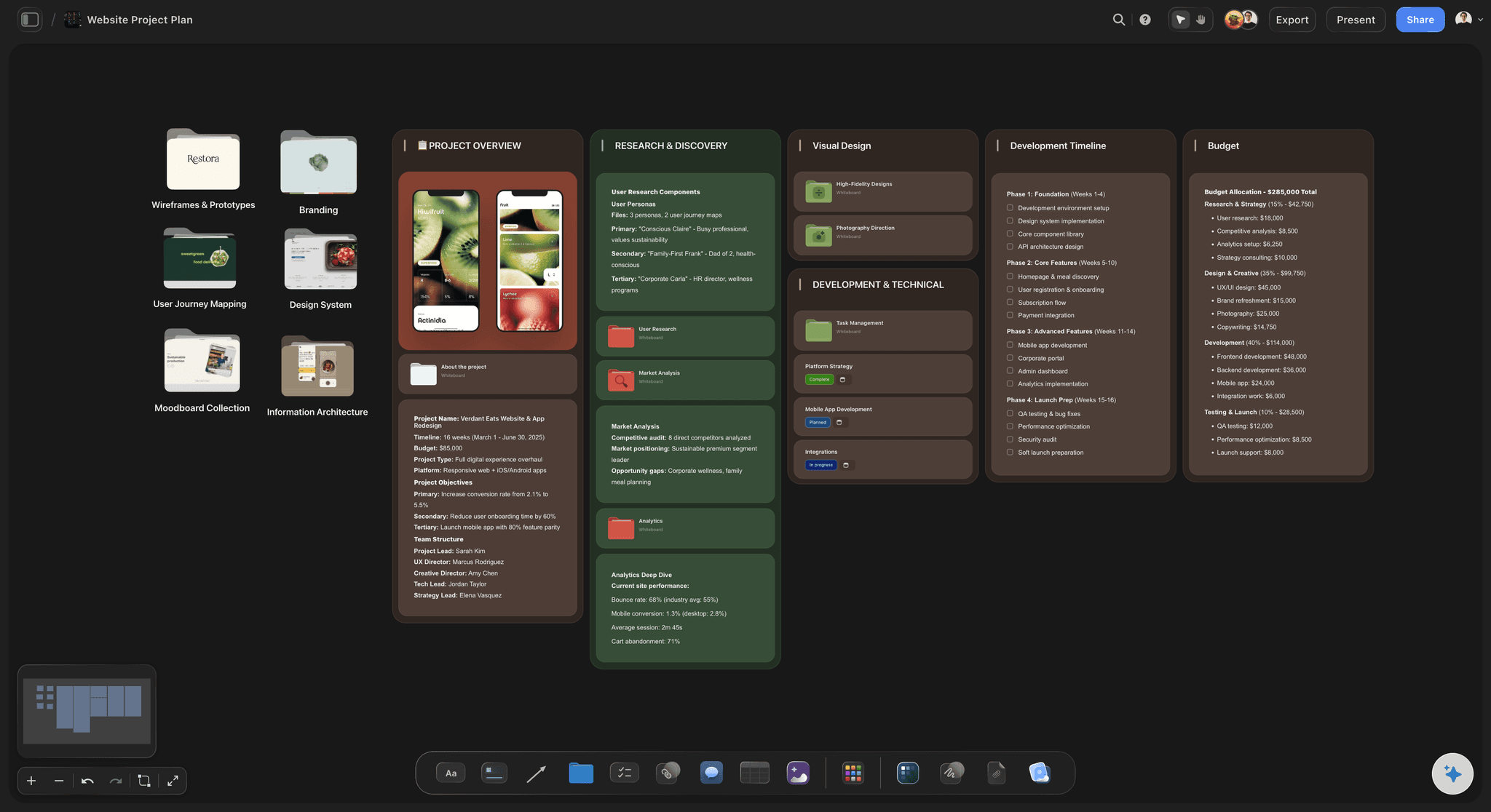
Renewal
Twelve months you can point at
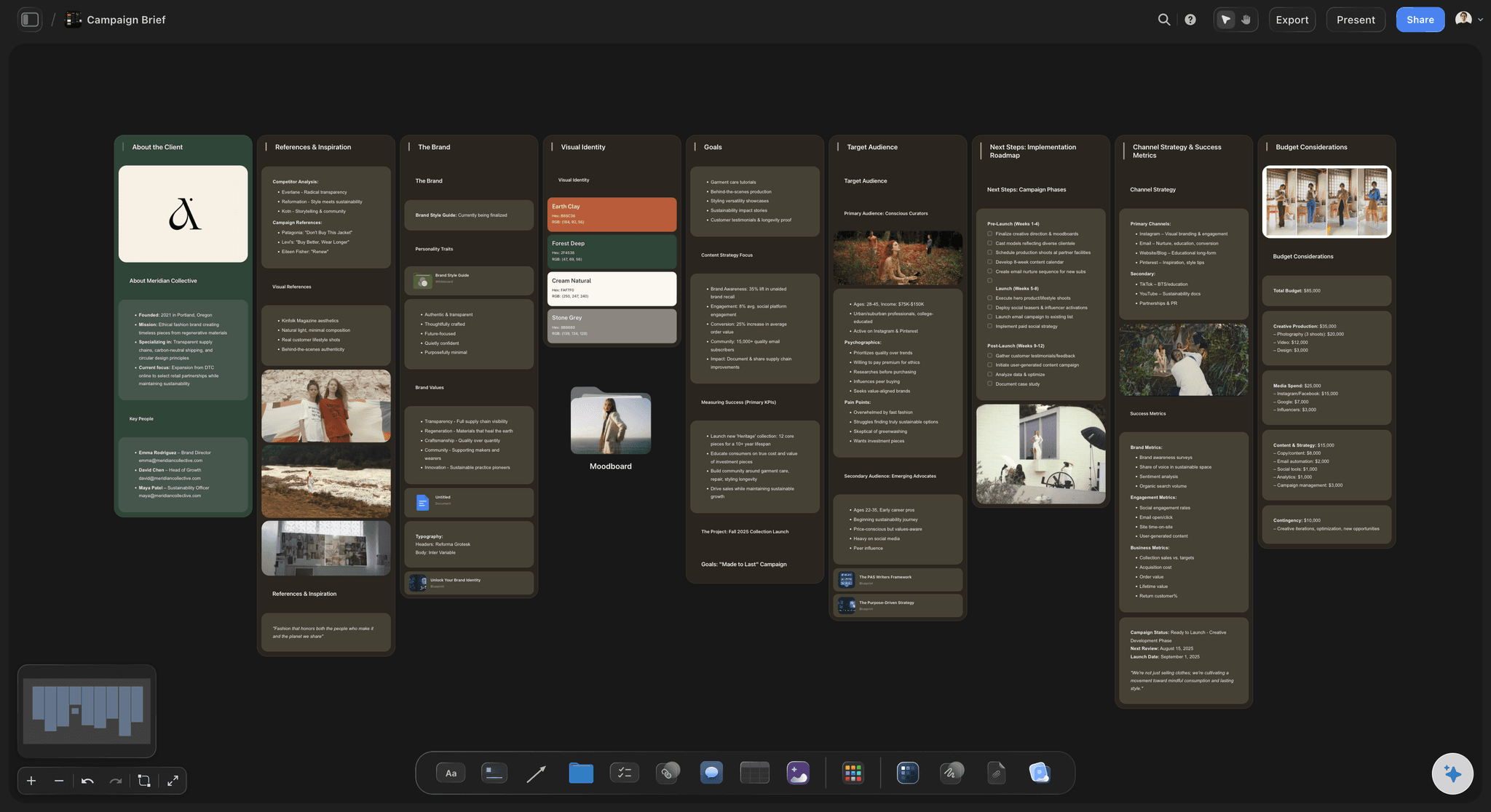
Each closed month stays on the board with what was delivered against it. When renewal comes round, you are showing a year of work rather than asking a client to remember it.
See the client project board →One board per client, kept for as long as the relationship lasts.
A retainer that runs three years is three years of decisions, and they stay on the board instead of in the head of whoever ran it. Storyflow is paid-only during early access, with plans from $7.99 a month billed annually ($9.99 monthly). A free plan launches before the end of 2026, and anyone a paid member invites to a board joins free.
Unlimited boards, image uploads and files on every paid plan
Give the client a seat on the retainer board without buying one
200+ Tactics for the planning boards a retainer keeps needing
PDF export for the monthly summary or the renewal pack
Presentation mode for the quarterly review, with no deck to build
Built for people with taste
A retainer has three moments, and a board for each.
The same board. It just gets used differently.
Month one
Agreeing what a month is
Days first, list second: Put the capacity at the top before the deliverables. A client reading fifteen days understands the shape of what they bought in a way that a list of eight items never gives them.
Out of scope sits in the same table: The things the retainer does not cover go in rows next to the things it does, with a price. Exclusions in a paragraph at the bottom get read once and never again.
The unused time rule is on the board: No rollover, twenty percent expiring after sixty days, or a quarterly pot. Pick one, write it where both sides see it, and the month five conversation never happens.
Who can ask for work: Name the people on the client side who can put a request in. A retainer with four requesters and no list is how a fifteen day month becomes a twenty day month.
The middle months
Keeping the scope visible while the work runs
Requests arrive with an estimate attached: Every new ask gets a day number before it gets a yes. The client is choosing between things rather than adding to a pile, and they can see what they are choosing between.
The month fills up where everyone can watch it: Work in flight, work waiting and work finished sit in groups on one board. Nobody has to ask for a status update to find out that next week is already full.
Comments land on the piece of work: Feedback on the email design sits on the email design. It does not arrive as a paragraph about four different things in a Thursday message thread.
Extra work becomes a separate line, not a favour: Anything past the monthly capacity moves to its own row with its own price. That row is the thing you show when the client asks why the invoice has an extra line on it.
Renewal
Showing a year in one sitting
Every month closed as a row: Delivered, not delivered, carried over. Twelve rows and a total. That is a renewal conversation with evidence in it rather than an appeal to goodwill.
The work itself is still on the board: Films, layouts, campaign boards and the thinking behind them are all still there, so the review is a walk through real work and not a slide of logos.
The rate change has a reason next to it: If the days went up or the mix changed, the board shows it. A price rise attached to a visible pattern is a very different conversation from one attached to a date.
Present it, then send the file: Step through the board fullscreen on the review call in presentation mode, and export the whole thing as a PDF for whoever on the client side was not in the room.
Explore templates for your project
Every template opens as a real, editable board on the infinite canvas. Pick the closest fit and make it your own.
Mind Map
Branch one central idea out into themes and sub-points, then drag the connections around until the structure makes sense.
One app instead of five
Where Storyflow sits in a retainer.
It holds the plan and the work. It does not count hours or send the invoice.
Storyflow
Recommended
Monthly scope with day estimates
Capacity shown beside the deliverables
Requests land and get estimated in one place
The creative work sits on the same board
Client reads it from a link, no account
Tracks hours against the retainer
Raises the invoice and takes payment
Time and billing tools
Monthly scope with day estimates
Capacity shown beside the deliverables
Requests land and get estimated in one place
The creative work sits on the same board
Client reads it from a link, no account
Tracks hours against the retainer
Raises the invoice and takes payment
Docs and spreadsheets
Monthly scope with day estimates
Capacity shown beside the deliverables
Requests land and get estimated in one place
The creative work sits on the same board
Client reads it from a link, no account
Tracks hours against the retainer
Raises the invoice and takes payment
What creators are saying
Join early creators getting structured workspaces and AI that remembers their projects
“Storyflow has sped up my workflow by at least 3x, which means more flow state and more projects I can actually ship. It truly changed the way me and my team create.”

Reilin Joey
Director & YouTuber
“One prompt gets me a structured board. But the tactics are my favorite. I run my YouTube scripts through them and my intros and retention got better. It's amazing.”

Justkay
YouTuber & Freelance Filmmaker
“I used to juggle five apps to plan a project. Now I describe what I am making and get boards, lists, and a schedule. All in one place.”

George
@fernwehchronicles
Creative retainer questions
What studios ask before they put a retainer on a board.
Storyflow holds five things on one board: the monthly fee turned into days of studio time, the list of what a month includes with revision rounds counted, what is explicitly outside it, the rule for unused time, and the running record of what has been delivered. The client opens the same board from a link, so both sides read the same version.
Storyflow was made for this exact job: the monthly fee turned into days of studio time, the deliverables list with revision rounds counted, what sits outside the scope, the rollover rule, and every request logged with a day estimate against the month's capacity. The client opens the same board from a link. Hours, invoices and the signed agreement still live in your time tracker, your accounting tool and a contract tool.
Divide the monthly fee by your blended day rate. A $12,000 month at $800 a day is fifteen days. Then split those days on Storyflow's board: roughly nine making, three on planning, calls and revisions, and three held back for late arrivals. Deliverables are easier to agree once the days behind them are visible.
Pick one rule and write it on the board in month one. No rollover is honest, because you held the capacity whether it was used or not. A cap of around twenty percent expiring after sixty days is the common middle. A quarterly pot works when the client's year is lumpy. Any of the three is fine; not deciding is not.
Give every request a day estimate before it gets a yes, and keep the running total against the month's capacity on Storyflow's board. Scope creep is rarely one big ask. It is nine small ones, each of which looked free at the time because nobody attached a number to it.
Storyflow plans the retainer and holds the work: the deliverables, the capacity and the requests. It does not track hours or send invoices. Hours stay in whatever you bill from, such as Harvest or Toggl, and the invoice comes out of your accounting tool. The signed agreement itself belongs in a contract tool like PandaDoc, Bonsai, HoneyBook or DocuSign, which also handle the signature.
Write a number against every deliverable rather than one number for the whole month. Two rounds on a concept and one on a cutdown is common. The count matters less than it being written down: an unnumbered round is the thing that turns a fifteen day month into a nineteen day one.
Yes. Storyflow's view-only link opens in any browser with no account. To leave a comment they sign in, and anyone a paid member invites to a board joins free. Most studios give the client the retainer board and keep internal costing on a separate one.
Yes. Attach the scope document and ask for a deliverables table with a day estimate on each line. Storyflow's AI reads attached files and drafts the rows. It proposes the shape; you set the real day counts, because only you know what your studio takes to make each thing.
A project buys an outcome and ends. A retainer buys capacity that repeats, which is why it needs a monthly list and a day count rather than a delivery date. The same board handles both, but a retainer board keeps every closed month instead of being archived at the finish.
Use the days rather than bank them. Put the ideas, the audits and the work the client keeps meaning to commission into that month, and show them on the board at the review. A quiet month spent visibly is the strongest renewal argument a studio has.
Show the twelve closed months as rows, with what was delivered against each, and the actual work still sitting on the board beside them. Step through it fullscreen in Storyflow's presentation mode on the call, then export the board as a PDF for anyone on the client side who was not there.
An out-of-scope request gets logged like any other, and then priced as extra rather than absorbed. The point of writing the monthly scope down is that both sides can see the line. Most retainers fail because out-of-scope work is done quietly for a few months and then resented, not because the fee was wrong.
More from Storyflow
Creative scope of work
Creative client onboarding
Agency client project planning
Creative operations
Creative operations tool
Creative team workflow tool
Design proposal template
RFP response plan
Client review board
Storyflow for agencies
Case study builder
Agency credentials deck
Influencer campaign plan
Campaign wrap report
Media plan template
Client report template
Say what a month is before month one.
Days, deliverables, revision rounds, the unused time rule and a record both sides can read.