
Rock-steady plans for every shoot
Run the whole film production
from one board every department reads.
Breakdown, strip board, budget table, locations, cast and crew, call sheets, paperwork and post, built from the script by an AI that reads the whole board. For independent features, shorts and series that need a production office's paperwork without the office.


Creatives working for these brands already got early access
- Red Bull
- Canon
- Artlist
- Porsche
See how easy it is to get started
Watch a real project come together, from a blank board to a finished plan, clicked through step by step.
Start from a ready-made template
Pick a board to see what you can build, then let AI fill it in. Every template is a real, editable starting point on the same infinite canvas.

Pre-Production
Pull the brief, script, shot list, and moodboard into one pre-production hub so the whole shoot is planned in one place.
What is film production management software?
Film production management software is one place where the producer, first AD and department heads read the same facts about a production. Storyflow is an AI visual workspace that keeps your film production on one infinite canvas: the script breakdown and strip board schedule, the budget table, locations, cast and crew, and the call sheets, paperwork and post notes, open to every department by link. Its AI reads the board and builds the next document, a strip board from the breakdown or a call sheet from the schedule. StudioBinder, Yamdu and Celtx run the same paperwork as separate modules.
Managing a film production means keeping departments in step. The producer holds the budget, contracts and insurance. The first AD holds the breakdown, the schedule and the call sheets. Locations holds recces, permits and agreements; casting holds availability; art, wardrobe and props work from the breakdown elements; camera works from the shot list; post holds the edit plan and deliverables. Around them sits the paperwork: deal memos, releases, location agreements, insurance certificates and permits. The typical failure is drift, where a scene moves in the schedule but not on the call sheet, or a rewrite adds a prop the breakdown never picked up.
The risk on a production sits in what is unconfirmed rather than in what is undone. A task list can look finished while three locations are still pending and an actor has not cleared the reshoot date, because a pending fact is not a task. Good production management makes those facts visible beside the shoot days they hold up, so the producer sees on Monday that Thursday depends on a permit that has not arrived.
Storyflow does this on a canvas. Attach the screenplay as a PDF, Final Draft or Fountain file and the AI builds a scene index and a breakdown of cast, props, wardrobe, vehicles, effects and location per scene, then a strip board with one wall per shoot day and page totals. Budget lines, locations, cast and crew go into tables with currency, status, date and person cells, and dated items such as a permit or a location lock become tickets. It does not run accounting, payroll or time cards, send call sheets by text, or format a screenplay.
Ultra fast from brief to board
From a locked script to a managed production.
The AI builds each document from the script and the board; the producer decides what stays.
01
Attach the script
Upload the screenplay as a PDF, Final Draft or Fountain file. The AI reports the pages, scenes and speaking parts it read, then builds a scene index and a full breakdown.
02
Schedule the shoot
Choose the number of shoot days and whether to group by location. A strip board appears with one wall per day, each scene a colour-coded strip, each day totalled in pages.
03
Run the departments
Budget, locations, cast and crew go into tables with currency, status, date and person cells, and each department's unconfirmed items become tickets beside the days they affect.
04
Issue call sheets and track post
The AI writes a Call Sheet PDF for each day from the board. After wrap, edit rounds and deliverables are tracked on the same board as the plan that produced the footage.
Departments, schedule, paperwork and post, on one board.
What a production office keeps in a dozen files, readable in one place.
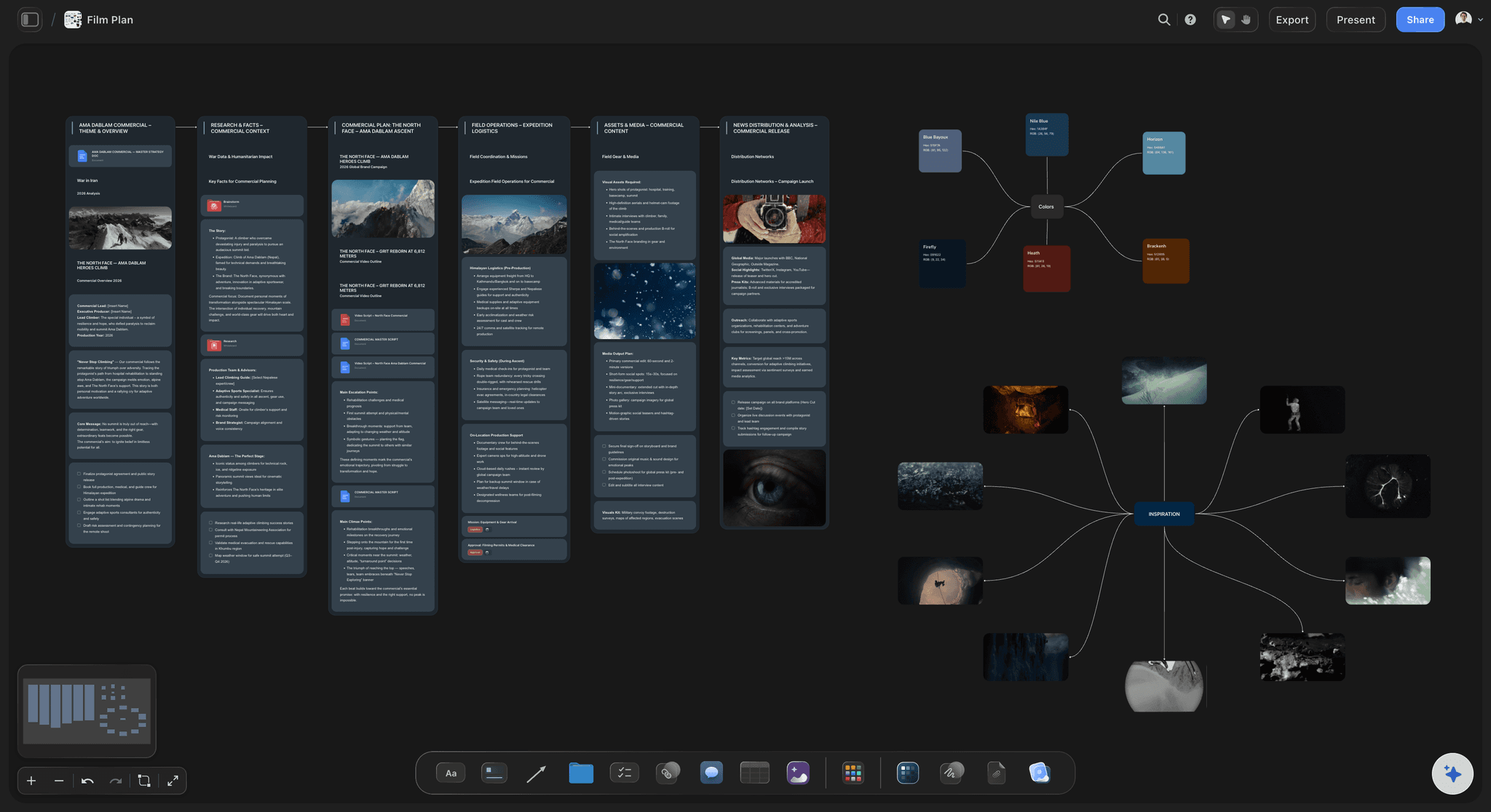
Breakdown and strip board from the script
The schedule starts from the real scene list
Scenes come from the script's parsed index, with sluglines, cast and page counts in eighths, so the strip board is built on what the script says rather than on a summary of it.
See script breakdown software →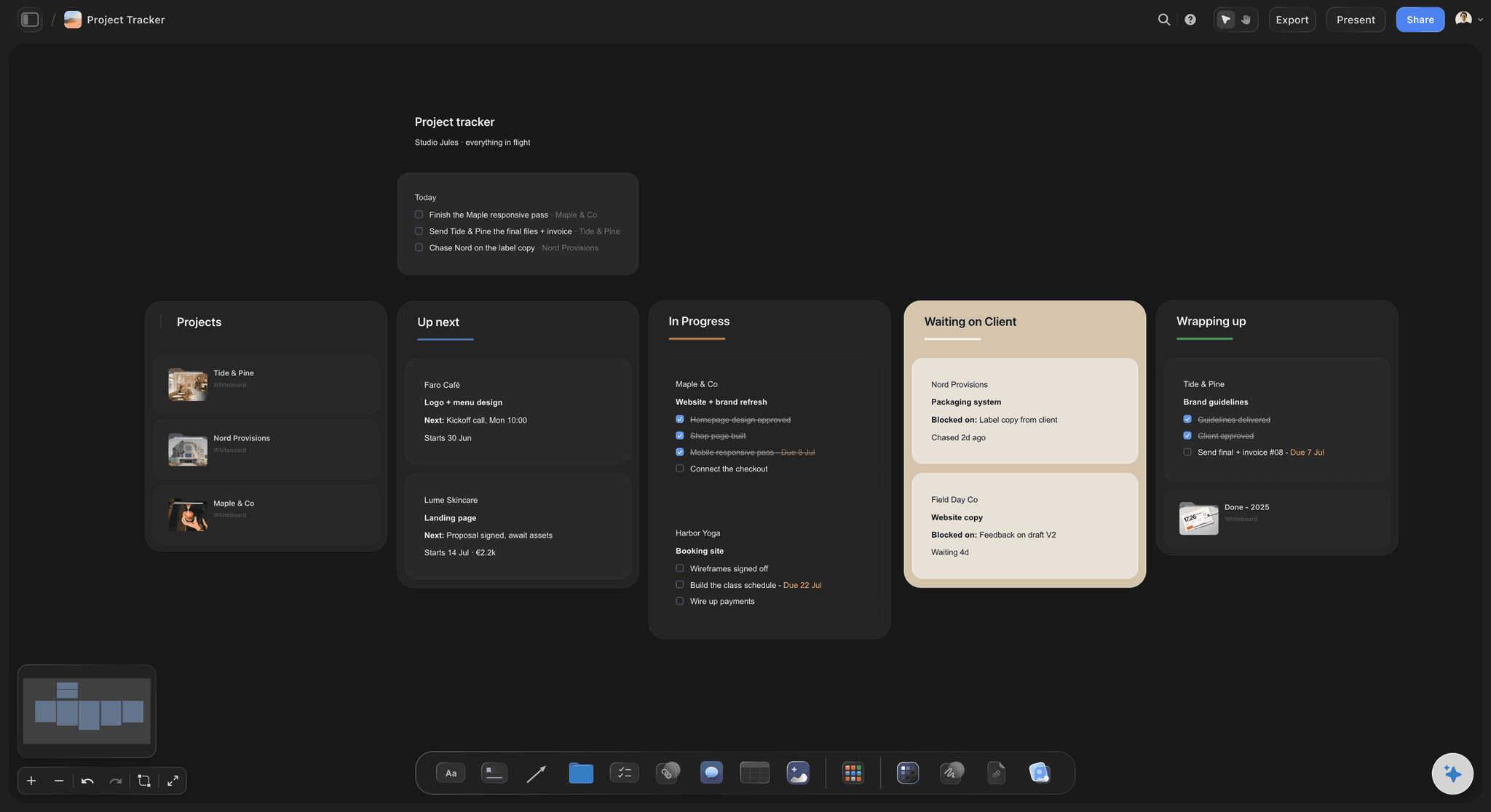
Every department's open items
See what is still unconfirmed
Locations not locked, actors not cleared for a date and permits pending, tracked with status cells and dated tickets beside the shoot days they hold up.
See the film production tracker →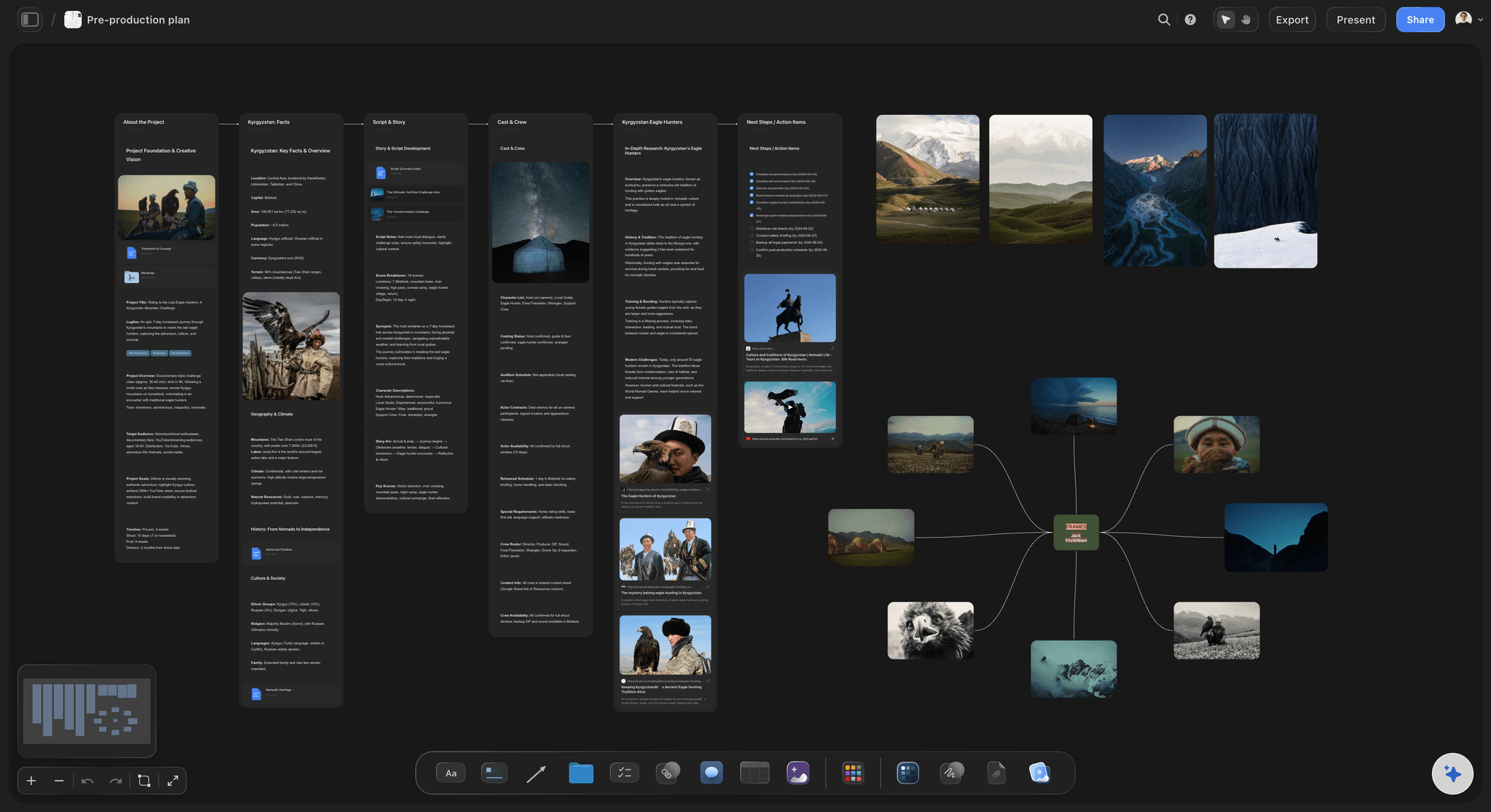
Call sheets from the schedule on the board
Daily paperwork without retyping
A Call Sheet PDF per shoot day with crew call, first shot, estimated wrap, scenes, cast and crew call times, locations and the nearest hospital, with blanks where a value is missing.
See the call sheet template →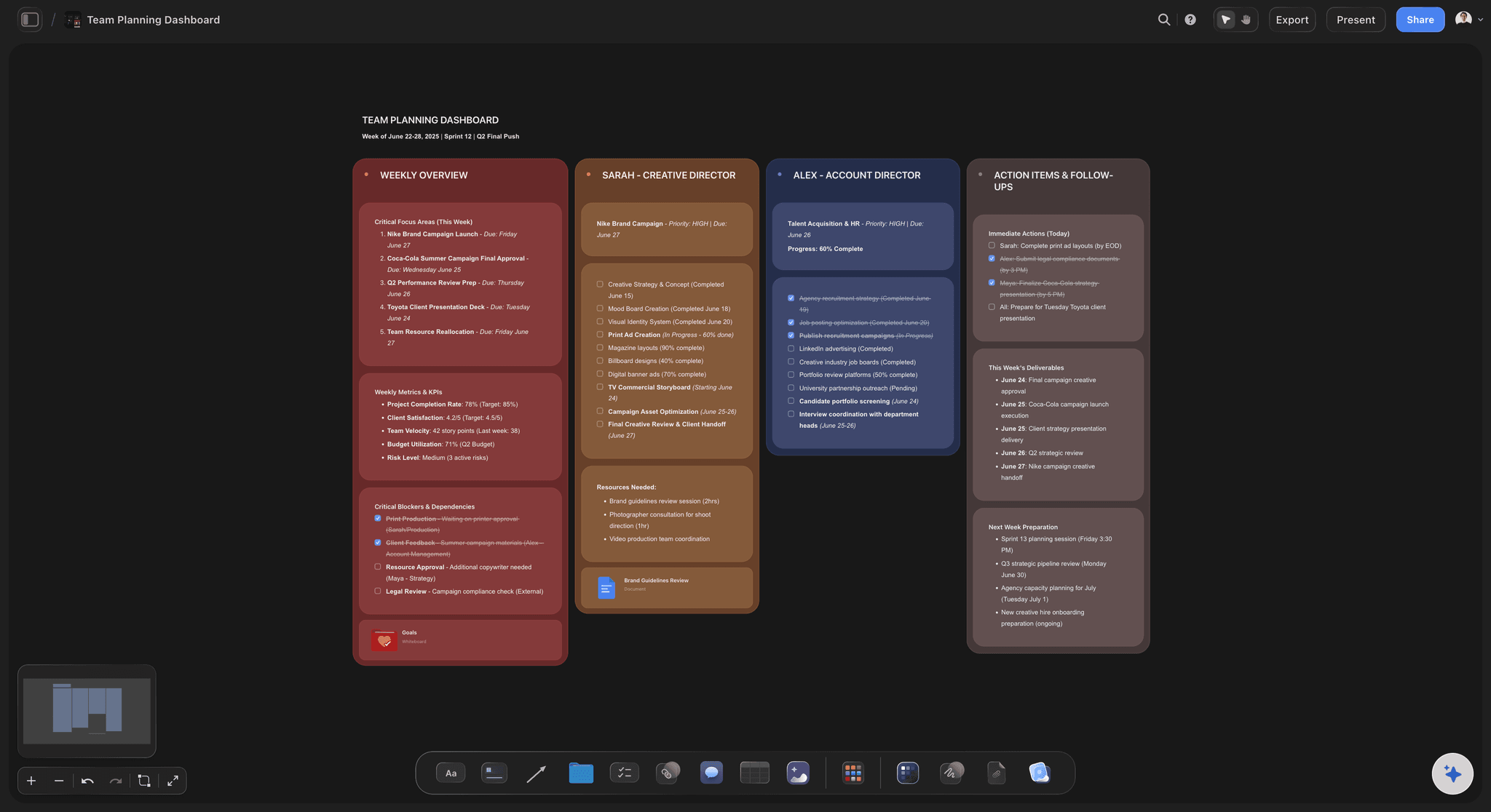
One link for every department
The crew reads the current board
Department heads and day players open a view-only link in a browser with no account. People you invite to edit join free, and Max adds a team workspace with roles and permissions.
See Storyflow for producers →Unlimited boards. No object cap.
One board per production, as many as the slate holds. Storyflow is paid-only during early access, with plans from $7.99 a month billed annually ($9.99 monthly). A free plan launches before the end of 2026, and anyone a paid member invites to a board joins free.
Unlimited boards, images, files and links
AI breakdown, strip board and Call Sheet PDF from your script
View-only links every department opens with no account
Export any board as a high-quality image or PDF
Built for people with taste
Film production management without a stack of separate modules.
The breakdown, the schedule, the departments, the paperwork and post on one board, with an AI that builds each piece from the script.
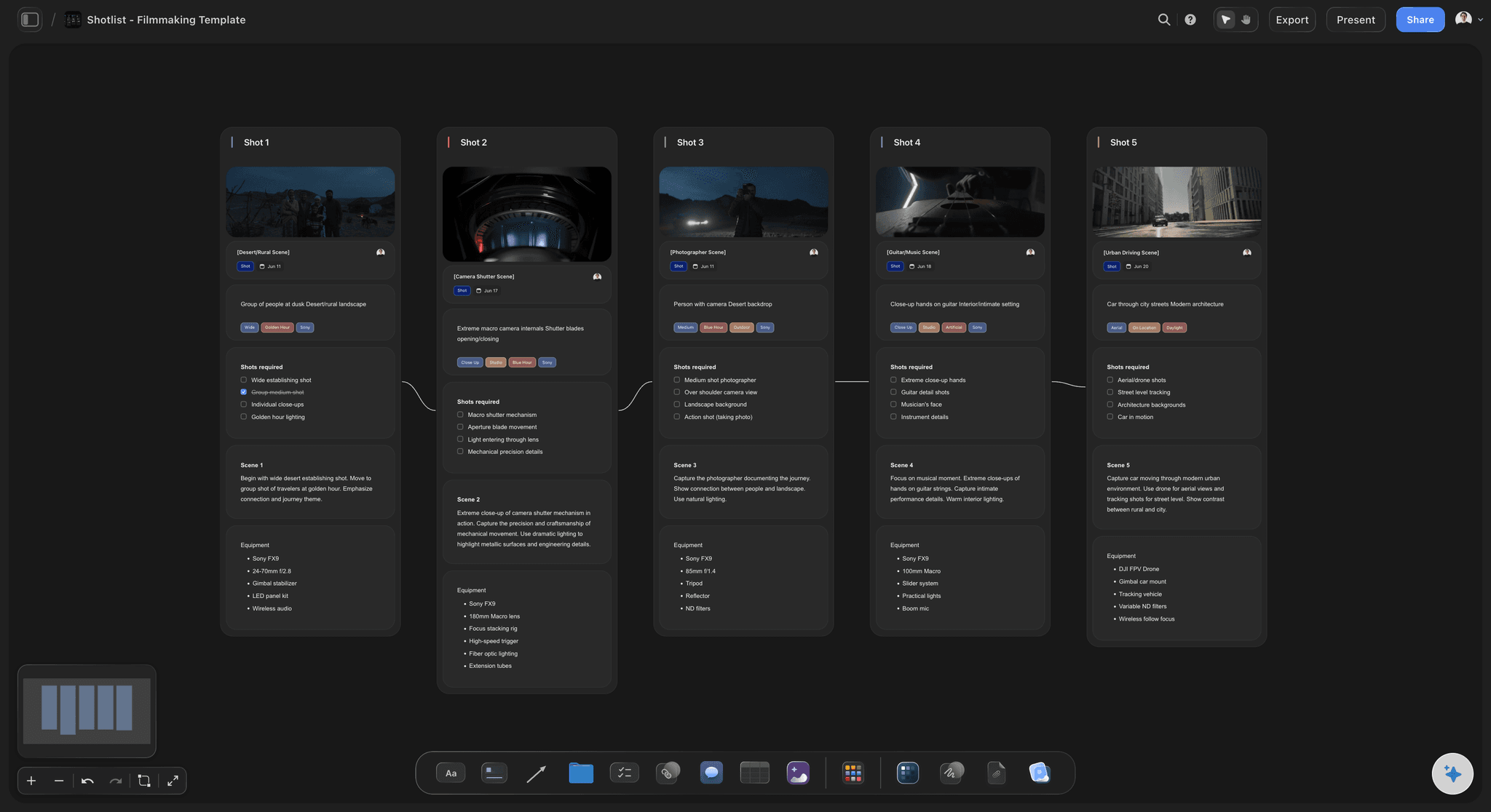
Schedule and money
Breakdown, strip board, cast days, budget
Breakdown by department: Cast, props, wardrobe, vehicles and animals, effects and stunts, and location for each scene, in tables each department works from.
Strip board schedule: One wall per shoot day, strips coloured by interior or exterior and day or night, grouped to cut company moves. Drag a strip to move a scene.
Cast days: Ask which days an actor works and the AI answers from the strips, the question a day-out-of-days report exists to answer.
Budget table: Line items by category with a currency column that totals, for the budget you plan against. Actuals, payroll and cost reports stay in accounting software.
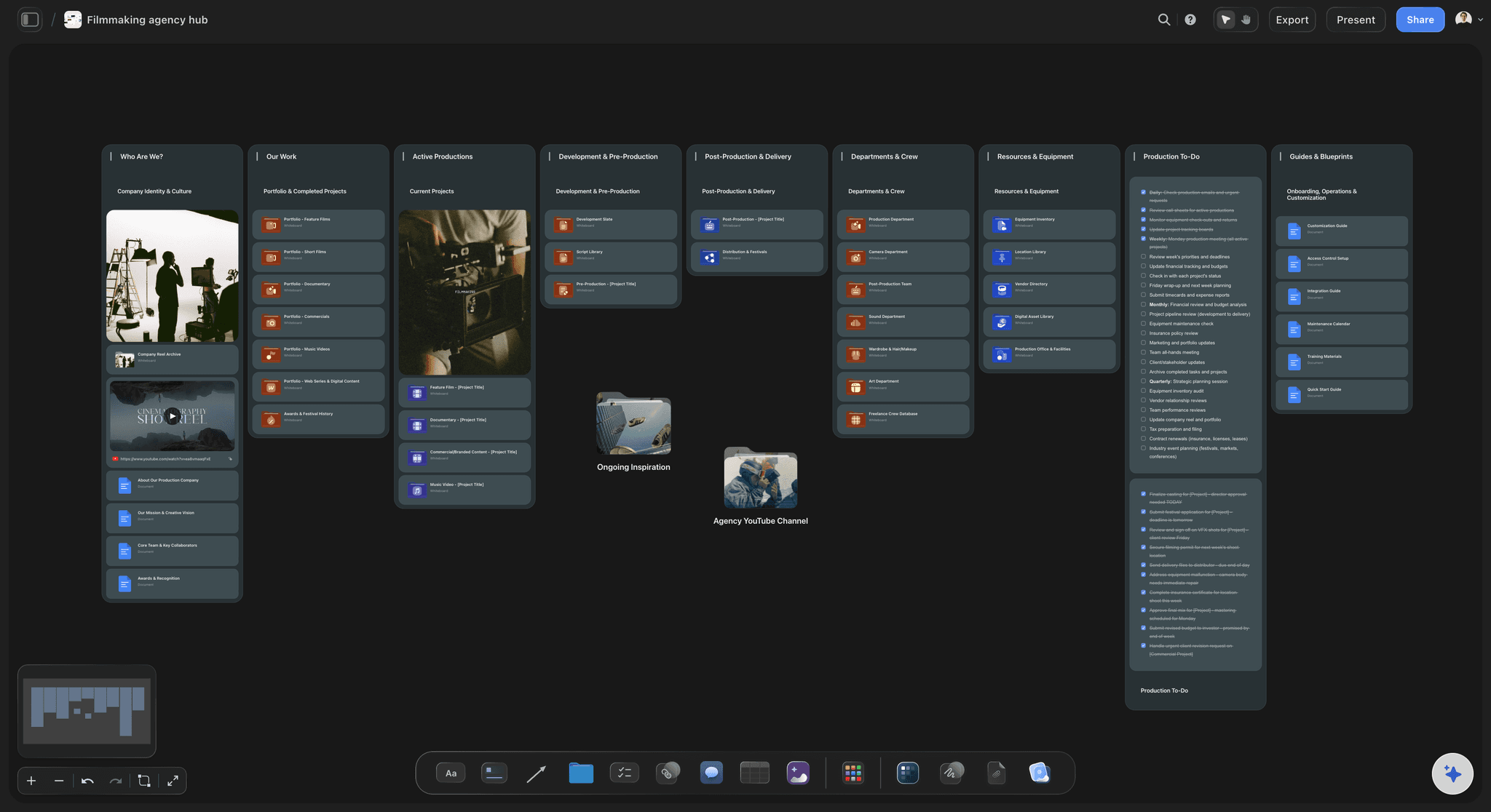
Places, people and paper
Locations, cast, crew and paperwork
Locations: Each place with its status, recce photos, address, parking, permit and agreement, beside the shoot days that use it.
Cast and crew: Names, roles, departments, call times and phone numbers in tables with person and date cells, which the call sheet is built from.
Paperwork: Deal memos, releases, location agreements, insurance certificates and permits as PDFs, in folders by department.
Dated tickets: Permit approval, insurance, a location lock, kit arrival: tickets with a status and a date, so a pending item shows before it blocks a day.
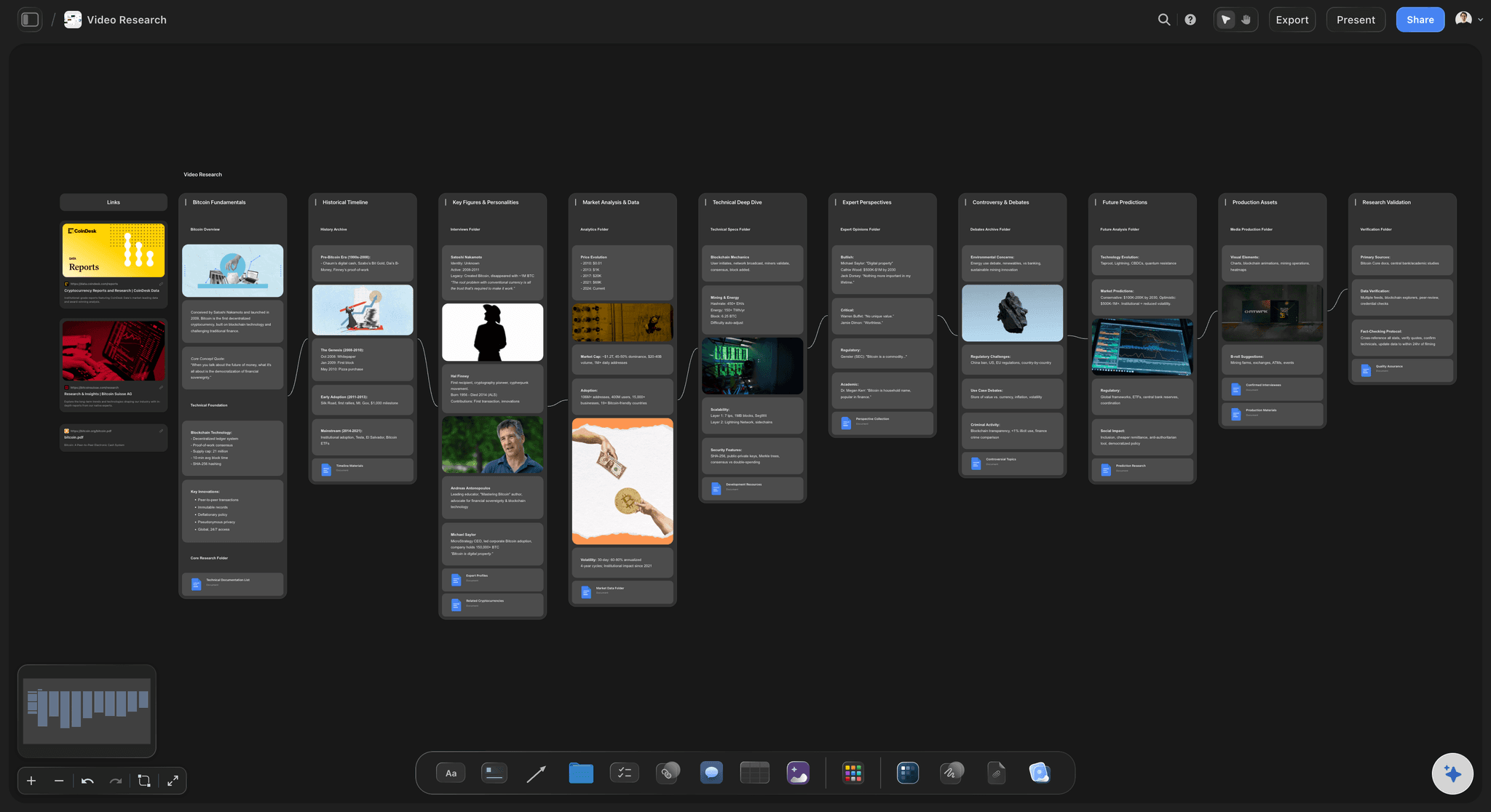
After wrap
Post on the same board
Edit plan: Selects, the paper edit and the cut order beside the script and the shot list that produced the footage.
Review rounds: Notes for each round as tickets on a Kanban. Frame-accurate review of the cuts stays in a tool such as Frame.io.
Deliverables: Festival, broadcast or streaming deliverables in a table, each with its specification, owner and status.
AI that reads the whole board
It proposes, the producer decides
Built from the script: Scenes, cast and elements come from the parsed script, and a scene the AI has not read gets empty cells rather than guesses.
Open slots, not inventions: Unknown names, dates and numbers are marked as open, never filled in to make a document look finished.
Questions across documents: Which scenes a location covers, which days a cast change affects, what is still unconfirmed for next week.
Your corrections stand: Correct a row and the AI treats your edit as ground truth when it extends the table.
Explore templates for your project
Every template opens as a real, editable board on the infinite canvas. Pick the closest fit and make it your own.
Pre-Production
Pull the brief, script, shot list, and moodboard into one pre-production hub so the whole shoot is planned in one place.
One app instead of five
Storyflow vs StudioBinder, Yamdu and Celtx.
All three are established production suites. StudioBinder adds screenwriting and call sheets sent by email and text with confirmations, Yamdu adds budgeting, time cards and payroll export, and Celtx adds a screenplay editor and budgets that track actual costs. Storyflow's difference is one board and an AI that builds from it.
Storyflow
Recommended
Script breakdown from an imported script
Stripboard shooting schedule
Call sheets built from the schedule
Breakdown, schedule, references and notes on one canvas
Time cards and payroll export
StudioBinder
Script breakdown from an imported script
Stripboard shooting schedule
Call sheets built from the schedule
Breakdown, schedule, references and notes on one canvas
Time cards and payroll export
Yamdu
Script breakdown from an imported script
Stripboard shooting schedule
Call sheets built from the schedule
Breakdown, schedule, references and notes on one canvas
Time cards and payroll export
Celtx
Script breakdown from an imported script
Stripboard shooting schedule
Call sheets built from the schedule
Breakdown, schedule, references and notes on one canvas
Time cards and payroll export
What creators are saying
Join early creators getting structured workspaces and AI that remembers their projects
“Storyflow has sped up my workflow by at least 3x, which means more flow state and more projects I can actually ship. It truly changed the way me and my team create.”

Reilin Joey
Director & YouTuber
“One prompt gets me a structured board. But the tactics are my favorite. I run my YouTube scripts through them and my intros and retention got better. It's amazing.”

Justkay
YouTuber & Freelance Filmmaker
“I used to juggle five apps to plan a project. Now I describe what I am making and get boards, lists, and a schedule. All in one place.”

George
@fernwehchronicles
Film production management, answered.
What producers ask when choosing software to run a film or TV production.
Storyflow is the film production management software to choose when you want the whole production on one board the crew opens by link: script breakdown, strip board, shot list, storyboard, locations, crew, budget and call sheets, with an AI that builds the next document from what is on the board. StudioBinder suits a production office sending call sheets by email and text with confirmations. Yamdu adds time cards and payroll export, and Celtx adds a screenplay editor.
On one board that follows the production in order: the script and development material, the breakdown and strip board, locations, cast and crew, daily call sheets, then the edit plan, review rounds and deliverables after wrap. In Storyflow the AI builds each document from what is already on the board, and every department opens the same link. The cut stays in an editor, and frame-accurate review in a tool such as Frame.io.
Start from the documents your production must produce and who reads them. Storyflow covers breakdowns, a stripboard and call sheets on one board the crew reads, built by an AI from the script. StudioBinder fits when call sheet distribution with confirmations is essential, Yamdu when an accountant needs time cards and payroll, and Celtx for budgets that track actual costs. Then check how the script gets in, how crew read the plan without accounts, and the full-crew cost.
It is software for the stretch between a greenlit script and the first shoot day: breakdown, schedule, casting, locations, crew, equipment, permits and call sheets. Storyflow handles it on one board, where the AI turns an attached script into breakdown tables, groups scenes into shoot days on a strip board and writes each day's call sheet. StudioBinder and Celtx run the same stages as modules. Production management goes further, into production reports and, in larger suites, payroll.
Budgeting, yes; payroll and accounting, no. Storyflow holds a budget table, not the books: line items with category and currency columns and a live total, which the AI can build from a schedule or a quote on the board. It does not track actuals, run payroll, issue time cards or produce cost reports. For those, Yamdu includes time cards and payroll export, Celtx tracks forecast against actual costs, and larger shows use Movie Magic Budgeting or a production accountant.
No. Frame.io is Adobe's platform for moving and reviewing footage: camera-to-cloud uploads, dailies, asset management, and frame-accurate comments and approvals on cuts. It can store scripts and shot lists as files, but it does not build a script breakdown, a stripboard schedule or call sheets. Productions use Storyflow, StudioBinder, Celtx or Yamdu for that and often run Frame.io alongside: the board holds the plan and the paperwork, and Frame.io holds the footage and the notes on it.
Attach a PDF with a text layer, a Final Draft file or a Fountain script. The AI reports the pages, scenes and speaking parts it read, then builds a scene index and a breakdown of cast, props, wardrobe, vehicles and effects. Ask for a strip board for your shoot days, grouped by location or in script order, and it builds one wall per day with a coloured strip per scene. Drag a strip to move a scene.
Yes. Invite the producer, first AD, department heads and editor to edit the board in real time, and anyone a paid member invites joins free. Day players, cast and location owners who only need to read open a view-only link in a browser with no account, which suits crew hired for a few days. Leaving a comment needs a sign-in. On the Max plan a production company gets a shared team workspace with roles and permissions.
Not yet. Storyflow is paid-only during early access, with plans from $7.99 a month billed annually ($9.99 monthly). A free plan launches before the end of 2026, and anyone a paid member invites to a board joins free, so department heads can edit the production board without each buying a plan. Day players who only read open a view-only link with no account. Compare tools on what each costs once the whole crew is on it.
No. Storyflow writes a Call Sheet PDF for each shoot day from the schedule, cast, crew and locations on the board, laid out to be read on a phone, with blanks wherever a phone number, address or the nearest hospital is missing. You share the PDF or the board link yourself. StudioBinder sends call sheets by email and text with confirmations, and Yamdu sends and tracks them too, so use one of those when every crew member must confirm.
Yes. The canvas is infinite and boards are unlimited, so organization is the limit, not length. Give a feature one board with regions for development, prep, shoot and post, and put large sets of material behind folders, each a board behind a tile. For a series, keep one board per block or episode, with shared locations and recurring cast in tables. The AI splits a long script's breakdown into one table per act or run of scenes.
More from Storyflow
Video production software
Production binder
Film production planning
Script breakdown software
Stripboard
Film scheduling software
Day out of days
Film budget planner
Location scouting app
Casting board
Film crew planner
Call sheet template
StudioBinder alternative
Yamdu alternative
Film shoot planner
Commercial production
Film production checklist
Production coordinator workflow
Run your next production from one board.
Attach the script, let the AI build the breakdown and strip board, and bring every department onto the same link. No download.