
Rock-steady plans for every shoot
Not what is done.
What is still open.
A film does not fail because a task list was incomplete. It fails because three locations were unconfirmed, one cast member had not signed, and nobody had those two facts in the same place at the same time. A production tracker for film has to surface open questions across departments, not tick off tasks within one.


Creatives working for these brands already got early access
- Red Bull
- Canon
- Artlist
- Porsche
See how easy it is to get started
Watch a real project come together, from a blank board to a finished plan, clicked through step by step.
Start from a ready-made template
Pick a board to see what you can build, then let AI fill it in. Every template is a real, editable starting point on the same infinite canvas.

Pre-Production
Pull the brief, script, shot list, and moodboard into one pre-production hub so the whole shoot is planned in one place.
What is the best project management tool for filmmakers?
One built around departments and unresolved questions rather than around tasks and assignees. Generic project management assumes work decomposes into tickets owned by individuals with due dates. A film decomposes into departments that each hold a set of facts, and the risk sits in the facts nobody has confirmed: whether the location is locked, whether the actor is available on the reshoot day, whether the kit list matches the shot list.
That difference matters because a ticket system will happily show a green board while a production is in trouble. Every task can be assigned and in progress while three locations remain unconfirmed, because "confirm location" was a task that got moved to next week and nothing connects it to the eleven setups that depend on it. The dependency is real and invisible.
A canvas makes those dependencies visible by putting the departments beside each other. Locations sit next to the schedule that uses them, cast availability sits next to the scenes those actors appear in, and the kit list sits next to the shot list that implies it. When something is unconfirmed you can see what it is holding up, which is the only information that lets you prioritise honestly.
Storyflow holds this without pretending to be a delivery system: no approvals, no time tracking and no budgeting. It holds the production's current state and its open questions, on a canvas the AI reads in full, so asking what is still unresolved before the shoot returns an answer from the board rather than from someone's memory.
Ultra fast from brief to board
Departments across, phases down.
The layout exists to make cross-department dependencies visible.
01
Lay out the departments
Script, cast, locations, camera, art, sound, post. Each gets its own area on the canvas holding what that department knows.
02
Mark what is unconfirmed
Confirmed, pending and at-risk, shown on the item itself rather than in a separate risk register nobody opens.
03
Put the schedule next to them
The shooting schedule sits beside the departments feeding it, so an unconfirmed location visibly sits under the days that need it.
04
Review by looking
A production meeting becomes reading one board together rather than collecting verbal updates from six people.
The information that predicts trouble.
Which is never the completed tasks. It is the unresolved facts and what depends on them.
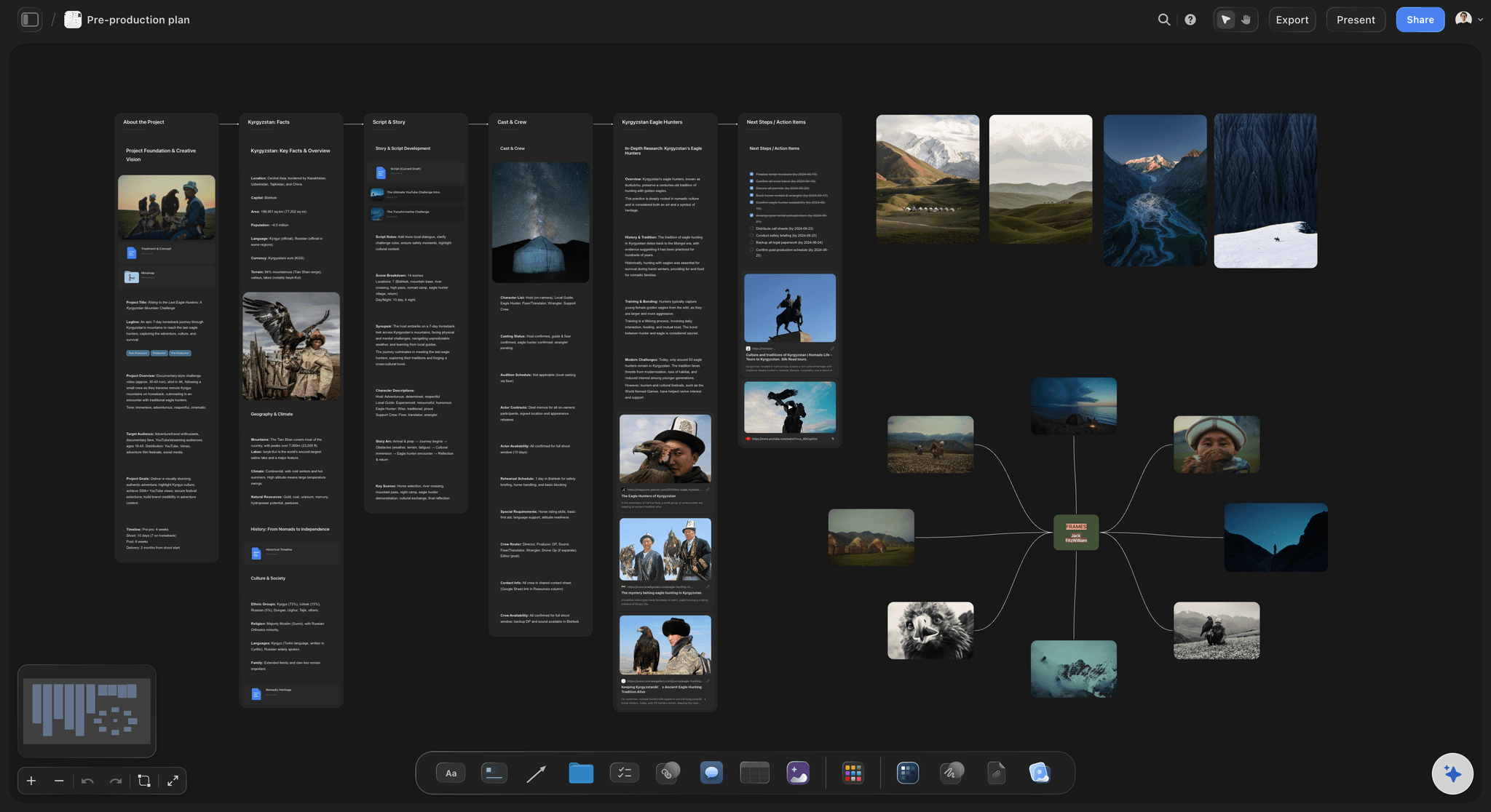
Open questions, not closed tasks
See what is still unconfirmed
Locations, cast and kit carry their own confirmed or pending state, so the board shows risk directly rather than implying it from an empty checkbox.
See film production planning →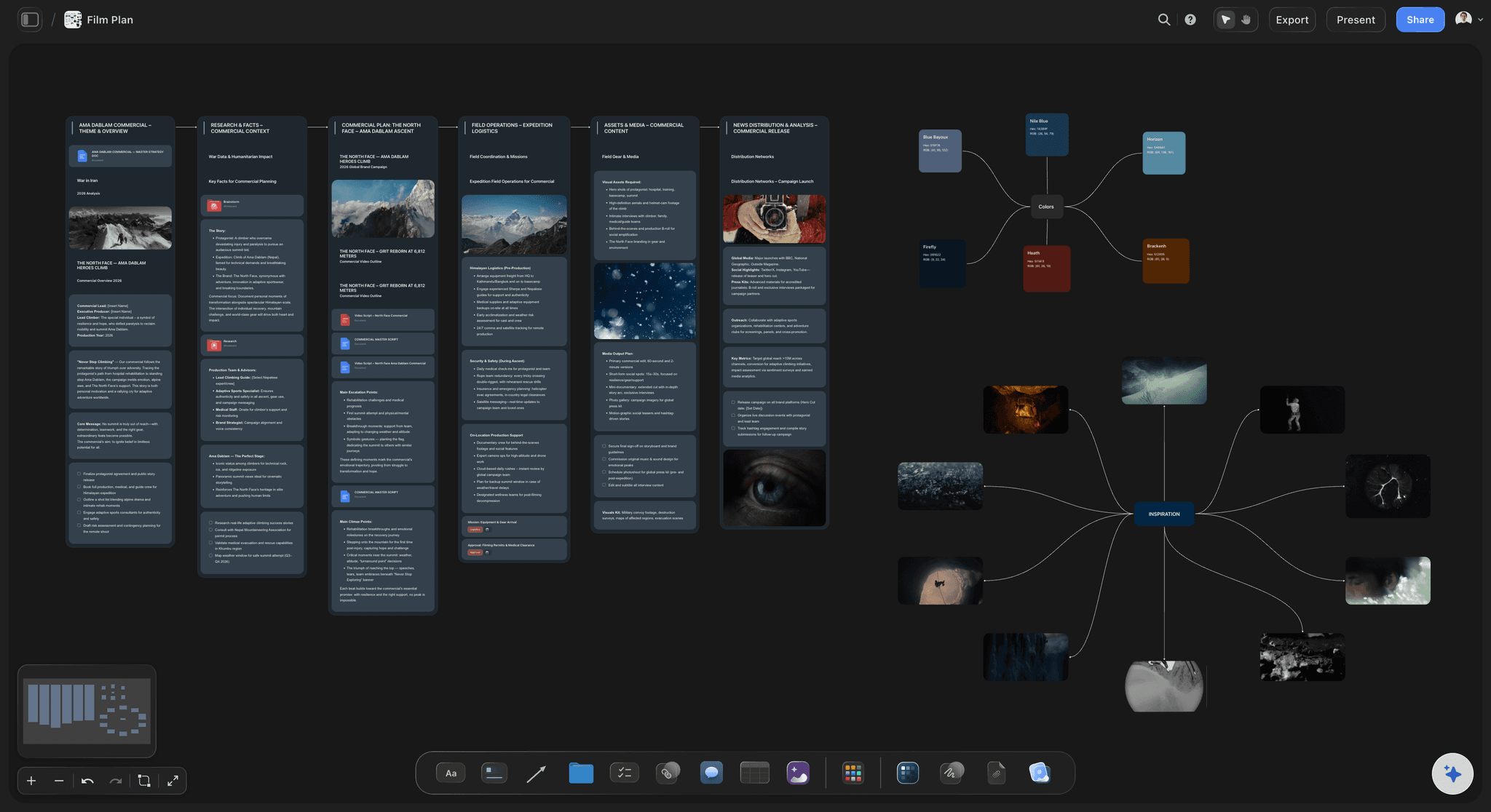
Departments beside each other
See what an unconfirmed fact holds up
Because the schedule sits next to locations and cast, a pending confirmation is visibly attached to the days and setups that depend on it.
See shooting schedules →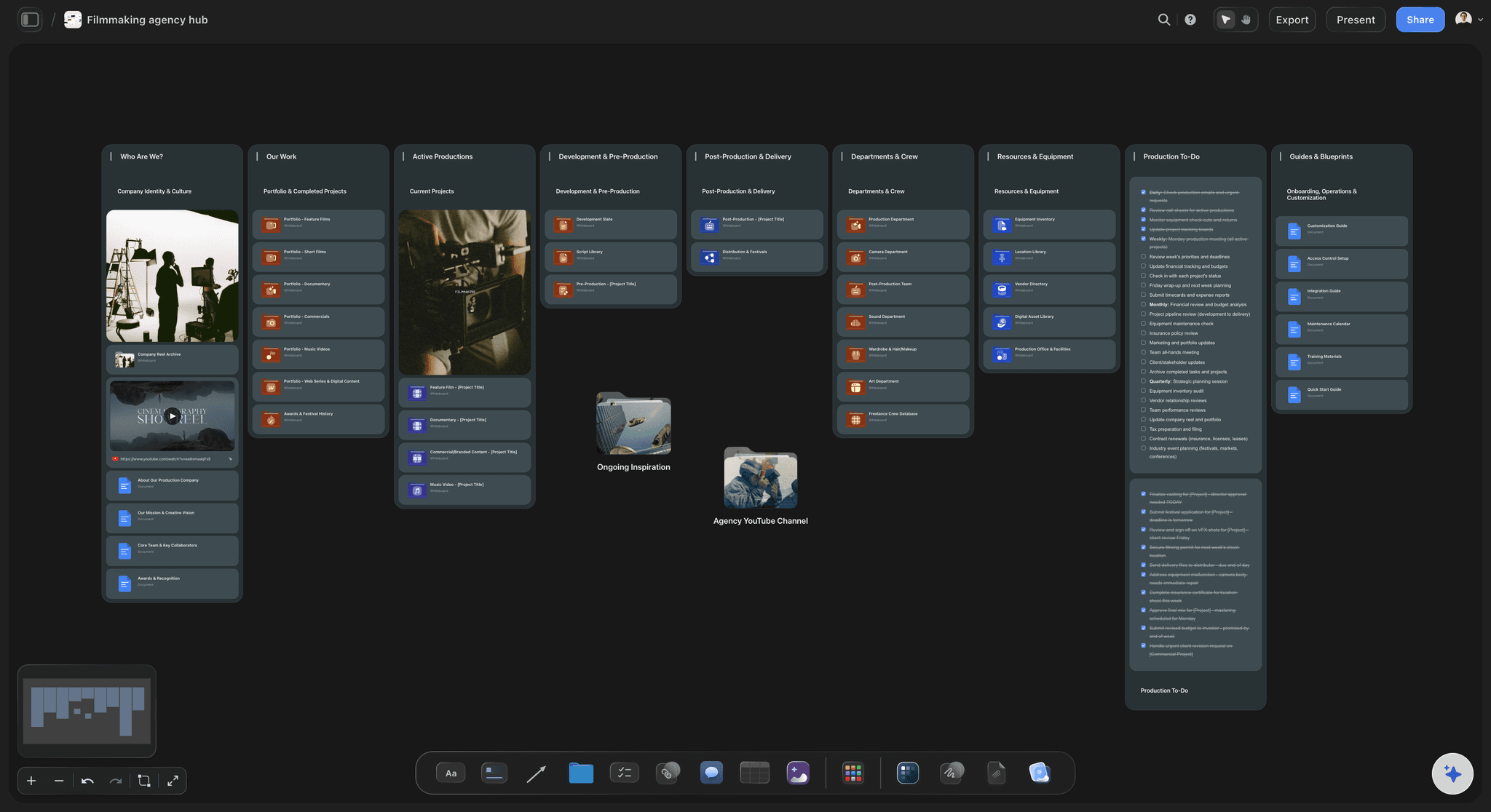
One board for the production meeting
Read it together instead of reporting
A weekly production meeting works better as a shared look at one board than as six people describing their own spreadsheets from memory.
See the indie production workflow →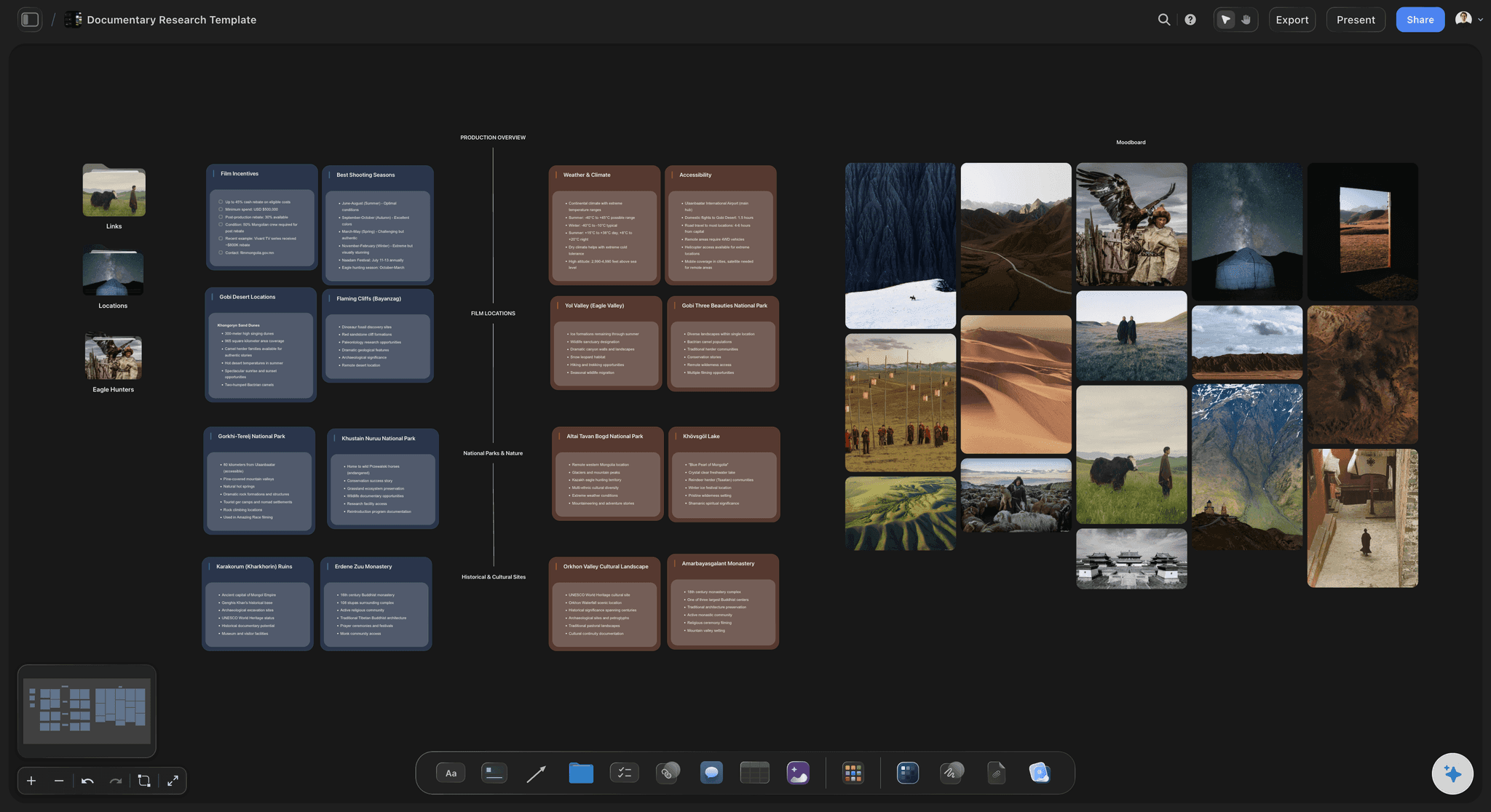
Ask the production questions
What is still open before we shoot?
The AI reads the whole active board plus up to five documents and three boards, so the state of the production is answerable from the production itself.
See the AI creative workspace →Plans from $7.99/month annual. Free plan coming late 2026.
Every department head can be on the board. Storyflow is paid-only during early access, and invited collaborators join free today.
Unlimited file uploads on every paid plan
Invited collaborators join free today
One board per production, no project limit
View-only links open without an account
Built for people with taste
Four mismatches between film and ticket systems.
None of them are fixable with a better ticket. They are structural differences in how the work is shaped.
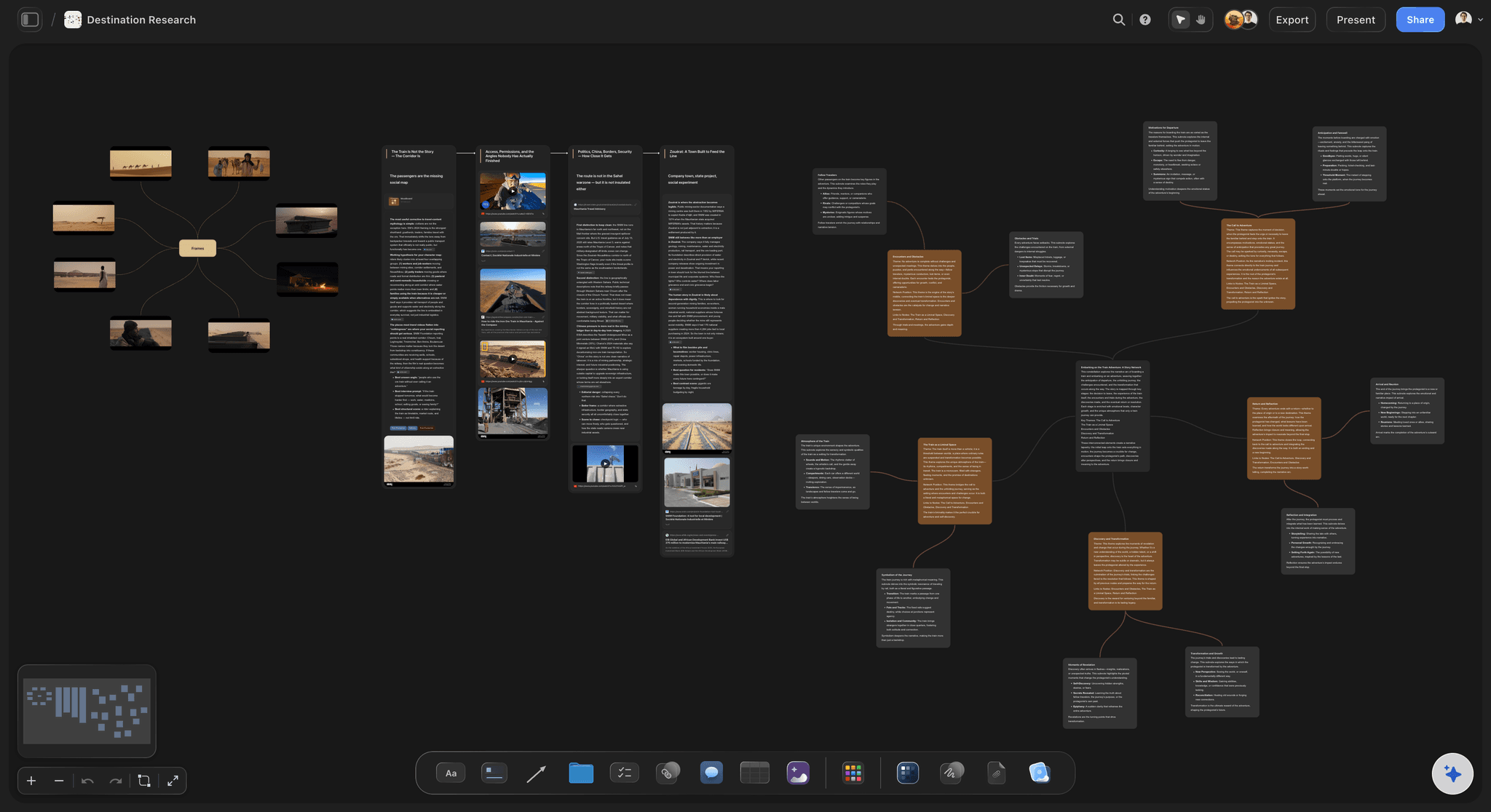
Mismatch one
Risk lives in facts, not tasks
Green boards, troubled productions: Every task can be assigned and progressing while three locations are unconfirmed, because the unconfirmed fact is not a task.
State on the thing itself: A location carries its own confirmed or pending status, visible beside the scenes it hosts.
Prioritise by what is blocked: Seeing that one pending confirmation sits under eleven setups is what makes the ordering obvious.
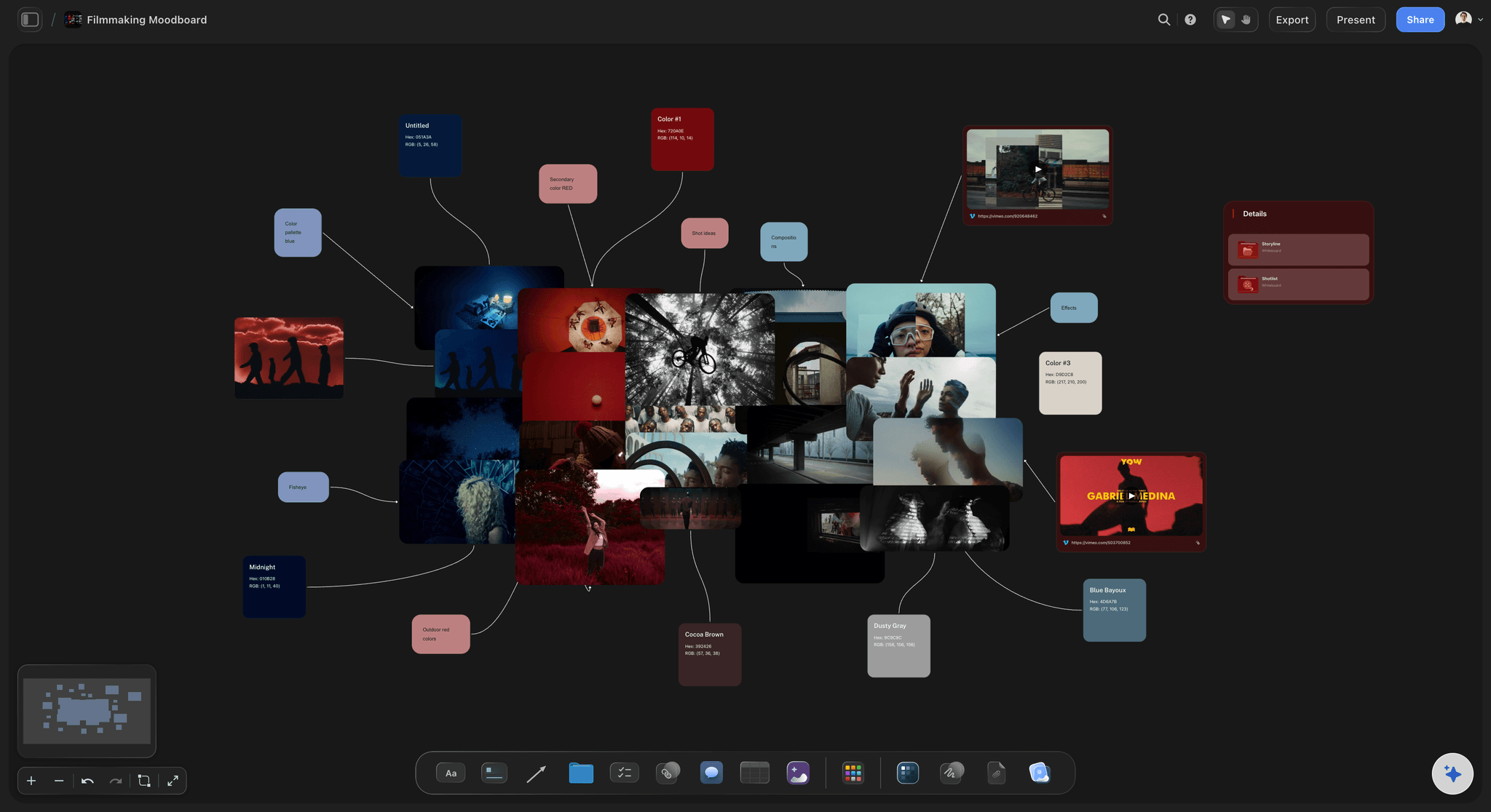
Mismatch two
Departments hold facts, not backlogs
Not decomposable into tickets: What the art department knows is a set of decisions and materials, which does not compress into a task list without losing the substance.
Adjacency beats assignment: The useful relationship is which department's facts affect which other's, and that is spatial rather than hierarchical.
One surface, all departments: Camera reading the art department's board directly is faster than either of them filing a ticket.
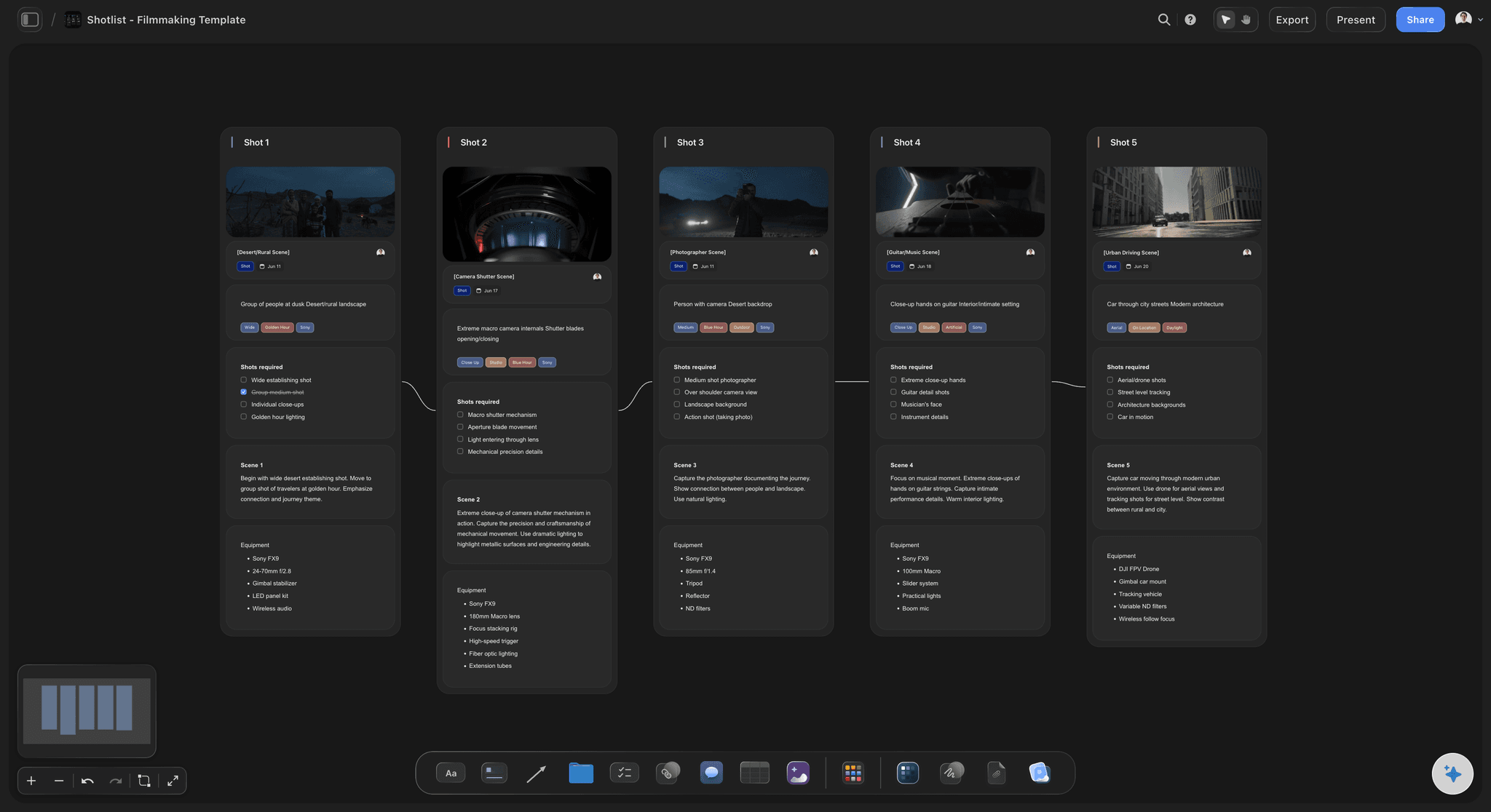
Mismatch three
The schedule is not a Gantt chart
Days are indivisible: A shoot day is a unit that either works or does not. Tasks sliding by two days is a different kind of change from a day moving.
Grouped by location and light: Film schedules are organised by geography and daylight rather than by dependency order, which Gantt logic gets backwards.
Moving a shot has knock-ons: Dragging a setup between days shows what it strands, which a task tool models as a date change and nothing more.
Mismatch four
The crew will not log in
Short bookings, no accounts: A gaffer on for four days will not adopt your ticket system, so any status they hold never enters it.
Read from a link: View-only access with no signup is the only way information reliably reaches short-term crew.
Invited crew join free: Anyone a paid member invites to a board joins free, so department heads are on the board rather than left off to control licence count.
Explore templates for your project
Every template opens as a real, editable board on the infinite canvas. Pick the closest fit and make it your own.
Pre-Production
Pull the brief, script, shot list, and moodboard into one pre-production hub so the whole shoot is planned in one place.
What creators are saying
Join early creators getting structured workspaces and AI that remembers their projects
“Storyflow has sped up my workflow by at least 3x, which means more flow state and more projects I can actually ship. It truly changed the way me and my team create.”

Reilin Joey
Director & YouTuber
“One prompt gets me a structured board. But the tactics are my favorite. I run my YouTube scripts through them and my intros and retention got better. It's amazing.”

Justkay
YouTuber & Freelance Filmmaker
“I used to juggle five apps to plan a project. Now I describe what I am making and get boards, lists, and a schedule. All in one place.”

George
@fernwehchronicles
Tracking a film production, answered.
What producers ask before choosing a tool for a film.
One organised around departments and unresolved facts rather than tasks and assignees. A film's risk sits in what is unconfirmed, such as whether a location is locked or an actor is available, and a ticket system will show a green board while three locations remain pending. Storyflow lays departments out on one canvas beside the schedule that depends on them, so an unconfirmed fact is visibly attached to the setups it holds up. It runs no approvals, time tracking or budgeting, so it sits alongside those tools rather than replacing them.
They model work as tasks owned by individuals with due dates, and a film decomposes into departments holding facts. Both can coexist, but a task board cannot show you that one pending location confirmation sits underneath eleven setups, and that relationship is the thing worth seeing.
For productions large enough to need a real stripboard, no. For everything below that, which is most independent work, seeing the schedule beside the departments feeding it is more useful than a dedicated scheduling database.
No. There is no budgeting, accounting, time tracking or approvals. It holds the production's state and its open questions. Keep the budget in whatever you already use.
Each department has its own area of the canvas holding what it knows, and everyone can read the others. Camera reading the art department's board directly is faster than either filing a request, which is the main advantage of adjacency over hierarchy.
Not during early access. Plans start at $7.99 per month billed annually or $9.99 monthly, with a free plan launching before the end of 2026. Anyone a paid member invites to a board joins free today.
Yes. A view-only link opens in any browser with no signup, which is the only reliable way to reach crew booked for a few days who will never adopt an internal system.
It answers from the board. The AI reads the whole active canvas plus up to five documents and three boards, so asking what is still open before the shoot returns what is actually marked pending rather than a guess.
Yes. Keeping the edit plan and deliverables on the same board as the shooting plan is how you check that what was shot covers what was promised, which is a question that otherwise gets asked too late.
A video tracker follows many videos through the same stages. A film tracker follows one production across many departments. The first is about volume, the second is about depth, and they want different layouts.
Track what is unresolved, not what is ticked.
Departments, schedule and open questions on one canvas that answers what is still open.