
Rock-steady plans for every shoot
The call sheet template,
in the order the crew reads it.
Calls first, the hospital where nobody has to scroll for it, then the day scene by scene, cast, crew, locations and notes. Build it on the board that already holds the schedule and the crew list, and nothing gets typed twice.


Creatives working for these brands already got early access
- Red Bull
- Canon
- Artlist
- Porsche
See how easy it is to get started
Watch a real project come together, from a blank board to a finished plan, clicked through step by step.
Start from a ready-made template
Pick a board to see what you can build, then let AI fill it in. Every template is a real, editable starting point on the same infinite canvas.

Pre-Production
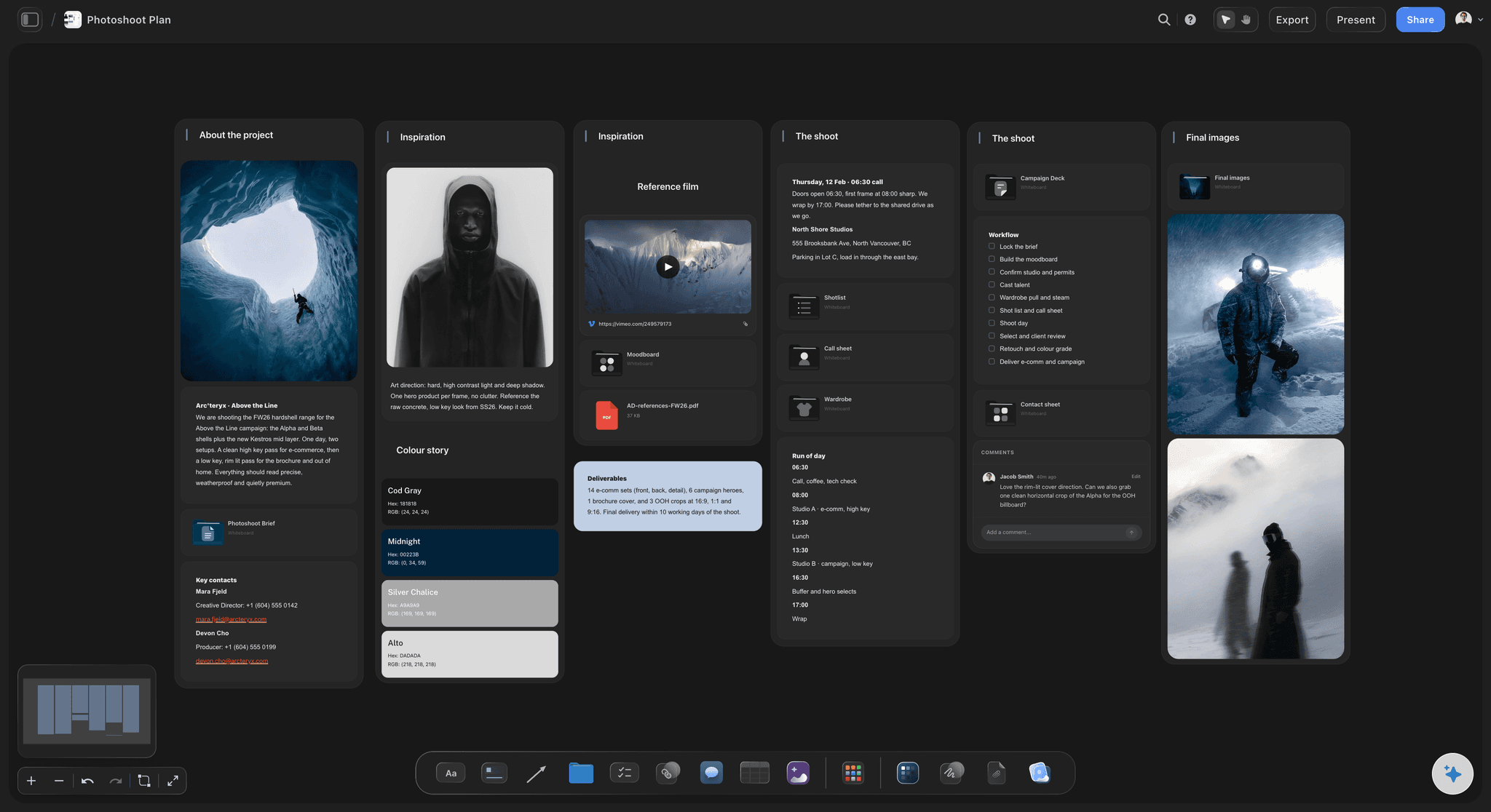
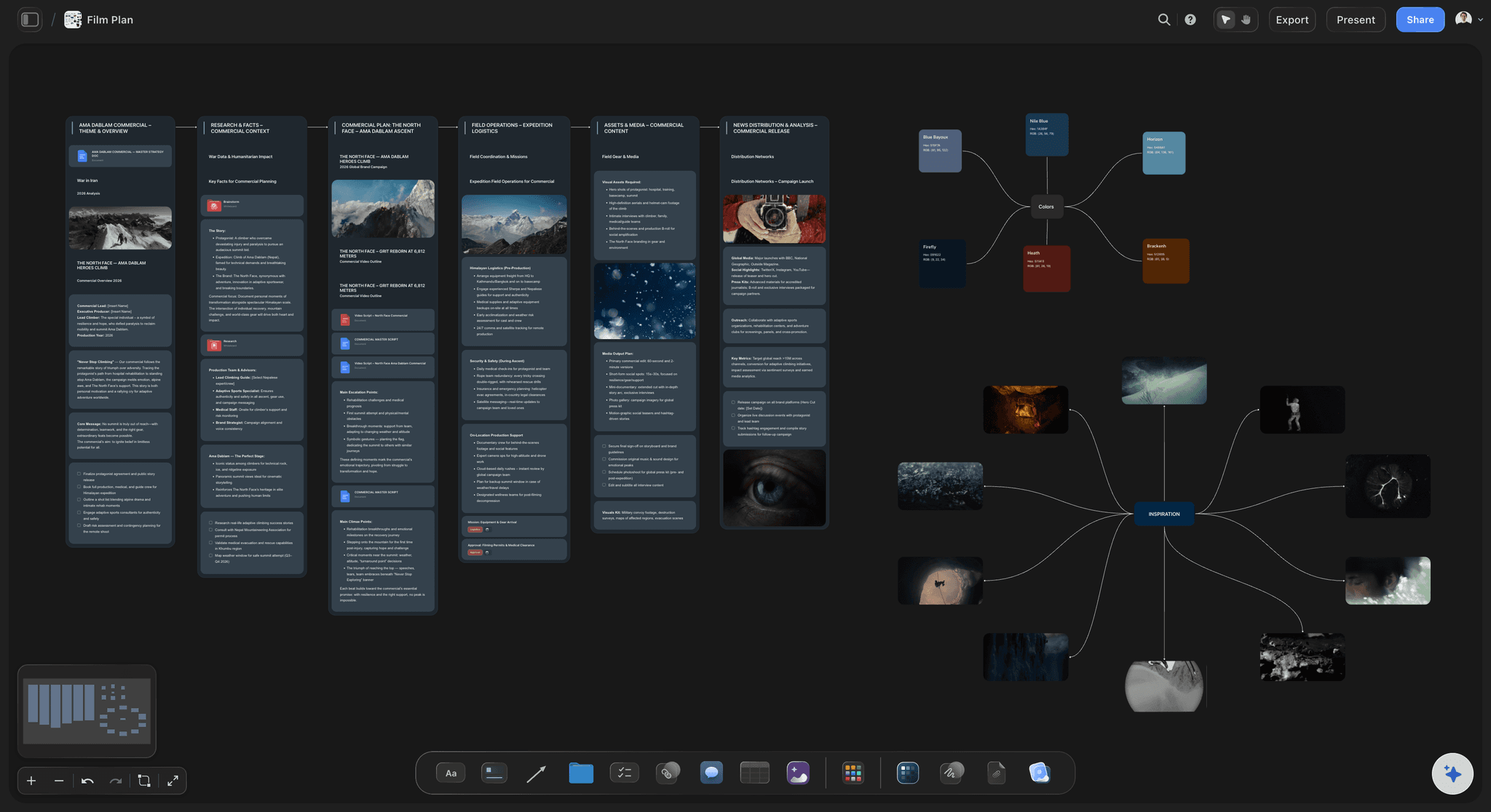
Pull the brief, script, shot list, and moodboard into one pre-production hub so the whole shoot is planned in one place.
What is a call sheet?
A call sheet is the one-page plan for a single shoot day that tells cast and crew where to be, when to arrive, what is being shot and who to call. Storyflow is an AI visual workspace that builds the call sheet from the shoot you planned on one infinite canvas: the strip board, crew list, locations and shot list. Its AI turns them into the day's call sheet as a PDF the crew opens on a phone: crew call, the day scene by scene, cast and crew calls, locations with parking and the nearest hospital, contacts, weather and notes. What it was not told stays blank. A spreadsheet works if you retype it yourself; StudioBinder and SetHero also text it out and track confirmations.
A call sheet is read top to bottom by someone standing in a car park at dawn, so the order is the template. The header carries the production, the day number (day 3 of 5), the date, the general crew call, the shooting call, estimated wrap, sunrise, sunset, the forecast and the nearest hospital with its address. Then the schedule: one row per scene or block with the time, scene number, a one-line description, INT or EXT, day or night, the cast in it and the page count, with lunch and company moves as rows of their own. Then cast (character, pickup, hair and makeup, on set), crew by department with call times and phone numbers, each location with address, parking and how to get in, and the notes: safety, permits, catering, special equipment.
The failures are consistent. The call sheet disagrees with the schedule because it was retyped from it. An address arrives without parking or a load-in, so the grip truck circles the block. The hospital line is missing on the one day it matters. A changed call time goes out as a text that half the crew never sees. And the sheet swells into a production plan, with references and mood nobody reads at 6am. A good call sheet is one day, built from the locked schedule, sent the evening before, and resent as a marked revision when anything moves.
Storyflow's part is the plan and the page. The strip board, crew table, location photos with the map link, and shot list live on one board, and the Call Sheet PDF lands on that board as a file you revise by asking: push crew call thirty minutes, add a company move. It never invents a phone number or an address; the line stays blank and is listed for you. The crew opens the board by view-only link with no account. Storyflow does not text the crew or track confirmations, so a production that needs read receipts pairs it with a distribution tool.
Ultra fast from brief to board
From the day's plan to the sheet the crew opens.
Four steps, and the second one is asking.
01
Put the day's plan on one board
The strip board or schedule, a crew table with roles and phone numbers, location photos with the map link and parking notes, and the shot list. A crew list already in a spreadsheet can be attached and read as it is.
02
Ask for one day's call sheet
The AI reads the board and builds a phone-readable PDF: the header with calls, weather and hospital, the schedule table, cast, crew by department, locations and notes. It lands on the board as a file.
03
Fill the blanks it could not know
A pickup time, a phone number or the nearest hospital it was not given stays visibly blank on the page and is listed under the file, so you fill it tonight instead of finding the gap on set.
04
Send it the evening before
Share a view-only link the crew opens with no account, or download the PDF and send it where your crew already reads messages. When a call moves, ask for the revision and resend it marked.
The call sheet, and everything it is built from.
The sheet is one page; what makes it right is the schedule, the crew list and the locations behind it.
One shoot day as a PDF readable on a phone
The call sheet itself
Header block with calls, weather and hospital on page one, the schedule as a table, cast and crew with times and numbers, locations and notes. The first AD's and producer's numbers repeat on every page.
See the AI call sheet generator →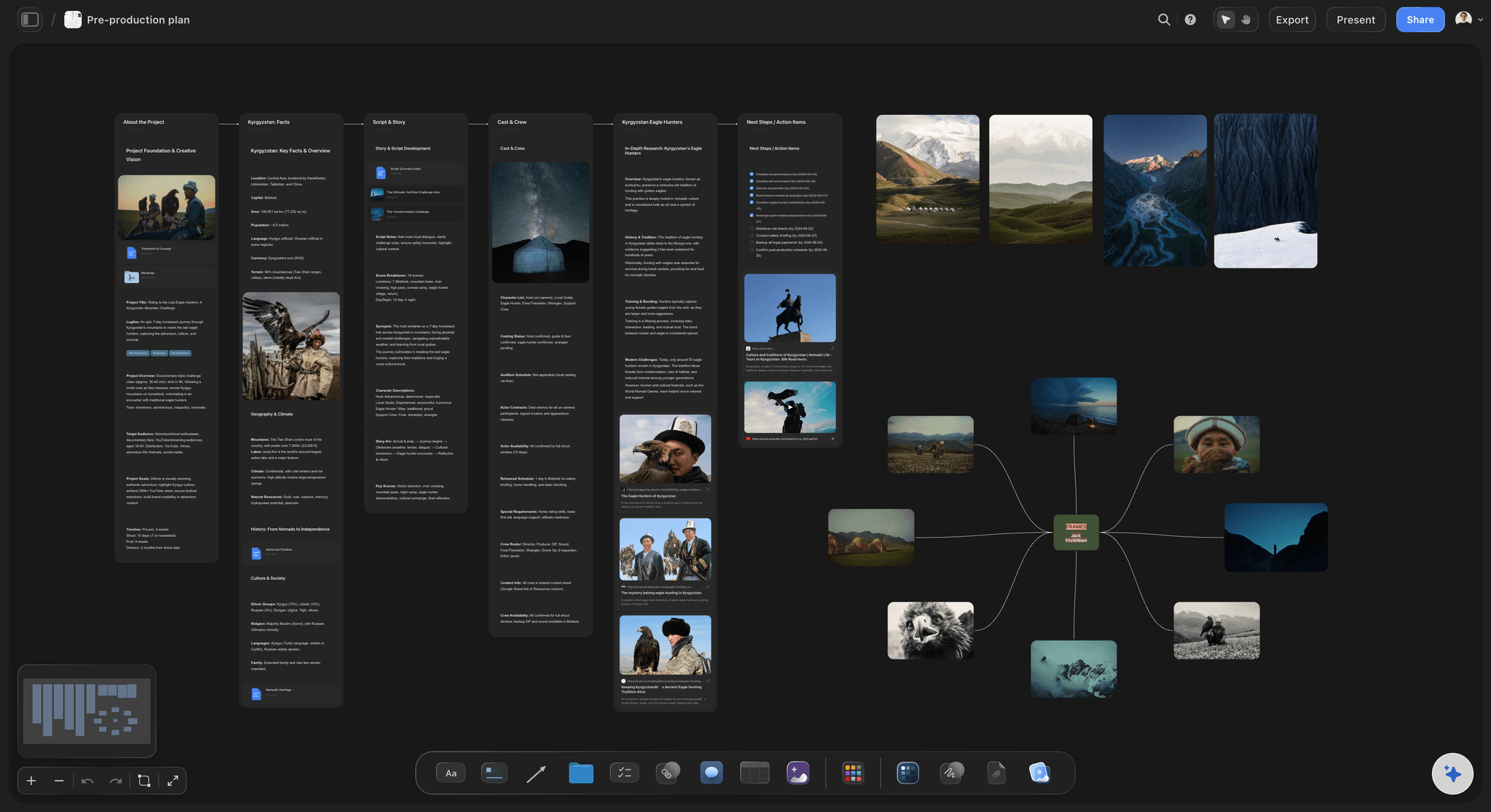
The schedule the call times come from
A strip board per shoot day
Scenes as strips grouped into day walls with page totals, colour-coded by INT or EXT and day or night. The call sheet reads the day from here instead of a retyped copy.
See the stripboard →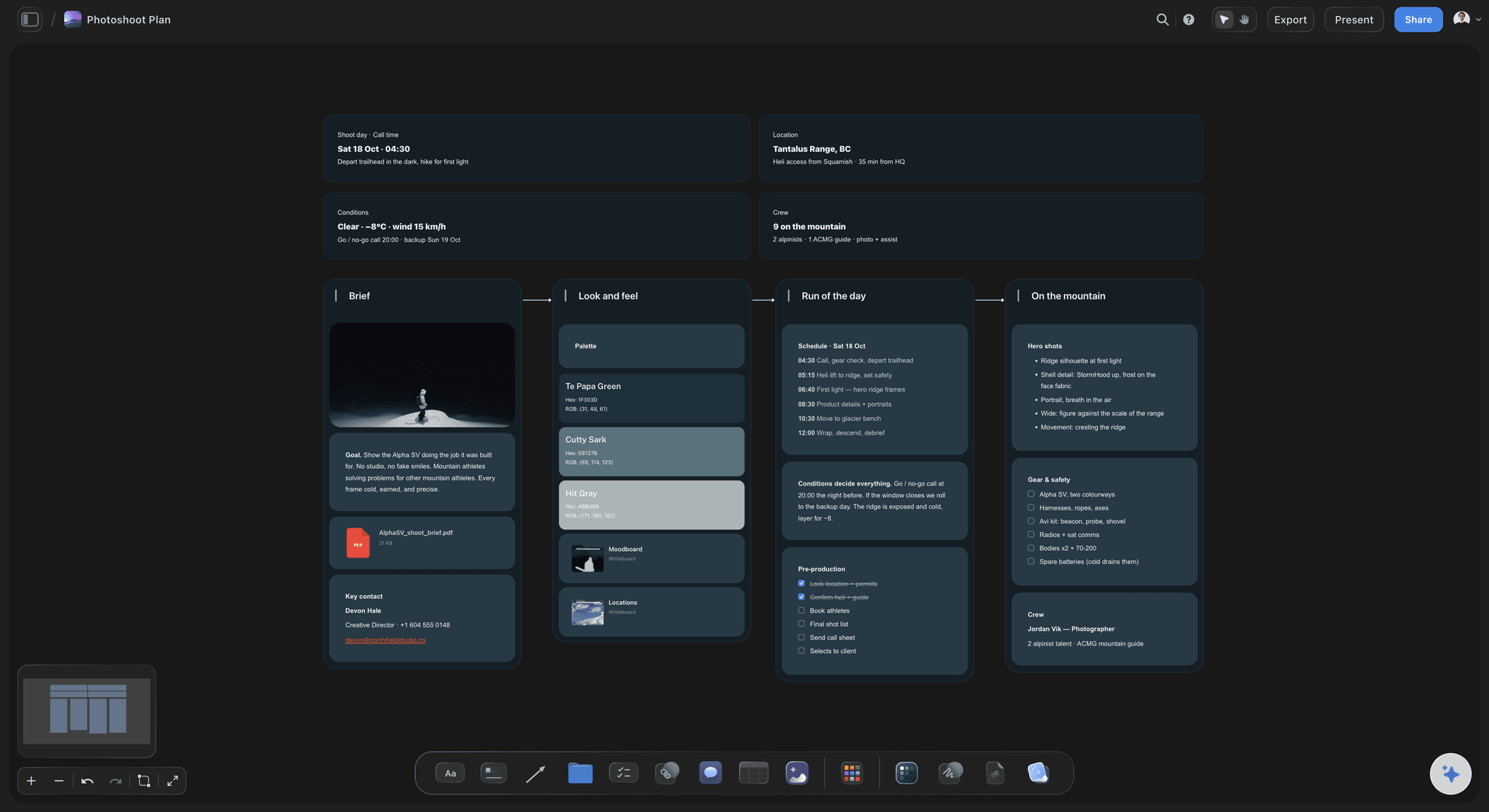
Address, parking, access and the nearest hospital
Locations the crew can find
Location photos, the map link, where to park, where to load in and the unit base, pinned per location so the call sheet's location block is copied from something a scout actually checked.
See location scouting →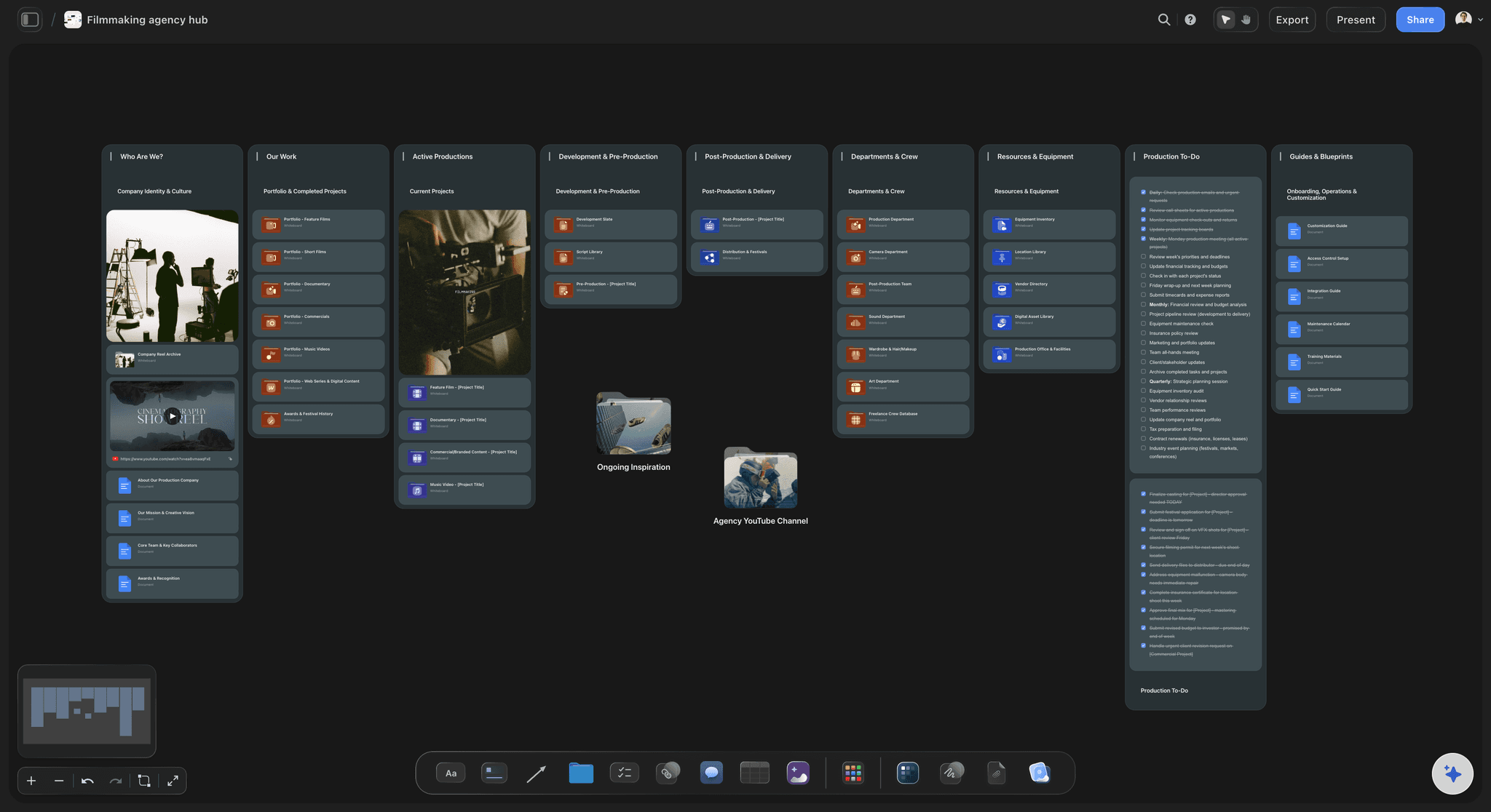
One link for the whole crew
The crew opens it without an account
A view-only link opens the board and the call sheet in any browser. Crew who want to comment sign in; everyone else just reads.
See on-set collaboration →Unlimited boards. No object cap.
A board per shoot and a call sheet per day. Storyflow is paid-only during early access, with plans from $7.99 a month billed annually ($9.99 monthly). A free plan launches before the end of 2026, and anyone a paid member invites to a board joins free.
Unlimited boards, images, files and links for every shoot
AI usage that renews each billing period, for call sheets, strip boards and shot lists
View-only links the crew opens in a browser with no account
Invite your AD or coordinator to edit, and they join free
Built for people with taste
One day, in the order it is read.
The sections are standard. What separates a call sheet that works is the order, the blanks nobody noticed, and when it goes out.
The header and the day
The sections of a call sheet
General crew call and shooting call: Crew call is when work starts; shooting call is the first shot. Both go at the top with estimated wrap, because the gap between them is the setup the whole morning depends on.
Locations with address, parking and nearest hospital: Every location and the unit base with a full address, where to park, how to get in, and the nearest hospital with its address. The hospital line belongs on page one.
The day by scene: One row per scene or block: time, scene number, a one-line description, INT or EXT, day or night, cast in it and pages. Lunch and company moves get their own rows.
Cast and crew calls with contacts: Cast with character, pickup, hair and makeup, and on set; crew by department with call time and phone number; the first AD's and producer's numbers repeated on every page.
Timing and revisions
When it goes out, and what happens after
Built from the locked schedule: The call sheet follows the schedule for that day once the producer or first AD has signed it off. Built earlier, it describes a day that no longer exists.
Sent the evening before: Out by wrap or early evening so people can plan travel and childcare. A sheet that lands at 11pm costs the first hour of the morning.
Revisions marked as revisions: When a call time or location changes, send a new version with what changed at the top. A quietly edited sheet is how half the crew arrives at the old time.
Weather and light checked again: For exterior days, recheck sunrise, sunset and the forecast the night before, and name the weather cover if the day has one.
How Storyflow builds it
Built from the board, blank where unknown
Reads the plan you already made: The schedule, crew table, locations and notes on the board are the source, so the times on the sheet are the times in the plan.
Blanks instead of guesses: A missing phone number, pickup or hospital is printed as a blank line and listed under the file. A confident wrong number on a call sheet is the error that costs a shoot day.
Laid out for a phone: The header owns page one, tables do not split a department across a page break, and the key numbers sit in the footer of every page.
Revised by asking: Push the crew call, swap two blocks, add a company move: the AI re-renders the same file on the board. You decide what goes out.
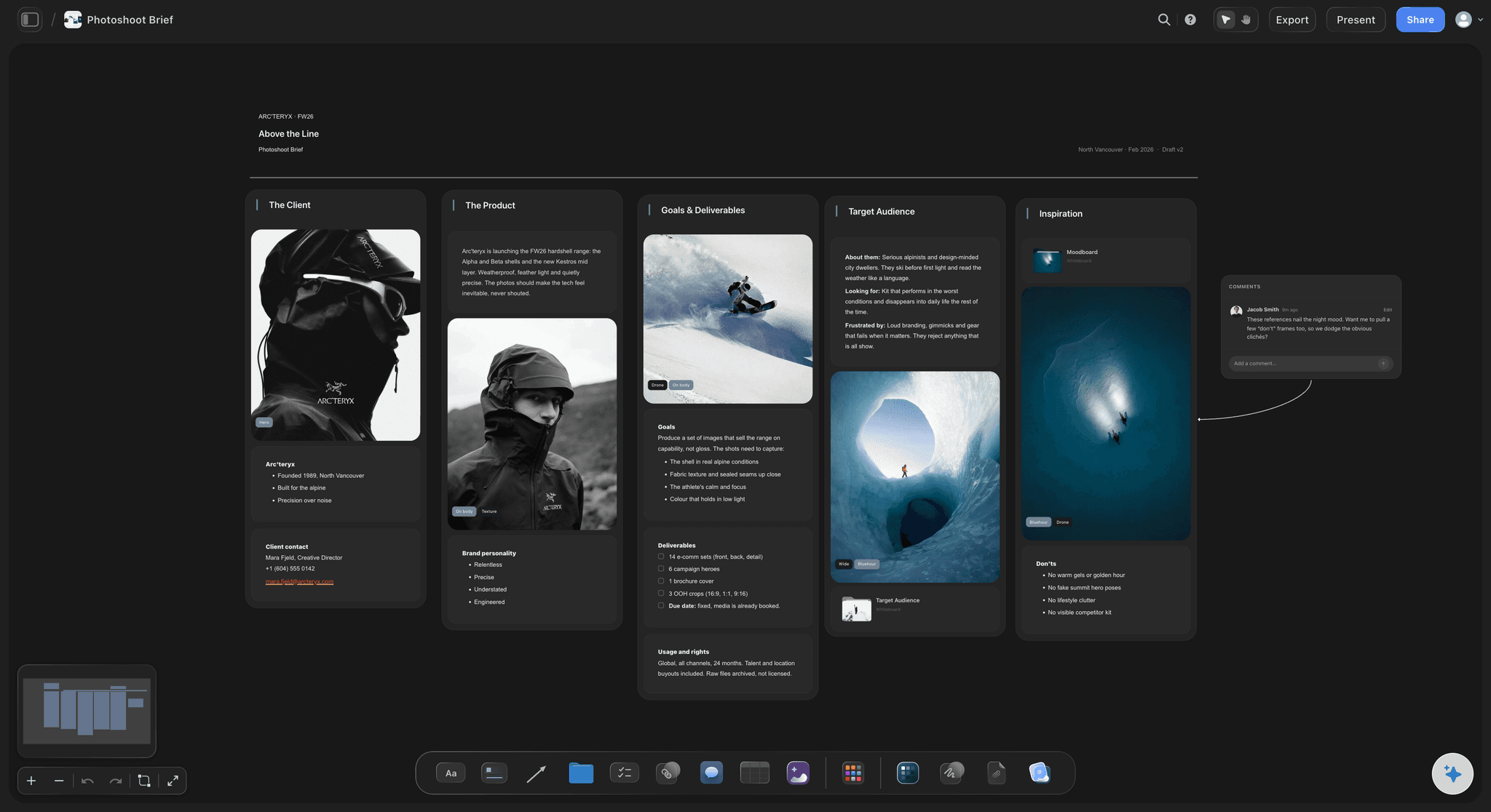
Photoshoots, brand videos and one-day commercials
Call sheets for smaller shoots
Run of the day instead of scene numbers: A photoshoot or brand video schedules looks, setups or deliverables by time. The same table works with a look name where a scene number would go.
Client and agency on set: Who from the client attends, when they arrive, and who approves on the day. Leaving that off is how a shoot waits an hour for a sign-off.
Talent, wardrobe and product: Talent calls with hair and makeup, wardrobe changes per look, and which product pieces each setup needs, so the stylist and the props table read the same page.
One page is enough: A crew of six does not need departments. Calls, address, parking, hospital, the run of the day, contacts and notes fit on one page.
Explore templates for your project
Every template opens as a real, editable board on the infinite canvas. Pick the closest fit and make it your own.
Pre-Production
Pull the brief, script, shot list, and moodboard into one pre-production hub so the whole shoot is planned in one place.
One app instead of five
Storyflow vs StudioBinder, SetHero, and Yamdu.
StudioBinder and Yamdu run the whole production database, SetHero is built around sending call sheets and tracking replies, and Storyflow builds the sheet from the board the shoot is planned on.
Storyflow
Recommended
Calls, schedule, cast, crew, locations and notes
Works for commercials and brand shoots, not only film
AI writes it from notes, a brief or the board
Script breakdown and shooting schedule in the same tool
Sends it to the crew and tracks who confirmed
StudioBinder
Calls, schedule, cast, crew, locations and notes
Works for commercials and brand shoots, not only film
AI writes it from notes, a brief or the board
Script breakdown and shooting schedule in the same tool
Sends it to the crew and tracks who confirmed
SetHero
Calls, schedule, cast, crew, locations and notes
Works for commercials and brand shoots, not only film
AI writes it from notes, a brief or the board
Script breakdown and shooting schedule in the same tool
Sends it to the crew and tracks who confirmed
Yamdu
Calls, schedule, cast, crew, locations and notes
Works for commercials and brand shoots, not only film
AI writes it from notes, a brief or the board
Script breakdown and shooting schedule in the same tool
Sends it to the crew and tracks who confirmed
What creators are saying
Join early creators getting structured workspaces and AI that remembers their projects
“Storyflow has sped up my workflow by at least 3x, which means more flow state and more projects I can actually ship. It truly changed the way me and my team create.”

Reilin Joey
Director & YouTuber
“One prompt gets me a structured board. But the tactics are my favorite. I run my YouTube scripts through them and my intros and retention got better. It's amazing.”

Justkay
YouTuber & Freelance Filmmaker
“I used to juggle five apps to plan a project. Now I describe what I am making and get boards, lists, and a schedule. All in one place.”

George
@fernwehchronicles
Call sheets, answered.
What goes on one, how to make it, when to send it, and which tool fits.
A call sheet is the plan for a single shoot day that tells cast and crew where to be, when to arrive, what is being shot and who to call. The AD department or production office sends it the evening before, once that day's schedule is locked. In Storyflow the AI builds it as a PDF from the schedule, crew list and locations on the board.
Storyflow is built for exactly this job: its AI turns the schedule and crew details on your board into a call sheet PDF for the day, and leaves a visible blank wherever a phone number, pickup time or hospital is missing, rather than guessing. It does not send the sheet or collect confirmations. To text or email the crew and track who confirmed, use StudioBinder or SetHero; Yamdu does both inside a full production suite.
Build it from the schedule instead of retyping it, because a hand-copied call sheet disagrees with the schedule after the first change. In Storyflow the strip board, crew list, locations and shot list sit on one board and the AI builds the day's call sheet from them, so a change is made once in the plan and the sheet is re-rendered by asking. Send it only after that day's schedule is signed off, and mark every revision.
A call sheet carries the production name, day number and date; crew call, shooting call and estimated wrap; sunrise, sunset and weather; the nearest hospital; each location with address, parking and access; the day's schedule with times, scenes, cast and pages; cast pickup, hair and makeup and on-set times; crew by department with call times and phone numbers; and notes on safety, permits and catering. A photoshoot swaps scenes for looks and adds the client and product.
Start from the day's locked schedule. Set crew call and shooting call, then list each location with address, parking and the nearest hospital. Lay out the day as timed rows of scenes or setups, cast and pages, with lunch and company moves. Add cast and crew calls with phone numbers, the forecast and safety notes. Check every number, get sign-off from the first AD or producer, and send it the evening before. Storyflow's AI assembles it from the board.
The evening before the shoot day, once that day's schedule is signed off, usually by the previous day's wrap: early enough for people to plan travel, late enough that the times hold. If something changes after it goes out, send a revision with the change stated at the top rather than editing silently, and call anyone whose time moved earlier. On a multi-day shoot, each day gets its own sheet.
General crew call is when the crew arrives and starts work: unloading, lighting, rigging, hair and makeup. Shooting call is when the first shot is planned to roll. The gap between them is the day's setup, where most mornings go wrong, so both belong at the top of the call sheet. Departments can have earlier precalls, and cast calls are staggered by when each actor is needed in hair, makeup and wardrobe.
Yes: a call sheet template is the standard sections in reading order, so a Google Sheets, Excel or Word version costs nothing. The trade-off is retyping the schedule and contacts for every day, and a spreadsheet does not know when the schedule changed. Storyflow builds the sheet from the board instead, but it is paid-only during early access. SetHero has no free plan either, though it covers the cost of a first project.
Yes, if it has the facts. Storyflow's AI builds one shoot day's call sheet as a PDF from the schedule, crew list, locations and notes on the board, or from a schedule and crew list you attach. Anything it was not given, such as a phone number or the nearest hospital, stays a visible blank and is listed for you. You check it and decide when it goes out; the first AD's judgement about the day stays theirs.
No. Storyflow builds the call sheet as a PDF on the board, where the crew opens it from a view-only link with no account, or you download it and send it wherever your crew reads messages. It does not text or email each crew member or track who opened or confirmed. StudioBinder, SetHero and Yamdu send call sheets and track confirmations, so a large crew that needs read receipts can plan in Storyflow and distribute through one of them.
Not yet. Storyflow is paid-only during early access, with plans from $7.99 a month billed annually ($9.99 monthly). A free plan launches before the end of 2026, and anyone a paid member invites to a board joins free, so the AD or coordinator you bring in to edit call sheets does not pay. Crew who only read the call sheet open a view-only link with no account.
Use the same structure with the photoshoot's own units. The header keeps the date, call time, address, parking, load-in and nearest hospital. The schedule becomes a run of the day by look: time, look, talent, wardrobe, product and set. Add when each client attendee arrives and who approves on the day, talent calls with hair and makeup, crew phone numbers, and notes on usage, catering and safety. In Storyflow it sits beside the shoot's brief and shot list.
More from Storyflow
AI call sheet generator
Shooting schedule template
Stripboard
Shot list template
Script breakdown software
Pre-production to shoot day
Production binder
Photoshoot plan template
Location scouting app
Pre-production checklist
SetHero alternative
What is a call sheet
Crew scheduling software
Film shoot planner
Commercial production
Film scheduling software
Film production report
Production coordinator workflow
Make the call sheet from the shoot you planned.
Put the day on one board, ask for the call sheet, fill the blanks, and send the link the evening before.