
Rock-steady plans for every shoot
See the whole crew plan
before the first call time.
Lay out departments as sections, crew as cards with role, contact, and day status, and draw the connections to locations, shoot days, and gear. The conflicts a spreadsheet hides become visible on one canvas.


Creatives working for these brands already got early access
- Red Bull
- Canon
- Artlist
- Porsche
See how easy it is to get started
Watch a real project come together, from a blank board to a finished plan, clicked through step by step.
Start from a ready-made template
Pick a board to see what you can build, then let AI fill it in. Every template is a real, editable starting point on the same infinite canvas.

Pre-Production
Pull the brief, script, shot list, and moodboard into one pre-production hub so the whole shoot is planned in one place.
What is a film crew planner?
A film crew planner is a tool for working out who is on your shoot, in which department, on which days, and what each of them depends on to do their job. It holds the crew list, the confirmation status of every role, the shoot days each person is booked for, the locations they need to reach, and the gear that has to arrive with them. The point is not to store phone numbers. The point is to make the whole staffing picture visible enough that you can see the hole in it before the shoot day does.
Crewing a shoot is a coordination problem disguised as a contact list. The questions that decide whether a day works are questions about dependencies: is the gaffer confirmed for the days the generator is booked, does the sound recordist overlap the location with no power, who is the second AC on the day the A-camera operator is on the other unit, which department still has an unconfirmed head two weeks out. A spreadsheet answers who has a phone number. It hides the collisions, because every relationship between a person, a day, a location, and a piece of gear lives in a different row of a different tab.
Storyflow is an AI-native infinite canvas built for exactly this. Describe the production in a prompt, roughly its scale, format, and shoot days, and the AI lays out a department structure with crew card slots ready to fill. Then you work the plan like a producer works a wall: drag crew cards into departments, mark who is confirmed, penciled, or unapproached, and draw connectors from people to the shoot days, locations, and gear they depend on. Re-prompt to add a unit or a department and the AI builds around the cards you have already placed.
A real crew plan runs across five connected layers: the department structure (camera, grip and electric, sound, art, wardrobe, hair and makeup, production, post), the people in each role with their contact details and rate notes, the booking status of every slot (confirmed, penciled, waiting on a quote, not yet approached), the schedule dimension (which days each person works, and where the day-player days fall), and the dependencies (who needs which gear, which vehicle, which location access, which other person). Storyflow keeps all five visible at once, which is what makes the conflicts findable while they are still cheap to fix.
Ultra fast from brief to board
From a production description to a crew plan you can shoot from.
No production-office software to configure, no template to reverse-engineer. Describe the shoot and start placing people.
01
Open a canvas
Sign up in seconds. No download. Your infinite crew planning canvas opens in the browser.
02
Describe the production
Type what you are shooting, at what scale, and over how many days, and the AI lays out a department structure with crew slots, shoot day sections, and a framework to build in. You start from a plan shaped like your production, not a blank grid.
03
Place, confirm, and connect
Drag crew cards into departments, mark each one confirmed or penciled, and draw connectors to the shoot days, locations, and gear each person depends on. Unfilled slots and double-booked days are visible at a glance.
04
Share it with the production
Send a view-only link so the whole crew sees the same plan, invite your coordinator or 1st AD to work on the canvas, or export it as an image or PDF for the production binder.
Every department, every day, one surface.
Departments, crew cards, shoot days, locations, and gear dependencies on one infinite canvas.
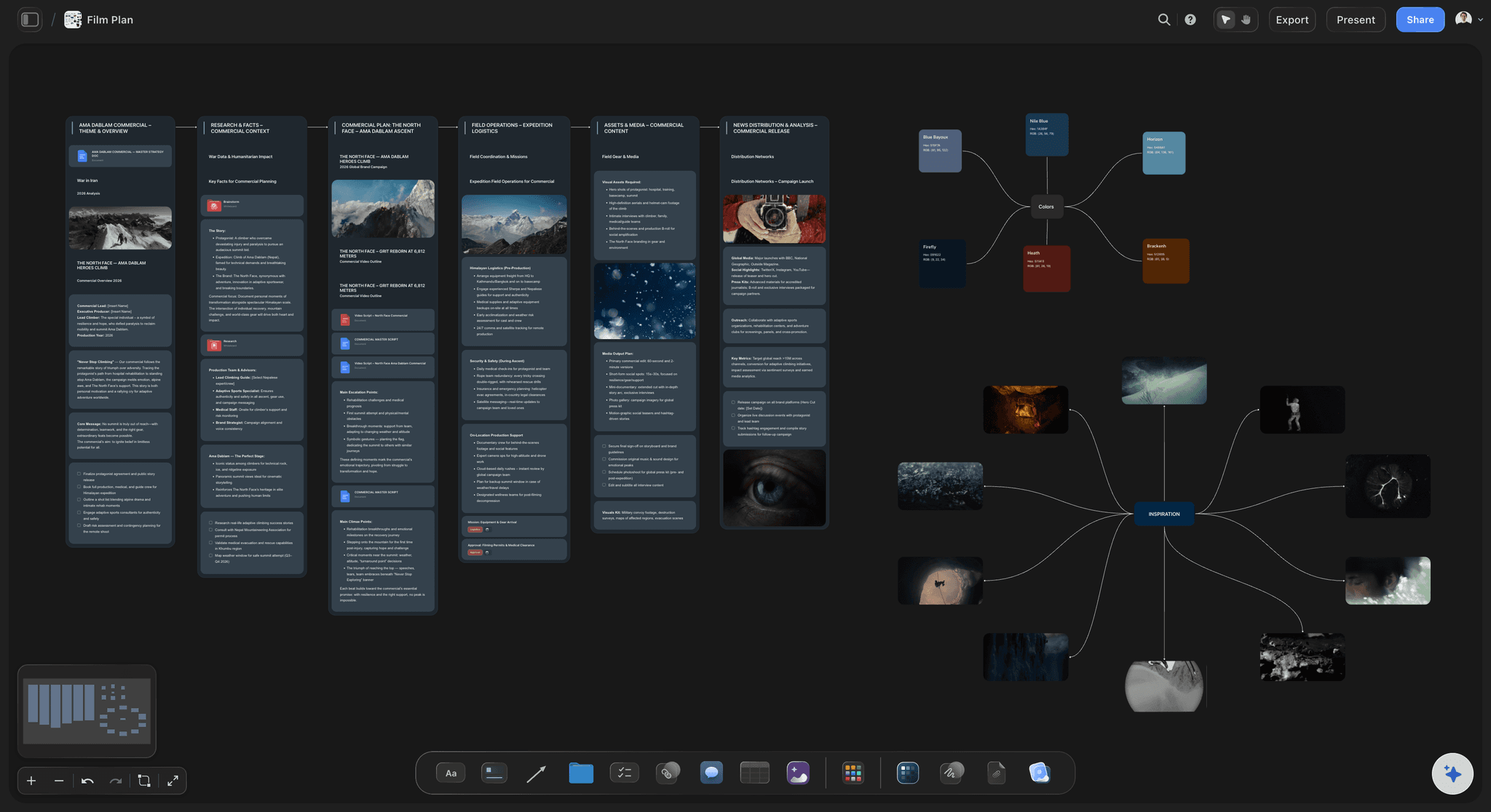
AI lays out the department structure from a description
Start from a crew plan, not a blank sheet
Describe the production and the AI builds the department sections and role slots a shoot of that scale actually needs. A documentary two-hander and a thirty-person commercial crew get different skeletons, and you fill the one that fits.
See film production planning →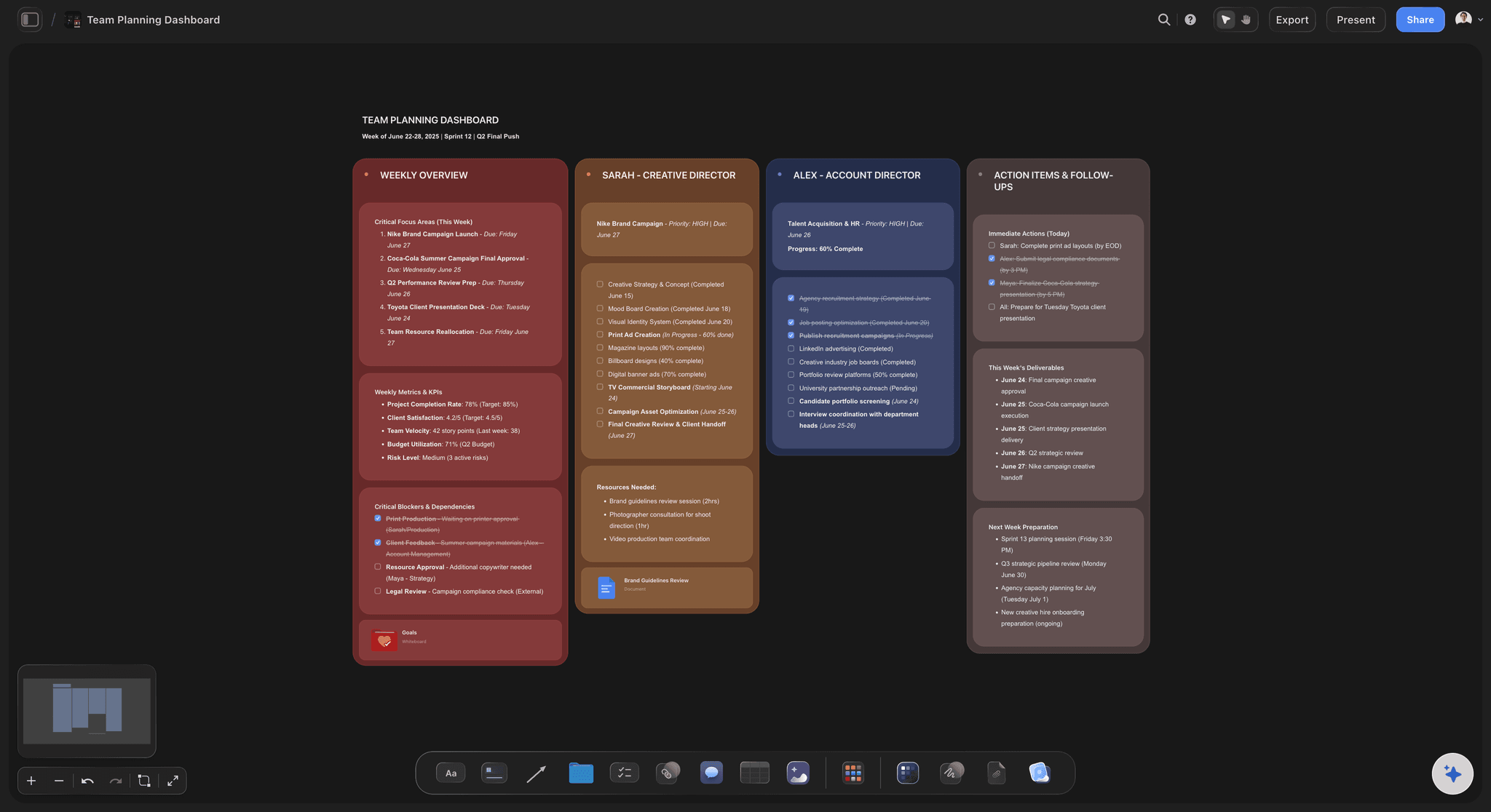
Crew cards with role, contact, and booking status
Know who is actually confirmed
Each crew member is a card carrying their role, contact details, and status: confirmed, penciled, or not yet approached. The unconfirmed department head two weeks before the shoot stops hiding in a cell and starts being a card you cannot ignore.
Run the pre-production checklist →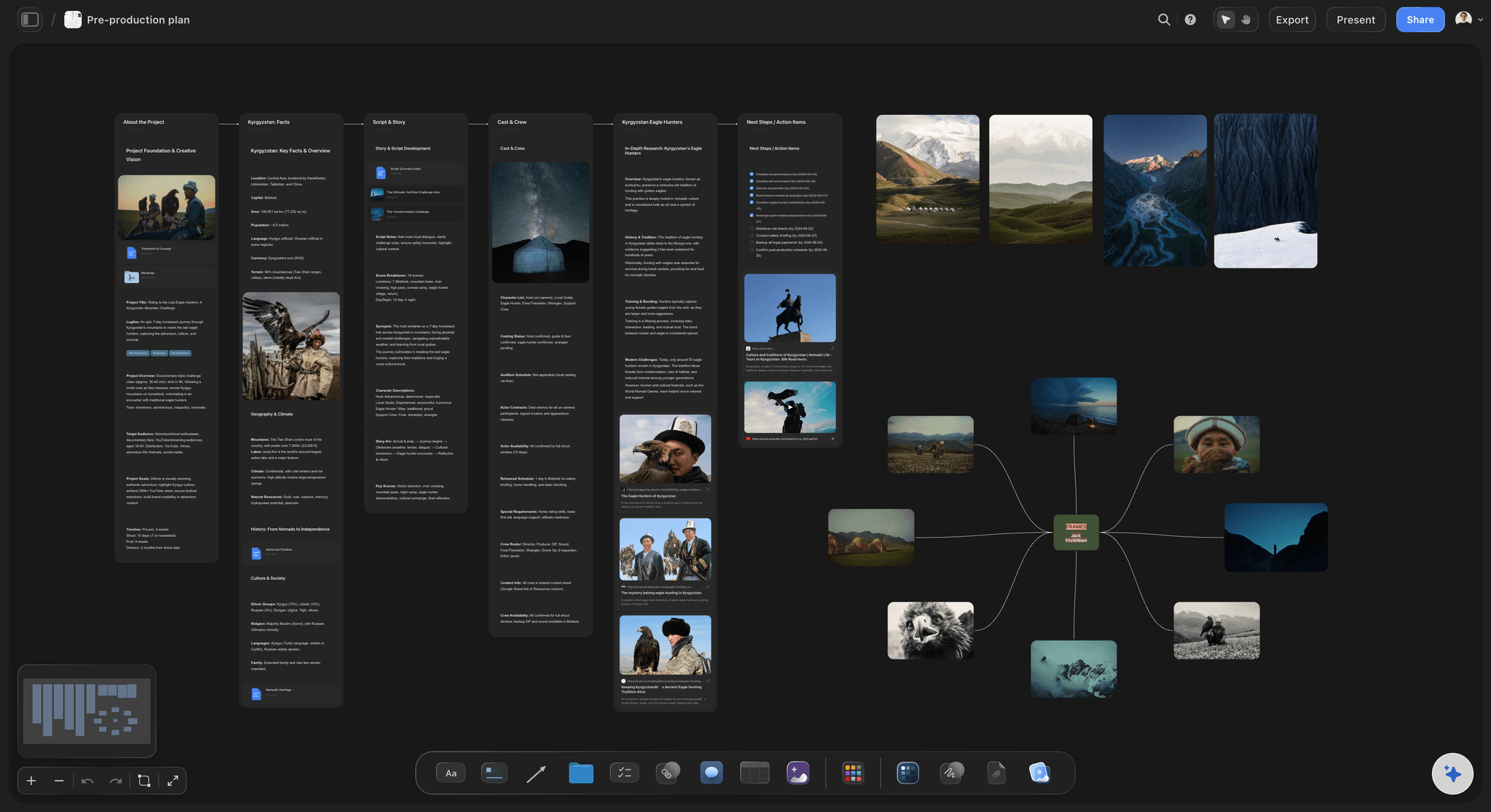
Connectors from people to days, locations, and gear
See the dependencies before they collide
Draw a line from the gaffer to the generator, from the sound recordist to the location with no power, from the day-player to the single day they work. Conflicts that live three tabs apart in a spreadsheet sit on the same screen here.
Plan the shooting schedule →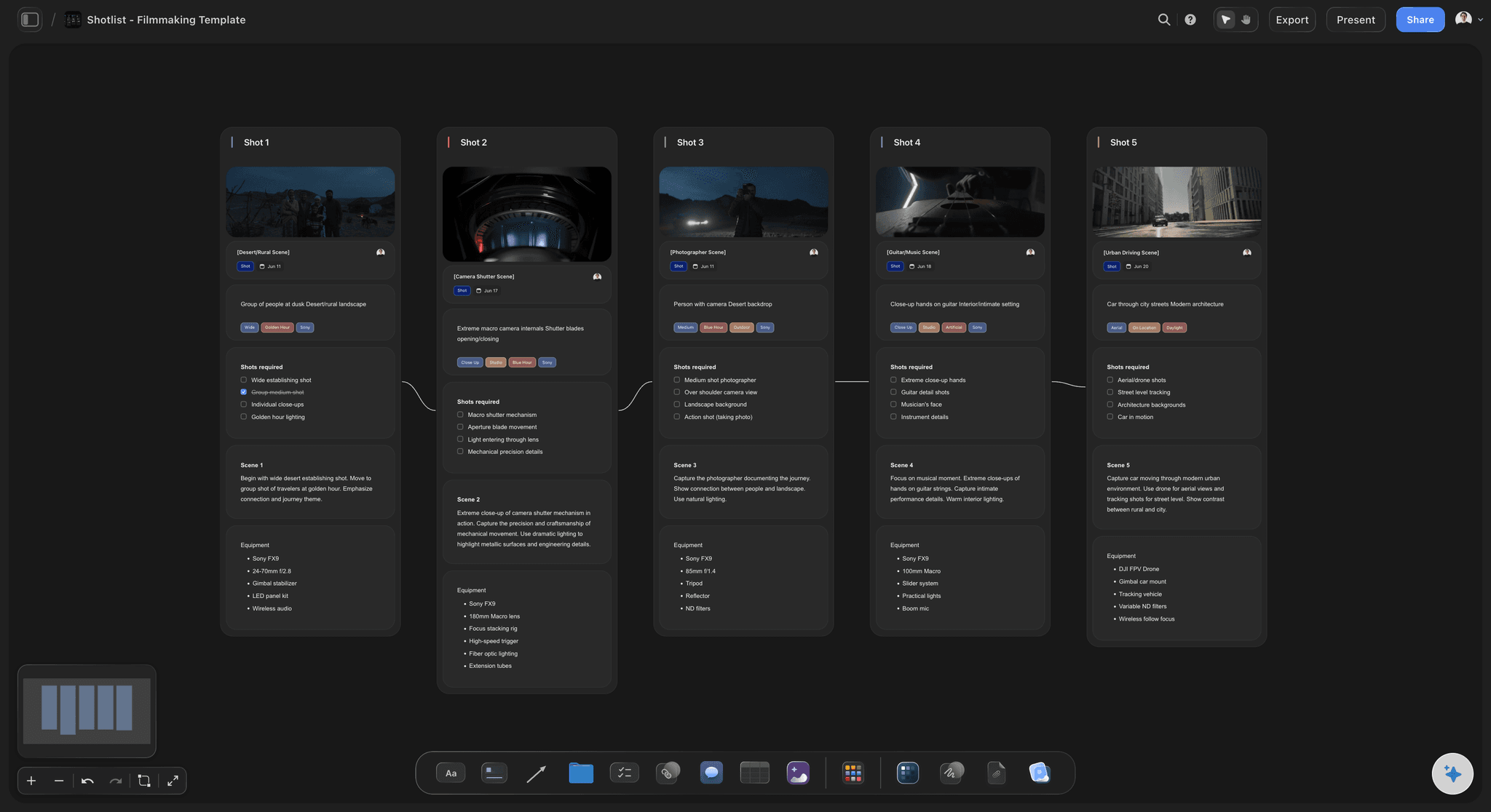
The call sheet inputs, already assembled
Walk into call sheet day prepared
A call sheet is mostly a report on decisions you made earlier: who works, where, and when. When the crew plan already holds people, days, and locations, building each day's call sheet becomes transcription instead of archaeology.
Try the AI call sheet generator →Unlimited boards. No object cap.
Open a canvas, describe the production, and start placing your crew. Storyflow is paid-only during early access, with plans from $9.99 a month, and a Free plan launches before the end of 2026.
Unlimited crew planning boards on an infinite canvas
Basic AI usage to generate boards from prompts
Starter templates for crews of any scale
Share view-only links with your whole crew
Built for people with taste
More than a contact list with a budget column.
A spreadsheet shows one slice of the crew at a time. Staffing conflicts only appear when the whole plan is visible at once.
Departments, people, status, and days
Work across every layer of the crew plan
Departments as sections: Camera, grip and electric, sound, art, wardrobe, hair and makeup, production, post. Each department is a frame on the canvas, so an empty slot in a section reads as a hole in the crew rather than a blank cell nobody scrolls to.
Crew cards that carry the details: Each person is a card with role, contact, rate notes, and dietary or travel flags. When the coordinator needs the B-camera operator's number on a tech scout, it is on the card, not in a thread.
Booking status at a glance: Mark every card confirmed, penciled, or unapproached. Scanning the board tells you the true state of the crew in seconds, which is the question every production call starts with.
Day-player days made visible: Lay shoot days out as their own row and connect each crew card to the days they work. The day-player booked for a day that moved, and the department that is short-handed on the company move, both show up before the schedule locks.
AI that can see the production you have already planned
Plan with an AI that knows your shoot
Prompt to build out a department: Ask it to lay out the grip and electric department for a three-day exterior shoot, or to add a second unit structure beside the main one. Because it uses the whole board as context, what it adds fits the production you are actually running.
It structures, it does not staff: The AI lays out the departments, roles, and framework a shoot of your scale needs. Choosing the people, negotiating the rates, and making the calls stays with you, which is the part of crewing that was never going to be automated anyway.
Iterate without losing the plan: Re-prompt as the production changes. Cards you have already placed and confirmed stay exactly where they are while the AI builds the new pieces around them.
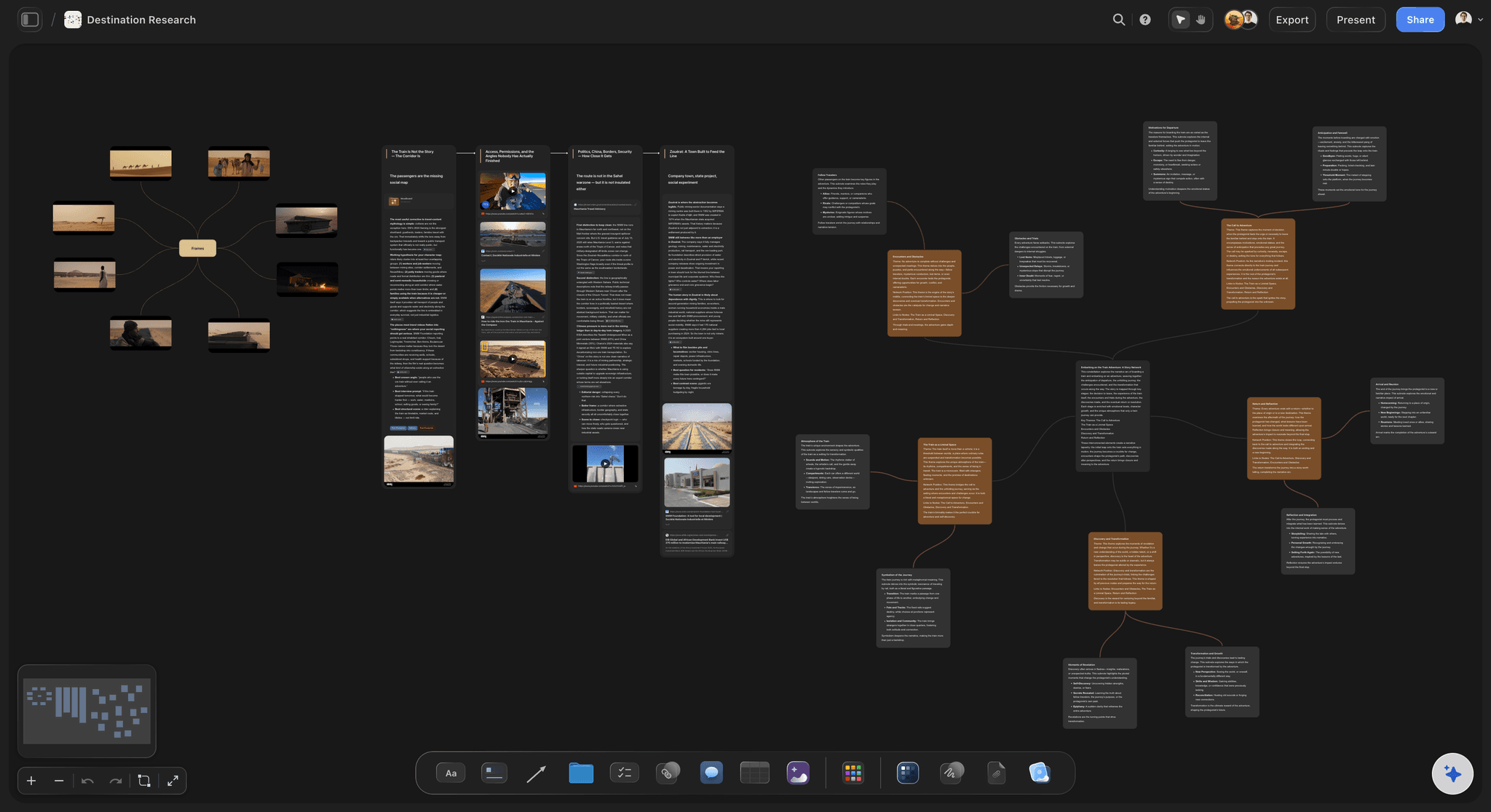
Locations, travel, and gear beside the people
Keep the logistics on the same canvas
Locations connected to the crew that works them: Pin each location as a card with photos from the recce, access notes, and parking, then connect the crew and gear that day needs. The location with no load-in elevator meets the grip package on the board, not on the morning.
Gear dependencies drawn, not remembered: Connect rental packages, vehicles, and specialty equipment to the people and days that depend on them. When the camera package pickup moves, you can see exactly who it touches.
Paperwork on the board: Drag in deal memos, insurance certificates, gear lists, and location agreements as PDFs beside the cards they belong to. The document you need during prep is one scroll away instead of somewhere in an inbox.
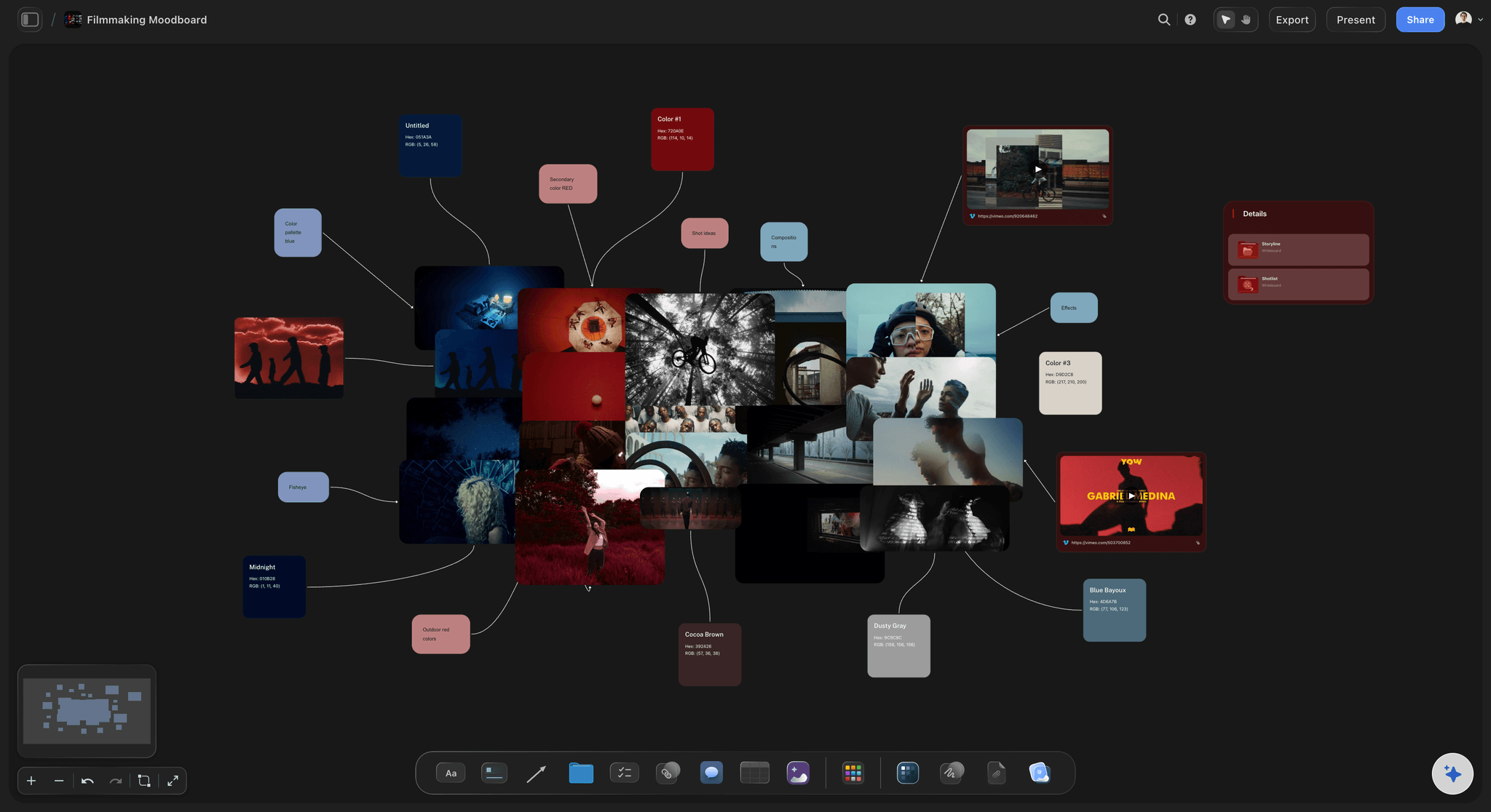
References and the look, next to the logistics
One canvas for the plan and the picture
Moodboards beside the crew plan: Keep the visual references, the moodboard, and the shotlist on the same canvas as the people who will execute them. A gaffer who can see the look you are lighting for asks better questions before the day.
Frames from reference videos: Grab frames from YouTube or Vimeo references and pin them beside the departments they concern. The camera and art conversations start from the same images.
Share one link with the whole crew: Send a view-only link and everyone sees the same plan in a browser, no account needed. Invite your coordinator, 1st AD, or line producer to work on the canvas with you, and export an image or PDF for anyone who wants paper.
Explore templates for your project
Every template opens as a real, editable board on the infinite canvas. Pick the closest fit and make it your own.
Pre-Production
Pull the brief, script, shot list, and moodboard into one pre-production hub so the whole shoot is planned in one place.
One app instead of five
Storyflow vs StudioBinder, Google Sheets, and Yamdu.
Every tool here is genuinely good at something. StudioBinder runs the production office and distributes call sheets better than anyone. Google Sheets is free and universally understood. Yamdu goes deepest on scheduling and stripboards. Here is where they differ.
Storyflow
Recommended
Infinite visual canvas
AI lays out the crew plan from a prompt
AI uses your whole board as context
Moodboards and references beside the plan
Call sheet distribution and stripboards built in
Completely free today
StudioBinder
Infinite visual canvas
AI lays out the crew plan from a prompt
AI uses your whole board as context
Moodboards and references beside the plan
Call sheet distribution and stripboards built in
Completely free today
Google Sheets
Infinite visual canvas
AI lays out the crew plan from a prompt
AI uses your whole board as context
Moodboards and references beside the plan
Call sheet distribution and stripboards built in
Completely free today
Yamdu
Infinite visual canvas
AI lays out the crew plan from a prompt
AI uses your whole board as context
Moodboards and references beside the plan
Call sheet distribution and stripboards built in
Completely free today
What creators are saying
Join early creators getting structured workspaces and AI that remembers their projects
“Storyflow has sped up my workflow by at least 3x, which means more flow state and more projects I can actually ship. It truly changed the way me and my team create.”

Reilin Joey
Director & YouTuber
“One prompt gets me a structured board. But the tactics are my favorite. I run my YouTube scripts through them and my intros and retention got better. It's amazing.”

Justkay
YouTuber & Freelance Filmmaker
“I used to juggle five apps to plan a project. Now I describe what I am making and get boards, lists, and a schedule. All in one place.”

George
@fernwehchronicles
Film crew planning questions, answered.
How to crew visually, what the AI actually does, and how the tools compare.
Start from the departments, not the names. List the departments your shoot actually needs, then the roles inside each one, then attach people to roles, starting with the heads of department because they will bring or recommend their own teams. Track three things per person: booking status (confirmed, penciled, unapproached), the days they work, and what they depend on to do the job, meaning gear, vehicles, access, and other people. Most crewing failures are not missing names. They are dependency collisions: a confirmed person on an unconfirmed day, gear arriving without the person who runs it, one operator promised to two units. Plan on a surface where those relationships are drawn, and you find the collisions while they are still cheap.
Storyflow is the app for planning a film crew when you need the whole crew plan in one view: the AI lays out departments and roles from a description, and crew cards connect to shoot days, locations and gear on one board the crew opens by link. StudioBinder is the stronger production-office tool for sending call sheets and tracking confirmations, Yamdu goes deeper on stripboard scheduling and department tasks, and Google Sheets is free and familiar to every crew.
No, and it is deliberately not built to. What the AI does is structural: describe the production and it lays out the departments and role slots a shoot of that scale needs, so a first-time producer sees the shape of a real crew and an experienced one skips an hour of setup. It can extend the plan in context, adding a second unit or building out a department around the cards you have already placed. What it does not do is pick people, negotiate rates, or make calls. Crewing runs on relationships and judgment about who works well together under pressure, and that knowledge is yours. The AI removes the clerical layer so your time goes into the calls that actually staff the shoot.
Not during early access. Storyflow is paid-only right now, with plans starting at $9.99 a month, and a Free plan for solo use launches before the end of 2026. Anyone a paid member invites to a board joins free today, so your coordinator or 1st AD can work on the crew plan without paying, and view-only links cost nothing for the crew reading it. If you need a completely free option this minute, Google Sheets is the honest answer: it costs nothing, everyone can open it, and a disciplined crew list in a spreadsheet has run plenty of shoots. You give up the visual dependency mapping, which is exactly the part that catches conflicts.
Give every crew card an explicit status and never let a name on the board mean more than it says. Three states cover almost every production: confirmed means a yes for specific dates, penciled means interested but not committed, and unapproached means a slot with a wish attached. The failure mode in spreadsheets is that all three look identical, a name in a cell, and two weeks out someone discovers the sound recordist was never actually asked. On a canvas the status is visible on the card itself, so scanning the board gives you the true state of the crew in seconds. Reviewing every penciled card at a set point in prep turns the scan into a routine instead of a scramble.
Yes, and this is where a canvas earns its keep over a list. Lay the shoot days out as a row of sections, pin each location with its recce photos and access notes, and connect every crew card to the days that person works. Full-run crew connect once; day-players connect to their specific days. When the schedule shifts, and it will, you drag the day and immediately see which people, which gear, and which location bookings it drags with it. That question, what does this change touch, is the one a spreadsheet answers slowest and a dependency map answers instantly. For multi-unit shoots, run each unit as its own section and the double-booked operator becomes visible the moment it happens.
It can do the planning half of the job well and it is honest to say StudioBinder does the distribution half better. In Storyflow you can lay out each shoot day's call sheet content on the board, with crew, call times, location details, and notes drawn straight from the crew plan you already built, then export it as a clean PDF or image to send out. What Storyflow does not do is distribute call sheets to the crew with delivery and confirmation tracking; that workflow is StudioBinder's home ground. Plenty of productions pair the two: plan the crew, days, and dependencies visually in Storyflow, then move the settled details into their call sheet tool of choice for send-out.
Yes. Share a view-only link and anyone with it opens the full plan in a browser, no account and no payment needed. This matters more on a film crew than in most teams, because a crew is a temporary organization of freelancers who will not sign up for a tool for a three-week job. With one link, the gaffer checks which days they are on, a department head sees who is on their team, and everyone is looking at the current plan instead of the version attached to an email four days ago. People who should edit rather than view, like your coordinator or line producer, can be invited to work on the canvas itself, and invited collaborators join free.
A spreadsheet is a fine crew list and a poor crew plan, and the difference is dependencies. Rows and columns hold one relationship well: person to attribute, name to phone number to rate. But a shoot runs on relationships between entities, person to day, person to gear, gear to location, unit to unit, and in a spreadsheet each of those lives in a different tab connected only by your memory. Conflicts hide in the joins. On a canvas the relationships are drawn as connections you can see, so the generator booked for the wrong days sits visibly next to the gaffer who needs it. If your shoot is small enough to hold in your head, Sheets is free and fine. The canvas is for the point where it no longer fits.
Yes, and keeping them beside the people is the point. Pin each location as a card with recce photos, parking, power, and load-in notes, and each rental package or vehicle as a card with pickup dates. Then connect them to the crew and days that depend on them. Storyflow also takes PDFs, images, and links directly on the canvas, so deal memos, insurance certificates, gear lists, and location agreements sit next to the cards they belong to instead of in an inbox. During prep, this turns what does this change touch from an afternoon of cross-checking into a glance at the board, and on the day it means the answer to any logistics question is one shared link away.
More from Storyflow
Pre-production to shoot day
Equipment list maker
Film shoot planner
Film production planning
Pre-production checklist
Call sheet template
AI call sheet generator
Shooting schedule
Film scheduling software
Film production management software
For producers
Film budget planner
Production calendar
Crew scheduling software
Day out of days
Low budget film planning
Lay the whole crew out and find the conflict.
Open a canvas, describe the production, and let AI build the department structure. No download.