
Rock-steady plans for every shoot
The film production checklist
from first draft to final delivery.
Five phases, what has to be finished before each one ends, and a short film worked through from script lock to festival upload, so nothing is discovered missing on set or at the lab.


Creatives working for these brands already got early access
- Red Bull
- Canon
- Artlist
- Porsche
See how easy it is to get started
Watch a real project come together, from a blank board to a finished plan, clicked through step by step.
Start from a ready-made template
Pick a board to see what you can build, then let AI fill it in. Every template is a real, editable starting point on the same infinite canvas.

Pre-Production
Pull the brief, script, shot list, and moodboard into one pre-production hub so the whole shoot is planned in one place.
What is a film production checklist?
A film production checklist is the list of everything a film needs, phase by phase, from the first draft to the files you hand a distributor or festival. Storyflow is an AI visual workspace that keeps that checklist for the whole film on one infinite canvas: development, pre-production, production, post and delivery as columns, with the script breakdown, strip board, shot list, budget and references next to the tasks they belong to.
Most checklists online stop at the shoot. That is the expensive half, but it is not where most independent films stall. They stall in development, when the script is never locked, and in delivery, when the editor discovers there is no music licence, no closed caption file and no signed release for the actor in scene 14. A whole-film checklist puts those end tasks on the page on day one, so the people who can fix them early know they exist.
Treat each phase as a gate, not a stage. A phase ends when its last item is ticked, not when the calendar says so. Pre-production is not over because the shoot is on Monday; it is over when every location is confirmed in writing, every actor has signed, and the call sheet for day one has gone out. If those things are not done, you are still in pre-production, and you are about to pay a crew to find out.
The checklist on this page has five phases. Development: the script, the rights, the budget top sheet, the financing plan. Pre-production: the breakdown, the schedule, the crew, the cast, the locations, the paperwork. Production: the call sheets, the daily reports, continuity, data backup. Post-production: the edit, sound, music, colour, titles. Delivery: the masters, the deliverables list, the legal file, the festival or distributor upload.
A worked example for a 12 minute short with a $18,000 budget. Development: script locked at draft 6 with 14 pages and 22 scenes; chain of title clean because the writer is the director; budget top sheet at $18,000 with a 10 percent contingency. Pre-production: six weeks, 4 locations, 5 cast, 11 crew, a three day schedule at 4 to 5 pages a day. Production: three 11 hour days, 31 setups on day one, two 1 TB cards backed up to two drives each night. Post: a five week edit, one week of sound, two days of colour. Delivery: a ProRes 422 HQ master, a stereo and 5.1 mix, an English SRT, a signed release for every face on screen, 60 stills, and the festival upload ten days before the deadline.
The rest of this page goes through each phase item by item, then shows how to keep the list where the work lives, so ticking a box and doing the job are the same act.
Ultra fast from brief to board
How do you plan a production checklist for filming your first short film?
Seven steps from a draft script to a checklist the whole crew can open. Do them in order: each one feeds the next.
01
Lay out the five phases
Make five columns on a Storyflow board: development, pre-production, production, post-production, delivery. Put the delivery date at the top of the last column and work backwards from it.
02
Break down the script
Attach the script (PDF, Word or Final Draft) and ask Storyflow's AI for a script breakdown. It returns a scene table with INT/EXT, day or night, page counts in eighths, cast, props and locations.
03
Turn scenes into a schedule
Ask for a strip board from the breakdown. Scenes are grouped by location and time of day, so the number of shoot days, and the pre-production tasks they need, become visible.
04
Fill each phase from the breakdown
Every location becomes a recce, a permit check and a signed agreement. Every cast member becomes a contract and a release. Write them as checklist cards with an owner and a date.
05
Add the documents beside the tasks
Shot list next to the shoot days, budget table next to development, call sheet PDFs next to production. The checklist points at the work instead of describing it.
06
Write the delivery list now
List every file the festival or distributor will want before you shoot. Music licences, releases and caption files are cheap to plan and expensive to chase later.
07
Share it with the crew
Send a view-only link. Crew open it with no account and see the phase they work in; anyone who needs to comment signs in. Tick items as they close and the open ones stay obvious.
What should be on a film production checklist, phase by phase?
Five phases, each with a short list that has to be finished before the next one starts. These are the items independent films most often skip.
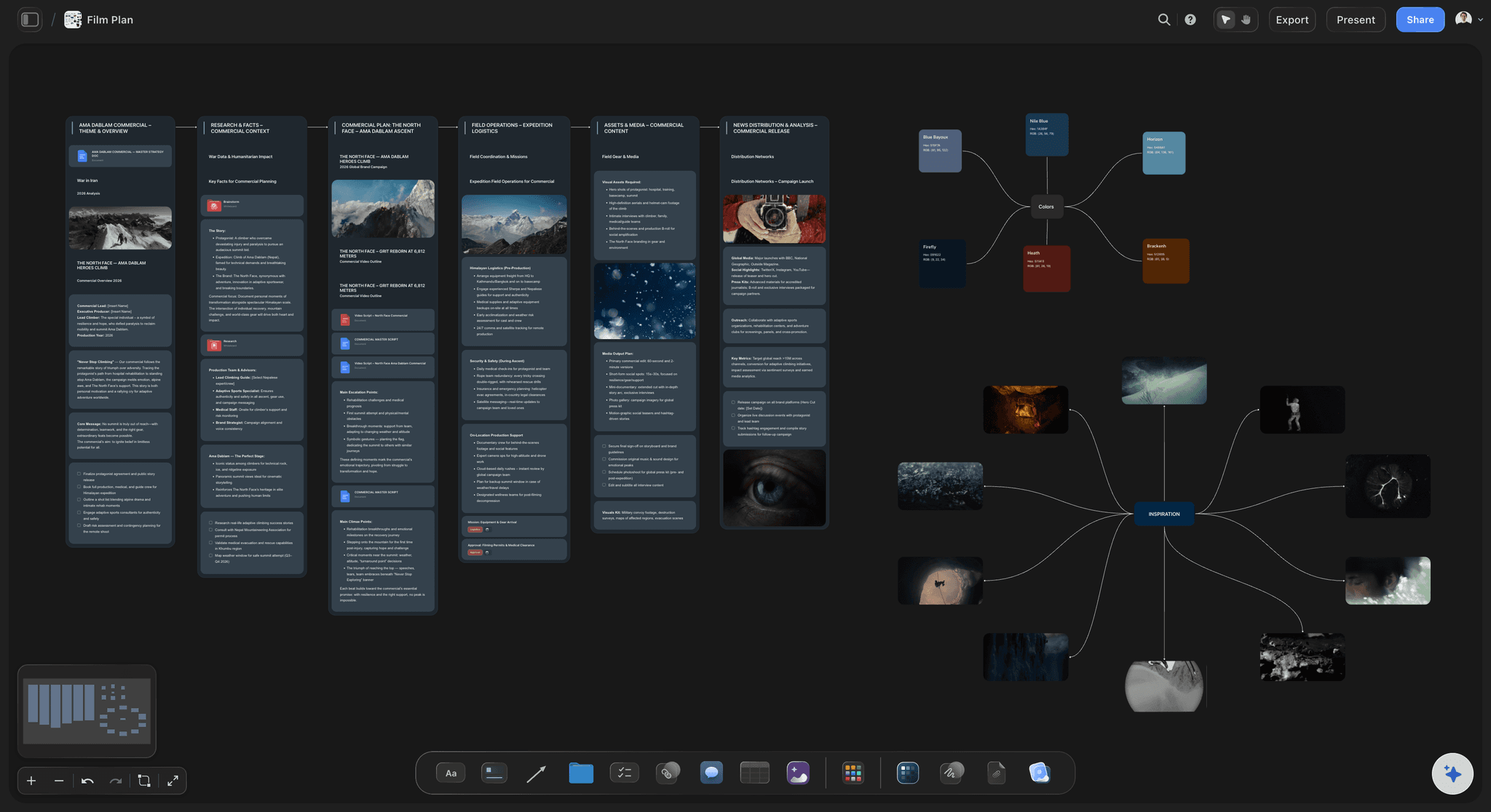
Development
Script, rights, money
Locked script with page count, chain of title or option agreement, budget top sheet, financing plan, a target festival or release window, and the producer and director agreed in writing.
See the film budget planner →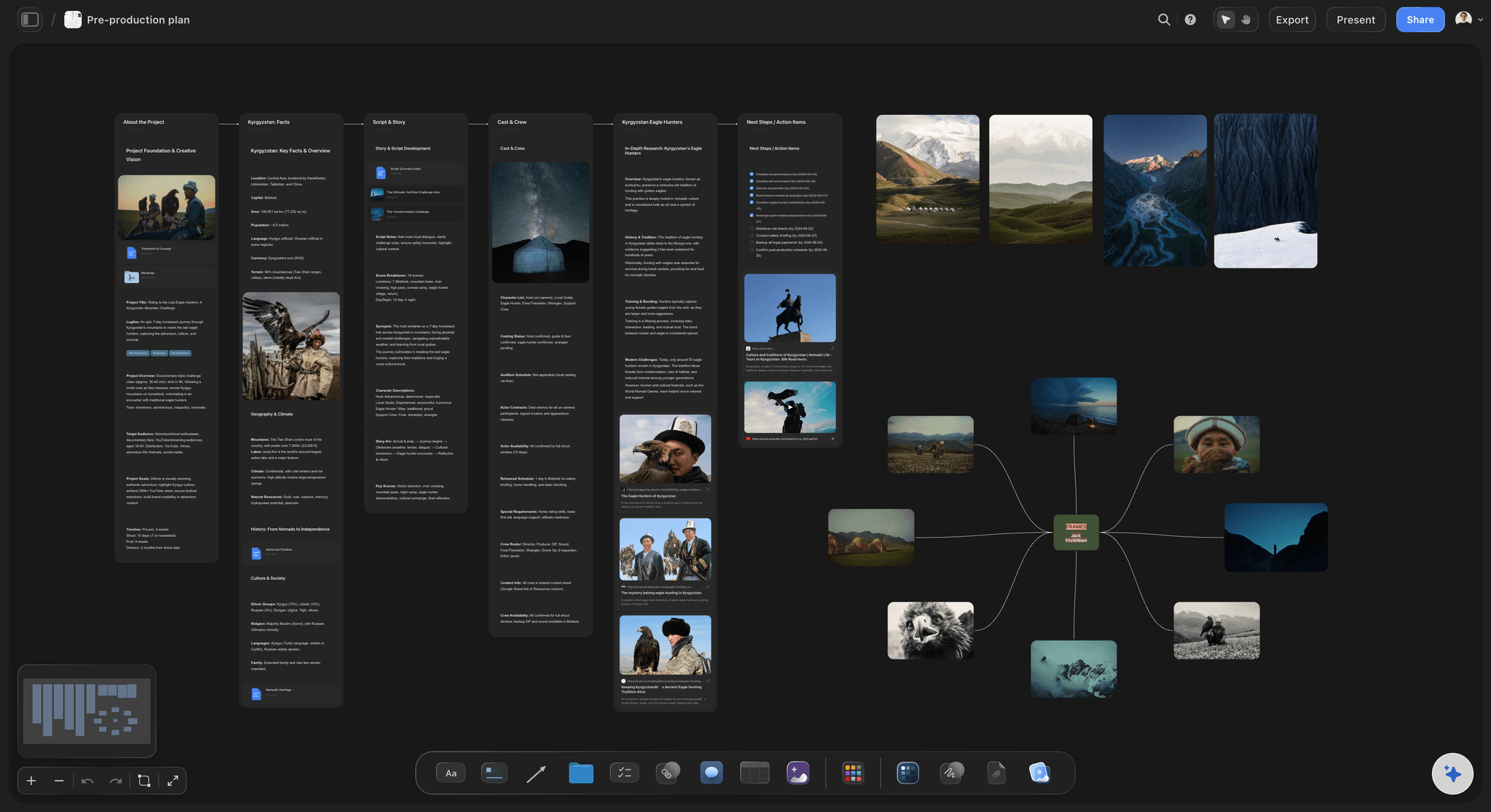
Pre-production
Breakdown, schedule, people, places
Script breakdown, strip board and shooting schedule, crew and cast booked, locations recced and signed, permits and insurance, shot list and storyboard, and the day one call sheet.
See the pre-production checklist →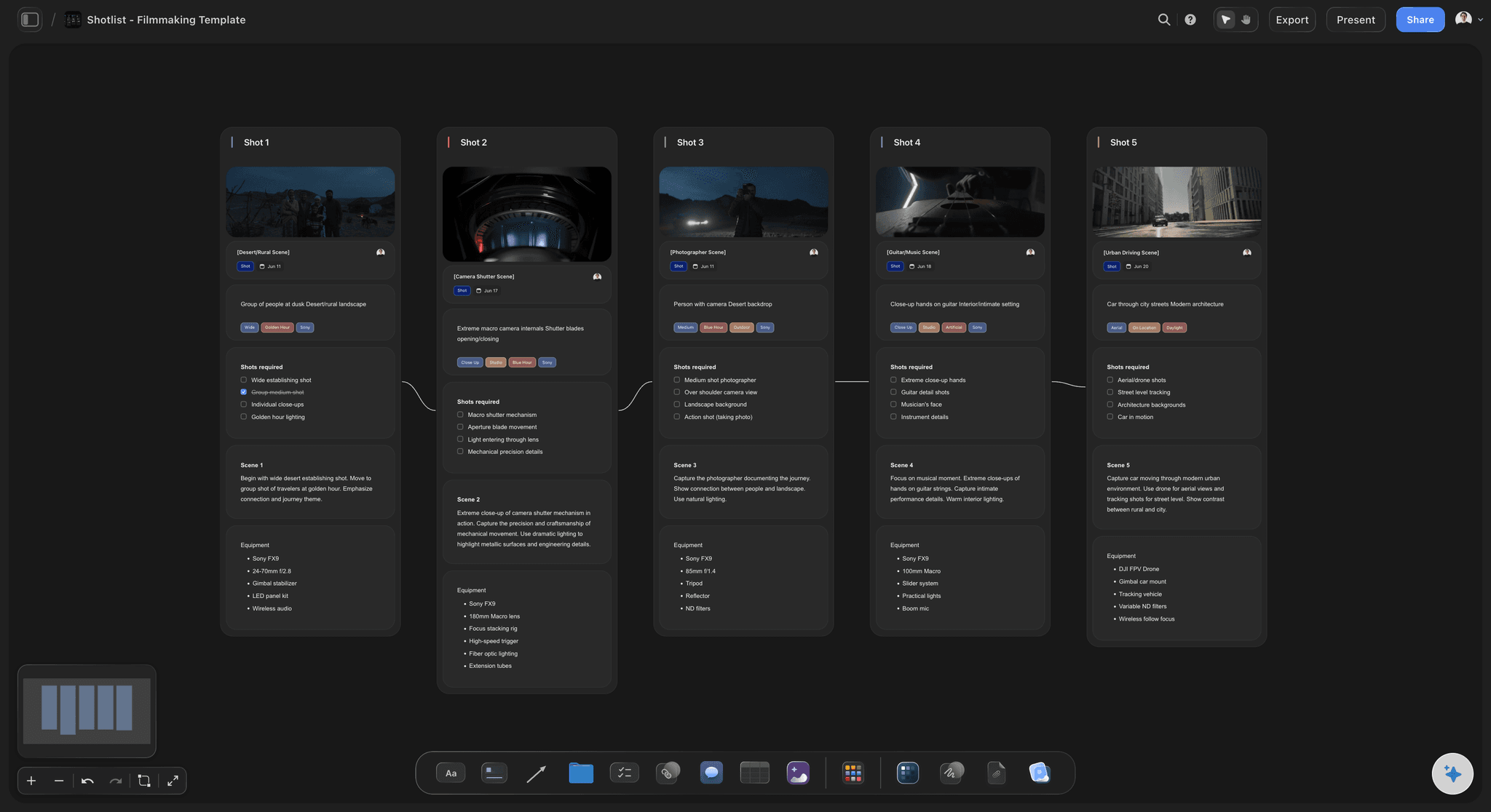
Production
Every shoot day, the same routine
Call sheet out the night before, safety briefing, shot list ticked as you go, continuity notes, camera and sound reports, a daily production report, and data backed up twice before anyone goes home.
See the call sheet template →
Post and delivery
Edit, sound, colour, masters, paperwork
Picture lock, sound edit and mix, music cleared, colour, titles and credits, then the master files, captions, stills, press kit and the legal file with every release and licence.
See the post-production workflow →The checklist and the work it checks, on one board.
Breakdown, schedule, shot list, budget and call sheets sit beside the tasks that need them, so the checklist is never out of date with the film. Storyflow is paid-only during early access, with plans from $7.99 a month billed annually ($9.99 monthly). A free plan launches before the end of 2026, and anyone a paid member invites to a board joins free.
AI script breakdown from a PDF, Word or Final Draft file
Strip board and shot list built from the breakdown
Call sheet PDFs authored from the board
Tables with date cells, labels and a Sum footer for the budget
View-only links crew open with no account
Built for people with taste
What are the stages of film production, and what closes each one?
Each phase has a few items that decide whether the next phase goes well. These are the ones to tick before you move on.
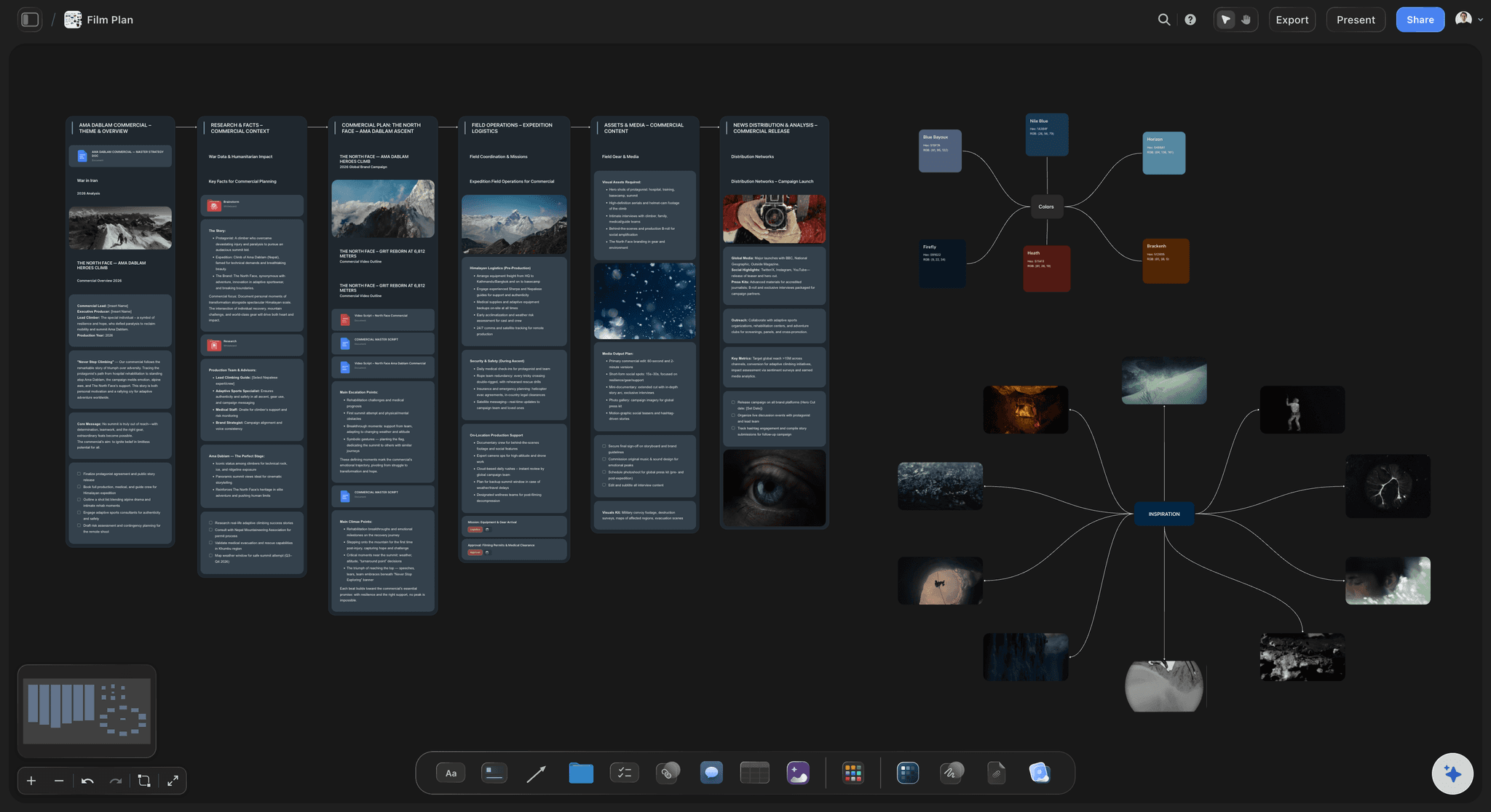
Development and pre-production
Close these before you book a single crew day
Script locked, with a number: Write the draft number and the page count on the board. A schedule built on draft 5 and a shoot on draft 7 is how scenes go missing.
Rights in writing: If the story is adapted, or a co-writer is involved, the option or assignment is signed. Festivals and distributors ask for chain of title in delivery.
Locations signed, not promised: A location agreement with dates, hours, parking and a contact. A verbal yes from a friend's landlord is not a location.
Insurance and permits: Production insurance certificates for every location that asks for one, and filming permits where the city or park requires them.
Production
The shoot day routine that saves the edit
Call sheet the night before: Call times, locations, scenes, weather, parking and the nearest hospital, sent by 7 pm. Storyflow's AI authors it as a PDF from the board.
Continuity on every take: Wardrobe, props, hair and eyelines noted against the scene, with a photo. A matching problem found in the edit costs a reshoot.
Reports filed before wrap: Camera report, sound report, script supervisor notes and the daily production report. Together they tell post what was shot and why.
Two backups, two places: Every card copied to two drives and checked before it is formatted. One drive leaves the set with someone else.

Post-production and delivery
The items that block a festival upload
Music cleared before picture lock: Sync and master licences for every track, or original score with a signed composer agreement. Temp music that stays in the cut is a delivery problem.
Releases for every face: Cast, extras and anyone recognisable in a public location. Keep them in one folder named by scene.
Masters and versions: A high quality master, a festival screener, a stereo mix and a 5.1 mix if asked, plus caption files in each language you promise.
Marketing materials: Stills, a poster, a synopsis in three lengths, director bio and a press kit. Festivals ask for them on the same form as the film.
Explore templates for your project
Every template opens as a real, editable board on the infinite canvas. Pick the closest fit and make it your own.
Pre-Production
Pull the brief, script, shot list, and moodboard into one pre-production hub so the whole shoot is planned in one place.
One app instead of five
What is the best tool to keep a film production checklist?
Storyflow first, because the checklist and the work sit on the same board. A spreadsheet is fine for a list; StudioBinder is a strong choice if you want dedicated production modules.
Storyflow
Recommended
Whole film on one board, development to delivery
AI builds the breakdown, strip board and shot list from the script
Call sheet PDFs from the board
References, storyboard and budget beside the tasks
Crew open it by link with no account
Crew text and email distribution with confirmations
Works offline
StudioBinder
Whole film on one board, development to delivery
AI builds the breakdown, strip board and shot list from the script
Call sheet PDFs from the board
References, storyboard and budget beside the tasks
Crew open it by link with no account
Crew text and email distribution with confirmations
Works offline
A spreadsheet
Whole film on one board, development to delivery
AI builds the breakdown, strip board and shot list from the script
Call sheet PDFs from the board
References, storyboard and budget beside the tasks
Crew open it by link with no account
Crew text and email distribution with confirmations
Works offline
What creators are saying
Join early creators getting structured workspaces and AI that remembers their projects
“Storyflow has sped up my workflow by at least 3x, which means more flow state and more projects I can actually ship. It truly changed the way me and my team create.”

Reilin Joey
Director & YouTuber
“One prompt gets me a structured board. But the tactics are my favorite. I run my YouTube scripts through them and my intros and retention got better. It's amazing.”

Justkay
YouTuber & Freelance Filmmaker
“I used to juggle five apps to plan a project. Now I describe what I am making and get boards, lists, and a schedule. All in one place.”

George
@fernwehchronicles
Film production checklist questions
What filmmakers ask when they are planning the whole film, not just the shoot.
It is the list of everything a film needs from the first draft to delivery, grouped into five phases: development, pre-production, production, post-production and delivery. Each phase ends when its items are done, not when the calendar says so. In Storyflow the phases are columns on one board, with the breakdown, schedule, shot list and budget beside the tasks they belong to.
Storyflow suits a whole-film checklist because the tasks and the work sit on one board: its AI builds the script breakdown, strip board and shot list from your script, authors call sheet PDFs, and crew open the board by link with no account. StudioBinder is a good choice if you want dedicated production modules and built-in crew distribution. A spreadsheet works for a simple list.
Development (script, rights, budget, financing), pre-production (breakdown, schedule, crew, cast, locations, paperwork), production (the shoot days), post-production (edit, sound, music, colour, titles) and delivery (masters, captions, legal file, festival or distributor upload). Some lists merge delivery into post, which is how delivery items get forgotten.
Start from the delivery date and work back. Lay out the five phases, break down the script, build the schedule from the breakdown, and turn every location, cast member and scene into checklist items with an owner and a date. Write the delivery list before you shoot. Storyflow's AI does the breakdown and strip board from the script, which fills most of pre-production for you.
A pre-production checklist covers only the weeks before the shoot: breakdown, schedule, crew, cast, locations and paperwork. A film production checklist covers the whole film, including development, the shoot days, post and delivery. Storyflow's pre-production checklist page goes deeper on that one phase.
The call sheet sent the night before, a safety briefing, the shot list ticked during the day, continuity notes with photos, camera and sound reports, the daily production report, and every card backed up to two drives before it is formatted. Repeat it every day; the routine is the point.
A master file in the format asked for (ProRes 422 HQ is common for festivals), a stereo mix and often a 5.1 mix, caption or subtitle files, stills, a poster, synopses, a press kit, and the legal file: chain of title, music licences, location agreements and a release for every recognisable person. Check the festival or distributor's own list; it overrides any generic one.
A 10 to 15 minute short commonly takes four to eight weeks of pre-production, two to four shoot days and six to ten weeks of post, plus however long development takes. The worked example on this page runs six weeks of pre-production, three shoot days and about seven weeks of post and delivery.
Yes. The five phases and the items on this page work as a template on their own. In Storyflow you can lay them out as columns on a board, or ask the AI for a film plan or pre-production plan and add the post and delivery columns. Duplicate the board for your next film.
It can do the slow parts. Storyflow's AI reads a script as PDF, Word or Final Draft and builds the scene breakdown, the strip board and the shot list, which turn into most of the pre-production checklist. It can author call sheet PDFs and turn a board table into an .xlsx spreadsheet. The decisions about money, people and dates are still yours.
The producer owns it. On larger films the production manager and coordinator run it day to day; on a short the producer, who is often the director, does all three. Each department head owns the items in their area: the DP owns camera, the sound recordist owns sound, the editor owns post.
Music clearance, releases for extras and people in the background, location agreements in writing, a second backup of the footage, caption files, and stills taken on set. None of them stop the shoot. All of them can stop a festival upload or a sale.
Yes. Share the Storyflow board by view-only link: crew open it on a phone or laptop with no account and see the phase they work in. Anyone who needs to comment signs in to do it. Call sheets can be exported as PDFs for people who want a file.
Not yet. Storyflow is paid-only during early access, with plans from $7.99 a month billed annually ($9.99 monthly). A free plan launches before the end of 2026, and anyone a paid member invites to a board joins free. Crew who only read the board open a view-only link with no account.
Five phases. One board. Nothing found missing at delivery.
Keep the film production checklist where the breakdown, schedule, shot list and budget already live, and share it with the crew by link.