
Extremely reliable pre-production
Decide where the money goes
before you do the math.
Lay the budget out as department blocks and line-item cards on an infinite canvas, move costs between funded, stretch, and cut, and keep the references that justify each spend beside the numbers.


Creatives working for these brands already got early access
- Red Bull
- Canon
- Artlist
- Porsche
See how easy it is to get started
Watch a real project come together, from a blank board to a finished plan, clicked through step by step.
Start from a ready-made template
Pick a board to see what you can build, then let AI fill it in. Every template is a real, editable starting point on the same infinite canvas.

Pre-Production
Pull the brief, script, shot list, and moodboard into one pre-production hub so the whole shoot is planned in one place.
What is a film budget planner?
A film budget planner is a tool for working out where a production's money should go before anyone commits to spending it. Storyflow is an AI visual workspace that lays out your film's budget on one infinite canvas: department blocks, line-item cards, costs moved between funded, stretch and cut, and the references that justify each spend. For an indie film, budget planning means deciding which departments get funded and at what level, which costs are essential and which are aspirational, what the real trade-offs are between a better camera package and a longer shoot, and what gets cut first when the financing lands lower than the plan. The final tally lives in a spreadsheet or in dedicated budgeting software. The decisions that produce that tally are the hard part, and they happen earlier.
Early-stage budgeting is a decision problem before it is an arithmetic problem. A spreadsheet is superb at the arithmetic and nearly useless for the decisions, because a grid of rows shows you numbers without showing you shape: which departments dominate, which line items are actually negotiable, what a ten thousand dollar cut does to the look of the film. Those are spatial questions about priority and trade-off, and they are almost impossible to reason about one cell at a time. They become discussable the moment the whole budget is laid out in front of you as things you can move.
Storyflow is an AI-native infinite canvas built for exactly that stage. Describe your film in a prompt, with the format, the scale, and the number you are working toward, and the AI builds the budget as one table of line items, categories and costs with a live total. Ask it to sort those lines into funded, stretch and cut columns, and each becomes a card you drag, argue about and pin the creative references beside: the location photos that explain the art budget, the frames that explain the lens choice. To be clear about what Storyflow is not: it is not budgeting software. Its tables total a cost column, and the AI can export the budget as an Excel file whose totals stay live, but there are no fringes, globals or accounting structure. It is where you decide and communicate the budget's shape; the formal budget stays in your spreadsheet or in Movie Magic.
Planning an indie film budget means working across several connected layers at once: the departments (camera, lighting, art, sound, cast, locations, post) and the rough weight each one carries, the line items inside each department and which of them are fixed versus negotiable, the funding states (what is funded now, what you will add if more money closes, what dies first if it does not), the trade-offs between departments that compete for the same dollars, the creative references that justify each spend to an investor, and the contingency you are protecting. Storyflow keeps all of those visible at once, which is what makes the trade-offs honest instead of hidden in a row you forgot to scroll to.
Ultra fast from brief to board
From a number to a plan you can defend.
No account codes to memorize, no template to fight. Describe the film and start moving costs.
01
Open a canvas
Sign up in seconds. No download. Your infinite budgeting canvas opens in the browser.
02
Describe the film
Type the format, the scale, and the number you are working toward, and the AI builds a budget table of line items grouped by department, with a live total. You start from a structure instead of a blank grid.
03
Move costs between funded, stretch, and cut
Ask the AI to turn the lines into cards in funded, stretch and cut columns, then drag them until the funded column matches the money you actually have. Pin the references that justify each cost beside it, so every card carries its argument.
04
Share it, then tally it
Send investors and department heads a view-only link that shows the plan, or export it as an image or PDF for the pitch deck. When the shape is settled, build the formal budget in your spreadsheet or Movie Magic.
The whole budget, visible and movable.
Departments, line items, funding states, and the references that justify them on one infinite canvas.
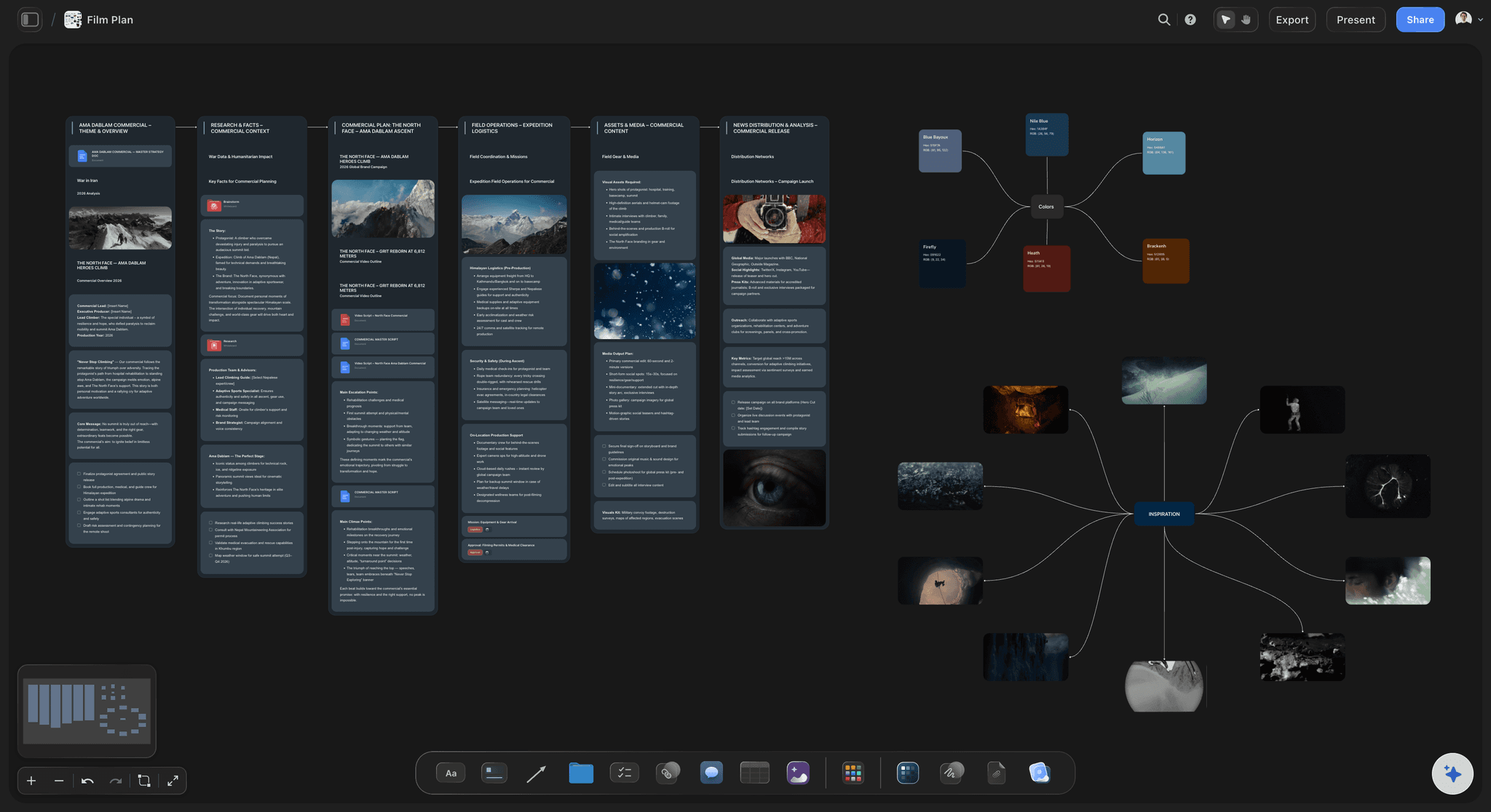
AI builds a budget board from your film's premise
Start from a structure, not a blank grid
Describe the film and the AI builds a budget table grouped by department, sized to the kind of production you described, with a live total. Deciding against a draft structure is much faster than inventing one from nothing.
See film production planning →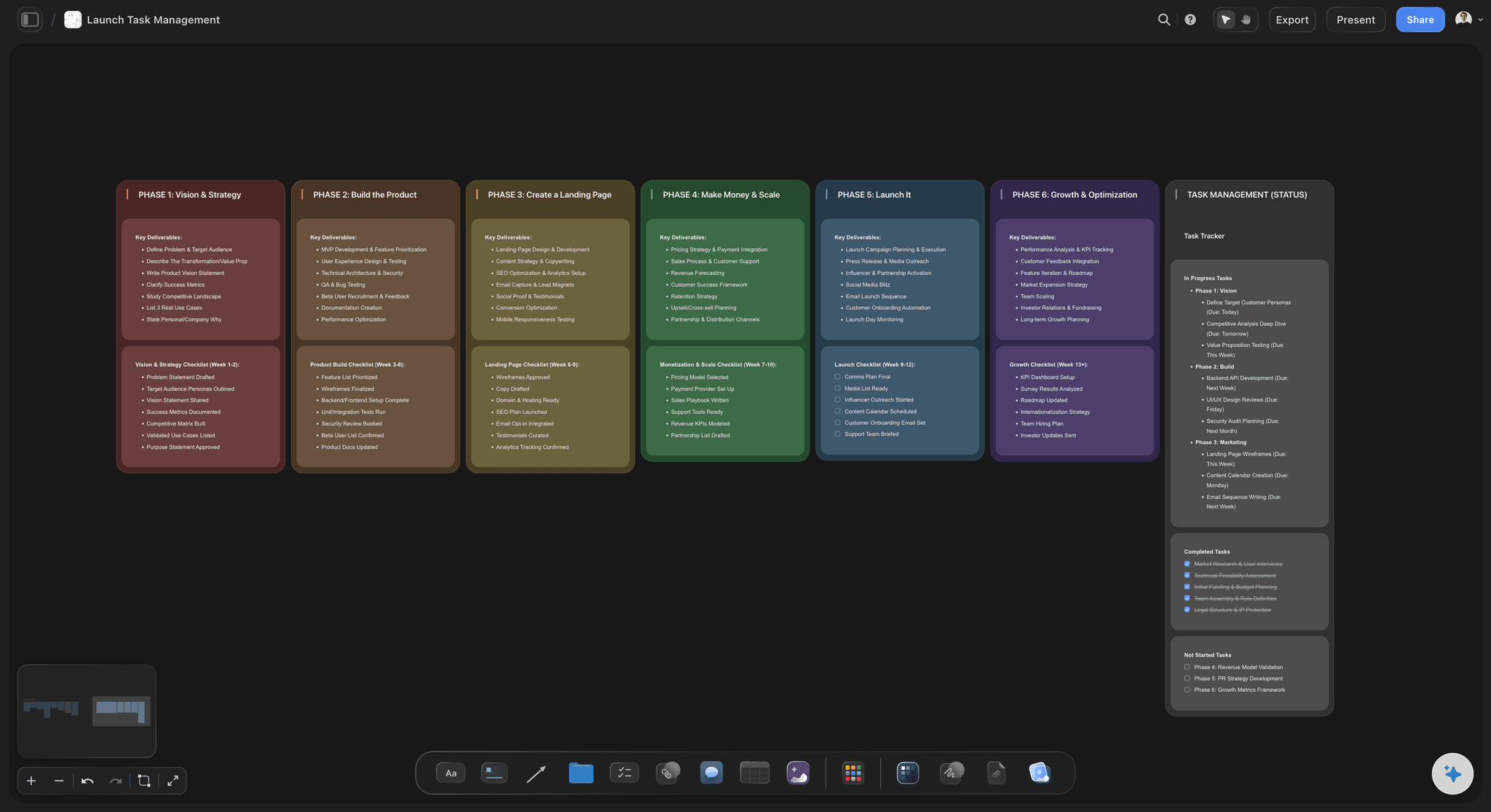
Funded, stretch, and cut as columns you drag between
Make the trade-offs by moving cards
Most budget arguments are priority arguments. When each line item is a card in a funded, stretch, or cut column, dropping the crane day to protect a second camera body is a drag, not a rewrite, and everyone can see what the decision cost.
Built for indie filmmakers →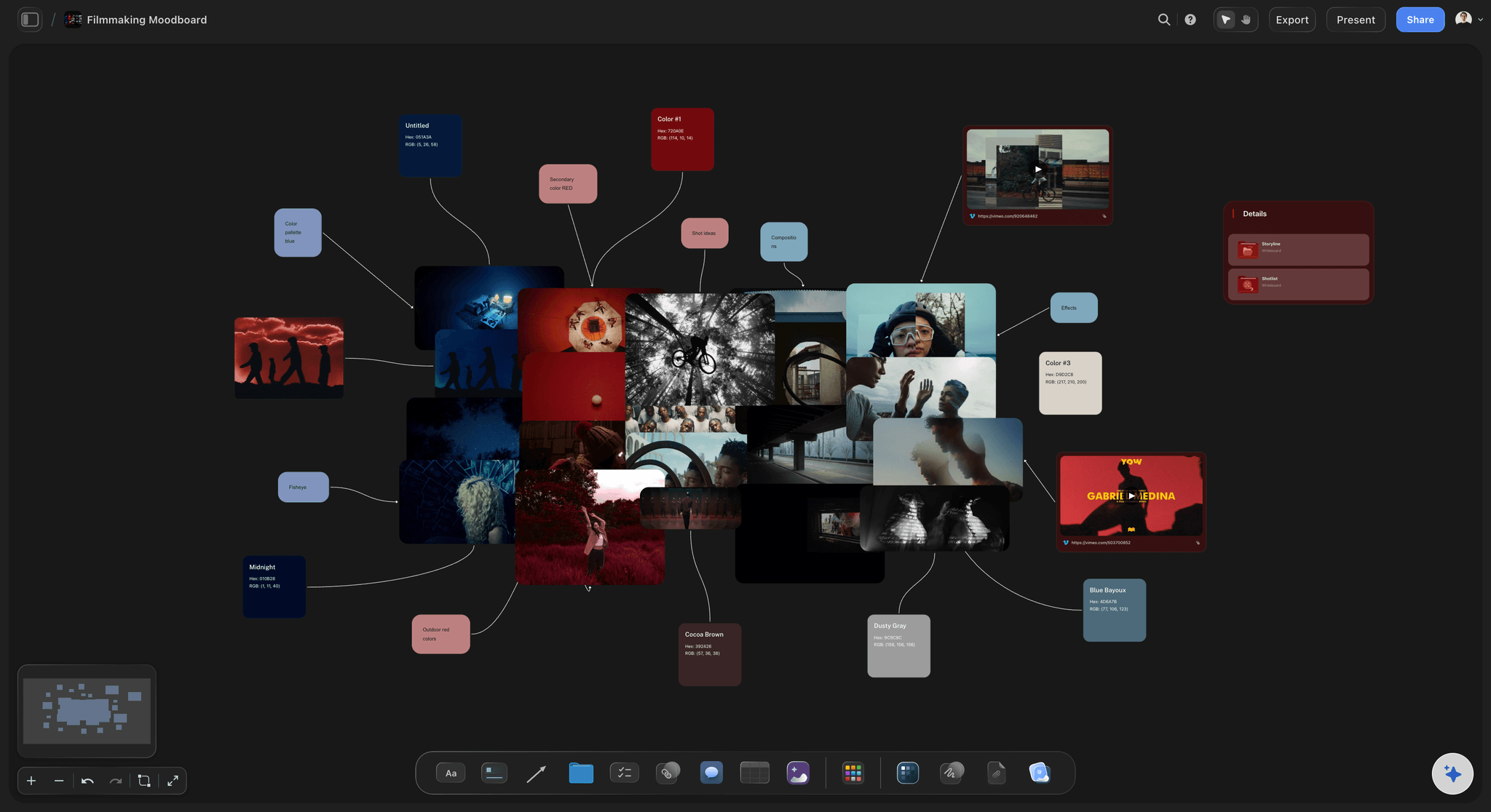
References and moodboards beside the numbers
Every cost carries its justification
Pin location photos next to the locations budget, reference frames next to the camera package, and the moodboard next to the art department. A number with the image it pays for beside it is a decision; a number alone is a guess.
See the pre-production checklist →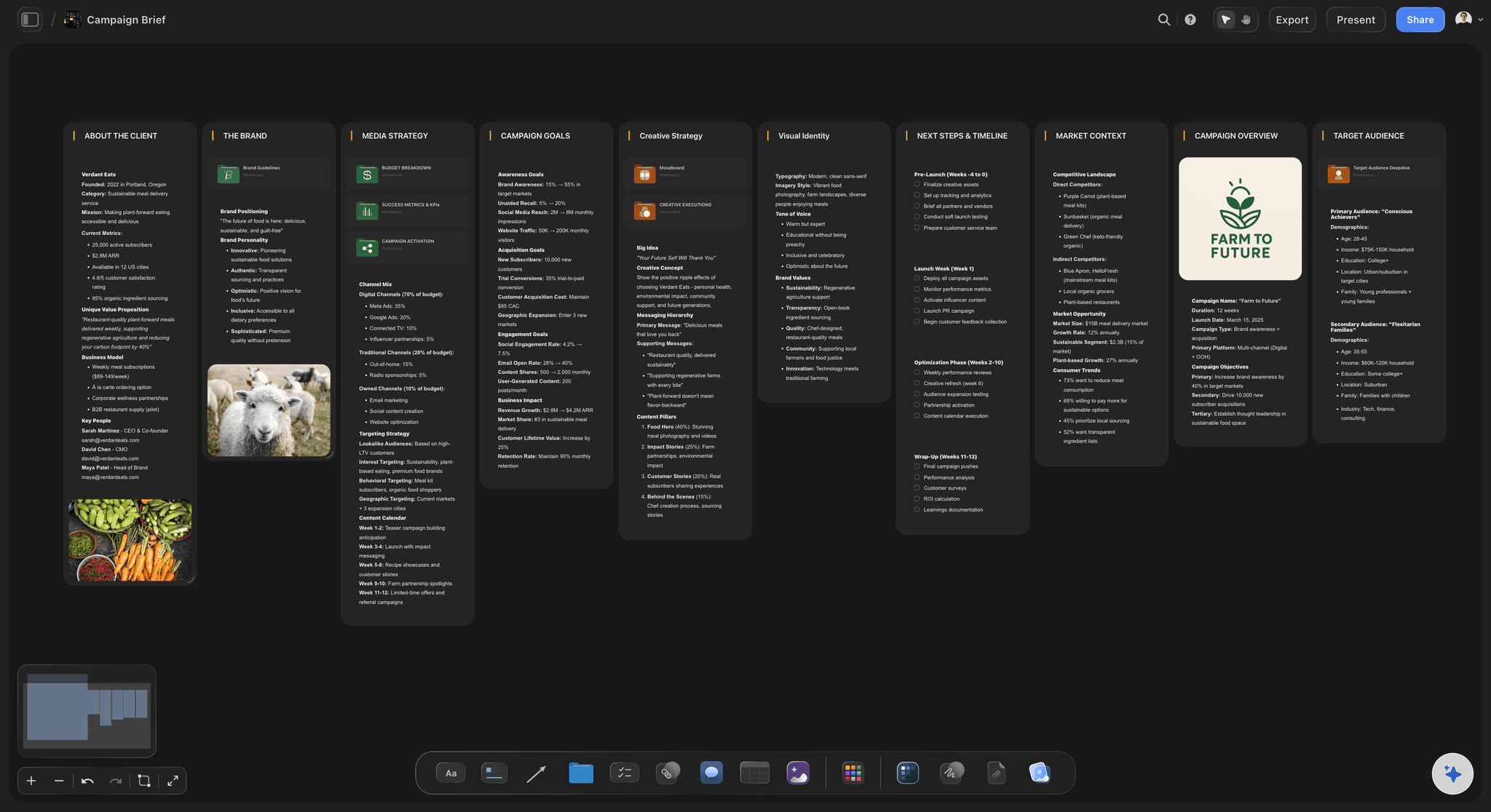
View-only links that show investors the plan
Show the thinking, not just a grid
Send a view-only link and an investor sees the departments, the priorities, and the references behind each cost in their browser, no account needed. It reads like a plan with reasoning, which is a very different conversation from a spreadsheet attachment.
Build the film pitch deck →Unlimited boards. No object cap.
Open a canvas, describe the film, and start deciding where the money goes. Storyflow is paid-only during early access, with plans from $7.99 a month billed annually ($9.99 monthly). A free plan launches before the end of 2026, and anyone a paid member invites to a board joins free.
Unlimited budget boards on an infinite canvas
Basic AI usage to generate boards from prompts
Starter templates for film planning built in
Share view-only links with investors and department heads
Built for people with taste
More than rows in a grid.
A spreadsheet shows you the totals. The decisions that produce those totals need the whole budget visible at once.
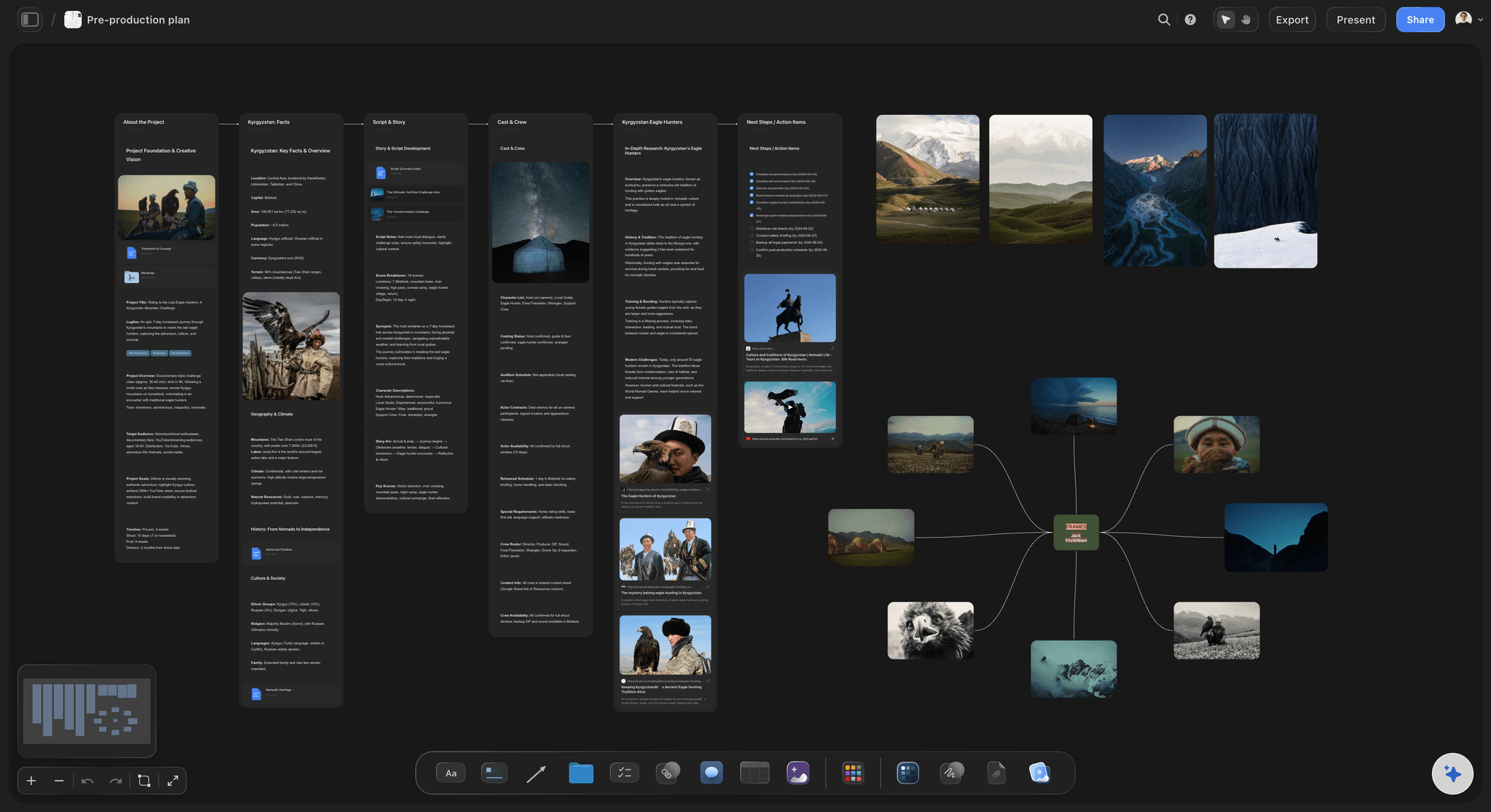
Departments, line items, states, and trade-offs
Work across every layer of the budget
Department blocks with real weight: Lay out camera, lighting, art, sound, cast, locations, and post as blocks on the canvas. When a department's block is visibly crowded with line items and another is nearly empty, the shape of your priorities is on the table before anyone opens a calculator.
Funded, stretch, and cut states: Every line item lives in one of three states, and moving between them is a drag. When the financing comes in twenty percent light, you are not rebuilding a spreadsheet; you are moving the cards you already agreed would go first.
Trade-offs made explicit: Connect the line items that compete for the same money: the extra shoot day against the better location, the crane against the second body. A trade-off drawn as a connection gets argued about; one buried in two distant rows gets discovered in post.
Contingency you can defend: Keep the contingency as its own visible block instead of a percentage in a footer. When someone proposes raiding it, they have to do it in front of everyone, on the board.
AI that can see the budget you have already shaped
Plan with an AI that knows your production
Prompt to work through a decision: Ask it to lay out the departments a short film at your scale usually needs, to suggest what a stretch column might hold, or to restructure the board when the format changes. It keeps the whole canvas in context, so suggestions fit the film you are actually making.
It structures, it does not calculate: Storyflow's AI arranges the budget's shape: departments, line items, states, and priorities. It totals the cost column, but it does not compute fringes, globals or cost reports, and it is not a substitute for a line producer's math. The judgment and the arithmetic both stay with you.
Iterate without losing decisions: Re-prompt as many times as the plan changes. Cards you have already placed and argued into position stay exactly where they are while the AI builds around them.
The creative case beside the financial one
Keep the film's look next to its cost
References justify the spend: Drag in the frames, stills, and location photos that explain why a line item exists. The anamorphic package stops being an indulgence when the reference frames it pays for are pinned beside it.
Moodboards on the same canvas: Keep the film's moodboard on the budget board, not in a separate deck. When a cut is proposed, you can see immediately which part of the look it takes with it.
Research and quotes in one place: Drop in rental house PDFs, location agreements, and links to the quotes behind each number. Grab frames from YouTube or Vimeo for visual reference. The evidence for the budget lives on the budget.
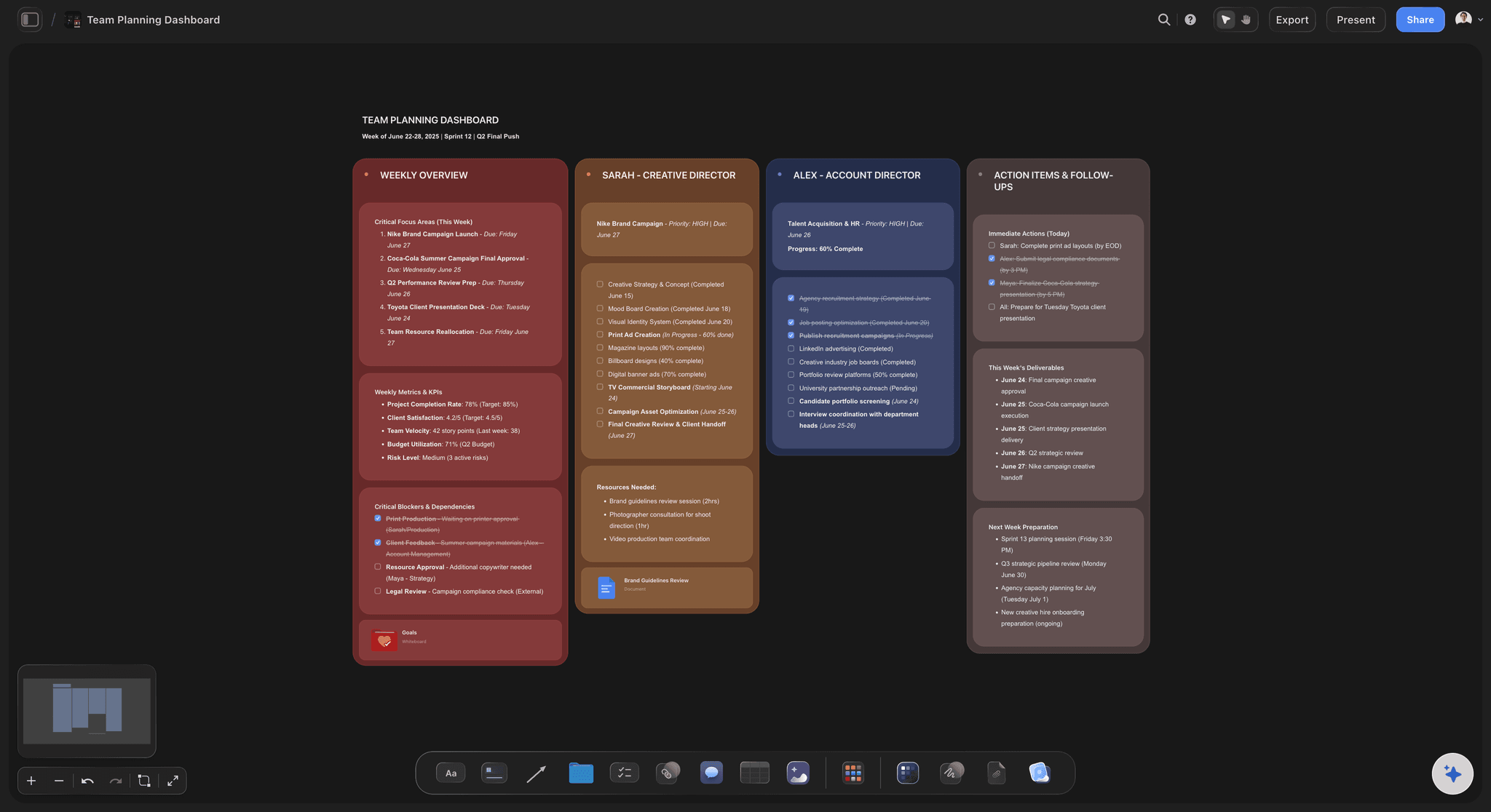
Share the plan, then hand off the math
Communicate the budget's shape
View-only links for investors: Send a link and an investor sees the whole plan in a browser with no account: the departments, the priorities, and the reasoning. It answers the question a spreadsheet cannot, which is why the money is shaped this way.
Plan with your producer: Invite your producer and department heads to the same canvas so the budget has one shape rather than five people's assumptions. Comments live on the cards they are about.
Export for the deck, tally in the tool: Export the board as a high-quality image or PDF for the pitch deck. When the shape is agreed, build the formal budget in Google Sheets or Movie Magic, where the arithmetic belongs.
Explore templates for your project
Every template opens as a real, editable board on the infinite canvas. Pick the closest fit and make it your own.
Pre-Production
Pull the brief, script, shot list, and moodboard into one pre-production hub so the whole shoot is planned in one place.
One app instead of five
Storyflow vs Movie Magic, Google Sheets, and StudioBinder.
Every tool here is genuinely good at its job, and Storyflow does not do the accounting: Movie Magic owns industry-standard budgeting arithmetic, Google Sheets owns free formulas, and StudioBinder ties budgeting to the production office. Storyflow is where you decide and communicate the budget's shape.
Storyflow
Recommended
Infinite visual canvas
AI builds a budget board from a prompt
References and moodboards beside the numbers
Automatic budget totals
Industry-standard fringes and globals
View-only links that show the plan, not just a grid
Movie Magic Budgeting
Infinite visual canvas
AI builds a budget board from a prompt
References and moodboards beside the numbers
Automatic budget totals
Industry-standard fringes and globals
View-only links that show the plan, not just a grid
Google Sheets
Infinite visual canvas
AI builds a budget board from a prompt
References and moodboards beside the numbers
Automatic budget totals
Industry-standard fringes and globals
View-only links that show the plan, not just a grid
StudioBinder
Infinite visual canvas
AI builds a budget board from a prompt
References and moodboards beside the numbers
Automatic budget totals
Industry-standard fringes and globals
View-only links that show the plan, not just a grid
What creators are saying
Join early creators getting structured workspaces and AI that remembers their projects
“Storyflow has sped up my workflow by at least 3x, which means more flow state and more projects I can actually ship. It truly changed the way me and my team create.”

Reilin Joey
Director & YouTuber
“One prompt gets me a structured board. But the tactics are my favorite. I run my YouTube scripts through them and my intros and retention got better. It's amazing.”

Justkay
YouTuber & Freelance Filmmaker
“I used to juggle five apps to plan a project. Now I describe what I am making and get boards, lists, and a schedule. All in one place.”

George
@fernwehchronicles
Film budgeting questions, answered.
How to plan an indie budget visually, where the math should live, and what Storyflow does and does not do.
Start with decisions, not arithmetic. Lay out your departments as blocks: camera, lighting, art, sound, cast, locations, post, and contingency. Inside each, write every cost you can foresee as its own line-item card. Then sort every card into one of three states: funded, meaning it happens with the money you have; stretch, meaning it happens if more money closes; and cut, meaning it dies first when the number drops. Argue each card into position with the people who have to live with it, and pin the reference images that justify the expensive cards beside them. Only when that shape is settled should you open a spreadsheet and do the tally, because arithmetic performed on undecided priorities just produces a precise version of a guess.
It depends on which stage you are at. For the formal budget itself, Movie Magic Budgeting is the industry standard, with fringes, globals, and the account structures financiers expect. Google Sheets is free, handles formulas well, and is the honest answer for most micro-budget films' final tally. StudioBinder ties budgeting into call sheets and the rest of the production office. Storyflow covers the stage before all of those: deciding which departments get money, what the trade-offs are, and what gets cut when the number drops, laid out visually as cards you move between funded, stretch, and cut with references beside the numbers. Many productions decide the shape in Storyflow and then tally it in one of the others.
Yes, the total, not the accounting. The AI's budget workflow builds one table of items, categories and costs with a live total row, and it can export the table as an Excel file whose totals stay live formulas. There are no fringes, globals or cost reports, so the formal budget a financier reads belongs in Movie Magic Budgeting or a full spreadsheet. Storyflow is where the departments, priorities and cuts get decided.
Not during early access. Storyflow is paid-only during early access, with plans from $7.99 a month billed annually ($9.99 monthly). A free plan launches before the end of 2026, and anyone a paid member invites to a board joins free, so your producer and department heads can work on the budget canvas. If you need a free option today, Google Sheets is the honest answer for the tally.
They solve different problems and are not really competitors. Movie Magic Budgeting is professional accounting software for film: chart-of-accounts structures, fringes, globals, subgroups, and the output formats studios, bond companies, and financiers expect. If a financier asks for a topsheet, Movie Magic is the tool, and nothing on an infinite canvas replaces it. Storyflow works on the stage before that document exists, when the question is not what the total is but where the money should go. It holds the departments, the funded, stretch, and cut states, and the creative references as movable cards. A common workflow is to decide the shape in Storyflow, then have your line producer build the Movie Magic budget from a plan that is already agreed.
Yes, and that is the intended workflow rather than a compromise. The canvas holds the decision layer: department blocks, line-item cards in their funded, stretch, and cut states, the trade-off connections, and the references that justify each cost. The spreadsheet holds the arithmetic layer: rates, quantities, totals, and the version you send when someone asks for numbers. Drop a link to the sheet on the board so the two stay one click apart, and when a decision changes on the canvas, update the corresponding rows. Keeping the layers separate is clarifying in practice, because a budget meeting about priorities stops being derailed by formula errors, and a spreadsheet session stops reopening arguments that were already settled.
The usual departments are above-the-line costs (rights, writer, director, producers, principal cast), camera, lighting and grip, art and production design, wardrobe, hair and makeup, sound, locations, transport, catering, insurance, post-production (edit, color, sound mix, music), deliverables, and marketing or festival costs if you are carrying them. Indie budgets most often go wrong in the unglamorous rows: insurance, catering, transport, and deliverables are chronically underestimated, and contingency, usually ten percent, is the first thing raided and the thing that saves the film. Laying every department out as a block on a canvas makes the forgotten categories visible as empty space, which is a surprisingly effective way to catch what the spreadsheet template quietly left out.
Investors fund a plan, not a grid. What convinces them is seeing that you know where the money goes, why it goes there, and what happens if less of it arrives. A Storyflow board shows exactly that: departments with visible weight, a funded column that matches the raise, a stretch column that shows ambition with discipline, and references attached to the costs that need justifying. Share it as a view-only link, no account needed, or export it as an image or PDF for the pitch deck. Bring the formal numbers too, as a topsheet from your spreadsheet or Movie Magic, because serious investors will want them. The board answers why, the topsheet answers how much, and you need both in the room.
The honest answer is whatever you decided in advance, which is exactly why the cut column exists. Productions that decide the cut order early, in daylight, protect the film; productions that improvise cuts under pressure tend to shave every department equally, which weakens everything and saves nothing. The usual candidates are the extra shoot day, specialty equipment like cranes and Steadicam, location upgrades, the size of background casts, and original score versus licensed library music. The wrong candidates are insurance, sound, and contingency, which are cheap relative to the damage their absence causes. Keeping the cut order as a visible, ordered column means the twenty-percent-light phone call triggers a rehearsed move instead of a panic.
Yes. Invite them to the canvas and everyone works on the same board, so the budget has one shape rather than a director's version, a producer's version, and a DP's assumptions that never quite reconcile. Invited collaborators join free during early access. Department heads can leave comments directly on the line items they dispute, which keeps the argument attached to the cost it is about instead of scattered across a text thread. For people who only need to see the plan, like investors or an executive producer checking in, a view-only link shows the whole board in a browser with no account. When the shape is settled, export it or hand it to whoever builds the formal budget.
More from Storyflow
Equipment list maker
Film production planning
For indie filmmakers
For producers
Pre-production software for filmmakers
Film crew planner
Film scheduling software
Shooting schedule
Pre-production checklist
Film pitch deck
Production calendar
Low budget film planning
Indie film production workflow
Film grant proposal
Music licensing tracker
Film development slate
Lay the budget out and make the calls.
Open a canvas, describe your film, and let AI build the first budget board. No download.