
Elevated brand work, made with taste
Plan your brand launch,
from first idea to launch campaign.
A brand launch is two projects pretending to be one. First you decide what the brand is, then you decide how the world finds out. Most teams run those in different tools and the second one quietly forgets the first. Storyflow keeps the positioning visible right through to the launch creative, on one canvas.


Creatives working for these brands already got early access
- Red Bull
- Canon
- Artlist
- Porsche
See how easy it is to get started
Watch a real project come together, from a blank board to a finished plan, clicked through step by step.
Start from a ready-made template
Pick a board to see what you can build, then let AI fill it in. Every template is a real, editable starting point on the same infinite canvas.

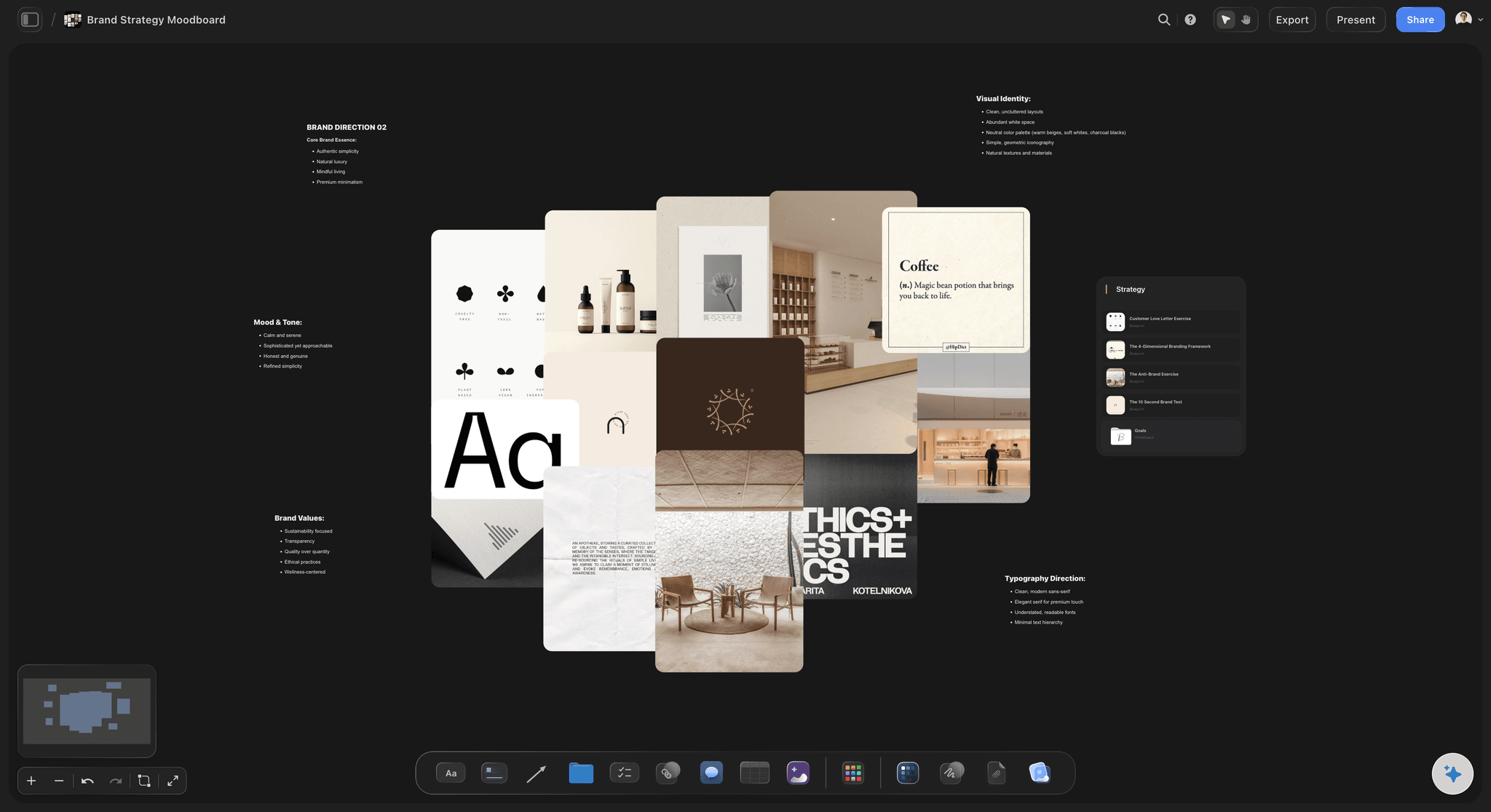
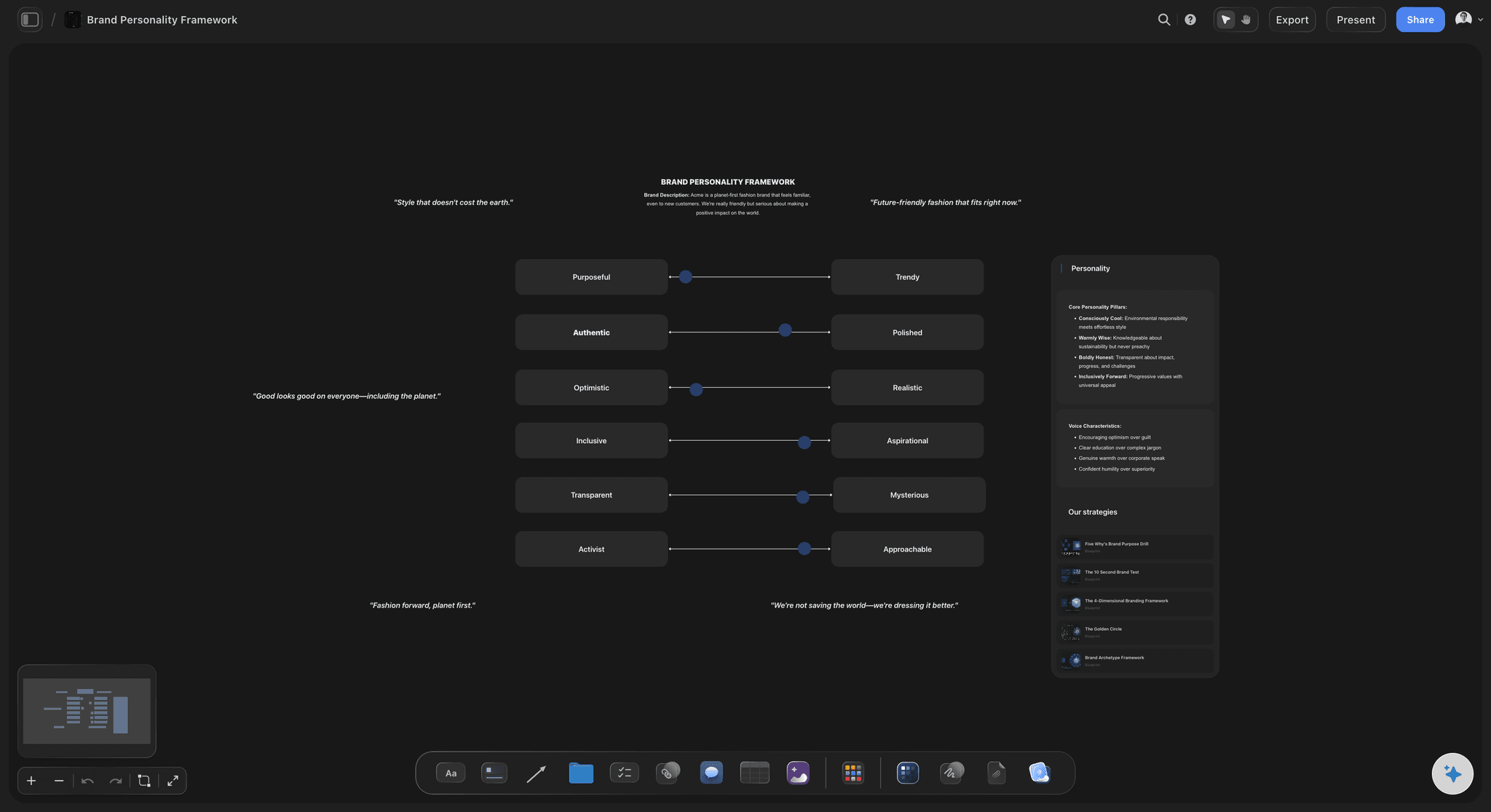
Brand Strategy
Define your positioning, values, and voice and connect them into a strategy the team can follow.
What does planning a brand launch involve?
A brand launch runs in two halves: definition, then introduction. Storyflow is an AI visual workspace that plans a brand launch from first idea to campaign on one infinite canvas: positioning, naming, identity routes side by side, and the launch campaign built under the positioning. The first half is definition: who this is for, what it stands for, what it is called, how it looks and sounds. The second is introduction: the campaign, the channels, the assets and the moment. The halves are usually run by different people at different times, which is exactly why the launch creative so often expresses a positioning nobody has read since the workshop.
The definition half is visual and unresolved by nature. Naming needs dozens of candidates before one survives, identity needs directions compared side by side, and positioning only becomes real when you can see it next to the competitors it is supposed to be different from. None of that fits comfortably in a document or a task list, which is why it usually happens in a slide deck that then goes stale.
The introduction half is a campaign, and it is the point where the strategy either shows up or does not. The practical test of a brand launch plan is whether somebody writing a launch email in week nine can see the positioning without going to find it. If they cannot, the brand becomes whatever the assets happen to say.
Storyflow puts both halves on one canvas. The positioning, the name candidates, the identity directions and the moodboards stay visible while the campaign is planned underneath them. Storyflow does not design logos or run media, and it has no approval workflow. It is where the thinking is done and kept coherent.
Ultra fast from brief to board
One canvas from positioning to launch week.
The strategy stays on screen while the campaign is built under it.
01
Define the brand
Audience, positioning, personality and the competitors you are defining against, laid out where they can be argued with.
02
Explore name and identity
Dozens of name candidates and several identity directions side by side, with references attached to each.
03
Build the launch campaign
Channels, assets and the launch moment planned directly beneath the positioning they are meant to express.
04
Take stakeholders through it
Share a view-only link so founders, investors or the client see the whole argument rather than a summary deck.
The strategy stays visible when the creative starts.
A brand launch fails quietly, by drifting, and the drift is only ever visible if both halves are in the same view.
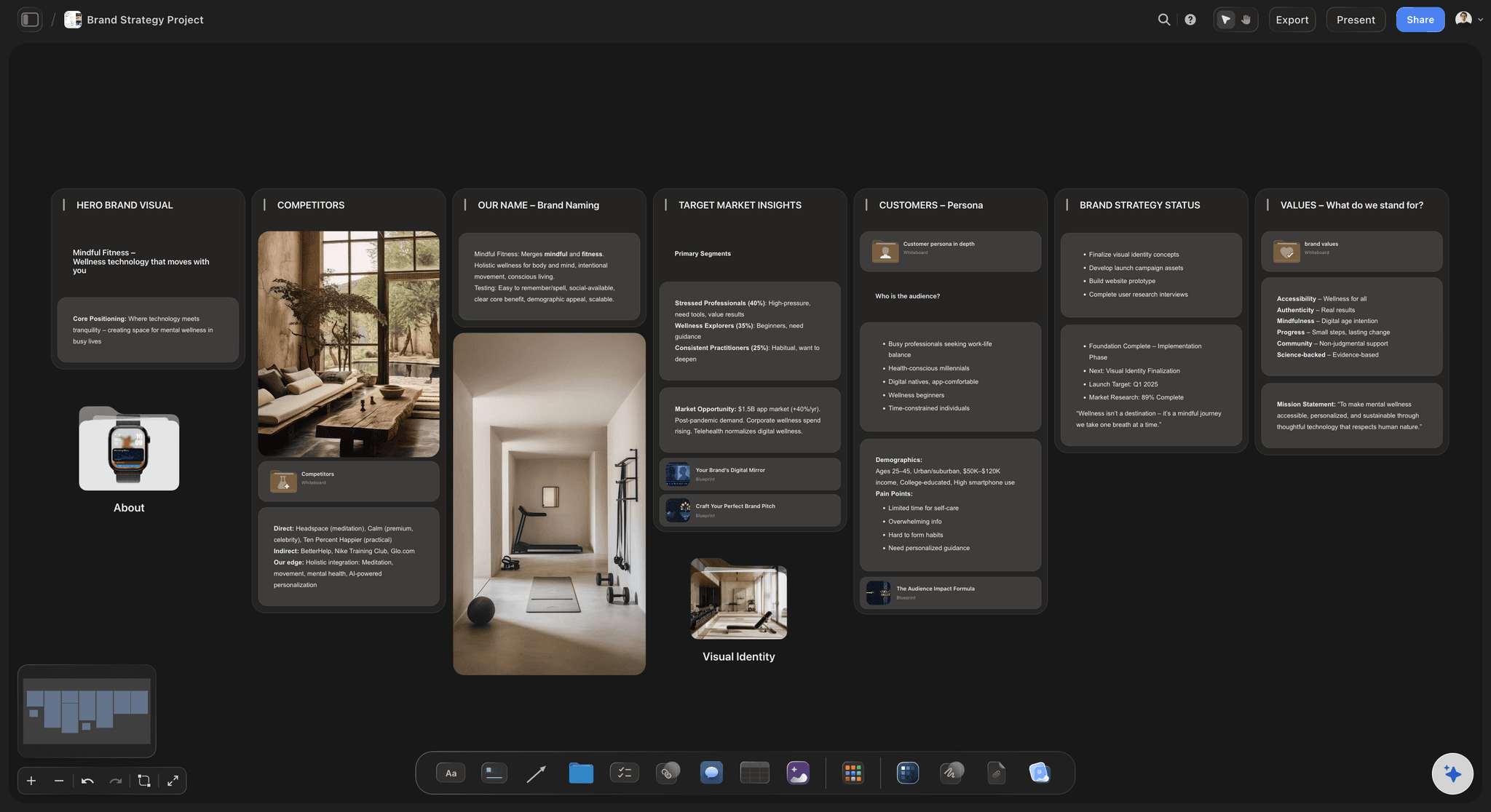
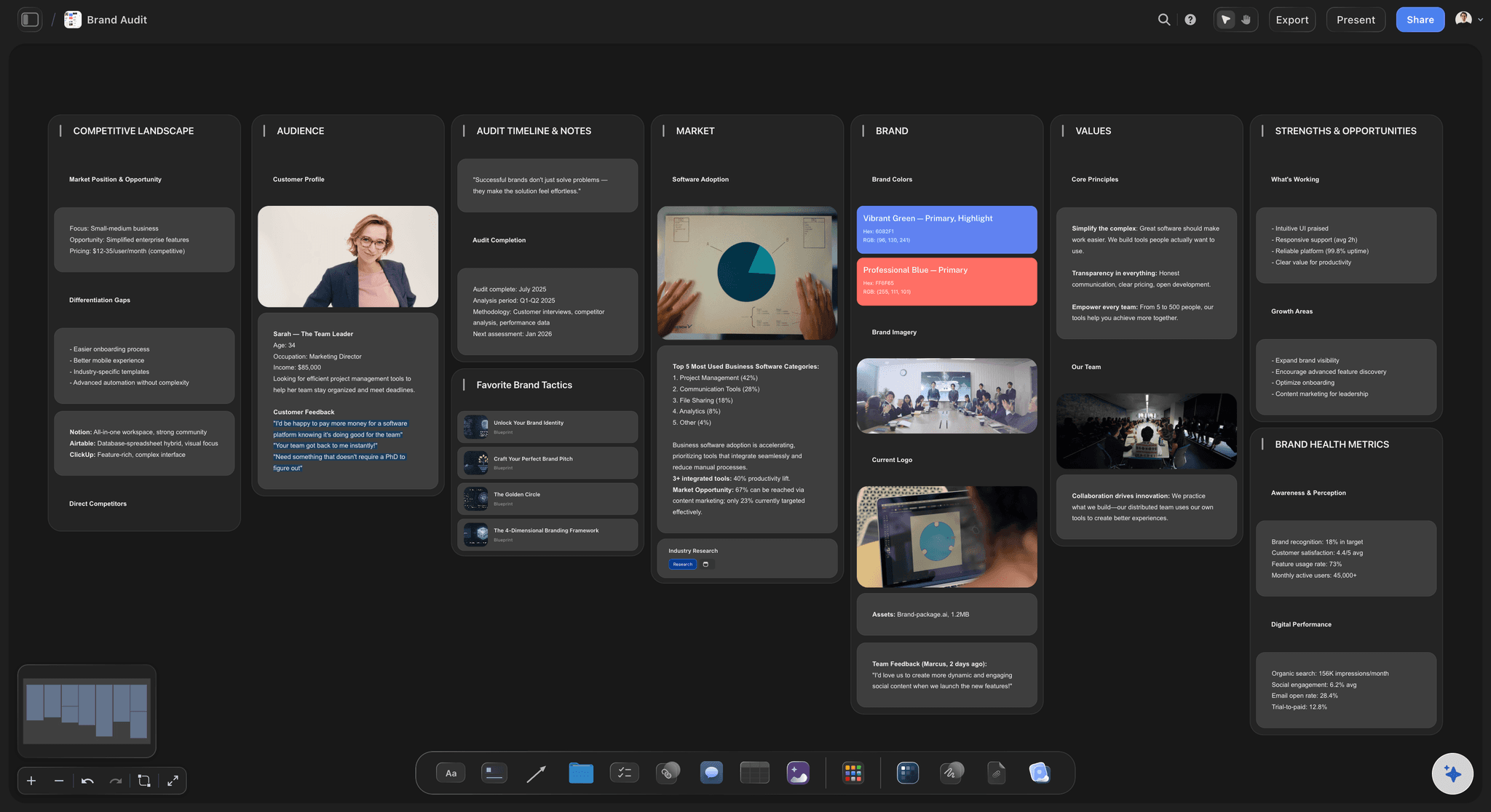
Positioning you can point at
Define the brand against something
Put the positioning next to the competitors it is supposed to be different from. A difference you cannot see on the board is one the market will not see either.
See the brand strategy tool →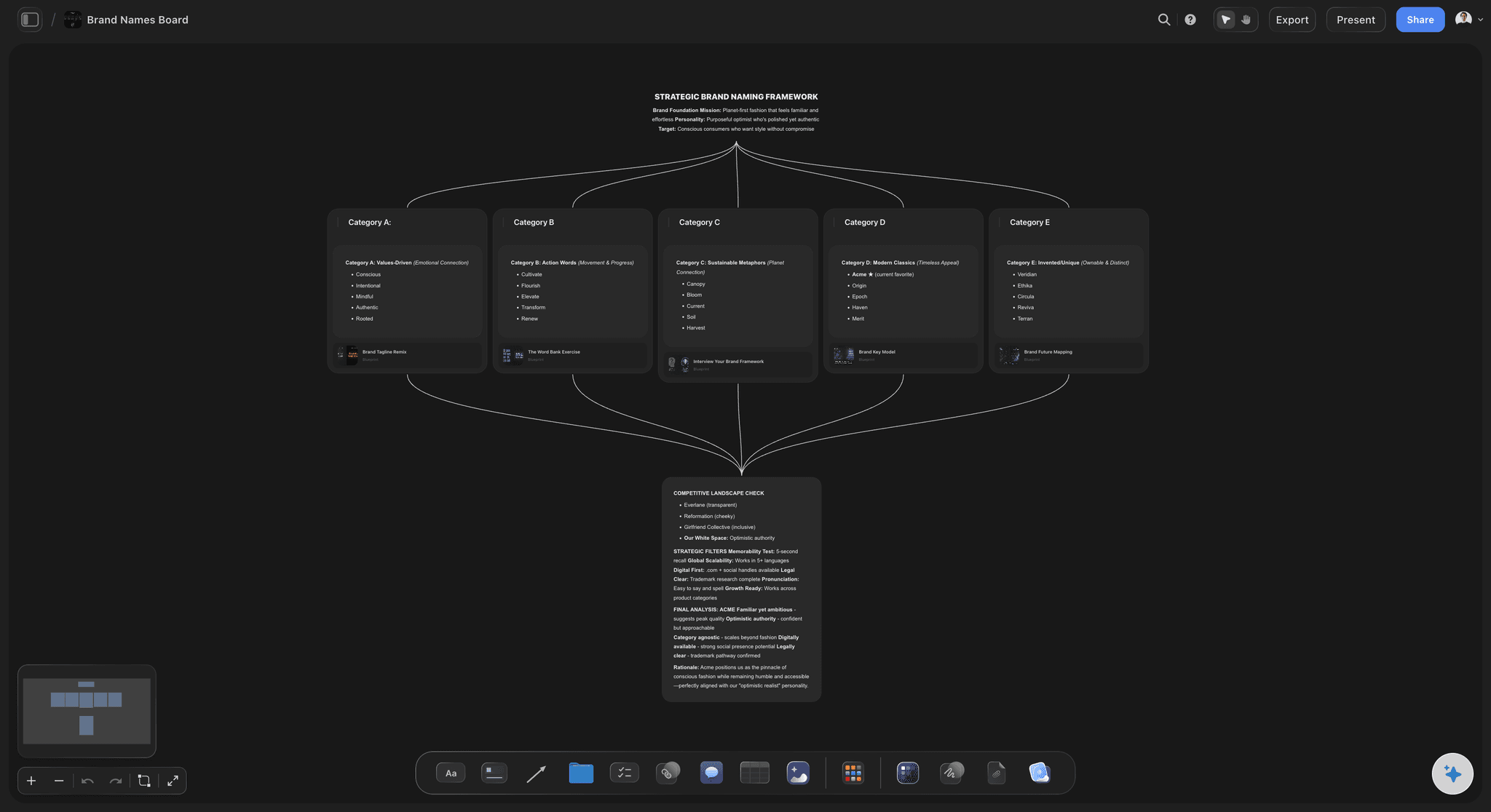
Naming needs volume
Dozens of candidates, visible at once
Good names come from a long list, not a short one. Spread every candidate across the canvas, group them by territory, and cut the ones that do not sound like the brand voice.
Explore the AI brand voice generator →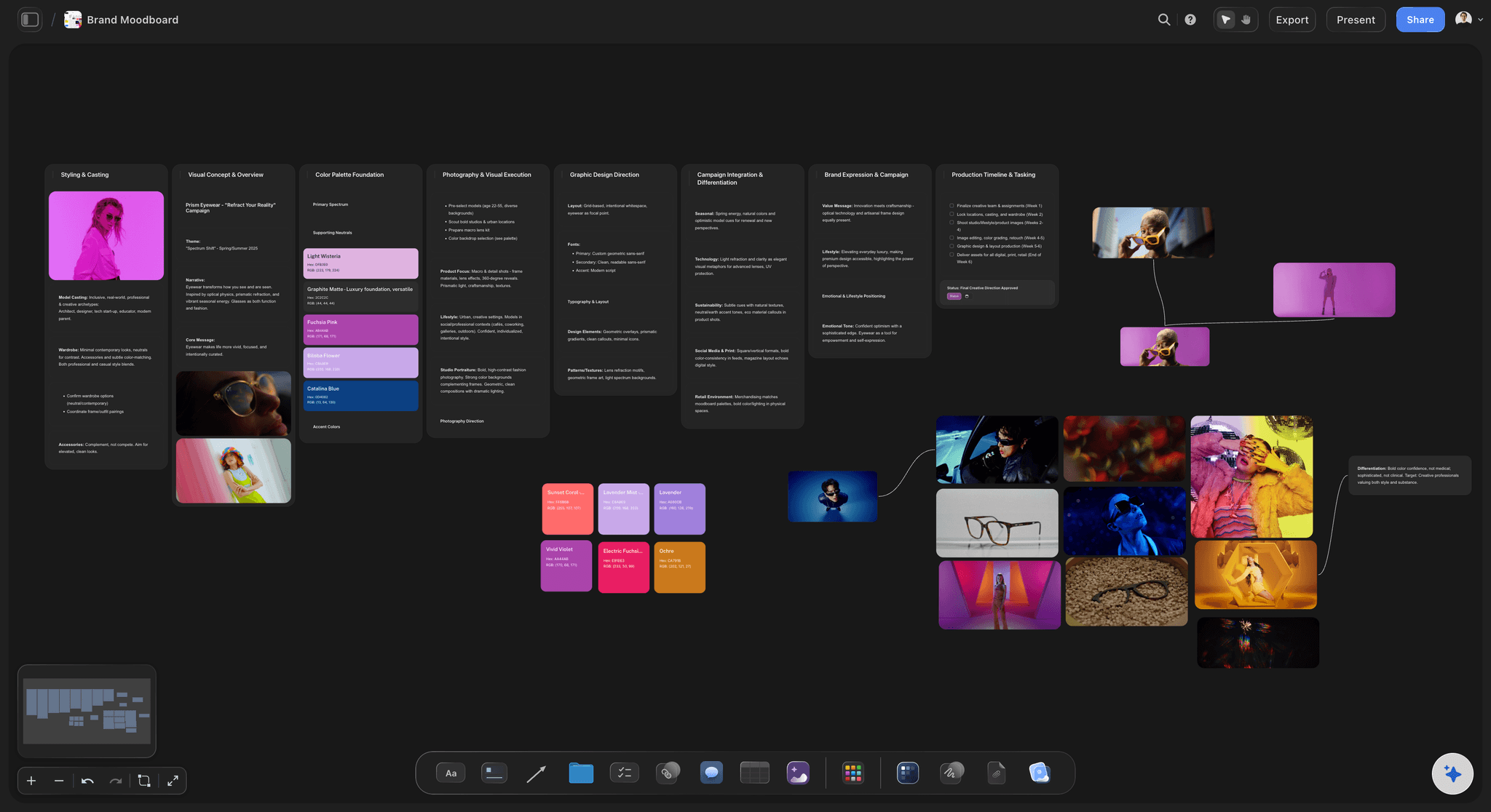
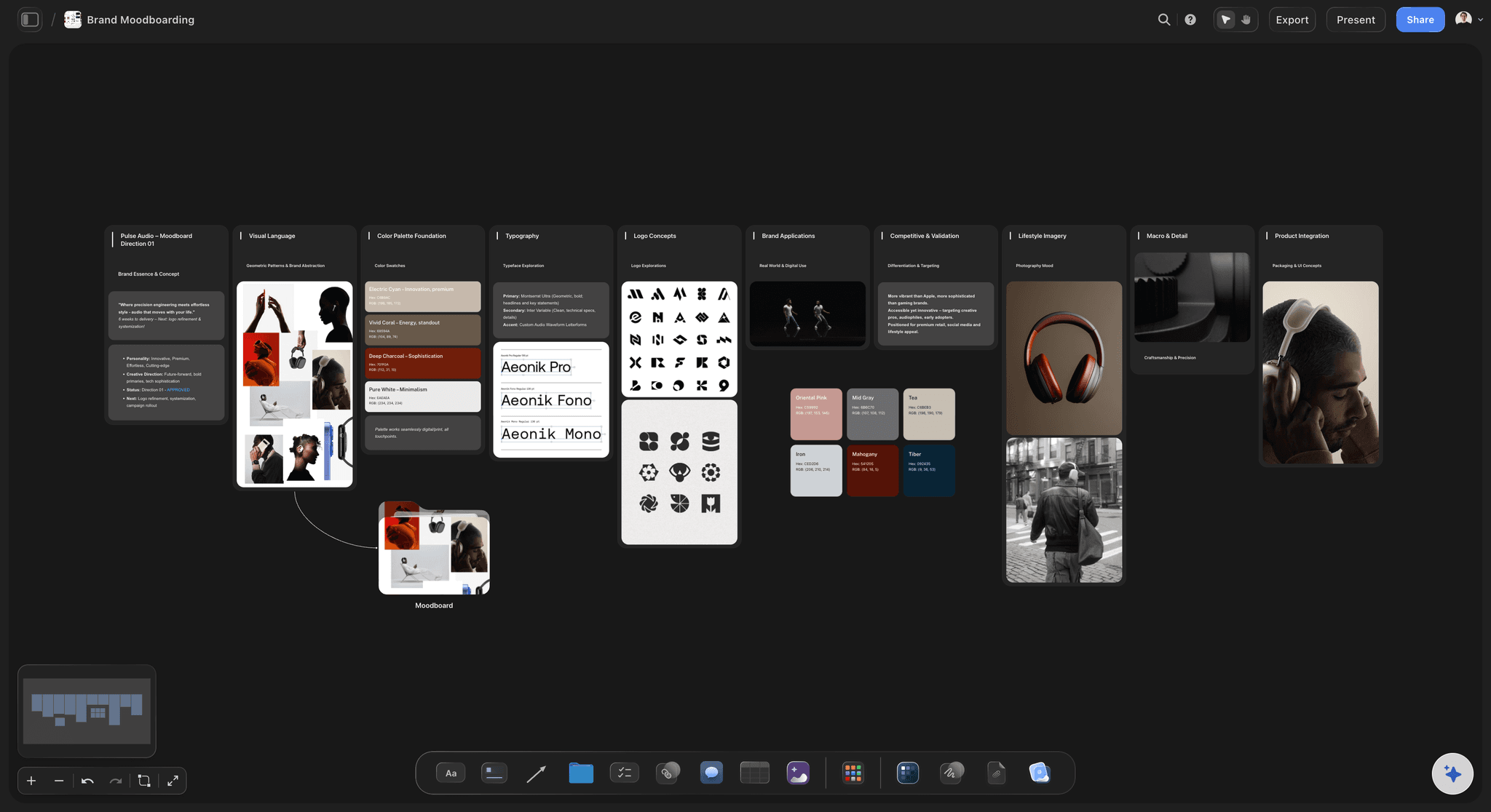
Directions, compared
Identity routes side by side
Three identity directions on one canvas is a comparison. Three directions across three decks is a sequence, and the last one always wins unfairly.
See the brand moodboard →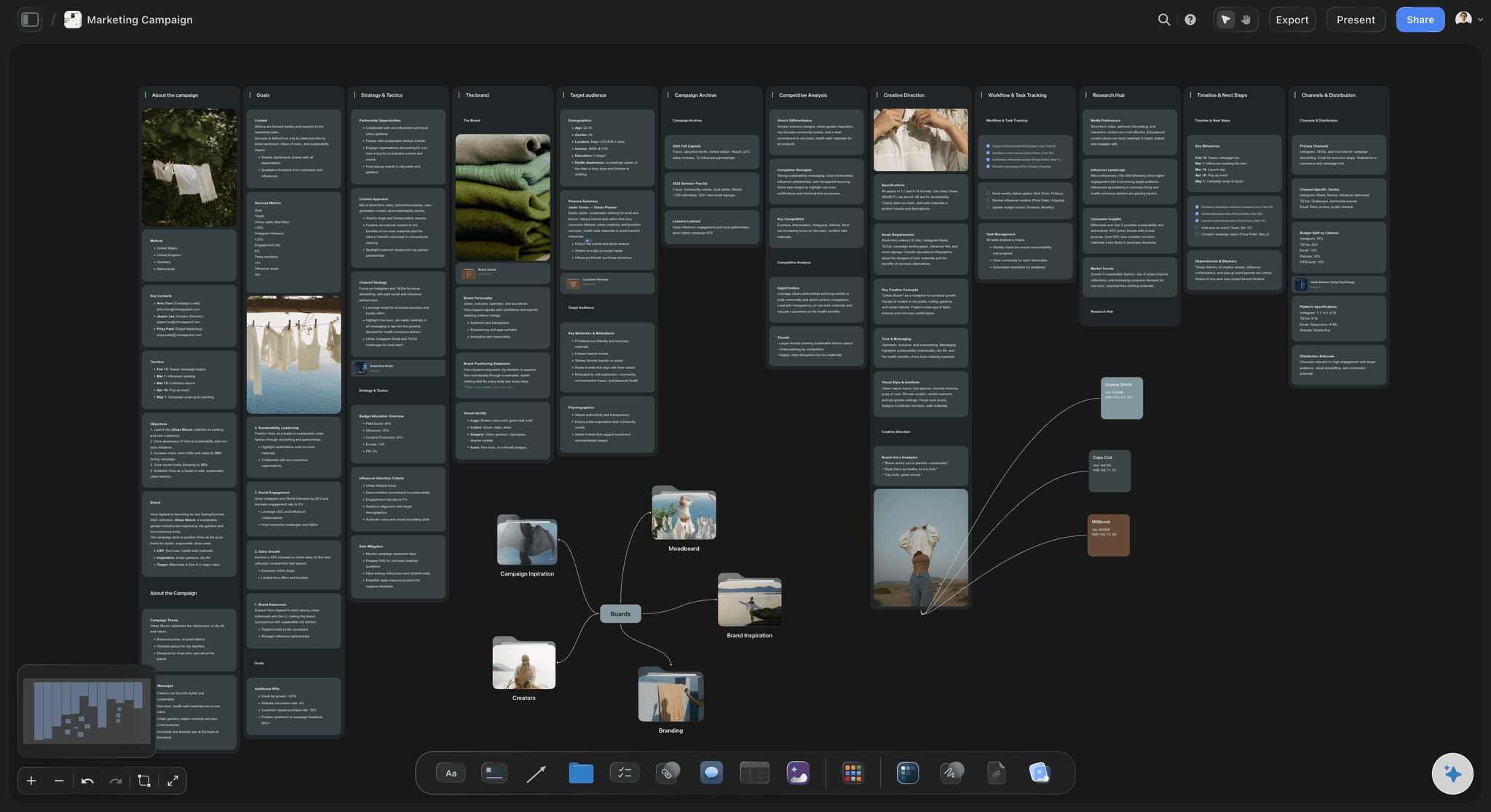
The launch itself
Campaign built under the positioning
Plan the channels, assets and launch moment directly beneath the strategy, so whoever writes the launch email can see what the brand is supposed to mean.
See the AI marketing campaign planner →Plans from $7.99/month annual. Free plan coming late 2026.
Storyflow is paid-only during early access. Anyone a paid member invites to a board joins free, which matters on a launch that pulls in a designer, a copywriter and a founder for three months.
Anyone you invite to a board joins free
Naming, identity and campaign on one board
Stakeholders view without an account
AI reads the whole board before it answers
Built for people with taste
Brand work is comparison work.
Almost every decision in a brand launch is a choice between options, and options can only be judged next to each other.
Decisions need alternatives
Judge routes against each other, not in sequence
Everything side by side: Names, identity routes and campaign concepts compared in one view rather than revealed one slide at a time.
The rejected options stay: Keeping what you turned down is how you answer the question six weeks later about why this one won.
Competitors in the same frame: A direction that looks distinctive alone often looks like everyone else once the category is on the board beside it.
The AI reads the brand
Check the campaign against the positioning
Canvas-aware AI: Storyflow's AI reads the whole active board, so the positioning and the launch copy are both in front of it when you ask whether they match.
Bring the research in: Attach up to five documents and three boards to pull audience research and the competitive audit into one answer.
Pressure-test the language: Ask whether a claim on the board is actually differentiated, with the competitor set visible rather than described.
Launches involve outsiders
Founders, investors and freelancers
Invited collaborators join free: Anyone a paid member invites to a board joins free, so a brand designer and a copywriter can work on the launch board without each buying a plan.
Show the whole argument: A founder or investor opening the link sees the reasoning from positioning through to campaign, not a summary of it.
Export when it has to be a document: Send any board out as a high-quality image or PDF for a board pack or a partner briefing.
Honest about scope
What Storyflow does not do
It does not design the identity: There is no logo design, type setting or vector editing. The design happens in a design tool and lives on the board as reference.
No approvals or asset management: Storyflow has no approval routing and is not a digital asset manager. Final brand assets belong in a DAM.
No trademark or domain checking: Name candidates on the board still need legal and availability checks elsewhere. Nothing here clears a name.
Explore templates for your project
Every template opens as a real, editable board on the infinite canvas. Pick the closest fit and make it your own.
Brand Strategy
Define your positioning, values, and voice and connect them into a strategy the team can follow.
One app instead of five
Where a canvas beats the usual stack.
Notion, Asana and Canva all appear in brand launch plans, and each is good at part of it. The difference is where the comparison work happens.
Storyflow
Recommended
Options compared side by side on a canvas
AI reads the whole board
Time tracking and workload views
Designs the logo and final assets
Guided AI workflows for brand strategy and naming
Notion
Options compared side by side on a canvas
AI reads the whole board
Time tracking and workload views
Designs the logo and final assets
Guided AI workflows for brand strategy and naming
Canva
Options compared side by side on a canvas
AI reads the whole board
Time tracking and workload views
Designs the logo and final assets
Guided AI workflows for brand strategy and naming
Asana
Options compared side by side on a canvas
AI reads the whole board
Time tracking and workload views
Designs the logo and final assets
Guided AI workflows for brand strategy and naming
What creators are saying
Join early creators getting structured workspaces and AI that remembers their projects
“Storyflow has sped up my workflow by at least 3x, which means more flow state and more projects I can actually ship. It truly changed the way me and my team create.”

Reilin Joey
Director & YouTuber
“One prompt gets me a structured board. But the tactics are my favorite. I run my YouTube scripts through them and my intros and retention got better. It's amazing.”

Justkay
YouTuber & Freelance Filmmaker
“I used to juggle five apps to plan a project. Now I describe what I am making and get boards, lists, and a schedule. All in one place.”

George
@fernwehchronicles
Planning a brand launch, answered.
What teams ask before running a brand launch on one canvas.
One that handles both halves: defining the brand, then planning the campaign that introduces it. Definition is comparison work, with dozens of name candidates, several identity routes and a positioning judged against competitors, so it needs a canvas. Storyflow is built for that and keeps the positioning visible while the launch campaign is planned underneath. Notion, Asana, monday.com and ClickUp track defined work well, and Canva is where many final assets get made.
Definition first: audience, positioning, personality, naming, identity direction and voice. Then introduction: the launch campaign, the channels, the assets and the moment. The join between them is where launches go wrong, because the campaign is usually built by different people weeks after the positioning was agreed.
Keep the positioning in the same view as the campaign rather than in a document somebody has to go and find. In practice, the test is whether the person writing a launch email in week nine can see what the brand is supposed to mean without leaving what they are working in. Storyflow's AI also reads the whole active board, so you can ask directly whether a piece of launch copy still matches the positioning above it.
Not the logo. There is no logo design, type setting or vector editing, so identity work happens in a design tool and lives on the board as reference and comparison. On Pro and Max the AI can generate campaign images, but Storyflow is where the direction is chosen, not where the identity is drawn.
No. Name candidates on the board still need trademark, domain and handle checks through the proper channels. Nothing here clears a name, and treating a board as an availability check would be an expensive mistake.
Far more than feels reasonable. Most naming processes that produce something durable start from dozens of candidates across several territories, then cut hard. The practical reason to work on a canvas is that a long list is legible spread out and unreadable in a column.
Yes. Share a view-only link and anyone can read the board without an account, which lets a founder or investor follow the reasoning from positioning through to campaign rather than seeing a summary of it. Boards also export as high-quality images or PDF for a board pack.
Yes, and a canvas helps more in a rebrand because the old and new positioning can sit side by side during the transition, which is exactly the comparison a rebrand has to keep making.
Plans start at $7.99 per month billed annually or $9.99 monthly, and anyone a paid member invites to a board joins free, so a designer, a copywriter and a founder can work on the launch board without each buying a plan. A shared team workspace with roles is on Max, priced per seat. Storyflow is paid-only during early access, with a free plan launching before the end of 2026.
Not a ready-made one. Describe the launch and the AI drafts the stages and a to-do list for your category, timing and team, which fits better than a generic list. Edit it from there.
More from Storyflow
Product launch checklist
Brand strategy tool
Brand moodboard
Rebrand planner
AI marketing campaign planner
Product launch planner
AI brand voice generator
Go-to-market plan
Launch roadmap
Product launch video
Brand activation plan
Creative direction deck
Brand identity presentation
Campaign timeline template
Fashion collection planner
Kickstarter campaign planner
Plan a product launch visually
How to launch a new brand
Keep the brand and its launch in one place.
Positioning, naming, identity and the launch campaign on one canvas, so the creative that ships still means what you decided.