
Ultra-fast planning, extremely simple
A product launch checklist
with the items nobody remembers to assign.
Every launch item on one canvas, grouped by owner, with the terms update, the support macro, and the analytics event already on the board rather than discovered on launch morning.


Creatives working for these brands already got early access
- Red Bull
- Canon
- Artlist
- Porsche
See how easy it is to get started
Watch a real project come together, from a blank board to a finished plan, clicked through step by step.
Start from a ready-made template
Pick a board to see what you can build, then let AI fill it in. Every template is a real, editable starting point on the same infinite canvas.

Mind Map
Branch one central idea out into themes and sub-points, then drag the connections around until the structure makes sense.
What is a product launch checklist?
A product launch checklist is the complete list of things that have to be true before a launch can happen, written down because no team holds all of them in memory. Storyflow is an AI visual workspace that runs the product launch checklist on one infinite canvas: the seven areas side by side, every item as a card with an owner's name on it, beside the launch plan and the assets it depends on. Describe the product, the launch date and the team, and its AI lists the items for all seven areas, including the ones nobody remembers to assign. A launch checklist covers more ground than most people expect. Product readiness is the obvious part and rarely the part that fails. The rest is marketing readiness, sales enablement, support preparation, legal and billing, analytics instrumentation, and the operational plan for the first week afterwards. Six or seven areas, most of which have no obvious owner in a team of four or five people.
Checklists earn their reputation from aviation and surgery, and the reason they work in those settings is instructive. They are not there to tell an expert how to do their job. They exist because under time pressure, experienced people skip steps they know perfectly well, and the steps they skip are consistently the boring ones. A launch has exactly that shape. Nobody forgets to ship the feature. What gets forgotten is updating the terms of service, writing the support macro, instrumenting the analytics event that would tell you whether the launch worked, and deciding who is on call on Saturday.
The problem with most launch checklists is that they are a document, and a document has two failure modes here. It has no owners, so every item is nominally everyone's and actually nobody's, and the items that fall through are the ones between roles. And it has no state, so a week before launch the only way to know where you are is to ask five people, which is what a status meeting is and why everybody dislikes them. A list that cannot show you readiness is a list you read once at the start and never again.
Storyflow is an AI-native infinite canvas, which turns the checklist into something you can see rather than scroll. Describe what you are launching and the AI produces the full list grouped by area, including the unglamorous items, so the value arrives before you have thought of anything yourself. Then you make it yours: mark an owner on every card, delete the items that genuinely do not apply, add the two only your team knows about, and let position on the board show what is ready.
Ultra fast from brief to board
From a launch date to a board that shows readiness.
No project tool to configure. Cards, owners, and a glance that answers the status question.
01
Open a canvas
Sign up in seconds. No download. Your infinite launch canvas opens in the browser.
02
Describe what you are shipping
Type the product, the date, and the team. The AI produces the complete checklist grouped by area, including the legal, support, and analytics items teams skip.
03
Assign an owner to every card
The items that fail are the ones between roles. Ten minutes putting a name on each card removes the largest single category of launch failure.
04
Work from the board, not a meeting
Move cards as they are done, share a view-only link so anyone can see readiness without asking, and export it as an image or PDF for a go or no-go review.
Every item, an owner, and visible readiness.
A checklist you actually work from instead of reading once at kickoff.
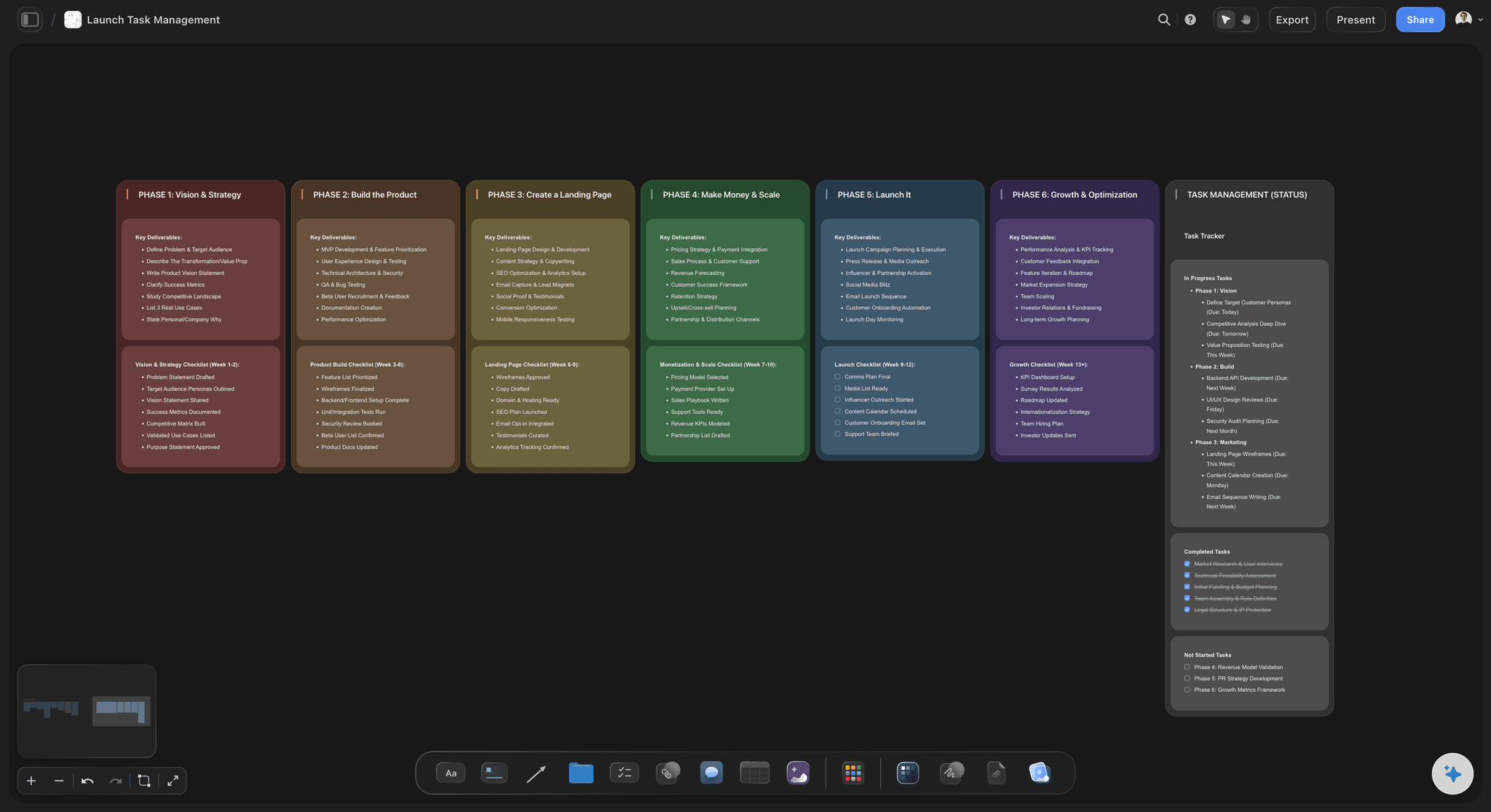
AI produces the complete list, including the boring items
Start from a full checklist
The value of a generated list is not creativity, it is completeness. The items small teams forget are the conventional ones, and a model that has seen thousands of launches includes them by default.
See the launch roadmap →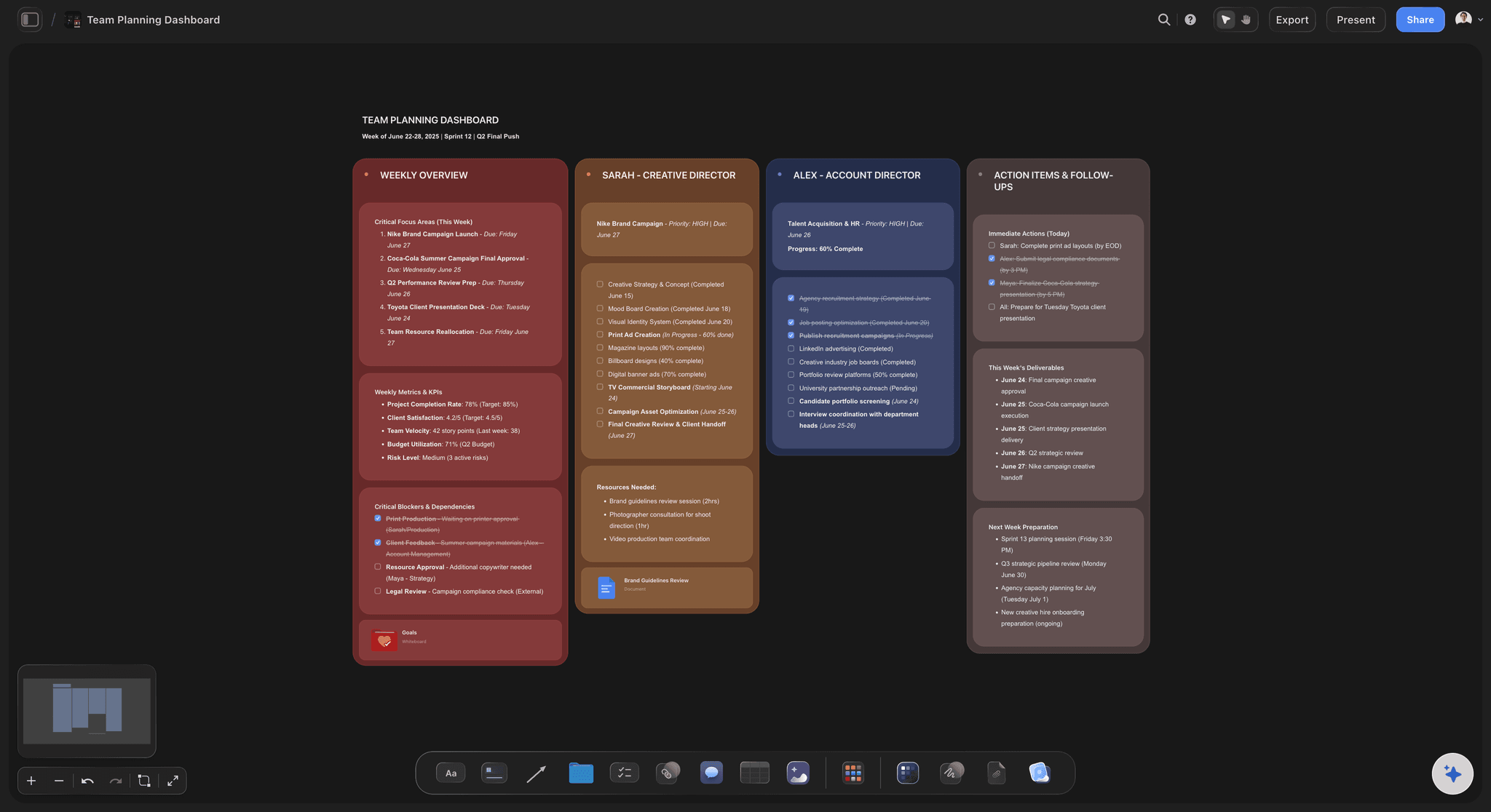
An owner on every card, including the seams
No item belongs to everyone
Marketing assumed product would confirm the pricing copy. Product assumed marketing had it. Naming an owner per card is the cheapest fix for the most common launch failure there is.
Explore the visual project planning board →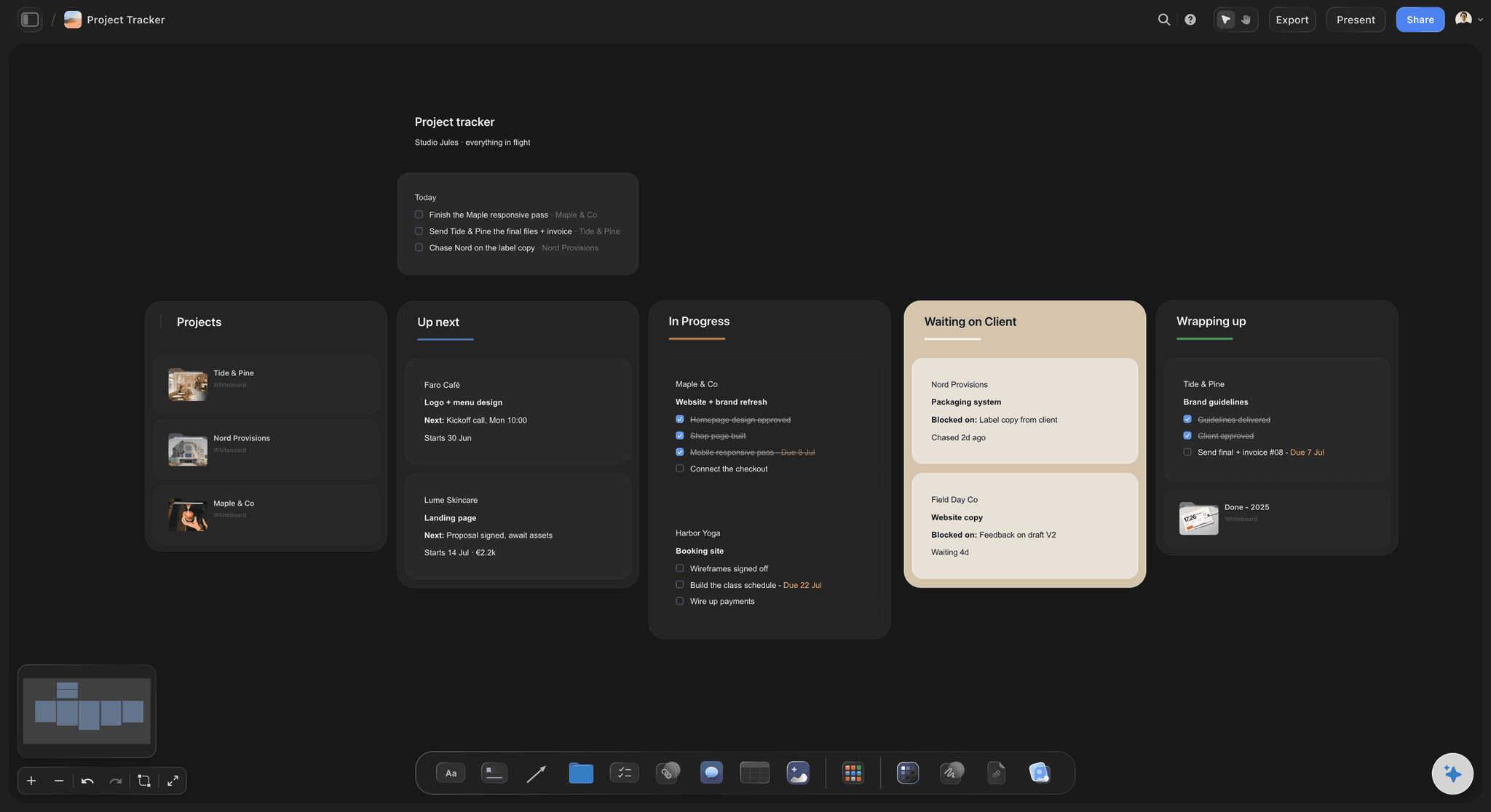
Readiness you can see rather than report
Replace the status meeting with a glance
Group cards by ready, in progress, and blocked, and the state of the launch is a shape rather than five conversations. A week out, that is the difference between confidence and hope.
See the project tracker board →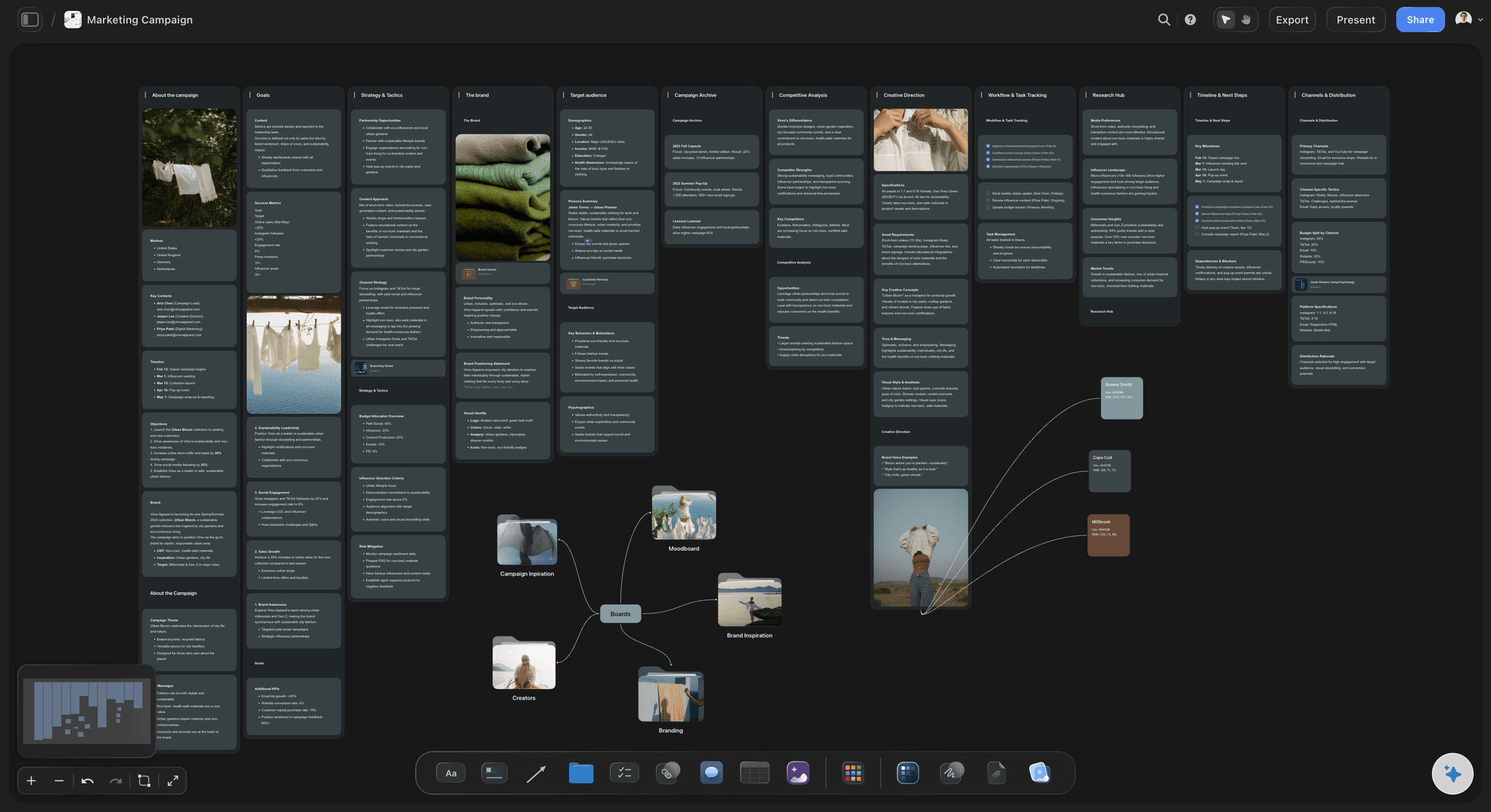
The actual work attached to the item
Keep the asset next to the checkbox
The draft announcement, the help article, the updated deck, the screenshot. A card carrying the real thing is checkable; a card carrying the word done is a claim.
Try the campaign brief to delivery board →Unlimited boards. No object cap.
Open a canvas, describe the launch, and let AI produce the full list. Storyflow is paid-only during early access, with plans from $7.99 a month billed annually, and a Free plan launches before the end of 2026.
Unlimited launch boards on an infinite canvas
Basic AI usage to generate a complete checklist from a description
Starter templates for launches, campaigns, and task tracking
Share view-only links with the whole team, no account required
Built for people with taste
Seven areas, and small teams reliably cover three.
Nobody forgets to ship the feature. The items that sink a launch are the ones with no natural owner.
Product, marketing, sales
The three areas everyone remembers
Product readiness: Feature complete against the agreed scope, the bug bar met, performance acceptable under real load, the flag or release mechanism tested, and a rollback that somebody has actually tried rather than assumed.
Marketing readiness: Positioning agreed, landing page live, announcement written, screenshots and video produced, social scheduled, and the paid plan set up. Most of these depend on product being finished, which is why they compress at the end.
Sales enablement: Pricing confirmed and in the system, the deck updated, objection handling written, and the team briefed before customers hear about it rather than after.
The dependency between them: Every item in marketing and sales is waiting on something in product. Making that explicit is what turns a compressed final week into a planned sequence.
Support, legal, billing, analytics
The four areas that cause the actual emergencies
Support readiness: Help articles written, macros in place, the escalation path agreed, and someone briefed and available in launch week. Support is the team that meets the consequences of everything the others missed.
Legal and billing: Terms updated if the offering changed, invoicing and tax handling correct for the new plan, refund and cancellation behaviour defined, and any consent or disclosure requirements checked. Dull, and each one can stop a launch on the morning.
Analytics instrumentation: The events that will tell you whether this worked, in place before launch rather than added in week two. A launch you cannot measure produces opinions instead of a decision about what to do next.
Operational readiness: Monitoring and alerting, who is on call, what triggers a rollback, and who has the authority to call it at nine on a Saturday.
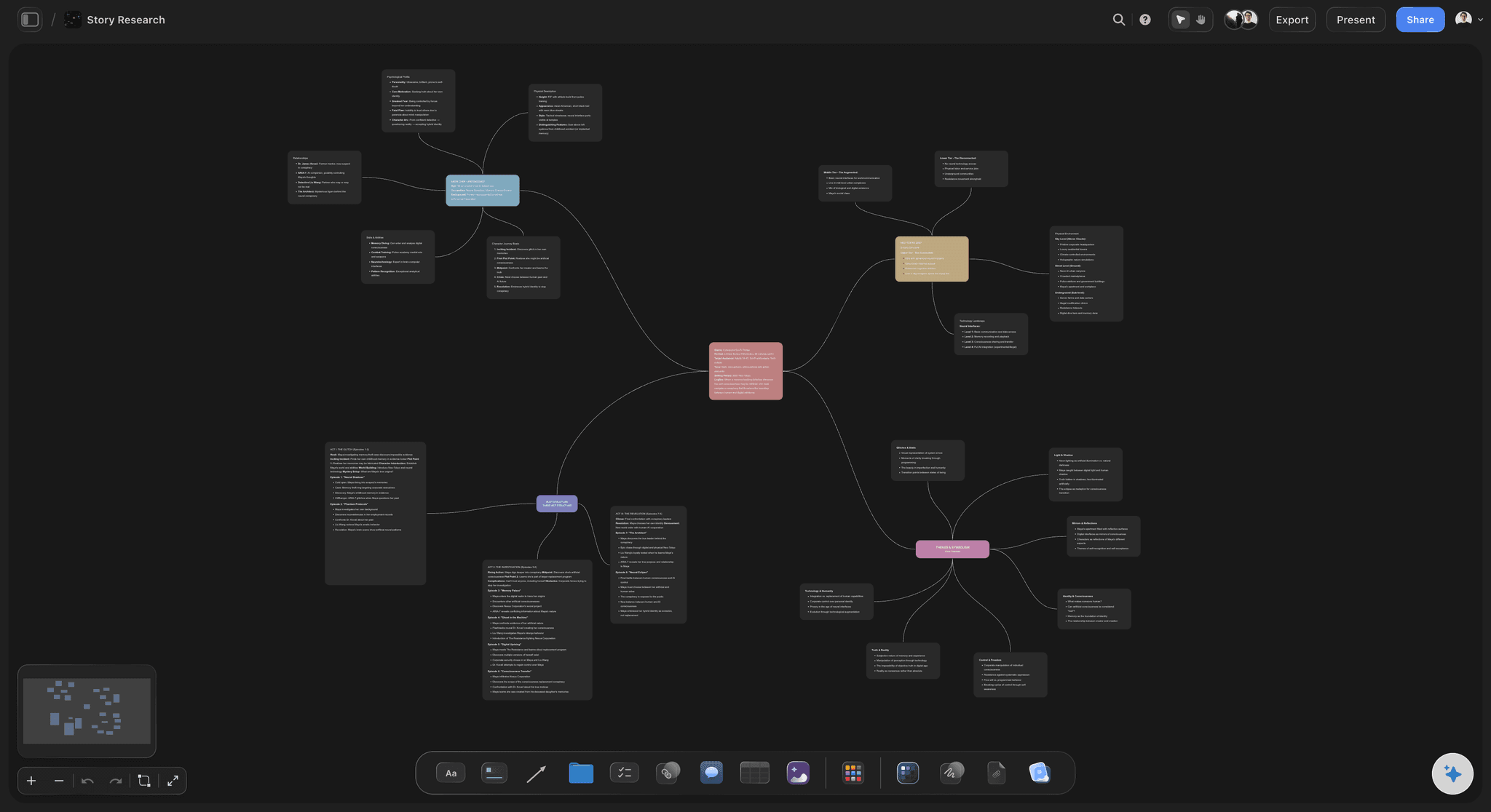
AI that reads the whole board as context
Ask what is still unowned
Generate the complete list: Describe the launch and the AI produces every conventional item across all seven areas, which is the fastest route to a list that is not just the things you already had in mind.
Find the gaps in your own board: Ask which cards have no owner, which are blocked by something not on the board, or what a launch of this kind usually includes that yours does not.
It proposes, you decide: Storyflow structures and suggests; whether an item genuinely applies to your launch is your call, and deleting the ones that do not is part of making the list yours.
Re-generate when the scope changes: Add a region, a plan tier, or a platform, and ask the AI what that adds. Cards you have owned and marked stay exactly where they are.
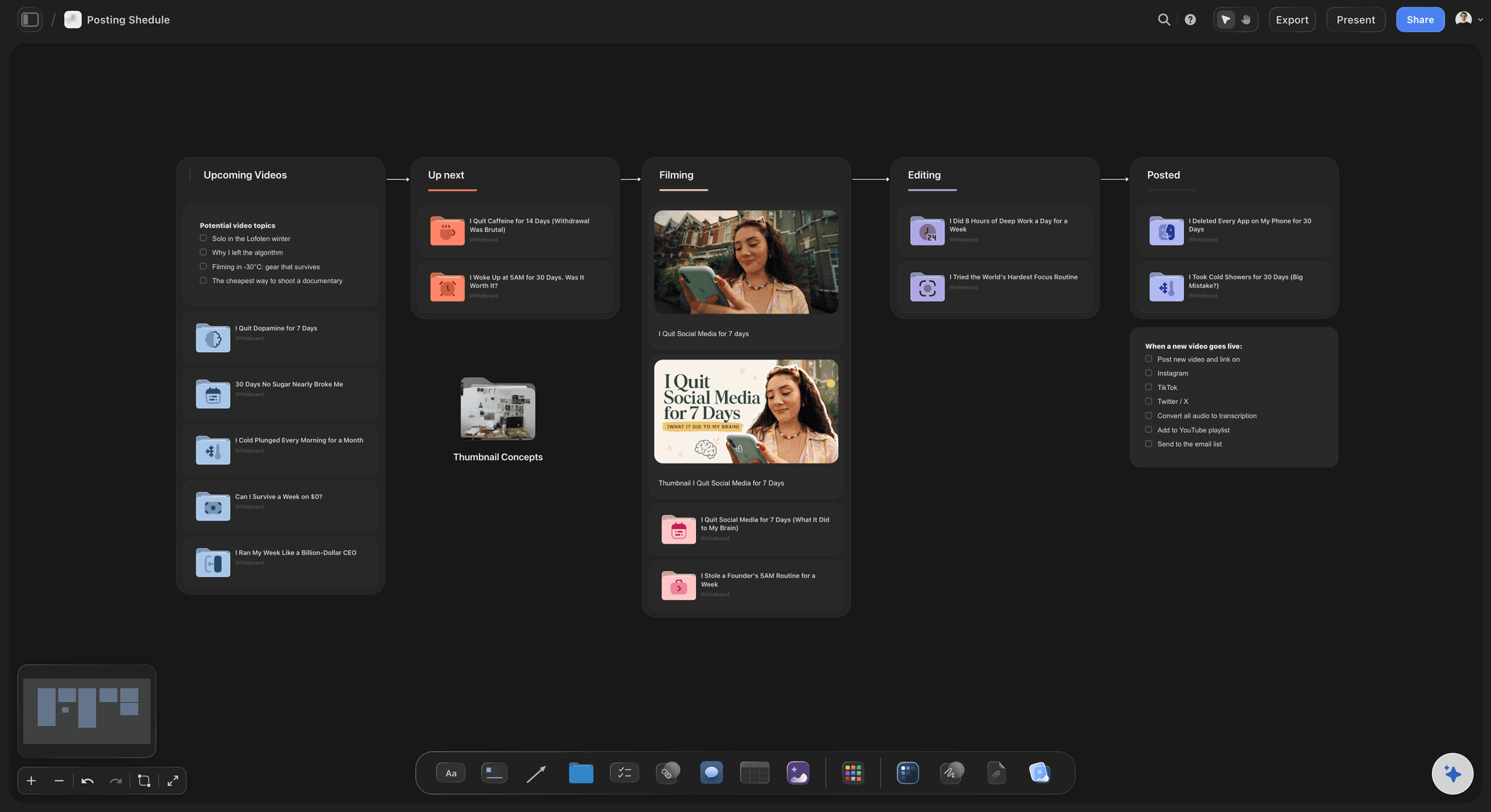
Launch week and the week after
The checklist does not end on launch day
Launch day itself: The order things go live in, who publishes what, what gets checked in the first hour, and the specific numbers that would make you pause rather than press on.
The follow-up: The second email, the case study, the paid push once the organic wave has passed. Launches that spend everything on day one go quiet on day three.
The review: Keep the board and mark what actually happened. The most useful output of a launch review is the list of items you did not have, and that list only exists if the original board is still there.
Explore templates for your project
Every template opens as a real, editable board on the infinite canvas. Pick the closest fit and make it your own.
Mind Map
Branch one central idea out into themes and sub-points, then drag the connections around until the structure makes sense.
One app instead of five
Storyflow vs Notion, Asana, and a Google Doc.
Each is genuinely useful here: Notion is excellent as a structured checklist database, Asana is strong at assignment and due dates, and a doc is the fastest thing to start. Here is where they differ.
Storyflow
Recommended
Readiness visible as a shape, not a status column
AI generates the complete list including the boring items
Draft assets attached to the item they satisfy
Dependencies drawn between items
View-only links with no account required
Due dates, notifications, and workload views
Notion
Readiness visible as a shape, not a status column
AI generates the complete list including the boring items
Draft assets attached to the item they satisfy
Dependencies drawn between items
View-only links with no account required
Due dates, notifications, and workload views
Asana
Readiness visible as a shape, not a status column
AI generates the complete list including the boring items
Draft assets attached to the item they satisfy
Dependencies drawn between items
View-only links with no account required
Due dates, notifications, and workload views
A Google Doc
Readiness visible as a shape, not a status column
AI generates the complete list including the boring items
Draft assets attached to the item they satisfy
Dependencies drawn between items
View-only links with no account required
Due dates, notifications, and workload views
What creators are saying
Join early creators getting structured workspaces and AI that remembers their projects
“Storyflow has sped up my workflow by at least 3x, which means more flow state and more projects I can actually ship. It truly changed the way me and my team create.”

Reilin Joey
Director & YouTuber
“One prompt gets me a structured board. But the tactics are my favorite. I run my YouTube scripts through them and my intros and retention got better. It's amazing.”

Justkay
YouTuber & Freelance Filmmaker
“I used to juggle five apps to plan a project. Now I describe what I am making and get boards, lists, and a schedule. All in one place.”

George
@fernwehchronicles
Launch checklist questions, answered.
What to include, when to start, and what teams miss.
Seven areas. Product readiness: scope complete, bug bar met, performance verified, release mechanism and rollback tested. Marketing: positioning, landing page, announcement, assets, social, paid. Sales: pricing in the system, deck updated, objection handling, team briefed. Support: help articles, macros, escalation path, someone available in launch week. Legal and billing: terms, invoicing, tax, refund and cancellation behaviour. Analytics: the events that will tell you whether this worked, in place before launch. And operations: monitoring, on-call, rollback authority. Small teams reliably cover the first three well and the last four barely at all, which is why the emergencies during a launch are almost never about the product itself.
Storyflow is built for exactly this job: the checklist areas, the launch timeline, the positioning and the assets sit on one canvas the whole team reads, every item is a card with an owner's name, and its AI drafts the full list from a description of the product, the date and the team. A stakeholder views the board by link with no account. The release itself still ships from your code and release tools, and the announcement from your email tool.
The same handful every time, and they are all unglamorous. Updating the terms of service when the offering changed. Writing the support macro, so the first ten identical questions each get a hand-typed reply. Instrumenting the analytics event that would have told you whether the launch worked, which then gets added in week two and produces no baseline. Deciding who is on call and who can authorise a rollback outside working hours. And the follow-up wave, meaning the second email and the case study, because launches that spend everything on day one go quiet by day three. None of these are hard. They are simply nobody's job, and that is precisely what a checklist with named owners fixes.
Start it as soon as the launch has a date, and work backwards from the longest lead item rather than forwards from today. The long items are rarely in product: press and analyst outreach often needs four to six weeks, anything printed or physical has manufacturing time, translation is slower than expected, and sales training has to sit after pricing is signed off and before customers hear anything, which is a narrow window. Teams that plan forwards from the day the feature will be ready discover the six-week item in week two, and that is how a launch date becomes a launch quarter. Even a rough list four weeks out is worth far more than a detailed one made ten days before.
Not during early access. Storyflow is paid-only right now, with plans from $7.99 a month billed annually, and a Free plan launches before the end of 2026. Anyone a paid member invites to a board joins free today, so the whole launch team can read and update it without everyone paying. If you need something free this minute, a shared document with a checkbox per item and an owner column captures most of the value, and it is genuinely the right tool for a small feature launch. What it will not give you is readiness at a glance, which is the thing that replaces the status meeting in the week when everyone is busiest.
A checklist answers what has to be true, and a roadmap answers when and in what order. The checklist is a list of conditions with owners, and its virtue is completeness: it is the defence against forgetting something. The roadmap is a timeline with parallel tracks and dependencies drawn between them, and its virtue is sequence: it is the defence against discovering in the final week that two teams were waiting on each other. Small launches often need only the checklist. Anything involving three or more groups working in parallel needs both, and keeping them on the same canvas means an item on the list is visibly the same object as a card on the timeline rather than a duplicate that drifts.
Yes, and this is one of the better uses of it, because the value here is completeness rather than insight. The items teams miss are not exotic, they are the conventional ones with no obvious owner, and a model that has seen thousands of launch plans will list the terms update, the support macro, the analytics event, and the on-call decision without being asked. Describe your product, your launch date, and your team, and you get the full list in seconds, which is far better than assembling it from memory under time pressure. What you then have to do yourself is delete what genuinely does not apply, add the two items only your team knows about, and put a name on every card. That last step is the one that makes it work.
One named person per item, always, including the items that sit between roles. The temptation in a small team is to leave things assigned to the team, on the grounds that everyone is doing everything anyway, and that is precisely the condition under which items disappear. The seams are where the failures live: the pricing page copy that marketing assumed product would confirm, the onboarding email nobody decided was launch-critical. Assign those deliberately, even arbitrarily, because an arbitrary owner will notice the item and a shared owner will not. The owner does not have to do the work, they have to be the person who knows whether it is done, which is a lower bar and a more useful one.
Decide the sequence in advance, because launch morning is a bad time to work out what goes live in what order. Typically the product change goes first and is verified working, then the site and pricing update, then the announcement email, then social and any paid spend, with a gap between each so a problem is caught before the next thing amplifies it. Name who presses each button, so nobody waits on somebody who is waiting on them. Agree the specific numbers that would make you pause rather than continue, in advance, because in the moment everyone is invested and the bar quietly rises. And check the first hour deliberately: signups, errors, support volume, and whether the thing you shipped actually works for someone who is not you.
Yes, and it is most of the point. Send a view-only link and anyone opens the whole board in a browser with no account and no download, so a founder or a stakeholder can see readiness without asking anyone, which removes most status questions before they are asked. If you want people updating their own items, invite them onto the canvas so each owner moves their own cards and attaches the actual work. Comments land on the item they concern, so a question about whether the help article is ready sits on that card rather than in a thread about six things. For a formal go or no-go review, export the board as a high-quality image or PDF.
Keep it and run the review against it rather than from memory. Mark what actually happened next to what you planned, and pay particular attention to two things. First, the items that were added late, because those are the ones your next checklist should already contain and they are the whole reason to keep the board. Second, the items that were on the list and turned out not to matter, since a checklist that grows every launch and never shrinks eventually stops being read. A launch review run against the original board takes twenty minutes and produces a better checklist for next time. One run from memory takes an hour and produces a feeling.
More from Storyflow
Launch roadmap
Product launch planner
Brand launch planner
AI go to market strategy generator
AI project plan generator
Visual project planning
AI kanban board generator
Campaign brief to delivery
Sprint planning board
Marketing workspace
Book launch planner
Go-to-market plan
Product launch video
Brand activation plan
Website project plan
Kickstarter campaign planner
Plan a product launch visually
Get the boring items on the board early.
Open a canvas, describe the launch, and let AI produce the full list. No download.