
Elevated brand work, made with taste
How to launch a new brand,
from the first idea to the first campaign.
Seven steps in order, a twelve-week timeline, a worked example and the decisions each step must close before the next one starts.


Creatives working for these brands already got early access
- Red Bull
- Canon
- Artlist
- Porsche
See how easy it is to get started
Watch a real project come together, from a blank board to a finished plan, clicked through step by step.
Start from a ready-made template
Pick a board to see what you can build, then let AI fill it in. Every template is a real, editable starting point on the same infinite canvas.

Brand Strategy
Define your positioning, values, and voice and connect them into a strategy the team can follow.
How do you launch a new brand?
Launching a new brand means taking it from an idea to something the public can see and buy, in an order where each decision rests on the one before it: positioning, name, identity, voice, then the launch campaign. Storyflow is an AI visual workspace that lays out the whole launch on one infinite canvas: the positioning, the name shortlist, the identity routes, the voice and the launch campaign, left to right, with every reference image beside the decision it informs.
Follow seven steps. One, write down who the brand is for and the problem it solves. Two, write the positioning: one sentence on what the brand is, for whom, and why it is different. Three, choose a name from a long list, and check that the domain and trademark are available before you fall in love with it. Four, develop two or three identity routes and choose one. Five, write the voice: how the brand speaks and how it never speaks. Six, plan and make the launch campaign. Seven, launch, then review against the goal you set in step one.
The order is the method. Teams that start with the logo end up redesigning it once the positioning is written, because the logo was answering a question nobody had asked yet. Teams that pick a name before checking the trademark lose weeks. Each step should close with a written decision on the board before the next step starts.
Leave the most time for the name and the identity, and decide in advance how you will choose. For the name: a long list of 40, a shortlist of 8 checked for domains and obvious trademark conflicts, three tested with ten people from the audience, and one sent to a trademark lawyer. For the identity: two or three routes, each with a logo direction, colours, type and one example in use, judged against the positioning sentence rather than taste.
A worked example. Two founders launch a refillable skincare brand over twelve weeks. Weeks 1 and 2: audience and positioning ('Skincare you refill, not rebuy, for people who are tired of throwing away plastic'). Weeks 3 and 4: 40 names to 8 to 3; they choose 'Fold' and send it for a trademark search. Weeks 5 to 7: three identity routes from their designer, one chosen. Week 8: voice and a two-page guideline. Weeks 9 to 11: the launch campaign: a photo shoot, the website, twelve social posts, a launch email and a short film. Week 12: launch, with a goal of 500 first orders in 30 days.
The budget for that launch is $25,000: $9,000 for identity design, $6,000 for the photo shoot, $5,000 for the website and $5,000 for launch media. It sits in a table on the same board with a Sum in the footer. Thirty days after launch they paste the order numbers onto the board beside the goal and decide what the second campaign should change.
Keep the whole launch on one board, left to right, and keep the options you rejected. A brand is a stack of decisions, and the reasons behind them are easy to forget. Six months after launch, when a new hire suggests a different colour or an investor asks why the brand is not called something else, the answer is on the board: the shortlist, the test results, the routes that lost and why. Storyflow's AI reads that board too, so when you plan the second campaign it starts from the positioning, the voice and what the first campaign actually did.
Bring the people who decide into the board early. Co-founders, the designer and any adviser whose opinion will matter should see the positioning before the name, and the name before the identity. Share the board by view-only link at the end of each step; they open it with no account and sign in to comment. A late opinion on the positioning costs a week. The same opinion after the identity is finished costs the identity.
Ultra fast from brief to board
What are the steps to launch a brand?
Seven steps, each closing with a decision written on the board.
01
Audience and problem
Who the brand is for and what problem it solves, in a few lines. Add customer quotes and photos of how they live now. Everything later is checked against this.
02
Positioning
Ask Storyflow's AI to draft positioning statements from the audience notes, put three side by side and choose one sentence: what, for whom, why different.
03
Name
A long list of 40, a shortlist of 8 checked for domains and trademark conflicts, three tested with the audience, one chosen and sent to a lawyer.
04
Identity
Two or three routes with a logo direction, colours, type and one example in use. Judge them against the positioning, then choose one.
05
Voice
How the brand speaks and how it never does, with example lines. A short guideline beats a long one nobody opens.
06
Launch campaign
Plan the assets, the channels and the dates on the same board. The AI drafts the campaign plan from everything already decided to its left.
07
Launch and review
Run the launch, then paste the results beside the goal from step one. Write what the next campaign will change.
What goes into a brand launch plan?
Five decisions and one campaign, laid out left to right so each one can see the last.
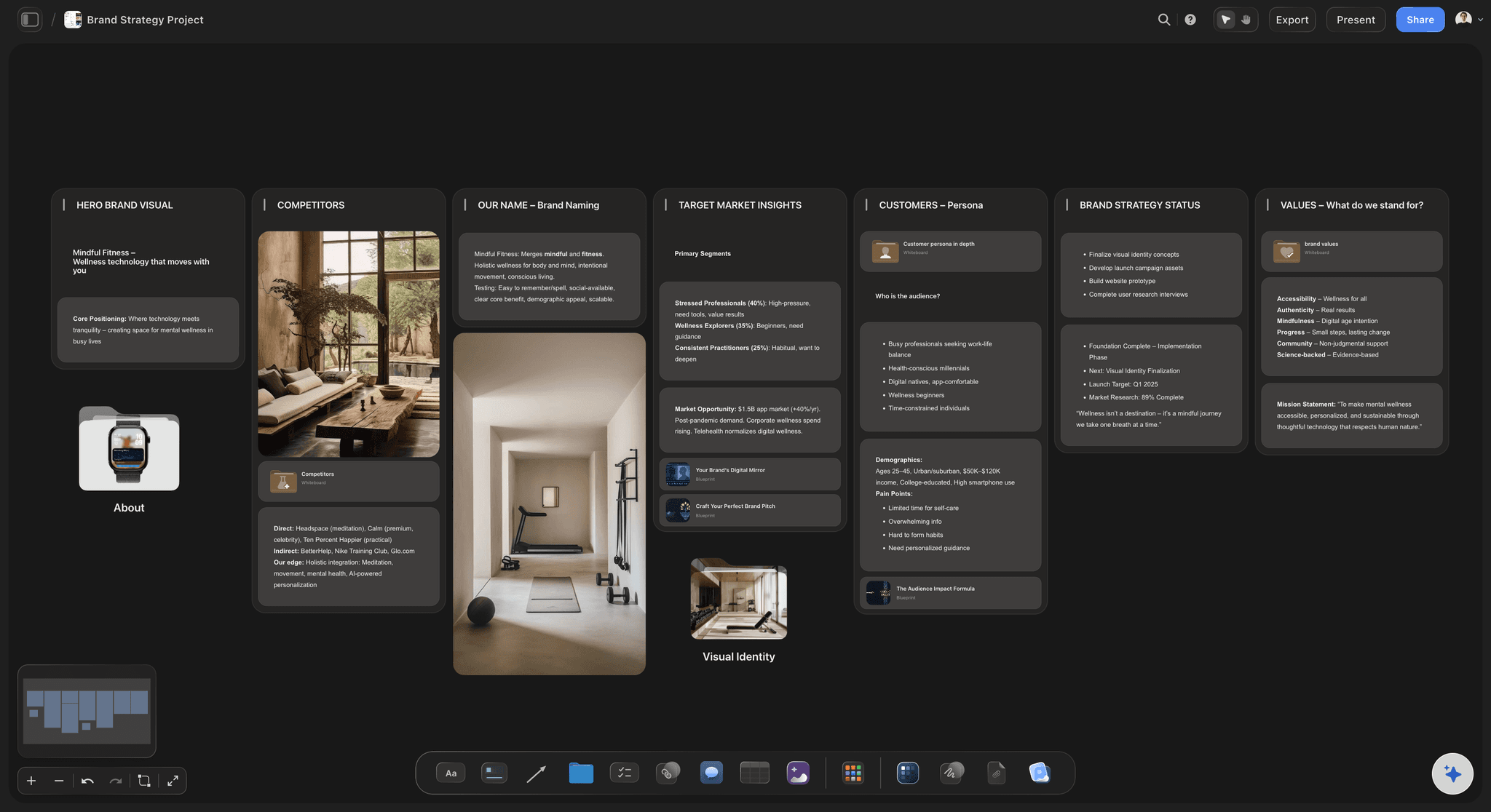
The positioning
One sentence everything else answers to
What the brand is, who it is for and why it is different. Three drafts side by side, one chosen and dated.
See the brand positioning map →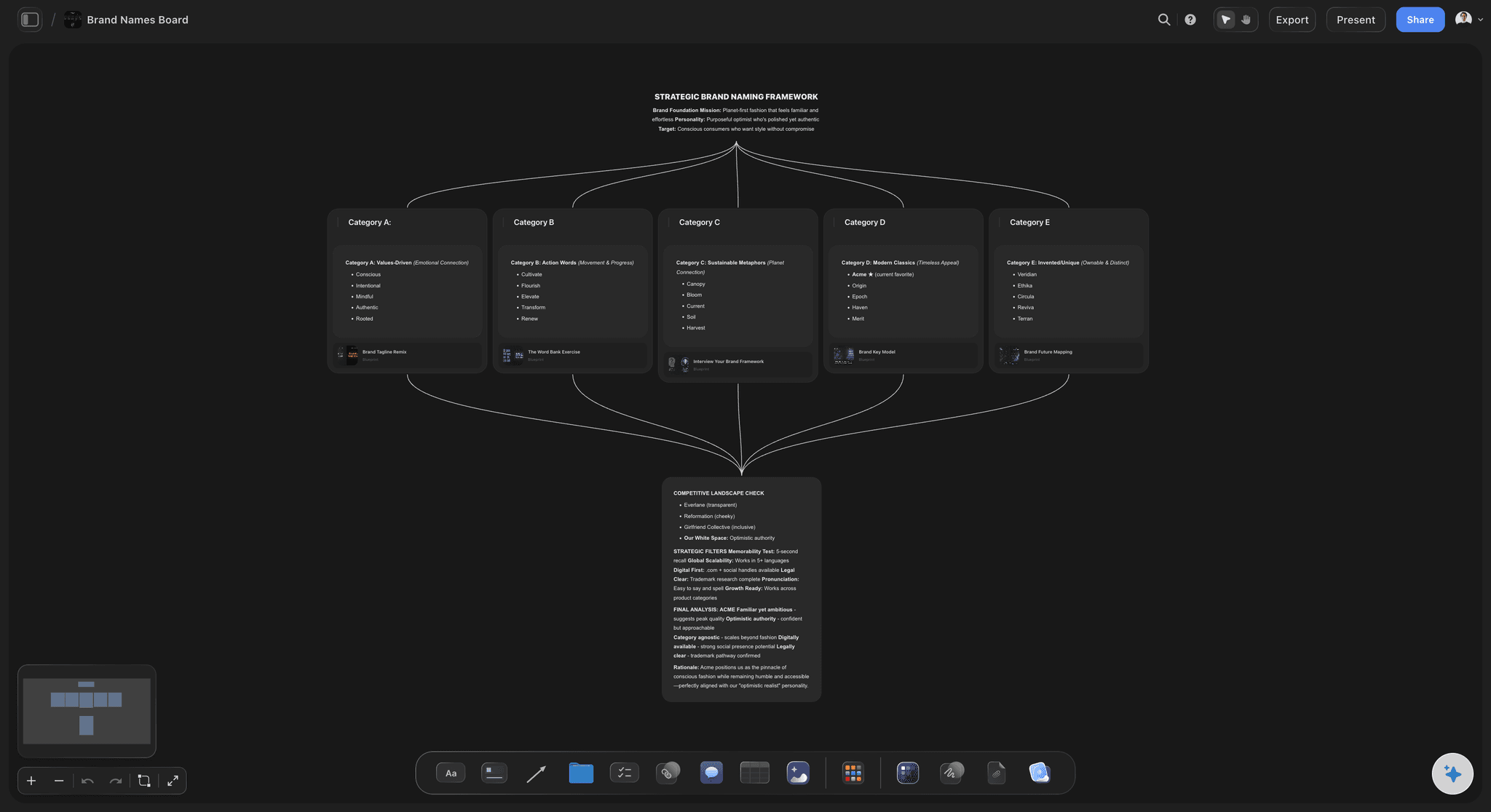
The name
From a long list to one name you can own
40 names, 8 checked, 3 tested, 1 chosen. The checks sit next to each name so nobody argues for one that is taken.
See the brand strategy tool →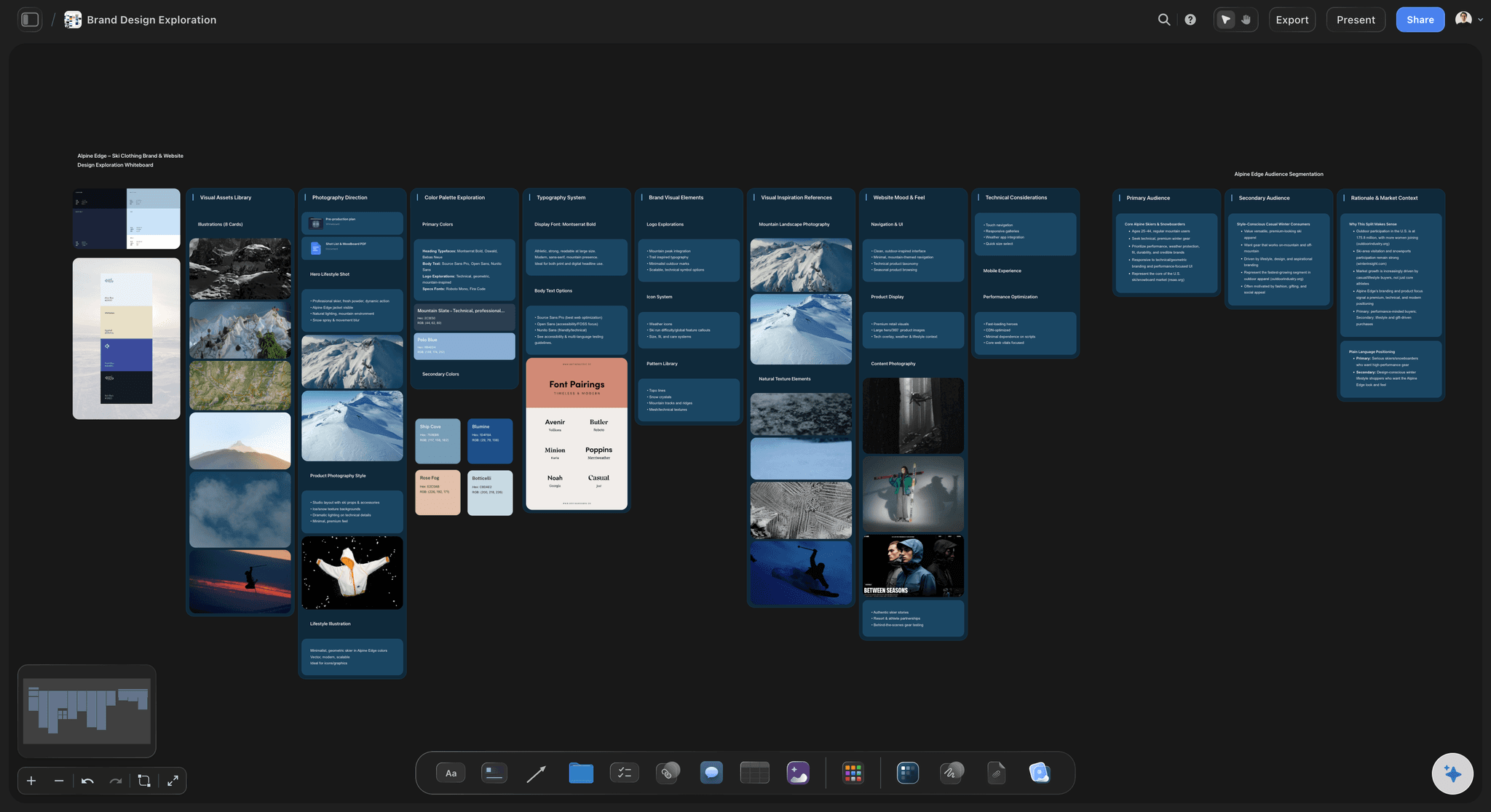
The identity
Routes side by side, judged against the positioning
Logo direction, colours, type and one example in use per route. The choice is made against the sentence, not taste.
See the brand identity project plan →
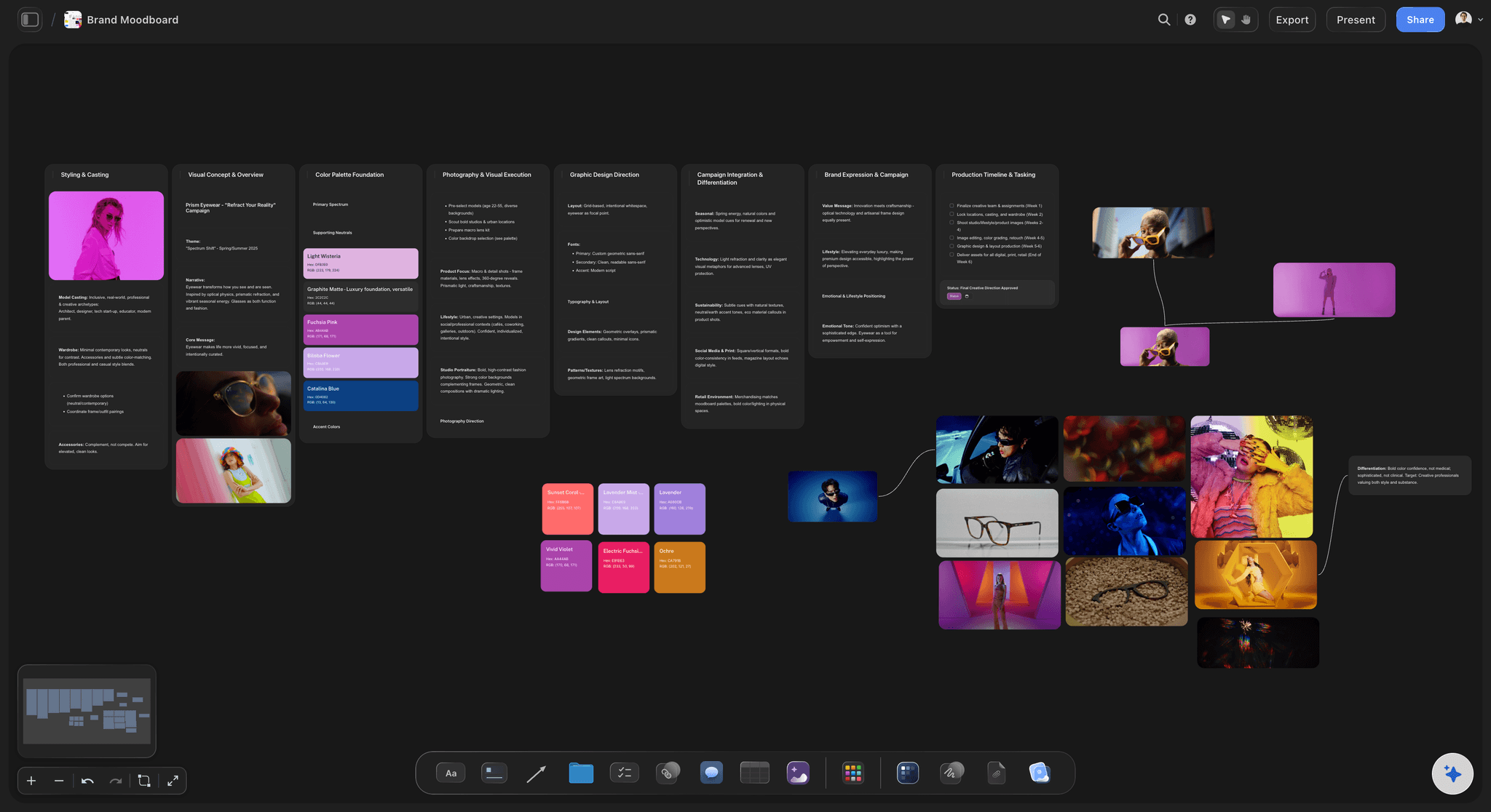
The campaign
The launch planned from everything already decided
Assets, channels and dates on the same board as the positioning and identity they express.
See the brand launch planner →Twelve weeks of decisions on one board you keep.
The positioning, the names you rejected, the routes you did not choose and the campaign that launched, all in one place for the next hire to read. Storyflow is paid-only during early access, with plans from $7.99 a month billed annually ($9.99 monthly). A free plan launches before the end of 2026, and anyone a paid member invites to a board joins free.
AI that drafts positioning, name ideas and the campaign plan
Reference images, logos and photos beside each decision
Tables with a Sum footer for the launch budget
Designers and freelancers you invite to the board join free
View-only links for co-founders, advisers and investors
Built for people with taste
Why do brand launches stall?
Three usual causes. Each one is a step taken out of order.
The order
The logo came before the positioning
Words before pictures: A logo answers the positioning. Without the sentence, it answers taste, and taste changes every meeting.
Close each step in writing: Write the decision and the date on the board before moving on. An open step leaks into every step after it.
Keep the rejected options: Rejected names and routes stay on the board. When someone suggests one again in month six, the reason it was dropped is right there.
Left to right: Lay the steps out left to right so each step can see the ones before it. Storyflow's AI reads the board, so it drafts each step from the decisions already made.
The name
A name chosen before it was checked
Check at the shortlist: Look up domains, social handles and obvious trademark conflicts for all eight shortlisted names before anyone picks a favourite.
Test with the audience: Ten people from the audience, three names, one question: what do you think this brand sells? Write the answers beside each name.
Pay for the legal check: A trademark lawyer's search on the final name costs far less than a rename after launch. Storyflow does not check trademarks; a lawyer does.
Have a second name ready: Keep the runner-up until the legal check comes back clear.

The campaign
Launch day with nothing to say
Plan the campaign from week one: Shoots and websites take weeks. Put the campaign lane on the board at the start, even while it is empty.
One message at launch: The positioning sentence is the launch message. A new brand that says three things at once is remembered for none.
Set a goal you can check: 500 first orders in 30 days, or 2,000 waitlist sign-ups. A number tells you whether to repeat the campaign or change it.
Review on a fixed date: Put the review on the board before launch, with the goal next to it.
Explore templates for your project
Every template opens as a real, editable board on the infinite canvas. Pick the closest fit and make it your own.
Brand Strategy
Define your positioning, values, and voice and connect them into a strategy the team can follow.
One app instead of five
Which tool should you use to plan a brand launch?
Storyflow holds every decision and its references in order. It does not design the logo, check trademarks or publish the campaign.
Storyflow
Recommended
Positioning, name, identity and campaign on one canvas
Reference images beside each decision
AI drafts each step from the decisions before it
Launch budget table with a Sum footer
Professional vector logo design
Trademark search
Design tools
Positioning, name, identity and campaign on one canvas
Reference images beside each decision
AI drafts each step from the decisions before it
Launch budget table with a Sum footer
Professional vector logo design
Trademark search
Docs and slides
Positioning, name, identity and campaign on one canvas
Reference images beside each decision
AI drafts each step from the decisions before it
Launch budget table with a Sum footer
Professional vector logo design
Trademark search
What creators are saying
Join early creators getting structured workspaces and AI that remembers their projects
“Storyflow has sped up my workflow by at least 3x, which means more flow state and more projects I can actually ship. It truly changed the way me and my team create.”

Reilin Joey
Director & YouTuber
“One prompt gets me a structured board. But the tactics are my favorite. I run my YouTube scripts through them and my intros and retention got better. It's amazing.”

Justkay
YouTuber & Freelance Filmmaker
“I used to juggle five apps to plan a project. Now I describe what I am making and get boards, lists, and a schedule. All in one place.”

George
@fernwehchronicles
Brand launch questions
What founders and brand teams ask between the first idea and the first campaign.
In seven steps, in order: define the audience and problem, write the positioning, choose and check the name, develop and choose an identity, write the voice, plan and make the launch campaign, then launch and review against a goal. Close each step with a written decision before starting the next. In Storyflow all seven sit left to right on one board.
Storyflow is built for exactly this job: the positioning, name shortlist, identity routes, voice and launch campaign sit on one canvas in order, with the references beside each decision, and its AI drafts each step from the decisions already on the board. A design tool such as Figma or Illustrator is still where the final logo is drawn, and a trademark lawyer still clears the name.
Audience and problem, positioning, name, identity, voice, launch campaign, launch and review. The positioning comes before the name and the identity because both should express it. On a Storyflow board each step is a column, so the order is visible.
About twelve weeks for a small brand with a freelance designer, as in the worked example on this page: two weeks for positioning, two for the name, three for the identity, one for the voice, three for the launch campaign and one for launch. Agency-led launches with research and testing often take four to six months.
It varies widely. In the worked example a small brand spends $25,000: $9,000 on identity design, $6,000 on a photo shoot, $5,000 on the website and $5,000 on launch media. Agency-led identities alone can cost far more. Keep the budget in a table on the Storyflow board with a Sum in the footer.
The positioning comes first, then the name, then the logo. The name and logo should both express the positioning, and the logo often depends on the name's letters and length. Choosing a logo first usually means redesigning it.
Generate a long list of about 40, cut to 8, check domains, social handles and obvious trademark conflicts for each, test three with ten people from your audience, choose one and have a trademark lawyer search it. Storyflow's AI can draft name ideas from the positioning on the board; the legal check is a lawyer's job.
It is the first campaign that introduces the brand to the public: usually a website, photography, social posts, a launch email and sometimes a short film, all carrying the positioning as the one message. Plan it from week one, because shoots and websites take weeks. On a Storyflow board it is the last column, drafted from everything to its left.
Yes, for drafts at each step. Storyflow's AI reads the board, so it can draft positioning statements from your audience notes, name ideas from the positioning, and a launch campaign plan from the positioning, identity and voice already decided. On Pro and Max plans it can also generate images to explore a look. The decisions, the final design and the legal checks stay with people.
A brand launch introduces who you are: name, identity, positioning and voice. A product launch introduces something you sell. A new company often does both at once; an existing brand launching a product skips the identity steps. Storyflow has a page on planning a product launch visually for the second case.
No. Many brands launch with the founders and one freelance designer, following the seven steps on this page. An agency helps when you need research, naming at scale or a large campaign. Either way, keep the decisions on one Storyflow board so the agency or freelancer works from the same record.
Against one goal set in step one, such as 500 first orders in 30 days or 2,000 waitlist sign-ups, checked on a fixed date. Paste the results onto the Storyflow board beside the goal and write what the second campaign should change.
Yes. Send a view-only link to the Storyflow board: they open it with no account, and sign in if they want to comment. The designers and freelancers you invite to edit join free.
Positioning first. Then the name, the look and the launch.
Seven steps on one board, each decision written down and every reference beside it.