
Every event detail, rock-solid in one place
A brand activation plan
that still works on the day.
For experiential agencies and brand teams: the objective, the concept, the guest's path, the budget, the staff, the run of show and the content shot list in one place, with every deadline set from the date doors open.


Creatives working for these brands already got early access
- Red Bull
- Canon
- Artlist
- Porsche
See how easy it is to get started
Watch a real project come together, from a blank board to a finished plan, clicked through step by step.
Start from a ready-made template
Pick a board to see what you can build, then let AI fill it in. Every template is a real, editable starting point on the same infinite canvas.

Commercial Moodboard
Pin references, palettes, and tone for a commercial so the look is clear before the shoot.
What goes in a brand activation plan?
A brand activation plan is the document behind a live brand moment: what it must achieve, for whom, what each guest does, and with what budget, staff and schedule. Storyflow is an AI visual workspace that plans your activation on one infinite canvas: the concept moodboard beside the experience flow, a budget that totals itself, the staffing and the run of show, all worked back from the event date.
Start with one objective and one number. An activation asked to drive awareness, trial, sign-ups and content at once gets judged on whichever goal missed. Choose the primary job, set the figure that proves it, such as samples handed out or opt-ins collected, and get the client to agree it in writing. That number then decides the staffing and the stock.
Plan the throughput, not only the look. Write the guest's path as stations with a dwell time on each: the stop, the hook, the product moment, the photo moment, the sign-up. If one brand ambassador serves a guest every 90 seconds, a station handles about 40 guests an hour, which sets the staff count, the sample stock and the queue you design for.
The lines that stop an activation are rarely creative. A street or park site usually needs a permit from the city or the landowner, the venue will ask for your liability insurance certificate, and food or drink sampling can add hygiene or licensing rules. Add load-in and load-out windows, a wet-weather plan, release forms for anyone filmed, and one named person who signs off the build.
Ultra fast from brief to board
From the client brief to doors open.
Settle the idea in the first week, then let the event date set every other deadline.
01
Agree the objective and the date
Paste the client brief and the AI drafts the objective, the audience and a first outline of the experience on the board. Agree one KPI and the event date before anything else: the planner counts every deadline back from it, with permits and the venue first.
02
Draw the guest's path
Lay out the experience flow station by station, with a dwell time and a staff count on each. Beside it, pin the concept moodboard and frames grabbed from the site-visit video, each image captioned with what it is there for.
03
Cost it and staff it
Put the site fee, build, print, samples, permits, insurance, staff, content crew and contingency in the budget table and watch the total move as each quote lands. The staffing table sits next to it: role, name, shift and briefing date.
04
Run the day from the board
Write the run of show from load-in to strike, draft the content shot list, and ask the AI to draft a call sheet PDF for the crew. At the pre-production meeting, step the client through the plan fullscreen in presentation mode.
The concept, the guest's path and the build day, side by side.
The planning and creative side of the activation. Tickets, RSVPs and check-in stay in your event platform.
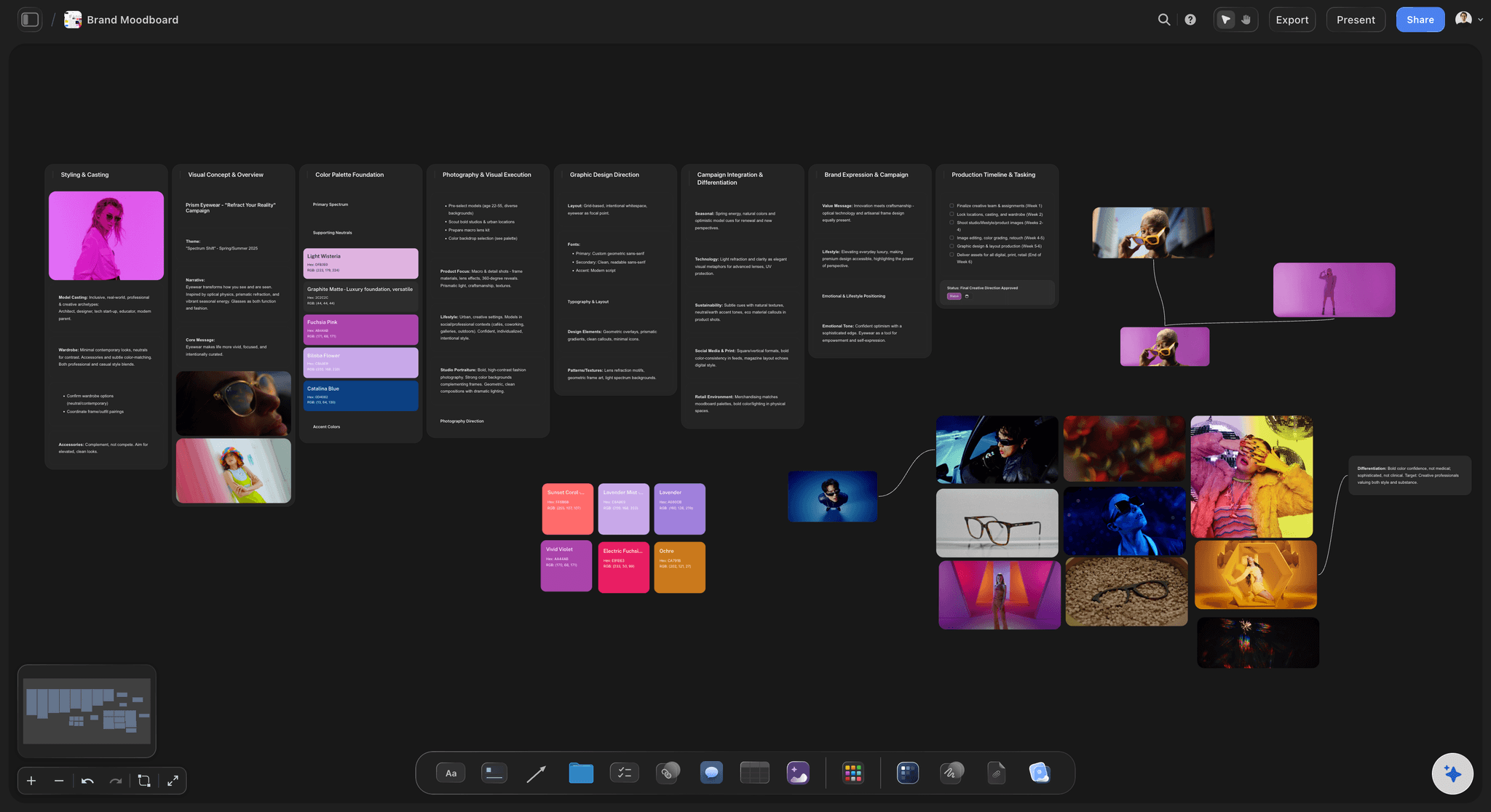
The concept, then the path through it
A concept moodboard next to the experience flow
Captioned references for the build, the materials, the staff look and the photo moment, beside the guest's path drawn as a diagram, every station timed and staffed. The AI drafts both from the brief for you to cut and correct.
Turn the brief into a moodboard →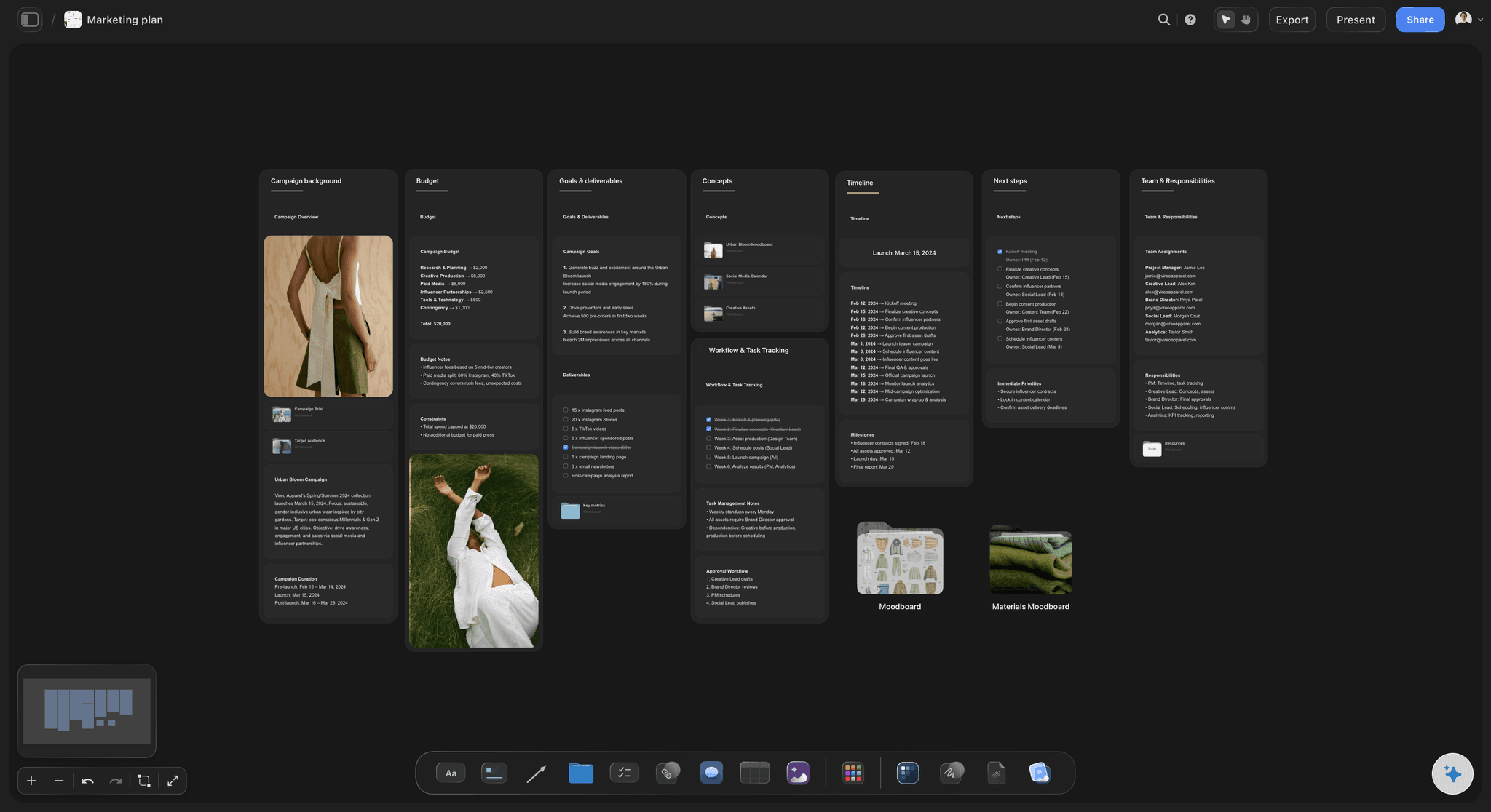
What it costs and who runs it
A budget table that totals itself, with the staffing beside it
Site fee, build, print, samples, permits, insurance, staff, content crew and a contingency line in a table with a currency column and a Sum footer. The staffing table sits beside it, so you can check the shift count against the staff line of the budget.
Plan the event side with AI →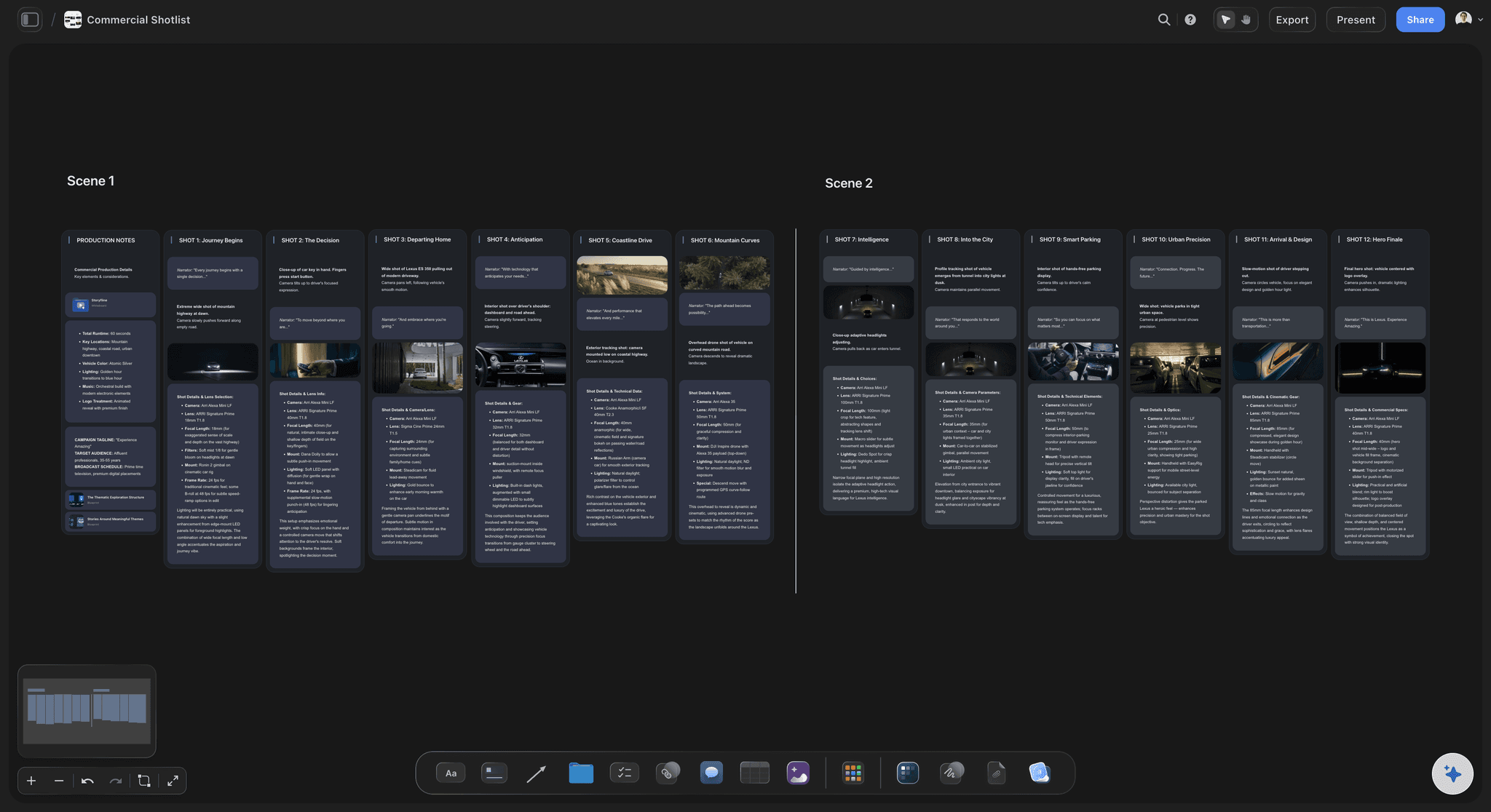
The build day itself
Everything the build day runs on
The run of show from load-in to strike, the content shot list for the photographer and the video crew, and a call sheet PDF the AI drafts from the board. A phone number or address nobody gave it stays an empty line on the page, and you send the PDF to the team yourself.
Draft the run of show with AI →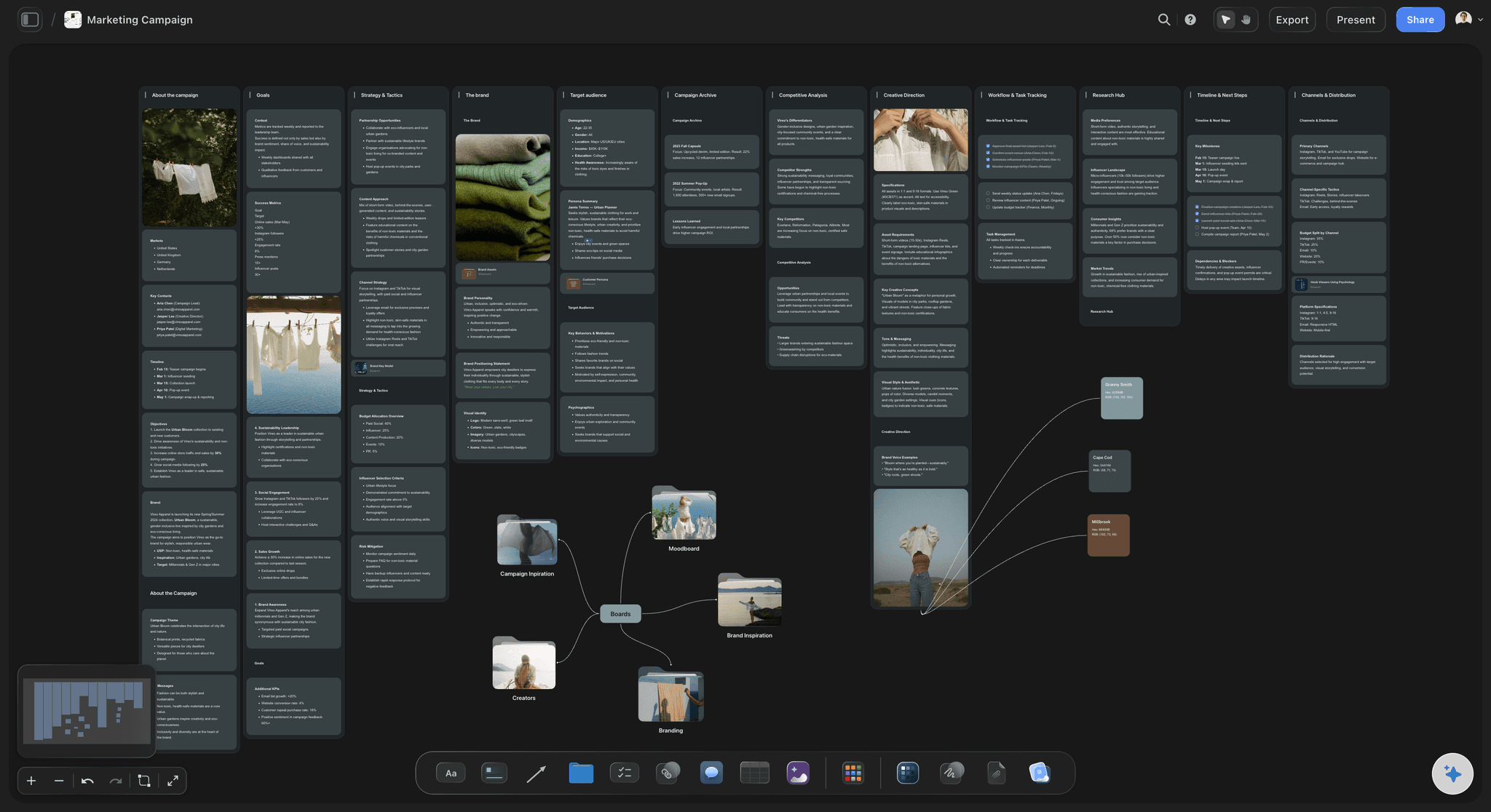
One link, a PDF, or the walk-through
Sent to the client the way they review
The client opens the activation plan from a view-only link in any browser, and signs in to comment beside a station or a budget line. Export the whole board as a PDF for procurement, or step through it fullscreen at the pre-production meeting.
Present it with the client presentation tool →One board per activation, duplicated for the next city.
Run the same pop-up in three cities by duplicating the board and changing the venue, the dates and the numbers. Storyflow is paid-only during early access, with plans from $7.99 a month billed annually ($9.99 monthly). A free plan launches before the end of 2026, and anyone a paid member invites to a board joins free.
Unlimited activation boards and file uploads on every paid plan
AI that drafts the experience flow, the moodboard, the budget table and the run of show
Budget tables with a currency column and a Sum footer
Presentation mode for the client walk-through, and whole-board PDF export
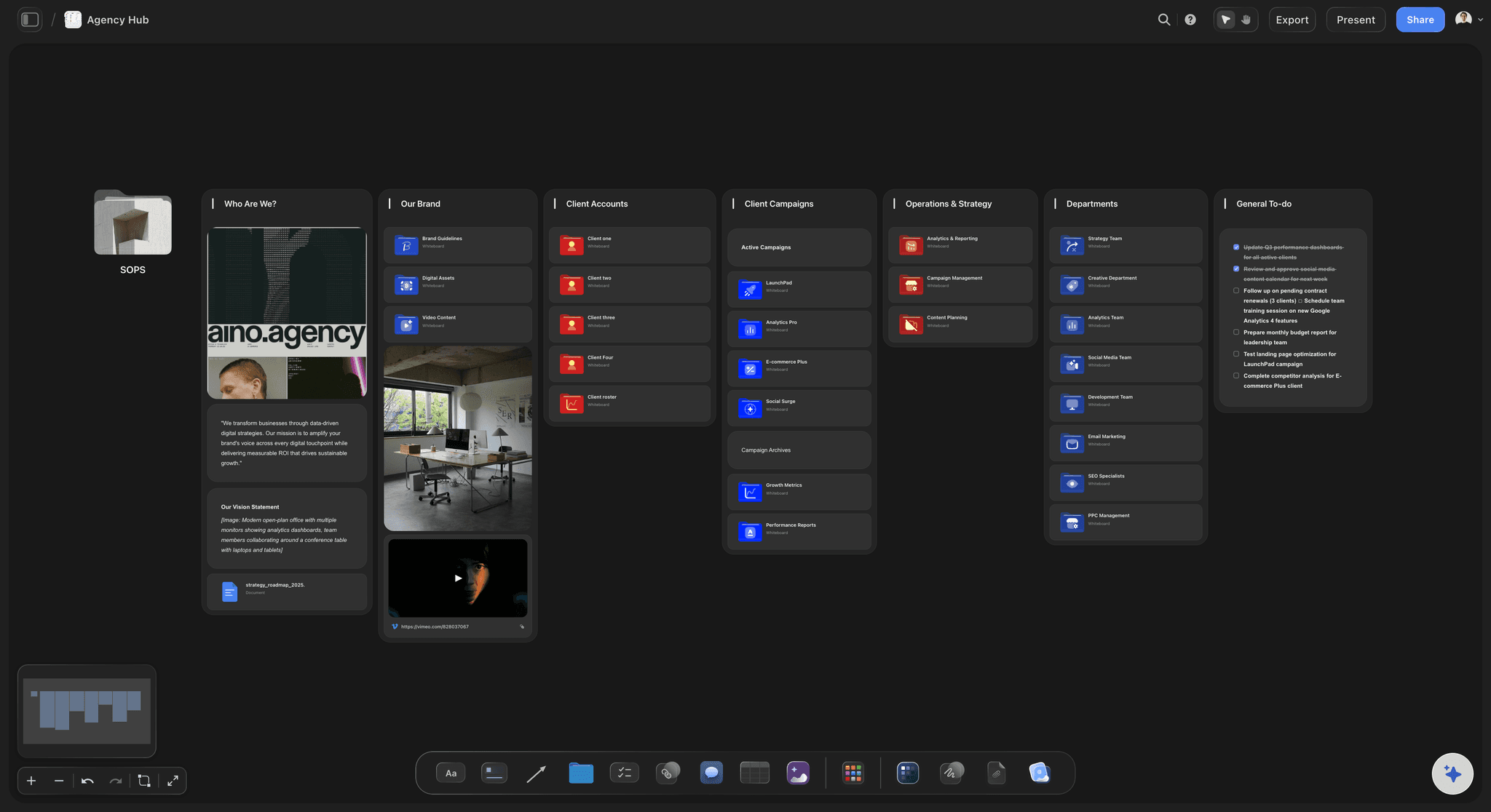
Built for people with taste
What the plan covers, and when each part is due.
Copy it whether or not you plan in Storyflow. The ten parts answer what the client, the venue and the crew lead will each ask, and the countdown after them is a common shape, not a rule.
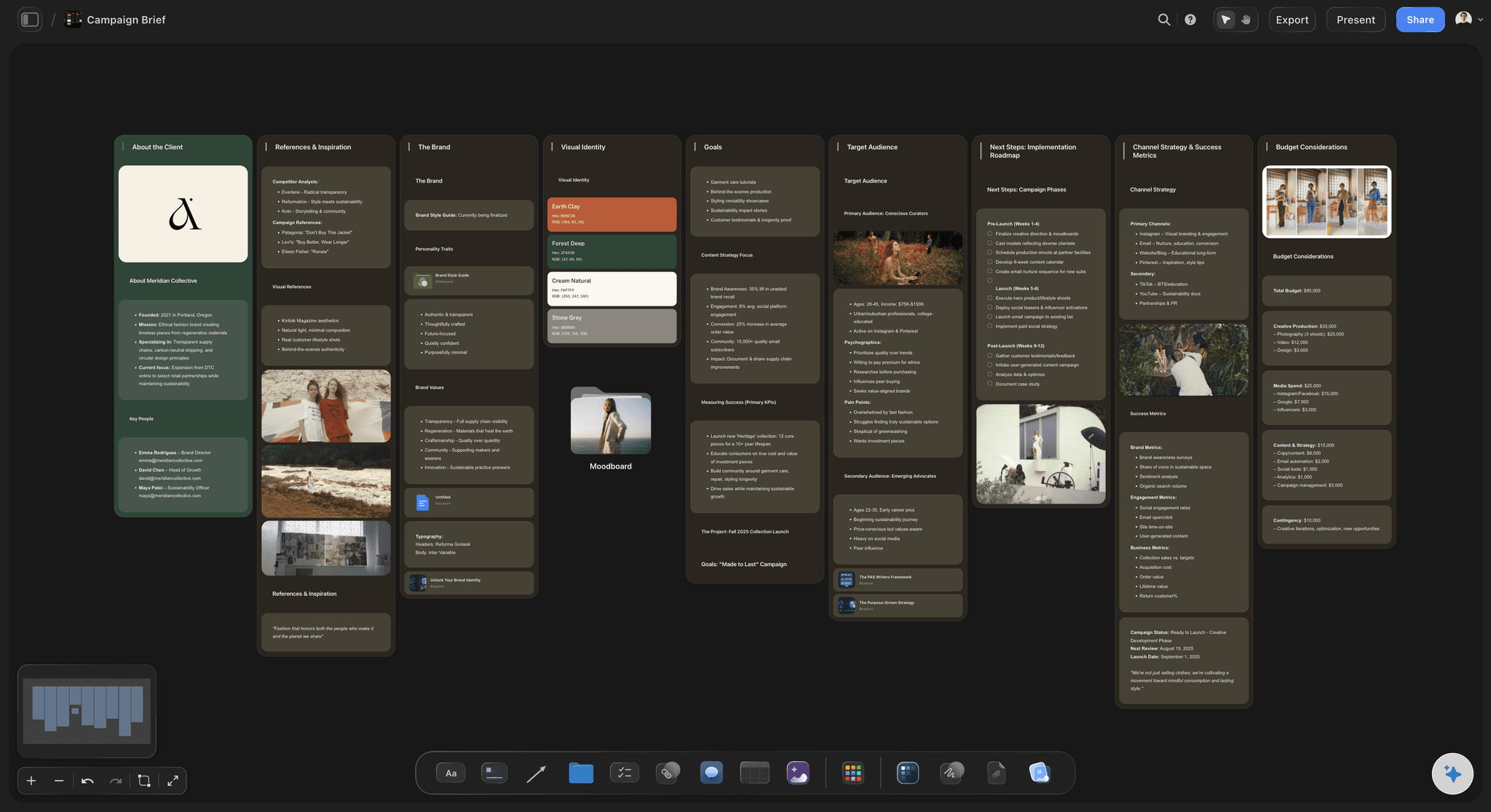
Parts 1 to 4
Why it exists and what a guest does
1. Objective and the one KPI: The single job, whether trial, data capture, content or reach, and the number that proves it, agreed with the client before any creative. An activation measured on four goals is judged on the one that missed.
2. Audience and where to find them: Who you need to stop, where they already are and when: commuters at 8am, festival crowds after 4pm, shoppers on a Saturday. The site follows the audience, never the other way round.
3. The idea in one line: What the guest does and why it is worth their time, tied to the brand's message. If the idea needs a paragraph to explain at the stand, it will not survive a queue.
4. Experience flow, station by station: Every station in order with its dwell time, its staff and its throughput in guests per hour. The flow sets the staff count, the stock order and the queue plan.
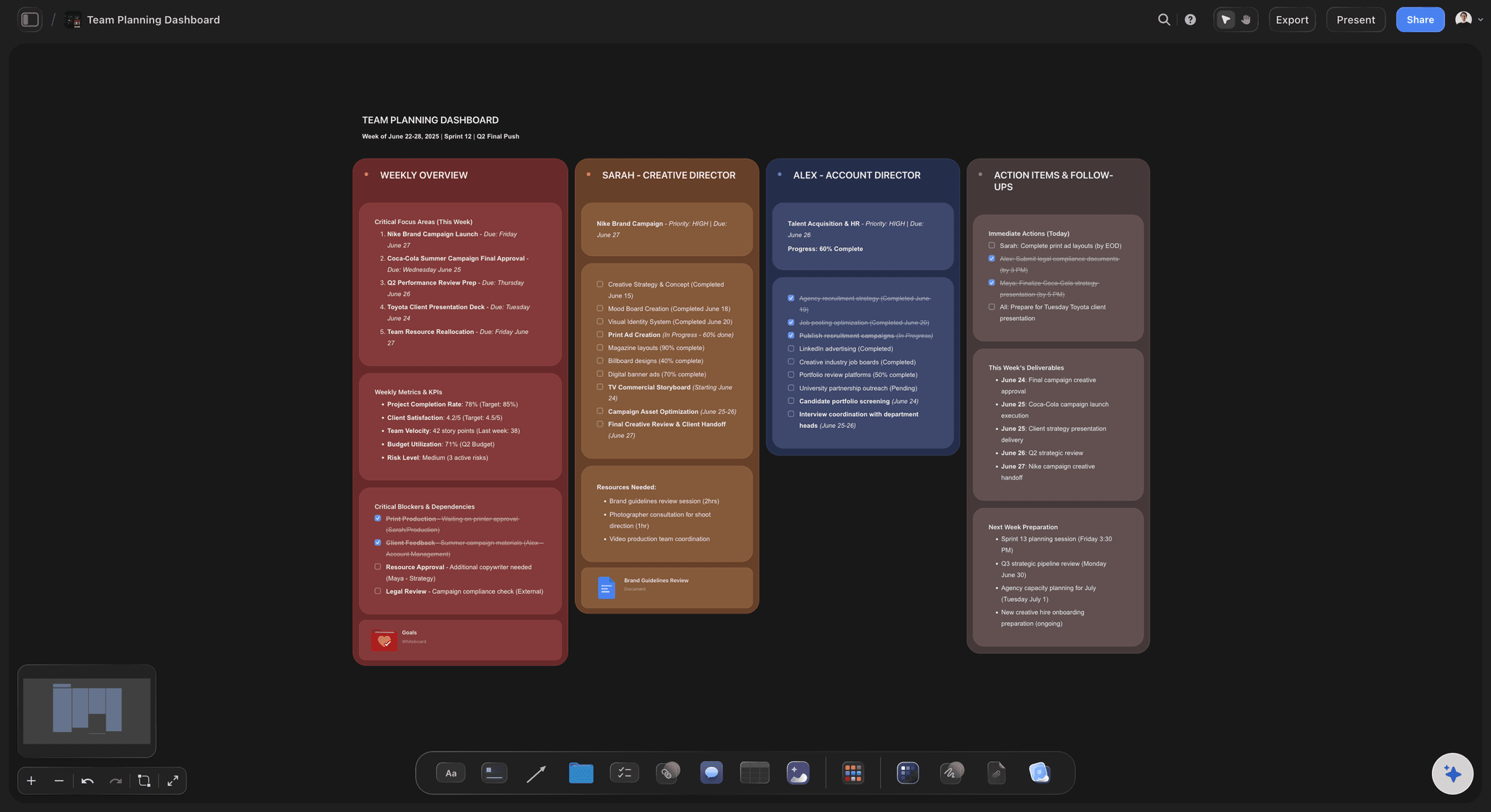
Parts 5 to 7
Where, for how much and with whom
5. Venue, permits and the build: The site, its power, access, load-in and load-out windows, the permit, the insurance certificate, the risk assessment and the build and strike crew. Book a site visit early, because permits and venue approvals carry the longest lead times.
6. Budget lines and contingency: Site fee, build and fabrication, print, samples and stock, staff hours, permits, insurance, content crew, transport and storage. A contingency line, often around ten percent, is the one clients try to cut and the one you will spend.
7. Staffing and the staff brief: Roles, names, shifts and breaks, plus the brief every brand ambassador reads before doors open: the key messages, the questions guests ask, what to say about price and who to call when something breaks. A guest remembers the person more than the build.
What the client owes, and when: Stock and samples delivered by a named date, brand assets, legal sign-off on any claim or competition, approval of the build drawings, and a production budget paid in stages because site fees and print are paid before the day. Late stock and late legal sign-off are the two client-side delays that can move an activation date.
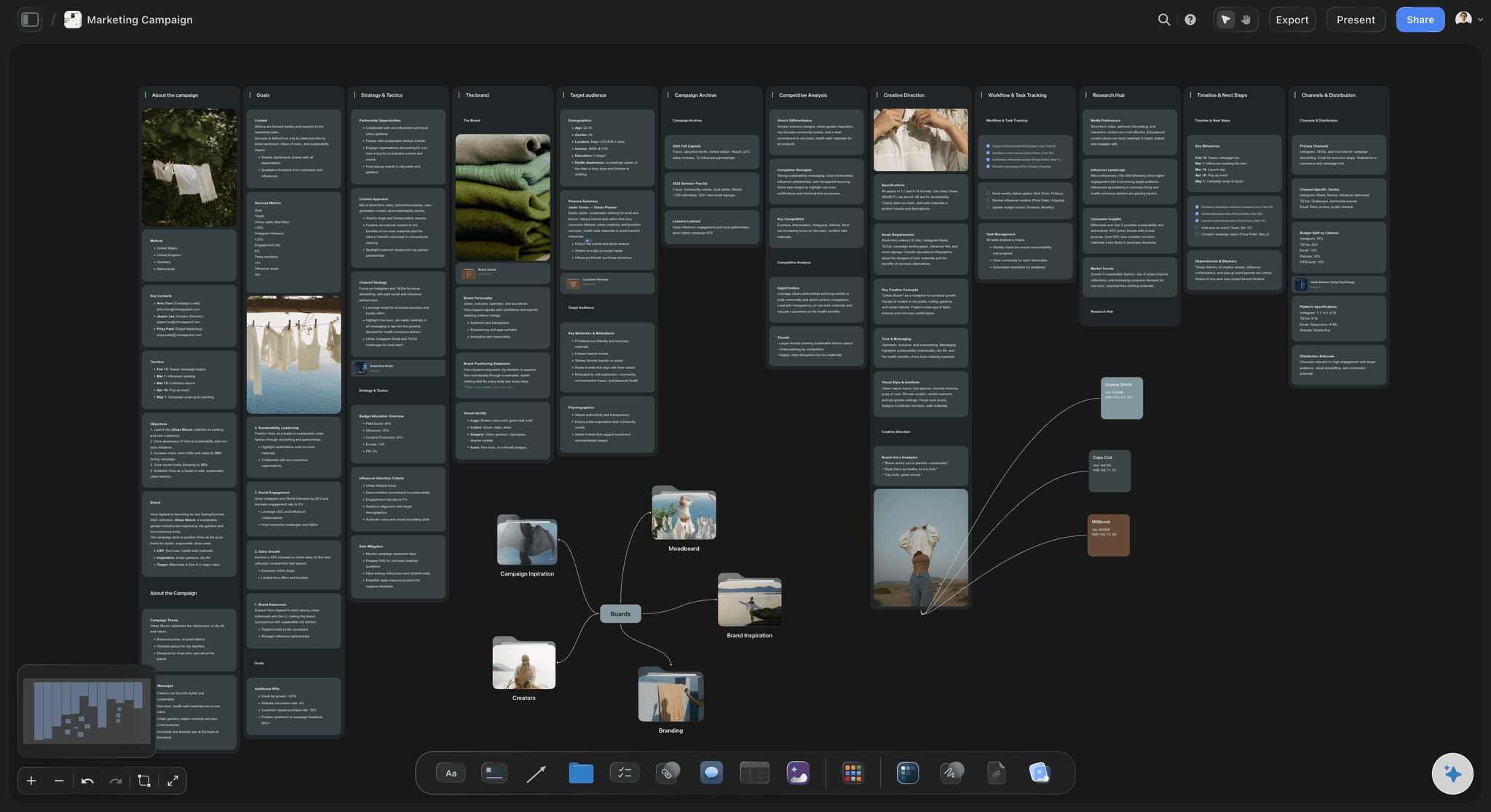
Parts 8 to 10
The day, the content and the proof
8. Run of show: Load-in, build, staff briefing, doors, peak hours, breaks, the content slot, close and strike, each with a time and an owner. It is the page the event lead holds all day, so it lives in rows kept in time order.
9. Content capture and amplification: The content shot list for photo and video, release forms that cover paid use as well as organic posts, creator invites and their usage terms, and when each post goes out. Content nobody planned before the day is rarely captured on it.
10. Measurement and the recap: What gets counted, how and by whom: samples handed out, sign-ups, guests through the space, dwell time, content posted. Those are example metrics rather than benchmarks, and the only one that decides success is the number in part 1.
The eight-week countdown
Worked back from the day doors open
Weeks 8 to 6: Objective and KPI signed off, concept and experience flow chosen, venue shortlisted and permit applications started. Anything that waits on someone else's approval starts in this window.
Weeks 5 to 4: Venue and permits confirmed, budget signed, build drawings approved, staff and content crew booked. Print and fabrication orders go in while there is still time for a reprint.
Weeks 3 to 2: Stock and samples ordered, staff brief written, content shot list and release forms ready, launch posts drafted. The run of show reaches a first full draft.
Week 1, the day, and after: Build, staff briefing and the call sheet PDF out to the team on the eve of the build. Within a week of close, send the client a one-page recap with the numbers and the best content, because the recap is what sells the next activation.
Explore templates for your project
Every template opens as a real, editable board on the infinite canvas. Pick the closest fit and make it your own.
Commercial Moodboard
Pin references, palettes, and tone for a commercial so the look is clear before the shoot.
One app instead of five
Planning an activation in Storyflow, Asana, monday.com or Canva.
Storyflow is where the idea and the plan sit together. Asana and monday.com are built to track tasks and deadlines across a team, and Canva designs the print and social assets.
Storyflow
Recommended
Build-day call sheet PDF drafted by AI
Experience flow drawn as a diagram
Frames grabbed from a site-visit video
Timeline view built from task dates
Automatic reminders before due dates
Asana
Build-day call sheet PDF drafted by AI
Experience flow drawn as a diagram
Frames grabbed from a site-visit video
Timeline view built from task dates
Automatic reminders before due dates
monday.com
Build-day call sheet PDF drafted by AI
Experience flow drawn as a diagram
Frames grabbed from a site-visit video
Timeline view built from task dates
Automatic reminders before due dates
Canva
Build-day call sheet PDF drafted by AI
Experience flow drawn as a diagram
Frames grabbed from a site-visit video
Timeline view built from task dates
Automatic reminders before due dates
What creators are saying
Join early creators getting structured workspaces and AI that remembers their projects
“Storyflow has sped up my workflow by at least 3x, which means more flow state and more projects I can actually ship. It truly changed the way me and my team create.”

Reilin Joey
Director & YouTuber
“One prompt gets me a structured board. But the tactics are my favorite. I run my YouTube scripts through them and my intros and retention got better. It's amazing.”

Justkay
YouTuber & Freelance Filmmaker
“I used to juggle five apps to plan a project. Now I describe what I am making and get boards, lists, and a schedule. All in one place.”

George
@fernwehchronicles
Brand activation plans, answered.
Parts, timing, budget, metrics, permits and the content you capture on the day.
Storyflow is the brand activation plan template for experiential agencies and in-house marketers who need the creative and the logistics together: a concept moodboard, the experience flow, a budget with a live total, staff shifts, a content shot list and a call sheet PDF, on one board the client opens by link with no account or reads as a PDF. Ticketing, RSVPs and check-in belong in Eventbrite, and Asana or monday.com suit a large team tracking hundreds of dated tasks.
Ten parts cover most activations: the objective and one KPI, the audience and where to find them, the idea in one line, the experience flow with a time on each step, venue, permits and build, budget lines with contingency, staffing and the staff brief, the run of show, content capture, and measurement. Put a countdown to the opening day beside them, with the client's sign-off dates on it.
An illustration with made-up numbers: a two-day coffee pop-up on a station concourse. Objective: 4,000 samples and 800 app sign-ups. Audience: commuters, 7 to 10am. Flow: the smell stops them, a 60-second tasting, a scan to join, a cup to take away. Staff: six brand ambassadors in two shifts. Budget: site, build, stock, staff, permit, insurance, content crew, contingency. Measurement: samples, sign-ups, stock left, posts.
Eight weeks is a workable shape for a pop-up or sampling day at a venue you know. Festival builds, multi-city tours and anything needing a street closure or an alcohol licence often start months earlier, because those lead times belong to someone else. Plan in reverse: permits and venue first, then budget sign-off, build and print, staff, content, and the run of show last. Storyflow's planner lays those deadlines out from the date you give it.
List every line the client could question: site or venue fee, build and fabrication, print, samples and stock, staff hours, permits, insurance, content crew, transport, storage and a contingency, often around ten percent. Get quotes before you total it and leave an unquoted line empty instead of guessing. In Storyflow the budget table totals itself as quotes land, and the AI can export it as an Excel file whose totals stay live for procurement.
Lead with the number the objective named, then a short supporting set. Common examples, not benchmarks: samples handed out, sign-ups or opt-ins, guests through the space, average dwell time, content posted by guests and creators, press coverage, and promo codes redeemed afterwards. Agree how each one is counted before the day, such as a clicker at the entrance or a unique code per site, or the recap turns into a debate.
It depends on the site and the country, so ask the venue and the local authority early. Public spaces usually need a permit from the city or the landowner, while a private venue has its own agreement and rules. Expect to show a liability insurance certificate, and add licences for alcohol, music or food sampling where they apply. Temporary structures and generators can need a safety sign-off, which can take weeks.
Treat it as a shoot inside the event. Write the content shot list before the day: hero shots of the build, the product moment, guest reactions, a short interview or two, and vertical cutdowns for social. Give the crew a quiet slot before doors open, put release forms and filming signs on site, and agree who posts what and when. Storyflow's AI drafts the shot list from the experience flow.
No. A campaign plan carries a message across channels for weeks; an activation plan covers one live moment inside it, where people meet the brand in person. Some teams call it a marketing activation plan. It borrows the campaign's objective and look, then adds what a campaign plan never holds: a venue, an experience flow, staff shifts, permits and a run of show.
No. Storyflow is where the activation is planned and the creative lives. Ticketing, RSVPs, registration forms and check-in belong in Eventbrite, lead capture in your CRM's forms or a scanning app, and deadline reminders across a large team in Asana or monday.com. Paste the plan's link into the brief you send each of them, so everyone involved reads the same page.
Yes, as a first draft for you to rework. Give Storyflow's AI the client brief and it drafts the objective, audience, experience flow, budget table and run of show on the board, while the planner spaces the deadlines before the date. It can also turn the board into a call sheet PDF. A cost it was not given and cannot look up stays blank, and the concept and the fee stay yours.
Not during early access. Storyflow is paid-only during early access, with plans from $7.99 a month billed annually ($9.99 monthly). A free plan launches before the end of 2026, and anyone a paid member invites to a board joins free. The brand team, the venue manager and the crew open it at no cost.
More from Storyflow
Brand launch planner
AI event planner
AI run of show generator
Campaign brief to delivery
AI marketing campaign planner
Campaign calendar
Agency campaign planning
Storyflow for agencies
Video marketing plan
Sponsorship deck
Call sheet template
Shot list template
Pricing
Webinar run of show
Campaign brief template
Plan the activation back from the day.
Open a canvas, drop in the brief, and walk the client through the whole plan before a single panel is built.