
Ultra-fast moodboards with real taste
Plan the collection
before you pay for a sample.
Concept, colour story, a line plan by category, fabrics, the sampling weeks, the lookbook shoot and launch day on one board. Decide the range on paper, where changing your mind costs nothing.


Creatives working for these brands already got early access
- Red Bull
- Canon
- Artlist
- Porsche
See how easy it is to get started
Watch a real project come together, from a blank board to a finished plan, clicked through step by step.
Start from a ready-made template
Pick a board to see what you can build, then let AI fill it in. Every template is a real, editable starting point on the same infinite canvas.

Film Moodboard
Collect film references, color palettes, lighting, locations, and tone in one place, then invite your crew.
What should a fashion collection plan include?
A fashion collection plan is the range you will make, decided before the factory quotes it: the concept, the colours, how many styles in each category, what each one costs and sells for, and when every stage lands. Storyflow is an AI visual workspace that plans your collection on one infinite canvas: the concept and moodboard, the colour story, and a line plan and a week-by-week schedule the AI drafts from your notes for you to cut down.
Start with a customer and a reason. A concept like "coastal summer" fits a hundred labels. Write who buys it, where they wear it and what they already own from you, then pin fifteen to twenty-five captioned references. Anything that does not serve that person comes out of the range, however much you love the sketch.
Count styles, then colours, then sizes. A style in two colourways is two SKUs, and each SKU needs its own fabric order and stock. A first capsule often runs eight to fifteen styles: a few hero pieces that carry the story, a core that sells every season, and one or two statement pieces for the lookbook and press.
Most collections slip at the factory, not the sketch. Fabric minimums, lab dips, sample rounds and bulk lead times set the calendar. Work backwards from launch day, ask your factory for its real lead times before you promise a date, and plan the lookbook shoot on final samples, not on protos you are still fitting.
Ultra fast from brief to board
Four steps to a range you can cost.
Four steps, and the expensive decisions come last.
01
Pin the concept and the customer
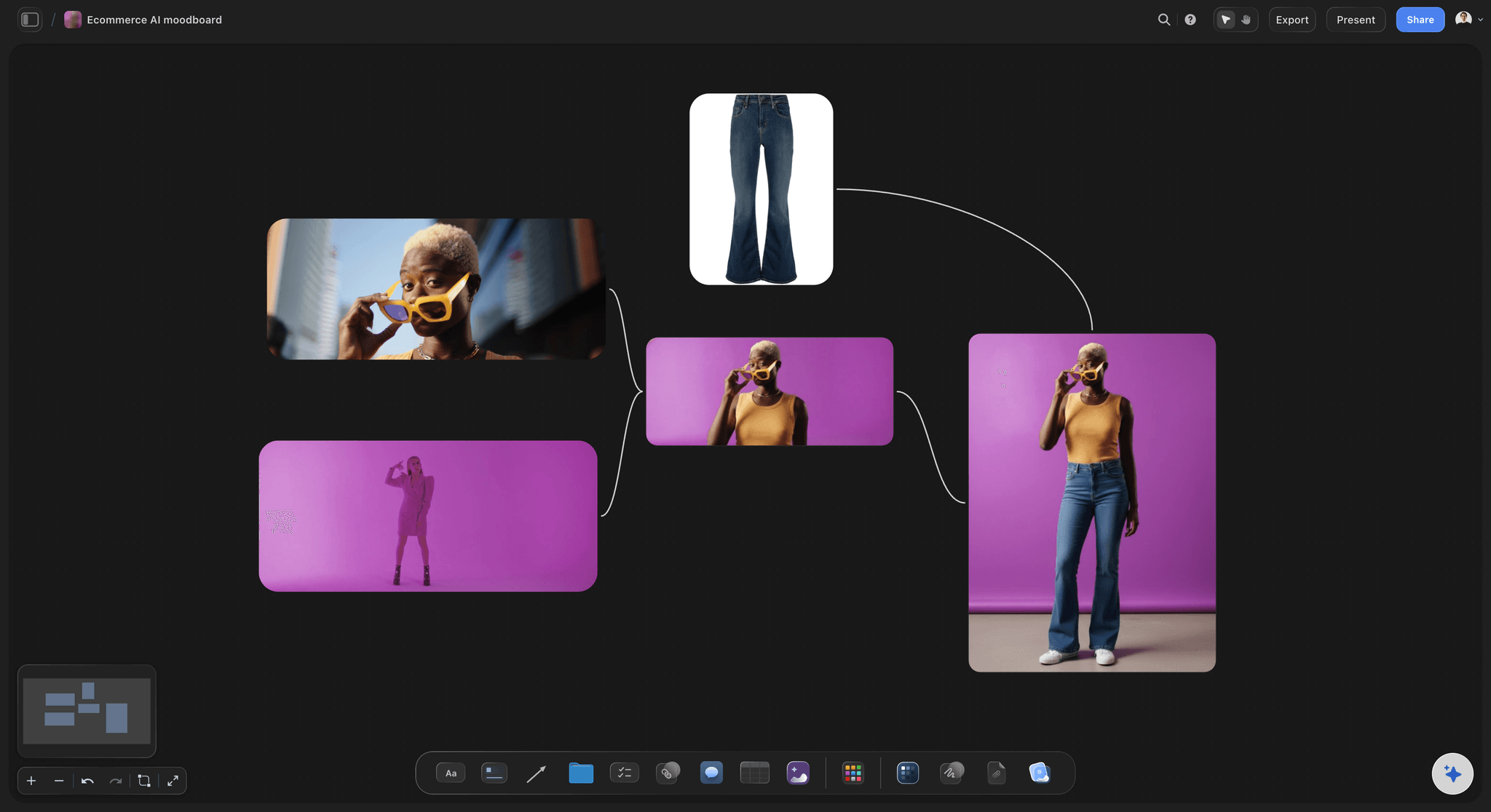
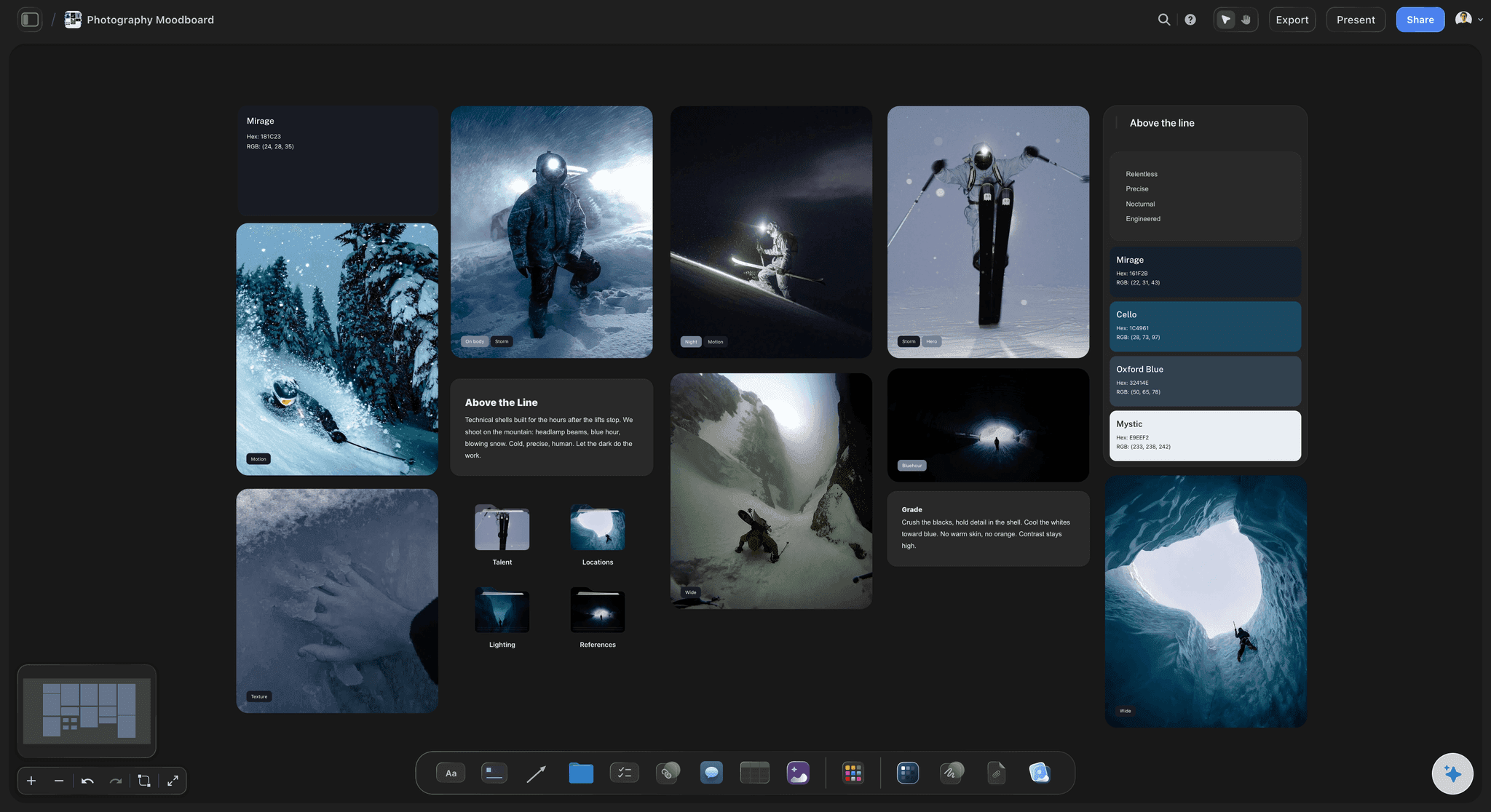
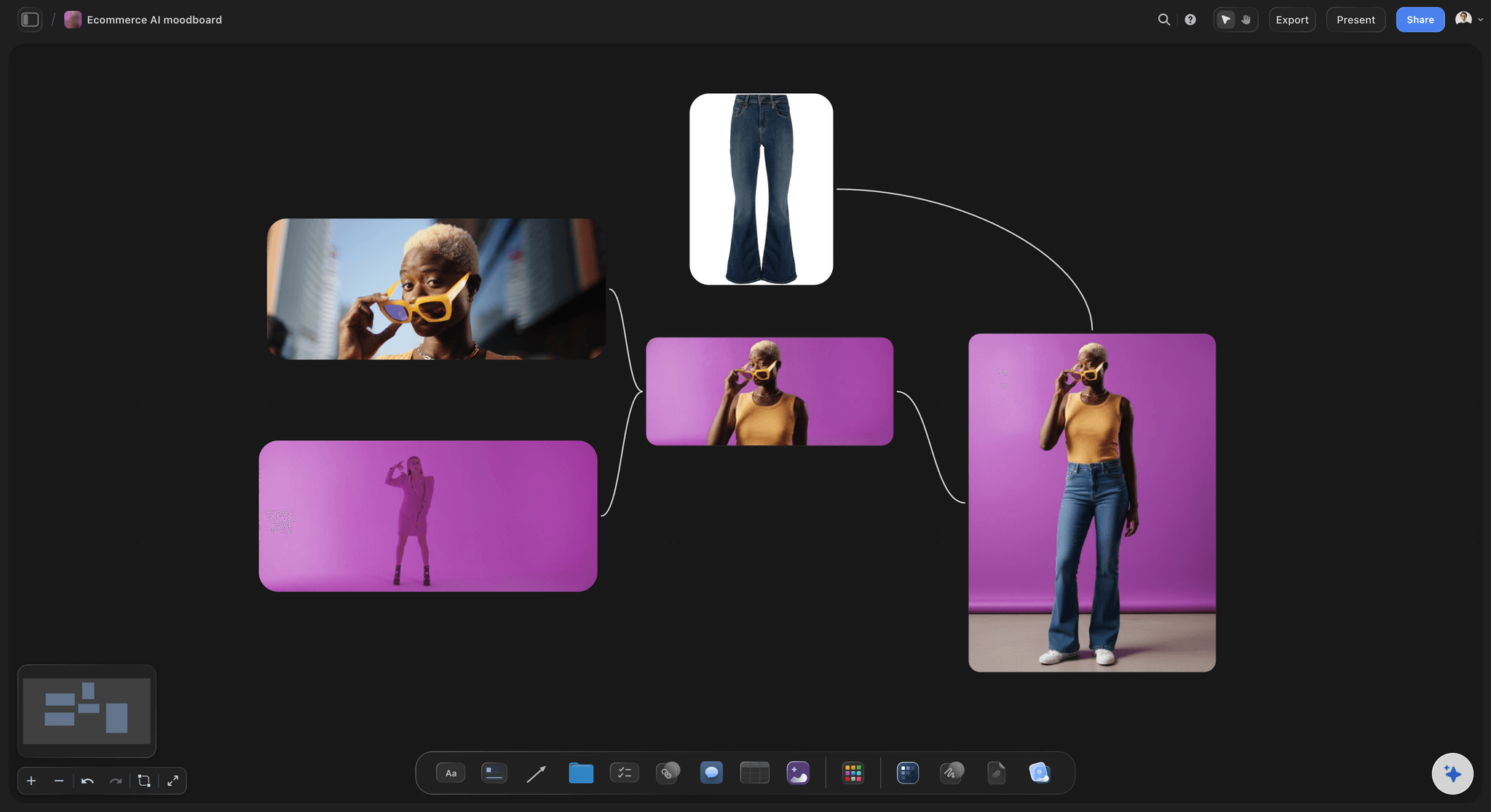
Upload references, fabric photos and past bestsellers, caption each one, and write the customer in two sentences. The AI's moodboard workflow can group what you pinned into a concept board you then edit.
02
Set the colour story
Turn the references into colour swatches on the board, decide which colourways each style comes in, and name every colour the way you will write it on the lab dip request.
03
Build the line plan table
One row per style with the line plan's columns and a status column. Currency columns total as you type; add a cost-times-units column you fill in to see what the range will cost to make.
04
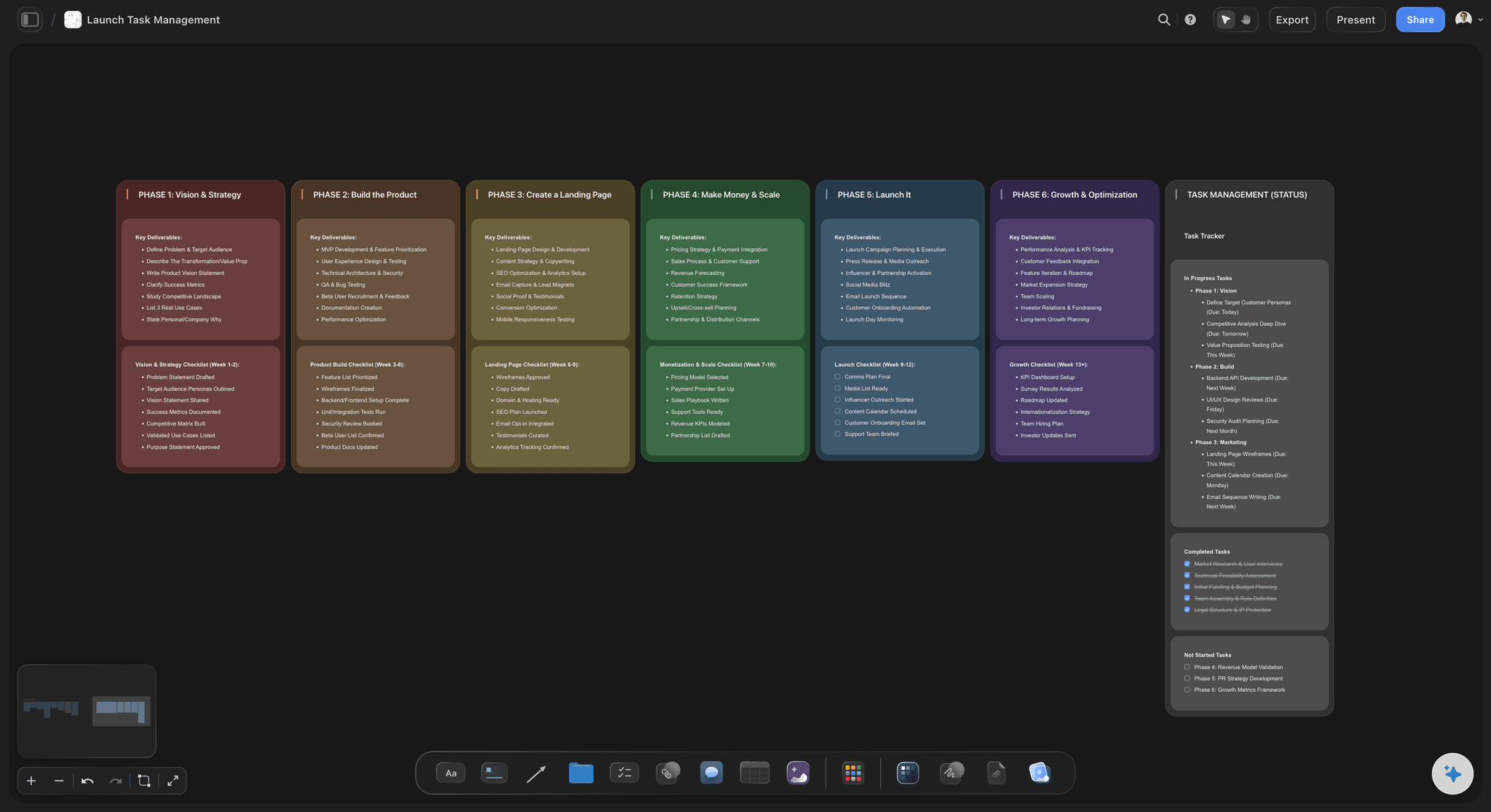
Work the weeks back from launch
Give the AI your launch date and it lays out sourcing, samples, fittings, production and the shoot as weeks counted back from it. Add the factory's lead times and move the date if the weeks do not fit.
Concept, range and calendar in the same place.
Storyflow holds the decisions about the range. Specs for the factory stay in your tech pack tool.
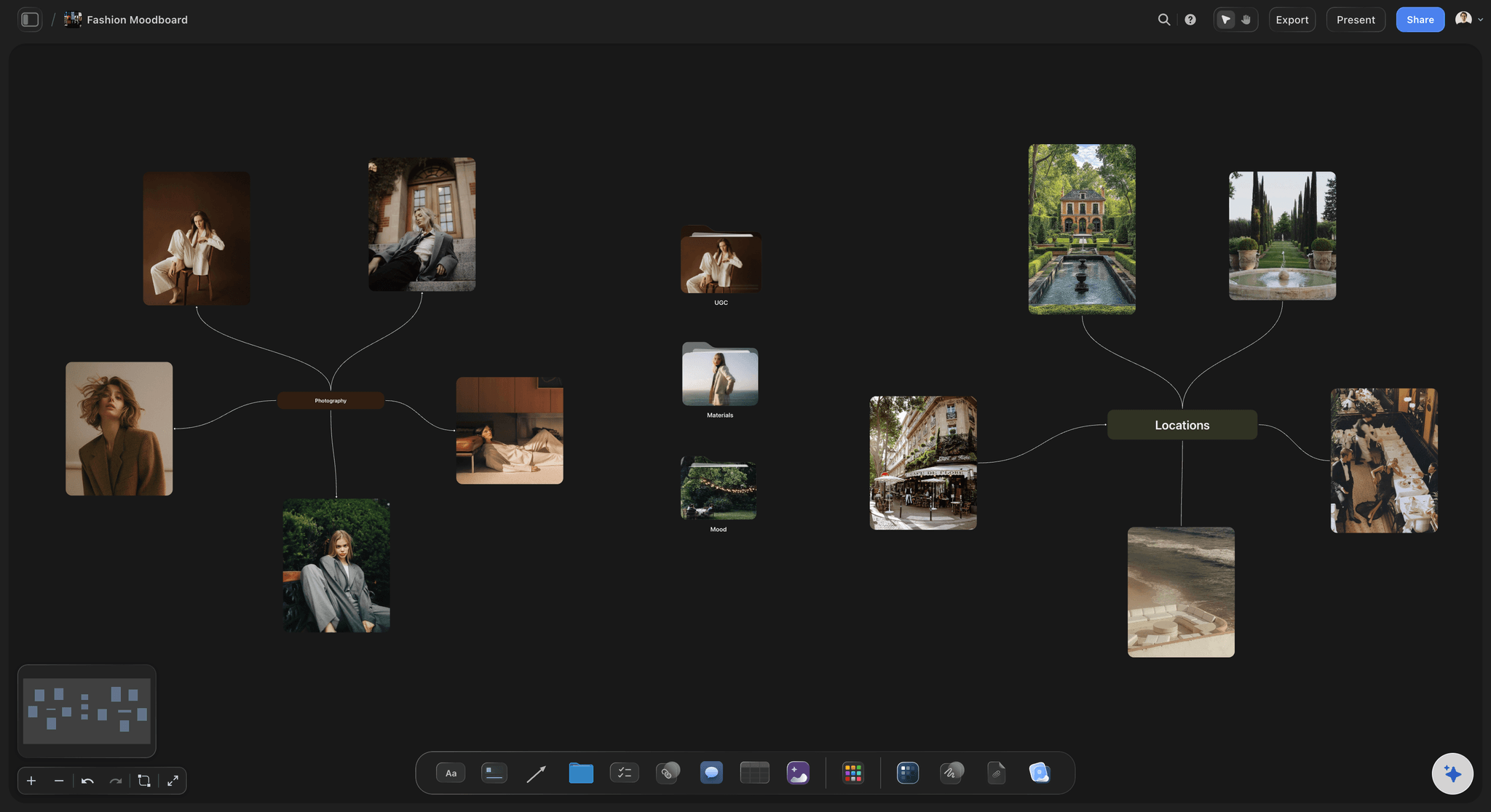
Concept, customer and references
A moodboard that edits the range
References, fabric photos, runway clips and the customer in two sentences, side by side. When a style does not fit the board, it is easy to see and easy to cut.
See the fashion moodboard →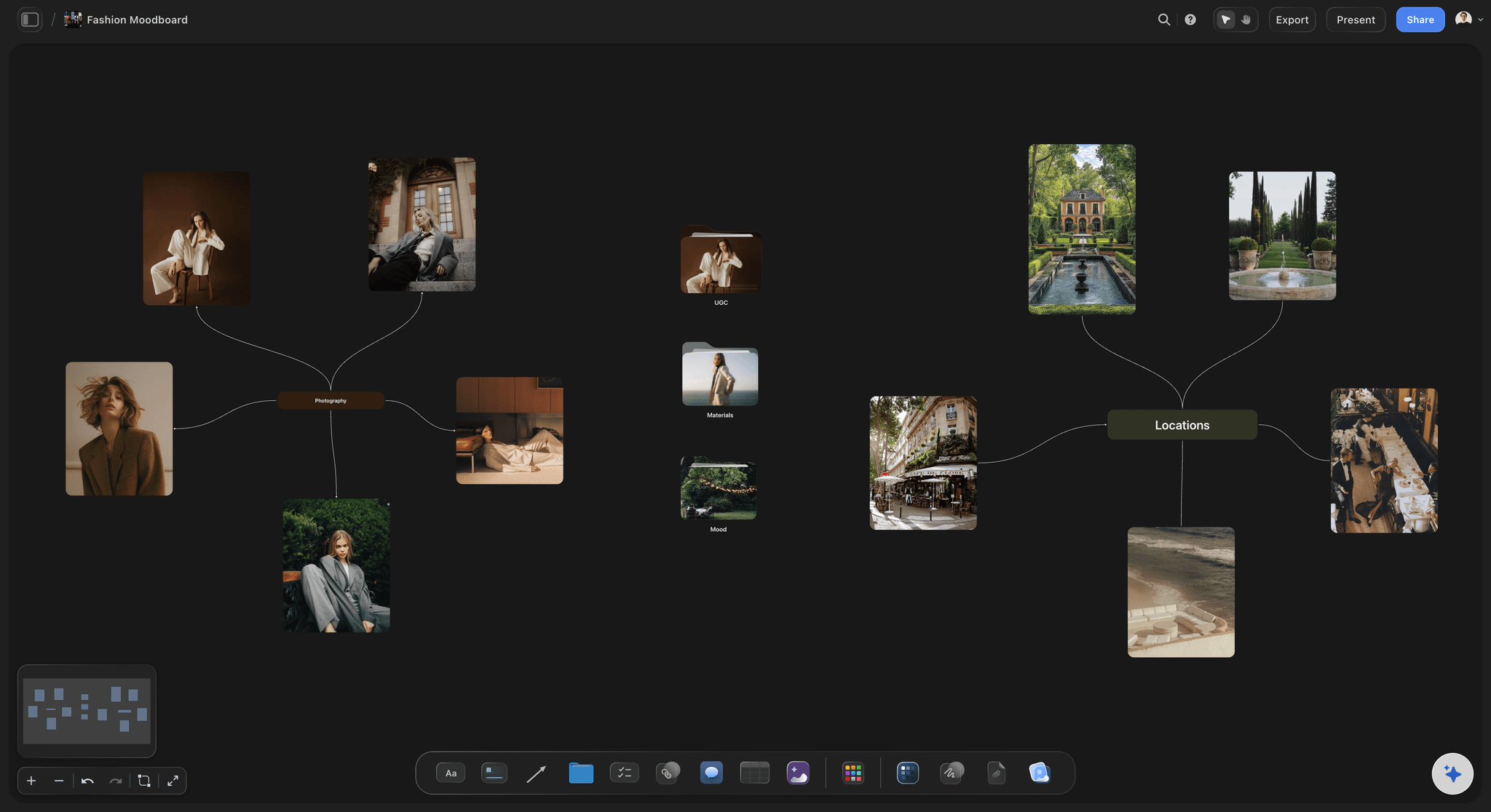
Colour story and fabrics
Swatches you can hand to a mill
Colour swatches with their values, fabric and trim photos grouped by style, and a note of each mill's minimum order. The AI's colour palette workflow can propose a palette from your references for you to adjust.
See the brand moodboard →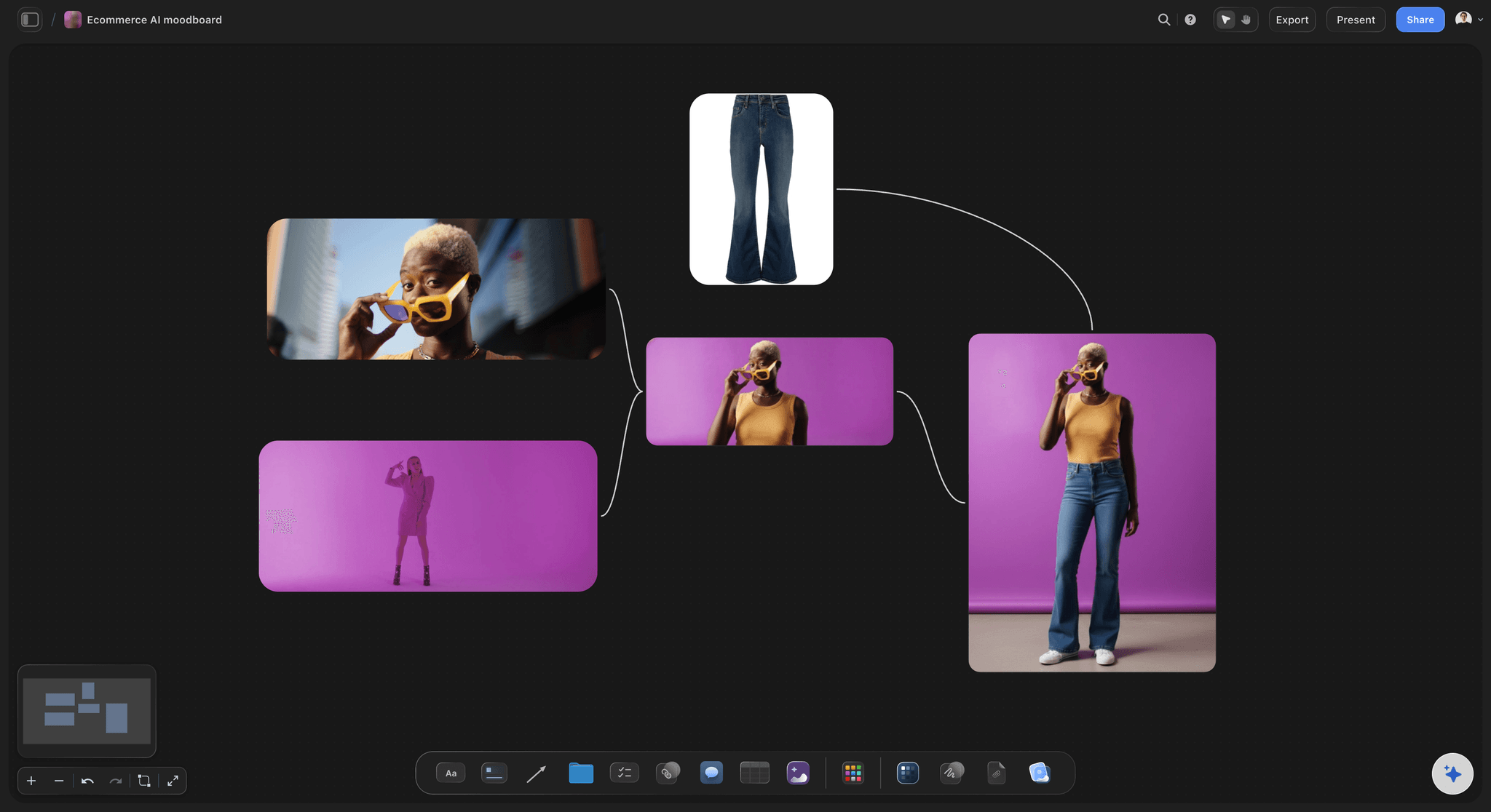
The line plan, counted and costed
Every style, SKU and price in one table
Every style with the line plan's columns, a status for each, and a live total under each currency column. Rows kept in category order show the gaps in the range at a glance.
See the brand launch planner →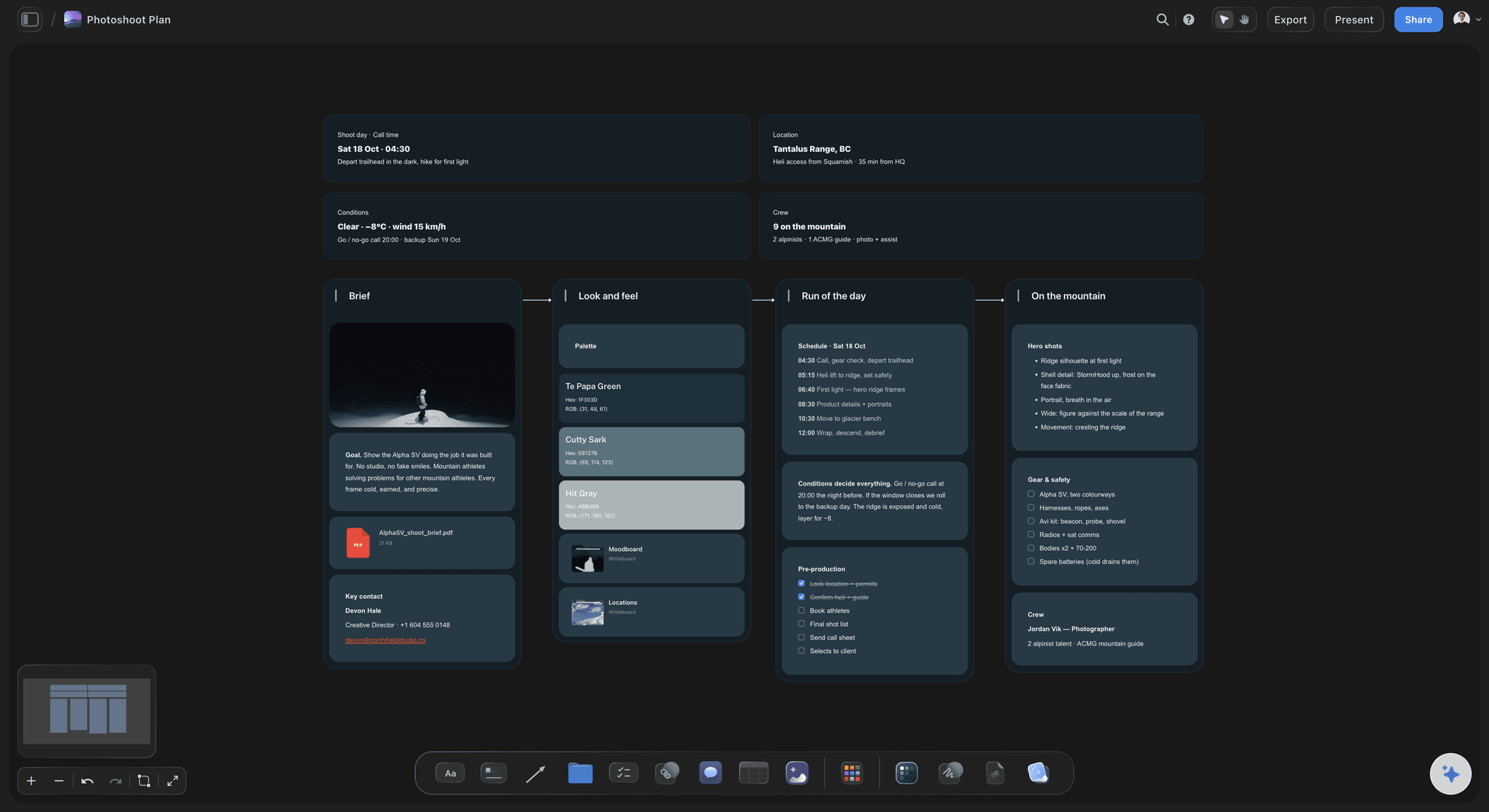
Shared with the people who make it
One link for the factory, stylist and investor
Send a view-only link that opens with no account, or export the whole board as a PDF for the factory's inbox. Invited teammates edit the same board in real time.
See the photoshoot plan template →Next season starts from this one.
Each collection gets its own board, so next season starts from this season's line plan and lead times instead of a blank page. Storyflow is paid-only during early access, with plans from $7.99 a month billed annually ($9.99 monthly). A free plan launches before the end of 2026, and anyone a paid member invites to a board joins free.
Unlimited collection boards, image uploads and files on every paid plan
AI that drafts the concept board, colour palette, line plan and timeline (image generation on Pro and Max)
Tables with currency columns and live totals
View-only links, whole-board PDF export and presentation mode
Built for people with taste
A collection plan in nine parts, with the weeks.
Copy this structure into whatever you plan in. The week counts are a common shape for a small capsule made with one factory; your factory's lead times replace them.
Parts 1 to 3
The idea, the colours and the cloth
1. Concept and customer (about 2 weeks): A one-line concept, the customer in two sentences and fifteen to twenty-five captioned references. The mistake is a mood without a wearer, which lets every sketch in.
2. Colour story (inside those 2 weeks): Four to seven colours with a job each: base, seasonal and accent. Decide which colourways each style comes in here, because every extra colourway is another fabric order.
3. Fabrics and trims (about 3 weeks): Swatches, composition, weight, price per metre and the mill's minimum order for each fabric. Request lab dips now; waiting on colour approval is where a quiet month disappears.
Part 4
The line plan table
The columns: Style name, category, role (hero, core or statement), colourways, fabric, size range, target cost, retail price, planned units and status. Ten columns cover a first capsule.
The category mix: Count styles per category before you sketch more: tops, bottoms, outerwear, dresses, accessories. A range with six tops and one pair of trousers sells as an incomplete wardrobe.
The price ladder: An entry price, a core price and a hero price per category, set from your target margin. Cost each style against its rung; a hero piece that costs like a core one is usually underbuilt.
What gets cut: Mark styles that miss their cost or overlap another as dropped rather than deleting them. Next season's line plan often starts from that list.
Parts 5 to 8
Samples, then production
5. Tech packs and first samples (about 6 to 8 weeks): Tech packs go to the factory in the first two weeks; first samples commonly take four to six more. Budget for paid samples on every style, including the ones you will cut.
6. Fittings and second samples (about 3 to 4 weeks): Fit on a real body in your size range, write the corrections against each style row, and approve or drop. Two rounds is a common plan; a third means the tech pack was vague.
7. Pre-production sample: The factory makes one PP sample in the bulk fabric and trims; approve it in writing before bulk starts, and hold it as the standard bulk is checked against.
8. Costing, order and bulk (about 8 to 12 weeks): Lock the landed cost, including freight and duties, then place the purchase order. Factories commonly ask for a deposit with the order and the balance before goods ship.
Part 9, and after
The lookbook shoot and launch day
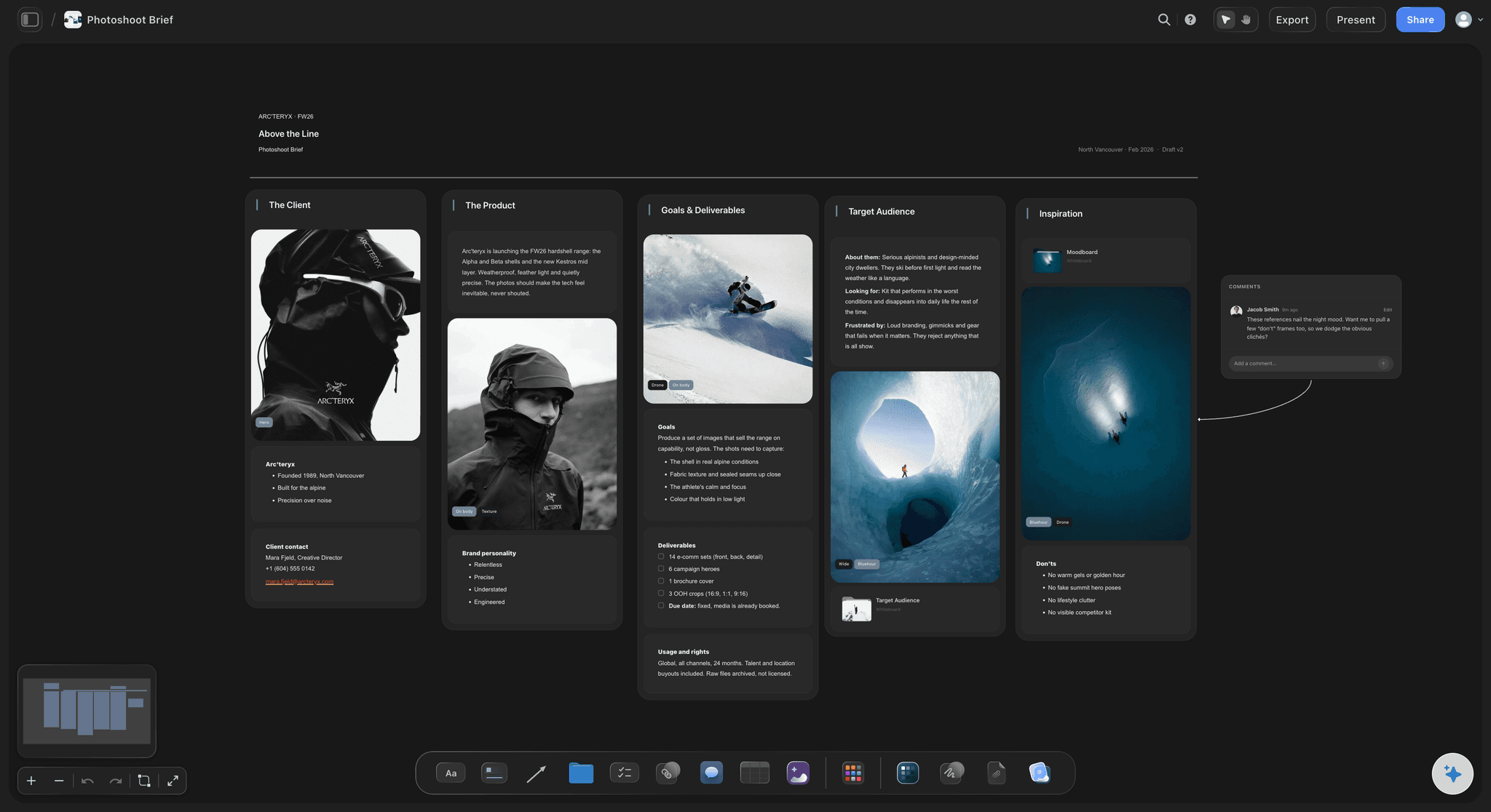
9. Lookbook shoot (1 to 2 days, during production): Shoot final samples, not protos, with a shot list per look: full-length, detail and movement. Ecommerce flats of every SKU often need their own day.
Launch assets, two to three weeks out: Product pages, size guides, the email to your list and a posting plan for launch week. Your shop needs final photos before stock lands, not after.
A lookbook PDF from the board: The AI drafts an image-led lookbook PDF from the photos on the board, one look to a page with short captions, for buyers, press and stockists.
Explore templates for your project
Every template opens as a real, editable board on the infinite canvas. Pick the closest fit and make it your own.
Film Moodboard
Collect film references, color palettes, lighting, locations, and tone in one place, then invite your crew.
One app instead of five
Planning a range: Storyflow, Milanote, Techpacker or a spreadsheet.
Storyflow plans the collection from concept to lookbook on one canvas. Techpacker builds the tech packs and line sheets a factory and a wholesale buyer work from, Milanote keeps visual boards on a free plan, and a spreadsheet keeps the numbers.
Storyflow
Recommended
Moodboard with captioned references
AI drafts a lookbook PDF from the board
Tech pack editor built for the factory
Line sheet generated for wholesale buyers
Free plan available today
Milanote
Moodboard with captioned references
AI drafts a lookbook PDF from the board
Tech pack editor built for the factory
Line sheet generated for wholesale buyers
Free plan available today
Techpacker
Moodboard with captioned references
AI drafts a lookbook PDF from the board
Tech pack editor built for the factory
Line sheet generated for wholesale buyers
Free plan available today
Google Sheets
Moodboard with captioned references
AI drafts a lookbook PDF from the board
Tech pack editor built for the factory
Line sheet generated for wholesale buyers
Free plan available today
What creators are saying
Join early creators getting structured workspaces and AI that remembers their projects
“Storyflow has sped up my workflow by at least 3x, which means more flow state and more projects I can actually ship. It truly changed the way me and my team create.”

Reilin Joey
Director & YouTuber
“One prompt gets me a structured board. But the tactics are my favorite. I run my YouTube scripts through them and my intros and retention got better. It's amazing.”

Justkay
YouTuber & Freelance Filmmaker
“I used to juggle five apps to plan a project. Now I describe what I am making and get boards, lists, and a schedule. All in one place.”

George
@fernwehchronicles
What labels ask before the first sample.
Line plans, SKU counts, sampling weeks, factory terms and the tools that take over.
Storyflow is the fashion collection planner for a label that wants the concept, colour story, line plan, sampling weeks and lookbook shoot on one board, with an AI that drafts the line plan and timeline from your notes, shared by a link that opens with no account. For tech packs and production tracking use Techpacker or a PLM such as Backbone; for moodboards alone, Milanote; for selling, Shopify.
A line plan is the table of every style in a collection, with a column for each thing you decide per style: category, role, colours, fabric, sizes, cost, price and units. It is decided before tech packs and samples, and it answers the questions a sketchbook cannot: is the range balanced, what does it cost to make, and does every price have a reason. In Storyflow it is a table on the collection board, with totals under the money columns.
The line plan is internal: what you will make and what it costs. A line sheet is a sales document for wholesale buyers, with product images, colourways, sizes and wholesale prices. A tech pack is for the factory: measurements, construction, materials and trims for one style. The line plan comes first, and the other two are built from it.
Fewer than you want. A first capsule often runs eight to fifteen styles, each in one to three colourways, so twenty to thirty SKUs before sizes. Every SKU needs its own fabric order, sample and stock, and the minimums add up fast. Build the range around a few hero pieces and a core you can repeat next season.
For a small capsule with one factory, six to nine months is a common shape: about five weeks for concept, colour and fabrics, three for the line plan, six to eight for tech packs and first samples, three to four for fittings, and eight to twelve for bulk production, with the lookbook shot during production. Ask your factory for its lead times before you announce a date.
Pull four to seven colours from your references and give each a job: one or two bases that sell, a few seasonal shades and one accent for the statement pieces. Decide the colourways per style at the same time, since each extra one is another fabric order. In Storyflow you keep the colours as swatches beside the references, and the AI's colour palette workflow can propose a starting set.
Minimum order quantities per fabric and per colour, paid samples on every style including the ones you cut, lab dip approval times, and the payment schedule, which is commonly a deposit with the purchase order and the balance before goods ship. Add freight and duties to reach landed cost, and agree in writing what happens if bulk arrives late.
Book it while bulk is in production, using approved samples, so the photos exist before stock lands. Plan one to two days with a shot list per look: full-length, detail and movement, then ecommerce flats of every SKU. Keep the plan on the collection board so the looks match the line plan, and the AI can draft a lookbook PDF from the finished photos.
It can draft, and you decide. In Storyflow the AI groups your references into a concept board, proposes a colour palette, turns your notes into a line plan table and lays out the weeks backwards from launch day. Your references and notes are its only material; the range, fabrics and prices stay your call, and Undo reverses any change it makes.
No. Storyflow plans the collection: concept, colour story, line plan, sampling weeks and the lookbook. Tech packs with measurements and construction, line sheets for wholesale buyers and production tracking belong in Techpacker or a PLM such as Backbone, and your shop in Shopify. Put the line plan's link in the note that goes to the factory, so specs and range stay in step.
From landed cost up, never from a competitor's shelf down. Add fabric, trims, making, samples spread across units, freight and duties, then set an entry, core and hero price per category from the margin you need, leaving room for wholesale if you will sell to stockists. A style that cannot reach its rung is redesigned or cut. In Storyflow the line plan table keeps cost and retail price side by side, totalled as you type.
Not during early access. Storyflow is paid-only during early access, with plans from $7.99 a month billed annually ($9.99 monthly). A free plan launches before the end of 2026, and anyone a paid member invites to a board joins free. Your factory and stylist pay nothing to view the board.
More from Storyflow
Fashion moodboard maker
Brand photoshoot planning
Product photography shoot plan
Photoshoot plan template
Brand launch planner
Product launch checklist
Brand moodboard
Wardrobe and styling planner
Film lookbook template
Creative business plan
How to create a fashion mood board
Best mood board tools for fashion designers
Best tools for fashion show production
Pricing
Editorial photoshoot planning
Photoshoot plan with Claude
Decide the range before the samples.
Open a canvas, pin the references, and turn your notes into a line plan and a launch date that holds.