
Extremely clear strategy, zero busywork
A Kickstarter campaign planner
from the first follower to the last parcel.
Pre-launch weeks, the video, reward tiers, launch day and fulfilment, planned back from your launch date.


Creatives working for these brands already got early access
- Red Bull
- Canon
- Artlist
- Porsche
See how easy it is to get started
Watch a real project come together, from a blank board to a finished plan, clicked through step by step.
Start from a ready-made template
Pick a board to see what you can build, then let AI fill it in. Every template is a real, editable starting point on the same infinite canvas.

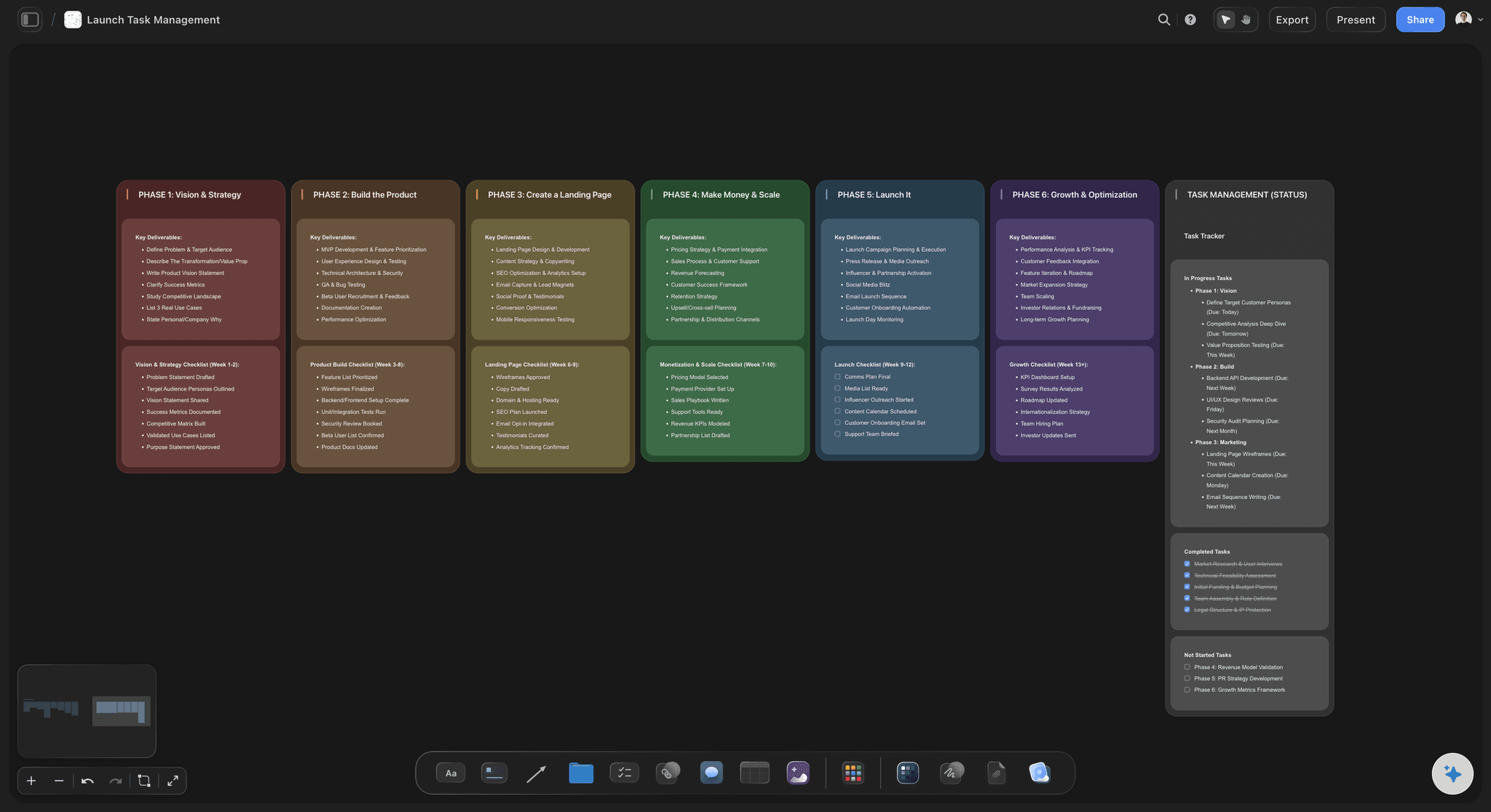
Marketing Plan
Lay out your goals, channels, and initiatives for the quarter on one board.
How do you plan a Kickstarter campaign?
A Kickstarter campaign plan is everything that has to be true before launch day: an audience waiting, a video, a page, priced rewards, a goal you can deliver on, and a way to ship. Storyflow is an AI visual workspace that plans your Kickstarter campaign backwards from the launch date on one infinite canvas: the pre-launch weeks, the video storyboard, the reward tiers, launch day and fulfilment. Its AI drafts each part from your product notes for you to rewrite.
The campaign is decided before it starts. Most of the work is the weeks before launch: a pre-launch page collecting followers, an email list, and content showing the thing being made. A campaign that launches to people who have never heard of it spends its thirty days introducing itself.
Price every tier with its costs beside it. Unit cost, packaging, shipping, Kickstarter's 5% fee and payment processing, which Kickstarter puts at roughly 3 to 5%. A tier that looks generous on the page can lose money on every backer once shipping to another country is counted. Decide whether shipping is charged in the campaign or later in the pledge manager, and cost it either way.
Promise a delivery month you can defend. Backers forgive a delay they were told about; they do not forgive silence. Put the manufacturing steps, the supplier's lead time and a buffer between the campaign's end and your estimated delivery, and plan an update for every one of those steps.
Ultra fast from brief to board
Plan it backwards from the day you press launch.
Four steps, starting three to four months before you go live.
01
Set the launch date and plan back from it
Name the date and paste what you know: the product, the prototype's state, your audience today. The AI plans the weeks backwards from launch, with anything that waits on a supplier or a review in the earliest week that can carry it.
02
Cost the rewards before you write them
One row per tier in a table: price, what the backer gets, unit cost, shipping, fees and a margin column you fill in, with a Sum under each cost column. Paste your supplier and shipping quotes and leave any unknown cost blank rather than guessing.
03
Storyboard the video and draft the page
The AI's storyboard workflow lays the campaign video out frame by frame, and on Pro and Max it can generate the frames. The page outline sits beside it: hook, story, how it works, rewards, timeline, risks.
04
Run launch, updates and fulfilment from the same board
Launch-day tasks as tickets with an owner each, updates planned at each milestone, and after funding the manufacturing and shipping steps, each with the date backers were promised.
What backers see, and what you owe them after.
The video sells the rewards and the rewards set the delivery date, so they are planned together.
The two minutes that sell it
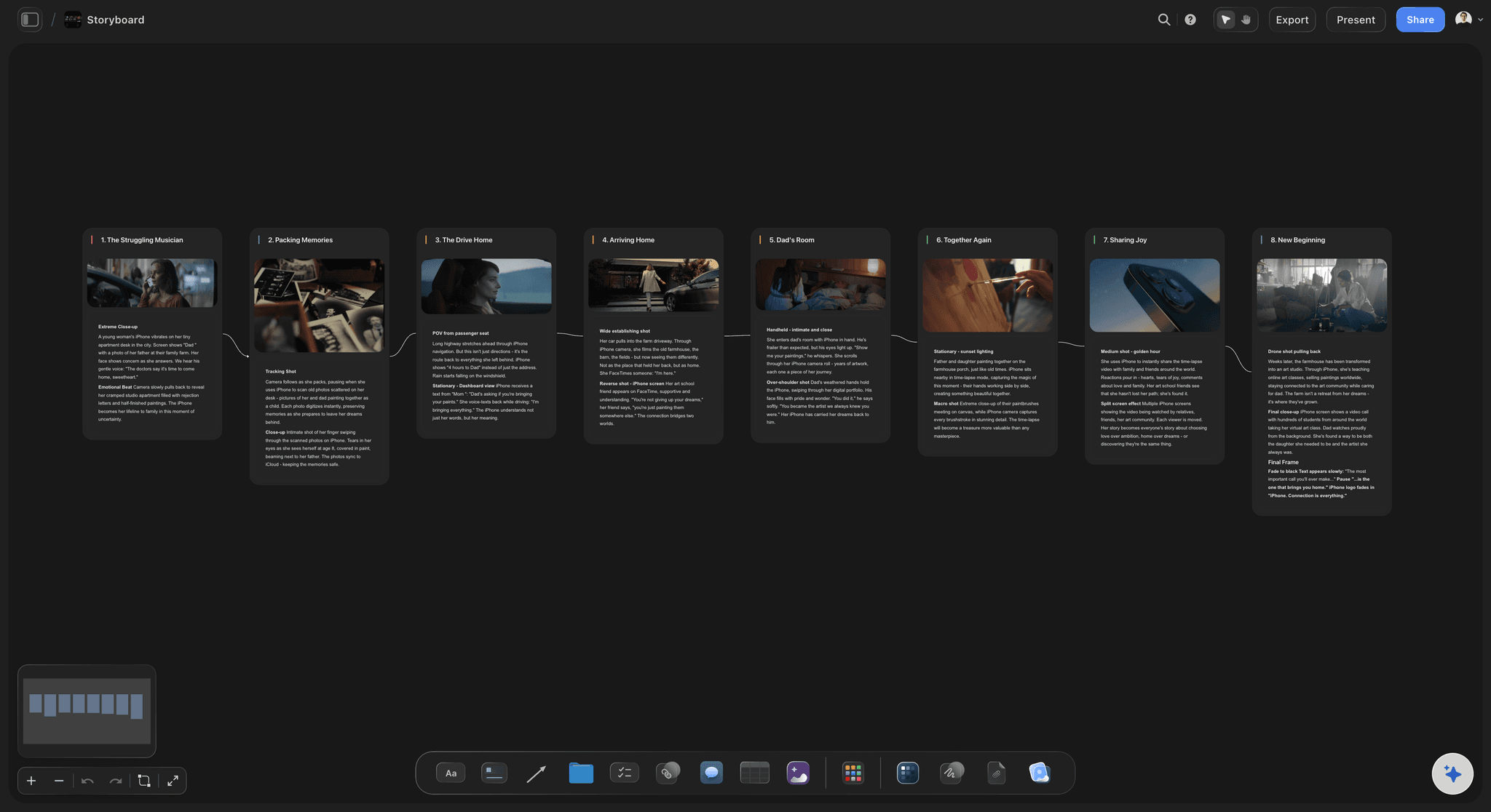
A campaign video storyboarded frame by frame
The product in use in the first ten seconds, why you made it, you on camera, how it is made, the rewards held up, the ask. Upload rough cuts to the board, play and scrub them, and grab the frame for the page's header image.
See the explainer video storyboard →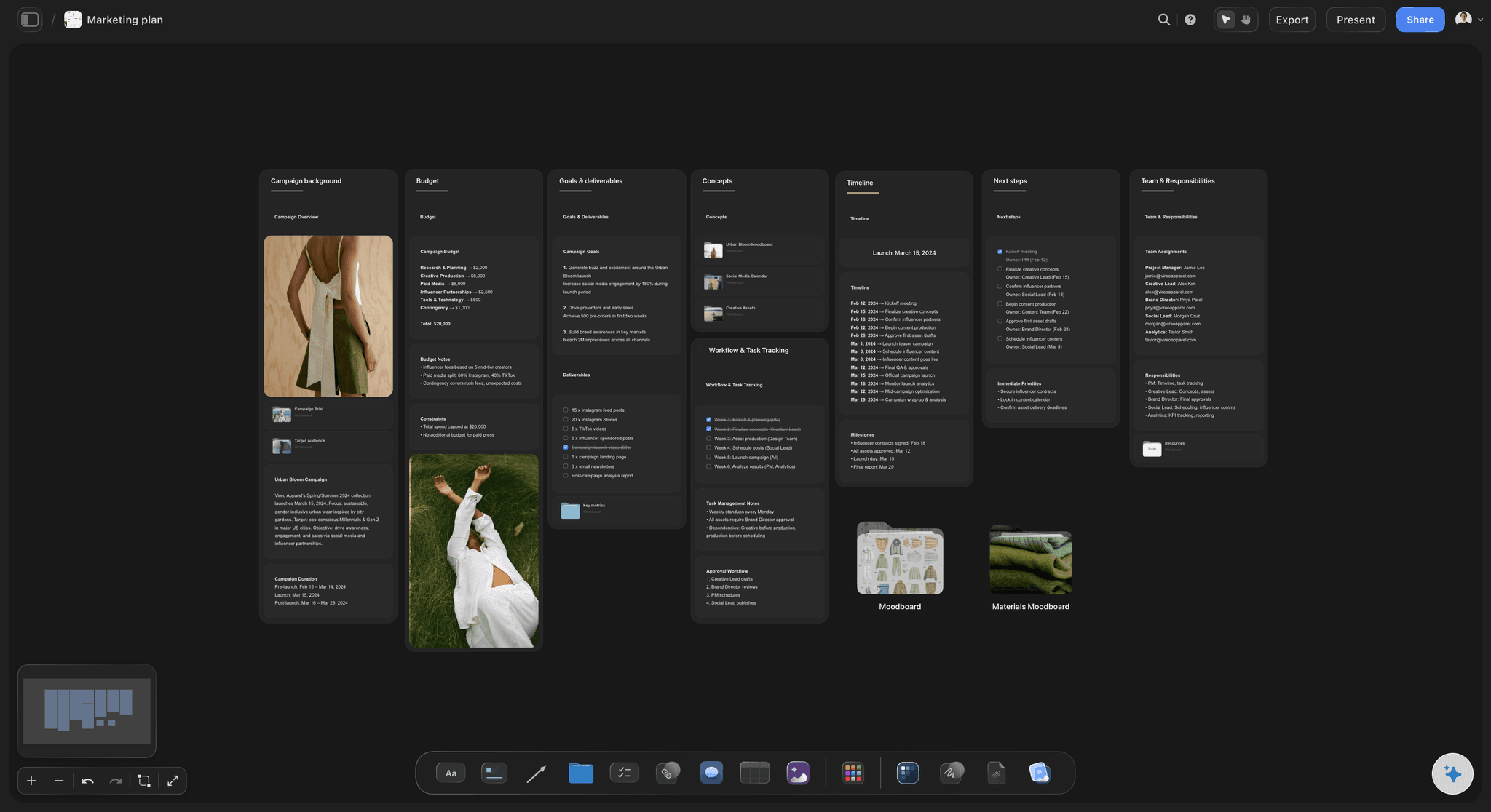
What backers can pledge for
Every tier costed before it goes live
Tier, price, contents, limit, unit cost, shipping, fees and a margin column you fill in, with a Sum under each cost column. The early-bird limit and the estimated delivery month sit in the same row as the price.
See the product launch planner →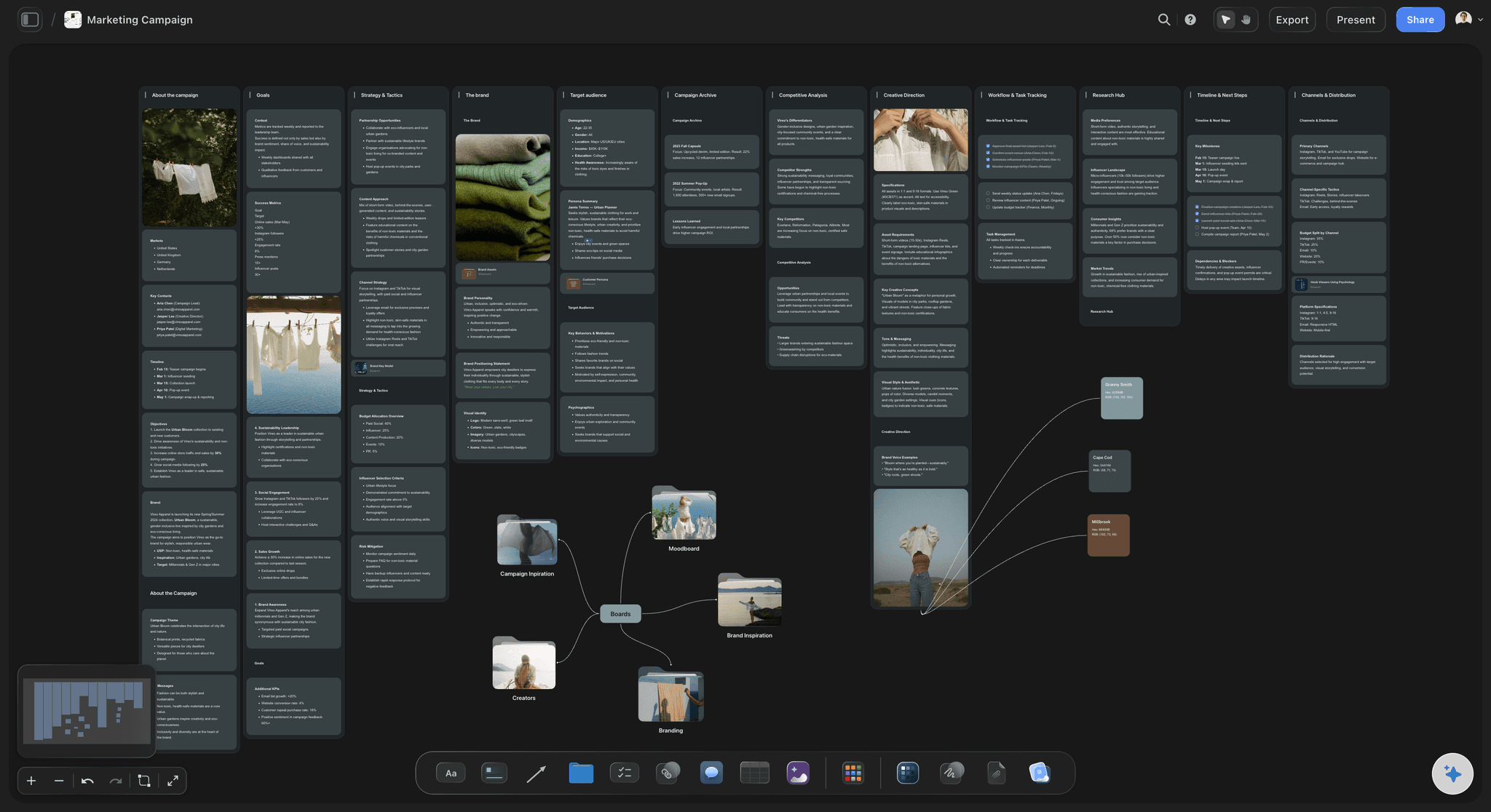
Every week before launch
The pre-launch timeline, in weeks
Weeks as table rows in date order: audience building, the video shoot, page drafts, the preview round, the submission for review. The planner puts supplier and review waits early, where they cannot sink launch week.
See the launch roadmap →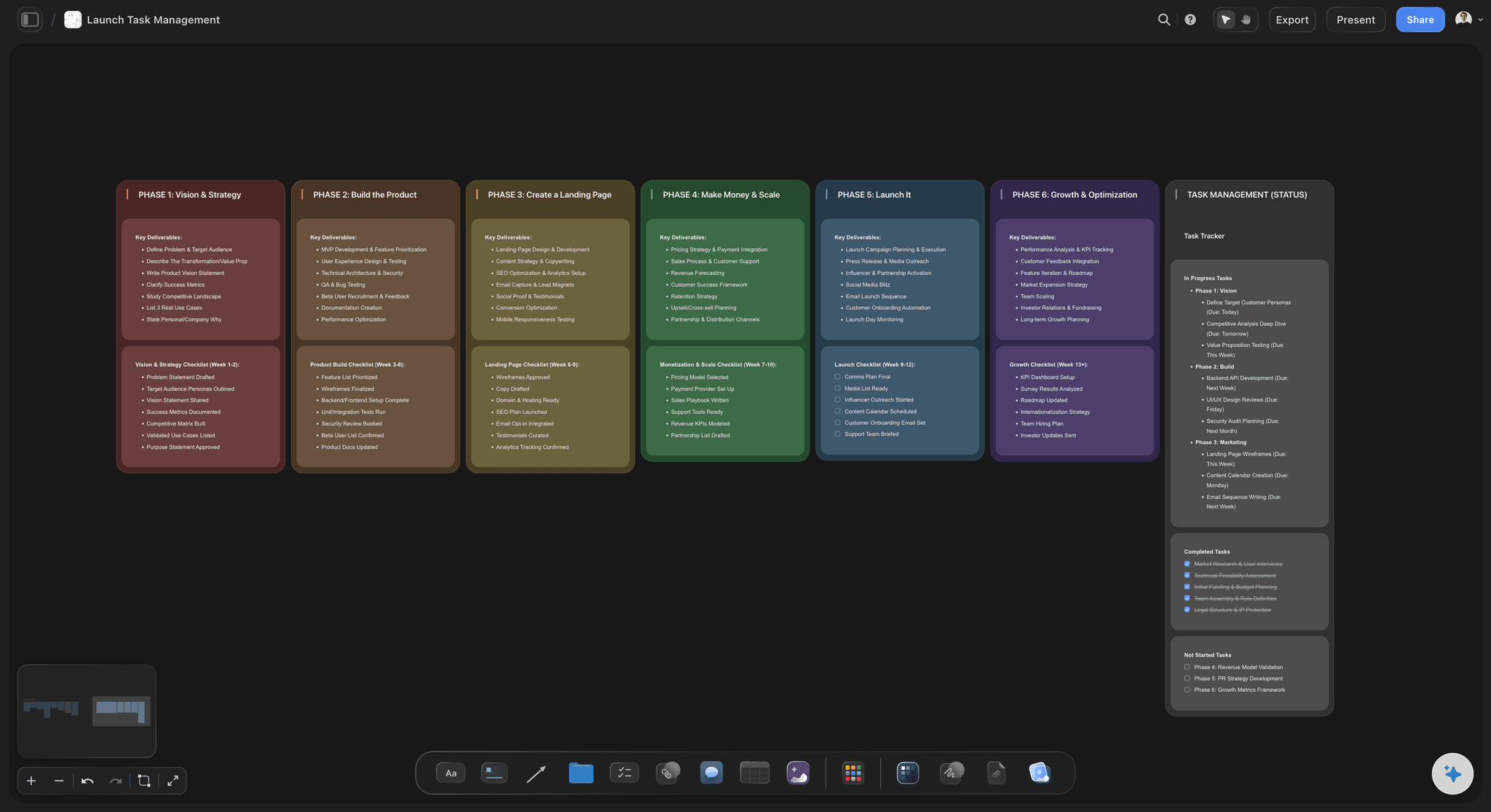
One link for the whole team
Shared with makers, friends and the manufacturer
A collaborator reads the plan from a view-only link, and after signing in can comment on a tier or a frame. Send the page draft as a whole-board PDF to the friends previewing it before launch.
See the product launch checklist →One board from pre-launch to the last shipment.
The plan you launch with is the plan you deliver from, so the delivery month you promised is always in view. Storyflow is paid-only during early access, with plans from $7.99 a month billed annually ($9.99 monthly). A free plan launches before the end of 2026, and anyone a paid member invites to a board joins free.
Unlimited boards, video uploads and files on every paid plan
AI that plans back from your launch date and drafts the page outline and video storyboard
Tables with currency columns and live totals for reward costing
Tickets with owners and due dates, view-only links and whole-board PDF export
Built for people with taste
A crowdfunding campaign plan, week by week.
A common shape for a first physical-product campaign with a working prototype. Stretch it for a product still in design; the order holds either way.
12 to 6 weeks before launch
Build the audience before the page
Put the pre-launch page up early: Kickstarter's pre-launch page lets people tap Notify me on launch. Send everyone there from week twelve; the follower count is your best early read on whether launch day will move.
Start the email list: A simple landing page with one field and one reason to join. Your list is the only channel you can reach on launch morning without an algorithm deciding.
Show the making, two or three times a week: Prototypes, failed samples, the factory call, the artwork in progress. People back a project they watched become real.
Cost the rewards: Supplier quotes, packaging, shipping zones and fees in the reward table, before any tier is announced. Once someone pledges, Kickstarter will not let you change that reward.
6 to 1 weeks before launch
The video, the page and the review
Shoot a video under two minutes: Kickstarter's own launch checklist asks for under two minutes. Storyboard it first; a campaign video without a plan runs to five minutes of the founder talking.
Write the page in the order backers read: The hook and the product in use, the story, how it works, the rewards, the timeline to delivery, risks and challenges, then the FAQ. Every section with an image or a GIF.
Preview it with ten people: Send the draft to ten likely backers and ask what they did not understand. Fix those lines, not the ones you like least.
Submit early: Kickstarter's checklist says to submit at least two business days before launch. Leave a week, so a question from review does not move your date.
Launch day and the campaign
Thirty days, planned before the first one
Launch midweek, morning in your backers' time zone: Email the list first, then followers, then every community you belong to. Plan launch day as tickets, each with an owner and the hour in its title.
Keep it to thirty days or fewer: Kickstarter allows up to sixty days but recommends thirty or fewer. A longer campaign mostly lengthens the quiet middle.
Write stretch goals before launch: Each one priced into the reward table, so a stretch goal never adds a cost the new funding does not cover. Announce them when the goal is near, not on day one.
Plan the updates: One at each milestone, one in the quiet middle with something new to show, and one for the final forty-eight hours.
After funding
Surveys, manufacturing and delivery
Survey backers before ordering: Sizes, colours, add-ons and addresses, collected in a pledge manager. Place the production order from the survey, not from the pledge totals.
Post an update at every step: Sample approved, production started, shipped to the warehouse, first parcels out. Monthly at the least, with photos, especially when the news is a delay.
Track what you promised against what is true: The estimated delivery month from each tier sits beside the real schedule, so a slip is announced the week you see it.
Explore templates for your project
Every template opens as a real, editable board on the infinite canvas. Pick the closest fit and make it your own.
Marketing Plan
Lay out your goals, channels, and initiatives for the quarter on one board.
One app instead of five
What each crowdfunding tool actually covers.
Storyflow plans the campaign and the video. BackerKit runs pre-launch emails, BackerKit or Kickstarter's own pledge manager handle surveys and add-ons, and Notion or Trello track tasks in a doc or a list of cards.
Storyflow
Recommended
Campaign plan on a freeform canvas
Campaign video storyboarded frame by frame
Launch tasks with owners and due dates
Pre-launch emails sent to your list
Pledge manager for surveys and add-ons
BackerKit
Campaign plan on a freeform canvas
Campaign video storyboarded frame by frame
Launch tasks with owners and due dates
Pre-launch emails sent to your list
Pledge manager for surveys and add-ons
Notion
Campaign plan on a freeform canvas
Campaign video storyboarded frame by frame
Launch tasks with owners and due dates
Pre-launch emails sent to your list
Pledge manager for surveys and add-ons
Trello
Campaign plan on a freeform canvas
Campaign video storyboarded frame by frame
Launch tasks with owners and due dates
Pre-launch emails sent to your list
Pledge manager for surveys and add-ons
What creators are saying
Join early creators getting structured workspaces and AI that remembers their projects
“Storyflow has sped up my workflow by at least 3x, which means more flow state and more projects I can actually ship. It truly changed the way me and my team create.”

Reilin Joey
Director & YouTuber
“One prompt gets me a structured board. But the tactics are my favorite. I run my YouTube scripts through them and my intros and retention got better. It's amazing.”

Justkay
YouTuber & Freelance Filmmaker
“I used to juggle five apps to plan a project. Now I describe what I am making and get boards, lists, and a schedule. All in one place.”

George
@fernwehchronicles
What creators ask before they hit launch.
Lead time, video length, reward tiers, the goal, updates and delivery.
Storyflow is the Kickstarter campaign planner for a creative founder who wants the whole launch in one place: the pre-launch weeks, the video storyboard, page sections, a costed reward tier table, launch day, updates and fulfilment, on one board a collaborator opens by link with no account. The campaign itself runs on Kickstarter or Indiegogo; use Mailchimp or Klaviyo for the list, and Kickstarter's own pledge manager or BackerKit for pledge management.
Start building the audience about three months before launch if you have a working prototype, and earlier if the product is still in design. The last six weeks go to the video, the page, a preview round and Kickstarter's review. Plan the months after the campaign too: surveys, manufacturing and shipping often take longer than the campaign's preparation.
Pre-launch page live and shared, email list ready, video under two minutes, page sections written with images, reward tiers costed with shipping and fees, funding goal checked, stretch goals priced, preview sent to ten people, project submitted for review at least two business days ahead, launch-day tasks assigned, and the first three updates drafted.
Thirty days or fewer is Kickstarter's own recommendation, and sixty days is the maximum it allows. A shorter campaign keeps urgency; a longer one mostly adds quiet days in the middle. End it on a weekday evening in your backers' main time zone, when people can pledge in the final hours.
Six to eight frames for a short video: the product in use in the first ten seconds, why you made it, you on camera, how it is made or works, the rewards held up, and the ask with the deadline. In Storyflow the AI's storyboard workflow lays these out frame by frame; AI-generated frames need Pro or Max.
Four to seven is a common range: a small thank-you tier, the core product that most backers will choose, a limited early-bird version of it, a bundle, and a deluxe or collector's tier. More tiers make the choice harder. Every tier needs its unit cost, shipping and fees beside the price before it goes on the page.
Set it at the least you need to deliver every reward, not the amount you hope to raise. Kickstarter is all-or-nothing, and takes a 5% fee plus payment processing that it puts at roughly 3 to 5%. Add manufacturing minimums, shipping, taxes and a buffer for the unexpected, then check the total against the audience you have built.
Plan them before launch and announce them once the goal is close or met. Each stretch goal should be something the extra funding pays for, costed in the reward table, and not something that pushes the delivery date. Upgrades to what every backer gets usually work better than new items that add shipping weight.
What happened since the last update, with a photo, and what happens next, with a date. Post at every production step and at least monthly. When something slips, say so the week you know, with the new date and why. Backers read silence as bad news.
Yes, as a draft you correct. Give Storyflow your launch date and product notes and its AI lays out the weeks backwards from launch, drafts the page outline and the video storyboard, and builds a reward table from the costs you supply. It leaves an unknown cost blank rather than guessing, and Undo takes back any AI change.
No. Storyflow plans the campaign and tracks the work. The campaign and pledges run on Kickstarter or Indiegogo, your list and launch emails in Mailchimp or Klaviyo, and surveys, add-ons and addresses in Kickstarter's own pledge manager or BackerKit. Keep each tool's link on the board, so the plan points to where each job is done.
Not during early access. Storyflow is paid-only during early access, with plans from $7.99 a month billed annually ($9.99 monthly). A free plan launches before the end of 2026, and anyone a paid member invites to a board joins free, so a co-founder or illustrator can work on the plan with you.
More from Storyflow
Marketing workspace
Product launch planner
Launch roadmap
Explainer video storyboard
Pitch deck maker
Brand launch planner
Product launch checklist
Go-to-market plan
Storyflow for comic creators
Founder-led content plan
Storyboard template
How to plan a product launch visually
Launch timeline template for small teams
Pricing
Product launch video
Photo book planner
Launch to people who were waiting for it.
Set the launch date, paste your product notes, and plan every week before and after it.