
Hours back on every video you plan
A video production workflow
from pre-production to post.
Stage columns from brief to delivery, a card per video, and the script, shot list and shoot plan kept beside the card they belong to. See where every video is and what it needs to move.


Creatives working for these brands already got early access
- Red Bull
- Canon
- Artlist
- Porsche
See how easy it is to get started
Watch a real project come together, from a blank board to a finished plan, clicked through step by step.
Start from a ready-made template
Pick a board to see what you can build, then let AI fill it in. Every template is a real, editable starting point on the same infinite canvas.

Storyboard
Lay out your shots frame by frame with images and notes, then reorder them until the sequence reads like the finished cut.
What is a video production workflow, and which app runs it?
A video production workflow is the set of stages every video moves through, from the brief to the script, the shoot, the edit and delivery. Storyflow is an AI visual workspace that runs your video production workflow on one infinite canvas: a kanban of stages from brief to delivery, a card per video, and each video's script, shot list, shoot days and call sheet PDF beside its card, drafted by an AI that reads the board. Clients open it by link with no account. Pair it with Frame.io for timecoded review of cuts, and with StudioBinder if you need call sheets sent to a crew and confirmed.
A video production workflow is the repeatable path a video travels: brief, script, pre-production, shoot, edit, review, delivery. It defines what each stage produces and what must exist before the next can start. An approved script is the input to the shot list; a shootable plan is the input to the shoot day; a locked cut is the input to delivery.
Videos rarely stall inside a stage. They stall between stages: the approved script nobody turned into a shot list, the shoot with no edit started, the cut waiting on a music licence nobody flagged. Folders show files and chat threads show messages, and neither shows the pipeline, so the gap stays invisible until the deadline.
Most setups hold one layer and lose the rest. A kanban app holds the stages but not the scripts; a review tool holds the feedback but not the plan; a production suite holds the paperwork but not the brief. A board holds the pipeline and the creative material together, which is what stops status and substance from drifting apart.
Ultra fast from brief to board
From a pile of projects to a pipeline you can read.
No database to configure and no fields to invent. Describe the production and start moving cards.
01
Describe what you produce
Client videos, a weekly channel or branded content. The AI lays out a kanban with your stages and a card per video. It runs in the browser, nothing to install.
02
Plan each video beside its card
Script in a Doc, a shot list, a moodboard and the shoot days, drafted by the AI from the brief and kept next to the card they belong to.
03
Move cards as work moves
Drag a card from script to shoot to edit. Tickets with assignees and due dates show who owes what, and a card that has not moved in a week is the one to ask about.
04
Share the pipeline with the client
A view-only link opens in the client's browser with no account and shows the latest state when they open or reload it.
The whole pipeline, and everything moving through it.
Stages, videos, scripts, shot lists and shoot plans on one board.
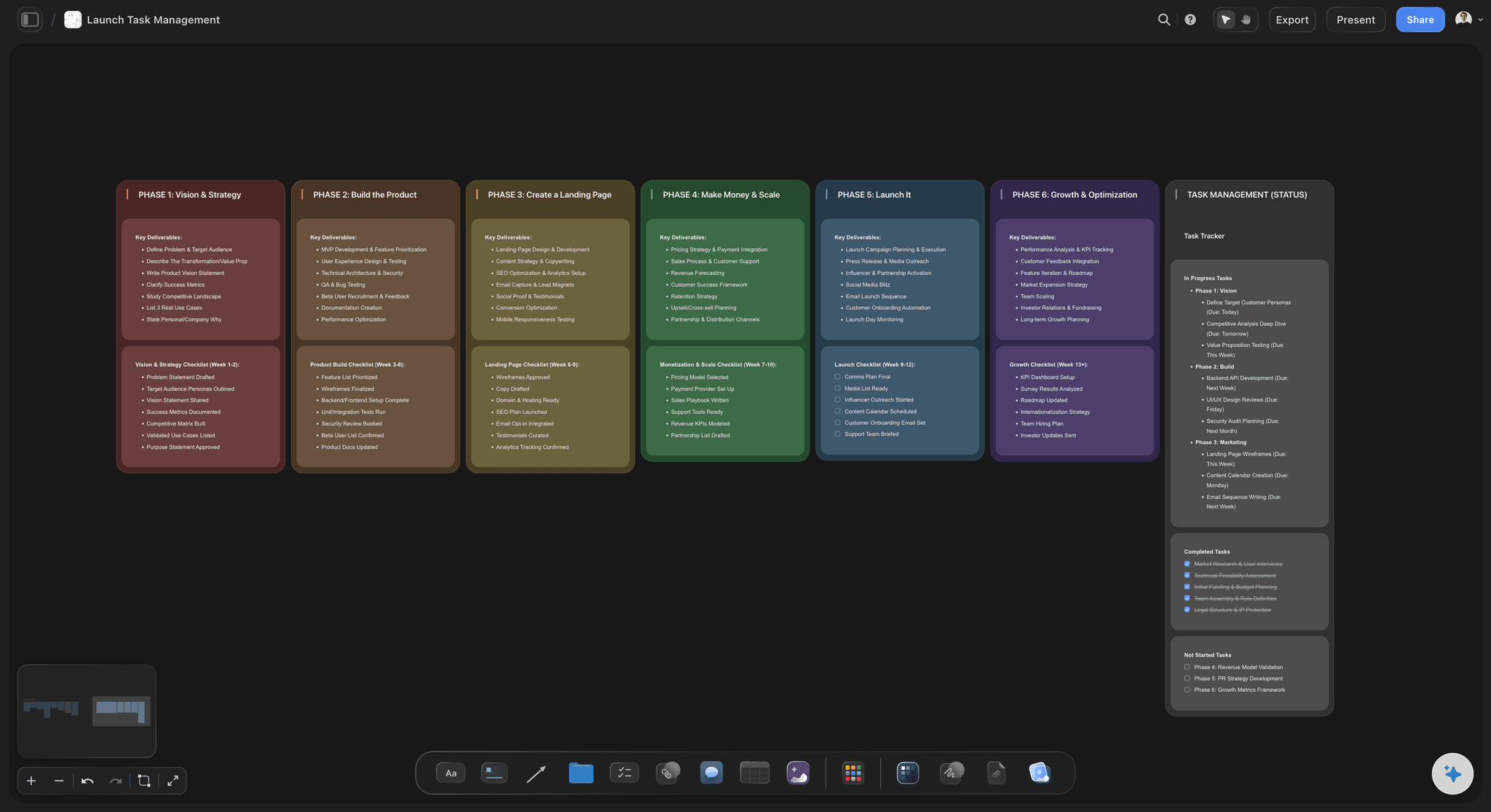
A kanban of stages from a description
Start from a working pipeline
Describe what you produce and the AI builds stage columns and cards to match. A freelancer's client pipeline and a channel's weekly cadence come out differently, because they are.
See the video production tracker →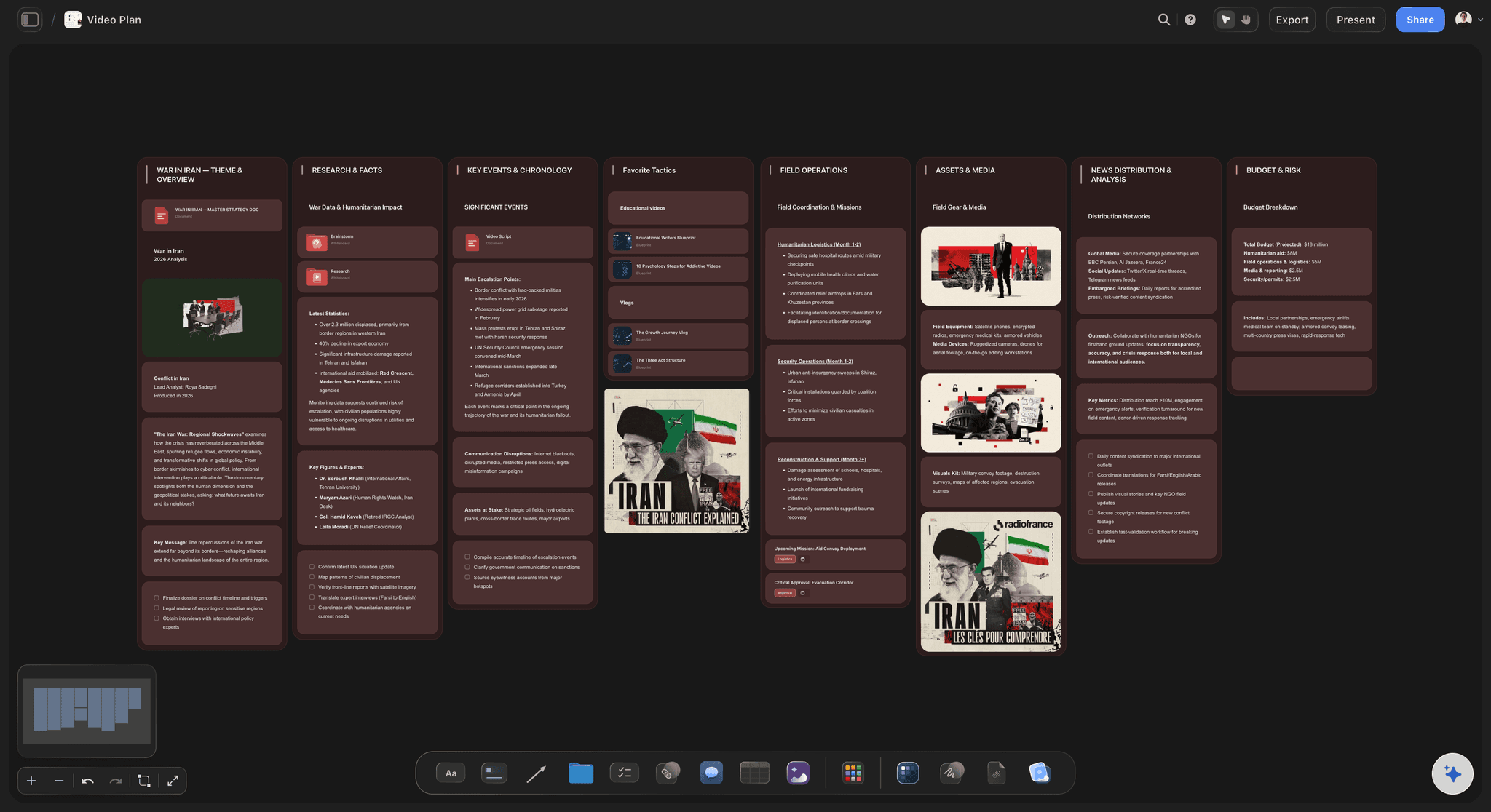
Pre-production drafted from the brief
Script, shot list and moodboard beside the card
The AI drafts a script, a shot list and a moodboard from the brief. When the card reaches the shoot column, everything the shoot needs is already beside it.
See video pre-production →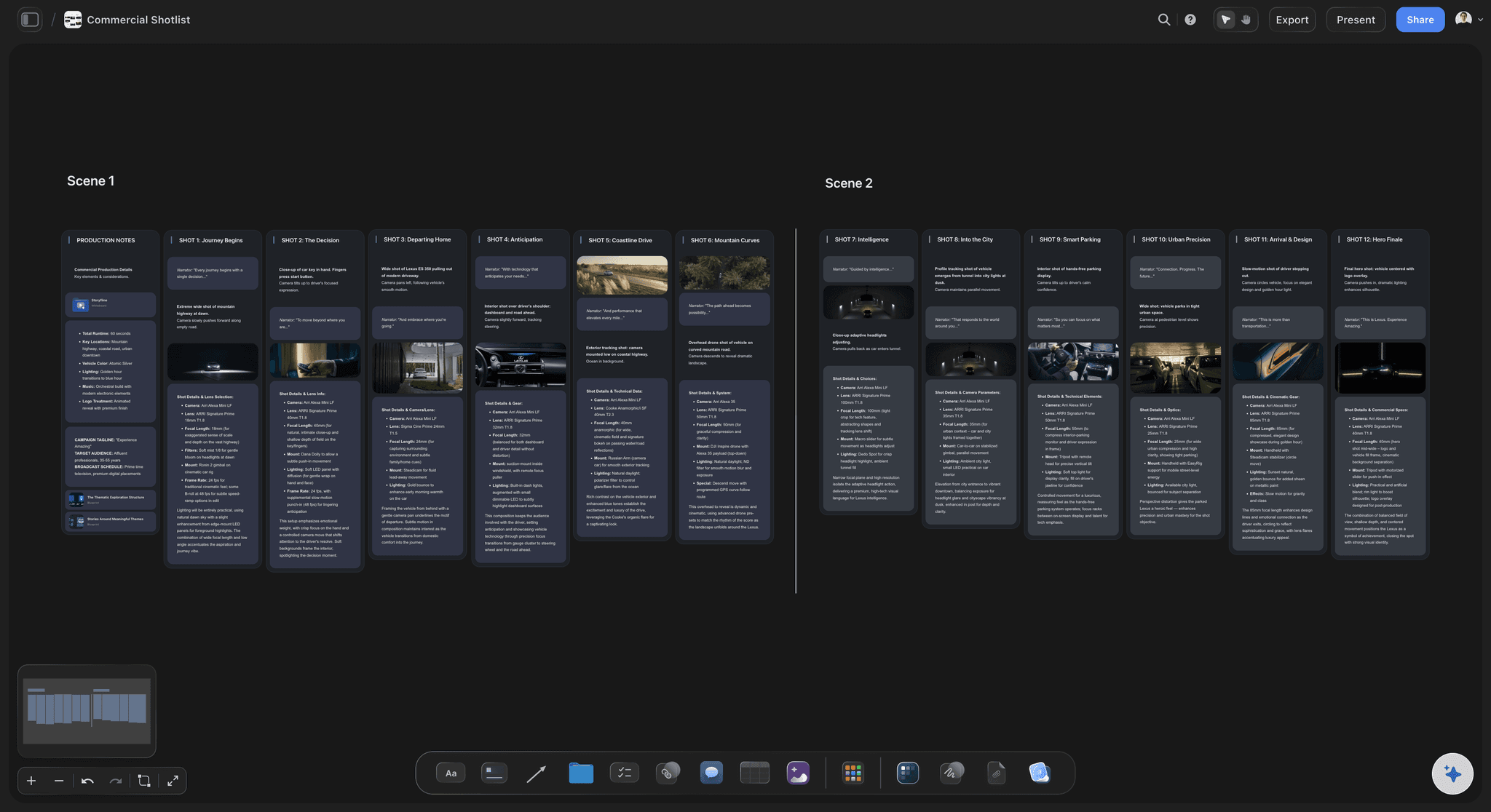
Shoot days and a call sheet PDF
Hand the shoot day a plan
Group shots into shoot days and ask for a call sheet: the AI drafts a PDF from the board that the crew opens on a phone. You still send it yourself.
See the film shoot planner →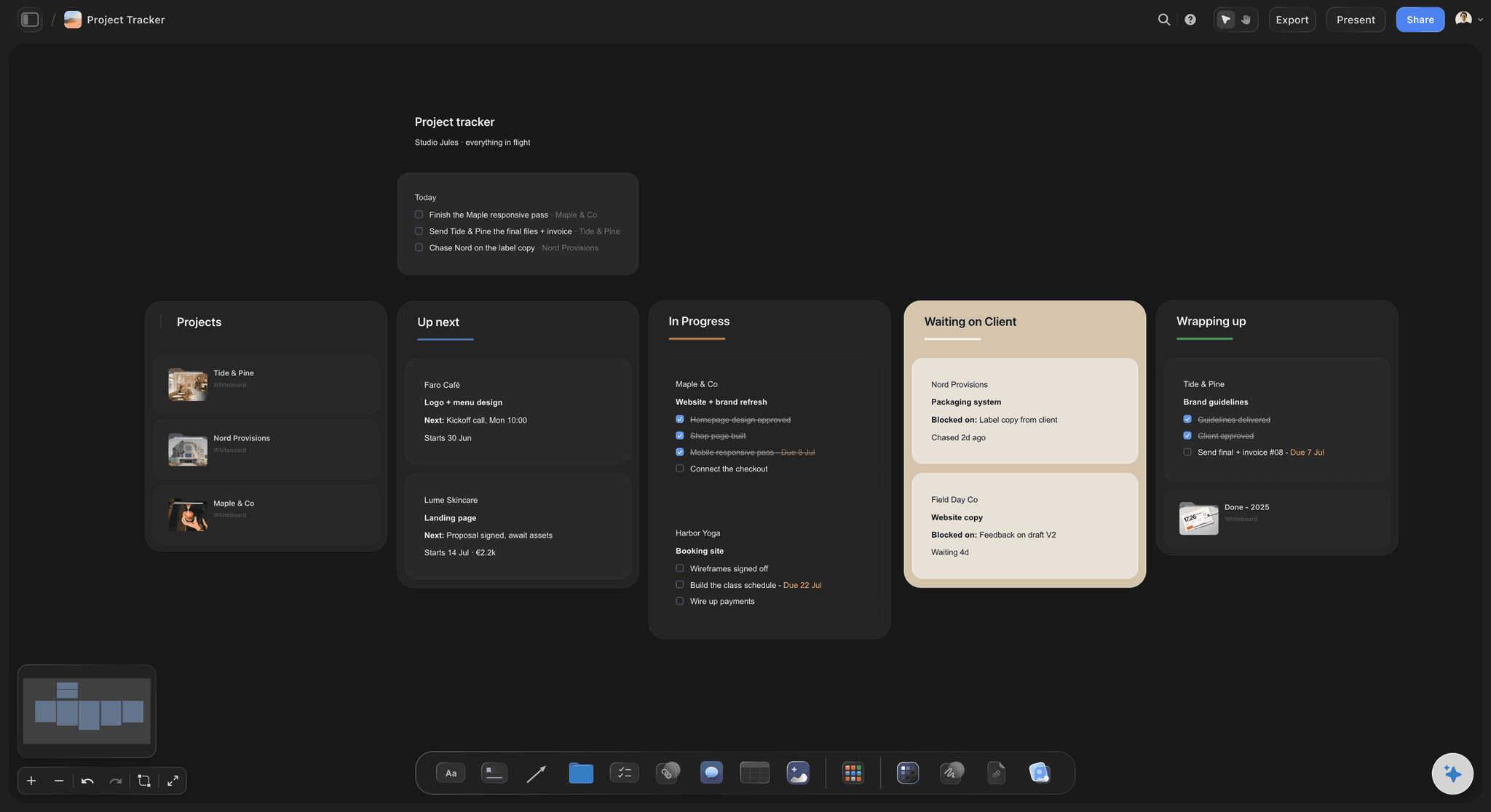
Edit, review and delivery stages
Post-production you can see
Edit, review and delivery are columns too. Delivery specs and a to-do list of exports ride on the card, and cuts are reviewed in the tool your editor already uses.
See the post-production workflow →Unlimited boards. No object cap.
One pipeline for every video, and a board per production when it needs one. Storyflow is paid-only during early access, with plans from $7.99 a month billed annually ($9.99 monthly). A free plan launches before the end of 2026, and anyone a paid member invites to a board joins free.
Unlimited boards and file uploads on every paid plan
AI workflows for scripts, shot lists, content plans and call sheet PDFs
Invited editors and shooters edit in real time and join free
View-only links clients open with no account
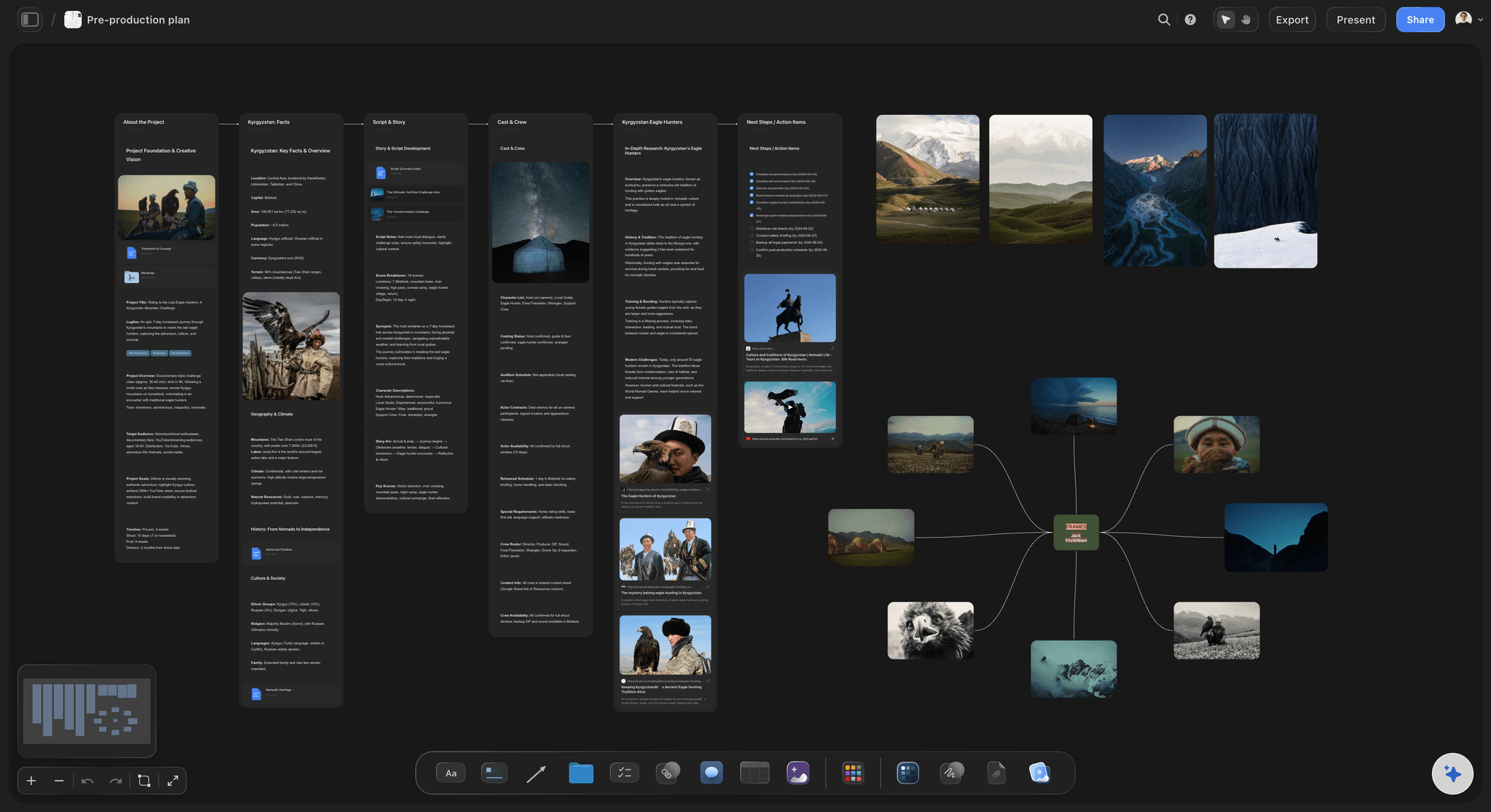
Built for people with taste
More than a to-do list with stages.
A task list says what to do next. A pipeline says where every video is and why it stopped, which is the question productions miss deadlines on.
Brief, script, pre-production, shoot, edit, review, delivery
Make the pipeline visible
Stages that match how you work: Seven stages suit most client work; a solo creator may run four and a commercial job nine. What matters is that each stage has a defined output the next one consumes.
One card per video: Each video is one card with its title, due date and owner. A glance answers what is in the edit, what is waiting and what is stuck.
Gaps between stages, exposed: Approved scripts with no shot list and shoots with no edit started show up as cards parked between columns, not surprises a week before delivery.
Deadlines beside the flow: Keep shoot dates and delivery dates in a table with a date column, rows kept in date order, under the kanban, so the pipeline and the dates constrain each other in plain sight.
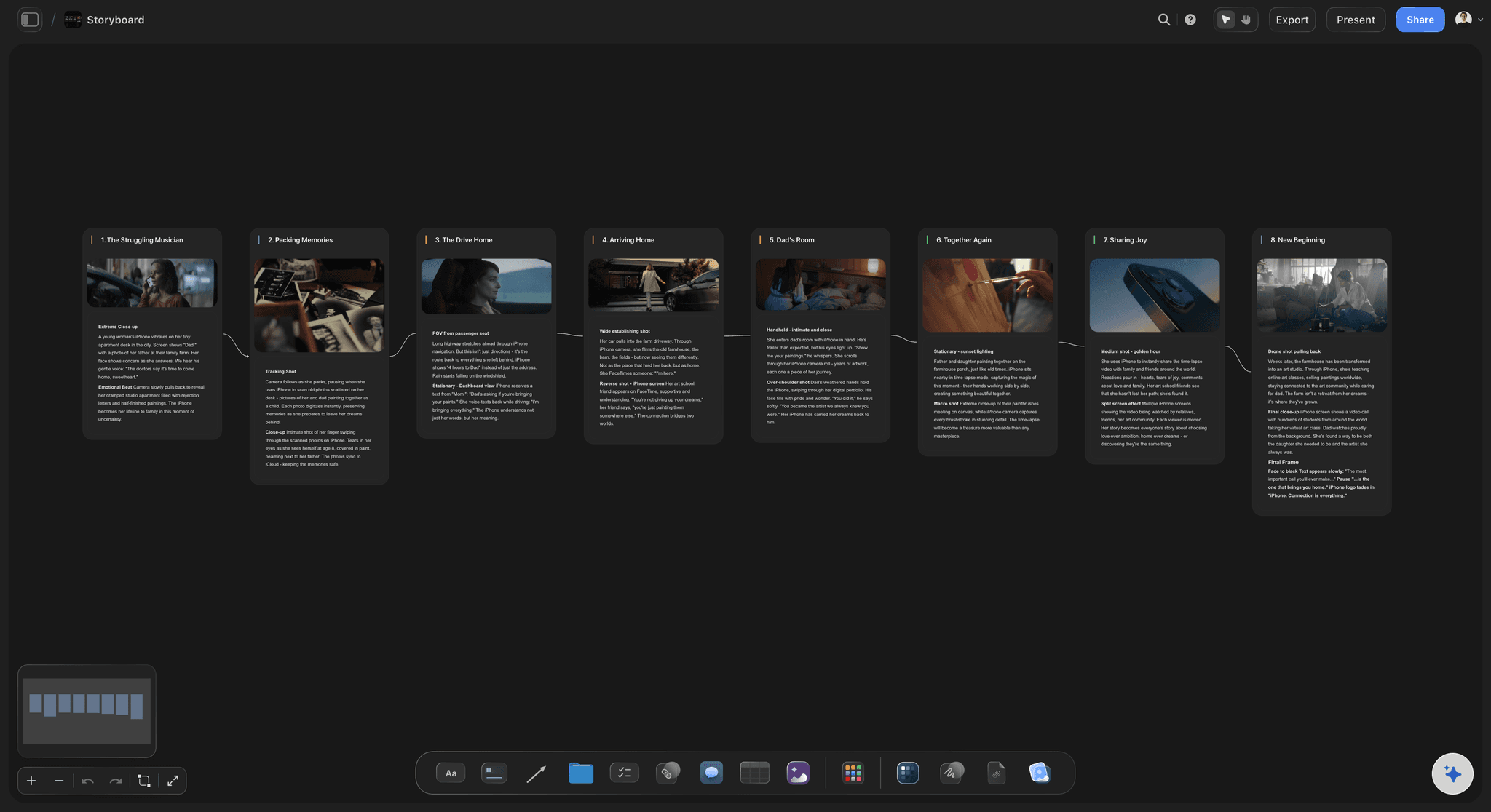
Pre-production kept with the project
The creative material lives where the work is
Write the script beside the pipeline: Draft in a Doc on the board, with rich text, inline comment threads and Word and PDF export, so the script is attached to its video from the first line.
Shot lists and shoot days on the same board: The AI breaks the script into shots and groups them into shoot days. On the day, the card holds what the crew needs instead of pointing at three other tools.
References in reach through the edit: Drop in PDFs, images and links, and upload reference video to play, scrub and grab frames from. The look promised in pre-production stays visible in post.
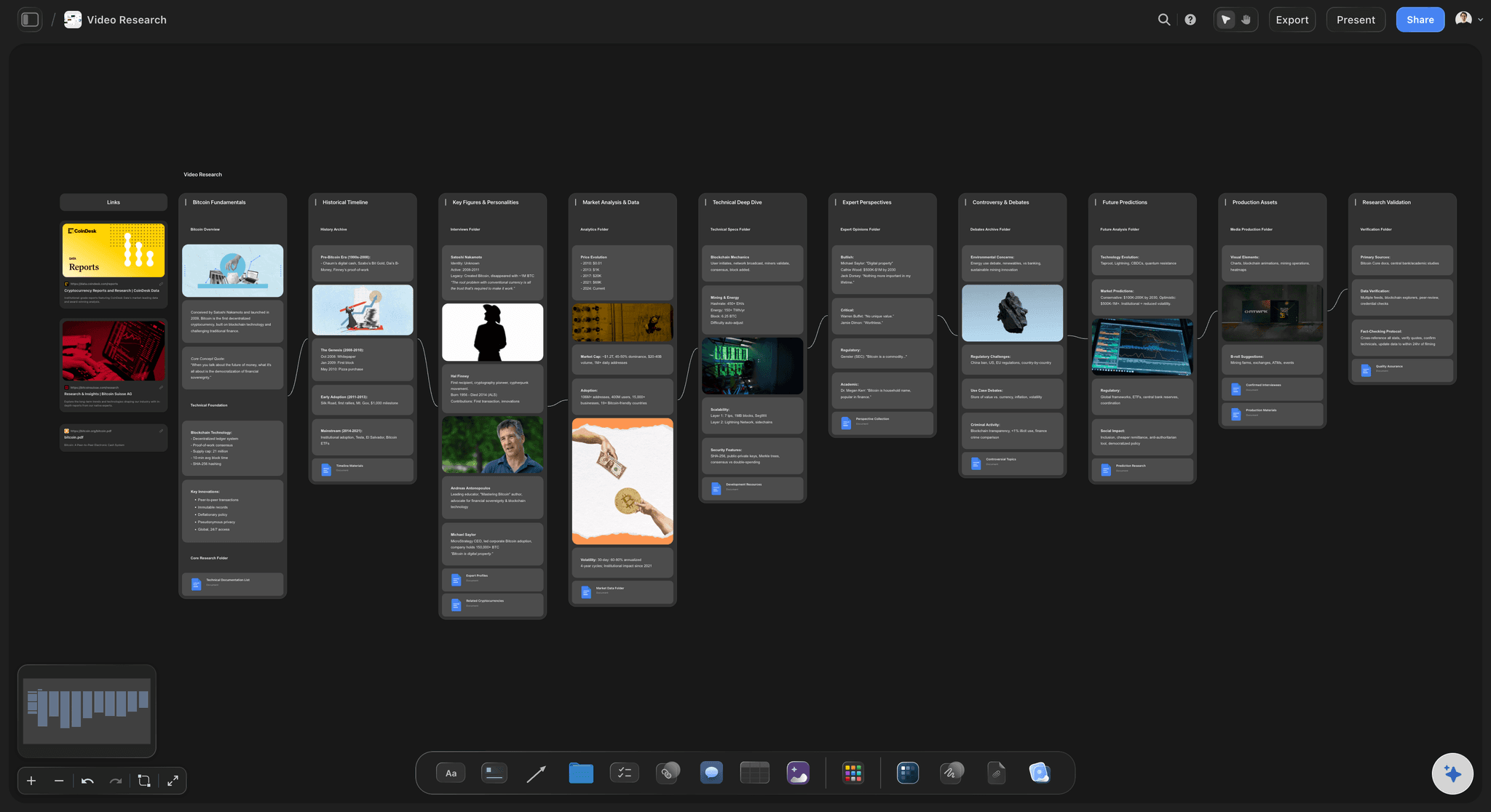
An AI that reads the pipeline
Plan with an AI that knows the production
Build the board from a prompt: Describe the production and the AI lays out stages, cards and planning sections. Its content planner workflow adds pillars, a calendar table, batch filming days and repurposing.
Work a stage with context: Ask for a shot list from the script card or a delivery checklist for a client. It reads the open board, so the output fits your production.
It proposes, you decide: Edits land on the board with one-click Undo. What to shoot, how to cut it and when it is done stay yours.
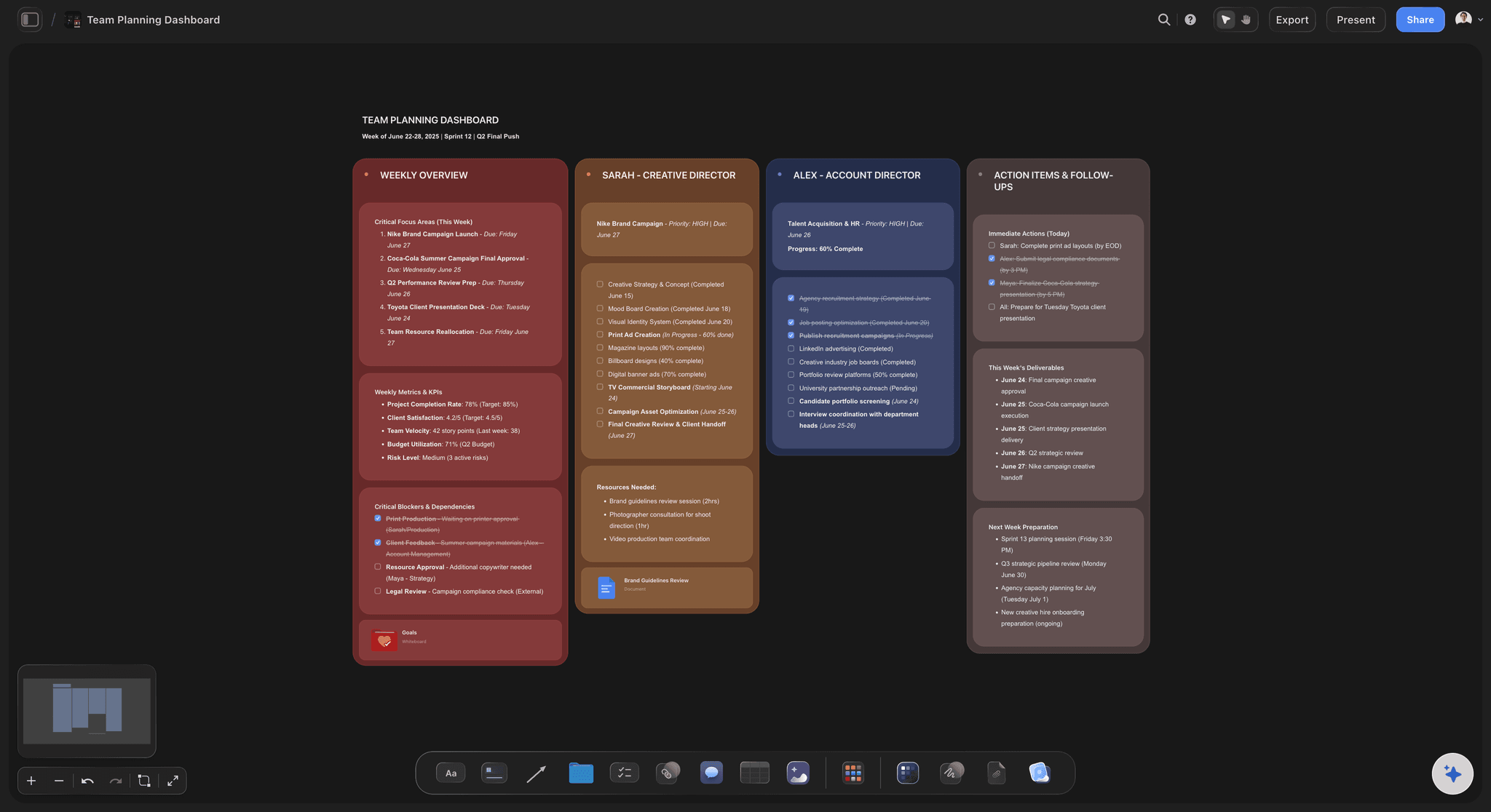
Clients and collaborators on one pipeline
Share the pipeline, not a status email
View-only links for clients: The client sees where their video is in the browser, with no account. Most status calls exist because the client cannot see the board.
Comments on the plan, Frame.io on the cut: A signed-in client comments on the script, shot list or card itself. Frame-accurate, timecoded notes on a cut belong in Frame.io.
Export for the production meeting: Export the whole board as an image or PDF, or present it full screen, stepping through frames, when the pipeline needs to be in a meeting.
Explore templates for your project
Every template opens as a real, editable board on the infinite canvas. Pick the closest fit and make it your own.
Storyboard
Lay out your shots frame by frame with images and notes, then reorder them until the sequence reads like the finished cut.
One app instead of five
Storyflow vs Frame.io, ClickUp and Trello.
Each is good at part of the job. Frame.io owns frame-accurate review of the cut, ClickUp owns task management at scale, and Trello is the simplest kanban there is. Here is where they differ.
Storyflow
Recommended
Call sheet PDF drafted from the shoot plan
Simple drag-and-drop kanban stages
Camera-to-cloud upload from set
Built-in time tracking and task dependencies
Frame.io
Call sheet PDF drafted from the shoot plan
Simple drag-and-drop kanban stages
Camera-to-cloud upload from set
Built-in time tracking and task dependencies
ClickUp
Call sheet PDF drafted from the shoot plan
Simple drag-and-drop kanban stages
Camera-to-cloud upload from set
Built-in time tracking and task dependencies
Trello
Call sheet PDF drafted from the shoot plan
Simple drag-and-drop kanban stages
Camera-to-cloud upload from set
Built-in time tracking and task dependencies
What creators are saying
Join early creators getting structured workspaces and AI that remembers their projects
“Storyflow has sped up my workflow by at least 3x, which means more flow state and more projects I can actually ship. It truly changed the way me and my team create.”

Reilin Joey
Director & YouTuber
“One prompt gets me a structured board. But the tactics are my favorite. I run my YouTube scripts through them and my intros and retention got better. It's amazing.”

Justkay
YouTuber & Freelance Filmmaker
“I used to juggle five apps to plan a project. Now I describe what I am making and get boards, lists, and a schedule. All in one place.”

George
@fernwehchronicles
Video production workflow questions, answered.
How to structure a pipeline, where each tool wins, and what the AI does.
Storyflow runs the workflow on one board: a kanban of stages from brief to delivery, with each video's script, shot list, shoot days and call sheet PDF beside its card, drafted by an AI that reads the board. Add Frame.io for timecoded review of cuts, StudioBinder if call sheets must be sent and confirmed, and ClickUp if you need time tracking and dependencies across a large team.
Most productions pass through seven: brief, script, pre-production (shot list, locations, schedule, crew), shoot, edit, review and delivery. A solo creator might run four; a commercial job might run nine. The rule that matters is that each stage has a defined output the next consumes: an approved script, a shootable plan, a locked cut. A stage without a defined output is where videos quietly stall.
One board can hold the whole pipeline and all of pre-production: in Storyflow the brief, script, shot list, shoot days and call sheet PDF sit beside each video's card, and edit, review and delivery are stages on the same kanban. The cut itself lives in your editor, and frame-accurate review belongs in Frame.io. Most teams run one planning board plus one review tool.
Make the pipeline a kanban: one column per stage, one card per video, and drag a card right when its stage completes. Keep the script, shot list and references beside the card, and keep shoot and delivery dates in a table under the columns. A card that has not moved is a stalled video; a card entering a stage without its materials is a handoff about to fail.
Not the way a review tool does. You can upload a video to the board, play and scrub it, grab frames, and a signed-in client can comment on the board. There are no timecoded comments pinned to a frame, no version compare and no approval buttons. Use Frame.io for the cut and Storyflow for the pipeline and pre-production around it.
Not during early access. Storyflow is paid-only during early access, with plans from $7.99 a month billed annually ($9.99 monthly). A free plan launches before the end of 2026, and anyone a paid member invites to a board joins free, so an editor or second shooter adds nothing. Trello's free tier handles a stages-and-cards pipeline if you keep scripts elsewhere.
It does the structural work. Describe the production and it lays out stages, cards and planning sections; from a brief it drafts a script, a shot list, a moodboard and shoot days; for a channel its content planner workflow adds pillars, batch filming days and repurposing. It reads the open board, and every edit has one-click Undo. Creative calls stay yours.
Keep them on the same board as the pipeline, beside the card they belong to. The usual failure is status in one tool and material in another, so a card says shoot-ready while the shot list is a stale file three folders deep. When the material sits beside the card, a missing shot list is a visible gap rather than a discovery on location.
Yes. A view-only link opens the pipeline in the client's browser with no account and no download, and shows the latest state when they open or reload it. They see where their video sits without being able to move anything. If they sign in they can comment on a script or shot list, and anyone a paid member invites to edit joins free.
As many as you run. The value appears when five or twenty videos flow through the same stages, because pileups become visible: six cards stuck in the edit column is an editor shortage you can see. Give a large production its own board with the full breakdown and shoot plan, and keep its card in the master pipeline.
A project management tool such as ClickUp or Trello models tasks, owners and due dates, and ClickUp adds time tracking and dependencies. It does not hold the creative material, so scripts and shot lists live elsewhere. Storyflow keeps both on one board: the stages are a kanban and the material sits beside each card. If your work is mostly tasks, a task tool fits better.
It does not edit video, give timecoded review on cuts, send call sheets or track crew confirmations, publish to social platforms, track time or invoice clients. Dates live in tables and tickets, not a calendar. It is also newer than Trello or ClickUp, with a smaller template library. It is the planning and pipeline layer around the edit.
More from Storyflow
Video production software
Video production planning
Video pre-production
Pre-production tools
Pre-production to shoot day
Film production planning
Film shoot planner
Post-production workflow
Video production tracker
Video project management
YouTube video planner
Corporate video production
Campaign management software
Best app to organize a video production
Video production brief
Video editing brief
Put the whole pipeline on one board.
Open a board, describe your production, and let the AI lay out the workflow. No download.