
Extremely reliable pre-production
The pre-production tools
a shoot actually needs.
A shoot needs about a dozen documents, not a dozen apps. Here is each one, what it is for, and how Storyflow keeps them on one board so the plan still agrees with itself on the shoot day.


Creatives working for these brands already got early access
- Red Bull
- Canon
- Artlist
- Porsche
See how easy it is to get started
Watch a real project come together, from a blank board to a finished plan, clicked through step by step.
Start from a ready-made template
Pick a board to see what you can build, then let AI fill it in. Every template is a real, editable starting point on the same infinite canvas.

Pre-Production
Pull the brief, script, shot list, and moodboard into one pre-production hub so the whole shoot is planned in one place.
Which pre-production tools do video producers need?
Video producers need tools that cover every stage of planning a shoot: writing the script or brief, breaking it down, listing the shots, scheduling the days and making the call sheets. Storyflow is an AI visual workspace that holds every document a shoot needs on one infinite canvas: the brief or script, moodboard, breakdown, shot list, stripboard, locations, crew and a call sheet PDF for each shoot day, with an AI that drafts each from the one before it. Crew and clients open the board by link with no account. Use a screenwriting app for the script, StudioBinder when call sheets must be sent and confirmed, and Frame.io once there is footage to review.
Pre-production produces a chain of documents, and each is built from the one before: the brief or script becomes a breakdown of what every scene needs, the breakdown becomes a shot list, the shot list and constraints become a schedule, and the schedule becomes a call sheet per day. Alongside that chain sit the moodboard, location notes, cast and crew contacts, a gear list, and releases and permits.
Most productions use a separate tool per document: a moodboard app, a spreadsheet for shots, another for the schedule, a PDF for the call sheet and a group chat for everything that changed. Each tool is fine. The problem is the gaps, because a change in one document has to be copied by hand into three others, and the one nobody updates is the one the crew reads on the day.
Producers who stay organised through shoot days keep one source of truth that gets more specific as the shoot approaches, and they name an owner for each document. A board makes that visible: every document sits beside the one it came from, so drift shows up in pre-production rather than at 6am on location.
Ultra fast from brief to board
Set up the whole pre-production kit in four steps.
No stack of apps to connect. The AI reads your brief or script and lays out the board.
01
Start from the brief or the script
Open a board in the browser, nothing to install. Attach the brief, treatment or script; the AI takes up to five documents and three other boards as context.
02
Draft the creative documents
Moodboard, treatment and, where a shot needs it, a storyboard. The AI proposes a direction and you pin the references that decide it.
03
Draft the logistics documents
Breakdown, shot list and a stripboard of shoot days, each drafted from the one before. Locations, crew and gear go beside them.
04
Hand off to the shoot day
The AI drafts a call sheet PDF for each day. Invite the crew to edit and send everyone else a view-only link.
Every pre-production document, on one board.
The creative and the logistics side by side, each drafted from the one before it.
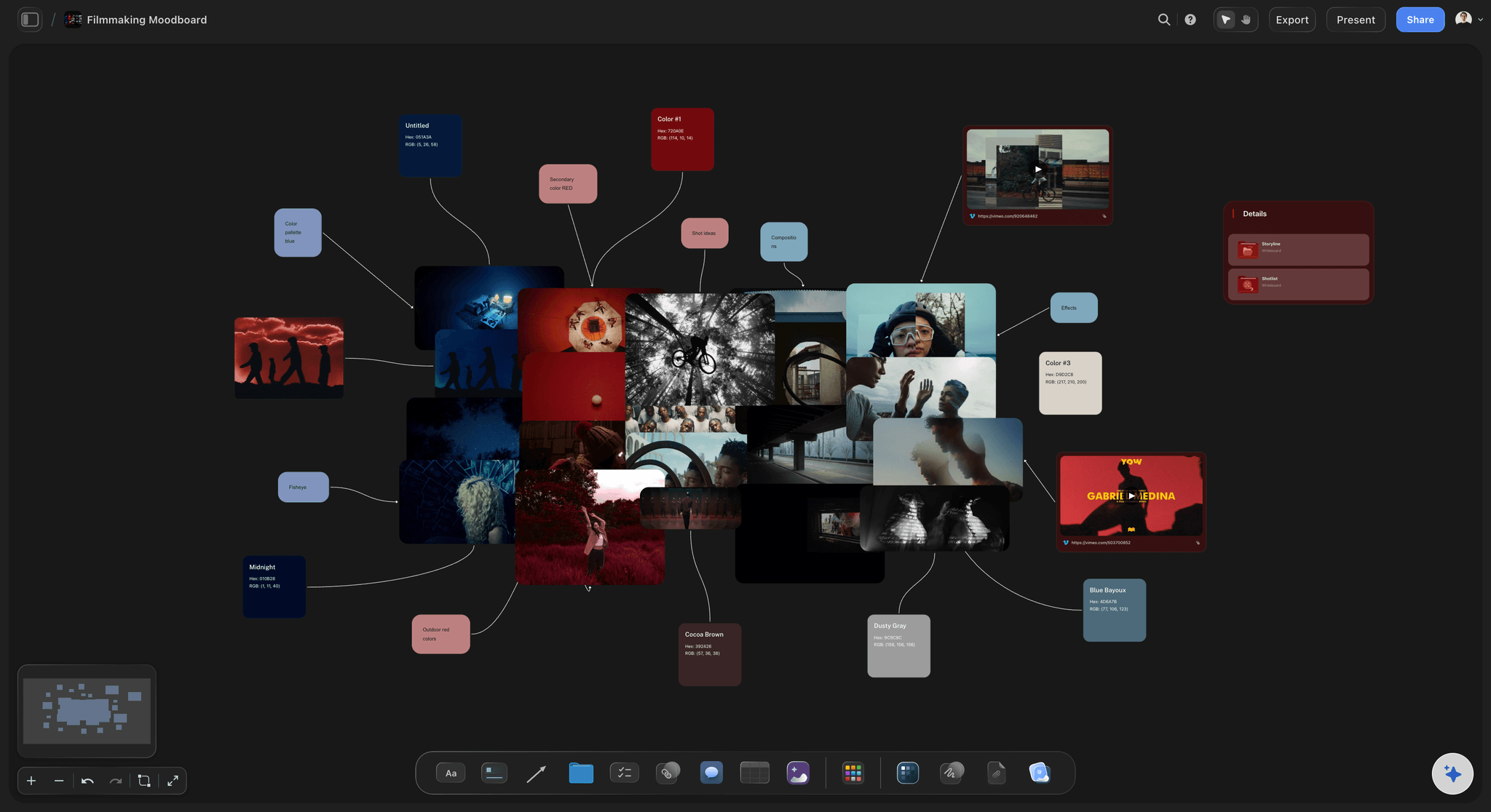
Brief, treatment and moodboard
The creative documents
The look is agreed before the shot list is written, and it stays beside the shot list afterwards. That is how the lighting reference survives to the day it is shot.
See the film moodboard →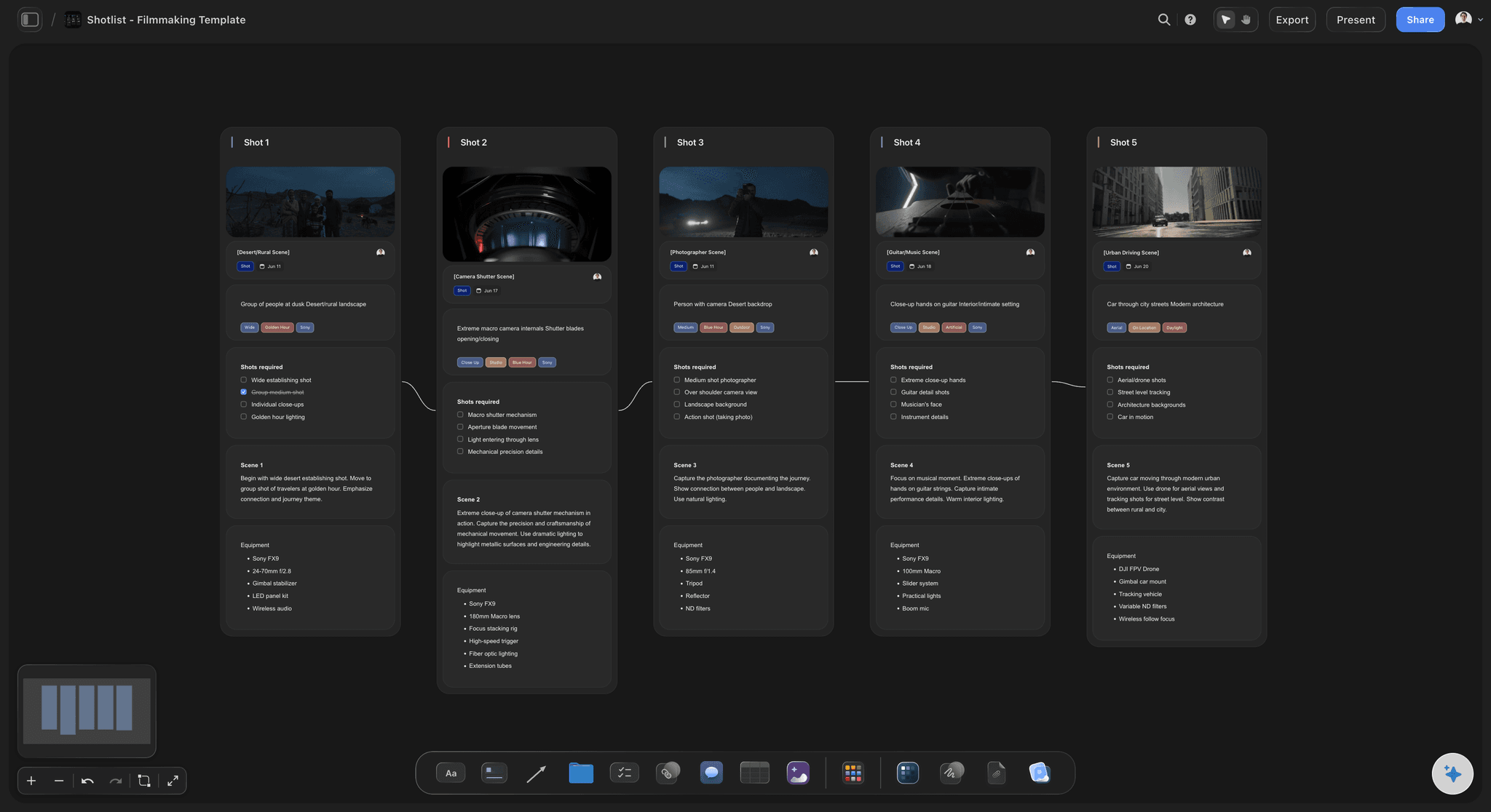
Breakdown, shot list and stripboard
The logistics documents
The AI drafts the breakdown with page-eighth estimates, the shots per scene and a stripboard grouping scenes into days, each from the one before it.
See script breakdown software →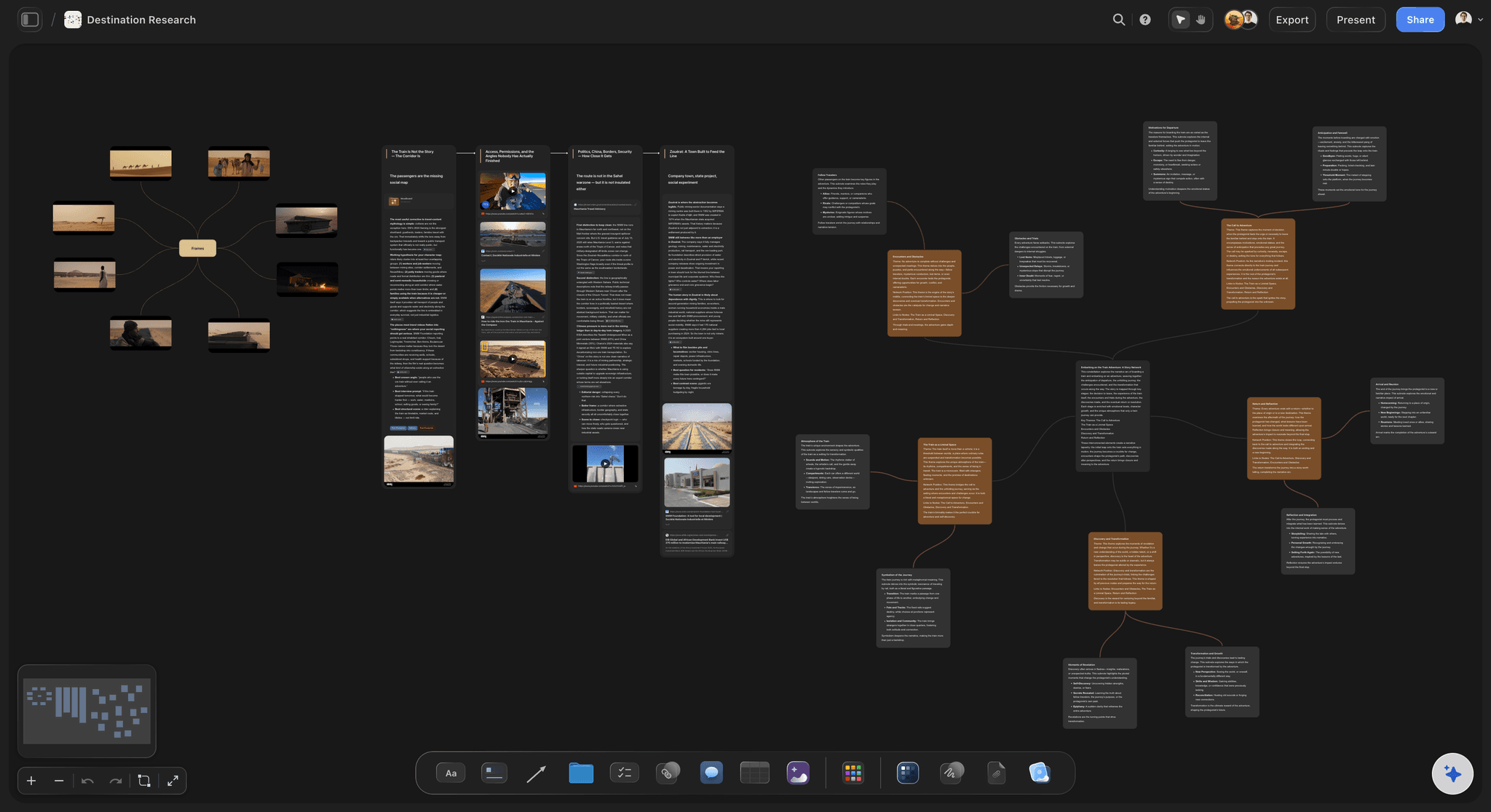
Locations, crew and gear
The people and places
Location photos and access notes, a crew table with roles and contacts, and a gear list per day, next to the scenes they serve.
See the location scouting app →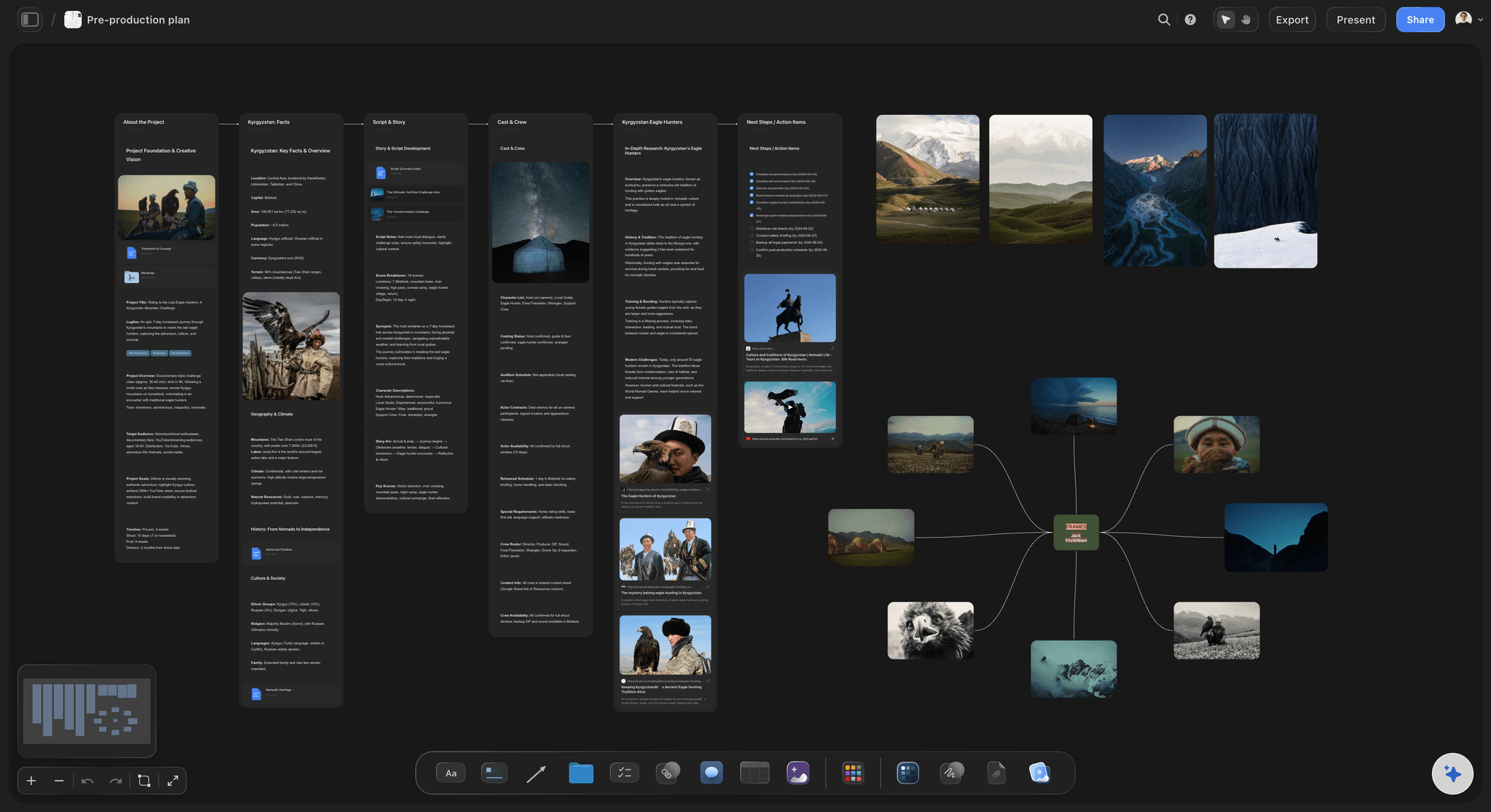
One PDF per shoot day
The call sheet
Ask for a day's call sheet and the AI drafts a PDF from the schedule, locations and contacts on the board. You send it; Storyflow does not track confirmations.
See the call sheet template →Unlimited boards. No object cap.
One board per shoot, every document on it. Storyflow is paid-only during early access, with plans from $7.99 a month billed annually ($9.99 monthly). A free plan launches before the end of 2026, and anyone a paid member invites to a board joins free.
Unlimited boards and file uploads on every paid plan
AI workflows for moodboards, breakdowns, shot lists, stripboards and call sheet PDFs
Invited crew edit the board in real time and join free
View-only links clients and crew open with no account
Built for people with taste
What each pre-production document is for, and where it lives.
Twelve documents cover most shoots. Here is what each one has to answer.
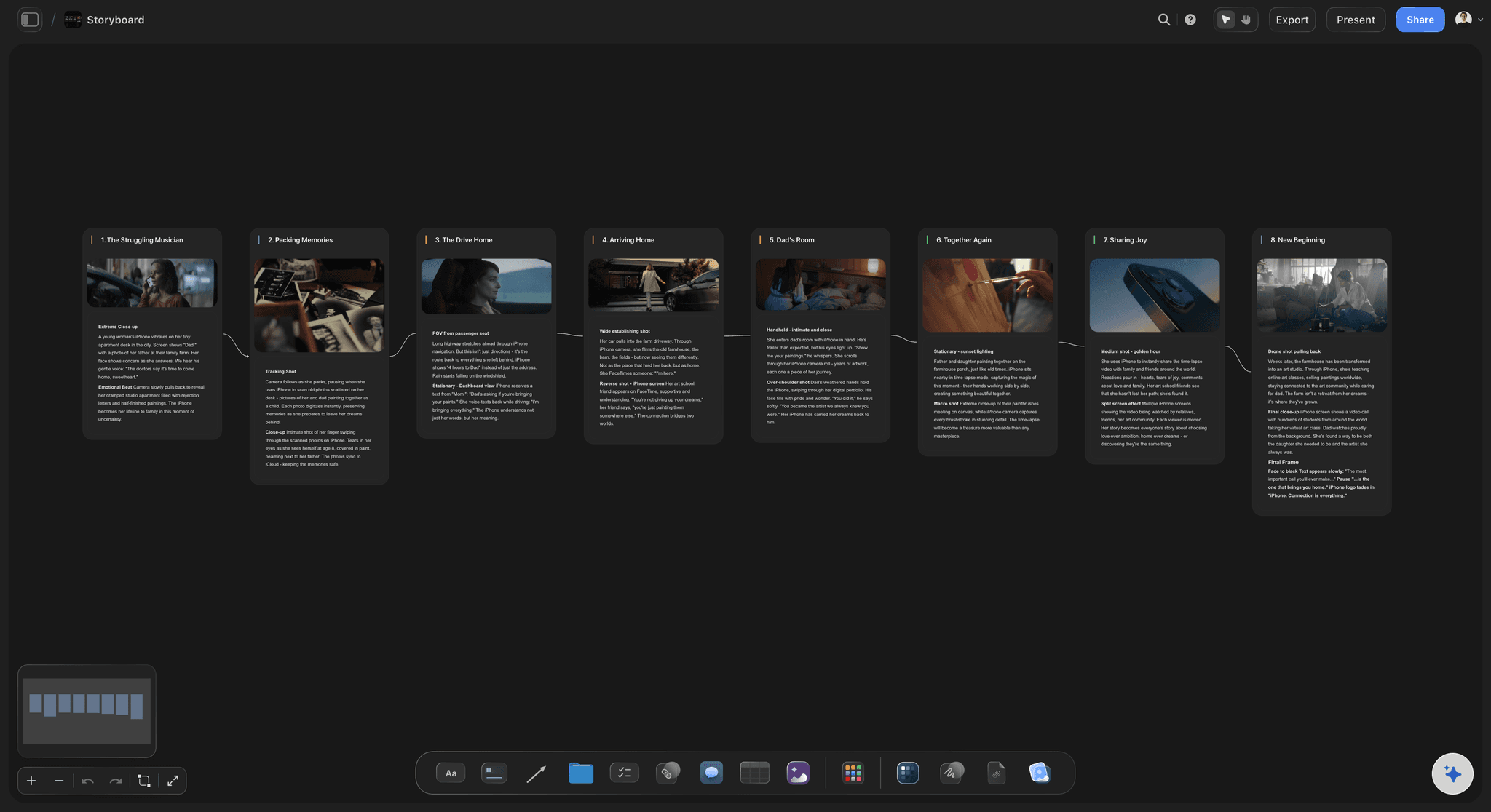
Decided first, referenced all the way
Creative documents
Brief or treatment: What the piece is, who it is for and what it must feel like. Every later document is checked against it, so it sits at the top of the board.
Script: Written in a screenwriting app or a Doc on the board. The AI plans from the text either way, so attach the latest draft when pages change.
Moodboard: Eight to fifteen references grouped by lighting, colour, framing and wardrobe. More than that and nobody can say what the look is.
Storyboard, where it earns it: For shots where composition or movement is critical, not every shot. The AI lays out scenes frame by frame, with generated frames on Pro and Max.
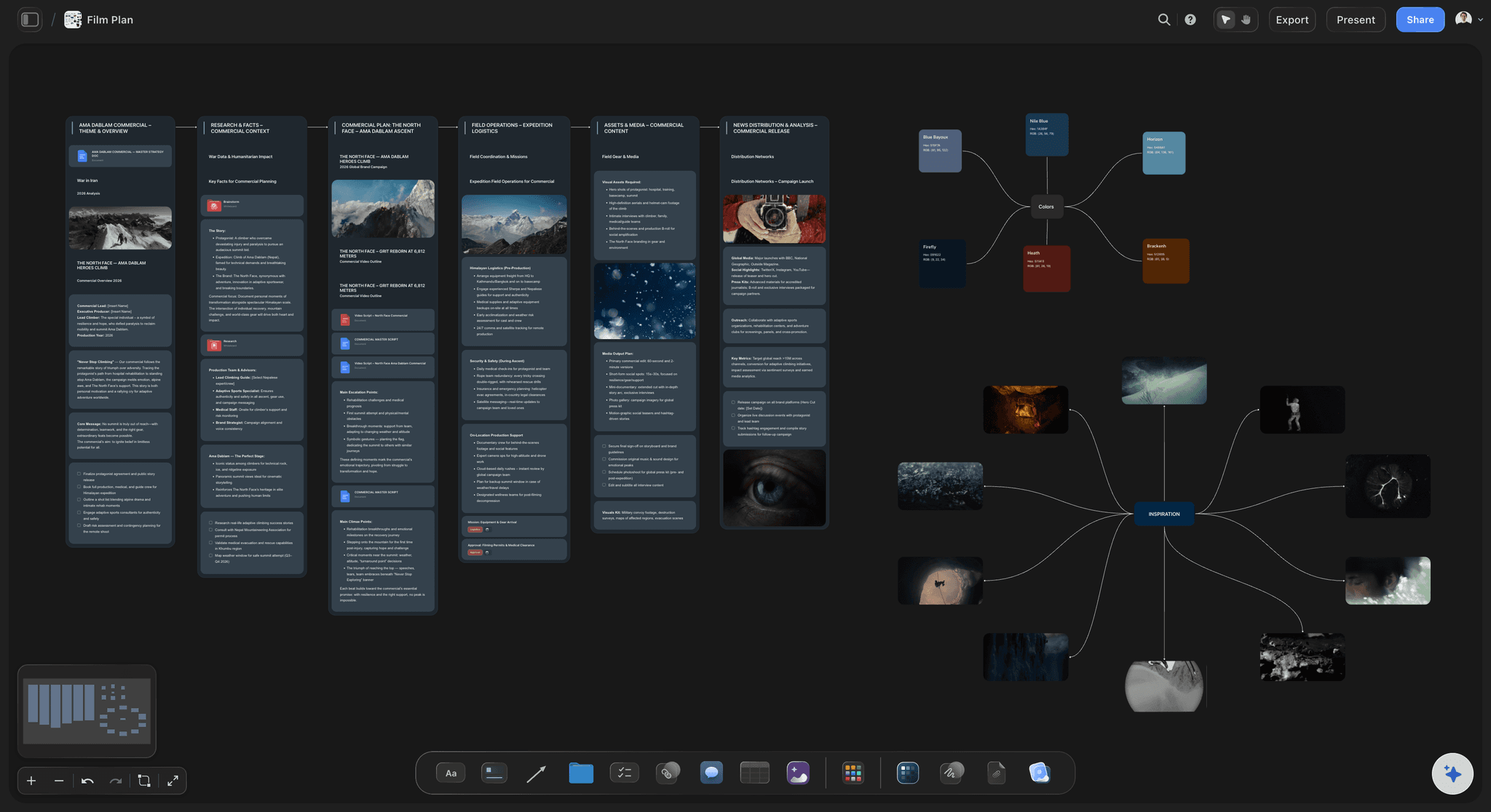
Each drafted from the one before
Logistics documents
Breakdown: Every scene's cast, location, props, wardrobe and special needs. It is the input to the schedule and the budget, so it comes before both.
Shot list: Shots per scene with size, angle and notes. Mark each must get, should get or nice to have, so the director knows what to drop when the day slips.
Stripboard schedule: Scenes grouped into days by location, with exteriors grouped by their light, in shooting order rather than script order.
Call sheet: The shoot day's operating manual: where, when, who, contacts, scenes, gear and safety notes. Drafted as a PDF the crew opens on a phone.
The items that run late
People, places and paperwork
Locations and tech scout: Photos, access, parking, power and sound issues per location. Upload a walkthrough video and grab frames from it onto the board.
Cast and crew: A table with role, contact and availability dates, rows kept in date order. Tickets with assignees and due dates cover who is booking what.
Releases, permits and insurance: A to-do list the producer sees daily. These are the items that reliably take longer than expected, so they start first.
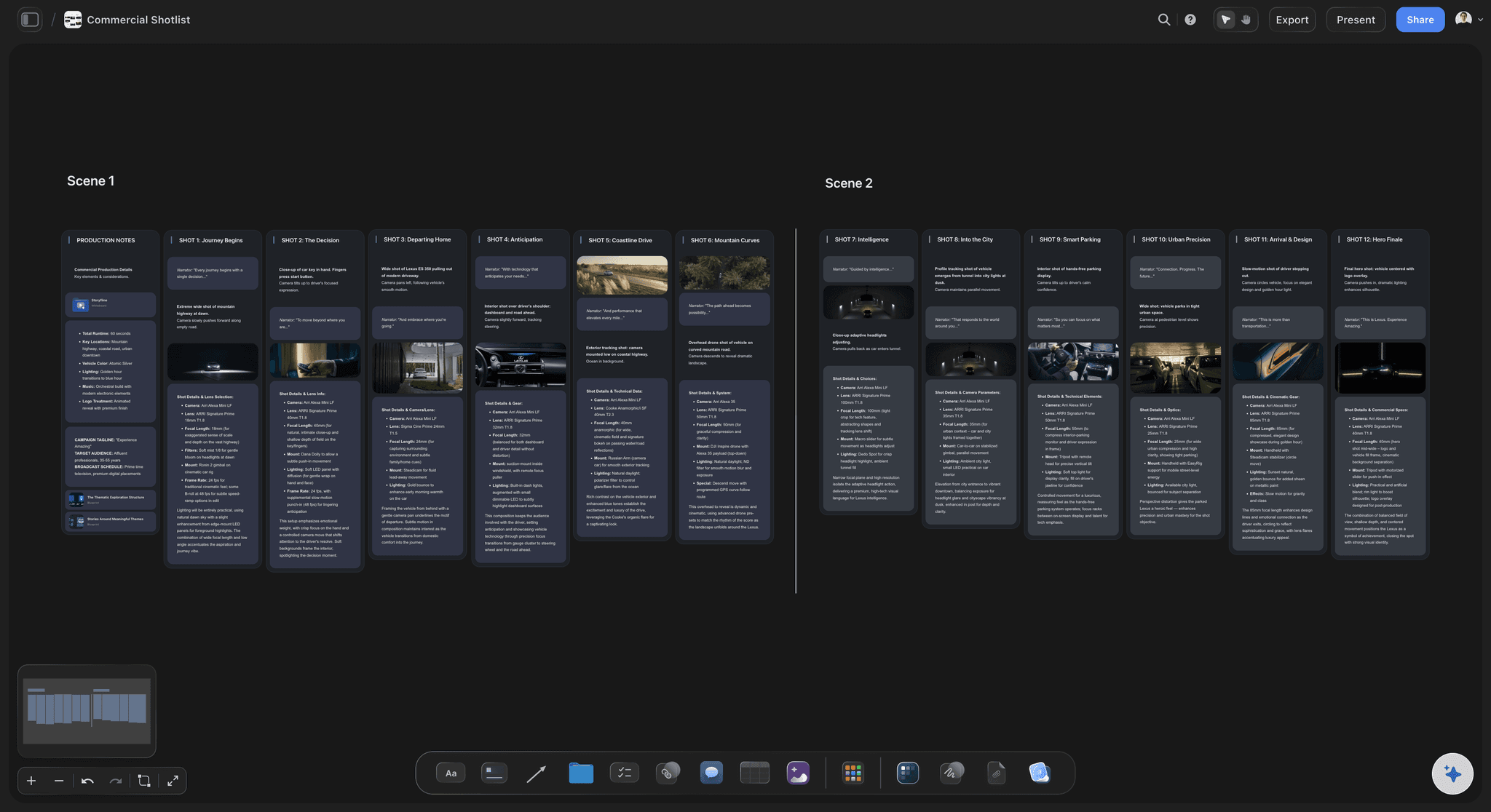
What the shoot day runs on
From pre-production to the shoot day
Five live documents, not forty: On the day the crew needs the call sheet, the shot list, the schedule, contacts and a notes list for what actually happened.
One owner per document: Put a name on the schedule, the call sheet and the releases. A document everyone updates is a document nobody trusts.
Changes made visible: When a location moves, write the change as a dated note on the board beside the day it affects, rather than quietly editing and hoping everyone notices.
Explore templates for your project
Every template opens as a real, editable board on the infinite canvas. Pick the closest fit and make it your own.
Pre-Production
Pull the brief, script, shot list, and moodboard into one pre-production hub so the whole shoot is planned in one place.
One app instead of five
Storyflow vs StudioBinder, Celtx and Notion.
StudioBinder and Celtx are production suites with screenwriting and call sheet distribution. Notion is a flexible workspace of pages and databases. Here is where each fits pre-production.
Storyflow
Recommended
Moodboard, shot list and schedule on one canvas
Breakdowns, stripboards and call sheets built from the script
Comments on the specific item
Sends call sheets to the crew
Screenplay editor in industry format
StudioBinder
Moodboard, shot list and schedule on one canvas
Breakdowns, stripboards and call sheets built from the script
Comments on the specific item
Sends call sheets to the crew
Screenplay editor in industry format
Celtx
Moodboard, shot list and schedule on one canvas
Breakdowns, stripboards and call sheets built from the script
Comments on the specific item
Sends call sheets to the crew
Screenplay editor in industry format
Notion
Moodboard, shot list and schedule on one canvas
Breakdowns, stripboards and call sheets built from the script
Comments on the specific item
Sends call sheets to the crew
Screenplay editor in industry format
What creators are saying
Join early creators getting structured workspaces and AI that remembers their projects
“Storyflow has sped up my workflow by at least 3x, which means more flow state and more projects I can actually ship. It truly changed the way me and my team create.”

Reilin Joey
Director & YouTuber
“One prompt gets me a structured board. But the tactics are my favorite. I run my YouTube scripts through them and my intros and retention got better. It's amazing.”

Justkay
YouTuber & Freelance Filmmaker
“I used to juggle five apps to plan a project. Now I describe what I am making and get boards, lists, and a schedule. All in one place.”

George
@fernwehchronicles
Pre-production tools, answered.
What producers ask about the documents a shoot needs and where to keep them.
Storyflow covers most of the kit on one board: brief or script, moodboard, breakdown, shot list, stripboard, locations, crew and a call sheet PDF per shoot day, each drafted by its AI from the one before. Add a screenwriting app such as Final Draft or Celtx for the script, StudioBinder if call sheets must be sent and confirmed, and Frame.io once there is footage to review.
They keep one source of truth that gets more specific as the shoot approaches: brief, breakdown, shot list, schedule, call sheet. In Storyflow those documents sit on one board, each drafted from the one before, so a change shows against everything it touches. They also name one owner per document and write changes as dated notes. The pre-production to shoot day page walks through the full handoff.
Brief or treatment first, then the script, then a breakdown of what each scene needs. The breakdown feeds the shot list and the budget; the shot list and your constraints feed the schedule; the schedule feeds one call sheet per day. The moodboard, locations, crew list, gear list and releases run alongside. Doing them out of order is how a schedule ends up booking a location the script no longer uses.
Yes: Google Docs and Sheets cost nothing and handle a one day shoot well, and some suites have limited free tiers. Storyflow is not free during early access; it is paid-only, with plans from $7.99 a month billed annually ($9.99 monthly). A free plan launches before the end of 2026, and anyone a paid member invites to a board joins free.
Usually not. Most shoots need storyboards only for the shots where composition or movement matters, and a shot list covers the rest. Storyflow's AI lays out a storyboard scene by scene on the same board as the shot list, with AI-generated frames on Pro and Max. It has no drawing tools for frames, so a director who sketches every panel by hand may prefer a dedicated drawing app.
Storyflow's AI drafts a call sheet PDF for a shoot day from the schedule, locations and contacts on the board, and the crew can open it on a phone. It does not send it or track who confirmed. StudioBinder sends call sheets and tracks confirmations; Celtx emails them as PDFs. Tracking matters most on crewed shoots with dozens of people.
StudioBinder is a production management suite built around separate modules for scripts, breakdowns, schedules, call sheets and contacts, with call sheet distribution. Storyflow puts the pre-production documents on one canvas beside the moodboard and treatment, and its AI drafts them from the brief or script. Small crews often plan in Storyflow; larger crewed shoots may want StudioBinder's distribution too.
Yes. From a brief it drafts the moodboard direction, a pre-production plan and a shot list. From a script it drafts a breakdown with page-eighth estimates, a shot list per scene and a stripboard of shoot days, then a call sheet PDF per day from the schedule. Edits land on the board with one-click Undo, so you keep what works and redo what does not.
Five things: the call sheet for what should happen, the shot list and schedule for what comes next, a contact list for when something changes, and notes for what actually happened. Mark shots must get, should get and nice to have, so the director has something to drop when the day runs long. Everything else can stay in pre-production.
Make them visible instead of quiet. When a location cancels or a client adds an interview, write a dated change note beside the affected day, update the schedule and re-draft that day's call sheet. On a Storyflow board the change sits next to the scenes, shots and people it touches, so nobody works from last week's version.
Yes. Invited collaborators edit the same board in real time on any paid plan and join free, with admin, edit or view access. Clients and day players open a view-only link with no account and see the latest version when they open or reload it. Signing in lets them comment on a specific shot or scene.
No. Storyflow runs in the browser, nothing to install, on any computer with a modern browser. There is no native app for phones or tablets, but a view-only link and the call sheet PDF both open on a phone, which is what the crew needs on location.
More from Storyflow
Pre-production to shoot day
Pre-production checklist
Video pre-production
Film production planning
Film shoot planner
Script breakdown software
Shot list software
Stripboard
Call sheet template
Location scouting app
Production paperwork
Video production workflow
Project brief template
How video producers stay organised
Indie film production workflow
Video production software
Best moodboard app
One board for everything before the camera rolls.
Open a board, attach the brief or script, and let the AI draft the pre-production documents. No download.