
Extremely reliable pre-production
Keep the plan together from
pre-production to shoot day.
Most productions lose their plan in the handoff. The treatment lives in a doc, the shot list in a sheet, the schedule in a calendar and the call sheet in a PDF, and by shoot day nobody is sure which version is current. Storyflow keeps all of it on one canvas, so the shot list is visibly the one that came from the treatment.


Creatives working for these brands already got early access
- Red Bull
- Canon
- Artlist
- Porsche
See how easy it is to get started
Watch a real project come together, from a blank board to a finished plan, clicked through step by step.
Start from a ready-made template
Pick a board to see what you can build, then let AI fill it in. Every template is a real, editable starting point on the same infinite canvas.

Pre-Production
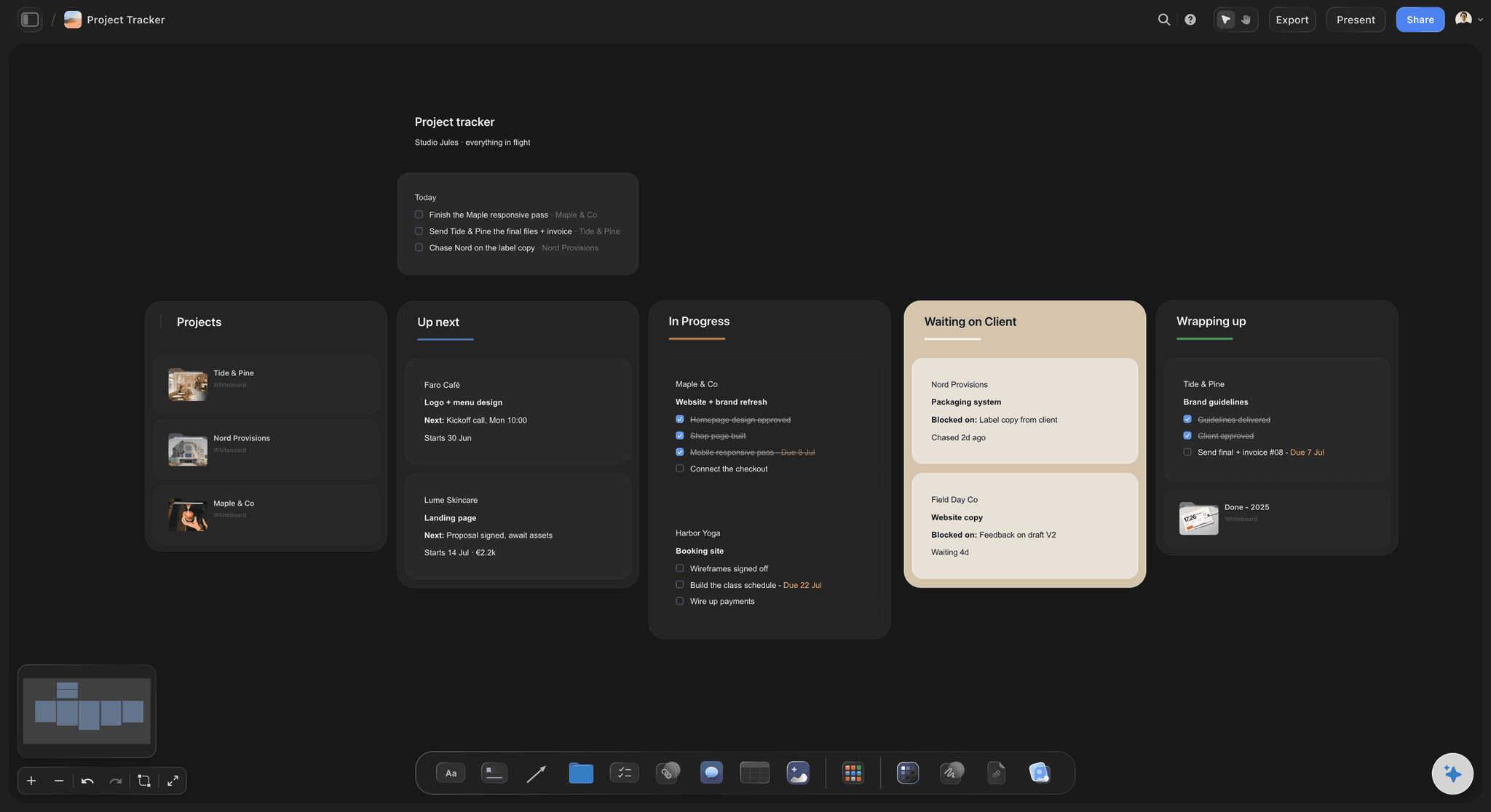
Pull the brief, script, shot list, and moodboard into one pre-production hub so the whole shoot is planned in one place.
How do you carry the plan from pre-production to shoot day?
Getting a video from pre-production to the shoot means keeping one chain in agreement: treatment, references and locations, then shot list, then schedule, then call sheet. Storyflow is an AI visual workspace that carries a video's plan from pre-production to shoot day on one infinite canvas: the treatment and references, and a shot list, shoot days and call sheet PDF its AI drafts from what is already there, so drift shows in prep, not on set.
The common failure is format, not effort. Each of those five artefacts lives in a different tool, so there is no way to see that the shot list still reflects the treatment, or that the schedule covers every shot. The producer holds the connection in their head, which works until they are on set at six in the morning being asked three questions at once.
Keeping the chain on one canvas removes that class of problem. The treatment sits beside the references it produced, the shot list sits beside the treatment, the day is laid out over the shot list, and the call sheet is drafted from the day. When a location falls through, you can see every shot that depended on it rather than remembering them.
Storyflow is the canvas for that. It does not run payroll or cost reports, and it is not a call sheet distribution service. It is where the production is thought through and kept coherent, and the board exports as an image or PDF when the crew needs something to hold.
Ultra fast from brief to board
One canvas from the treatment to the last shot of the day.
Each stage sits beside the one it came from, so drift is visible instead of discovered.
01
Start with the treatment
Drop the treatment, the brief or the client deck onto the canvas along with the reference films and location photos.
02
Break it into shots
Turn the treatment into a shot list on the same board, so every shot is traceable to the part of the story it serves.
03
Lay the days over the shots
Group shots by location and time, and the schedule stops being a separate document that has to be reconciled.
04
Send what the crew needs
Have the AI draft the call sheet as a PDF, export the board, or share a view-only link so the crew reads the current version without an account.
Every document on a shoot derives from the one before it.
Keeping them on one canvas is what makes that visible, and visible is what stops a shot going missing.
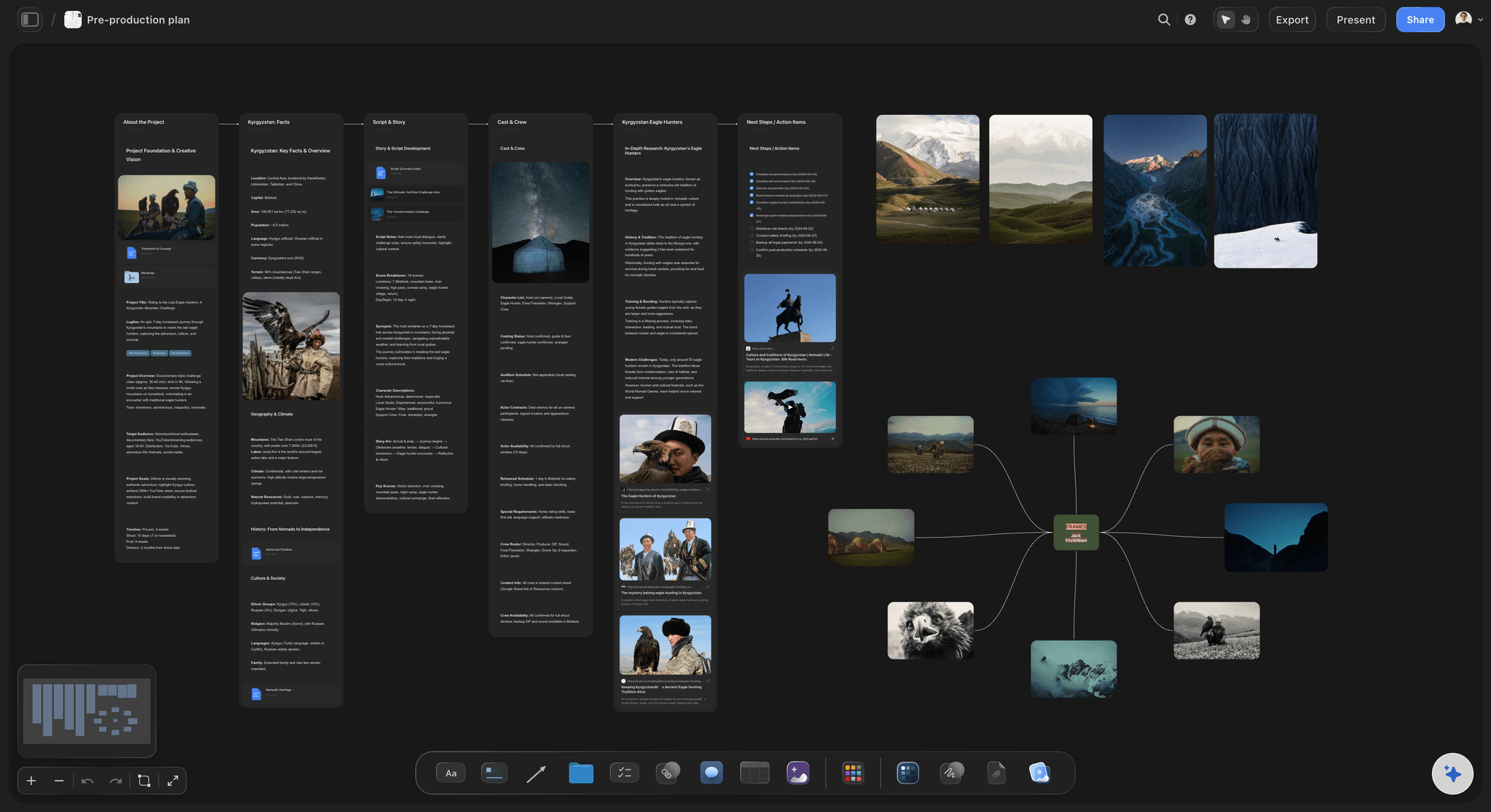
The story, before the logistics
Treatment and references together
Keep the treatment beside the films, stills and location photos that define the look, so the visual direction is not a separate conversation from the plan.
See video pre-production →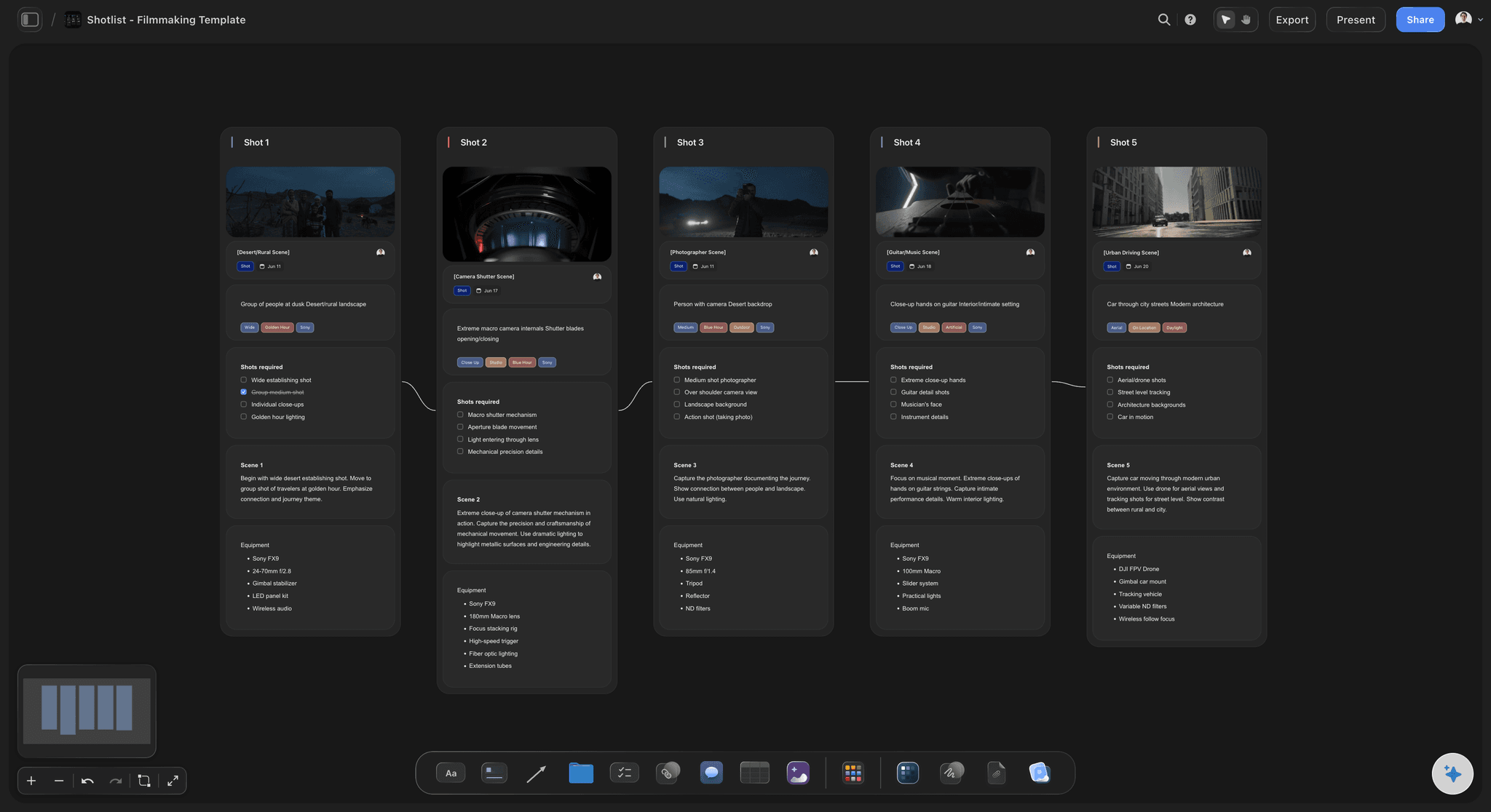
Every shot, traceable
A shot list that came from somewhere
Build the shot list on the same canvas as the treatment, so a shot nobody can justify is obvious and a beat with no coverage is visible before the day.
Try the AI shot list generator →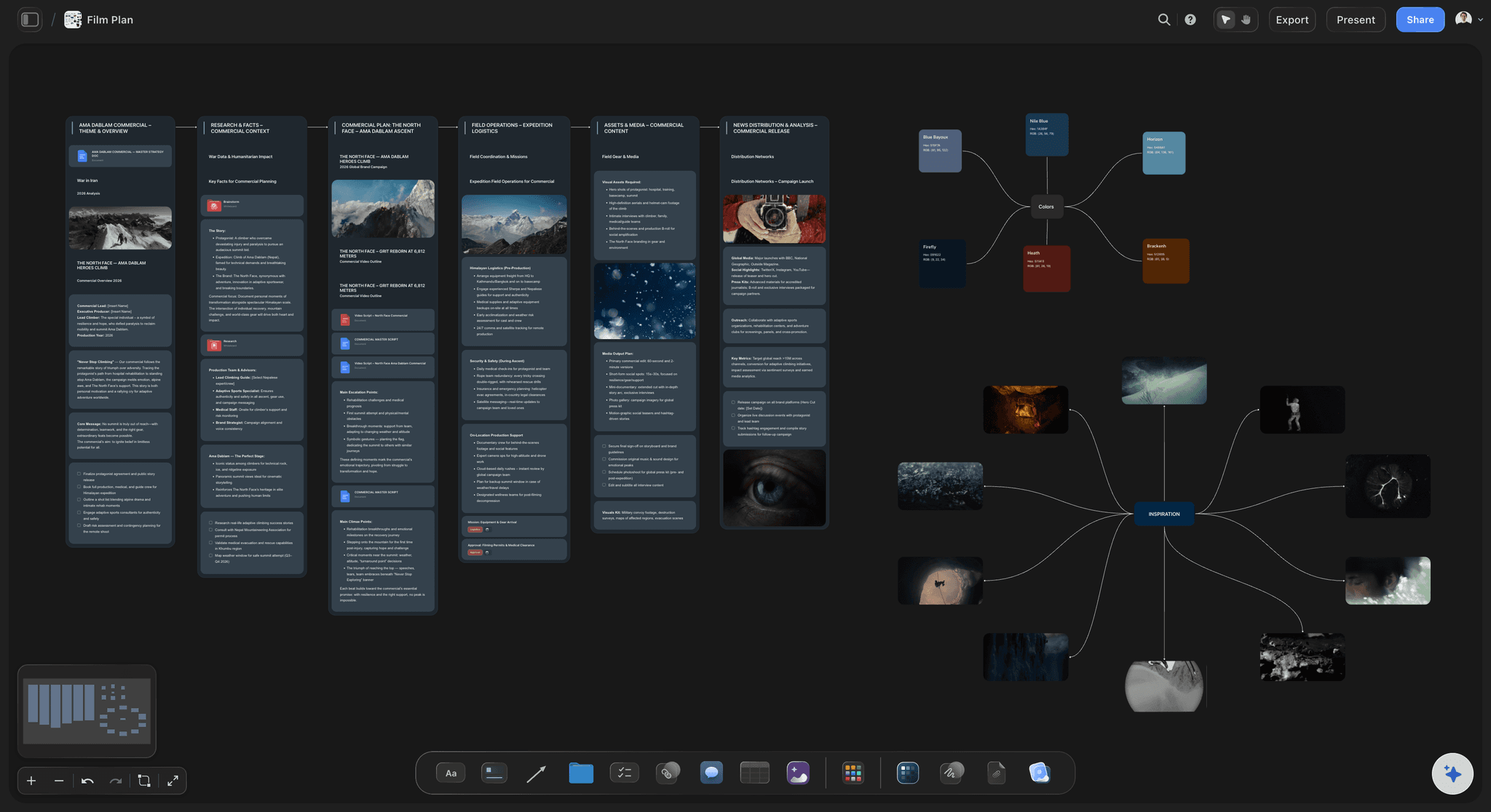
The day, laid over the work
A schedule that covers the shot list
Group shots by location, cast and time of day. Because the schedule sits over the shot list, an uncovered shot shows as a gap rather than as a discovery at wrap.
See the shooting schedule →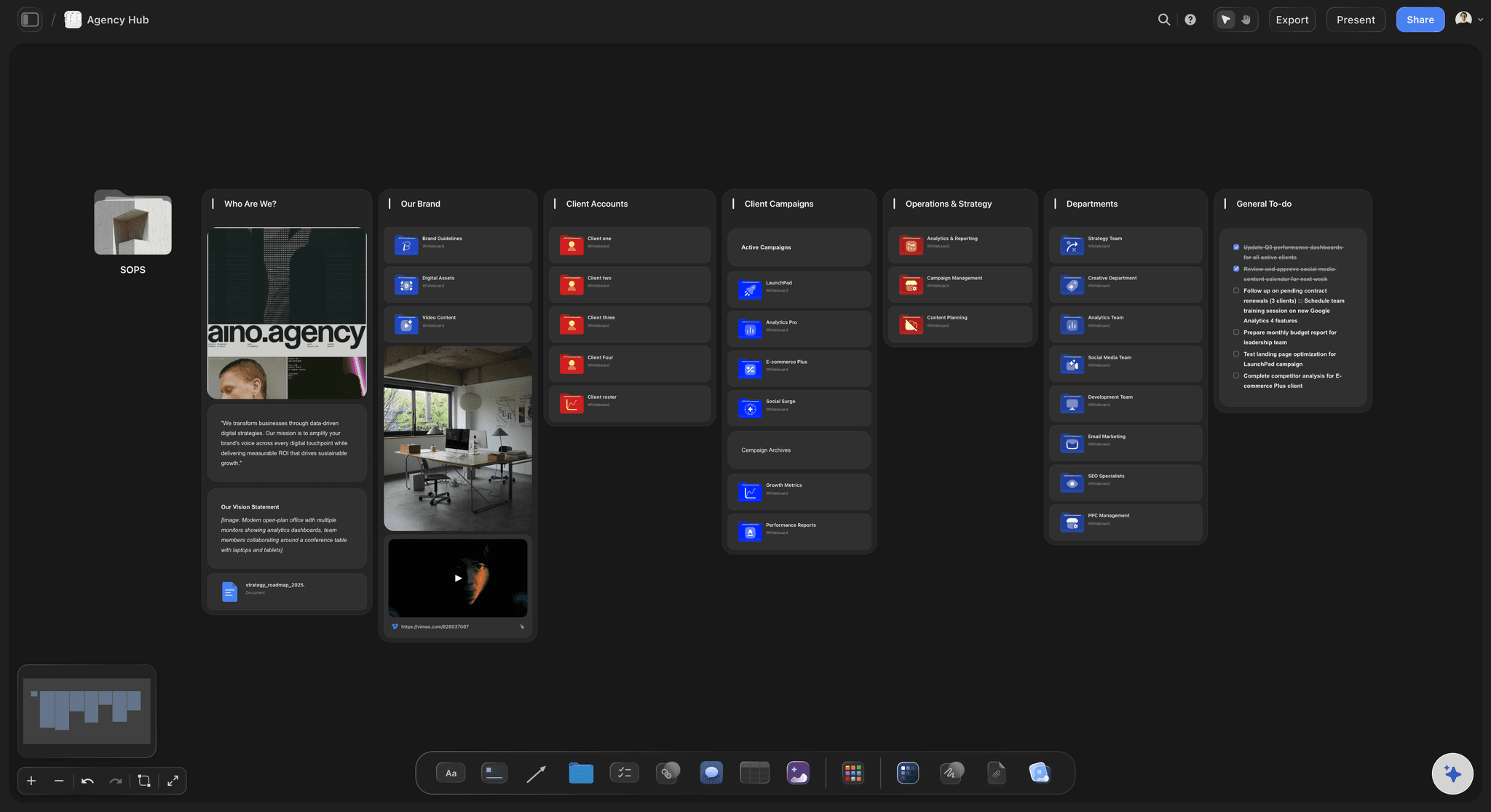
What the crew actually receives
Call sheets from the plan, not retyped
The call sheet is the last narrowing of the chain. Building it from the same board is what stops the version on set differing from the version the director approved.
Try the AI call sheet generator →Plans from $7.99/month annual. Free plan coming late 2026.
Anyone a paid member invites to a board joins free, which matters on a production where the crew changes every job. Storyflow is paid-only during early access.
Crew read the board without an account
Every production gets its own board, with no project limit
Export any board as a high-quality image or PDF
Anyone a paid member invites to a board joins free
Built for people with taste
Shoot days go wrong in pre-production.
Almost every problem on a shoot day is a mismatch that was created weeks earlier and only became visible at call time.
Drift is the real enemy
Catch the mismatch while it is still cheap
The chain stays visible: Treatment, shot list, schedule and call sheet on one canvas, so you can see whether the last one still reflects the first.
Cut a location, see the damage: When something falls through, every shot that depended on it is right there instead of being remembered one at a time.
One current version: A link that always shows the latest board ends the problem of three call sheet PDFs in a group chat.
The AI reads the production
Ask the board what is not covered
Canvas-aware AI: Storyflow's AI reads the whole active board, so the treatment and the shot list are both in front of it when you ask whether the coverage is complete.
Bring the documents in: Attach up to five documents and three boards to pull the script, the brief and the location notes into one answer.
Turn a treatment into a first pass: Generate a starting shot list from the treatment and edit it, which is faster than an empty spreadsheet and easier to argue with.
On the day
Readable at six in the morning
The crew opens a link: No account and no app install, which is the only distribution that actually works with a crew assembled for one job.
Readable on a phone: Boards open in a mobile browser, so checking the next setup does not mean finding the printed sheet.
Export what has to be paper: Export the board as a high-quality image or PDF, or have the AI draft the call sheet as a PDF, when the day needs something printable.
Honest about scope
What Storyflow does not do
No payroll or cost reports: The AI can draft a budget table with a live total, but there is no payroll, cost reporting or production accounting. Those stay in the tool you already use.
No approval workflow or time tracking: Tickets, Kanban and to-dos cover who does what, but there is no approval routing, time tracking or workload view, so sign-off and post stay where they already live.
Not a call sheet distribution service: The AI drafts the call sheet from the plan. Storyflow does not send tracked emails or collect confirmations from crew.
Explore templates for your project
Every template opens as a real, editable board on the infinite canvas. Pick the closest fit and make it your own.
Pre-Production
Pull the brief, script, shot list, and moodboard into one pre-production hub so the whole shoot is planned in one place.
One app instead of five
Why not keep using docs, sheets and a calendar?
That stack works, and plenty of good producers run on it. What it cannot do is show you that the four documents still agree with each other.
Storyflow
Recommended
Treatment, shots and schedule on one canvas
AI reads the whole production board
Crew view without an account
Tracked call sheet delivery and confirmations
Docs and spreadsheets
Treatment, shots and schedule on one canvas
AI reads the whole production board
Crew view without an account
Tracked call sheet delivery and confirmations
StudioBinder
Treatment, shots and schedule on one canvas
AI reads the whole production board
Crew view without an account
Tracked call sheet delivery and confirmations
Notion
Treatment, shots and schedule on one canvas
AI reads the whole production board
Crew view without an account
Tracked call sheet delivery and confirmations
What creators are saying
Join early creators getting structured workspaces and AI that remembers their projects
“Storyflow has sped up my workflow by at least 3x, which means more flow state and more projects I can actually ship. It truly changed the way me and my team create.”

Reilin Joey
Director & YouTuber
“One prompt gets me a structured board. But the tactics are my favorite. I run my YouTube scripts through them and my intros and retention got better. It's amazing.”

Justkay
YouTuber & Freelance Filmmaker
“I used to juggle five apps to plan a project. Now I describe what I am making and get boards, lists, and a schedule. All in one place.”

George
@fernwehchronicles
Staying organised through a shoot, answered.
What producers ask before running a production on one canvas.
Storyflow keeps the production on one board: its AI breaks the script down into scenes, cast and elements, turns them into a shot list, groups scenes into shoot days and drafts each day's call sheet PDF, all beside the treatment they came from. When something changes, update every document downstream of it. For sending call sheets to the crew and tracking who confirmed, use StudioBinder or SetHero; Notion works if your paperwork already lives in linked pages.
Storyflow keeps the whole chain on one canvas: the treatment, the references, the shot list, the schedule and the call sheet, so the plan that reaches set is the plan the team agreed. Its AI drafts the shot list, the shoot days and each call sheet PDF from what is already on the board. StudioBinder still does tracked call sheet delivery and confirmations, which Storyflow does not.
Keep one source of truth and make every later document visibly derive from it. The chain runs treatment, references and locations, then shot list, then schedule, then call sheet, each narrowing the one before. Split across a doc, a spreadsheet, a calendar and a PDF, nobody can see that the shot list still matches the treatment. In Storyflow the whole chain sits on one canvas, so drift shows up in pre-production instead of at call time.
For most shoots: a treatment or brief, a reference and location set, a shot list, a schedule, and a call sheet. Bigger productions add a script breakdown, a risk assessment and release forms. The number matters less than whether they agree with each other, which is the thing that breaks.
A production coordinator tracks the paperwork around the plan: the crew list with contacts and deal memos, location agreements and permits, insurance certificates, equipment and vehicle orders, travel and catering, talent releases, and each day's call sheet once the schedule locks. Give every item an owner, a due date and a status, and chase the ones that block a shoot day first. In Storyflow that tracker is a table with status, person and date cells beside the production plan.
Yes. Put the treatment on the board and Storyflow's AI can lay out a first-pass shot list from it, which you then edit. A generated first pass is more useful than a blank spreadsheet because it is something concrete to disagree with, and because the AI can be asked which beats currently have no coverage.
Not fully. StudioBinder tracks call sheet delivery and crew confirmations and generates day-out-of-days reports, and full production suites add budgeting with fringes and top sheets. Storyflow has none of those. What it does better is the thinking stage: keeping the treatment, references, shot list and schedule coherent in one view. Some teams run both, with Storyflow for planning and a production suite for the logistics.
Share a view-only link and the crew opens it in a browser with no account and no install, which is the only distribution that reliably works with a crew hired for a single job. Boards are readable on a phone, and the board exports as a high-quality image or PDF for anything that has to be printed.
Because the schedule sits over the shot list on the same canvas, every shot that depended on that location is visible together rather than remembered one at a time. That is the practical benefit of keeping the chain in one view, and it is usually the difference between a rescheduled morning and a lost day.
Yes. Invited collaborators edit the same board in real time on any paid plan, and anyone a paid member invites to a board joins free, so the director, the first AD and the coordinator do not each need a plan.
It suits it well, because a canvas tolerates a plan that is still moving. Research, contributors and locations stay attached to the shooting plan they inform, and the board can be rearranged as the story changes without rebuilding a rigid schedule.
Storyflow is paid-only during early access, with plans from $7.99 a month billed annually ($9.99 monthly). A free plan launches before the end of 2026, and anyone a paid member invites to a board joins free.
Yes. Each production gets its own board and there is no project limit on paid plans, which is the normal case for in-house teams and production companies running several jobs in parallel.
More from Storyflow
Video pre-production
Pre-production tools
AI shot list generator
Shooting schedule
AI call sheet generator
Storyflow for producers
Indie film production workflow
Film shoot planner
Production calendar
Video production brief
Wedding photography shot list
Call sheet template
Shot list software
Photography shoot plan
Camera department prep
Production plan with ChatGPT
Video production planning
Film production report
Production coordinator workflow
Keep the production in one place.
Treatment, shot list, schedule and call sheet on one canvas, so the plan that reaches set is the plan you made.