
Pitch-ready plans, extremely reliable
A video production proposal
that shows the film before the fee.
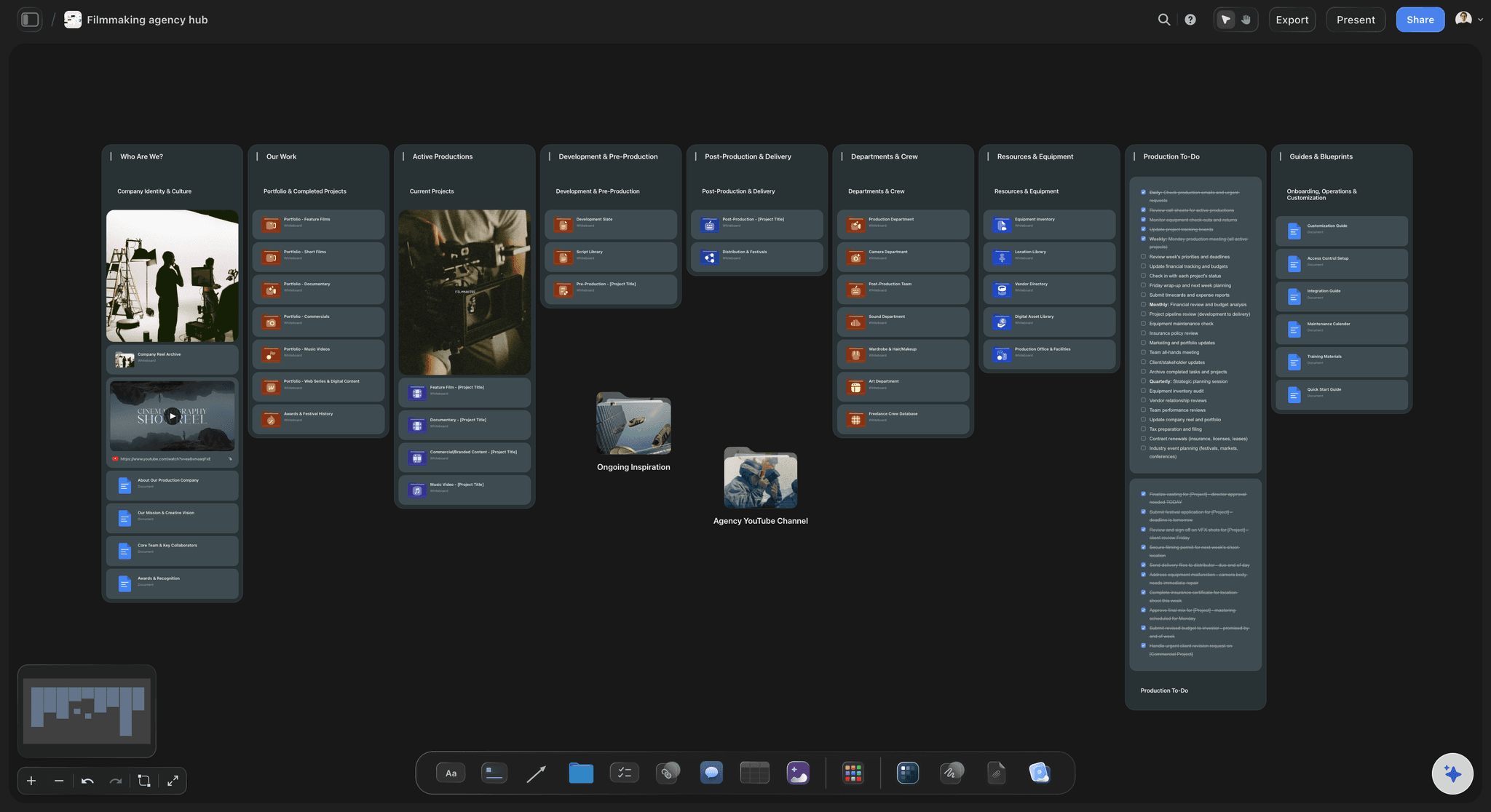
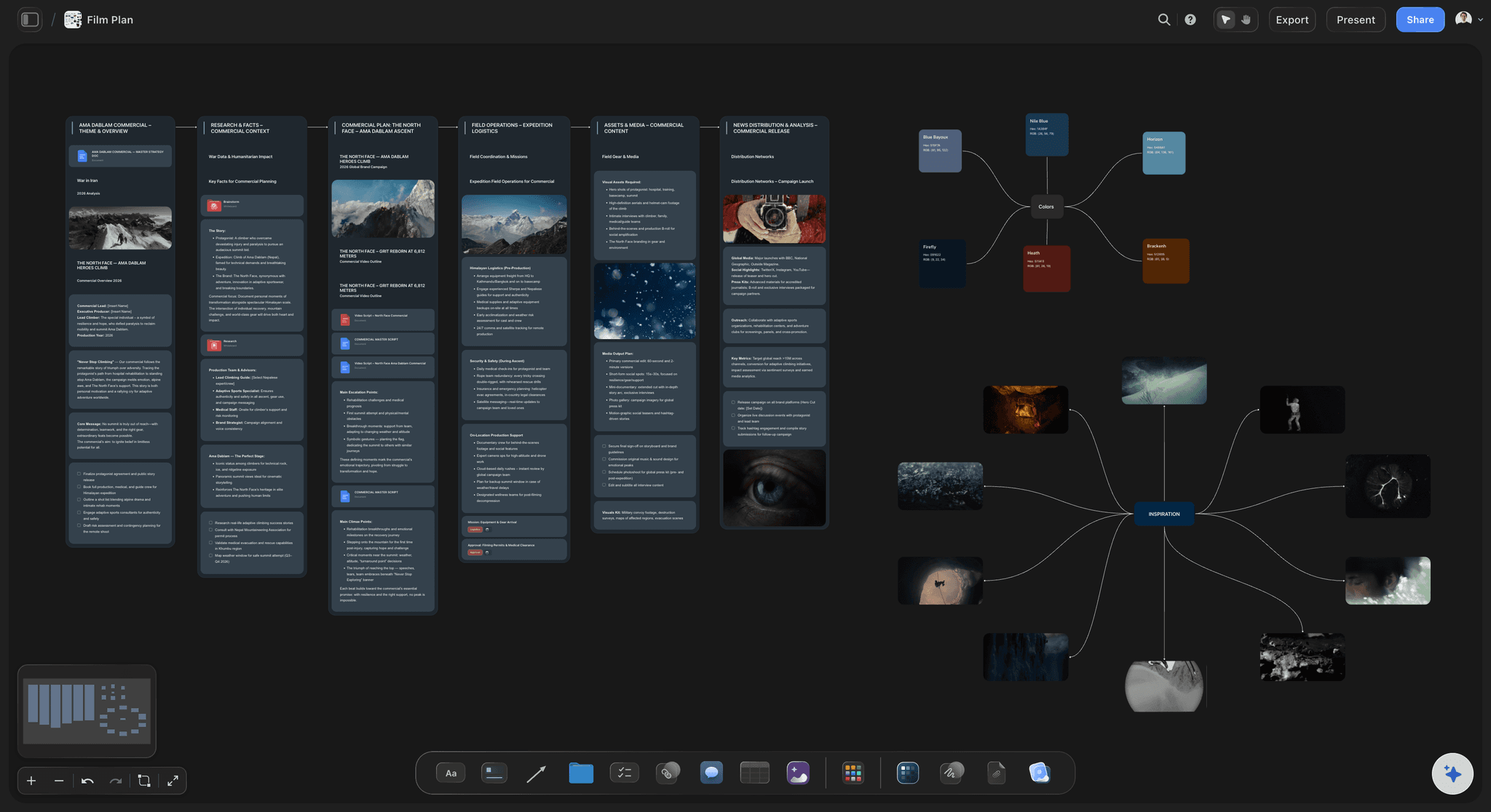
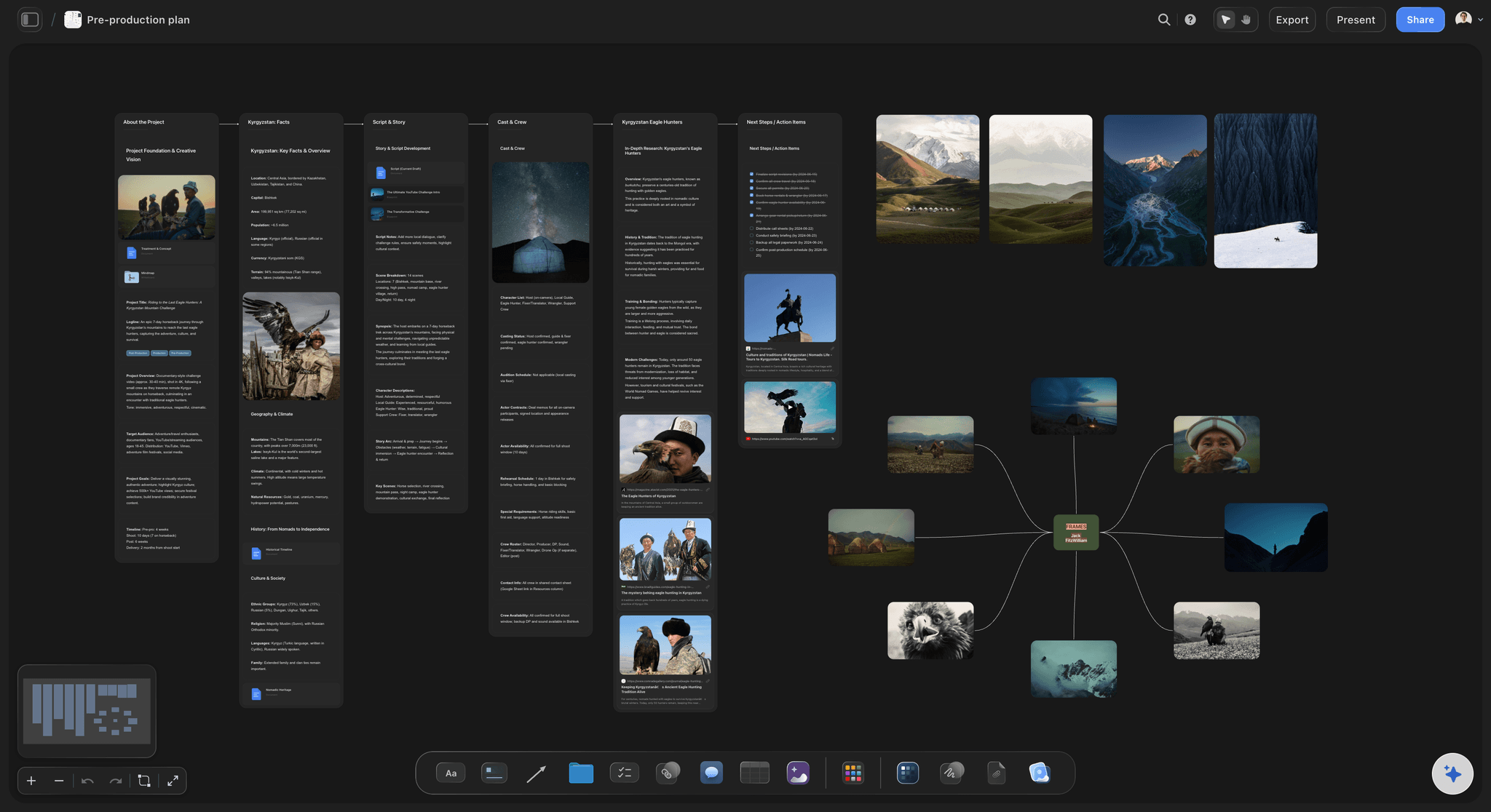
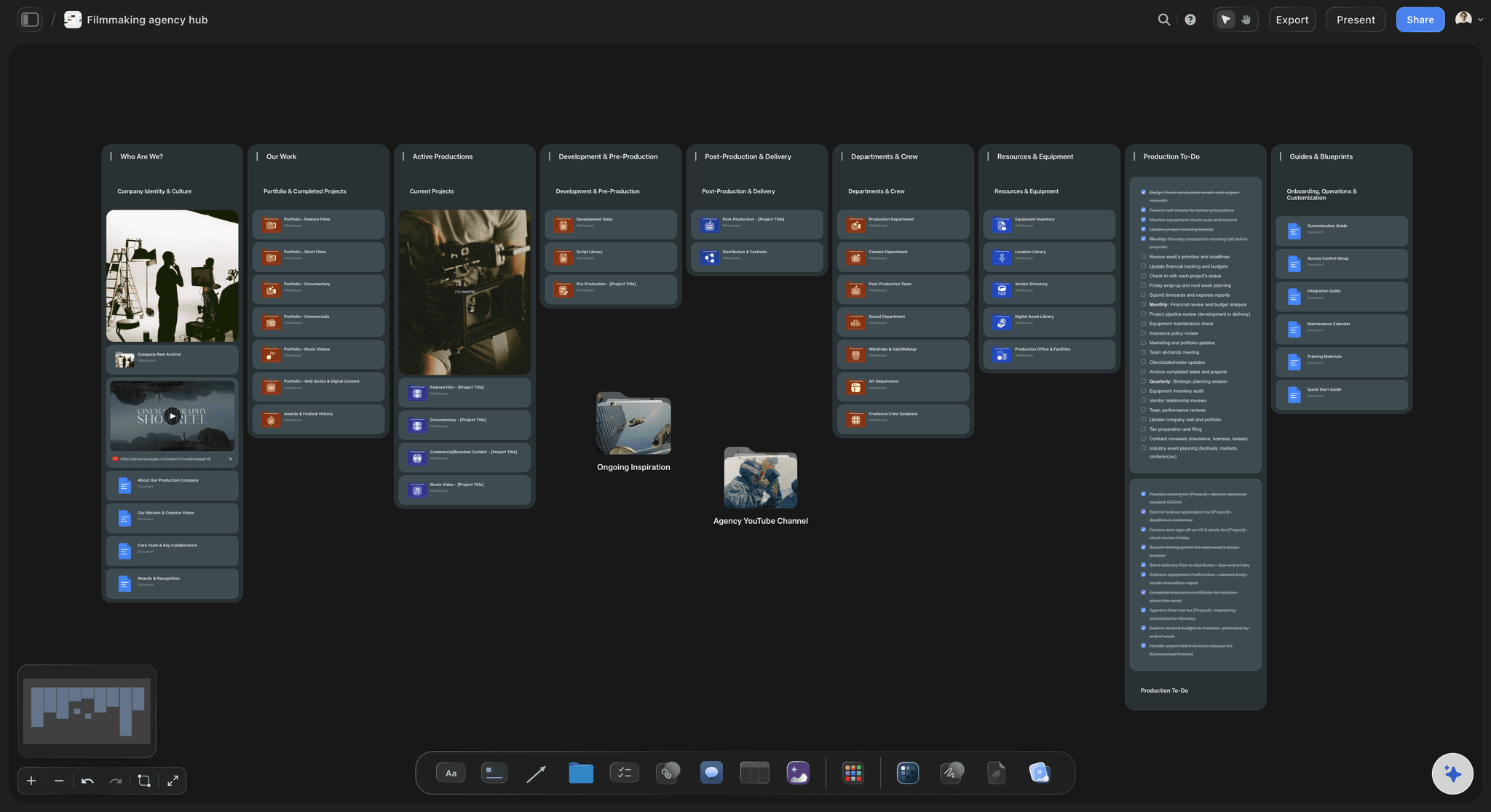
Concept, key frames, deliverables, schedule, crew and gear, usage and three priced packages on one board. Written the day after the brief call, not the week after.


Creatives working for these brands already got early access
- Red Bull
- Canon
- Artlist
- Porsche
See how easy it is to get started
Watch a real project come together, from a blank board to a finished plan, clicked through step by step.
Start from a ready-made template
Pick a board to see what you can build, then let AI fill it in. Every template is a real, editable starting point on the same infinite canvas.

Storyboard
Lay out your shots frame by frame with images and notes, then reorder them until the sequence reads like the finished cut.
What should a video production proposal include?
A video production proposal is what a client says yes to before a frame is shot: what the film is for, what it will look like, what they get, when, and what it costs. Storyflow is an AI visual workspace that builds your video production proposal in that order on one infinite canvas: one board with the concept and key frames, the deliverables and schedule, three priced packages, and sections its AI drafts from your brief-call notes for you to rewrite.
Lead with the picture, not your company. A client buying a film that does not exist yet decides on what it will look like, and a paragraph cannot show moving images. Open with their goal in their words and a one-line concept, then eight to twelve captioned references, a reference clip or two and four to six key frames. The price comes last.
Price it as three packages. Core: one 60 to 90-second film, one shoot day, two revision rounds, web and organic social usage. Film plus cutdowns: adds three 15-second 9:16 cutdowns and a second camera. Full: adds a second shoot day, a third revision round and paid-ads usage. Each package is a table column with a live total.
Small productions go wrong in three places: usage, revisions and payment. Write where the film runs and for how long, define a revision round as one set of consolidated notes from one decision-maker, and state the payment schedule and the date prices expire. The proposal is where the client first agrees the rules; the contract only repeats them.
Ultra fast from brief to board
A proposal the client can press play on.
Four steps, most of them done the day after the call.
01
Ask four questions, then paste the notes
Before you hang up, get the budget range, the one decision-maker, the launch date and where the film will run. Paste your call notes and the AI drafts the goal, concept, deliverables, schedule and crew sections on the board for you to rewrite.
02
Show the film first
Group references into look, pace and sound, upload a reference clip and grab the frames that matter, and lay out four to six key frames of your film. Caption each one with what it is there for.
03
Price it as three packages
Put pre-production, crew days, gear, post, music and usage in a table with one column per package and a live total. Leave any cost you have not confirmed blank rather than guessing it.
04
Send one link or a PDF
Send the link to the decision-maker, and a whole-board PDF to anyone who wants a file. On the call, step through it fullscreen in presentation mode, and end by naming the date you will follow up.
The film, the scope and the price, on one board.
The creative and planning half of the pitch. Signatures and payments stay in your contract tool.
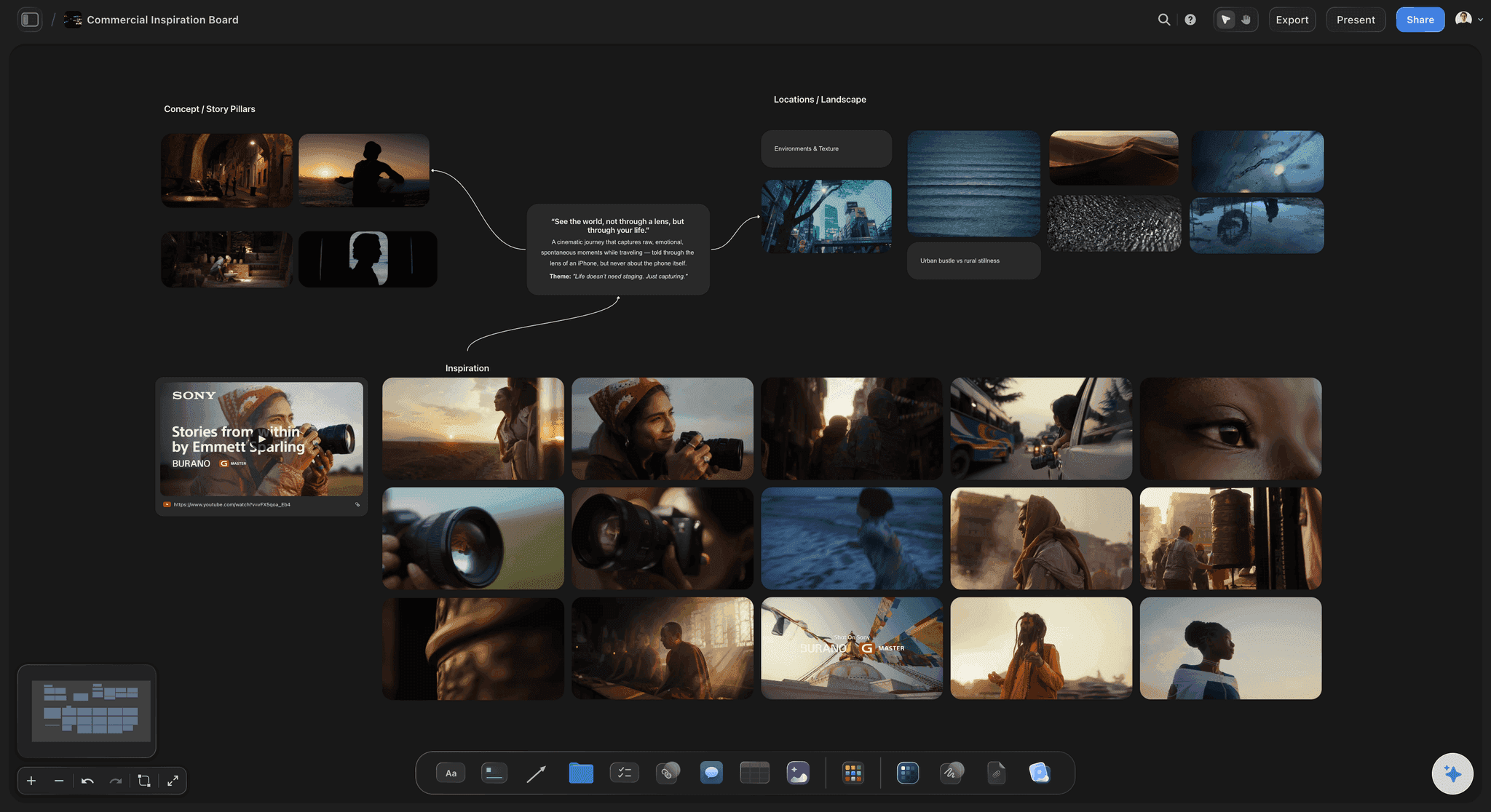
The idea and the look, before the price
A concept the client can see
A one-line concept tied to the client's goal, then captioned references for look, pace and sound. Upload a reference clip, play and scrub it, and grab the exact frames you mean instead of describing them.
See the director's treatment template →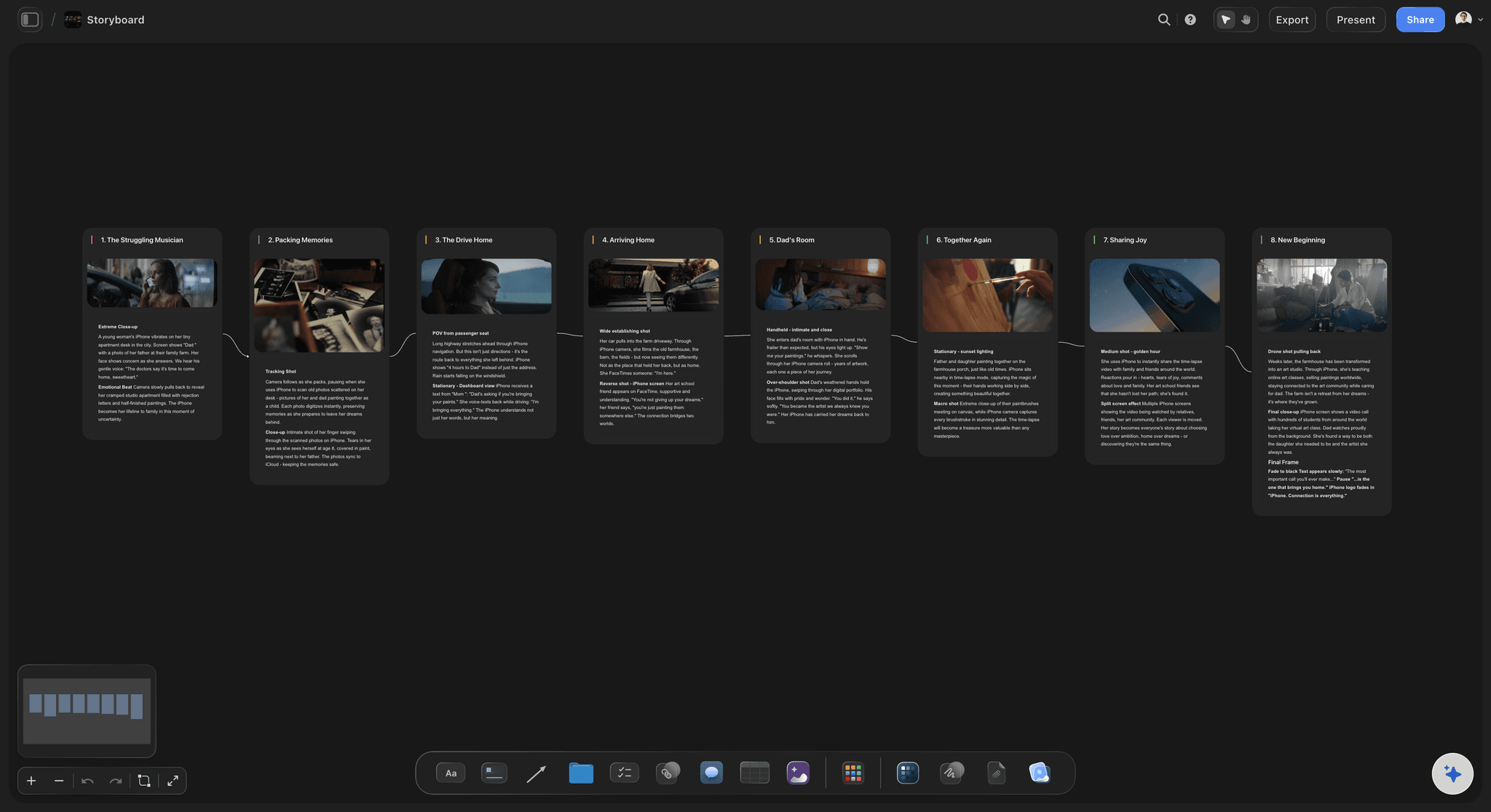
Key frames the client can picture
Four to six frames of the film you will make
The opening shot, the turn, the product or the person, the end card. The AI's storyboard workflow lays the moments out frame by frame, and on Pro and Max it can generate the frames themselves.
See the AI storyboard generator →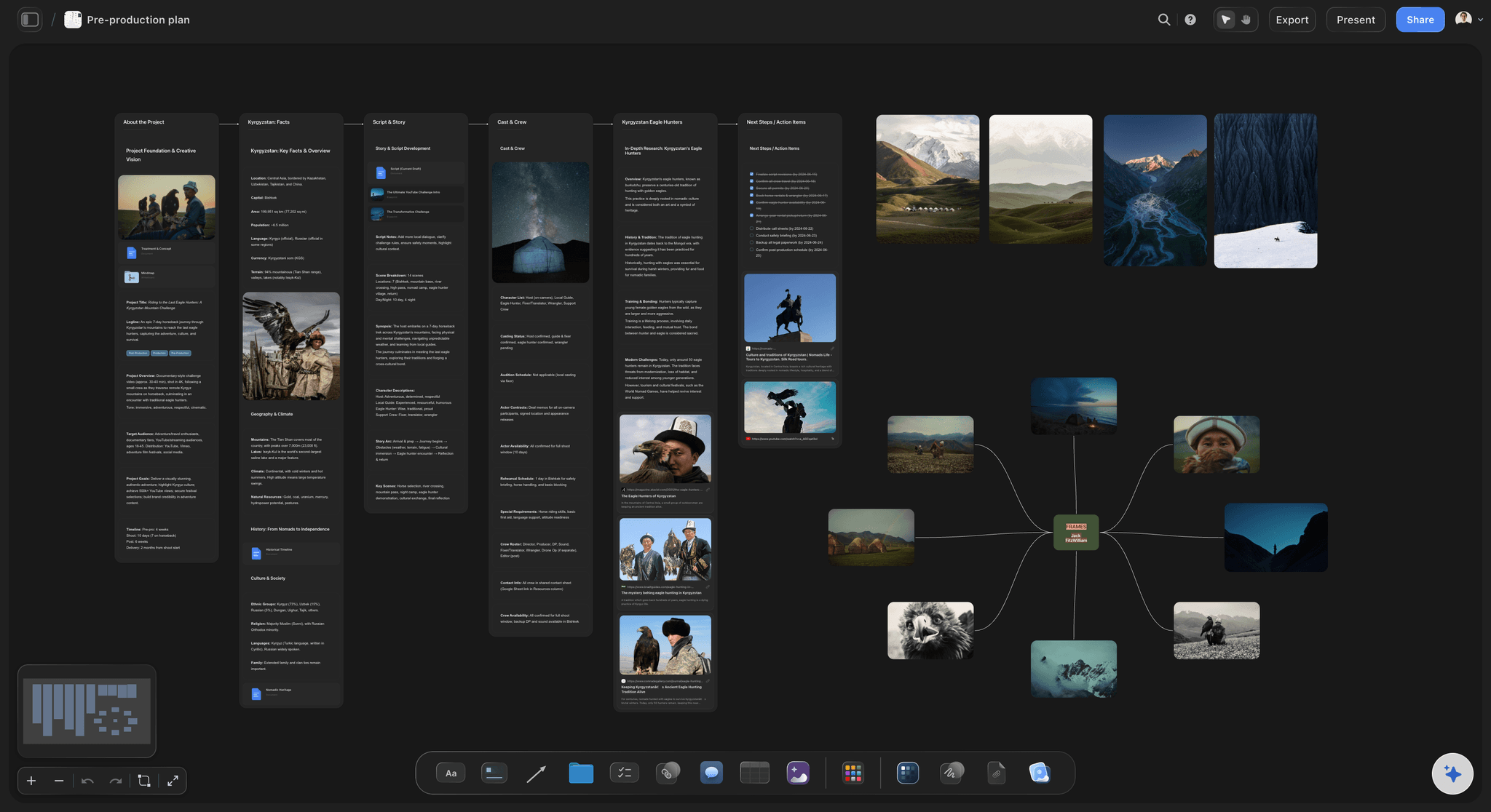
Scope, schedule and the price
Deliverables, crew and three packages that total themselves
Deliverables with length, ratio and format, the schedule with rows kept in date order, the crew and the gear it buys the client, then three priced packages, each a currency column with a Sum footer.
See video production planning →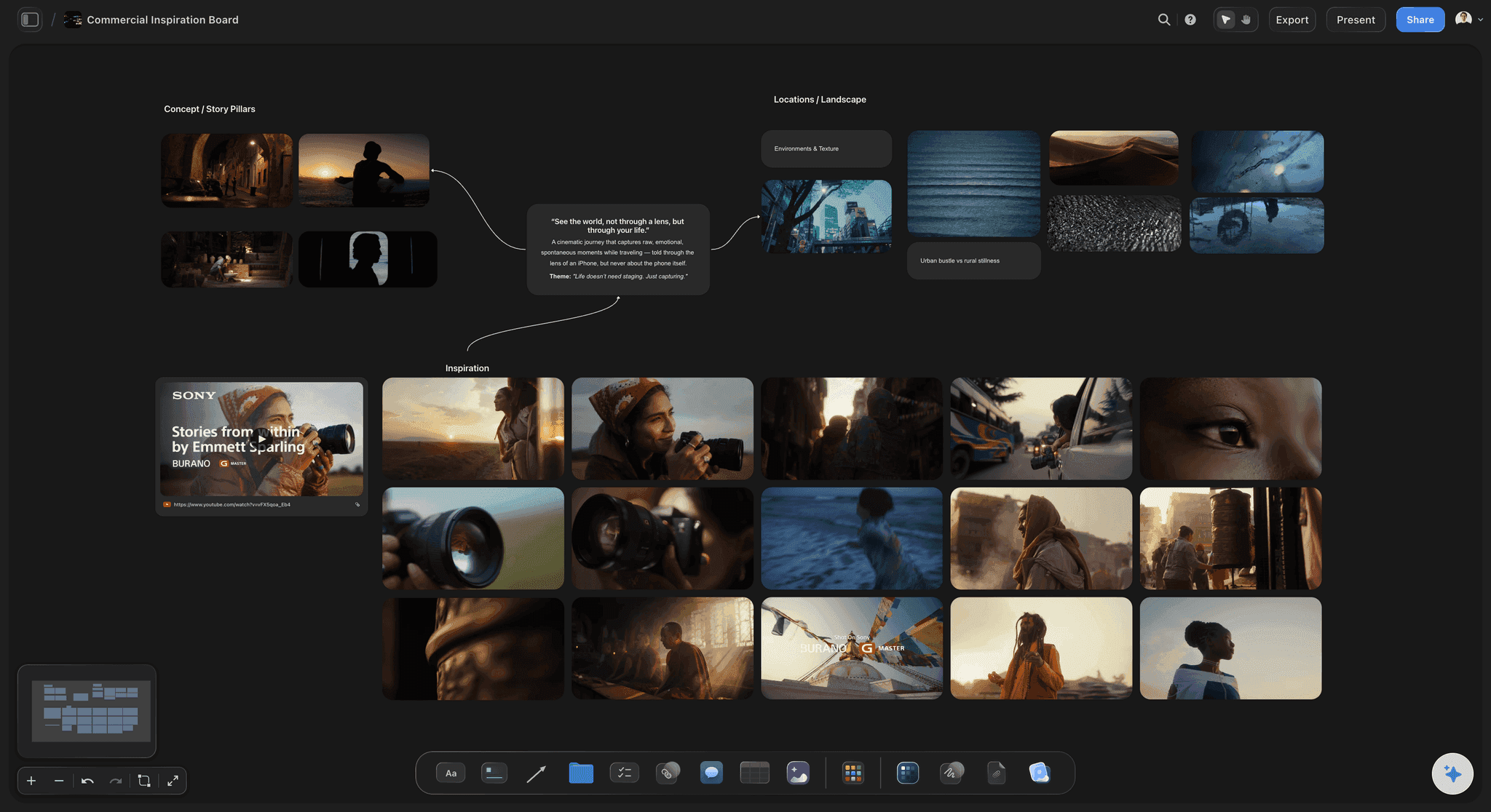
One link, a PDF, or the call
Sent the way the client watches
The client opens the proposal from a view-only link in any browser, and signs in to leave a comment beside a specific key frame or price line. Export the whole board as a PDF for procurement, or step through it fullscreen on the call.
See the client presentation tool →Every proposal kept, ready to reuse.
Each proposal gets its own board, so last quarter's winning pitch is one duplicate away from the next. Storyflow is paid-only during early access, with plans from $7.99 a month billed annually ($9.99 monthly). A free plan launches before the end of 2026, and anyone a paid member invites to a board joins free.
Unlimited proposal boards, video uploads and files on every paid plan
AI that drafts the concept, key frame descriptions, schedule and price table (frame images on Pro and Max)
Tables with currency columns and live totals
View-only links, whole-board PDF export and presentation mode
Built for people with taste
Ten sections, in the order a client decides.
Use this structure whether or not you use Storyflow. Each section answers a question the client would otherwise ask by email, or not ask and hold against you in the edit.
Sections 1 to 4
Why this film, and what it looks like
1. The goal, in their words: What the film has to do, for whom, where it runs and by when, quoted back from the brief call. The common mistake is opening with your services, which tells the client you were not listening.
2. The concept in one line: The idea, the angle and why it serves the goal, plus one past film that proves you can make it. A concept that could be pitched to any brand reads as a template.
3. Treatment-lite: references and key frames: Eight to twelve captioned references for look, pace and sound, and four to six key frames of your film. The mistake is an uncaptioned reference, which every person on the client side reads a different way.
4. Deliverables, counted: Every output with its length, aspect ratio, format, subtitles and delivery method: one 90-second 16:9 film, three 15-second 9:16 cutdowns. "A brand video" is the scope creep you signed up for.
Sections 5 to 7
How it gets made
5. The schedule, worked back from the date: A common shape for a short brand film: two to three weeks of pre-production, one or two shoot days, a first cut ten working days later, two review rounds of five working days each. The mistake is leaving out the client's own review windows, which are where schedules slip.
6. Crew and gear, as what they buy: Who is on set and why, and the kit in plain words: a second camera for the interview, a gimbal for the walk-through, lighting for the office. A list of camera model numbers tells the client nothing.
7. What you need from the client: Location access, people on camera and their release forms, brand assets, one decision-maker and the dates they can review. Delays on a small production often start with something the client owed.
Sections 8 to 10, then the follow-up
The terms, then the price
8. Usage and licensing: Where the film may run (web, social, paid ads, broadcast, internal), for how long and in which territories, and the music licence term, which can be shorter than the client assumes. Price wider usage as its own line.
9. Revisions and exclusions: How many rounds of consolidated feedback on which cut, what counts as a revision and what counts as a change order, and what is not included: raw footage, project files, extra cutdowns, talent fees. Founders forget this section and pay for it in the edit.
10. Three packages, and one next step: Core, Film plus cutdowns and Full, named by what the client gets, each with its line items, total and payment schedule. Close with one next step and the date the prices hold until.
Follow up on the date you named: If the date passes in silence, send one short note restating the next step, one more a week later, then close it. Keep a table on your company board of every proposal: client, date sent, package, and waiting, won or lost.
After the yes
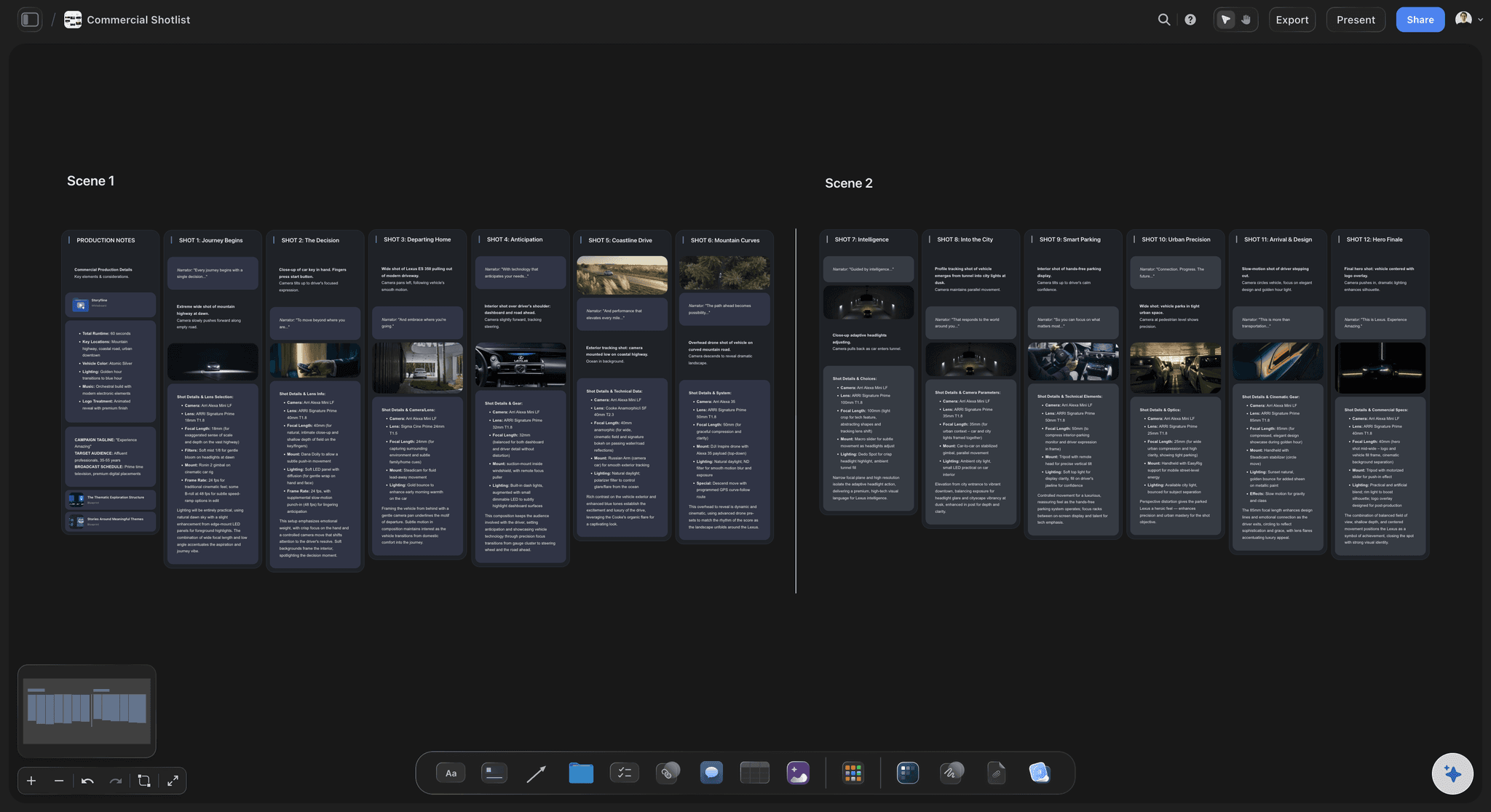
The proposal becomes the production plan
Key frames become the storyboard: The approved frames stay on the board and grow into the full storyboard. Nothing is rebuilt in a second tool.
The concept and key frames become the shot list: The AI's shot list workflow breaks the approved concept into shots. You mark the must-gets and the order.
The agreed proposal stays the record: Leave the approved proposal frames untouched. When a new request arrives in the edit, it is the page you both agreed, and anything outside it is a change order.
A call sheet PDF per shoot day: The AI drafts a call sheet PDF for a shoot day from the board, with blanks where a hospital, parking note or phone number is missing. It does not send it or collect confirmations.
Explore templates for your project
Every template opens as a real, editable board on the infinite canvas. Pick the closest fit and make it your own.
Storyboard
Lay out your shots frame by frame with images and notes, then reorder them until the sequence reads like the finished cut.
One app instead of five
Where Storyflow fits next to HoneyBook, Bonsai and Canva.
Storyflow builds the part of the proposal the client has to see and carries it into production. HoneyBook and Bonsai take the package choice, signature and deposit, and Canva designs a polished deck from a template.
Storyflow
Recommended
Concept, references and key frames on one canvas
AI drafts a call sheet PDF from the agreed plan
Fullscreen presentation mode for the pitch call
Client picks a package inside the proposal
Deposit collected when the client accepts
HoneyBook
Concept, references and key frames on one canvas
AI drafts a call sheet PDF from the agreed plan
Fullscreen presentation mode for the pitch call
Client picks a package inside the proposal
Deposit collected when the client accepts
Bonsai
Concept, references and key frames on one canvas
AI drafts a call sheet PDF from the agreed plan
Fullscreen presentation mode for the pitch call
Client picks a package inside the proposal
Deposit collected when the client accepts
Canva
Concept, references and key frames on one canvas
AI drafts a call sheet PDF from the agreed plan
Fullscreen presentation mode for the pitch call
Client picks a package inside the proposal
Deposit collected when the client accepts
What creators are saying
Join early creators getting structured workspaces and AI that remembers their projects
“Storyflow has sped up my workflow by at least 3x, which means more flow state and more projects I can actually ship. It truly changed the way me and my team create.”

Reilin Joey
Director & YouTuber
“One prompt gets me a structured board. But the tactics are my favorite. I run my YouTube scripts through them and my intros and retention got better. It's amazing.”

Justkay
YouTuber & Freelance Filmmaker
“I used to juggle five apps to plan a project. Now I describe what I am making and get boards, lists, and a schedule. All in one place.”

George
@fernwehchronicles
Video production proposals, answered.
Sections, packages, usage, revisions, payment, and where Storyflow stops.
Storyflow is the video production proposal template for a studio that has to show the film before the fee: concept, key frames, deliverables, schedule, crew, usage and three priced options with live totals, on one board opened by link with no account or sent as a PDF. For the contract, e-signature and deposit that follow, use PandaDoc, Proposify, HoneyBook or Bonsai, and paste the board's link into what they send.
Ten, in the order a client decides: the goal in their words, the concept, references and key frames, the deliverables counted, the schedule, crew and gear, what you need from the client, usage and licensing, revisions and exclusions, and three priced packages with one next step. Company background and past work belong inside the concept, as one film that proves you can make this one, not as the opening page.
Write it within a day or two, while the client's words are fresh. Quote their goal back, pick one concept, pull references and a reference clip, count the deliverables, work the schedule back from their launch date, then price three packages. In Storyflow you paste the call notes and the AI drafts each section on the board for you to rewrite; your taste and your fee stay yours.
Break the cost into lines the client can read: pre-production, crew days, gear, locations and permits, talent, edit, colour, sound, music licence, usage and expenses. Then offer three packages that differ on deliverables, shoot days, revision rounds and usage, not on quality. Leave any cost you have not confirmed blank. In Storyflow each package is a table column with a live total that updates as you edit.
A treatment is the creative idea: the concept, tone, look and structure, often sent alone for a commercial bid. A quote is the price as line items and a total. A proposal carries both, plus the deliverables, schedule, crew and terms. Storyflow builds the proposal and its AI can draft a treatment PDF from the board; your contract tool sends the quote, the contract and the invoice.
Say where the film may run (web, organic social, paid ads, broadcast, internal), for how long, in which territories, and whether the client gets raw footage or project files. Check the music licence term, which can be narrower than the usage you are selling. Price wider usage as its own line, write it in plain words in the proposal, and put the agreed terms in the contract.
Two rounds of consolidated feedback is a common default for a short film: one on the first cut, one on the fine cut. Define a round as one set of notes from one decision-maker, and a change to the approved script or concept as a change order, priced separately. Put extra rounds in Film plus cutdowns and Full rather than giving them away.
Send a range the same day, from Core to Full, and name what moves it: deliverables, shoot days, revision rounds and usage. Say the full proposal follows within two days, with the concept and key frames. A lone number gets compared on price alone, before the client has seen what you would make for it.
It can draft one, and you should rewrite it. Paste your brief-call notes into Storyflow and its AI drafts the concept, key frames, deliverables, schedule and a price table on the board. Its budget workflow builds the table only from costs you give it and leaves a line it cannot price blank instead of guessing your day rate. It can also draft a treatment or one-pager PDF from the board.
No. Storyflow builds and shows the proposal, and plans the production once it is agreed. Contracts, e-signature, deposits, invoices and payment reminders belong in PandaDoc, Proposify, HoneyBook or Bonsai, and review of the cuts with timecoded notes in Frame.io. A pairing that works: the visual proposal in Storyflow, with its link pasted into the contract your paperwork tool sends.
State when you are paid. A common structure is half on signing to hold the dates and half on delivery, with longer jobs split into three stages. Add the rule for a reschedule, the rate for an extra shoot day or revision round, and the date the prices hold until. Your contract tool collects the deposit; Storyflow does not take payments.
Not during early access. Storyflow is paid-only during early access, with plans from $7.99 a month billed annually ($9.99 monthly). A free plan launches before the end of 2026, and anyone a paid member invites to a board joins free. Your client pays nothing to read the proposal.
More from Storyflow
Photography proposal template
Director's treatment template
Corporate video production
Commercial production planning
Film budget planner
Shot list template
Call sheet template
Client presentation tool
Brief to project board
Project brief template
Video production planning
How to scope a shoot before you have a budget
How to build a deliverables list for a video project
Pricing
Video production brief
Design proposal template
Let the client see the film first.
Open a canvas, paste the brief-call notes, and send one link the client can forward. No download.