
Elevated brand work, made with taste
A design proposal template
that wins the job without spec work.
For branding studios and freelance designers: the problem as the client put it, your phases, every deliverable counted and three options priced side by side, on a single board the AI drafts from your discovery-call notes.


Creatives working for these brands already got early access
- Red Bull
- Canon
- Artlist
- Porsche
See how easy it is to get started
Watch a real project come together, from a blank board to a finished plan, clicked through step by step.
Start from a ready-made template
Pick a board to see what you can build, then let AI fill it in. Every template is a real, editable starting point on the same infinite canvas.

Brand Strategy
Define your positioning, values, and voice and connect them into a strategy the team can follow.
What does a design proposal template need to cover?
A design proposal shows a client how you would solve their brand problem, what they get and what each option costs, before anything is designed. Storyflow is an AI visual workspace that lays out your design proposal on one infinite canvas: one board you present on the call, direction references in place of sketches, three options in a table that totals itself, and sections the AI drafts from your notes. Once signed, it becomes the project plan.
Show direction, never designs. Logo sketches in a proposal are spec work: you design for free, before discovery, and the client judges your fee against a guess. Show six to nine direction references instead, such as other identities, type specimens and photography, each captioned with what it says about the territory. Concept routes come after the strategy is agreed.
Count every deliverable. "A new brand identity" has no edges, so write what it is made of: four logo versions (primary, stacked, wordmark, icon) in full colour, black and white, as SVG, PDF and PNG; five colours with HEX, RGB, CMYK and Pantone values; two typefaces; a 24-page guidelines document; and each application by name.
Make the options differ in scope, not in care. Each step up adds something countable: a third concept route, a workshop, another round of refinement, more applications. Build the middle option from the brief as the client described it, so the smaller one shows what cutting costs and the larger one shows what more buys.
Ultra fast from brief to board
From the discovery call to a proposal they can sign.
The client's own words do half the writing.
01
Ask what the brand has to do
Find out why the brand has to change now, who signs off, the launch date, the budget range and which existing assets survive the rebrand. Drop the discovery-call notes onto the board and the AI turns them into the problem statement, the phases, the deliverables and a first timeline, which you then edit line by line.
02
Choose the direction references
Show the territory with references, never sketches of their logo. Caption each reference with what it says, so the client reacts to a direction rather than a drawing.
03
Price three options in one table
One row per phase and deliverable, one currency column per option, and a total under each. Mark any line still waiting on a supplier's quote, such as printing, instead of inventing a figure.
04
Walk them through it, then keep the board
Present the frames fullscreen on a thirty-minute call and end on the single action you need from them. When the contract is signed, the same board becomes the project plan: the phases get dates and the client's tasks get owners.
Built for the call, kept for the project.
The part the client has to understand before anything is signed.

Their problem, then your process
Five phases, each closed by a decision
The problem quoted back from the call, then discovery, strategy, concepts, refinement and delivery, each with what it hands over and the choice the client makes before the next phase starts.
See the brand identity project plan →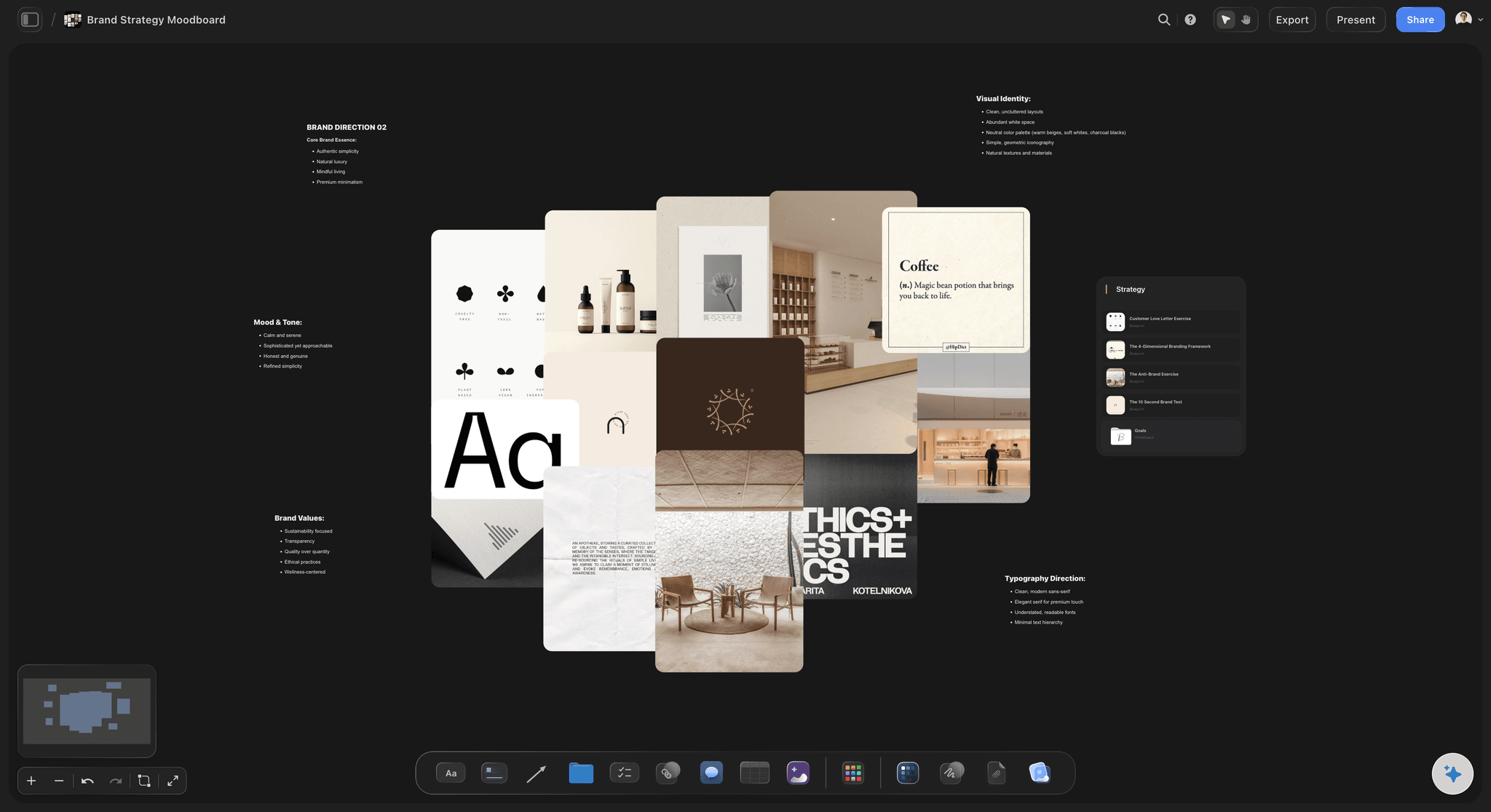
Direction without spec work
Direction references, each with a caption
Identities from other categories, typefaces and photography grouped in one frame, with a line under each saying what it suggests. The client sees the territory you would explore without a single free sketch of their logo.
See the brand moodboard maker →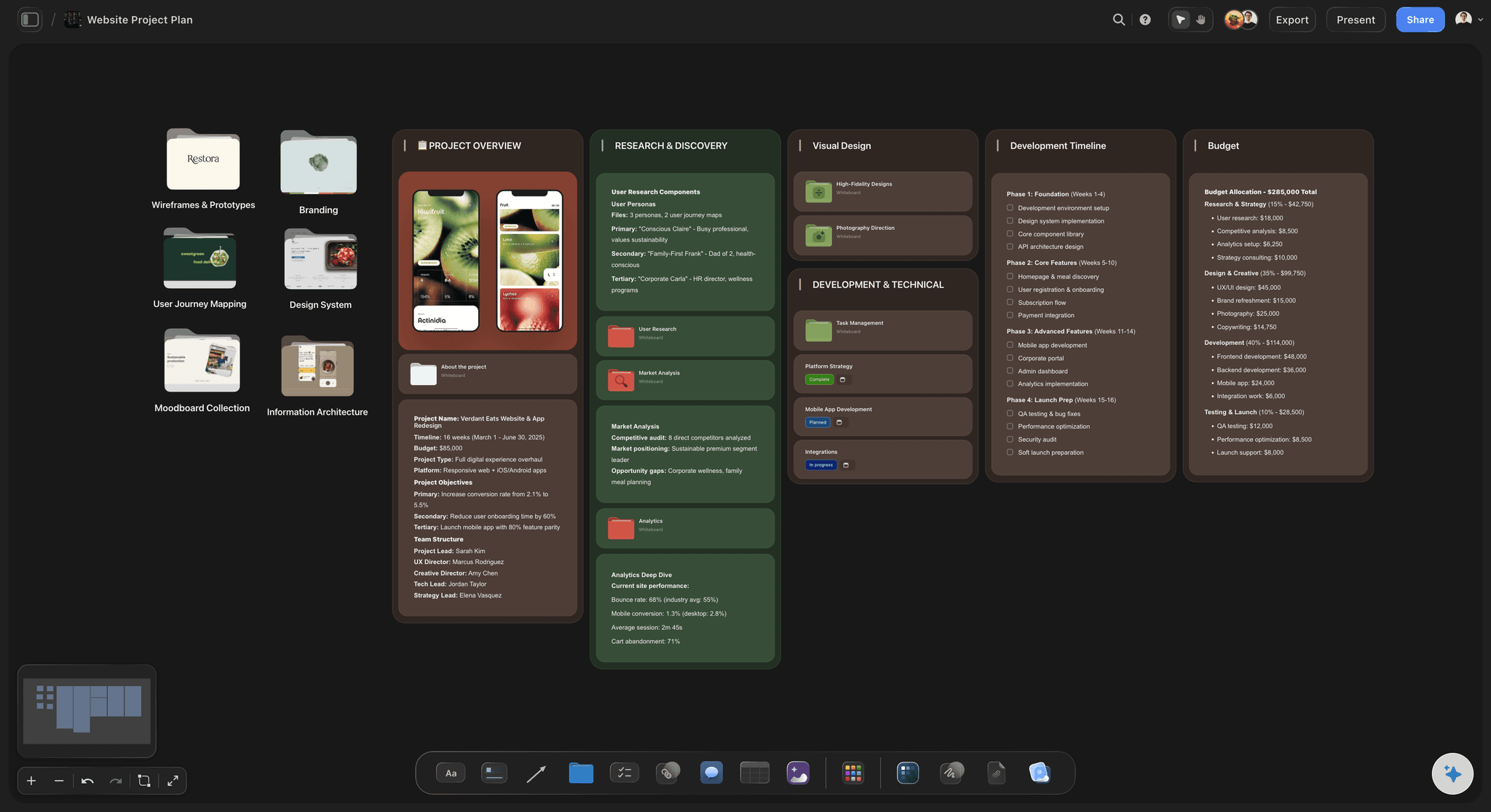
Options that total themselves
Three options in one priced table
Rows for each phase and deliverable, a currency column per option and a Sum footer under each, so moving the guidelines into the second option updates every total at once. The AI can export the table as an Excel file whose totals stay live.
See the scope of work template →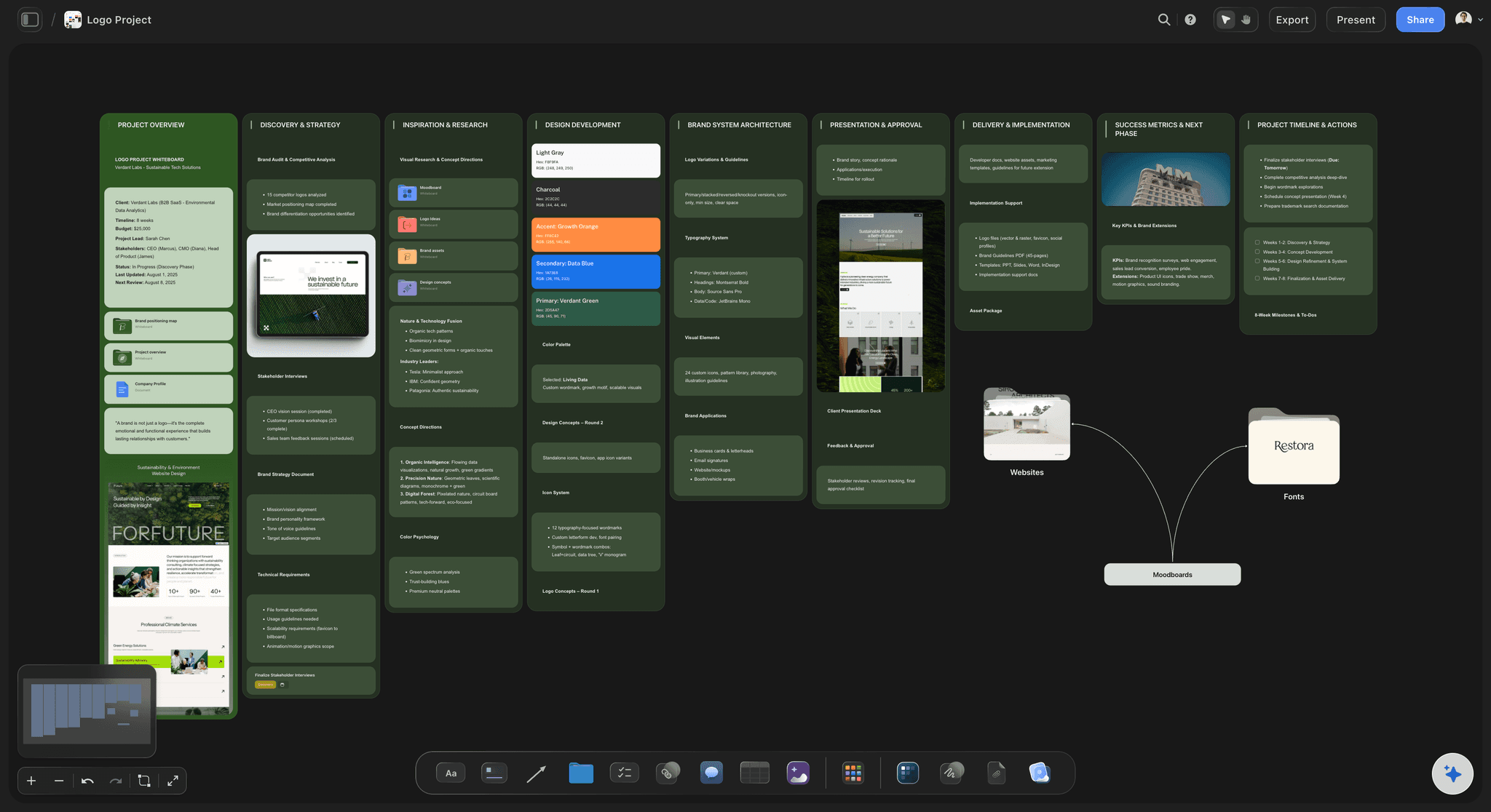
The call, the link and the file
Presented once, reread by whoever pays
Walk them through it fullscreen on the call and stop on the options. The client opens the board by link with no account, forwards it to whoever shares the decision, and signs in to comment beside a phase or an option. A whole-board PDF covers the finance lead who wants a file.
See the client presentation tool →One board per proposal, and the signed ones become templates.
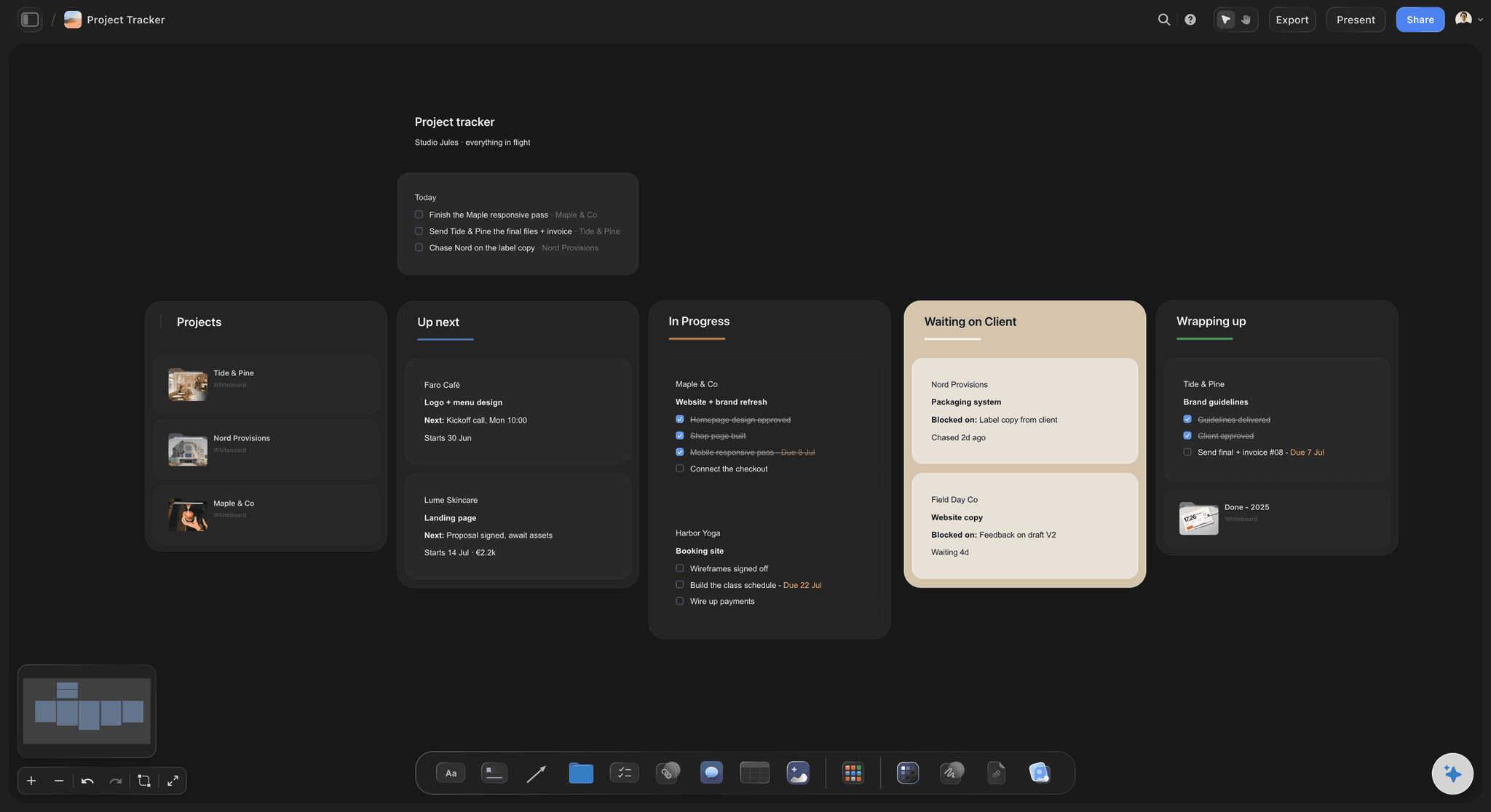
A signed proposal is the best draft of the next one: copy its board, keep your phases, options and terms, and change the brief and the numbers. Storyflow is paid-only during early access, with plans from $7.99 a month billed annually ($9.99 monthly). A free plan launches before the end of 2026, and anyone a paid member invites to a board joins free.
Unlimited proposal boards and image uploads on every paid plan
AI that writes the first draft of every section
Tables with currency cells and a live total for every option
Presentation mode for the call and whole-board export for the file
Built for people with taste
What each part of the proposal has to settle.
A common shape for a focused identity job. Cut a section a small job does not need, but keep the terms.
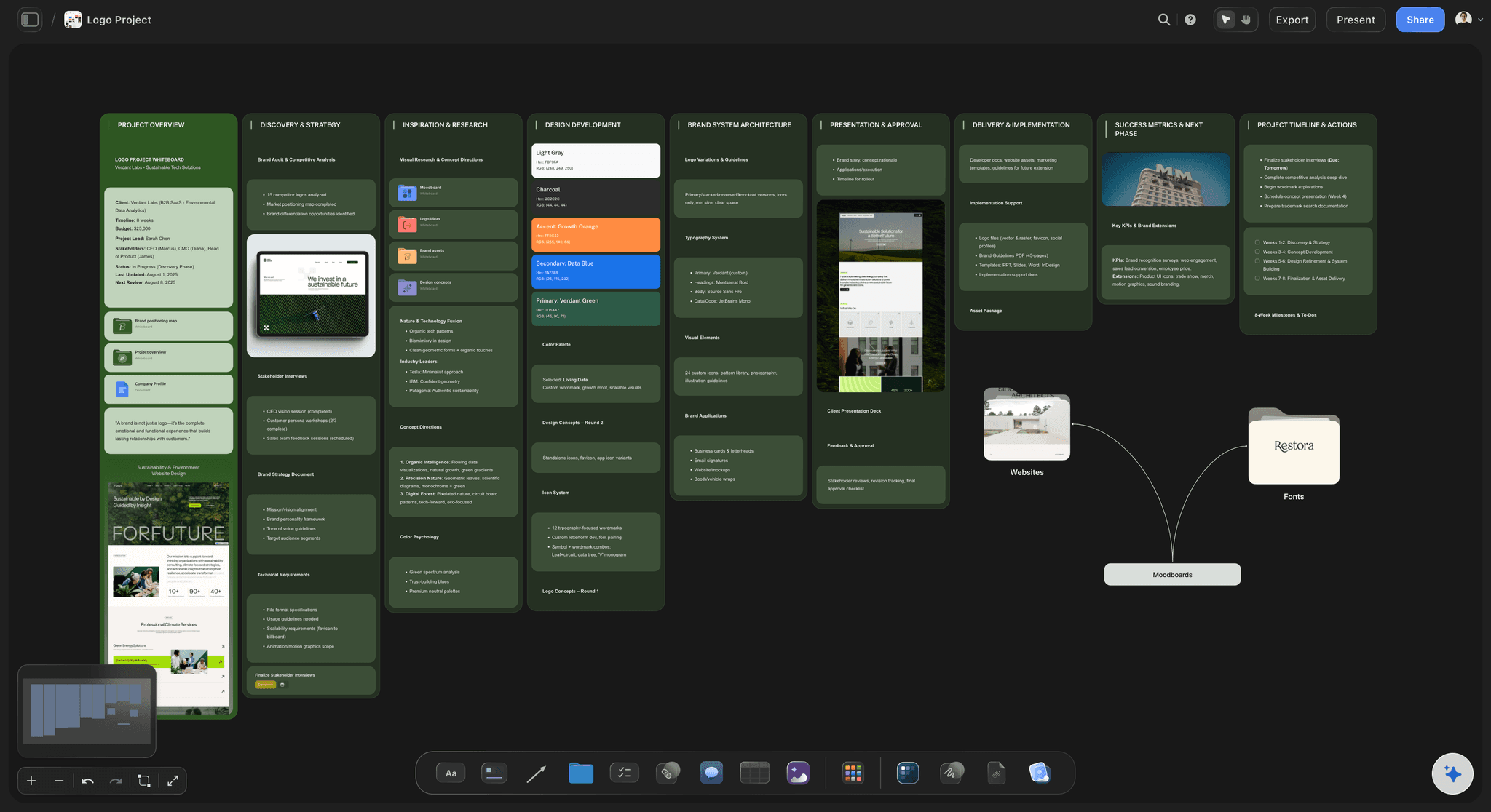
Sections 1 to 3
The brand problem and your route through it
1. The problem, in the client's words: Quote back why they need a brand now, who it has to win and what happens if nothing changes. Their words matter because the founder rereads this page to decide, and should recognise their own problem in it.
2. The approach, as five phases: Discovery, strategy, concepts, refinement and delivery, each with its length, what it delivers and the decision that closes it. Clients buy a process they can follow, not a list of hours.
3. Direction references: Six to nine captioned references that set the territory, with no sketches of their mark. If the client asks to see logos first, offer a paid discovery phase instead of free concept routes.

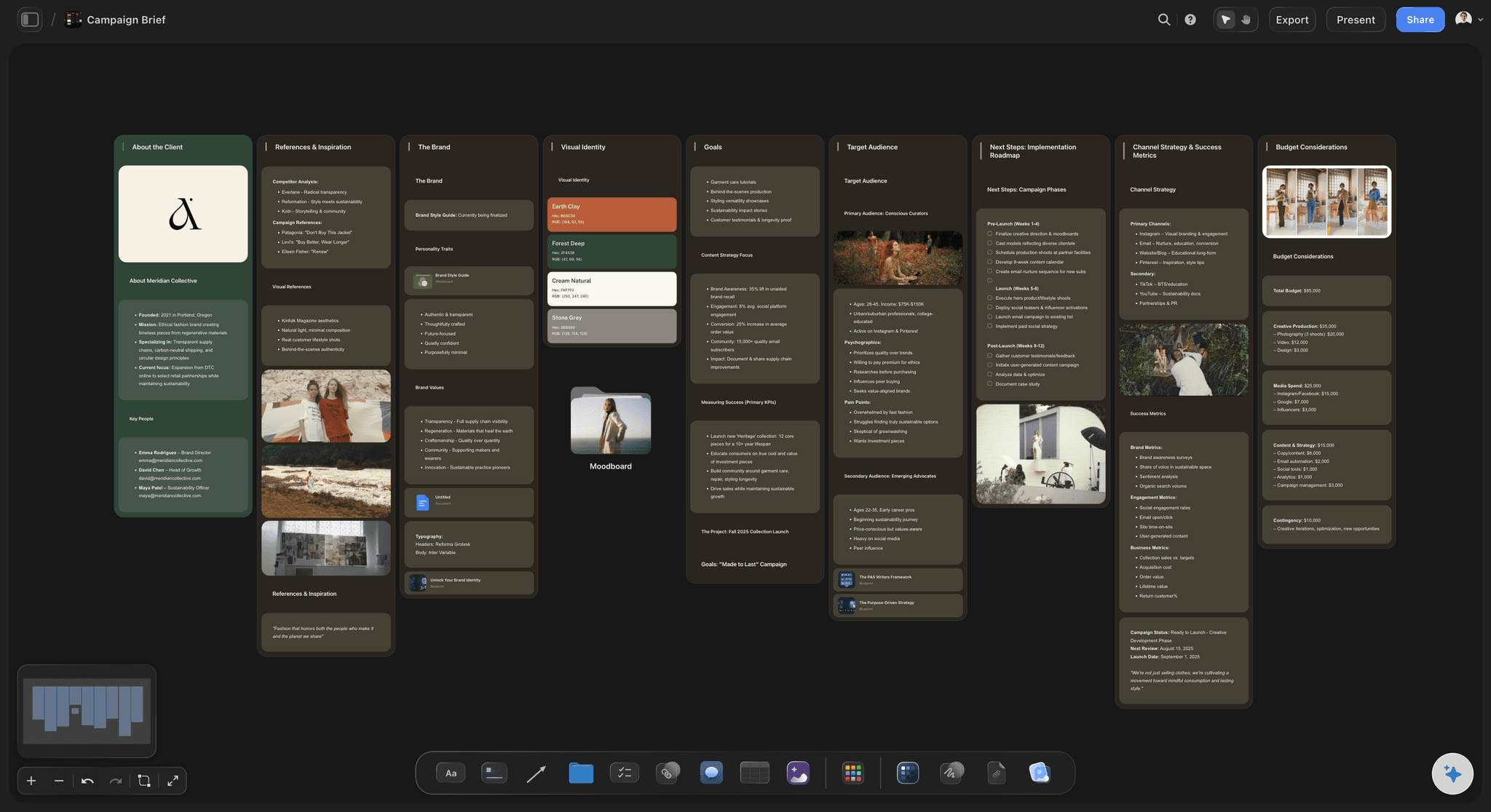
Sections 4 to 6
What they get, when, and what you need from them
4. The deliverables list, file by file: Each logo version with its colourways and file formats, the palette with its values, the typefaces, the guidelines page count and every application by name. Anything described as "assets" or "collateral" will be read as everything.
5. The timeline, with their review windows: A focused identity often runs eight to twelve weeks, with three to five working days after each presentation for the client's merged notes. Put those windows in the schedule so a late reply moves the date visibly, not silently.
6. What the client provides: One decision-maker, questionnaire answers, existing logo files and guidelines, three to five people for interviews, and copy for the applications. Each item gets a date, and the timeline starts when the last one arrives.
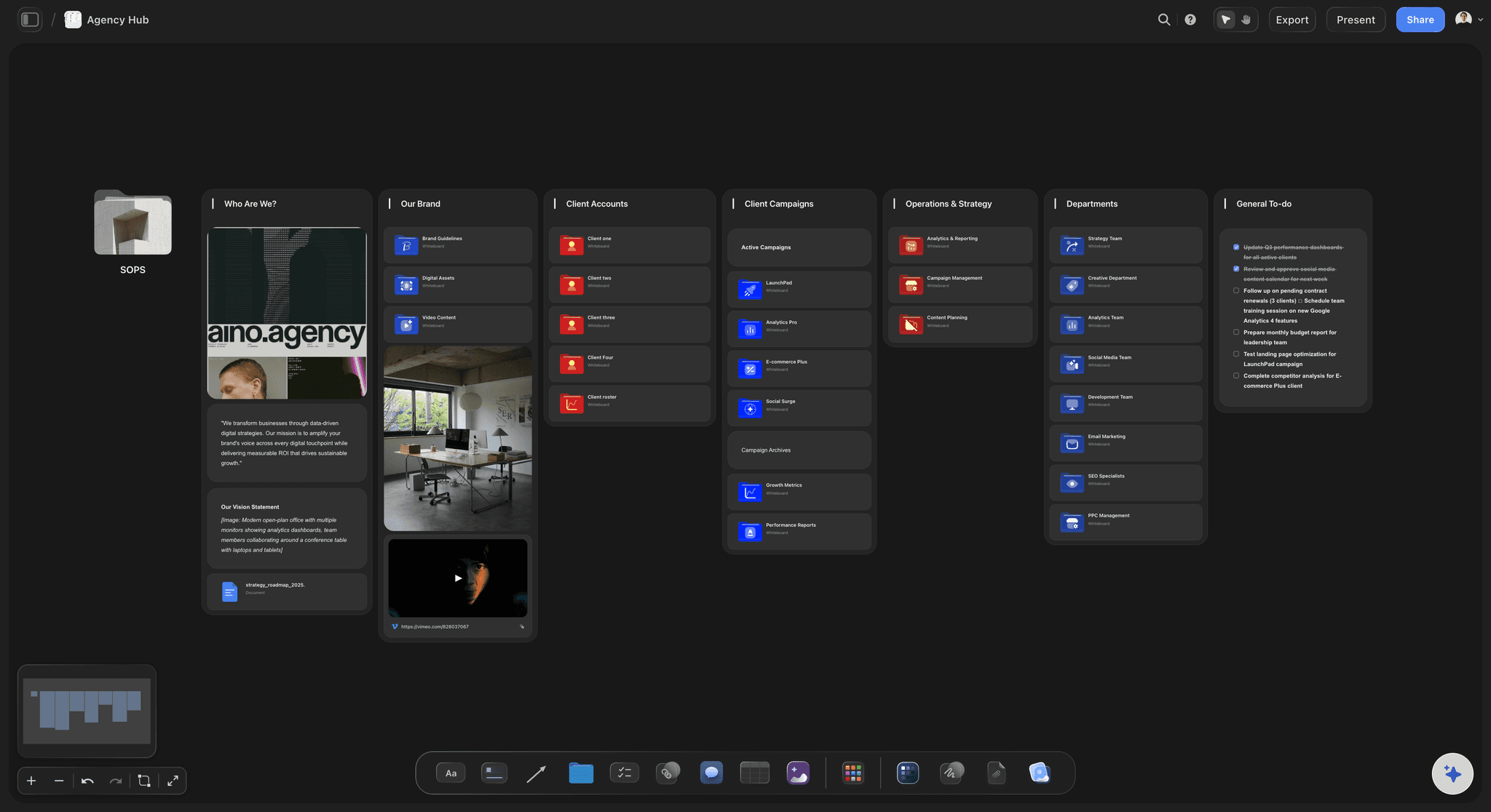
Sections 7 to 9
What it costs, on what terms, and what happens next
7. Three options, named by what they get: Identity core covers discovery, a strategy summary, two concept routes, two rounds of refinement, the logo suite, the palette and the type pairing. Identity plus guidelines adds the guidelines document and five applications, and Full brand system adds a stakeholder workshop, a third concept route and a template kit.
8. The terms, in plain words: Who owns what and when, what stopping costs, when each payment falls due, and what the fee covers in routes and rounds. The checklist below is the minimum; the contract repeats it in legal language.
9. One next step, and how long the prices hold: End with the single action that starts the job, such as choosing an option and booking the kickoff, and a date thirty days out after which you requote. A proposal without a next step becomes a document the client means to get back to.
The terms checklist
Four terms a design proposal cannot skip
When ownership moves: A common term is that rights in the final, chosen design pass to the client once the last invoice is paid, and the routes they did not choose stay with you; have the contract wording reviewed. Say that fonts and stock images are licensed in the client's name, and whether you may show the work in your portfolio.
A kill fee, agreed before work starts: If the client stops the project, they pay for the work done to date plus the agreed fee for stopping, commonly a quarter to half of the fee still outstanding. Agreeing it now keeps a cancelled job from turning into a negotiation.
Payment stages tied to phases: A common split for a job this size is 40 percent to book the start date, 30 percent when a concept route is chosen and 30 percent before final files. In that shape, the final files and the ownership transfer both wait on the last payment.
Routes, rounds and what counts as a change: State how many concept routes you present and how many refinement rounds follow, and define a round as one merged list of notes from the person who decides. A new concept route after one is chosen is a change order, priced before it starts.
Explore templates for your project
Every template opens as a real, editable board on the infinite canvas. Pick the closest fit and make it your own.
Brand Strategy
Define your positioning, values, and voice and connect them into a strategy the team can follow.
One app instead of five
Storyflow, PandaDoc, Bonsai or Figma for a design proposal?
PandaDoc and Bonsai are built for signing, payment and knowing when the document was read. Figma lays out a polished page. Storyflow shows the direction and the priced options, and the board carries on as the plan for the job.
Storyflow
Recommended
Direction references on a visual canvas
Option prices that total themselves
Accepted proposal becomes the project plan
Client accepts it online
Pixel-precise page layout
PandaDoc
Direction references on a visual canvas
Option prices that total themselves
Accepted proposal becomes the project plan
Client accepts it online
Pixel-precise page layout
Bonsai
Direction references on a visual canvas
Option prices that total themselves
Accepted proposal becomes the project plan
Client accepts it online
Pixel-precise page layout
Figma
Direction references on a visual canvas
Option prices that total themselves
Accepted proposal becomes the project plan
Client accepts it online
Pixel-precise page layout
What creators are saying
Join early creators getting structured workspaces and AI that remembers their projects
“Storyflow has sped up my workflow by at least 3x, which means more flow state and more projects I can actually ship. It truly changed the way me and my team create.”

Reilin Joey
Director & YouTuber
“One prompt gets me a structured board. But the tactics are my favorite. I run my YouTube scripts through them and my intros and retention got better. It's amazing.”

Justkay
YouTuber & Freelance Filmmaker
“I used to juggle five apps to plan a project. Now I describe what I am making and get boards, lists, and a schedule. All in one place.”

George
@fernwehchronicles
What designers ask before they send a proposal.
Sections, options, spec work, ownership and kill fees, as clients ask about them.
Storyflow. A design proposal has to show a direction without designing the client's logo for free, and one Storyflow board holds their problem, five phases, captioned direction references, every deliverable counted and three options with live totals. You present it on the call; the client opens it by link with no account or reads it as a PDF, and once signed it runs the job. PandaDoc, Bonsai, HoneyBook or Dubsado handle the contract, e-signature and deposit.
Nine sections: the problem in the client's words, the approach as five phases, direction references, deliverables counted, the timeline with the client's review windows, what the client provides, three options, the terms and one next step. Add two or three past projects that solved a similar problem rather than a portfolio, because a client scanning logos starts picturing their own in someone else's style.
No. Concepts before discovery are spec work: you design unpaid, without the strategy that should shape the work, and the client compares your fee with a guess. Show a handful of captioned direction references and two or three past projects instead. If a client insists on seeing ideas first, sell a paid discovery phase with a strategy and a moodboard direction as its deliverables.
As three options that differ in scope, each built from line items the client can read: discovery, strategy, concept routes, refinement rounds, the logo suite, guidelines, applications and project management. Base the middle option on the brief as described, the smaller one without guidelines and the larger one with a workshop and a template kit. In Storyflow the options sit side by side as currency columns, and moving the stakeholder workshop from one option to another updates every total.
Two or three concept routes, then two rounds of refinement on the chosen one, is a common shape. Fewer than two leaves nothing to compare, and more than three spreads your time across routes you would not all recommend. Write down what a round is, one merged list of notes from the decision-maker, and price a new concept route after one is chosen as a change order.
When the contract transfers the rights. A common term is that rights in the chosen, final design pass to the client on final payment, while unchosen concept routes and working files stay with the studio unless bought, and fonts and stock images are licensed separately in the client's name. Say whether you may show the work in your portfolio, and have the wording reviewed by a lawyer where you work.
It is what the client pays if they stop the project partway: the work done to date, plus a fee for the time you reserved, commonly a quarter to half of the remaining fee. Put it in the proposal so the client sees it before signing, and repeat it in the contract. A deposit that covers the first phase does part of the same job.
Stages tied to phases. For an identity job of eight to twelve weeks, one workable split is 40 percent on booking, 30 percent at route selection and 30 percent before final files. Smaller jobs often split in half, on signing and on delivery. Either way, many studios release final files only after the last payment.
Usually not. A signed proposal can bind both sides, but it is written to persuade: it shows you understood the problem and lets the client pick an option. Many studios follow it with a contract that sets the terms in legal language, and a scope of work listing the deliverables and rounds, once an option is chosen.
The structure, yes; the judgement, no. Paste your discovery-call notes into Storyflow and the AI lays out each section on the board, from the problem to a price table, and its planner can work the schedule back from the launch date. When a client wants a document, it can write the proposal as a Word file or a proposal PDF. Your rates and your taste stay yours.
Outside Storyflow. Storyflow builds and presents the proposal and runs the project after the yes, but it does not send contracts, collect e-signatures, take deposits or send invoices. PandaDoc and Bonsai handle signing and payment on proposals, and HoneyBook and Dubsado combine proposals, contracts and invoices for client businesses. Put the board's link in the email that carries the contract, so the client signs with the direction and options in front of them.
Not during early access. Storyflow is paid-only during early access, with plans from $7.99 a month billed annually ($9.99 monthly). A free plan launches before the end of 2026, and anyone a paid member invites to a board joins free. Opening your proposal costs the client nothing.
More from Storyflow
Brand identity project plan
Brand identity presentation
Scope of work template for creative agencies
Creative agency pitch deck
Photography proposal template
Video production proposal template
Design brief template
Creative client onboarding
Planning client projects as a one-person studio
Client presentation tool
Brand discovery workshop
Brand moodboard maker
Storyflow for freelancers
Pricing
Creative direction deck
RFP response plan
Send the proposal while the call is still fresh.
Paste your notes, set out the phases and the options, and walk the client through one board.