
Social plans done ultra fast, done well
An influencer marketing plan
where the rights are written down before the shoot.
One board holds the brief each creator reads, a table of what they are making, the four lines that say where you can use it, and every date between the first message and the post going live.


Creatives working for these brands already got early access
- Red Bull
- Canon
- Artlist
- Porsche
See how easy it is to get started
Watch a real project come together, from a blank board to a finished plan, clicked through step by step.
Start from a ready-made template
Pick a board to see what you can build, then let AI fill it in. Every template is a real, editable starting point on the same infinite canvas.

Content Calendar
Plan what you post and when across every channel on one calendar.
What goes in an influencer marketing plan template?
An influencer marketing plan template holds four things: the brief each creator reads, a list of exactly what they are making, the usage rights that say where you may put it and for how long, and the dates that get it from a first message to a live post. Storyflow is an AI visual workspace that plans the whole campaign on one infinite canvas: the creator brief, the deliverables table, the rights lines and the dates.
The brief is the part most brands get wrong, usually by sending too much of it. A creator brief that works fits on one screen and has these lines on it: the campaign name, who the product is for, the one idea, the sentence that must be said out loud, the claims nobody may ever make, the deliverables with counts, what happens in the first three seconds, the link and the call to action, the tags and the disclosure wording, when the product arrives, when the first cut is due, when it goes live, the rights being bought, the fee and payment terms, and the one person who approves. Fifteen lines. Anything longer gets skimmed.
Count the deliverables in the plan, not in the email. Write it as a number and a length: one video of thirty to forty five seconds, three stories with a link on them, one photo for the feed, the raw files, and one round of changes. A brief that asks for content is a brief that produces one post and an argument. A brief that asks for those five items produces those five items, and the creator can price it properly because they know how long it takes.
Write the rights down in four lines, before anyone films anything. Where the creator may post it and for how long. Where you may post it and for how long. Whether you may put money behind it, on whose handle, in which countries, and for how many days. Whether they may work with a competitor, and for how long they may not.
Here is a real shape for those four lines: the creator keeps it on their own channels with no end date, you may use it on your own channels for twelve months, you may run paid promotion from the creator's handle for ninety days in the UK and Ireland, and they take no skincare brand for thirty days after going live. Change any of those four and the fee changes too, which is exactly why they belong in the plan and not in a reply thread.
Ultra fast from brief to board
From a shortlist to a post that is live.
The same board carries the brief, the rights and the dates.
01
Put the shortlist somewhere you can compare it
One row per creator: their handle, what they charge, what you are asking for, how close their audience is to yours, and whether they have posted for a competitor. Give the fee column a currency and a Sum footer so you can see the whole spend while you are still choosing.
02
Build the brief they will actually read
Paste your product page and ask the AI for a first brief. It writes the one idea, the line to say, the claims to avoid and the deliverables. You fix what it got wrong, then add three reference posts as pictures so the creator can see the tone instead of guessing it.
03
Write the rights and the dates next to the work
Four lines for the rights, and a table for the calendar: product shipped, product arrived, first cut due, changes back, live date. The creator opens the link and sees the whole thing. If they want to leave a note on one line, they sign in and comment on that line.
04
Watch it land, then keep the board
Mark each row as it goes live and drop the finished posts on the board beside the brief that produced them. Next quarter you start from this board instead of a blank one, with the creators who delivered already at the top.
The brief, the deliverables, the rights and the calendar.
Storyflow plans the campaign. Finding creators, paying them and counting sales stay in the tools built for that.
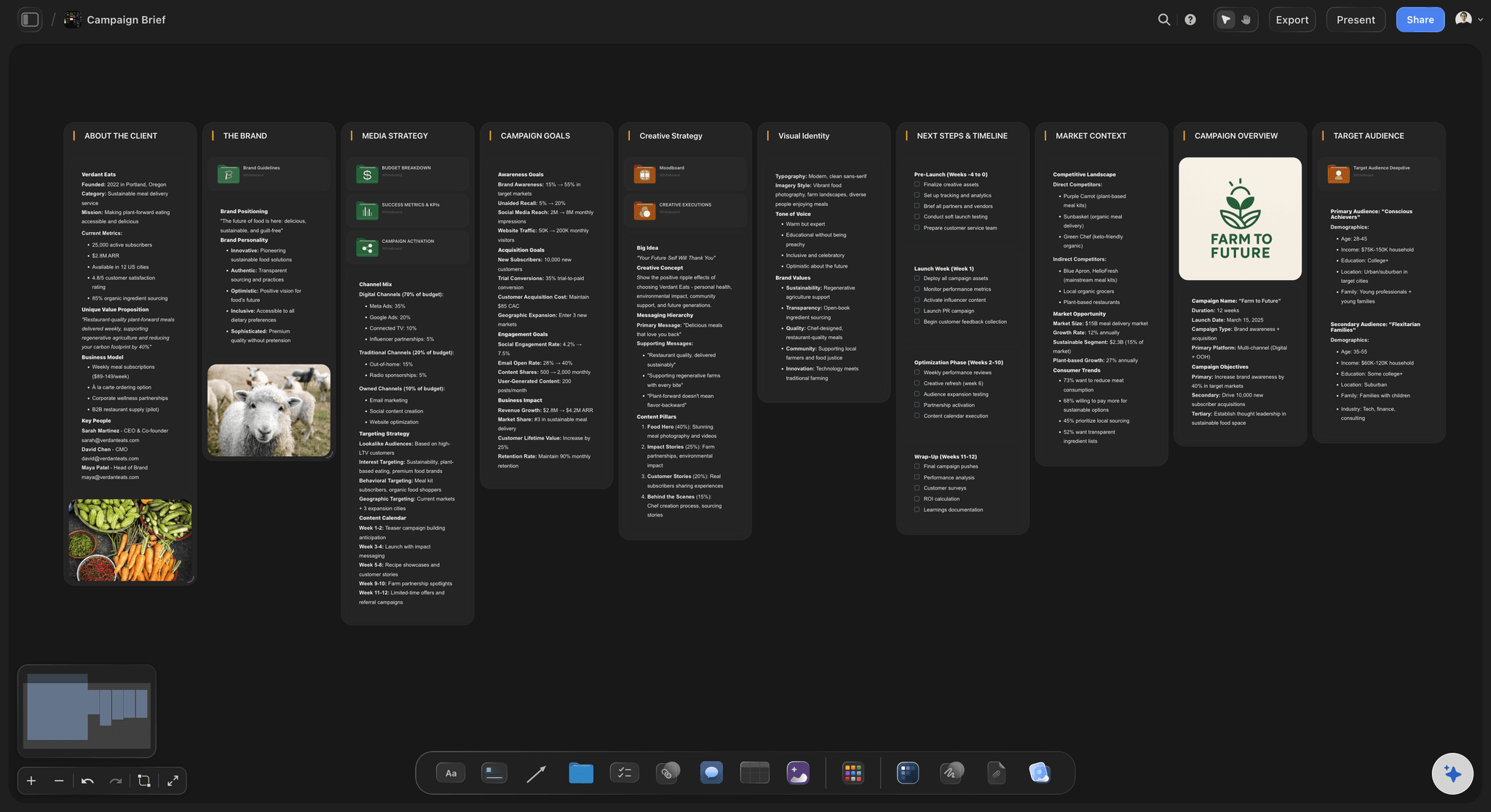
One screen, fifteen lines
A brief a creator can read on their phone
The one idea, the line that must be said, the claims nobody may make, the deliverables with counts, and the first three seconds. Three reference posts sit beside it as pictures, so tone is something they can see rather than a word like playful.
See the campaign brief template →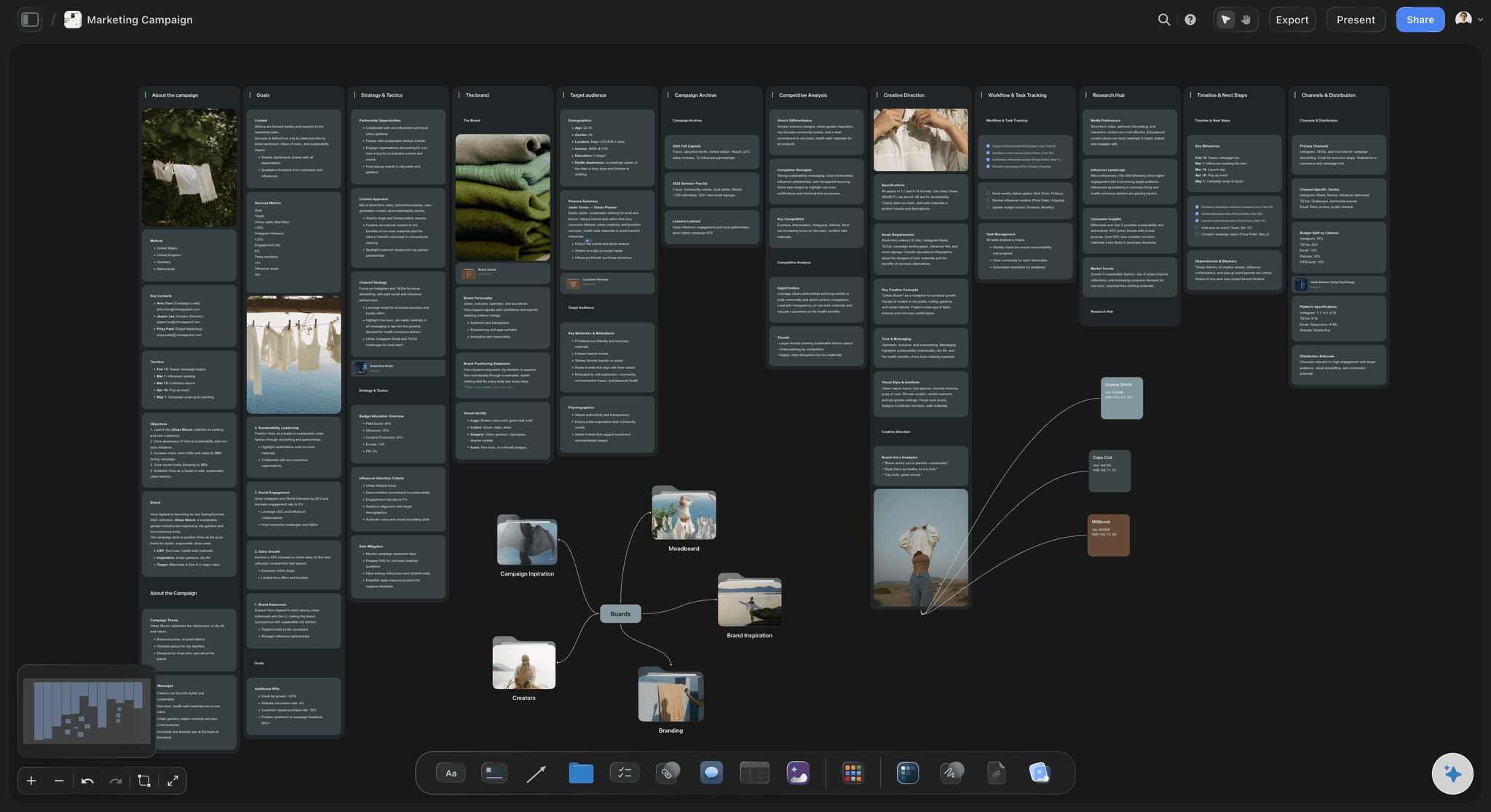
What you are actually buying
Deliverables counted, priced and totalled
One row per item, with the length, the channel, the fee and who is approving it. Give the fee column a currency and a Sum footer, and the total changes when you add a creator or drop a story from the package.
See the marketing campaign board →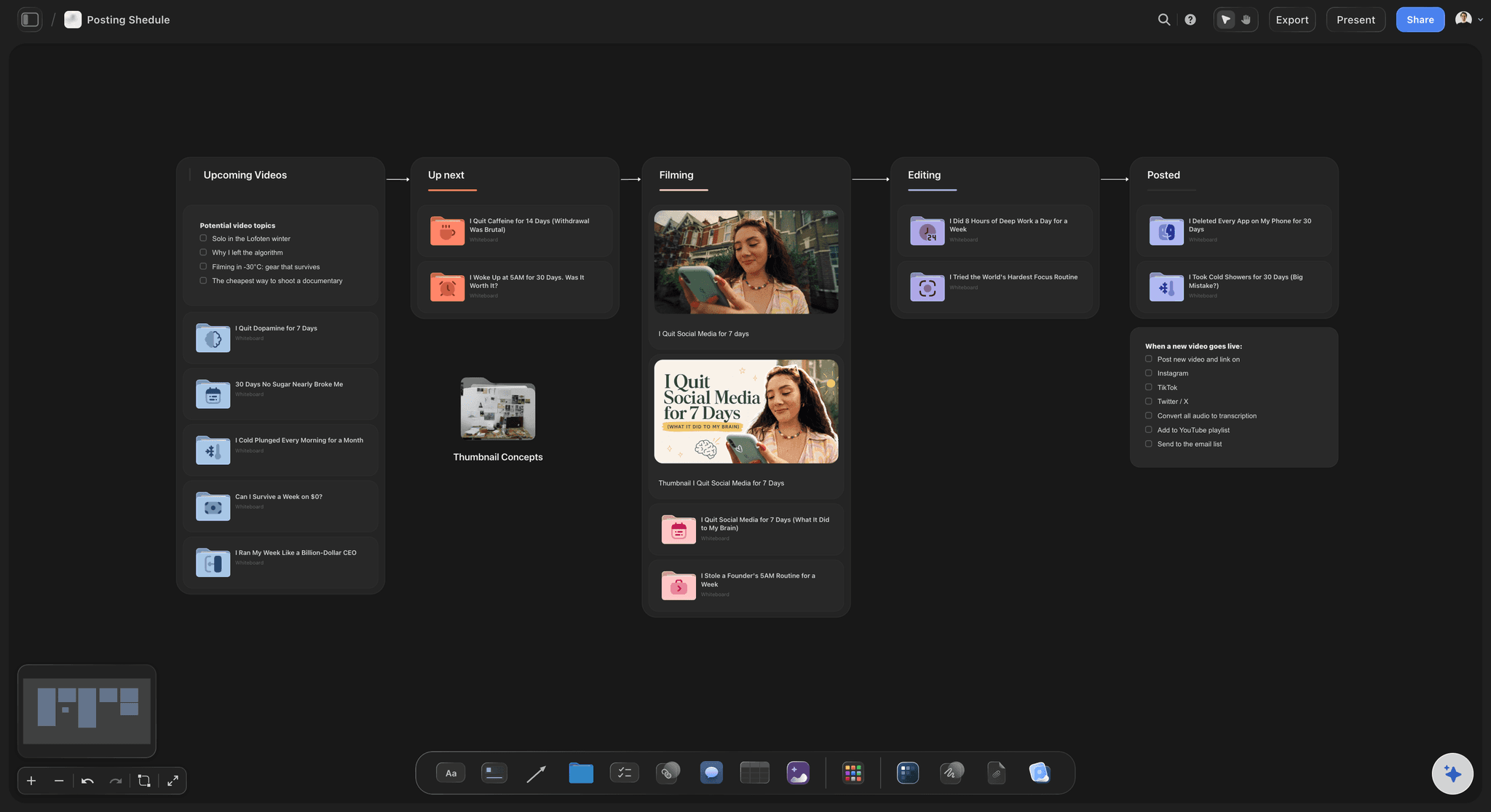
Dates that do not slip quietly
Every step from the brief to the live post
Product shipped, product arrived, first cut, changes, live. Lay them out on a calendar so you can see the week the whole shortlist is filming at once, which is the week the samples always run out.
See the posting schedule board →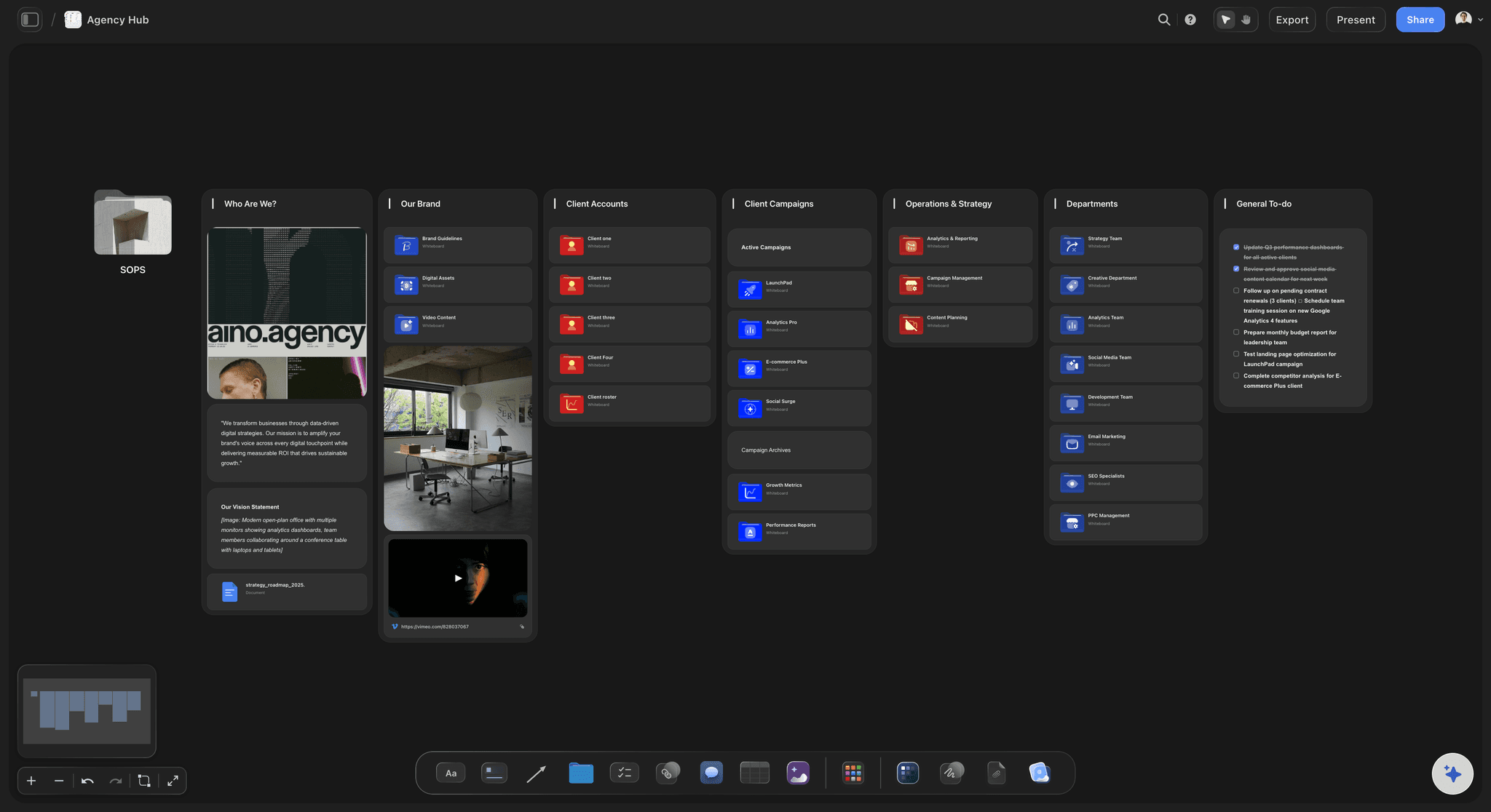
Eight creators, one link each
They read it without signing up
A view-only link opens in any browser with no account, so a creator never has to join a tool to read their brief. If they want to leave a question on a line, signing in lets them comment on that exact line instead of sending an email you have to match up later.
See the agency hub board →Last quarter's campaign is still open.
Each campaign keeps its own board, so the brief that produced your best post is still there to copy instead of rewritten from memory. Storyflow is paid-only during early access, with plans from $7.99 a month billed annually ($9.99 monthly). A free plan launches before the end of 2026, and anyone a paid member invites to a board joins free.
Unlimited boards, image uploads and files on every paid plan
Invite the freelance creator manager to one board without buying them a seat
200+ Tactics to start the brief when the page is blank
Whole-board PDF export for the brief pack and the readout
Presentation mode for the campaign review, with no export first
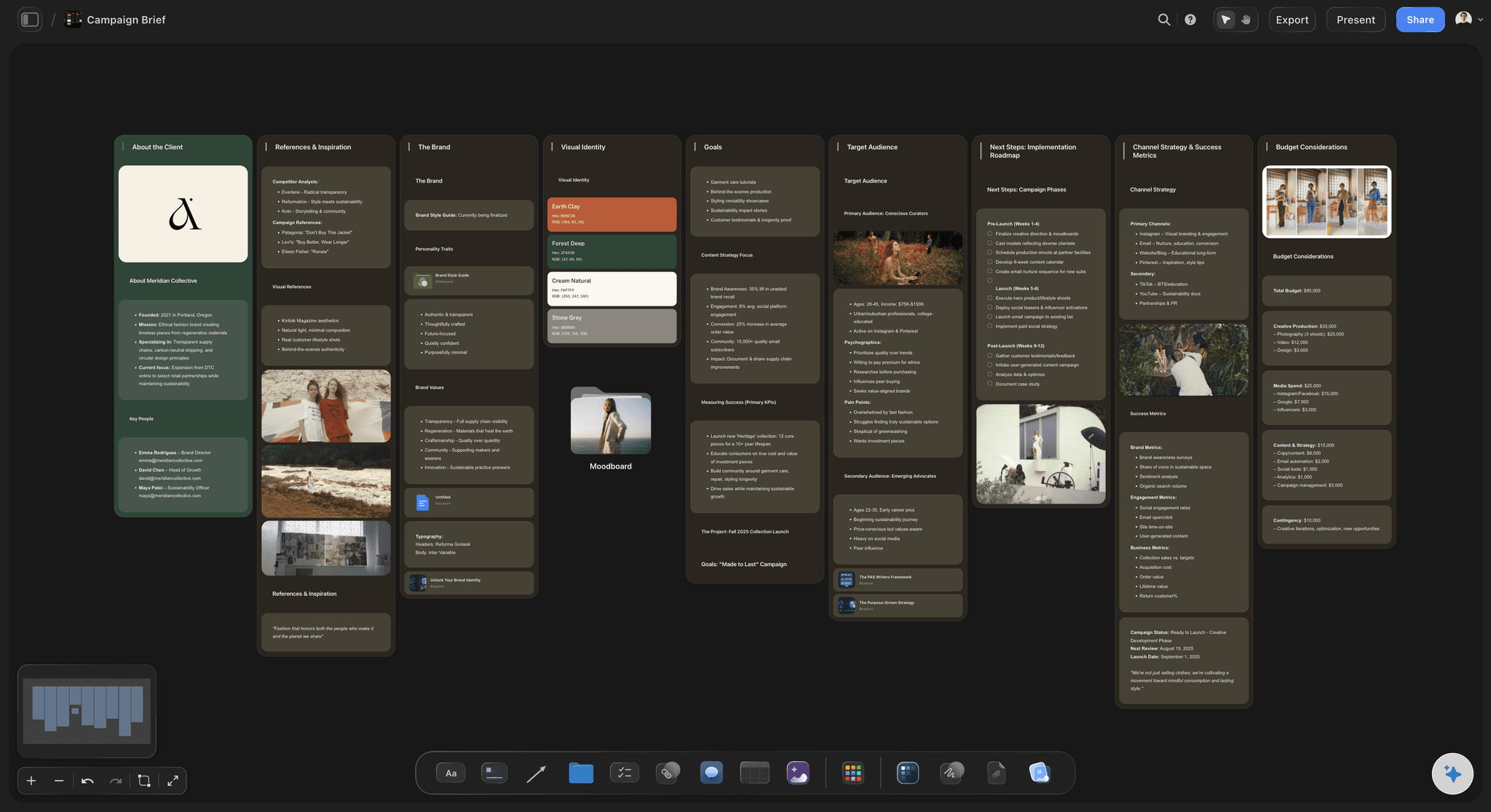
Built for people with taste
The three ways creator campaigns come apart.
None of them are the creative. They are all things somebody meant to write down.
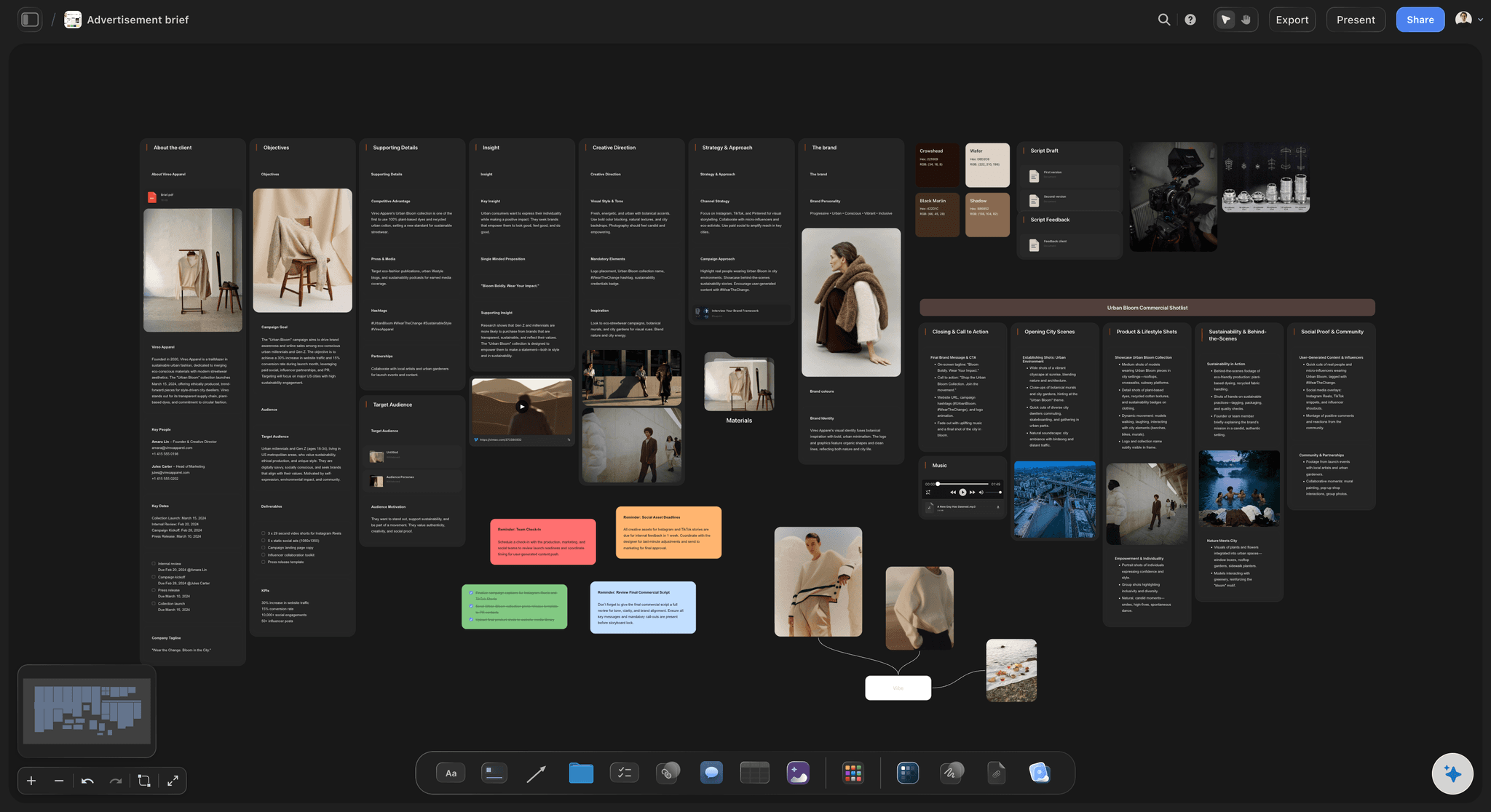
The brief
The creator guessed, and guessed wrong
One idea, said once: A brief with three ideas in it gets a post that has none of them. Put the single idea at the top in one sentence, and everything under it either serves that sentence or comes out.
The line to say and the claims to avoid: Give them the sentence you need said out loud, and the short list of things nobody may ever claim about the product. That second list is what keeps the post up after legal reads it.
Tone shown, not described: Drop three posts you like onto the board and say what is right about each one. A creator can match a picture. Nobody can match the word premium.
The first three seconds are their own line: Write what has to happen before anyone decides to keep watching. Leave it out and you get a five second logo intro on a platform where nobody waits five seconds.
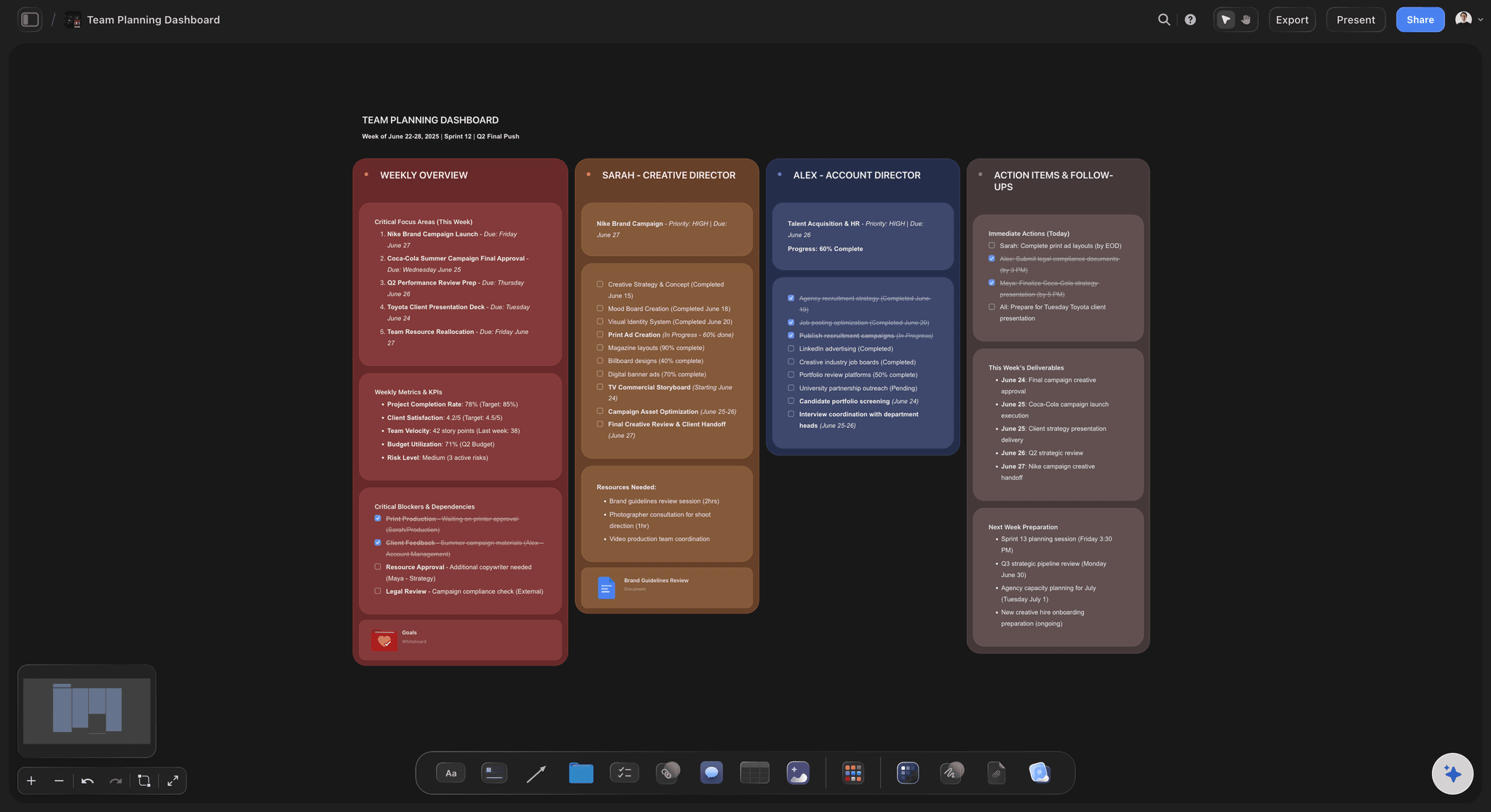
The rights
You wanted to run it as an ad and could not
Four lines, agreed before filming: Their channels, your channels, paid promotion, and whether they may take a competitor. Each line has a length of time on it. A right with no end date written next to it is a fight waiting to happen.
Paid promotion is priced separately: Running the post as an ad from the creator's own handle is a different thing from them posting it, and it costs differently. Decide it now, while the fee is still being agreed, not in month three when it is working.
The raw files are an item, not a favour: If you want the unedited footage, it goes in the deliverables list with a price. Asking after the edit is delivered is how a good relationship turns into an awkward one.
The music is the trap: A track that is free for a creator to post is often not free for a brand to run as an ad. Put the sound question in the brief so it is answered before the edit, not after.
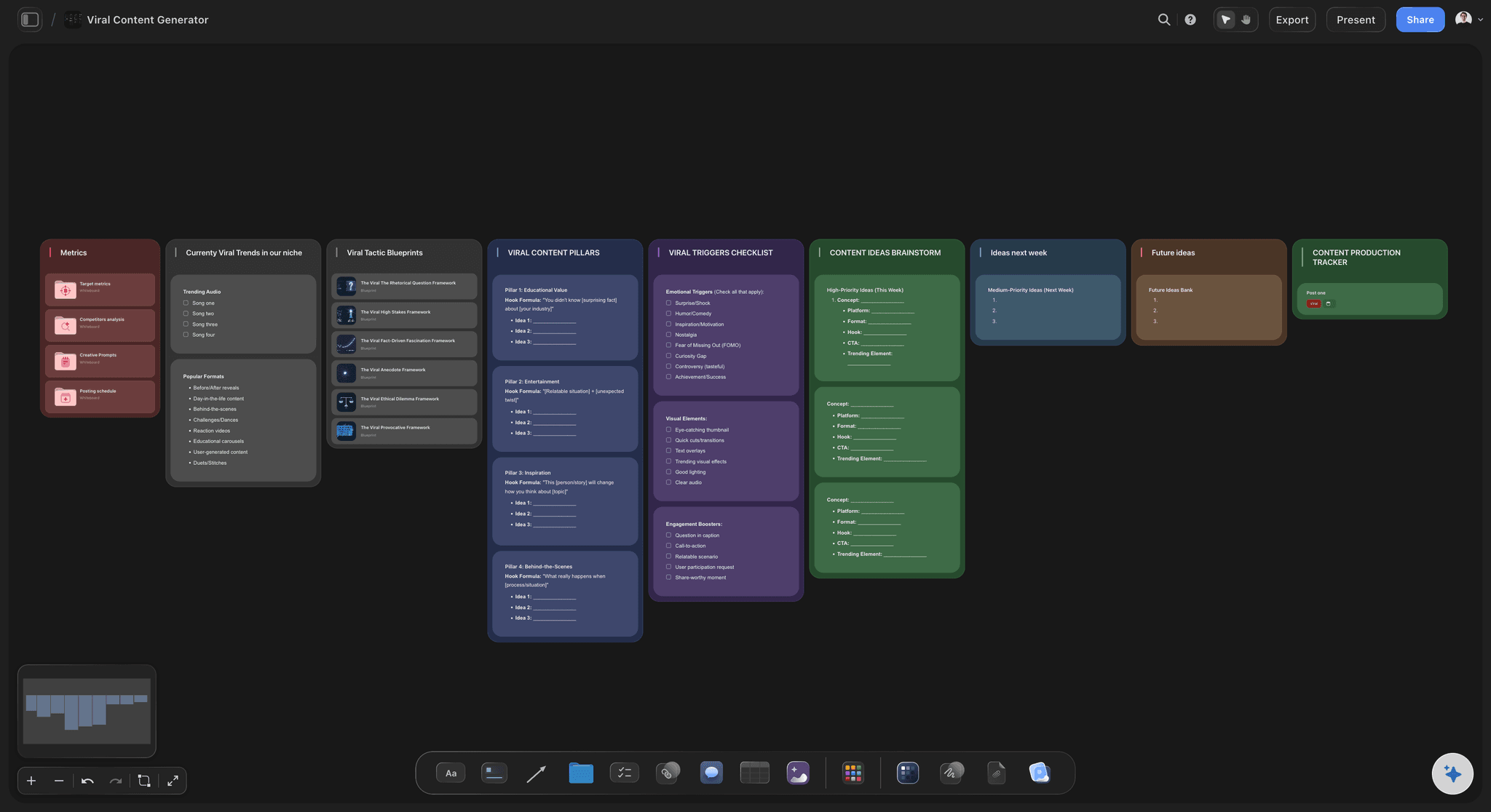
The calendar
Everything was late because one thing was
The product has to arrive first: Most delays are a parcel. Put the shipped date and the arrived date on the board as their own rows, because the filming date is only real once the second one is ticked.
Give the changes a date of their own: First cut due, changes back, live. Three dates, not one. A single live date with nothing in front of it is how a video arrives the night before with a claim in it you cannot approve.
See the crowded week before you book it: On the calendar it is obvious when six creators are filming in the same three days. That is the week you run out of samples, so move two of them now.
The readout starts as the campaign runs: Drop each finished post onto the board next to the brief that produced it. When it is time to say what worked, the evidence is already sitting in one place.
Explore templates for your project
Every template opens as a real, editable board on the infinite canvas. Pick the closest fit and make it your own.
Content Calendar
Plan what you post and when across every channel on one calendar.
One app instead of five
Storyflow against the influencer platforms.
It plans and briefs. It does not find the creators, send the money or count the sales.
Storyflow
Recommended
Brief with the idea shown as pictures
Deliverables, dates and rights in one table
View-only link, no account to read
Whole plan exports as a PDF
Finds and checks creators for you
Pays creators and handles invoices
Counts clicks and sales per creator
Influencer platforms
Brief with the idea shown as pictures
Deliverables, dates and rights in one table
View-only link, no account to read
Whole plan exports as a PDF
Finds and checks creators for you
Pays creators and handles invoices
Counts clicks and sales per creator
A spreadsheet and email
Brief with the idea shown as pictures
Deliverables, dates and rights in one table
View-only link, no account to read
Whole plan exports as a PDF
Finds and checks creators for you
Pays creators and handles invoices
Counts clicks and sales per creator
What creators are saying
Join early creators getting structured workspaces and AI that remembers their projects
“Storyflow has sped up my workflow by at least 3x, which means more flow state and more projects I can actually ship. It truly changed the way me and my team create.”

Reilin Joey
Director & YouTuber
“One prompt gets me a structured board. But the tactics are my favorite. I run my YouTube scripts through them and my intros and retention got better. It's amazing.”

Justkay
YouTuber & Freelance Filmmaker
“I used to juggle five apps to plan a project. Now I describe what I am making and get boards, lists, and a schedule. All in one place.”

George
@fernwehchronicles
Influencer campaign questions
What brand teams ask before they plan one this way.
Four parts, and Storyflow holds all four on one board. The brief each creator reads, a table of exactly what they are making with the fee against it, the usage rights in four lines, and the dates from product shipped to post live. Creators open it from a link with no account. Finding creators, paying them and counting sales happen in an influencer platform instead.
Storyflow handles this on a single board: one board holds the one-screen creator brief, a deliverables table with the fee against each item, the usage rights in four lines, and the dates from product shipped to post live. Creators open it from a link with no account. Finding creators, signing contracts and counting sales per creator still happen in an influencer platform and your own link tool.
Fifteen lines on one screen: campaign name, who it is for, the one idea, the sentence that must be said, claims nobody may make, deliverables with counts, the first three seconds, the link and call to action, tags and disclosure wording, product arrival date, first cut date, live date, the rights, the fee and terms, and who approves. Longer than that and it gets skimmed.
Four lines, each with a length of time on it. Where the creator may post it and for how long. Where you may use it and for how long. Whether you may run it as a paid ad, from whose handle, in which countries, for how many days. Whether they may take a competitor, and for how long they may not. Every one of those four moves the fee.
Ask for named items, not an amount of content. A common package is one video of thirty to forty five seconds, three stories with a link, one feed photo, the raw files, and one round of changes. Naming them lets the creator price the work honestly and stops the campaign turning into an argument about what content meant.
Count backwards from the live date and leave four weeks. Roughly: brief sent four weeks out, contract and product shipped three weeks out, product arrives two weeks out, first cut one week out, changes back three days out, live. The part that slips is almost always the parcel, so give shipped and arrived their own rows.
No. Give them the one idea, the line that must be said and the claims to avoid, then let them write it in their own voice. That voice is what you are paying for. A script written by the brand reads as an advert to the exact audience you hired the creator to reach.
Storyflow plans and briefs the campaign: the board holds the brief, the deliverables, the rights and the dates. It does not find creators or pay them. Searching for creators, checking their audience and paying invoices happen in an influencer platform, contracts with signatures in a tool such as PandaDoc, HoneyBook, Bonsai or DocuSign, and paid promotion in the ad platform itself.
Both of you in practice, so put the exact wording in the brief rather than leaving it to the creator. The rules are set by the advertising regulator in each market and they change, so check the current wording for every country the post runs in before the brief goes out, and write it on Storyflow's board as a line of its own.
Yes, as a first draft. Attach the product page, the last campaign brief and a board you liked, and ask Storyflow's AI for a creator brief. You can attach up to 5 documents, 3 Tactics and 3 boards at once. It proposes the idea, the line and the deliverables; you decide what is true and what the fee actually covers.
Yes. Storyflow's view-only link opens in any browser with no sign-up, which matters when you are sending briefs to twelve people who will never use your tools again. To leave a comment on a line they do sign in, and anyone a paid member invites to a board joins free.
Storyflow's table gives every creator a row with the deliverables, the fee and the live date on it, and you drag those rows into the order you want. It cannot sort a table. Most teams order them by live date by hand once, then keep the late ones at the top where they are hard to ignore.
Not in Storyflow. Clicks, codes and sales per creator come from your link tool, your shop or the ad platform. Paste the numbers into a table on the board next to each creator's brief when the campaign is done, so next quarter's shortlist is picked from results rather than from feel.
More from Storyflow
Campaign management software
For social media managers
UGC brief template
Campaign brief template
Campaign calendar
Social media marketing plan
Social media content calendar
Content pillar planner
Instagram content planner
TikTok content planner
AI marketing campaign planner
Storyflow for marketing teams
Storyflow for content creators
Campaign wrap report
Media plan template
Campaign timeline template
Brief the creators before the samples ship.
One board: the idea, what they owe you, what you may do with it, and when.