
Sharper briefs, sent ultra fast
How to write a campaign brief
that nobody has to ask about.
The ten sections every campaign brief needs, what to write in each, a complete example, and the five mistakes that send the creative team back with a list of questions.


Creatives working for these brands already got early access
- Red Bull
- Canon
- Artlist
- Porsche
See how easy it is to get started
Watch a real project come together, from a blank board to a finished plan, clicked through step by step.
Start from a ready-made template
Pick a board to see what you can build, then let AI fill it in. Every template is a real, editable starting point on the same infinite canvas.

Creative Brief
Capture the objective, audience, and message for a creative so everyone works from the same brief.
How do you write a campaign brief?
A campaign brief is a one or two page document that tells a creative team what a campaign must achieve, for whom, with what message, by when and for how much. Storyflow is an AI visual workspace that helps you write one section by section on one infinite canvas: the objective, the audience, the insight, the single message and the deliverables, with reference images beside the words. Its AI drafts a first version from your notes and points out the sections still empty.
Write it in this order: background, objective, audience, insight, proposition, mandatories, deliverables, budget, timeline, and how success will be measured. The order is deliberate. Each section narrows the next one, so by the time you reach the proposition you are choosing one message for one audience to change one behaviour, not writing a slogan in a vacuum.
Keep it short. A campaign brief that runs to eight pages is usually a strategy document with a brief hidden inside it. Most good briefs fit on two pages, or one board, and every sentence in them is something the creative team will act on. If a sentence would not change what anyone makes, cut it or move it to an appendix.
Write the objective as a number with a date. 'Raise awareness' is not an objective, because nobody can tell when it is done. 'Get 2,000 test-ride bookings from commuters in Denver and Minneapolis between 1 and 30 April' is one: the team knows who it is for, what counts as success and when the campaign is judged. Every other section of the brief should help reach that number.
The proposition is the hardest section and the most important. It is one sentence that says the single thing the audience should believe after seeing the campaign. If the brief has two propositions, the creative work will try to say both and say neither. Test it by asking whether a stranger could repeat it after one hearing.
A worked example, written for a fictional e-bike brand, Northfield Bikes. Background: Northfield sells e-bikes online and through twelve shops; commuter sales fell 8 percent last year while leisure sales grew. Objective: 2,000 test-ride bookings from commuters in Denver and Minneapolis between 1 and 30 April. Audience: office workers aged 28 to 45 who drive under eight miles to work and dislike the cost of parking. Insight: they would cycle if they could arrive without needing a shower. Proposition: 'Arrive at work as fresh as you left home.' Mandatories: the logo lock-up, the test-ride URL, and no claims about speed. Deliverables: one 20 second video, three 6 second cutdowns, six static social posts, two outdoor posters and one landing page. Budget: $35,000 including production. Timeline: concepts by 3 March, final assets by 24 March, live 1 April. Measure: bookings through the landing page, checked weekly. Approval: the head of marketing signs off concepts and final assets.
Ultra fast from brief to board
What are the steps to write a campaign brief?
Six steps from notes to a signed-off brief. Most of the time goes into steps two and four, and that is where it should go.
01
Gather what you already know
Drop last campaign's results, the product facts, customer quotes and the budget email on a Storyflow board, or attach them to the AI chat. A brief written from evidence beats one written from memory.
02
Write the objective as a number
One outcome, one number, one date. If you have three objectives, rank them and keep the first. The rest of the brief is easier once this line is right.
03
Let the AI draft the sections
Ask Storyflow's AI to draft the ten sections from your notes. It lays them out as cards on the board and leaves a section empty and marked when your notes do not cover it.
04
Sharpen the insight and proposition
Rewrite these two by hand. Put three versions of the proposition side by side and cut to one. Add reference images that show the tone, so 'premium' means the same thing to everyone.
05
Count the deliverables
List every asset in a table with format, size, channel and due date. A count turns 'social assets' into six posts the creative team can schedule and price.
06
Share it for sign-off
Send a view-only link. The approver opens the board with no account and signs in to comment on the section they want changed. Export a PDF for anyone who needs a file.
What should a campaign brief include?
Ten sections. Four of them carry most of the weight: the objective, the audience, the insight and the proposition.
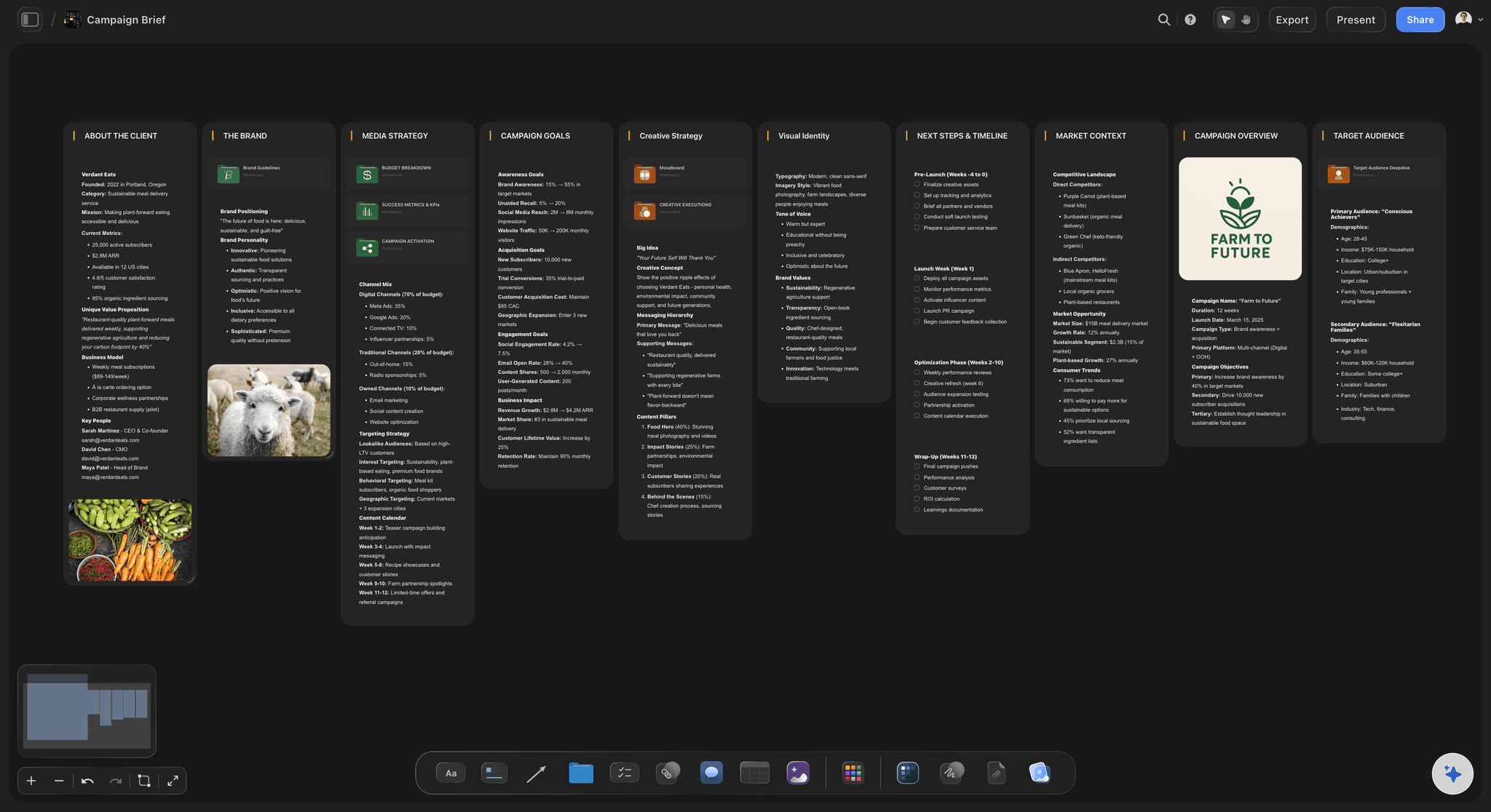
Objective and measure
One number, one date, one way to check it
What the campaign must achieve and how you will know. Put the measure next to the objective so nobody can change one without seeing the other.
See the campaign brief template →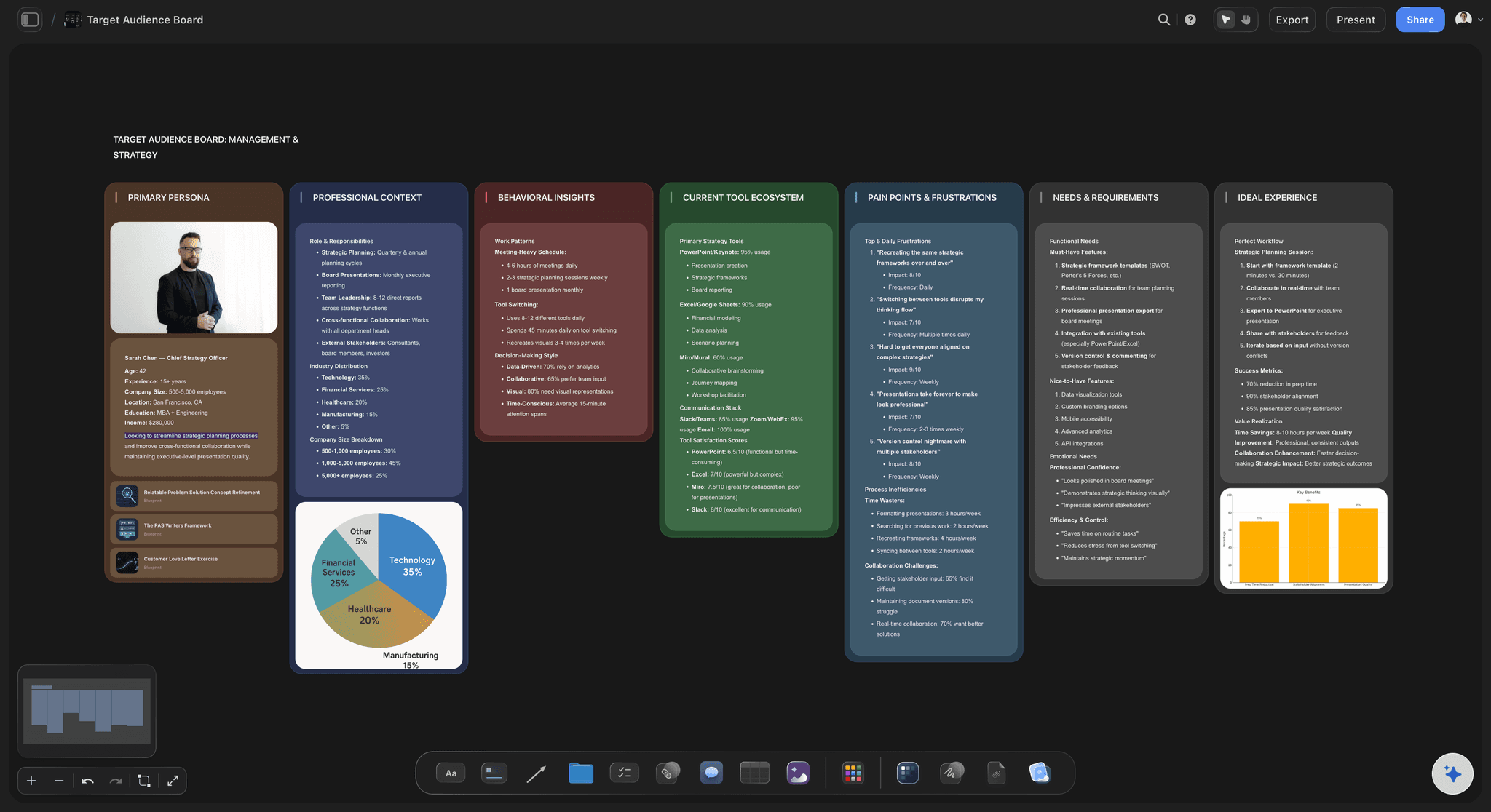
Audience and insight
Who they are and what they believe now
A specific group, described by what they do, not just their age. The insight is the truth about them that the campaign can use.
See the target audience template →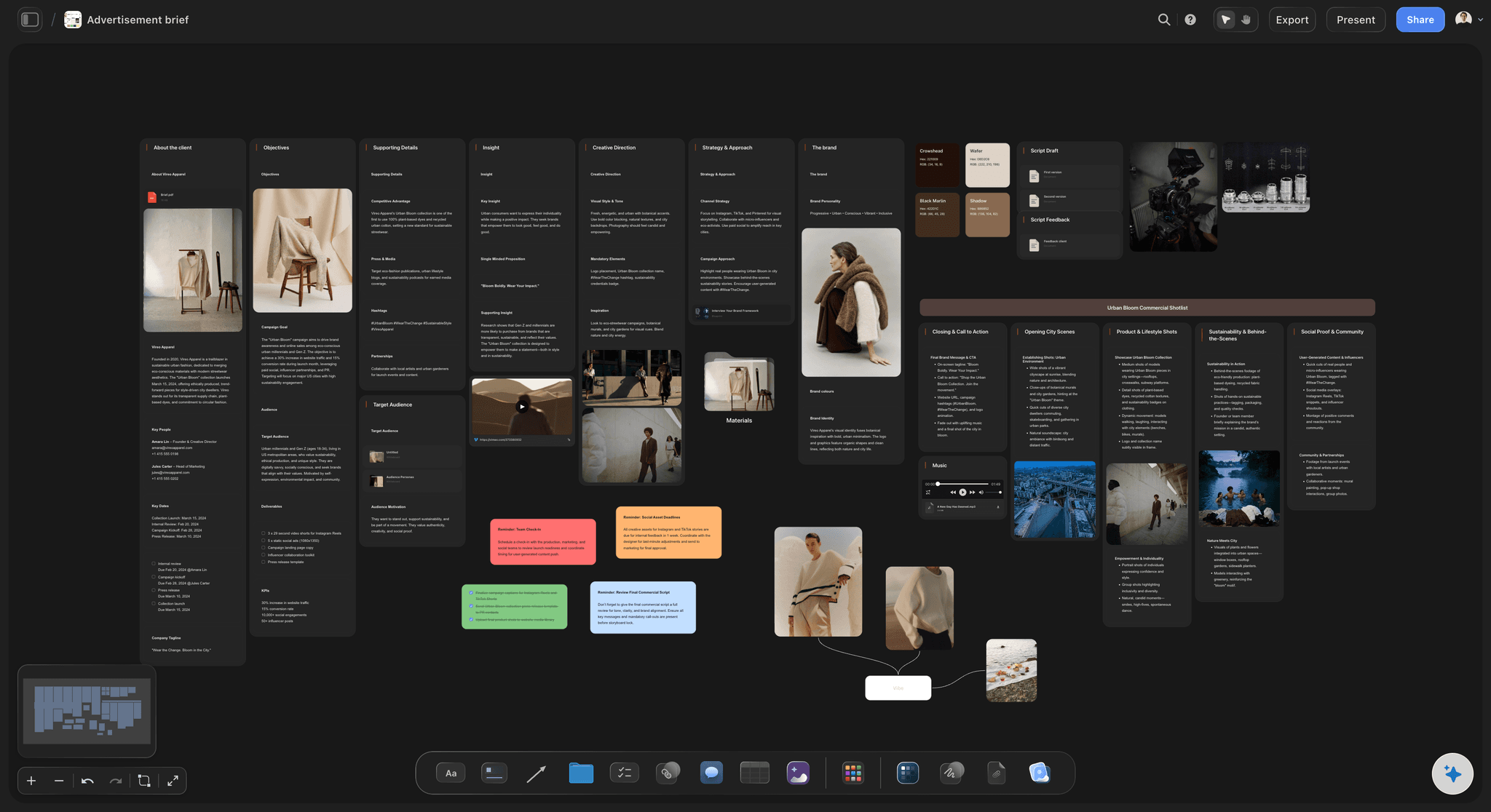
The proposition
The single thing to believe
One sentence the audience should be able to repeat. Three drafts side by side on the board make the strongest one obvious.
See the brand messaging framework →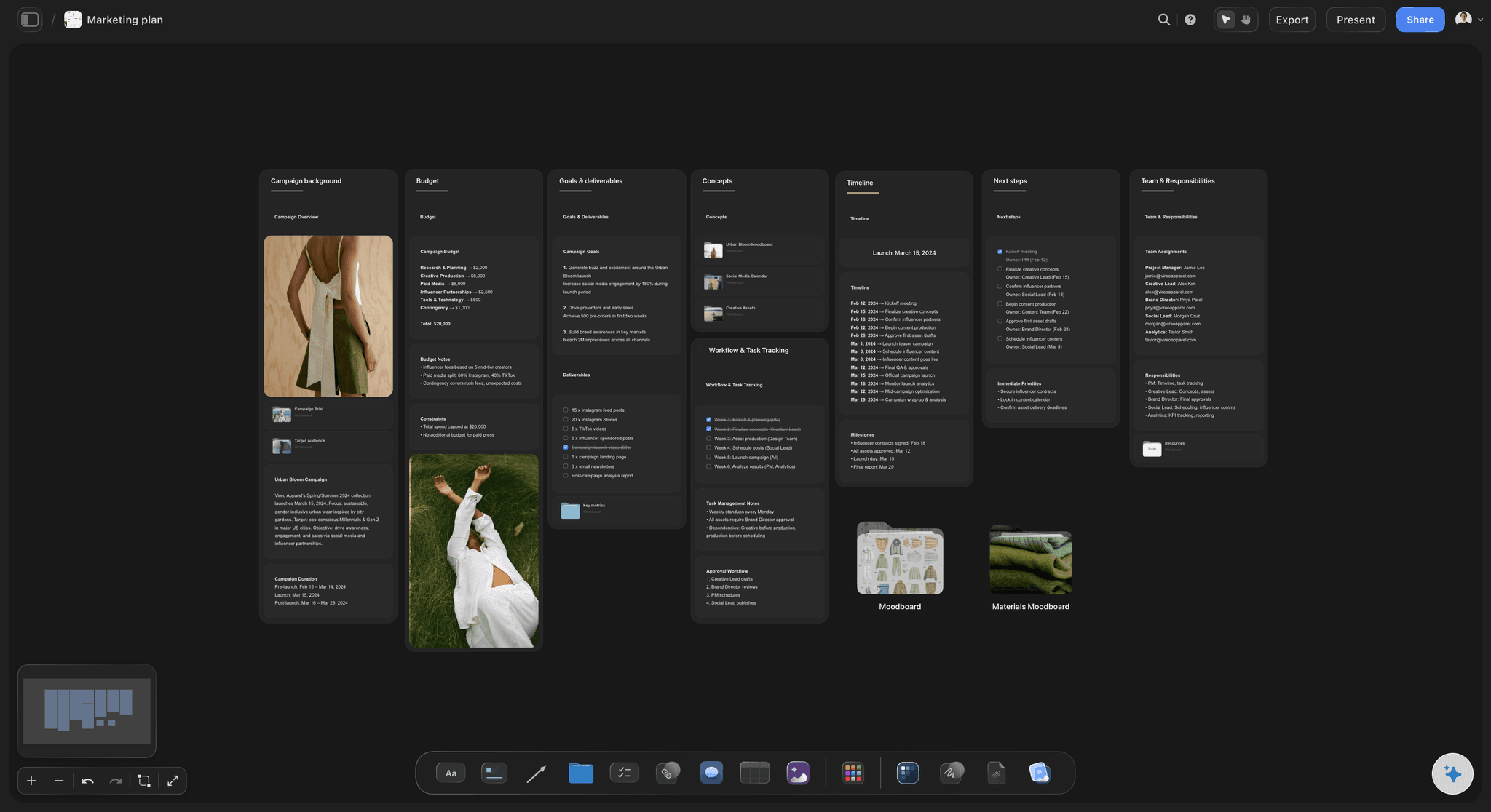
Deliverables, budget and dates
What gets made, for how much, by when
A table of assets with formats and due dates, the budget with what it includes, and the dates for concepts, finals and launch.
See the campaign timeline template →The brief, the references and the sign-off in one place.
Write it, show the tone with images, share it by link and keep the approved version on the same board as the work it starts. Storyflow is paid-only during early access, with plans from $7.99 a month billed annually ($9.99 monthly). A free plan launches before the end of 2026, and anyone a paid member invites to a board joins free.
AI that drafts the ten sections from your notes or an attached document
Reference images beside the words, so tone is shown, not described
Tables for deliverables and budget with a Sum footer
View-only links the approver opens with no account
200+ Tactics for hooks, offers and messaging

Built for people with taste
What are the most common campaign brief mistakes?
Five mistakes cause most of the questions a creative team sends back. Each one is easy to spot when the brief is laid out section by section.
The objective
An objective nobody can measure
Awareness is not a number: Replace 'raise awareness' with what awareness should lead to: bookings, sign-ups, store visits, searches for the brand name.
Three objectives, no ranking: When a campaign must sell, recruit and reposition at once, the creative work averages them. Rank them and let the first one decide.
No date: An objective without a window cannot fail, so it cannot succeed either. Write the start and the end.
No owner for the measure: Name who checks the number and how often. 'Bookings through the landing page, checked weekly by the growth lead' is a measure.
The message
Two propositions, or none
One sentence: If the proposition needs 'and', it is two. Pick the one the audience most needs to hear.
A belief, not a tagline: Write what the audience should believe, in plain words. The creative team writes the line that makes them believe it.
Insight before proposition: A proposition with no insight under it is a claim. The insight says why this audience will care about it.
Show the tone: 'Warm but premium' means something different to everyone. Five reference images next to the proposition on the Storyflow board settle it.

The practical half
Deliverables and budget left vague
Count the assets: Six static posts, two posters, one 20 second film and three cutdowns. A count lets the agency price and schedule the work on the first read.
Say what the budget covers: State whether the figure includes production, media, talent and usage rights. The same number means three different campaigns depending on the answer.
List the mandatories: Logo lock-ups, legal lines, claims you cannot make. Listing them up front saves a round of revisions at the end.
Name the approver: One person signs off concepts and finals. A brief with no named approver collects opinions instead of decisions.
Explore templates for your project
Every template opens as a real, editable board on the infinite canvas. Pick the closest fit and make it your own.
Creative Brief
Capture the objective, audience, and message for a creative so everyone works from the same brief.
One app instead of five
Where should you write a campaign brief?
A document is fine for words. A campaign brief also needs images, a deliverables table and a way to get sign-off, which is where a board helps.
Storyflow
Recommended
Reference images beside each section
AI drafts the sections and flags the empty ones
Deliverables and budget tables with totals
Approver opens it by link with no account
The brief stays on the board the work starts from
Tracked changes, line by line
Works offline
A word processor
Reference images beside each section
AI drafts the sections and flags the empty ones
Deliverables and budget tables with totals
Approver opens it by link with no account
The brief stays on the board the work starts from
Tracked changes, line by line
Works offline
A slide deck
Reference images beside each section
AI drafts the sections and flags the empty ones
Deliverables and budget tables with totals
Approver opens it by link with no account
The brief stays on the board the work starts from
Tracked changes, line by line
Works offline
What creators are saying
Join early creators getting structured workspaces and AI that remembers their projects
“Storyflow has sped up my workflow by at least 3x, which means more flow state and more projects I can actually ship. It truly changed the way me and my team create.”

Reilin Joey
Director & YouTuber
“One prompt gets me a structured board. But the tactics are my favorite. I run my YouTube scripts through them and my intros and retention got better. It's amazing.”

Justkay
YouTuber & Freelance Filmmaker
“I used to juggle five apps to plan a project. Now I describe what I am making and get boards, lists, and a schedule. All in one place.”

George
@fernwehchronicles
Campaign brief writing questions
What marketers and agency strategists ask when the brief is due tomorrow and the page is still empty.
Write ten sections in order: background, objective, audience, insight, proposition, mandatories, deliverables, budget, timeline and how success is measured. Make the objective a number with a date, keep the proposition to one sentence, count every deliverable, and name one approver. In Storyflow the sections sit on one board with reference images beside them, and its AI drafts a first version from your notes.
Storyflow suits this job well because a campaign brief is words, images and tables at once: the sections, the reference images that show the tone, and the deliverables and budget tables all sit on one board, its AI drafts the sections from your notes, and the approver opens it by link with no account. A word processor such as Google Docs or Word is still the better choice when you need tracked changes line by line.
Background, objective, audience, insight, proposition, mandatories, deliverables, budget, timeline and success measures, plus the name of the person who approves the work. The objective, audience, insight and proposition carry most of the weight. On a Storyflow board each one is its own card, so an empty section is visible at a glance.
One to two pages, or one board. Long enough to answer every question the creative team would otherwise ask, short enough that they read all of it. If yours is longer, move the research and strategy into an appendix and keep the brief to the decisions. Storyflow's AI can shorten a long draft section by section.
It is the one thing the audience should believe after seeing the campaign, written in one plain sentence. In the worked example on this page it is 'Arrive at work as fresh as you left home.' It is not the tagline; the creative team writes the line that makes people believe it. Draft three on the Storyflow board and keep the one a stranger could repeat.
As one outcome, one number and one window: '2,000 test-ride bookings from commuters in Denver and Minneapolis between 1 and 30 April'. Say how it will be measured and who checks it. Avoid 'awareness' on its own, because nobody can tell when it is achieved. Put the measure beside the objective on the Storyflow board.
A campaign brief covers the whole campaign: the business objective, the budget, the channels and the timeline. A creative brief is narrower and is written for the people making the work: the insight, the proposition, the tone and the deliverables. Agencies often turn a client's campaign brief into their own creative brief. Both can live on the same Storyflow board.
The worked example on this page is a full one: Northfield Bikes wants 2,000 test-ride bookings from commuters in April; the insight is that they would cycle if they could arrive without needing a shower; the proposition is 'Arrive at work as fresh as you left home'; the deliverables are one 20 second video, three cutdowns, six posts, two posters and a landing page; the budget is $35,000 including production.
It can write a useful first draft. Storyflow's AI reads your notes, last campaign's results or an attached PDF or Word document, lays out the ten sections on the board and leaves a section empty when your material does not cover it. The insight and the proposition still need a person who knows the audience, so plan to rewrite those two by hand.
One named person who owns the result, usually the marketing lead or the client contact with budget authority. Write their name on the brief. Share the Storyflow board by view-only link: they open it with no account and sign in to comment on the section they want changed.
An objective with no number, two propositions instead of one, an audience described only by age, a list of deliverables with no count, and a budget that does not say what it includes. Each one causes questions later. Laying the brief out section by section on a Storyflow board makes most of them visible before it is sent.
Yes, or at least a range. Without one the agency guesses, and the concepts come back sized for a budget nobody has. Say what the figure covers: production, media, talent, usage rights. A budget table on the Storyflow board with a Sum footer keeps the total honest as lines are added.
Yes. Storyflow's campaign brief template lays out the sections on a board you can copy, and the ten sections on this page work as a template on their own. The template page has the blank structure; this page explains what to write in each part.
Ten sections. One proposition. No questions back.
Write the campaign brief on one board, with the tone shown in images and the deliverables counted, and share it for sign-off by link.