
Extremely reliable pre-production
Build the gear list
from the shots, not from memory.
Derive camera, grip, lighting, and sound from the setups that actually need them, mark what you own and what you are hiring, and check it against the truck before you leave.


Creatives working for these brands already got early access
- Red Bull
- Canon
- Artlist
- Porsche
See how easy it is to get started
Watch a real project come together, from a blank board to a finished plan, clicked through step by step.
Start from a ready-made template
Pick a board to see what you can build, then let AI fill it in. Every template is a real, editable starting point on the same infinite canvas.

Pre-Production
Pull the brief, script, shot list, and moodboard into one pre-production hub so the whole shoot is planned in one place.
What is an equipment list?
An equipment list is the complete inventory of what has to be physically present for a shoot to happen, organised so that you can check it. Storyflow is an AI visual workspace that builds your gear list from the shots on one infinite canvas: camera, grip, lighting, and sound drawn from the setups that need them, items marked owned or hired, and a list you check against the truck. Everyone writes one. Most are written from memory the night before, which is why the most common failure is not forgetting the camera but forgetting the one adapter that connects two things you have both remembered. Gear lists fail at the joins.
The reason they fail is that a list written from memory is a list of categories you can recall, and recall is organised around the interesting items. Nobody forgets the camera body or the lens set. What gets forgotten is the specific mount adapter for the one vintage lens, the extra battery for the monitor rather than the camera, the cable that is the right length rather than the right type, and the sandbags, which are needed in a quantity nobody has ever estimated correctly. Deriving the list from the work instead of from memory is the only reliable fix.
Storyflow is an AI-native infinite canvas that suits this because the derivation is the whole point. Put your setups on the board and attach the gear each one requires to it, then collate across setups into the list you actually pack. Because the shot list, the lighting plan, and the gear list can sit on one canvas, the list is generated from the work rather than written alongside it, which is what catches the specialist item needed for exactly one shot.
It helps to build the list in departments, because that is how gear is packed, loaded, and lost. Camera covers bodies, lenses, media, batteries, monitoring, and the adapters between them. Grip covers stands, clamps, flags, sandbags, and rigging, and is the department most consistently under-ordered. Lighting covers fixtures, modifiers, gels, diffusion, and the power to run them. Sound covers recorders, microphones, booms, radio mics, and an unglamorous quantity of batteries. Then there is the category with no department, which is everything that makes a day possible rather than possible to photograph: gaffer tape, a first aid kit, spare card readers, cable ties, water, and a step ladder.
Ultra fast from brief to board
From a shot list to a load-out you can check.
Attach gear to the setups that need it, then collate.
01
Open a canvas
Sign up in seconds. No download. Your infinite planning canvas opens straight in the browser.
02
Derive from the setups
Put your setups or shot list on the board and attach the gear each one needs to it. Deriving from the work rather than from memory is what catches the item needed for a single shot.
03
Collate by department
Group everything into camera, grip, lighting, sound, and the no-department essentials. Mark what you own, what you are hiring, and what still has to be sourced.
04
Check it against the truck
Share a view-only link so whoever loads can tick items off, or export as a PDF for the rental order and the load-out check.
A list derived from the work, not from recall.
Gear attached to setups, collated by department, checkable on the day.
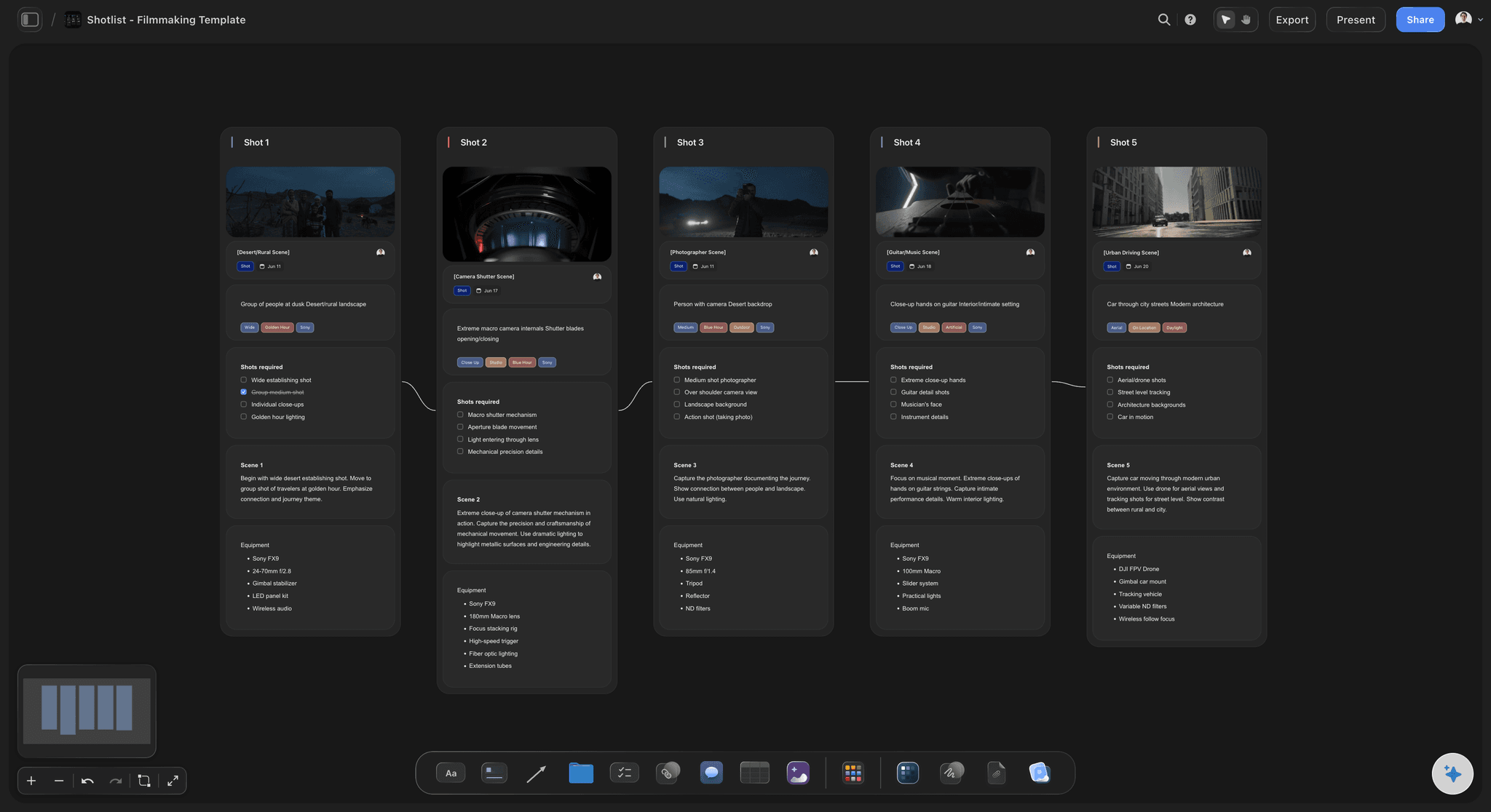
Gear attached to the setup that requires it
Generate the list from the shots
Attach requirements to setups and collate afterwards. This is the only method that reliably catches the specialist lens, the odd adapter, and the fixture needed for exactly one shot.
See the shot list generator →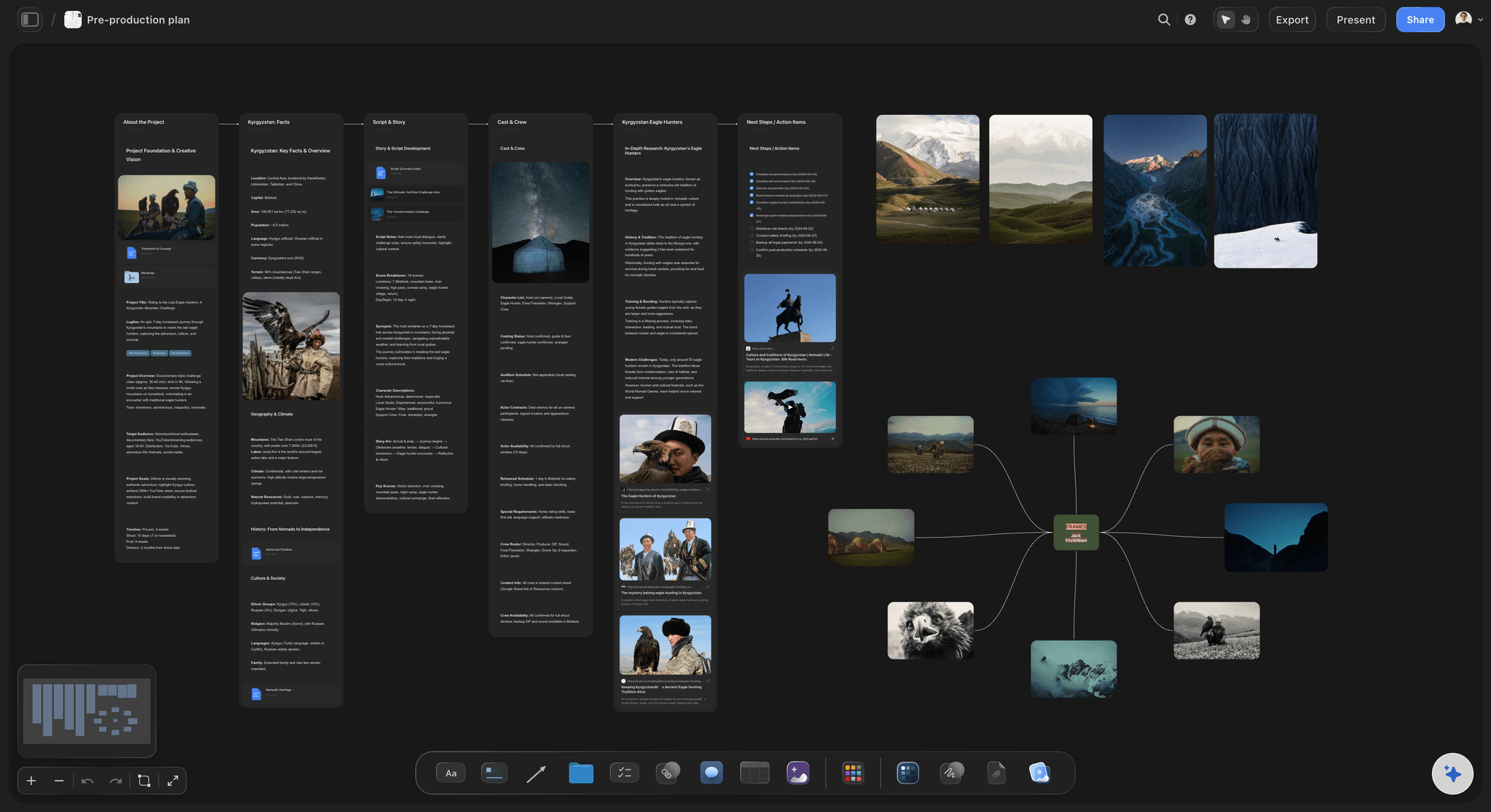
Camera, grip, lighting, sound, and the essentials
Group the way you pack
Gear is packed, loaded, and lost by department, so the list should be organised that way. It also makes the under-ordered department obvious, which is almost always grip.
See the film shoot planner →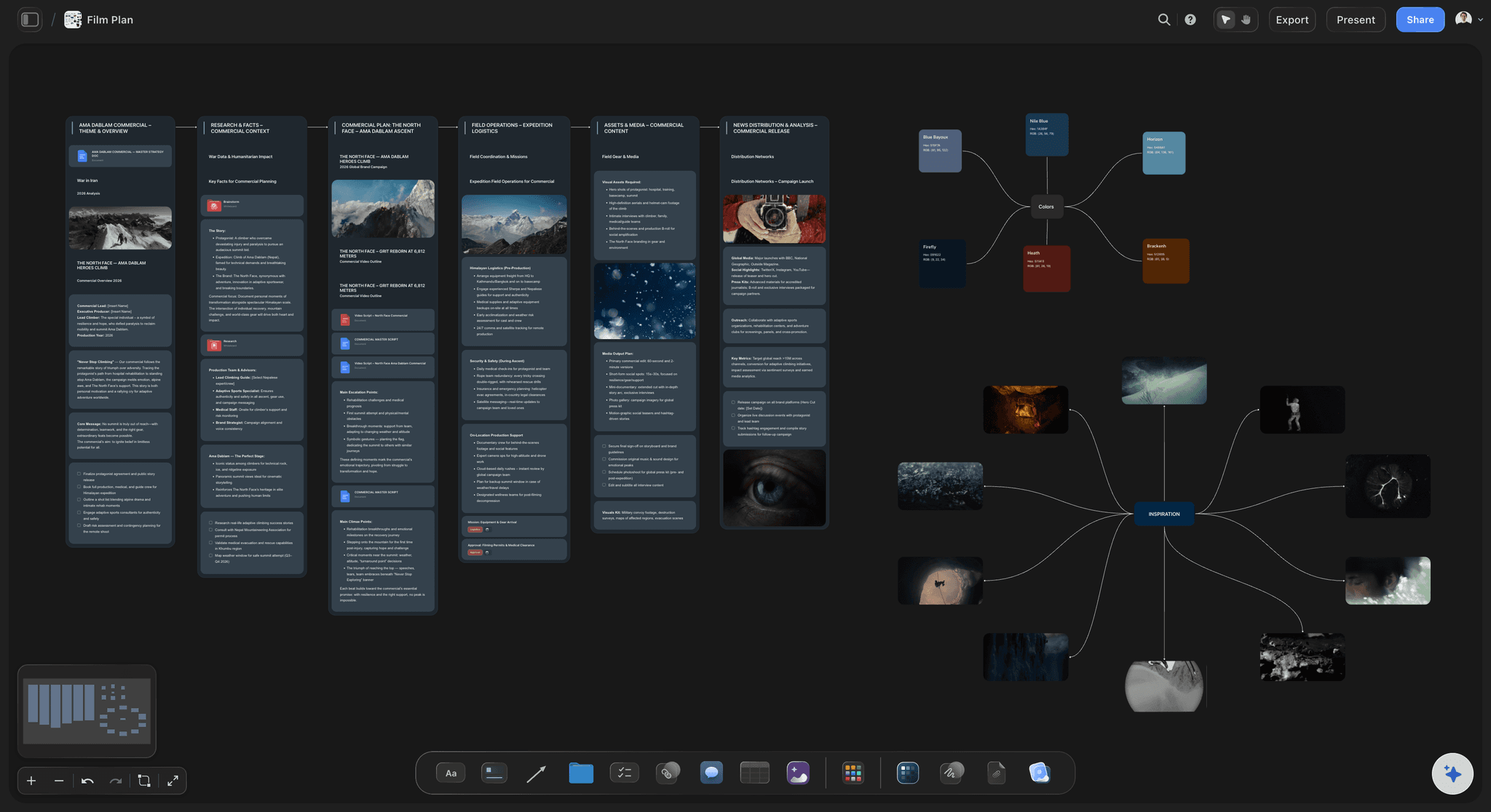
Owned, hired, or still to source
Know what is actually secured
Mark the status of every item so the rental order writes itself and nothing sits in the ambiguous state where everyone assumes someone else is bringing it.
See the film budget planner →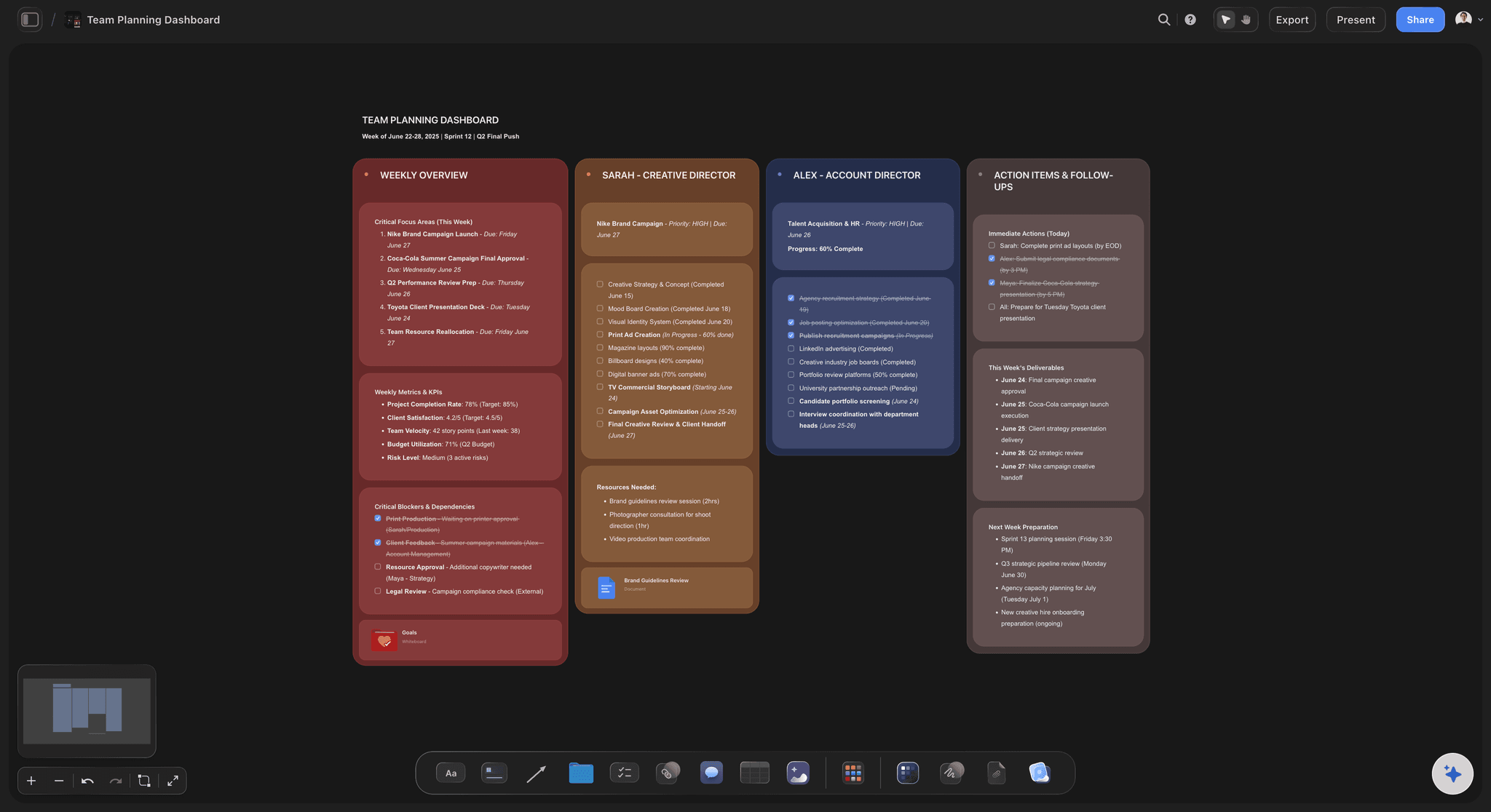
The gear list beside the lighting plan and schedule
One board, one source of truth
When the lighting plan changes, the gear list should change with it. Keeping them on the same canvas is what prevents a rental order that reflects last week's plan.
See the lighting plan maker →Unlimited boards. No object cap.
Open a canvas, put the setups down, and derive the list. Storyflow is paid-only during early access, with plans from $9.99 a month, and a Free plan launches before the end of 2026.
Unlimited gear lists on an infinite canvas
Basic AI usage to generate boards from prompts
3 starter frameworks built in
Share view-only links with crew and rental houses
Built for people with taste
More than a list typed the night before.
Gear lists fail at the joins. A list derived from the work finds the joins for you.
Camera, grip, lighting, sound, and the no-department items
Cover every department, including the one nobody owns
Camera, including the adapters: Bodies, lenses, media, batteries, and monitoring are easy to remember. The adapters, mounts, and specific cables between them are what actually get forgotten, so list connections as items rather than assuming them.
Grip, which is always under-ordered: Stands, clamps, flags, and rigging get estimated optimistically, and sandbags in particular are needed in quantities nobody predicts. If one department is going to be short, it is this one.
Sound and its batteries: Recorders, booms, and radio mics are remembered; the unglamorous volume of batteries they consume across a long day is not. Count consumption per hour rather than per device.
The category with no department: Gaffer tape, card readers, cable ties, a step ladder, water, and a first aid kit. Nothing here belongs to a department, which is exactly why it goes missing, so give it its own section on the board.
AI that can see the board you have already built
Draft the list with AI, verify it against your kit
Enumerate from your setups: Once your shot list and lighting plan are on the board, ask the AI to draft the gear each setup implies. Enumeration is exactly the sort of tedium worth delegating.
It does not know what you own: The AI has no idea which bodies, lenses, or fixtures you have, what mounts they use, or what your rental house stocks. Its list is a generic starting point that has to be reconciled with your actual kit.
Ask it for the things people forget: A genuinely useful prompt is to ask what is commonly forgotten for this kind of shoot. That is a pattern-matching question rather than a judgment call, which is where a model is most reliable.
Photos, spec sheets, rental quotes, and links
Keep the paperwork with the item
Rental quotes and orders attached: Drop rental PDFs, quotes, and links onto the items they cover, so substitutions and returns are answerable without digging through an inbox.
Photograph the packed cases: Drag photos of the loaded cases onto the board. Checking a wrap-out against a photo of the load-in is the quickest way to notice what got left behind.
No object cap: A full feature kit list with hundreds of items sits on one board, so you never have to abbreviate the list to keep it manageable.
Share with the crew, the rental house, and whoever loads
One list everyone checks against
View-only links: Send a link and the crew or rental house reads the same list in a browser with no account. Most missing-gear incidents come from two people working off two versions of a list.
Tick off at load-in and wrap: Invite whoever is loading so items get checked in one place. Live multi-editor presence with cursors is on the Max plan.
Export for the truck: Export as an image or PDF to print. A printed checklist on a clipboard is still the most reliable way to check a truck at six in the morning.
Explore templates for your project
Every template opens as a real, editable board on the infinite canvas. Pick the closest fit and make it your own.
Pre-Production
Pull the brief, script, shot list, and moodboard into one pre-production hub so the whole shoot is planned in one place.
One app instead of five
Storyflow vs a spreadsheet, StudioBinder, and rental software.
For real inventory management, dedicated software wins. Here is the honest split.
Storyflow
Recommended
Derive gear from setups and shots
Photos and spec sheets on each item
Sits beside the lighting plan and schedule
Barcode scanning and inventory tracking
Sum costs, filter, and sort a rental budget
Availability and booking across jobs
Spreadsheet
Derive gear from setups and shots
Photos and spec sheets on each item
Sits beside the lighting plan and schedule
Barcode scanning and inventory tracking
Sum costs, filter, and sort a rental budget
Availability and booking across jobs
StudioBinder
Derive gear from setups and shots
Photos and spec sheets on each item
Sits beside the lighting plan and schedule
Barcode scanning and inventory tracking
Sum costs, filter, and sort a rental budget
Availability and booking across jobs
Rental software
Derive gear from setups and shots
Photos and spec sheets on each item
Sits beside the lighting plan and schedule
Barcode scanning and inventory tracking
Sum costs, filter, and sort a rental budget
Availability and booking across jobs
What creators are saying
Join early creators getting structured workspaces and AI that remembers their projects
“Storyflow has sped up my workflow by at least 3x, which means more flow state and more projects I can actually ship. It truly changed the way me and my team create.”

Reilin Joey
Director & YouTuber
“One prompt gets me a structured board. But the tactics are my favorite. I run my YouTube scripts through them and my intros and retention got better. It's amazing.”

Justkay
YouTuber & Freelance Filmmaker
“I used to juggle five apps to plan a project. Now I describe what I am making and get boards, lists, and a schedule. All in one place.”

George
@fernwehchronicles
Equipment list questions, answered.
How to build a list that is actually complete, and where a spreadsheet beats a canvas.
Derive it from the work rather than writing it from memory, because memory is organised around the interesting items and gear lists fail at the boring joins. Put your setups or shot list down first, then attach to each one the gear that specific setup requires, including the connections between things. Once every setup has its requirements, collate across them into departments: camera, grip, lighting, sound, and the category with no department. Then mark each item as owned, hired, or still to source, so nothing sits in the state where everyone assumes someone else is bringing it. Finally check the collated list against the shot list one more time, looking specifically for the item that appears in only one setup, because that is the one that gets dropped.
Storyflow is made for building the list from the shots: you put the setups or shot list on the board and derive the camera, grip, lighting, and sound each one needs, with AI drafting the list for you to verify against your kit. Each item carries its photos and spec sheets and is marked owned or hired. A spreadsheet or StudioBinder still sums costs and filters and sorts a rental budget, which Storyflow does not.
Connections and consumables, almost never headline items. Nobody forgets the camera body or the lens set; people forget the mount adapter for the one vintage lens, the battery type that fits the monitor rather than the camera, and the cable that is the right length rather than merely the right kind. Grip is the most consistently under-ordered department, and sandbags are under-ordered within it, because nobody has ever estimated sandbag requirements correctly on a first attempt. Then there is the department that belongs to nobody: gaffer tape, card readers, cable ties, a step ladder, water, and a first aid kit, which go missing precisely because no department owns them.
Not during early access. Storyflow is paid-only right now, with plans starting at $9.99 a month, and a Free plan launches before the end of 2026. Anyone a paid member invites to a board joins free today, so your crew and rental contact can read the list without paying. If you want a free option this minute, a spreadsheet is genuinely good at this and better than a canvas at the budget side, which is a fair reason to use one.
For the money, yes. If you need to sum rental costs, filter by supplier, sort by department, and track spend against an allocation, a spreadsheet does all of that natively and a canvas does none of it. Where a canvas is better is the derivation step: attaching gear to the setups that need it, so the list is generated from the actual work rather than recalled, and keeping photos and spec sheets on the items themselves. A reasonable setup is to derive the list on the board and then move the collated version into a spreadsheet for costing, which is what a lot of productions end up doing anyway.
It can draft one and it will not be complete, which is fine if you treat it as a starting point. With your shot list and lighting plan on the board, the AI can enumerate the gear each setup implies, and enumeration is genuinely tedious work worth delegating. What it cannot know is what you already own, which mounts your lenses use, or what your rental house actually stocks, so every line has to be reconciled with reality. The most useful prompt is not build my list but tell me what people commonly forget for this kind of shoot, which is a pattern question rather than a judgment call.
Yes, by marking status on each item card along with the supplier, the collection date, and the return date. You can attach the rental quote or order PDF to the item as well, which makes substitutions and returns straightforward later. What Storyflow does not do is manage inventory properly: there is no barcode scanning, no availability checking across jobs, and no booking system. If you are running a rental operation rather than a shoot, you want dedicated software.
Yes, and it is the most accurate way to do it. If your lighting plan lists the fixtures, modifiers, gels, and stands each setup needs, the gear list is a collation of those requirements rather than a separate act of remembering. Keeping both on one canvas also means that when the lighting plan changes during prep, the gear list is visibly affected rather than quietly out of date, which is how rental orders end up reflecting a plan from a week ago.
Yes. Share a view-only link so whoever is loading can check against the same list, or export as a PDF and print it, which is usually more practical on a truck at six in the morning. A useful habit is to photograph the packed cases and drag those photos onto the board, because checking a wrap-out against a photograph of the load-in is the fastest way to notice that something did not come back.
Yes. Boards are unlimited, so you can keep a standing list for your usual kit and duplicate it as the starting point for each job, then add the setup-specific items on top. That combination tends to work well: the standard load is a checklist you barely think about, and your attention goes to the specialist items that this particular shoot needs, which are the ones actually at risk of being forgotten.
Yes, and it is the main reason to do this on a canvas. The gear list can sit beside the shot list that generated it, the lighting plan that determines most of it, the schedule that says which day each item is needed, and the props list that covers everything in front of the camera rather than behind it. When a scene moves days, you can see immediately which gear moves with it.
Derive the list from the shots and stop forgetting the adapter.
Open a canvas, put the setups down, and build the load-out. No download.