
Extremely reliable pre-production
An editorial photoshoot
planned from the story down.
The idea, the casting, the pull, the locations and the run of the day on one board. Your stylist, your hair and makeup artist and the editor all read the same page.


Creatives working for these brands already got early access
- Red Bull
- Canon
- Artlist
- Porsche
See how easy it is to get started
Watch a real project come together, from a blank board to a finished plan, clicked through step by step.
Start from a ready-made template
Pick a board to see what you can build, then let AI fill it in. Every template is a real, editable starting point on the same infinite canvas.

Pre-Production
Pull the brief, script, shot list, and moodboard into one pre-production hub so the whole shoot is planned in one place.
What is an editorial photoshoot?
An editorial photoshoot is a set of pictures made to tell a story for a publication rather than to sell a product: six to twelve frames with a point of view, shot across a day with a stylist, hair and makeup and cast. Storyflow is an AI visual workspace that plans the whole shoot on one infinite canvas: the story, the casting, the wardrobe pull, the run of day by look and the credits. Everyone involved opens it from one link with no account.
The difference from a commercial job is not the pictures, it is who is deciding and who is paying. On a commercial shoot the client owns the brief, the fee is real and the usage is the negotiation. On an editorial the idea is usually yours or the editor's, the budget is small or nothing, and what you are paid in is the work itself, the tear sheet and the credit. That changes how you plan. You cannot buy your way out of a problem on the day, so the planning is the budget. It also means the team is working for the same reasons you are, which is why a clear board is worth more than a bigger one.
An editorial has more moving parts than its budget suggests. The story and the reference. The team: photographer, stylist, hair, makeup, assistant, sometimes a producer. Casting, with options rather than one hope. Location or studio, plus permission to be there. The wardrobe pull, which means calling in pieces, keeping a list of what came from where, and getting them back. Looks numbered and matched to locations and light. A run of day. The edit, then selects. Then the part that gets rushed: credits. Every garment, every brand, every person, spelled the way they spell it. Finally the delivery specs and the date it runs, plus whatever the publication says about posting your own pictures before then.
Here is a timeline that works for a day long editorial. Eight weeks out: the story in one sentence and twelve reference pictures. Six weeks: stylist and hair and makeup booked, because good ones are gone first. Five weeks: casting options gathered, three or four per role. Four weeks: cast confirmed, location held. Three weeks: the pull begins, with a list of what has been requested and what has arrived. Two weeks: looks locked against locations and light. One week: call sheet out, returns plan written, kit confirmed. Shoot day. Two days later: selects. One week later: retouched files and the credits list to the editor. Miss the credits deadline and the work runs with someone's name spelled wrong, which is the one mistake nobody forgets.
Ultra fast from brief to board
Story, people, clothes, day.
In that order. Every editorial that falls apart skipped the first one.
01
Write the story in one sentence
Before any references go up, put the story on the board as a single line. A stylist should be able to pull from it and a casting should follow from it. If you cannot write the line, the moodboard is decorating a hole.
02
Build the reference, grouped by what it decides
Separate walls for light, colour, attitude and location, not one heap of pretty images. Grouped references get answered; a single wall of fifty pictures gets admired and ignored.
03
Put the people and the clothes in rows
Casting options with agency and availability. Wardrobe pieces with where they came from, which look they are in and whether they have arrived. Both as tables, so you can see the gap between requested and here.
04
Turn it into a day, then send the link
Looks in shooting order with times, locations and the light you need. Share the board by link and the whole team reads it with no account. Export the PDF for the day, and keep the board for the credits afterwards.
The story, the cast, the pull and the day.
Storyflow plans the shoot. Sample call-ins with showrooms, releases and contracts stay where they already live.
The story
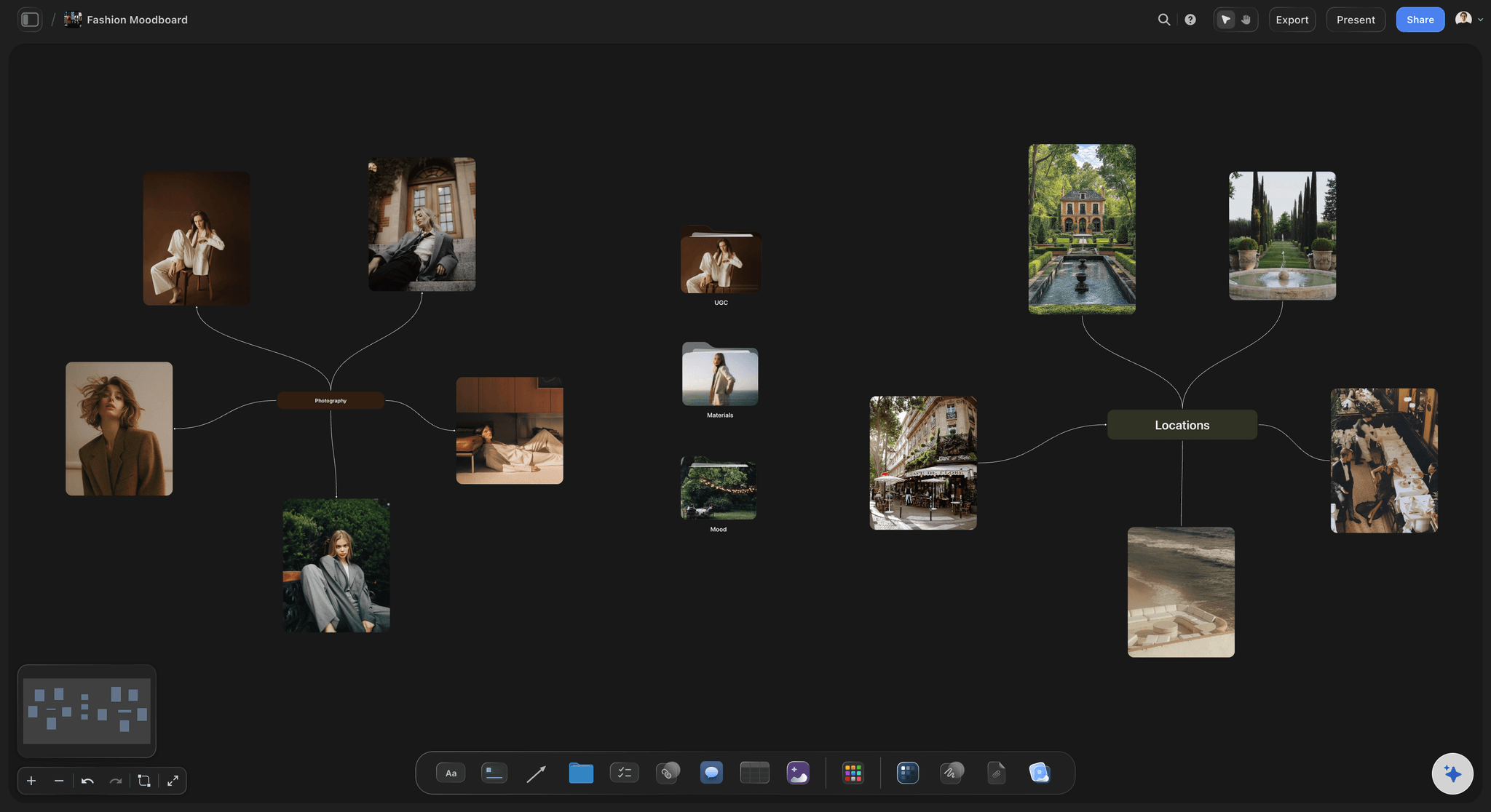
References grouped, not piled
Light on one wall, colour on another, attitude and location on their own. A stylist can pull from a grouped board. Nobody can pull from fifty images in a folder.
See the fashion moodboard →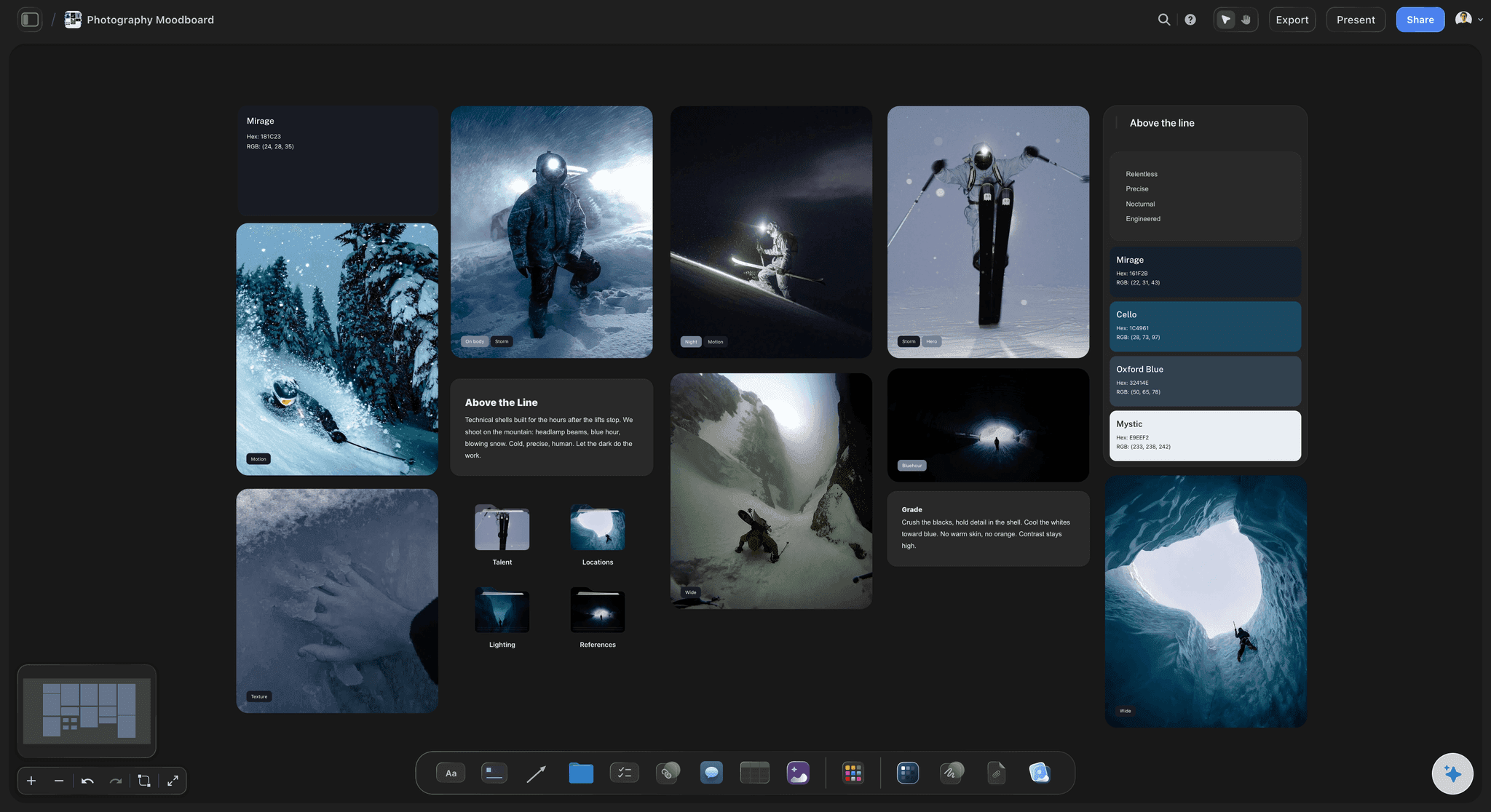
The cast
Options, agencies and availability
Three or four faces per role with their agency, their dates and the pictures that made you shortlist them. Show the editor a wall, not a paragraph.
See the casting board →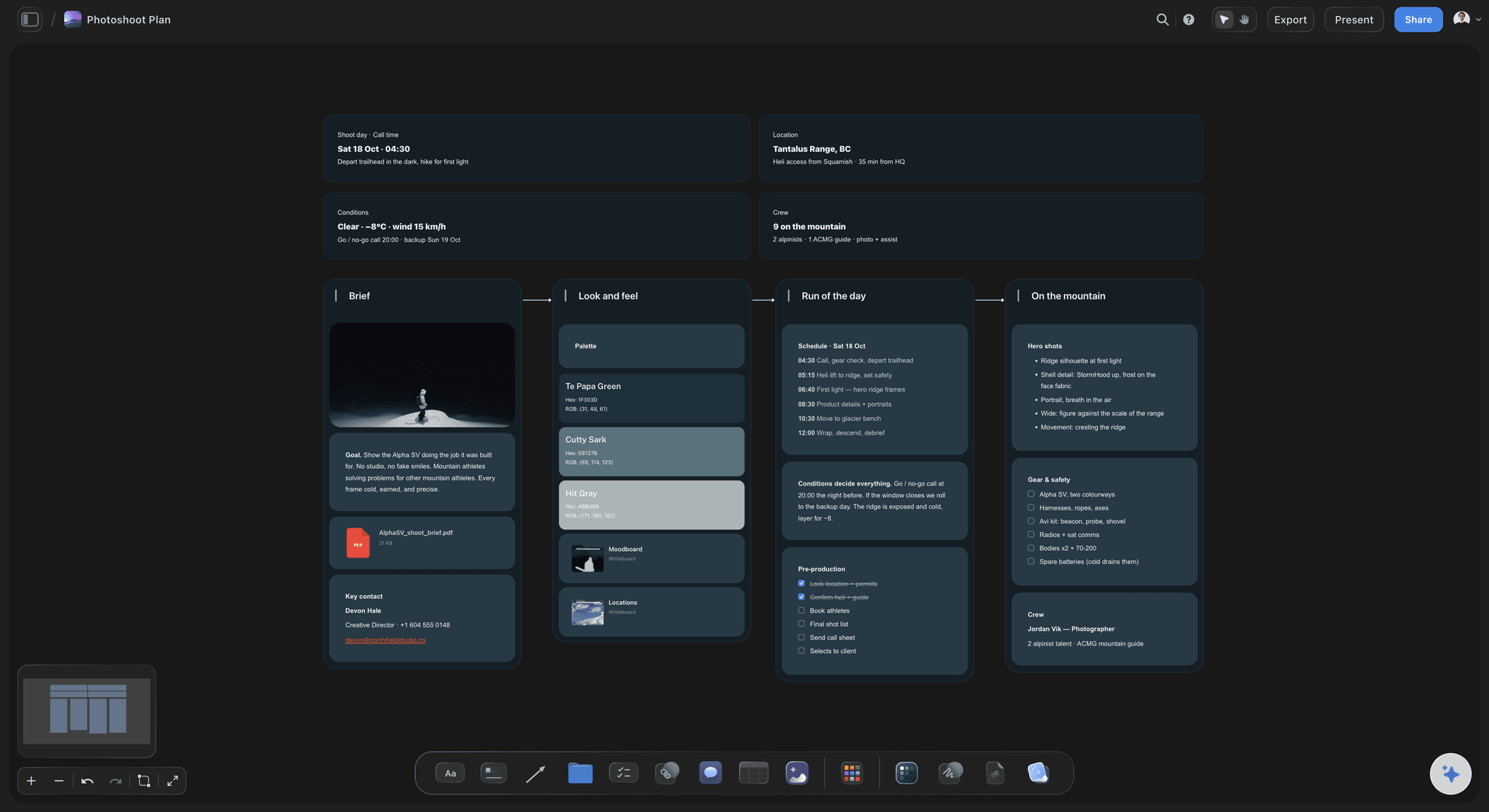
The pull
What was asked for, what arrived, what goes back
A row per piece with the showroom it came from, the look it belongs to, the date it arrived and the date it is due back. The returns column is the one that protects your stylist.
See the wardrobe planner →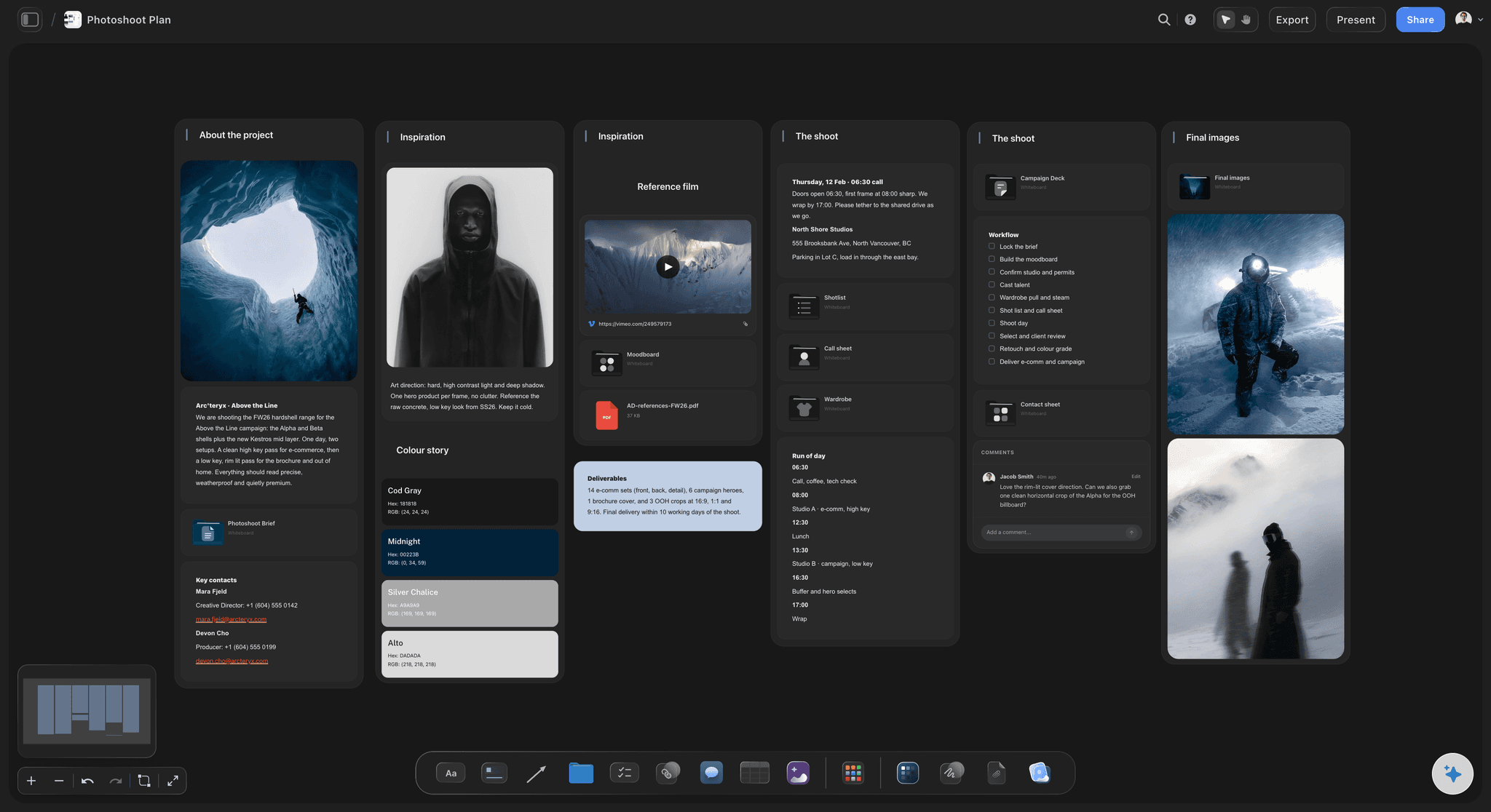
The day
Looks in order, with the light they need
Each look gets a time, a location and a note about the light. Shoot the window look while the window is working, and put the heaviest hair and makeup first.
See the photoshoot call sheet →The board is the tear sheet's paperwork.
Credits, returns and selects stay on the same board as the pictures, which is where you look when the magazine asks for a spelling three weeks later. Storyflow is paid-only during early access, with plans from $7.99 a month billed annually ($9.99 monthly). A free plan launches before the end of 2026, and anyone a paid member invites to a board joins free.
Unlimited boards, image uploads and files on every paid plan
Invite the stylist and the hair and makeup artist without buying them seats
200+ Tactics, including moodboard and shot list boards to start from
Whole-board PDF export for the day and for the editor
Presentation mode for pitching the story to a publication
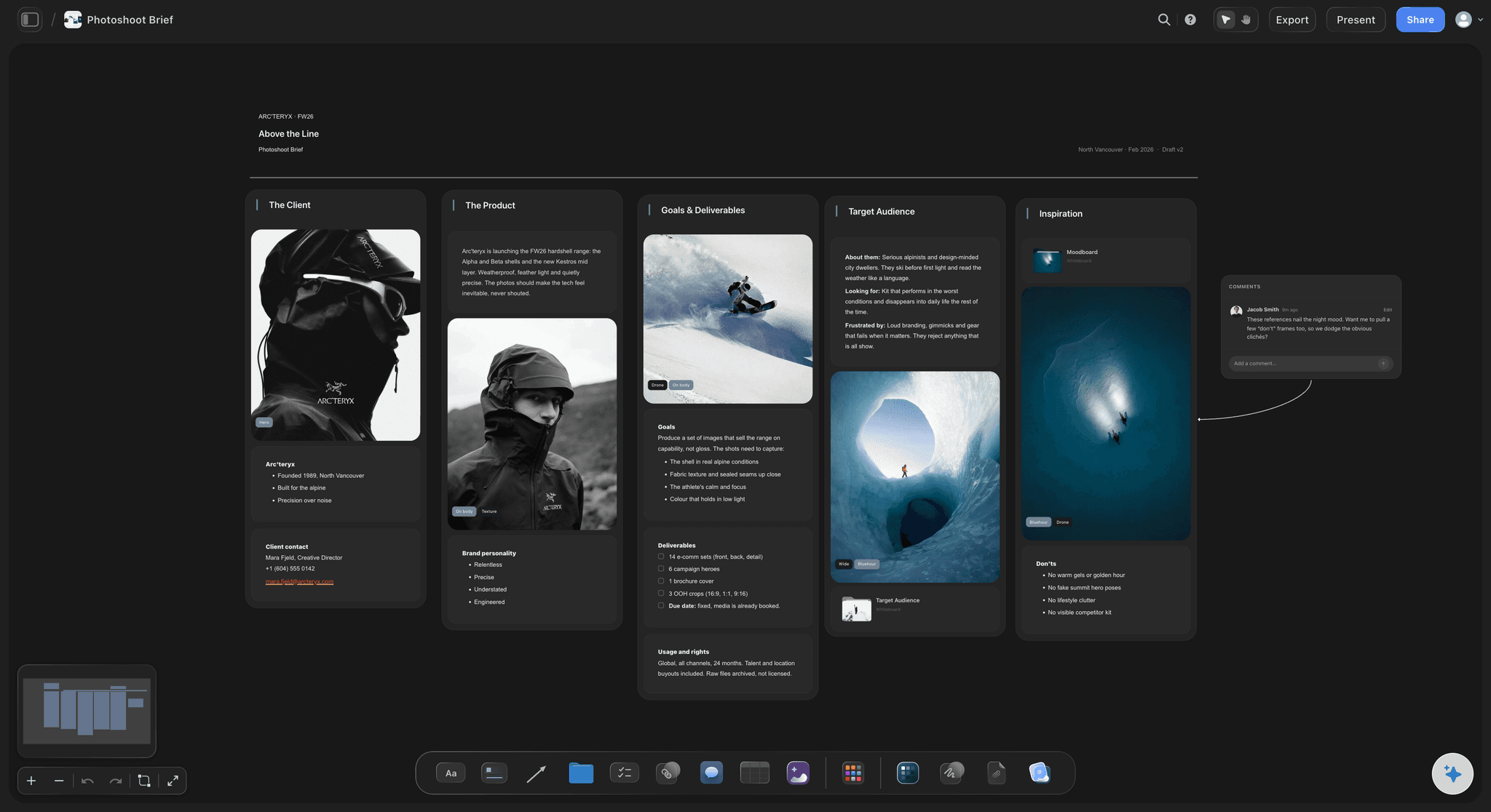
Built for people with taste
Small budget, many moving parts.
The planning is the budget. It is the only thing you have more of than money.
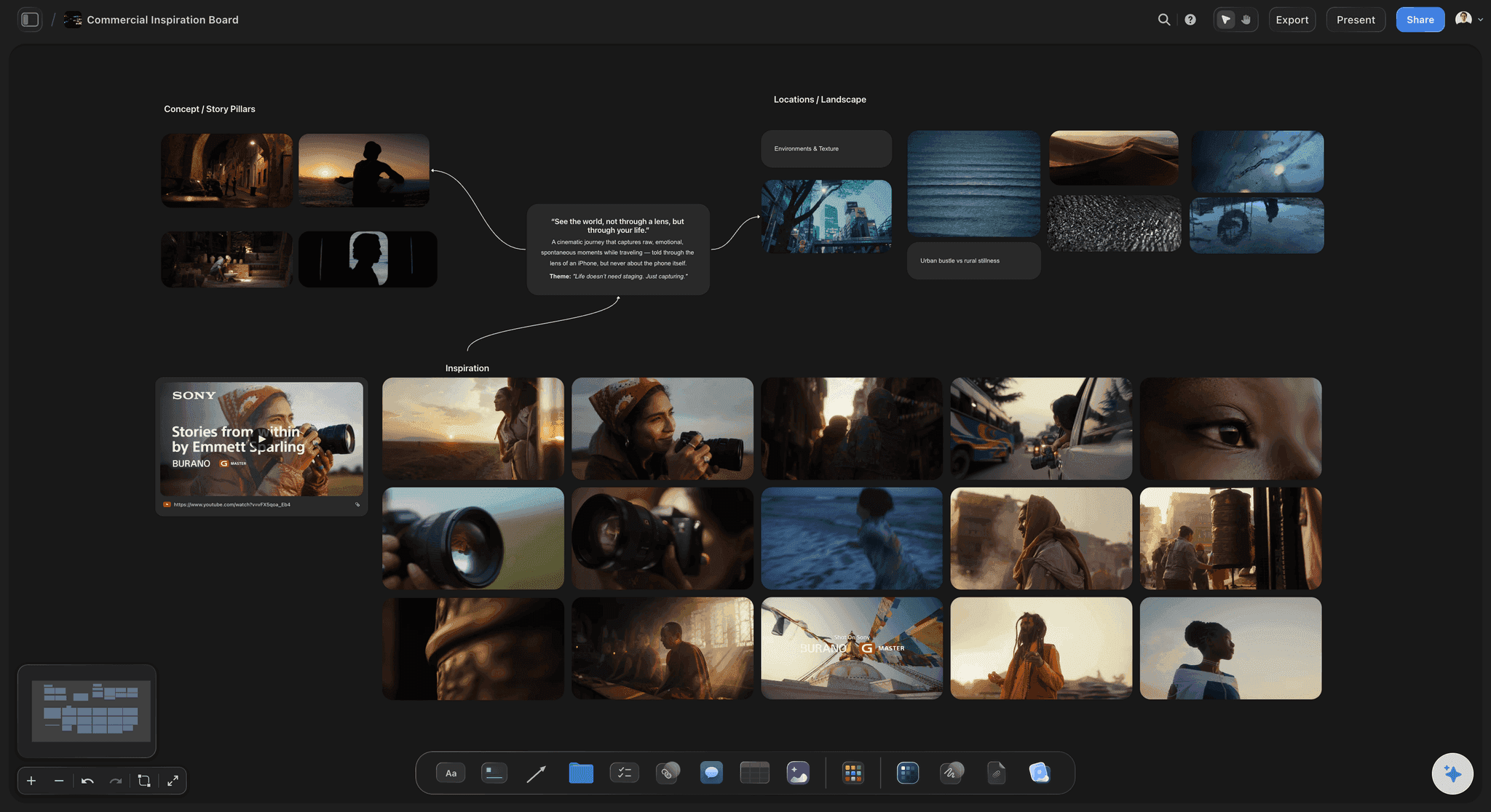
The idea
A story, not a mood
One sentence at the top of the board: What this set of pictures is about, written plainly. Everything else on the board is judged against it, which is how you know what to cut.
References grouped by decision: Light, colour, attitude, location. A stylist reading a grouped board knows what to pull. A wall of beautiful pictures with no groups just raises the pressure.
The rhythm of the pages: Wide, close, still, moving. Lay the frames out in the order they will run so the set has a shape instead of eight versions of the same picture.
Sketch a look before you shoot it: On Pro and Max the AI can draw a frame from your description, which is useful for showing an editor an idea that does not exist yet. The real pictures still come from the day.
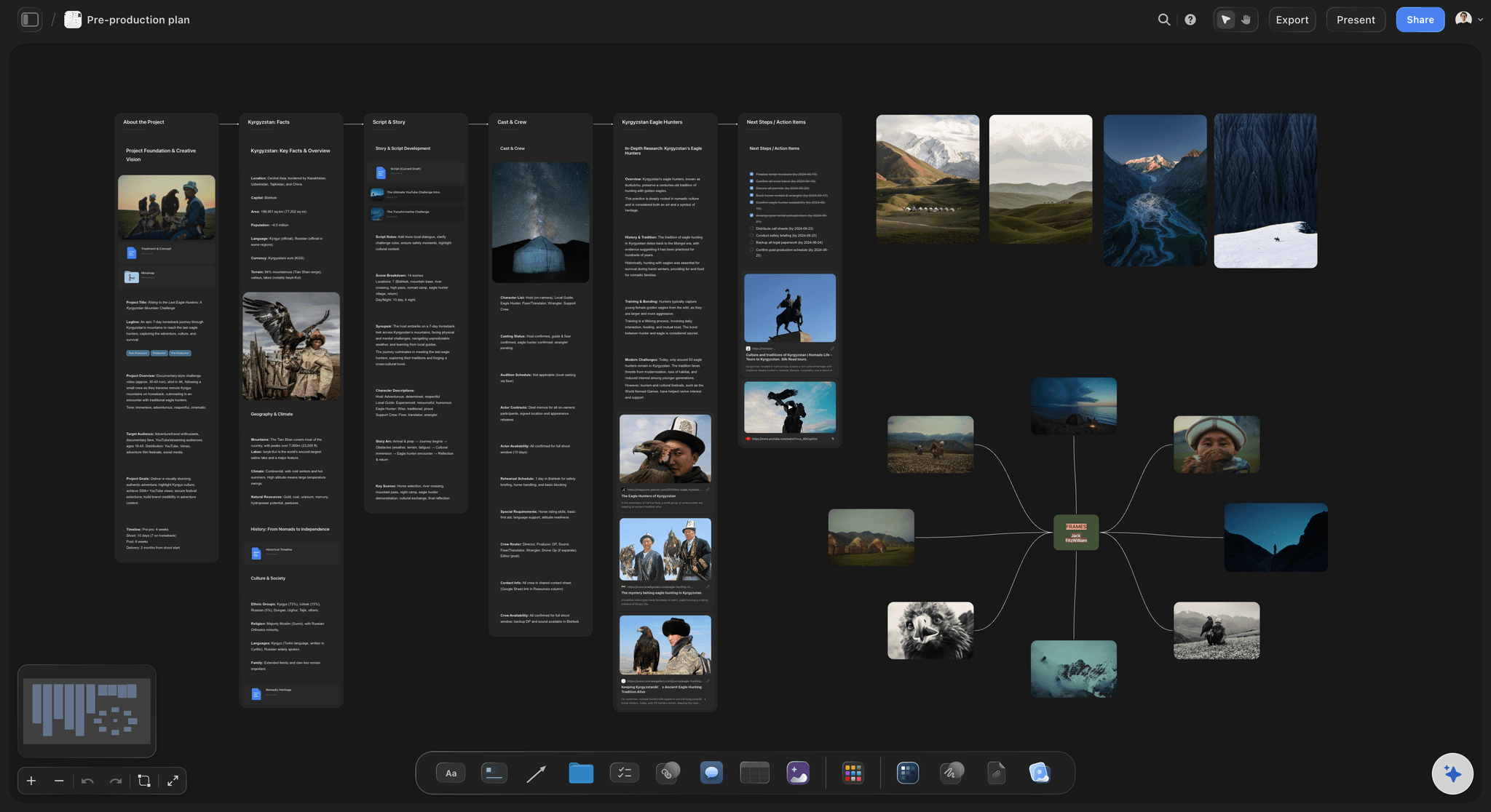
The people
Booked in the order they disappear
Stylist and hair and makeup first: The people who make an editorial look like an editorial are booked weeks ahead. Casting can move later; a great stylist on your date cannot.
Options, not a single hope: Three or four faces per role, each with an agency and their availability. One cancellation should cost you a phone call, not the shoot.
Everyone reads the same board: Send the link. The team opens it in a browser with no account, and signs in only to leave a comment on the look they are asking about.
Credits collected as you go: Names, handles and spellings written down on the day rather than reconstructed a fortnight later from memory and a group chat.
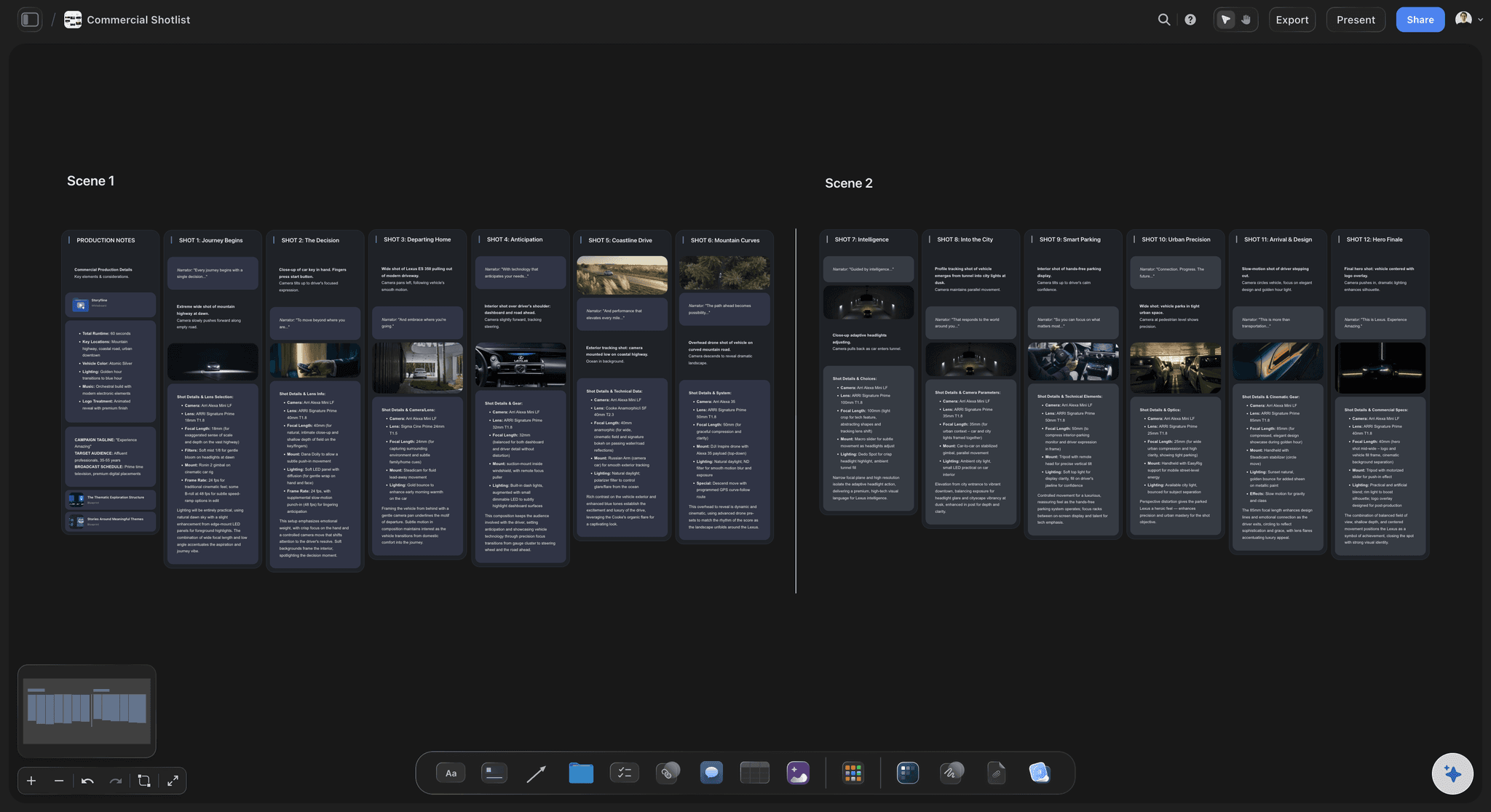
The clothes
A pull is a loan with a deadline
Requested, arrived, shot, returned: Four states, one row per piece. The gap between requested and arrived is the thing you check every morning in the fortnight before the shoot.
Every piece knows its look: Tie each garment to a look number so nothing gets photographed twice and nothing gets missed while it is hanging on the wrong rail.
The returns list is written before the shoot: Who takes what back, to where, by when. Late returns are how a stylist loses access to a showroom, which costs far more than one story.
Shot list grouped under the look: Frames listed under the look they belong to, so nobody has to hold a rail plan and a shot list open at the same time.
Explore templates for your project
Every template opens as a real, editable board on the infinite canvas. Pick the closest fit and make it your own.
Pre-Production
Pull the brief, script, shot list, and moodboard into one pre-production hub so the whole shoot is planned in one place.
One app instead of five
Where Storyflow fits on an editorial.
It holds the plan and the pictures together. It does not chase your samples.
Storyflow
Recommended
Story, references and shot list on one board
Casting options shown as a wall of pictures
Wardrobe pull tracked to returns
Run of day written look by look
View-only link, no account to read
Sample call-ins with PR showrooms
Releases, contracts and e-signature
Film production tools
Story, references and shot list on one board
Casting options shown as a wall of pictures
Wardrobe pull tracked to returns
Run of day written look by look
View-only link, no account to read
Sample call-ins with PR showrooms
Releases, contracts and e-signature
Shared folders and chat
Story, references and shot list on one board
Casting options shown as a wall of pictures
Wardrobe pull tracked to returns
Run of day written look by look
View-only link, no account to read
Sample call-ins with PR showrooms
Releases, contracts and e-signature
What creators are saying
Join early creators getting structured workspaces and AI that remembers their projects
“Storyflow has sped up my workflow by at least 3x, which means more flow state and more projects I can actually ship. It truly changed the way me and my team create.”

Reilin Joey
Director & YouTuber
“One prompt gets me a structured board. But the tactics are my favorite. I run my YouTube scripts through them and my intros and retention got better. It's amazing.”

Justkay
YouTuber & Freelance Filmmaker
“I used to juggle five apps to plan a project. Now I describe what I am making and get boards, lists, and a schedule. All in one place.”

George
@fernwehchronicles
Editorial photoshoot questions
What photographers ask before planning their first one properly.
An editorial photoshoot is a set of pictures made to tell a story for a publication rather than to sell a product: a series of six to twelve frames with a point of view, usually shot with a stylist, hair and makeup and cast across one day. Storyflow is where photographers plan one on a single board, from the story and the casting through the wardrobe pull and the run of day to the credits.
Storyflow was made for this exact job: the story and references, the casting options, the wardrobe pull as a table of pieces and returns, the locations, the run of the day by look, and the credits the magazine needs, all on one board the stylist and the artist open from a link. Calling in samples and handling showroom paperwork is still done off the board.
The difference is who decides and who pays. On a commercial job the client owns the brief, the fee is real and usage is negotiated. On an editorial the idea is usually yours or the editor's, the budget is small, and you are paid in the work, the tear sheet and the credit. Because you cannot spend your way out of a problem, the planning is the budget.
Start with the story in one sentence. Group your references by what they decide: light, colour, attitude, location. Book the stylist and hair and makeup first. Gather casting options, hold a location, start the wardrobe pull, lock looks against locations and light, write the run of day, then shoot, select, retouch and send credits. Storyflow keeps all of it on one board.
Start about eight weeks out for a one day story. Story and references at eight, stylist and hair and makeup at six, casting options at five, cast and location at four, the pull at three, looks locked at two, call sheet and returns plan at one. Two days after the shoot, selects. A week later, retouched files and credits.
An editorial call sheet carries call times for crew and talent with agency numbers, the location and how to get in, the hair and makeup order, the looks in shooting order with their times, kit per setup, lunch, wrap and the returns plan. Editorial days run on looks rather than scenes, which is what makes them different from a film call sheet.
Track the pull as a table with one row per piece: where it came from, which look it is in, when it arrived and when it goes back. Watch the gap between requested and arrived every morning in the fortnight before. Storyflow does not call in samples or handle showroom paperwork; it keeps the list that stops pieces going missing.
With one hair and makeup artist and one changing area, six is a full day. Budget about forty five minutes of shooting and twenty minutes of change and touch up per look, so each one costs about sixty five minutes. Add the first face in the chair at the start, which is usually ninety minutes on its own.
Yes. Describe the story and it proposes looks, a shot list and a schedule, and it reads files you attach if you already have a brief. On Pro and Max it can also draw a frame from your description, which helps when you are pitching an idea that has not been shot yet. You decide what survives.
Yes. Storyflow's view-only link opens in any browser with no account, so the stylist, the artist and the models can read everything. Signing in is only needed to leave a comment, and anyone a paid member invites to a board joins free.
Collect credits on the day, on Storyflow's board, not from memory afterwards. Every garment with its brand, every person with the spelling and the handle they use. Publications have a credits deadline that is earlier than you expect, and a misspelled name is the mistake people remember longer than a soft frame.
Storyflow lets you drag any look or sample row wherever you want it on the board. It does not sort a table for you, so the order is the one you set by hand. Most people keep the pull grouped by showroom, because that is how the returns happen, and keep the looks in shooting order, which a date sort would scramble.
No. Storyflow runs in the browser and there are no native mobile or desktop apps. The team opens the link on a phone on the day, and you export the whole board as a PDF for anyone who wants it on paper or offline.
More from Storyflow
Art direction board
Fashion moodboard
Casting board
Wardrobe planner
Photoshoot call sheet
Photoshoot moodboard
Photoshoot planning
Location scouting app
Lighting plan maker
Shot list template
Photography style guide
Storyflow for photographers
Photography client questionnaire
Photography rate card
Shot list software
Photography shoot plan
Start with the story. The rest is a list.
Casting, the pull, the locations and the day, on one board your whole team can open.