
Sharper briefs, sent ultra fast
A client questionnaire
where every answer changes something.
Ask the eleven questions that move the price, the schedule and the kit list. Keep the answers on the same board as the moodboard and the shot list they turn into.


Creatives working for these brands already got early access
- Red Bull
- Canon
- Artlist
- Porsche
See how easy it is to get started
Watch a real project come together, from a blank board to a finished plan, clicked through step by step.
Start from a ready-made template
Pick a board to see what you can build, then let AI fill it in. Every template is a real, editable starting point on the same infinite canvas.

Creative Brief
Capture the objective, audience, and message for a creative so everyone works from the same brief.
What is a photography client questionnaire?
A photography client questionnaire is the set of questions you send before a shoot so you learn what the client actually wants while there is still time to plan for it. Storyflow is an AI visual workspace that keeps the questionnaire with the shoot on one infinite canvas: the questions, the client's answers, their own reference pictures and the shot list written from them. Send the board as a link and the client reads it in any browser without an account.
Most questionnaires fail for the same reason. They ask questions that are useful to the photographer's filing system (date, venue, package) and almost none that are useful to the photographer's planning. A form that captures a postcode but never asks where the picture will be used has collected admin, not a brief. The test for keeping a question is simple: if no answer to it would change what you do, charge or pack, cut it.
This is the bank to start from, grouped the way it is useful. About the picture: what is it for, where will it be seen (print, web, a billboard, a shop window), what is the first thing someone should feel when they see it, and show me three pictures you love and one you hate. About the people: who is in it, how many of them, are any of them nervous or uncomfortable on camera, who cannot be photographed. About the day: where, what time, what happens before and after, is there a fixed moment we cannot miss, who else is working that day. About what you get: how many final images, in what shapes, how much retouching, by when, in what format. About money and rights: what is the budget, how long do you need to use the pictures, where, and does anyone need exclusivity. About risk: what has gone wrong for you on a previous shoot. That last one is the question people answer honestly and it tells you more than the rest combined.
Three answers change more than everything else on the form. Usage: pictures for a website and pictures for a paid campaign are the same day of shooting and a different invoice, so asking where and for how long is the difference between one number and another. Deliverable count: forty retouched images is not four with more effort, it is a second week, and it is the promise clients most often remember differently. Fixed moments: a portrait session with a two year old has one usable hour and a wedding has a ceremony that starts without you. Get those three wrong and no amount of good shooting on the day saves it.
Ultra fast from brief to board
Ask, pin, plan.
The questionnaire and the shoot plan live on the same board, so nothing gets retyped.
01
Start from the bank, cut to the shoot
Put the whole question bank on the board, then delete what this job does not need. A brand shoot needs usage and deliverables. A family session needs who is nervous and where it will hang. Send twelve good questions, not forty dull ones.
02
Ask for pictures, not adjectives
Three images they love and one they hate tells you more than any word they can offer. Ask them to drop the pictures straight onto the board, or paste links, and pin each one next to the question it is answering.
03
Turn the answers into a plan while they are fresh
Paste the replies and ask the AI for a first shot list, a run of the day and the things it noticed were missing. It proposes; you decide. The gaps it flags are usually the questions you forgot to ask.
04
Read the answers back to them
Send the board and let the client see their own words next to the plan you built from them. Anyone can read it from a link with no account, and signing in lets them comment on the exact line they want changed.
Questions, references, plan and record.
Storyflow holds the questions and what they turn into. Collecting typed answers is a job for a form tool such as Google Forms, Typeform or Jotform.
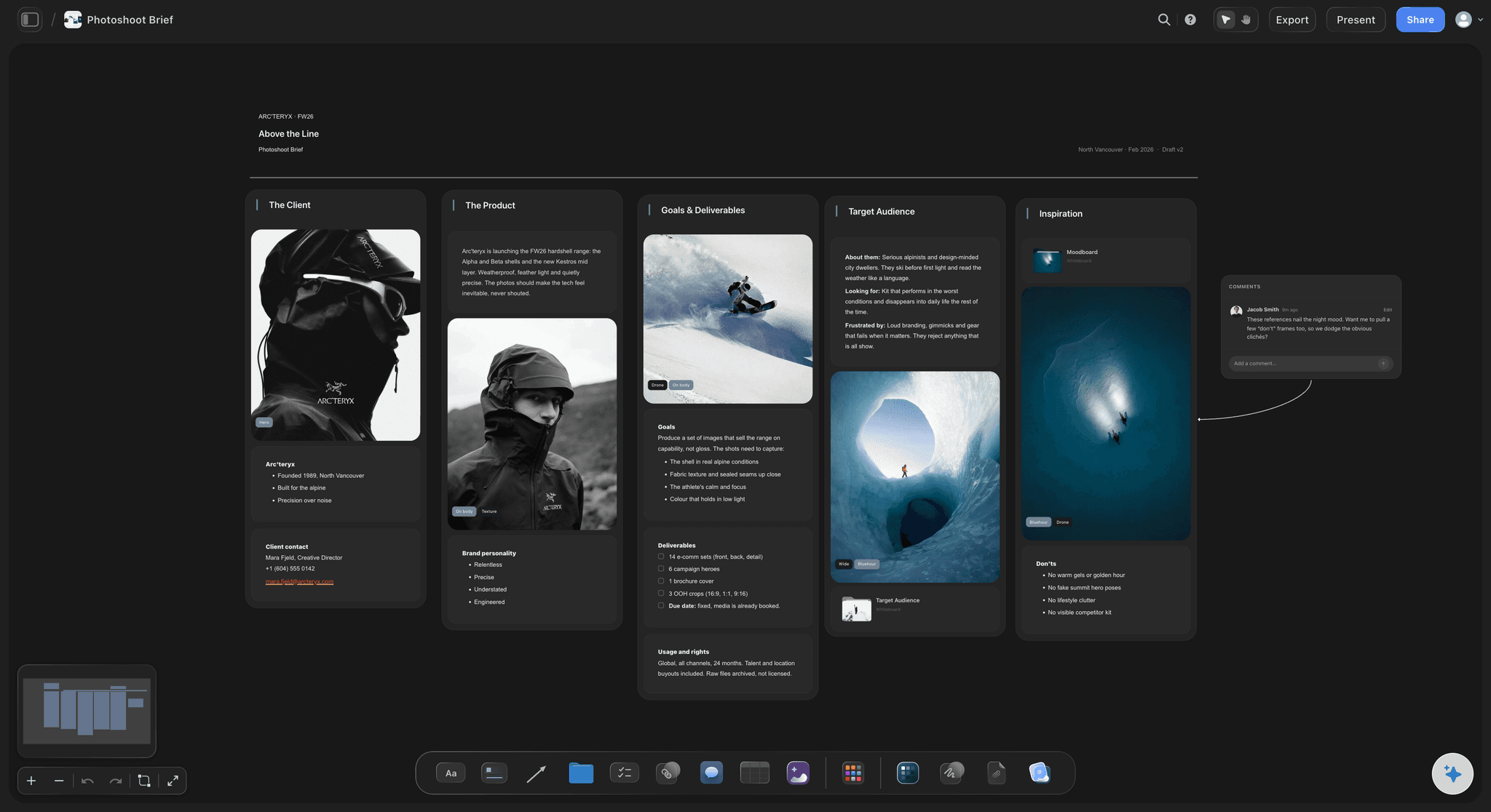
The questions
Grouped by what the answer changes
Price, schedule, kit and rights, each as its own group of rows. Reading the questionnaire back tells you where the risk on this job is sitting before you have priced it.
See the photoshoot brief board →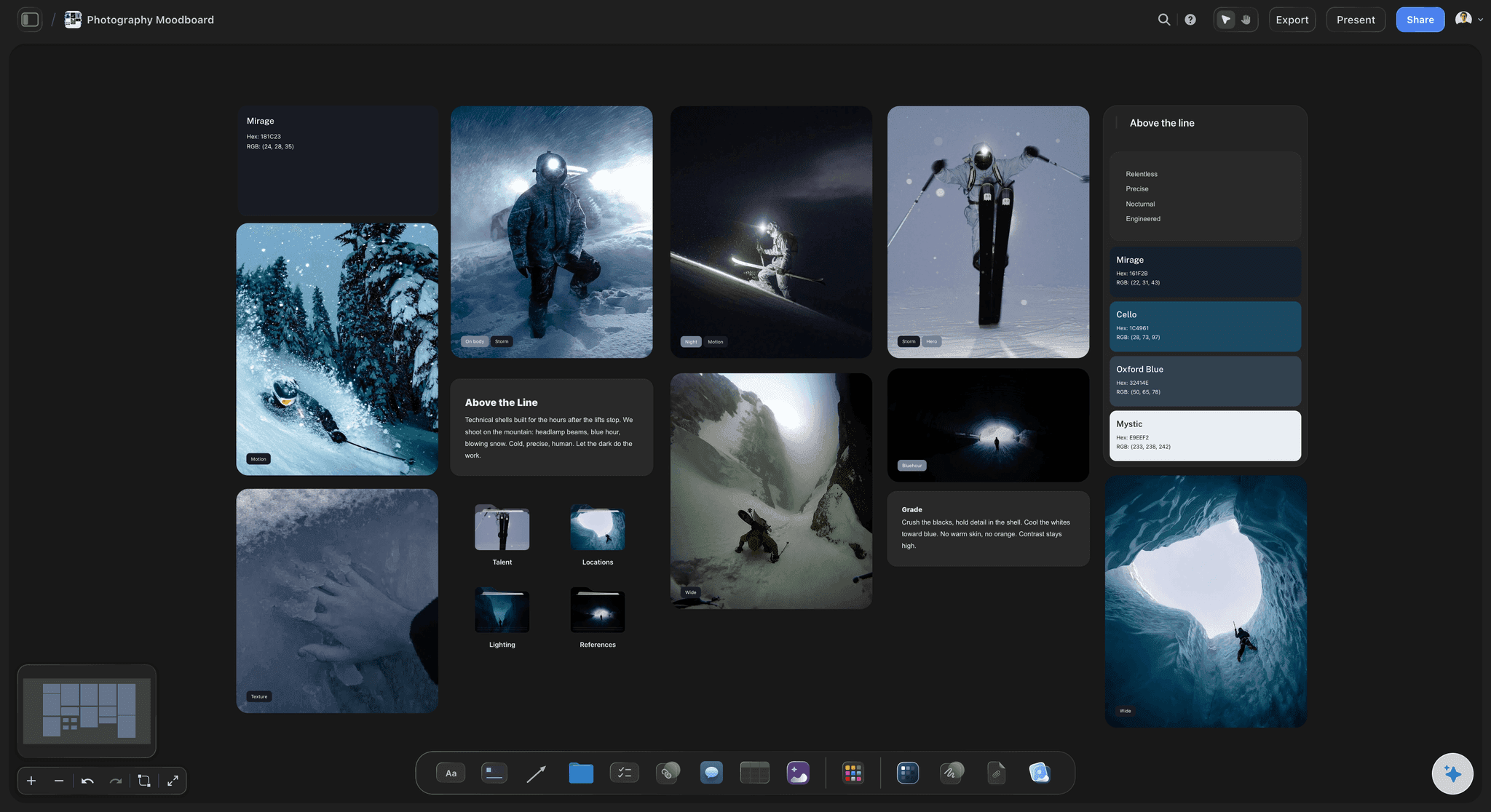
The pictures they send
References pinned to the question they answer
Clients say clean and warm and mean two different things. Their three favourite pictures sit next to the question about look, so you are both pointing at the same thing.
See the moodboard for clients →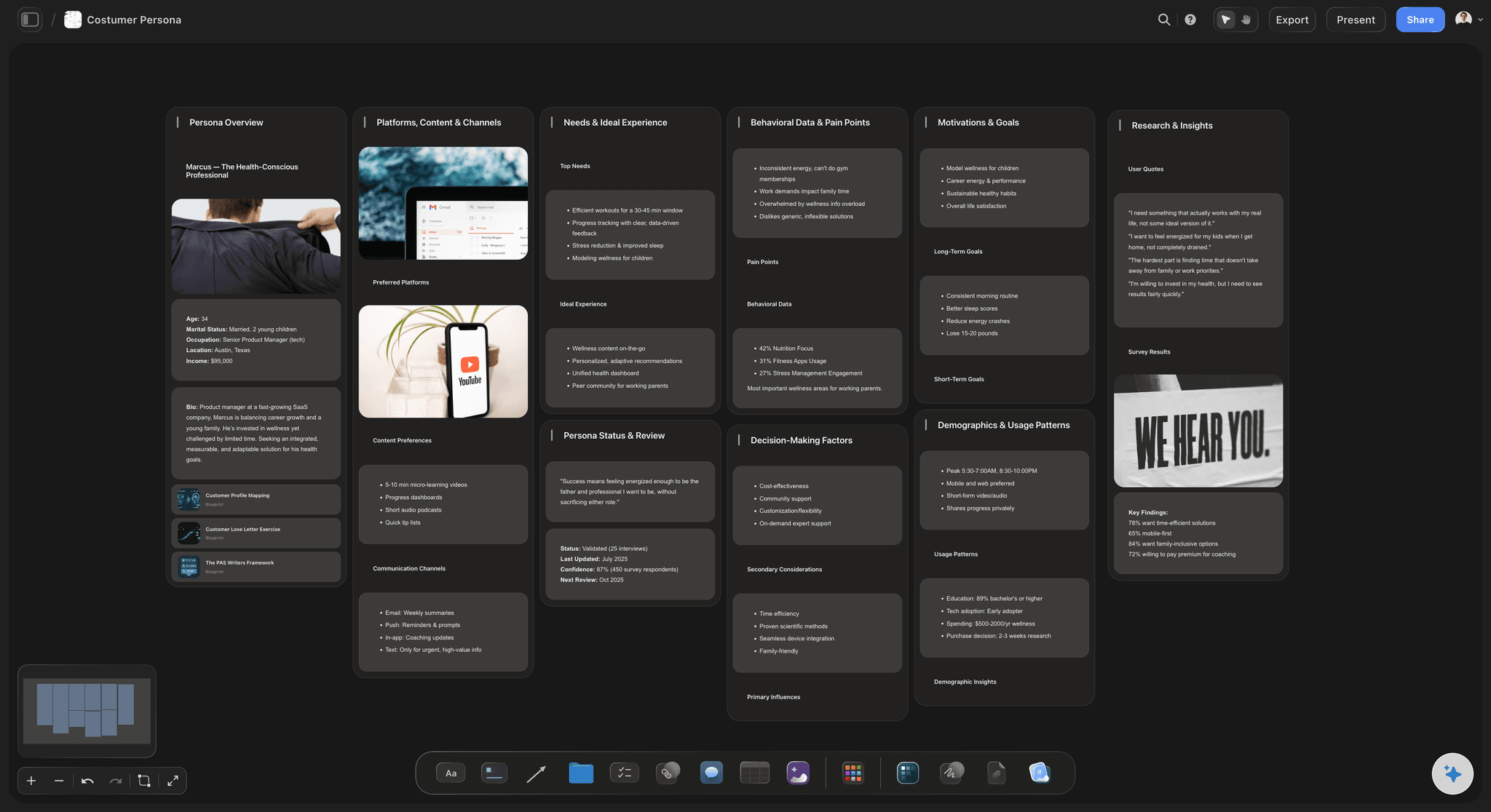
Who it is for
The people in front of the camera, written down
Names, ages, who is nervous, who cannot be photographed, who has to leave early. A short list, read the night before, that changes how you talk to a room.
See the audience board →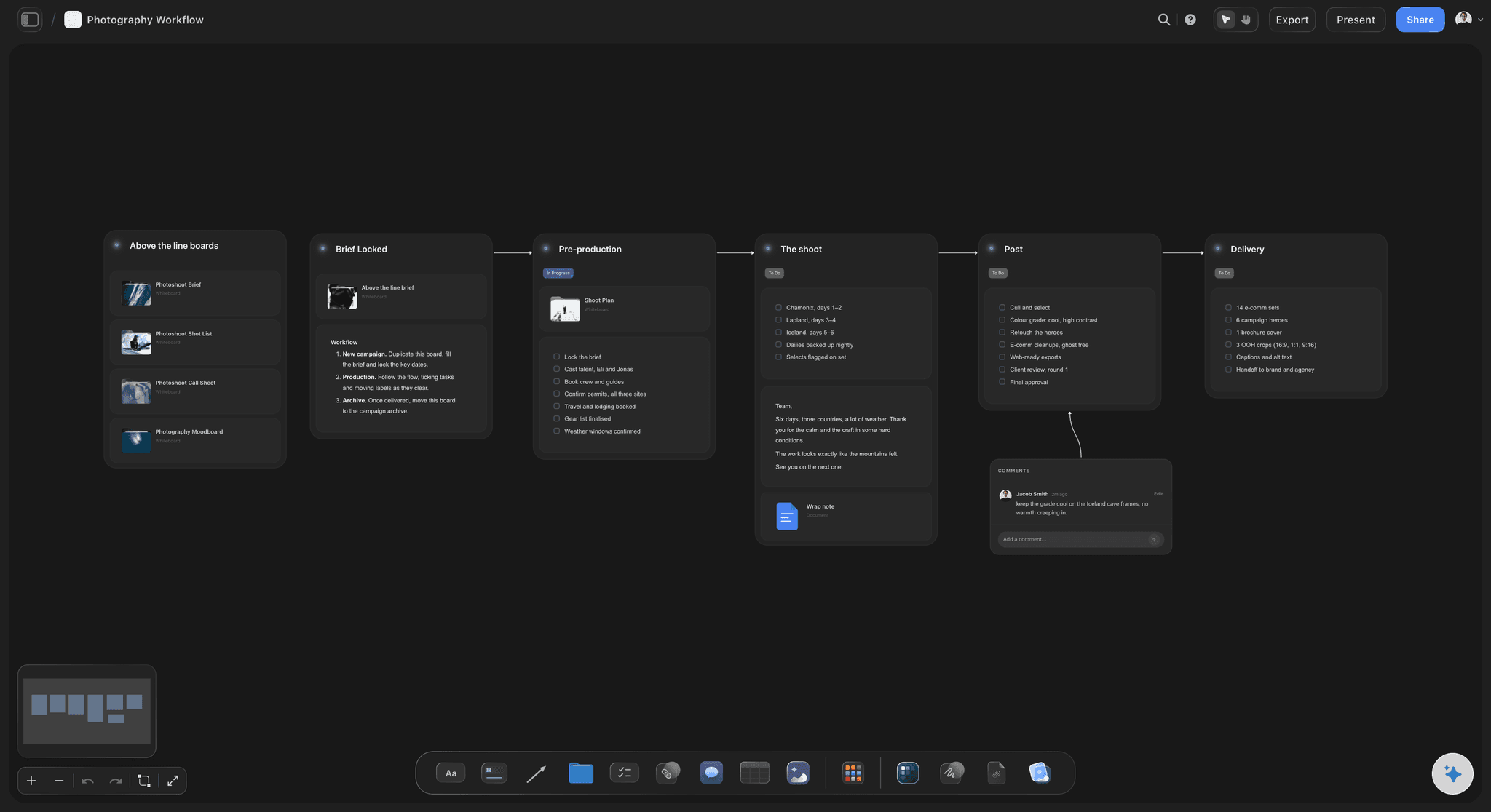
What happens next
Answers become the shoot plan
The replies sit above the shot list, the run of day and the delivery dates they produced. When the client asks in month two what they agreed to, it is on the same board as what you shot.
See the photography workflow board →One board per client, kept.
The answers, the references and the plan stay together after delivery, so the repeat booking next spring starts from what they already told you. Storyflow is paid-only during early access, with plans from $7.99 a month billed annually ($9.99 monthly). A free plan launches before the end of 2026, and anyone a paid member invites to a board joins free.
Unlimited boards, image uploads and files on every paid plan
Invite a client to the board without buying them a seat
200+ Tactics, including brief and audience boards to start from
Whole-board PDF export when the client wants the brief as a file
Presentation mode for walking through the answers on a call
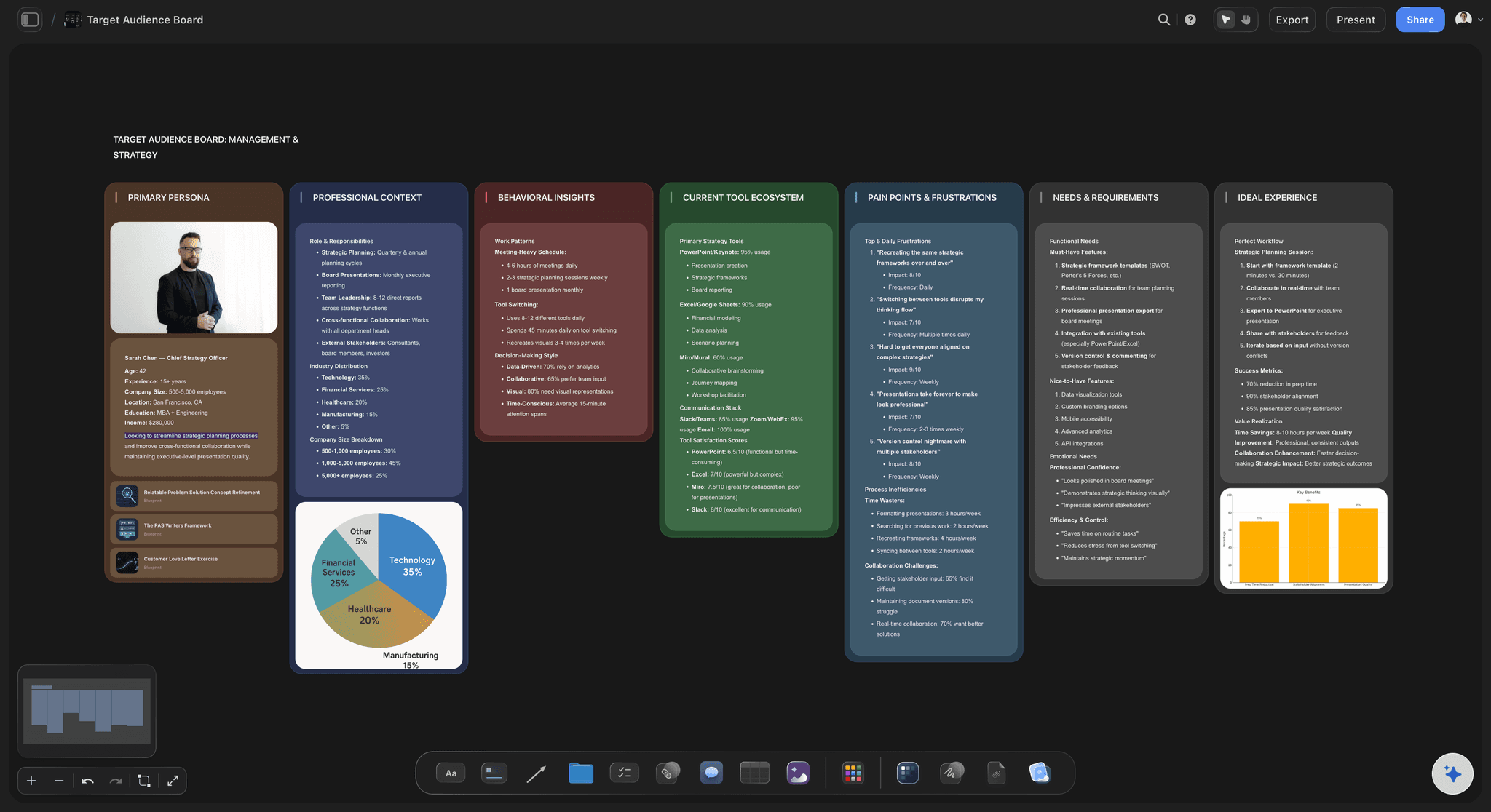
Built for people with taste
Sort your questions by what the answer moves.
If an answer moves nothing, it is admin. Cut it and ask a better one.
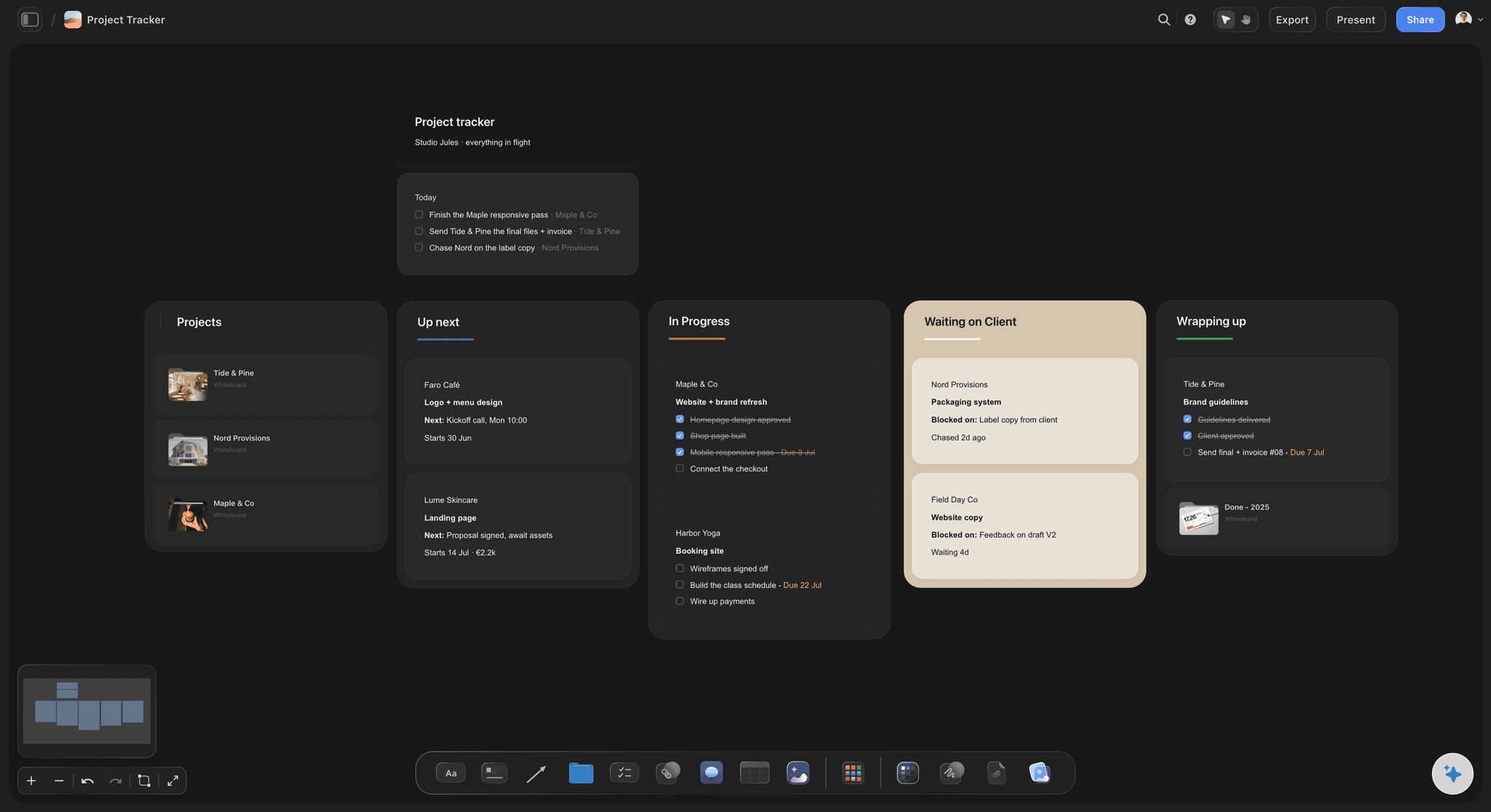
Answers that move the price
Usage, count and revisions
Where will the pictures be used, and for how long: A website, a shop window and a paid campaign are the same shooting day at three different fees. Ask before you quote, not after they ask for the files.
How many final images, retouched to what level: Forty finals is a second week of work, not a bigger export. Write the number down in their words and in yours.
How many rounds of changes are included: The question nobody asks and everybody argues about. Two rounds, written next to the price, ends the argument before it starts.
Put the numbers in a table that totals itself: Give the fee column a currency and a Sum footer. Change the usage line and the total changes with it, in front of the client.
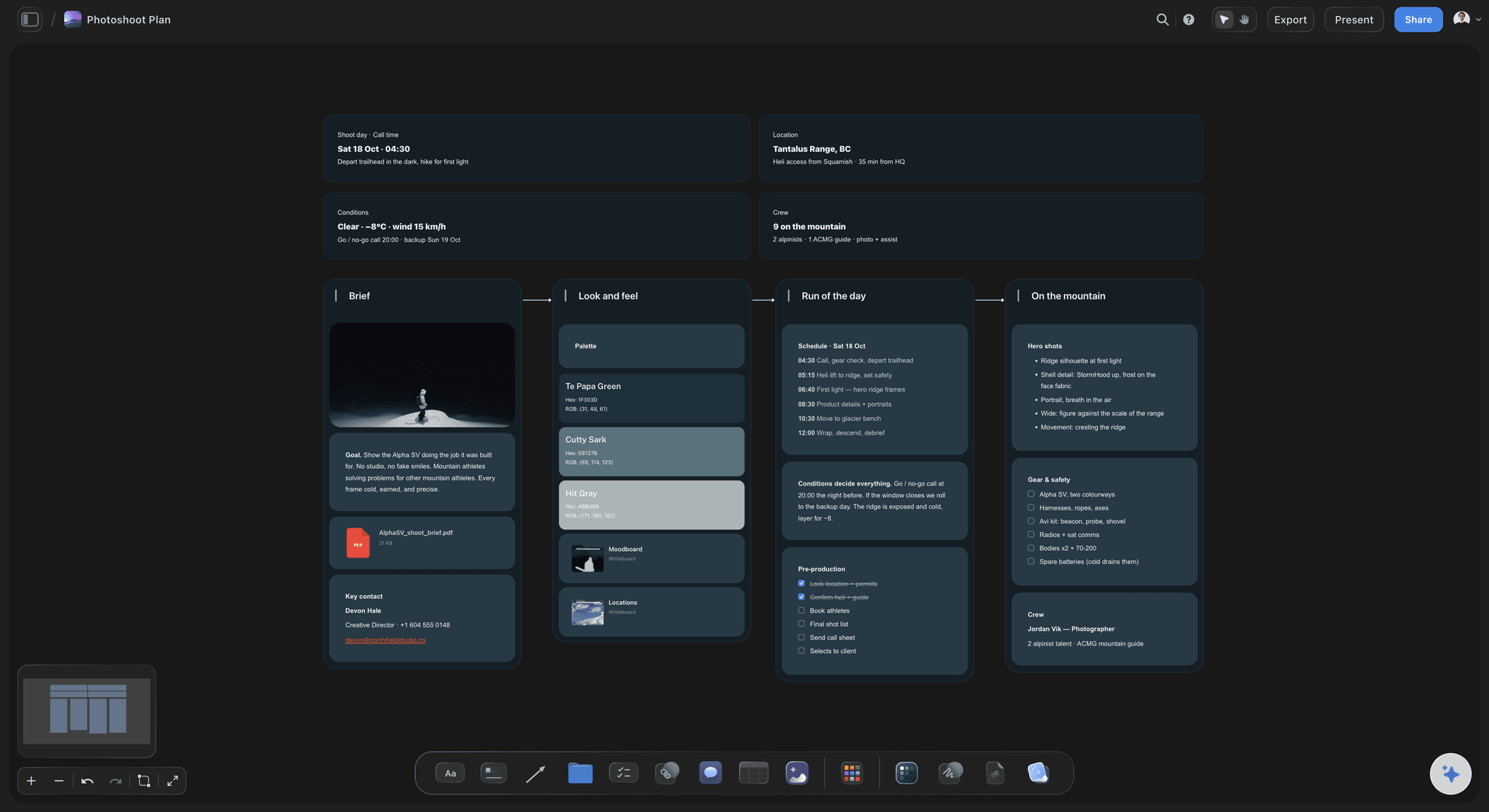
Answers that move the day
Fixed moments and the people in them
What cannot be moved: A ceremony, a store opening, a toddler's good hour, a model released at four. One fixed point is enough to rebuild the whole schedule around.
Who is uncomfortable on camera: Ask it plainly. Knowing which person needs ten minutes of warming up before anything is asked of them is worth more than a better lens.
What else is happening in that space: A working shop, a live office, a wedding breakfast being laid. The answer decides whether you get the room or share it.
Who can say yes on the day: Name one person. Shoots lose hours to a group of people with opinions and nobody with the final word.
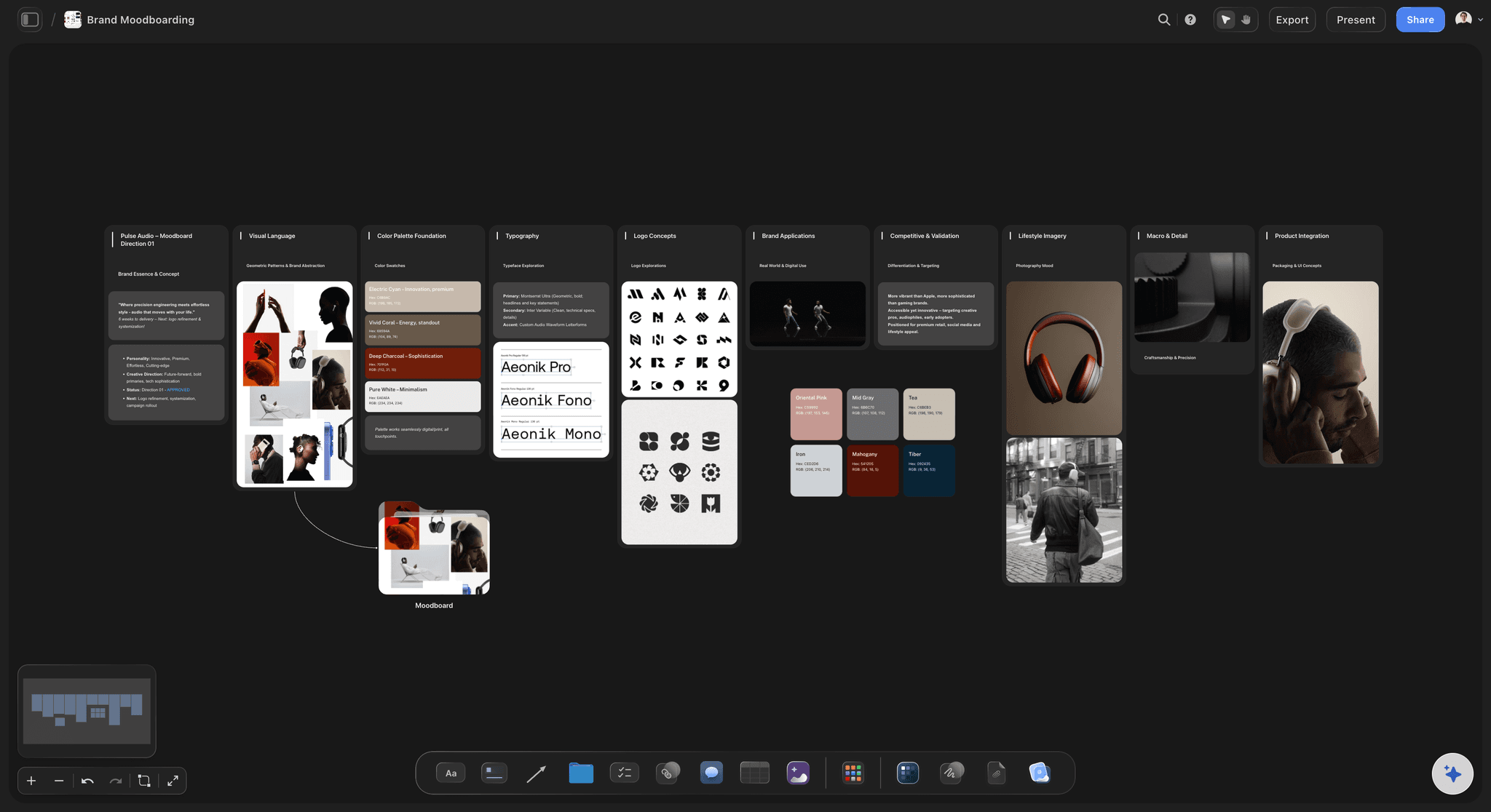
Answers that move the kit
Light, space and what you carry in
Send me a photo of the room: One phone snapshot answers ceiling height, windows, colour of the walls and whether your stands fit. Ask for it and pin it to the board.
What shapes do you need the pictures in: Tall for a phone, wide for a website header, square for a grid. It changes how you frame on the day, which is not fixable afterwards.
Is there power, and where: Sockets, a table for the laptop, a lift or three flights of stairs. Small answers that decide what you are willing to bring.
Show me one picture you hate: The strongest question in the set. People describe what they want vaguely and what they dislike exactly.
Explore templates for your project
Every template opens as a real, editable board on the infinite canvas. Pick the closest fit and make it your own.
Creative Brief
Capture the objective, audience, and message for a creative so everyone works from the same brief.
One app instead of five
How this compares to a form and an inbox.
It holds the questions and what they turn into. It is not a form builder and it does not sign anything.
Storyflow
Recommended
Questions sit beside the shoot they change
Client reference pictures pinned to the answers
AI turns answers into a first shot list
View-only link, no account to read
Collects typed answers from a web form
Contract, e-signature and deposit
Automatic reminder emails
Form and intake tools
Questions sit beside the shoot they change
Client reference pictures pinned to the answers
AI turns answers into a first shot list
View-only link, no account to read
Collects typed answers from a web form
Contract, e-signature and deposit
Automatic reminder emails
Email and a document
Questions sit beside the shoot they change
Client reference pictures pinned to the answers
AI turns answers into a first shot list
View-only link, no account to read
Collects typed answers from a web form
Contract, e-signature and deposit
Automatic reminder emails
What creators are saying
Join early creators getting structured workspaces and AI that remembers their projects
“Storyflow has sped up my workflow by at least 3x, which means more flow state and more projects I can actually ship. It truly changed the way me and my team create.”

Reilin Joey
Director & YouTuber
“One prompt gets me a structured board. But the tactics are my favorite. I run my YouTube scripts through them and my intros and retention got better. It's amazing.”

Justkay
YouTuber & Freelance Filmmaker
“I used to juggle five apps to plan a project. Now I describe what I am making and get boards, lists, and a schedule. All in one place.”

George
@fernwehchronicles
Client questionnaire questions
What photographers ask before they rewrite their intake.
A photography client questionnaire is the set of questions a photographer sends before a shoot to learn what the client actually wants while there is still time to plan for it. In Storyflow it lives on the shoot's board: questions grouped by what each answer changes, the client's own reference pictures pinned beside them, and the shot list and schedule written from the replies. The client reads the board from a link with no account.
Storyflow does this one end to end: the questions grouped by what each answer changes, the client's reference pictures pinned beside them, and the shot list and schedule written underneath from the replies. The client reads the board from a link with no account. Collecting typed answers as a form is not what it does, so Google Forms, Typeform or Jotform still gather the replies you paste in.
Ask what the pictures are for and where they will be seen, how long they need to use them, how many final images and how much retouching, who is in them, who is uncomfortable on camera, what time cannot move, what the room looks like, what shapes they need, what a good result would let them do, and three pictures they love plus one they hate.
A questionnaire that takes more than ten minutes to answer gets shorter, less true answers. Ten to fifteen well chosen questions beat forty. Cut any question whose answer would not change what you do, charge or pack, and put the rest in the order that matters to you, not the order they occurred to you.
The one worth the most is: show me one picture you hate. Clients describe what they want in adjectives that mean different things to different people, but they are exact about what puts them off. The runner up is where will these pictures be used and for how long, because that one decides the fee.
Storyflow is a board, not a form builder, so it holds the questions and the answers but does not collect typed replies. Use Google Forms, Typeform or Jotform for that, or HoneyBook or Bonsai if you want intake bundled with the contract. Paste the replies onto the board, where they sit next to the plan they change and stay searchable after the job.
Yes. Describe the job and Storyflow's AI drafts a question set, grouped by what each answer changes. Attach a past brief or an old questionnaire and it reads the file and works from that. It proposes the list; you cut it down to what this client will actually answer.
Yes. Paste the replies and ask for a first shot list, a run of the day and a list of what is still missing. The missing list is usually the useful part. You edit everything it proposes, because it is working from what the client wrote rather than from the room.
Ask for a specific number rather than a general request: three you love, one you hate. Send them the Storyflow board link so they can see where the pictures will go, and let them paste links if collecting files feels like work. Specific asks get answered; open invitations do not.
No. A wedding questionnaire and a brand questionnaire share about a third of their questions. Weddings need the group list, the fixed timings and family politics. Brand shoots need usage, channels, deliverable counts and who approves. Keep one bank of questions on the board and send a cut from it each time rather than one form that half fits every job.
Yes. Storyflow's view-only link opens in any browser with no account, on a phone or a laptop. To leave a comment they sign in. Anyone a paid member invites to a board joins free, so a client can be given proper access without buying a plan.
Storyflow lets you drag any question row into any position on the board. It does not sort a table for you, so the order is the one you set by hand. Since you cut the bank down per job anyway, most photographers keep it in groups and reorder as they build each one, which a priority sort would only get in the way of.
Storyflow holds the brief and the plan. It does not handle contracts, e-signature or payment: those belong to HoneyBook, Bonsai, PandaDoc or DocuSign. What Storyflow gives you is the agreed answers sitting on the same board as the pictures you delivered, which is what you reach for when a question comes up months later.
More from Storyflow
Creative client onboarding
Photography proposal
Photoshoot planning
Moodboard for clients
Photoshoot moodboard
Brand photoshoot planning
Wedding photography shot list
Product photography shoot plan
Client review board
Shot list template
Photography rate card
Storyflow for photographers
Photography style guide
Photoshoot call sheet
Editorial photoshoot planning
Photography shoot plan
Ask the questions that change the shoot.
The answers, the references and the plan they turn into, on one board per client.