
Ultra-fast planning, extremely simple
The part before
the ticket exists.
Creative teams already have somewhere to track tasks. What they do not have is somewhere for the stage before a task is knowable: a vague request, three possible directions, references, an argument, and eventually a brief. That stage decides the quality of everything downstream, and it usually happens in Slack and gets lost.


Creatives working for these brands already got early access
- Red Bull
- Canon
- Artlist
- Porsche
See how easy it is to get started
Watch a real project come together, from a blank board to a finished plan, clicked through step by step.
Start from a ready-made template
Pick a board to see what you can build, then let AI fill it in. Every template is a real, editable starting point on the same infinite canvas.

Mind Map
Branch one central idea out into themes and sub-points, then drag the connections around until the structure makes sense.
What does a creative team workflow tool actually need to do?
Hold the stage between a request arriving and a ticket being writable. Every creative team has this gap. Someone asks for a campaign, a rebrand, a video. Before that can become tasks, somebody has to work out what it actually is: who it is for, what it has to do, which direction it takes, what it rules out. That work is real, it takes days, and it produces the brief the tickets are derived from.
Task tools cannot hold it because it is not decomposable yet. That is not a criticism of task tools, it is what they are for. Putting exploratory work into tickets produces cards like "Explore directions" that sit in progress for two weeks and tell you nothing, because the substance is the thinking rather than the status.
So it happens in Slack, and the specific loss is the reasoning. In three months somebody asks why the campaign went with the second direction and the answer was a thread that has scrolled away. The decision survives, the reasoning does not, and the team relitigates the same question on the next project because nobody can remember what they concluded.
Storyflow holds this stage on an infinite canvas: the request, the references, the directions, the argument and the resulting brief, in one place that stays readable. The AI reads the whole active board plus up to five documents and three boards, so you can ask what a direction committed to and get the answer from what the team actually wrote. There is no approval workflow and no time tracking, so the tracker you use for delivery is untouched.
Ultra fast from brief to board
Four steps from a request to a brief.
After this the work is ticketable, and your existing tracker takes over.
01
Intake the request as it arrived
Paste the email, the Slack message or the three bullet points. Real requests are messy and the board should hold the mess rather than a tidied summary.
02
Explore in the open
References, directions and half-ideas on the canvas where the team can see them, rather than in one person's folder until it is ready.
03
Choose, and write down why
The chosen direction plus the sentence saying what it commits to and what it rules out. This is the artefact that survives.
04
Hand off a brief
The brief comes out of the board, and the tickets come out of the brief, in whatever tracker you already run.
The reasoning survives the project.
Which is what stops a team having the same argument on every brief for two years.
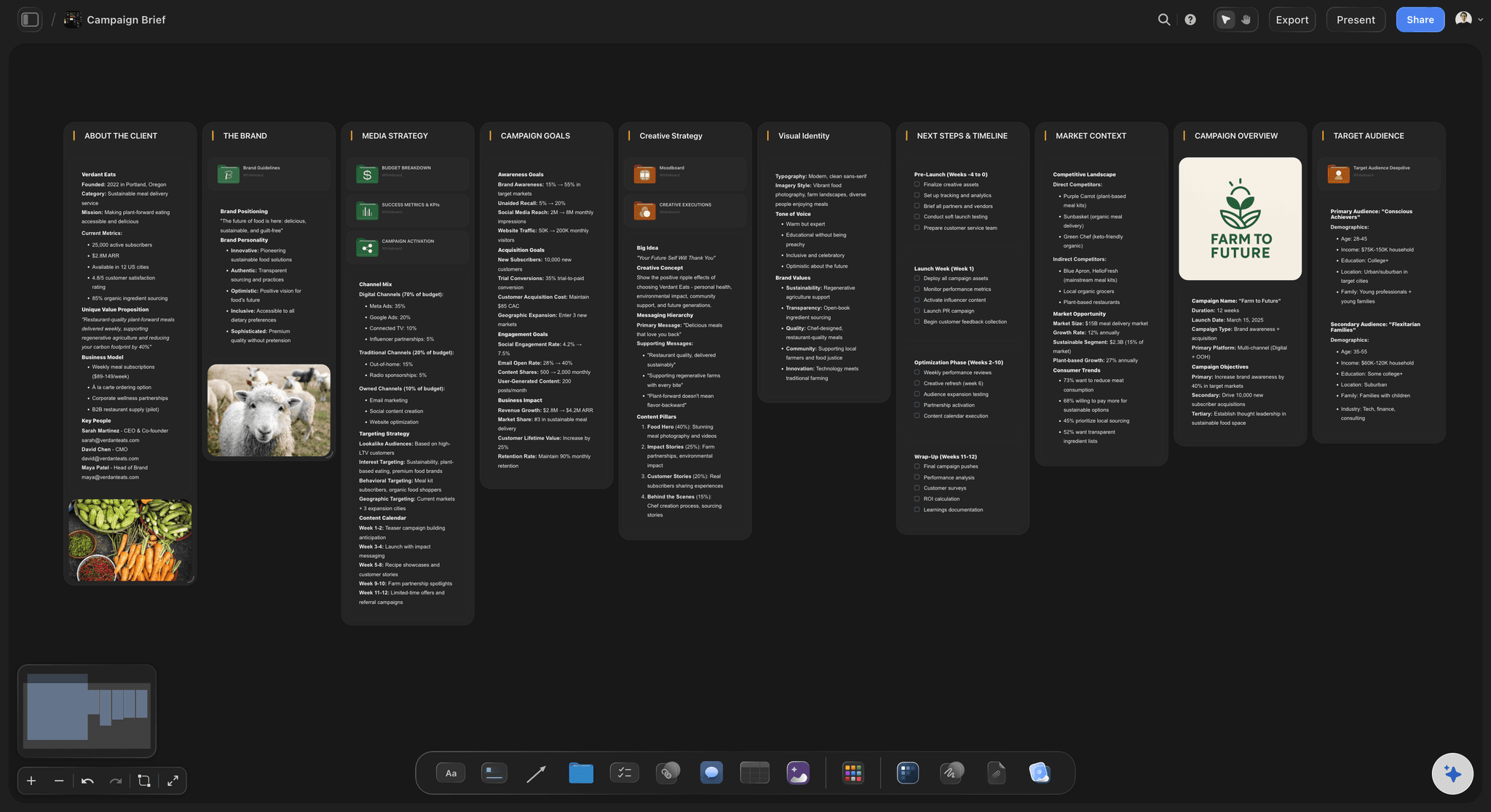
Requests arrive messy
Start from what you were actually sent
Paste the email thread or the three bullet points onto the canvas. The board makes the gaps in a vague request visible instead of hiding them behind a tidy summary.
See brief to project board →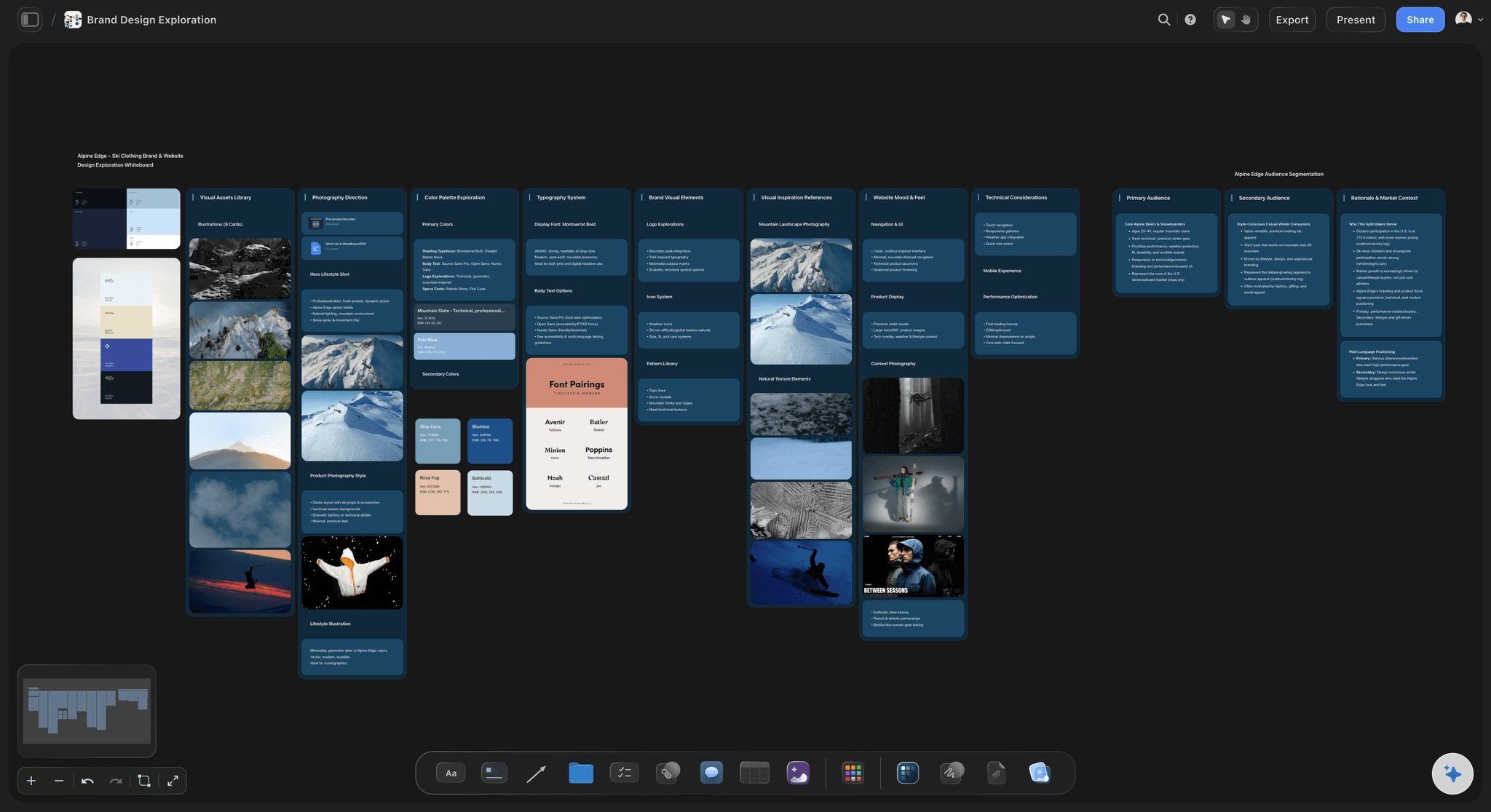
Explore where people can see
Directions side by side
Several directions on one canvas rather than sequentially in a thread, so the team compares rather than reacting to whichever was posted last.
See the creative operations tool →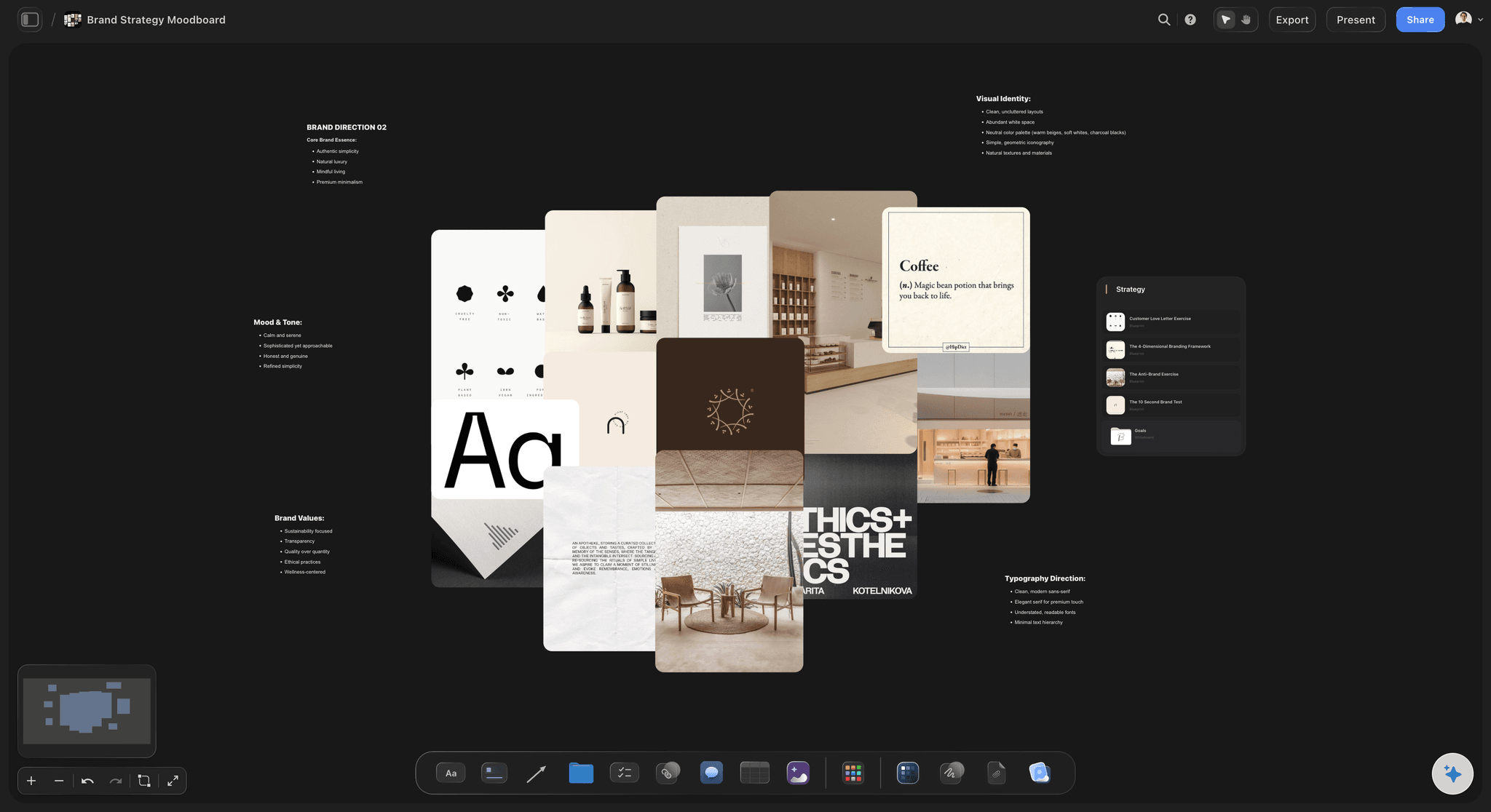
Decisions with their reasons
Answer "why did we do it that way?"
The chosen direction and the reasoning sit together on the board, so the question three months later has an answer that is not a scrolled-away thread.
See AI project memory →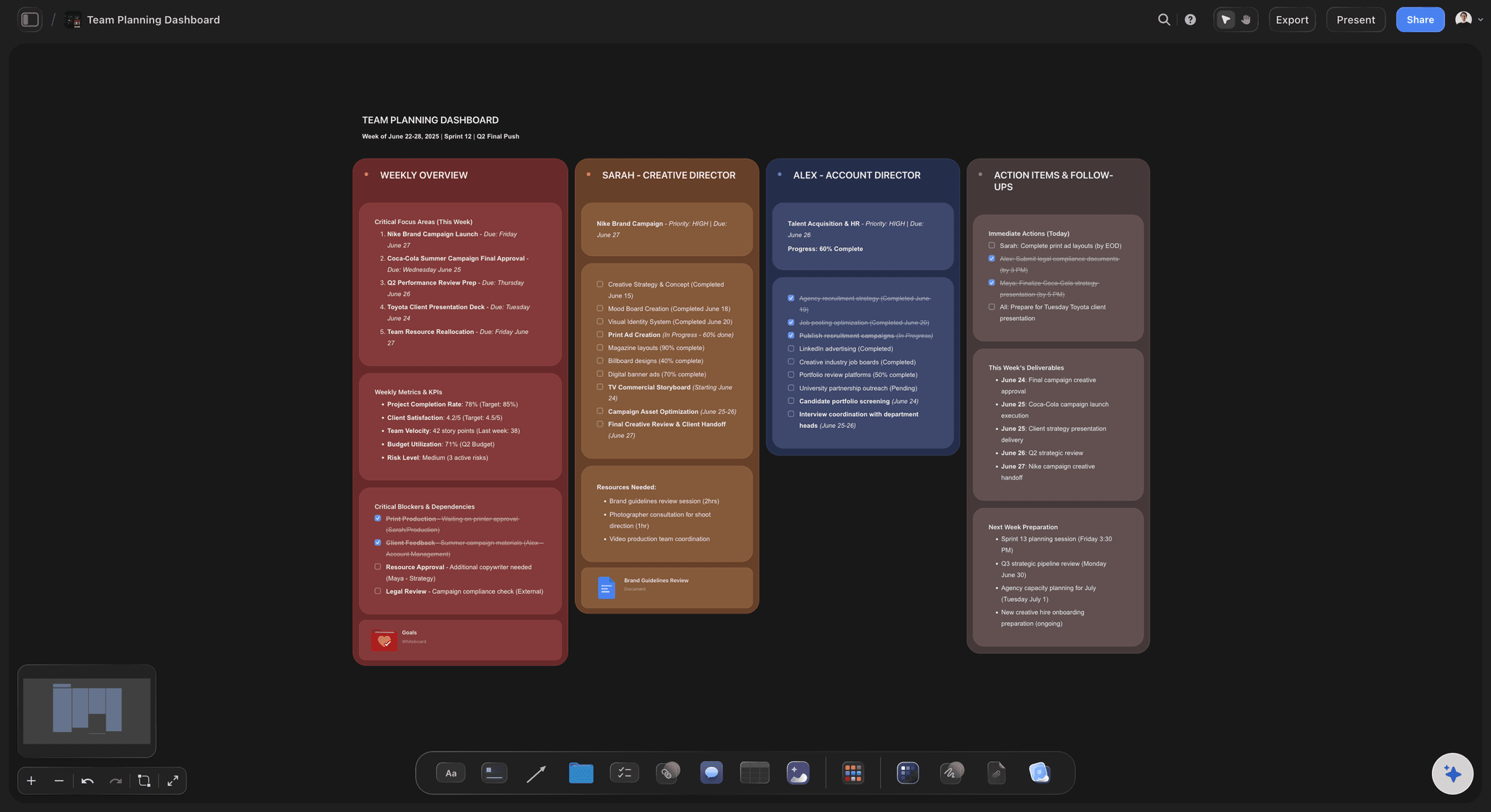
Your tracker keeps its job
Not another task tool
No approvals, no timesheets. This covers the stage where work is not yet decomposable, and hands a brief to whatever you already use.
See AI creative project management →Plans from $7.99/month annual. Free plan coming late 2026.
Invited collaborators join free, so the whole team can be in the thinking stage, not just the people with licences. Free plan before the end of 2026.
Anyone a paid member invites to a board joins free
AI reads the whole board before it answers
One board per project, no project limit
View-only links open without an account
Built for people with taste
Four expensive habits.
All four come from the thinking stage having no home, so it happens somewhere unsuited to it.
Habit one
Briefing from a summary of a summary
The original request is discarded: Somebody tidies a messy request into a clean brief, and the ambiguity is smoothed away rather than resolved.
Keep the source on the board: The original email stays on the canvas, so the brief can be checked against what was actually asked for.
Gaps become visible: An objective with no success measure is obvious on a board and invisible in a paragraph.
Habit two
Exploring privately, presenting finished
Late feedback is expensive feedback: Work explored in a private folder gets its first real reaction when it is too developed to change cheaply.
A visible working surface: Half-formed directions on a shared canvas invite the cheap version of the argument, early.
Rough stays rough: A canvas signals unfinished in a way a polished deck cannot, which is what lets people criticise it honestly.
Habit three
Deciding without recording why
The decision outlives its reason: Everyone remembers what was chosen. Almost nobody remembers what it was chosen over, or why.
One sentence is enough: What this direction commits to and what it rules out, written next to it, is the whole practice.
Ask it later: Because the reasoning is on the canvas the AI reads, the question can be asked rather than reconstructed.
Habit four
Ticketing work that is not yet knowable
"Explore directions" is not a task: It sits in progress for two weeks and communicates nothing, because the substance is the thinking rather than the state.
Two stages, two tools: Thinking wants a canvas and delivery wants a tracker. Forcing both into one produces a bad version of each.
Hand over cleanly: When the brief exists the work becomes decomposable, and that is the moment it belongs in your tracker.
Explore templates for your project
Every template opens as a real, editable board on the infinite canvas. Pick the closest fit and make it your own.
Mind Map
Branch one central idea out into themes and sub-points, then drag the connections around until the structure makes sense.
What creators are saying
Join early creators getting structured workspaces and AI that remembers their projects
“Storyflow has sped up my workflow by at least 3x, which means more flow state and more projects I can actually ship. It truly changed the way me and my team create.”

Reilin Joey
Director & YouTuber
“One prompt gets me a structured board. But the tactics are my favorite. I run my YouTube scripts through them and my intros and retention got better. It's amazing.”

Justkay
YouTuber & Freelance Filmmaker
“I used to juggle five apps to plan a project. Now I describe what I am making and get boards, lists, and a schedule. All in one place.”

George
@fernwehchronicles
Creative team workflow, answered.
What leads ask before adding another tool.
Somewhere to hold the stage between a request arriving and a ticket being writable: intake, exploration, choosing a direction and producing a brief. Task tools cannot hold it because the work is not decomposable yet, so it usually happens in Slack and the reasoning is lost when the thread scrolls away. Storyflow holds that stage on an infinite canvas where the request, the references, the directions and the reasoning stay readable, then hands a brief to whatever tracker you already use. It runs no approvals or time tracking.
Yes. Once a brief exists the work decomposes into tasks with owners and dates, and that is what a tracker is good at. The two cover different stages, and trying to make one tool do both produces a weak version of each.
Slack holds the conversation but not the artefact. Three months later the decision survives and the reasoning has scrolled away, so teams relitigate the same question on the next project. A canvas keeps the directions and the reasons in a form that can still be read.
The main difference is that the AI reads the board. Storyflow's AI takes the whole active canvas plus up to five documents and three boards as context, so the board can be asked questions rather than only looked at. It is also built around persistent project material rather than around workshop sessions.
It reads what is on the canvas and answers from it: what a direction committed to, whether the current work matches the brief, what a request left unspecified. Because the source material stays on the board it is answering from your material rather than from a summary it made earlier.
Not during early access. Plans start at $7.99 per month billed annually or $9.99 monthly, with a free plan launching before the end of 2026. Anyone a paid member invites to a board joins free, so the whole team can be in the thinking stage without a licence conversation.
Share a view-only link and they can. Teams often keep an internal exploration board and a stakeholder-facing board in the same project, so rough work stays rough without being hidden.
One board per project rather than one enormous shared canvas, and a habit of writing the decision beside the work when something is settled. The mess is usually undecided material accumulating, not too much material.
Yes, and small teams often benefit most, because they have no process to fall back on and the thinking stage is entirely in two people's heads until it is not.
The reasoning stays. That is most of the point: a board that records what was decided and why is readable by whoever picks the project up, and by the AI when they ask it a question.
Give the thinking stage a home.
Intake, exploration, direction and brief on one canvas that remembers why.