
Ultra-fast campaigns, pitched beautifully
A case study template
built while the client still remembers the numbers.
The problem in their words, the three things you did, before and after figures with a source next to them, and one quote they have signed off. All on a board they can read from a link.


Creatives working for these brands already got early access
- Red Bull
- Canon
- Artlist
- Porsche
See how easy it is to get started
Watch a real project come together, from a blank board to a finished plan, clicked through step by step.
Start from a ready-made template
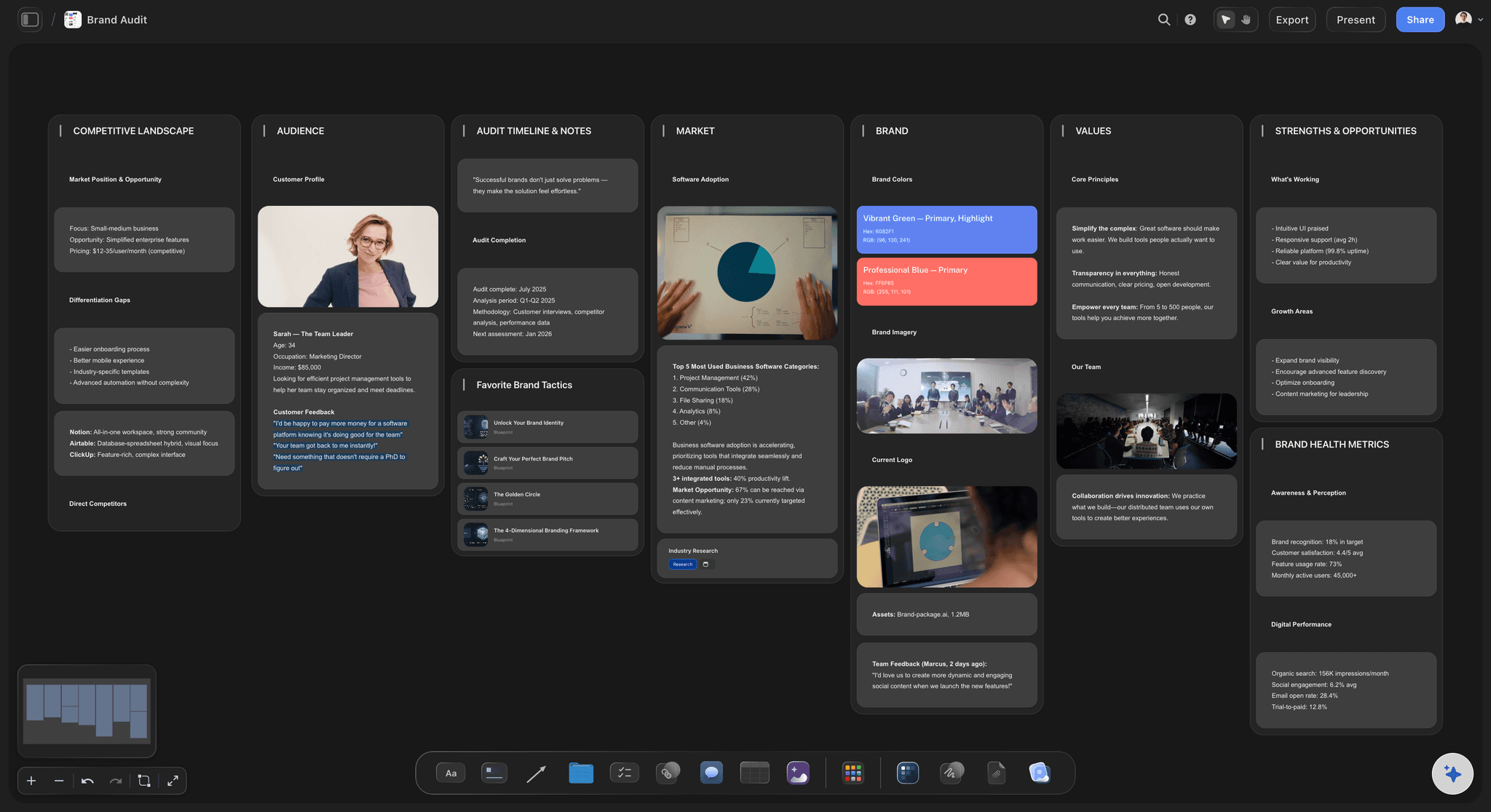
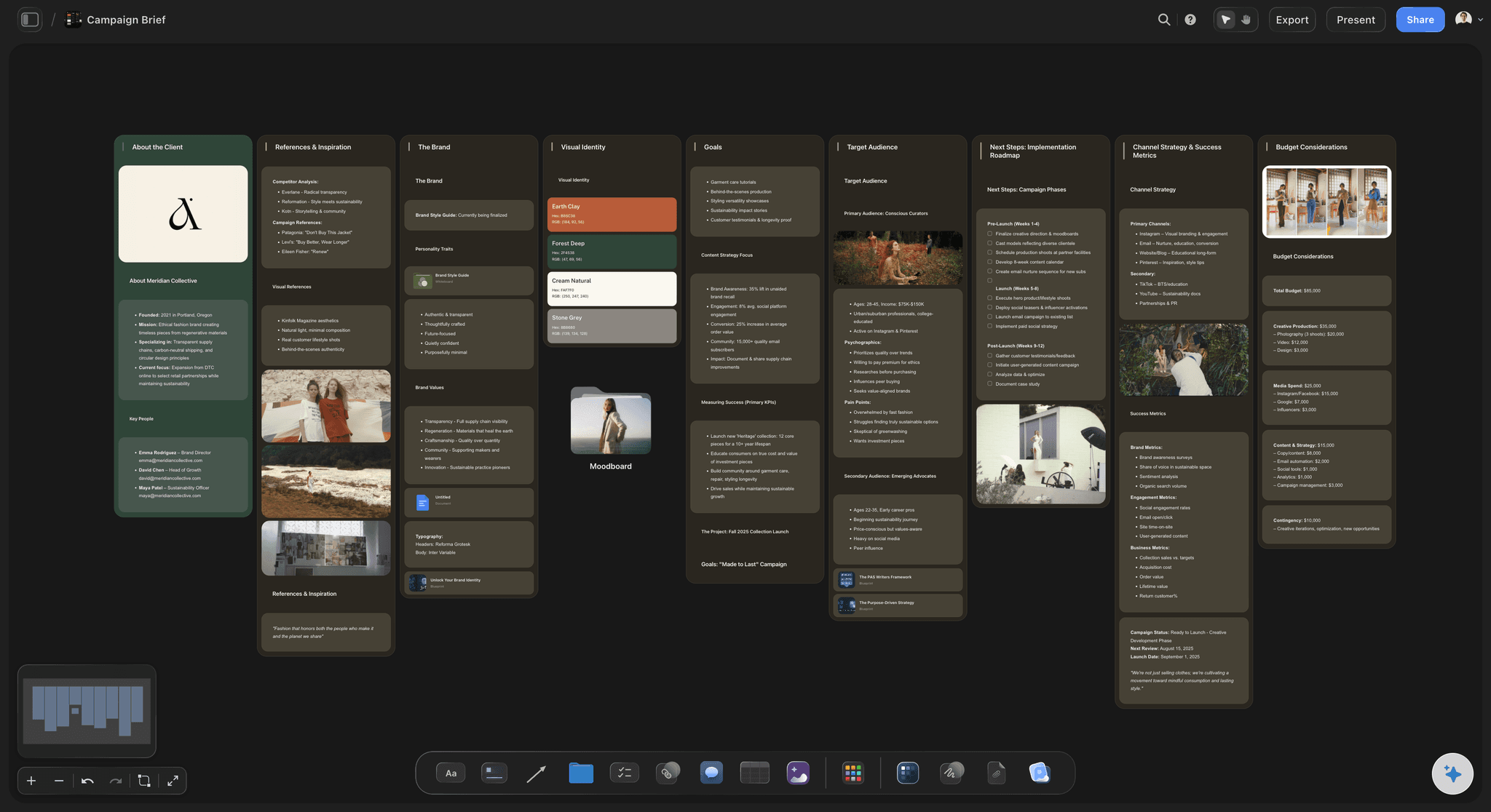
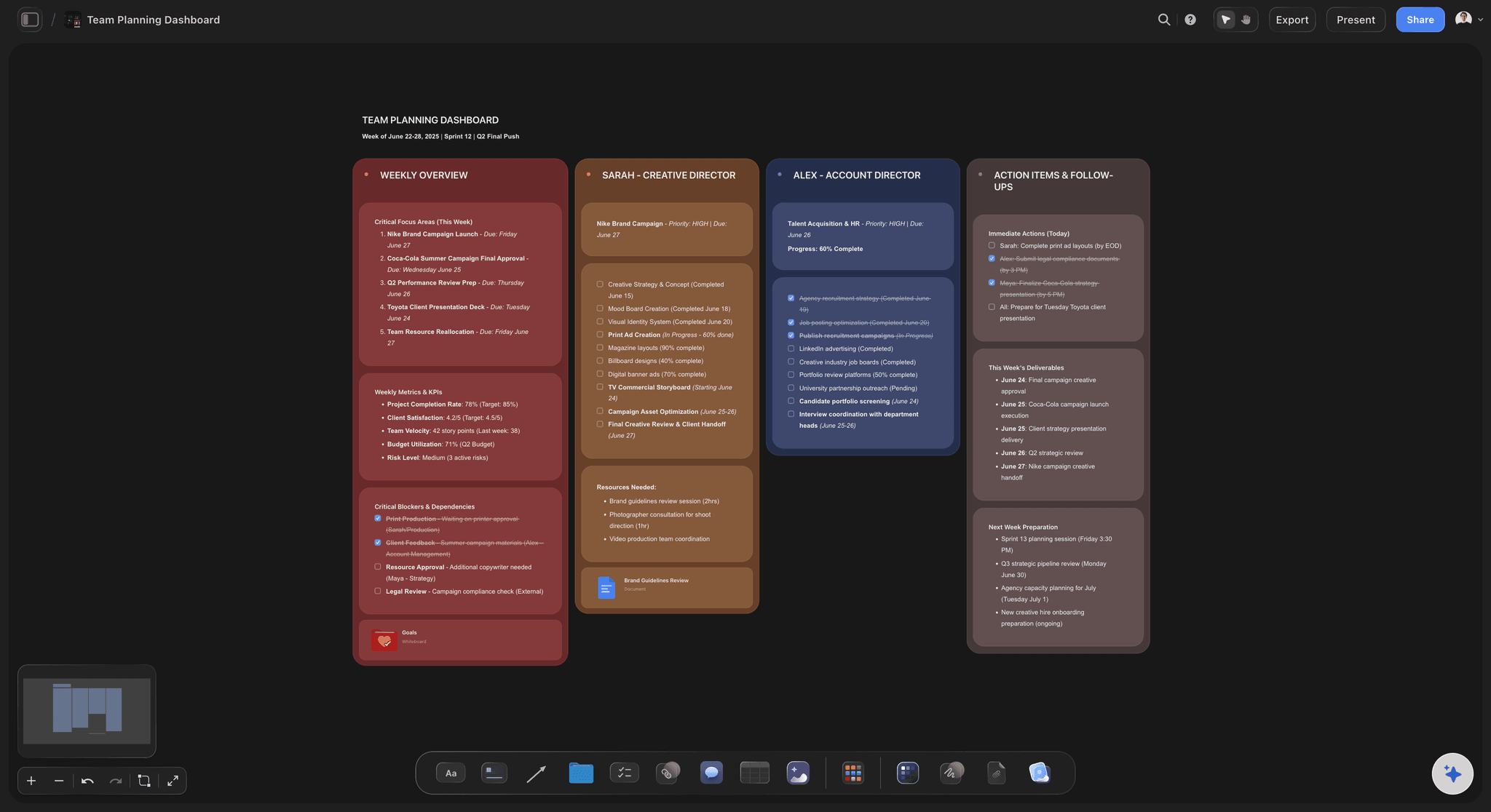
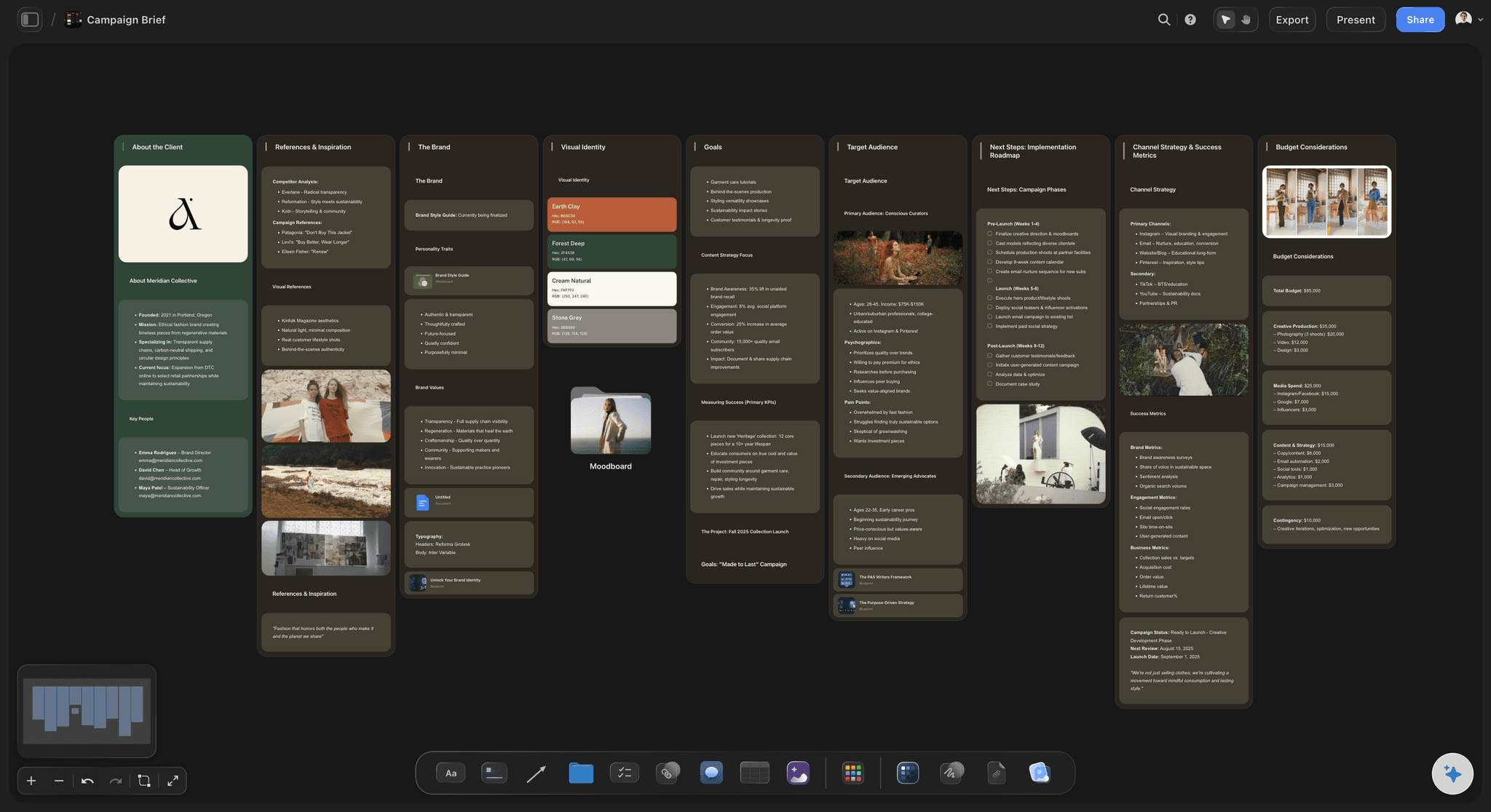
Pick a board to see what you can build, then let AI fill it in. Every template is a real, editable starting point on the same infinite canvas.

Marketing Campaign
Plan a campaign across channels, messages, and deliverables on one board the whole team can see.
What goes in a case study template?
A case study template is the fixed set of parts every client write-up needs: the situation before, the problem in the client's words, the three things you did, the numbers before and after, and a named quote. Storyflow is an AI visual workspace that builds the whole case study on one infinite canvas: the eleven parts as areas, the picture of the real work, the before and after numbers, and the client's quote. The client reads the draft from a link with no account.
Three moves, not thirty. Every project had forty decisions in it, and the reader cares about three. Pick the three that a similar company could recognise in their own situation, and describe each in a few sentences: what you saw, what you changed, what happened next. A case study that lists every workstream reads like a timesheet and gets skimmed to the numbers at the bottom, which is a shame because the middle is the part that wins the next job.
Every number needs four things next to it or it does not count: the figure before, the figure after, how long the window was, and who measured it. Sign-ups went from 310 to 940 a month over the four months after launch, measured in the client's own analytics, is a sentence a reader believes. Sign-ups tripled is a sentence they have read two hundred times. When the client will not share a real number, do not invent a percentage: describe the change in the things you can say, such as the number of stores it rolled out to or the time a task now takes.
Budget the words before you write. Six hundred words is plenty: roughly sixty on who the client is, a hundred and twenty on the problem, two hundred on what you did, a hundred and twenty on the result, sixty for the quote and forty for the next step. Then allow two weeks for approval, because that part is not writing. The person you worked with reads it, their communications or legal team reads it, and the named quote is confirmed in writing. Start the whole thing within a month of the work shipping, while the person who lived through it still remembers the detail that makes it real.
Ultra fast from brief to board
From the last day of the project to a published page.
Four weeks, and most of the work happens in the first one.
01
Interview the client for twenty minutes
Six questions: what was happening before, what you had tried, what made you call us, what surprised you, what changed, and what you would tell someone considering it. Record it, drop the transcript on the board, and ask the AI to pull out the sentences worth quoting.
02
Lay the eleven parts out as areas
One area per part, so the holes are visible. An empty numbers box on the board is a question you can still go and ask. An empty numbers box in a draft document is a sentence somebody quietly softens into a claim.
03
Put the work itself on the board
The actual screens, the film frames, the packaging, the before and after of the page you rebuilt. A case study without a picture of the work asks the reader to take your word for it. On Pro and Max the AI can also draw a simple diagram of the approach from your description.
04
Send one link and track the approval
The client opens the board in a browser with no account. They sign in to leave a comment on the line they want changed, which beats a marked-up PDF coming back by email. A small table tracks who has approved what, and the finished page goes live in your website tool.
The interview, the story, the numbers and the sign-off.
Storyflow builds the case study. Publishing it on your site still happens in your website tool.
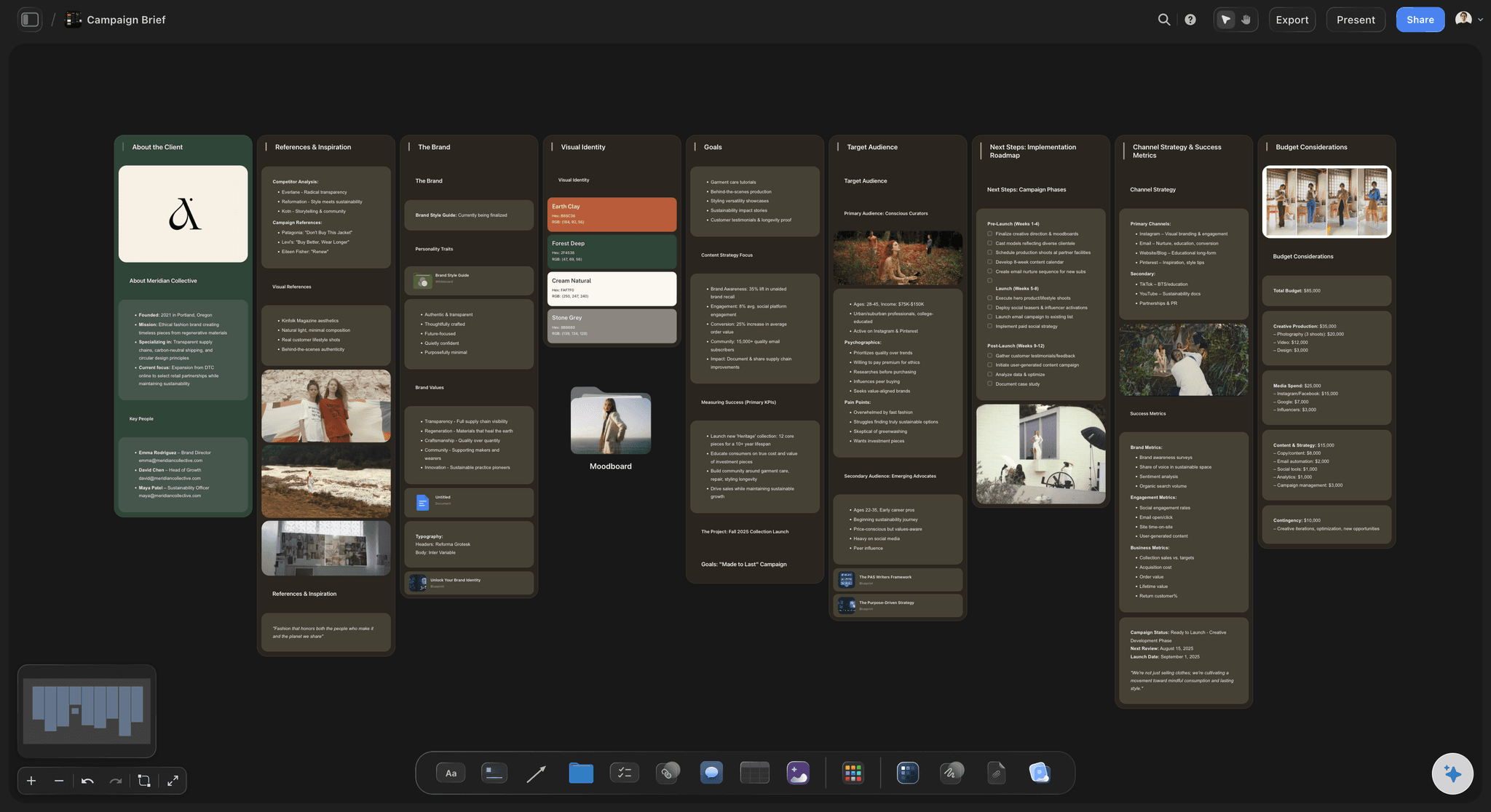
The raw material
Notes, transcript and quotes in one place
Attach the interview transcript, the project brief and the final report, and ask for the six sentences worth quoting. Up to 5 documents, 3 Tactics and 3 boards attach at once. The AI suggests; you pick the quote that sounds like a person rather than a press release.
See the campaign brief board →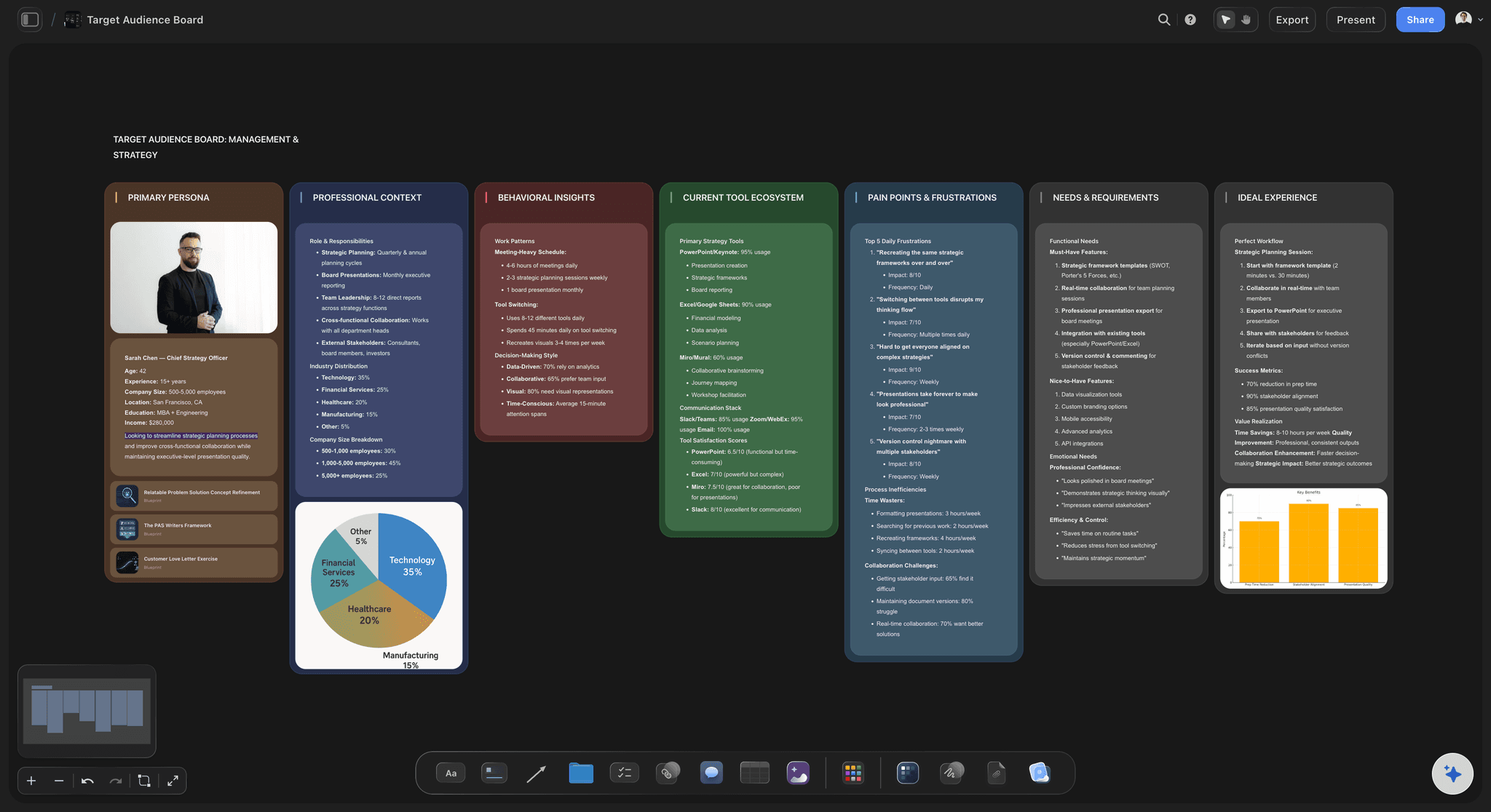
The numbers
Before, after, window, source
A table with four columns and one row per figure. Give a money column a currency and a Sum footer when the result is a spend or a saving. Any row missing its source is obvious at a glance, which is the point.
See the target audience board →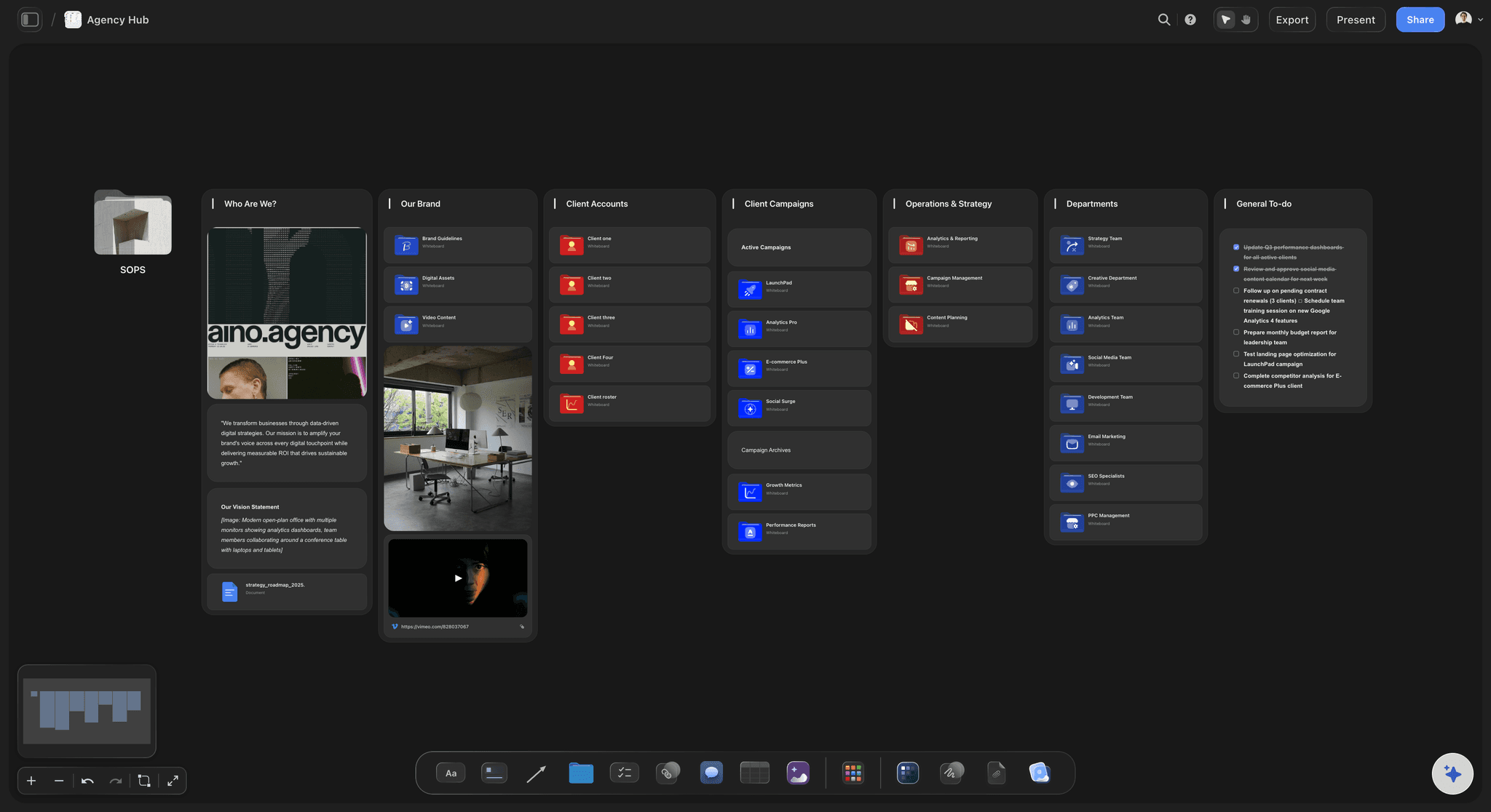
The proof
The work, shown rather than described
Drop the real screens, frames, packaging or pages onto the board beside the words about them. Group the before and the after together so a reader can see the change in two seconds without reading a paragraph first.
See the client work hub →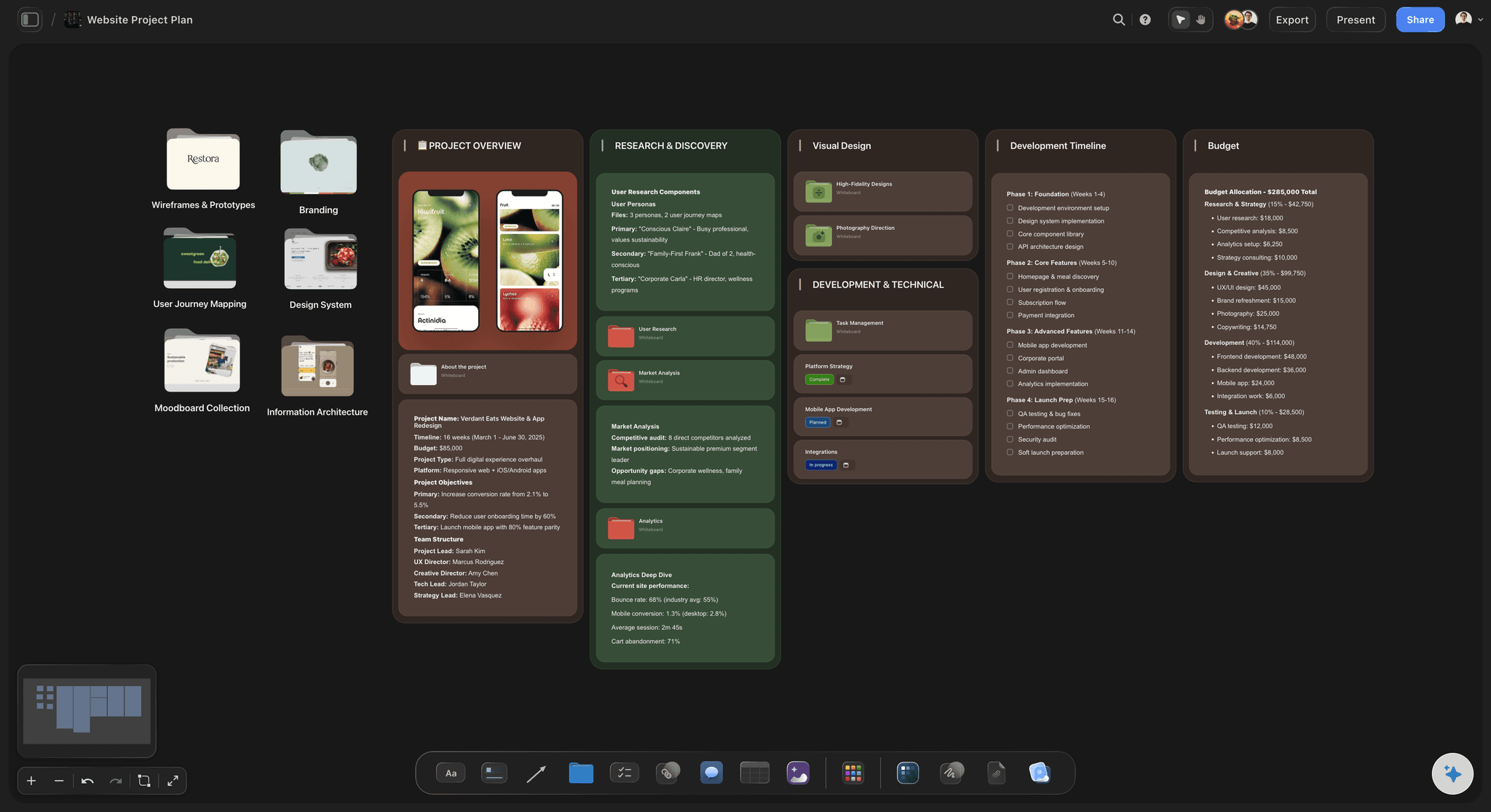
The approval
One link, comments on the exact line
The client reads the draft in any browser with no account. Signing in lets them comment on the sentence they want changed, so a legal note about a claim lands on that claim instead of in a thread you have to match up later.
See the client review board →Twelve case studies, one place to look.
Each one keeps its own board with the interview, the numbers and the approved quote attached, so the next pitch pulls from evidence instead of memory. Storyflow is paid-only during early access, with plans from $7.99 a month billed annually ($9.99 monthly). A free plan launches before the end of 2026, and anyone a paid member invites to a board joins free.
Unlimited boards, image uploads and files on every paid plan
Invite the client or the freelance writer without buying them a seat
200+ Tactics to start the write-up instead of an empty page
Whole-board PDF export for the sales pack
Presentation mode to walk a prospect through it on a call
Built for people with taste
Why the case study never gets written.
Three reasons, and two of them are timing.
The delay
Six months later, nobody remembers
Book the interview in the last project week: Put it in the calendar before the final invoice goes out, while the client is still pleased and still remembers what it felt like in month two.
Ask for the numbers while you still have access: Once the project closes, so does the dashboard. Take the before figures at the start and the after figures at the end, and write both on the board as you go.
The board is open during the project: Drop the good screenshot, the client's nice email and the surprising number on it as they happen. Writing the case study then becomes editing rather than remembering.
Four weeks, not four months: One week to interview and draft, one for the client read, one for their legal and comms, one to publish. Put those four dates on the board with a name against each.
The claims
Nobody believes the result
Four columns per number: Before, after, over how long, measured by whom. A figure with all four reads as fact. The same figure as a percentage on its own reads as marketing, because that is usually what it is.
When there are no numbers, say something else: Rolled out to 40 stores, cut a two day task to twenty minutes, used by the whole sales team from week one. Real and specific beats a percentage you cannot stand behind.
Name the person in the quote: A quote from a marketing director with a job title is evidence. A quote from a happy client is a sentence you wrote yourself and everyone knows it.
Include what you would do differently: One honest line about what you would change makes the rest believable. It is also the paragraph prospects quote back to you on the first call.
The sign-off
It died in the client's legal queue
Ask at the start, not at the end: Raise the case study in the kick-off, so permission is a known part of the project rather than a favour you ask once the work is done.
Send a draft, not a request: A finished draft with their quote already written takes ten minutes to approve. An email asking whether they would be open to a case study takes three weeks to answer.
Give them an easy no: Offer a version with the company anonymised, as a mid-size retailer or a national broadcaster. Half the clients who cannot be named will say yes to that.
Track who has approved what: A short table with the contact, their legal team and the quote, each with a status. It is the difference between chasing and knowing who you are waiting for.
Explore templates for your project
Every template opens as a real, editable board on the infinite canvas. Pick the closest fit and make it your own.
Marketing Campaign
Plan a campaign across channels, messages, and deliverables on one board the whole team can see.
One app instead of five
What Storyflow covers, and what it does not.
It builds and gets the thing approved. Your website tool still puts it online.
Storyflow
Recommended
Interview notes, draft and images together
The work shown as pictures beside the words
Before and after numbers with a source column
Client reads the draft with no account
Whole case study exports as a PDF
Every case study kept in one place
Publishes the page on your website
Docs and folders
Interview notes, draft and images together
The work shown as pictures beside the words
Before and after numbers with a source column
Client reads the draft with no account
Whole case study exports as a PDF
Every case study kept in one place
Publishes the page on your website
Your website tool
Interview notes, draft and images together
The work shown as pictures beside the words
Before and after numbers with a source column
Client reads the draft with no account
Whole case study exports as a PDF
Every case study kept in one place
Publishes the page on your website
What creators are saying
Join early creators getting structured workspaces and AI that remembers their projects
“Storyflow has sped up my workflow by at least 3x, which means more flow state and more projects I can actually ship. It truly changed the way me and my team create.”

Reilin Joey
Director & YouTuber
“One prompt gets me a structured board. But the tactics are my favorite. I run my YouTube scripts through them and my intros and retention got better. It's amazing.”

Justkay
YouTuber & Freelance Filmmaker
“I used to juggle five apps to plan a project. Now I describe what I am making and get boards, lists, and a schedule. All in one place.”

George
@fernwehchronicles
Case study questions
What teams ask before writing up client work.
Eleven parts, and Storyflow lays them out as areas on one board: the client, the situation before, the problem in their words, what they had already tried, the three things you did, who did them, how long it took, before and after numbers with a source, a named quote, a picture of the real work, and what you would do differently.
Storyflow was made for this exact job: the eleven parts as areas on one board, the picture of the real work beside the paragraph describing it, the before and after numbers with their source, and an approval row for the contact, the legal team and the quote. The client reads the draft from a link with no account. Publishing the page and designing the PDF are still jobs for your website tool and Figma.
About six hundred words. A rough budget: sixty words on the client, a hundred and twenty on the problem, two hundred on what you did, a hundred and twenty on the result, sixty for the quote and forty for the next step. Longer versions are read the same way, from the pictures to the numbers at the bottom.
Take the before figures at the start of the project, not at the end. Once the work closes, so does your access to the client's dashboard. Write both figures on Storyflow's board as you go, with the date each was taken, and you will never have to ask for a number that nobody can find any more.
Do not invent a percentage. Say the things you can say: how many stores or markets it reached, how long a task used to take and how long it takes now, how many people use it, how fast it shipped. Specific and true beats a big number nobody can stand behind if asked.
Six, in twenty minutes. What was happening before. What had you already tried. What made you pick up the phone. What surprised you along the way. What is different now. What would you tell someone weighing this up. The fourth one produces the quote; the last one produces the closing line.
Draft it from what they said in the interview, then ask them to change anything they want and confirm it in writing. Most people approve a good draft in minutes and never get round to writing one from scratch. Keep their job title on it, because an anonymous quote is not evidence.
Book the interview in the final week of the project. Memory fades fast and staff move on, so a case study started six months later is a case study written from the invoice. Four weeks end to end is realistic: draft, client read, their legal and comms, publish.
Raise it at the kick-off so it is expected, then send a finished draft rather than a request. Give them an easy alternative: an anonymised version naming the sector instead of the company. Track the contact, their legal team and the quote as three rows on Storyflow's board with a status, so you know who you are waiting on.
Yes, as a first pass. Attach the transcript, the brief and the final report and ask Storyflow's AI for a six hundred word draft with the problem, three moves and the result. It proposes the structure and pulls out the quotable sentences. You check every number and decide which three moves the reader actually needs.
Yes. Storyflow's view-only link opens in any browser with no sign-up, which is what you want when the approver is a legal contact you have never met. To leave a comment on a line they do sign in, and anyone a paid member invites to a board joins free.
Storyflow builds the case study and gets it approved, with the draft on a link the client can read. It does not publish. Putting the page live happens in your own website tool, the designed PDF comes out of a design tool such as Figma or InDesign, a signed release belongs in something like DocuSign or PandaDoc, and a case study film is reviewed in Frame.io, Filestage or Ziflow.
Storyflow's table gives every case study a row with its date, its client and its headline result, and you drag those rows into the order you want. It cannot sort a table. Most teams keep the two strongest at the top of the list, because those are the ones that get pasted into a proposal at short notice.
More from Storyflow
Client review board
Agency client project planning
Creative agency pitch deck
Testimonial video planner
Client presentation tool
Design proposal template
Creative scope of work
Video production proposal
RFP response plan
Marketing workspace
Storyflow for marketing teams
Agency credentials deck
Webinar run of show
Creative retainer plan
Campaign wrap report
Personal brand plan
Write it up while the client is still pleased.
The problem, three moves, numbers with a source, and a quote with a name on it.