
Polished brand plans, extremely simple
A credentials deck
built in the order someone reads it.
Who you are in one line, the work you make, three cases with a result on each, the people who would be on it, and what happens next. Laid out on a board you can send, present or export.


Creatives working for these brands already got early access
- Red Bull
- Canon
- Artlist
- Porsche
See how easy it is to get started
Watch a real project come together, from a blank board to a finished plan, clicked through step by step.
Start from a ready-made template
Pick a board to see what you can build, then let AI fill it in. Every template is a real, editable starting point on the same infinite canvas.

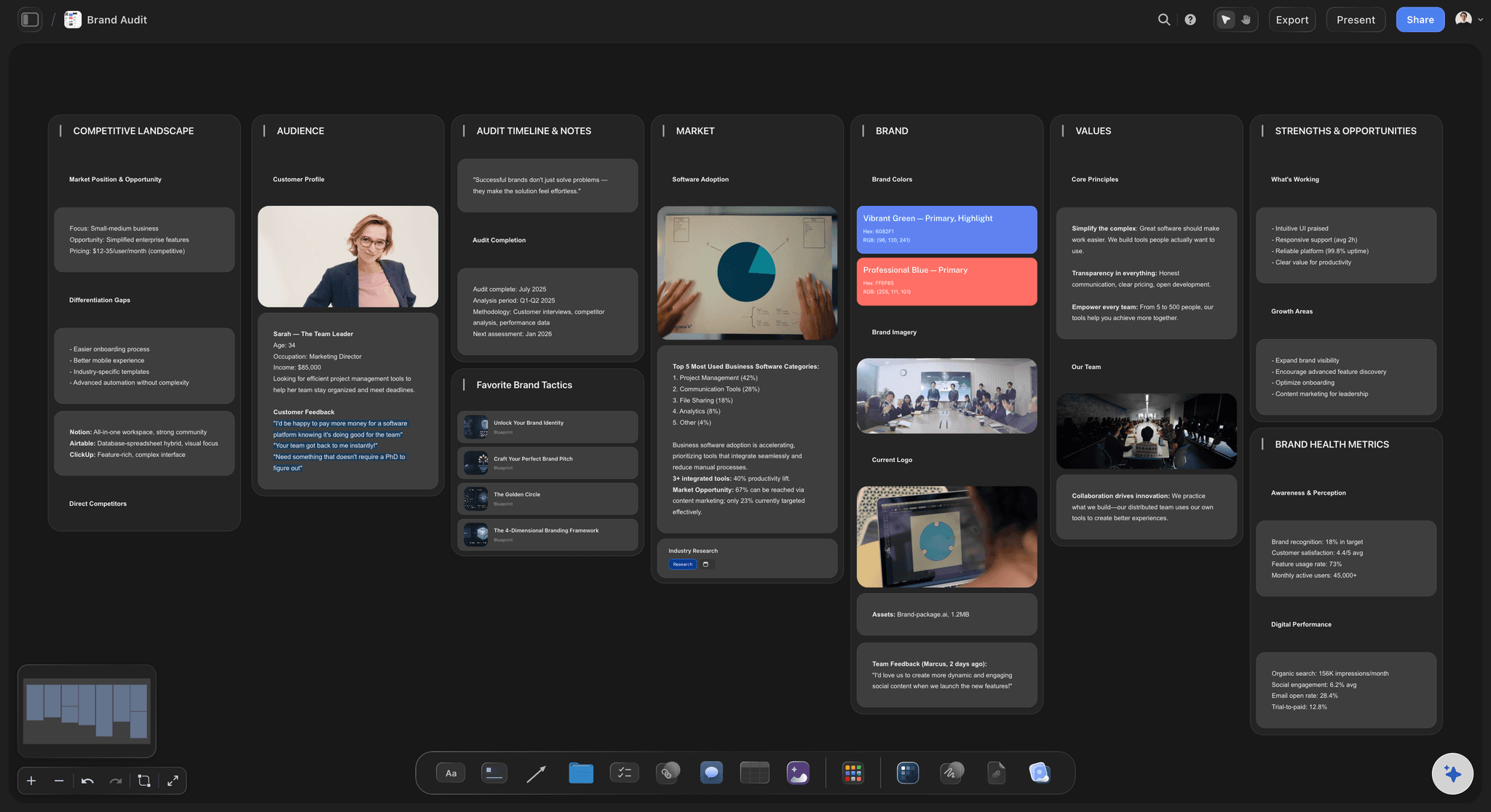
Brand Strategy
Define your positioning, values, and voice and connect them into a strategy the team can follow.
What is a credentials deck, and what goes in one?
A credentials deck is the short document an agency sends before a pitch to say who it is, what it makes and why it is worth a meeting. Storyflow is an AI visual workspace that builds that deck on one infinite canvas: the running order as a line of pages, the case studies, the team page and the price bands. You send a link, present it fullscreen or export the board as a PDF. It is not the pitch: it decides whether the pitch happens.
Twelve to sixteen pages is the right size, and the order matters more than the design. Cover with the prospect's name on it. One page saying what you are for in a sentence, and who you are not for. One page on the three or four things you actually make, not the eleven you could. One page on how a project runs and who the client speaks to. Three case studies, one page each. One page on the people who would be on this job. One page on clients and sectors. One page on ways of working together. One page of rough price bands. One page with two dates and a name on it.
The case studies carry the whole deck, and most of them are written backwards. Lead with the problem in the client's language, not with the brief you were given. Then show the work, large, with the fewest words you can get away with. Then say what happened, and be specific enough that it could have gone the other way. If you cannot say what happened, say what changed: the thing shipped in five weeks, the brand went from eleven sub-logos to one, the team stopped rebuilding the same layout every month.
Two things people forget. Put the people who would genuinely work on this account on the team page, not the founders plus a headcount, because the prospect is buying a group of humans and everyone knows it. And end on something they can do: two dates you are free, the name of the person who picks up the phone, and one sentence on what the first session would cover. A deck that ends on a thank you page ends the conversation politely.
Ultra fast from brief to board
Four passes, and it is ready to send.
Rebuilt once a year, tailored in twenty minutes per prospect.
01
Put the running order down before the content
Fourteen empty pages in a row, each with one line saying what it has to do. Read that line of pages on its own. If two pages are doing the same job, one of them goes, and it is always the one you were most attached to.
02
Write three cases as problem, work, outcome
One page each, in that order. Drop the actual work onto the board at a size someone can see, with the caption doing the explaining. Ask the AI to draft the outcome line from your project notes, then correct it until it is something you would say out loud to the client.
03
Say how you work, in steps and in prices
A picture of how a project runs, who the client talks to at each stage, and how long each stage takes. Then ways of working together and rough price bands in a table. A prospect who cannot guess your size does not book the call.
04
Send it, present it or export it
One link opens in any browser with no account. Step through it fullscreen in presentation mode on the call. Export the whole board as a PDF for the person who forwards everything to their boss as an attachment.
Order, cases, people, next step.
Storyflow builds it and shows it. A brand-locked, precisely typeset file still comes out of Keynote, PowerPoint or InDesign.
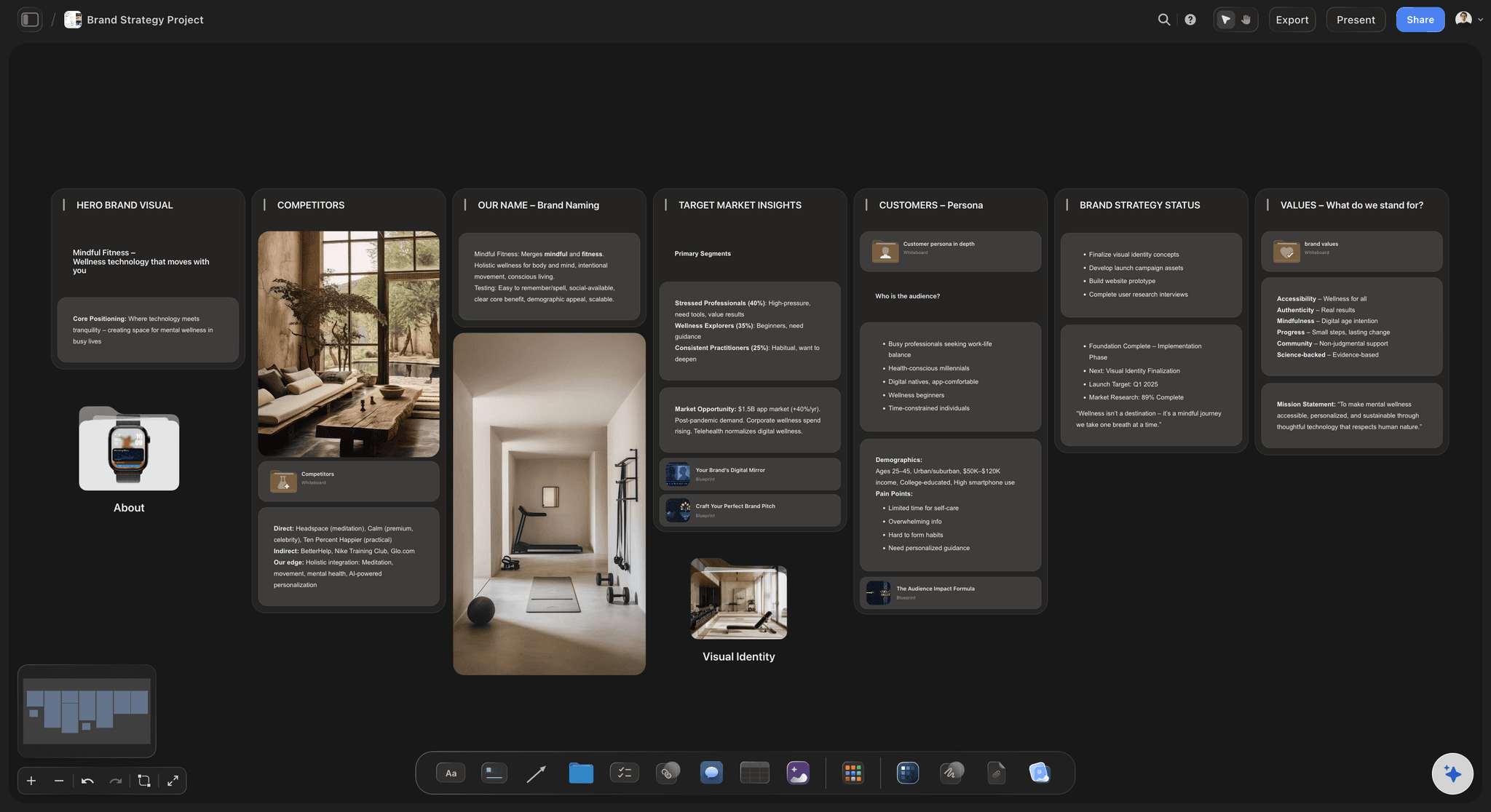
The spine
A running order you can read at a glance
Every page as a card in a line, each with the one job it does. Reordering the deck is dragging two cards, not renumbering slides and hoping nothing broke in the process.
See the brand strategy board →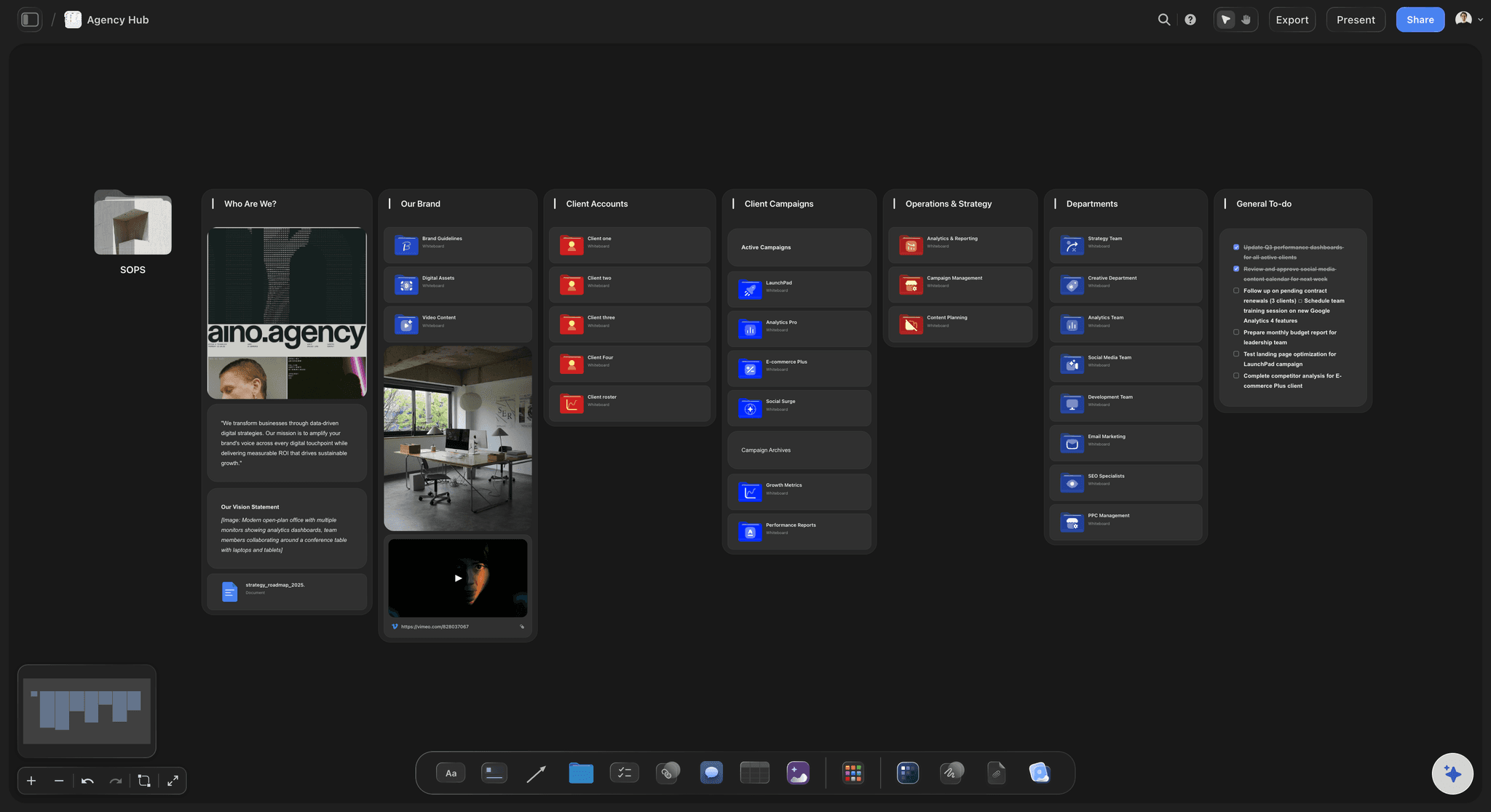
The part they read
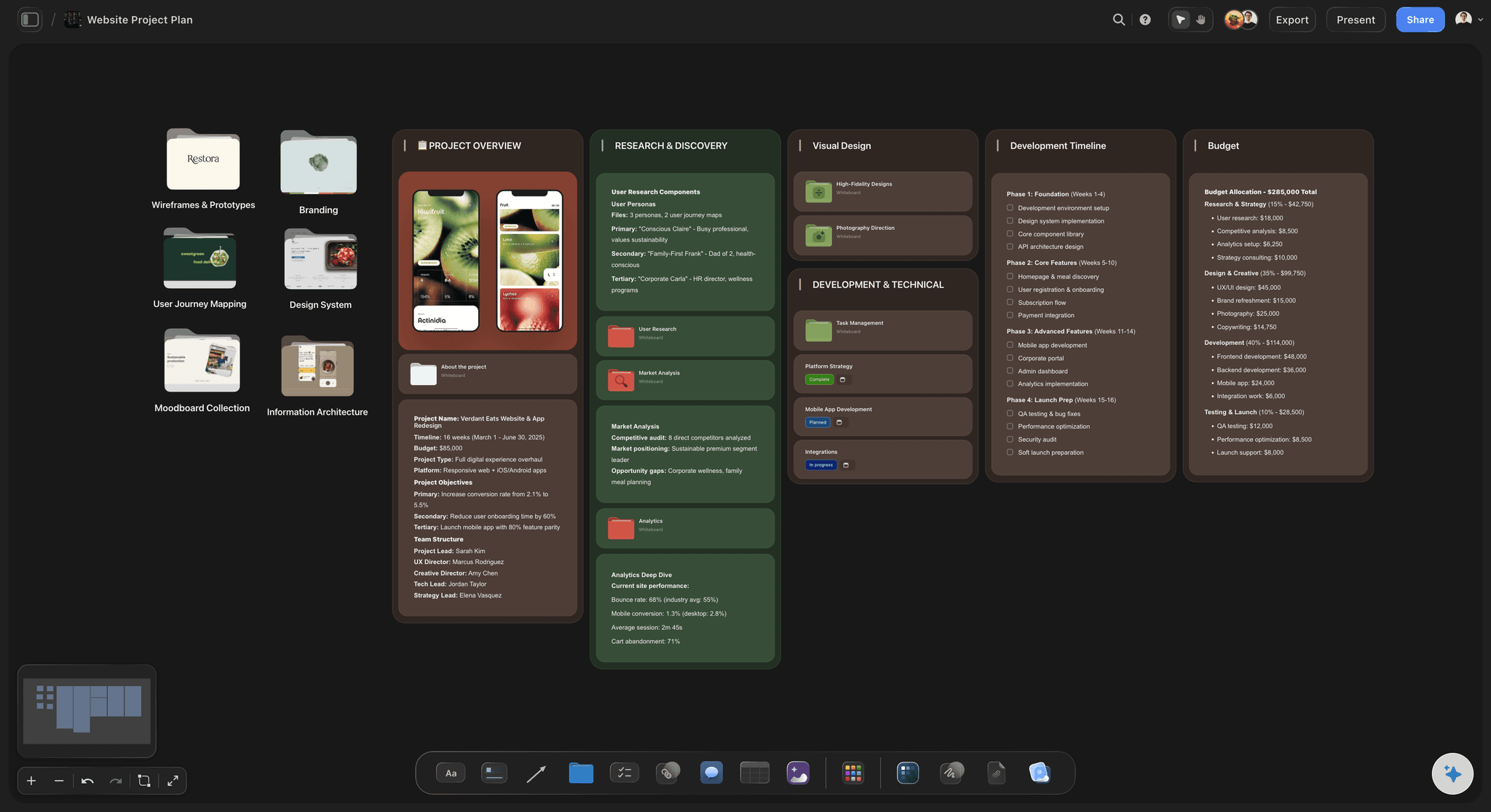
Case studies with the work at full size
Problem, work, outcome, one page each. Images sit on the board at a size that survives being read on a laptop, and the caption carries the argument so the page does not fill with prose.
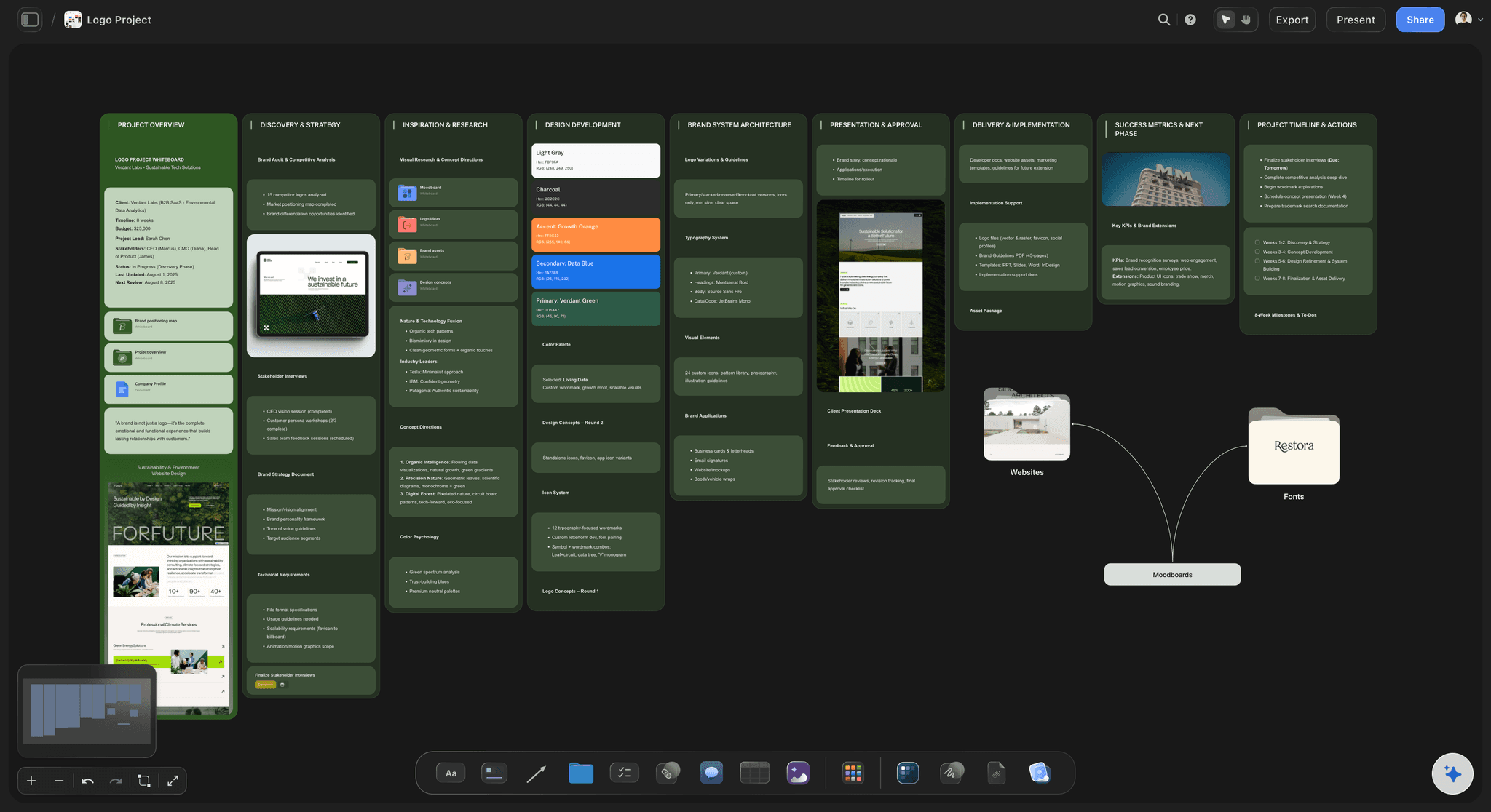
See the agency hub board →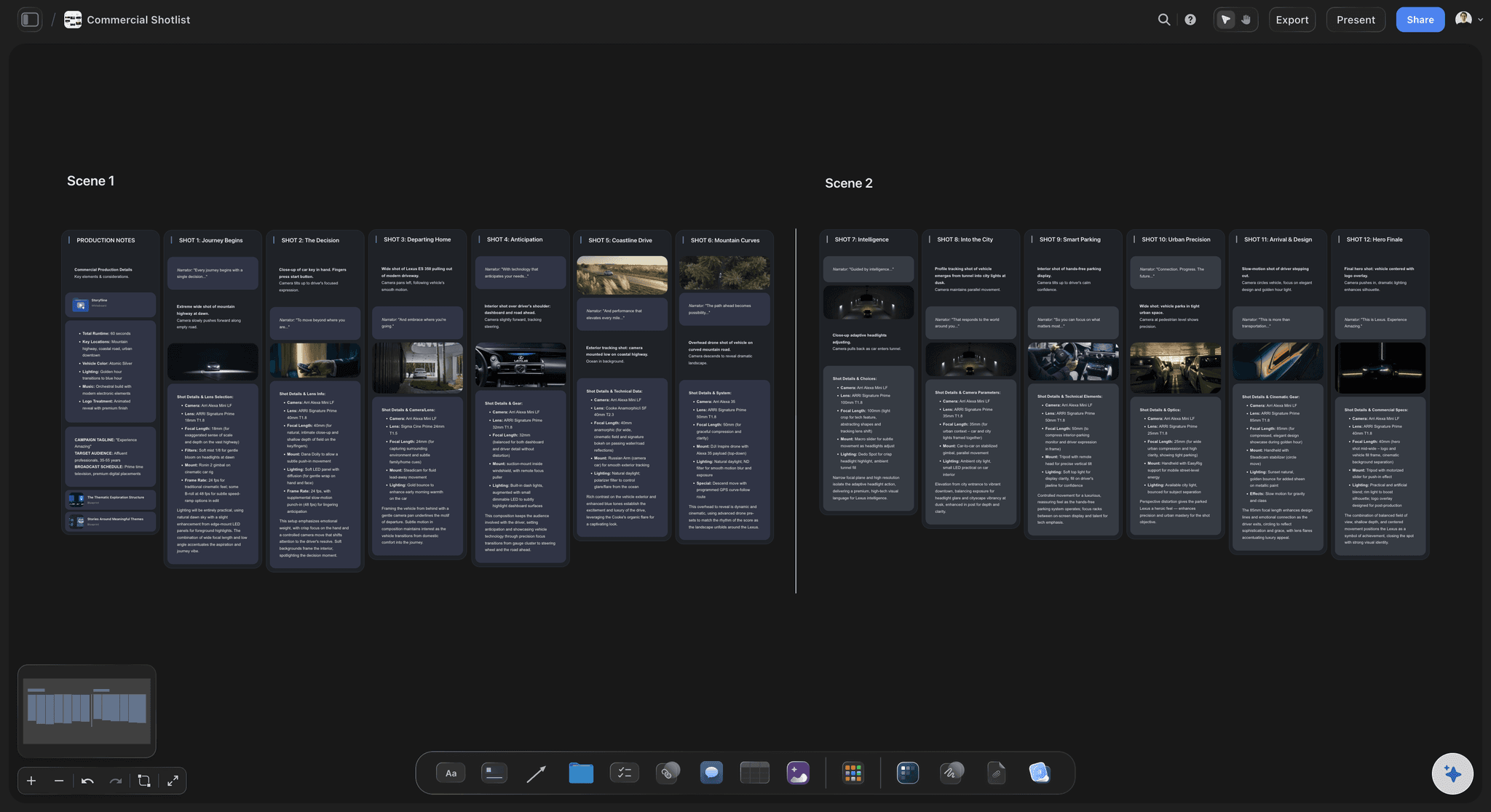
What it is like to hire you
How a project runs, drawn rather than described
Stages, who the client talks to, how long each one takes. A prospect deciding between three studios is mostly deciding what the next six weeks feel like, and this is the page that answers that.
See the production board →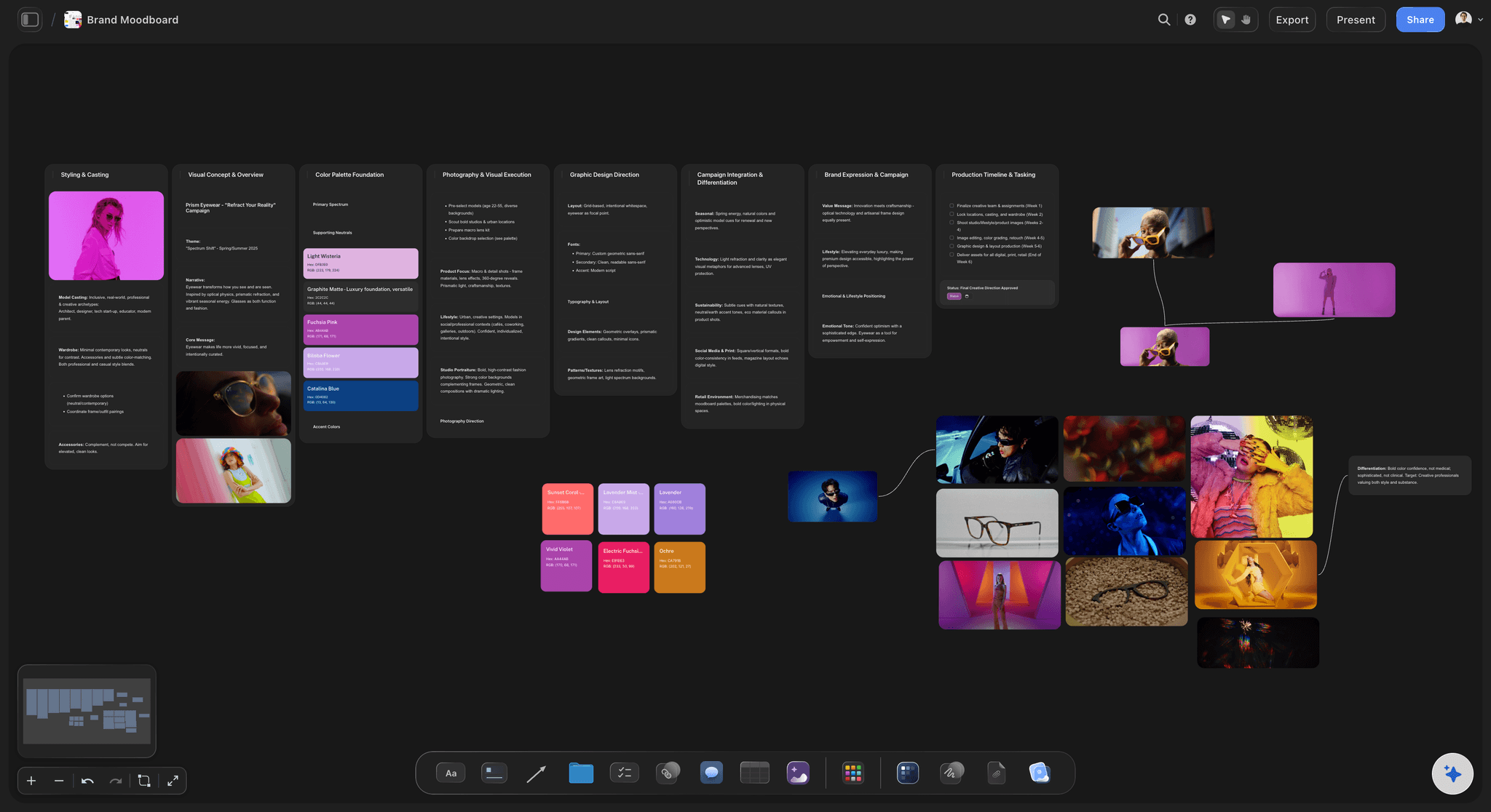
Tailoring
One base deck, a version per prospect
Copy the board, swap the three cases for the three that match their sector, put their name on the cover, and send. Twenty minutes, and it reads like it was written for them because in the ways that matter it was.
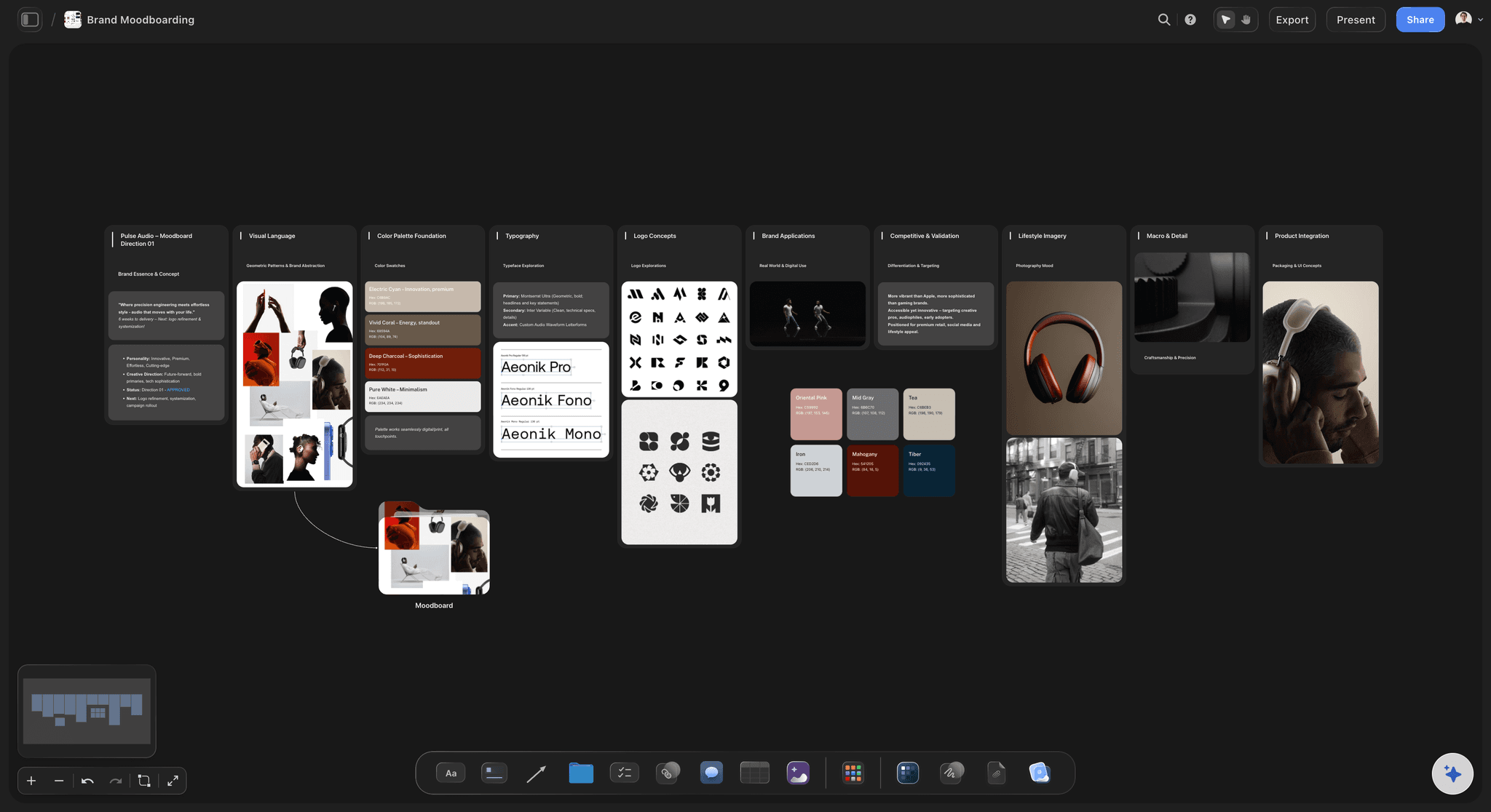
See the moodboard →The deck stops being a file you cannot find.
One board is the current credentials, and every tailored version is a copy of it, so the studio stops circulating four decks of different ages. Storyflow is paid-only during early access, with plans from $7.99 a month billed annually ($9.99 monthly). A free plan launches before the end of 2026, and anyone a paid member invites to a board joins free.
Unlimited boards, image uploads and files on every paid plan
Bring a freelance writer or designer onto the deck without buying them a seat
200+ Tactics for the strategy and brand boards a deck draws on
PDF export for the prospect who wants an attachment
Presentation mode for the call, with no export step first
Built for people with taste
A credentials deck has three lives.
It is built for the first one and usually judged in the second.
Life one
The four minute skim
Page one says what you are for: Not a mission. One sentence a reader could repeat to a colleague without looking back at the page. If it would fit any studio in your city, it is not that sentence yet.
The work is big and the words are few: A skimmer looks at images and reads captions. Put the work on the board at a size that reads on a laptop, and let the caption do the arguing.
Outcomes, not adjectives: What happened after the work shipped, in language specific enough that it could have gone another way. An adjective on a case study page is a gap where a result should be.
The last page is an invitation: Two dates, one name, one line on what a first session covers. A deck that closes on a thank you closes the conversation with it.
Life two
Forwarded to three people you will never meet
It has to work with nobody presenting it: The person who forwards it is not going to explain it. Every page stands on its own, because the one that needed your voice over it is the one that loses the argument in the room you are not in.
A link and a file, not one or the other: Some people forward links and some forward attachments. A view-only link opens in any browser with no account, and the whole board exports as a PDF for the rest.
Prices survive the forward: Rough bands on the board mean the finance person reading it third can tell whether you are in range. Leaving price out does not make you look expensive, it makes you look like a call they have to book to find out.
The team page names real people: The people who would be on this job, not the founders and a headcount. The internal advocate needs someone to point at when their director asks who would actually do the work.
Life three
The copy that is two years old
One board is the current version: Every tailored deck is a copy of it. When a case study changes, you change it once, and the next copy carries the change instead of the studio circulating four decks of different ages.
The tailored version keeps its own board: The deck you sent that drinks brand in March stays exactly as they saw it, so when they come back in November you know what you told them.
Old work is archived, not deleted: A case study that no longer leads still proves something to the right sector. Keep it on the board out of the running order rather than losing it to a drive nobody searches.
Rebuilt once a year, not never: Put the rebuild on the board as a dated task with an owner. A credentials deck decays quietly, and the studio only notices when it loses a pitch it should have won.
Explore templates for your project
Every template opens as a real, editable board on the infinite canvas. Pick the closest fit and make it your own.
Brand Strategy
Define your positioning, values, and voice and connect them into a strategy the team can follow.
One app instead of five
Where Storyflow fits around a credentials deck.
It builds, shows and keeps it current. A precisely typeset file is still a slide tool's job.
Storyflow
Recommended
Running order you can drag around
Work and case notes on the same surface
Copy the board to tailor per prospect
Read from a link with no account
Present fullscreen without exporting
Brand-locked master templates
Editable file the client can restyle
Slide tools
Running order you can drag around
Work and case notes on the same surface
Copy the board to tailor per prospect
Read from a link with no account
Present fullscreen without exporting
Brand-locked master templates
Editable file the client can restyle
Portfolio sites
Running order you can drag around
Work and case notes on the same surface
Copy the board to tailor per prospect
Read from a link with no account
Present fullscreen without exporting
Brand-locked master templates
Editable file the client can restyle
What creators are saying
Join early creators getting structured workspaces and AI that remembers their projects
“Storyflow has sped up my workflow by at least 3x, which means more flow state and more projects I can actually ship. It truly changed the way me and my team create.”

Reilin Joey
Director & YouTuber
“One prompt gets me a structured board. But the tactics are my favorite. I run my YouTube scripts through them and my intros and retention got better. It's amazing.”

Justkay
YouTuber & Freelance Filmmaker
“I used to juggle five apps to plan a project. Now I describe what I am making and get boards, lists, and a schedule. All in one place.”

George
@fernwehchronicles
Credentials deck questions
What studios ask before they rebuild theirs.
Storyflow lays it out as twelve to sixteen pages in reading order: a cover with the prospect's name, one line on what you are for, the three or four things you make, how a project runs, three case studies of problem and work and outcome, the people who would be on the job, clients and sectors, ways of working together, rough price bands, and a last page with two dates and a name.
Storyflow does this one end to end: twelve to sixteen pages laid out in reading order on one board, each case study shown at the size the work deserves, the team who would actually run the account, and rough price bands. Send it as a link, present it fullscreen, or export the board as a PDF. A precisely typeset, brand-locked master file still belongs in a deck tool or InDesign.
A credentials deck runs twelve to sixteen pages. Long enough to carry three cases with the work at a readable size, short enough that a marketing lead gets to the last page in four minutes. If it is past twenty, two pages are doing the same job and one of them is your favourite.
A credentials deck says who you are and is sent before anyone has briefed you. A pitch deck answers a specific brief with a specific idea. The credentials deck's job is to get the meeting; the pitch deck's job is to win the work in it.
Write a case study page as problem, work, outcome, in that order, one page each. Open with the client's problem in their words rather than the brief you received. Show the work large with a short caption. Close with what happened, specific enough that it could have gone the other way. If there is no result yet, say what changed.
Include rough bands, yes. The deck gets forwarded to someone who has to decide whether you are in range, and leaving price out means they book a call to find out or quietly rule you out. Bands by way of working together, on one page, is enough.
Yes. Attach your project notes and ask for a problem, work and outcome page for each one. Storyflow's AI reads attached files and drafts the pages. It proposes; you fix the outcome line until it is something you would be happy to say in the room, because that is the sentence the deck turns on.
Storyflow builds and presents the deck: you lay out the pages in reading order, present them fullscreen, and export the whole board as a PDF. What it does not give you is a precisely typeset, brand-locked master file the client can restyle themselves. That one stays in Keynote, PowerPoint, InDesign or Figma.
Copy the Storyflow board, swap the three case studies for the three that match their sector, put their name on the cover, and adjust the one line on page two. It takes about twenty minutes, and the tailored board stays as its own copy so you can see exactly what you sent them.
Yes. Storyflow's view-only link opens in any browser with no account, so the prospect reads it without downloading anything. Leaving a comment requires signing in. Export the whole board as a PDF as well, because some people forward attachments and will do that whatever you send.
Put the people who would actually work on this account on the team page, with their real role. Not the founders plus a headcount. The person inside the client who is arguing for you needs a name to give their director when they are asked who would be doing the work.
Rebuild it once a year, as a dated task with an owner on Storyflow's board, plus a case study swap whenever a project finishes well. Decks decay quietly and the studio usually notices during a pitch it should have won.
No. Storyflow runs in the browser and there are no native mobile or desktop apps. Open the board on the screen in the room, or export the PDF beforehand if you cannot rely on the venue's network.
More from Storyflow
Creative agency pitch deck
RFP response plan
Design proposal template
Client presentation tool
Creative client onboarding
Creative scope of work
Client review board
Agency client project planning
Creative operations
Storyflow for agencies
Case study builder
Creative retainer plan
Client report template
Client status updates from ChatGPT
Client presentation with Claude
Build the deck that gets you the meeting.
One running order, three real cases, the people on the job and a page they can act on.