
Ultra-fast campaigns, pitched beautifully
A creative agency pitch deck
built on the thinking, not the template.
Their problem in their words, the insight, the idea, how it lives in the world, how the work gets made and what it costs, built on one board and presented from it.


Creatives working for these brands already got early access
- Red Bull
- Canon
- Artlist
- Porsche
See how easy it is to get started
Watch a real project come together, from a blank board to a finished plan, clicked through step by step.
Start from a ready-made template
Pick a board to see what you can build, then let AI fill it in. Every template is a real, editable starting point on the same infinite canvas.

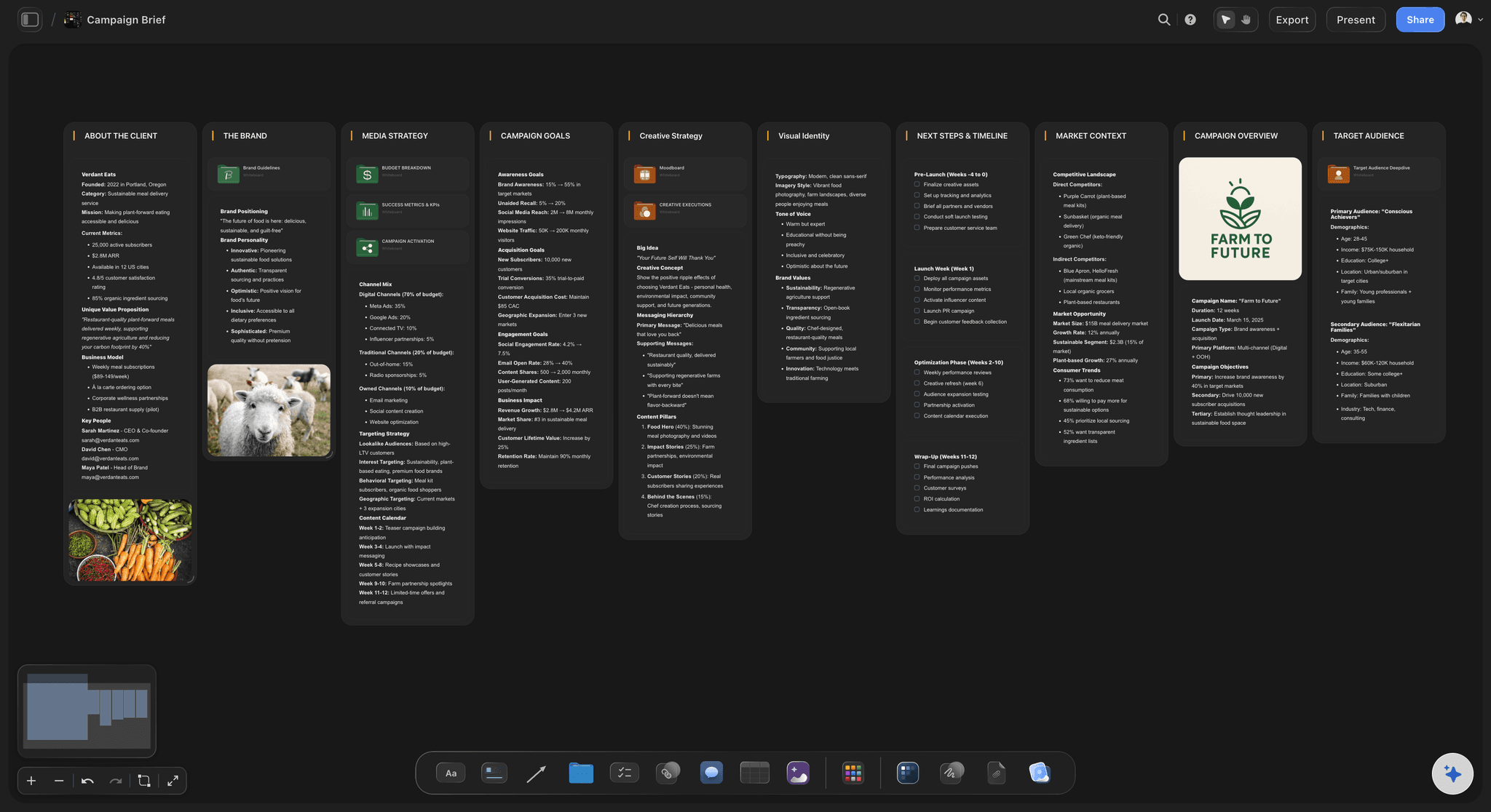
Marketing Campaign
Plan a campaign across channels, messages, and deliverables on one board the whole team can see.
What goes in a creative agency pitch deck?
A creative agency pitch deck answers one client's brief: their problem, your insight, the idea, how it looks in the world, how you would run it, who does the work and what it costs. Storyflow is an AI visual workspace that builds that pitch on one infinite canvas: the brief quoted back, the insight and the idea routes as one board, a presentation run from its frames, and a presentation PDF the AI drafts.
Credentials open the door; the response wins the work. A credentials deck says who you are in ten to fifteen slides and goes out before the chemistry meeting. The creative response is built for one brief and barely mentions you until the idea has landed. Mixing them is how pitches open with twelve slides of logos.
Quote the brief back before you answer it. Open on their problem in their words, then the one-sentence reframe you believe is the real question. A client who hears their brief read back accurately trusts the insight that follows. One who hears a generic market overview starts checking their phone.
Ask before you build. How many agencies are pitching, who decides, the budget range, the decision date, and whether there is a pitch fee. Agree in writing before you start that ideas the client does not buy stay yours. A pitch built without a budget range tends to produce ideas priced for a different client.
Ultra fast from brief to board
How the pitch gets built.
Most of the time goes on steps two and three, which is where it should go.
01
Paste the brief and the chemistry-call notes
The AI lays out the pitch board: the brief restated, the questions still open, space for research and the insight, the idea routes and the running order. Send the open questions to the client before you go further.
02
Find the insight, then the idea
Put research, audience quotes, competitor ads and reference images beside each other. Develop two or three idea routes as groups on the board, then cut to the one you would bet the agency on.
03
Show the idea living in the world
Key frames of the hero film, a moodboard for the look, and the executions your designers mock up, uploaded as images next to each channel. On Pro and Max the AI can generate storyboard frames.
04
Present it, then leave it behind
Step through the frames in presentation mode in the room or on the call, or export the board as a PDF. If a formatted deck is required, polish it in your deck tool from the finished thinking.
The pitch before it becomes slides.
The brief, the thinking and the idea in one place. Final slide design stays in your deck tool.
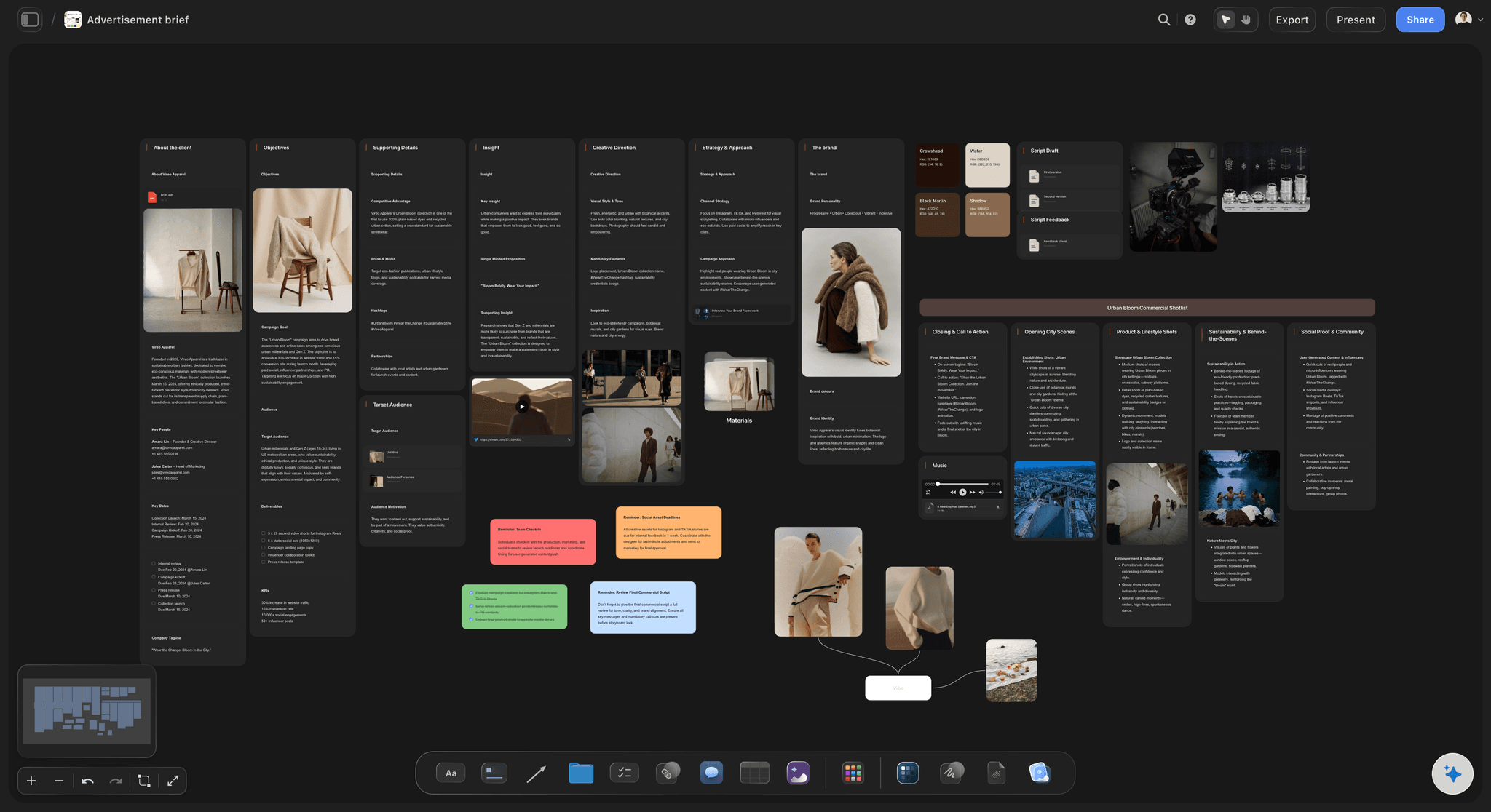
Start from their words
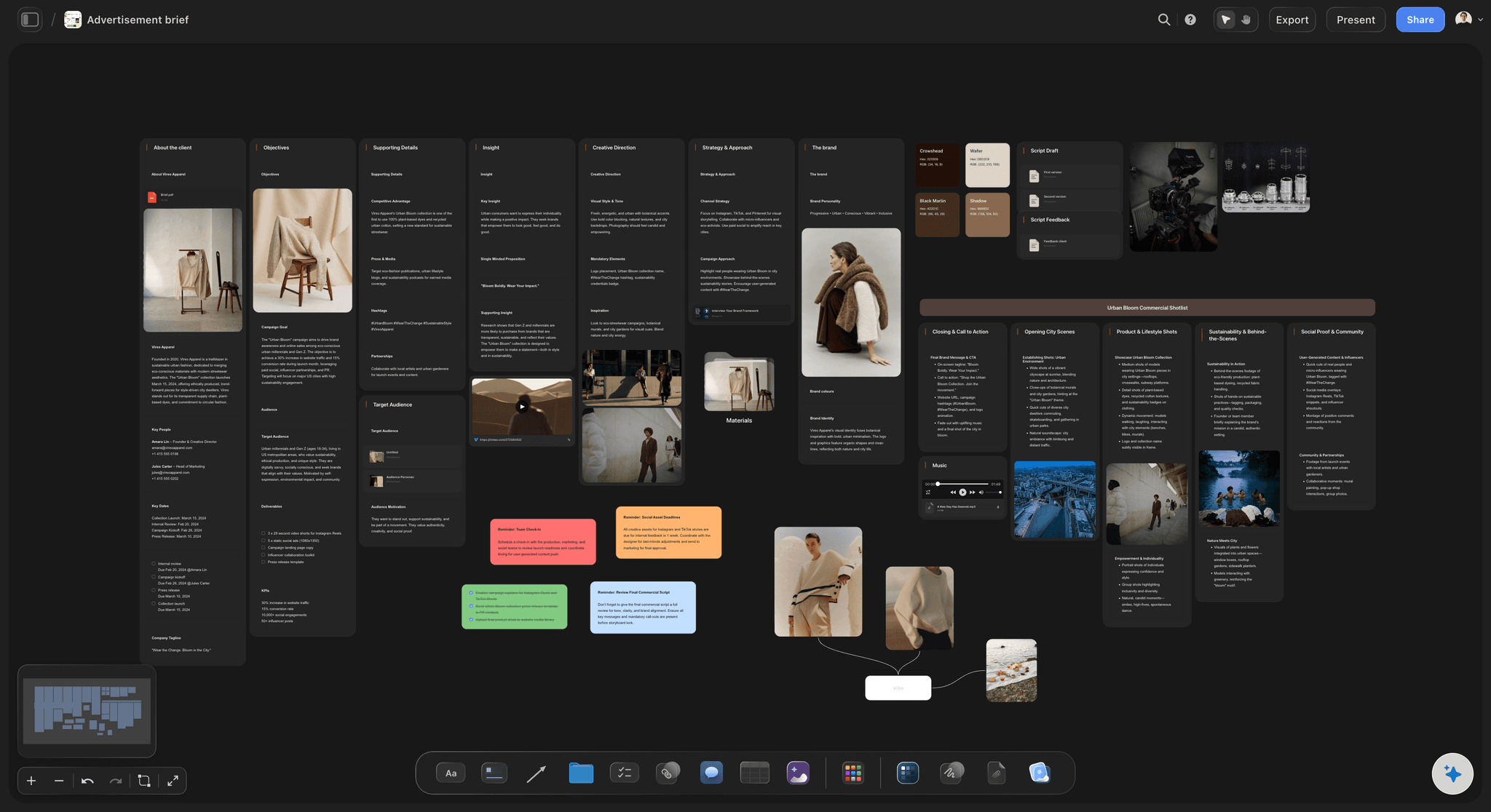
The brief, quoted back and reframed
The client's brief, the chemistry-call notes and the questions you still need answered, next to the one-sentence problem you are going to solve. The AI's advertising brief workflow can restate it for you to sharpen.
See the campaign brief template →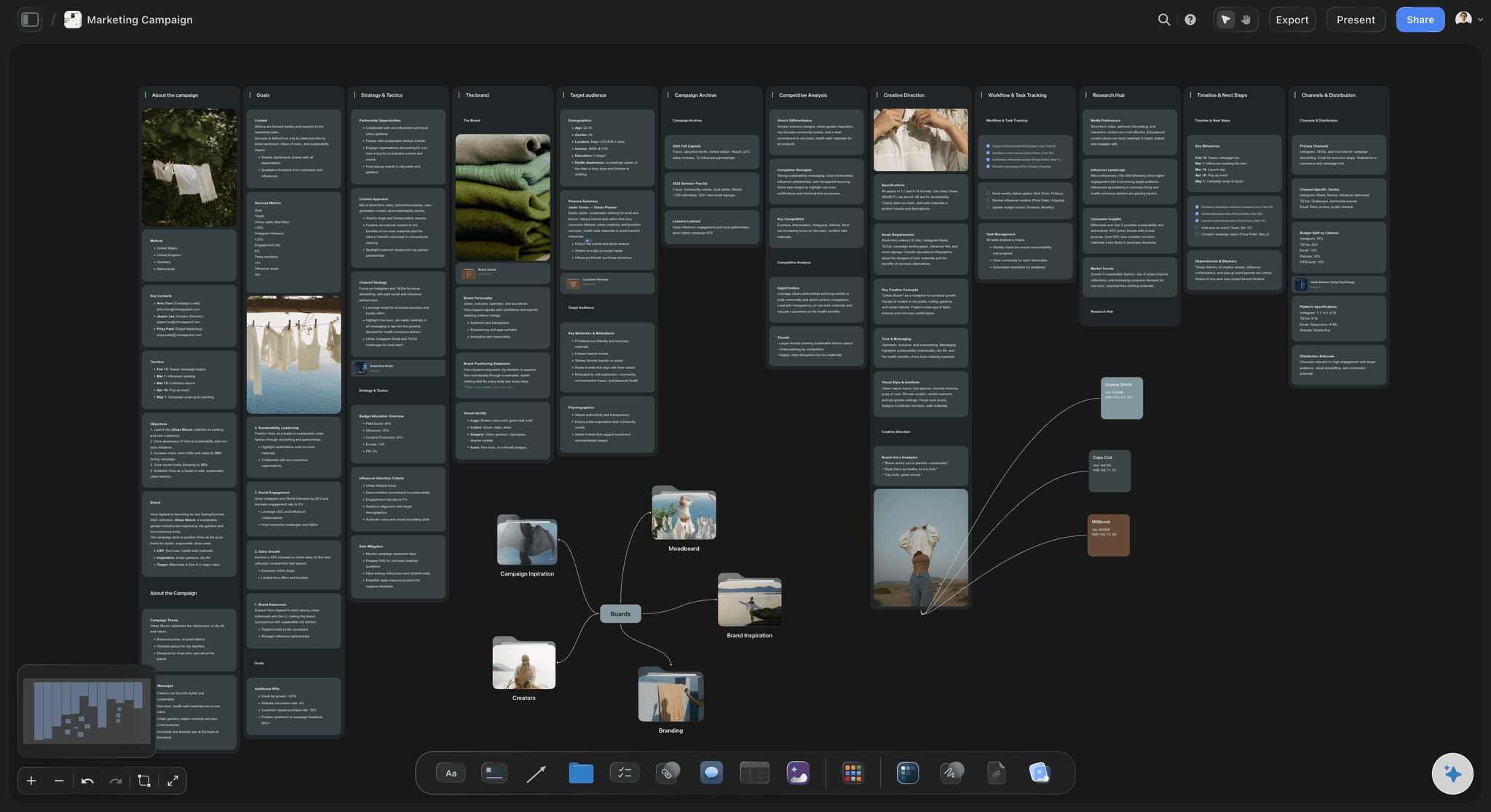
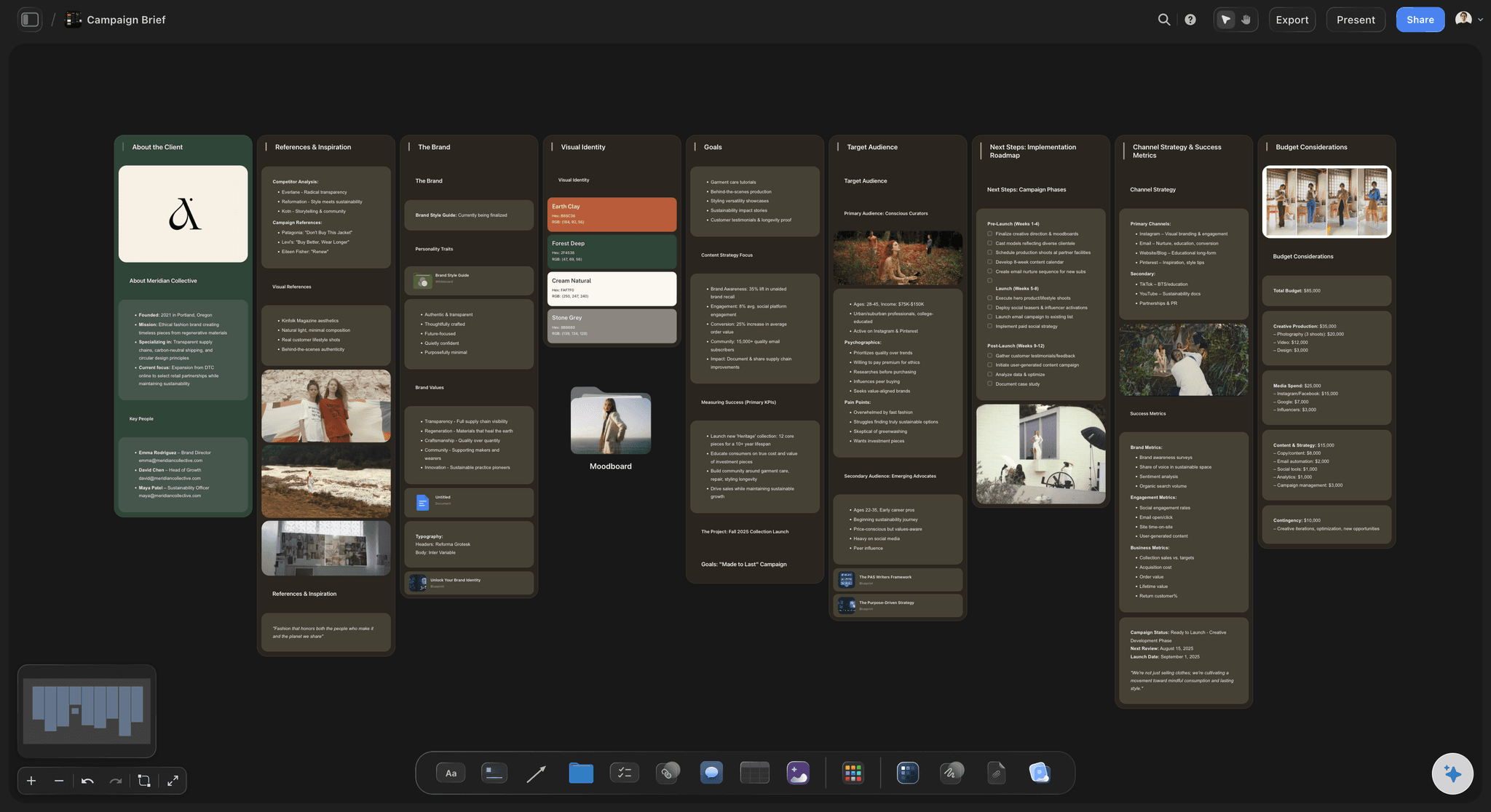
Routes, side by side
Two or three ideas, argued on one canvas
Each route gets its line, its evidence and its hero execution in one group, so the team can compare them in the internal review and kill the weaker ones on the evidence rather than on seniority.
See campaign concept presentation →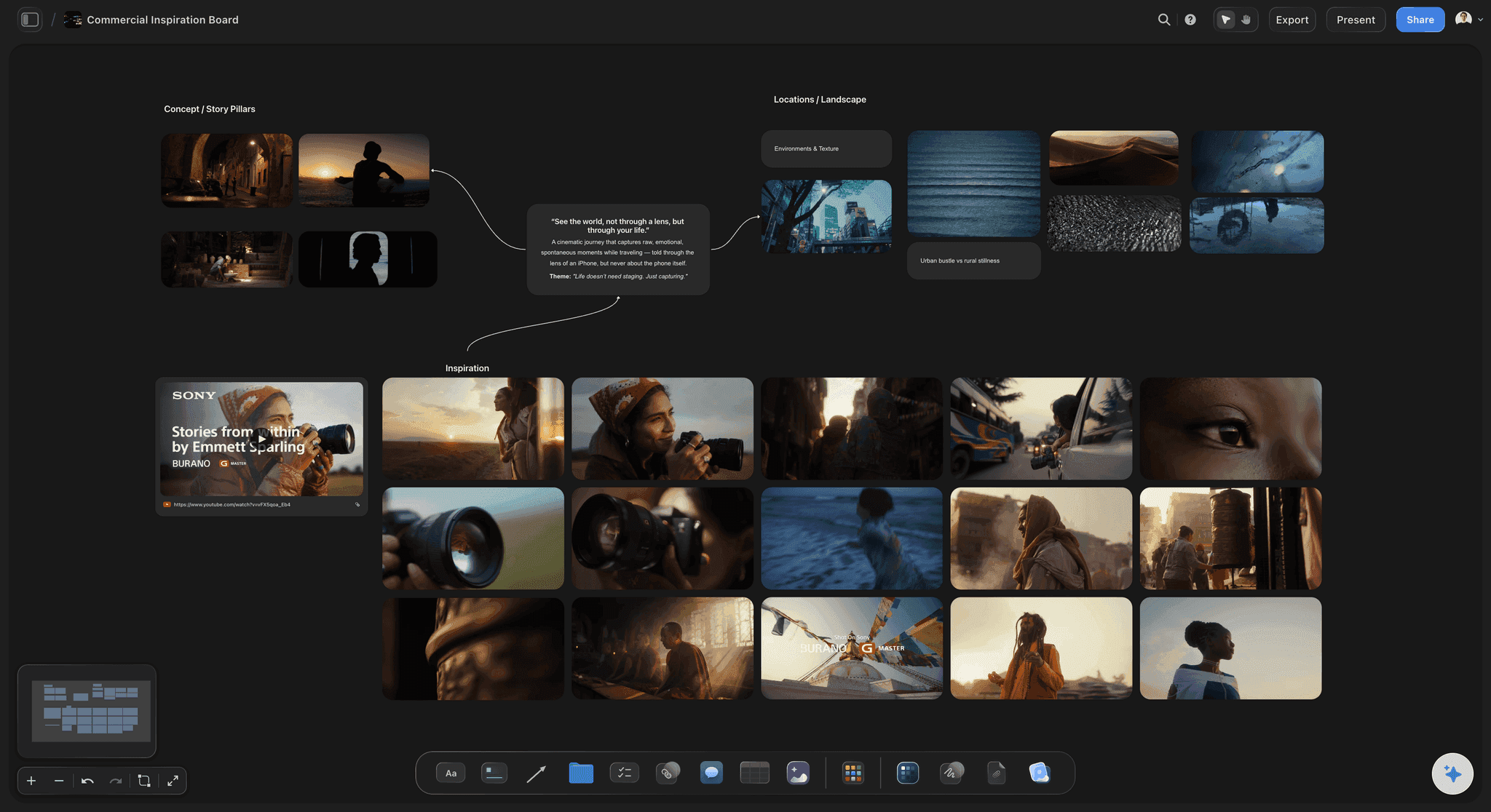
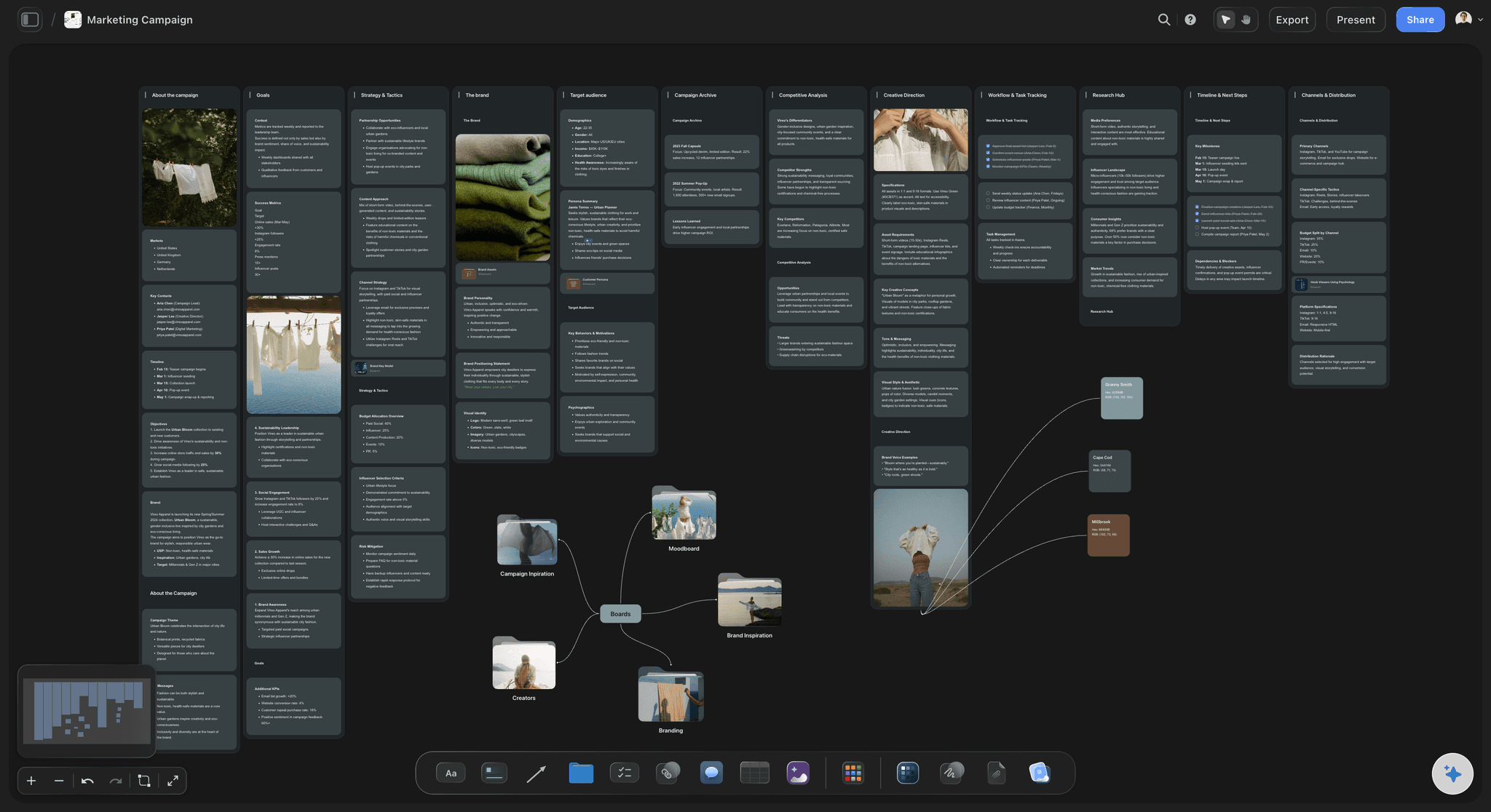
Executions the client can picture
Key frames, the look and the channels
Storyboard frames for the hero film, a moodboard for the look, a reference clip you can play and scrub, and each mocked-up execution beside the channel it runs on. The client sees the campaign, not a description of it.
See the creative concept board →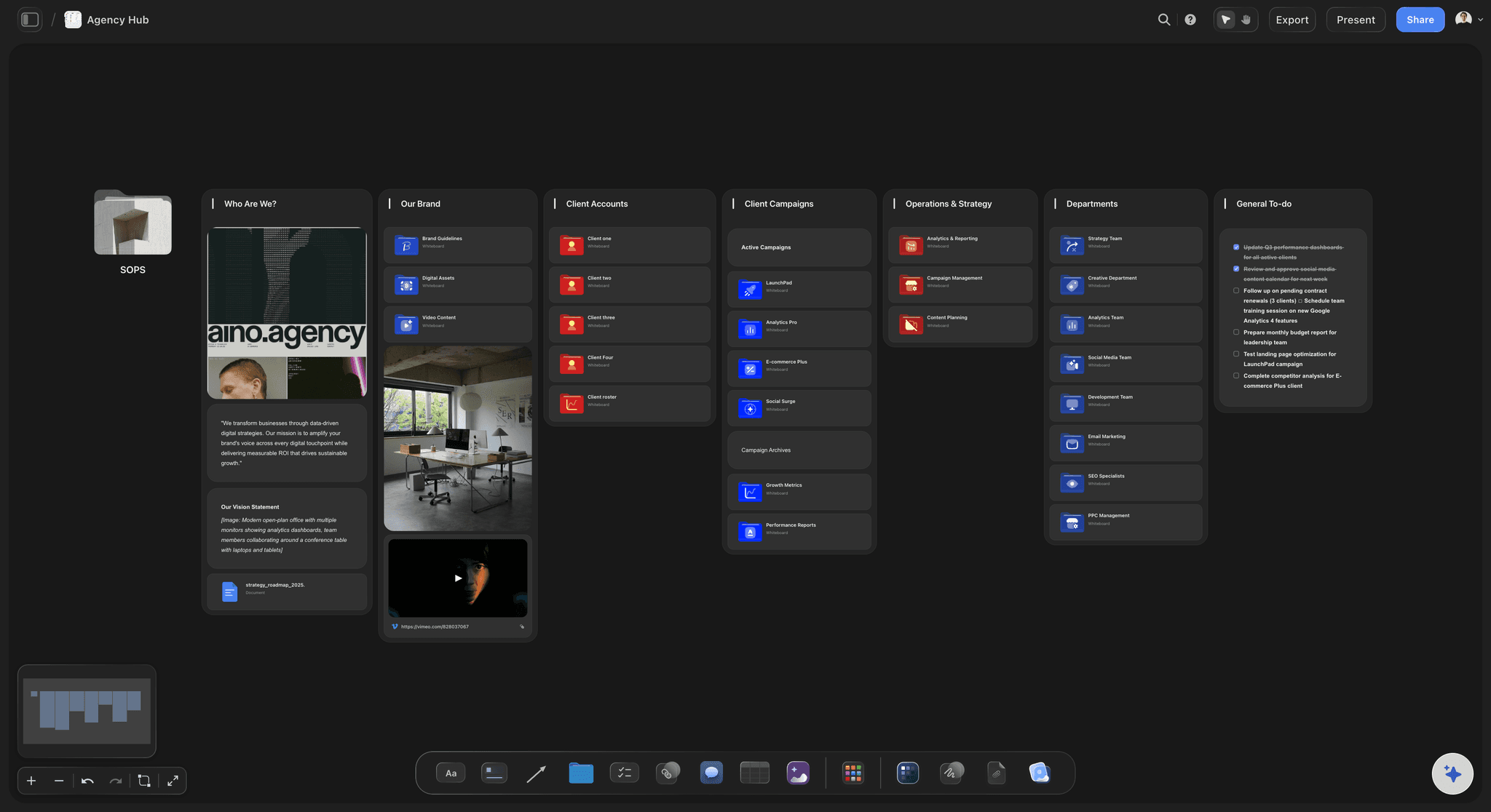
In the room, and after it
Presented from the board, left behind as a file
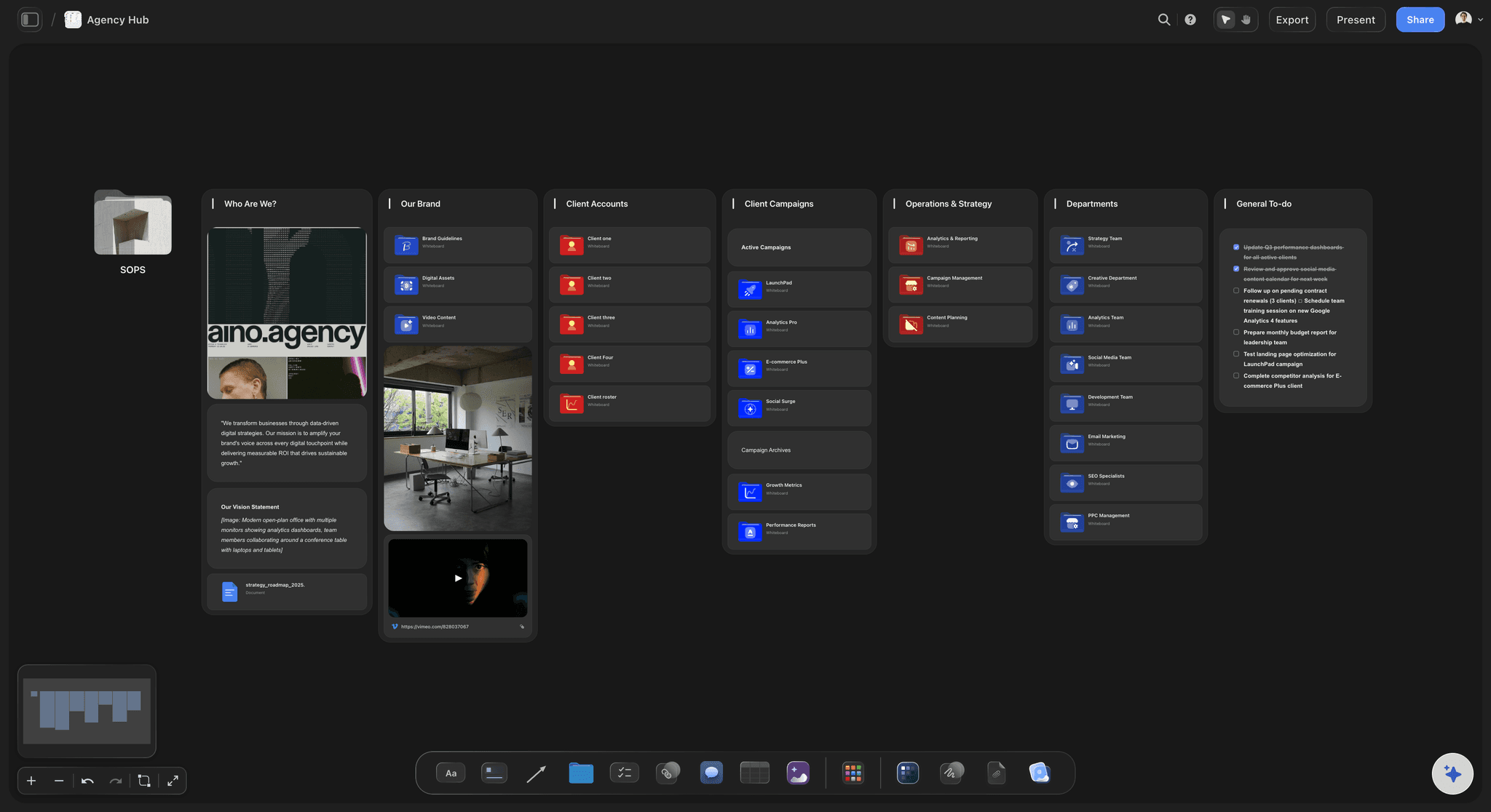
Step through the pitch frame by frame on the call. Afterwards the client opens the board from a view-only link with no account, and signs in to ask a question beside a frame. The AI drafts the leave-behind as a PDF from the board.
See the client presentation tool →Every pitch kept, won or lost.
Each pitch lives on its own board, so the research and the routes you did not use are there for the next brief. Storyflow is paid-only during early access, with plans from $7.99 a month billed annually ($9.99 monthly). A free plan launches before the end of 2026, and anyone a paid member invites to a board joins free.
Unlimited pitch boards, images and video uploads on every paid plan
AI that builds the pitch board, researches the category and drafts the leave-behind
Tables with currency columns and live totals for the investment options
Presentation mode, view-only links and whole-board PDF export
Built for people with taste
The creative response, section by section.
A common shape for answering a brief: eleven sections, twenty to thirty frames or slides, forty minutes presenting and twenty for questions. Use it with or without Storyflow.
The argument, sections 1 to 4
Their problem, then your answer
1. The brief, in their words: One slide quoting what they asked for and what success means to them. The common mistake is paraphrasing it into agency language they do not recognise.
2. The real question: The one-sentence reframe: what the brief is really asking once you have looked at the audience and the category. This is where the client first thinks you might be worth the fee.
3. The insight: A true thing about the audience that the category has missed, with the evidence beside it: a quote, a number the client gave you, a behaviour you saw. An insight without evidence is an opinion.
4. The idea: The line and a one-paragraph explanation of how it answers the real question. Present one idea, or two routes if the brief is genuinely open. Three routes of equal weight reads as indecision.
The work, sections 5 to 8
How it lives, and who makes it
5. Executions: Three to five, across the channels in the brief: key frames of the hero film, an out-of-home line, three social posts, an activation. Show them in place, on a phone or a poster, rather than floating on white.
6. How we would run it: The phases, the review points, how the client's team is involved and how fast feedback is turned round. Procurement reads this section more closely than the creative.
7. The team: The three to five people who will actually do the work, each with two lines on why them. Founders who will not be on the account belong in the credentials deck, not here.
8. Relevant work: Two or three case studies, one frame each: the problem, the idea and the result. Pick the ones closest to this brief, not your most awarded.
The close, sections 9 to 11
Timeline, investment and the ask
9. Timeline: Weeks from the yes to launch, worked back from the client's date, with their review windows marked. A timeline that ignores their approval process is the first thing their team will correct.
10. Three investment options: Named by what the client gets, for example Launch, Launch plus content, and Always-on. Each differs on scope, deliverables and length of engagement, each with its line items and total.
11. The next step: One ask and a date: a decision by the day they named, or a working session on the chosen route. End on the idea's line, not a thank-you slide.
Before and after the pitch
The credentials deck and the leave-behind
The credentials deck: Sent before the chemistry meeting: your point of view, services, three to five case studies, the team, clients and how you work, in about a dozen slides. Update it twice a year, not per pitch.
The leave-behind: The presented pitch is too sparse to read alone. Send a version with the spoken argument written into full sentences, the same day or the next morning, as a link or a PDF.
The pitch terms: Agree any pitch fee, and that ideas not bought stay with the agency. Put both in writing before you start, and a line on the final slide.
The follow-up: A thank-you within a day with answers to any questions you could not answer in the room, then one note on the decision date. Win or lose, ask for feedback on why.
Explore templates for your project
Every template opens as a real, editable board on the infinite canvas. Pick the closest fit and make it your own.
Marketing Campaign
Plan a campaign across channels, messages, and deliverables on one board the whole team can see.
One app instead of five
Pitch, Google Slides and Keynote finish the deck. Storyflow builds what goes in it.
They design finished slides, export to PowerPoint and, in Pitch's case, show who viewed which slide. Storyflow is where the pitch is worked out, and it can be presented from there.
Storyflow
Recommended
Canvas for research, references and idea routes
Investment table that totals itself
Presentation mode
Brand-styled slide templates
PowerPoint export
Time spent per slide by each viewer
Pitch
Canvas for research, references and idea routes
Investment table that totals itself
Presentation mode
Brand-styled slide templates
PowerPoint export
Time spent per slide by each viewer
Google Slides
Canvas for research, references and idea routes
Investment table that totals itself
Presentation mode
Brand-styled slide templates
PowerPoint export
Time spent per slide by each viewer
Keynote
Canvas for research, references and idea routes
Investment table that totals itself
Presentation mode
Brand-styled slide templates
PowerPoint export
Time spent per slide by each viewer
What creators are saying
Join early creators getting structured workspaces and AI that remembers their projects
“Storyflow has sped up my workflow by at least 3x, which means more flow state and more projects I can actually ship. It truly changed the way me and my team create.”

Reilin Joey
Director & YouTuber
“One prompt gets me a structured board. But the tactics are my favorite. I run my YouTube scripts through them and my intros and retention got better. It's amazing.”

Justkay
YouTuber & Freelance Filmmaker
“I used to juggle five apps to plan a project. Now I describe what I am making and get boards, lists, and a schedule. All in one place.”

George
@fernwehchronicles
What agency founders ask about new business pitches.
Structure, credentials, investment and pitch terms.
Storyflow is the tool for building the thinking behind a creative agency pitch deck: the brief quoted back, research, the insight, idea routes, executions and investment options on one board you present from on the call, share by link with no account, or send as a PDF. If the client expects designed slides, finish them in Pitch, Keynote, Google Slides or Canva from the finished board.
For a response to a brief, eleven sections: the brief in their words, the real question, the insight, the idea, executions, how you would run it, the team, relevant work, the timeline, three investment options and one next step. That is twenty to thirty slides or frames for forty minutes of presenting, leaving twenty for questions.
A credentials deck introduces the agency to anyone: point of view, services, case studies, team, clients and how you work, in ten to fifteen slides, sent before a chemistry meeting. A pitch deck answers one client's brief and leads with their problem and your idea. Keep them separate; a pitch that opens with credentials spends its first ten minutes on you.
Twenty to thirty for a full creative response presented in forty minutes, and ten to fifteen for a credentials deck. Count the time rather than the slides: roughly a minute and a half per slide, with more time on the insight and the idea and less on the team and timeline. Cut case studies before you cut executions.
As three investment options named by what the client gets, such as Launch, Launch plus content and Always-on, differing on scope and length of engagement rather than on quality. Show line items and a total for each. In Storyflow each option is a table column with a currency type and a live total, so a change to one line updates the figure.
Ask for a fee whenever a pitch asks for creative work. A fee rarely covers the cost, but it shows the client is serious and it limits the field. If you pitch unpaid, cap the work at routes and key frames, and agree in writing that ideas not bought stay with the agency.
Who else is pitching and how many, who will decide and who will be in the room, the budget range, the decision date, how the work will be judged, whether there is a pitch fee, and what they did not like about their last agency. Send the questions after the brief arrives, and build nothing that depends on a budget you have not heard.
The version of the pitch the client reads after you leave. The presented deck is built to be spoken over and is too thin to stand alone, so the leave-behind writes the argument into full sentences and keeps the key frames and investment options. Send it the same day or the next morning, as a link or a PDF.
It can draft the structure and do the groundwork; the insight and the idea should be yours. In Storyflow the AI lays out the pitch board from the brief, researches the category and competitors, can restate the brief through its advertising brief workflow, generates storyboard frames on Pro and Max, and drafts a presentation PDF from the finished board.
Not for designed slides. Storyflow has no slide templates, no PowerPoint export and no per-viewer analytics. It is where the pitch is built and it can be presented straight from the board's frames, which many small agencies find is enough. When a client or a procurement team expects a formatted deck, design it in Pitch, Keynote, Google Slides or Canva from what the board settled.
It becomes the start of the job. The brief, insight, idea and executions the client bought stay on the board, and the AI can turn them into a campaign brief, a project plan with dates and the first production tasks. Lost pitches stay on their own boards too, and an unused route is often the start of the next one.
Not during early access. Storyflow is paid-only during early access, with plans from $7.99 a month billed annually ($9.99 monthly). A free plan launches before the end of 2026, and anyone a paid member invites to a board joins free, so freelancers on the pitch team join at no cost.
More from Storyflow
Campaign concept presentation
Client presentation tool
Pitch deck maker
Creative agency software
Campaign brief template
Creative concept board
Agency campaign planning
Creative client onboarding
Video production proposal
Brand identity project plan
How agencies present campaign concepts
Campaign concept presentation slide order
Best pitch deck tools
Pricing
Creative scope of work
RFP response plan
Win the room with the thinking.
Paste the brief, work out the idea on one board, and present it from the same place.