
Elevated brand work, made with taste
A personal brand plan
that says what you are for.
One sentence about what you want to be known for, the people it is meant to reach, the proof you already have, two platforms and no more, and the list of things you are not going to post about.


Creatives working for these brands already got early access
- Red Bull
- Canon
- Artlist
- Porsche
See how easy it is to get started
Watch a real project come together, from a blank board to a finished plan, clicked through step by step.
Start from a ready-made template
Pick a board to see what you can build, then let AI fill it in. Every template is a real, editable starting point on the same infinite canvas.

Brand Strategy
Define your positioning, values, and voice and connect them into a strategy the team can follow.
What is a personal brand plan?
A personal brand plan is the short document a founder writes before publishing anything: what you want to be known for, who that matters to, what proof you have, and what you will keep to yourself. Storyflow is an AI visual workspace that writes that plan on one infinite canvas: the known-for sentence, the proof cards, the two platforms and the private list. The AI drafts first versions from your history, and the board stays open as the thing you check new ideas against.
It starts with one sentence, and the sentence has to be narrow enough to be wrong. The founder who runs a small hardware company is not known for business. They are known for how to get a physical product made in small runs without a factory of your own. A claim that specific can be tested, argued with and remembered. Known for entrepreneurship is not a position, it is a category with a million people standing in it.
Then the honest part: the proof. Write out what you have actually done that backs the sentence, in a list. Shipped products, the years in the trade, the customers, the mistakes you made publicly. If the list is thin, the plan is not to write a better sentence; the plan is to do the work for six months and write about doing it. A reputation built on proof you do not have is the one that breaks in the first real conversation.
This plan is the why. The weekly machinery of pillars, an idea bank and a recording block is a separate job, and the founder-led content plan board is built for it. Keep them apart: when a plan mixes what you stand for with what you post on Tuesday, the posting schedule always wins and the position quietly disappears.
Ultra fast from brief to board
Four cards, one afternoon.
Then you check it every three months, not every week.
01
Write ten known-for sentences and keep one
Ask the AI for ten drafts from your background, then cut. The survivor should make someone in your field either nod hard or disagree. If nobody could disagree with it, it is a description of a job title.
02
List the proof, honestly
One card per piece of evidence: built this, ran that, made this mistake, have these customers. Put a thin list next to the sentence and look at both. That comparison decides whether you publish now or build first.
03
Pick two platforms and write down why
Where the people you want to reach actually spend time, and where you can stand being yourself. Two is the limit for someone with a company to run. Write one line per platform saying what it is for.
04
Write the private list and the signals
What you will not post about: your family, your staff, live deals, your health. Then the three signals you would count as it working. Check those four times a year, not four times a week.
Position, proof, platforms, limits.
Storyflow holds the plan. Posting, scheduling and the follower numbers all stay where they are.
The whole plan in one line
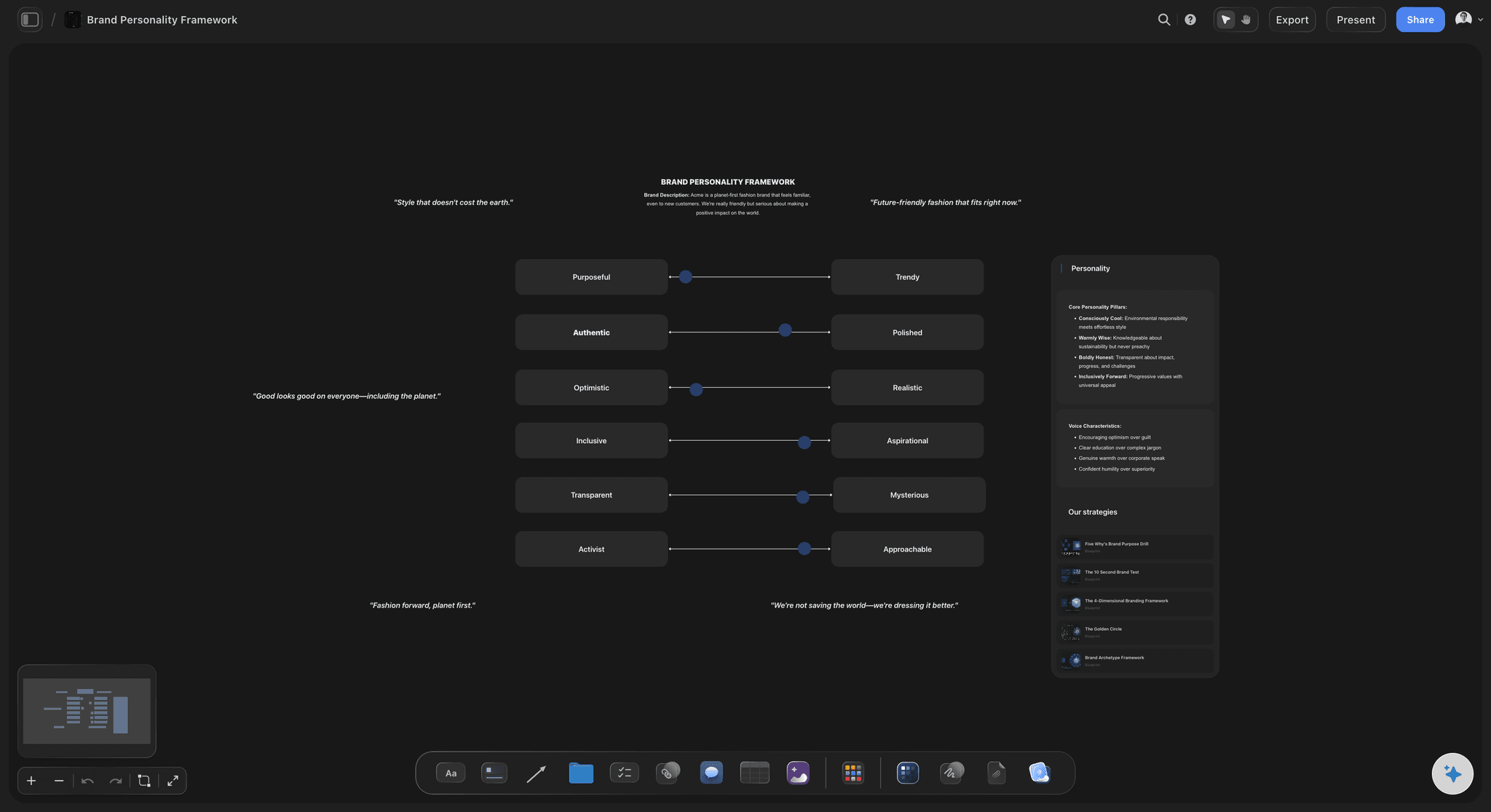
A known-for sentence you could be wrong about
Narrow, testable, yours. Keep the ten drafts you rejected on the board next to it: in six months, one of the rejected ones is often the sentence you have grown into.
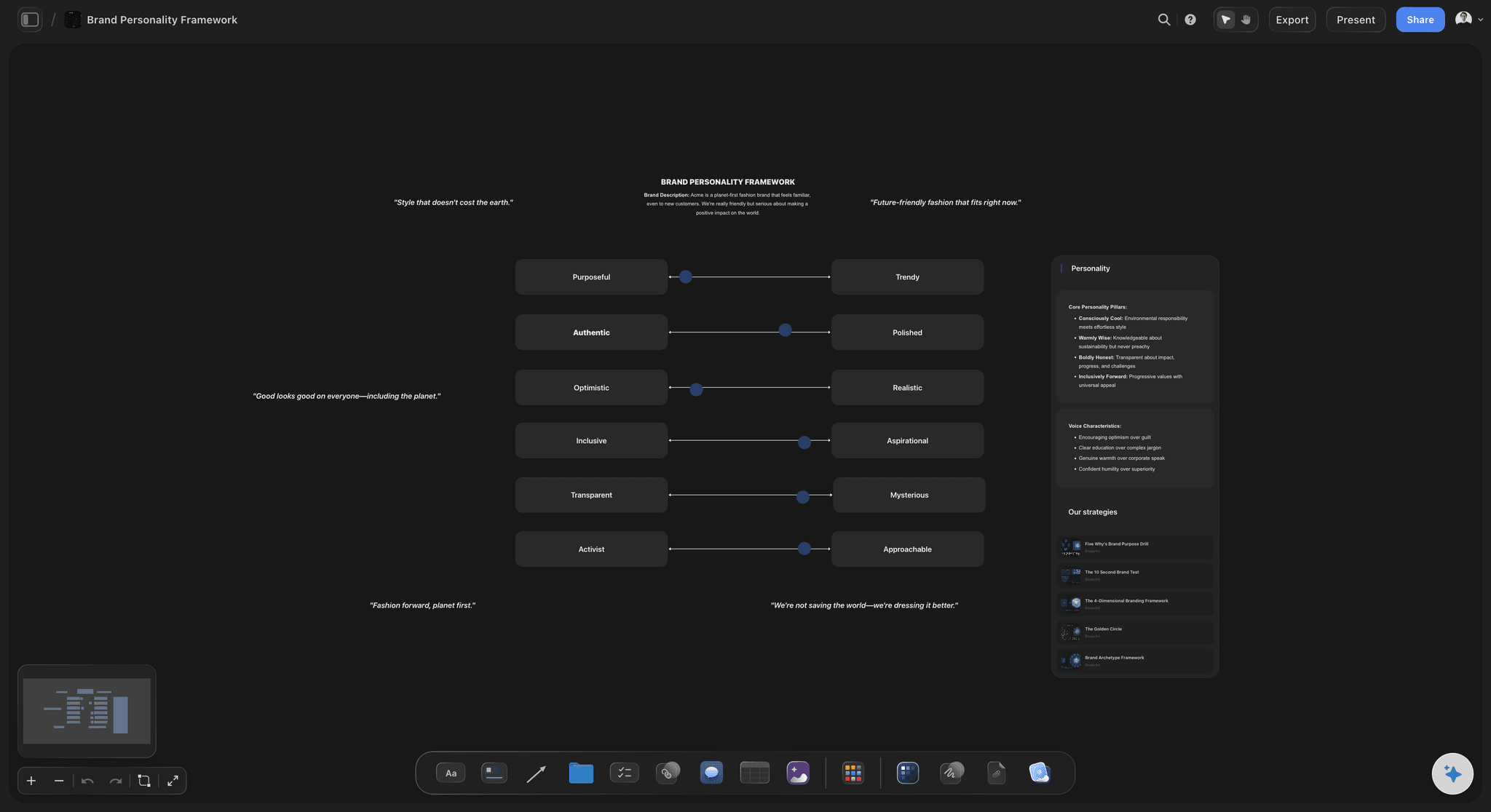
See the brand personality board →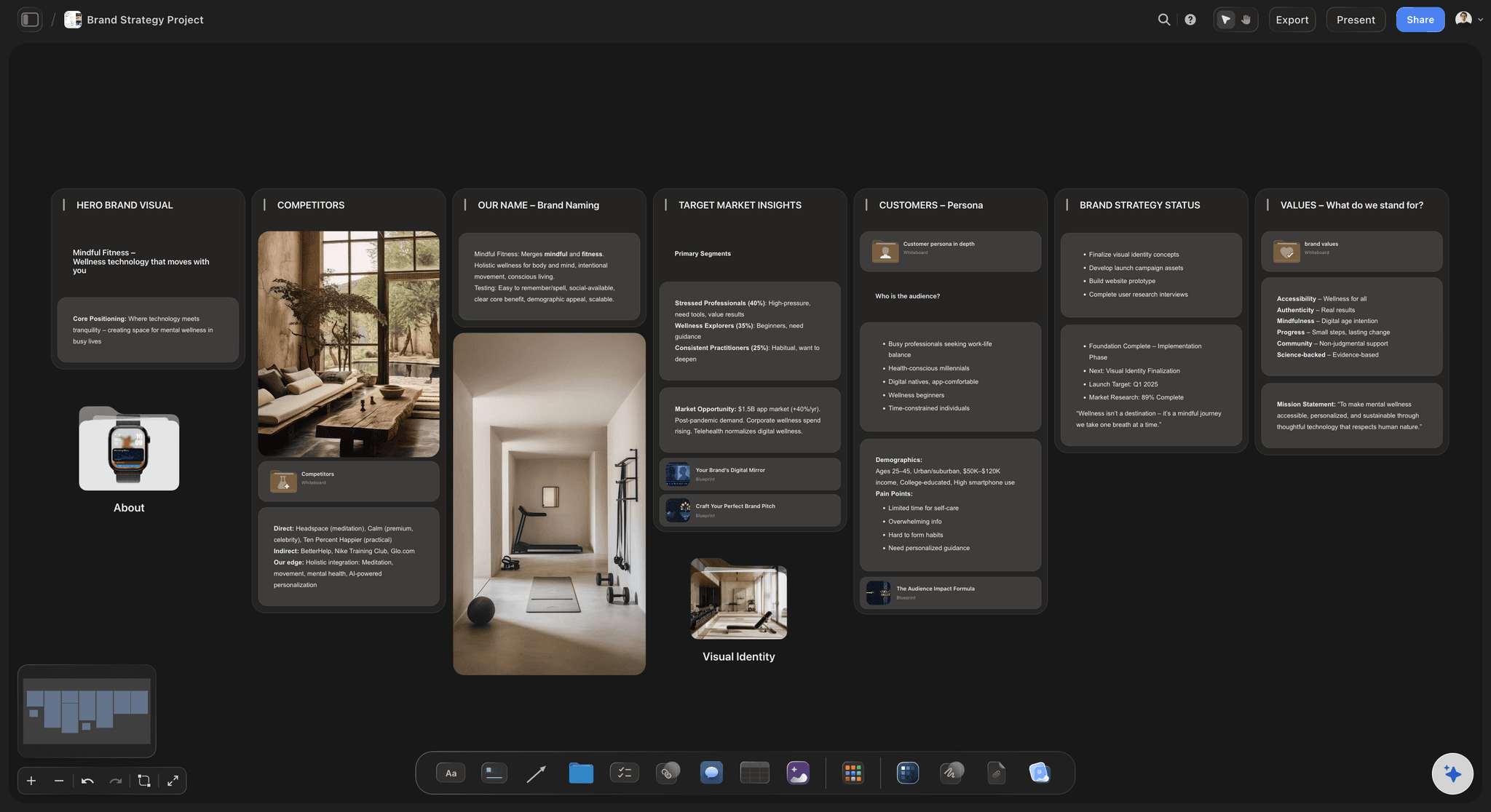
The test
Every claim with evidence underneath
Shipped work, years in the trade, customers, public mistakes. Drag the cards under the claim they support. Claims with nothing underneath are the ones to go and earn rather than write around.
See the brand story board →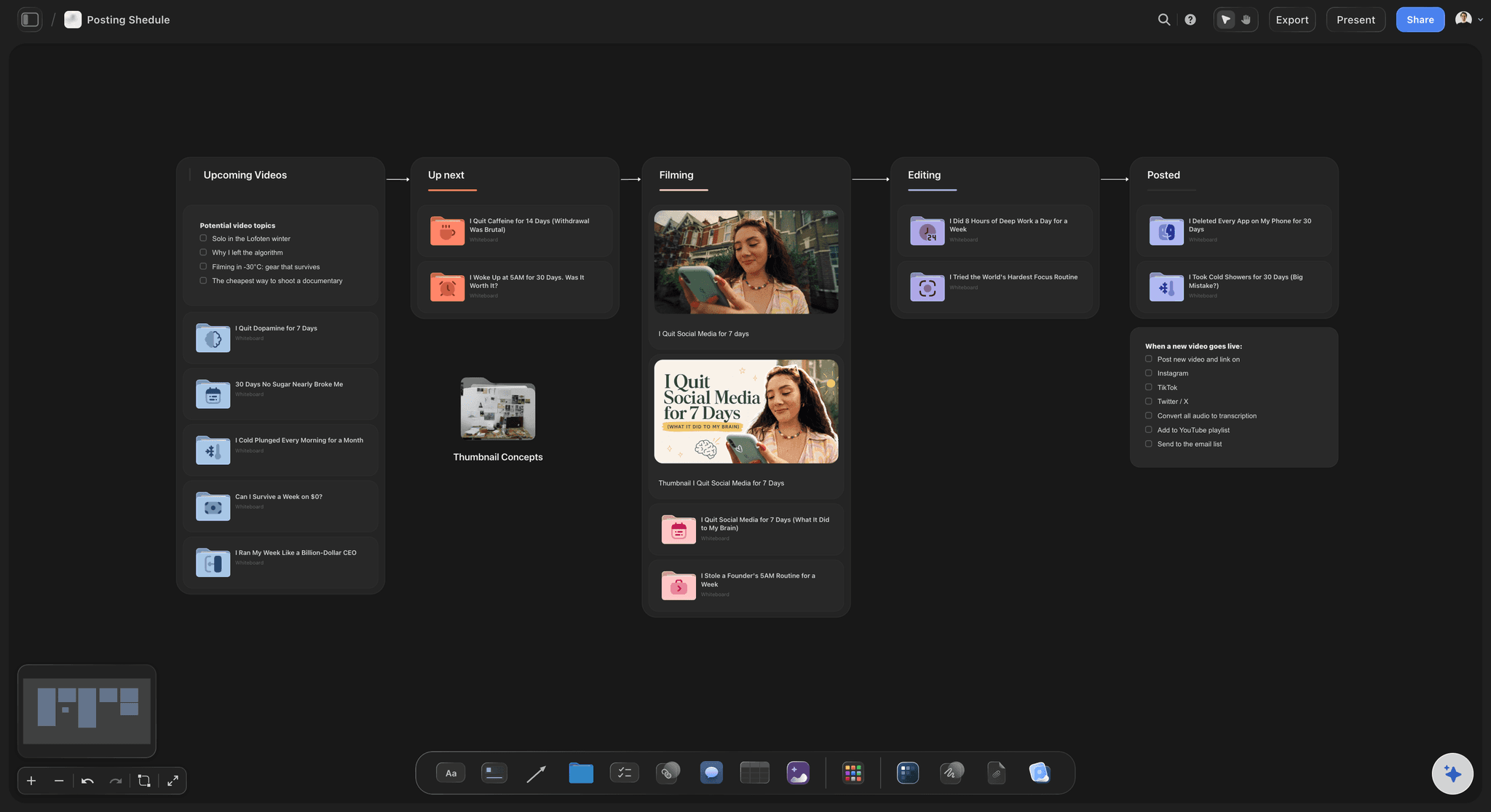
Two, not six
Platforms chosen on purpose
One card each, with who is there, what format it wants and what you will use it for. A founder running a company can keep two going. Six is how people end up posting nothing for four months and calling it a rebrand.
See the founder-led content plan →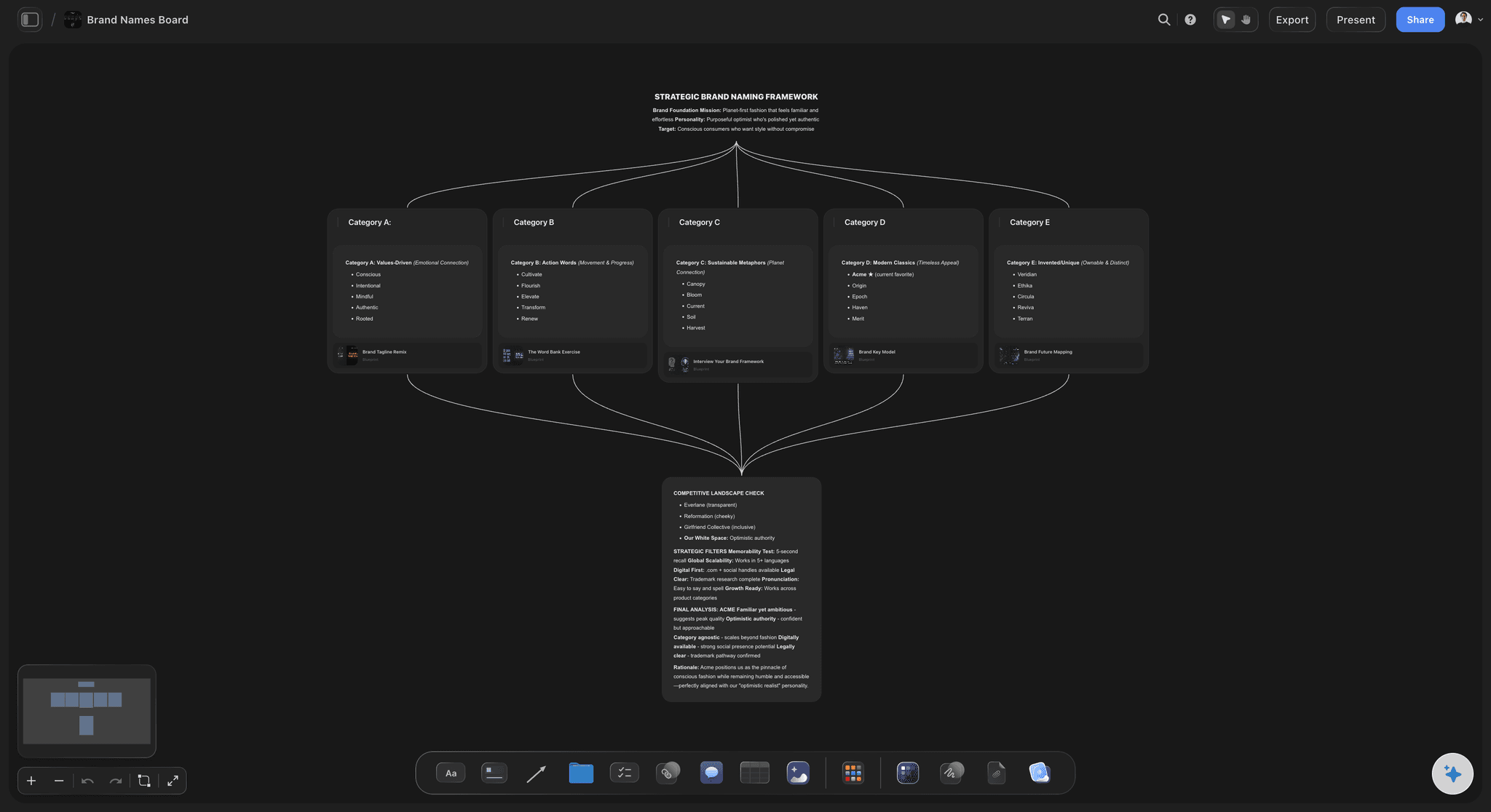
Decided in advance
The subjects that stay private
Family, staff, live deals, money, health, whatever it is for you. Written down before anything goes well, because the decision is much harder to make honestly on the day a post is doing numbers.
See the brand strategy board →The plan you wrote in January is how you judge December.
Keep the board and the sentence you started with. Most founders find the position narrowed, and that is the sign it is working. Storyflow is paid-only during early access, with plans from $7.99 a month billed annually ($9.99 monthly). A free plan launches before the end of 2026, and anyone a paid member invites to a board joins free.
Unlimited boards and image uploads on every paid plan
Bring an editor or a co-founder onto the board without buying them a seat
200+ Tactics for the brand and audience work around it
Whole-board PDF export when an agency or a publicist asks for the plan
Presentation mode for talking a team through the position
Built for people with taste
What makes this a plan and not a mood board.
Each one is a decision most founders put off until the posting has already started.
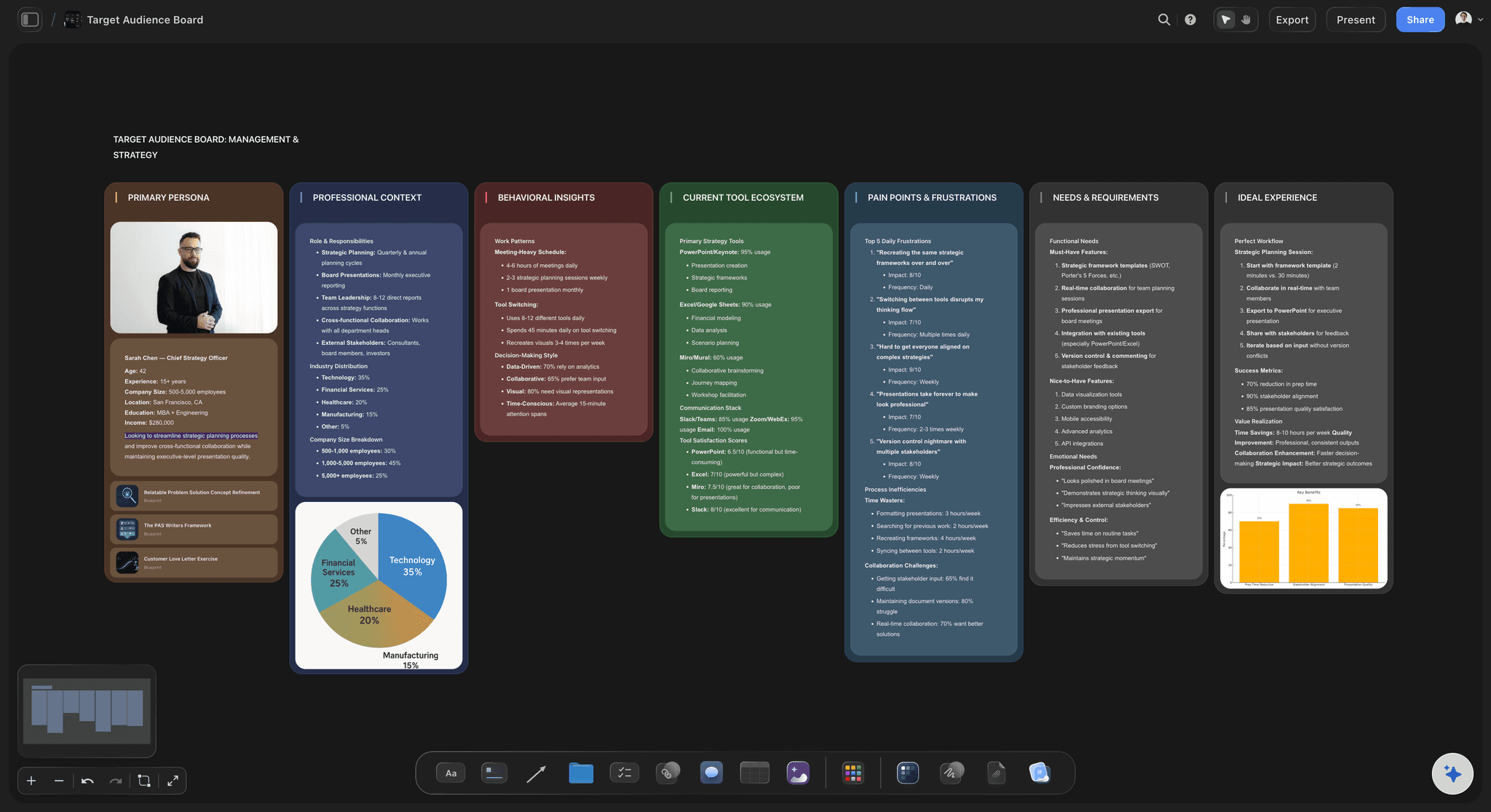
Who it is for
An audience narrow enough to picture
Name one person, not a demographic: A technical founder at a twelve-person company who has just been told to do marketing. You can write to that person. You cannot write to founders and operators.
Say what you want them to do: Hire you, buy from you, work for you, invite you to speak, back your next thing. Different goals produce completely different posts, and most plans never choose.
Write what they already believe: The thing your reader is wrong about, or has never been told, is where your material is. Agreeing with your audience loudly is pleasant and forgettable.
Keep the customer picture nearby: Your personal audience and your company's customers overlap but are not the same set. Put both on the board so the difference is deliberate.
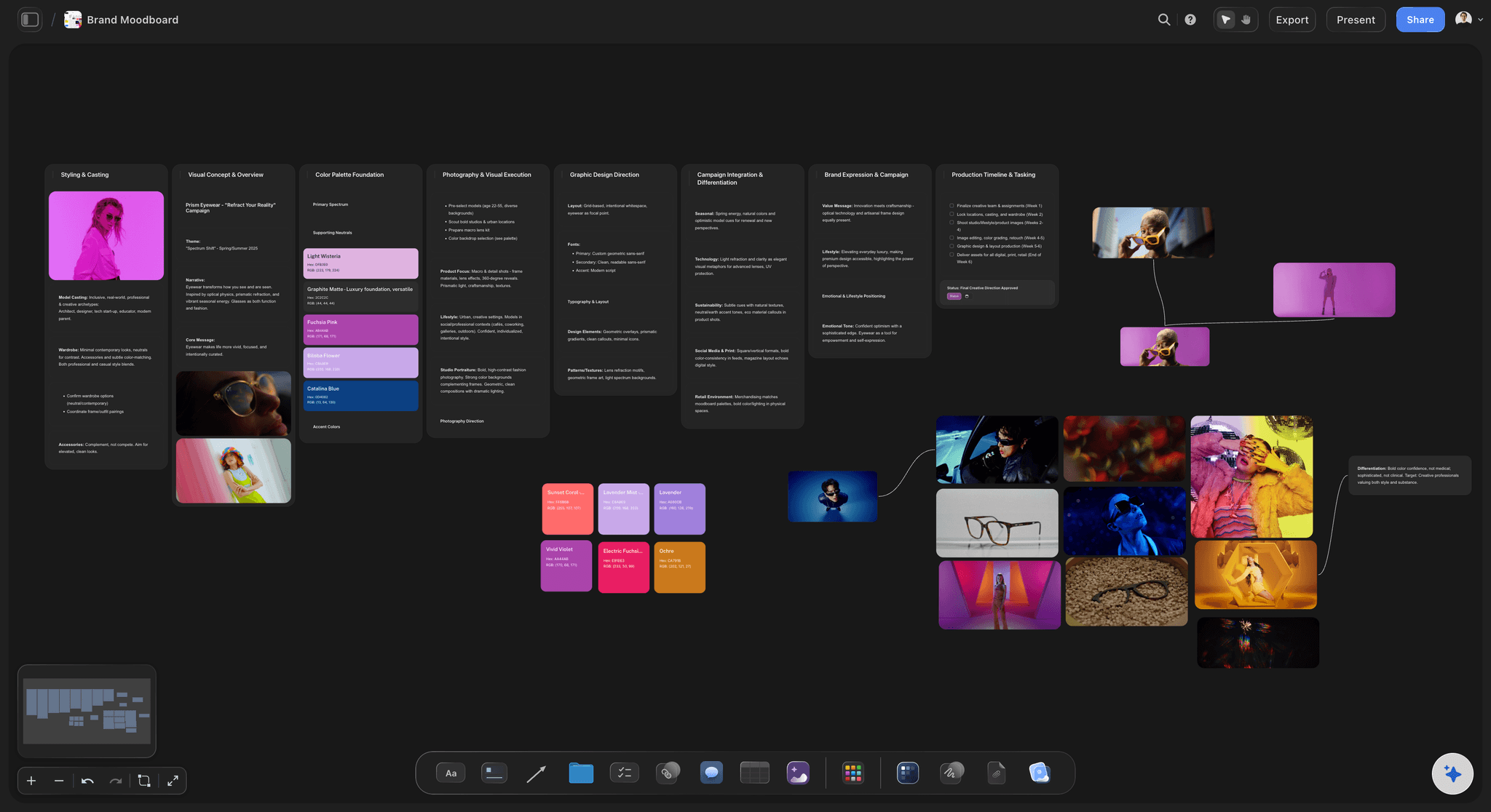
What you sound like
A voice you can keep up on a bad week
Three words, with examples under each: Blunt, specific, funny. Then a real sentence you have written that proves each one. Adjectives with no example under them turn into somebody else's voice within a month.
Write the sentences you will not write: The motivational opener, the fake vulnerability, the thread that promises a framework. Naming them is what stops them appearing when you are tired.
Formats you can actually sustain: If you hate being on camera, the plan is not video, however well video performs. A plan built on a format you avoid is a plan that stops in week five.
Your words, whatever drafted it: The AI drafts outlines and cuts down long notes. Rewrite the sentences. Readers spot a house style faster than they spot a bad idea.
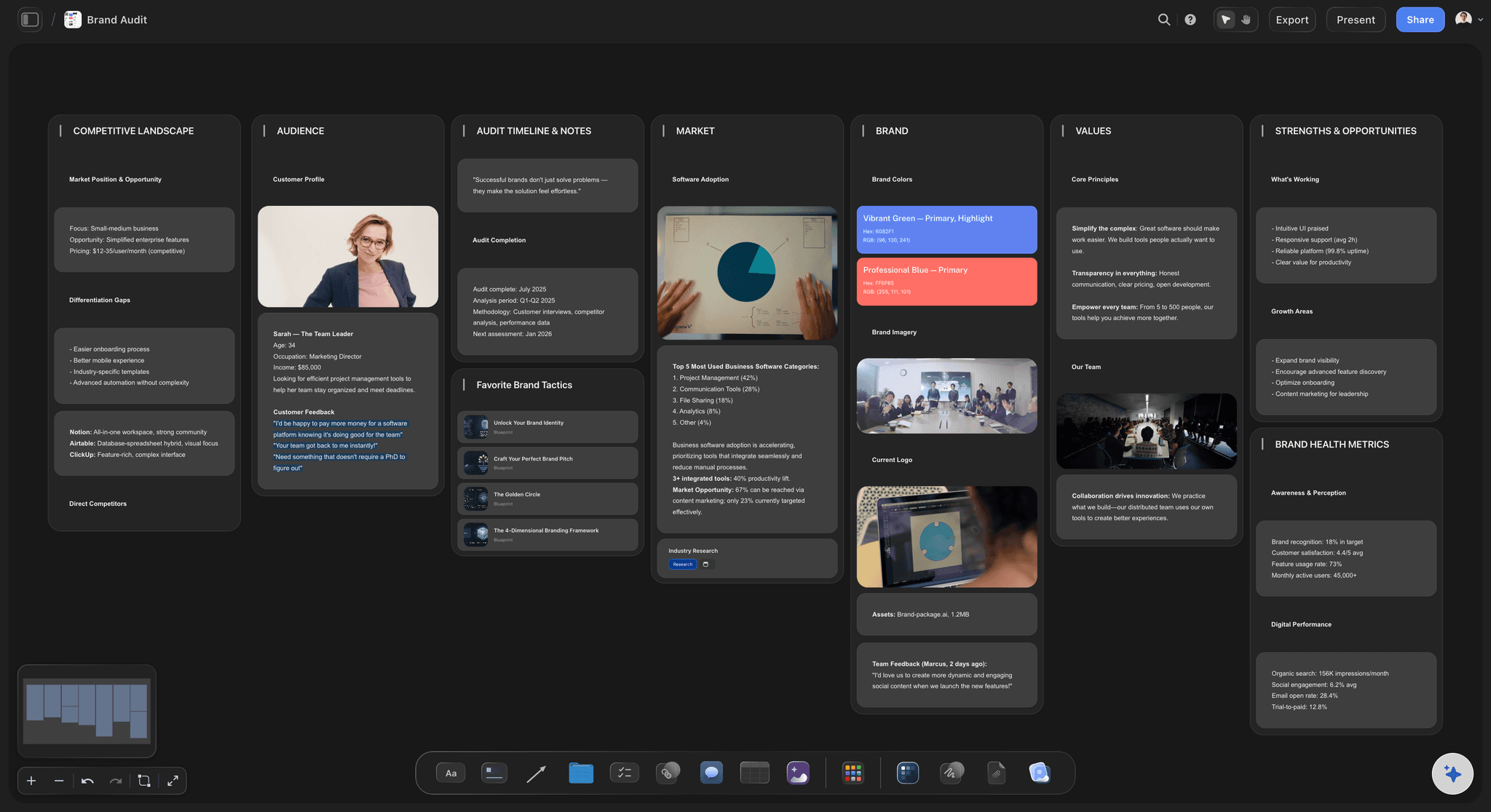
How you will know
Signals that are not follower counts
Count the right things: Inbound messages worth replying to, speaking invitations, candidates who mention something you wrote, customers who arrive already understanding what you do.
Check quarterly, not daily: Reputation moves slowly and daily numbers punish exactly the posts worth writing. Four review cards on the board is the right frequency.
Log where the good ones came from: One row per useful inbound: who, from what, on which platform. Three months of that tells you which of your two platforms is doing the work.
Be willing to narrow the sentence: The strongest signal is that the thing people come to you for is narrower than what you wrote. Change the sentence and keep the old one on the board.
Explore templates for your project
Every template opens as a real, editable board on the infinite canvas. Pick the closest fit and make it your own.
Brand Strategy
Define your positioning, values, and voice and connect them into a strategy the team can follow.
One app instead of five
Where this sits in the stack.
Storyflow is the plan behind the publishing, not the publishing itself.
Storyflow
Recommended
Known-for sentence with proof under it
AI drafts positions from your history
Platform and private lists on one canvas
Quarterly review against the plan
View-only link, no account to read
Schedules and publishes posts
Reports reach, followers and engagement
Scheduling tools
Known-for sentence with proof under it
AI drafts positions from your history
Platform and private lists on one canvas
Quarterly review against the plan
View-only link, no account to read
Schedules and publishes posts
Reports reach, followers and engagement
A notes app
Known-for sentence with proof under it
AI drafts positions from your history
Platform and private lists on one canvas
Quarterly review against the plan
View-only link, no account to read
Schedules and publishes posts
Reports reach, followers and engagement
What creators are saying
Join early creators getting structured workspaces and AI that remembers their projects
“Storyflow has sped up my workflow by at least 3x, which means more flow state and more projects I can actually ship. It truly changed the way me and my team create.”

Reilin Joey
Director & YouTuber
“One prompt gets me a structured board. But the tactics are my favorite. I run my YouTube scripts through them and my intros and retention got better. It's amazing.”

Justkay
YouTuber & Freelance Filmmaker
“I used to juggle five apps to plan a project. Now I describe what I am making and get boards, lists, and a schedule. All in one place.”

George
@fernwehchronicles
Personal brand plan questions
What founders ask before they decide to be visible.
Storyflow holds six parts on one board: one sentence saying what you want to be known for, the specific person it is aimed at, the proof you already have for it, two platforms with a reason each, the subjects you are keeping private, and three signals you would count as it working. The AI drafts first versions from your own history.
Storyflow covers the whole of this: the known-for sentence, the person it is aimed at, your proof cards, two platforms with a reason each, the subjects you keep private, and three signals you would count as it working, all on one board. The AI drafts first versions from your own history. Publishing and scheduling the posts themselves is still a job for the platforms or a tool such as Buffer or Taplio.
A personal brand plan decides what you stand for. Storyflow's founder-led content plan board decides what you publish and when: pillars, an idea bank from customer calls, and a weekly recording block. Write this first, then use that. Combining them in one document reliably ends with the schedule surviving and the position disappearing.
Narrow enough that somebody in your field could disagree with it. Known for entrepreneurship is a category, not a position. Known for getting a physical product made in small runs without your own factory is something people can remember, test and come to you about.
Then the plan is to do the work for six months and write about doing it, rather than to write a better sentence. Put your evidence cards next to your claim and look at both honestly. A reputation with no proof behind it falls over in the first serious conversation it survives to.
Two, when you also have a company to run. Pick where the person you want to reach actually spends time and where you can stand being yourself. Write one line per platform saying what it is for. Six platforms is usually how a plan turns into four silent months.
Storyflow's AI drafts it: paste your background, your shipped work and the questions people ask you, and ask for ten known-for sentences or a first pass at the audience. You still choose. A position generated for you and never argued with reads as borrowed, and readers notice quickly.
Storyflow holds the plan behind the posting: the position, the proof, the boundaries and the review, and the whole board exports as a PDF if an agency or a publicist asks for it. It does not publish or schedule. That happens in the platforms themselves or in a tool such as Buffer, Taplio or Later.
Storyflow's board tracks the signals that are worth more to a founder anyway: useful inbound, speaking invitations, candidates who mention your work, and customers who arrive already knowing what you do. It does not show reach, followers or engagement. Those live in each platform's own analytics.
Because the decision is much harder to make on the day a post is doing well. Family, staff, live deals, money, health: decide in advance, write it on Storyflow's board, and you never have to weigh a private subject against a good week's numbers in the moment.
Four times a year. Reputation moves slowly, and checking weekly makes you optimise for the posts that perform rather than the ones that build the position. At each review, log where the good inbound came from and be willing to narrow the sentence.
Yes. A view-only link opens in any browser with no account, so a co-founder, an editor or a coach can read it. Leaving a comment does require signing in, and anyone a paid member invites to a board joins free.
A personal brand and a company brand should not contradict each other, but they are not the same thing. The company sells a product to customers. You are building trust with a wider group that includes candidates, investors and peers. Keep both pictures on Storyflow's board so the difference is a choice rather than an accident.
More from Storyflow
Founder-led content plan
Brand story template
Brand strategy tool
Brand personality template
AI value proposition generator
Customer persona generator
Content pillar planner
Newsletter planner
Annual planning board
Storyflow for solopreneurs
Brand positioning workshop
Carousel post with Claude
For coaches
Canva alternative
Decide what you are for before you decide what to post.
One sentence, the proof behind it, two platforms and a private list.