
Ultra-fast campaigns, pitched beautifully
The book is done.
Now it needs a plan.
Lay the pre-order run, the ARC campaign, launch week, and the long tail out on one visual timeline, with the cover assets, the contact lists, and the copy sitting beside the dates they belong to.


Creatives working for these brands already got early access
- Red Bull
- Canon
- Artlist
- Porsche
See how easy it is to get started
Watch a real project come together, from a blank board to a finished plan, clicked through step by step.
Start from a ready-made template
Pick a board to see what you can build, then let AI fill it in. Every template is a real, editable starting point on the same infinite canvas.

Marketing Campaign
Plan a campaign across channels, messages, and deliverables on one board the whole team can see.
What is a book launch plan?
A book launch plan is the schedule and the assets for getting a finished book in front of people, laid out far enough in advance to be executable. Storyflow is an AI visual workspace that plans your book launch on one infinite canvas: the pre-order run, the ARC campaign, launch week and the long tail, with cover assets, contact lists and copy beside their dates. A launch plan covers the months before publication, when the cover reveal, the ARC campaign, the pre-order push, and the podcast and newsletter outreach have to happen, launch week itself, when everything lands at once and there is no time to make anything, and the long tail afterwards, which is where most books actually find their readers and where most plans stop existing entirely.
Launches fail for a boring reason: the work has a lead time and the author discovers it too late. Trade reviewers want finished copies months ahead. Podcasts book six to ten weeks out. Newsletters and bookstagram accounts fill their calendars. A cover reveal needs a cover, and covers slip. None of this is difficult, but all of it has to be started before the book feels real, which is precisely when authors are least inclined to think about marketing. A visible timeline is the only reliable fix, because the deadlines that matter are the ones for the things that must happen first.
Storyflow is an AI-native infinite canvas built for planning that runs long and wide. Describe the book and the publication date in a prompt and the AI lays out a structured launch board: a timeline with pre-order, ARC, launch week, and long-tail phases, plus cards for the tasks each one implies. Then you work spatially. Drag tasks to the weeks where they belong, keep the cover and the graphics beside the posts that use them, put the contact list next to the outreach it feeds, and draft the launch-week copy next to the assets it will run with.
The reason a canvas suits this better than a task list is that a launch is a sequence of visible things rather than a set of chores. You need to see the cover next to the announcement post, the podcast list next to the pitch email, and the three-week run of launch-week content as a run rather than as fourteen separate reminders. It also means the whole plan can be handed to a publicist, a co-author, or a virtual assistant as a link they can read in one pass, rather than as a spreadsheet that requires an explanation.
Ultra fast from brief to board
From a publication date to a launch you can actually run.
No scattered reminders, no discovering the ARC deadline three weeks after it passed.
01
Open a canvas
Sign up in seconds. No download. Your infinite planning canvas opens in the browser.
02
Describe the book and the date
Type the genre, the audience, the publication date, and how you are publishing, and the AI lays out a phased launch timeline with task cards ready to fill.
03
Put the assets beside the dates
Pin the cover, the graphics, the contact lists, and the draft copy next to the week they belong to, so nothing has to be found or made during launch week.
04
Share it with whoever is helping
Send a view-only link to a publicist, a co-author, or an assistant, or invite them to the canvas to work on it with you. Invited collaborators join free.
Every phase, every asset, one timeline.
Pre-order, ARCs, launch week, and the long tail in view at once.
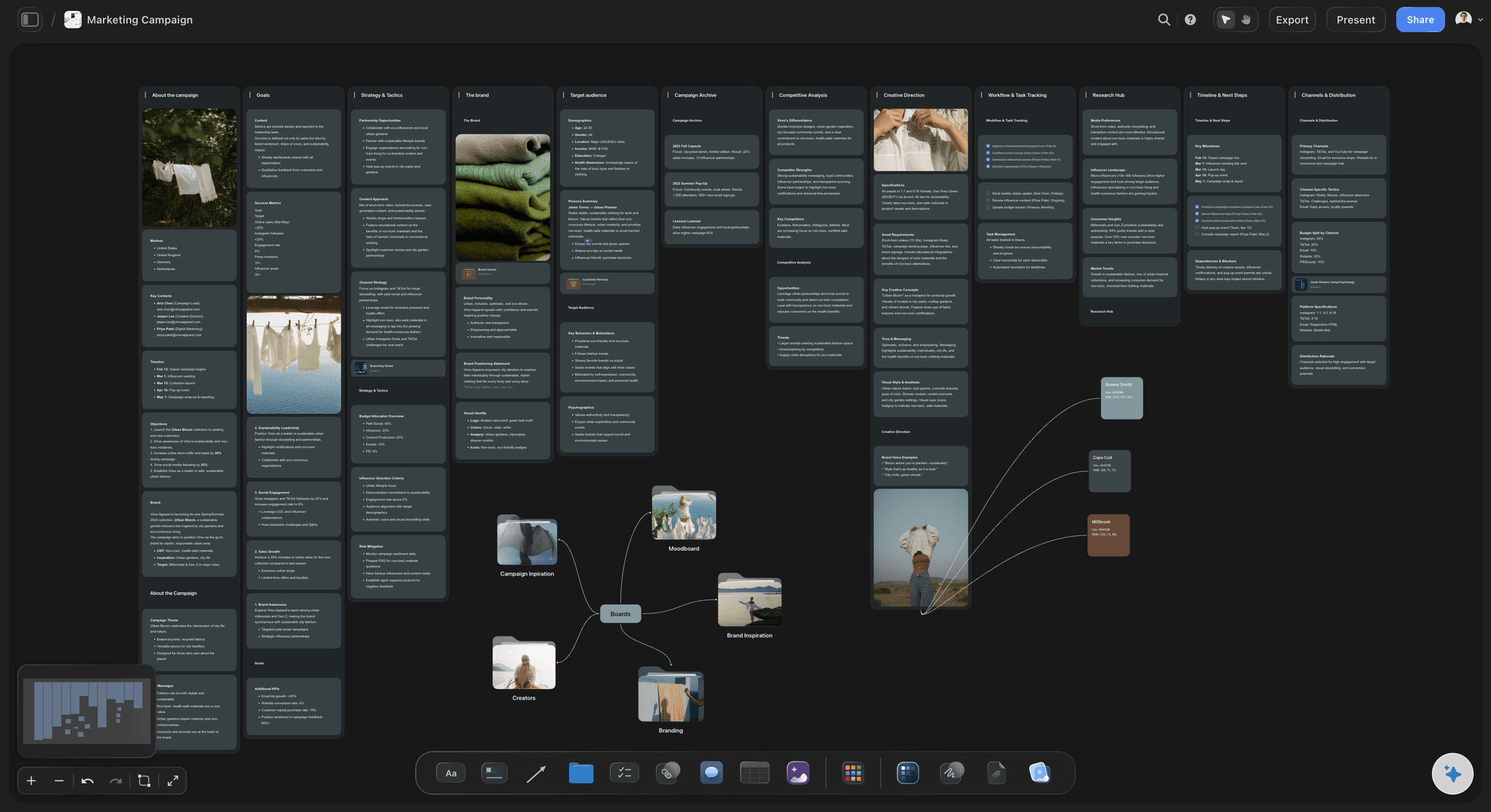
AI lays out the launch phases from your date
Start from a plan with a shape
Describe the book and the publication date and the AI builds a phased timeline with tasks for each stage. The lead-time items you would have missed are on the board before you start.
See the AI marketing plan generator →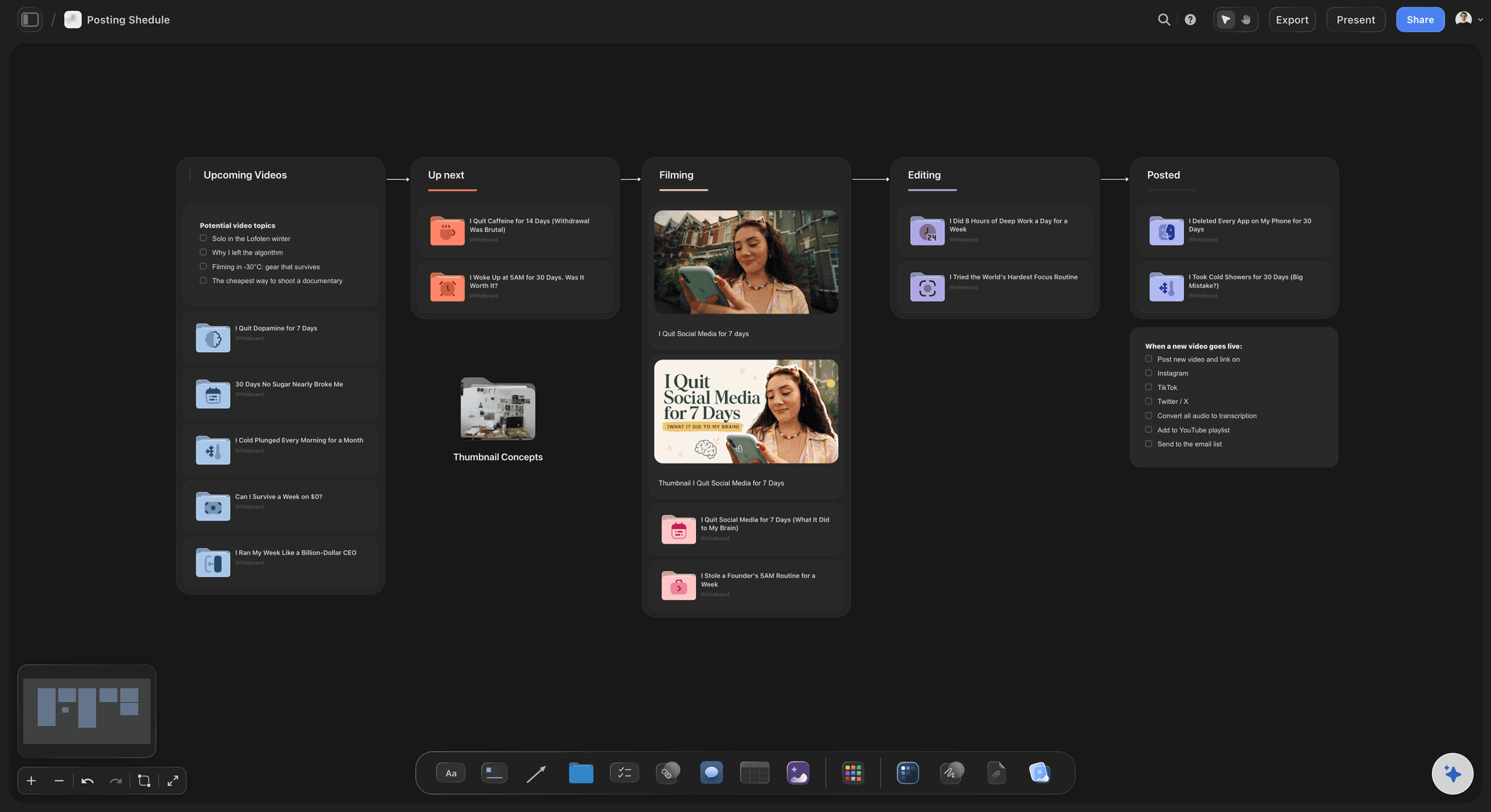
Assets beside the posts that use them
Make everything before launch week
Keep the cover, the quote graphics, and the reel stills next to the posts they belong to. Launch week is for publishing, not for opening a design tool at eleven at night.
Explore the content planning tool →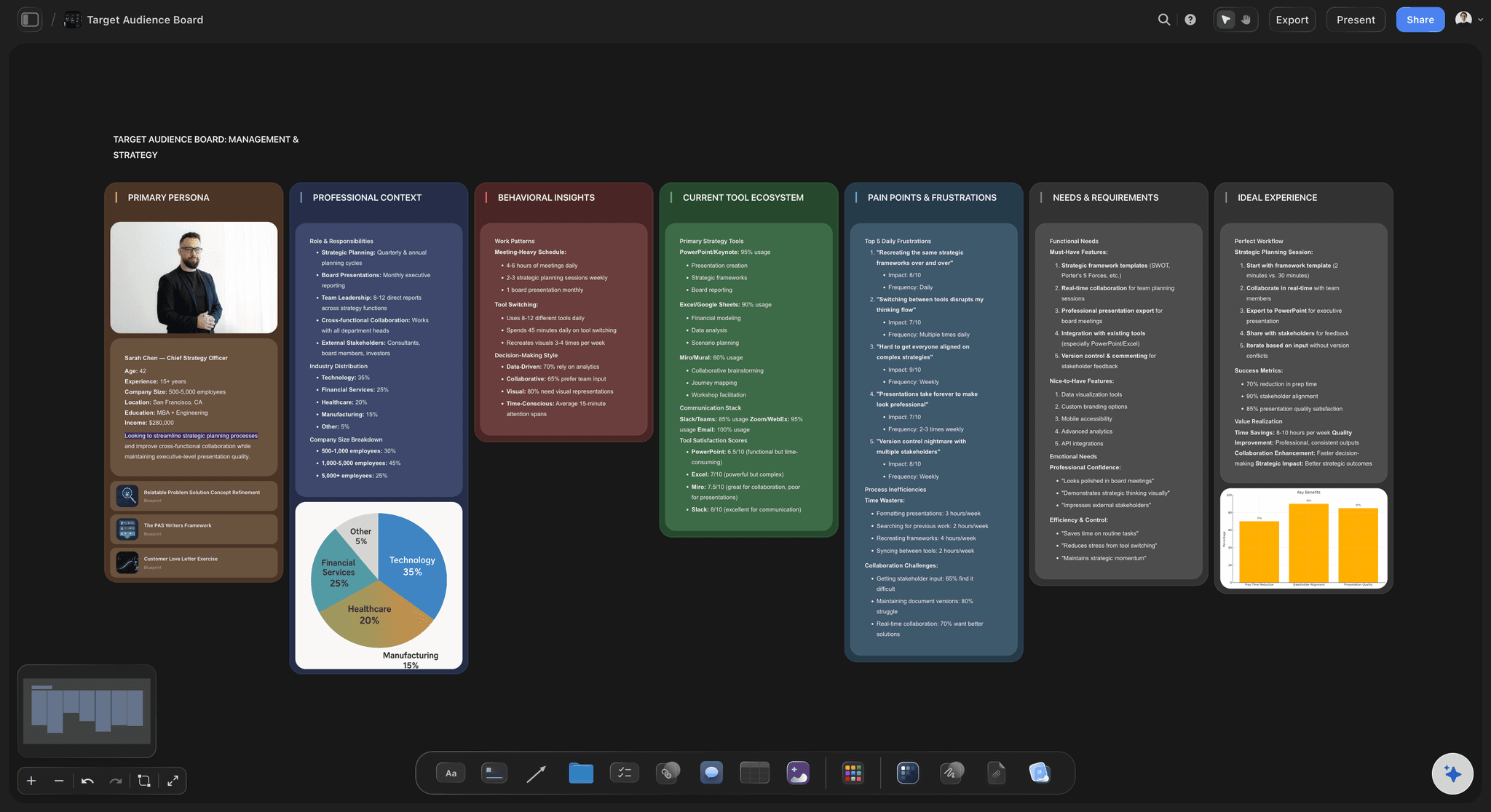
Outreach lists next to the pitch
Track every ask in one place
Keep podcasts, newsletters, bookstagrammers, and bookshops on cards with their status, beside the pitch you are sending. Outreach dies when the list and the message live in different apps.
See the AI content calendar generator →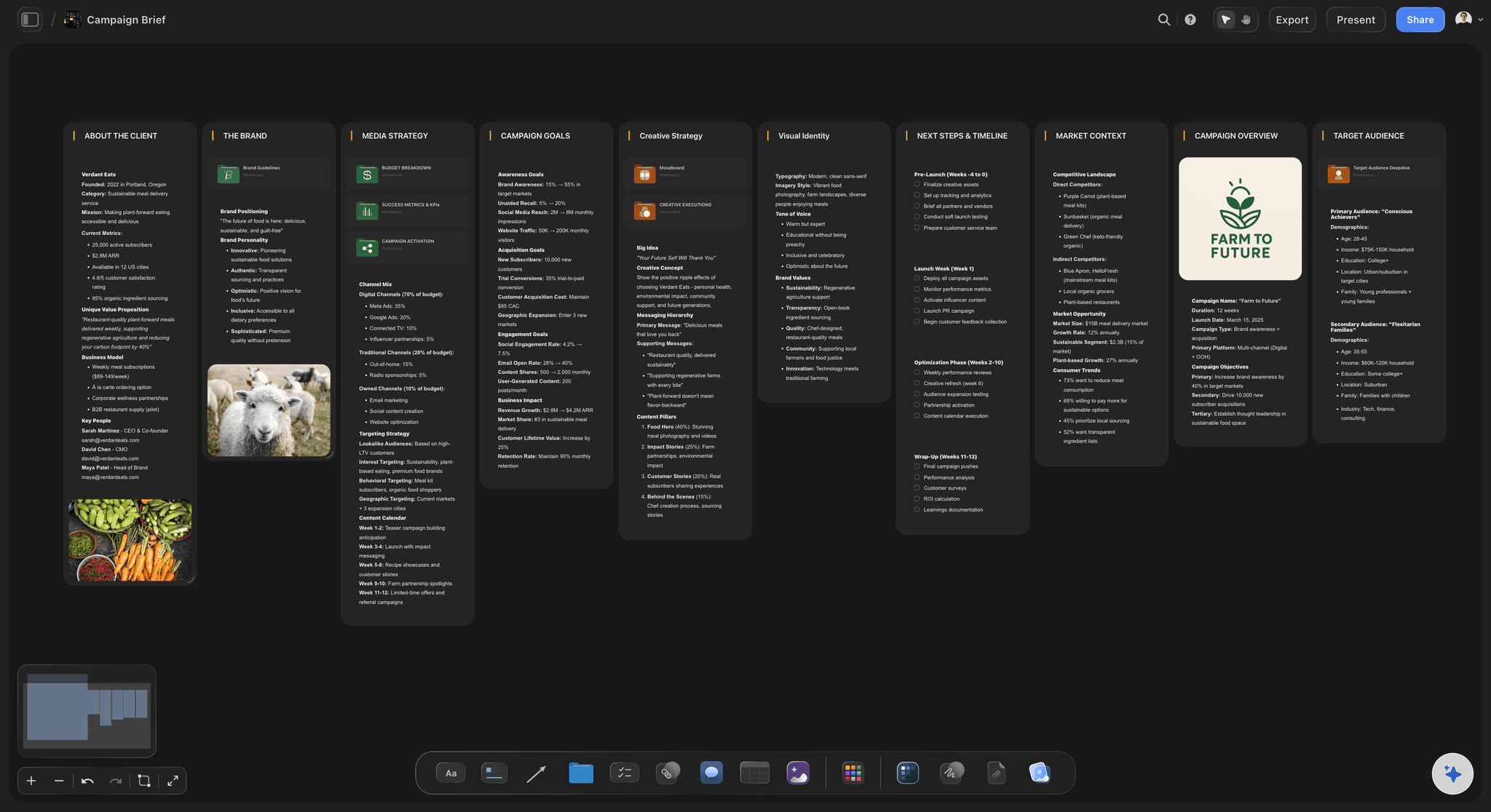
View-only links for publicists and collaborators
Hand over a plan someone can read
Send a link and a publicist, co-author, or assistant sees the whole launch in a browser with no account, and signs in to comment on the specific week they have a question about.
See Storyflow for authors →Unlimited boards. No object cap.
Open a canvas, enter your publication date, and lay the launch out. Storyflow is paid-only during early access, with plans from $9.99 a month, and a Free plan launches before the end of 2026.
Unlimited planning boards on an infinite canvas
AI usage to generate launch plans from prompts
Starter templates for campaigns, calendars, and task boards
Share view-only links with publicists and collaborators
Built for people with taste
More than a checklist you found online.
A checklist tells you what to do. A timeline tells you what is already late.
Pre-order, ARCs, launch week, long tail
Work across every phase of the launch
Lead-time items first: Trade reviewers want finished copies months ahead and podcasts book six to ten weeks out. Putting the long-lead asks at the far left of the timeline is most of what separates a launch from a scramble.
The ARC campaign as a pipeline: Track reviewers from asked to sent to posted by dragging cards across columns. An ARC list with no status field is a list you will email twice and never follow up.
Launch week planned as a run: Lay the week out day by day with every post, email, and event visible together. Seeing it as a run is how you notice that Thursday is empty and Tuesday has four things on it.
A long tail that actually exists: Plan the three months after publication, when most books find their readers. Almost every launch plan stops at week one, which is exactly when the attention starts.
AI that can see the board you have already built
Fill the plan with an AI that has the context
Prompt against the whole canvas: Ask it to fill an empty week with post ideas, draft a podcast pitch structure, or lay out a pre-order incentive campaign. It reads the plan you have built rather than a generic one.
It structures, it does not ghostwrite your voice: Storyflow lays out and organizes the launch. The copy stays yours, which matters, because readers buy books from authors who sound like themselves.
Iterate without losing work: Re-prompt as often as you want. Tasks you have already placed and dated stay exactly where they are while the AI builds around them.
Assets, copy, and lists in one place
Keep the making next to the scheduling
Cover and graphics on the board: Pin the cover, the alternate crops, the quote cards, and the reel stills beside the posts that use them. Launch week collapses when assets have to be located rather than opened.
Copy drafted beside its visual: Write announcement posts, newsletter copy, and the pinned thread in the built-in document editor next to the image they run with. Copy written away from its visual reads exactly like it.
Contacts with status: Podcasts, newsletters, bookshops, and reviewers as cards you drag from pitched to booked to done. The follow-up is where outreach actually converts, and it is what a flat list never prompts.
Publishers, publicists, and helpers
Run the launch with other people
View-only links, no account required: Send the plan to a publicist, an agent, or your publisher's marketing contact and they read the whole thing in a browser. No spreadsheet to explain, no attachment to version.
Comments on the week they concern: Questions attach to the specific task or date, so a conversation about the cover reveal happens on the cover reveal rather than in an email thread with four subjects in it.
Invite the people doing the work: Bring a co-author, an assistant, or a street team lead onto the canvas so everyone is working from one plan. Invited collaborators join free.
Explore templates for your project
Every template opens as a real, editable board on the infinite canvas. Pick the closest fit and make it your own.
Marketing Campaign
Plan a campaign across channels, messages, and deliverables on one board the whole team can see.
One app instead of five
Storyflow vs Notion, Trello, and a spreadsheet.
Be clear about what Storyflow is. It does not send email, schedule posts, distribute ARCs, or report sales. It is the planning surface upstream of the tools that do.
Storyflow
Recommended
Visual timeline with assets beside the dates
AI lays out the launch plan from a publication date
View-only links, no account needed to read
Email sending and list management
Social scheduling and auto-publishing
Free plan available today
Notion
Visual timeline with assets beside the dates
AI lays out the launch plan from a publication date
View-only links, no account needed to read
Email sending and list management
Social scheduling and auto-publishing
Free plan available today
Trello
Visual timeline with assets beside the dates
AI lays out the launch plan from a publication date
View-only links, no account needed to read
Email sending and list management
Social scheduling and auto-publishing
Free plan available today
Spreadsheet
Visual timeline with assets beside the dates
AI lays out the launch plan from a publication date
View-only links, no account needed to read
Email sending and list management
Social scheduling and auto-publishing
Free plan available today
What creators are saying
Join early creators getting structured workspaces and AI that remembers their projects
“Storyflow has sped up my workflow by at least 3x, which means more flow state and more projects I can actually ship. It truly changed the way me and my team create.”

Reilin Joey
Director & YouTuber
“One prompt gets me a structured board. But the tactics are my favorite. I run my YouTube scripts through them and my intros and retention got better. It's amazing.”

Justkay
YouTuber & Freelance Filmmaker
“I used to juggle five apps to plan a project. Now I describe what I am making and get boards, lists, and a schedule. All in one place.”

George
@fernwehchronicles
Book launch questions, answered.
When to start, what has a lead time, and where Storyflow stops and your email and scheduling tools begin.
It depends which half you mean. For sending email and managing a reader list, ConvertKit, MailerLite, and Substack own that job and Storyflow does not compete with them. For scheduling social posts, Buffer or Later will do it and do it well. For the planning itself, most authors end up in a spreadsheet or Notion, both of which hold information fine and neither of which lets you see the launch as a shape. Storyflow is the planning surface: a visual timeline where the phases, the assets, the copy, and the outreach lists sit together, with an AI that lays the first version out from your publication date.
Six months if you can, three at minimum, and the reason is lead times rather than effort. Trade reviewers want finished copies three to five months before publication and simply will not consider a book that arrives later. Podcasts commonly book six to ten weeks out, and the good ones longer. Newsletter swaps and bookstagram features fill calendars weeks ahead. Cover reveals need a finished cover, and covers slip. None of the individual tasks are hard, but a third of them have deadlines that fall before the book feels real, which is why a visible timeline outperforms a checklist so decisively.
Four phases and their assets. Pre-launch, covering the cover reveal, the ARC campaign, trade review submissions, podcast and newsletter outreach, pre-order setup, and any pre-order incentive. Launch week, planned day by day: announcement posts, newsletter sends, live events, and the pinned thread. The long tail, meaning the three months after, where most sales actually accumulate and where almost every plan stops existing. And a standing assets section holding the cover, graphics, bio, blurb, and links, so nothing has to be created or hunted for while the week is happening.
Not during early access. Storyflow is paid-only right now, with plans starting at $9.99 a month, and a Free plan for solo use launches before the end of 2026. Anyone a paid member invites to a board joins free today, so a publicist, a co-author, or an assistant can work on the plan without paying. If you need free this minute, Notion's free tier will hold a launch database and a calendar view, Trello's free tier does the ARC pipeline nicely, and a spreadsheet costs nothing. None of them show the assets beside the dates, but all three are honest free options.
No, and it does not try to. Storyflow does not send email, manage a subscriber list, schedule social posts, distribute ARCs, or report sales figures. Those jobs belong to ConvertKit or MailerLite, Buffer or Later, BookFunnel or NetGalley, and your retailer dashboards, all of which are better at them than a planning canvas could be. What Storyflow holds is the decision layer: what goes out, when, with which asset, to which list, and what has to happen first. When the plan is settled, the individual pieces get loaded into the tools that execute them.
Treat it as a pipeline rather than a list. Put every potential reviewer on a card with their name, where they post, and their status, then drag cards across columns as they move from identified to asked to sent to posted. The status is the entire value: an ARC list without one is a list you email once and never follow up, and the follow-up is where reviews actually come from. Set the deadline for sending copies at least eight weeks before publication so reviews can land in launch week, and keep a card for each platform's own requirements, because they differ and they change.
You describe the book and the launch: the genre, the audience, the publication date, whether you are self-publishing or traditionally published, and what you already have in place such as a newsletter list or a podcast history. The AI lays out a phased timeline from that, with pre-launch, launch week, and long-tail sections and task cards in each, so the lead-time items are on the board before you would have thought of them. From there it uses the whole board as context, so you can ask it to fill an empty week or draft a pitch structure, and re-prompting builds around what you have already scheduled.
You should, and it is the part almost every plan omits. Launch week produces a spike; the three months afterwards produce the readership, especially for nonfiction and for series. Plan a monthly rhythm for that period: a piece of content that reaches a new audience, a podcast or newsletter appearance, a promotion or price experiment, and something that serves the readers you already have. Lay it on the same timeline as launch week so the drop-off is visible. Authors who plan the tail tend to be the ones who describe their launch as slow and successful rather than loud and over.
Yes. Send a view-only link and they read the entire launch in a browser with no account, and they sign in to comment on the specific week or task they have a question about, which is considerably better than explaining a spreadsheet on a call. If they should actually be doing the work, invite them to the canvas and they can move cards, update statuses, and add assets alongside you. Invited collaborators join free, so bringing in an assistant or a co-author does not cost you a seat. Sharing and commenting work on every paid plan.
Yes, and small presses and series authors should. Run each title as its own timeline on the same canvas with the dates aligned, and two things become visible that are otherwise easy to miss: launches landing close enough together to compete for the same newsletter and the same audience, and the gaps where a backlist promotion could carry attention between releases. For a series, laying the sequel's pre-order on the tail of the current launch means the handover is planned rather than improvised, which is where most of a series author's compounding actually comes from.
More from Storyflow
Product launch checklist
Memoir planner
Nonfiction book planner
AI marketing plan generator
AI content calendar generator
Content planning tool
Newsletter planner
Social media content calendar
AI go to market strategy generator
For authors
Marketing workspace
Timeline maker
Launch roadmap
Product launch planner
Photo book planner
Exhibition plan
Give the book a launch, not a publication date.
Open a canvas, enter your date, and let AI lay out the phases. No download.