
Extremely reliable pre-production
The film production report,
and how it fits the rest of the paperwork.
What goes on the daily production report, who writes it, how it closes the loop with the call sheet, and how the camera report and continuity notes feed it. With a filled-in example from a real-sized shoot day.


Creatives working for these brands already got early access
- Red Bull
- Canon
- Artlist
- Porsche
See how easy it is to get started
Watch a real project come together, from a blank board to a finished plan, clicked through step by step.
Start from a ready-made template
Pick a board to see what you can build, then let AI fill it in. Every template is a real, editable starting point on the same infinite canvas.

Pre-Production
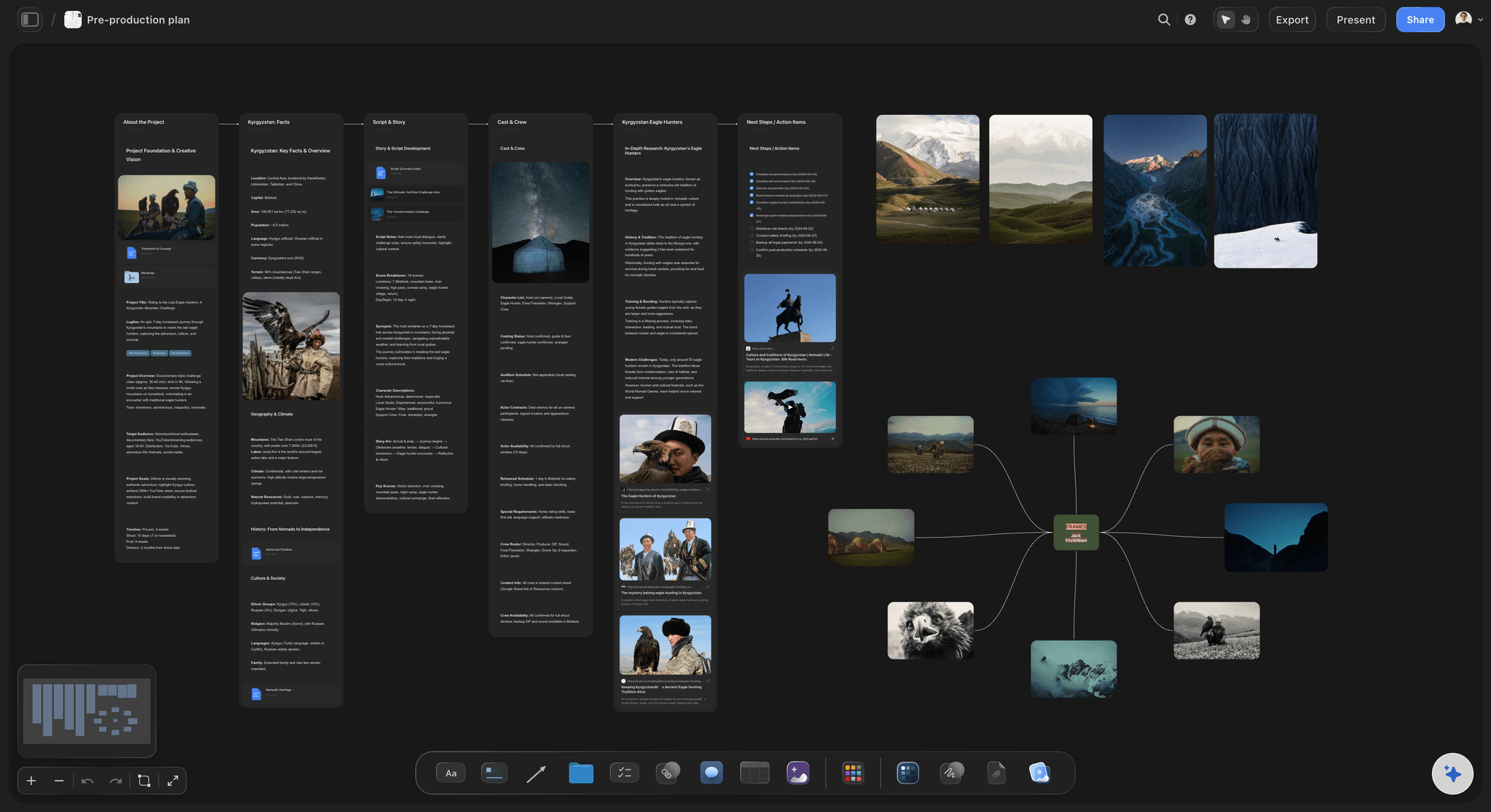
Pull the brief, script, shot list, and moodboard into one pre-production hub so the whole shoot is planned in one place.
What is a film production report?
A film production report, usually called the daily production report or DPR, is the official record of one shoot day: what was planned, what was actually shot, who worked and for how long, and anything that went wrong. Storyflow is an AI visual workspace that keeps it on the same board as that day's call sheet, schedule, shot list and continuity notes, so the plan and the result sit side by side.
The call sheet is the promise; the production report is what happened. The call sheet says the unit will shoot scenes 12, 14 and 15, 4 3/8 pages, starting at 7:00. The production report says scenes 12 and 14 were completed, scene 15 was started and not finished, first shot was at 7:52, lunch was called at 13:10, and wrap was at 19:40. Read one after the other, the gap between them is the day's story, and it is the information the producer needs to decide tomorrow.
It is also a legal and financial document. It records crew and cast hours for payroll and union rules, meal breaks and penalties, accidents and injuries, equipment damage and delays with their cause. When an insurer, a completion bond company or a union asks what happened on day 9, the production report is the answer. That is why it is signed, numbered and kept.
The production report is built from other reports. The camera report gives the rolls, takes and circled takes. The sound report gives the sound rolls. The script supervisor's notes give the scenes completed, pages, setups and minutes of screen time, plus continuity. The second assistant director gathers them, adds the times and the people, and the production manager or producer signs it.
A filled-in example from day 4 of a 20 day independent feature. Scheduled: scenes 31, 32, 34 and 47, 5 2/8 pages. Completed: 31, 32 and 34, 4 1/8 pages, 27 setups, 3 minutes 40 seconds of screen time. Not shot: scene 47, moved to day 7 after rain stopped the exterior. Crew call 6:30, first shot 7:48, lunch 12:45 to 13:15, wrap 19:05, last crew out 20:00. Camera: A cam 6 cards, B cam 4 cards, 1.9 TB, two backups verified. Cast: 6 principals, 14 background. Incidents: none. Delays: 35 minutes, rain cover on the exterior. Signed by the UPM at 21:15.
The rest of this page goes field by field, shows how the other reports feed it, and explains how to keep the whole set on one board so nobody retypes the same scene numbers four times.
Ultra fast from brief to board
How do you write a daily production report?
Six steps, most of them done during the day. A report written from memory at 22:00 is the one with the wrong times on it.
01
Start from the call sheet
Copy the day's scheduled scenes, pages, cast and call times from the call sheet into the report. On a Storyflow board the call sheet and the report table sit next to each other.
02
Log the times as they happen
Crew call, first shot, meal in and out, camera wrap, last person out. The 2nd AD or a PA writes them in the report table at the moment, not at the end of the day.
03
Collect the department reports
Camera report, sound report and the script supervisor's notes. Photograph the paper ones and drop them on the board, or keep them as tables beside the report.
04
Fill in what was completed
Scenes completed, part completed and not shot, with pages in eighths, setups and screen minutes from the script supervisor. Mark what moved and to which day.
05
Record people, delays and incidents
Cast and crew in and out times, meal penalties, background counts, any accident, damage or delay with its cause and length. Facts, not explanations.
06
Sign, number and send
The UPM or producer signs it. Ask Storyflow's AI to author a PDF from the board, or turn the report table into an .xlsx file, and send it to the producers and the production office.
What goes on a daily production report?
Five blocks of information. The layout varies by studio and country; these fields appear on nearly every version.
Header and times
Which day, and when it happened
Production title, day number of total days, date, location, director, and the day's times: crew call, first shot, meals, camera wrap and last person out.
See the call sheet template →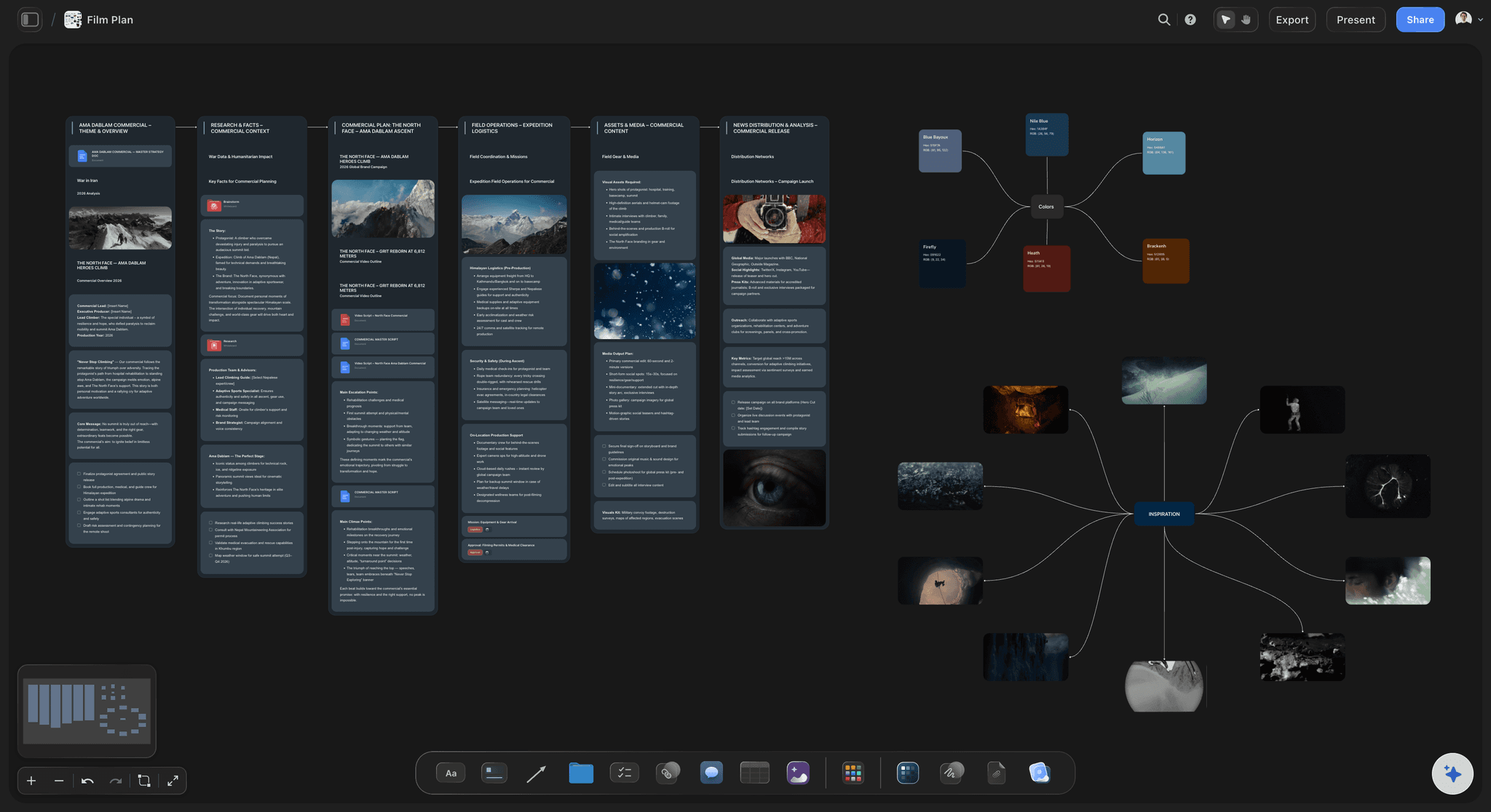
Scenes and progress
Planned against shot
Scenes scheduled, completed, part completed and not shot, with pages in eighths, setups, screen minutes, and running totals for the whole schedule so far.
See the shooting schedule →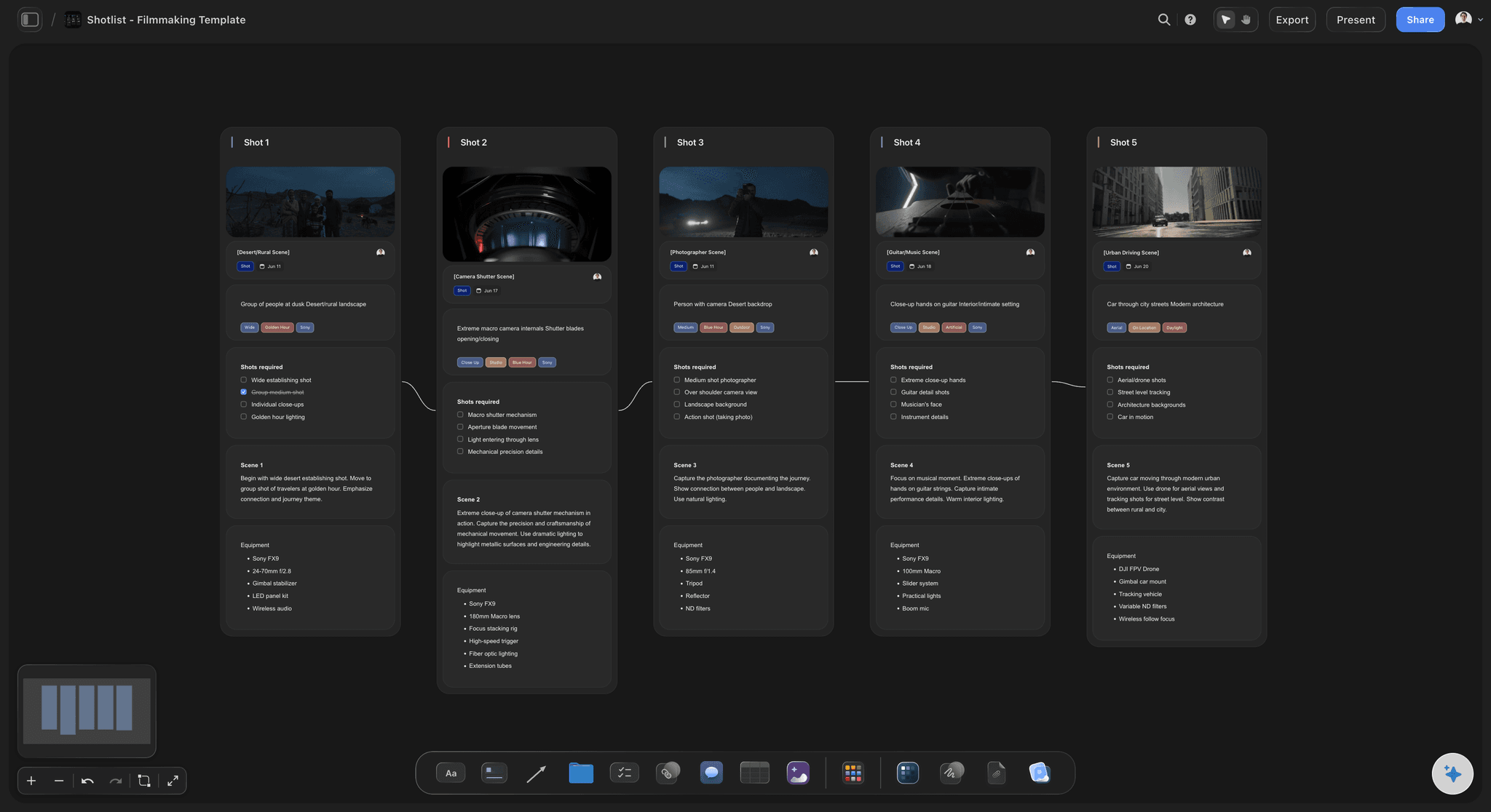
Camera, sound and data
What was recorded
Camera rolls or cards, sound rolls, data in terabytes, and confirmation that every card was backed up twice. The detail lives in the camera and sound reports.
See the shot list template →
People and incidents
Who worked, and what went wrong
Cast in and out times, background counts, crew hours, meal penalties, accidents, equipment damage, and delays with cause and minutes lost. Then the signature.
See the continuity tracker →The call sheet and the report for the same day, side by side.
Keep the plan and the result on one board, so tomorrow's call sheet is written from what actually happened today. Storyflow is paid-only during early access, with plans from $7.99 a month billed annually ($9.99 monthly). A free plan launches before the end of 2026, and anyone a paid member invites to a board joins free.
Report tables with number, label, date and time, and checkbox cells
Call sheet PDFs authored from the board
A board table turned into an .xlsx file with live totals
Photos of paper camera and sound reports beside the tables
View-only links producers open with no account
Built for people with taste
How do the call sheet, camera report, continuity notes and production report relate?
Four documents describe the same day from four positions. The production report is the one that pulls the others together.
Call sheet to production report
The plan, then the record
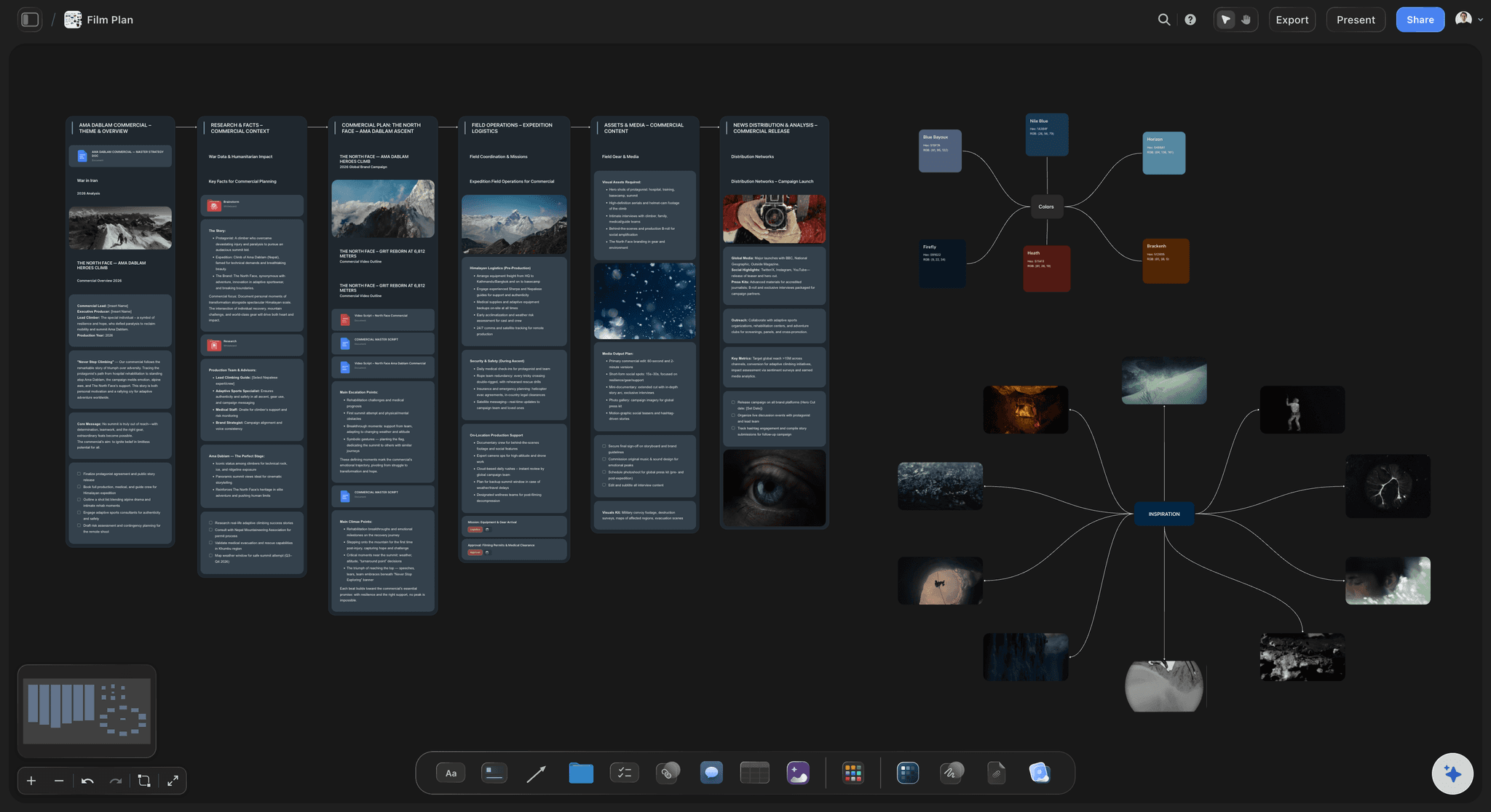
Same day, same scenes: The call sheet lists what is scheduled; the report lists what was done. Use the same scene numbers and page counts so the two can be compared line by line.
Times against times: Call time against first shot is the morning's efficiency. Scheduled wrap against actual wrap is the overtime bill.
What moved goes forward: A scene not shot on the report must appear on a later call sheet. If it does not, it has fallen out of the film.
Tomorrow starts here: The 2nd AD writes tomorrow's call sheet from today's report, not from the original schedule.
Camera report
The record of every take
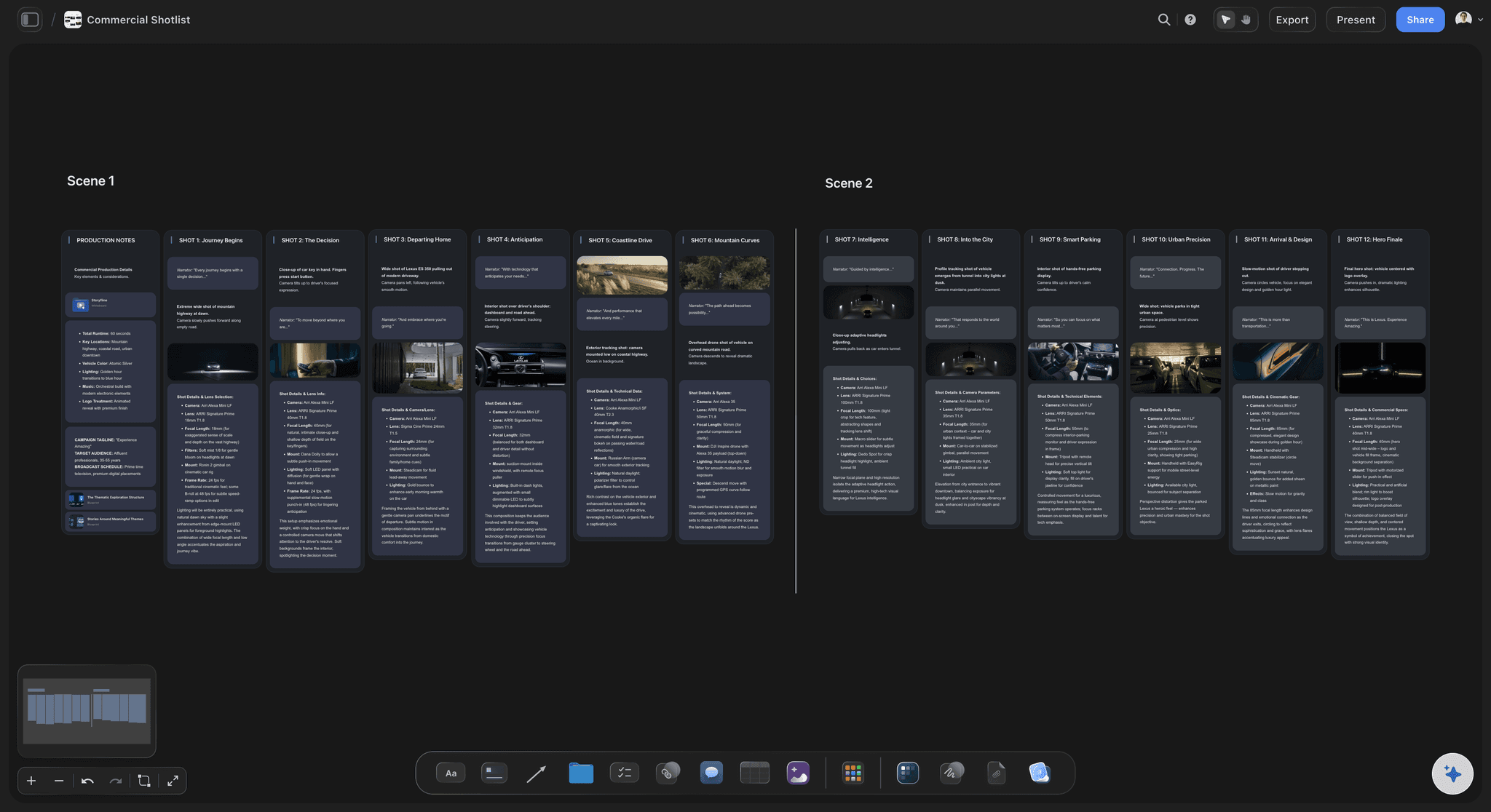
Roll or card, scene, take: One line per take, with the camera roll or card number so the editor can find it.
Lens, stop, filters: What the camera assistant set for each setup, so a pickup can match it weeks later.
Circled takes: The takes the director wants printed or prioritised. The editor starts here.
Notes: Soft focus, a boom in frame, a flash frame. A note on the report saves an editor an hour of looking.
Script supervisor and continuity
What the film now contains
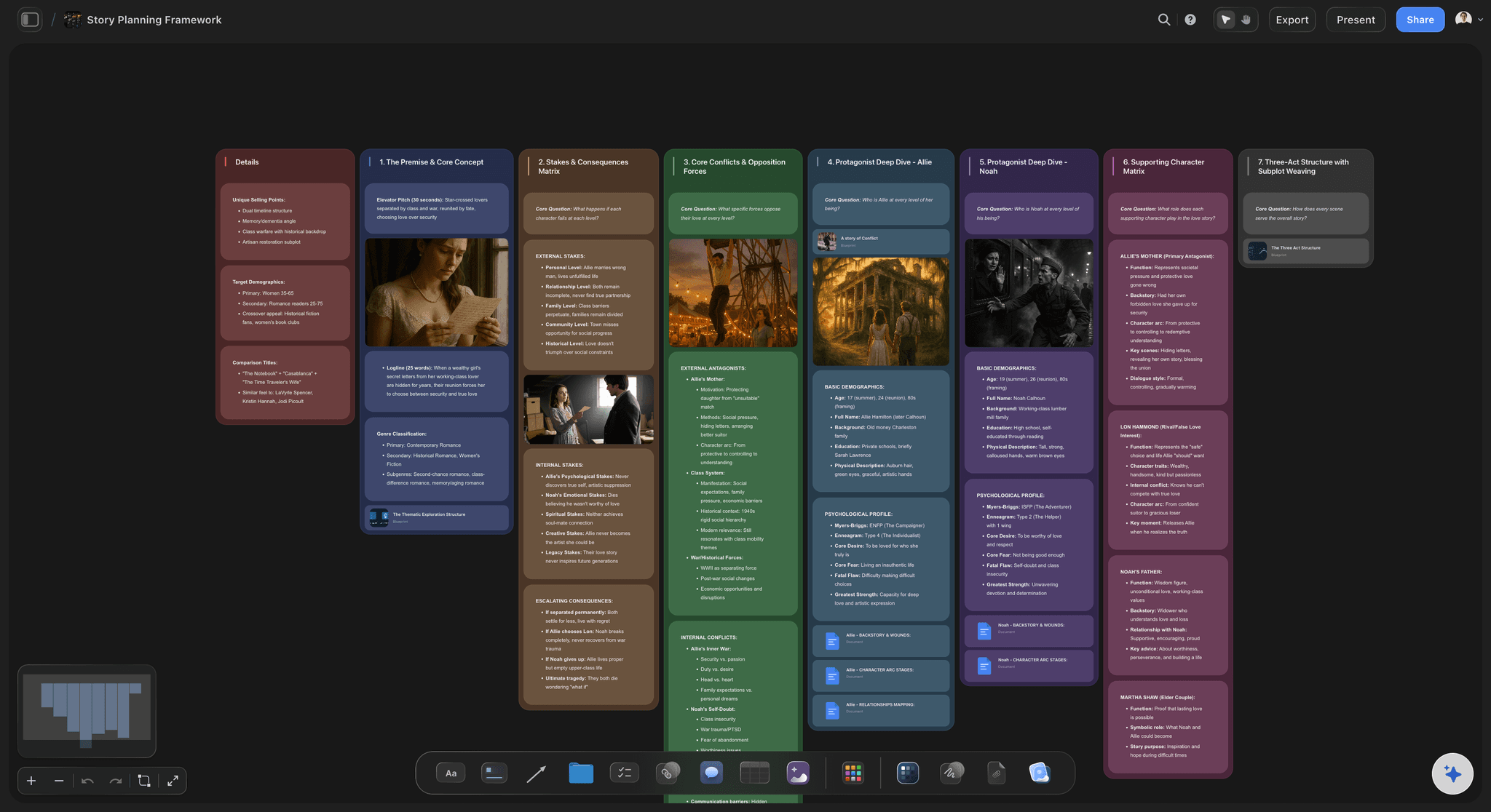
Pages and minutes: The script supervisor times each scene and credits pages in eighths. Those numbers go straight onto the production report.
Continuity notes: Wardrobe, props, hair, eyelines and action matched across takes, with photos. They stay with post; the report only notes problems.
Lined script: Which setups cover which lines. It tells the editor what coverage exists before they open a clip.
Wild lines and wild sound: Recorded without picture. Logged on both the sound report and the supervisor's notes so they are not lost.
Explore templates for your project
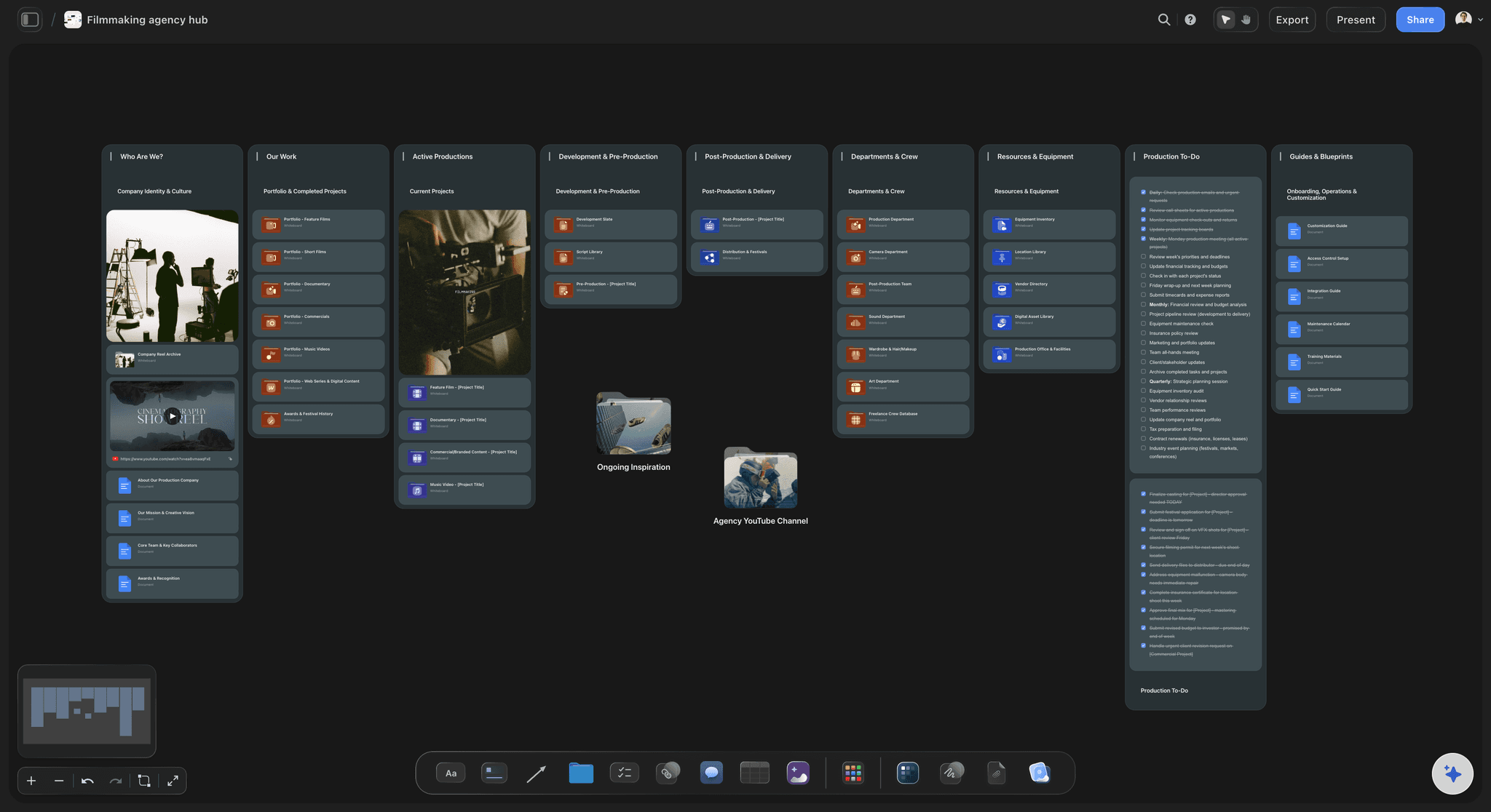
Every template opens as a real, editable board on the infinite canvas. Pick the closest fit and make it your own.
Pre-Production
Pull the brief, script, shot list, and moodboard into one pre-production hub so the whole shoot is planned in one place.
One app instead of five
What is the best software for creating call sheets and production reports?
Storyflow first, for keeping the reports beside the schedule, shot list and continuity. SetHero is the specialist if your main need is call sheet distribution with confirmations.
Storyflow
Recommended
Report beside the call sheet, schedule and shot list
AI builds the breakdown, strip board and shot list from the script
Call sheet PDFs
Crew text and email distribution with confirmations
Producers open it by link with no account
SetHero
Report beside the call sheet, schedule and shot list
AI builds the breakdown, strip board and shot list from the script
Call sheet PDFs
Crew text and email distribution with confirmations
Producers open it by link with no account
A spreadsheet
Report beside the call sheet, schedule and shot list
AI builds the breakdown, strip board and shot list from the script
Call sheet PDFs
Crew text and email distribution with confirmations
Producers open it by link with no account
What creators are saying
Join early creators getting structured workspaces and AI that remembers their projects
“Storyflow has sped up my workflow by at least 3x, which means more flow state and more projects I can actually ship. It truly changed the way me and my team create.”

Reilin Joey
Director & YouTuber
“One prompt gets me a structured board. But the tactics are my favorite. I run my YouTube scripts through them and my intros and retention got better. It's amazing.”

Justkay
YouTuber & Freelance Filmmaker
“I used to juggle five apps to plan a project. Now I describe what I am making and get boards, lists, and a schedule. All in one place.”

George
@fernwehchronicles
Film production report questions
What ADs, coordinators and first-time producers ask about the daily paperwork.
It is the official record of one shoot day, usually called the daily production report or DPR: scenes scheduled and completed, pages, setups and screen minutes, call, meal and wrap times, cast and crew hours, camera and sound totals, delays and incidents. It is signed by the production manager or producer. In Storyflow it sits on the same board as that day's call sheet.
Storyflow suits crews who want the report beside the call sheet, schedule, shot list and continuity notes on one board: its AI builds the breakdown and strip board from a script, authors call sheet PDFs and turns a report table into an .xlsx file. SetHero is the specialist for call sheet distribution with confirmations. A spreadsheet works for a single report.
The call sheet is the plan for a day, sent the night before: who comes, when, where, and which scenes. The production report is the record of the same day, written after it: what was actually shot, when things actually happened, and what went wrong. Comparing the two is how a producer sees whether the schedule is holding.
A camera report is the camera department's log of every take: camera roll or card number, scene, take, lens, stop and filters, circled takes, and notes such as soft focus or a boom in frame. The camera assistant fills it in during the day. It goes to the editor and the lab, and its totals go onto the production report.
The second assistant director drafts it during the day, using the camera report, the sound report and the script supervisor's notes. The unit production manager or producer reviews and signs it, and the production coordinator files it and sends copies to the producers, the financiers and payroll.
Title, day number, date and location; crew call, first shot, meals, camera wrap and last person out; scenes scheduled, completed and not shot with pages in eighths, setups and screen minutes; running totals; cast and crew times; camera, sound and data totals; delays, accidents and damage; and a signature.
The script supervisor keeps the continuity notes and the lined script, and also supplies the scenes completed, pages and screen minutes that go on the production report. Continuity detail stays with post; the production report only records a continuity problem if it caused a reshoot or a delay.
It is the record for payroll, union rules, insurance claims and the completion bond, and it is how producers and financiers track whether the film is on schedule and on budget. When something is disputed months later, it is the signed report that settles it.
Script breakdown, then the strip board and shooting schedule, then a call sheet for each day. During the day: camera report, sound report and script supervisor notes. After the day: the production report, signed and filed, which feeds the next call sheet. In Storyflow every one of these lives on the same board, so the scene numbers match.
Yes. The fields on this page work as one: a header, the times, scenes planned against shot, camera and sound totals, people, delays and incidents, and a signature line. In Storyflow, make it a table on the shoot board next to the call sheet and duplicate it for each day.
The sound recordist's log: sound roll or file name, scene, take, track assignments, timecode, and notes such as an aircraft or a wild line. It goes to the editor and the sound editor, and its roll count goes on the production report.
It can draft one from the material you give it. Storyflow's AI reads the board and authors a PDF, or turns the report table into an .xlsx file with live totals. It cannot know what happened on set unless someone logged it, so the times, the people and the incidents still have to be written down during the day.
Yes, even a one page version. It records who worked and for how long, what was shot and what moved, and any accident. If an actor or a location disputes something later, or a festival asks for production records, it is the only written account of the day.
Not yet. Storyflow is paid-only during early access, with plans from $7.99 a month billed annually ($9.99 monthly). A free plan launches before the end of 2026, and anyone a paid member invites to a board joins free. Producers who only read the reports open a view-only link with no account and sign in to comment.
The plan and what happened, on one board.
Keep each day's production report beside its call sheet, camera report and continuity notes, and send it to the producers by link.