
Extremely simple, seriously capable
A brief the writer can
actually work from.
Most content briefs are a title, a word count and a list of keywords, which leaves the writer to invent the angle and the commissioner to be disappointed by it. Storyflow builds the brief as a board: audience, angle, the points it has to make, the references it should draw on, and the structure, all in one view the writer can open and add to.


Creatives working for these brands already got early access
- Red Bull
- Canon
- Artlist
- Porsche
See how easy it is to get started
Watch a real project come together, from a blank board to a finished plan, clicked through step by step.
Start from a ready-made template
Pick a board to see what you can build, then let AI fill it in. Every template is a real, editable starting point on the same infinite canvas.

Mind Map
Branch one central idea out into themes and sub-points, then drag the connections around until the structure makes sense.
What is a content brief?
A content brief is the document that tells a writer what a piece has to do before they start writing it: who it is for, what it should argue, which points it has to cover, what it should sound like, and what it must not claim. Storyflow is an AI visual workspace that builds the content brief on one infinite canvas: the audience and angle, the key points, the structure and the reference material, in one view the writer can open. Done properly, a brief removes most of the disagreement that otherwise surfaces at the first draft, when it is expensive.
The reason briefs are usually thin is that the useful parts are hard to write and the easy parts are not useful. A keyword list and a word count take two minutes and settle nothing. The angle, the reader's actual question and the reason this piece exists rather than the six that already rank take real thought, and they are what the writer needs.
The second problem is that a brief is mostly reference material, and a document is a bad place to keep reference material. The competitor pieces, the screenshots, the product facts and the two examples of the tone you want end up as links in a list, which means the writer opens them once and works from memory.
Storyflow builds the brief on a canvas instead. The angle and the key points sit in the middle, the references sit beside them as actual images and excerpts, and the outline forms underneath. The AI drafts a first version from the topic that you then cut and correct. Storyflow does not do keyword research, SERP analysis or rank tracking, so pair it with your SEO tool: it holds the thinking, not the search data.
Ultra fast from brief to board
From a topic to a brief worth handing over.
Four steps, and the writer receives a board rather than a form.
01
Name the topic and the reader
Start with the piece and who it is for. A brief written for nobody in particular produces writing that reads the same way.
02
Let the AI draft the brief
Describe the topic and the AI lays out a proposed angle, the key points, likely objections and a structure, as cards you can rewrite.
03
Attach the real reference material
Drop the competitor pieces, the screenshots, the product facts and the tone examples onto the board next to the point they support.
04
Hand the writer a link
Share the board and the writer reads the brief with the references in the same view, adds questions in place, and drafts the outline underneath.
What makes a brief worth the time it takes to write.
The difference between a form and a brief is whether it settles anything.
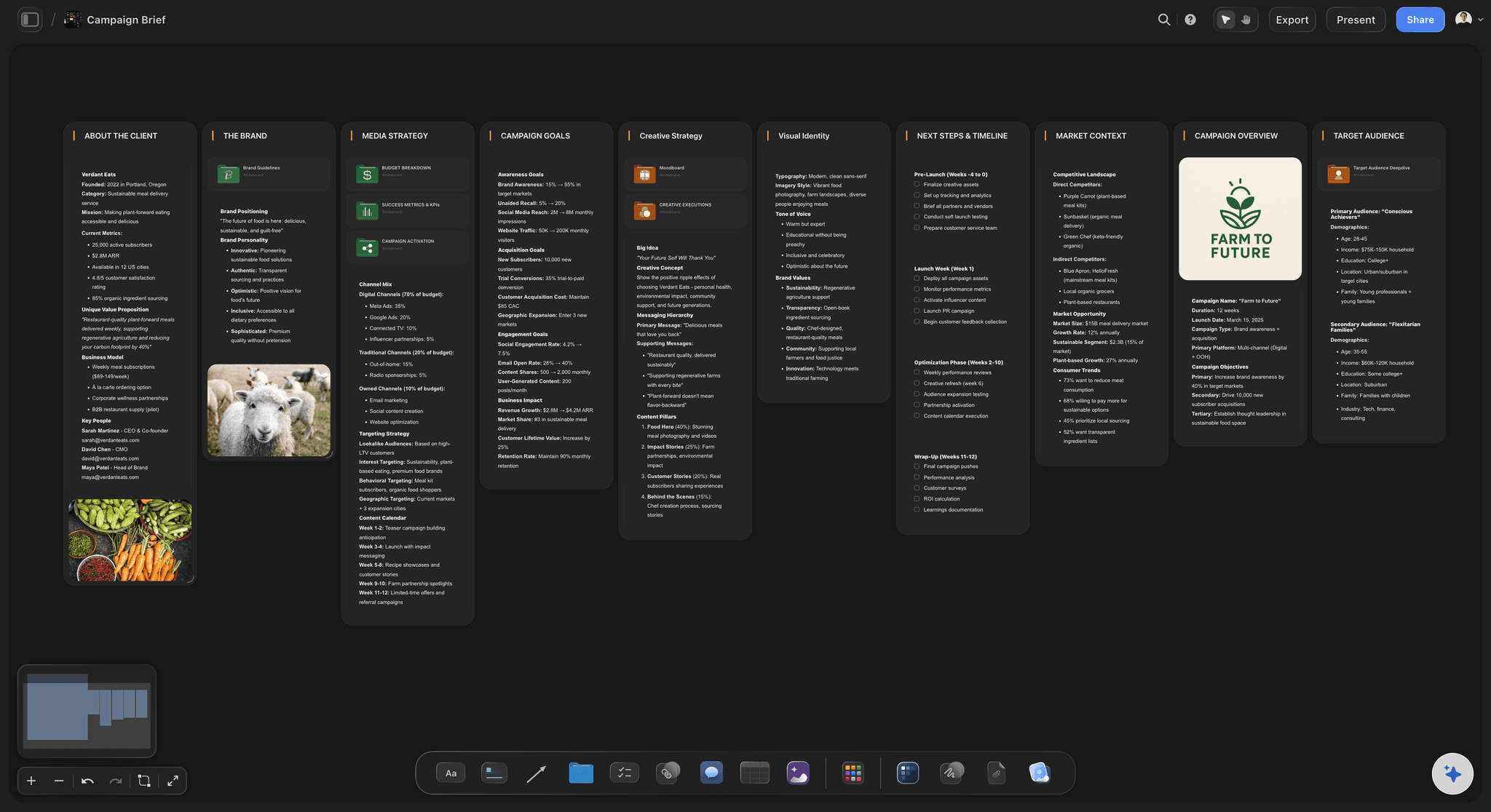
The part that matters
An angle, not just a keyword
The brief states what the piece argues and why it exists next to the ones that already rank. That single line prevents most first-draft rewrites.
Try the AI creative brief generator →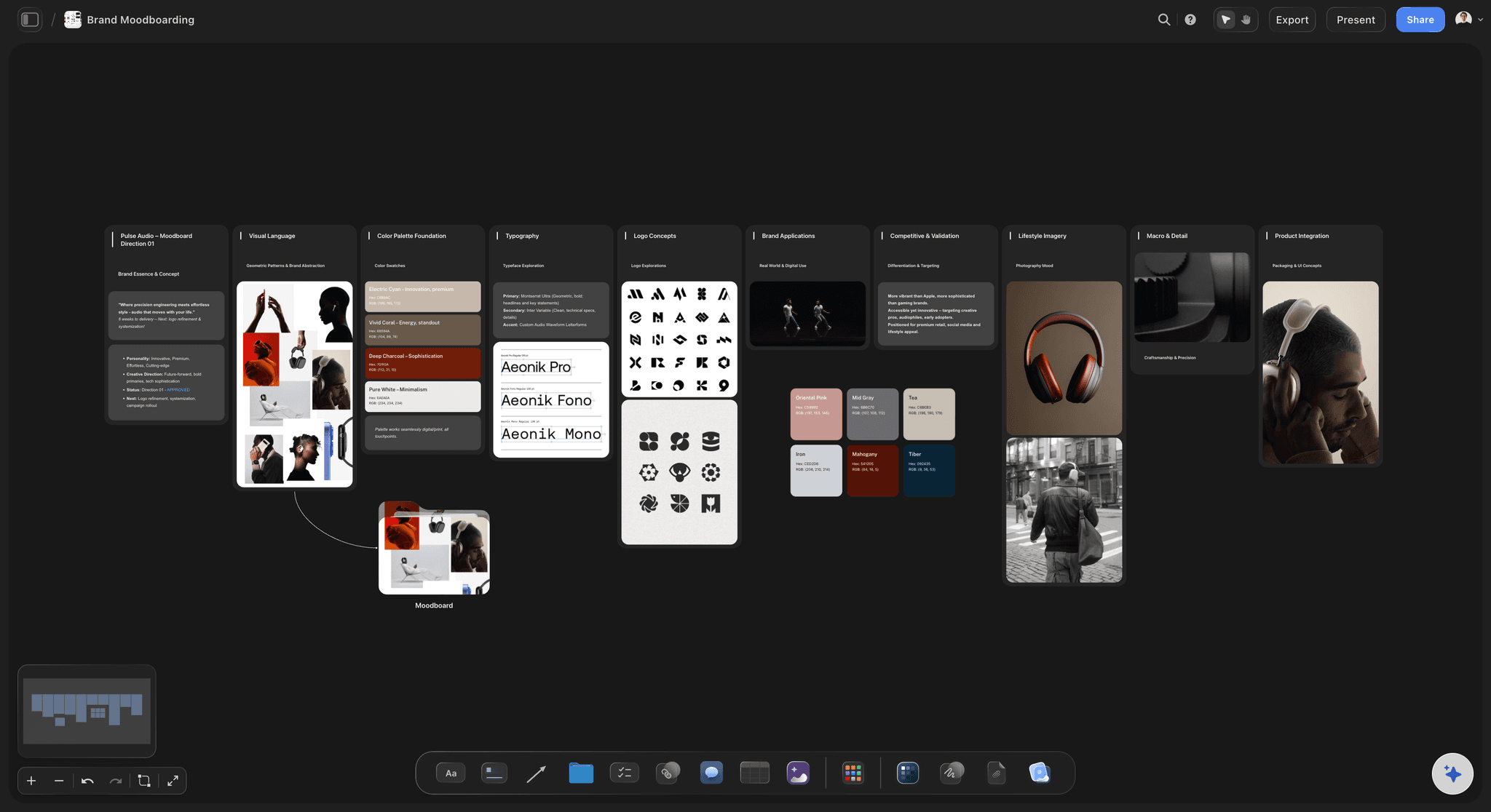
References that get read
Source material in the same view
Competitor pieces, screenshots and tone examples sit as real images beside the point they support, rather than as links a writer opens once.
See the design brief →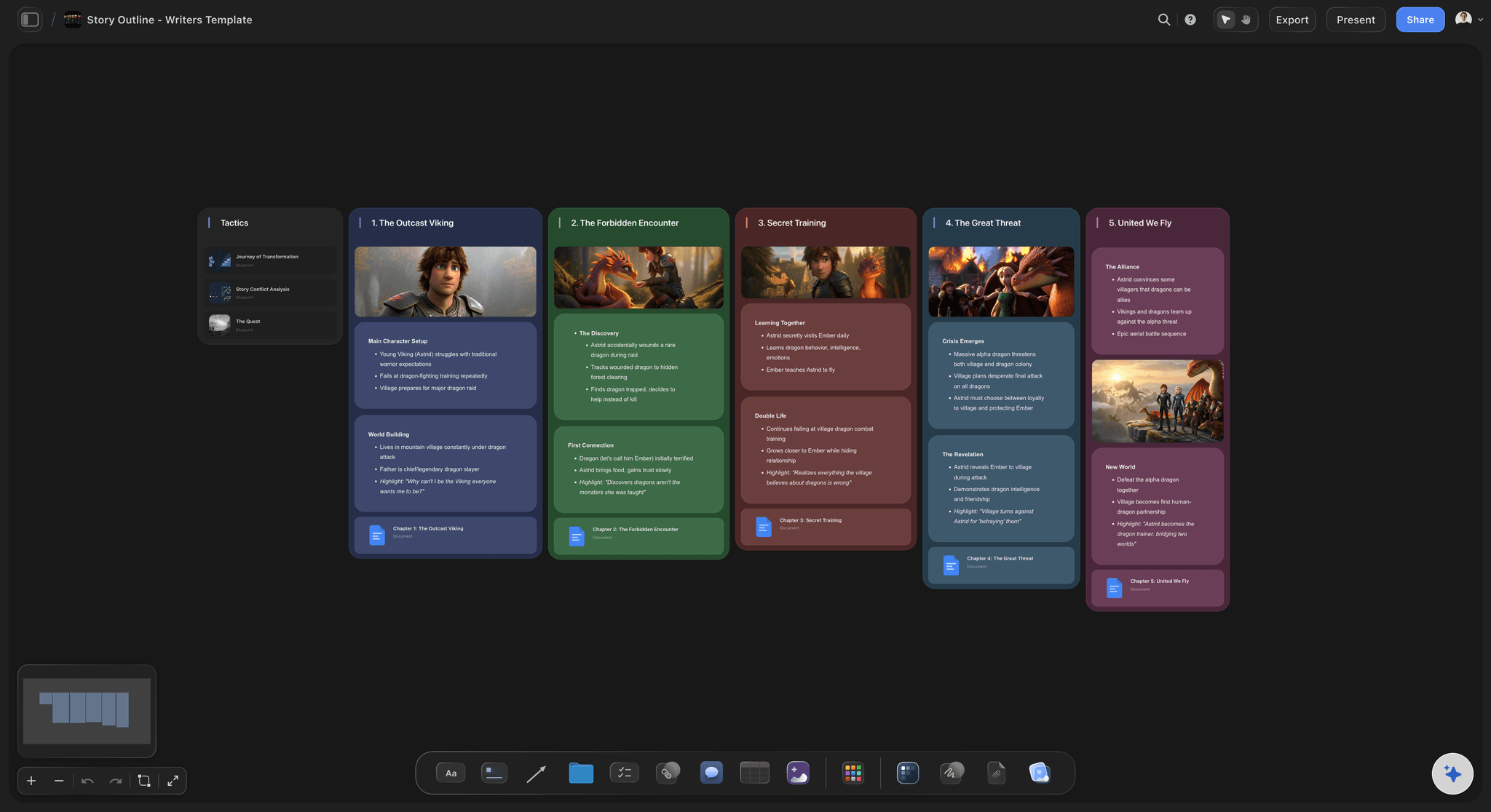
Structure before drafting
The outline forms under the brief
Turn the agreed key points into a section outline on the same board, so the writer starts from a shape rather than a blank page.
Try the AI outline generator →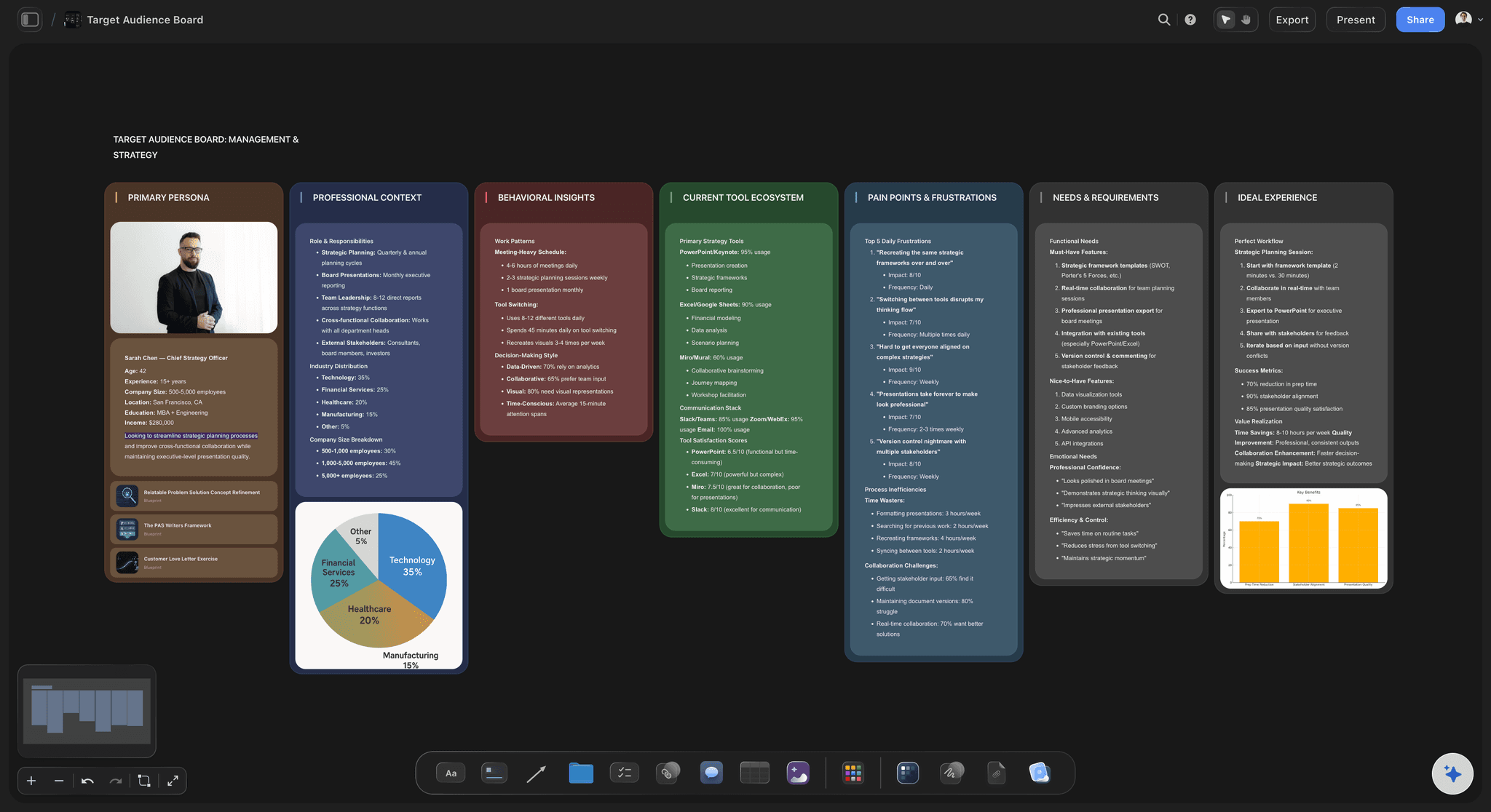
Questions answered once
The writer asks in place
Questions land on the specific point they are about, so the answer is stored where the next writer will find it instead of in a chat thread.
See the content planning tool →Plans from $7.99/month annual. Invited collaborators join free.
Storyflow is paid-only during early access, and anyone a paid member invites to a board joins at no cost, which suits a content team working with freelance writers.
Freelance writers read the brief with no account
Unlimited boards, one per piece or per series
Export the brief as a high-quality image or PDF
A free plan launches before the end of 2026
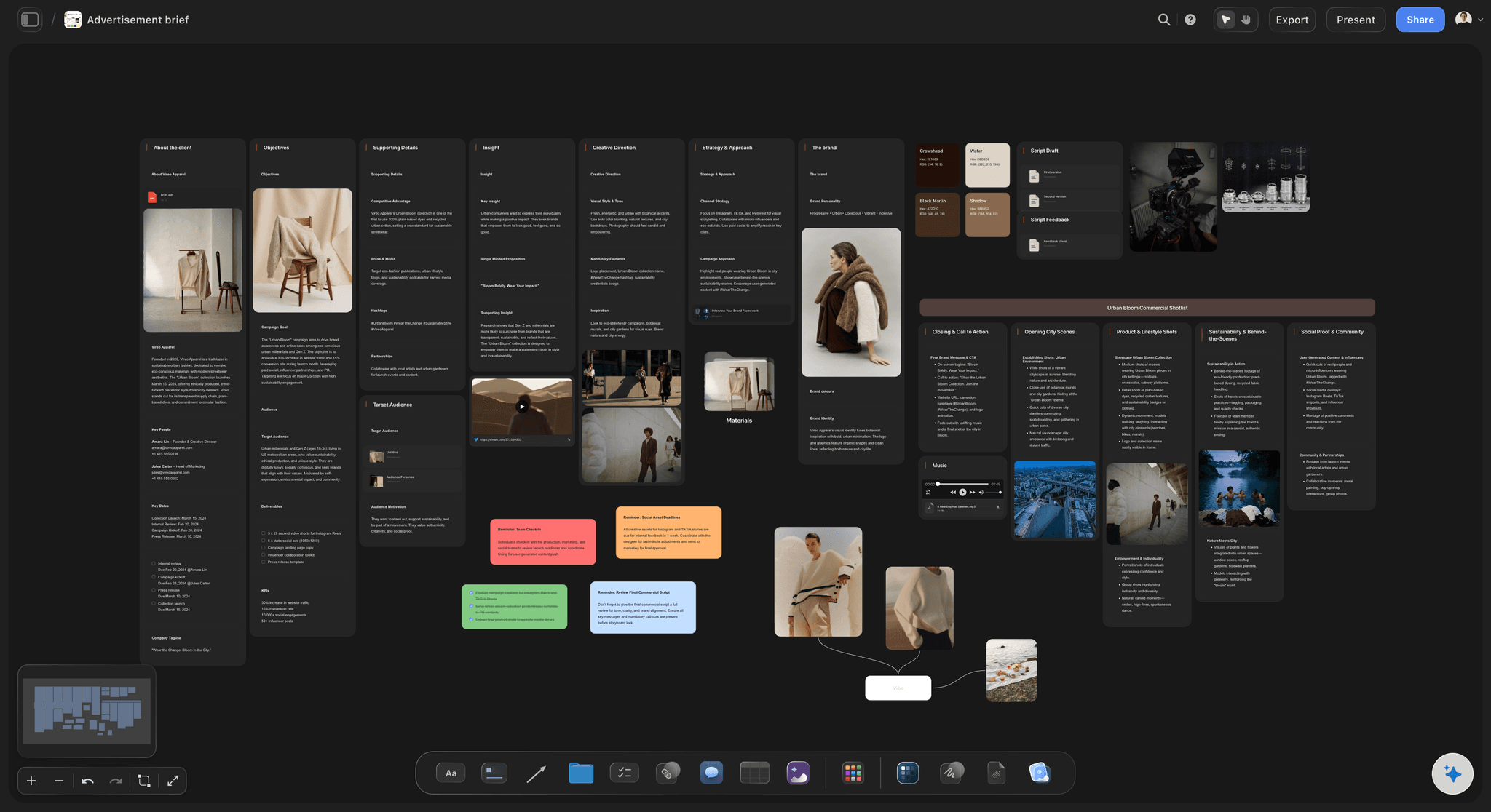
Built for people with taste
A brief in a document is a list of links nobody opens.
Most of a good brief is reference material, and reference material only works when you can see it.
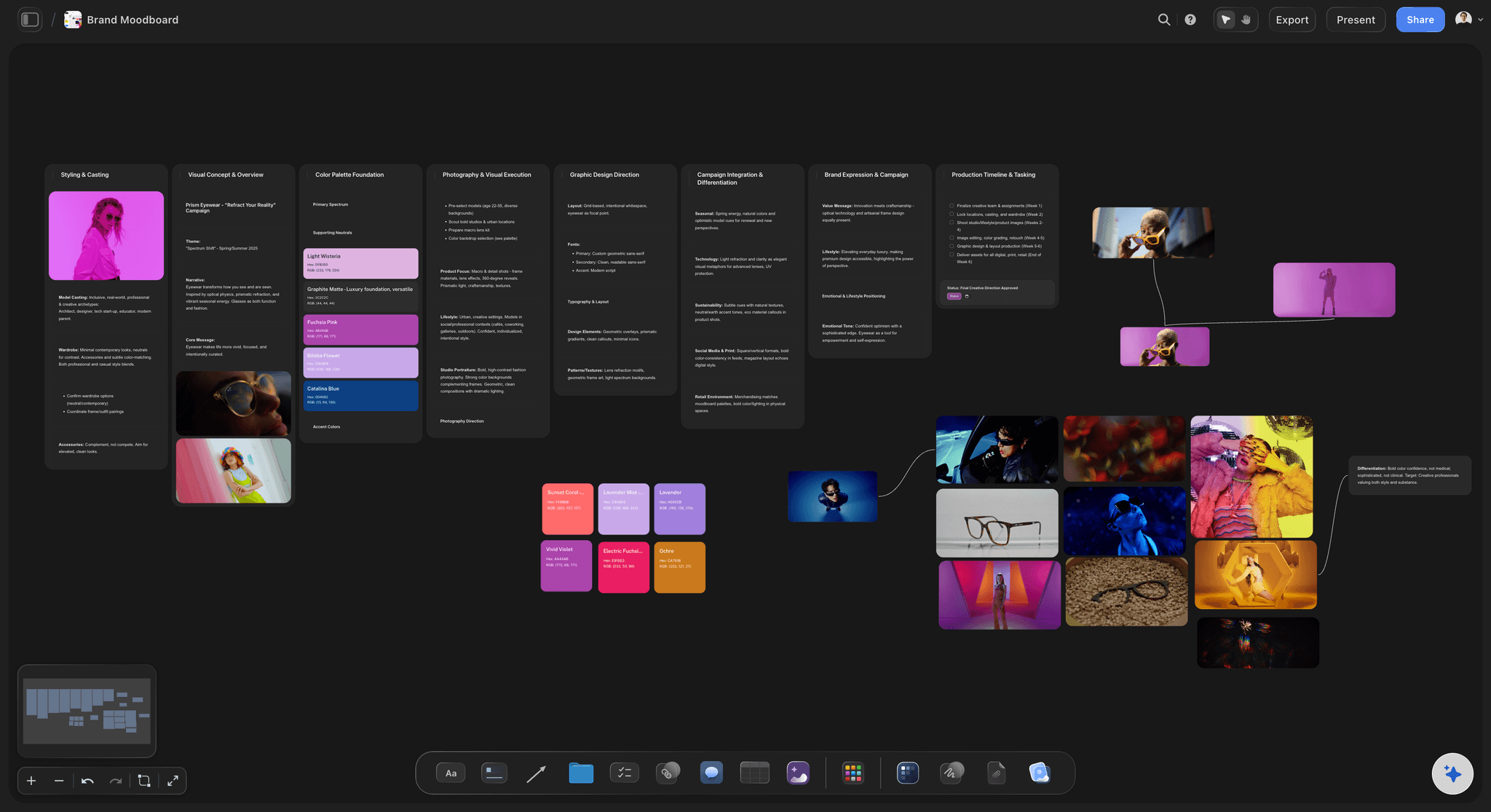
Everything in one view
The writer stops reassembling context
Examples instead of adjectives: Two pieces that got the tone right say more than a paragraph describing the tone, and on a canvas you can actually show them.
What not to claim, in writing: Keep product facts and the things the piece must not say on the board, so accuracy is a constraint the writer can see rather than a correction later.
One link, current version: The brief updates in place, so a writer who starts on Thursday is not working from Monday's version of the angle.
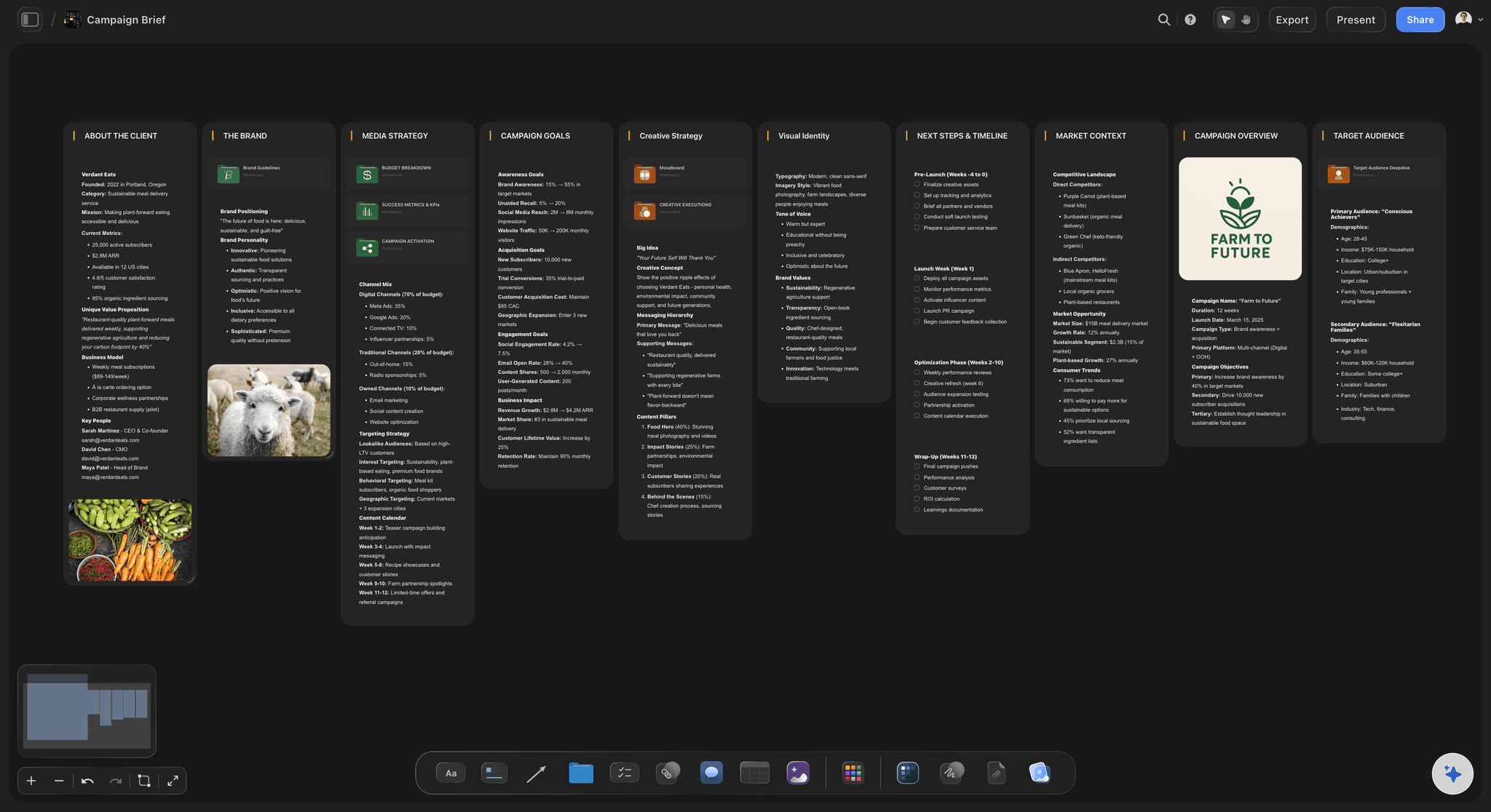
The AI reads the board
A first pass you can disagree with
Canvas-aware AI: Storyflow's AI reads the whole active board, so the references and the audience notes inform the brief it drafts rather than a bare topic string.
Bring your own material in: Attach up to five documents and three boards, so the style guide, the product spec and the last brief shape this one.
It proposes, the editor decides: The drafted angle and key points arrive as ordinary editable cards. The AI gets you past the blank page; the editor still owns the brief.
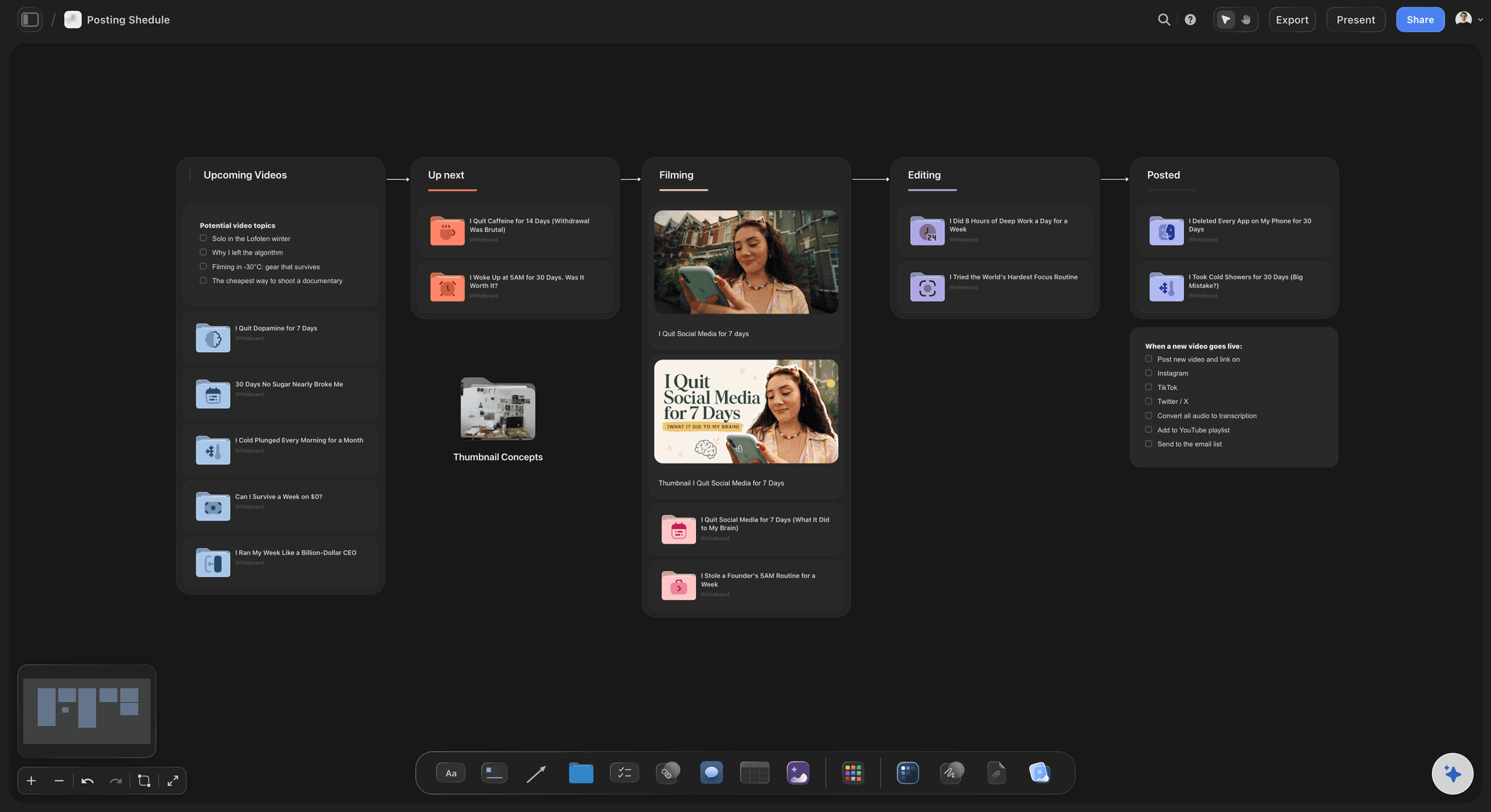
Honest limits
What this does not do
No keyword research: There is no search volume, difficulty score or SERP analysis. Bring the keyword from your SEO tool and put it on the board.
No rank tracking: Storyflow does not measure how a published piece performs. It covers the stage before the draft, not the reporting after it.
No CMS publishing: The finished piece is written and published wherever you already do that. Storyflow holds the brief and the outline.
Explore templates for your project
Every template opens as a real, editable board on the infinite canvas. Pick the closest fit and make it your own.
Mind Map
Branch one central idea out into themes and sub-points, then drag the connections around until the structure makes sense.
What creators are saying
Join early creators getting structured workspaces and AI that remembers their projects
“Storyflow has sped up my workflow by at least 3x, which means more flow state and more projects I can actually ship. It truly changed the way me and my team create.”

Reilin Joey
Director & YouTuber
“One prompt gets me a structured board. But the tactics are my favorite. I run my YouTube scripts through them and my intros and retention got better. It's amazing.”

Justkay
YouTuber & Freelance Filmmaker
“I used to juggle five apps to plan a project. Now I describe what I am making and get boards, lists, and a schedule. All in one place.”

George
@fernwehchronicles
Content briefs, answered.
What editors and writers ask before changing how they brief.
At minimum: the reader and what they already know, the angle the piece argues, the key points it must cover, the tone with real examples, the facts it must not get wrong, and a rough structure. Word count and keywords are the easy part and settle almost nothing. The angle is what prevents a rewrite at first draft.
Storyflow builds the brief as a board: its AI drafts the audience, the angle, the key points and the structure from a topic, and the writer edits it before the draft starts. The reference material sits in the same view, so the writer stops reassembling context. The writer can open the board, add to it and ask questions in place.
A creative brief sets up a piece of creative work in general, often visual, and usually addresses a campaign. A content brief is narrower: it briefs one piece of writing or one video, and it carries the argument, the structure and the source material. They overlap, and in practice a campaign brief often sits above several content briefs.
It writes a first pass. Describe the topic and it proposes an angle, key points, likely objections and a structure as editable cards. That gets you past the blank page, and the editor then cuts and corrects it. The AI proposes and the person decides: the brief is only as good as the judgement applied to it.
No. There is no search volume, keyword difficulty or competitor SERP data. Bring the keyword and the target query from your SEO tool and put them on the board. Storyflow holds the thinking and the reference material, not the search data.
Yes. Share a view-only link and a writer reads the brief in a browser with no account. Anyone a paid member invites can add to it and joins free, so a rotating pool of freelancers does not change the bill.
Yes. Duplicate a board and change the parts that differ. For a series this is usually the right approach: shared audience, tone and constraints stay put, and only the angle and the key points change per piece.
Yes, and they land on the specific point rather than in a chat thread. That means the answer is stored next to the thing it clarifies, so the next writer commissioned on the same topic reads it without asking again.
Yes, export the board as a high-quality image or PDF if a writer or client wants a file. The view-only link is usually better, because a brief that changes after you export it leaves the writer working from the wrong version.
Plans start at $7.99 per month billed annually, or $9.99 monthly. Storyflow is paid-only during early access, with a free plan launching before the end of 2026. Collaborators invited by a paid member can join free today.
More from Storyflow
Marketing workspace
Content pillars
AI creative brief generator
Creative brief template
Design brief
Content planning tool
AI outline generator
Editorial calendar
In-house content production
AI tools for content creators
Campaign brief template
Content audit template
Creative request intake
Creative brief workflow
Creative brief with ChatGPT
ContentCal alternative
Editorial workflow
Brief the piece properly, once.
Angle, key points, references and structure on one board the writer can open, question and draft from.