
Ultra-fast campaigns, pitched beautifully
A marketing plan your team can see,
with the campaign work beside it.
Goals, audience, concepts, a phased timeline, the budget and who does what on one board, next to the briefs, assets and content the plan produces. From a brand launch to a quarter of campaigns.


Creatives working for these brands already got early access
- Red Bull
- Canon
- Artlist
- Porsche
See how easy it is to get started
Watch a real project come together, from a blank board to a finished plan, clicked through step by step.
Start from a ready-made template
Pick a board to see what you can build, then let AI fill it in. Every template is a real, editable starting point on the same infinite canvas.

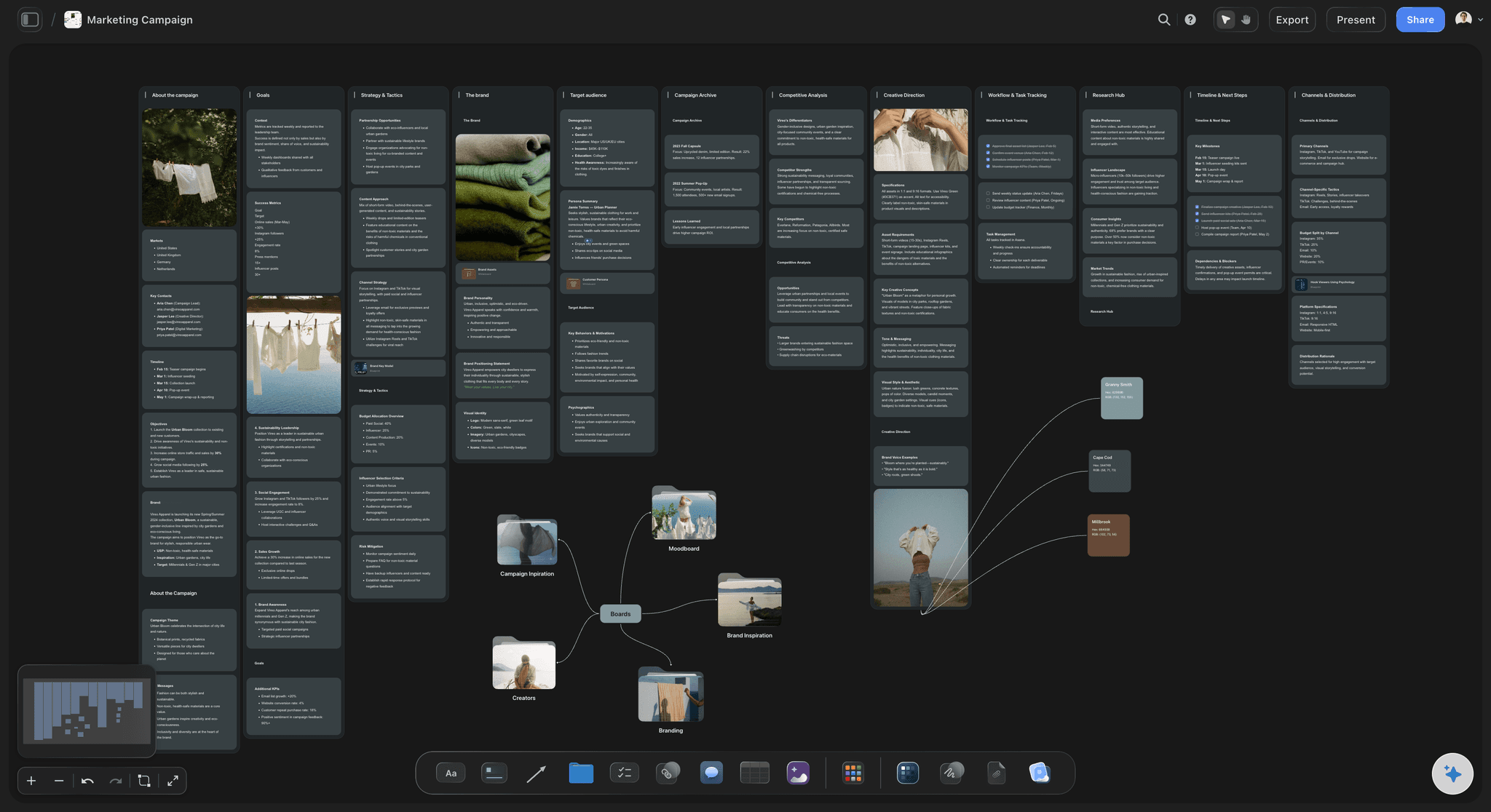
Marketing Campaign
Plan a campaign across channels, messages, and deliverables on one board the whole team can see.
What is the best marketing planning software?
Marketing planning software is where a team builds its marketing plan and keeps it where everyone can see it. Storyflow is an AI visual workspace that keeps your marketing plan and the campaign work on one infinite canvas: goals, audience, concepts, phases with dates, the budget and who does what, with the campaign brief, assets and content beside them. Its AI builds a Marketing Plan or a Campaign Brief from what you describe, and stakeholders open the board by link with no account. Asana suits teams running a launch as assigned tasks, Notion teams that want marketing templates in docs, and Airtable teams tracking campaigns in a database.
A marketing plan answers six questions for one effort, whether that is a brand launch, a product launch or a quarter of campaigns: why it exists, what it has to achieve, which ideas carry it, what it costs, when each phase happens, and who does what. Background and goals come first, because a plan is worthless without them; then the concepts, the timeline as phases with dates, the budget and the owners. Dates and money are the two things not to invent. Where a launch date or a media budget has not been agreed, the plan should show the empty slot rather than a plausible number someone approves by accident.
Marketing plans fail in the gap between the plan and the work. The strategy is argued out in a deck, the deliverables end up in a spreadsheet, the dates in a calendar and the creative in a shared drive, and none of them can see the others. When the launch date moves, four files have to change by hand and one of them quietly stops being true. The other failure is lost reasoning: six weeks in, nobody can say why the campaign targets this audience with this message, because the argument lived in a meeting. A plan that sits beside the brief, the assets and the timeline keeps both visible.
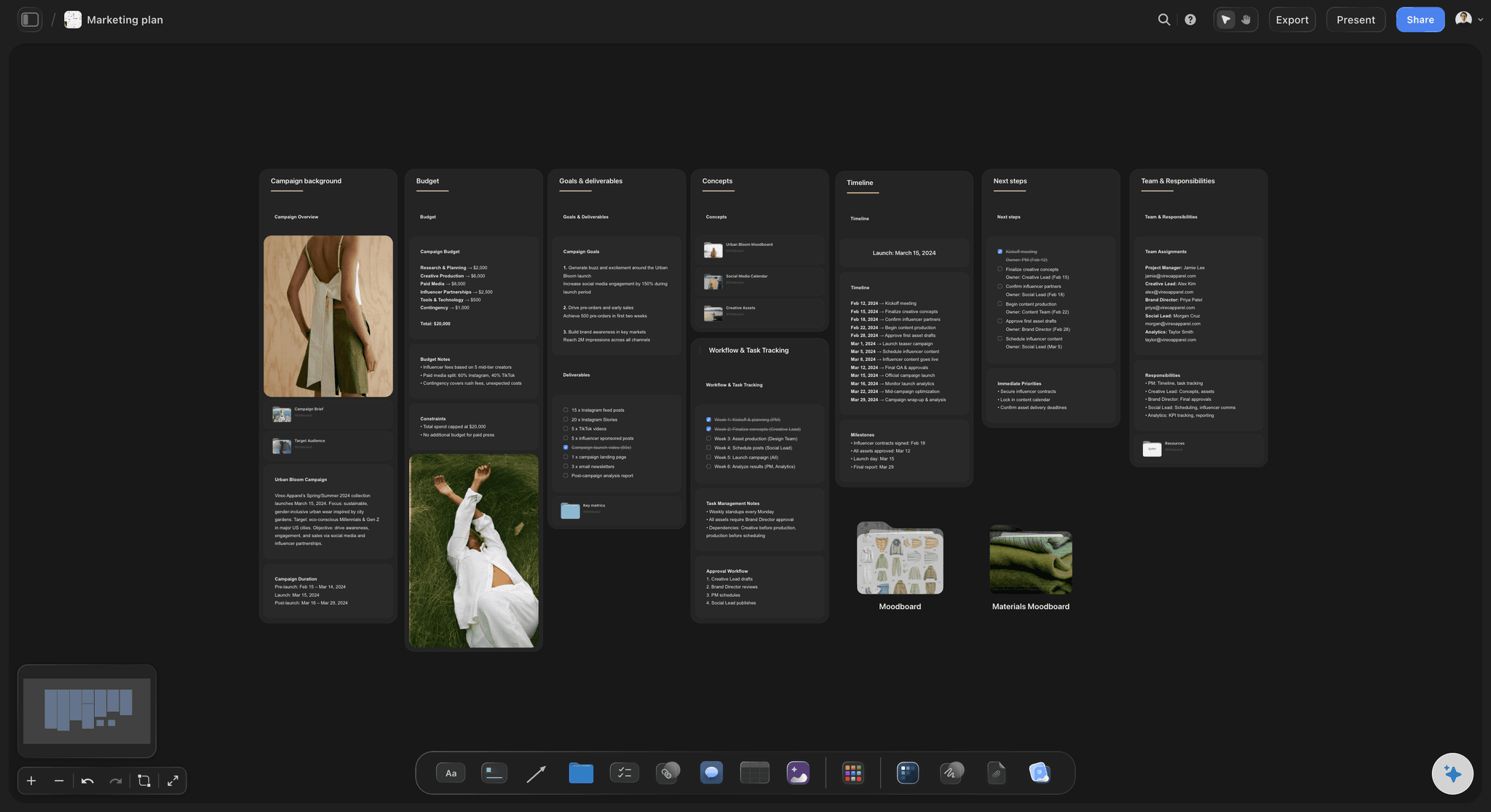
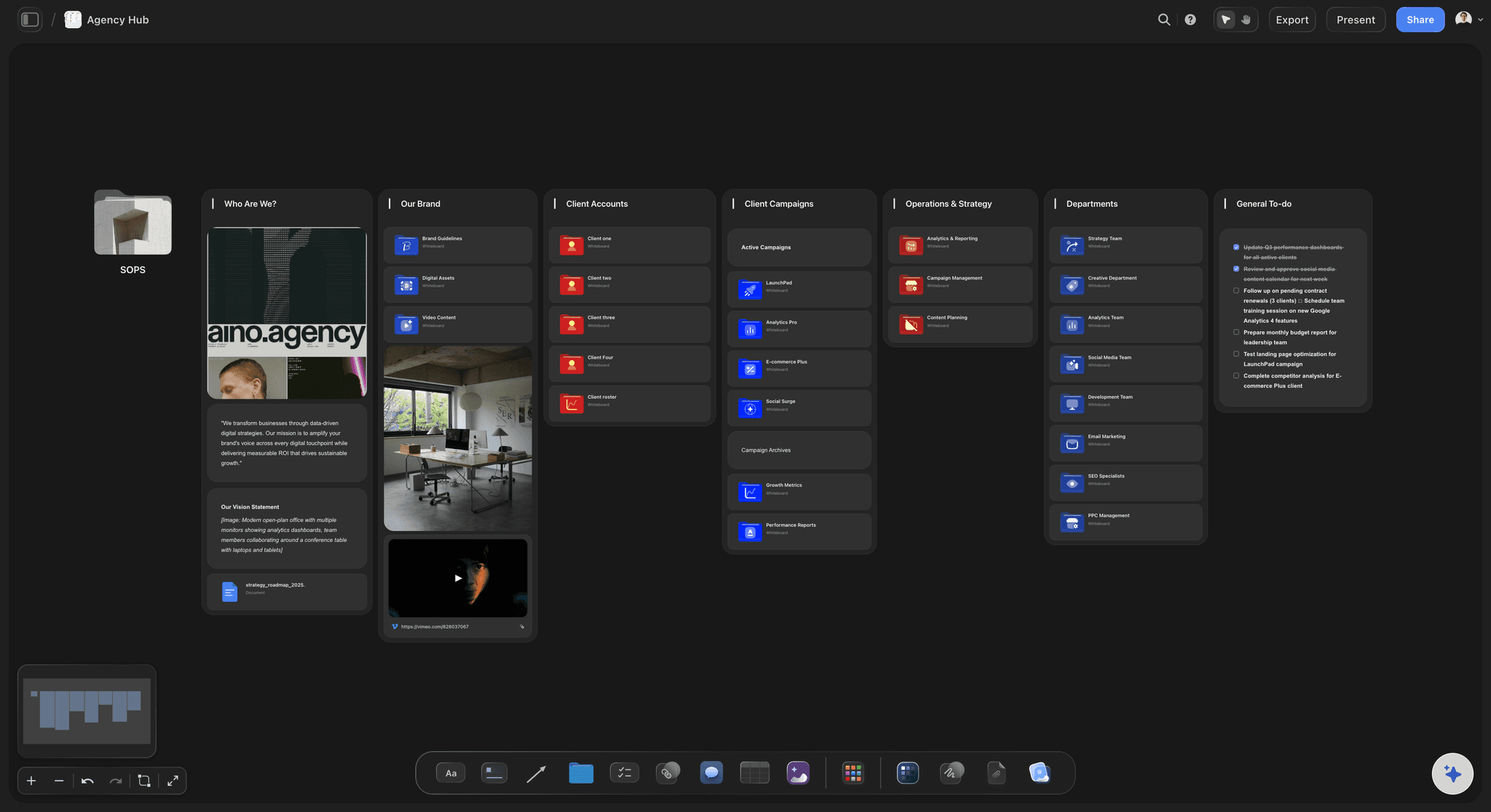
In Storyflow the plan is a board. Ask the AI for a Marketing Plan and it lays out background, goals and deliverables, concepts, a timeline of phases, a budget, next steps, task tracking and team responsibilities, and it is built to leave marked gaps for dates and money you have not given it. A Campaign Brief adds the audience, goals with real numbers, the creative strategy, the media plan and channel mix, and nested boards for brand guidelines, budget, KPIs and creative executions. The team runs the plan with tickets that carry an assignee and a due date, a Kanban, and tables with date, person, status and currency cells. Storyflow does not send email, schedule social posts, buy media or report campaign performance.
Ultra fast from brief to board
From a launch idea to a plan the team runs from.
Four steps on one board, with the strategy still visible when the dates move.
01
Describe the launch or campaign
Say what you are launching, for whom and by when, or attach the brief and research. Ask for a Marketing Plan and the background, goals and deliverables appear first.
02
Brief the campaign
Ask for a Campaign Brief and the audience, goals with numbers, the big idea, the channel mix and a phased timeline are laid out, with nested boards for the deep sections.
03
Put dates, budget and owners on it
Phases get start and end dates, owners and status in a table, costs go in a table whose currency column sums, and every deliverable becomes a ticket with an assignee and a due date.
04
Share it and build the work beside it
Stakeholders open a view-only link with no account and sign in to comment. Assets, copy and content are made on the same board, next to the part of the plan they serve.
The plan and the work, on the same board.
What marketing plan software should hold, from the first idea to the campaign going live.
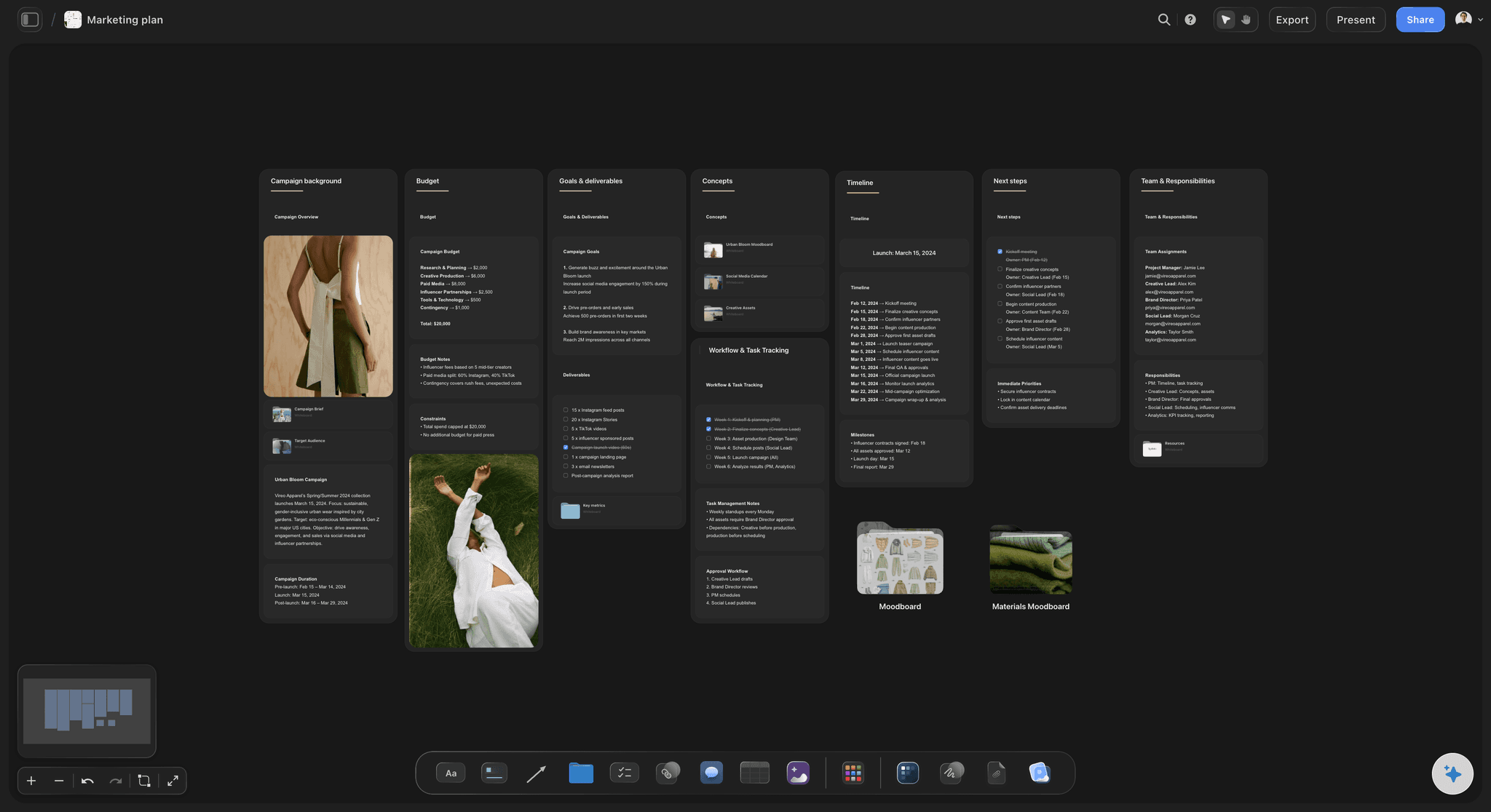
An AI-built marketing plan
Background, goals, concepts, timeline, budget, owners
Ask for a Marketing Plan and the AI lays out every section, built to leave a marked gap for any date or budget line you have not agreed yet.
See the AI marketing plan generator →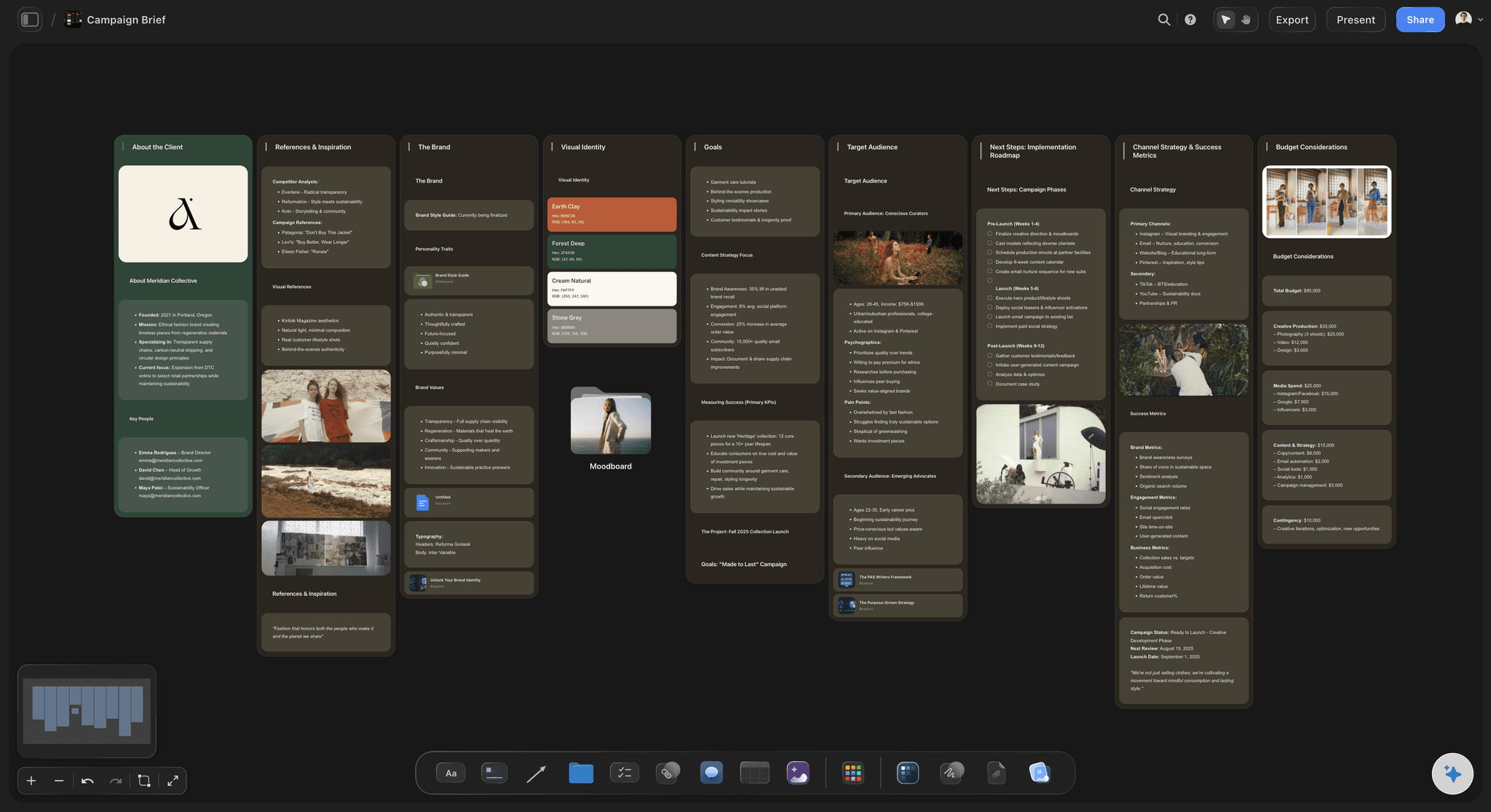
A campaign brief with numbers
Audience, goals, big idea and channel mix
The Campaign Brief workflow briefs the campaign across ten sections, with nested boards for brand guidelines, budget, KPIs and creative executions.
See the campaign brief template →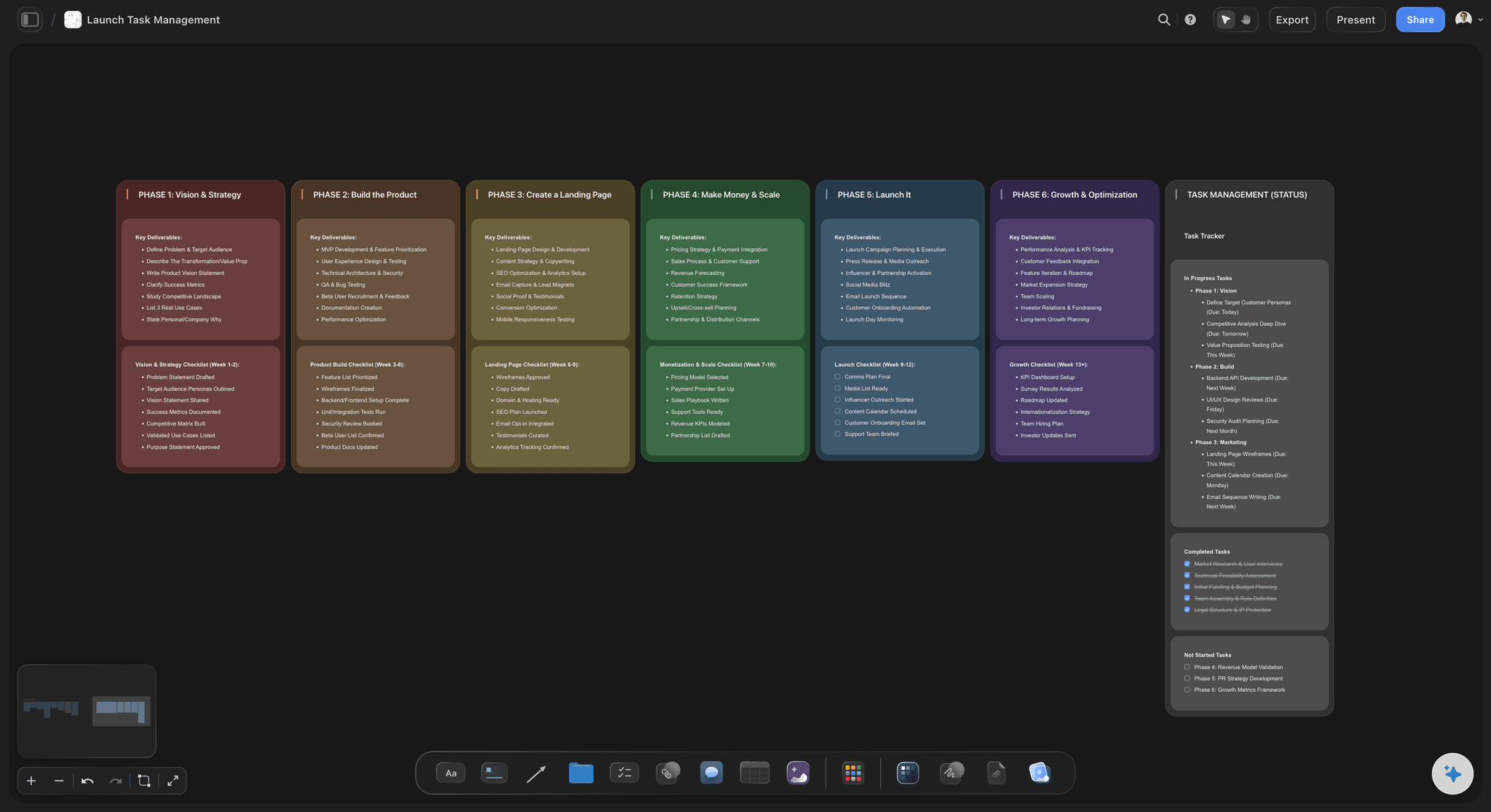
Phases with dates and owners
A launch timeline the team can read
Ask for a Marketing Plan and the AI lays out the launch phases with dates, and a table with date, person and status cells keeps each phase's owner and progress in view.
See the launch roadmap →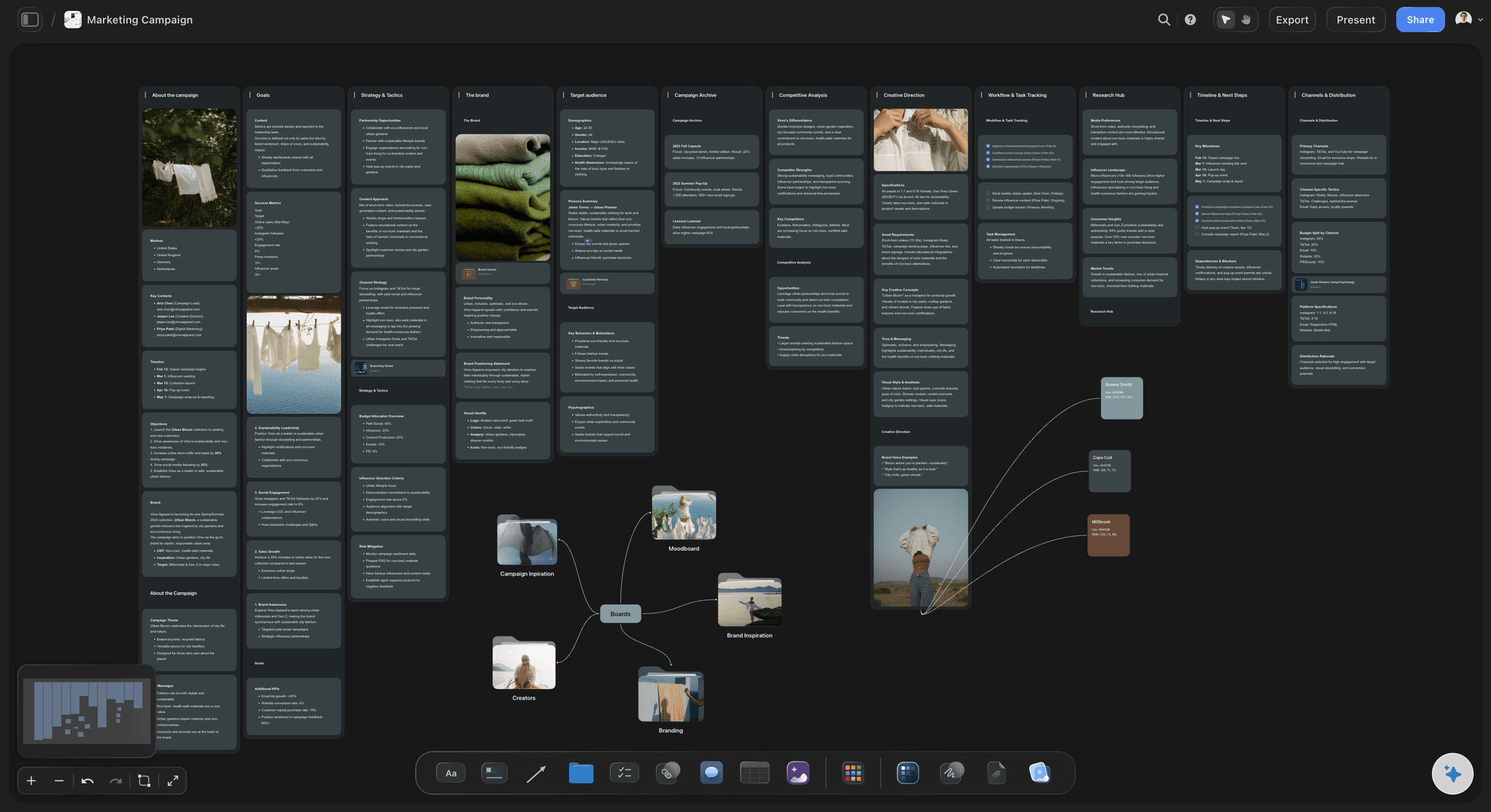
The work beside the plan
Assets, copy and content next to their goal
Creative, copy, references and content tickets sit beside the concept and channel they serve, so an asset that drifts off the message is visible.
See the AI marketing campaign planner →Unlimited boards. No object cap.
One board per plan, campaign or launch. Storyflow is paid-only during early access, with plans from $7.99 a month billed annually ($9.99 monthly). A free plan launches before the end of 2026, and anyone a paid member invites to a board joins free.
Unlimited boards, images, files and links
Tickets, Kanban and tables with date, person, status and currency cells that sum
An AI that builds a Marketing Plan or a Campaign Brief on the board
View-only links a stakeholder opens with no account
Built for people with taste
Why, what, ideas, money, time, people.
The six things every marketing plan covers, and what goes wrong with each when the plan lives in a deck.
Background and goals
Start with why, and a number
Background the team agrees on: The market, the product and what prompted the effort, written once where everyone sees it, so the plan is not re-argued in every meeting.
Goals written as movements: Awareness from one figure to another, sign-ups by a date, a launch-week target. A goal with no number cannot tell you whether the campaign worked.
Deliverables listed against goals: Every asset, page and piece of content traced to the goal it serves, so work that serves nothing is cut before it is made.
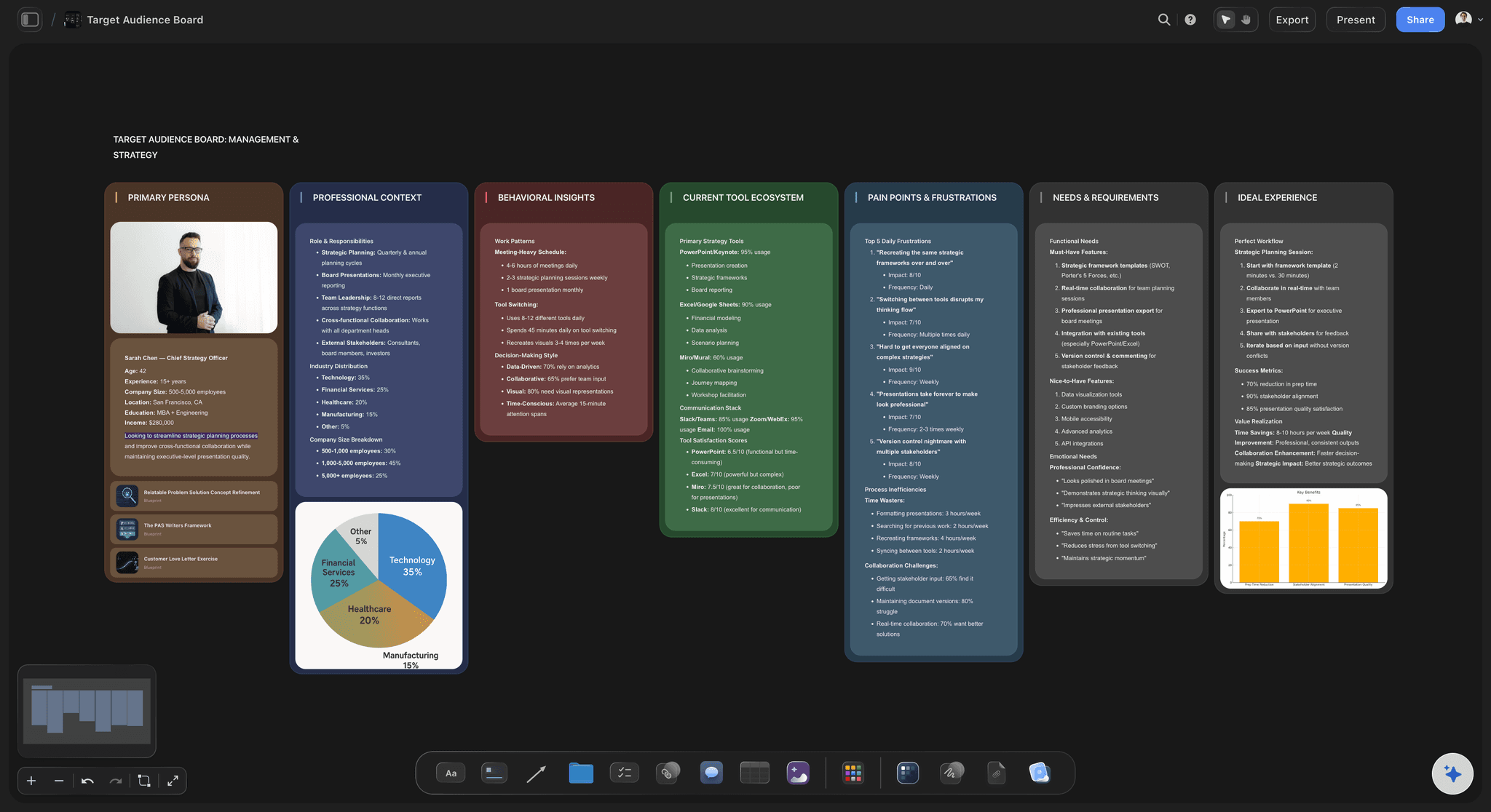
The audience defined: Who the launch is for, what they already believe and where they spend time, kept beside the plan rather than in a research deck nobody reopens.
Concepts and channels
The ideas that carry the campaign
Concepts side by side: Two or three campaign concepts with their references and a line on what each would cost, compared on the board before one is chosen.
The rejected ideas kept: The concepts that lost stay parked on the board with the reason, so the same debate does not restart in week six.
Channel mix tied to the message: Which channel carries which message, planned together instead of as a list of channels and a separate list of messages.
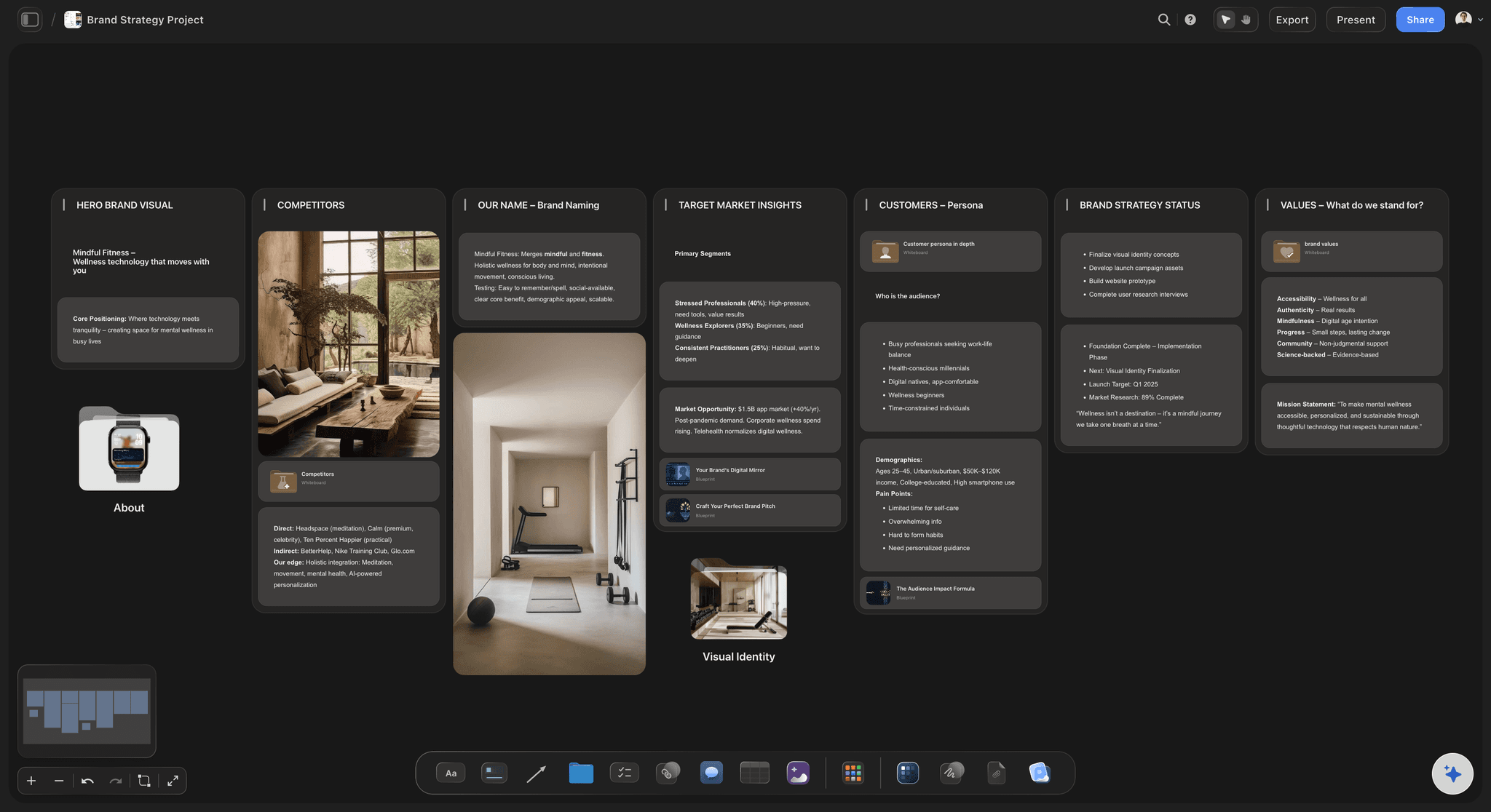
The brief the creative works from: The Campaign Brief holds the big idea, the messaging hierarchy and the visual identity the designers and writers build to.
Timeline, budget and owners
Dates, money and names, agreed rather than assumed
A timeline of phases, not a task list: Pre-launch, launch week, optimisation and wrap-up as phases with dates on the plan's timeline wall, while the tasks live on tickets and a Kanban.
A budget table that adds up: Costs by channel and item in a table with currency cells and a sum. Storyflow holds the budget; accounting and spend tracking stay in your finance tools.
Marked gaps where nothing is agreed: When the AI builds a plan without a launch date or a media budget, it is built to leave the slot visible instead of filling it with a plausible number.
An owner on every deliverable: Each ticket is assigned to a person, so who does what is on the board rather than in a kickoff email.
Sharing, AI and honest limits
A plan stakeholders read, and what it hands off
Stakeholders read a link: A view-only link opens the live board in a browser with no account, and a stakeholder signs in to leave comments on the specific section.
Present it in the meeting: Present the board full screen, or export it as a high-quality image or PDF for a deck, instead of rebuilding the plan in slides.
Ask the AI what is missing: The AI reads the whole plan, so which goal has no deliverable, which phase has no owner, or which audience has no message is answered from your board.
What it does not do: Storyflow does not send email, schedule social posts, buy media or report campaign performance. The plan hands off to the tools that run the campaign.
Explore templates for your project
Every template opens as a real, editable board on the infinite canvas. Pick the closest fit and make it your own.
Marketing Campaign
Plan a campaign across channels, messages, and deliverables on one board the whole team can see.
One app instead of five
Storyflow vs Notion, Asana and Airtable.
Each is used for marketing plans. Notion holds plans in docs and databases built from its template gallery, Asana runs launches as tasks with dependencies and rules, and Airtable tracks campaigns and assets in a database. Storyflow keeps the plan and the campaign work on one board.
Storyflow
Recommended
AI writes the marketing plan and campaign brief onto a canvas
Concepts, references and creative compared on a canvas
Phased launch timeline with owners and dates
Stakeholders open the plan by link with no account
Automations and task dependencies
Notion
AI writes the marketing plan and campaign brief onto a canvas
Concepts, references and creative compared on a canvas
Phased launch timeline with owners and dates
Stakeholders open the plan by link with no account
Automations and task dependencies
Asana
AI writes the marketing plan and campaign brief onto a canvas
Concepts, references and creative compared on a canvas
Phased launch timeline with owners and dates
Stakeholders open the plan by link with no account
Automations and task dependencies
Airtable
AI writes the marketing plan and campaign brief onto a canvas
Concepts, references and creative compared on a canvas
Phased launch timeline with owners and dates
Stakeholders open the plan by link with no account
Automations and task dependencies
What creators are saying
Join early creators getting structured workspaces and AI that remembers their projects
“Storyflow has sped up my workflow by at least 3x, which means more flow state and more projects I can actually ship. It truly changed the way me and my team create.”

Reilin Joey
Director & YouTuber
“One prompt gets me a structured board. But the tactics are my favorite. I run my YouTube scripts through them and my intros and retention got better. It's amazing.”

Justkay
YouTuber & Freelance Filmmaker
“I used to juggle five apps to plan a project. Now I describe what I am making and get boards, lists, and a schedule. All in one place.”

George
@fernwehchronicles
Marketing plan software, answered.
Launches, campaign briefs, AI, sharing, and what Storyflow leaves to the tools that run the campaign.
Plan one effort against the strategy: take its positioning, audience and tone, then set goals with numbers, concepts, phases with dates, a budget and owners. In Storyflow the AI can build a Brand Strategy, a Marketing Plan and a Campaign Brief on the same board, so each is checked against the others, with the creative made beside them. Stakeholders open the board by link with no account. Email, ads and social scheduling run in their own tools.
Storyflow is marketing planning software with the plan and the campaign work on one board: goals, audience, concepts, phases with dates, the budget and who does what sit beside the briefs, assets and content they produce. Its AI writes a Marketing Plan or a Campaign Brief from what you describe, and stakeholders open the board by link with no account. Asana has automations and task dependencies, which Storyflow does not.
Write it as phases with dates, not a task list. Start with the background and goals with numbers, then the concepts, phases such as pre-launch, launch week and follow-up, the budget and an owner per deliverable. In Storyflow, ask the AI for a Marketing Plan and it lays these out on a board, leaving a marked slot for any date or budget you have not set. Deliverables become tickets on a Kanban, beside the launch copy and assets.
Marketing planning software is where a marketing effort is worked out before and while it runs: background, goals, audience, concepts, channels, timeline, budget and owners. Unlike email platforms, ad managers and social schedulers, which execute a campaign, its job is to keep the plan coherent and visible as it changes. Storyflow does this on a board, with the plan and the campaign work side by side and an AI that builds a Marketing Plan from a description.
Six things: the background, meaning why the effort exists; goals and deliverables, with a number on every goal; the concepts that carry it; phases with dates rather than a task list; the budget by channel or item; and an owner for each deliverable. Record the audience and the reasoning behind the choices, and show a gap wherever a date or budget is not agreed. Storyflow's AI builds these sections on a board and marks what is undecided.
A marketing plan covers how an effort gets done: background, goals and deliverables, concepts, timeline, budget, next steps and owners. A campaign brief is what a creative team works from for one campaign: audience, goals with real numbers, the big idea and messaging, channel mix, visual identity, competitors and a phased timeline. Most launches need both, and separate files drift apart. In Storyflow the AI builds either on one board, with the brief's budget and KPIs on nested boards.
It can draft the structure and a first version, and your team decides what it says. Ask Storyflow's AI for a Marketing Plan and it builds background, goals and deliverables, concepts, timeline, budget, next steps and responsibilities on a board, shaped to what you market: a product launch keeps a launch window, an ongoing business gets a rolling schedule. It is built to leave a marked slot rather than invent dates or money.
No. Storyflow does not send email, schedule or publish social posts, buy media, track spend or report on campaign performance; email platforms, schedulers such as Buffer or Hootsuite, ad managers and analytics tools do that. Storyflow is where the plan is made and the campaign work is organised: goals, audience, concepts, phases, budget and owners beside the briefs, copy and assets, with dates in tables and on tickets. Approved pieces go out through the tool that runs each channel.
Storyflow puts the plan and the campaign work on one visual board, with an AI that builds a Marketing Plan or Campaign Brief from a description and reads the whole board when you ask what is missing. Asana is stronger for launches run as assigned tasks with dependencies and rules. Notion is stronger for plans in docs and databases a team shapes itself. Storyflow has no automations or task dependencies, so some teams also keep a task tracker.
Yes. In Storyflow, share a view-only link and a stakeholder opens the board in a browser with no account, so they read the current plan instead of an exported deck that went stale when a date moved. They sign in to leave comments on a specific section, and anyone a paid member invites to edit joins free. For a meeting, present the board full screen or export it as a high-quality image or PDF.
Set the quarter's goals first, then give each campaign its own plan. Write two or three goals with numbers, list the campaigns that serve them, and put every campaign's phases in one table with date and person cells, so overlapping launch weeks and shared people show early. In Storyflow each campaign gets a board with its brief, concepts, budget and owners, opened from a folder tile on an overview board, and the AI can draft each plan.
Keep the plan where the work happens, so updating the work updates the plan. Plans go stale in a deck: it is presented once, dates change elsewhere, and nobody edits the slides. Put phases, owners and dates on the board the team uses daily, move tickets as work lands, and review the plan section by section at a fixed time each week. In Storyflow a stakeholder's view-only link always shows the current board, so no outdated copy circulates.
Not yet. Storyflow is paid-only during early access, with plans from $7.99 a month billed annually ($9.99 monthly). A free plan launches before the end of 2026, and anyone a paid member invites to a board joins free, including a freelancer or an agency partner. A stakeholder opens a view-only link with no account. Max, at $39 a month billed annually, adds a team workspace with roles and permissions. Notion and Airtable offer free tiers with marketing templates.
More from Storyflow
Brand strategy tool
AI marketing plan generator
AI marketing campaign planner
Brand launch planner
Product launch planner
Product launch checklist
Launch roadmap
Campaign calendar
Campaign brief template
For marketing teams
Marketing workspace
Best marketing campaign planning tools
How to write a marketing plan
Best tools to plan a brand launch
Go-to-market plan
Testimonial video planner
Build the marketing plan your team works from.
Goals, concepts, timeline, budget and owners on one board, with the campaign work beside them.