
Audience insight without the busywork
A target audience template
that fits on one screen and settles the brief.
For marketing and brand leads writing a campaign brief: eight fields that say who the campaign is for, how many of them there are, where to reach them and the one thing to tell them.


Creatives working for these brands already got early access
- Red Bull
- Canon
- Artlist
- Porsche
See how easy it is to get started
Watch a real project come together, from a blank board to a finished plan, clicked through step by step.
Start from a ready-made template
Pick a board to see what you can build, then let AI fill it in. Every template is a real, editable starting point on the same infinite canvas.

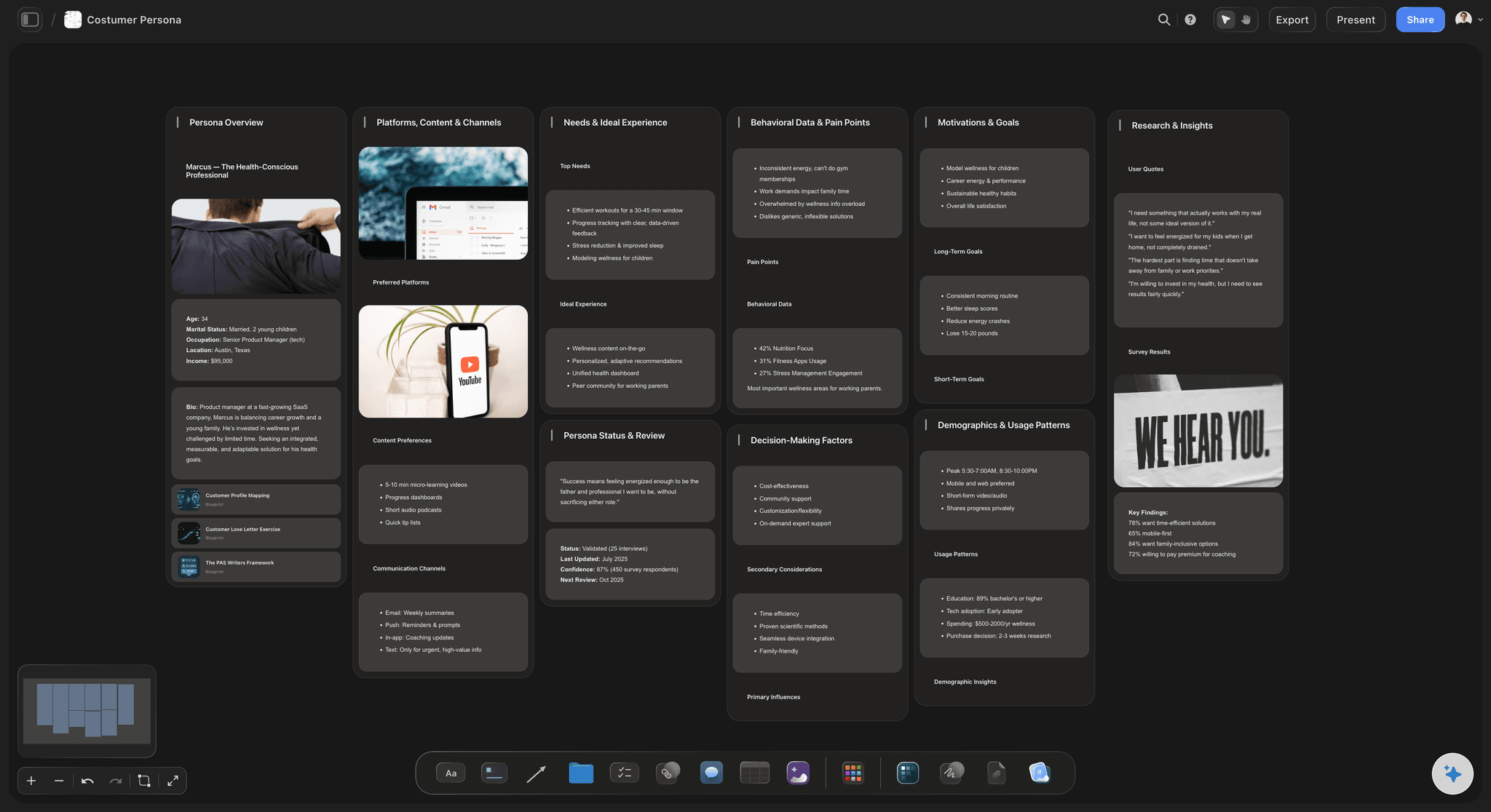
Customer Persona
Map who your customer is, what they need, and what holds them back, all in one profile.
How do you fill in a target audience template?
A target audience template is a short form that defines the group of people one campaign is meant to reach: who they are, how many of them there are, where they can be reached, what they already believe and the one message for them. Storyflow is an AI visual workspace that fills in a target audience template on one infinite canvas: the eight fields, the size of the group, a close-up of one buyer and the campaign brief beside them. Its AI reads the survey results, interview notes and reports you attach and drafts each field, leaving a marked gap where the research says nothing.
Use eight fields, in this order. One: who they are, as a situation and not an age range. Two: how many of them there are, and where that number came from. Three: where you can reach them, by name. Four: what they do today instead of using you. Five: what they already believe about the category. Six: the trigger, meaning the moment that makes them start looking. Seven: the one message. Eight: who the campaign is not for. If a field takes more than two sentences, it is not decided yet.
A worked example with round numbers. Who: owners of independent cafes and restaurants with 5 to 25 staff who still plan shifts on paper or in a spreadsheet. How many: say 40,000 such businesses in the country, of which 60 percent still plan by hand, so 24,000. Where: two trade newsletters and the Instagram accounts they follow for suppliers, which together reach about 9,000 of them. Today: a spreadsheet and a group chat. Belief: software is for chains. Trigger: a no-show on a Saturday. Message: plan next week's shifts in ten minutes, on your phone. Not for: chains with a head office.
Now check the size against the goal. If the campaign needs 180 trials and you can reach 9,000 people, 2 percent of them have to act. That is ambitious but possible. If the goal were 900 trials, one in ten would have to act, which no campaign does. Either the audience is too narrow, the goal is too high, or you need another way to reach the other 15,000. This five minute sum is the most useful thing on the page, and it is the step most audience templates leave out.
Keep the audience and the persona apart, and use both. The audience definition is about the group: its size, where it is and what it believes. A persona is a close-up of one person inside that group, with a name, a working day and their own words. The definition decides where the money goes. The persona helps a writer or a designer picture who they are talking to. Put the close-up beside the definition, never in place of it.
Pick one primary audience per campaign and, at most, one secondary. A workable split is four fifths of the budget on the primary and one fifth on the secondary. Three audiences in one campaign usually means the message was never chosen. Write the eighth field with care: saying who the campaign is not for is what stops the brief growing back into everyone, and it is the line an agency will thank you for.
Ultra fast from brief to board
Four moves from a hunch to a defined audience.
An hour if you have research to hand. Less if you start from the ready-made board and correct what the AI drafts.
01
Start from the template or a sentence
Open the Target Audience template from the template gallery, or tell Storyflow's AI what you sell and who you think buys it. Either way you start with a board that already has its sections and not an empty page.
02
Fill the eight fields from your research
Attach the survey export, the interview notes or last campaign's report and ask the AI to draft the eight fields. It writes from what the files say, and marks a gap where they say nothing instead of guessing.
03
Size the group against the goal
Put the three numbers in a table: everyone who fits, the ones you can reach, and the response the goal needs. Ask the AI to draw the split as a pie or a bar chart beside the fields.
04
Put it beside the brief and share it
Place the definition next to the campaign brief on the same board and send the link to the agency or the creative team. They read it with no account, and the people you invite can comment on a field they disagree with.
The definition, the size, the close-up and the message.
Storyflow holds the audience and the brief it feeds. An ad platform still estimates live audience size and delivers the ads.
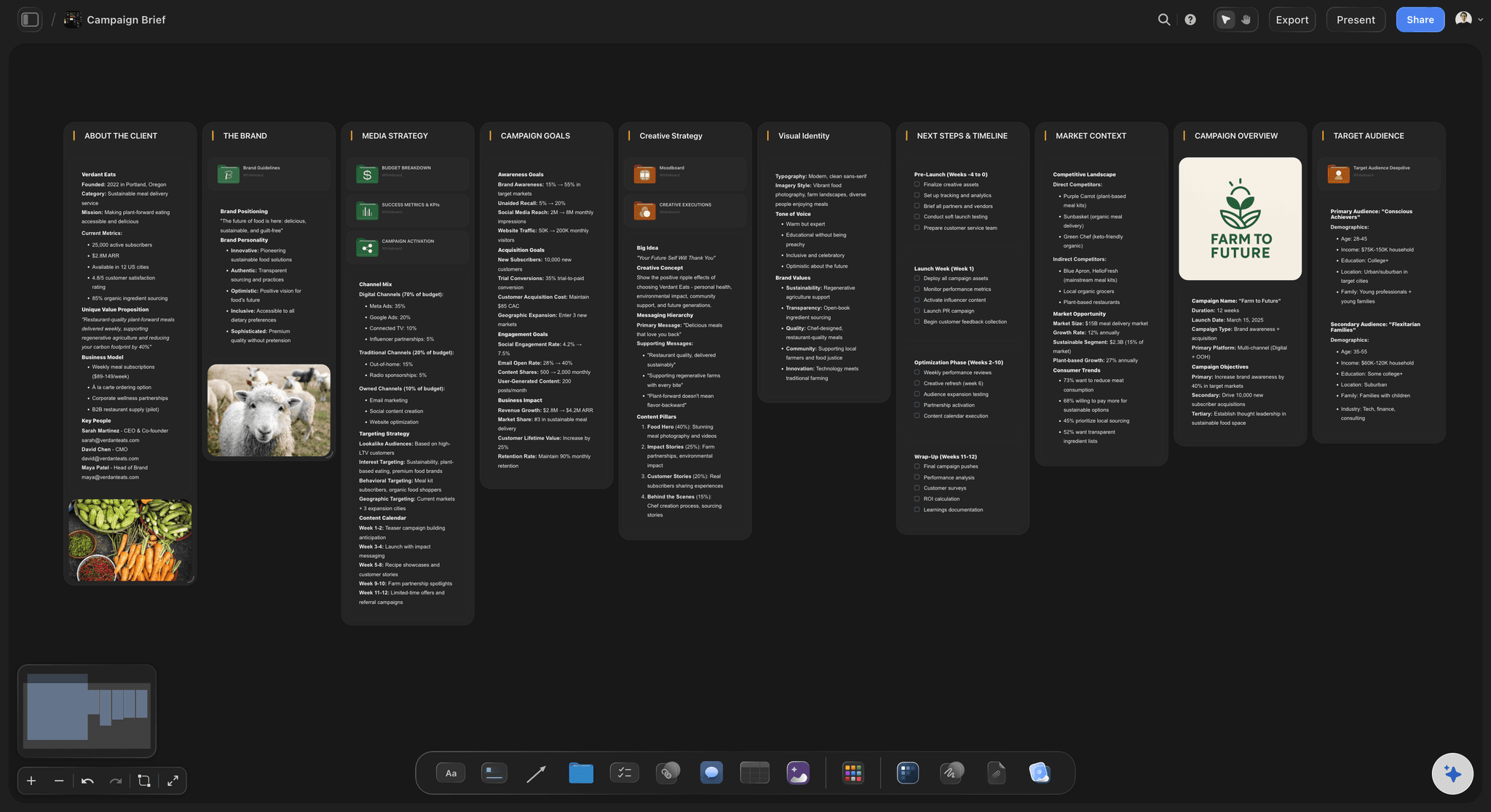
The definition
Eight fields that fit on one screen
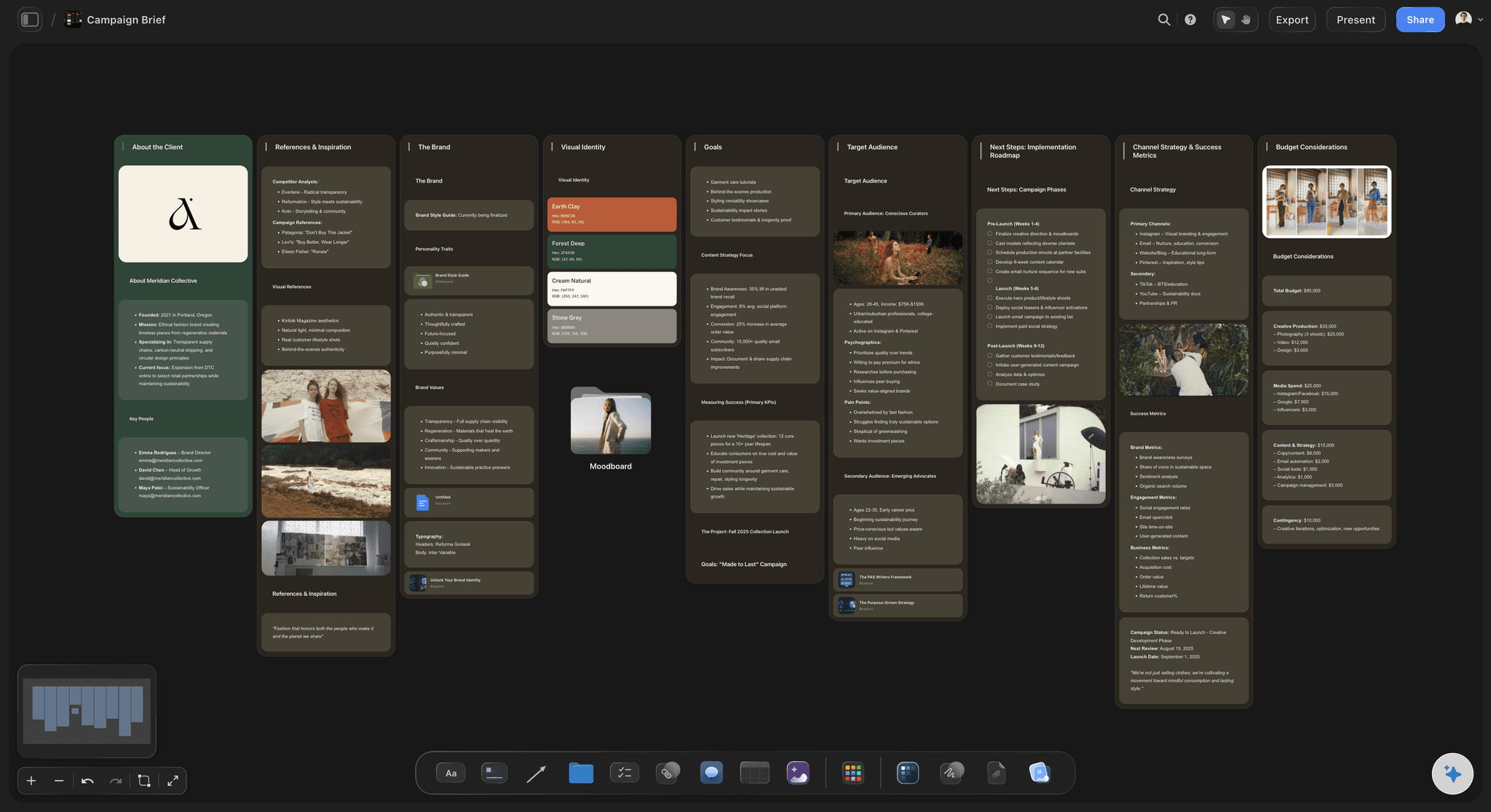
Who, how many, where, what they do today, what they believe, the trigger, the one message and who it is not for. Each is a short card, so the whole audience can be read in under a minute.
See the campaign brief template →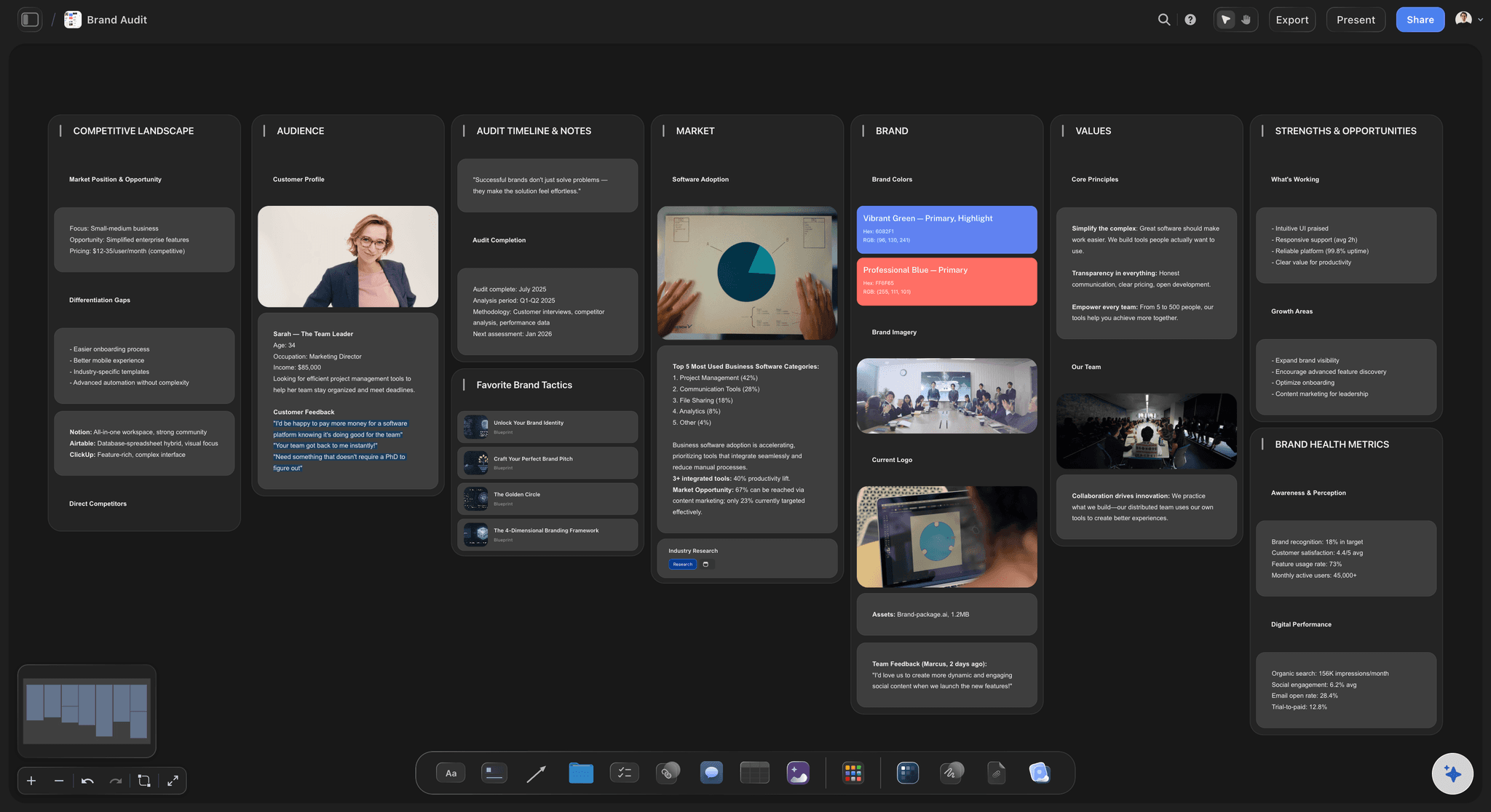
The size
How many there are, and how many you can reach
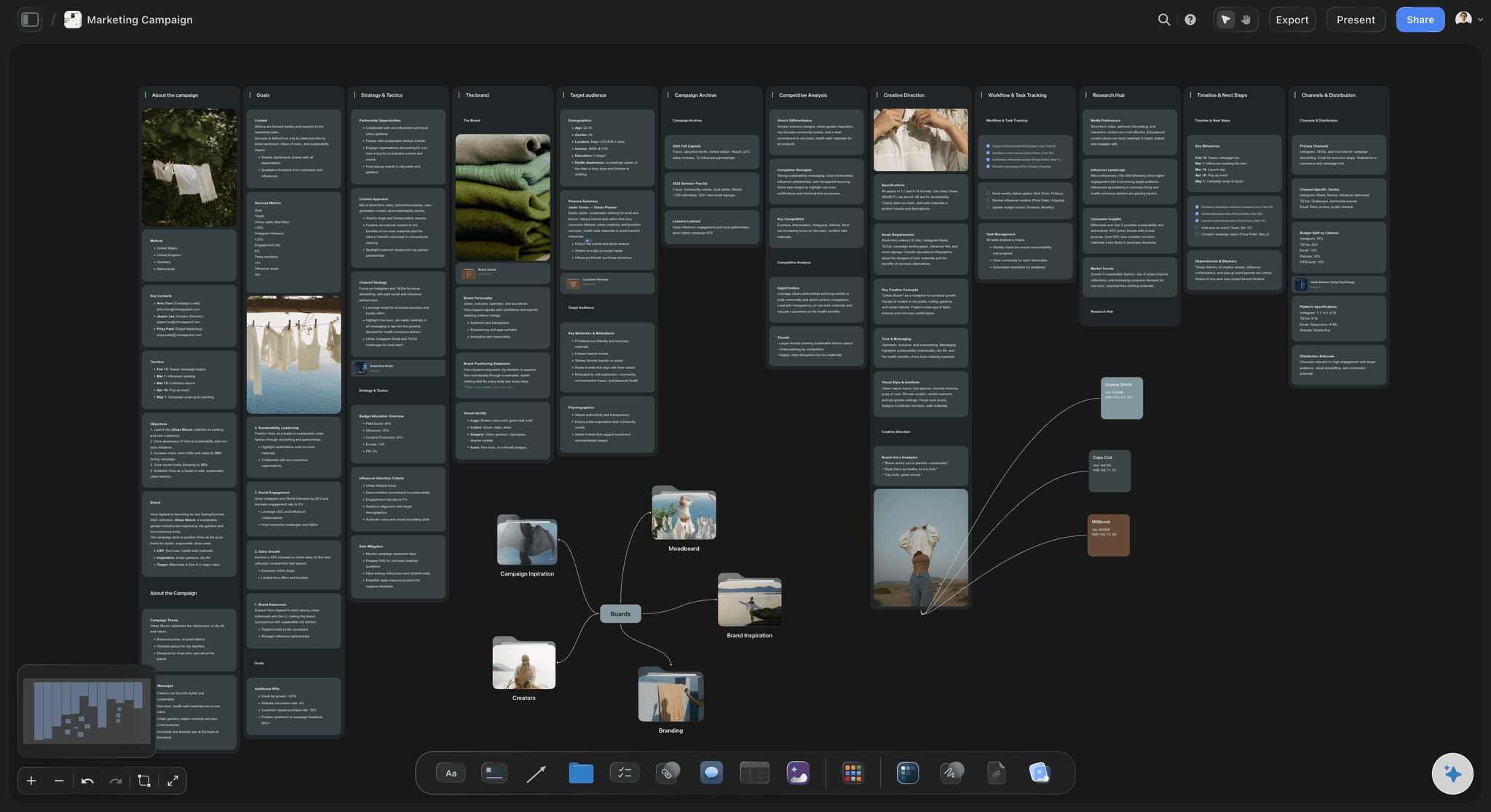
A small table with everyone who fits, the share you can actually reach and the response the goal needs, with a chart beside it. A goal that needs one in ten to act is caught before the budget is spent.
See the customer discovery board →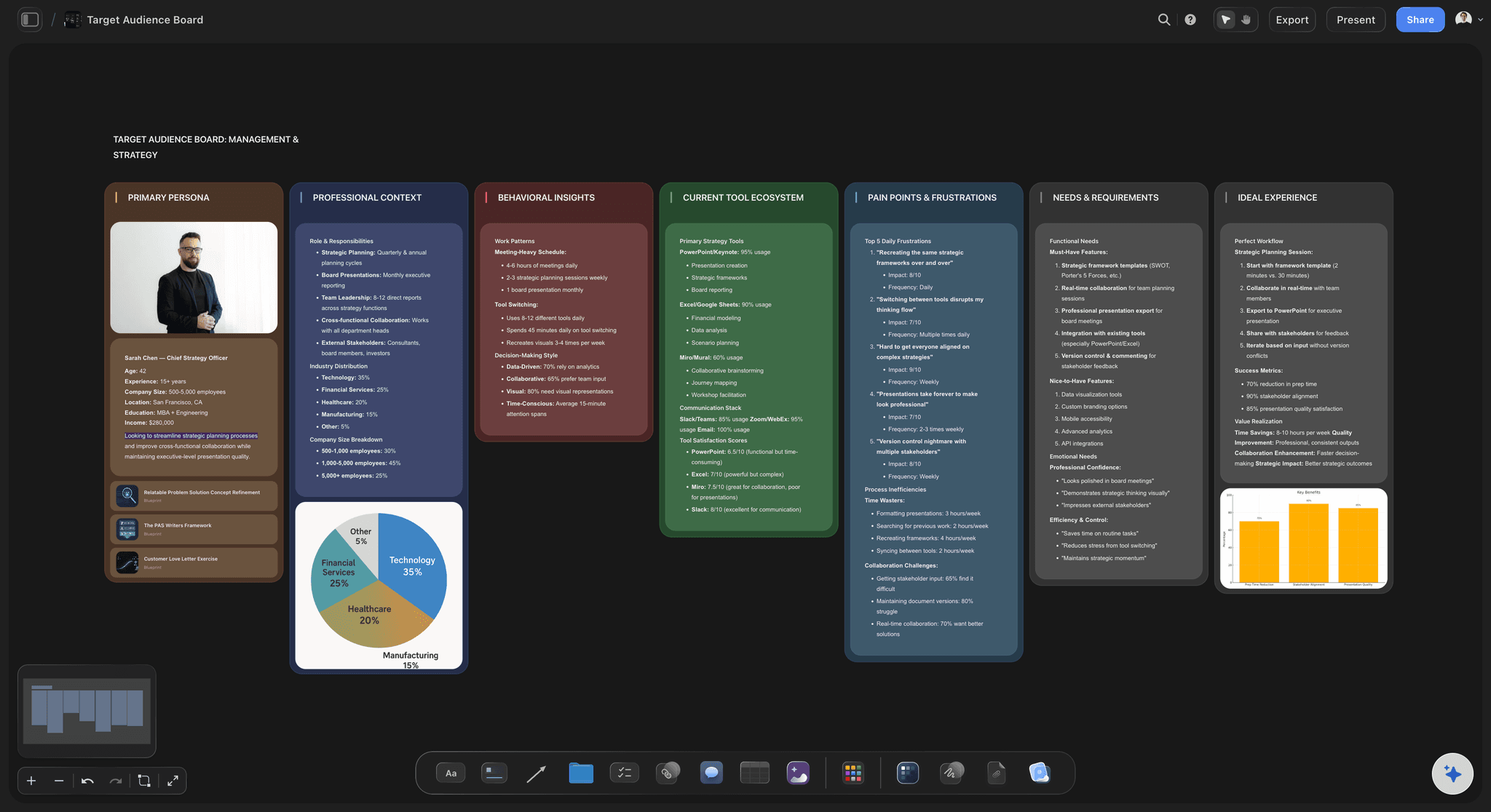
The close-up
One buyer in seven columns
Storyflow's ready-made Target Audience board profiles one person: the primary persona, professional context, behaviour, the tools they use now, pain points, needs and the ideal experience. Use it for the close-up, beside the definition.
See the customer persona generator →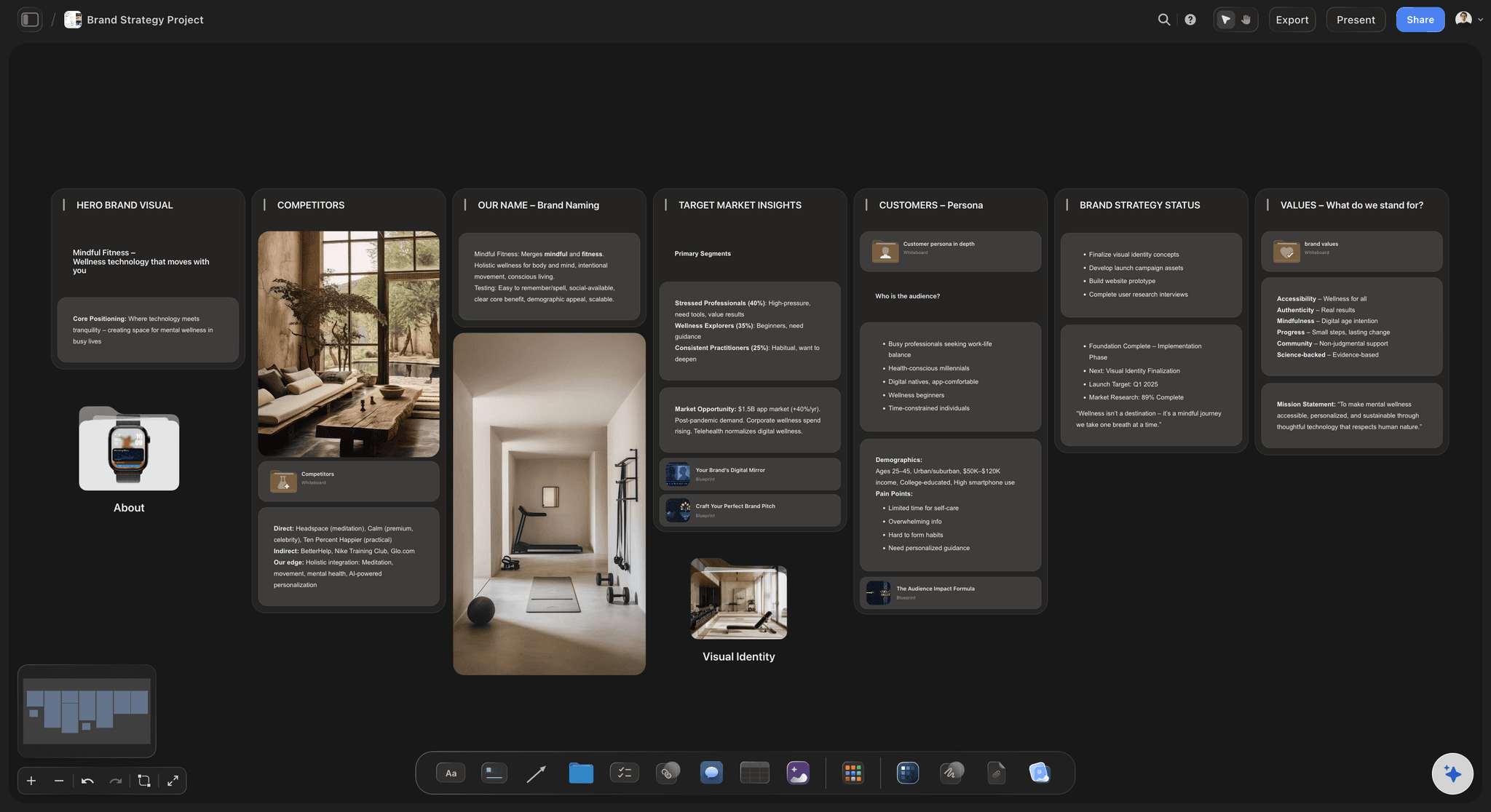
The message
One sentence, written for this group only
The seventh field is the one thing this audience should hear, in words they would use. It sits above the creative on the board, so every headline and image can be held up against it.
See the brand messaging framework →The audience your agency reads is the one you wrote.
Share the board by link, so the definition in the brief and the one in the agency's deck are the same words. Storyflow is paid-only during early access, with plans from $7.99 a month billed annually ($9.99 monthly). A free plan launches before the end of 2026, and anyone a paid member invites to a board joins free.
Unlimited boards, image uploads and files on every paid plan
Agency partners and freelancers you invite to the board join free
200+ Tactics for messaging and customer research
Whole-board PDF export to attach to the brief
View-only links so stakeholders can read it with no account
Built for people with taste
Why most audience definitions do not help the work.
Three usual problems. Each one is easier to fix when the audience sits on the same board as the brief and the research behind it.
The who
An age range is not an audience
A situation, not a demographic: Cafe owners who still plan shifts on paper tells a writer what to say. Adults aged 25 to 45 tells them nothing. Write the situation the person is in.
What they do today: Name the spreadsheet, the rival product or the habit you are replacing. A campaign is always competing with what people already do, even when that is nothing.
The moment they start looking: Most people ignore a category until something goes wrong. Write that moment down, because it tells you when to show up and what the first line should be.
Who it is not for: One line that rules a group out. It protects the message when someone asks, late in the project, whether the campaign could also speak to everyone else.
The size
Nobody checked whether there are enough of them
Three numbers: Everyone who fits, the ones you can reach by name, and the response the goal needs. In the worked example: 24,000, 9,000 and 2 percent.
Where the number came from: Write the source beside each figure, even when the source is a careful guess. A guess with a label can be corrected. A guess without one becomes a fact by the third meeting.
Reach by name: List the actual newsletters, accounts, events and search terms. If you cannot name where half the audience can be found, it is not yet a target.
A chart of the split: Ask Storyflow's AI to draw the segments as a pie or a bar chart from the numbers in the table, so the primary audience is visibly the biggest slice.
The use
It is written once and never opened again
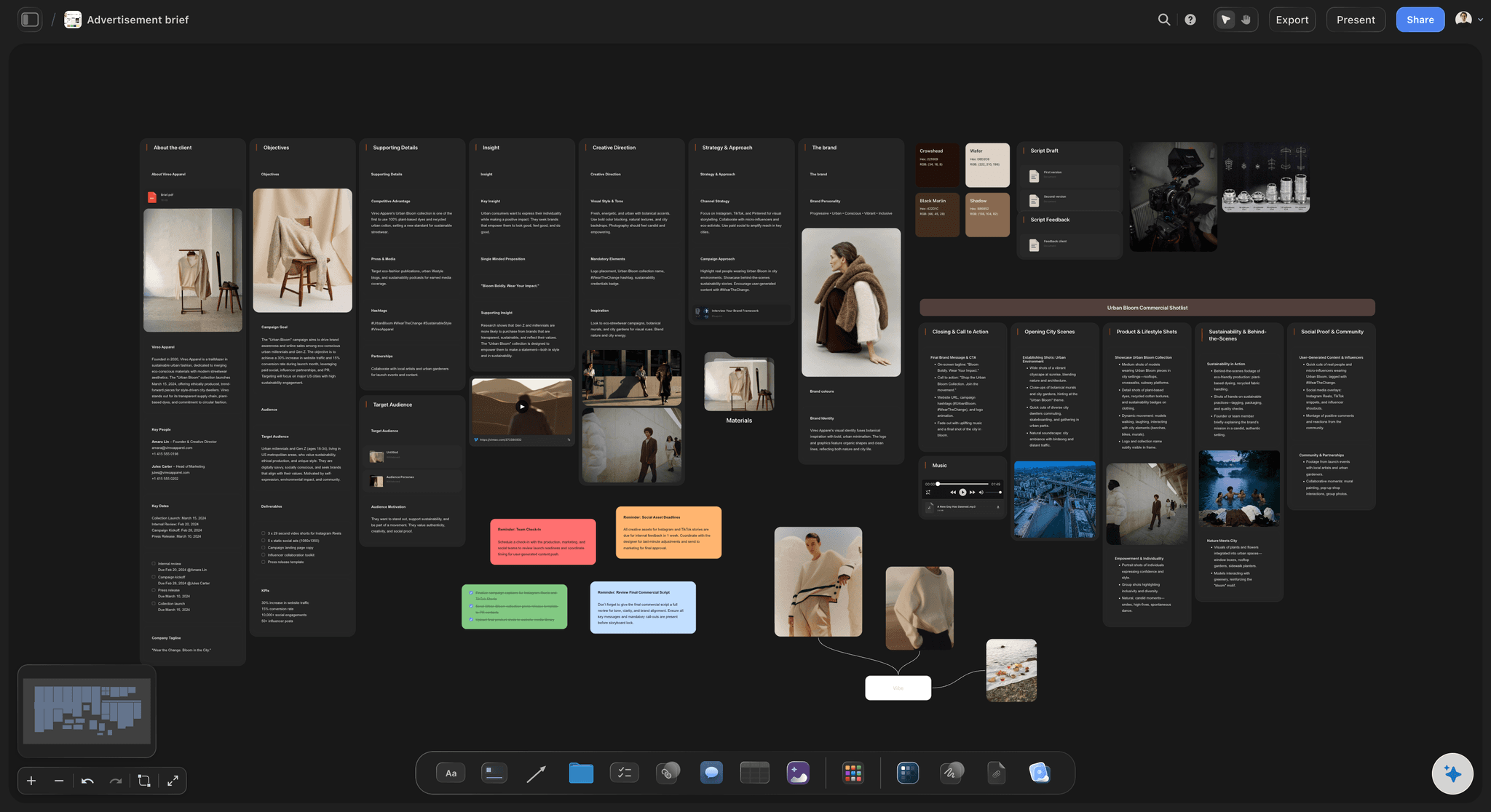
Beside the brief: Keep the definition on the same board as the campaign brief and the creative. People read what is in front of them, and skip what is in another file.
A test for every idea: Hold each headline against field seven. Would the cafe owner on a bad Saturday stop for this? It is a quicker review than a debate about taste.
The research one click away: Survey charts, quotes from calls and screenshots of reviews sit next to the fields they support. On a Storyflow board a doubtful field can be checked on the spot.
Updated after the campaign: When the results are in, correct the fields that turned out wrong and keep the old version beside the new one. The next brief starts from what you learned.
Explore templates for your project
Every template opens as a real, editable board on the infinite canvas. Pick the closest fit and make it your own.
Customer Persona
Map who your customer is, what they need, and what holds them back, all in one profile.
One app instead of five
Where Storyflow fits in defining an audience.
It holds the definition, the research and the brief. It does not estimate audience size from live platform data or deliver ads.
Storyflow
Recommended
A written definition the whole team can read
Research, quotes and screenshots on the same open canvas
A close-up of one buyer beside the definition
AI drafts the fields from research you attach
Charts from your own survey numbers
The agency reads it from a link with no account
Estimates audience size from live platform data
Targets and delivers ads to the audience
Ad platform audience tools
A written definition the whole team can read
Research, quotes and screenshots on the same open canvas
A close-up of one buyer beside the definition
AI drafts the fields from research you attach
Charts from your own survey numbers
The agency reads it from a link with no account
Estimates audience size from live platform data
Targets and delivers ads to the audience
A doc or slide template
A written definition the whole team can read
Research, quotes and screenshots on the same open canvas
A close-up of one buyer beside the definition
AI drafts the fields from research you attach
Charts from your own survey numbers
The agency reads it from a link with no account
Estimates audience size from live platform data
Targets and delivers ads to the audience
What creators are saying
Join early creators getting structured workspaces and AI that remembers their projects
“Storyflow has sped up my workflow by at least 3x, which means more flow state and more projects I can actually ship. It truly changed the way me and my team create.”

Reilin Joey
Director & YouTuber
“One prompt gets me a structured board. But the tactics are my favorite. I run my YouTube scripts through them and my intros and retention got better. It's amazing.”

Justkay
YouTuber & Freelance Filmmaker
“I used to juggle five apps to plan a project. Now I describe what I am making and get boards, lists, and a schedule. All in one place.”

George
@fernwehchronicles
Target audience template questions
What marketing and brand leads ask when the brief has a box marked audience and nobody agrees what goes in it.
In Storyflow, fill it in on one board in eight short fields: who they are as a situation, how many there are, where you can reach them, what they do today, what they believe, the trigger, the one message and who it is not for. Attach your research and the AI drafts each field. Then check the size of the group against the campaign goal.
Storyflow is built for exactly this job: the eight fields, the size of the group, a close-up of one buyer and the research behind them sit on one board next to the campaign brief, and its AI drafts the fields from the files you attach. Estimating audience size from live data and delivering the ads still take an ad platform such as Meta Ads Manager or Google Ads.
Eight fields: who they are, how many, where to reach them, what they do today, what they already believe, the trigger that makes them look, the one message, and who the campaign is not for. Keep each to two sentences. On a Storyflow board the eight sit as short cards in one row, with the research they came from underneath.
A target audience is a group, defined by its size, where it can be reached and what it believes. A customer persona is a close-up of one person in that group, with a name and a working day. The audience decides where the budget goes; the persona helps people write. Storyflow keeps both on one board, the persona beside the definition.
The target market is everyone who could buy the product. The target audience is the part of that market one campaign speaks to. A payroll app's market might be every small employer; this month's audience is cafe owners who still plan shifts on paper. In Storyflow, write the market once and give each campaign its own audience board.
Use three numbers: everyone who fits the definition, the share you can reach through named channels, and the response the goal needs. If 9,000 are reachable and the goal is 180 trials, 2 percent must act. Put the numbers in a table on the Storyflow board with the source beside each, so a guess stays labelled as a guess.
Narrow enough that one message fits everyone in it, and wide enough that the goal needs only a few percent of them to act. If the goal needs one in ten, widen the audience or lower the goal. If two people in the group would need different headlines, split it. A Storyflow board makes that check visible because the sum sits beside the fields.
One primary audience, and at most one secondary. A workable split is four fifths of the budget on the primary and one fifth on the secondary. A third audience usually means the message has not been chosen yet. In Storyflow, give each audience its own row of fields so the difference between them is easy to see.
Yes. Storyflow's Target Audience template is a board of seven columns that profiles one buyer in depth: the primary persona, professional context, behaviour, current tools, pain points, needs and the ideal experience. Open it from the template gallery, or ask the AI to build a target audience board. Add the eight-field definition above it for the group as a whole.
It can draft it. Storyflow's AI reads the surveys, interview notes and reports you attach and writes the fields from them. Name a job title or an industry and it can research the role on the web and cite its sources. It does not know your customers or your numbers; where the research is silent it leaves a gap for you to fill.
No. Storyflow does not connect to Meta, Google, your analytics or your CRM, and it does not run surveys. Export the numbers from those tools as a CSV, Excel or PDF file and attach it, or paste the figures in. Storyflow's AI reads the file and turns the numbers into fields and charts on the board.
Check it at the start of every campaign and correct it when the results come in. Beliefs and triggers change more slowly than channels, so the reach field needs the most attention. Keep the previous version on the Storyflow board beside the new one, so the next brief starts from what the last campaign taught you.
No. Storyflow runs in the browser and there are no native mobile or desktop apps. Open the audience board in any browser and share it by link with the agency or the creative team. They read it with no account, and the people you invite to the board can comment and edit.
More from Storyflow
Customer persona generator
AI persona generator
Campaign brief template
Creative brief template
Customer discovery board
Empathy map
Brand messaging framework
Value proposition canvas
Brand strategy tool
Media plan template
Go-to-market plan
AI marketing strategy generator
Customer journey mapping tool
Brand positioning map
Storyflow for marketing teams
Decide who it is for before anyone writes a line.
Eight fields, three numbers and one buyer in close-up, on the same board as the brief. An hour now saves a round of creative later.