
Polished brand plans, extremely simple
A brand messaging framework
where the customer is the hero, not you.
For founders who write their own marketing: seven parts in order, one sentence anyone on the team can repeat, three messages with proof, and the homepage it all becomes.


Creatives working for these brands already got early access
- Red Bull
- Canon
- Artlist
- Porsche
See how easy it is to get started
Watch a real project come together, from a blank board to a finished plan, clicked through step by step.
Start from a ready-made template
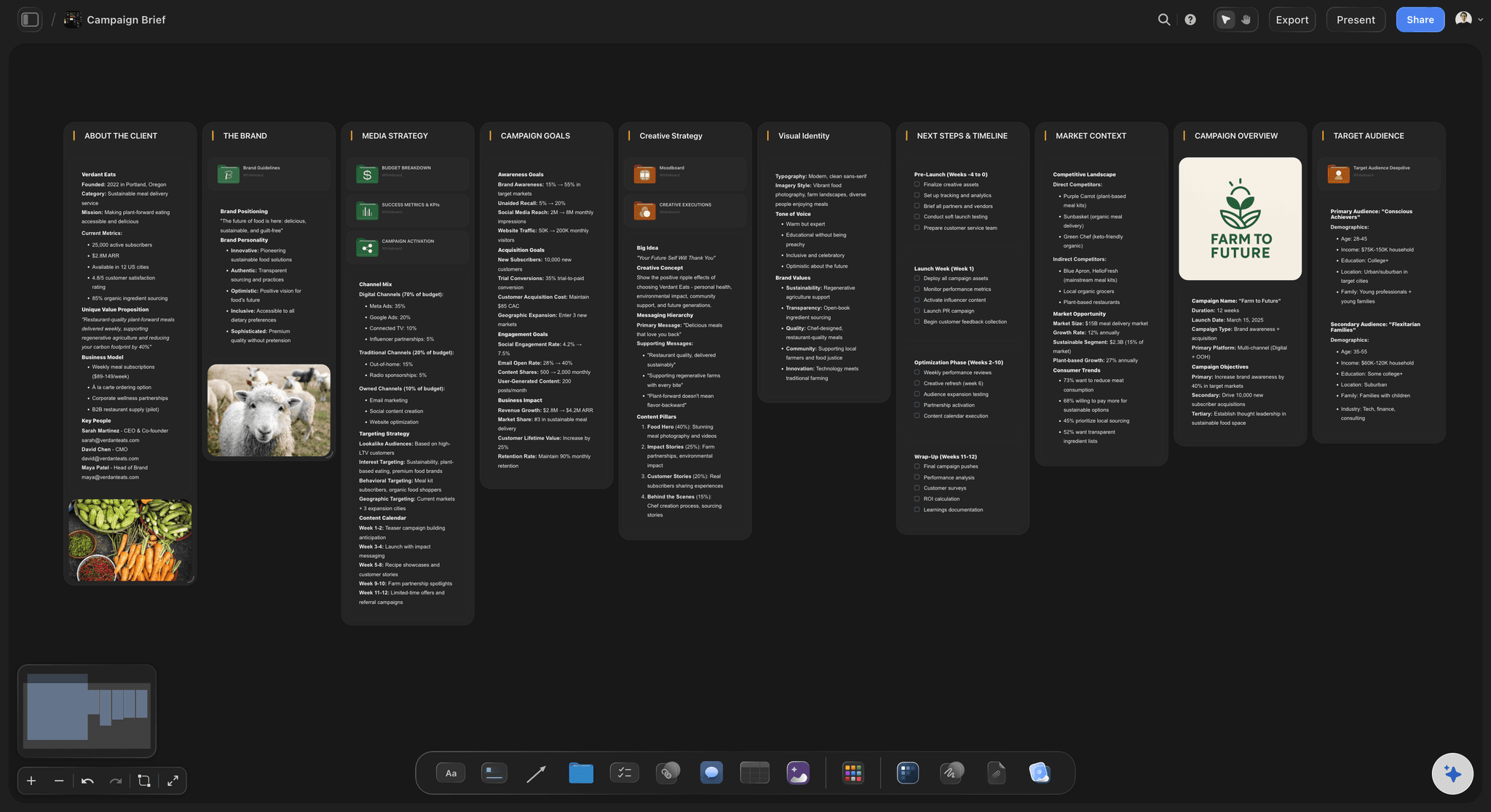
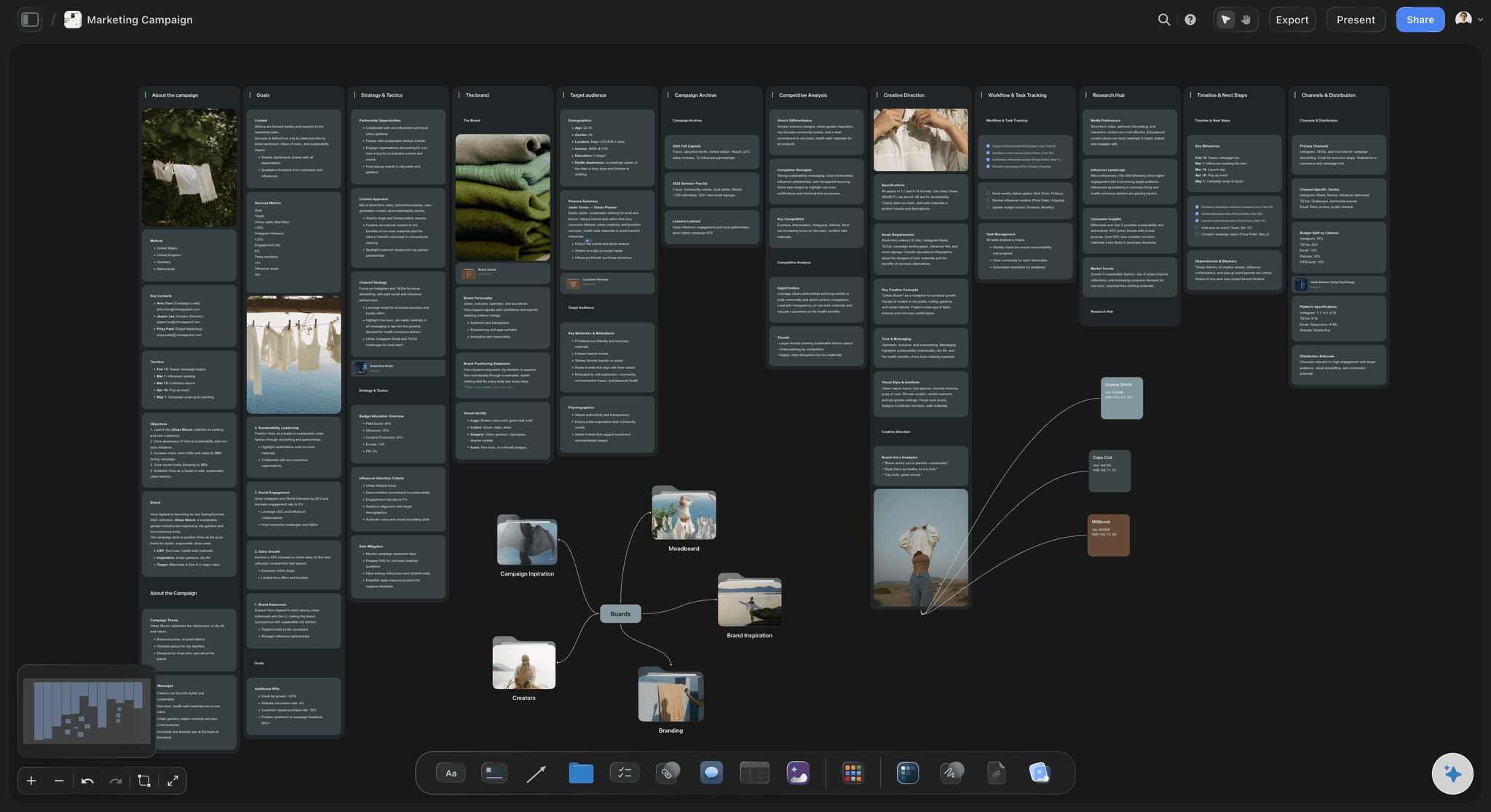
Pick a board to see what you can build, then let AI fill it in. Every template is a real, editable starting point on the same infinite canvas.

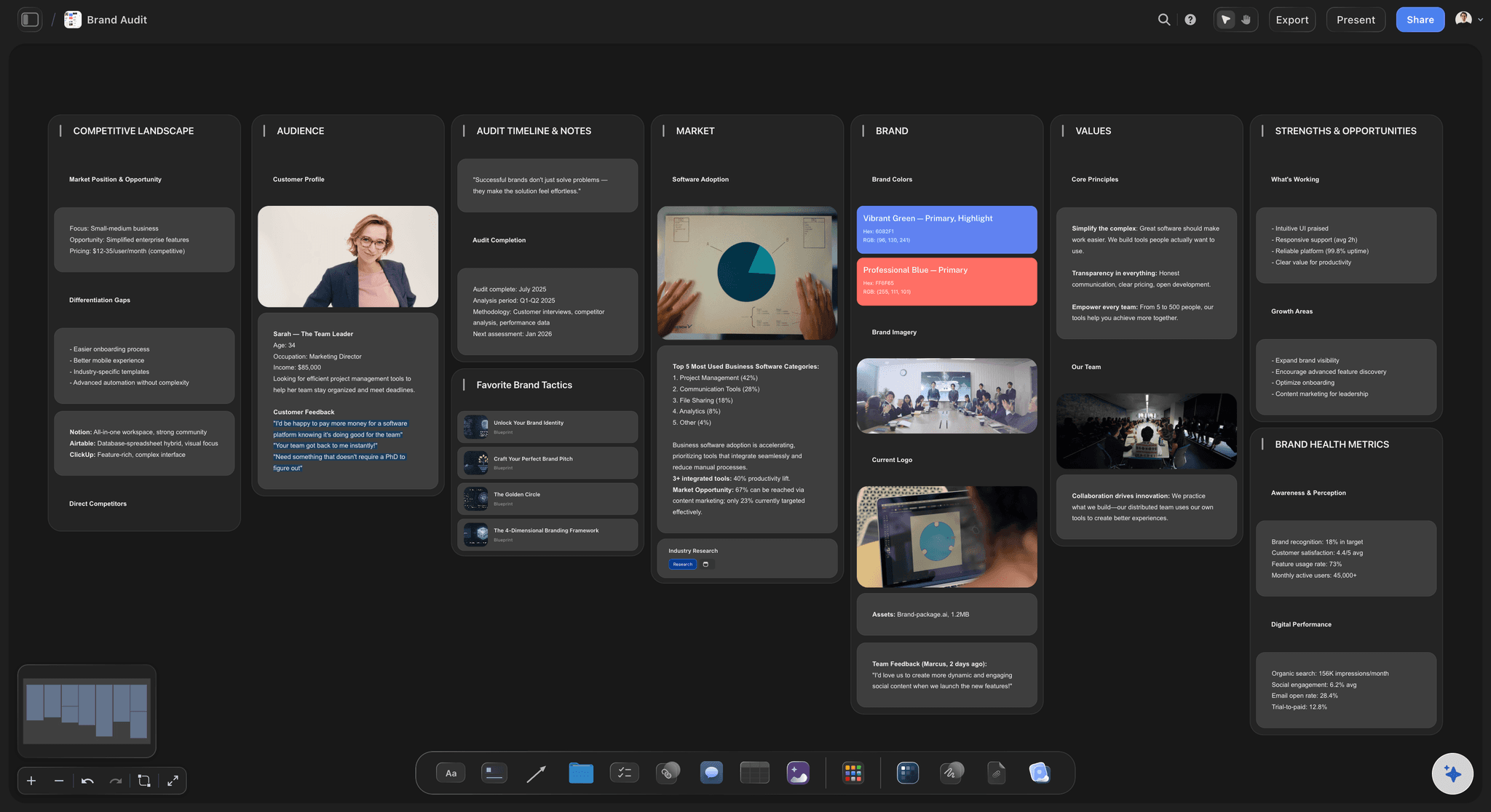
Brand Strategy
Define your positioning, values, and voice and connect them into a strategy the team can follow.
What is a brand messaging framework?
A brand messaging framework is the short set of agreed words a company uses to explain what it does, for whom and why it matters, written once so every page, pitch and post says the same thing. Storyflow is an AI visual workspace that builds the framework on one infinite canvas: the seven parts of the customer's story, the one-liner, the message pillars with their proof, and the homepage sections they turn into. Its AI reads the customer notes, reviews and sales calls you attach and drafts each part in your customers' own words.
The best-known version is the StoryBrand SB7 framework by Donald Miller, and it rests on one idea: the customer is the hero of the story, and the company is the guide. Most founders write the opposite. Their homepage opens with the company's history, its values and its technology, and the visitor has to work out for themselves why any of it matters. A story-led framework flips that order so the first thing a visitor reads is their own problem.
The seven parts, in plain words. One: the customer and the one thing they want. Two: the problem in their way, as it looks on the outside, how it makes them feel, and why it is simply wrong that they have it. Three: you, the guide, showing you understand the problem and have solved it before. Four: a plan of three simple steps. Five: a clear call to act, such as book a call or start today. Six: what they lose if they do nothing. Seven: what life looks like once it is solved.
A worked example for a two-person bookkeeping studio that serves freelance designers. The customer wants to know what they can spend without worrying about tax. The problem is a shoebox of receipts and a quiet dread every April. The guide has done the books for 200 freelancers and has the reviews to show it. The plan: send your bank feed, get a weekly number, pay tax on time. The call: book a fifteen minute call. The loss: a fine and a lost week every spring. The success: a Friday number and an April that is just another month.
Then boil it down. The one-liner is three short sentences: the problem, the solution and the result. For the studio: Freelance designers lose a day a month to receipts and tax worry. We do your books every week. You know what you can spend by Friday. Under the one-liner sit three message pillars, each a claim with real proof beneath it, a short list of words you use and words you never use, and a version of each pillar for each kind of customer you sell to.
A framework only matters once it changes a page. Lay out the homepage in the same order as the story: a header that says what you offer and how to buy it, the problem, the plan, the guide with proof, what is at stake, and the call to action repeated at the end. Put it on the board beside the seven parts, so every section can be traced back to a sentence the team agreed. When the next landing page, sales deck or launch email gets written, it starts from the board rather than from a blank page.
Ultra fast from brief to board
Four moves from customer notes to a homepage.
A first full draft in an afternoon if your customer notes are good. The arguing takes longer, and it should, because that is where the vague words get cut.
01
Attach what customers actually said
Attach sales call notes, reviews and support messages, up to five documents at once. Ask Storyflow's AI for the phrases customers repeat about what they wanted and what was in their way. Those phrases are the raw material for every part that follows.
02
Fill the seven parts in order
Lay out the seven parts as columns on the board, from the customer's want to the success at the end. Ask the AI to draft each one from the attached notes, then rewrite them by hand until they sound like your customer and not like a brochure.
03
Boil it down to one sentence and three pillars
Ask for five versions of the one-liner from what is on the board and keep the clearest. Add a table of three message pillars, each with its proof, and a column for each kind of customer you sell to.
04
Turn it into the homepage
Lay out the homepage sections beside the framework, in the order of the story, and write each section from the part it comes from. Share the board by link so whoever writes the next page starts from it.
The seven parts, the one-liner, the pillars and the page.
Storyflow holds the framework and the work it feeds. A design tool still lays out the finished guidelines document.
Before you write
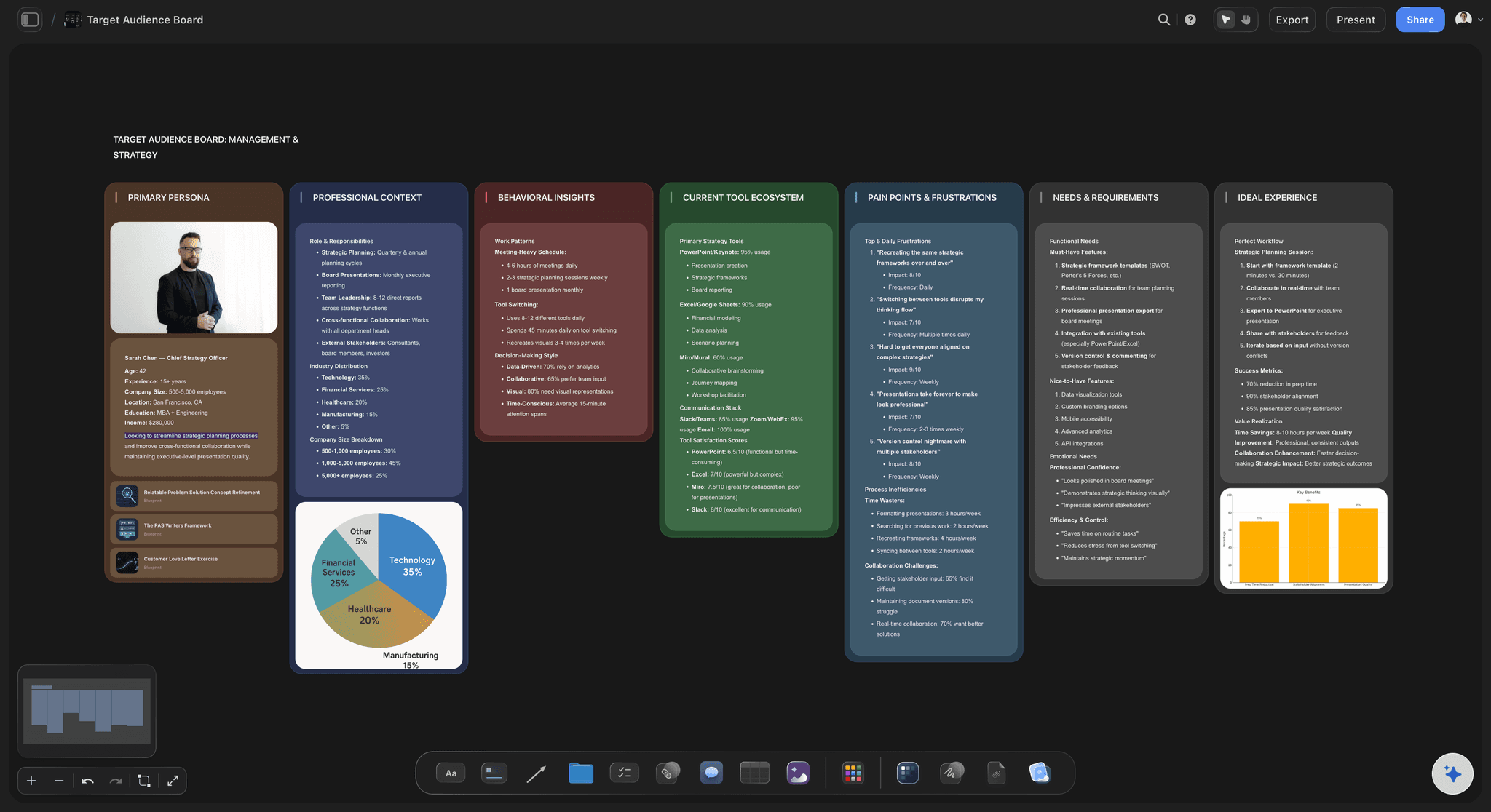
Your customers' words, pulled from your notes
Attach sales notes, reviews and support messages and ask for the phrases that come up most. The problem part is usually already written, word for word, by the people who have it.
See the brand positioning workshop →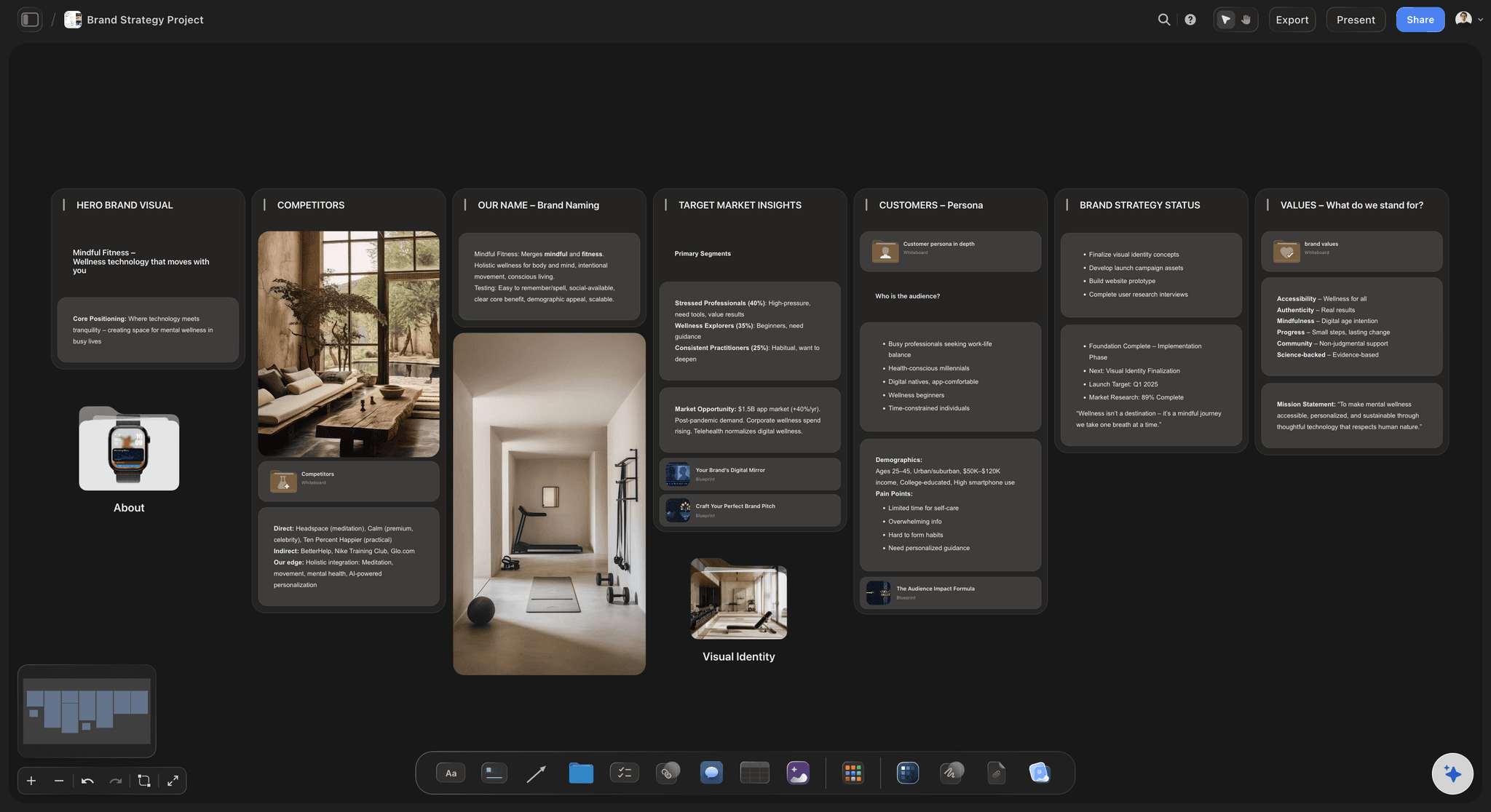
The story
Seven parts, laid out in order
The want, the problem, the guide, the plan, the call, the stakes and the success, each in its own column. Gaps are obvious when the parts sit side by side, especially a missing plan or a call to act nobody wrote.
See the brand story template →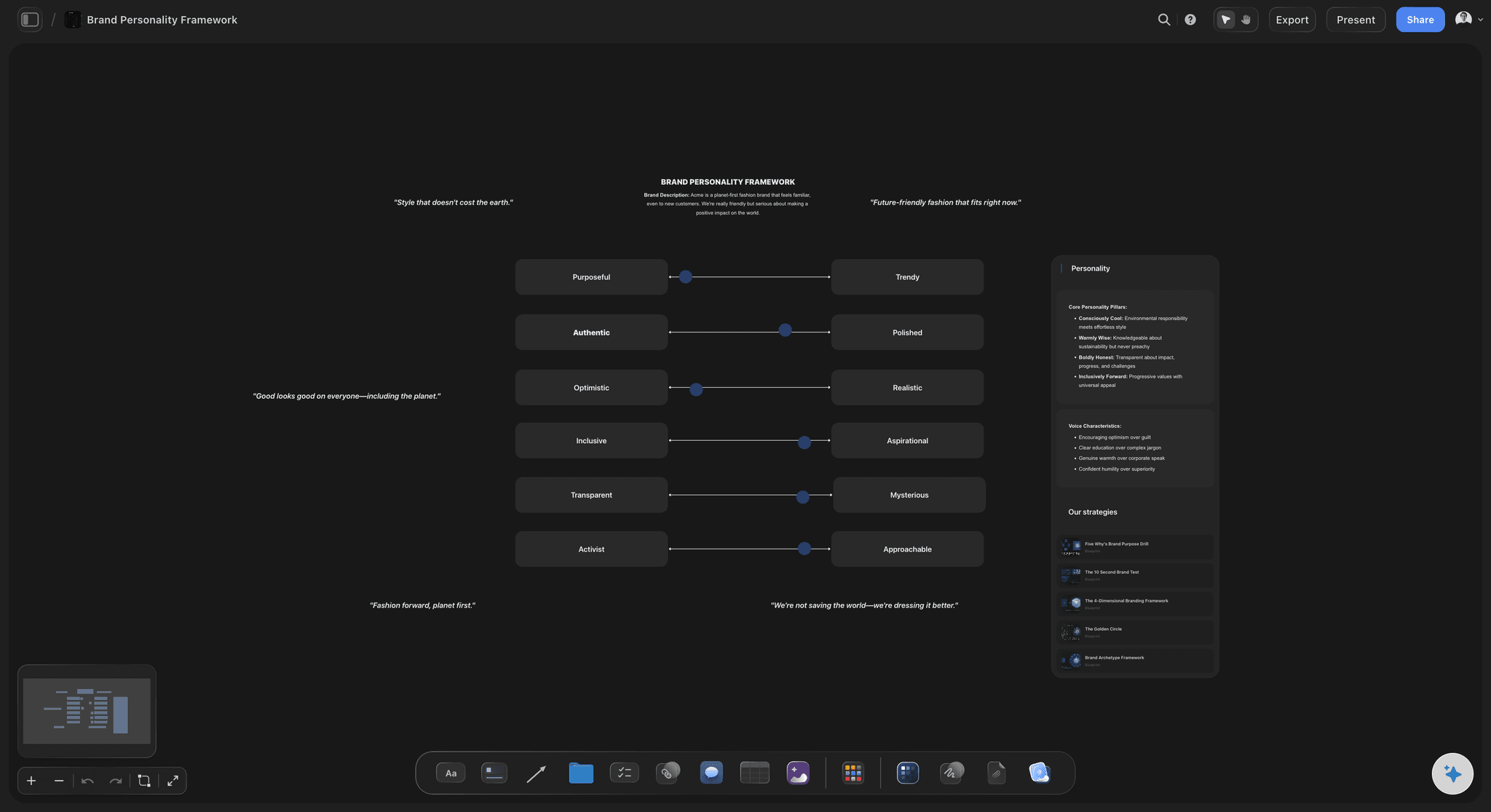
The short version
One sentence and three pillars with proof
The one-liner on top, three message pillars below it in a table, and the proof for each: a number, a review or a thing only you do. A pillar with no proof beside it stands out straight away.
See the AI brand voice generator →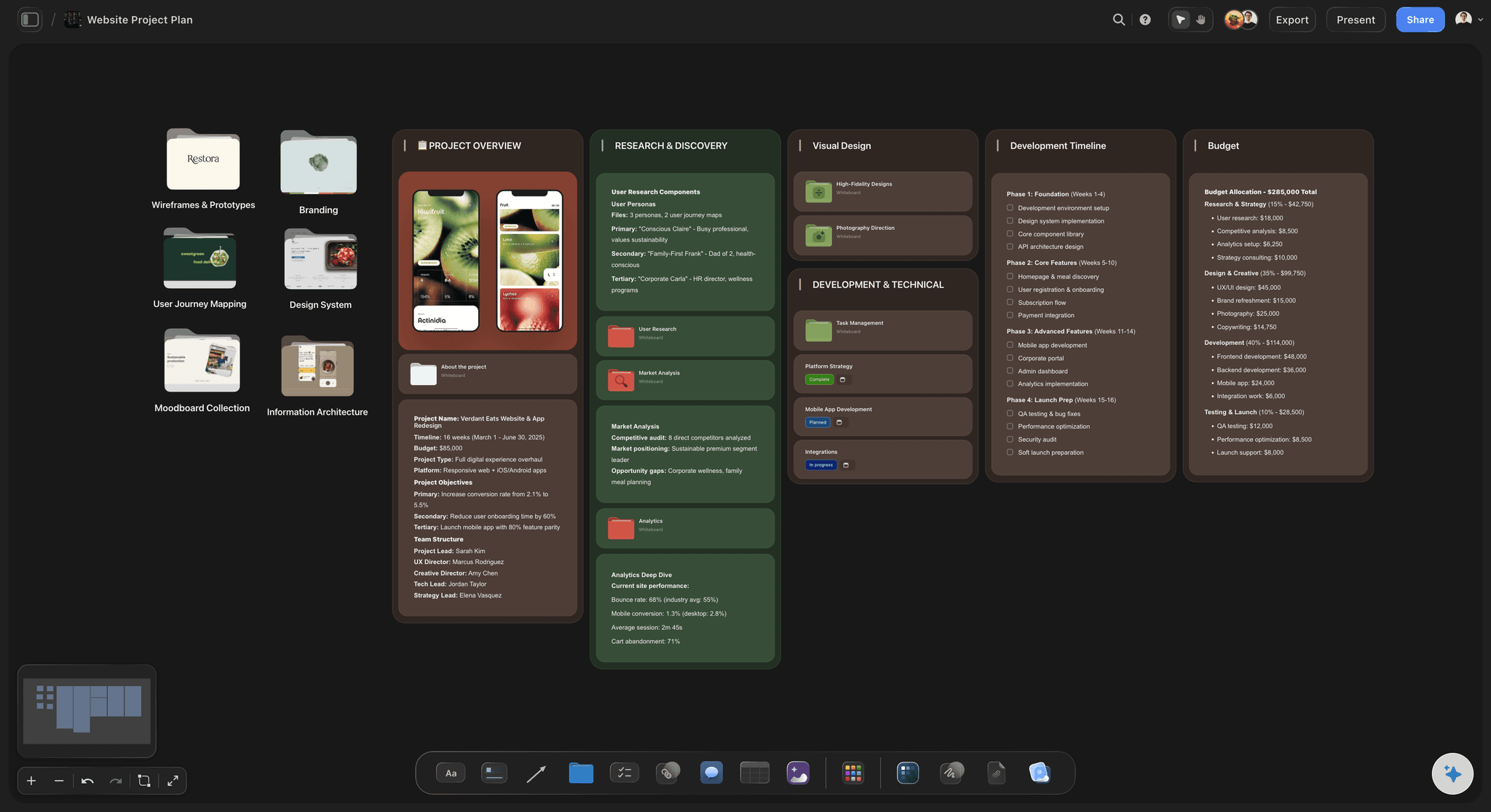
Where it lands
The homepage, section by section
Header, problem, plan, guide, stakes and call to action, laid out beside the parts they come from. Every section on the page can be traced back to a sentence the team agreed.
See the website planner →The words you agreed, one link away.
When a new hire, a freelancer or an agency writes something for you, they start from the board instead of guessing at your voice. Storyflow is paid-only during early access, with plans from $7.99 a month billed annually ($9.99 monthly). A free plan launches before the end of 2026, and anyone a paid member invites to a board joins free.
Unlimited boards, image uploads and files on every paid plan
Invite the copywriter or the agency to one board without buying them a seat
200+ Tactics on Plus, Pro and Max, with frameworks for brand and marketing work
Whole-board PDF export for the brand pack
View-only links anyone can open with no account
Built for people with taste
Why founders' messaging stays fuzzy.
Three habits that keep a homepage vague, and each one is easier to break when the whole story sits on one board the team can see.
The wrong hero
The homepage is about you
Open with their problem: The first thing a visitor reads is the problem they came with, in their words. Your story and your values move further down the page, where the visitors who care about them will still find them.
Be the guide, not the hero: Show you understand the problem and have solved it for people like them. One line of empathy and one piece of proof, such as a number of customers or a short review, beat a paragraph about your journey.
Three problems, not one: What is wrong on the outside, how it makes them feel, and why it simply should not be this way. The feeling is the part people buy on.
Their words, not yours: Phrases pulled from reviews and calls go straight into the problem part. Customers recognise their own words faster than any clever line.
The missing steps
Nobody knows what to do next
A plan of three steps: Book a call, get a plan, start. Three steps make buying feel safe. Seven steps make it feel like work, so cut the plan back to three, even if the real process has more.
One call to act, said often: The same button text in the header, the middle and the end of the page. A visitor should never have to look for how to start, and a softer second option, such as a free guide, catches the ones not ready yet.
Say what is at stake: One honest line about what doing nothing costs. Not fear, just the price of the problem they already have, said once and plainly.
Show the after: A short picture of life once it is solved, in concrete terms: a Friday number, an April like any other month, a weekend back.
The drift
Every page says something different
One sentence everyone repeats: The one-liner sits at the top of the board. Sales says it on calls, the founder says it at events, and the homepage opens with it. If someone cannot say it from memory after a week, shorten it.
Words to use and words to avoid: A short list of each, so a freelancer writing a launch email does not call your customers users when you call them clients. Ten words on each list is plenty.
A version per customer type: The same three pillars, worded for each kind of customer you sell to, in one table. Same message, their language, and no second framework to keep in step.
The next piece starts here: Build the next landing page, sales deck or campaign brief on the same board, so the agreed words are where the work begins.
Explore templates for your project
Every template opens as a real, editable board on the infinite canvas. Pick the closest fit and make it your own.
Brand Strategy
Define your positioning, values, and voice and connect them into a strategy the team can follow.
One app instead of five
Where Storyflow fits in brand messaging.
It holds the framework and the pages it feeds. It does not design the guidelines document or replace a copywriter's final pass.
Storyflow
Recommended
All seven parts on one surface, in order
Customer quotes beside each part
Homepage sections laid out beside the messages
Message pillars with proof in one table
Shared by link, no account to read
Moodboard and campaign built on the same board
Finished copy written by a professional
Designed brand guidelines document
A doc template
All seven parts on one surface, in order
Customer quotes beside each part
Homepage sections laid out beside the messages
Message pillars with proof in one table
Shared by link, no account to read
Moodboard and campaign built on the same board
Finished copy written by a professional
Designed brand guidelines document
A copywriter or agency
All seven parts on one surface, in order
Customer quotes beside each part
Homepage sections laid out beside the messages
Message pillars with proof in one table
Shared by link, no account to read
Moodboard and campaign built on the same board
Finished copy written by a professional
Designed brand guidelines document
What creators are saying
Join early creators getting structured workspaces and AI that remembers their projects
“Storyflow has sped up my workflow by at least 3x, which means more flow state and more projects I can actually ship. It truly changed the way me and my team create.”

Reilin Joey
Director & YouTuber
“One prompt gets me a structured board. But the tactics are my favorite. I run my YouTube scripts through them and my intros and retention got better. It's amazing.”

Justkay
YouTuber & Freelance Filmmaker
“I used to juggle five apps to plan a project. Now I describe what I am making and get boards, lists, and a schedule. All in one place.”

George
@fernwehchronicles
Brand messaging framework questions
What founders ask before they rewrite the homepage, the sales deck or the first email a new customer reads.
In Storyflow, it is one board holding the agreed words your company uses: the seven parts of the customer's story in order, a one-liner, three message pillars with proof, words to use and avoid, and the homepage sections they turn into. Its AI drafts each part from the customer notes you attach, and every page, pitch and post starts from it.
Storyflow was made for this kind of job: the seven parts laid out in order, customer quotes beside each one, the one-liner and pillars in a table, and the homepage sections planned next to the words they come from, all on one board. Its AI drafts from your customer notes. A designed guidelines document still comes out of Figma, and a copywriter still gives the final website copy its polish.
The customer and what they want; the problem in their way, outside, inside and why it is wrong; you as the guide who understands and has solved it; a plan of three steps; a clear call to act; what they lose by doing nothing; and what success looks like. On a Storyflow board each part gets its own column, in that order.
Positioning decides who you are for and what you are chosen instead of. Messaging turns that choice into words people read: the one-liner, the pillars and the homepage. Settle positioning first, usually in a workshop, then build the messaging framework on the same Storyflow board so the words trace back to the decision.
Three short sentences: the problem, your solution, the result. For example: Freelance designers lose a day a month to receipts and tax worry. We do your books every week. You know what you can spend by Friday. Ask Storyflow's AI for five versions from the seven parts on the board, then rewrite the clearest one by hand.
Three short claims that support the one-liner, each with proof beneath it: a number, a review, or something only you do. Every piece of marketing should lean on at least one. In Storyflow keep them in a table with a column for the proof and a column for each kind of customer, so each pillar has a version in their language.
It can draft it. Attach up to five documents, such as call notes and reviews, and Storyflow's AI pulls out the phrases customers repeat and drafts each of the seven parts and the one-liner from them. It proposes; you decide. A message nobody on the team argued about tends to be one nobody believes.
Lay out the page in story order: a header that says what you offer and how to start, the problem, the plan, you as the guide with proof, what is at stake, and the call to action again at the end. On Storyflow's board the page sections sit beside the parts they come from, so each one can be checked against the framework.
No. Storyflow does not run A/B tests, publish your website or track which headline converts. It holds the framework, the drafts and the plan for the pages. Test the one-liner with five real customers first, then run proper tests in your website builder or an A/B testing tool and bring the results back to the board.
A founder with good customer notes can draft it in an afternoon on a Storyflow board. Agreeing on it takes a week or two of reading it aloud, testing the one-liner on customers and cutting words. Rewriting the homepage from it is usually another few days. Do not rush the middle part: the week of arguing is where the vague words get cut.
The founder, whoever sells every day, and whoever talks to customers after they buy. Three or four people is enough, because a bigger group drifts back to adjectives everyone can accept. Share the Storyflow board with everyone else by a view-only link; they read it with no account and sign in to comment on the line they disagree with.
Read it again whenever you launch something new, enter a new market or notice sales describing the company differently from the homepage. A light review every six months is enough for most small companies. Keep each version on the Storyflow board so you can see what changed and why, and so a new hire can read how the words were chosen rather than just what they are.
No. Storyflow runs in the browser and there are no native mobile or desktop apps. Open the framework in any browser, and share it with your team, a copywriter or an agency by link. Anyone a paid member invites to the board joins free.
More from Storyflow
Brand positioning workshop
Brand story template
Storytelling frameworks
AI brand voice generator
Brand strategy tool
Brand personality template
Website planner
Brand launch planner
Rebrand planner
Customer persona generator
AI brand guidelines generator
Founder-led content plan
Personal brand plan
Target audience template
Brand positioning map
Make the customer the hero of your homepage.
Seven parts, one sentence, three pillars and the page they become. One board the whole team, and every freelancer you hire, writes from.