
Extremely clear strategy, zero busywork
The agency pitch process,
from yes or no to the decision call.
A three-week running order with a stop rule at the start, an internal tissue session in the middle and a leave-behind at the end, run from one Storyflow board by the people who will do the work.


Creatives working for these brands already got early access
- Red Bull
- Canon
- Artlist
- Porsche
See how easy it is to get started
Watch a real project come together, from a blank board to a finished plan, clicked through step by step.
Start from a ready-made template
Pick a board to see what you can build, then let AI fill it in. Every template is a real, editable starting point on the same infinite canvas.

Marketing Plan
Lay out your goals, channels, and initiatives for the quarter on one board.
What is the agency pitch process?
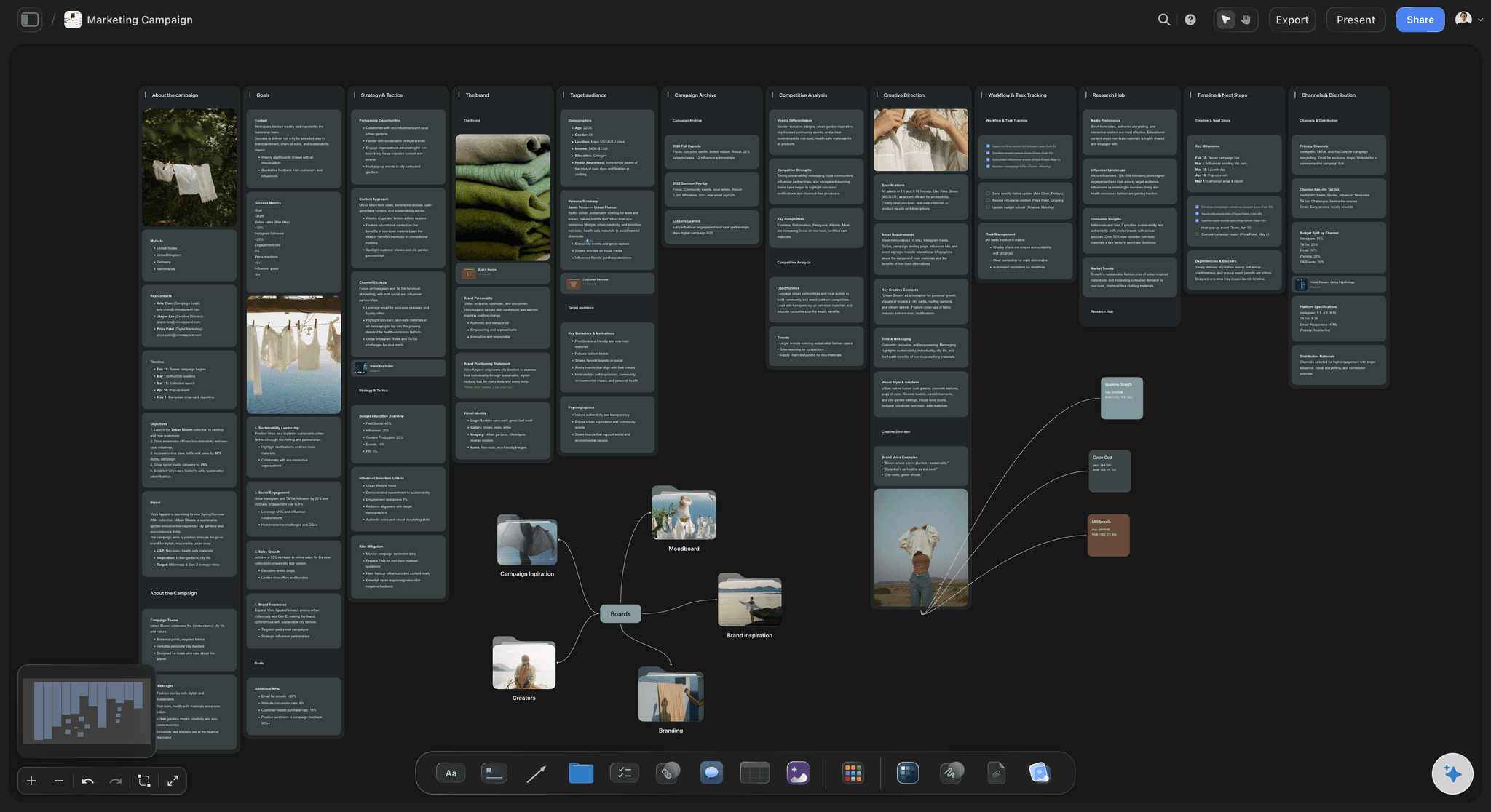
The agency pitch process is the sequence a creative agency runs from receiving a client's brief to the client's decision: choose whether to pitch, question the brief, find the insight, develop routes, test them, rehearse, present and follow up. Storyflow is an AI visual workspace that runs that pitch process on one infinite canvas: the quoted brief, the strategy wall, the concept routes with their moodboards, and the dated plan.
Start with the stop rule, because a pitch you should have declined costs more than any you lose. Before committing anyone, get six answers onto a Storyflow board: who decides, how many agencies are pitching, the budget range, the decision date, whether there is a pitch fee, and who owns unused ideas. A working rule uses three warnings: more than four agencies pitching with no fee, no conversation with the person who decides, and no stated budget range. One warning is a question to raise. Two is a no.
Once you are in, the concept lands in a fixed order. Clients buy an idea when they already agree with the reasoning, so a campaign concept is presented as their problem in their words, then the insight, then the strategy, then the idea, then how it looks in the world, then how it runs and what it costs. In Storyflow, each of those beats gets its own wall on the pitch board, and presentation mode steps through them fullscreen one wall at a time, so the running order you rehearse is the board itself.
Example, with a fictional agency: Lantern, 12 people, has 19 working days to pitch Oakmere Cycles, a regional bike brand with a $240,000 brand campaign and three agencies on the list. Day 1, go or no-go. Days 2 to 7, questions to the client and strategy. Day 8, a tissue session cuts five territories to three. Day 14, three routes become two, with one recommended. Day 17, full rehearsal. Day 19, the presentation. Day 20, the leave-behind. All of it stays on one Storyflow board, which becomes the project board if Lantern wins.
The tools for an agency pitch process, by job
Storyflow is our product and takes the first row for running the process; the others finish what a pitch still needs from specialist tools.
| The job | The tool | Why it goes here |
|---|---|---|
| Run the pitch from the client's brief to the presentation | Storyflow | Holds the go or no-go answers, strategy, concept routes, moodboards and storyboards on one board, and presents them fullscreen one wall at a time. |
| Finish a deck with speaker notes or a PowerPoint file | Pitch, Google Slides or Keynote | Speaker view and speaker notes for the presenter, plus PowerPoint export when the client's procurement team asks for a file. |
| Design key visuals and executions at full fidelity | Figma or Adobe Photoshop | Pixel-level control for the hero visuals and layouts the room will judge the idea on. |
| Make quick mock-ups of how the idea lives on channels | Canva or Adobe Express | Fast template-led comps for social posts and posters when a route needs to be shown rather than described. |
| Model the fee and the three investment options | Google Sheets or Microsoft Excel | Live formulas for rates, margin and options, kept off any board the client can see. |
| Send the priced proposal and collect a signature | PandaDoc or DocuSign | PandaDoc builds proposals with e-signatures included; DocuSign sends, signs and tracks the final agreement. |
| Present remotely and record the rehearsal | Zoom or Google Meet | Screen share for a remote pitch, and a recording of the rehearsal to review timing. |
Ultra fast from brief to board
One board carries the pitch from day one to the decision.
Five moves, in the order the work actually happens.
01
Decide on a Storyflow board
Write the six go or no-go answers on a new Storyflow board. Any gap becomes a to-do with an owner and a due date, and nobody starts creative work until the gaps are closed.
02
Quote the brief back
Paste the client's brief or RFP into a Storyflow document and list beside it what it leaves unanswered. On Plus and above, What's missing here? gives you a first pass. Send those questions to the client in the first week.
03
Build each route as a wall
In Storyflow, give each of your two or three routes its own wall: the insight, the idea in one line, a moodboard, a storyboard for the film and three executions. Move routes cut at the tissue session to a separate Storyflow board.
04
Rehearse and present from the board
Run the full 60 minutes in Storyflow presentation mode with the people who will present. It goes fullscreen and steps one wall, note, image or document at a time, so timing problems show up two days before the room does.
05
Send the leave-behind within 24 hours
Export the board as a PDF from Storyflow or send a view-only link the client opens with no account, and name the next step and the date you will follow up.
The thinking, the routes and the room, on one canvas.
What the pitch team stops rebuilding when the deck is not the master copy.
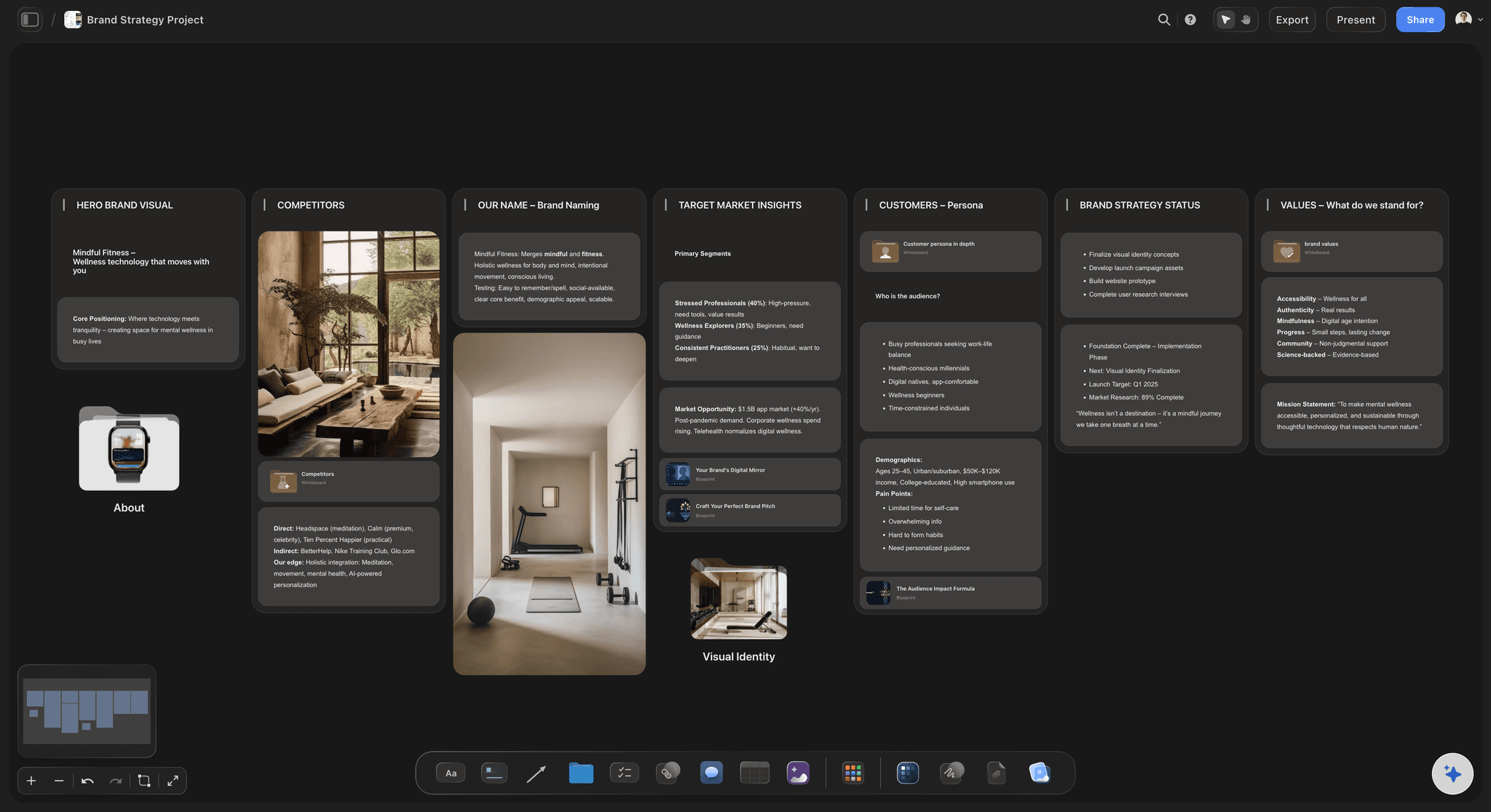
Reasoning the whole team can read
A strategy wall before anyone opens a layout
Brief, research, audience and the one-line insight go on the wall first. A creative team that disagrees with the strategy says so on day six rather than the night before.
See the creative rationale page →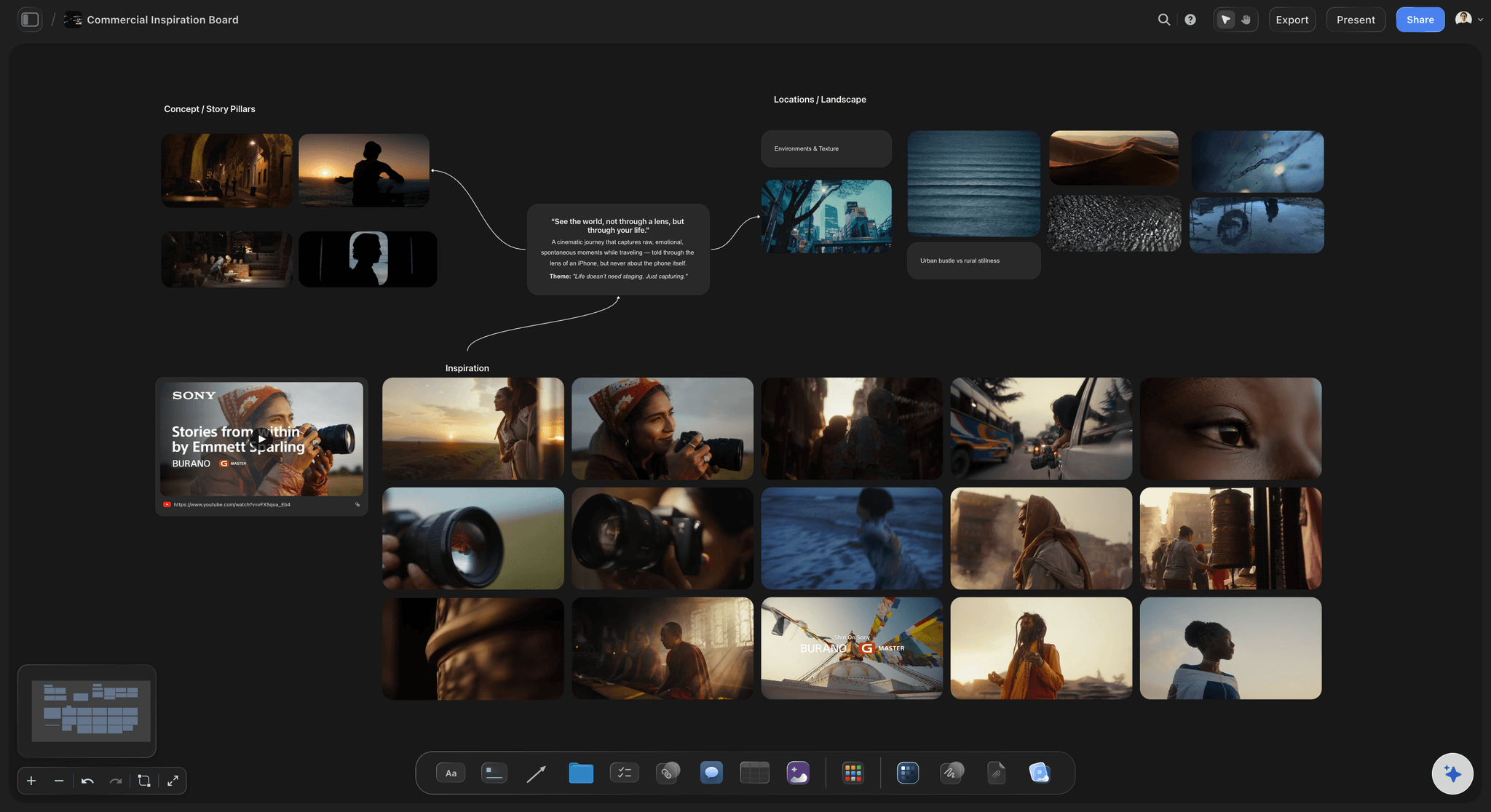
Two or three routes, side by side
Routes you can compare at a glance
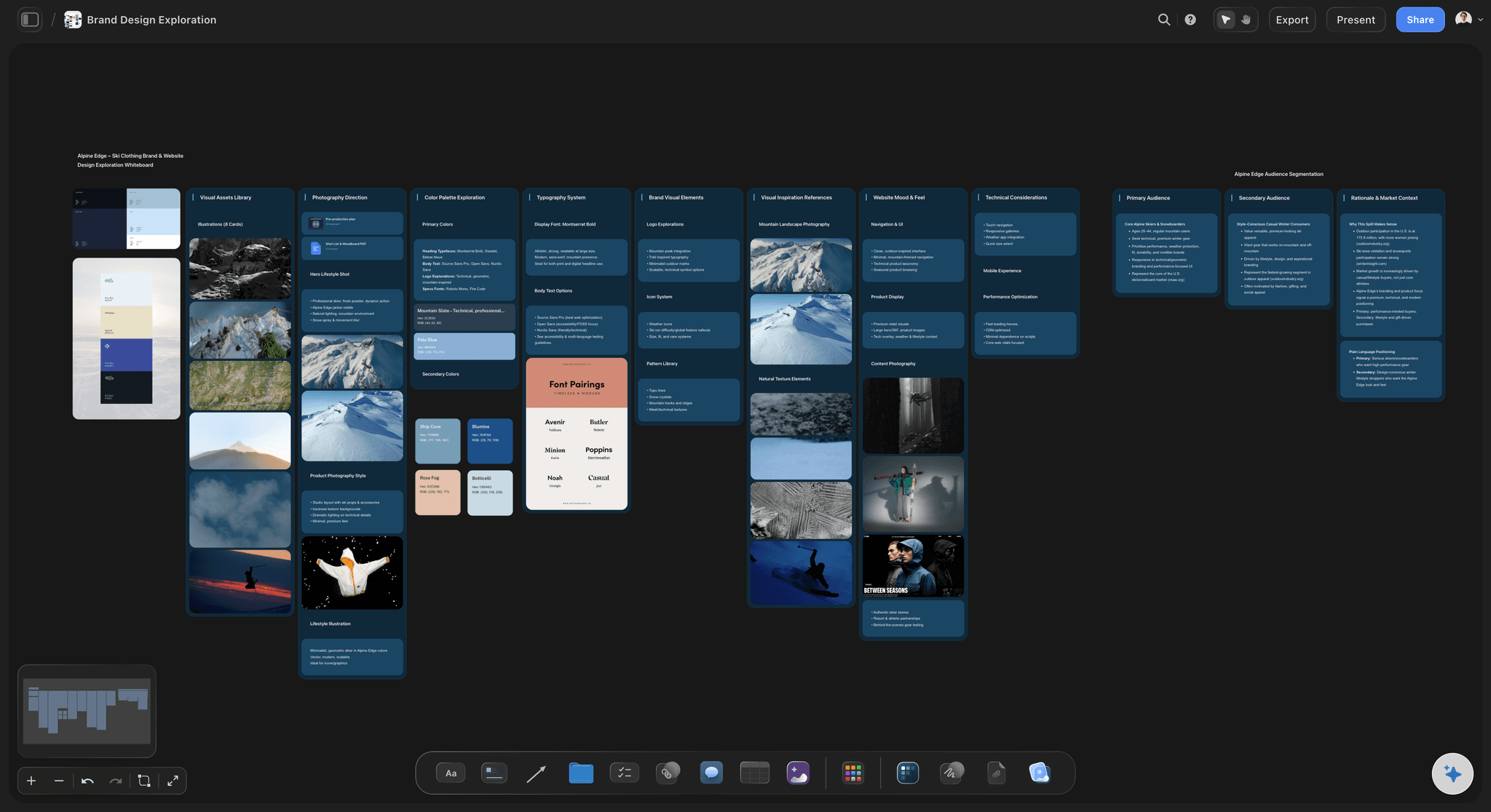
Each route sits beside the others with its moodboard and executions, so the tissue session compares ideas against the same brief rather than whichever deck was opened last.
See the campaign concept board →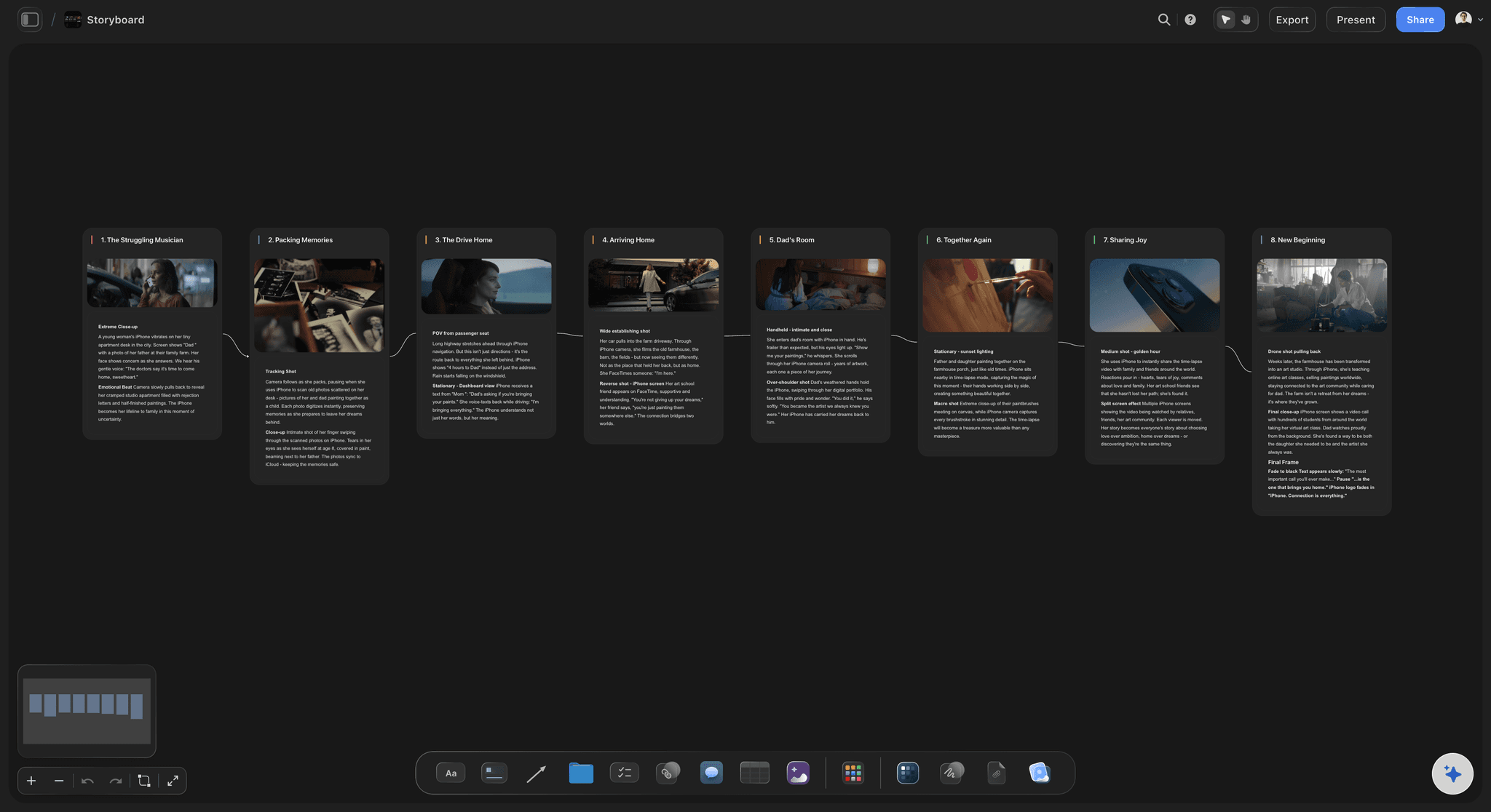
Show how the idea plays out
A storyboard the room can follow
For a film-led route, frames sit in sequence on the same canvas as the strategy. The AI can storyboard your script; you replace frames with your own art direction where it counts.
See the storyboarding page →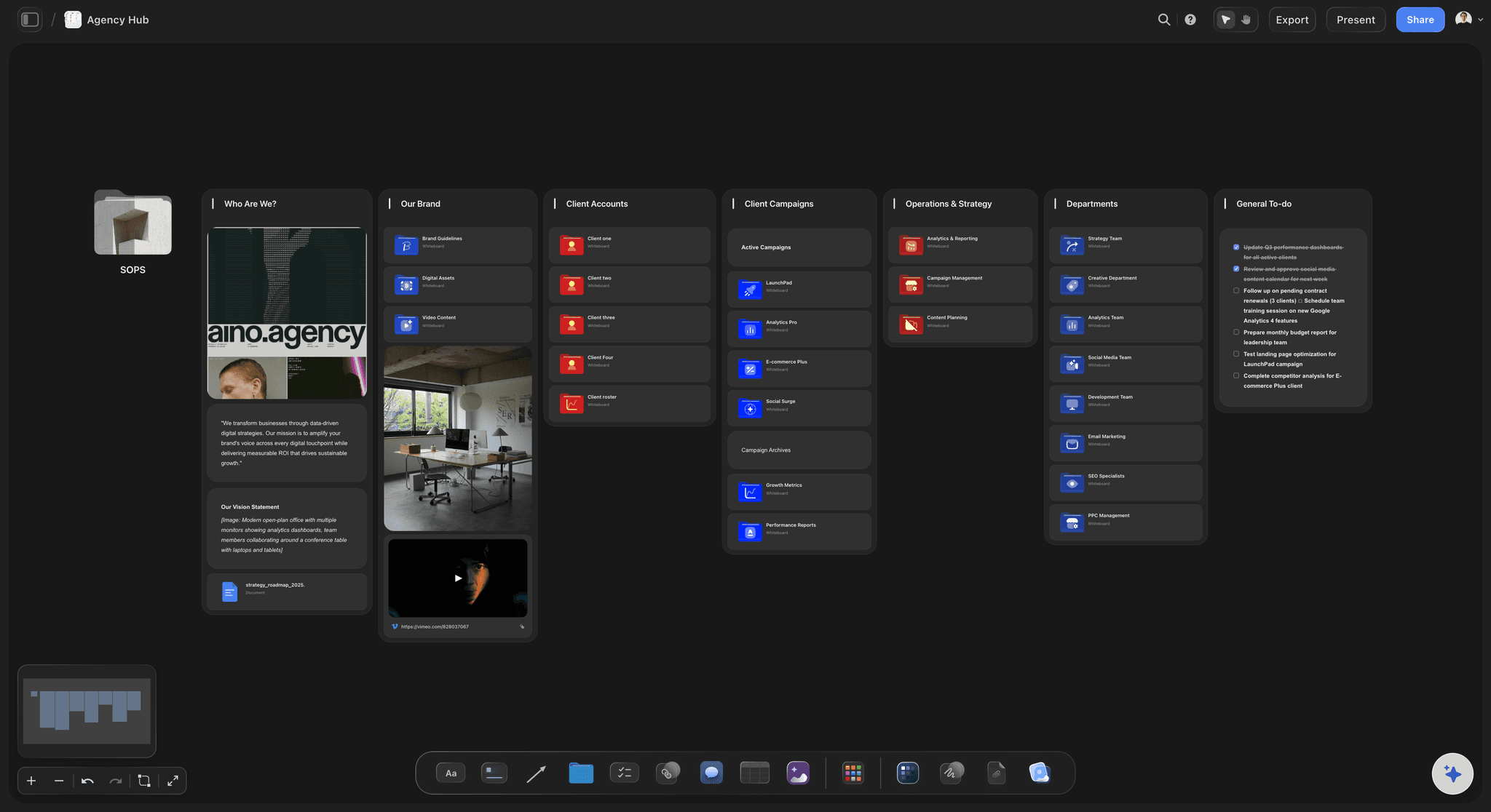
Win, and the plan already exists
The pitch board becomes the project
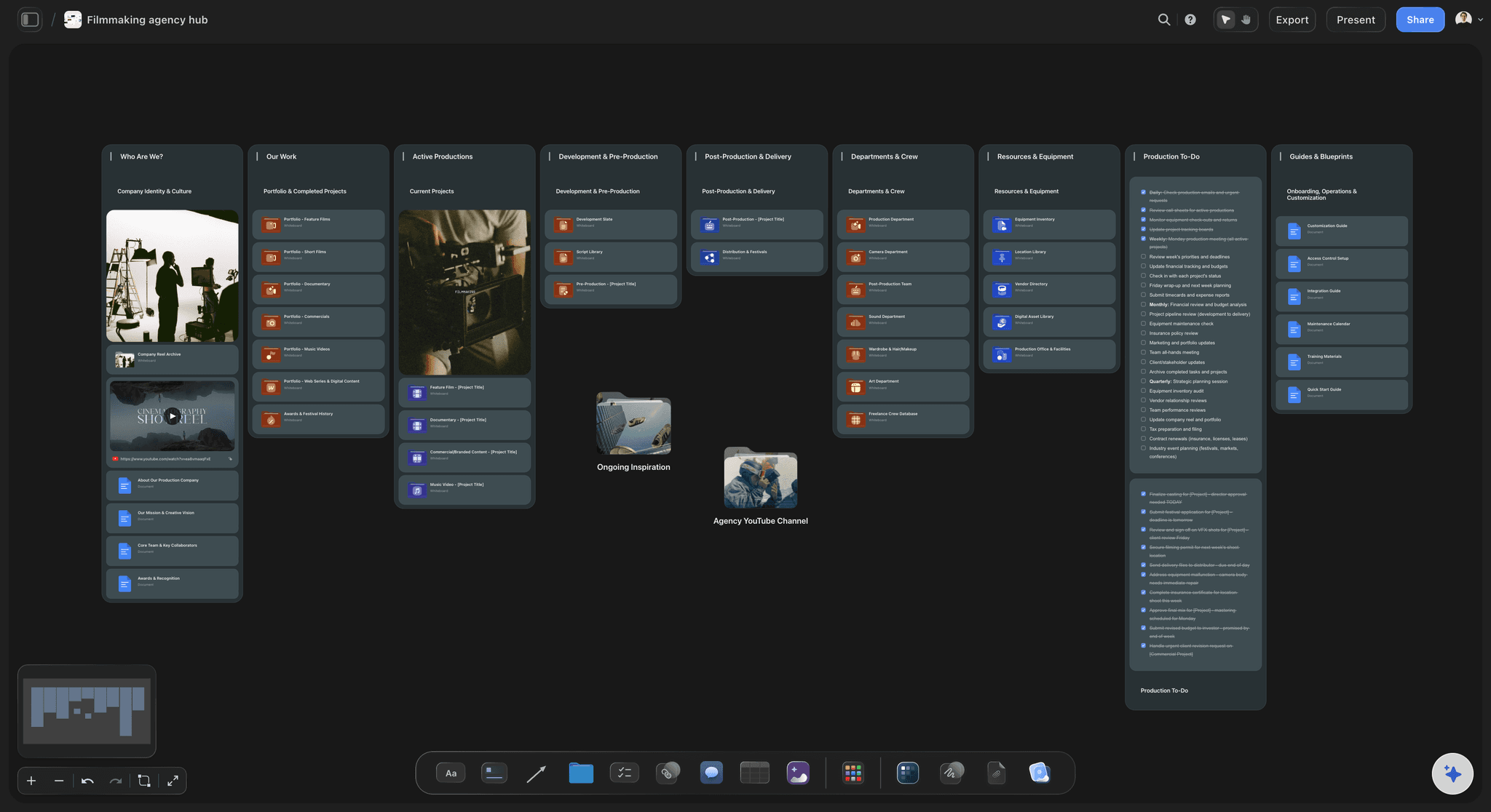
Dates, deliverables and references carry straight over after a win. The team starts the first week with everything the client bought, instead of unpacking a deck.
See agency campaign planning →Keep the whole pitch, won or lost, on one board.
Storyflow is paid-only during early access: Plus is $7.99 a month billed annually ($9.99 monthly) and includes the AI inside Storyflow. Freelancers a paid member invites to the pitch board join free, though an invited free account has no in-app AI.
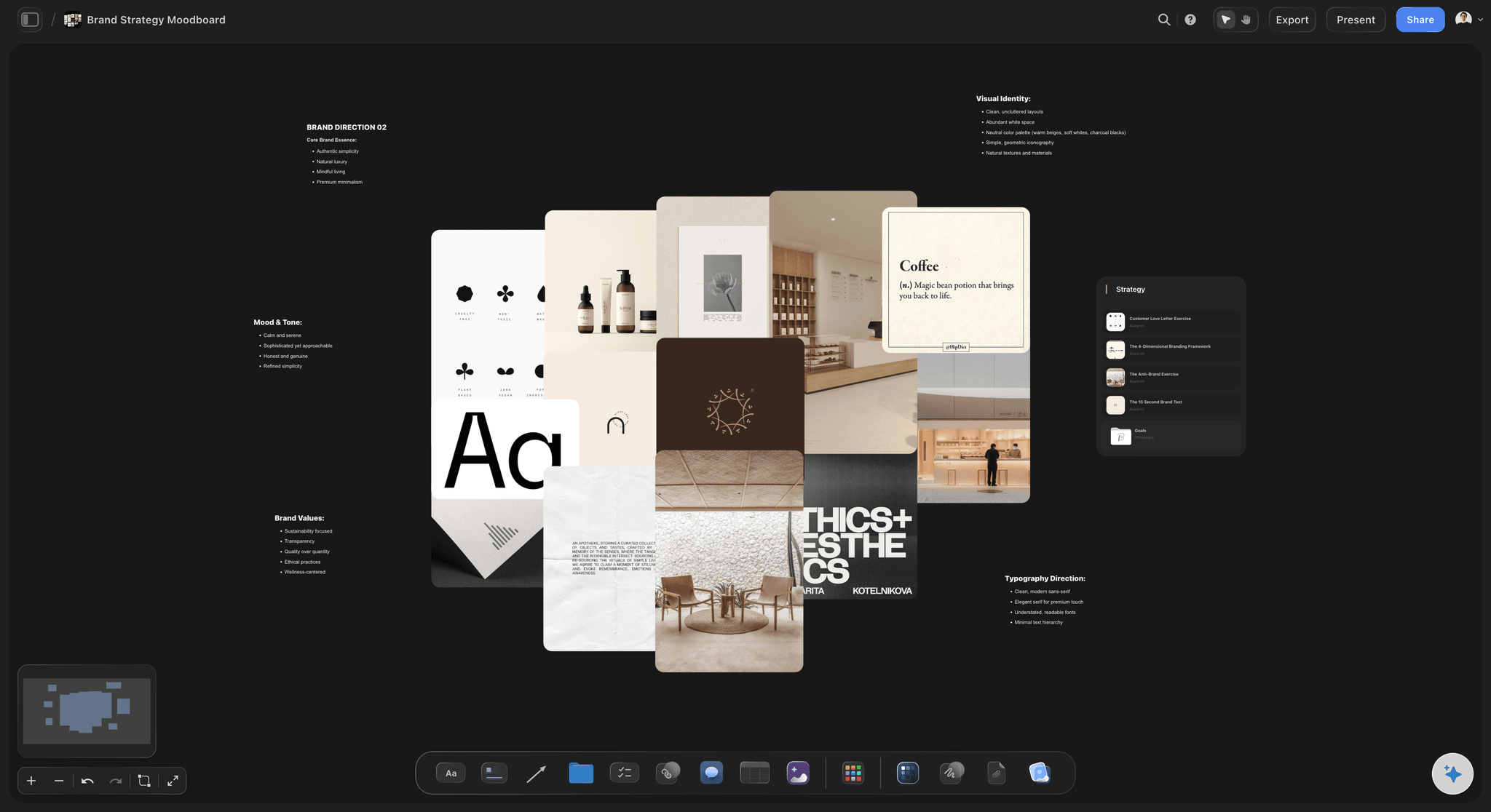
Strategy, routes and moodboards on one infinite canvas
Presentation mode that steps through the board fullscreen
AI that builds a pitch deck from the board, from Plus
View-only links clients open with no account
Built for people with taste
What happens in each week of a creative agency pitch.
The dates come from the fictional Lantern pitch for Oakmere Cycles. Scale them to your own deadline; keep the order.
Lantern's 19 working days
The three-week agency pitch timeline
Day 1: go or no-go: The agency owner and the new business lead check the six answers on the Storyflow board. Lantern proceeds: three agencies, a decision maker who will take a call, and a stated range.
Days 2 to 7: question the brief, write the strategy: Send the client five or six specific questions, not a request for a meeting. The strategist writes the insight in one sentence and pins it at the top of the board.
Days 8 to 14: tissue session, then routes: Show rough territories to the team on day 8 and cut five to three. By day 14, cut to two routes, and decide which one you recommend and why.
Days 15 to 19: make, rehearse, present: Freeze the idea on day 15. Rehearse in full on day 17, leaving two days to fix what the rehearsal exposes. Present on day 19.
Day 20 and after: leave-behind, follow-up: The leave-behind goes out within 24 hours. Agree the follow-up date in the room, and win or lose, ask for feedback within a week of the decision.
A 60-minute campaign concept pitch
The running order in the room
Minutes 0 to 5: their problem in their words: Quote the brief back, then give the one-sentence reframe. If the client corrects your wording here, you have just saved the next 55 minutes.
Minutes 5 to 15: insight and strategy: Show the evidence and get a visible nod before any creative work appears. Once the client has agreed the reasoning, an objection has to argue with the brief as well as the layout.
Minutes 15 to 35: the idea and how it lives: Read the idea aloud in one line, then show the film storyboard, the posters and the social posts. The recommended route goes first, and the alternative is framed against it.
Minutes 35 to 45: how it runs and what it costs: Timeline, team and investment options. Introduce the people who will actually do the work, and have them explain their own part.
Minutes 45 to 60: questions: Keep a quarter of the meeting for this. If the client starts editing the idea with you, treat it as a good sign and capture their words on the board.
One owner for each part
Who does what in the pitch team
Pitch lead: Owns the board, the calendar and the go or no-go. Usually the agency owner or head of new business. One name, and they can say no to more work.
Strategist: Writes the insight and defends it. In a small studio this may be the owner, but it has to be someone's explicit job and not a slide someone adds on day 15.
Creative lead: Owns the routes and decides what gets cut. Presents the idea personally, because a client buying an idea is also buying the person who has it.
Account or production lead: Owns timeline, cost and how the work would run. Their section is where a client judges whether the ambitious idea can actually be delivered.
Where Storyflow stops
What Storyflow does not do in a pitch
No PowerPoint export or speaker notes: Storyflow decks present fullscreen and export as PDF, with no presenter view. If your presenter needs notes on a second screen, or procurement needs a PPTX, finish in Pitch, Google Slides or Keynote.
No proposals, contracts or e-signature: Storyflow holds the investment options as a table. The priced proposal and the signature belong in PandaDoc or DocuSign, and the fee model in a spreadsheet.
No visit analytics on the link: A view-only link does not tell you who opened it or for how long. Pitch's advanced links, on its Team and Business plans, track visits and time spent, if that signal matters to you.
It does not write the idea: The Storyflow AI drafts, organizes and reviews. The insight and the idea are yours, and a route the team cannot argue for in the room will not survive the room.
Explore templates for your project
Every template opens as a real, editable board on the infinite canvas. Pick the closest fit and make it your own.
Marketing Plan
Lay out your goals, channels, and initiatives for the quarter on one board.
One app instead of five
Storyflow vs Google Slides, Pitch and Keynote for an agency pitch.
Slides tools are better at the final deck: speaker notes, PowerPoint files and, on Pitch's paid plans, link analytics. Storyflow covers the process that produces the deck, and its AI that builds a deck from the board starts on Plus.
Storyflow
Recommended
Strategy, routes and plan on one working canvas
Deck built from the planning board behind it
View-only link with no account
Speaker notes and presenter view
PowerPoint export
Link visit analytics
Google Slides
Strategy, routes and plan on one working canvas
Deck built from the planning board behind it
View-only link with no account
Speaker notes and presenter view
PowerPoint export
Link visit analytics
Pitch
Strategy, routes and plan on one working canvas
Deck built from the planning board behind it
View-only link with no account
Speaker notes and presenter view
PowerPoint export
Link visit analytics
Keynote
Strategy, routes and plan on one working canvas
Deck built from the planning board behind it
View-only link with no account
Speaker notes and presenter view
PowerPoint export
Link visit analytics
What creators are saying
Join early creators getting structured workspaces and AI that remembers their projects
“Storyflow has sped up my workflow by at least 3x, which means more flow state and more projects I can actually ship. It truly changed the way me and my team create.”

Reilin Joey
Director & YouTuber
“One prompt gets me a structured board. But the tactics are my favorite. I run my YouTube scripts through them and my intros and retention got better. It's amazing.”

Justkay
YouTuber & Freelance Filmmaker
“I used to juggle five apps to plan a project. Now I describe what I am making and get boards, lists, and a schedule. All in one place.”

George
@fernwehchronicles
The agency pitch process, answered.
When to say no, who presents, and what to send afterwards.
Creative agencies pitch a campaign concept in a fixed order: the client's problem in their words, the insight, the strategy, the idea, how it looks in the world, then how it runs and what it costs. In Storyflow each beat is a wall on one board, and presentation mode steps through them fullscreen. Getting agreement on the reasoning first means the idea is judged against the brief, not on taste.
Storyflow is built for exactly this job: the go or no-go answers, the quoted brief, the strategy, the routes, the moodboards and the plan sit on one board, and the team presents from that board. The reason for naming it first is that the process stays in one place from day one to the decision. Pitch still does the polished deck better, with speaker notes and link analytics.
The agency pitch process has seven steps: decide whether to pitch, question the brief, write the strategy, run a tissue session to cut territories, develop two or three routes, rehearse in full, then present and send a leave-behind within 24 hours. On a Storyflow board, each step has an owner and a date. Keep the order even on a one-week deadline; shrink each step instead of skipping one.
As a rule of thumb, plan three to four working weeks for a campaign pitch; a compressed version can run in five days if the team does nothing else. The steps that get squeezed are the tissue session and the rehearsal, which are the two that catch the problems. On a Storyflow board, count back from the presentation date and freeze the idea two days before rehearsal.
An agency should decline when two of three things are true: more than four agencies are pitching with no fee, you cannot speak to the person who decides, or nobody will state a budget range. That is a working rule, not an industry standard. Write the six go or no-go answers on a Storyflow board first, so the decision is made on facts rather than on the excitement of being asked.
The people who will do the work should present, usually a pitch lead, a strategist, a creative lead and an account or production lead. Clients are judging the team as well as the idea, and a senior presenter who disappears after the win damages the first month. Storyflow lets each presenter rehearse their own wall in presentation mode, so every handover is practised before the meeting.
Cut against the brief in two passes: five territories to three at the tissue session, then three routes to two about a week later, with one recommended. Drop any route the team cannot argue from the insight, however good it looks. In Storyflow, keep cut routes on a separate board, so you can answer a follow-up question without putting them in the running order.
An agency should rehearse the whole meeting aloud at full length, two days before it happens, with someone playing the client and asking the hard question about budget. Time every section. Storyflow presentation mode gives you the same fullscreen, wall-by-wall view the client will see, so you catch slow handovers and missing reasoning while there is still time to change them.
An agency should send a leave-behind within 24 hours, covering the problem, the insight, the recommended route, the investment options and the next step with a date. Keep it short enough to forward. From Storyflow, send a PDF of the board or a view-only link. Include the PDF when the decision goes to people who were not in the room, because a file is easier to circulate.
The client opens a Storyflow view-only link in a browser with no account and sees exactly the board you chose to share. To leave a comment or draw on it, they sign in, which keeps every note attached to a real name. Share a separate presentation board, not your working one, so internal notes and cut routes stay private.
Ownership depends on what you agreed, so agree in writing before you start that ideas the client does not buy remain yours. A short email is better than nothing, and a lawyer can confirm the wording for larger accounts. Note the agreed position in your go or no-go answers on the Storyflow board, so it is checked before work starts rather than after you lose.
Yes, for structure and speed, not for the idea. On Plus and above, the Storyflow AI builds a moodboard, storyboards a script, runs What's missing here? and produces a pitch deck from the board. A pitch built from a board took 3 minutes in one recorded run, rounded up, against an estimated 4.5 hours by hand. Choosing the insight and the route stays with your team.
An agency should ask for feedback within a week, then spend 30 minutes writing down what the client responded to, what the winning agency did differently and whether the go or no-go check should have stopped it. Keep that note on the Storyflow board and reuse the research where you can. After a few losses, those notes show which pitches you should not have taken.
Storyflow is paid-only during early access. Plus adds the in-app AI at $7.99 a month billed annually ($9.99 monthly), Pro is $14 ($19 monthly), and Max is $39 ($49 monthly) with a Team Workspace, roles and permissions. Anyone a paid member invites to a board joins free, so freelancers can join a pitch, though an invited free account has no in-app AI.
Storyflow has no PowerPoint export, no presenter view or speaker notes, and no proposals, contracts or e-signature. Its links show no visit analytics. Use Pitch, Google Slides or Keynote when a presenter needs notes or the client needs a PPTX, PandaDoc or DocuSign for the priced proposal and signature, and a spreadsheet for the fee model.
More from Storyflow
Creative agency pitch deck structure
Campaign concept presentation for agencies
How agencies present campaign concepts
Campaign concept presentation slide order
Storyflow for agencies
Agency credentials deck template
Campaign concept board
Client presentation tool
Creative rationale
Storyflow for creative directors
Marketing brief template
Creative agency project management
Run the next pitch from one board.
Write the six go or no-go answers on a Storyflow board today, and if the answer is yes, the rest of the pitch already has a place to live.