
Plan videos ultra fast, post on time
One pillar piece.
A whole system drawn around it.
Put the video, podcast, or essay at the center of an infinite canvas, fan out the clips, threads, carousels, and quotes it should become, and see which pillars are under-mined and which platform is starving.


Creatives working for these brands already got early access
- Red Bull
- Canon
- Artlist
- Porsche
See how easy it is to get started
Watch a real project come together, from a blank board to a finished plan, clicked through step by step.
Start from a ready-made template
Pick a board to see what you can build, then let AI fill it in. Every template is a real, editable starting point on the same infinite canvas.

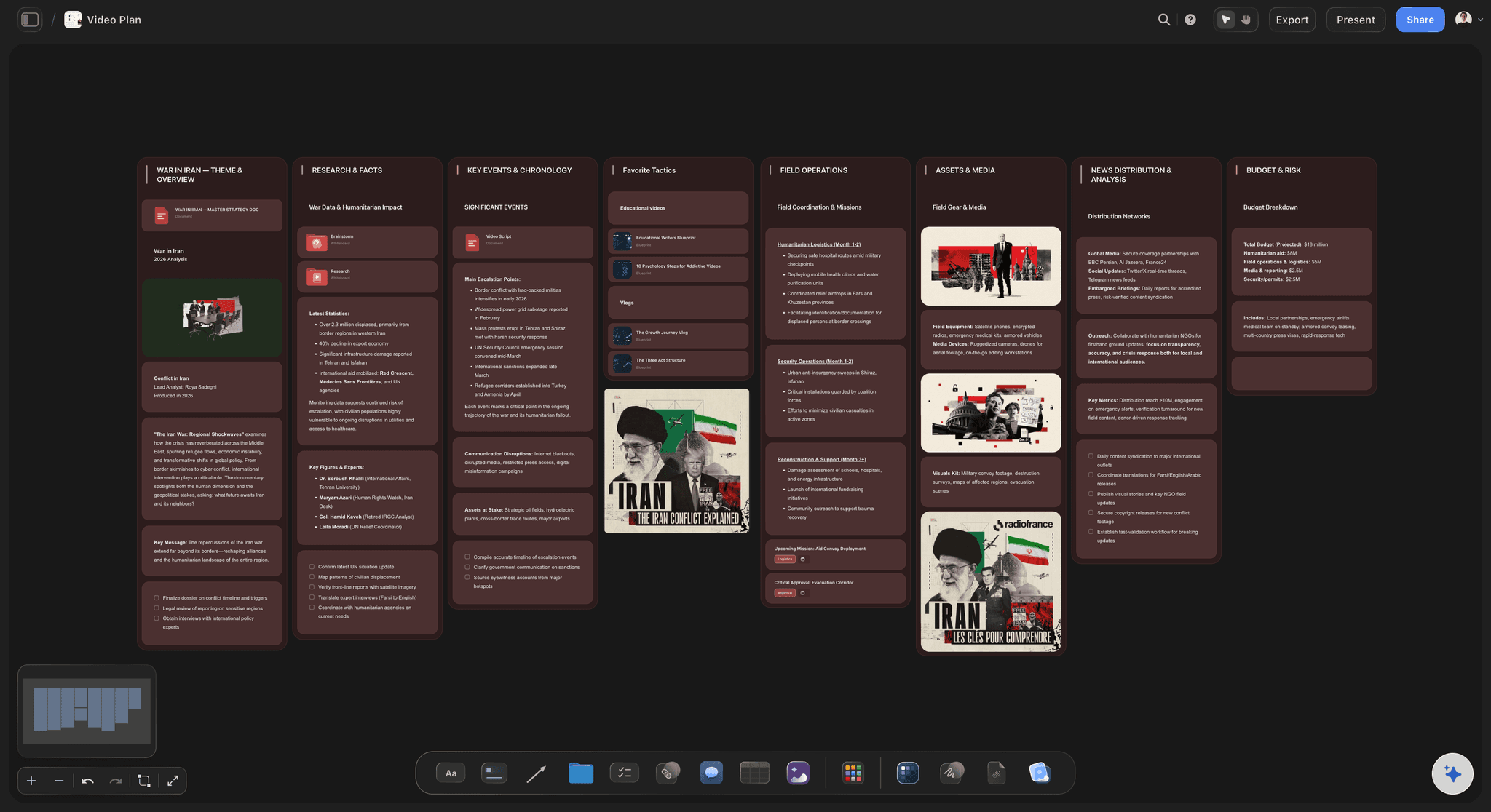
YouTube Plan
Plan a video from hook to outline to shot list, with references and thumbnail ideas sitting right beside it.
What is a content repurposing planner?
A content repurposing planner is a tool for deciding, in advance, what every pillar piece will become. Storyflow is an AI visual workspace that maps the repurposing plan on one infinite canvas: the pillar piece at the center, its clips, threads, carousels and quotes by platform, and each one's status. One long video, podcast episode, or essay should fan out into short clips, a thread, a carousel, a newsletter section, and a handful of quote posts. The planner holds that fan-out: which derivatives exist, which platform each one is for, which moment of the source it is cut from, and how far along each one is. The point is not to make more content. The point is to stop the derivatives being an afterthought, because afterthought repurposing produces generic scraps instead of the pillar's actual best moments.
Repurposing is a mapping problem disguised as a volume problem. Most creators do not fail at it because they lack material; they fail because the derivatives get decided one at a time, on the day they are due, from whatever moment of the pillar comes to mind first. The questions that matter are structural: which three moments of this episode are genuinely clippable, which pillar has produced two derivatives when it could carry eight, which platform lane has had nothing scheduled for two weeks. A list or a queue cannot show you any of that, because it only ever shows you the next item.
Storyflow is an AI-native infinite canvas built for exactly this. Describe your pillar cadence in a prompt, weekly video plus a podcast, say, and the AI lays out a repurposing board with the pillar at the center and derivative cards fanned out by platform. Then you make the map yours: grab frames from the source video on YouTube or Vimeo to mark the exact clip moments, drag derivative cards into platform lanes, connect each one back to the moment it mines, and mark status on every card as it moves from idea to drafted to published.
Planning repurposing well means working across five connected layers: the pillars themselves (the videos, episodes, and essays that everything else is cut from), the strongest moments inside each pillar (the claims, stories, and demonstrations worth extracting), the derivative formats (clip, thread, carousel, quote graphic, newsletter section), the platform lanes each derivative feeds (YouTube Shorts, TikTok, Instagram, X, LinkedIn, email), and the status of every piece on its way out the door. Storyflow keeps all five visible at once, which is what makes the under-mined pillar and the starving lane findable.
Ultra fast from brief to board
From one pillar to a mapped fan-out.
No database to configure, no pipeline to set up. Describe how you publish and start drawing the map.
01
Open a canvas
Sign up in seconds. No download. Your infinite repurposing canvas opens in the browser.
02
Describe your cadence
Type what you publish and how often, a weekly YouTube video and a podcast, say, and the AI lays out a repurposing board with pillar slots and derivative cards fanned out by platform. You start from a system rather than a blank page.
03
Mine the pillar
Grab frames from the source video to mark the moments worth clipping, connect each derivative card to the moment it is cut from, and drag cards into platform lanes. Mark status on every derivative as it moves.
04
Hand it to the makers
Share a view-only link with your editor or VA so they cut and schedule from the map, or export it as an image or PDF. The deciding happens here; the cutting and posting happen in your editing and scheduling tools.
The fan-out, drawn instead of remembered.
Pillars, moments, derivatives, platform lanes, and status on one infinite canvas.
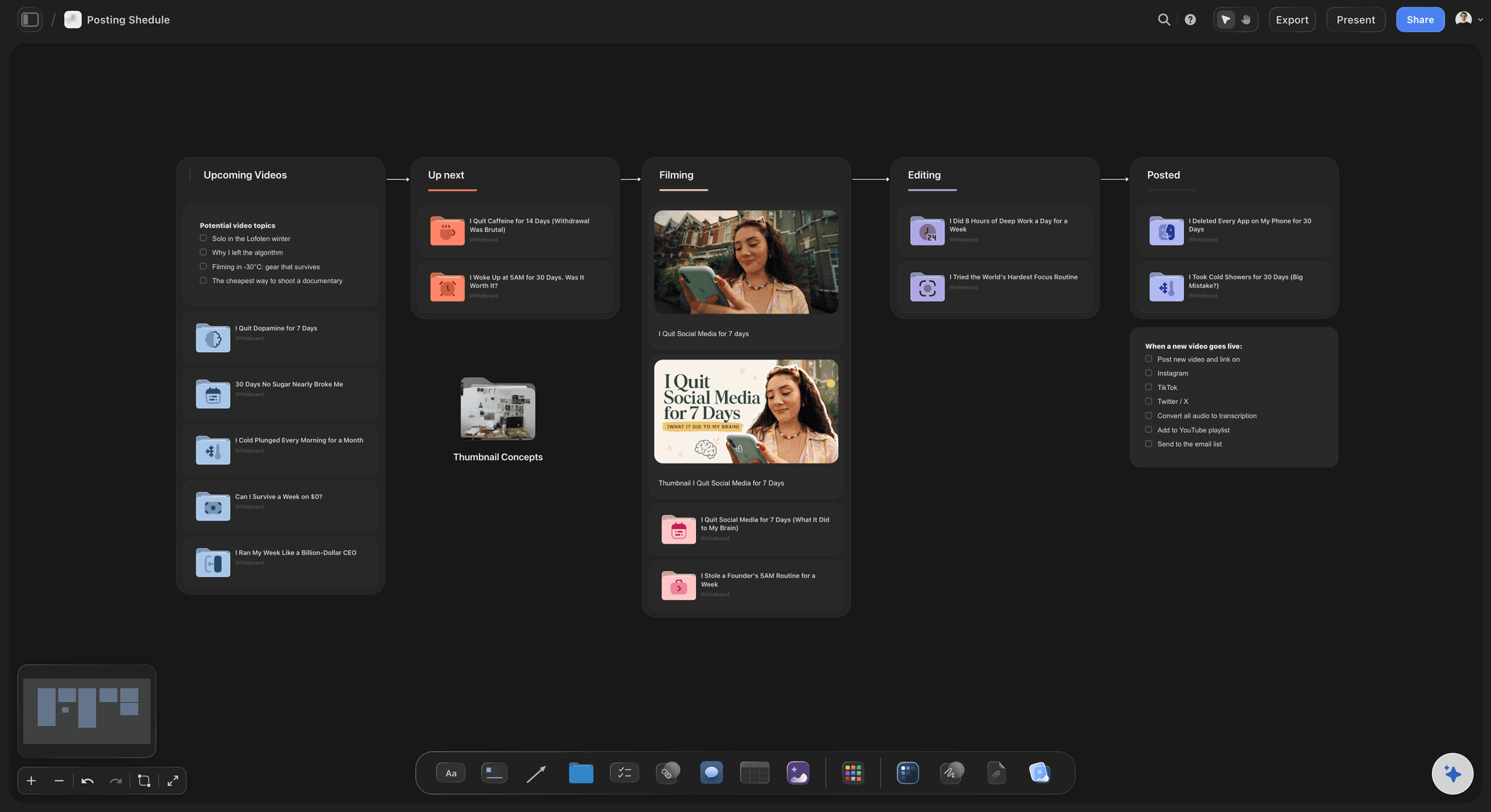
AI lays out a repurposing board from your cadence
Start from a system, not a scramble
Describe what you publish and the AI builds the board: pillar slots, derivative cards per platform, and lanes to move them through. Repurposing stops being a Monday-morning improvisation and becomes a structure you fill.
See the content planning tool →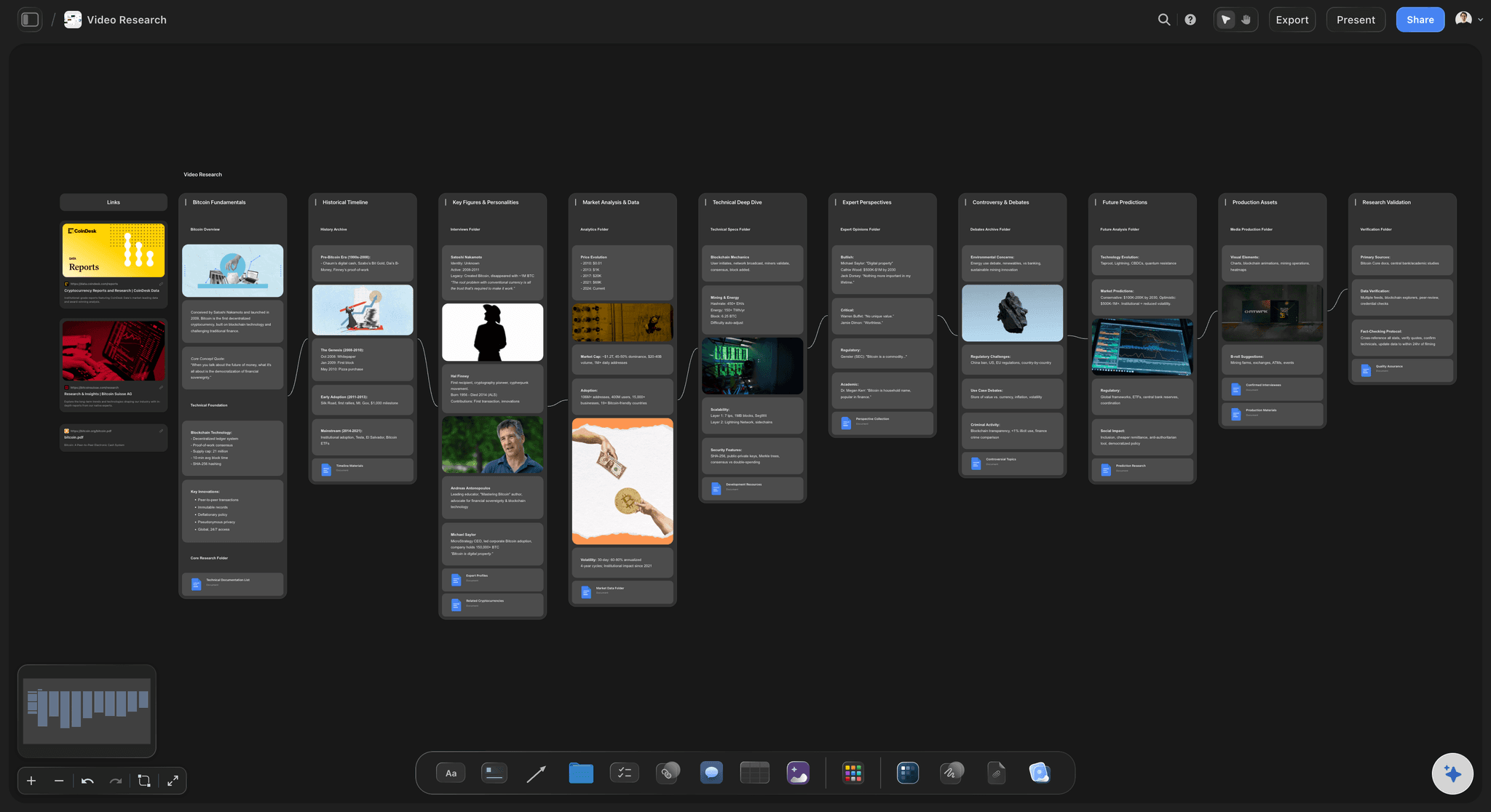
Frame grabs mark the exact clip moments
Cut from the best moments, not the first ones
Grab frames from the source video on YouTube or Vimeo and pin them to the board as the pillar's strongest moments. Each clip card points at a specific timestamp-worthy beat, so your editor cuts what you chose, not what they guessed.
Try the AI video idea generator →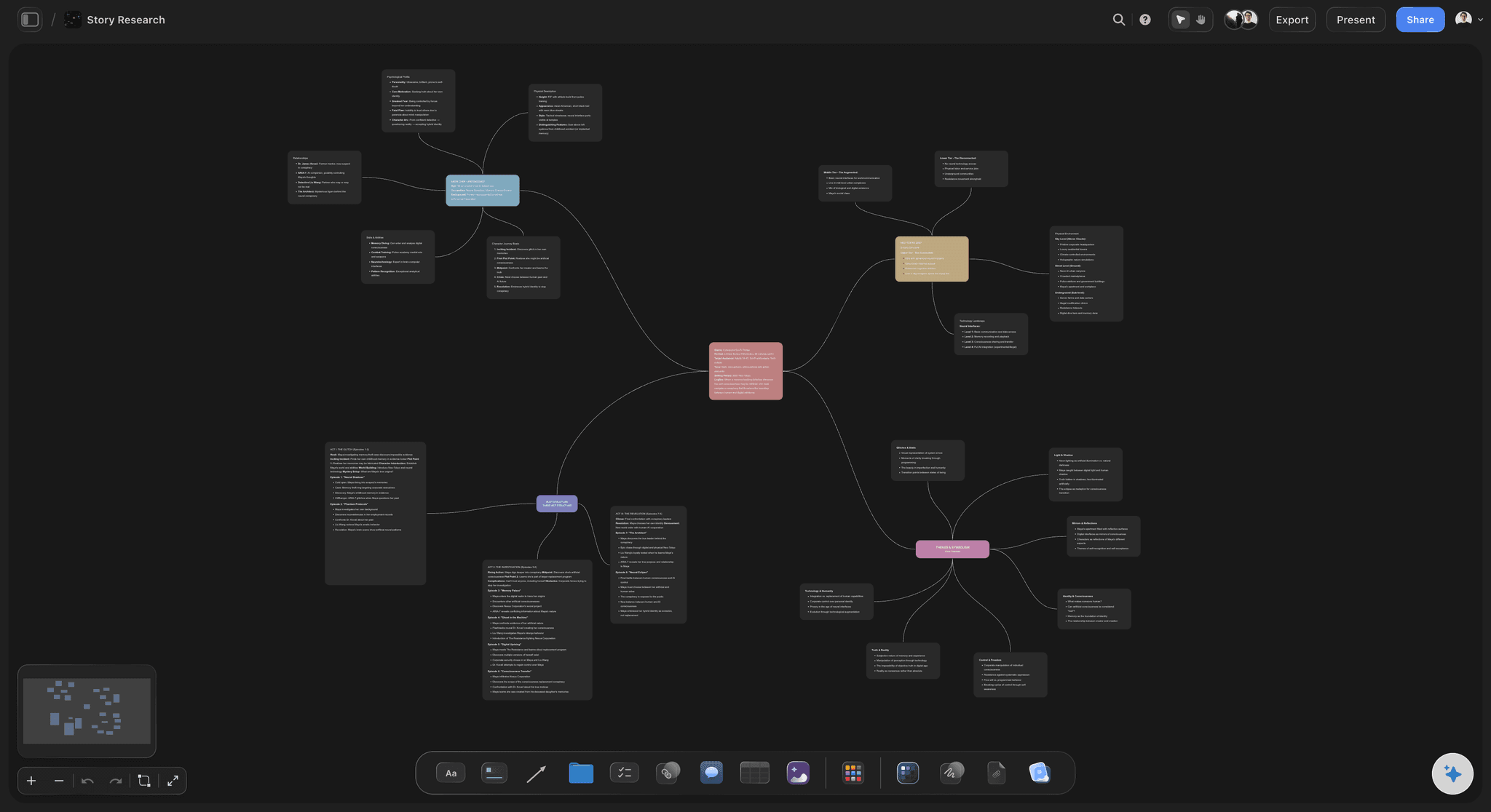
The pillar at the center, derivatives connected by platform
See the whole fan-out at once
Draw the map literally: the pillar piece in the middle, derivative cards radiating out, connectors showing which moment each one mines and which platform it feeds. A pillar with two spokes when its neighbors have eight is a pillar you are wasting.
Explore the YouTube video planner →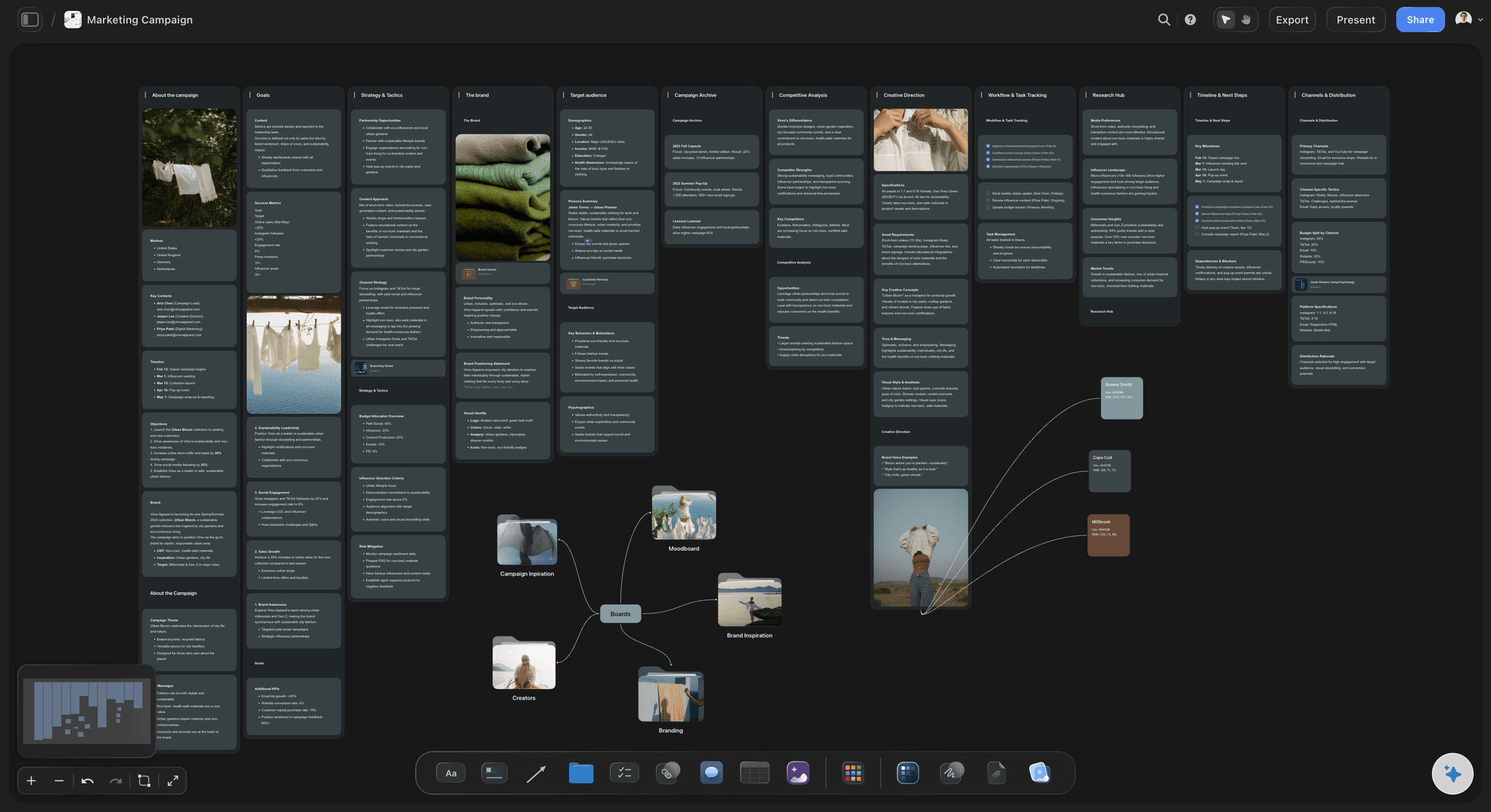
Status on every derivative, lanes per platform
Know which lane is starving
Track each derivative from idea to drafted to scheduled to published, grouped by platform lane. An empty stretch in the LinkedIn lane is visible a week before it becomes a gap in the feed.
See the AI content calendar generator →Unlimited boards. No object cap.
Open a canvas, describe your cadence, and start mapping the fan-out. Storyflow is paid-only during early access, with plans from $9.99 a month, and a Free plan launches before the end of 2026.
Unlimited repurposing boards on an infinite canvas
Basic AI usage to generate boards from prompts
Starter templates for pillar and derivative planning
Share view-only links with your editor or team
Built for people with taste
More than a queue of posts.
A queue shows you what is next. A map shows you what the pillar could become and where the system is thin.
Pillar at the center, spokes by platform
Draw the fan-out as a map
One pillar, many spokes: Place the video, episode, or essay at the center and radiate derivative cards outward: three clips, a thread, a carousel, a newsletter section, four quote posts. The count of spokes is the honest measure of how hard each pillar is working.
Connectors carry the lineage: Draw a connector from every derivative back to the pillar moment it mines. When a clip performs, the lineage tells you which pillar and which kind of moment to go back to for more.
Platform lanes: Group derivatives into lanes per platform. A lane with nothing in it for two weeks is a starving channel, and you find out from the map instead of from the analytics after the silence.
Under-mined pillars stay visible: Old pillars sit on the same canvas as new ones, so the strong episode from March that only ever produced one clip is still sitting there asking to be mined again.
Frame grabs, quotes, and moments from the source
Mine the pillar before you assign the derivatives
Grab frames from the source video: Pull frames straight from YouTube or Vimeo and pin them to the board where the strong moments happen. A clip card with the actual frame on it is a brief your editor can cut from without rewatching the whole episode.
Quote and claim cards: Pull the pillar's sharpest lines onto their own cards. Each one is a quote graphic, a thread opener, or a carousel slide waiting to be assigned to a lane.
Drop in the source material: Drag in the script PDF, the episode notes, the thumbnail options, and the links. The whole pillar's apparatus sits on the board beside the derivatives it feeds.
AI that can see your whole system
Plan with an AI that knows your pillars
Generate the board from your cadence: Describe how you publish and the AI lays out the pillar slots, derivative formats, and platform lanes that fit it. A weekly essayist gets a different board than a daily podcaster.
Prompt against the map: Ask it which pillars look under-mined, to suggest derivative angles for a new episode, or to rough out a thread structure from your moment cards. It uses the whole board as context, so suggestions fit your system rather than a generic one.
It plans, it does not produce: The AI structures the fan-out; it does not clip your video, ghostwrite your posts, or publish anything. The judgment about what is worth extracting stays with you, which is the part that makes repurposing worth doing.
Re-prompt without losing the map: Add next month's pillars with a new prompt and the AI builds around the existing cards without moving them. The map grows; it does not reset.
Hand the map to the people who execute it
The map is the brief
View-only links for editors and VAs: Send a link and your editor sees the whole fan-out in a browser with no account: which moments to cut, which formats to make, which lane each piece feeds. That beats a text message with three timestamps.
Work the same canvas: Invite your editor or a teammate to the board itself, so the person cutting clips updates status on the same map you plan on, and comments live next to the card they are about.
Export the system: Export the board as a high-quality image or PDF for a client review or a monthly content report. One picture of the fan-out explains the system faster than any spreadsheet.
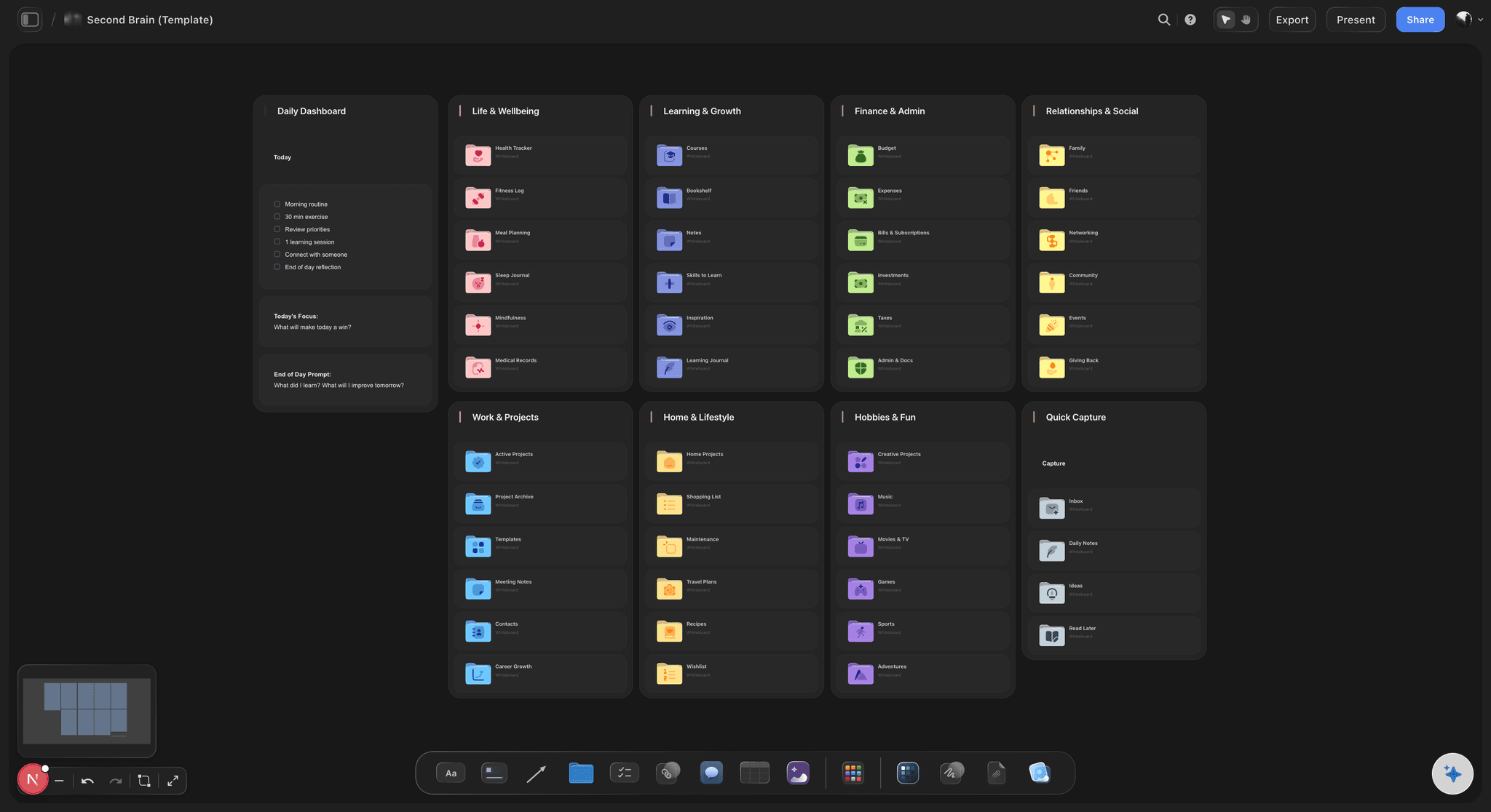
Explore templates for your project
Every template opens as a real, editable board on the infinite canvas. Pick the closest fit and make it your own.
YouTube Plan
Plan a video from hook to outline to shot list, with references and thumbnail ideas sitting right beside it.
One app instead of five
Storyflow vs Notion, Trello, and Airtable.
First, the honest scope: Storyflow does not clip video, auto-generate derivative posts, or publish anything. Cutting happens in CapCut or Descript and scheduling in Buffer or Later. Storyflow is where the fan-out gets decided, and these three are the other credible places to decide it: Notion for content databases, Trello for a simple pipeline, Airtable for relational records. Here is where they differ.
Storyflow
Recommended
Drawn fan-out map on an infinite canvas
AI lays out the board from your cadence
Video frame grabs marking clip moments
View-only share links, no account needed
Free tier available today
Rule-based automations on cards
Notion
Drawn fan-out map on an infinite canvas
AI lays out the board from your cadence
Video frame grabs marking clip moments
View-only share links, no account needed
Free tier available today
Rule-based automations on cards
Trello
Drawn fan-out map on an infinite canvas
AI lays out the board from your cadence
Video frame grabs marking clip moments
View-only share links, no account needed
Free tier available today
Rule-based automations on cards
Airtable
Drawn fan-out map on an infinite canvas
AI lays out the board from your cadence
Video frame grabs marking clip moments
View-only share links, no account needed
Free tier available today
Rule-based automations on cards
What creators are saying
Join early creators getting structured workspaces and AI that remembers their projects
“Storyflow has sped up my workflow by at least 3x, which means more flow state and more projects I can actually ship. It truly changed the way me and my team create.”

Reilin Joey
Director & YouTuber
“One prompt gets me a structured board. But the tactics are my favorite. I run my YouTube scripts through them and my intros and retention got better. It's amazing.”

Justkay
YouTuber & Freelance Filmmaker
“I used to juggle five apps to plan a project. Now I describe what I am making and get boards, lists, and a schedule. All in one place.”

George
@fernwehchronicles
Content repurposing questions, answered.
How to plan the fan-out, what the tool actually does, and where it hands off.
Plan the derivatives from the pillar, not from the calendar. Start with the piece itself: identify its three to five strongest moments, the claims, stories, and demonstrations that would stop a scroll on their own. Then assign formats to those moments, a clip for the demonstration, a thread for the argument, a quote graphic for the sharpest line, and give each derivative a platform lane and a status. Do this the day the pillar ships, while you still know where the good moments are. The failure mode is the reverse order: opening the scheduler on Monday, finding an empty slot, and cutting whatever moment comes to mind first. Mapping first is why one pillar becomes eight good pieces instead of three generic ones.
A pillar is the substantial piece everything else is cut from: the long video, the podcast episode, the essay, the webinar. It carries your actual thinking, took the most effort, and contains far more usable material than one post can hold. Planning around pillars beats planning around platforms because it fixes the economics of creation: the expensive thing gets made once and the cheap derivatives multiply its reach, instead of every platform demanding its own original idea. It also keeps the derivatives coherent, since everything traces back to a piece with a real argument. On a canvas this is literal: the pillar sits at the center and the derivatives radiate out from it, connected to the moments they mine.
No, and it is worth being plain about this. Storyflow does not cut video, auto-generate derivative posts, or publish to any platform. Clipping and editing live in tools like CapCut or Descript, and scheduling lives in tools like Buffer or Later. Storyflow covers the step before both: deciding what each pillar should become, which moments get clipped, which platform each derivative feeds, and tracking status as the pieces move through your actual production tools. That deciding step is the one most repurposing workflows skip, and skipping it is why so much repurposed content is the first ninety seconds of the video rather than the best ninety seconds.
Not during early access. Storyflow is paid-only right now, with plans starting at $9.99 a month, and a Free plan for solo use launches before the end of 2026. Anyone a paid member invites to a board joins free today, so your editor or VA can work on the map without paying. If you need a free option this minute, Trello's free tier will run a simple derivative pipeline honestly, and Notion's free tier can hold a content database with per-platform views if you are willing to build the structure yourself. What neither gives you is the drawn fan-out map or frame grabs from the source video.
As many as its genuinely strong moments support, and no more. A dense hour-long episode might honestly carry five clips, a thread, a carousel, a newsletter section, and several quote posts; a thin one might support three pieces total. The map is what keeps you honest in both directions. A pillar with two spokes next to pillars with eight is probably under-mined, and worth another pass. A pillar being stretched into fifteen derivatives is producing filler, and the weak spokes are usually visible on the board before they are visible in the metrics. The useful discipline is counting moments first and derivatives second, because the moment count is the real ceiling.
Look for self-contained beats: a claim that provokes on its own, a story with its own arc, a demonstration that shows something happening, a before-and-after. A clip fails when it needs the surrounding context to make sense, so the test is whether a stranger dropped into that moment would stay. In Storyflow you grab frames from the source video on YouTube or Vimeo and pin them to the board at the moments that pass the test, which does two things: it forces you to actually rewatch and choose rather than defaulting to the intro, and it turns each choice into a visual brief your editor can cut from without a call.
No. Storyflow's AI structures the plan; it does not ghostwrite the derivatives. Describe your cadence and it lays out the board: pillar slots, derivative cards, platform lanes. Prompt against the map and it can suggest derivative angles for an episode, point out which pillars look under-mined, or rough out how a thread might be structured from your moment cards. Because it uses the whole board as context, the suggestions fit your actual system. But the words that get published, the clip that gets cut, the caption that goes out, those are made by you in your writing and editing tools. The AI's job is to make sure they were planned from the pillar's best material.
A calendar answers when; a map answers what and from where. Calendars are organized by date, so they show you slots to fill, and they are genuinely the right tool for the final scheduling step. But a calendar cannot show lineage: it does not know that Tuesday's clip and Thursday's thread both come from last week's episode, or that the episode has six more strong moments nobody assigned. The map holds that structure, the pillar at the center with derivatives fanned out and connected to their source moments, and the calendar or scheduler takes over once each derivative is drafted. Most workflows need both; the mistake is using the calendar as the planning surface.
On a queue, you find out when the channel goes quiet. On a map, you see it in advance, because derivatives are grouped into platform lanes and an empty lane is an empty stretch of canvas. If the LinkedIn lane has nothing in idea or drafted status while Instagram runs three weeks deep, that imbalance is visible the moment you look at the board, and the fix is usually sitting right there: an under-mined pillar with strong moments that suit the starving platform. Status per card sharpens this further, since a lane full of ideas and empty of drafts is starving too; it just does not know it yet.
Yes, and it is one of the better reasons to keep the map in a browser. Share a view-only link and your editor sees the entire fan-out with no account: the frame grabs marking clip moments, the format per derivative, the lane each piece feeds. That is a complete brief, and a much better one than timestamps pasted into a chat. If you want them updating the map rather than just reading it, invite them to the board, and invited collaborators join free during early access. They can mark clips done, comment on a card when a moment does not cut cleanly, and the plan and its execution status stay on one surface instead of drifting apart across tools.
More from Storyflow
In-house content production
Content planning tool
AI content calendar generator
For content creators
YouTube video planner
Instagram content planner
TikTok content planner
Newsletter planner
AI video idea generator
For social media managers
AI content strategy generator
Content calendar for creators and editors
Social media shot list
Video marketing plan
AI tools for content creators
Content audit template
Stop repurposing as an afterthought.
Open a canvas, describe your cadence, and let AI lay out the first fan-out map. No download.